Home Blog Page 6

Is Capoeira a Martial Art or a Dance? FAQ about Capoeira

Photo by Red CreaDeporte

There are many fascinating combat systems in Brazil, but Capoeira stands out as the most distinctive and intriguing. When observing Capoeira, you may question whether it is a legitimate form of combat or simply an acrobatic dance created for entertainment. Well, it is both.

Capoeira is a hybrid martial art that mixes martial arts techniques with aspects of dancing, acrobatics, music, and spirituality. The traditional form concentrates on self-defense, whereas the modern form is focused on demonstration and spreading Brazilian culture through martial art dancing.

Let’s further explore this Brazilian martial art. We will go deep into its history, techniques, and effectiveness in real combat.

History of Capoeira

The origins of Capoeira come from the Angolan tradition called “engolo”. It was further adopted by the enslaved Brazilians who lived under the Portuguese colonists and landlords in the 16 century in Brazil. Back then, the enslaved people had no weapons and relied on hand-to-hand skills to defeat armed colonists.

In the 16th and 17th centuries, Brazil became more urbanized, and the enslaved people were no longer under strict supervision. They had the right to move freely, explore other interests, and use their time off work for other activities. This is where they started to practice capoeira in their free time.

At first, training was tolerated by the colonists but would later become prohibited. They feared that the spread of capoeira might result in riots and rebellious behavior of enslaved people.

Many of enslaved people who managed to escape would gather together and form their own communities called “quilombos.” Since they lacked the weapons and armor, they would focus on improving capoeira and making it more practical on the battlefield. To be able to deal with armed weapons, they focused on fast movement and blitz attacks. And it worked.

The principle of constant quick and strategic movements made it hard for Portuguese soldiers to deal with their attacks. According to their testimonies, it was harder to defeat bare-handed quilombos than the armed Dutch invaders.

Brazil declared the end of slavery on May 13th, 1888, with a law called the “Golden Law.” At first, practicing capoeira remained illegal because it was associated with criminals, warlords, and assassins. It was present only in remote places, far from the government and police. This was up until the 1920s when people started working on standardizing capoeira practice and making it a legitimate martial art.

This was also a time when the entire concept went through many changes. Due to legal issues and its criminal connotation, the emphasis switched from self-defense to dancing with less and less practical application. They started adding more acrobatic and dancing moves, mostly from African martial arts, to make it a demonstration sport that would spread the Brazilian culture.

However, due to the perceived danger of the original practice, traditional schools known as “Capoeira Angola” were not legalized to teach at the time. Only the schools that adopted the “soft and playful” style got the green light to teach classes, and this is how traditional styles got suppressed by the less effective modern styles.

Is Capoeira a Fight or a Dance?

Capoeira can be both a fighting art and a dance. It cannot be confined to one absolute category.

To understand better why it can be both, you must understand the difference between traditional and modern practices. The traditional variation of Capoeira was designed for intense combat against the colonists. So the main objective of the training was to prepare a person for real combat scenarios.

The traditional style was present until the 1940s when they needed to eliminate all the dangerous aspects of training to make Capoeira legal in Brazil. This was when the colorful acrobatic and breakdancing elements came into play.

Modern Capoeira is more a demonstration sport than a self-defense system. Students train to perform in various festivals and other events associated with spreading the Brazilian culture. They don’t spar or do any fight simulations to learn how to fight in real life.

Most of the deadly self-defense aspects and teaching methods are left out of modern practice. As a result, training primarily revolves around the demonstration of martial arts techniques mixed with the elements of dancing and music for the purpose of entertainment.

This includes a mix of fluid movement, acrobatic flips, various types of inverted and jumping kicks, punches, knees, elbows, and many other techniques. Although visually impressive, it is now considered more of a playful martial art than a legitimate self-defense system.

The ideal description would be akin to “dance fighting.” Students gain a basic understanding of how to react in real combat and rely enough on their skills to face nontechnical fighters.

Modern Capoeira
Photo Credit: bongo vongo

In the end, they practice legitimate martial arts techniques. But their skills are quite limited due to the lack of realism, notably when it comes to sparring and preparing for real combat.

Capoeira Techniques Explained 

Following is a list of some of the basic capoeira techniques and moves. Bear in mind that each move has many variations, and the name of each technique may also differ.

Ginga — is described as the basic footwork. A continuous shift of the fighting stance where a practitioner is making steps in a triangular motion. In combination with upper body movements, this stance allows you to evade attacks and deliver fast and powerful counter-attacks using momentum.

The continuous shift between the stances also makes you a smaller target and harder to hit. This form of unique movement is also used in martial arts such as Taekkyeon and Pencak Silat.

 — is the capoeira variation of the famous cartwheel rotary movement of the body. This is a versatile technique that practitioners use for different purposes. In some situations, they rely on au to evade the attack by rotating to the side.

In other, you can mix it with kicks to catch the opponent coming in. These variations are also known as “Au Batendo,” “Au sem Mao,” “Au de Frente,” “Au Giro sem Mao,” “Au Batido,” “Au Aberto,” and many other.

Balanco — is a technique of moving the torso from side to side. The key is to stay off the centerline to make yourself a smaller target and harder to hit. This also interrupts the opponent’s timing and enables you to use angles to create an opening. As with all other capoeira techniques, this one is also combined with leg and hand strikes, headbutts, and others.

Hand strikes — are rarely used both in traditional and modern capoeira. Some of the hand strikes used are straight punch “Asfixiante,” karate chop or knife-hand strike known as “cutelo,” elbow strike “cotovelada,” strike to the eye “dedeira,” backhand strike “godeme,” and many others.

Kicks — are the main weapon in capoeira. There are dozens of different kicks used, each with more variations. Some of the most common ones are the roundhouse kick (Armada), frontal push kick (Bênção), straight kick with the foot (Chapa), and front snap kick (Ponteira). The kicks are often mixed with evasive maneuvers, which make the execution more acrobatic.

Capoeira strongest kick

Takedowns — are usually used during ceremonies or when a master is testing students’ skills. Since kicking is so important, sweeps are the most common takedowns in capoeira, and there are dozens of different variations.

Headbutts — are also commonly taught in capoeira but, of course, is not used during demonstrations. However, this specific technique is very effective in real-life and self-defense scenarios.

Floreios —is a mix of dynamic movements such as ginga and various types of flips and kicks. For example, a capoerist would do a cartwheel and follow with a flip to the side. Floreios techniques are very complex, as most require a high level of skill and athleticism.

RELATED:
Is Taekwondo All Kicks?

Is Capoeira Difficult to Learn?

Capoeira might seem playful at first glance and easy to learn. But do not make mistakes about it; it takes many years for a person to become proficient. First, you must spend a lot of time doing various exercises to improve core strength and flexibility and reach a high level of athleticism. Without it, you can’t even think about moving to intermediate or advanced levels.

Next, most Capoeira techniques require high body awareness, coordination, and balance. And you need to spend years training hard to develop these skills. Capoeira is not about executing one technique at a time, like a kick or punch. It’s all about chaining complex moves like cartwheels, spins, and kicks together in harmony, paying close attention to the rhythm music, and establishing a connection with other players.

Though modern practice mostly revolves around the demonstration, Capoeira can be more challenging than most other combat systems. For instance, it takes more than a year of training before a student can attend the first grading. It may take another 2 or 3 years to make further progress.

Overall, learning the basics of Capoeira is relatively easy and achievable for most people. However, as you progress to more intricate techniques, the difficulty level increases significantly.

RECOMMENDED READING:
Is BJJ Hard To Learn?

Can Capoeira Be Used in a Fight? (fully explained)

Capoeira is rooted in self-defense and the practical application of techniques. Being a skillful practitioner certainly makes you superior to people not trained in martial arts. You will understand self-defense well enough to protect yourself and stay out of trouble.

However, you have to accept the fact that capoeira, especially the modern practice, is quite limited when it comes to actual fighting. Though this varies between schools, students rarely do self-defense drills. They do not test their skills in sparring or do other fight simulations where you can practice self-defense. No, it all revolves around practicing difficult and complex combos that visually look impressive but are not practical in real combat

Still, capoeira teaches legitimate techniques you can use in real life, such as footwork, kicks, and punches. For example, the emphasis of the system is on anticipating the attack and using various types of movements to evade/slip/dodge strikes, and even how to combine them with direct and simple kicks and punches. These are all legitimate martial arts techniques.

On top of that, capoeiristas have great timing, are in great physical shape, and have the ability to quickly confuse the opponent because their style is unorthodox. And this element of surprise is also very important. A person who charges at you with the punch won’t expect you to do a cartwheel, move to the side and come back with some wild kick or flip. Even if you miss, this element of surprise will destroy their confidence and momentum.

As previously stated, capoeiristas do not test their skills against fully resistant opponents like boxers or kickboxers do in their training. As a result, capoeiristas may have severe limitations in their ability to apply these skills effectively in real fights.

Can You Use Capoeira in MMA?

Capoeira is present in modern MMA but not as much as in other, more practical martial arts. You can see fighters, notably the ones from Brazil, utilizing its elements in freestyle combat. However, you can’t rely solely on Capoeira and expect to succeed in cage fighting. In fact, this system is not considered practical or effective for MMA due to its limitations. Other systems, such as boxing, Thai boxing, wrestling, and jiu-jitsu, work much better.

First, the concept doesn’t fit well within the rules of the sport. For example, capoeira moves such as headbutts are not allowed according to all MMA rules. Next, the capoeira learning curriculum lacks realistic teaching methods, as there is no sparring. In fact, modern practice does not really teach you how to apply techniques in combat situations. Training for demonstration and fun does not transfer well into the brutal concept of cage fighting.

Watching capoeira experts do all of those flashy acrobatic moves look great. But the reality is that most of these techniques won’t work in MMA if you rely solely on them. To make certain capoeira techniques work, you must combine them with techniques from other martial arts listed above.

Capoeira Fighters in the UFC

Throughout UFC history, some fighters who trained in capoeira have used capoeira techniques in their UFC fights. However, most of them are well-versed in wrestling, BJJ, and Muay Thai. They use only specific elements from capoeira to make their game more dynamic and unpredictable. The most popular are:

Michel Pereira uses Capoeira techniques in the UFC.

Final Summary

Capoeira is one of the most impressive martial arts, and watching skilled practitioners perform is breathtaking. However, remember there is a clear difference between the traditional and modern variations. The traditional practice is rooted in self-defense and the practical application of techniques in real combat. The traditional style is not as present in modern times, and you will have difficulty finding a traditional school to train in.

On the other side, modern capoeira focuses on the demonstration of acrobatic moves and spreading the Brazilian culture all across the world. It is a mix of traditional techniques, dancing moves, and music, mostly performed for fun. Though playful, capoeira remains one of the hardest martial arts to master, and students often spend many hours training just to execute one specific technique. And above all, training is safe, as the risk of injuries is quite low and very beneficial to your overall health and fitness.
What Is “Ninjutsu” Martial Art? A Basic Overview of Ninjutsu

0

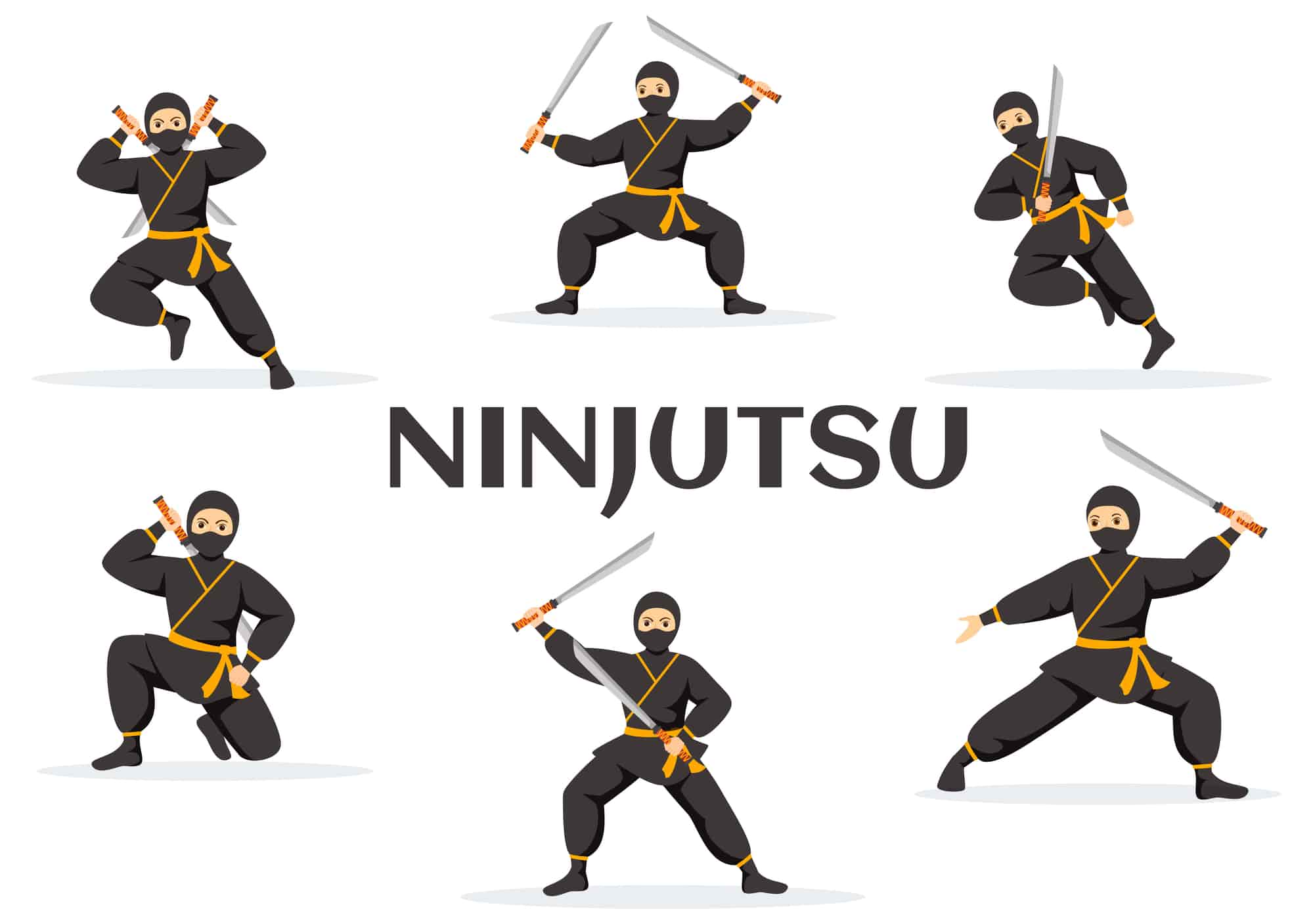
The martial art of Ninjutsu is masked in as much mystique and folklore as the Ninjas that are credited with practicing this ancient art. What is Ninjutsu? Is it still practiced today, and what form does this art take in the modern world?

Ninjutsu is the art of the Ninja, which incorporates skills to avoid detection, the use of specialized assassination weapons, and other close combat weapons and techniques that promote stealth. Modern Ninjutsu focuses on the combat techniques used by the Ninjas rather than the stealth techniques.

There is much controversy and dispute over the origins of Ninjutsu and the styles incorporated into this philosophy. We will present the facts about Ninjutsu, its history and origins, and some of the claims from various other fighting styles that claim to be the historical roots of Ninjutsu. You can then decide for yourself which aspects of this ancient practice you subscribe to.

History Of Ninjutsu

The history of Ninjutsu harks back to the ancient times of feudal Japan, where clans and warlords fought each other for dominance and territory in various regions of the country.

Espionage, assassinations, and covert activities became integral to these feuds, and the various clans’ agents were sent out to gather information, cause disruption, or assassinate prominent leaders in rival clans.

These skills were not part of the standard martial art styles taught at the time, so special training in the art or covert operations, stealth, and tactics often considered magical were needed to train warriors in these skills.

Consequently, Ninjutsu incorporated teaching fighting skills to a warrior and the stealth tactics required in these espionage-style tactics needed at this time in Japan’s history.

The styles used as the combat techniques in Ninjutsu varied from clan to clan, but the most common thought is that Jujutsu formed the foundation of the fighting techniques in Ninjutsu.

Did Ninjas learn Ninjutsu? Ninjas, or Shinobi, learned Ninjutsu with the various stealth tactics added to their standard combat training, commonly thought to be Jujutsu or variations of this style.

Thus, the combat training part of Ninja training depended on the fighting style typically practiced by their clan. Ninjas were often viewed with disdain because they operated in the shadows and attacked without facing their opponents face to face, which was considered dishonorable.

Ninjutsu is also referred to as Ninpo in some circles, and some training schools use the Ninpo naming in their versions of Ninjutsu.

Ninjas did not invent martial arts.
RECOMMENDED READING:
The Art of War by Sun Tzu: Key Points Explained

Is Ninjutsu A Real Martial Art?

The modern form of Ninjutsu is considered a martial art, but it takes various forms, depending on the school or ryu teaching the style.

In its original form, Ninjutsu was not considered a martial art because the clandestine techniques taught to Ninjas were not applicable on the battlefield but rather in the realm of espionage, infiltration, and assassinations.

The modern take on Ninjutsu omits the clandestine techniques and focuses on the underlying base fighting techniques but with adaptations unique to each school.

Ninjutsu is derived from a variety of styles, including Jujutsu, Taijutsu, Kenjutsu, and others, which means that Ninjutsu is not traditionally a style in itself.

Ninjutsu is not formalized or centralized with a governing association to bring uniformity or organization to the style, which leaves it open to interpretation by the school teaching the techniques.

Many of the techniques taught as part of Ninjutsu are survivalist techniques, using any method at hand to avoid confrontation, quickly stop an attack and escape rather than stand and fight.

As a result, many martial arts purists do not consider Ninjutsu a martial art in the true sense of the word.

What Is the Modern Ninjutsu Fighting Style?

The Ninjutsu style you see nowadays is not a historic fighting style but a modern take on what people considered to be the style used by the ancient Ninjas.

Modern Ninjutsu teaches a wide range of fighting techniques, including ground fighting, grappling, submission holds, locks, punches, kicks, strikes, and using various weapons.

The essence of the Ninjutsu philosophy is to strike fast and escape rather than stand and fight and risk capture or death.

Modern Ninjutsu teaches a wide range of techniques, mostly based on Jujutsu techniques, but also incorporates the use of and defense against various weapons. 

Modern version of Ninjutsu

Does Traditional Ninjutsu Still Exist?

Ninjutsu in its original form no longer exists and is not taught in any modern dojo. The techniques offered in dojos called “Ninjutsu” are interpretations of the fighting skills that the ancient ninjas may have used.

Thus, you can learn Ninjutsu, but it will be the modern version which excludes the stealth, magic, and occultic practices often used by the historic Ninjas.

Modern Ninjutsu focuses on teaching effective self-defense techniques that can quickly get you out of a sticky situation and create a chance for you to escape. Modern Nunjutsu goes by various names, usually covered by the broad term of Bujinkan.

Can Ninjutsu Work in a Street Fight?

As with most martial arts, the effectiveness of Ninjutsu in a streetfight will depend on the effectiveness and realism of your training.

Most Ninjutsu techniques are based on Jujutsu, which is an effective martial art, but the effectiveness on the street depends on your proficiency in the techniques and your adaptability when things don’t go as planned.

Ninjutsu differs from Jujutsu in that it teaches more offensive techniques that can be used to quickly put an attacker out of action, allowing a quick escape.

What Weapons Does Ninjutsu Use?

Weapons used by original ninjas would have included a range of typical battle weapons and some more unusual weapons specific to their need for stealth.

Weapons such as the blowgun, which used poison darts to take out opponents from the shadows, the bow and arrow, axes, clubs, and even fireworks or explosives are ancient tools of the Ninja that do not have much relevance in modern Ninjutsu.

Today’s Ninjutsu does, however, teach sword skills with a wide range of blades, from the katana to the tanto. Other weapons include the Bo or Jo, which is a wooden staff, the Yari or spear, shuriken or Ninja throwing stars, and various chained weapons.

The types of weapons included in the curriculum at a Ninjutsu dojo will depend on the weapons adopted as suitable by the training program.

RECOMMENDED READING:
Are Nunchucks a Real Weapon?

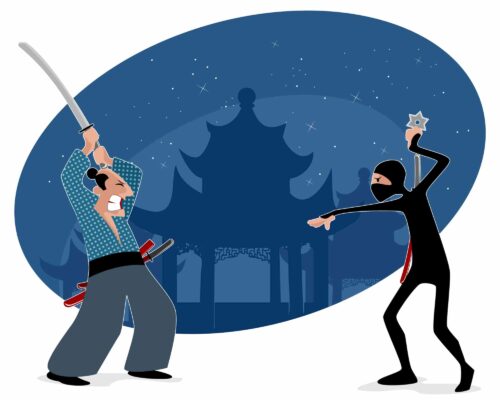
The Difference Between Ninja and Samurai

The ninja specialized in espionage, sabotage, infiltration, and assassination as they worked covertly to accomplish their missions. On the other hand, samurai were highly skilled fighters who followed a strict code of honor and combat when engaging in a face-to-face battle.

RELATED:
What is Bushido? Introduction to the Samurai Way of Life

Are There Ninjutsu Schools?

There are several schools or dojos where you can learn Ninjutsu, with many of the schools subscribing to the Bijunkan version of Ninjutsu.

These schools teach the practical self-defense techniques of Ninjutsu and leave out the clandestine espionage-oriented aspects or dark arts of the Ninja. 

Bujinkan USA is one such chapter, based in Tuscon, Arizona in the USA. There are various chapters of Bujinkan across the USA that teach Ninjutsu skills and techniques to all ages of students, from tots to old-timers!

Other Ninjutsu schools teach other expressions of Ninjutsu, borrowing a variety of techniques from other martial arts to create an effective self-defense system.

Conclusion

The ancient Ninja arts of Ninjutsu are not considered a martial art of their own because most Ninja skills were techniques for espionage, ambush from the shadows, avoiding detection, and quick strikes intended to kill. These were special skills taught to Ninjas for their missions in addition to the fighting skills they already possessed.

Modern Ninjutsu focuses on the combat and self-defense skills used by Ninjas and omits the clandestine techniques and skills utilized by these ancient special forces of the Japanese Feudal Wars.

Is BJJ Good For Kids? Parents Easy Guide to BJJ

0
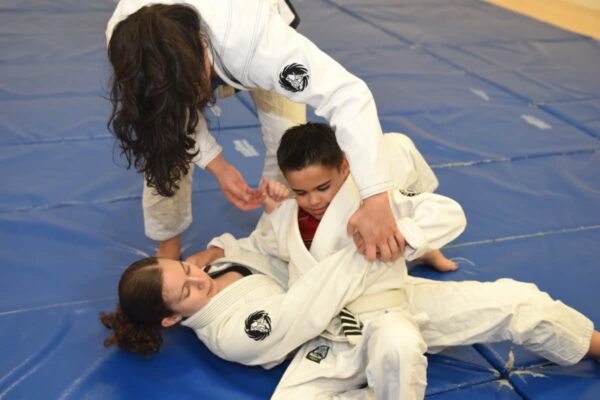
Photo by: Grace Nichols

Disclaimer: The contents of this website, such as text, graphics, images and other material are intended for informational and educational purposes only and not for the purpose of rendering medical advice. The contents of this website are not intended to substitute for professional medical advice, diagnosis or treatment.

Brazilian Jiu-Jitsu (BJJ) has become a popular choice for adults to learn martial arts, particularly after witnessing many UFC fighters easily defeat their opponents using BJJ techniques.

At the same time, BJJ has also gained favor among parents as a top-choice martial art for their children. For this reason, if you do not know much about BJJ, you might wonder why so many parents think BJJ is good for kids, especially when it’s often associated with MMA fighters. Here’s the most important reason why:

Unlike most other martial arts, BJJ doesn’t include any striking, which causes most injuries, so the overall risks are low. Kids spend most of their time rolling on the ground in a controlled environment, and all the moves that increase the risks of injuries are left out of the learning syllabus.

If you’re looking for a martial art for your child, let me introduce you to Brazilian Jiu-Jitsu and explain its benefits for kids. After reading this article, you will definitely better understand why BJJ is good for kids, which will help you confidently decide if it is the right choice for your child.

What Does BJJ Teach?

BJJ is a grappling-based martial art developed in the 1920s in Brazil by the famous Gracie family. Its origins come from Judo, and these two martial arts share a lot in common, like uniforms and techniques. The key difference between BJJ and Judo is that BJJ focuses more on advanced submission grappling, while Judo emphasizes throwing techniques.

As a system, BJJ focuses on both standup grappling and ground fighting. In training, students learn how to advance to the ground from standing using throws, trips, and sweeps from Judo or wrestling. They practice how to manipulate the opponent’s uniform (gi) to secure a strong grip and get into a position to execute a takedown.

Once on the ground, the next goal is maneuvering into a dominant position and locking the opponent in. This further enables you to submit them with chokes or joint locks. At the same time, the opponent is trying to use escapes and various other techniques to reverse the position or finish the exchange from the inferior position.

So from a technical aspect, the learning curriculum in BJJ revolves around the following:

  • Throws, trips, sweeps, and takedowns
  • Positioning (guard, full mount, side control, back mount)
  • Chokes (rear-naked choke, triangle choke, guillotine choke)
  • Joint locks (armbar, kimura, kneebar)

Apart from advanced grappling techniques, when you grapple, you engage all the muscles in your body, which develops your practical strength and flexibility.

Rolling with the person your size on top of you also burns a lot of energy quickly, so your endurance is a big factor as well. As a result, students do various weight and bodyweight workouts to improve core muscles, and aerobic workouts such as running to enhance cardio capacity.

LEARN MORE:
What are the different styles of Jiu-Jitsu? 

What Makes BJJ the Best Martial Art for Kids?

Here is a list of key reasons why BJJ is among the best martial arts for kids.

Supportive and judgment-free environment

BJJ is rooted in honor and respect between students and instructors. Kids train in a positive and supportive atmosphere that allows them to express their personalities and talents. Instead of judging bad behavior or performance, each training group acts like one unit. Your child will join a supportive BJJ team that encourages each other to overcome challenges together.

Low risk of injuries

BJJ is primarily recognized as one of the safest martial arts due to its low injury rate, as listed below. The system doesn’t include striking with your hands and legs, which are the most common cause of injuries.

Injury Rate per 1000 Athlete-Exposures:

  • MMA : 236-286
  • Taekwondo: 20.5-139.5
  • Judo : 25.3-130.6
  • Wrestling : 9.0-30.7
  • BJJ : 9.2
(2022, April 4). In Bjj Eastern Europe.

On top of that, the emphasis is on technique and leverage, not on overwhelming the attacker with sheer strength and explosive attacks. Kids’ classes are particularly designed to be as safe as possible. Many moves that could cause injuries are left out of the learning syllabus.

Coordination and balance

Grappling, often upside down, requires high coordination of upper and lower body movements and the constant usage of both sides of the brain. Legs, arms, head, shoulders, everything has to work as one unit, and you need high body awareness in order to perform right. In the long run, BJJ will improve kids’ motor skills and bilateral and hand-eye coordination skills.

Fun and playful

Unlike many adults, children are not too obsessed with competition, money, and becoming a global superstar. The only thing their minds care about is how much fun they are going to have. And grappling with other kids in a controlled environment is as playful as it gets. But this time, there are no parents to bother them to stop. All kids love to grapple; it’s their favorite activity.

Effective self-defense system

BJJ falls into the group of the most effective combat systems. It works well in most scenarios you may encounter in real life and matches well against other styles. BJJ students don’t spend a second doing things that won’t enhance their abilities in a real fight. Just look how important and dominant it is in the world of MMA fighting.

And above all, BJJ teaches you how to neutralize the attacker without causing any serious injuries. Taking the opponent down and subduing them with holds and pins is much safer than knocking the attacker out cold.

RELATED:
Is Taekwondo Good for Kids?

The Mental Benefits of BJJ for Children.

Although BJJ training is known for its physical fitness and health benefits, it’s important to recognize the following mental benefits for children that come with it:

Self-discipline and focus

Discipline and focus need to be trained just as the muscles. In a world where ADHD and other attention disorders are affecting more and more children, maintaining a high level of discipline and focus has become challenging.

In BJJ training, kids must always pay attention to instructors and be disciplined. They have little space for their minds to wander around while training. Each second of training is spent on productive work. Improvement in discipline and focus will positively affect every aspect of their lives. This is notably true regarding their ability to socialize, maintain relationships, and perform better at school.

Socialization

BJJ training groups include between 10 and 20 kids working together as one family. During the class, kids play together and talk with each other, and over time, this results in strong friendships. They also learn how to respect authority and older people in general, listen, and obey commands.

Even if the kid is an introvert, a supportive and positive BJJ environment will eventually open their hearts and minds to other people.

Confidence

BJJ boosts confidence like nothing else. Training is hard, and students constantly push their minds and bodies near and over the limits. And pushing the bar higher and overcoming adversities is how they boost confidence and mental resistance.

Every student will hit a breaking point multiple times on their journey. But each time, they must find the inner strength to continue, and this is what builds character. They also learn legitimate self-defense techniques and how to apply them in real scenarios in sparring, which gives them real confidence in their abilities.

Self-defense and bullying

BJJ is a system rooted in self-defense. It teaches legitimate martial arts skills you can apply in any self-defense scenario. Besides learning proper form, kids also learn how to apply these techniques against their partners in controlled sparring.

By learning Brazilian Jiu-Jitsu, children can enhance their ability to defend themselves and develop a better mindset when dealing with bullies. BJJ instructors do not promote violence but instead teach children how to use BJJ solely for self-defense purposes and to avoid violent situations.

Jiu-jitsu teaches kids how to deal with bullies
RELATED:
Will Martial Art Make My Child More Aggressive?

How to Find the Best BJJ School for Kids

As a parent, it is your responsibility to research and find a proper BJJ school for your child. Following is a list of tips and factors you need to take into consideration to find the right one.

Ask for a free trial class and observe

Most BJJ academies include a trial class where you and your child can participate without costs. The kid will attend a real class while a parent can observe the action and tour the facility.

Even if you don’t attend a trial class (and you should), be sure to check every corner of the gym. Inspect whether the gym maintains a high level of hygiene on the grappling mats, dressing room, and bathroom area. This is crucial as infections are the most common “injury” in BJJ. And this also speaks a lot about how the gym treats its students. Health and safety should always be the number one priority.

Talk to other parents

When you attend the class, some parents will likely be there. Be sure to ask them everything you want to know about the classes, their experience with the coaches, and how their kid likes it. They will give you some valuable inside information about the academy, where you can buy affordable gear and maybe bust some of the myths.

Watch other kids

During the trial class, be sure to observe other kids who have been training for some time. Watch how disciplined and focused they are, do they respect authority and obey commands, and how they react to certain things. Their behavior is a good indicator of how effective the teaching methods are and how well the instructor keeps it all together.

Talk with the head instructor

Before signing your child up for the classes, have a talk with the head instructor. Ask them about costs, safety, training programs, gym success, and credentials. You will put your child’s life in their hands, so you have the moral right to get every piece of information from them.

Remember, there are no stupid questions. And most BJJ instructors are super friendly people who are more than happy to address your concerns.

Check reviews

Go online and search for local reviews. While it’s important to keep in mind that reviews should not be taken too seriously, they can provide a general idea of how the gym functions and its advantages and disadvantages.

You may also visit websites other than “Google reviews,” such as “Better Business Bureau,” to get additional information. Also, ask your friends if they know someone whose child trains there. In martial arts, the importance of word-of-mouth marketing cannot be overstated.

You do not have to sign up with a well-known coaches

People tend to value the quality of a service based on how much it costs. The more expensive it is, the better. But this doesn’t have to be the case when it comes to kids training in BJJ. Classes in the top-rated facility where kids train under famous coaches are expensive.

When children are starting to learn BJJ, there is no need to spend a lot of money on a well-known coach. Other coaches who may be less famous can still provide the same quality of teaching at a much lower cost. Any certified BJJ black belt that offers kids programs has solid skills to teach the fundamentals.

Do not sign long-term contracts

Most BJJ academies offer different membership deals and even long-term contracts. Although annual deals come at a lower cost, sticking with the monthly membership at the start is recommended. Your child has yet to discover whether BJJ is for them, so there is no need to spend too much money on annual membership plans. In the end, you can always transition from a monthly to an annual plan later.

At What Age Can Children Start BJJ (as recommended)?

The majority of BJJ children’s programs accept 3-year-old kids. However, kids at 3 or 4 years of age still lack the physicality and motor skills to engage in jiu-jitsu, so waiting until they are 5 or 6 years old is recommended. Most kids under 4 are not disciplined enough and tend to give up quickly.

Most parents choose to sign up their kids for the classes when they are in the first grade, and there is a good reason why. School teaches students discipline, following instructions, respecting their teachers, and being independent. Similarly, BJJ instructors reinforce these values to help kids improve in school.

How Many Times a Week Should a Child Take Lessons?

Kids should kick off their journey by attending classes no less than 3 times a week. 2 times a week is also fine if they feel tired and have a hard time recovering from the classes. But after two or three weeks, they should move to 3 times a week. Why no less than 3, you may ask?

Though the kid’s classes are structured to be less intense, BJJ remains a highly complex system. Each student must be consistent, especially in the beginning, to enjoy consistent progress and keep up with the classes. Just a small break of 2 weeks can greatly stall their progress.

The kids will then naturally increase the number of weekly training sessions as they get stronger, better at performing techniques, and more engaged in BJJ. But for the start, 3 times a week would be fine.

RELATED:
How Long Does it Take to Learn BJJ for Beginners? Q&A

How Much Does BJJ Cost for Kids?

The monthly fees usually range between $120 and $200 in countries like the US. But bear in mind that the exact figure is based on the location, the experience and reputation of the coaches, the power of the brand, and many other factors.

In some countries with lower economic standards, the classes at the premiere academy could cost as low as $50 per month. In the more developed world, on the other hand, the prices go up to a couple of hundred. Overall, kid classes usually cost less than adults.

RELATED:
Why Are BJJ Classes So Expensive?

Final Thoughts

Brazilian jiu-jitsu is one of the most popular martial arts for kids, and there is a good reason why. Above all, training is much safer than in other combat systems as BJJ doesn’t include striking. It is also more playful and fun and works better in real-life situations. Finding the right school is also not an issue; every certified BJJ instructor can teach kids classes just as well as any other famous instructor.

But as a parent, thoroughly examine the facility, have conversations with instructors/owners and other parents, and obtain all necessary information before making a decision. Once that’s done, if your kid is interested in classes, try BJJ; you won’t regret it, that’s for sure.

Why Does Taekwondo Have a Bad Reputation? A Closer Look

Editor’s note: The views and opinions expressed below are those of the author.

The Korean Taekwondo (TKD) system is declining in popularity, mainly due to its widespread bad reputation that it’s not worth learning. So, what exactly is causing TKD to have such a bad reputation?

Taekwondo has a bad reputation because it focuses too much on kicking skills, making it a one-dimensional art, and also because of its emphasis on rules and competition over self-defense. As a result, taekwondo has lost its reputation as a combat art and is now primarily perceived as a sport.

This is just a brief explanation of why Taekwondo is not as popular as it used to be. So let’s start digging deeper into why TKD has such a bad reputation.

The Problem With Modern Taekwondo

Taekwondo (TKD) emerged in the 1950s as a military combat system rooted in self-defense. The initial, traditional style was an all-around system designed to cover most combat scenarios a person may encounter in self-defense situations. Students used to learn how to strike with:

  • Kicks
  • Punches
  • Elbows
  • Forms (katas)
  • Sparring
  • Aerobic and anaerobic workouts
  • Basics of grappling (throws, holds, falls)
  • Self-defense tactics.

Later, TKD would split into different organizations due to internal disagreements among the different TKD organizations. The problem was that each of these TKD organizations would come up with its own system variation, teaching methods, and rules. And this is where the problems began to emerge.

In the following decades, the sport variation of TKD would become more and more popular. Not just in Korea but around the world. So much so that in 1988, TKD received a chance to appear at the Summer Olympic Games as a demonstration sport and would get accepted as the official Olympic sport in 2000.

The rise of TKD exploded, with more and more academies switching their focus from self-defense to sports competition. In some way, these sports rules shaped and limited the entire concept of TKD. To make matters worse, people began recognizing it as a popular sport, not a self-defense martial art. A once versatile system that used to teach people how to fight in real life has become nothing more than a contact sport.

Taekwondo competition

So when people talk about the problems of modern Taekwondo, they usually refer to the sports variation of the system. This is important because you have to differentiate between traditional and modern practices to comprehend why TKD has gained a bad reputations.

Let’s explore these issues in more detail.

Why Does Taekwondo Have a Bad Reputation?

The reasons for its bad reputation stem from these factors:

One-dimensional approach

Traditional Taekwondo was an all-around system when it was founded in the 1950s. Though the emphasis has always been on kicking techniques, students used to learn other strikes as well. They were taught how to box, grapple, and apply proven self-defense tactics.

Modern Taekwondo, however, primarily revolves around kicks and direct punches. It is far more one-dimensional compared to the traditional variation. Students rarely do any self-defense drills or fight simulations you may encounter in real life besides direct strikes to the body. And grappling was left out of the learning curriculum a long time ago.

The reason is simple — kicks are the most efficient way to score points in TKD competitions, and modern TKD schools today are primarily focused on achieving success in sports competitions.

Therefore, modern TKD schools believe there is no point in teaching anything that won’t enhance your performance in tournaments, as they no longer prioritize self-defense situations.

The system has not evolved much over the years

Overall, Taekwondo hasn’t evolved much over time in terms of expanding the arsenal or coming up with more effective variations of each move. Some aspects have certainly evolved but in the wrong direction.

Students follow very much the same program and learn the same techniques and principles. They rarely, if ever, get the chance to explore new ideas and techniques and implement them into their game.

Other martial arts, such as mixed martial arts (MMA), boxing, and BJJ, continuously evolve. Their coaches and fighters are always looking to improve existing techniques and strategies and come up with new moves to get an advantage in competition or improve their self-defense abilities.

However, TKD is far more rigid because it sticks with traditional philosophy and rules.

Not too popular among adults and teenagers

In modern times, TKD is far less popular among teenagers and adults than conceptually similar arts. Unfortunately, TKD schools tend to focus more on children’s classes and do not put much effort into attracting adult students, even though they are not very popular among adults.

The majority of adults you can see in a TKD dojo are black belts who have been training for years. You rarely see a person in their late teenage years or early 20s joining the TKD academy for the first time. Instead, most of them choose similar arts such as kickboxing, Thai boxing, or boxing.

The primary reason for this is that many adults are not interested in learning about all aspects of TKD. Adults place more importance on practical training than theoretical philosophy, katas, and strict classroom settings with uniforms, which are often associated with TKD. Typically, adults look for practical training that can improve their self-defense abilities quickly without much interest in learning anything else.

However, it’s interesting to note that what adults may find unappealing about TKD is actually favored by parents when it comes to their children.

Parents highly value the disciplined classroom setting offered by TKD for their children. It plays a crucial role in their growth and encourages the development of positive personality traits. As a result, taekwondo has become one of the most popular martial arts among kids, especially in the Western world.

For this reason, TKD is often perceived negatively by adults as a martial art for children.

Too much emphasis on competition

Most modern Taekwondo schools emphasize competition over the self-defense aspect of training. As a result, teaching methods and techniques align with the official competition rules. Instead of learning how to fight, students learn how to represent their schools and win matches.

These point-fighting rules greatly impact the system’s overall effectiveness because point-fighting has very little in common with real fighting.

TKD also receives criticism from other martial arts communities because of its emphasis on competition, leading them to view modern TKD as more of a sport rather than a traditional martial art.

RELATED:
Olympic TKD vs. Traditional TKD – Key Differences Explained

Can You Defend Yourself Using Taekwondo?

The answer to this question varies depending on whether you are learning the traditional or modern style of taekwondo.

Traditional taekwondo differs from modern schools as it focuses on self-defense. Students are taught to use all limbs as weapons, basic grappling techniques, and self-defense drills to protect themselves. Students regularly spar and do fight simulations to prepare for most scenarios they may encounter on the streets.

But in today’s world, many TKD schools have moved away from traditional teaching methods and are emphasizing sports competition. Although they may claim to teach self-defense, most of these schools focus on competitive techniques. Rather than learning how to defend themselves, students are taught strategies to score points in sports competitions against an opponent.

Although modern TKD teaching has its flaws due to the differences between point-fighting rules and real-life combat, some skills learned can still be helpful in combat situations. TKD teaches practical kicking, punching, and footwork techniques that can be applied in real-life self-defense scenarios. This training is undoubtedly more helpful than not knowing in combat situations.

On top of that, the sport is hard on your body, and you will know how to absorb damage and stay composed in a stressful situation.

Once in a fight, you will recognize certain patterns and respond relying on muscle memory. However, bear in mind that your skills are limited to certain scenarios. For instance, the fight needs to be in the open space and on the feet.

Overall, if you want to take taekwondo lessons to learn how to defend yourself in real life, do some research and try to find a traditional taekwondo school instead of a modern taekwondo school.

LEARN MORE:
Is Taekwondo Effective in a Street Fight?

What Makes Taekwondo Ineffective in Real Life?

The overall effectiveness of Taekwondo in modern times is limited to a certain degree. But what is the explanation behind this?

MMA/UFC competition is often viewed as a platform to assess the practicality of different martial arts techniques in real-life fighting scenarios. When analyzing TKD techniques in MMA, it becomes clear that some aspects of TKD, like kicks and fighting from both stances, are practical. But overall, the Korean system does not transfer well into freestyle fighting or not as well as other systems.

The primary reason for this is the teaching methods used in most modern TKD schools, which focus on competition and training individuals to excel in matches. They neglect other aspects of training, such as self-defense drills, as most of these moves are illegal in sports competition.

As a result, students are no longer taught how to fight in real life but how to obey the competition rules. And by closely examining point-fighting rules, you can see that the concept of “fighting” in matches does not work in real fighting by any means.

What Are the Pros and Cons of Taekwondo in MMA?

Some TKD techniques can be effective in MMA matches. For example, TKD athletes are very good at fighting from both stances, which makes them very unpredictable in MMA.

Next, their ability to land all types of jumping and spinning kicks is second to none. TKD fighters are masters at moving in to land a strike and angling out without being hit back. On top of that, most of them have exceptional feelings for distance and timing, which makes them a tough matchup for anyone.

But at the same time, TKD also has a couple of cons. For instance, its fighters have a bad tendency to keep their hands low beside their bodies. Since the system emphasizes kicking techniques, they are all used to standing in a wide-bladed stance while keeping their hands low. This greatly impacts their defensive skills, especially against boxing attacks at close range.

Next, TKD does not teach you any type of grappling, even though traditional TKD includes the basic principles of grappling, such as throws and pins. Modern TKD training primarily focuses on kicks, footwork, and direct punches. So in order to prepare for MMA fights, each TKD athlete must spend many hours learning wrestling and submission grappling on the ground before making their debut.

RELATED:
Is Taekwondo Effective for MMA Fighting?

UFC Fighters With Taekwondo Background

Throughout UFC history, there have been many fighters who came into the sport with a strong background in TKD. Of course, all of these fighters have other skills to cover all aspects of the game. But you could often see them utilizing TKD moves inside the octagon, primarily kicks. The following are the most popular ones:

Anthony Pettis

Pettis is the former UFC lightweight champion and one of the most exciting fighters in history. Though he was a well-rounded fighter, Pettis primarily relied on all kinds of jumping and spinning kicks.

He began training in TKD when he was 5 years old, and by the age of 18, he was already a 3rd-degree black belt. Apart from his UFC accomplishments, most MMA fans also remember him for the famous kick he landed on Benson Henderson in their first meeting.

During their fight at WEC 53, Pettis launched himself into the air, and he bounced off the cage wall with one foot while using the other one to land a devastating kick to the head. It was spectacular.

Benson Henderson

Despite the fact that modern MMA fans failed to recognize his accomplishments, Henderson remains one of the best lightweights of all time. He is the former UFC and WEC lightweight champion who was simply good everywhere.

At the age of 9, his Korean mother enrolled him in TKD to learn more about Korean culture and tradition. After earning a black belt, he switched to wrestling before taking on Brazilian jiu-jitsu.

Yair Rodriguez

Rodriguez is synonymous with Taekwondo in the UFC. He began practicing TKD at a young age and continued for five years until he turned 13. He is an excellent representation of how specific TKD skills can be effectively used in MMA.

He is one of the most dynamic strikers, and his kicking game is off the charts. He has an amazing ability to land each kick with perfect timing and precision and from all ranges.

Final Summary — The Main Reasons Why TKD Gets a Bad Reputation

As previously explained, TKD’s negative reputation mainly stems from its ineffectiveness in actual combat scenarios.

In modern times, cage fighting is often used as a benchmark to measure the effectiveness of different martial arts. Unfortunately, TKD has generally not performed well in this arena.

Another big reason for the bad reputation is that TKD puts too much emphasis on competition and less on freestyle fighting and self-defense. The techniques learned in point-fighting are too limited for real-life combat situations.

Overall, unless your main objective is to improve your self-defense skills, modern TKD is still a valuable and enjoyable martial art sport for anyone who just wants to improve their health. In fact, learning TKD is far better than not learning any martial art at all.

Interested in learning more?
Here’s an article we think you’ll like: Is Taekwondo Worth Learning?


What Is Golden Gloves Boxing? Everything You Need to Know

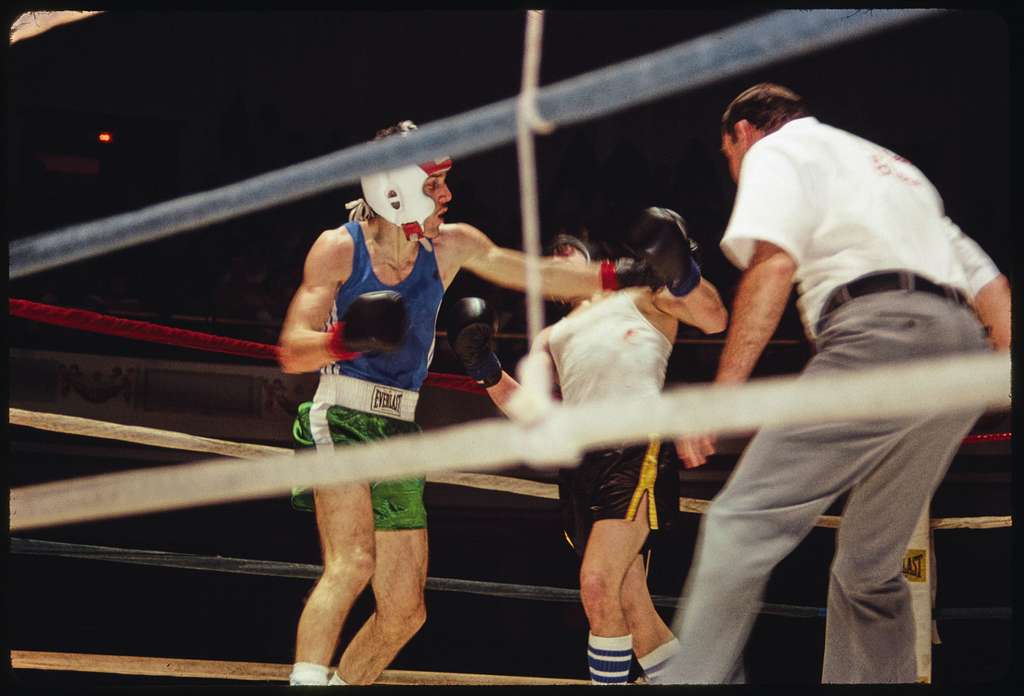
If you’re a frequent MMA follower, you may have noticed several UFC fighters were once Golden Gloves boxing champions. You might be curious about what Golden Gloves boxing is, whether professional or amateur and what it takes to be a Golden Gloves boxer. Here’s a quick answer to what Golden Gloves boxing is.

Golden Gloves boxing started in 1923 in Chicago to promote amateur boxing tournaments. Since then, they have organized boxing events in various regions across the U.S., providing opportunities for amateur boxers to ultimately test their skills against one another to become the national champion.

More specifically, hundreds of coaches, boxers, and gyms participate yearly in local and regional Golden Gloves tournaments. The winners then advance to the National Tournament of Champions, where the winner of each weight class becomes the national Golden Gloves champion and receives a title and a ring.

This is a brief explanation of what is Golden Glove Boxing. Thus, be sure to read this article to learn more about it.

Golden Gloves Boxing History

The story of Golden Gloves boxing began in 1923 in Chicago, the US. At the time, the sports editor of the Chicago Tribune newspaper, Arch Ward, devised the idea of creating a citywide amateur boxing tournament. Four years later, he would finally get sponsorship from his company, the Chicago Tribune, and the annual boxing tournament would start in 1927 between Chicago and New York.

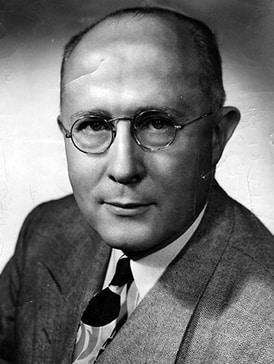
Archie Burdette Ward (1896–1955)
The founder of the amateur Golden Gloves boxing event
Credit: Wikipedia

The tournament became very popular and led to the creation of a national tournament as other cities and states joined. The winners from various states then competed in semi-final tournaments held in Chicago and New York.

Then in the finals, winners from Chicago would face winners from New York in what was called the “National Tournament of Champions.” This form of Golden Gloves tournament was in place from 1927 to 1961.

The Golden Gloves boxing tournament underwent a format change in 1962 to National Golden Gloves due to its increasing popularity. The new format starts with 32 regional competitions held annually across the United States, with each region forming a team of winners from all weight classes to compete in the national competition known as the “Golden Gloves Tournament of Champions.”

To qualify for a national tournament, a participant must go through the following stages:

Sub-Franchise – local/state golden gloves events —-> Franchise – regional golden gloves events —> National Golden Gloves

Since its establishment all the way up to modern times, Golden Gloves has always been considered the most highly regarded amateur boxing tournament. Many Golden Gloves champions have become successful pro boxers and world champions. Some of the most famous ones are:

Muhammad Ali started as a Golden Gloves boxer

Is Golden Gloves Boxing International or U.S. Only?

Golden Gloves is a boxing association that only promotes amateur boxers in the U.S. by organizing a national boxing tournament. As such, the Golden Gloves association does not host international events.

Amateur boxers from all over the United States compete in this national tournament to become the national champion. Similar forms of amateur competitions are also held in other countries.

For example, in Mexico, they have an amateur boxing competition known as “Guantes De Oro,” which is comparable to the US Golden Gloves in terms of format and concept. “Guantes De Oro” is literally translated to “Gloves of Gold” in English. However, it is important to note that these two promotions operate independently and have no affiliation with each other.

Rules of Golden Gloves Boxing

Golden Gloves is an amateur boxing competition, and the following is a detailed explanation of all the key rules:

  • Age Limit — all athletes must be between 18 and 40 years old. The ones below or above these limits are not allowed to compete.
  • Rounds — each match in the National Tournament includes 3 rounds and each round is 2 minutes long. Semi-finals and finals have 3 rounds with each one being 3 minutes long. The number of rounds on the regional/state competitions may vary between 3–3 minute rounds and 3–2 minute rounds.
  • Weight Divisions — there are 10 weight classes for both men and women. 108lbs, 114 lbs, 119 lbs, 125 lbs, 132 lbs, 141 lbs, 152 lbs, 156 lbs, 165 lbs, 178 lbs, 201 lbs, 201+ lbs. 
  • Weigh-ins — are usually held from 5:00 to 7:00 pm on the event day. Each athlete has two attempts to hit the scale within the limits of the weight class they signed up to compete. Novice boxers (who has not had more then 10 bouts) do not have to shave their bodies while open-class boxers (who has 11 or more bouts) must remove their mustaches or beards.
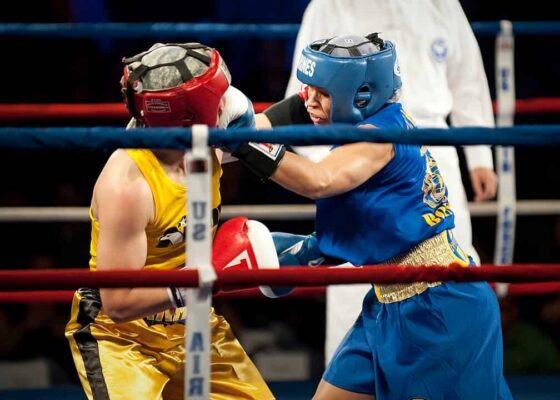
  • Equipment — according to USA Boxing, all athletes must wear open-face headgear without cheek protectors. They wear full-padded gloves and the size is based on the weight class. 10 oz gloves are for boxers weighing up to 139 lbs, while 12 oz is for the ones weighing above 139.1 lbs. They also wear hand wraps, boxing shoes, a groin cup, and shorts.
  • Scoring — Golden gloves use a 10-point must system and the scoring works very much the same as in pro matches. There are 5 judges sitting beside the ring and evaluating the action following strict scoring criteria.
  • Prizes — Golden gloves boxers are not eligible to win any money. The winner receives a belt and a ring.
Golden Gloves Boxers
RELATED:
What Does the “Queensberry Rules” Mean in Boxing?

Golden Gloves Boxing vs. Pro Boxing: Key Differences

One major difference is the competition’s structure. Golden Gloves organizes a tournament-style format where 32 regional teams of amateur boxers advance to the yearly tournament finals.

Professional boxing involves athletes competing against other ranked boxers within their weight class or possibly a ranked boxer from a different weight class. In order to become a champion, pro boxers need to climb the ranks within their division and defeat the current titleholder.

Here is a detailed look at other differences.

Number and duration of rounds

Matches in Golden Gloves are shorter in duration compared with pro-boxing. For the National tournament, athletes compete in three rounds, with each round being 2 minutes long, up to the semi-finals. Semi-finals and finals include 3 rounds, with each round being 3 minutes long.

Pro boxing matches are longer and usually include between 4 and 12 rounds, with each round being 3 minutes long. As you would assume, high-profile bouts and matches for world titles are 12 rounds. Inexperienced boxers who have just got into pro boxing usually compete in 4–6 round matches.

Weight Classes

Golden glove boxing has 10 different weight classes, while pro boxing includes 17 for both men and women. Here is a detailed comparison.

Professional BoxingGolden Gloves Amateur Boxing
Atomweight102 lbs (46.3kg)Light flyweight108 lbs (49kg)
Minimumweight105 lbs (48kg)Flyweight114 lbs (52kg)
Light flyweight108 lbs (49kg)Bantamweight119 lbs (54kg)
Super flyweight115 lbs (52kg)Featherweight125 lbs (57kg)
Bantamweight 118 lbs (53.5kg)Lightweight132 lbs (60kg)
Super bantamweight122 lbs (55kg)Light welterweight141 lbs (64kg)
Featherweight126 lbs (57kg)Welterweight152 lbs (69kg)
Super featherweight130 lbs (59kg)Light middleweight156 lbs (71kg)
Lightweight135 lbs (61kg)Middleweight165 lbs (75kg)
Super lightweight140 pounds (63.5kg)Light heavyweight178 lbs (81kg)
Welterweight147 lbs (70kg)Heavyweight201 lbs (91kg)
Super welterweight154 lbs (70kg)Super heavyweight201 lbs + (91kg)
Middleweight160 lbs (72.6kg)

Super middleweight168 lbs (76.2kg)

Light heavyweight175 lbs (79kg)

Cruiserweight200 lbs (91kg)

Heavyweightunlimited

The salary

Golden Gloves is an amateur sport, meaning athletes earn no money. Amateur boxers are not paid the show money, bonuses for wins, and exciting fights, nor are they allowed sponsorship deals. Even the ones who win the tournament and become National champions do not receive direct payments.

Pro-boxing is the total opposite, as the entire competition revolves around money. Athletes are also known as “prizefighters,” and their salary is based on their level of experience, record, popularity, and many other factors. The ones on the regional scene earn a couple of thousands per fight, while high-level boxers cash out dozens of millions per match.

Although a professional boxing champion can make millions, a Golden Gloves champion is not entitled to any prize money.

RELATED:
Pro Boxing vs. Amateur Boxing — What Are The Differences?

How Do I Become a Golden Gloves boxer?

To compete in Golden Gloves, an athlete must complete an online registration form; the registration deadline is usually up to the beginning of January every year. Each athlete must be above 18 and below 40 years of age and be registered with USA Boxing.

Here is a list of other key requirements:

  • Olympic weight divisions are reserved for US citizens only, while non-US citizens can compete in non-Olympic divisions.
  • Athletes who compete in the open-weight class must have at least 11 or more amateur bouts.
  • Athletes who compete in novice classes must not have more than 10 amateur bouts. 
  • All coaches must be registered with USA Boxing. They also need a current SafeSport certification and a completed background check.

Is Golden Gloves the Only Amateur Boxing Organization in America?

Golden Gloves is not the only amateur boxing organization in the US, though it is undoubtedly among the most popular. The other major organization is the “United States Amateur Boxing Federation,” now known as “USA Boxing.”

USA Boxing” is recognized by the US Olympic Committee and is responsible for promoting Olympic boxing across the US. In total, USA Boxing has 56 local committees grouped into 13 regions.

Which Amateur Boxing Organizations are International?

In contrast, as far as international competition is concerned, there are three major governing bodies in amateur boxing:

  • International Amateur Boxing Association (IBA) — was established in 1946. It is further split into five continental confederations and has 203 boxing federations across the world. Its main task is to sanction Olympic-style boxing events worldwide.
  • International Olympic Committee (IOC) — emerged in 1894. It is responsible for boxing events at the Olympic Games, qualifying tournaments, and trials.
  • International Military Sports Council (CISM) — is an amateur boxing organization founded in 1948 based in Brussels, Belgium. CISM promotes boxing events at the Military World Games and World Military Boxing Championships.

Do You Ever Win Money at Golden Gloves Boxing?

Golden Gloves promotes amateur boxing competitions where athletes do not earn money directly. As in other amateur sports, athletes are not allowed to receive money for participating in Golden Gloves events.

They also do not get any money in bonuses for winning matches and tournaments. According to the rules, they are also not allowed to receive any compensation through sponsorship and endorsement deals.

However, there are ways they can earn money in alternative ways. For example, a lot of experienced amateur boxers work as coaches in the gym.

When Do Golden Glove Boxers Turn Pro?

There is no standardized rule regarding how many matches you must have at the amateur level before turning pro. On one side, each boxer wants to gain as much experience as possible on the amateur scene, where losses do not enter their records. Thus, they can solely focus on skill improvement and growth without thinking much about money, titles, or losses.

Conversely, they don’t want to spend too much time competing as amateurs and waste their athletic prime at this level.

So overall, each boxer must take a methodical and realistic approach to building their career. Together with their coaches, they will evaluate each stage of their journey and progress in the gym and decide when to turn pro at the right time.

Some boxers switch to pro competition with only 10 amateur fights, while others may have hundreds of matches. Each boxer’s journey to becoming a pro boxer varies greatly.

Which Famous MMA Fighters Were Golden Gloves Boxers?

Throughout MMA history, there have been many skilled boxers in the UFC. The following is a short list of the two UFC fighters who used to compete in Golden Gloves before switching to MMA.

Stipe Miocic

Stipe Miocic is a former UFC champion and arguably one of the best heavyweights in history, with four title defenses in total. Before switching to the sport of MMA, Miocic used to wrestle in high school and college.

But he also competed in amateur boxing events, including Golden Gloves, where he became a champion. This mix of top wrestling and boxing background enabled him to quickly make a successful transition to cage fighting and rise to the top.

Inside the cage, he primarily relies on his strong wrestling defense to keep the fight on the feet and his boxing skills to demolish his opponents with perfect timing, power, and precision.

Stephan Bonnar (April 4, 1977 – December 22, 2022)

Bonnar is the former “The Ultimate Fighter” season 1 finalist and middleweight title contender (lost to Anderson Silva at UFC 153). He started his martial art journey in wrestling before moving into boxing and Thai boxing in his early 20s.

During this time, he would compete in Golden Gloves boxing and become a two-time champion in the super heavyweight division. In his UFC career, he shared the cage with some of the best fighters like Jon Jones, Mark Coleman, and Anderson Silva.

In Memory of Stephan Bonnar

Golden Gloves’ Positive Impact on Inner-City Youth

Golden Gloves boxing offers more than just a path to professional boxing. Many people are unaware that Golden Gloves invests in inner cities by introducing children to the sport of boxing, which provides a positive outlet and teaches valuable skills.

Boxing is an excellent way for children to channel their energy and avoid associating with the wrong crowds by learning boxing in the gym instead. With rigorous training and a commitment to the sport, these young individuals gain essential life skills and become more well-rounded in their development.

Despite receiving little media coverage for their charitable efforts, Golden Gloves Boxing makes a significant impact in the community.

Why Is IV Hydration Banned in the UFC? Simply Explained

0

Disclaimer: The contents of this website, such as text, graphics, images and other material are intended for informational and educational purposes only and not for the purpose of rendering medical advice. The contents of this website are not intended to substitute for professional medical advice, diagnosis or treatment.

Using IV (Intravenous: Into a vein) infusions to rehydrate after a brutal weight cut seems innocuous to most people. But you might be surprised to find that this practice has been banned in the UFC since 2015 for reasons related to the safety and fairness of the sport.

According to USADA, the ban on IV use prevents some UFC fighters from utilizing IVs to manipulate PED testing results. The exception to this rule is that fighters with medical exemptions can still use IV rehydration.

We will delve deeper into IV rehydration in MMA, including its advantages and potential health risks, as well as why it is prohibited in the UFC.

What Is IV Rehydration in UFC?

In UFC, athletes sometimes use IV therapy to recover faster from brutal weight cuts. They use intravenous infusions to inject the water and nutrients into their blood veins directly.

To perform IV rehydration, a thin tube called a “cannula” is inserted into a vein. This tube is then connected to a fluid bag containing sterile water and essential nutrients, the same as you see in a hospital setting.

IV rehydration is the most efficient and effective method for replenishing lost nutrients after a weight cut. This method delivers essential electrolytes, vitamins, amino acids, and dextrose directly to your cells via veins. IV rehydration method enables fighters to recover and regain weight more efficiently and far quicker than oral rehydration.

Why Is IV Rehydration Banned in the UFC?

According to USADA, one of the main reasons the IV ban was implemented was to improve fighters’ safety and health. It forces UFC fighters to recover only through oral rehydration to prevent severe complications from using IVs to rehydrate.

• The potential risks and complications of IV therapy include infection, cellulitis,
inflammation of the wall of a vein with associated thrombosis, bleeding, hematoma/arterial puncture, unintended leakage of solution into the surrounding
tissue, air embolism, and needle stick to the provider.

• Inappropriate levels of electrolytes given by IV can also have serious cardiac,
muscular, and nervous system effects, which could result in death

USADA explains the health risks of using IVs for rehydration

Another main reason is that the ban on IVs also stops fighters from using IVs to mask the use of PEDs.

Fighters can use IVs to change the blood test results for PED by diluting the blood or injecting prohibited substances to flush out traces of PED much more quickly from the body. Here’s the explanation of the IV ban from USADA:

The IV rule is designed to protect clean sport and athlete health and safety. In terms
of doping control, it is a fact that IVs can be used to change blood test results (such as hematocrit where EPO or blood doping is being used), mask urine test results (by dilution), or administer prohibited substances so they will clear faster from the body.

USADA
RELATED:
What is Banned/Illegal in the UFC?

How Fighters Cut Massive Weight with IV Rehydration

One other controversial issue is that IV hydration enables fighters to rehydrate much quicker after massive weight cuts. In UFC 284, Islam Makhachev was accused of using an IV to rehydrate himself after a difficult weight cut.

During the weight cuts, fighters are progressively decreasing their intake of fluid, carbs, salt, and other nutrients and they lose up to 15% of their total body weight in five days.

After passing the scale, they have less than 24h to recover. This is often not enough time to recover by oral rehydration, as this method is much slower. Thus, athletes would use IVs to speed up the process and recover their bodies faster than by eating and drinking.

However, in 2015, the United States Anti-Doping Agency (USADA), responsible for testing UFC fighters, came out with the statement that IV rehydration therapy is no longer legal. The only exceptions are fighters who received the therapy for surgical procedures, clinical investigations, or other medical treatments.

Bear in mind that IV rehydration is legal in promotions that are not cooperating with USADA.

What Are the USADA Rules on IV Infusions for UFC fighters?

The initial rules implemented in 2015 restricted the usage of IV rehydration. Athletes could take infusions without Therapeutic Use Exemption (TUE), but only if the non-prohibited substances didn’t exceed 50mL per six-hour period.

However, in 2019, the rules were readjusted to make IV injections stricter, including for those who undergo regular rehydration. Here are the summaries of the new USADA-adjusted rules for 2019.

  • Fighters are not allowed to have IV infusions or injections exceeding 100 mL (equivalent to 6.8 tablespoons) within a 12-hour period, both during and outside competitions, unless medically required.
  • UFC athletes can receive IV infusions or injections as part of their medical treatment, provided it is within the standard of care and administered by licensed medical professionals during hospital stays, surgical procedures, or other medical treatments without the Therapeutic Use Exemption (TUE).
  • If a prohibited substance is to be administered via injection or infusion, fighters must first apply for Therapeutic Use Exemption (TUE) and get approved.
  • Whenever a fighter receives an IV infusion, every detail of the infusion, such as IV substance, volume, time, etc., must be recorded in the medical documentation for USADA to verify.

Is IV Rehydration Banned in Other MMA Promotions?

IV rehydration is not officially banned across all MMA promotions. This rehydration method is only banned by the USADA, which cooperates with the UFC. Having USADA service is very expensive, and most MMA promotions cannot afford it.

MMA fighters from different promotions may use IV therapy during and outside of competition, as they are only bound by the state Athletic Commission’s regulations that oversee the event. Nevertheless, UFC fighters must comply with the directives established by both USADA and the state athletic commission.

The only exception is the Asian ONE Championship promotion. In ONE, athletes are not allowed to lose weight through dehydration. During fight week, they undergo multiple urine tests and must be within the limits of urine gravity the entire time. They are not allowed to dehydrate their bodies or receive IVs packed with water and nutrients to recover.

Oral Rehydration vs. IV Rehydration: What’s the Difference?

The biggest difference is efficiency—the time the nutrients and fluids take to reach their destination. Receiving IV therapy directly into the vein is the fastest, easiest, and most convenient way athletes can recover from brutal weight cuts. However, there are health risks involved with using an IV.

Oral rehydration is different:

  1. You need to eat the right food and drink fluids with your mouth.
  2. The food travels down to your stomach, where digestion begins.
  3. It takes time for the body to digest the food, break down all the nutrients, and send them through the veins to the other organs in the body.

Unlike IV rehydration, oral rehydration is safe.

How Does USADA UFC Detect IV Use?

The way USADA tests or methods they use to determine if a fighter used an IV to rehydrate remains a mystery.

USADA employs scientific techniques to identify banned substances in blood and urine samples. However, fighters are uncertain about how USADA detects the use of IVs.

For instance, if an IV is utilized solely for rehydration with water and essential nutrients without any banned substances, USADA may not have any leads to detect if a fighter has undergone IV therapy unless the fighter confesses to using it or someone else caught them using it.

USADA may not have the technology to catch fighters using IVs, so they may simply be bluffing. In any case, UFC fighters can still use Therapeutic Use Exemption (TUE) to receive IV therapy, creating possible opportunities to exploit this rule.

Donald Cerrone, for instance, claimed that he received an exemption from the UFC to use IV therapy after weigh-ins because he couldn’t recover as quickly as other fighters in the division due to his medical condition.

One thing is sure — thus far, only two UFC fighters have received suspensions for taking IVs after weigh-ins: BJ Penn in 2016 and Paulo Costa in 2017.

How Do UFC Fighters Rehydrate After Weight Cutting?

Since they are not allowed to use IVs, fighters must focus on oral rehydration. Alone or supported by nutritionists, they will carefully plan which foods and fluids they take at which stages to ensure they recover in the fastest, easiest, and most efficient way possible, especially after brutal weight cuts.

Though the process varies between fighters, the recovery usually goes in this order. In the week leading up to a fight, most of the weight lost is water. So first, the focus is on rehydrating the body by drinking fluids rich in electrolytes, without which the body can’t absorb the water.

As soon as they step off the scale, athletes start drinking electrolyte-based sports drinks, natural coconut water rich in potassium and electrolytes, or other products. In the last 24 hours leading up to a fight, they would drink substantial amounts of water and other drinks to return their bodies to optimal working order.

Next, athletes eat high-energy food to compensate for all the lost nutrients during the weight cut and build strength for the upcoming bout. Each meal has to include lean proteins to speed up muscle recovery, healthy carbs to keep blood sugar levels up, and vegetables.

Fighters may eat small meals every 30 minutes to avoid digestive tract issues until their body fully recovers. You may wonder, “How much weight do UFC athletes regain back?” With a well-planned diet, athletes can regain the majority of their weight. For instance, fighters can regain up to 20 pounds in less than 24 hours. On paper, this gives them a big weight advantage on fight night. Still, since every fighter is weight-cutting, they usually end up fighting against someone similar in size.

Former UFC champ Daniel Cormier explains oral rehydration following USADA’s IV ban

How Often Does USADA Test UFC Fighters?

UFC fighters must provide blood and urine samples around 5–6 times per year on average. In 2022, the USADA tested a total of 755 MMA fighters 4,183 times, which is 5.7 tests per fighter.

Of course, some fighters are tested dozens of times, while others are tested just a few times. The exact number depends on various factors. For example, former UFC champ Kamaru Usman was tested 15 times in 2022. On the other hand, Jiri Prochazka needed to provide samples a whopping 64 times in 2022.

Overall, USADA can test a fighter whenever and wherever they want, 365 days a year. Each active UFC fighter is a part of the “testing pool,” meaning they must provide samples whenever the USADA agent pays a visit. Fighters who try to evade USADA testing will face serious consequences, which could lead to the termination of their UFC contracts.

When traveling, fighters are required to notify USADA of their whereabouts. The location doesn’t matter either, as the agency regularly performs tests across more than 50 countries.

Is IV Rehydration Banned in Boxing?

In contrast to the UFC, not all professional boxers undergo testing by USADA unless USADA is hired as a contractor to conduct testing for specific boxing events.

As a result, if USADA is contracted to conduct drug testing for professional boxing events, boxers who participate will be required to follow the same IV regulations as UFC fighters.

USADA also conducts testing by contract for sports and/or events that fall outside this group, such as professional boxing, dance, and Brazilian Jiu-Jitsu.

USADA responds to pro boxing testing

Final Summary

It appears IV therapy remains the most efficient and easiest method to recover from brutal weight cuts. However, fighters who compete in the UFC or other promotion that cooperates with USADA cannot use IVs as this is considered illegal. Instead, they must recover through oral rehydration.

This rule does not apply to MMA fighters who compete in other organizations not regulated by USADA. This includes Bellator, PFL, and many other smaller organizations.