Home Blog

Top 15 Greatest GLORY Kickboxers of All Time

0
Credit: GLORY Kickboxing
Petpanomrung Kiatmuu9 (left), Rico Verhoeven (center), Robin van Roosmalen (right)

GLORY kickboxing is the biggest kickboxing promotion and home to the best kickboxers in the world. GLORY is considered the UFC of kickboxing, where winning the title makes a kickboxer a legitimate world champion in combat sport.

GLORY kickboxing emerged in 2012 in response to the downfall of the legendary Japanese K-1 promotion to continue promoting the sport and putting on exciting shows. Since then, there have been many legendary kickboxers who reached the pinnacle of GLORY promotion, and in this article, we are bringing you the 15 best ones that every kickboxing fan should know about.

15. Remy Bonjasky

Bonjasky is widely regarded as one of the most successful and entertaining kickboxers in the history of the sport. He fought during the heydays of K-1, where he managed to win the prestigious World GP title three times in 2003, 2004, and 2008. These accomplishments along with all the great knockouts he scored solidified his status as one of the greatest fighters ever.

Inside the ring, Bonjasky was a master in using his long reach and athleticism to pick his opponents apart from the distance, primarily relying on heavy kicks and flying knees, which was his signature move. Fans loved him because he never was in a boring fight.

Throughout his career, Remy Bonjasky faced and defeated some of the top names in kickboxing, including Alistair Overeem, Badr Hari, and Jerome Le Banner. After retiring from K-1, he signed with Glory. However, he didn’t win any titles, mainly because he was already out of his prime.

14. Badr Hari

Photo by Paulblank/CC-BY-SA-4.0

Badr Hari is by many considered the Conor McGregor of the kickboxing world. His bad-boy image, charming persona, media presence, and spectacular fighting skills brought millions of fans into the sport, making him a global superstar.

Hari spent his prime years fighting in the K-1 promotion in the 2000s during the glory days. His most significant achievement was winning the K-1 heavyweight title by beating Yusuke Fujimoto in 2008. Despite beating the best of the best, he never won the World Grand Prix.

Hari would sign with Glory in 2016 when he was already out of his prime years. Despite the losing streak, he was still selling out stadiums and putting on solid performances, especially in his two title fights against Rico Verhoeven. In fact, the “old” Hari came the closest to beating Verhoeven of all other contenders who tried.

13. Simon Marcus

Photo Credit: GLORY Kickboxing

Simon Marcus is a former two-time Glory middleweight champion. He grew up training in Muay Thai where, before transitioning to kickboxing, he was able to win the prestigious WBC, WMC and WCK Muay Thai World Titles.

Marcus transitioned to kickboxing in 2008 and started his career by winning 17 fights in a row in a single year. In the following years, he extended his undefeated record to 39-0 before signing with Glory in 2014. Two years later, in 2016, Marcus won the middleweight championship by beating Artem Levin at Glory 21 and successfully defended it against Dustin Jacoby.

Despite losing the title to Jason Wilnis, Marcus bounced back and won the rematch at Glory 40 to become a middleweight champ for the second time.

12. Tyrone Spong

Credit: ESPN.com

Tyrone Spong is among the most underrated kickboxers of all time. He has competed in various weight classes, including Heavyweight, Light Heavyweight, and Middleweight. The majority of fans know him for his legendary fights in promotions like “It’s Showtime,” “K-1”, and “Glory.”

While competing for these three promotions, he beat some of the legends of the sport like Melvin Manhoef, Peter Aerts, and Remy Bonjasky. He also won the “It’s Showtime” 95MAX World Title in 2008 and later the Glory 95kg Slam Tournament in 2013.

In his career, he won 107 fights, 73 of which were knockouts. What made him better than the rest were his exceptional boxing skills, which, combined with his natural athleticism and power, made him one of the most feared kickboxers on the planet.

Apart from kickboxing, Spong has also fought in professional boxing and MMA. As a boxer, Spong compiled an undefeated record of 14–0 and became the WBC and WBO Latino heavyweight champion.

11. Giorgio Petrosyan

Credit: ONEFC

Petrosyan is often referred to as “The Doctor” because of his technical proficiency. With a record of 105 wins and only 3 losses in pro kickboxing competitions, he is widely regarded as the greatest of all time. In his career, he won all the prestigious titles and tournaments such as:

  • Glory Slam Tournament Champion (2012)
  • K-1 World MAX Championship (2009)
  • K-1 World MAX Championship (2010)
  • ISKA Super Welterweight Champion
  • ONE Featherweight champion (2019)

Petrosyan was one of the first to sign a contract with Glory in 2012, and he became the first winner of the 70kg tournament by beating Robin van Roosmalen at the Glory 3 event. He also attempted to win the lightweight tournament, but surprisingly, he lost in the semi-finals to Andy Ristie.

10. Alex Pereira

Credit: Instagram @alexpoatanpereira

Before transitioning to MMA, where he became a UFC champion in two different weight classes, Pereira was doing the same thing in Kickboxing. Like in MMA, he was among the most feared fighters thanks to his incredible punching power and exceptional striking skills.

After winning the WGP World Title, Pereira signed with Glory as one of the hottest prospects. In 2017, he won the middleweight title by beating Simon Marcus at Glory 46.

After defending it three times, he then won the interim Light Heavyweight belt with a brutal flying knee KO over Jason Wilnis at Glory 65 and then unified it by beating Artem Vakhitov at Glory 77 in 2021.

Shortly after, Pereira left Glory to sign with the UFC, where he needed one year to win four fights in a row and beat Israel Adesanya to win the middleweight title.

9. Semmy Schilt

Photo by Amw9991

Semmy Schilt is not only considered the greatest kickboxer of all time but one of the most accomplished combat sports athletes as well. He signed with the Glory promotion as a champion in the following organizations:

  • K-1 World Grand Prix Champion (4 times) 
  • King of Pancrase Champion (Open weight)
  • Multiple Full-Contact Karate Champion

After the collapse of K-1, he transitioned to the newly established Glory promotion in 2012. He fought at the inaugural event where he beat another legend, Errol Zimmerman. After winning another three fights and beating big names like Gokhan Saki and Rico Verhoeven, Schilt got the chance to fight for the heavyweight belt.

At Glory 4, he managed to knock Daniel Ghita out with a wild head kick in the first round to add a Glory championship belt to his legacy.

8. Marat Grigorian
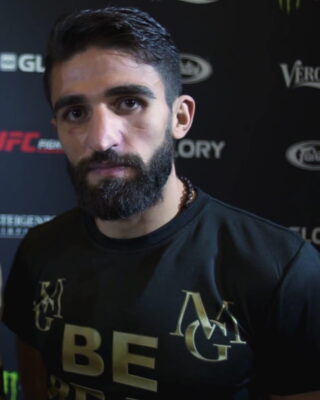
Photo by FIGHTPRESS TV

Marat Grigorian has had a successful career in various kickboxing organizations, including Glory Kickboxing. His fighting style is characterized by relentless pressure, heavy punches, and effective low kicks. Fans love him because of his fearless mindset, durability, and action-packed bouts.

He won the Glory lightweight championship in 2019 with a decision win over the legendary Sitthichai Sitsongpeenong. After two successful title defenses, he would leave the promotion as the reigning champion to sign with ONE FC in 2020. However, he failed to repeat the same success despite fighting for ONE’s featherweight title two times.

His other notable achievements include winning the K-1 Super Welterweight Title in 2015 by knocking out Jordann Pikeur. He also won the K-1 70kg tournament the same year.

7. Robin van Roosmalen

Van Roosmalen is a Glory legend. He is a former champion in two separate divisions, known for his aggressive fighting style. Inside the ring, he always pressured forward and relied on his high strike output and cardio to overwhelm the opponent in the early rounds.

Growing up in a kickboxing family, Van Roosmalen started kickboxing at the age of 3. While growing up, he would also train in other martial arts such as Judo where he obtained a black belt rank. However, he put his entire focus on kickboxing during his teenage years, which proved as the right decision.

At Glory 18, he beat Davit Kina to win the lightweight championship and then defended it two times. After losing a title, he dropped a division to featherweight, where he became a three-time featherweight champion.

Outside of Glory, he also won the “It’s Showtime” 70MAX tournament.

6. Nieky Holzken

Photo by Paulblank

Holzken is widely regarded as one of the top fighters in the sport. He has competed in various weight classes, including Middleweight and Welterweight, and has achieved success in multiple organizations, most notably in Glory.

Holzken is known for his exceptional striking skills, powerful punches, and highly technical fighting style. In his career, he won many World and European titles. However, the most important of them all is the one he won in Glory.

He won the welterweight tournament with a stoppage win over Joseph Valtellini at Glory 13 in Tokyo 2013. But his best year was 2015, when he beat Raymond Daniels twice to win another tournament and the vacant Glory Welterweight Championship.

In addition to his kickboxing career, Holzken briefly transitioned to professional boxing, where he accumulated a record of 14 wins and 1 loss.

5. Cedric Doumbe

Photo by Paulblank

Doumbe is one of the greatest welterweight kickboxers ever. He won the Glory welterweight title twice in his career and was also a World and European champion in other organizations such as WKA and WAKO.

Doumbe discovered kickboxing in his late teens. Despite living in France, he would travel to train in the legendary Meijiro Gym in the Netherlands. Here, he got the chance to train in a gym that pioneered the Dutch style of kickboxing alongside the best fighters and coaches in the world, like Rob Kaman.

In 2021, he retired from kickboxing with a record of 75 wins only 7 losses, and 5 successful Glory welterweight title defenses. Later the same year, he joined the sport of MMA where after 4 wins in a row, he signed with PFL where he knocked Jordan Zebo at PFL Europe 3 in his debut.

Doumbe even signed up with the UFC, but this fight didn’t materialize.

4. Artem Vakhitov

Vakhitov is a Russian kickboxer widely regarded as the most talented striker on the Glory roster. He was trained in multiple striking disciplines, such as karate, Muay Thai, and kickboxing, which enabled him to develop a unique style.

In his long career, he fought both in Muay Thai and kickboxing and was a World Champion in both. His journey in Glory started in 2013, and he won the light heavyweight title three years later at Glory 28 in Paris. He successfully defended it five times before losing a close split decision against Alex Pereira in 2021.

As a dominant champion, he would receive an instant rematch the same year and beat Pereira to become a champion for the second time.

3. Sitthichai Sitsongpeenong

Photo by Changangela92

Sitsongpeenong is one of the rare Thai fighters who has won major world titles in kickboxing and Muay Thai. Before signing with Glory, he fought in Muay Thai, where he won eight titles, including the prestigious Lumpinee Stadium Welterweight title in 2014 in his native Thailand.

As an already accomplished fighter, he looked for new challenges outside of Thailand. In 2016, he shocked the world by beating Robin van Roosmalen at Glory 31 to win the lightweight title. In the next 2 years, he would defend it six times before losing it to Marat Grigorian at Glory 65.

Immediately after, Sitsongpeenong left the promotion to sign with ONE Championship.

2. Petpanomrung Kiatmuu9

Kiatmookao is the best featherweight Glory fighter in the history of the promotion.

He transitioned to western kickboxing from Muay Thai where he was a WMC lightweight champion. He spent the majority of his Thai boxing career fighting in the legendary Lumpinee and Rajadamnem stadiums in Thailand against the best of the best.

In 2017, he won the Gloy featherweight tournament at Glory 39 and then the interim featherweight title in 2018. He successfully defended it 7 times (as of 2024), which sets the record for most title defenses in this division.

In 2022, Kiatmookao signed with the RISE promotion, where he became a champion in the super lightweight division.

1. Rico Verhoeven
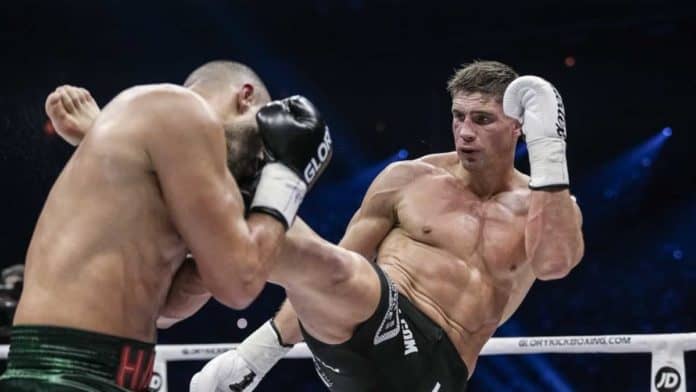
Rico Verhoeven is often considered the greatest heavyweight kickboxer of all time. Though this remains debatable, he is undoubtedly the most dominant Glory heavyweight champion. It’s unlikely that combat sports fans will ever see a heavyweight kickboxer as dominant as Verhoeven is.

Apart from being talented and skillful, Verhoeven is very athletic. He is incredibly fast and agile for a man who weighs close to 280 pounds (125 kg), and this unique mix of power, athleticism, and skill sets him above the rest.

His reign started in 2013 when he first won the heavyweight tournament by beating Daniel Gita at Glory 11. He then beat Gita once again in the rematch to win the heavyweight title at Glory 17 in 2014., Verhoeven would go on to defend his throne more than 10 times and stay undefeated for more than a decade.

Top 10 Most Athletic UFC Fighters in History

0
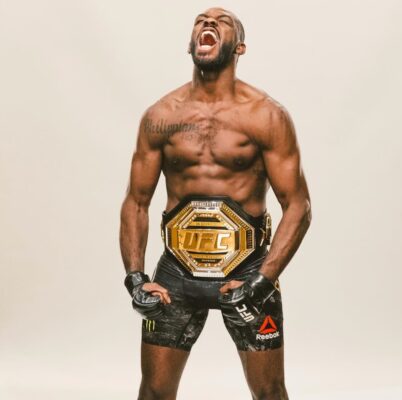
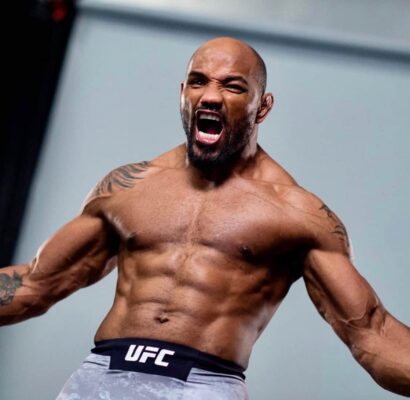
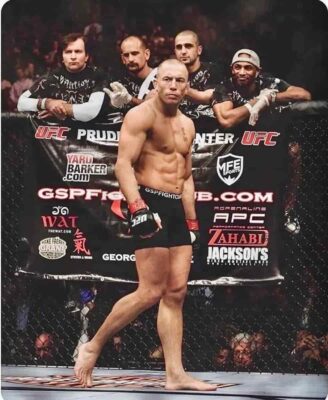
Credit: @yoelromeromma,@jonnybones on Instagram & @GeorgesStPierre on X

MMA is the most complex combat sport that requires all-around striking and grappling skills and high-level athleticism. In fact, athleticism, in particular, represents a decisive factor that often separates top fighters from the rest.

All successful current and past UFC fighters are athletic. Depending on the style, some rely on their exceptional striking speed and endurance to overwhelm opponents like Demetrious Johnson, while others like Brock Lesnar might use sheer strength, explosiveness, and agility to land powerful blows and takedowns. And there are genetically gifted who have it all.

So, in this article, we will take a look at the 10 most athletic UFC fighters in history and how athleticism has impacted and defined their careers.

10. Zabit Magomedsharipov

Magomedsharipov is, by many, the biggest “what-if” in UFC history. He made a name for himself competing in the featherweight division where his unique style that blends unorthodox striking, dynamic grappling, and overall athleticism quickly made him a fan-favorite fighter. His transitions between flashy striking and grappling were flawless, making you feel like you are watching an action movie.

He had an amazing ability to perform in a flow, adapt and change his style in a split second, spot the openings, and execute with perfection. Even when he was using flashy techniques, these shots were landing and causing damage. He was so unpredictable and skillful that some of the wild jumping kicks off the cage and spinning techniques he was using didn’t even have a name.

From his opponent’s standpoint, he was one of those frustrating fighters who are simply good everywhere and hard to read. His agility, quick reflexes, awareness, and calmness inside the octagon enabled him always to stay three steps ahead of his opponents, whether the fight was on the feet or on the ground.

However, just as he reached the top, his career got cut short as he started battling with health issues related to his immune system. Though many fans hoped he would recover and come back, Magomedsharipov unfortunately retired from pro competition.

9. Alexander Volkanovski

Photo by MMAnytt/CC-BY-3.0

Volkanovski is arguably the greatest UFC featherweight of all time, known for his standup skills, top grappling defense, and incredible toughness and durability. Up until the rematch against Makhachev, which he took on short notice, no one really was able to break him inside the cage.

Volkanovski was a professional rugby player in Australia before transitioning to MMA. He used to weigh over 210 pounds at one point, which is hard to imagine considering that he was competing in a 145-pound division.

In his words, he started doing MMA to get in shape because he was overweight before he realized the strength and endurance he developed in rugby could actually serve him well in cage fighting.
He is, by far, the strongest and most athletic featherweight of all time, and the difference in sheer physical strength and explosiveness has always been obvious in his fights.

8. Demetrious Johnson

Photo by Kelly Bailey/CC-BY-2.0

Also known as the “Mighty Mouse”, Johnson is the former UFC flyweight champion, often considered the greatest MMA fighter of all time. He became the first flyweight champion in 2012 and managed to defend his title eleven times before losing it to Henry Cejudo in 2018. During his reign, he had that aura of invisibility around him only the true greats have. He looked untouchable. 

Standing at 5 feet 3 inches, Johnson developed his style around speed and agility. On the feet, he would use quick footwork and angles to protect his space and out-position the opponent to land punches and kicks with incredible speed and accuracy.

But his athleticism really comes into play when it comes to wrestling and grappling as he managed to land takedowns on the best wrestlers like Olympic wrestling gold medalist Henry Cejudo and submit BJJ World Champions like Wilson Reis without actually training in BJJ before starting MMA.

Back in high school, he used to wrestle at Washington High School where he placed 3rd and 2nd in the state in his junior and senior years. During this time, he also competed in track and cross country at the State Championships, which further strengthens the argument that he is among the most athletic UFC fighters ever. 

Overall, Mighty Mouse is one of those athletes who could have picked any sport and succeeded in it.

7. BJ Penn

BJ Penn is a legendary UFC fighter, and the former champion in two different weight classes. The secret behind his success lies in two factors: talent and athleticism.

Penn began training in jiu-jitsu when he was 17 years old, and he became a legitimate black belt after only 3 years and 4 months of training under Ralph Gracie and later Andre Pederneiras. This on its own tells you all about his athleticism, as most BJJ students need between 10 and 15 years to reach the same level.

Penn also became the first non-Brazilian to win the World Jiu-Jitsu Championship at the black belt level.
When he transitioned to cage fighting, Penn needed even less time to develop strong standup skills and become a nightmare matchup for anyone.

Inside the cage, he shined on the feet with explosive and precise striking and was even more dangerous on the mat, where no fighter was close to matching his skills.
 
He stormed his way to winning the lightweight championship in 2003 and then the welterweight championship a year later, in 2004.

6. Jon Jones

Credit: @jonnybones/Instagram

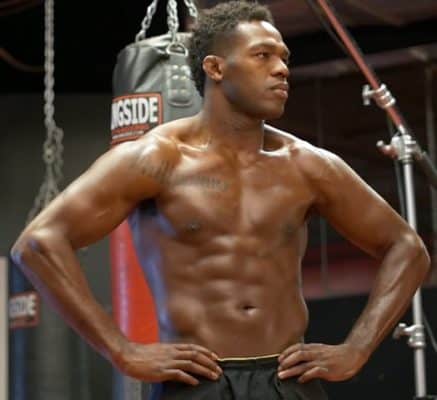
Jones is widely regarded as the best MMA fighter of all time. One of the secrets behind his dominance lies in his athleticism and genetics. The former light heavyweight and heavyweight champion is often described as the most talented fighter who has the perfect athleticism for fighting.

He is tall, has long physical attributes, and is a master at getting the most out of every inch of the advantage he has over the opponent, which allows him to control the octagon like no other fighter. 
Looking at his style, he is a definition of an all-around athlete.

Although he prefers to pick his opponents apart using long-range strikes, Jones has really good defensive wrestling. Visually, he might not look like physically the strongest fighter. However, he is very agile, flexible, and strong enough to prevent his opponents from overpowering him inside the clinch.

Like against Cormier and Gustafson, he would stop the initial wrestling attack, and then use his athleticism to out position the opponent before disturbing their balance using different types of trips and throws. And the same happens when the fight hits the ground. He has a really good top control and the ability to always create space to land vicious elbows and punches from the top.

5. Yoel Romero

Credit: @yoelromeromma/Instagram

Though he never won the championship despite the three title shots, Romero will go down in the history books as one of the scariest and most athletic UFC fighters ever. He transitioned to MMA from wrestling, where he was an Olympic silver medalist at the 2000 Olympics.

But apart from his incredible grappling skills, what enabled him to quickly adapt to cage fighting was his athleticism. His physique was so impressive that many fans didn’t believe one could have such a muscular body and low body fat without performance enhancing drugs. Romero indeed failed the anti-doping test once, but it later proved it was a tainted supplement, so he was innocent.

Inside the cage, Romero was the definition of athleticism. He was explosive, fast, and powerful, and although he didn’t have great cardio, he was good at managing his energy levels throughout the fight.

He would usually stand right in front of his opponent flat-footed, patiently waiting for the perfect opponent to explode and blast you either with a wild hook or flying knee. As a result, Romero’s fights often result in spectacular finishes, frequently featured in UFC highlight reels.

This is a strategy he used to knock many of his opponents out, such as Chris Weidman, Tim Kennedy, and Luke Rockhold.

4. Cain Velasquez

Photo by (The Doppelganger)/CC-BY-SA-3.0

Velasquez is the former UFC heavyweight champion, widely regarded as the best heavyweight of all time. In his prime, he was known for his relentless pace, powerful striking, and exceptional wrestling skills, which enabled him to dominate competition for many years.

The scariest thing about Velasquez wasn’t that he was a knockout puncher; it was his insane cardiovascular endurance, as he could compete at a high pace for full 5-minute rounds without stopping.

Right from the opening bell, he would establish strong forward pressure, set a high pace, drag his opponents deep into the deep waters, and tire them out quickly. No one could keep up with Velasquez back in his prime.

The best example was his second match against Junior Dos Santos, in which he mauled Santos for five rounds. He beat Santos so hard that the Brazilian wasn’t the same fighter after that match.

Apart from the deep gas tank, Velasquez was also very fast for a man his size, agile, especially on the ground, and powerful.

Unfortunately, years of hard sparring and training took a toll on his body, and he never really achieved his full potential due to injuries.

3. Francis Ngannou

ChinaImages/Depositphotos.com

When you take all the factors into consideration, the former UFC heavyweight champion, Francis Ngannou, might be the most athletic UFC fighter ever. Coming from Cameroon, Ngannou started training MMA at 27 years of age.

Although he is not the only fighter starting too late, Ngannou joined the sport without any serious martial arts background. In his own words, he had some basic boxing training in France, and that was it.

But what Ngannou had was incredible genetics, athleticism, and the will to learn and succeed. He grew up working in the sand mines since he was a child, which helped him develop unique muscle strength that the MMA world hadn’t seen before. When he arrived at the UFC, he was looking like a professional bodybuilder.

However, this is a functional strength we are talking about here, as Ngannou managed to evolve and grow into a skilled fighter in a short period of time. In the beginning, he managed to make up for the lack of all-around skills with sheer power and aggression.

His ability to end fights with a single punch has solidified his reputation as one of the most feared heavyweights in UFC history. But he would also develop a strong takedown defense along the way to complement his striking base.

After becoming a champion, he would leave the UFC as a champion to pursue a career in pro boxing. In 2023, he faced Tyson Fury, arguably the best boxer of this generation, and he was able to go toe-to-toe with him and even score a knockdown. This on its own confirms that Francis Ngannou is one of the most athletic UFC fighters ever.

2. Brock Lesnar

Photo by Miguel Discart/CC-BY-SA-2.0

Brock Lesnar is the former UFC heavyweight champion and arguably the most intimidating fighter in UFC history. When he transitioned to MMA from WWE, many people wondered how he would handle the top UFC competition.

However, Lesnar was able to make up for the lack of training time and experience with superior athleticism and a fearless mindset. His imposing physical presence, coupled with unparalleled athletic abilities, made him a force to be reckoned with inside the octagon. Standing at 6 feet 3 inches and weighing around 265 pounds, Lesnar’s sheer size alone commanded attention.

But despite being built like a tank, Lesnar was very agile, fast, and mobile for a man his size. He built his success on explosive wrestling attacks and the strong top control he used to demolish many of his opponents. He was also very durable, as seen against Shane Carwin, where he absorbed a lot of damage before turning the tables around and finishing Carwin on the ground.

This unique blend of size, strength, and agility made him one of the most athletic UFC fighters ever and iconic as well.

1. George St. Pierre 

Credit: @GeorgesStPierre on X

George St. Pierre (GSP) had it all. He is widely regarded as the best welterweight fighter and managed to win the middleweight title in the closing stages of his career. On top of that, many fans agree that he is the most athletic UFC fighter of all time.

Although GSP had an all-around skillset, what also set him apart was his well-rounded athleticism, genetics, and work ethic. GSP was fast, explosive, agile, and very flexible, and his athleticism and dedication to training enabled him to learn quickly, adapt, and experiment with his style.

He would train in gymnastics to improve his MMA game, do all kinds of calisthenics workouts, and combine his intense training regimen with advanced nutrition to always stay a step ahead of the competition. Overall, he elevated the concept of a well-rounded athlete to another level.

For example, GSP came into MMA as a striker with a strong background in karate. However, he built his success inside the UFC octagon utilizing high-level wrestling, top control, and submission games. He beat and outwrestled some of the best NCAA Division 1 wrestlers, like Matt Hughes and Josh Kosheck, without actually training in wrestling before MMA.

Overall, GSP is a total MMA package, as he had it all. His fighting IQ was off the charts, which, combined with all-around skills and superior athleticism, made him unbeatable. 

What Is the Main Difference Between BKFC and UFC?

0
Photo Credit: IG @bareknucklefc & ChinaImages/depositphotos.com

Many people confuse the “Bare Knuckle Fighting Championship (BKFC)” with the “Ultimate Fighting Championship (UFC)” for two main reasons. First, the name sounds similar, and second, many former UFC fighters compete in the BKFC. But what is the exact difference between these two sports?

BKFC is a promotion that organizes bare-knuckle boxing events where the rules are similar to boxing using only handstrikes, but without gloves. In contrast, the UFC promotes MMA matches in which fighters can strike with all limbs, wrestle, and fight on the ground.

This is a basic explanation of how these two sports differ from one another so be sure to read the rest of this article to learn more about it.

What is BKFC?

Bare Knuckle Fighting Championship (BKFC) is a combat sports promotion based in the US. As its name indicates, the promotion organizes bare-knuckle boxing matches on the global level. It is considered the pioneer of bare-knuckle boxing in modern times.

Although bare-knuckle events were popular in the 19th century, BKFC is the first sanctioned one in modern times. It was founded in 2018 by the former pro boxer David Feldman, and the inaugural event took place on June 2nd, 2018, in Cheyenne, Wyoming.

At first, this form of entertainment received a negative backlash from the majority of the combat sports community. However, despite being visually brutal, matches managed to break through the initial rejection and reach a high level of popularity. In fact, BKFC is slowly becoming a mainstream sport.

What is UFC?

UFC is the biggest MMA promotion and an absolute leader in the industry. The company promotes a sport that embraces the concept of freestyle combat, where athletes from different fighting disciplines compete against each other under limited rules.

To a certain extent, it’s the closest humans have come to legal street fighting. The rules enable fighters to strike with all limbs, use takedowns to advance to the ground, and finish the fight with chokes and joint locks. So, visually, it looks a lot like actual fighting.

UFC is home to the best fighters the MMA world has to offer, and winning the UFC belt in one or more weight classes makes you a legitimate world champion.

Apart from organizing the best and largest events worldwide, UFC is also a strong brand. Since its establishment in 1993, the promotion has gone through many ups and downs to become one of the most popular mainstream sports in modern times. Though it has organized over 300 pay-per-view events, 700 in total, the UFC brand is still growing far more than any other MMA organization.

The major difference between BKFC and UFC

BKFC and UFC are both private companies that promote different combat sports. Here is a detailed explanation of all the differences between the two:

Concept and techniques

BKFC promotes bare-knuckle boxing matches where fighters hit each other without wearing full-padded gloves. Like regular boxers, they use similar techniques like punches, footwork and head movement, and they are also allowed to fight inside the clinch. They use the same offensive and defensive techniques. However, due to the lack of gloves, they need to adapt them to their environment.

The UFC is more versatile because it allows fighters to compete in various fighting scenarios, whether it is standing up or on the ground. On the feet, they can strike using punches, kicks, elbows, and knees and fight inside the clinch. They can wrestle using judo and wrestling moves to score takedowns and then fight on the ground using positioning, chokes, and joint locks.

Each UFC athlete must develop all-around skills by training in multiple disciplines such as Muay Thai, Boxing, BJJ, and Wrestling.

Rules of competition

Official BKFC rules

  • Match duration: each bout is 5 rounds with each one being 2 minutes long. There is a 1-minute break between each round.
  • Fighting area: matches take place inside the circular four-rope ring called a “Squared circle.”
  • Gear: fighters are allowed to wrap and tape the wrists, thumb, and mid-hand. They wear boxing shoes, shorts, and mouthguards. 
  • Knockdown rule: if a fighter gets knocked down, they have 10 seconds to get back to their feet and show the referee they have recovered enough to continue.
  • Ways to win: knockout, disqualification, doctor stoppage

UFC follows the “Unified Rules of MMA

  • Match duration: regular matches are 3 rounds while championship bouts and main events are 5 rounds. Each round is 5 minutes long, and there is 1 minute break between each round.
  • Fighting area: fighters compete inside the octagon-shaped platform with cage walls called “octagon.” There are two variations known as “smaller” and “full-size” octagons.
  • Gear: fighters compete wearing 4 oz open-fingered gloves, hand wraps, shorts (sports bra), mouth guard, and groin guard. 
  • Ways to win: Knockout, submission, disqualification, doctor stoppage

Regularity/Legality

BKFC is not as widely accepted or regulated as MMA. BKFC events are not legalized in all the US states, for instance, mainly because many people consider it “barbaric” and too violent for the broad audience. There are many countries around the world where this form of entertainment is illegal.

BKFC is legal in states like Florida, Kansas, Nebraska, and Mississippi, as well as in European countries such as England and Bulgaria.

UFC is different because the sport of MMA is legal in all US states and the majority of countries worldwide.

Which one is a safer combat sport?

MMA is a safer sport overall because apart from striking, fighters also spend a lot of time wrestling on the feet and grappling on the ground, while bare-knuckle boxers spend the entire fight time exchanging hard blows to the head without the gloves.

However, there is also an argument that BKFC is safer due to the lower concussion rate. Here are some of the key arguments from both sides:
BKFC has more head strikes

BKFC boxers use only their hands to land damaging shots, so fighters absorb far more punches to the head than MMA fighters. To make matters worse, the lack of gloves makes it harder for the fighters to block, so the majority of these shots land on the target. The rules also enable clinch fighting, which further increases the head striking rate.

MMA is different because fighters often transition between striking and ground fighting. According to statistics, UFC fighters spend 38.1% of fight time (1:54 minutes per 5-minute round) on the ground. 

BKFC has more facial injuries

Due to the lack of padded gloves for both hand and face protection, bare-knuckle boxing involves a much higher rate of facial injuries. Look at any random match that went to a decision, and you will see fighters’ faces looking like they have survived a head-on car crash. Landing a shot with your knuckles tears off the skin like a knife, so severe lacerations and fractures are common.

MMA also has a problem with facial injuries, but far less than bare-knuckle.

Striking in BKFC is less powerful

Although BKFC visually looks brutal, fighters actually absorb less powerful shots than in other combat sports, including MMA. Due to the lack of gloves and supports for the wrists, it’s much easier for fighters to injure their hands. Just a single power punch to the forehead or that lands at a wrong angle can easily break the wrist or cause other injuries.

As a result, bare-knuckle fighters must be strategic and rely more on technique and less powerful shots to do damage. These punches usually cause a lot of skin lacerations, severe bleeding, or swelling, but on the other side, there is less concussions.

Padded gloves, both in boxing and the UFC, protect the fighter’s hands and enable them to throw each shot with full power without worrying much about hand injuries. As a result, there are more power shots and concussions.

However, detailed studies on the dangers and injuries in bare-knuckle boxing are yet to be published.

UFC Fighters Who Fought In BKFC

Many former UFC contenders and champions have transitioned to the BKFC championship. One of the reasons why BKFC is rising at a high rate is because the following UFC fighters are bringing in massive viewership. 

Some notable fighters who were known to have participated in BKFC include:

  • Artem Lobov — is a former UFC fighter who competed in the 145-pound division. Apart from putting on exciting fights, he was also known as Conor Mcgregor’s best friend while the Irishman was at the peak of his fame. He was the first UFC fighter to sign with BKFC, and he famously beat the former pro boxer Paul Malignagi. 
  • Chris Leben — is the former UFC 185-pound champion who signed with the BKFC in 2019. Despite being out of his prime, Leben managed to win a fight via knockout within the first minute of the match by knocking out another MMA fighter, Justin Baesman.
  • Eddie Alvarez — is the former UFC lightweight champion and the most famous MMA fighter to compete under the BKFC banner. After making a successful debut in 2023, he lost the middleweight fight against Mike Perry at the BKFC 56 event.
  • Mike Perry — is another UFC contender who discovered massive success in bare-knuckle. In his career with BKFC thus far, he beat the former Bellator champion, Michael Page, in a decision, and he famously knocked out Luke Rockhold.
  • Luke Rockhold — is the former UFC middleweight champion. After retiring from MMA, he signed up with BKFC to fight Mike Perry, but he lost via TKO in the second round.

Why did the UFC stop bare-knuckle fighting?

When UFC started in 1993, wearing the gloves was optional with the majority of fighters choosing not to wear them. Therefore, early UFC fighters used to fight with bare knuckles. The gloves were then introduced much later at UFC 14 in 1997.

Many people wonder – why did the UFC stop bare-knuckle fighting? There are two major reasons why the UFC shifted away from bare-knuckle style.

To improve the public image

The early UFC events were brutal and, in the eyes of many people, barbaric. Although the concept of freestyle combat was exciting, the UFC needed to introduce certain rules to make its product a legitimate combat sport.

The majority of people associate bare-knuckle fighting without weight classes and rules with the barbaric slugfests from medieval and ancient times. Modern society simply rejected the idea of watching bare-knuckle MMA, and the UFC received a huge negative backlash.

UFC decided to introduce gloves to make it more suitable for a broad audience. As a result, the matches looked safer and the athletes more professional. Also, the glove design was different from boxing or kickboxing, which made the sport authentic.

To make the sport regulated

The early UFC events were so violent that almost every U.S. state refused to sanction the events. This also made it harder for the UFC to get broadcasting deals with popular sports networks. Things reached breaking point when Senator John McCain famously described UFC as “human cockfighting” and advocated for its ban.

To make the sport regulated and legal in all US states and worldwide, the company needed to make the sport safer and visually more appealing. This led to the introduction of weight classes and gloves that significantly improved the safety of the events.

How popular is BKFC compared to UFC?

Although BKFC is rapidly growing in popularity, the UFC is way more popular. This is mainly because the UFC has been around since 1993, while BKFC is a relatively new sport that has yet to reach its full potential in the future. However, it’s unlikely that BKFC will surpass the UFC’s popularity in the near future.

The following search trend on Google indicates that UFC is significantly more popular than BKFC:

Related Questions

Does bare-knuckle boxing hurt your hands?

Yes, bare-knuckle boxing can significantly increase the risk of hand injuries compared to traditional boxing with padded gloves. The absence of gloves means that the hands are not protected from the impact of punches, and as a result, fighters are more susceptible to injuries such as:

  • Fractures
  • Dislocations
  • Cuts
  • Other injuries to the bones and soft tissues of the hands.

What is safer bare-knuckle or boxing?

Both sports carry risks, and safety can depend on various factors, including regulations, techniques, and individual circumstances.

In bare-knuckle boxing, fighters may experience more cuts, bruises, and damage to the hands due to the absence of gloves. On the other side, traditional boxing gloves are designed to protect the hands and reduce the impact on the opponent’s face, potentially resulting in fewer hand injuries but more head trauma.

The reality is – both sports involve striking the head, which can lead to head injuries. At first, boxing with gloves might look like a safer option, and bare-knuckle is visually brutal and barbaric.

However, the use of gloves in boxing may contribute to fighters taking more punches to the head without immediate damage to the hands. The glove protection enables them to throw each shot with full power without the risks, which significantly increases the risk of brain injuries in the long run.

There is an argument that bare-knuckle is safer. On one side, landing power shots without the gloves can easily result in hand fractures so in order to win and go through the match, fighters need to adapt and compromise. Instead of relying on landing with full power, most of them prefer to land shots with less force and be more strategic, which lowers the risk of brain injuries.

Top 11 Dirtiest Fighters in UFC History

0
Credit: Ig @joshkoscheck (centered right pic)

So, if you are not familiar with it, what is considered dirty fighting in MMA? In general, the fighters who fight dirty are the ones who use techniques and tactics that are either on the brink of being illegal or are willingly breaking the rules. Some of the most common dirty fighting moves you can see include grabbing the fence or opponent’s shorts, striking the groin area, poking the eyes, holding on to submission for too long, etc.

Most MMA fighters consider “dirty fighting” highly frowned upon, despite some occasionally resorting to it for an advantage in a match. As you guessed, some fighters are notoriously known for fighting dirty more than others.

In this article, we will take a closer look at the 11 fighters who have a “dirty fighter” reputation and explain why they received this notorious status.

11. Igor Severino

Credit: UFC

This young man, Severino, who was only 20 years old when he first debuted in the UFC on ESPN 53, just made our list. Severino was barely into the first fight in the UFC and already left his mark—yes, he literally left his mark. With his UFC debut, Severino took dirty fighting to the next level.

During the fight between Severino and Andre Lima, in the middle of the second round, Lima suddenly complained to the referee to look at his arm. After briefly stopping the fight to examine Lima’s arm, the referee immediately disqualified Severino for biting.

Initially, viewers appeared confused, as it did not seem severe enough to warrant stopping the fight. But upon zooming in, a camera captured a large bite mark on Lima’s tricep.

This bizarre incident led to Severino holding the unfortunate record of being the first fighter in UFC history to face disqualification for biting their opponent. Unsurprisingly, the UFC immediately released Severino from his contract the following day.

10. Cheick Kongo

Although he never won the UFC title, Cheick Kongo remains one of the scariest strikers in MMA history. Just seeing him standing inside the octagon with his impressive physique was as intimidating as it gets.

But apart from his great performances, fans also remember him as a dirty fighter who, for some reason, had a tendency to land repeated strikes to the groin area and, surprisingly, often get away with it without a point deduction or any other punishment.

The best example was his fight against Mirko Cro Cop at UFC 75. Despite winning the fight, Kongo faced a lot of criticism for landing several knee strikes to the groin area. Shortly after, MMA fans gave him the nickname “Cup Cheick”. A similar thing happened at UFC 120 against Travis Browne in a match where Kongo lost 1 point on the scorecards because he repeatedly grabbed Browne’s shorts.

Despite a few memorable incidents that made him known as a dirty fighter, Kongo’s legacy as a sports legend with almost 50 pro fights remains unaffected. However, he did make our list of dirty fighters.

9. Vitor Belfort

Photo Credit: UFC

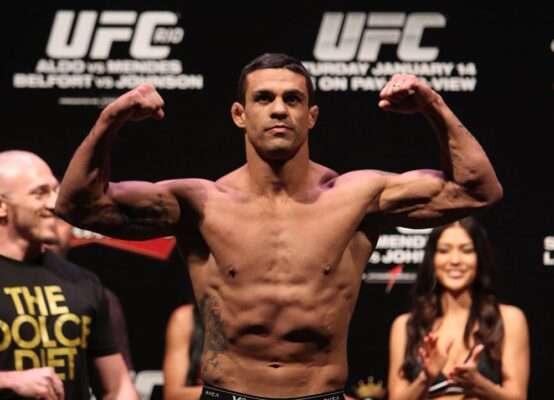
Vitor Belfort is one of the scariest UFC fighters ever known for his explosive striking, impressive knockout power, and highly underrated BJJ. Apart from winning the light heavyweight title in 2004, the majority of fans also know him as a dirty fighter.

From 2012 to 2014, Vitor was able to resurrect his career because of his usage of testosterone replacement therapy (TRT), which was allowed at the time. He went from looking like a washed-up veteran to having the physique, speed, and power of a superhero, knocking people left and right and earning another title shot in the later stages of his career.

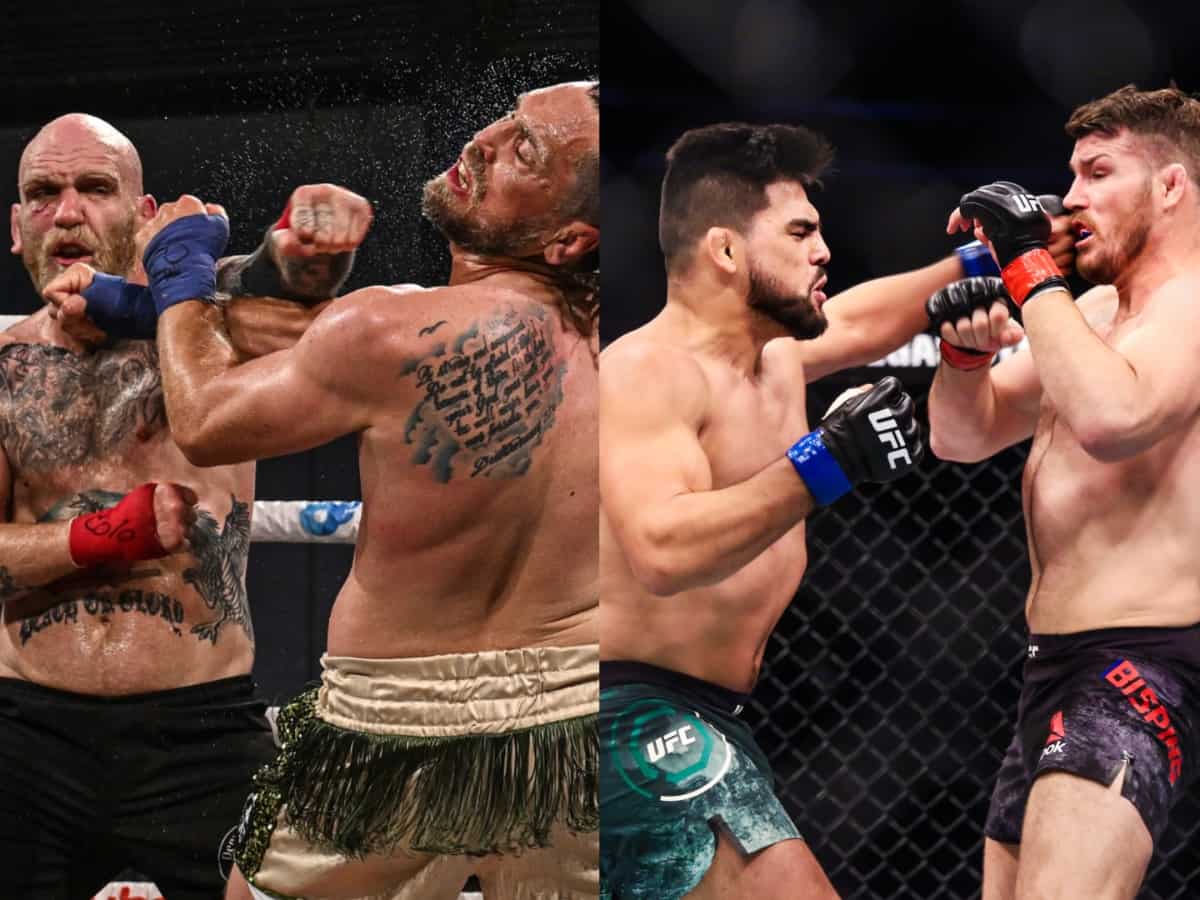
But what really propelled him to become known as a dirty fighter was the incident that happened in his fight against Michael Bisping at the UFC on FX 7 in 2013, which Bisping revealed years later.

During their fight, Belfort landed a devastating head kick on Bisping, resulting in a severe injury to his right eye that unfortunately led to almost complete blindness.

But what sets Bisping’s eye injury apart from other serious injuries is that we now know Vitor’s use of TRT at the time significantly enhanced his kicking power. The impact of the kick on Bisping’s eye was almost equivalent to being struck by a hard-swinging baseball bat.

It goes without saying that Vitor didn’t earn his reputation as a dirty fighter by using dirty fighting techniques. Vitor’s reputation as a dirty fighter stems from his unethical methods to gain size and strength, as well as his complete disregard for the possibility of inflicting severe injuries on his opponent solely to win fights.

8. Paul Daley

Photo Credit: UFC

For years, Paul Daley was considered to be the best and most technical striker in the UFC, with notable achievements including a devastating knockout win over Martin Kampmann in his UFC debut.

However, his UFC journey took a controversial turn at UFC 113 in 2010 when he faced Josh Koscheck in a title eliminator bout. It all started when Koscheck simulated being hit with an illegal knee in the first round, which ended in Daley losing a point off his scorecards. Koscheck’s ability to wrestle till the rest of the fight and control Daley only added jet fuel to the fire.

The key moment came in the closing moments of the bout after the final bell had rung. With Koscheck celebrating, Daley decided to approach him from behind and sucker punch him in the face, pulling one of the dirtiest moves in UFC history. This unsportsmanlike conduct resulted in his immediate release from the UFC despite him being one of the most popular contenders in the division.

REALTED:
10 Fighters Banned For Life From the UFC

7. Matt Lindland

Photo by Pete Forsyth

At one point in his career, Matt Lindland was a serious UFC contender. Although he is not a stylistically dirty fighter, nor do fans recognize him as such, Lindland was a really dirty fighter per se.

Back in the day, fighters would say Lindland would not shower days leading up to the fight, and he used these unhygienic tactics to repulse his opponent. In fact, some rumors suggest he used to not shower for months before his fights.

The worst part was – Lindland is a former Olympic silver medalist in Greco-Roman wrestling meaning that many of his opponents were forced to get up close and personal with him inside the cage. And one of them was Quinton Rampage Jackson who called Lindland out after their fight at WFA in 2006.

“Man that was like fighting a smelly skunk. Matt, you need to take a shower”

Quinton Rampage Jackson

Bizarrely, this strange tactic appears to be perfectly legal in MMA, as there is no rule requiring fighters to take a shower before the fight. They must keep their nails short, for example, but the disgusting smells are fine. The effectiveness of his tactic and how it impacted his career is a mystery. However, despite being unhygienic, Lindland was a legendary fighter in his own right.

6. Josh Koscheck

Credit: Wikipedia/CC-BY-SA-2.5

Despite never winning the UFC title, Koscheck remains one of the most popular welterweights of all time, mainly thanks to his bad-boy personality, trash talk, and intense rivalries. He was a master at getting on his opponent’s nerves, and considering his unsportsmanlike behavior inside the cage, he also enraged a lot of fans with the way he used to fight.

One of the best examples of why Koscheck was a dirty fighter was the incident against Paul Daley. In the first round, he simulated/faked that he was hit with a knee to the head while being grounded, while in reality, the knee completely missed his head. He acted like he was seriously hurt, which resulted in Daley losing a point off the scorecards. A dirty move.

Interestingly, he did something similar two months earlier when he fought Anthony Johnson at UFC 106. This time, Johnson attempted to land a knee to the head while Koscheck was grounded. Although the knee hit Koscheck’s forearm, it appears on the replay that it completely missed his head. But this didn’t stop Koscheck from going to the ground and faking that he was seriously hurt, and Johnson lost a point. Then, in the second round, he poked Johnson in the eye twice and managed to get away with it without losing a point.

As you notice, Koscheck had a reputation for fighting dirty during his fights, but he was far better known for overexaggerating the impact of illegal shots to draw a penalty call from a referee against the opponent.

Although many view overexaggerating as dishonest, it is sometimes effective in securing a victory. By using these questionable tactics, Koscheck was able to gain an advantage over his opponents and ultimately achieve some success in the cage.

5. Jon Jones

Photo Credit: Vengo Films

Jon Jones is a former light heavyweight and heavyweight champion who is widely regarded as the greatest of all time and certainly the most talented athlete in MMA. Many fans also consider him to be one of the dirtiest fighters for two main reasons: drug tests and illegal techniques.

First, he failed a drug test prior to UFC 182 as he tested positive for benzoylecgonine. Then, he was pulled from UFC 200 after testing positive for using two estrogen blockers, and he received a one-year suspension.

A year later, in 2017, Jones was subject to another anti-doping violation involving the banned substance Turinabol, leading to a 15-month suspension.

These incidents have raised questions about Jones’s other fights and whether he had been using banned substances the entire time.

Next, Jones has faced criticism for employing questionable techniques during fights. Eye pokes, in particular, have been a recurring issue in his bouts. As a fighter banking on his reach, Jones tends to extend his leading hand in front to protect his range, which often unintentionally leads to poking his opponents in the eyes and compromising their vision.

Additionally, there have been instances where Jones utilized elbows in ways that some opponents and fans deemed illegal or at least on the border of legality, such as when he got disqualified after he hit Matt Hammil with an illegal “12 to 6” elbow.

RECOMMENDED FOR YOU:
What Is Dirty Boxing In MMA/Boxing?

4. Mike Kyle

Photo by Michael Dunn

Mike Kyle was a force to be reckoned with back in 2004 when he joined the UFC as a powerful striker. He made the perfect debut by spectacularly knocking out Wes Sims at UFC 47, but not without controversy.

After the match, Sims protested that Kyle had bitten him on the chest, and he showed a bite mark during the post-fight media work. Despite the obvious evidence, Kyle got away without punishment.

Kyle would score one more win inside the UFC octagon before leaving to fight in other promotions, where he continued to use controversial tactics. For example, he landed an accidental eye poke in his Strikeforce debut against Krzysztof Soszynski, and the bout ended as a technical draw.

In his next fight, he was disqualified after landing a vicious soccer kick to the grounded Brian Olsen and following up with ground and pound. Even when the referee tried to push him away, Kyle continued to land shots until the assistant referee, Herb Dean, jumped in to save Olsen. In the end, he received an 18-month suspension for the incident.

After all the incidents, it’s fair to say Kyle is not remembered as the most respectful MMA fighter among the fans.

3. Gegard Gordeau

Credit: Tapology.com

Gordeau is one of the pioneers of MMA, best known for fighting at the memorable UFC 1 event, where he reached all the way to the finals. Although he competed during the early days without even the basic rules like rounds or weight classes, Gordeau was arguably the most violent and dirtiest fighter of them all.

For example, the UFC 1 didn’t include any rules. Fighters agreed on only one gentleman rule — no biting, and Gordeau managed to break it. In the finals, Royce Gracie managed to catch him into the arm triangle choke. Just before the finish, Gordeau decided not to go down without a fight, and he had bitten Royce by the ear.

Two years later, Gordeau would fight in the famous Japanese Vale Tudo tournament against Yuki Nakai. At one point, Nakai initiated the clinch and Gordeau started gauging his eyes with his thumb. As a result, Nakai lost sight in his right eye, ending his career.

When asked about the incident, Gordeau said that if there ever is a rematch, he would again attack his eyes. This, on its own, gives you a good insight into how brutal and dirty Gordeau was.

2. Gilbert Yvel

Credit: Instagram @gilbertyvelofficial

Yvel was known for his striking abilities and extensive experience in various MMA promotions before joining the UFC. Known for his aggressive fighting style, he had notable victories in premiere organizations such as PRIDE FC over top opponents such as Cheick Kongo and Semmy Schilt.

However, before joining the UFC, Yvel had already established himself as a notoriously dirty fighter. For example, at PRIDE FC 16, he disqualified himself after repeatedly raking his fingers across Don Frye’s face and pushing his thumb into his eyes to prevent a takedown. Then, in 2004, against Atte Backman, he sucker punched the referee in the head, dropping him to the canvas, and then kicked him while he was down.

Unfortunately for Yvel, despite his great accomplishments in MMA, his reputation for dirty fighting will always cast a shadow over his career.

1. Rousimar Palhares

Objectively, Palhares certainly belongs among the best grapplers in UFC history. He was renowned for his exceptional grappling skills, particularly his proficiency in leg locks. However, his repeated dirty moves inside the cage completely overshadowed any praise for Palhares’ superior grappling abilities.

Palhares became infamous for refusing to release the submission hold after his opponents tapped out. Despite the opponent tapping in pain and the referee trying to pull him off, Palhares would, for whatever reason, decide to hold on to a submission for a bit longer, putting the opponent at risk of a serious injury.

One notable incident occurred at UFC 111 against Tomasz Drwal. After securing a heel hook submission in the fight’s opening minute, Drwal started urgently tapping moments later, with Palhares deciding to hold onto the submission for longer. This was dangerous because leg locks, in general, impose a greater risk of injuries than most other submissions, so letting it go on time is very important—but not for Palhares.

Despite receiving negative backlash from almost everyone in the MMA community, Palhares repeated the same dirty move three years later. At UFC Fight Night 29, he caught Mike Pierce into a heel hook, and once again, he refused to let it go despite Pierce tapping a total of eight times. The very next day, Dana White came out with a statement they were releasing Palhares for his unsportsmanlike behavior.

Still, Palhares never learned from his past mistakes. After moving to WSOF, the Brazilian continued to do the same. The first victim was Jon Fitch at WSOF 16, and then Jake Shields at WSOF 22 (see below video). As a result, Palhares was stripped of the title and suspended indefinitely.

Jake Shields gets very upset with Palhares for not letting go of the submission hold on time

What is Muay Thai Kickboxing? A Beginners Guide to Muay Thai

0
macky_ch/depositphotos.com

Muay Thai kickboxing has become one of the most popular combat sports practiced by millions of people worldwide. But despite its rapid rise in popularity, many people still don’t know what it is or how it differs from other martial arts.

Muay Thai is a combat sport that originated in Thailand and has been around since the 19th century. As a concept, Muay Thai primarily focuses on standup fighting and striking using eight points of contact: hands, legs, knees, and elbows.

This is just a brief explanation of what Muay Thai kickboxing is so be sure to read the rest of this article to learn more about its history, techniques, effectiveness, training, and how it compares to other martial arts. 


History of Muay Thai

Experts believe the earliest records of Muay Thai can be traced back to the 16th-century Siam Kingdom and martial arts such as Bokator. Initially, it was developed as a military hand-to-hand combat system used by Siam soldiers in wars against the nearby countries and named “Muay Boran.”

Muay Boran quickly became one of the most popular activities in the region, with people organizing matches and tournaments for various ceremonies, festivals, and other celebrations. The rise of this form of entertainment was noticed by King Rama V in the 19th century, who was also a big fan of fighting.

So much so that the King himself decided to regulate and standardize the sport by introducing official rules, safety gear, and standardization of techniques training, which ultimately made Muay Thai an official sport. The word “Muay” translates to “boxing,” so the full name “Muay Thai” means “Thai boxing.”

Later on in the 20th century, the sport expanded beyond Thailand’s borders, mainly thanks to the rivalry between Japanese Karate and Muay Thai. The matches between these two combat systems were very popular and also enabled people from all parts of the world to get to know the art of Thai boxing.

The popularity of the sport got even bigger with the rise of modern MMA, where Thai boxing became established as the most dominant striking martial art of them all. It proved to be more effective than conceptually similar arts such as boxing or Karate. Muay Thai’s popularity in MMA is one of the main reasons why many people choose Muay Thai over other martial arts.

What are the major Muay Thai techniques?

Following is a breakdown of all major Muay Thai techniques and elements:

Kicks

Thai boxing puts a lot of emphasis on a diverse range of kicking techniques, very similar to the ones in other arts like Karate and Taekwondo

  • Roundhouse — is a popular kick fighters use to target the opponent’s body, leg, or head. They land with their shin and leg fully extended, which increases the power and damage. 
  •  Teep kick — is also known as front/push kick and is a popular technique used to disrupt the opponent’s balance, protect the range, or even do damage to the abdomen. 
Muay Thai teep kick
  •  Switch kick — is a signature Muay Thai technique that involves a quick stance change upon execution. This sudden switch creates an element of surprise, making it challenging for the opponent to anticipate the incoming kick.
Muay Thai switch kick

Punches

The punching techniques are mainly used for blocking, setting up the kicks, or closing the distance. However, with the evolution of styles and tactics, more and more fighters started to incorporate advanced boxing techniques and movement into their game. 

  • Jab
  • Cross
  • Hook
  • Uppercut
  • Superman punch

Knees

Knee strikes play a key role in Muay Thai, especially inside the clinch, where this type of strike can do a lot of damage to the opponent’s head or body. 

  • Straight knee  involves thrusting the knee directly forward, targeting the opponent’s stomach.
  • Diagonal knee — targets the opponent’s midsection at an angle, mainly the rib section or liver.
  • Horizontal knee — is executed by swinging the knee horizontally and can effectively disrupt balance. 
  • Flying knee — is an acrobatic technique in which a fighter leaps forward to deliver a knee strike to the head or body. This technique usually carries a lot of power and momentum.
Muay Thai flying knee

Elbows

Muay Thai’s elbow strikes are devastating and diverse. Their impact often causes cuts and does significant damage, which makes them very effective. The most commonly used elbows in Muay Thai are:

  • Downward Elbow – executed vertically and effectively cuts through the opponent’s defense.
  • Spinning Elbow — involves a rotational movement and hitting the opponent with the back of the Elbow. The rotation increases the power of the shot, and a well-placed one usually ends in a knockout.
  • Diagonal Elbow  this technique involves striking the opponent at an angle to target vulnerable areas like the temple or jaw.
  • Backward Elbow  the backward Elbow is executed by thrusting the Elbow backward, typically used when the opponent is behind. It’s a sneaky maneuver, effective in close-quarters situations to catch the adversary off guard.
Variations of Muay Thai elbow strikings

Clinch

Clinch positions in Muay Thai involve close-quarters grappling, providing opportunities for knee and elbow strikes. Four common clinch positions include:

  • Single Collar Tie—In this position, a fighter controls their opponent by gripping the back of their neck with one hand. 
  • Double Collar Tie both hands are used to secure the opponent’s neck, creating a more dominant and controlled position.
  • Over-Under Clinch — one arm is positioned over the opponent’s shoulder, while the other is under their arm.
  • Swan Neck Clinch this position involves gripping the opponent’s head from behind, resembling the shape of a swan’s neck.

What is the training experience like for Muay Thai?

Muay Thai training is dynamic, hard, playful, fun, scary at times, and adrenalin tense—all in one. Let’s look at the key elements that define the training experience in most schools worldwide:

Cardio intense

Strength and endurance are very important in Muay Thai. Learning programs in most schools include intense cardio workouts that will push your mind and body over the limits. This includes long-distance running, sprints, intense pad/bag workouts, HIIT exercises, bodyweight strength exercises, skipping ropes, etc. But as a consolation, you will get in top shape quickly.

Can be painful but rewarding

The key element of training is sparring, where students simulate a real fight. Although absorbing hard punches and kicks can be painful and cause minor to severe injuries, this training method is also rewarding. Students can expect to develop fighting instincts and timing, train their minds to respond to fear, and overall learn how to fight by going through a bit of pain and stress.

Positive and Supportive Atmosphere

Each Muay Thai gym is one big family that shares the same passion and supports each other through all the ups and downs of their journeys. The traditional Thai gym culture emphasizes respect and humility, promoting a constructive environment where individuals can learn and improve without fear of judgment, which creates a sense of camaraderie. There are no mistakes, just lessons to be learned.

Exciting and fun

Sessions are dynamic and fun. The challenge that comes with mastering the diverse moves, the joy in progressing, landing a well-executed strike, and building both physical and mental strength contribute to the overall enjoyment.

It is far more fun than any type of conventional gym workout.

What are the Pros and Cons of Muay Thai Training?

Following is an explanation of the key pros and cons that come with training in Muay Thai.

PROS:

Proper fighting skills—in training, practitioners learn battle-proven techniques that work in real life. They learn how to apply them against a fully resisting opponent, which significantly improves their self-defense abilities in different combat scenarios they may face on the streets.

Physical Conditioning—training is known for its intense cardiovascular workouts, which improve overall fitness and endurance. The rigorous training not only strengthens muscles but also improves flexibility, agility, and coordination.

Mental Toughness—rigorous training builds strong mental resilience and improves confidence in the long run. This training helps individuals develop mental toughness and character, better preparing them to tackle personal challenges outside their comfort zones. According to popular belief, there is a close connection between physical strength and mental strength.

CONS:

Risk of Injuries—the physicality of Muay Thai, especially during sparring and competition, carries a risk of injuries. Strains, sprains, and more severe injuries are quite common, and each practitioner needs to accept this. Sooner or later, all of them have to deal with some type of injury.

Impact on Joints — apart from repetitive impact on joints, especially during kicks and high-impact movements, this can lead to joint stress over time. Adequate warm-up, conditioning, and recovery practices are essential to minimize this risk and ensure longevity.

Steep Learning Curve — Muay Thai is a complex combat system that may pose a challenge for beginners. It takes a lot of time and consistent effort for a beginner practitioner to improve physical conditioning to the needed level and master all the techniques. The learning curve can be steep and potentially discouraging for those looking for quicker skill acquisition.

How long does it take to be proficient in Muay Thai?

The time it takes to become proficient in Muay Thai varies widely depending on individual factors such as dedication, athleticism, and consistency. In general, students need around 6 months to get in the needed physical shape and to acquire a fundamental understanding of Thai boxing techniques, and around 3 years of total training to be considered advanced practitioners.

During the initial phase, practitioners focus on developing proper form and how to combine basic offensive and defensive combinations with footwork. This stage of learning also focuses on improving practitioners’ strength and endurance with intense workouts, as well as flexibility with pre and post-workout stretching. Students may expect to stay at this level for 6 months to 1 year, depending on different factors.

The advanced learning stage primarily focuses on the practical application of techniques. In most schools, students engage in sparring on a weekly basis, where they simulate a real fight/match with a training partner in a controlled environment and at a controlled pace. This is also a stage where students compete in amateur matches, further improving their skills.

Regular class attendance and participation in sparring sessions and amateur tournaments contribute significantly to skill development.

On average, students need at least 3 years of training to be considered skilled Thai boxers, ready to enter professional competition.

Is Muay Thai Effective for Self-Defense?

Muay Thai is considered to be highly effective in self-defense situations due to its practical techniques and realistic training methods. Each technique practitioners learn is designed to be effective in real-life combat, and training puts a lot of emphasis on the practical application of techniques.

The concept revolves around using all your limbs to strike and cause as much damage as possible with kicks, punches, knees, and elbows, which enables you to fight at all ranges and in all places.

When you train in Muay Thai, you will be more spatially aware in combat situations. For example, if you get attacked in an open area, you will know how to land vicious long-range kicks and punches to back off the attacker. If the same happens in closed space, you will know how to secure a strong grip, position yourself inside the clinch, and then neutralize the attacker with knees and elbows or throw them down to the ground. This concept is suited for all types of fighting, such as those in bars, parking lots, on the street, and others.

Can children learn Muay Thai?

Yes, children can learn Muay Thai. Of course, safety is a priority, and children should not engage in sparring or any other activity that significantly increases the risk of injuries. The kids’ learning syllabus primarily focuses on improving physical fitness, coordination, and balance, as well as developing discipline and respect.

Classes are designed to be age-appropriate and emphasize basic techniques, movements, and live drills. This approach enables children to build confidence, learn how to protect themselves from bullying and learn many other valuable life lessons, such as how important it is to set goals and work hard to achieve them.

Apart from physical and mental health, training also builds character and improves one’s approach to daily activities outside the gym.

RELATED:
Top 3 Best Martial Arts For Kids

Is there a belt system in Muay Thai?

Traditional Muay Thai does not have a formal belt system like many other martial arts. In its country of origin, Thailand, progress is traditionally measured through a fighter’s experience, skill level, and achievements in the ring.

In traditional practice, fighters wear armbands known as “Prajioud” as a symbol of respect, tradition, and honor. Trainers traditionally give these colorful cloth bands to students as a token of acknowledgment for their dedication and progress. They also hold cultural significance, emphasizing the importance of respect and loyalty.

A Muay Thai fighter wears a white armband known as “Prajioud.”

However, in the West and other regions, many schools use color armbands as a ranking system similar to that of other martial arts. This belt system typically includes different-colored belts to signify a practitioner’s level of expertise. The number of belts and colors varies between schools, but it usually includes between 10 and 15 ranks and colors.

RELATED:
10 Popular Martial Arts With No Belt Ranking Systems

Muay Thai Gear Explained

For beginners entering the dynamic world of Muay Thai, essential training gear is crucial for safety, performance, and comfort. Here is a list of Muay Thai gear.

  • Boxing Gloves — a pair of well-fitted boxing gloves is a fundamental requirement. Beginners typically use gloves with extra padding protection to protect hands during bag work and sparring. The gloves should provide wrist support to minimize the risk of injuries.
  •  Hand Wraps — are vital for wrist stability and knuckle protection. They provide an additional layer of support under the gloves, securing the hands and reducing the risk of sprains or fractures.
  •  Shin Guards — are crucial for those engaging in sparring as shin guards protect the lower legs from impact. They are essential for absorbing kicks and checking, ensuring a safer training experience.
  •  Mouthguard — protects your teeth and reduces the risk of oral injuries. It’s a small investment that significantly contributes to overall safety during sparring sessions.
  •  Muay Thai Shorts — are designed for unrestricted movement. They are comfortable and provide the necessary flexibility for kicking techniques.
  •  Groin Guard (Cup) — is essential to protect sensitive areas during training and sparring.
RELATED:
What are the Different Styles of Kickboxing?

Top 14 Best Fighters to NEVER Fight in the UFC

0
Credit: Gage Skidmore (left pic), Premier.gov.ru (middle pic), Evolve MMA (right pic)

UFC is by far the biggest and most elite MMA promotion, and its roster of fighters is considered to be the best of the best in the industry. However, although the majority of professional fighters dream about fighting under their banner, there have also been some great fighters who have never fought for the UFC.

In fact, some of the fighters the MMA community considers among the best in history never set foot inside the UFC octagon. So, in this article, we are bringing you these 14 best fighters who never fought for the UFC that you should know about. We will take a closer look at their impressive careers that should have led them to the UFC, but somehow, it never happened.

14. Vadim Nemkov

Photo by Mybestpromotion

Vadim Nemkov is one of the most dominant Bellator champions in history and certainly the best light heavyweight fighter outside of the UFC. The former member of the Russian Special Forces “Spetsnaz” also had a lot of success competing in Combat Sambo, where he was a world champion four times.

On his road to becoming the Bellator champion, Nemkov showcased nothing but dominance against top-tier opponents and former UFC fighters like Phil Davis, Ryan Bader, Corey Anderson, and Yoel Romero. Without a doubt, he has all the skills and experience to deal with the upper level in the UFC light heavyweight division.

At the UFC 294 post-fight presser, Dana White was asked about signing Nemkov; although he didn’t give a direct answer, the UFC president said, “Sounds good to me. We will see what happens with Bellator.” 

13. Alexander Shlemenko

Source: Wikipedia/CC-BY-3.0

Shlemenko is the former Bellator middleweight champion and a Russian Muay Thai champion. Although he has over 63 professional MMA fights on his record, which includes knockout and submission wins over some of the best fighters, Shlemenko never fought for the UFC, but he was close to signing a contract.

Amid the COVID-19 pandemic, the Russian set his eyes on signing with the UFC. After winning the Bellator and M-1 titles and defending them multiple times, Shlemenko finally wanted to test himself against the best of the best in the UFC, but for some reason, the deal never materialized.

Shlemenko even refused to sign a long-term deal with the RCC promotion in Russia because he believed he would soon sign with the UFC, which did not happen. 

Many believe Shlemenko miscalculated his possibility of signing with the UFC, as he was already 36 years old at the time and had nearly 60 fights on his record, a good indication of his past prime. The UFC probably didn’t see the value in him in the long run, despite the fact that Shlemenko is a superstar in Russia.

12. Sergei Kharitonov

Despite never fighting in the UFC, Kharitonov remains one of the scariest heavyweights. He came into the MMA from professional kickboxing, and he developed all-around skills under the close guidance of Fedor Emelianenko, with whom he primarily worked on improving his grappling skills. After dominating the regional scene, he signed with PRIDE in the mid-2000s, where he demolished some of the best fighters like Semmy Schilt, Fabricio Werdum, and Alistair Overeem, but he never won the title.

After PRIDE collapsed, he continued to fight for the eastern promotions such as Dream and M-1, and he also fought a couple of times for Bellator and Strikeforce, but never for the UFC.

When the UFC purchased the Strikeforce organization in 2011, a dispute between the UFC and management firm Golden Glory resulted in the release of several Strikeforce fighters represented by Golden Glory.

One unfortunate case involves Sergei Kharitonov, who was represented by Golden Glory. Initially, the UFC acquired Kharitonov’s contract, but later released him, leaving MMA fans unsure of the reasons behind the decision. As a result, Kharitonov continued his career elsewhere, fighting in organizations like Bellator MMA and M-1.

11. Rickson Gracie

Credit: Ricksongracie.com

Rickson Gracie is a Brazilian jiu-jitsu legend and, according to many, the most skilled family member of the Gracie Jiu-jitsu, the family who pioneered the art of BJJ. Like many other Gracie family members, he also competed in MMA during the 90s and managed to compile an undefeated record of 11–0.

However, fans often bemoan him for not fighting in the UFC and facing more formidable challenges during his prime.

It has been reported that Rickson Gracie’s decision not to participate in the UFC was due to a rift between him and his older brother, Rorian Gracie. Instead, Rickson primarily fought in Japan, where he participated in events such as Vale Tudo and PRIDE but never won any major belts.

Rickson’s legendary career began to gain mainstream recognition around 1994. By many, he really should have been the one who fought in the UFC instead of Royce Gracie to showcase the effectiveness of Gracie Jiu-Jitsu, but unfortunately, that never happened as fate would have it.

10. Douglas Lima

Photo by Franklin atl

Douglas Lima is a former three-time Bellator MMA champion widely regarded as one of the best strikers in MMA. He has been with the promotion since 2011, and despite all the talent, impressive win streaks, titles, and stoppages, signing with the UFC never came to fruition.

Unfortunately, Lima is over 35, and in the closing stages of his career, so it’s highly unlikely the fans will ever see him make a transition.

The entertainment value that Lima would bring to the UFC is still there, as UFC fans would no doubt be amazed at Lima’s aggressive and technical striking. Considering he beat fighters like Paul Daily, former UFC champion Rory McDonald, Andrey Koreshkov, and Michael Venom Page, it’s almost certain he would enjoy great success inside the octagon as well.

9. Gina Carano

Credit: flickr@xploitme

Gina Carano is a former mixed martial artist, actress, and pioneer in women’s combat sports. Carano began her career in Muay Thai before transitioning to MMA, back in the day when women’s MMA was still forbidden in the UFC.

She competed in organizations like EliteXC and Strikeforce, where she showcased incredible striking skills and toughness. Carano’s notable fights include a clash with Cris Cyborg, which drew significant attention to women’s MMA.

Along with Ronda Rousey, Carano played a significant role in popularizing women’s MMA. However, she decided to retire from the sport in 2009 just as the sport of MMA started to take off, and by many, she never unleashed her full potential.

Carano’s marketability helped her transition to acting and secure roles in popular movies such as “Deadpool” and “Fast Furious 6.”

It has been reported that the UFC had planned to bring Gina Carano out of retirement in 2014 for what could have been a mega fight against Ronda Rousey, but the fight did not come to fruition. During an episode of the Joe Rogan Experience 360, Carano confirmed the story.

8. Adriano Moraes

Credit: ONE FC

Adriano Moraes is the former ONE FC flyweight champion widely known for beating the former UFC champion and one of the best in the history of the sport, Demetrious Johnson, back in 2021. This win was actually a big deal back then because Moraes demonstrated the strength of the ONE FC roster and challenged the notion that UFC champions are the best fighters in the world.

Although he is a well-rounded fighter with solid striking skills, Moraes is mainly known for his exceptional submission grappling game, which he has showcased on many occasions. If Moraes ever competes in the UFC, he would have a hard time dropping to the 125-pound flyweight limit due to weight class differences between ONE FC and UFC. The 135-pound bantamweight division looks like a more realistic option.

This also means that he would potentially face physically bigger opponents like Aljamain Sterling, for example. Whether Moraes would have enjoyed success inside the UFC remains a mystery. But if anyone proved he was ready for that challenge, it’s him.

7. Megumi Fujii

Megumi Fujii (left)
Photo by Matthew Walsh

Fujii is a legendary Japanese fighter who played a key role in putting women’s MMA on the map. She started her journey in 2004 fighting for different Asian promotions like Shooto, where she managed to compile an undefeated record of 19–0 before she received a chance to fight in Bellator, where she extended her streak to 22–0 before losing the fight for the inaugural 115-pound championships.

What always stood out in her game were her exceptional grappling skills. In fact, her grappling was so much ahead of her time as Fujji used to mix different styles together, like wrestling, Sambo, BJJ, and Judo, which made her superior to most other fighters and grapplers of her era.

Fujji never fought for the UFC, and the reason is quite obvious. She was active from 2004 to 2013, during which time the UFC didn’t have women’s weight divisions.

6. Igor Vovchanchyn

Photo by Thaifighter911

With 56 wins on his record, out of which 41 were knockouts, Igor Vovchanchyn is widely regarded as one of the scariest fighters in MMA history. Standing 5’8″ tall, Vovchanchyn was undersized in almost every match in the light heavyweight and heavyweight divisions. However, he managed to make up for the lack of physical size with a fearless mindset, technique, and sheer power.

Over the course of his career, he had the most success competing in PRIDE FC during the 2000s and Vale Tudo in the 90s, where he beat many legends of the sport. Between 2000 and 2005, PRIDE FC was the biggest promotion in the world and home to the best fighters, so Vovchanchyn never really considered leaving and joining the UFC.

Just when the UFC started to rise in the mid-2000s, Vovchanchyn decided to retire, and he never looked back. In his prime, he would certainly be a force to be reckoned with in the light heavyweight division, and he had all the skills to be a champion despite being one of the most undersized fighters in his weight class.

5. Muhammed Lawal AKA “King Mo”

Photo by Aukerits

King Mo is among the most underrated light heavyweight fighters, and it’s kind of weird he never fought for the UFC. In his career, he has fought for just about every major promotion like StrikeForce, M-1, and Bellator, and he beat some great fighters, including UFC stars Rampage Jackson, Cheick Kongo, and Gegard Mousasi.

In his own words, King Mo got into MMA to make money and have a lot of fun inside the cage. He was a big star and paid well in Bellator and Strikeforce, and he simply never felt the urgency to move to the UFC to possibly boost his earnings.

I only care about what I have to do to win. Everybody has different goals at the end of the day, and mine is to win and get paid.

Muhammed Lawal AKA King Mo

One thing is for sure: King Mo could have been a huge UFC star. He was a very powerful and aggressive fighter with well-rounded skills and was funny and charming in front of the camera, which made him very marketable.

4. Shinya Aoki

Photo by Evolve MMA

Shinya Aoki is a Japanese mixed martial artist renowned for his exceptional grappling skills and submissions. He became a global star fighting for Asian promotions, primarily PRIDE FC, ONE FC, and Dream, where he was a lightweight champion. In his career, he scored an amazing 30 submission finishes against top opponents, and many consider him to be the best grappler in MMA ever.

Despite his domination and recognition on the global MMA stage, Aoki never competed for the UFC. This absence can be attributed to a combination of factors, such as his contractual commitments to other organizations and potentially the timing of his peak years not aligning with UFC opportunities.

In fact, Aoki would rarely compete in Western promotions. Out of his 58 pro-MMA bouts, he fought once for Bellator and once for Strikeforce.

3. Masakatsu Funaki

Credit: all-japan.co.jp

Funaki is a legendary Japanese martial artist and one of the pioneers of modern MMA fighting in Asia. He fought during the wild and chaotic days in the 90s when the sport was in its initial stage of development. The majority of fight fans remember him for winning the Pancrase Championship in 1996 and being King of Pancrase two times.

Funaki was a force to be reckoned with, especially when it came to grappling. Between 1993 and 1999, he managed to score an astonishing 34 submissions. He did it against top-level opponents like Semmy Schilt, Yuki Kondo, Guy Mezger, and Frank Shamrock. He even managed to finish Bas Rutten in their first bout.

Like most Japanese MMA fighters of his time, Funaki did not fight for the UFC. He was committed to Pancrase as his options were limited, and he couldn’t go anywhere else other than fighting in Japan because the UFC wasn’t as established as it is today.

2. Patricio Pitbull

Courtesy of @PatricioPitbull on X

Patricio Pitbull is probably the most famous Bellator champion in history and certainly one of the best MMA fighters to never compete in the UFC. In his long career in Bellator, he managed to become champion in two separate weight classes, lightweight and featherweight, by defeating Michael Chandler in a cross-weight superfight in 2019. On top of that, he holds a record for most wins and finishes in Bellator history.

He is known for his aggressive style, intense pressure, knockout power, well-rounded skills, and fearless mindset, which made him a global superstar.

Although he never expressed the wish to sign with the UFC, Patricio was interested in doing a cross-promotional fight against their champion. However, the UFC never showed an interest in doing such a thing.

1. Fedor Emelianenko

Credit: Wikipedia/CC-BY-2.0

Fedor Emelianenko is, without a doubt, the best MMA fighter to never fight for the UFC. The legendary Russian fighter spent the majority of his career fighting in PRIDE FC, where he was undefeated and a heavyweight champion. At one point, Emelianenko was on a 26-fight winning streak, which is the main reason why so many people believe he is the greatest heavyweight of all time.

It is a universally shared view that Fedor Emelianenko should have fought in the UFC, and the entire MMA community spent years waiting for this to happen. Dana White, the president of UFC, claimed that he tried everything in his power to sign Fedor, but it just wasn’t meant to be.

Just imagine the possibilities if Fedor had fought against Randy Couture or Brock Lesnar. It would have been a massive event, and Fedor could have proved himself as the greatest heavyweight fighter of all time. Sadly, we’ll never know what could have been.