Home Blog Page 7

Is BJJ Worth Learning? Let’s Take A Closer Look

0

Editor’s note: The views and opinions expressed below are those of the author.

Due to its efficacy in real-life situations and the increasingly popular mixed martial arts world, Brazilian Jiu-Jitsu (BJJ) is not just the fastest-growing martial art in the world but one of the fastest-growing competitive sports too.

As Brazilian Jiu-Jitsu gains more popularity, the cost of joining a BJJ gym has increased significantly. This has made many people reconsider if paying such a high price to learn BJJ is truly worth it.

In this article, we explore the value of learning Brazilian Jiu-Jitsu. We’ll analyze the costs and benefits, as well as potential alternatives or more affordable training options to consider.

Why Am I interested in Learning BJJ?

Whether or not you should train in Brazilian Jiu-Jitsu, regardless of the cost, depends on a number of things. As with any hobby, or career path, you should first ask yourself – seriously, why am I pursuing this?

For one, the main reason might be because it is an effective martial art that can be pressure tested through live sparring, with significantly less risk of life-altering injury or brain damage than striking arts.

Although it is not always favorable to take a fight to the ground, particularly if you are facing multiple assailants or if you think your attacker is armed, a huge percentage of real-life combat situations will end up on the ground. Due to this high risk, it’s better to know how to defend yourself in this scenario.

Also, taking an opponent to the ground means you have a good chance of controlling them when they are there without causing injuries which might incur lengthy court cases, financial damage, or even sentencing.

Second of all, Brazilian Jiu-Jitsu is fun. This is in part due to the techniques and the training being mentally stimulating but also fun. It is also in part due to the comradery, team spirit, and competitive environment which it can inspire.
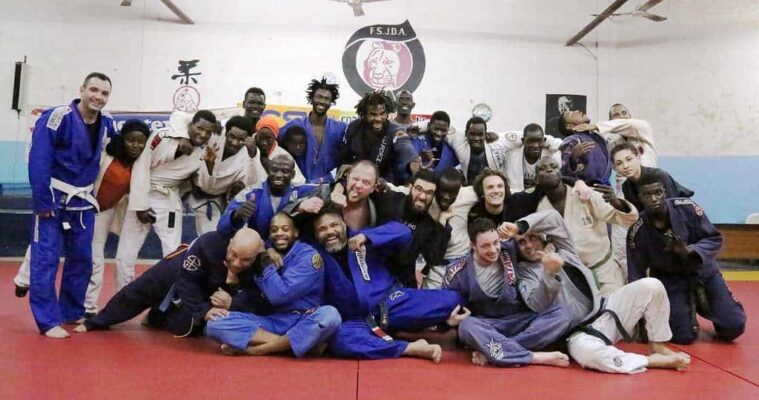
Thirdly, it’s a great exercise that engages many muscles and can stimulate cardiovascular health. Couple this benefit with the fact that exercise, particularly when around encouraging teammates, can also inspire better dietary habits.

Why Is BJJ so Effective?

One of the main reasons BJJ is so effective is because it emphasizes the use of leverage and technique over physical strength and power, meaning that even a practitioner that is diminutive in stature can take on a larger opponent if they’re sufficiently trained enough.

Another reason BJJ is so effective is that it is a grappling-based martial that focuses on ground fighting techniques. Due to the high percentage of real-world fights which end up on the ground, being highly trained in grappling techniques such as joint locks, chokes, and submissions puts the trained person over an untrained one.

As BJJ practitioners have live sparring rounds, they’re able to pressure test their understanding of these moves in a controlled environment.

Another big factor is that as BJJ is both physically and mentally demanding, it builds the users’ mental and physical toughness. The mental toughness can allow the user to feel more focused in high-pressure scenarios, while physical toughness can reduce the chance of long-term damage.

As for its use in MMA, Jiu-Jitsu is evolving all the time as martial artists attempt to come out with new techniques and strategies to counter old ones and the movements of other martial arts. This adaptability allows BJJ users to stay ahead of the curve and to handle the ever-changing landscape of mixed martial arts.

RECOMMENDED READING:
What is Submission Wrestling? A Guide for Beginners

Why Is BJJ so expensive?

There are many reasons why BJJ classes may be expensive in your area. Gyms have various overheads such as rent, employees insurances and utility bills, which only seem to increase in price every year.    

When it comes to high quality instruction, BJJ “professors”, sometimes appear to charge a lot of money.  In some instances, this may, again be profit-focused, but it is worth noting that anyone who gets to a black or brown belt level in the art has had to invest a lot of time and money into the sport themselves.  

Becoming a BJJ black belt typically takes ten+ years of dedicated studying and practicing, sometimes sacrificing time that could be spent on other things for time on the mats. For this reason, many Jiu-Jitsu practitioners don’t get past the blue belt rank and either stagnate or don’t get past this level.

Therefore, it appears that charging a high fee for Brazilian Jiu-Jitsu lessons is simply a matter of economics. Fewer black belt instructors are available to teach than people who want to learn. As such, these instructors can charge higher fees due to their expertise and high demand for learning.

People Who Benefit Greatly from BJJ

Brazilian Jiu Jitsu is an art that can be taken up by people from all walks of life and is suitable for almost all ages, genders, and levels of fitness. As with any art, there are various groups who will find studying BJJ more useful. These include the following:

Law Enforcement, Security Services, and Military

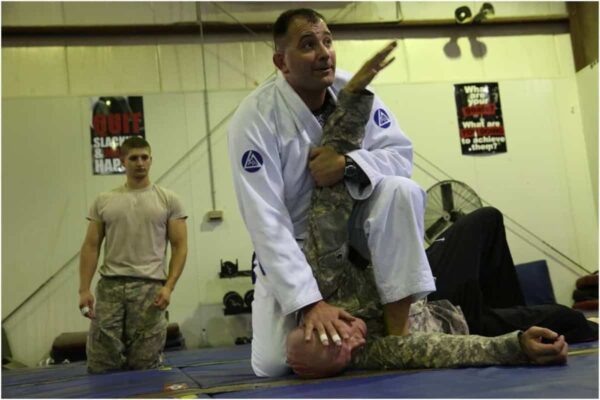
Police officers, security guards, bodyguards, and various members of the armed forces may find BJJ incredibly beneficial. Those working in these professions may be prone to violent attacks that require them to defend themselves while often showing a level of restraint.

Jiu-Jitsu is a martial art that enables practitioners to subdue attackers without causing excessive harm. This makes it particularly useful for law enforcement personnel who must adhere to the use-of-force policy required by a court of law, where they are only allowed to use reasonable force based on the totality of the circumstances.

When it comes to military personnel, the United States Marine Corps (USMC) has recognized the effectiveness of BJJ in close combat scenarios. BJJ emphasizes the use of leverage and technique over brute force, making it effective for military personnel, such as in peacekeeping operations where non-lethal combat techniques are very useful.

Mixed Martial Arts (MMA) fighters

BJJ is an incredibly popular martial art with MMA athletes. Grappling techniques and submissions have proven to be highly effective time and time again in the cage.
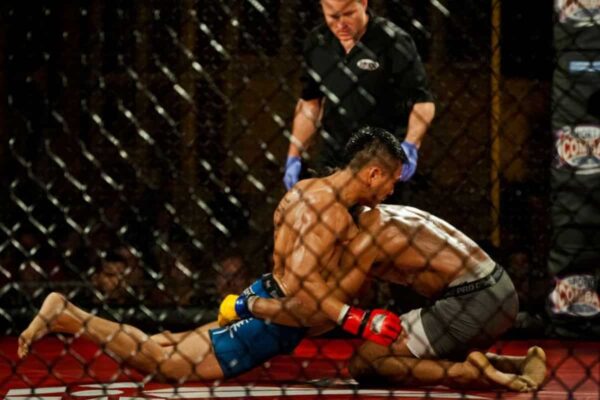
Grappling techniques being used in an MMA fight

Even if Brazilian Jiu-Jitsu isn’t the main focus of a fighter, they can still use it as a form of counter-grappling in order to get back to their game plan. For instance, a striker may use BJJ to protect themselves from a wrestler if they are taken to the floor of the octagon or ring.

Individuals Who Want To Protect Themselves

BJJ, like any practical martial art, is designed for the user to protect themselves in real-life encounters. Whether you are at risk of being bullied or have to walk through a dangerous area at night, having techniques designed to neutralize an attacker and give you the opportunity to escape can be incredibly beneficial.

It is worth noting that almost all good self-defense teachers will teach the value of situational awareness and a good sprint. Fighting should, in almost all given circumstances, be the last resort.

Women Who Want to Protect Themselves

Following on from the previous point, women may want to learn BJJ as the techniques eschew power and strength for leverage and technique.  BJJ can empower women with confidence knowing that they have some skills that can offer them greater protection.

People Who May Not Find BJJ Worth it

While training BJJ yields a plethora of benefits, there are various groups of people who may not find it worth the cost.

Those Who Can’t Afford It

Depending on your location and the schools in proximity, BJJ training may be prohibitively expensive. Membership fees, gis, rash guards, shorts, and mouthguards can add up to a fairly costly shopping list. Having all these items can make it difficult for various individuals to afford them.

People with Health issues

Although BJJ is fairly injury-free compared to striking arts such as boxing, Muay Thai, or even contact sports such as football or rugby, injuries can still happen. Additionally, existing injuries can be further aggravated.

Those with underlying health conditions like heart or respiratory issues may find BJJ to be too demanding on the body. The strain placed on the body may not be suitable for those with these health conditions.

If you have existing injuries or conditions, it’s worth checking with a physician before you take up any new exercise routine.

Those Uncomfortable With Human-to-Human Contact

One saying often heard in Jiu-Jitsu circles is “get comfortable being uncomfortable.” This is because grappling can feel strange and unnatural for those training for the first time. Rolling with an experienced grappler has been compared to “drowning on dry land.”

Most beginners practicing Jiu-Jitsu have to find a way to overcome this unpleasant feeling and become more calm and centered on the mats.

Suppose you feel like you might not be able to overcome the anxiety of body-to-body contact, which a grappling martial art entails but still want to improve your self-defense capabilities and fitness. In that case, a stand-up martial art such as kickboxing or karate may be a better option.

How Long Does it Take to Become Proficient in BJJ?

The amount of time required for Jiu-Jitsu to be effective as a form of self-defense will vary from person to person, depending on their age, level of fitness, ability to pick up and assimilate new movements, frequency of training, the coaching they receive, and the type of training involved.

That being said, if someone trains consistently at least twice a week for a couple of months, they will already start to see big improvements in their capability to defend themselves. While you can usually safely assume that someone with a black belt in BJJ is sufficiently well-equipped to handle a one-on-one confrontation with an unarmed attacker, you do not need to be a black belt to be effective in a real-world encounter.

Additionally, anyone who trains in Jiu-Jitsu for some period of time and gets promoted should be wary not to become overconfident. As the winner of the inaugural UFC tournament, Royce Gracie, once said: “The belt only covers two inches of your a*s, you have to cover the rest.”

To be effective in self-defense scenarios, jiu-jitsu practitioners should spend time going over fundamental techniques – basic sweeps, escapes and the types of submissions which can neutralize an assailant while offering a low risk of being slammed onto the concrete floor. In this last instance, standing guillotines can be great. Learning how to properly control an attacker as you wait for assistance is important.

RELATED:
How Long Does it Take to Learn BJJ for Beginners? Q&A

Cost Associated with Learning BJJ

As with any new past times, sport, or hobby, it is beneficial to know the costs involved.

BJJ Class Fee

The most obvious cost of BJJ would be the membership or class fees. Many BJJ schools ask that you pay a monthly membership fee, while some will even ask for several months in advance.

This will vary depending on the location and quality of the school. In the US, for instance, this may range from around $120-$250 per month, while in the UK, this may average from around £60-80.

Purchasing a Gi or uniform

The second most obvious cost of BJJ is for the uniform. There are two main types of BJJ classes: gi and no gi. Gi training involves wearing the traditional garb – a gi or kimono, virtually identical to the clothing used in judo. No-gi training is usually conducted in shorts, a t-shirt, or a rashguard (effectively a skin-tight long-sleeve t-shirt).
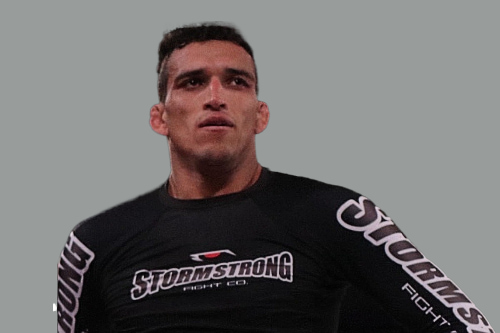
Wearing a grappling rash guard
Credit: Cleber Satoshi Takeuchi

Not every BJJ practitioner trains in the gi, as many are more focused on developing a skill set more suitable to mixed martial arts, or they don’t enjoy the intricacies involved with training in the gi – such as lapel chokes, or a type of defensive position known as spider-guard. If you’re one of those practitioners, they only need to invest in half decent sport shorts, or MMA shorts, which can cost around $50, or less, depending on where you live.  

Those that train in Gi can expect to pay around $100 to $200, depending on the quality and brand. Generally speaking, you’ll only need one or two gis, but it’s important to wash them after each use to maintain good hygiene. Some schools have their own Gis or other apparel, which they may charge at a premium price, and wearing them may be required for students.

Protective Gears

Another highly recommended piece of equipment is a gum shield or mouth guard. Low-end ones will cost around $20, but if you are particularly concerned with protecting your teeth, you can have a dentist design a specially-made one. Also, purchasing a protective cup is highly recommended to protect private areas.

Conclusion: Are There Any Cheaper Alternatives to BJJ?

Suppose attending classes or being a member of a school is too expensive, but you still want to learn BJJ. In that case, you may want to consider some alternatives.

There is a wealth of BJJ information on YouTube, which you can use to learn all manner of techniques, ranging from submissions, escapes, guard passes, etc. Some of the most successful BJJ competitors and world-class BJJ coaches, such as John Danaher, even have DVD series showing their game plans.

But suppose you want to learn in person. In that case, it may be worth contacting BJJ instructors directly and seeing if they can accommodate your financial situation. Some schools have discounts for student members and may be willing to pass that on to you.

And some schools offer a daily pass system where you only pay for the classes you attend instead of a higher monthly fee. Here’s an unconventional way to learn if you can’t afford to pay a monthly fee but pay for a daily pass a few times or less in a month.

At home, you can focus on doing essential solo BJJ drills like shrimping or bridging, which are fundamental movements utilized in jiu-jitsu techniques.

Learning BJJ techniques is much easier if you master BJJ drilling movements. This enables you to quickly learn new BJJ techniques and make the most out of your in-class learning experience, especially if you can’t afford to attend classes regularly. You can find plenty of helpful solo BJJ drill videos on YouTube.

https://youtu.be/KdRuKIEjjBs
BJJ Solo Drills

Various BJJ gyms will have open mat sessions, which may be free or cheaper than attending a class. You get to roll with experienced practitioners to learn from their expertise.

Lastly, other grappling martial arts may be cheaper to train. Learning judo, wrestling, or Russian sambo will give you some great self-defense skills and techniques similar to those used in BJJ. All of these martial arts are all options, and depending on where you are may have lower fees for the class.

What Is Luta Livre? The Forgotten Brazilian Grappling Art

0

Nowadays, only a few people are familiar with the art of Luta Livre, one of the most effective grappling arts that is forgotten. You may wonder what Luta Livre represents as a system and how it differs from the other grappling arts.

Luta Livre is a Brazilian grappling art based on catch wrestling and kosen judo techniques. Unlike other traditional martial arts, it does not utilize a gi and incorporates striking in the “combat” version. While similar to Brazilian jiu-jitsu, Luta Livre emphasizes self-defense over sports competition.

This briefly explains what Luta Livre is as a system, so be sure to read this article to learn more about it.

History of Luta Livre

The name “Luta Livre” translates to “freestyle fighting” in Brazil; it was initially used as an umbrella term to describe different styles of wrestling at the beginning of the 20th century. But the term diverged from wrestling as Luta Livre evolved into a separate combat system in the 1920s.

Early development

Luta Livre was founded in the 1920s by Euclydes Hatem, a skilled catch wrestler. While teaching classes in Rio de Janeiro, Hatem began experimenting and developing his own grappling-based combat system. He started mixing wrestling takedowns and holds with Judo, Jujutsu chokes, joint locks, and positioning.

Hatem also introduced ground striking, which completely changed the concept of submission grappling.
Unlike most other grappling styles, Luta Livre practitioners can use full-contact strikes while rolling on the ground. The concept enables them to use palm strikes and kicks on the ground to hurt the attacker or set up submissions by forcing the opponent to react.

The original Luta Livre is primarily no-gi, but some schools have adopted a gi uniform in modern times. There are two main styles of Luta Livre:

  • Esportiva — is a sport variation that includes standup grappling and ground fighting. 
  • Combate — is a self-defense variation which apart from grappling, also includes ground striking. Practitioners are allowed to hit each other with palm strikes and kicks, but the emphasis remains on submissions.

The Rivalry Between Luta Livre and BJJ

Brazilian jiu-jitsu (BJJ) is conceptually very similar to Luta Livre, and the rivalry between these two systems was inevitable. On one side, Luta Livre was described as a martial art for poor kids who couldn’t afford a gi. On the other hand, the upper class was primarily made up of those who practiced BJJ. 

These social class differences, rivalries, and the fact that both martial arts emerged from the same town (Rio de Janeiro) gave them more reasons to become archenemies against each other.

Luta Livre gained immense popularity when Hakem defeated George Gracie, a legendary BJJ fighter of his time, using an arm lock. This particular match also elevated the rivalry to a new level. Fighters from both camps and “clans” would constantly challenge each other in the gyms and even spout into street fights.

This rivalry between these two camps ultimately led to the creation of Vale Tudo. This first no-holds-barred promotion was one where fighters from both arts fought each other under limited rules. In some ways, Vale Tudo is considered a pioneer of modern MMA fighting.

However, the rivalry started to decline in the late 80s and early 90s when the Gracie family began focusing more on expanding BJJ in the US market.

The Fall of Luta Livre

When the Gracie family moved to the US to spread the art of BJJ, they also continued to organize Vale Tudo-like tournaments. But they did it under a new banner called the “Ultimate Fighter Championship (UFC)” when it was first launched in early 1990s.

When Brazilian Jiu-Jitsu (BJJ) was not widely recognized globally, the Gracie family dispatched Royce Gracie, one of their youngest and most skilled fighters, to participate in a no-holds-barred UFC event in the US. The sole objective was to demonstrate the unparalleled effectiveness of BJJ.

When Royce debuted in the UFC, he demonstrated his remarkable mastery of jiu-jitsu techniques, establishing himself as a superior fighter among his peers. Despite being smaller in size, Royce Gracie made larger and stronger opponents tap out with ease simply by utilizing his jiu-jitsu skills. He revolutionized the perception of ground fighting at a time when it was largely unknown.

Although there were Luta Livre UFC champions like Marco Ruas, who won UFC 7, Brazilian Jiu-Jitsu (BJJ) quickly surpassed it as the most popular combat system associated with ground fighting in MMA. Again, this was all thanks to Royce Gracie’s impressive display of jiu-jitsu in the UFC, previously unseen by the world.

In the world of MMA, BJJ became the dominant grappling style adopted by many academies. They utilized BJJ teaching methods to train their athletes for ground fighting, leaving Luta Livre in the shadows. As a result, Luta Livre has become relatively obscure, while BJJ has become a popular global sport.

How Effective is Luta Livre for Self-Defense?

Despite not being popular, Luta Livre is one of the most underrated martial arts when it comes to self-defense. It is highly effective in just about any freestyle fighting scenario you may encounter in real life.

Each technique students learn is designed to be practical and help them get out of trouble.

Further, teaching methods focus on preparing you for the intense mental and physical aspects of real combat. And unlike in BJJ, competition is not that important in Luta Livre, and most schools emphasize the self-defense aspect instead.

Practicing Luta Livre

Realistic Methods of Teaching

Luta Livre learning curriculum is rooted in the practical application of techniques. Almost every school focuses on sparring as the best method to develop skills to fight in real life. Sparring is the only way students can simulate a real fight and learn how to apply techniques against a resisting opponent. By rolling on a daily basis, they also condition themselves how to stay calm under pressure and avoid panicking.

Battle-proven techniques

Luta Livre focuses only on battle-tested techniques. You won’t waste a minute of training time doing something unrelated to skill enhancement. As a versatile grappling system, it covers both the standup and ground fighting aspects.

On the feet, students learn how to close the distance, secure a strong grip, and manipulate the opponents’ weight to take them down. They use pure wrestling takedowns, judo throws, trips, and sweeps. Once on the ground, the focus switches to maneuvering into a dominant position. This further enables you to subdue the opponent with holds, pins, chokes, and joint locks.

Unlike most other grappling systems, Luta Livre also includes ground striking, which adds to the realism of the fighting you may encounter on the streets.

Gives you a big advantage in a freestyle fight

Athletes trained in Luta Livre enjoy a significant advantage over those not trained in martial arts. While throwing and blocking punches and kicks are part of human instincts, grappling is all about leverage, manipulation of weight, and technique. People can’t rely solely on sheer strength to defend against takedowns, transitions on the ground, and submissions.

You must spend many years training in grappling to defend against these attacks. This makes Luta Livre very effective, notably in closed spaces such as the bar or room, where they can quickly get a hold of the attacker.

Safe to apply

Luta Livre techniques do not cause serious injuries such as full-blown punches and kicks to the head, for example. Taking the opponent down is relatively injury-free.

Still, trained athletes know how to apply enough force to prevent this from happening. In most cases, just a well-executed takedown and strong top control are more than enough to subdue the attacker.
This is crucial in terms of self-defense, as you don’t want to cause any serious injuries to the attacker while defending yourself.

However, the techniques you learn in Luta Livre can break bones and tear ligaments with submissions and put people to sleep if not careful, no matter how safe a martial art is.

How Effective is Luta Livre for MMA?

Luta Livre was designed for freestyle combat and is considered one of the most influential combat arts that gave rise to mixed martial arts (MMA).

In modern MMA, submission grappling is more important than ever. You can’t expect to win matches and succeed without knowing how to grapple and fight on the ground. Thus, the entire concept of Luta Livre transitions well into MMA fighting.

The only reason why Luta Livre is not as relevant in MMA and has fewer representations in the UFC is that conceptually comparable martial arts, mainly Brazilian jiu-jitsu (BJJ), are significantly more popular. Luta Livre was a more relevant combat art in the early 90s, but it quickly got suppressed by BJJ as the sport began to rise.

Although it fits well within the sport’s rules, much better than other martial arts, Luta Livre is not internationally popular or accepted. If you live outside Brazil and want to learn submission grappling, you are more likely to train in no-gi BJJ than find a Luta Livre school.

Despite being relatively unknown, Luta Livre is great for MMA because it’s designed to be practical in combat situations. It emphasizes aggressive submission grappling without using a gi, which is how MMA fighters grapple in the cage. On top of that, it teaches you how to defend against ground and pound and how to mix striking and submission grappling together.

Some of the most popular MMA fighters with strong backgrounds in Luta Livre were:

  • Marco Ruas
  • Pedro Rizzo
  • Jose Aldo

Are There Luta Livre Competitions?

Luta Livre competition is prevalent in Brazil, but not that much outside of it. The “Brazilian Confederation of Luta Livre Esportiva” oversees most events. The organization also puts a lot of effort and resources into spreading into European and US markets. However, Luta Livre competitions are nowhere near as popular as BJJ or wrestling competitions.

For instance, there are no World or European Championship Luta Livre tournaments. There are very few international events where athletes from different countries can compete against each other.

As a result, Luta Livre athletes compete in other hybrid submission grappling competitions, such as ADCC submission fighting championship, where they enjoy some success. One fighter who represented Luta Livre in ADCC was the famous Nicolas Reneier.

Luta Livre vs. BJJ: What Are the Main Differences?

BJJ and Luta Livre are conceptually very similar but also differ a lot in certain aspects, such as the clothing and emphasis of the system. Here is a detailed explanation of all the major differences.

Clothing and strategies

In traditional BJJ, all students must wear a gi uniform in training and competition. This includes long pants, a jacket, and a rank belt made of thick cotton. Luta Livre doesn’t include any uniforms, and students usually wear shorts, a T-shirt, or a rashguard.

This difference in clothing completely changes the concept of the game. In BJJ, grapplers have more grips available and ways to stall the action, and the overall rolling pace is much slower. It forces you to rely more on technique, setting up attacks, and thinking three steps in advance.

In Luta Livre, practitioners roll much faster due to the lack of friction. They can also rely more on sheer strength and athleticism to overwhelm the attacker with pressure.

Ground striking

BJJ and Luta Livre are both martial arts that focus on grappling techniques. However, BJJ does not involve striking on the feet or the ground, while Luta Livre incorporates striking on the ground in its combat variations. This is very beneficial, notably if you want to switch to MMA, where ground and pound are allowed. And it also improves your self-defense abilities.

It should be noted that in the sport version of Luta Livre, striking is prohibited, and the focus is on submission grappling rules.

Belt ranking

Luta Livre employs a ranking system akin to that of BJJ and Judo. While senior ranks recognize ten levels of black belts, lower ranks use a variety of colored belts to denote their ranks. To achieve the coveted black belt, one must undergo 10–15 years of grueling training in both martial arts. See below for a thorough breakdown of both ranks.

CategoryLuta Livre
BeginnersWhite
Yellow
Orange
IntermediateBlue
AdvancedPurple
Brown
Black (1st to 9th Dan)
Red and White (10th black belt)
Brazilian Jiu-Jitsu (Senior)
White belt
Blue belt
Purple belt
Brown belt
Black belt
Black belt with a red stripe (1st to 8th dan)
Red belt (9th and 10th dan)
RELATED:
BJJ Belt Ranking System – Easy To Understand For Beginners

Final Thoughts

As previously mentioned, Luta Livre is a highly effective martial art that has yet to gain popularity beyond Brazil. However, this does not diminish its value as an effective combat art. The entire curriculum is designed specifically to prepare individuals for real-world fighting scenarios.

Luta Livre is still widely practiced in Brazil, with numerous high-quality gyms to train in and opportunities for competition to test one’s skills against other fighters.

Currently, Luta Livre is as popular as it was 50 years ago. It’s difficult to predict if this will change in the future. However, it’s clear that Luta Livre missed a big chance to grow through participation in MMA and submission wrestling tournaments like ADCC.

Top 10 Absolute Best BJJ Coaches in the U.S.

0
Renzo Gracie (left), Eddie Bravo (center), and John Danaher (right)
Credit: Akban Martial Arts Academy & via IG @ebiofficial and @danaherjohn

Editor’s note: The views and opinions expressed below are those of the author.

Brazilian jiu-jitsu (BJJ) is very popular in the U.S. and well-established all across the country. International grappling competitions in both gi and no-gi unequivocally demonstrate that the U.S. is home to some of the best BJJ coaches in the world. And these are very high-level coaches you can’t easily find despite having so many solid BJJ coaches in major cities.

That said, we are compiling a list of the BJJ coaches we consider the best among the best. Without further ado, let us bring you closer to the best BJJ coaches in the U.S. You will get to see why they are absolutely the best and what makes them so special.

Guilherme and Rafael Mendes

Rank: 3rd-degree black belt (both)
Gym: Art of Jiu-Jitsu Academy, Costa Mesa, California

Brothers Guilherme and Rafael Mendes are the most famous brother duo in the grappling world. A year older, Guilherme is a four-time BJJ world champion. At the same time, the younger Rafael won the prestigious ADCC tournament twice and is a six-time BJJ world champion. So combined, the brothers have ten world titles to their name and are now united to pass down their knowledge and create new champions.

The Mendes brothers mastered the art of BJJ under Ramon Lemos. After years of competing on the international level, they decided to move to the US, and together with their long-time sponsor Pat Tenore, they opened up a traditional BJJ academy called the “Art of Jiu-Jitsu” in 2020.

The gym offers classes to people of all ages and is already producing world-class athletes. The two young prospects that came out of the Mendes gym are BJJ World and European champs Tainan Dalpra and Jessa Khan.

Cesar Gracie

Rank: Black belt under Robson Gracie
Gym: Cesar Gracie Academy, Pleasant Hill, California

Cesar Gracie is a BJJ legend and a very well-known grappling coach in the MMA world. After spending his youth living between the US and Brazil, Cesar finally settled in California, where he trained with his cousins at the famous Gracie Academy. He got promoted to the black belt rank in the late 1980s by the red belt Robson Gracie, the second son of Carlos Gracie Sr.

In the early 1990s, he left to open his school, “Cesar Gracie Academy,” in California. Over the course of more than three decades, he has produced many BJJ and MMA champions.

His academy rose to prominence during MMA’s expansion in the US in the 2000s. He worked with some of the best and most famous fighters, such as Gilbert Melendez, Nate and Nick Diaz, and one of the best BJJ fighters in MMA of all time, Jake Shields.

Andre Galvao

Rank: 4th-degree black belt
Gym: Atos BJJ, San Diego, California

Andre Galvao is one of the greatest ADCC champions in history and grappling competitors of all time. The following list of achievements secured him a hall of fame in both the IBJJF organization and ADCC.

  • 10-time Brazilian jiu-jitsu world champion (Gi)
  • 6 ADCC World titles 
  • Multiple Pan-American and Brazilian national champion.

Luckily for all the people interested in learning BJJ, Galvao also works as a coach. Initially, he opened the “Atos BJJ” gym in Sao Paulo, Brazil. But a few years later, he moved the academy to San Diego, California.

It didn’t take much for the gym to quickly grow into one of the best BJJ gyms in the U.S. Some of his notable students are Keenan Cornelius and Rafael Mendes.

But unlike many other gyms, Galvao’s BJJ philosophy revolves not only around competition. He is also putting a lot of emphasis on teaching proper self-defense skills. People of all ages and genders can come in and learn battle-tested techniques and how to apply them in real life.

In his martial arts career, Galvao also dabbed himself in MMA fighting as a successful fighter, eventually leading him to coach some of the finest UFC athletes. Some of the fighters he worked with are submission artists Gilbert Burns, Anderson Silva, Cris Cyborg, and Israel Adesanya.

Marcelo Garcia

Rank: 4th-degree black belt
Gym: Marcelo Garcia Jiu-Jitsu, New York, U.S.

Marcelo Garcia is among the most accomplished grapplers of all time. Basically, he won everything there is in BJJ. He is a three-time ADCC champion, a Hall of Famer, a five-time world champion, and a multiple Pan American and National champ. During this time, he represented the “Alliance BJJ Academy,” where he mastered the art under another great coach, Fabio Gurgel.

After retiring from competition, he took on the coaching role at his academy in New York, which he opened in 2009. It didn’t take long for the gym to become one of the best in the US, with Marcelos’s students conquering BJJ competitions across all belt divisions. Some of his top students are the notorious Dillion Danis, Marcos Tinoco, Matheus Dinis, and Bernardo Faria.

Marcelo Garcia Academy now has associations in just about every part of the world. It is present in Asia, Canada, Europe, Mexico, Russia, and all across the US.

Jean Jacques Machado

Rank: 7th-degree coral belt
Gym: Jean Jacques Machado BJJ, Woodland Hills, California

Jean Jacques Machado is the nephew of Grandmaster Carlos Gracie. He is widely regarded as one of the best BJJ coaches in the US. Despite the congenital disability that left him with only the thumb and a little finger on his left hand, Machado managed not only to become a skilled grappler but to win the prestigious ADCC championship in 1999 against all odds.

In 2011, he was invited to a private ceremony at Rickson Gracie Academy, where he received a 7th-degree coral black belt. Overall, we don’t have to spend too many words on his experience and skill level, as he is a true master of his craft, with over 30 years of experience in coaching as a black belt instructor.

Nowadays, Machado is entirely focused on running his BJJ gym in Los Angeles, California, and passing down the knowledge. His gym is known as a premier school in the US and includes the finest coaching staff. The gym covers kids/teen and adult training programs coached by Machado.

Machado produced many top grapplers and champions, notably Eddie Bravo. He also works with actors and other celebrities, such as Joe Rogan.

Eddie Bravo

Rank: 3rd-degree black belt 
Gym: 10th Planet Jiu-Jitsu, Los Angeles, California

Eddie Bravo is arguably the best no-gi BJJ coach in the US and the founder of the “10th Planet Jiu-Jitsu Team”. His gym is a global brand with over 100 schools worldwide. He mastered the art of jiu-jitsu under another famous US coach, Jean Jacques Machado, under whom he obtained a black belt rank.

In response to the rapid rise of submission grappling in MMA during the 1990s, Bravo decided to adapt jiu-jitsu to the submission grappling concept and created the famous 10th Planet jiu-jitsu system. Bravo also developed combat jiu-jitsu, which combined jiu-jitsu and palm strikes to make jiu-jitsu matches more realistic, similar to MMA fighting.

Bravo focuses on no-gi as a coach and emphasizes submission grappling over traditional BJJ training. Although he received a serious backlash from the majority of the jiu-jitsu community for abandoning the gi, no one could deny the effectiveness of his system.

But what really boosted his rise was his win over the legendary Royler Gracie at ADCC in 2003. He is also a regular guest on the Joe Rogan podcast, which helped him promote his business and make 10th Planet a global brand.

He worked with many great grapplers and UFC fighters, such as Tony Ferguson and Carlos Condit. He also published a couple of instructional books and DVDs, such as:

Books: 

  • Jiu-Jitsu Unleashed (2005)
  • Mastering the Rubber Guard (2006)
  • Mastering the Twister (2007)
  • Advanced Rubber Guard (2014)

DVDs:

  • The Twister
  • Mastering the Rubber Guard
  • Mastering the Twister

Renzo Gracie

Rank: 7th-degree coral belt
Gym: Renzo Gracie Academy, New York, NY

Renzo Gracie is the legendary BJJ coach and the 3rd generation member of the Gracie family. Like most other Gracie members, he is a multiple-time world jiu-jitsu champion and a two-time ADCC winner.
In his career, he also fought in MMA, where he beat some of the sport’s legends. But he always remained primarily focused on coaching and producing top-level grapplers.

Renzo opened the “Renzo Gracie Academy” in 1996 in Manhattan, New York. The gym is rooted in traditional teaching methods and includes only the finest coaching staff. Gordon Ryan, John Danaher, and Ricardo Almeida are some of the most famous grapplers who started their journey there. These people would later become champions and world-class coaches thanks to Renzo and his influence.

With the increasing popularity of MMA in the US in the 1990s and 2000s, Renzo also started working with MMA fighters to hone their ground fighting skills. Some of his notable students are UFC champions:

  • Matt Serra
  • Chris Weidman
  • Georges St.Pierre
  • Gunnar Nelson
RELATED:
Top 16 Best MMA Gyms in the U.S.

Rickson Gracie

Rank: 9th-degree red belt
Gym: Rickson Gracie Academy

In the BJJ community, Rickson Gracie is often considered the best grappler from the Gracie family. Although this remains open for debate, Rickson’s influence, skillset, and philosophical approach to BJJ secure him the status of a true legend in the grappling world. He is a 9th-degree red belt under Rorion Gracie, which makes him the highest-ranking coach on this list.

Rickson is also considered a pioneer of Brazilian Jiu-Jitsu in the US. In 1989, he moved from Brazil to the US with his brother Rorion to establish the initial BJJ academy in Torrance, California. The academy would produce many black belts who would continue spreading the art of BJJ across the US.

Although he was busy as an MMA fighter with no losses on the record, Rickson never stopped teaching jiu-jitsu. In his career, he has been coaching people of all ages, genders, and professions. He has always been focused on building a legacy of professional students and instructors.

In 1999, he was the subject of the documentary movie “Choke,” which remains one of the best sports documentaries of all time. If you haven’t seen it, watch it as soon as possible.

On a side note, it appears Rickson Gracie focuses on an online academy and seminars. There’s no information in regards to Rickson’s BJJ school, where he teaches regularly in person. Check his site regularly for further information.

Rener Gracie

Rank: 3rd-degree black belt
Gym: Gracie University, Torrance, California

Rener Gracie is the eldest grandson of the founder of BJJ, Helio Gracie. He mastered the art of BJJ directly under his legendary uncles, Rickson, and Royce Gracie. By age 20, he had already won many prestigious world BJJ championships. However, unlike most other coaches on this list, Rener started teaching the classes at 13. And by the age of 19, he was already a head instructor at the Gracie Academy.

In 2004, Rener retired from competition to focus solely on coaching. He is a co-founder of “Gracie University,” where he works as a head instructor. The learning curriculum primarily revolves around self-defense training and preparing a person for real-life scenarios.

The Gracie University also has a specific program for law enforcement to improve police officers’ self-defense skills and, in so doing, reduce their dependence on the use of deadly force.

Gracie University also offers online courses. In fact, it grew into the largest online jiu-jitsu training program, with over 70,000 students from 196 countries worldwide.

If your goal is to learn traditional BJJ in its purest form and develop proper self-defense skills, then Rener Gracie is the best. He also works with famous MMA fighters like Brian Ortega, whom he trained for his match against Alexander Volkanovski.

RECOMMENDED READING:
What’s the Difference Between Gracie Jiu-Jitsu and BJJ?

John Danaher

Rank: 6th-degree black belt
Gym: “New Wave Jiu-Jitsu”, Austin, Texas

John Danaher is arguably not only the best BJJ coach in the U.S. but in the entire world. He is also a very popular public figure. You can often see and hear him spreading his knowledge and BJJ philosophy on various top-rated podcasts.

Danaher started his BJJ journey at the Renzo Gracie Academy, earning a black belt at 28. While starting at the Renzo Gracie Academy, he also taught classes and developed coaching skills. When instructors Matt Serra and Ricardo Almeida left the academy, this opened up the place for Danaher to jump on the opportunity and take their role.

Danaher became the master of the coaching craft under Renzo Gracie. But in 2020, he decided to leave the academy, start his gym in Puerto Rico, and famously name his athletes and coaches the “Danaher Death Squad.” The squad would split up soon after, with Danaher moving to open up a “New Wave Jiu-Jitsu” in Austin, Texas.

Known as a workaholic and ambitious person, Danaher takes a unique philosophical and very systematic approach to BJJ teaching. Combined with his practical knowledge, this makes him one of the best coaches in modern times. Many of his students, like Gordon Ryan and Garry Tonon, went on to conquer the grappling world by winning multiple world titles.

Interestingly, Danaher himself never competed. He never took part in any tournaments due to his deformed kneecap. He had to undergo many surgeries during his life, which ultimately kept him away from the competition. At the same time, it enabled him to zero in on becoming perhaps the greatest BJJ coach.

Danaher’s BJJ classes are extremely popular and have very limited space. If you are lucky enough to take his classes, do not miss out.

In 2018, he decided to launch his instructional series. Partnering with BJJ fanatics, he released the following series:

  • Enter the System
  • Go Further Faster
  • Feet to Floor
  • New Wave Jiu Jitsu

Is Fedor Emelianenko the MMA Heavyweight GOAT? A Closer Look

0
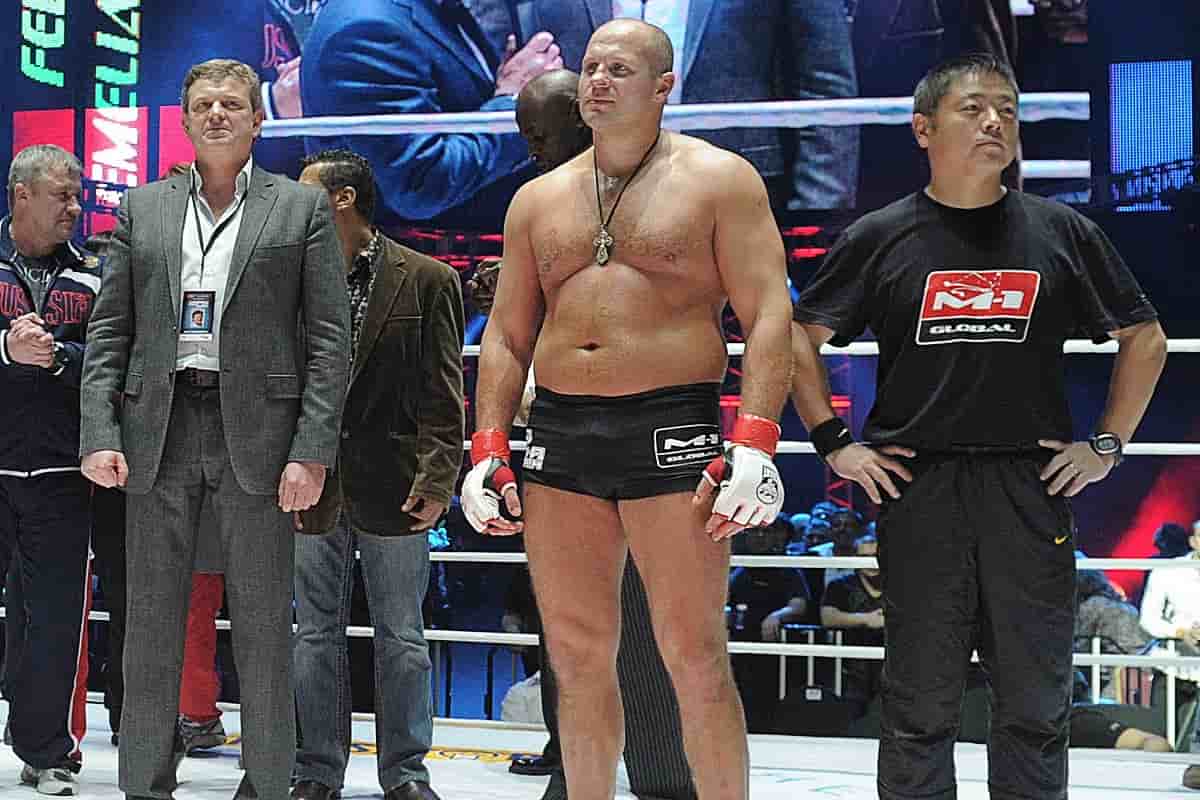
Photo by Premier.gov.ru

Editor’s note: The views and opinions expressed below are those of the author.

Fedor Emelianenko is a name that is synonymous with heavyweight mixed martial arts (MMA). The Russian fighter was an iconic figure in the sport for over two decades until his retirement, amassing an impressive record of 40 wins and only seven losses.

Many fans and analysts consider Fedor the heavyweight greatest of all time (GOAT), but what sets him apart from other fighters? In this article, we will explore Fedor Emelianenko’s career, achievements, and impact on the sport to determine whether he truly deserves the title of heavyweight GOAT.

Why is Fedor Emelianenko Regarded as the Heavyweight GOAT?

While he may not be on the Mt. Rushmore of MMA for most observers, Fedor certainly has a case for being the greatest heavyweight of all time and is considered by many to be so. Why is this the case?

Photo by Bruno Massami

One just needs to look at his accolades, for starters. The Russian was most notably the PRIDE heavyweight champion, boasting a reign that lasted 1,663 days. Additionally, he has won the heavyweight title in a number of other organizations as well, in addition to amassing wins in organizations like Strikeforce, Bellator, and RIZIN.

He was also a complete mixed martial artist, being able to strike with the best in the game as well as dominate on the ground and use his jiu-jitsu to full effect. Only 9 of his 40 wins came by decision, with 16 knockouts and 15 submission victories.

There’s also his longevity. He only retired in 2023 at the age of 46, and while he should have hung his gloves up sooner, he still left the sport with an impressive 40-7 (1NC) record.

More than anything, however, is his resume and the names he’s beaten. Emelianenko went on an unprecedented 28-fight undefeated streak over nine years, taking out many of the greatest and top-ranked heavyweights along the way. Some of those names include Antonio ‘Big Nog’ Nogueira (x2), Mirko Cro Cop, Mark Hunt, and Andrei Arlovski.

The win over Nogueira (another heavyweight GOAT contender) was especially impressive as he did it on the ground, which is the Brazilian’s realm. Even more impressive is the fact that he went so long without defeat in the heavyweight division of all divisions, where one punch is enough to turn the lights out.

All these factors, combined with the respect he has gained from his peers in the sport, are why “The Last Emperor” is regarded by many to be the heavyweight GOAT.

RECOMMENDED READING:
Sambo: Very Effective Russian Martial Art Explained

Why is Fedor Emelianenko not the Heavyweight GOAT?

There are some arguments to be made against Fedor being the greatest heavyweight of all time. While he had an impressive unbeaten streak, he didn’t always face the best competition on a regular basis. Names such as Zuluzinho and Hong-man Choi stand out as some of the lower-level wins on Emelianenko’s record during his 28-fight unbeaten run. 

Speaking of his unbeaten run, it also came to an end after the Russian was TKO’d by Dan Henderson at a Strikeforce event. While Henderson is known for his explosive knockout power, he was also a natural middleweight. And so, it’s seen as a slight against Fedor’s legacy that as the greatest heavyweight of all time, his unbeaten run was snapped by an undersized opponent, as you see in the following video clip.

There’s also the fact that he never competed in the UFC to test himself against heavyweight fighters in the UFC, which is widely viewed as the most elite MMA organization in the world. UFC president Dana White claims he tried to sign Fedor to fight in 2009, only for it to not pan out.

“I’ve signed Brock Lesnar, who came from the WWE, James Toney from boxing – he’s a nut chasing me all over the place – Tito Ortiz, whom I hated, and he hated me. I signed him twice when we hated each other. I’ve kept Chuck Liddell, kept Matt Hughes, kept Rich Franklin, when they were all champions. Anderson Silva, I’ve dealt with all the crazy [expletive] with him. But I can’t sign Fedor? How is this possible that I can’t sign this guy? It’s not possible. These guys don’t want to fight the best in the world.”

via Bloodyelbow

Why Do People Say Stipe Miocic is the GOAT of Heavyweights?

Today, most MMA fans would argue that Stipe Miocic is the greatest heavyweight of all time over Fedor Emelianenko. He has the resume to back it up as he is a two-time UFC heavyweight champion who notably holds wins over the likes of Francis Ngannou, Junior dos Santos, Daniel Cormier (x2), Alistair Overeem, Fabricio Werdum, and Mark Hunt.

He also broke the record of consecutive UFC heavyweight title defenses in a row with three, while he also has the most overall with four. Additionally, he has the joint-most wins in UFC heavyweight title fights (6) along with Randy Couture. He also boasts crisp boxing ability as he was a former Golden Gloves champion and can wrestle, too, being an NCAA Division 1 wrestler.

The only arguments against him are that he didn’t have the longevity or unbeaten streak that Fedor had in his prime. However, it can be argued that it didn’t matter as he was facing better competition on a consistent basis and has more impressive names on his resume as a whole. Overall, the debate over who is the greatest heavyweight of all time is subjective.

Who is the Greatest Heavyweight MMA Fighter of All Time?

We’ve gone over two of the most prominent heavyweight names, Fedor Emelianenko and Stipe Miocic, as far as whom many believe to be the greatest heavyweight MMA fighter of all time. However, there are a few other contenders.

Mirko Cro Cop: Mirko Cro Cop is another heavyweight GOAT contender who competed in PRIDE, the UFC, K-1, RIZIN, and Bellator.

He holds notable wins over the likes of Josh Barnett, Wanderlei Silva, and Mark Coleman and has faced some of the best fighters in both MMA and kickboxing, including names like Fedor, Antonio Nogueira, and Frank Mir.

He is only one of two fighters to win a world championship in MMA and kickboxing, while he has the most finishes in ZUFFA and PRIDE history (joint-tied with Wanderlei Silva). He retired with a 38-11-2 (1NC) record.

Cain Velasquez: Cain Velasquez is a two-time UFC heavyweight champion and was arguably the most talented heavyweight of all time, being highly adept at all facets of MMA, particularly with his striking and wrestling.

However, he was plagued by injuries and ultimately had to cut his career short. His most notable wins include Antonio Nogueira, Brock Lesnar, Junior dos Santos (x2), and Antonio Silva (x2). He retired with a 14-3 record in MMA.

Antonio ‘Big Nog’ Nogueira”: Antonio Nogueira was the first PRIDE heavyweight champion in addition to being a UFC interim heavyweight champion. His resume speaks for itself, having faced a number of killers in their prime.

Over his first 37 MMA fights, he beat every fighter he faced other than Fedor while avenging his loss to Dan Henderson in the process. He holds wins over the likes of Henderson, Bob Sapp, Mirko Cro Cop, Mark Coleman, Josh Barnett, Tim Sylvia, Fabricio Werdum, Randy Couture, and Semmy Schilt. He retired with a 34-10-1 (1NC) record.

Who is Considered the MMA GOAT?

While Fedor Emelianenko and Stipe Miocic are considered the heavyweight GOATs, they’re not exactly considered among the contenders for MMA GOAT as a whole. That accolade goes to a certain few individuals.

Georges St-Pierre: A former two-weight UFC champion who went undefeated from 2008 to 2013 as the welterweight king. The French-Canadian holds wins over Matt Hughes (x2), Carlos Condit, Nick Diaz, Jake Shields, BJ Penn (x2), and Josh Koscheck (x2), to name a few. Avenged both his losses in MMA and retired with a 26-2 record.

Jon Jones: The youngest champion (23 years old) in UFC history. Holds wins over Daniel Cormier, Glover Teixeira, Rashad Evans, Lyoto Machida, Quinton Jackson and Mauricio Rua. Undefeated in 15 UFC title fights and became a two-weight UFC champion after defeating Ciryl Gane to become the heavyweight champion in 2023.

Holds a 27-1 (1NC) record, with his only loss coming by way of disqualification, meaning he is yet to be truly defeated. However, his failed drug tests have been used as an argument against him being the GOAT.

Demetrious Johnson: Arguably the most skilled fighter in MMA today, Demetrious Johnson was the first UFC flyweight champion. He holds the record for most consecutive and overall title defenses in UFC history (11).

He currently competes at ONE Championship, where he is the organization’s flyweight champion. Johnson holds wins over Henry Cejudo, John Dodson (x2), Kyoji Horiguchi, and Joseph Benavidez (x2). He currently holds a 31-4-1 record in MMA.

Royce Gracie: Winner of the first two UFC tournaments in 1993 and 1994 and the pioneer of Brazilian jiu-jitsu in MMA as a whole. Gracie retired with a 15-2-3 record in MMA.

RELATED:
Is Gordon Ryan the best ever? Yes, and Here’s Why

Who is Considered the Female MMA GOAT?

When it comes to women’s MMA, there are a few who can lay claim to that unofficial accolade.

Ronda Rousey: Rousey was the UFC’s first-ever women’s bantamweight champion. Skill-wise, compared to today’s fighters, she doesn’t rank as high purely because the competition just got better.

That said, Rousey deserves to be in the conversation simply because of how much of a trailblazer she was. After all, she was one-half of the very first women’s fight in the UFC and was undefeated from 2011 to 2015. Even her only two losses are against Holly Holm and Amanda Nunes, which is nothing to be ashamed of.

With two wins over Miesha Tate, along with wins over the likes of Alexis Davis, Cat Zingano, Julia Budd, and Liz Carmouche, Rousey has a very impressive resume despite her lack of striking skills. She retired with a 12-2 record.

Amanda Nunes: Amanda Nunes is the current UFC women’s bantamweight and featherweight champion and is widely regarded as the greatest women’s fighter of all time.

She is the first two-division champion in the UFC and the only fighter to defend two titles while holding both simultaneously. She holds wins over Ronda Rousey, Cris Cyborg, Valentina Shevchenko (x2), Miesha Tate, and Holly Holm. She currently boasts a 22-5 record.

Cris Cyborg: Cris Cyborg is another female GOAT contender. She is a former UFC women’s featherweight champion and the current Bellator women’s featherweight champion. She is also notably the only Grand Slam champion in MMA, having held titles in four organizations (UFC, Bellator, Strikeforce, and Invicta.)

She holds wins over Holly Holm, Gina Carano, and Julia Budd and currently boasts a record of 26-2 (1NC). Her only defeat in the UFC came against Amanda Nunes.

RELATED:
10 Greatest Female MMA Fighters Of All Time!

Final Thoughts

Overall, the debate on who the heavyweight GOAT is will always remain subjective. For the most part, though, it usually boils down to Fedor Emelianenko or Stipe Miocic. And there’s definitely nothing wrong with going with the former, as he has a very strong case.

What is Submission Wrestling? A Guide for Beginners

0

The art of grappling comes in different shapes and forms. With that, people often hear the term “submission wrestling” mentioned in combat sports. But many people aren’t sure what this really means as to what “submission wrestling” refers to and how it differs from wrestling.

Submission wrestling generally refers to any style of grappling that includes submission moves without using a traditional GI. It consists of standup grappling (clinching), takedowns, ground fighting, and submission moves. Catch wrestling and no-gi jiu-jitsu are two of the most well-known.

This is just a brief explanation of what submission wrestling stands for. Thus, be sure to read this article to learn more about different styles, rules, and the effectiveness of this style in self-defense scenarios.

What is Submission Wrestling?

Submission wrestling is also known as “submission fighting/grappling” and it’s deeply rooted in wrestling, which dates back to ancient times. The earliest evidence of wrestling dates all the way back to ancient Egypt, thousands of years ago. Archeologists have discovered many cage drawings showing people wrestling both on their feet and on the ground.

But as an official sport, submission wrestling emerged during the early Olympiads in ancient Greece. Though brutal, it was by far the most popular sport at the time.

In modern times, submission wrestling is a non-striking combat sport with a focus on stand-up grappling and ground fighting. Each exchange begins on the feet, where the main goal is to take the opponent down (stand-up grappling). The key is to secure a strong grip, manipulate the opponent’s weight, and take them down using wrestling or judo techniques.

Once on the ground, the next goal is to secure a dominant position from which you can subdue them with pins and holds or finish with chokeholds and joint locks.

Submission wrestling has many different styles and is usually associated with grappling martial arts that don’t use a “Gi” uniform. However, martial arts such as traditional BJJ and Judo are widely considered subsets of submission wrestling.

Let’s further explore different styles of submission wrestling.

What Are the Different Styles of Submission Wrestling?

Following is a list of all the major submission wrestling styles out of so many. Remember that the emphasis, rules, techniques, and gear significantly vary between these forms. However, the core concept of submission wrestling remains the same.

Catch wrestling

Catch wrestling is widely regarded as the original modern style of “submission wrestling.” It was developed in Lancashire, England, by J.G. Chambers in 1878. In terms of techniques, it is a hybrid mix of takedowns, holds, and submissions such as leglocks, arm locks, and even neck cranks.

Catch Wrestling match

Catch wrestling is a precursor to other, more popular styles like “Freestyle” and “Collegiate” wrestling. Even professional wrestling has roots in catch wrestling as well. Although suppressed by other popular styles, catch wrestling and its concept made a big comeback with the rise of MMA in the early 90s and later ADCC Submission Grappling.

10th Planet Jiu-Jitsu (No-Gi BJJ)

10th Planet Jiu-Jitsu is a combat system developed by Eddie Bravo. He created the system in response to the rapid rise of submission wrestling in MMA. The system is based on the concept of Brazilian jiu-jitsu combined with American folk wrestling.

However, the biggest difference is the clothing because, in 10th Planet, students do not wear a gi uniform. They train and compete wearing shorts, shirts, or rashguards.

The lack of a Gi uniform means less friction and grips, which forces the athletes to compete at a higher pace. This also gives them more space to overwhelm the opponent with sheer strength and athleticism. And in contrast with traditional BJJ, they also use more wrestling takedowns and holds.

Many people believe that the no-gi BJJ variation is the purest and most advanced form of modern submission grappling.

Brazilian Jiu-Jitsu (BJJ)

BJJ emerged in 1920 in Brazil. Carlos and Helio Gracie, brothers, created it by using Judo as a foundation to create their submission grappling style. They switched the emphasis from standup grappling throws in Judo to ground-based techniques. People train in BJJ with or without a GI uniform.

GI style focuses more on technique and fundamentals because wearing GI opens up more ways GI can be used to restrict your opponent’s movement and apply various submission moves that require less strength than no-gi Jiujitsu.

John Danaher, who is a highly regarded BJJ coach, explains the benefits of gi and no-gi jiujitsu.

“when starting out training or when focusing on defensive prowess, a preponderance of gi training makes sense. When looking to make progress with offensive elements of the sport and sound basic mechanics and habits have already been learned, no gi training will lift the technical level of your game.”

BJJ coach John Danaher

BJJ involves all the elements of submission wrestling. Apart from judo and jujutsu moves, the system also adopts techniques from different styles of wrestling as well.

Sport Sambo

Sambo is a Russian military combat system developed in the 1920s. The initial Combat Sambo variation is a hybrid mix of striking, grappling, and advanced self-defense tactics. However, the sports variation would emerge soon after in the form of pure submission wrestling.

In short, sports sambo is a mix of judo, jujutsu, and different styles of wrestling put into one system, and there is no striking.

The focus is on taking your opponent down quickly and forcefully and getting them to submit with joint locks, primarily leglocks. Chokeholds are not allowed in most styles, and there are few restrictions when it comes to grips and holds.

Athletes must wear a traditional “Sambovka” uniform, similar to the judo uniform. Unlike similar grappling arts like Judo and BJJ, Sambo is a more aggressive style.

Sport Sambo competition

Judo

Judo is a grappling-based martial art developed in 1886 by the legendary Kano Jigoro. Judo is considered a “safer” variation of a more brutal system called Jujutsu. The emphasis is on stand-up grappling and taking the opponent down using powerful throws, trips, and sweeps.

The key is manipulating the opponent’s weight and balance and redirecting energy to slam them down as fast and hard as possible.

Although a single well-executed throw wins you a match, judo also focuses on ground fighting, though less than other systems such as BJJ. The emphasis is on subduing the opponent with pins, joint locks, and chokeholds. Despite the traditional judogi uniform, the system is adapted to the submission grappling concept.

Japanese Jujutsu

Japanese jujutsu is an ancient Japanese combat system developed for war and used by elite Samurai warriors in the 16th century. It emerged as the most efficient way to neutralize the enemy at short range with takedowns, pins, and painful joint locks and chokeholds.

Jujutsu is a precursor to more popular modern martial arts such as Judo and Brazilian jiu-jitsu, but it is far more brutal.

As a system, jujutsu is a mix of stand-up and ground grappling. There are no restrictions when it comes to gripping and holding or submission moves you can use. It embraces an aggressive and explosive approach to finishing the opponent as quickly as possible. Jujutsu students traditionally wear a gi uniform, but there is also a no-gi variation.

RELATED:
What Are The Different Styles of Wrestling? 

What Are the Most Popular Submission Wrestling Competitions?

In modern times, there are many tournaments and competitions that are in line with the submission wrestling concept. Following is a list of the most popular ones.

ADCC Submission Wrestling World Championship

ADCC submission fighting is by far the most popular grappling tournament. Founded in Abu Dhabi, UAE, in 1998, ADCC is based on the submission wrestling concept. It enables athletes from all grappling styles, like wrestling, Brazilian Jiu-jitsu (BJJ), and Sambo, to test their skills against other best grapplers.

The events have been hosted every two years since 1998 and include only the best of the best grapplers in the world. Overall, ADCC is considered the “Olympics of grappling,” and winning the championship is the dream of every grappler.

The matches are primarily no-gi, but the rules enable you to wear a gi uniform if you want to. However, most choose not to because wearing a gi gives a no-gi opponent a big advantage, notably when it comes to grips. In terms of techniques, athletes can utilize just about every takedown or submission technique.

World IBJJF Jiu-Jitsu No-GI Championship

World no-gi BJJ championship is one of the biggest grappling events organized by the International Brazilian Jiu-Jitsu Federation (IBJJF). It emerged in 2007, and since then, the championship has been organized once every year.

Athletes are split by weight and age category. The techniques they are allowed to utilize differ by age and level of experience. However, at the highest level, the rules enable them to use just about every submission wrestling move.

North American Grappling Association (NAGA)

NAGA is a BJJ no-gi submission grappling tournament founded in 1995. It is widely regarded as the largest submission grappling association as it has over 700.000 registered participants all across the world.

NAGA grapplers are split into weight divisions, skill levels, and age categories, as in other organizations.
The organization also hosts Gi BJJ matches as well as MMA events.

Is Submission Wrestling Effective for Self-Defense?

Overall, submission wrestling as a concept is very practical for self-defense. The techniques and skills you learn will help you escape trouble in most street-fighting scenarios. Despite the lack of striking, it still gives you a big advantage in a fight.

Throwing and blocking a strike is a natural reaction and part of human instinct, but grappling feels unnatural for most people as it heavily relies on technique, weight and balance manipulation, and leverage.

Most people you encounter aren’t trained to grapple or defend a takedown. Learning how to grapple correctly and feel comfortable fighting on the ground takes time. Therefore, the odds greatly favor your winning if you are trained in submission wrestling.

For example, suppose the fight is in a bar or any other enclosed space where you can engage the attacker at a closer range. In that case, you will likely subdue them without much resistance. Just a well-timed takedown and a secured top position are often more than enough for the attacker to surrender. You don’t even have to go for submission moves, as they will already give up because your attacker most likely won’t know what to do in that situation to counter.

Submission grappling also matches well against striking attacks. If you need an example, just look at how dominant pure wrestlers are against pure strikes in MMA.

But above all, most submission wrestling styles teach you battle-proven techniques that all work in real life. Through sparring and other training methods, you will also develop strong fighting instincts and learn how to apply each move in a realistic scenario against a fully resisting opponent.

What’s the Difference Between Submission Wrestling and BJJ?

The biggest difference is the clothing. In traditional BJJ, all practitioners must wear a uniform that involves long pants, a jacket, and a rank belt around the waist. In submission wrestling, there is no uniform. Here is a detailed explanation of the two main differences:

Clothing

Submission wrestling doesn’t include any specific uniforms or gear. Athletes train and compete wearing shorts, wrestling singlets, rashguards, or other cloth. The concept is different as you can’t use the opponent’s cloth to secure a strong grip or even submit them as you can in traditional jiu-jitsu. The exchanges are also faster due to the lack of friction.

BJJ adopted the uniform from Judo, which is made out of the same materials. It plays a big factor in grappling because athletes can manipulate the opponent’s gi to get takedowns and submissions. Wearing a heavy GI uniform also increases friction, which slows the action down and forces you to be more methodical, strategic, and technical.

Emphasis

Submission wrestling is an aggressive and fast-paced style. In contrast with BJJ, it also focuses more on stand-up grappling, utilizing wrestling takedowns and holds on the ground.

BJJ is different because it is rooted in Judo. When it comes to standup grappling, athletes primarily utilize judo throws, trips, and sweeps rather than wresting takedowns. The system also puts more emphasis on positioning on the ground before submitting the opponent.

Final Thoughts

Submission wrestling is primarily a combat sports category that involves all the segments of grappling. It is a hybrid mix of the most effective techniques from many grappling martial arts put into one system.

If you want to enroll in the sport, consider joining a catch wrestling school or a No-Gi jiu-jitsu academy. These two are the most popular forms of submission wrestling in modern times.

Are Nunchucks a Real Weapon? Most Asked Questions

0
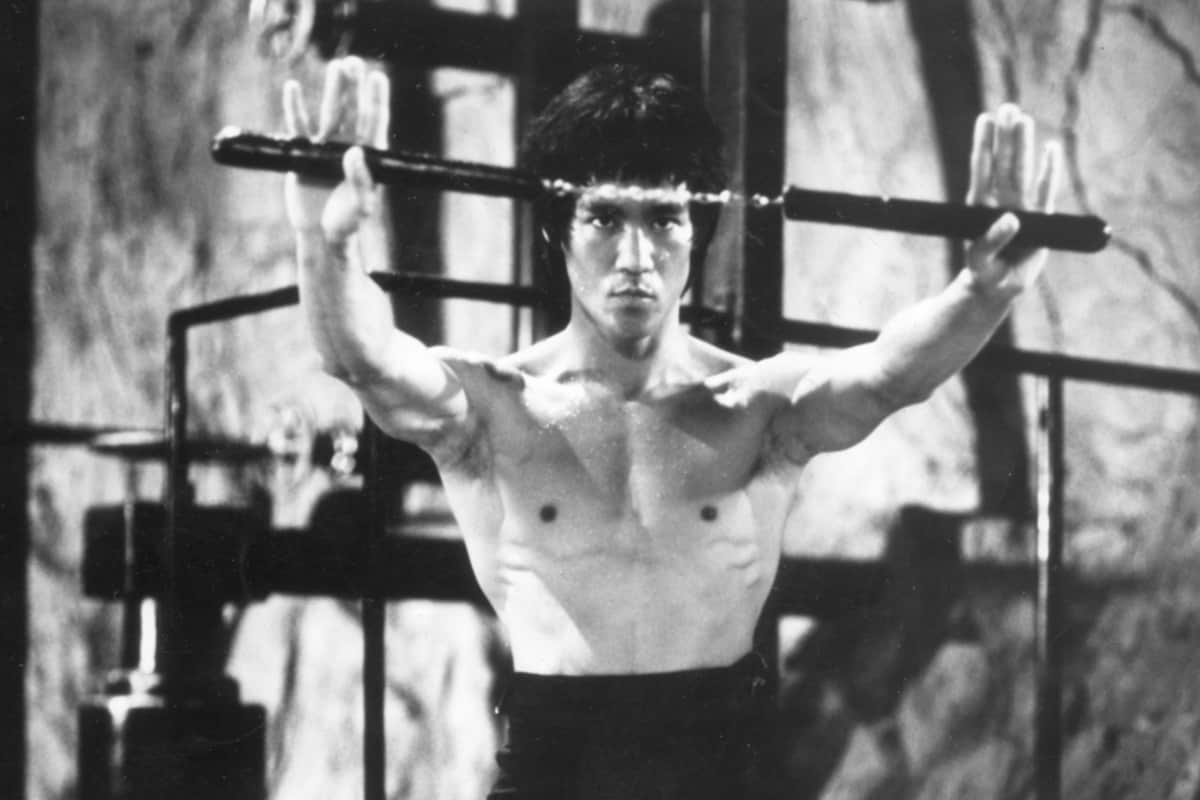
Photo Credit: BruceLee.com

Nunchucks are an iconic martial arts weapon that has come to symbolize skill, speed, and agility among martial arts practitioners. What is the history of nunchucks, and how did they come to be included in martial arts? Are nunchucks real weapons?

Nunchucks are real weapons used in various martial arts for centuries. It is thought the weapon is derived from a farming tool used as a flail to thresh rice crops in East Asia. Nunchucks are notoriously difficult to learn to use effectively, resulting in limited popularity and practicality.

Many people immediately think of Bruce Lee when nunchucks are mentioned since he popularized the use of these weapons in martial arts. However, nunchucks have been a part of certain martial arts styles for centuries, but their effectiveness is debated in some circles.

History of Nunchucks

It is believed that either the Okinawan people in Japan made nunchucks or that they came from China. It’s not entirely clear where nunchucks were first created, as this question is still up for debate and the exact date of their creation is unknown.

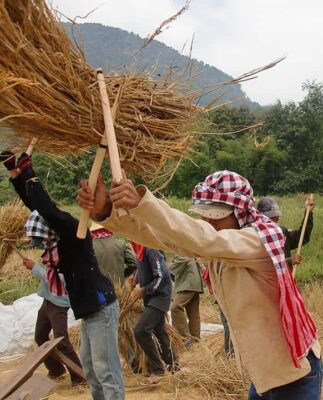
It appears nunchucks were first used as a farming tool as Okinawans smashed rice on the threshing floor with nunchucks to separate the husks from the grain.

Threshing rice
Photo by Nick Hubbard

The nunchucks were first made from two wooden sticks or handles connected with a rope or chain. Years later, the nunchucks evolved from being used as a farming tool to a weapon for combat. The Okinawan martial art of Kobudo incorporated the use of nunchucks into its training regimen, and the weapon was popularized throughout Japan.

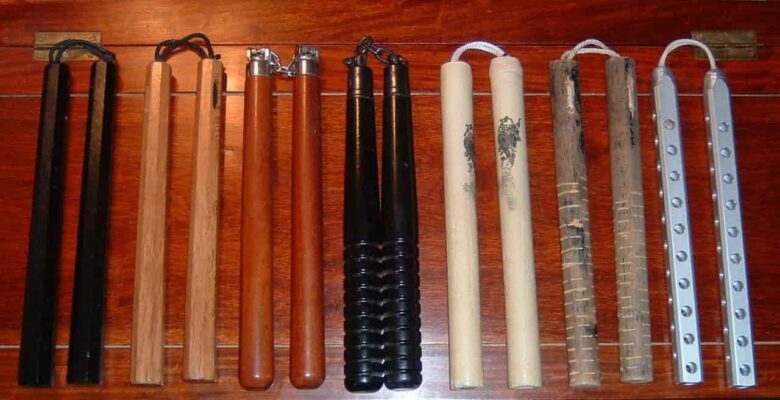
Nunchucks are typically made from wood, usually hardwood, with a metal endcap where the two sticks are joined together. A chain, rope, or piece of leather can join the two sticks. Modern nunchucks can be made from acrylic material, wood, metal, or plastic.

Different types of nunchucks

Nunchucks eventually found their way to other parts of Asia, and they were incorporated into the martial arts training of various eastern styles such as Kung Fu, Karate, and Taekwondo.

In the 1970s, the weapon became very popular all over the world because of martial arts movies, especially those with Bruce Lee showcasing his nunchuck skills.

In some countries, nunchucks were banned due to their association with violent crimes. However, many martial arts enthusiasts continue to practice nunchucks as part of their training.

Nunchucks have a long history that spans several centuries and multiple Eastern cultures. From being used as a farming tool to a weapon for self-defense, nunchucks have evolved and become a popular martial arts weapon used worldwide.

Are Nunchucks Real Combat Weapons?

Nunchucks can be a lethal weapon in the hands of a skilled martial artist. However, their effectiveness in real combat situations depends on the martial artist’s skill in wielding the weapon.

Learning to use nunchucks takes years to master and become proficient to the point where they will be an advantage in a fight. It’s a lot harder to master than it looks.

In most cases and for most people, nunchucks are not a practical weapon for combat or self-defense. But if a martial artist learns to master this weapon, it has several characteristics that make it very effective in the hands of a master.

Nunchucks can be a very versatile weapon if you are properly trained to utilize them. They can be used for striking, blocking, and trapping techniques, making them useful as a weapon in close combat situations.

The fast and unpredictable movements of nunchucks can be very intimidating and challenging for opponents to defend against.

However, nunchucks also have limitations, so they are not a common self-defense weapon for most people.

  • Require a lot of training. Nunchucks require significant training and skill to use effectively, and they can be difficult to control, especially for beginners. 
  • Short range. The weapon’s short range can also limit its effectiveness against opponents with longer weapons, such as staffs or swords.
  • Risk to the user. Nunchucks can pose a risk to the user as well. The weapon’s rapid movements can cause injury to the user if not handled correctly. 
  • Easily disarmed. Unless the user is an expert, it can be quite easy to disarm someone wielding nunchucks, leaving the user defenseless.

Some law enforcement agencies in the USA adopted using nunchucks as a non-lethal weapon to subdue subjects, and the officers received special training in the use of the weapon. However, nunchucks have been mostly phased out of law enforcement in favor of the taser, which can be used at a greater distance.

RELATED:
What Is Verbal Judo for Police? 

Which Martial Art Teaches How to Use Nunchucks?

Many martial arts styles incorporate nunchucks into their training regimens. Here are some of the most popular martial arts that teach how to use nunchucks:

  • Kobudo. The Okinawan martial art of Kobudo was one of the first styles to incorporate nunchucks into its training. Kobudo focuses on the use of traditional Okinawan weapons, including nunchucks.
  • Karate. Karate uses various weapons, including nunchucks. Many karate schools offer nunchucks training as part of their curriculum.
  • Kung Fu. Kung Fu is a Chinese martial art incorporating many weapons, including nunchucks. The weapon is often used in combination with other weapons, such as staffs and swords.
  • Taekwondo. Taekwondo emphasizes kicks and strikes. While nunchucks are not traditionally part of Taekwondo, many schools have incorporated nunchucks into their training.
  • Jeet Kune Do. Jeet Kune Do is a blended martial art created by Bruce Lee. The style incorporates techniques from various martial arts, including teaching the use of nunchucks.

Those interested in learning how to use nunchucks should research schools in their area that offer nunchucks training and choose a style that aligns with their interests and goals.

RECOMMENDED READING:
The Art of War by Sun Tzu: Key Points Explained

Are Nunchucks Practical In Self-Defense?

Nunchucks can be an effective weapon for self-defense, depending on the user’s skill and situation. That being said, nunchucks are not a practical self-defense weapon for most people. Unlike other simple weapons, such as batons, which require very little training to use properly, nunchucks require extensive training to use properly.

Nunchucks are not very practical to carry around on a person, and in some locations, it is illegal to carry them in public.

It will be difficult for a potential attacker to predict and defend against strikes from a nunchuck, but the weapon is only effective at short range and requires much skill to be effective against a determined attack.

These limitations make nunchucks not very practical as a self-defense weapon, but this is not to say that training with nunchucks in your martial art has no value.

Is It Legal To Carry Nunchucks?

The legality of carrying nunchucks varies by jurisdiction. In some areas, nunchucks are classified as prohibited weapons, and carrying them is illegal. Nunchucks are legal to carry in other areas as long as they are not concealed or used criminally.

Is It Legal To Carry Nunchucks in The USA?

In the United States, the legality of carrying nunchucks varies by state. For example, Arizona and New York previously classified nunchucks as a prohibited weapon, but in 2019, a court overturned the ban, making nunchucks legal to carry in almost every state except California and Massachusetts.

Up until 2019, four states had laws banning personal nunchuck usage, including Arizona, California, New York, and Massachusetts. However, the bans in Arizona and New York were overturned, and now only California and Massachusetts have laws limiting their use.

“Nunchucks and the Law.” Findlaw

It is crucial to research the laws in your area before carrying nunchucks, even if your state laws allow you to carry them, because there might be some carrying restrictions. Carrying prohibited weapons, including nunchucks, can result in criminal charges and fines.

How Dangerous Are Nunchucks?

Nunchucks can be extremely dangerous as a weapon as well as to the user if not used correctly. The weapon’s rapid movements can harm the user and bystanders if not controlled properly.

One of the main concerns about using nunchucks is that the strikes from this weapon can cause serious injury or even death if they hit vital areas of the body. Even training with nunchucks can be extremely dangerous if sufficient care is not taken to treat the weapon respectfully.

Nunchucks are not recommended for beginners or those without proper training. Improper use of nunchucks can result in serious self-injury or injury to others

Users must exercise proper caution over the weapon to ensure its safe use, use it with enough space, and be away from other people that could be injured if things go wrong.

How Did Bruce Lee Learn to Use Nunchucks?

Bruce Lee is often credited with popularizing the use of nunchucks in martial arts and films. He was skilled in many martial arts, including Wing Chun, boxing, and fencing (yes, fencing). However, his use of nunchucks is one of his most iconic contributions to the world of martial arts.

Bruce Lee was initially not interested in nunchucks and did not include learning these weapons in his martial arts repertoire. But Lee’s good friend Dan Inosanto showed him how to use nunchucks and convinced him of what nunchucks could do in the hands of a skilled martial artist.

Dan Inosanto gave Bruce Lee his first set of nunchucks and taught him some of the simple techniques for using the weapon effectively to get him started. In typical Bruce Lee style, he saw this as another martial arts skill to master, and he became adept at wielding the weapon.

Tadashi Yamashita further encouraged Bruce Lee to explore using nunchucks and other Kobudo disciplines when he worked with Bruce Lee in the making of the film “Enter the Dragon.” 

Bruce Lee’s use of nunchucks was popularized through his films, such as “Enter the Dragon” and “Game of Death.” He used nunchucks in many fight scenes, showcasing his skill and creating an iconic image of the weapon.

https://youtu.be/dFgz_-tIFbY
RECOMMENDED READING:
Bruce Lee vs. Wong Jack Man – What Really Happened?

How To Learn Nunchucks

Learning to use nunchucks requires proper training and dedication. It is crucial to start with basic moves and progress very slowly to more advanced techniques.

In the beginning, the most important thing you must do is get a pair of training nunchucks made from padded foam that will not injure you while you learn the techniques.

Actual nunchucks are made from hardwood, but starting with the hardwood one is too risky for beginners, as you can sustain serious injuries while training.

The following steps are a basic guideline as to how you can start learning to use nunchucks.

  • Find a qualified instructor. Look for a martial arts school or instructor that offers nunchucks training. An experienced instructor can teach you the proper techniques and help you progress safely.
  • Start with the basics. Begin by learning the basic strikes, spins, and transitions. Practice these movements slowly and with control until you feel comfortable.
  • Practice consistently. To improve your skills, you should practice nunchucks regularly. Practicing in a safe and open area is important to avoid injury to yourself or others.
  • Gradually increase speed and difficulty. Once you have mastered the basic movements, you can move on to more advanced techniques and increase your speed. However, it is important to progress slowly and with control to avoid injury.
  • Use proper safety gear. When practicing with nunchucks, wearing proper safety gear, including a helmet and padding for your hands and arms, is important. This can help prevent injury in case of accidents.

Conclusion

Nunchucks have a rich history and have been used as a weapon for centuries. While they may not be as commonly used in modern martial arts as other weapons, nunchucks can still be effective for self-defense and developing coordination and dexterity.

Nunchucks are real weapons with practical applications in martial arts, but mastering them requires proper training, dedication, and practice. Finding a qualified instructor and using proper safety gear is important to ensure safe and effective training.