Home Blog Page 45

Personal Guide To Become A Professional MMA Fighter

0

With the popularity of Mixed Martial Arts today, especially the UFC, many are wanting to get involved in the sport. Of course, MMA literally involves several martial arts, all mixed together to see who the best fighter actually is.

Due to MMA becoming likely the second biggest sport in the world, only behind football, we can see why you want to become a professional fighter like most of us wanted to be a professional baseball or football player growing up.

If you ask us, all you need to do to become a professional fighter for an organization like UFC or anywhere else is to know where to start.

This article will be your personal guideline, showing you the best concepts and ideas available to us at this present time. Let’s get started!

When Is The good AGE To Start Training?

Ideally, you want to begin getting into MMA or Martial Arts training as soon as you can.

The reason for this is that the human body can only take so much. We age like normal and with that comes changes, meaning regardless of what we do…these changes will occur. THEN you add in fighting on top of that.

While getting involved in other sports in your mid to late 20s is not a bad thing, in order to compete at the highest level, you need to start younger. Keep in mind that many of these people will have years…sometimes a decade of training and be at the same age as you.  

A very famous and talented fighter like Connor Mcgregor started boxing at 12 years old and later started training in MMA. McGregor, at the age of 18, has made his mixed martial arts debut in an amateur fight won easily. After that fight, he turned professional. In his case, it took him the total of 6 years.

You need to be at least 18 to be a professional fighter to participate in full-contact fights. Therefore, mathematically, the best age to start MMA is when your age is around 14 – 16 years of old IF you want to compete as early as 18 years old.  There are Junior MMA events where there is No head Contact and semi-contact to the body those who aren’t 18 years of old.

Therefore, getting in on things quicker is massively important to become a professional fighter. Otherwise, you can train MMA regardless of your age since MMA is an excellent workout system.

How long does it take to be a professional MMA fighter?

There’s no exact amount of time it takes to become a professional fighter. Everyone’s learning aptitude varies. But you need to train approximately at least minimum of 2 years on a regular basis, 5 days a week.  After that you can compete in amateur fights to see how well you do to evaluate your level against other fighters to determine whether you are ready to become a professional fighter or need additional training to turn professional.

Thus if you are talented, you can turn professional only after one amateur fight just like Connor McGregor did.

How Much Money Professional MMA Fighters Make?

There’s no universal pay scale for all fighters as each fighter’s pay is based on the terms of the contract that each fighter signed. The amount of money each fighter makes is mainly determined by his/her fight record and popularity.

For this reason, two different fighters with the exact same fight records do not necessarily make same amount of money. Top fighters also receive pay-per-view cuts on top of their base pay. The exact amount of these pay-per-view cuts are not published to the public as only the base pay is published to the public.

The best way to get a general idea as to how much money professional MMA fighters make is to look at the list of fighters’ payouts. Let’s look at the two major MMA promotions’ payouts. Click on the fighter’s name to see their current MMA record which has a direct correlation with their pay.

BellatorUFC 249 (Main Card)
Cris Cyborg ($250,000 + no win bonus = $250,000) Highest paidTony Ferguson: $500,000 (Highest paid)
Sergio Pettis ($30,000 + $30,000 win bonus = $60,000)Alexey Oleinik: $160,000
Emilee King ($3,000 + $3,000 win bonus = $6,000)Sam Alvey: $65,000
Source: Bellator 238, UFC 249

The Six Fundamental Components of MMA training:

The main things to know about in MMA are as follows: Striking, Clinch, Groundwork, Submissions, Conditioning, and Strength.

The last two are more so revolving around specific body needs. However, while speed and agility are useful along with them…conditioning and strength mean more. 

Conditioning is important because it helps you keep going well into a fight. 

Strength is huge because it allows you to pick up and move someone without expelling as much. You’re prepared to handle a load, so moving them needs to be easy from a strength standpoint.

Do I Need To Be a Martial Artist To be a Professional Fighter?

The quick answer is no, but it massively helps if you know a style or multiple styles well. Every major professional fighter has one main style they trained in, but this does not always have to be a martial art. Both Boxing and Wrestling are not “technically” martial arts, but they are often counted among them by pro-fighters due to having a lot of the same disciplines.

That being said, there are some well-known MMA fighters with little or no martial arts backgrounds.

Why You Should Avoid Taking Two Similar Martial Arts

If you are going to get into certain martial arts, you want to do your best to spread them out as much as possible. For example, things like Judo, Sambo, and Wrestling often teach the same things. While they do it differently, it is not worth knowing all three when the basics and even part of the throws are heavily similar.

You also want to be careful that when you invest time in a martial art, you’re not taking one that will mix up many styles if you want just the one. For example, Japanese Jiu-Jitsu a.k.a Ju-jitsu or just regular Jiu-Jitsu) is a hybrid martial art that includes various strikes, grappling, and submission techniques. However, along with regular Jiu-Jitsu techniques, it actually teaches versions from other martial arts too. This is why it’s given the hybrid description.

Therefore, you would not take Ju-jitsu while also taking another martial art because Ju-jitsu might cross-reference techniques from other martial arts unless you wanted to get specific. 

That is where it differs from Brazilian Jiu-Jitsu, as BJJ *ONLY* teaches BJJ techniques. This includes mostly grappling and submissions as well as some (but very little) clinch material.

The same can be said for Taekwondo and Karate. They are different in origin and discipline but both teach striking, even have similar versions of specific strikes. This is why you do not need to know both because you’ll learn next to nothing new that will be of use to you in the striking field. The only reason to do so is if you just want to know how that specific Martial Art does things.

This differs, however, from Muay Thai. Known as the “art of eight limbs,” it’s known for the notable and multiple striking concepts it teaches along with the infamous clinch work. However, depending on who you train with, you’ll also learn some submissions. Specifically, those that can be performed out of the clinch (i.e. standing figure four arm lock, standing kimura, standing guillotine) 

Therefore, it differs enough to learn one of the other striking Martial Arts while also learning Muay Thai. There will be more than enough new and useful information.

Which Martial Art(s) is the best for MMA?

Whatever style martial art you choose to train in, you need to choose an art that focuses on striking, and choose another art that focuses on groundwork as these two different skills are the most fundamental part of MMA fighting.

When it comes to striking discipline, Muay Thai or Boxing is widely regarded as the most effective striking-based martial art for MMA. At the same time you have some professional fighters that train in full contact Karate to hone their striking skills. 

With striking discipline, you have a variety of choice such as Karate or Savate and not just limited to Muay Thai or Boxing if you just aren’t interested in learning Muay Thai or Boxing. 

When it comes to ground fighting, though, learning BJJ is NOT an option, it’s a requirement.

You can’t succeed as a professional fighter without learning BJJ as BJJ is the most effective art for the ground game. Even if you have a strong background in college wrestling which is another ground fighting style, you still have to learn how to defend against BJJ moves.

Fitness & Nutrition:

It is not only needed to be healthy in your own life but you especially want to do this as a fighter. For one reason, you need to do this well in order to always make weight. This can be a real problem for some people to do, so learn how to eat right sooner rather than later. This falls under things like nutrition, which many places also teach alongside MMA or Martial Arts. To read about the MMA diet on a budget, check out this article, “MMA Diet On A Budget To Improve Performance.”

Proper fitness is important too, This pretty much involves you putting a body together that properly connects with your specific style. If that means strength and conditioning like we mentioned the wrestlers having, then you need to develop this well. Always make your body connect well from an overall fitness level. However, you also want to always give primary attention to the sections of your body most used in your style too.

Find A Reputable Gym

This can be a bit difficult to do, as MMA Gyms that train specifically in just MMA content are rare to find. They are popping up more and more around the world but it’s nowhere near as easy to find as specific martial arts gyms. This is why we’d recommend you look into MMA gyms, but the best way to know they are worth your time is if you find good credentials in the instructors.
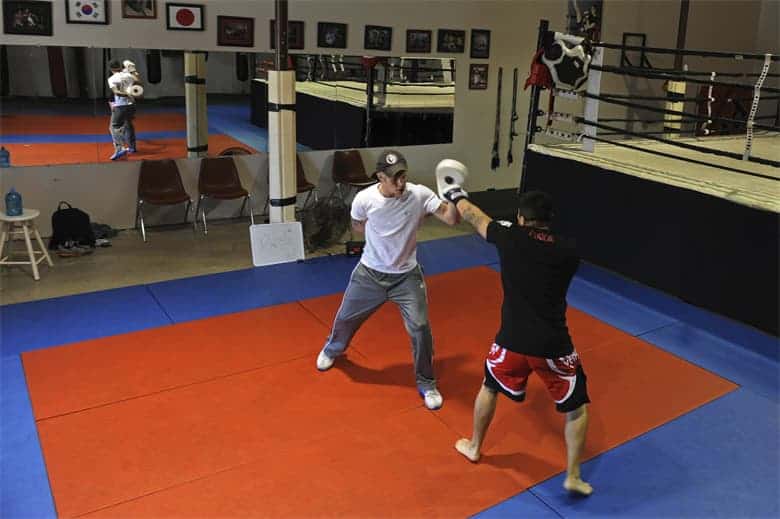
Make sure you notice we did not say “instructor” but rather “instructors.” No proper MMA gym will only have one trainer because even top professional fighters will tell you that they aren’t the best at everything. Even some of the greatest instructors have specific things they do well and use others to teach the stuff they do not.

These same instructors will help you pick the right gear or even offer it to you as part of the price you pay to use them. Gear can be important in many martial arts but especially in MMA.

You also want to look for credentials or certifications. For example, proper instructors MUST be a 1st-degree black belt or higher in their specific martial art. Ideally, you’ll want a 3rd Dan or 3rd-Degree Black Belt. However, black belt and higher can teach basics. While Teaching Certifications are nice to see, they are not actually required in most countries for Martial Arts Instructors. Many get them anyway just to be 100% legitimate.

It’s also good if the gym is a member of one or more specific leagues or organizations. For example, the International Brazilian Jiu-Jitsu Federation (IBJJF) or the United States Muay Thai Federation (USMF).

One of Top MMA Gyms in the U.S.:

By far the best way to become a professional fighter is to sign up with one of the prestigious MMA gyms if there’s one near you. These prestigious MMA gyms are known to produce one of the top fighters.

As a result these gyms can guide you better than anyone else to become a professional fighter and help you sign up with a top MMA organization because they already have access to top MMA promoters.

The top MMA gyms around the world are actually open to the public. However, whenever a top professional fighter comes in to train, they might close the gym for them or bring them in at specific hours to avoid the public. Usually, they only do this for people that the gym specifically sponsors. Many UFC Fighters have opened their own gym or invest in a gym they specifically liked.

For example, former UFC Fighter Brandon Vera’s gym, known as Alliance MMA, is fantastic. Vera started it in 2007 and it has helped to produce some great fighters. The same can be said for Longo and Wiedman MMA. This gym is owned by former UFC Middleweight Champion Chris Weidman and longtime trainer Ray Longo.

Gyms like Team Alpha Male, which was created by UFC Hall of Famer Urijah Faber, is also a great gym. It even produced UFC stars like Chad Mendes and Cody Garbrandt.

Of course, there are other incredible gyms that are either invite-only or relatively expensive. American Top Team, for example, charges about $160 per month for basic martial arts classes, up to 2 per week in one martial arts discipline. Their Ultimate Membership is $300 per month, allowing you to train in any martial arts discipline they have available for an unlimited amount of time. Meanwhile, professional fighters that use them as a sponsor will often train for free.

Greg Jackson’s Gym, Jackson-Wink MMA, often does camps that cost a good bit each. Although they do have some monthly options. However, you’d train with Jackson and his team, so, it’d be worth the cost.

The best top gym by value is probably Roufusport. Their monthly membership covers a heck of a lot for around $60. Anthony Pettis and CM Punk have trained here.

MMA Organizations To Break Into

When MMA was just getting hot, a lot of minor promotions became pretty popular. Not only was UFC growing but organizations like Pride FC and Strikeforce were pretty hot. Same for Invicta FC and even the WEC at some points. Each of these organizations produced some great fighters too. Yet UFC poached a lot of the talent from these minor promotions.

Eventually, the former UFC owning body, Zuffa, LLC. bought up their main competition in Strikeforce, Pride, and even WEC.

That leaves very few options when it comes to top paying MMA promotions. Outside UFC, the main players are Bellator MMA, ONE Championship, Invicta FC, and Professional Fighters League.

UFC is still and likely will forever the best paying of them all as well as the most featured and well known. Similar to that of WWE in pro-wrestling, in spite of the numerous wrestling promotions on the planet.

How To Sign Up For MMA fights:

If you want to get into one of these higher-paying MMA organizations, you’ll need to get your feet wet first. This means you’ll need to have some MMA fights as an official professional fighter somewhere local. Where that happens to be is something we cannot answer for you as every country, province, state, etc. will be different.

This means you need to find them and get in contact via Facebook page or online search. Once you do, they’ll likely ask for your ability and might even give you a fight on their next card. Be sure that they are on the up and up, however. This means that they have to follow specific guidelines under sanctioned fight laws. Included in this are things like, ya know, rules. In the United States, for instance, a paramedic must be present at each fight to be used if needed.

To find out more about this, click here.

You may not get paid much from some of the smaller MMA organizations when you first start but know that your next earning will depend on how well you fought previously as you build your credential in the MMA community.

How To Become a UFC fighter:

Getting into the UFC is likely the toughest thing. Most of the time, you’ll need to have some sort of name behind you. For example, although CM Punk never had an MMA bout ever, he was a well-known former WWE Superstar. Brock Lesnar, however, did have a background in a few MMA bouts but he was also a former NCAA Heavyweight Wrestling Champion. Therefore, Lesnar was an easy hire while Punk got in simply from fame.

Others that are hired, in fact, most of the fighters are signed with UFC after having great performances elsewhere. This does not mean the person has to be undefeated but they do need to be someone that the UFC can market as a proper MMA star for their company. That is why marketability, such as proper style and especially the ability to cut a good promo will help you.

Maybe you’ve done all the right stuff and UFC has yet to notice you. If that is the case, you can apply to be a UFC directly. To do that, click here.

10 MMA Fighters Who Don’t Look Intimidating But Are Dangerous

0
Paige VanZant (Photo by Harry Murphy/Web Summit via Wikimedia)
Max Holloway & Paige VanZant

Some MMA fighters look pretty soft, almost as if they could not hurt a fly. However, you’d be surprised to find that while they may look soft in public…these people could probably destroy most people in a fight. Sure, you have some like Francis Nagannu, Yoel Romero, or even Brock Lesnar who look mean and as if they could pop your neck off. This is not the case with others.

This is likely simply due to what people assume as tough based on sex or gender, which can differ wildly depending on who you ask. MMA is filled with men and women like this.

There’s an old saying or motto that goes: “Never judge a book by its cover.” 

We’re not sure if that exactly fair when it comes to books, as the covers will help a lot…in human beings, this is very true. In fact, we’re going to prove it to you by listing a bunch of MMA Fighters who don’t look intimidating but are dangerous fighters.

10. Henry “Tripple C” Cejudo

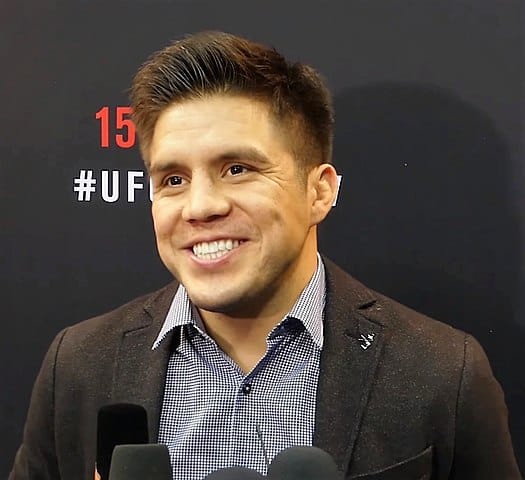
Henry Cejudo(Credit: MMAnytt.se via Wikimedia)

The Hispanic sensation has become a multi-division champion in the UFC, even being one of the elite few to ever hold two titles in two different divisions at the same time. If you look at the guy, he is not really intimidating at all. On the street, he would not get a second glance from most people.

Now, this is possibly due to how big he is, which can be problematic. He normally competes in the Bantamweight and Flyweight divisions in the UFC, which contain some of the company’s smallest MMA fighters. By weight, these are two of the smallest divisions UFC has to offer. Therefore, when 5’3 130 to 135lbs of Henry Cejudo shows up, you’re not expecting him to be intimidating.

On top of this, he has what some might call a movie star face. This is perfect for branding purposes but not the best thing for his personal intimidation factor. He has a million-dollar smile as well and known to be a pretty nice guy. All of this is actually good and will clearly stand out as numerous great traits for the man to have. Yet that isn’t helping him look tougher but rather, the opposite.

The cool thing is that regardless of how he looks, his MMA career has been a successful one thus far. While he has done well in the UFC, he was already successful before jumping to MMA. As a freestyle wrestler, he won gold for the United States at the Pan-American Games & the 2008 Summer Olympics. In the UFC, we’ve seen him beat top names in the sport, including Demetrious Johnson, T.J. Dillashaw, and Dominick Cruz. He’s clearly not one to mess with.

9. Frankie “ The Answer” Edgar

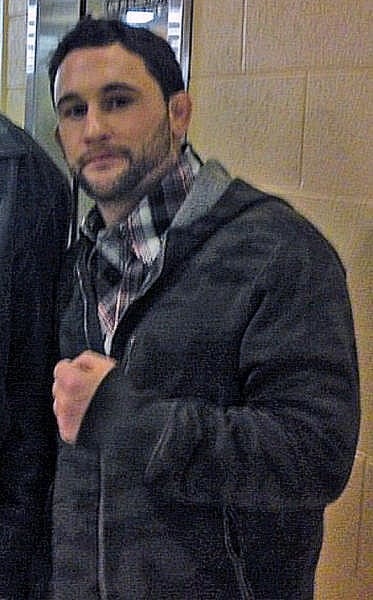
Frankie Edgar (Credit: Jemaleddin Cole via Wikimedia)

Frankie Edgar first began his career in the UFC in 2007 and became pretty successful in his career. However, if you look at Frankie, he does not come off very intimidating. Like Cejudo, his size certainly plays a role in that. He stands at 5’6 and has weighed anywhere between 130 up to 150lbs. He has mostly fought in the Featherweight & Lightweight divisions in his MMA career too.

He even looks like he’d be someone you’d happen across while seeing Best Buy’s Geek Squad. “The Answer” is a pretty smart guy, who went to Clarion University on a wrestling scholarship where he competed at a top-level all four years. He ended his run there with a degree in Political Science. Therefore, one would likely see him run for public office before assuming he was a good fighter. However, he’s a beast in the octagon.

Overall, his MMA career took off when he beat B.J. Penn at UFC 112 and followed it up at UFC 118 by beating him once again. The first fight happened to be when he won the UFC Lightweight Championship, defending it by defeating Penn in their next fight. He’d later defeat Penn again, going 3-0 all-time against him.

However, Edgar also defeated other major names in the sport of MMA, including Chad Mendes, Urijah Faber, and Cub Swanson (twice). He may not look it, but Edgar could pretty much destroy anyone he wanted in a real fight.

8. Paige “12 Gauge” VanZant

Paige VanZant (Photo by Harry Murphy/Web Summit via Wikimedia)

With the success of Ronda Rousey in the world of MMA, the UFC realized there was a need for another division. This was when they brought the Strawweight Division into play for the women. When they tried to find someone who could be the face of the division, Paige VanZant stood out right away. She was 3-1 in her career up to that point, so when UFC found such a gorgeous woman that could easily be a star…they snatched her up.

She has competed in both Strawweight and Flyweight in her career thus far.

If you look at Paige, she is certainly not intimidating. She is stunning, and a blonde bombshell born for more than just MMA. However, if you look at her…she comes off as gorgeous yet easily approachable. Her size is even small for other women, as she stands around 5’4 and weighs around 120 to 125lbs. Yet behind her small stature, beautiful features, and lovely smile rests a beast that could soon end your life if you push her to it.

She has a Purple Belt in Brazilian Jiu-Jitsu, which is not easy. In BJJ, it can take over 5 years of training before one can progress from white to purple. This is why she’ll grapple right away in her fighting style, but she loves to end fights with vicious strikes. She certainly knows how to hit too as she has both submission and knockout wins in her career.

Paige may not look intimidating, but it’s clear that she’s not a woman to mess with.

7. Max “Blessed” Holloway

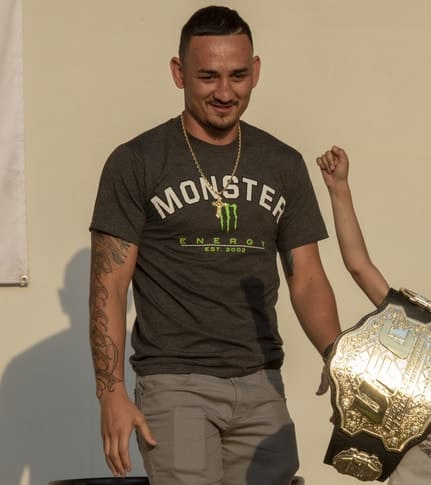
Max Holloway

Max Holloway is a Hawaiian that does not even seem to fit the territory he’s from. The man is 5’11 but weighs between 140 and 150lbs. A tall yet skinny guy is by no means a recipe for fear. Plus, Max could be considered to have a babyface. Sure, he can grow hair but there is very little intimidation there at all.

However, when it comes to MMA, Max Holloway is one of the best the sport has to offer. In his career, he has competed in both the Featherweight and Lightweight divisions. He signed with the UFC in 2012 and went on a tear through the division ever since. He defeated top fighters like Frankie Edgar, Cub Swanson, Anthony Pettis, and Jose Aldo (twice).

He has the second-longest winning streak in UFC history with 13 wins and the longest winning streak in UFC’s Featherweight division with 14 wins. Holloway is a championship-winning featherweight in the UFC, which is thanks to his excellent striking and knockout power. Due to his size, Max often has a reach advantage over most of his opponents.

This is why he has the most knockout wins in UFC’s Featherweight division ever, and the amount only continues to grow. He actually has a background in BJJ, so you’d think grappling and submissions would be his go-to. However, that is what makes Max so dangerous. He can grapple with the best of them and yet still stand up to strike too. Sure, he might have a babyface, but he’ll knock your face off if you cross him.

6. Ben “Funky” Askren

Ben Asken(Credit MMAnytt via Wikimedia Commons)

Ben Askren certainly does not look like an MMA fighter, much less someone that has even seen MMA. With his almost afro-like curly hair, he looks more like a brown-headed Napolean Dynamite than anything else. He’s also not a big guy, though he is bigger than some of the others we’ve come across on our list thus far. He stands at 5’10 and weighs around 170lbs most of the time.

This could be considered high school geek territory but don’t assume Ben is not worth something. In MMA, it is hard to overlook his accomplishments and abilities. In college, he was a wild success. At the 174lbs weight class, he became an NCAA All-American all four years he was in college at the University of Missouri. Askren won the Big 12 Championship three times in his weight class.

He eventually became a two-time NCAA Division-1 Champion in the same weight class and was runner-up the two years he did not. Askren even won gold at the Pan-American Games and the United States Championships, qualifying him for the U.S. Olympic Team.

Ben has taken part in ONE Championship & Bellator MMA, as well as the UFC. He has mostly competed as a Welterweight yet this has shifted depending on the company he worked for.

For example, under ONE, Welterweight is 185lbs but in the UFC it’s 170lbs. Therefore, if he remained at the 185lbs size, he could have been considered a Middleweight in the UFC. Askren held their Welterweight Championship for a while and vacated it after a successful defense. In Bellator MMA, he went undefeated and ended up winning their Welterweight Championship for a while, also choosing to vacate it when he left the company.

In UFC, his first fight was with former champion Robbie Lawler, whom he defeated. Yet he has defeated other great fighters in his career too, such as Nobutatsu Suzuki, Andrey Koreshkov, Shinya Aoki, and Douglas Lima. 

Pretty much, this should all tell you that Askren could kick your butt any time he wants.

5. Sage “Super” Northcutt

Sage Northcutt (Image Credit:Rocky Balboa 222222)

If you look at Sage Northcutt, he kind of looks like that random 1990’s era kid that never actually grew up. In that, you might fear him when you’re 13 but once you reach 18 and up…..he kinda just looks like he’ll forever be stuck in Middle School. He’s a good looking guy who probably belongs in movies, and could likely be in one of those random fighting movies of the 1980s and 1990s too. 

The dude even has a hairstyle to match the early 2000s, all spiked up and whatnot. Sage also stands 6 feet tall but walks around at 150 to 160lbs. 

Sure, he might look the part but he’s not intimidating in the least when you look at him. He seems like he’ll always have a babyface that is nice for promotion but not intimidation.

Sage was a can’t miss prospect for many in the world of MMA. He is a striking legend who has been fighting in some form for his entire life seemingly, as he comes from a family of martial artists and fighters. He began training in martial arts as a kid and eventually got into kickboxing where he was an assassin it seems. He went 15-0 in his kickboxing career and won around 77 world youth championships in karate.

He is even the youngest person ever to be featured on the cover of Sport Karate Magazine, appearing at age 9. His father is a black belt in Shuri-Ryu Karate, which Sage also became. Northcutt eventually went on to become a 3rd Dan (3rd degree) black belt in Taekwondo & Kajukenbo. He also holds a Purple Belt in Brazilian Jiu-Jitsu. He was so successful in his time within karate, he made Black Belt Magazine’s Hall of Fame…..at 15 years old.

When he left kickboxing, he was still pretty young. Therefore, when he went into MMA, he had to join the world of Amateur MMA first. He went 5-1 in the amateur circuit with Legacy Fighting Championship where he won those 5 fights in 16 months. UFC President Dana White saw his last fight in Legacy and offered him a UFC deal. Upon jumping to UFC, he won 6 out of 8 fights before jumping to ONE Championship, where he competes today.

As both a Lightweight & Welterweight, Sage is by no means a threatening-looking guy, as long as he keeps his shirt on. However, if you cross him, he could kick your head clean off your shoulders.

4. Royce Gracie

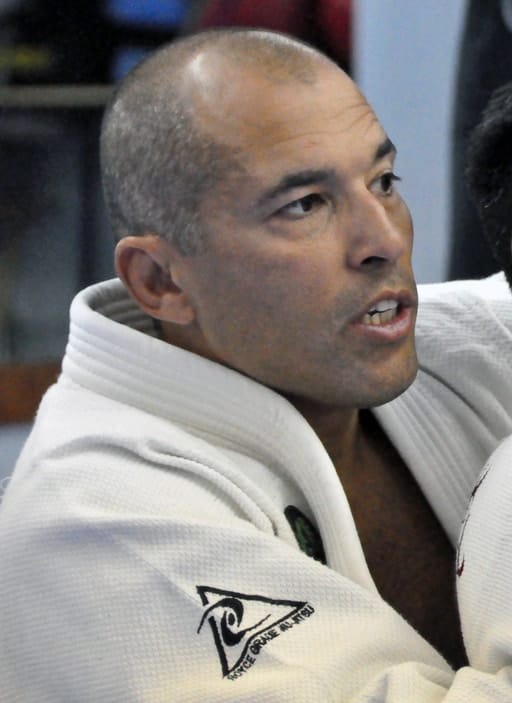
(Credit: Peter Gordon via Wikimedia)

Looking at Royce Gracie, he did not seem like much. Even today, you can check him out and it’s hard to assume much. During his competitive days. Gracie mostly operated as Welterweight, Middleweight, or Light Heavyweight. He even competed at Catchweight in his career. Yet the man had a babyface and was by no means a “big guy” at all. For the 1990s, where “big men” roamed sports, Gracie was equivalent to a little person.

Gracie was part of the UFC as it was first starting out. In fact, he competed from UFC 1 to UFC 6.

At this point, UFC did not have as many rules and it was all about settling who came from the best martial art. Gracie happened to be a major name in the Brazilian Jiu-Jitsu circle. He’s part of the Gracie family that reinvented BJJ and invented different holds and grapples, as well as submissions. He might be the most notable member of the family due to his time with mixed martial arts. Yet several of the family members are known too.

He wanted to show Americans and other martial artists that BJJ was the superior martial art. In fact, many would say that he invented the UFC and is responsible, in some form, for MMA today. He invited people to fight on TV to settle who was the best and often defeated them. He went undefeated in MMA from 1993 to January 2000 too.

He has trained in BJJ for years under the Gracie Jiu-Jitsu discipline, where he holds a 7 Dan or 7th Degree Red/Black Coral Belt. Even today at an older age, he could likely break your arm or leg in less than 10 seconds.

3. Demien Maia

Demian Maia (Credit: Peter Gordon via Wikimedia Commons)

If the man had a more fierce face or perhaps competed in a larger weight class, Demien Maia might be pretty scary. However, he is 6’1 and often walks around from 170lbs to 180lbs. Most of his career, he has competed at 170lbs, however. It’s just hard to see him as a major threat when you look at him, which is odd as he’s clearly a very talented MMA Fighter. In fact, Maia is one of the greatest BJJ fighters of all time!

Maia has been a pretty significant part of the UFC for a while and has 22 wins there in total. While MMA has been a huge place for Maia, he has also been a tremendous success in the world of Grappling. In the sport, he won the gold medal in the 2006 Pan American Games, He has been a huge presence at the IBJJF World Jiu-Jitsu Championships in Rio de Janeiro.

In 1999 he won the silver in the 82kg class and a silver in 2001 in the 88kg class. He did win 1 gold, however, in 2000 while in the 88kg class.

While he may not look it, do not underestimate Maia. He could knock your head off or simply tear it off.

2. Georges “Rush” St-Pierre

(Credit: scienceduck via Flickr)

Georges St-Pierre is one hell of a talent in the world of MMA and landed in the UFC Hall of Fame as a result. However, he has competed as a Welterweight most of his career. Although he did have a small stint at the end of his career in Middleweight. GSP has essentially been at 170lbs, standing at 5’10.

As a French-Canadian, he also has a soft non-threatening voice and a face that looks kind. GSP just does not come off as a threat at all. If you never saw any of his MMA or Martial Arts fights, it would be easy to assume GSP is just another guy. Sure, he’s in good shape but a threat? Ehhh….

However, MMA fans know St-Pierre as a legend of the sport. He has been both a 2-time UFC Welterweight and 1-time Middleweight Champion with a career MMA record of 25-2 from 2002 to 2017. He has the most consecutive title defenses and successful defenses in UFC Welterweight history with 9. In total, he has 13 wins in UFC title fights,

He is known best for his striking but as a complete MMA Fighter, he has also submitted people. This comes from his time in multiple different martial arts. He holds a black belt in Shidōkan as well as a black belt in Gaidojutsu. He also earned a 1st-degree black belt in Brazilian Jiu-Jitsu. However, he originally began his martial arts career under Kyokushin Karate, where he’s a 3rd dan (3rd-degree) black belt.

We dare you to try and mess with GSP. Be sure to film it, we want to see how fast he knocks you out or breaks a bone.

1. Roy “Big Country” Nelson

If you look at Roy Nelson, you understand why people often call him “Big Country.” While being a man that stands at 6’0 and weighing in around 250lbs to 260lbs is a threat, most others at this size with a potbelly like Nelson do not seem to be much. With or without his glorious beard, the belly makes you feel Nelson is more of a threat in a hotdog eating contest than in a fight.

Among other heavyweights in MMA, he could not stand a chance, right? Plus, a guy like that seems like he could possibly win a bar fight when drunk so he might have some boxing experience if anything. However, not only is he a skilled MMA fighter, but he has several wins in the sport across numerous top MMA promotions. Nelson has been at the tip-top with MMA promotions like Bellator MMA & the UFC.

He once even beat Mirko Cro Cop! As a heavyweight for the UFC, he even won Knockout of the Night 4 times! 

He’s not just a puncher though. Nelson has a black belt in Brazilian Jiu-Jitsu, having trained under Renzo Gracie. Nelson even competed at the Pan American Jiu-Jitsu Championships twice. In 2003, he took home the Bronze but in 2005, he won the gold! Both at the +100kg weight class.

He also holds a black sash in Kung-Fu! Not only can he strike with the best of them, but he could drop down to the ground and make you tap. Call him Big Country all you want, but never underestimate Roy Nelson.

Why Am I Not Getting Better at BJJ? – Drilling Is the Key

0

Brazilian jiu-jitsu (BJJ) is widely known as one of the most complex martial arts. So to become a master in it, every student must spend many years rolling on the mats and training. But many BJJ pros are pointing out that training is not enough to succeed and become a black belt. BJJ experts often talk about the importance of putting a lot of effort into doing BJJ drills both in and outside the academy. In layman’s terms, drilling in BJJ is to repeat various technical movements many times until you master them.

The thing is, every sport in the world has some kind of drilling workout and so does the BJJ. It is one of those things that separate the great grapplers from the average ones. The champions are the ones who are always ready to spend extra hours practicing the moves they already mastered. 

The truth is, you can’t expect any progress on the mats without performing BJJ drills. The reason why you are not getting better at BJJ can trace back to a lack of drilling on your end. BJJ drilling is perhaps the most important thing to improve your BJJ skills and let me explain why so.

“I fear not the man who has practiced 10,000 kicks once, but I fear the man who has practiced one kick 10,000 times.”

Bruce Lee

Drilling is the Road to Success just like any Other Sports

If you look at all the top athletes in the world, they all spend hours drilling the moves outside the practice. You can often hear them talking about the importance of dedication and drilling the moves on your own. 

For instance, the great Kobe Bryant used to count all of his made shots in practice, and stop when he would get to 400. For athletes like Kobe, drilling was never boring. It was a road to success. 

You see, Kobe didn’t become a legend by only playing the basketball game with other teammates at practice. He became great by putting a lot of work into drilling the moves and shooting thousands of shots on his own.

With this in mind, why would anyone think that BJJ is any different? Every great grappler spends many hours drilling the moves on their own. You can often see top-level BJJ practitioners staying longer at the practice and performing drills alone in the corner of the gym

You can’t improve your BJJ game or succeed by focusing on learning new moves all the time. Like Kobe or any other great athlete, you need to spend countless hours drilling the BJJ moves with or without a partner, sometimes even the most basic ones. This is how you truly improve your Jiujitsu skills. Once you mastered the BJJ movement through drillings, then everything becomes easier in BJJ.

That being said, let’s shift our focus to what are the actual benefits of drilling in BJJ so that you will see all the benefits from drilling. 

Drilling Makes Your Moves More Fluid

Most drills will improve the muscle groups you are using during the actual roll in BJJ, especially the ones in your hips. This is great since many BJJ students have a hard time learning how to move their hips. 

It is normal for every beginner to have a problem with doing hip escapes or bridges mostly due to the stiffness in the muscles. This stops them from moving their bodies in different directions during the rolls and limits them from executing many techniques. 

Drilling will make your body lose and allow it to move without much resistance. Also, the drilling exercises will make your muscles stronger and body more flexible which can prevent many injuries from happening. 

But mainly, BJJ drills will make your moves much more fluid and you will execute various techniques without putting much effort in it. 

Drilling Will Help You Execute BJJ Techniques Much Better

It’s fair to say that BJJ drill movements are the foundation of BJJ techniques. This is because most drill movements are closely linked with everything you do in executing BJJ moves. 

For instance, a popular drilling method named “Shrimping” is one of the basic moves in BJJ. Also, it is one of the first things you learn when you join the classes. Despite being a basic technique, shrimping dill improves mobility on your back. In BJJ, mobility on your back is as important as footwork in boxing. Basically, just about every technique you want to execute off your back starts with how good you are in shrimping.

Shrimping actually improves the hip movement. This allows you to shift between the positions faster and execute various BJJ moves. For instance, Shrimping movement is an essential part of escaping from the guard position, mount, or side control. 

Exercises like shrimping will upgrade your BJJ skills to another level. Some experts like the Renzo Gracie black belt Shawn Williams even believe that 60% of your BJJ training should be drilling. 

Drilling Will Improve Your Conditioning In Rolling

Most people see drilling as a light workout and something you can do at home or after the practice. But make no mistakes about it; it takes a lot of effort to endlessly repeat the moves, especially right after the training session.

So drilling on a regular basis will enhance your conditioning in two different ways: 


1) Most BJJ drilling workouts require all the muscle groups to work together. Thus, these exercises will improve your strength in both upper and lower body segments. This will give you the strength to sustain intense rolls with the partner and to not burn your muscles quickly.

2) Drilling falls into the category of aerobic exercises. So as most of us know, aerobic exercises improve your cardiovascular system and increase cardio levels. So you will have an easier time going through exhausting BJJ classes and having top cardio is always a huge advantage in BJJ matches as well.  

Also, most of the drills will improve your balance, coordination, and agility. 

Drilling Will Speed Up Your Learning Progress

BJJ beginners can really benefit from drilling since it helps them remember the moves they learned in class and how to execute them the right way.

By drilling the same BJJ technique so many times at a slow pace, you can refine the movement that you might struggle with and improve technical speed in BJJ. This is called technical drilling. You can read further about technical drilling and other types of drilling here.

There will be lots of information to process in the beginning for new BJJ students, and it’s very hard for every new student to keep up with the classes. You will learn a lot of techniques and how to perform them. But don’t be delusional thinking you already have mastered the new moves. 

Taking 20 minutes of your time to drill the new technique that you just learned is one of the best and fastest ways to speed up your learning progress.  The difference between students who drill the moves on a regular basis and the one who doesn’t is huge for a white belt student. For this reason, white belt students can progress faster by drilling regularly.

The ones who don’t do drilling exercises must spend the next class repeating the moves from the previous session. But the ones who put the extra work will come in prepared and ready for new lessons. So looking in the long term, drilling can speed up your progress twice as fast. 

Drilling Will Help You To Win In The End

The endgame of drilling is to boost your BJJ game and become good at submitting other people. Spending extra hours drilling the moves can bring you nothing but huge gains. It will improve every aspect of your BJJ game and you will have an easier time submitting people in sparring and here is why. A World-class BJJ practitioner Andre Galvao said the following:

You are drilling to fight! You are not drilling to drill.

Andre Galvao (World Jiujitsu Champion)

Drilling consists of endless repetition of certain moves and techniques. The key is to do them long enough so that these moves become stamped into your muscle memory. The term “muscle memory” means we can train our nervous system to adapt to the certain moves we are practicing. 

So this means you will need less conscious effort to pull off those moves. Or in other words, muscle doesn’t need a command from our brain as the body will react by itself. 

So when you roll against someone, expect to pass their guard with ease and without even thinking about it. Top grapplers can even use their instincts to pull a submission or escape from troubles. We know this may sound odd and crazy. But drilling helps our nervous system to remember the moves and when is the time to execute them

This also allows you to stay calm and focused during the sparring or competition. Instead of being scared, your body will see certain patterns and you will react with your instincts. So naturally, this boosts the reaction time and you will have an easier time placing a submission.

How To Drill The Techniques The Right Way

Whether you want to drill the moves at home or in the gym, make sure to do a proper warm-up first. Then, start out slow to get your body going and make sure to perform the drill movement the right way. 

As you become more familiar with it, you can increase the speed of drilling as if you are sparring against the real person. Remember, it’s not just about drilling; it’s about preparing yourself for the real-time situation. So make sure to also visualize the partner and how would you escape or attack while performing BJJ drills.

Now let’s go back to the basketball analogy for a moment. Kobe Bryant didn’t practice three-point shots at a slow pace all the time. His goal was to speed up the shooting to simulate the real-time situation in the game

It’s ok to start slow if you have any issues with performing the moves fast.  But whenever you feel comfortable and loose, make sure to increase the speed as if you are sparring with the partner. 

You Can Do Drilling By Yourself Anywhere

Unlike sparring, you do not need a partner to do drilling exercises. Drilling is something that can be done anywhere and anytime without a partner. No matter if you are on vacation, traveling, or at home away from the gym. You can always take 15-20 minutes of your time to drill the moves. 

Drilling is perfect for students who can’t attend the classes more than twice a week for instance. Repeating the solo drilling moves such as shrimping or guard pass drill at home helps you to keep up with the classes and stay in shape. 

But even if you are fully dedicated to BJJ classes, it is the best thing you can do outside the gym to polish and refine the movement through drilling. All you need is a piece of a small mat to do a complete BJJ drilling workout. 

Also, many BJJ students have a grappling dummy at home. This workout tool gives you an even wider range of exercises you can perform. 

But with or without the grappling dummy, the most important thing is to be consistent and dedicated. Since you can do it anywhere, there’s no excuse for you not to start exercising tomorrow.

Final Thoughts

If you are still NOT convinced about the importance of drilling, ask the world-class BJJ practitioner Andre Galvao. You will find out how much work he puts into drilling and how this helps him to win almost every BJJ match. Thus do not estimate the power of drilling. Consistent drilling will improve your BJJ skills far more than you might assume.

We understand repeating the same techniques may seem boring. But the benefits of it are so big that you have to make conscious effort to make a big part of the training if you are serious about your BJJ journey. As said above, drilling a couple of times a week will speed up your progress, improve the movement, and give the agility to execute various BJJ moves during the sparring. 

Every BJJ students must realize the importance of these exercises and that drilling is essential to their long-term success as BJJ practitioners.  

10 Greatest UFC Achievements That Helped MMA

0
Photo Credit: UFC

In the world of MMA, one company has become King or perhaps Emperor of the sport…Ultimate Fighting Championship. Better known to the world as simply UFC, they have become THE name you think of when you hear “MMA.” They took a very small sport to the fastest-growing one on the planet today.

What the UFC has achieved is remarkable, but what does it matter to MMA? In this article, we will be exploring exactly that. We’ll be discussing what those achievements were, and how they helped MMA.

10. UFC Helped To Get MMA Sanctioned

In the early 90s, MMA fighting tournament which was started by UFC was newer to the world and people did not quite understand it. In fact, for some time MMA was banned in many states after truly unsanctioned fight club-like tournaments were exposed.

These Mortal Kombat type tournaments hurt MMA’s standing through the late-1990s. Back in 1996, the now late Arizona Senator John McCain was one of the biggest detractors of MMA initially. The story goes that he once saw a tape of UFC fights and equated it to “human cock-fighting.”

This resulted in McCain, an avid boxing fan, leading an initiative to ban MMA nationwide. He was nearly successful in this too.

The Change:

UFC did not have many rules at all in the early days, so changing rules to meet the athletic commission regulations was a challenge. 

UFC wanted them to be realistic but as safe as could be. These rule changes differed UFC from MMA companies worldwide, especially in places like Japan (where the sport was massive).

Some of the rules they implemented, which have since been adopted by many MMA Leagues. This included the use of fingerless gloves as well as banned moves. Among these banned moves are headbutts, biting, eye-gouging, elbows to the back of the head or neck, and kicking a downed opponent.

They also added judges, time limit rounds, stricter weight classes, and their 10-point scoring system.

Things became even bigger for them in March of 2006 when they introduced Marc Ratner as their UFC Vice President of Regulatory Affairs. Ratner formerly held the Executive Director role for the Nevada State Athletic Commission. 

Ratner was once against MMA himself, but along with McCain, he knew there was a need for change too. Ratner’s involvement and knowledge of athletic commissions allowed him to further help UFC break out.

This resulted in UFC to get every state to eventually unban MMA in 2016. However, none were bigger than the state of New York who previously had banned MMA for nearly 20 years by this point. Even John McCain got on board with MMA later on himself!

Today, any MMA company operating in the United States should thank UFC for helping the sport legal in the U.S.

9. Introduced USADA Testing To Clean Up The Sport

As UFC was getting bigger, UFC noticed PED use was on the rise within the sport, which had been a huge problem in many sports since the 1980s. They realized that in order to make sure MMA could be a clean sport and to protect its fighters…they needed to get tough.

This was when they began to use the USADA. This is the United States Anti-Doping Agency. The idea was that by working with them in proper testing, they could slowly but surely rid the sport of performance-enhancing drug use. The biggest thing that UFC did was empower the USADA to handle all drug testing separately away from their influence.

Unlike other sports leagues, UFC has nearly Olympic-level drug testing.  It’s one of the strictest in professional sports.

It is so finely done that they do often both blood and urine testing (often referred to as the A & B Samples) along with multiple surprise tests leading to a fight. 

This allows them to catch those who are cheating the system in training. Usually, this amounts to roughly 8 surprise tests over the course of 3 months.

This new drug testing policy to protect clean fighters have been instrumental, resulting in most MMA Fighters following the rules both before they enter UFC and after.

8. The UFC Performance Institute

Like various sports leagues and teams within them, UFC wanted their own state-of-the-art training facility to help its fighters This concept was to still allow people to have their own camps but they wanted a place all could come to. On top of this, they wanted to make a place that could be perfect for the next generation of fighters. 

Photo Credit: UFC.com

This led to the UFC opening up its own Global Corporate Campus in Las Vegas, Nevada in December of 2015.

The UFC Performance Institute has been a leader in the world of MMA in terms of both training and scientific development. Some of the things they have helped to improve are injury prevention and recovery from fights.

Additional services like physical therapy, nutrition & diet consultation, as well as most MMA fight training at no cost to UFC fighters. Of course, due to only being for UFC fighters, it does not matter what level you are in the company….thus everyone benefits!

7. UFC’s Investment in Overseas Market.

While MMA is a global sport, it is clearly still growing in places around the world too. The interesting part about this is that UFC realized a long time ago that going to countries with specialized martial arts of their own would be huge for them. 

This is why they do many international shows per year. In fact, they have managed to enter several nations outside of America for many years now.

Among them include Brazil, Ireland, Japan, and many more. A grand total of 24 different countries have played host to UFC events over the years. In fact, many of them have been headlined by a UFC star from that country. Ireland did this with Conor McGregor, for example.

They also set out to make sure they made a splash in Asia. This is why they set up a Chinese Performance Institute as well as a few offices. Focusing on Asian market has led to multiple new Asian stars coming to UFC. A fighter like Zhang Weili have come through as a result. This is not to mention various Asian-American men and women too. We aren’t even discussing the Russian Fighters yet!

With China having deep martial roots in multiple disciplines, it only makes sense to expand there and see newer stars come into the company as a result and expand MMA globally.

6. UFC Actively Engages in Medical Research to Prevent Brain Injuries 

After seeing the effects of brain injuries throughout Boxing, Football, Hockey, and Pro-Wrestling…the UFC decided to do their part in preventing this from becoming a problem for their fighters. 

While they also work with the Legacy Institute like others, UFC signed an official deal to partner with the Cleveland Clinic. The multi-year commitment deal was signed in February of 2016.

They even donated $1 million to the cause just to make sure they could do well by their fighters. Today, the Professional Fighters Brain Health Study is in play! 

The focus at the clinic is to develop methods to detect early onset signs of brain trauma or injury. This will help them prevent issues from getting worse long-term for MMA fighters.

5. UFC Created TV Reality Show that Propelled MMA To Become Mainstream

Before UFC’s The Ultimate Fighter(TUF) show landed on Spike TV in America among other stations worldwide, MMA was known but nowhere near as popular as it is today.  

In fact, many had the wrong impression of MMA and especially the UFC at that point. People saw it as equivalent to being an underground fight club, as it did previously have pretty much no rules dictating its fights

On top of this, UFC was nearly going under and they were not sure how long the company would survive. 

When TUF show aired, the show blew up in popularity and UFC began to slowly get more attention from sports programming on television, radio, and the internet.

This would come in handy very much so for the company down the line.

The show educated millions of fans about not only MMA but how UFC treated the sport overall. Long gone were the impressions of the company and sport, as they were now seeing the truth. 

This resulted in not only the rise of MMA worldwide but UFC itself. A company nearly being forced to close its doors….all the way to the success it sees now. That is a true story of perseverance.

4. UFC Created Lower Weight Divisions to Create More Opportunites

For the longest time, MMA had to essentially fix its weight classes around boxing concept rules. This meant that it had to follow what was popular in that sport for the longest time.

While Heavyweight Fights were often the biggest and highest selling, it seemed that as the 2000s neared its conclusion, smaller fighters were becoming influential.

Boxing showed as well as pro-wrestling, that people could find smaller fighters appealing. On top of this, the fights were often more fun to watch, with quicker strikes and submissions. 

This resulted in UFC seeing a lot of attention in its Middleweight and Welterweight weight classes. Even the Lightweight, as well as Light Heavyweight divisions, became popular.

Eventually, UFC expanded these weight classes to include smaller ones too. That was when they introduced the Featherweight, Bantamweight, and eventually the Strawweight Divisions. This led to the company seeing some of their greatest and most popular fighters ever coming out of these divisions. Demetrious Johnson, Henry Cejudo, Jose Aldo, and Conor McGregor all became big names in the sport coming out of lower weight divisions.

Eventually, this led to even greater competition arriving in UFC and becoming stars in their own right. Now, these fighters have proven to be just as valuable as the big guys…if not more so at times.

3. UFC Popularized Women’s MMA

UFC President Dana White is quoted having said that he’d “never have women fight in the UFC.” He literally was so against it that he never could be budged by those who felt it was a good idea. 

Well, that was until the company bought Strikeforce who DID have a women’s MMA division. Gina Carano had been the champion for their Lightweight Division for a long period of time.

Her beauty, as well as her undefeated record, made her an MMA sensation! However, she wanted to exit the octagon for Hollywood while a new woman was arriving. 

Ronda Rousey, a judo expert with a Bronze Medal from the Olympics, had become a popular figure in Strikeforce upon arrival. 

Ronda would become the last Women’s Bantamweight Champion for Strikeforce and actually changed Dana White’s mind on women’s MMA.

With Rousey on board, UFC also decided to expand and have a women’s Bantamweight Division. So much so, she became a leading figure for UFC as the face of their only women’s division

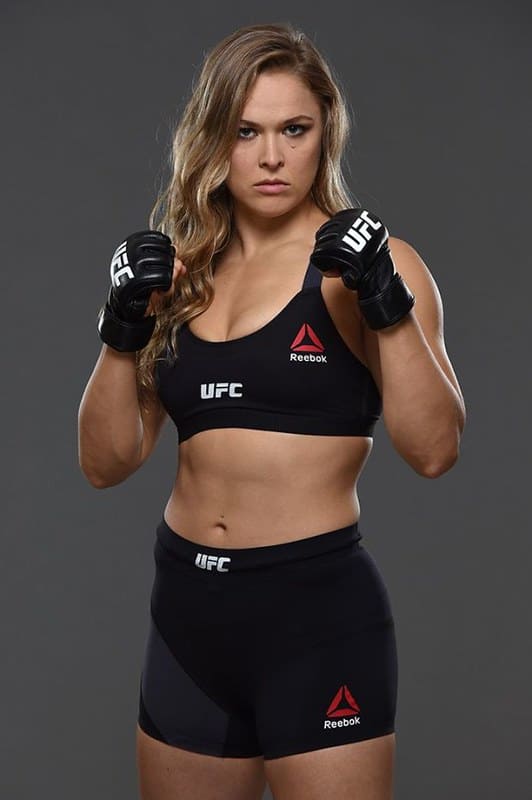
Ronda Rousey

Rousey’s success catapulted her into a household name across the world. She broke box office and PPV numbers as well, proving women could headline a PPV.

Her success as the Women’s Bantamweight Champion led to UFC adding another division, Women’s Strawweight. Now, they have a grand total of 4 different women’s divisions and house the best women’s fighters in MMA on the planet

While some major names in women’s MMA might be gone from the sport, it seems like even better competitors keep making these divisions worthy of the spotlight.

2. UFC On ESPN

The success of UFC landed them a deal with Fox Sports as their deal with Spike TV and Viacom overall came to a close. It was huge for them as it meant more exposure and an opportunity to have major shows on network television!

When the deal with Fox sports expired, UFC signed an exclusive deal with ESPN to broadcast UFC fights and pay-per-view events. ESPN remained the most-watched sports channel by a wide margin and they are the world’s most recognized sports network.  Thus having EPSN to broadcast UFC fights can reach out to millions of viewers.

The deal has fighters appear on ESPN shows, especially those related to MMA. On top of this, they have shows featured on the ESPN streaming platform, ESPN+.

Their deal with the worldwide leader in sports is useful for many reasons. Not only do they get featured on ESPN platforms but also those under the Disney banner. For those unaware, ESPN’s majority owner is The Walt Disney Company who controls ESPN.

All of this resulted in UFC’s rise in popularity even more than before. Now everyone assumes UFC will just continue to grow and help MMA due to their worldwide exposure as a result of EPSN exclusive TV deal.

1. UFC Saved MMA in the End!

While Mixed Martial Arts landed well in some countries like Japan, it had not managed to do well in the United States. Facing potential or complete bans throughout the nation, MMA was going downhill. However, UFC stepping in seemed to change all of that.

They cleaned up the sport, held themselves accountable, and made other sports leagues take notice. However, MMA itself, or simply fighting, is the oldest sport known to mankind. It should have been easy to convince people to watch. 

Yet brutality and the lack of care for the fighter safety made people turn away…which is why it had to be fixed. UFC did just that!

On top of that, they were the true reason women were able to become just as big as men in the fight game. Their platform and continued support of women today have simply made them equal in terms of status.

MMA itself was never a bad sport in theory but needed to be altered to land well in the mainstream. Beyond this, we needed to get fights that we could enjoy with stars that we could actually be interested in. 

UFC took a note from pro-wrestling and had their fighters do key “promos” to build fights more. Thus, press conferences became a major thing for them to do.

The likes of Chael Sonnen, Conor McGregor, Ronda Rousey, the Diaz brothers, and many more have become amazing at this. It only helped to build the sport more and make fans interested in seeing who beats who. 

At the end of the day, both Dana White and the Ferritita Brothers helped MMA far more than we give them credit for. Therefore, we should congratulate them for all they have done. Zuffa may no longer own the UFC, but their impact cannot be understated.

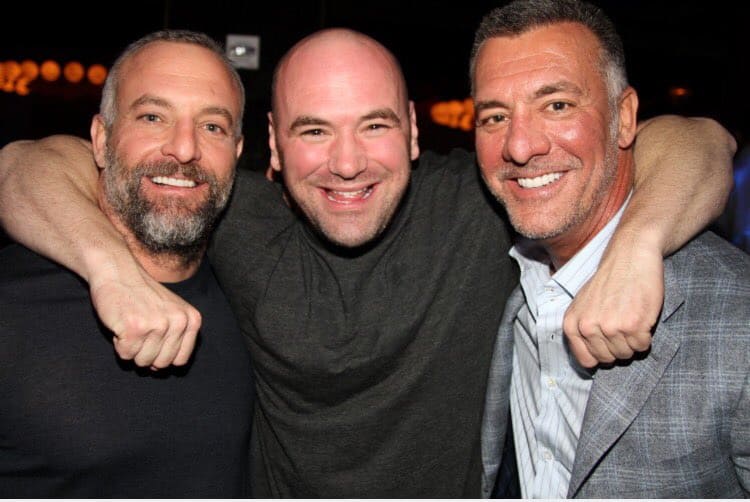
Lorenzo Fertitta, Dana White and Frank Fertitta.

Sometimes you do not need a Harvard MBA or Doctorate holding person to save you. Sometimes, you just need to make people care by caring for something yourself. 

UFC has done this, saving MMA from possible extinction. Today, we see MMA because of them.

Why Boxing Needs UFC Fighters To Survive

0
Ronda Rousey
Ronda Rousey

Editor’s note: The views and opinions expressed below are those of the author and do not necessarily reflect the views of mmachannel.com, its affiliates and sponsors.

For many years, Boxing was one of the top sports on the planet. 

Many Pay-Per-Views were sold including some of the top names in the sport’s history like Mike Tyson, Evander Holyfield, and George Foreman. 

Even Muhammad Ali and others could sell out arenas or stadiums anywhere they traveled, once even doing so in the Philippines alone. 

Boxing is ultimately where the big fight money is made due to the shared model plus purse. This means that boxers will get a share of the profits for an event regardless of the outcome. Then if they win, they’ll get the entire win purse too. Of course, this was a huge concept that allowed boxers to have fewer fights but still keep having them for years.

The attention the boxer brought in determined their contract. The last true major draw was Floyd Mayweather, who could usually net $250 million + for any fight he took part in. Now, there is not a guaranteed draw.

Yet Boxing has started to decline while the UFC happens to be on the rise.

In fact, UFC has not only seen a rise in viewership across every major demographic…but they have even gotten over numerous different divisions and even female fighting.

In boxing, you’d be lucky to see any good female boxer. Meanwhile, boxing for men can still be quite successful due to the likes of  Showtime. Now even ESPN has gotten in on the action. But boxing is still fading into obscurity. Why? Boxing has a very few top name boxers left who can sell and there are no up and coming boxers people are interested in.

How do you fix this? I believe some of the top UFC fighters need to cross over into boxing to inject some excitement back into a boxing match that casual fans can be excited about. Despite these two are different sports, it’s more realistic than one might think as I will explain in the following.

Top Selling Boxers Are Diminishing Each Other

One of the key issues for boxing right now has to be the lack of major names compared to the early 2000s and 1990s. There are some great fighters in the sport, but not as many as we’d like. On top of this, putting super-fights together that can draw money usually results in a star’s value being lost for them. There are two major examples of this.

Look at two of the best heavyweight fighters in recent memory: Anthony Joshua and Deontay Wilder. Both men were impressive fighters who both had knockout power. While Wilder is known for his knockouts, even having one of the most powerful punches for a heavyweight fighter in boxing history…Joshua is all about the sweet science of boxing itself. Sure, he can knock you out but he can defeat you on points too.

We were once talking about how Joshua vs Wilder could be the best super-fight we have available to us. Both men kept winning and with those wins came more and more talk about the men fighting each other. The problem was the contracts they had and the titles each man held.

Then both men ran into something problematic. Joshua took on a fighter many thought he’d wipe the floor with, Andy Ruiz, Jr. Not only was he favored to win by a large margin, no one in their right mind even cared about the fight as a result. Yet Ruiz beat him in June of 2019. It did not matter that he beat Ruiz in December of 2019. The damage was already done to end his win streak.

The same happened to Wilder when he took on Tyson Fury in their first bout together. He and Fury had a great fight but it resulted in a tie. The second time they fought, Fury won without any controversy. Now, just like with Joshua, a win over Fury cannot get Wilder’s undefeated record back.

3 Fighters, all heavyweights, STILL do not move the meter as much as UFC’s Conor McGregor, for example.

Boxing Has Talented Boxers But People Aren’t Interested

Obviously boxing is more than heavyweights. Boxing has many talented boxers you might not have heard of in other weight divisions. Vasyl Lomachenko, Terence Crawford, Errol Spence Jr, just to name a few.

Like in MMA, there are many weight classes worthy of your time in boxing, just as much as UFC.

But these boxers do not resonate with casual fans and more importantly, most people do not know them while UFC fighters are becoming household names.

It’s clear that the talent is present in boxing but the eyeballs are leaving the sport. People aren’t following boxing like they used to because boxing lacksboxers who resonate with fans!

Hardcore boxing fans might disagree but this is why you need something like UFC fighters to come to boxing to make interesting boxing matches. But you might wonder if UFC fighters can box.

MMA Fighters Can Box too!

If you ask any MMA Fighter, whether they are in the UFC, Bellator MMA, or any other company…they’ll tell you how important boxing is. In fact, boxing is so critical to know for fighters that there are a few top tier MMA Academies who are known for teaching this well. For example, American Top Team(ATT) school has housed some of the best strikers in MMA history.

While American Top Team might be one of the best gyms to learn MMA, they have managed to teach boxing in a style that fits MMA. ATT houses traditional boxers and help MMA fighters to teach them new ways to fight or train using boxing techniques.

ATT has worked with the likes of Anderson Silva, Amanda Nunes, Tyron Woodley, Junior Dos Santos, and Joanna Jdrzejczyk. Do you notice anything in common with these people? That’s right, all champions in the sport…and some of the absolute best too! While these people also had other disciplines beyond just boxing, they realized its value.

Martial Arts like Brazilian Jiu-Jitsu, Muay Thai, and even Wrestling all have their value. However, MMA fighters know the importance of boxing in MMA because it is the most effective discipline that teaches you to do well in stand-up fighting.

The key difference between MMA fighters in UFC and boxing is that UFC fighters train for every combat style while boxers only train in hand strikings.

Thus who’s to say UFC fighters can’t box well if they devote their entire time to training in boxing only? Many of the UFC fighters are world-class athletes who had to master various combat styles to become elite MMA fighters. With that, these fighters are athletic enough to transition to boxing if they are serious.

There are also several people in UFC that are highly notable for their strikes, especially their boxing.

You’ll know some of them, such as Jose Aldo, Holly Holm, TJ Dillashaw, Max Holloway, and even Conor McGregor. They are some of the best strikers we’ve seen and some even competed in boxing before jumping into MMA.

That said, it’s clear mixed martial artists believe boxing is useful and they can box better than many people think.

Cross Promotion Could Be Huge For Boxing

Looking at the UFC, it is clear that there are people in MMA that can jump to boxing and do relatively well. Moreover, the money the UFC stars could bring in is also huge. 

This is why seeing something like Conor McGregor vs Floyd Mayweather would have to be the idea to shoot for. This match did amazing numbers for boxing too. Grand total, they brought in 4.3 million domestic buys, resulting in hundreds of millions in revenue and one of the highest PPV buys in history.

While McGregor was one of the top names in UFC at that time, Mayweather had been retired for years from the sport of boxing. Yet they STILL brought in millions of buys. This proves that UFC stars jumping to boxing can give it a huge boost in boxing. 

Therefore, we should consider some fantasy match-ups that could help the sport.

For example, a talented young boxer currently to look to is David Benavidez. He’s a two-time Super Middleweight Boxing Champion and one of the best Middleweight Fighters on the planet. If you put him in a boxing contest with someone like UFC’s Israel Adesanya, could you imagine how compelling it could be? 

Israel is actually a kickboxer who was formerly in the Glory Middleweight Tournament winner and 3-time King of the Ring Tournament winner. Thus, you put him in a boxing match-up…it could be a compelling fight. Keep in mind that Adesanya has also won a title in his given sport.

You’re putting a young star in two places together, only giving more of a rise to the sport of boxing and even helping to create a new star. Whether David wins or not isn’t the point, the point is the attention he can bring in. Boxing uses UFC to rise back up, but this is the type of thing they’ll have to continue to do if this concept is going to work.

More Fantasy Match-Ups

It would be odd to not mention the idea of Conor McGregor returning. He could very well have a career in boxing if he chose to just box and nothing more. Even Canelo Alverez has stated that he’d fight Conor if nothing more than the PPV buys. Other than another fighter at his level such as GGG, Canelo cannot bring in big buys with other boxers. McGregor ensures there is a possibility.

However, Canelo is not alone in this issue as it takes two major boxers to bring in huge numbers. 

Look at Tyson Fury, for example. Not only has he not had the chance to work with anyone of major note outside of Wilder, but he had to jump to do a match in the WWE to build his name more. He cannot do it with many other boxers, especially in the heavyweight division. 

Why not, then, have him fight a guy like UFC’s Stipe Miocic? He’s a Heavyweight Championship winning fighter in the sport of MMA. The two could have a compelling contest.

Another fight to consider is seeing someone like Georges St-Pierre take on Terence Crawford. Both are Welterweights and both are top names in their respective sport. St-Pierre took time off but then came out of retirement to dominate again in MMA. Keep in mind that he has lethal kicks but also lethal punches.

Georges is a 3rd dan black belt in Kyokushin Karate, a 1st-degree black belt in BJJ, and a black belt in Shidōkan Karate which is a full contact Karate. While technically retired from MMA, he very well could go into boxing and take on Crawford. His background proves he could. The two are only 6 years apart in age and St-Pierre has fewer MMA fights than Crawford does boxing. St-Pierre vs Crawford could sell out any arena on the planet.

It may also benefit some MMA Fighters to make a jump to boxing if they prefer to strike than ground fighting in MMA.

Take another top UFC fighter Jon Jones who is very athletic. While he does still have great kicks, his punches, reach, and timing are all lethal. If he goes into boxing, could you imagine how successful he could be? 

In Boxing, you could see him fight in at least three different divisions: Light Heavyweight, Cruiserweight, and Heavyweight.

Imagine seeing Jon Jones vs Anthony Joshua or Jon Jones vs Deontay Wilder. Heck, think about a Jon Jones vs Tyson Fury fight. All of these scream box office and it does not even matter if Jones wins….he’d still draw due to interest. UFC helped to make him a star and now that star power bleeds over into boxing.

UFC Fighters Can Boost Women’s Boxing 

Finally, consider that boxing is not just about men. The world of women’s boxing could use some huge boost for sure. It’s clear as well that MMA has been the place where some of the greatest female strikers end up. Holly Holm, Joanna Jedrzejczyk , Amanda Nunes, Rose Namajunas, and many more have been impressive. 

Women’s sports have been growing but boxing is one of the few places that has not seen much growth.

However, seeing one of the female stars of the UFC jump to boxing and take on a fight with people like Katie Taylor, Claressa Shields, Mariana Juarez, Cecilia Braekhus, or Jelena Mrdjenovich might beef up the sport more. 

Even if it is not one of these women but another woman in the sport, it could bring really good attention to an area where boxing has suffered for far too long.

10 Most Fearless MMA Fighters In History Who Are Undersized

0
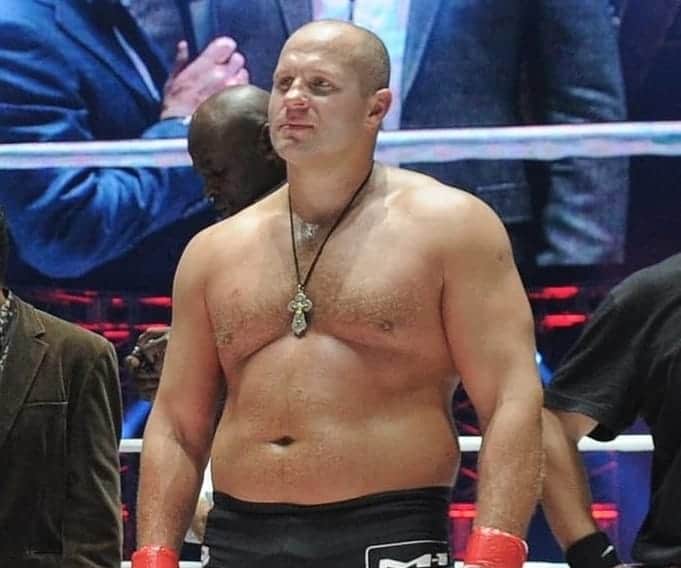
Fedor Emelianenko(Credit premier.gov.ru via Wikimedia Commons)
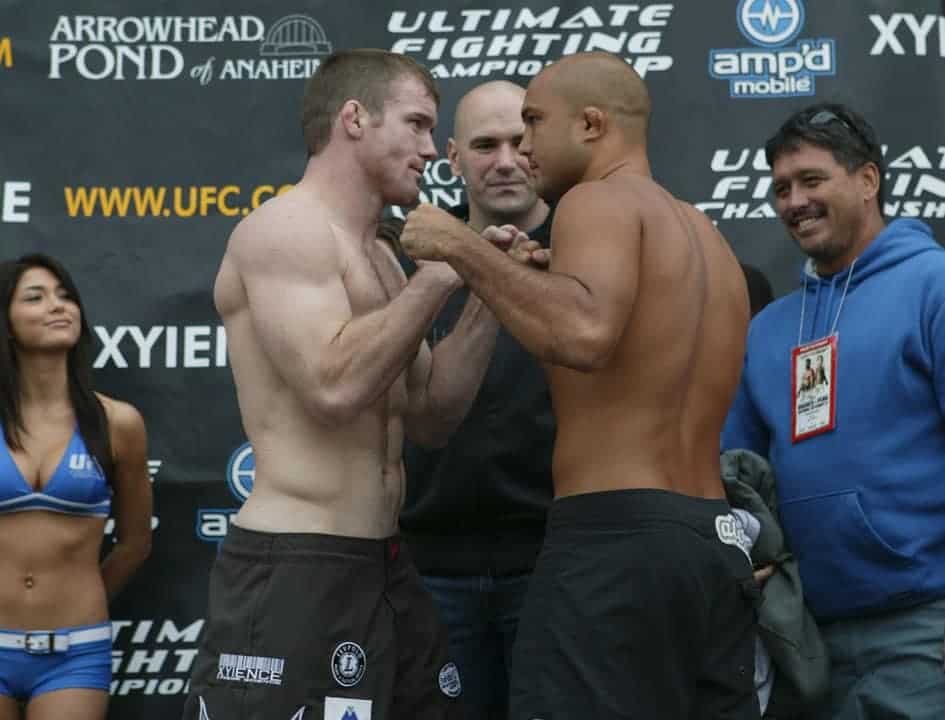
Matt Hughes and BJ Penn

We can often hear pros saying that size does matter in MMA. According to them, a couple of inches can make a lot of difference in a fight. Although this is true, we just can’t say that size on its own is a decisive factor. 

The thing is, some of the fighters simply have longer physical attributes than the other fighters in their division. And some like Jon Jones are absolute masters in using this advantage to win fights.

But there is an opposite side as well. Many great fighters have reached the highest heights of the sport despite being the smallest ones in the division. 

These fighters had no fear of facing anyone no matter how big the rival was. In some way, they compensate for the lack of their size with a fearless mindset that pushes them forward. 

We are bringing you the top 10 most Fearless Undersized fighters that proved that size doesn’t matter as long as you are fearless inside the cage. 

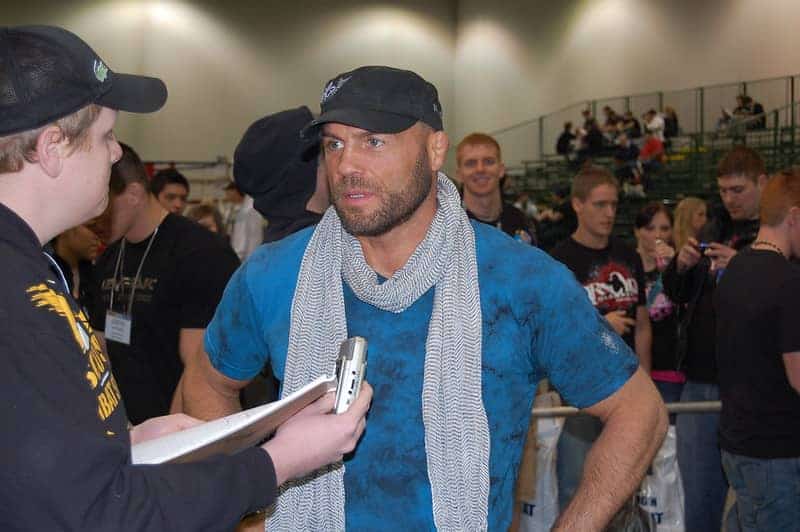
10. Randy Couture

Randy Couture(Credit: fightlaunch via Flickr)

Fans always saw Randy as a small heavyweight fighter. But in reality, he was much smaller than most of the light heavyweight fighters as well. Even if he had the ability to cut down to 185lbs, he still would not have been the biggest guy in the division. 

To make matters worse, Randy was close to his 40s when he fought at his best and he was often facing much younger and bigger fighters. 

It may sound odd, but Randy never quite fit into any weight division. Yet he never cared about how younger or bigger the opponent was as he always fought like a champ.  He never backed down from any challenges and was absolutely fearless inside the cage. 

For instance, Randy fought much younger Tito Ortiz at the peak of Tito’s prime, and he had no trouble defeating Tito. Also, we can all recall him defeating much younger and much bigger Tim Slyvia to win the UFC heavyweight title at 43 years of age. 

Randy had amazing wrestling skills and he was confident fighting against any rival back then. This fearless attitude and amazing fighting skills led him to become a true legend of MMA. 

9. Henry Cejudo 

Henry Cejudo(Credit: MMAnytt via Wikimedia Commons)

Cejudo is one of the most inspirational athletes as he managed to crown himself with the Olympic gold in wrestling and become the UFC champ in two different weight classes.

In spite of being the smallest fighter in our list, Cejudo is truly one of the best. He is a true testament of a fearless fighter who’s ready to overcome every physical obstacle to become the great one.

Despite being just 5’3″ tall, Cejudo is perhaps the most competitive MMA fighter, and he fights like a bigger man inside the cage. 

He always had that unique self-belief that only Olympic winners have. When he shifted to MMA, it became clear that Cejudo is there to achieve the same success. He is a very competitive athlete and has a very strong mindset as all elite wrestlers do. 

Inside the octagon, Cejudo fought the UFC’s best of the best. He won the 125lbs title by defeating the most dominant UFC champ in history, Demetrious Johnson at UFC 227. He then went on to defend it against a much bigger TJ Dillashaw.

Say what you want about his cocky behavior and small physical attributes. But, Cejudo can fight and he backs up all his talking by defeating some of the best fighters bigger than him. 

8. Fedor Emelianenko 

Fedor Emelianenko(Credit: Wikimedia Commons)

Fans remember Fedor as perhaps the most dominant fighter ever. Yet, they tend to forget how small he was compared to other heavyweight fighters. Even Mike Tyson himself once said he liked Fedor because Fedor always fought against much bigger opponents.

Fedor didn’t have an athletic body or high reach. He always tipped the scales at around 235lbs and his rivals were often 30-40lbs heavier than Fedor was. During the glory days of Pride MMA in Japan, he also fought against some of the real monsters at the time. For instance, he defeated Semmy Schilt who weighed 285lbs and was 6’11.” Also, he beat 300lbs monsters in Zuluzinho and Giant Silva. 

Despite the lack of big physical attributes, Fedor was by far the most intimidating man at the time. As a small heavyweight, he had amazing speed and agility. Also, he carried a lot of power as well, and he owns many KO’s on his record. 

Also, Fedor had a quite puzzling mindset. He was a man of few words, and nobody could understand how he was able to be so fearless and maintain high focus.

But once the fight started, he would turn into the aggressive wrecking machine. 

7. Wanderlei Silva

Wanderlei Silva(Credit: Mhazevedo via Wikimedia Commons)

Silva is mainly known as one of the best and most aggressive standup fighters in MMA history. But his achievements go on another level when you think he was undersized in most of the fights. Silva had the body size of a middleweight fighter. Yet, most of his fights were against a light heavyweight and heavyweight fighters. 

Silva was not afraid of anyone inside the cage and by far the most violent fighter at the time.  In Japanese Pride promotion for example, Silva didn’t care who he faced or how much bigger the opponents were. While Silva weighed around 200lbs at the time, his rivals were often 250lbs+ in weight. He faced some of the biggest fighters at the time like Gilbert Yvel, Mirko Crocop, and Kazuyuki Fujita.

Sadly, fighting bigger rivals started catching up with him in the latter part of his fighting career. He suffered many setbacks and injuries. But that was a price he paid to become a true legend of MMA.

6. B.J. Penn

credit: By KoreAm via Wikimedia Commons

BJ was a fan favorite fighter simply because of his passion for fighting. He truly took pleasure in fighting against the best fighters no matter how big they were. 

BJ started out as 155lbs fighter. But as many fans could remember, he was always moving between the divisions. In his career, he fought a lot at 170lbs and even went up to compete at 185lbs. But fighting against bigger rivals was something BJ enjoyed. 

For instance, he beat the great Matt Hughes and also fought GSP twice at welterweight.

The craziest fact about BJ is he once put extra weight to fight Lyoto Machida at heavyweight. Although he was a much smaller fighter, BJ managed to stay competitive the entire fight. It was weird to see him going to the decision against much bigger Machida who would become a UFC champion just four years later. 

While some top fighters carefully pick their opponents to increase their odds of winning, BJ simply didn’t care about any of that stuff. He had the mentality of a true warrior, and that’s why people loved him.

5. Dan Henderson

Dan Henderson(Credit:East718 at English Wikipedia)

We can’t recall a fight in which Hendo wasn’t undersized. People don’t realize how small he was compared with other fighters he fought. Hendo has a body size of the welterweight and he did have a couple of fights at 170lbs early into his career and in Pride FC. But after just a couple of fights, Hendo decided to move up in weight and face much bigger opponents. 

Even the Henderson himself once confirmed he always felt undersized in all his fights regardless of the division. But small physical attributes never stopped him from becoming one of the true greats. 

For instance, people often remember Hendo for defeating the great Fedor Emelianenko. But a little known fact is that Hendo barely weighed 200lbs for that fight without cutting any weight. 

Hendo didn’t fear Fedor or any other fighter in his career. His wrestling skills were very good, and he could handle much bigger grapplers. But as most of us remember, Hendo was one of the most feared fighters because of the insane power in his right hand. He knew that regardless of how big the opponent was, he possessed the punching power to knock out any bigger opponents out cold. 

4. Kelvin Gastelum

Kelvin Gastelum(Credit:MMAnytt.se via Wikimedia)

Kelvin’s body frame fits the best at 170lbs division and he did start his UFC career fighting as a welterweight. But he always had a problem with excessive weight and cutting down to 170lbs. After missing the scale a couple of times, the UFC forced him to move up and join the 185lbs division in which he’s clearly undersized. 

Kelvin has perhaps the smallest body frame in 185lbs division. With the height of 5’9”, he is much shorter than most of the fighters there and he also has a much shorter reach of 71”. But he is not afraid of facing much bigger fighters. He is very aggressive inside the cage and never backs down from a fight. This could not have been more evident than in the fight against Israel Adesanya. 

Few fighters are willing to stand in front of Israel. But Gastelum showed his courage by walking Israel down and trading shots with him. It was crazy to see Gastelum going toe-to-toe with Israel on the feet. 

What helps Kelvin is that he carries a lot of speed and power for his size. Plus, his boxing skills are very good and he KO’d many great fighters like Michael Bisping and Vitor Belfort. Combined with the great footwork and self-belief, Gastelum is a problem for any 185lbs fighter out there. 

3. Daniel Cormier

(Image Credit: X2o via Wikimedia Commons)

Throughout his entire martial arts career, Cormier has been one of the smallest fighters both in MMA and wrestling. He is in fact too small for both heavyweight and light heavyweight divisions. He would have to cut all the way down to 170lbs to meet a fighter similar size. He’s listed as 5’11” but in reality, the man seems closer to 5’9” when standing next to some of his rivals like Jon Jones. 

However, this didn’t stop DC from becoming one of the greatest MMA fighters. Fighting against much bigger rivals in both MMA and wrestling has only helped DC to develop a very strong and aggressive mindset. 

In his MMA career, he defeated some of the best fighters and legends of the sport. But fans remember him the best for his great win over Stipe Miocic at UFC 226. Stipe was a much bigger fighter and nobody gave DC any chances. But DC was very aggressive right from the start and he KO’d Miocic in the first round to win the Heavyweight title. 

To prove how fearless DC is, look no further from the way he fights.  He is always pressing forward and standing in front of his rivals. It’s even weird to see him chasing much bigger rivals like Gustafsson and Jones. Except for Jon Jones, Cormier managed to KO most of his rivals or destroy them by using his amazing wrestling skills. 

2. Mark Hunt

(Image credit:Wikimedia Commons)

Hunt was perhaps one of the shortest UFC heavyweight fighters in history. Standing 5’10”, Hunt had to deal with huge height and reach disadvantage in all his fights. But the mix of huge punching power and fearless mindset allowed him to deal with any man standing in front of him. 

In his kickboxing and MMA careers, Hunt fought only the best of the best fighters. And we never heard him complaining or making excuses fighting against some of the biggest heavyweight fighters. For instance, he fought against UFC champs like Stipe Miocic and Brock Lesnar. With the height of 6’3” and weighing 286lbs all with solid muscle, Lesnar was twice as big standing next to Hunt. But Hunt wasn’t intimidated by Lesnar’s size at all and he went on to put on a good fight. 

Hunt’s most famous win was the one against the Dutch kickboxer, Stefan Struve. The difference in size was enormous as Struve had 34-inch height and 12-inch reach advantage. But like in many of his fights, this didn’t stop Hunt from landing a huge right hand and scoring a walk-off KO. 

1. Royce Gracie

Royce Gracie (Credit:Peter Gordon via Wikimedia Commons)

Royce Gracie is perhaps the most undersized MMA fighter in history. He’s best known for winning the very first UFC tournament in which he defeated fighters much bigger than he was. 

Royce wasn’t an intimidating fighter by any means. When he stepped inside the cage for the first time, he’s had the body of the average person, and nobody expected him to win a tournament. Yet, few people knew what BJJ was at the time and how tough and durable Royce was. 

He fought like a zombie from horror movies that kept coming at you. At the time, nobody could stop him from scoring a takedown and wrapping a submission around the opponent’s neck.

To truly appreciate his fearless attitude, one must understand a time in which Royce was competing. Back then, there were no rules, time limits or weight classes. To make matters worse, Royce weighed around 175lbs at the time. Yet, he fought against much bigger fighters like Dan Severn and Kimo Leopoldo who weighed around 250lbs. 

Further, Royce didn’t just dominate his opponents. Some of them had him in all sorts of troubles, but they never managed to put him out no matter how much they tried. Royce was a man on a mission to prove that BJJ was the best style and nothing could stop him from achieving his goal.

He fought through blood, sweat, and tears to fulfill the Gracie mission. And he went to the history books as one of the greats and the biggest undersized underdog ever.