Home Blog Page 44

Top 11 Best MMA Movies that are More Fun than Real MMA Fights

0

Mixed martial arts (MMA) is the fastest rising sport that’s very popular all across the world. No matter if you are a combat sports fan or not, you’ve likely heard about cage fighting and how exciting it is. Of course, the film industry has also been following this rise with many action movies based on MMA. 

But as in any film genre, there have been some bad MMA based movies that will just waste your time. Or even worse, these movies can give you a wrong idea of what MMA actually is. That said, we’ve made a decision to bring you the best MMA based films worth your time. No matter if you are an MMA fan or not, there’s something for anyone on our list. 

If you are looking for some great MMA movie to get entertained, be sure to check our list below. Some of these movies are so thrilling to watch that can even inspire you to start training MMA or at least working out. 

11. The Hammer (2010)

The Hammer” is a very inspiring movie that shows you anything is possible as long as you believe in it. It focuses on the true story of former UFC fighter Matt Hamill who was the first deaf MMA fighter. Some fans can also recall Matt for taking part in the third season of “The Ultimate Fighter Show”. 

The film features Hamill’s life story and struggles he had to face while growing up as a deaf child. But this didn’t stop him from winning the NCAA wrestling championship and competing in the best MMA promotion, UFC. What’s more, Matt had a decent UFC career, and he retired as one of the fan-favorite fighters. 

The Hammer is not your regular fighting movie full of blood and fighting action. It is one of those movies that will force you to move off your couch and do something with your life.

10. Here Comes The Boom (2012)

This is an MMA based comedy starring Kevin James who plays a high school biology teacher wanting to become a real MMA fighter. With the help of the former UFC champ, Bas Rutten, Kevin James fights in MMA matches to raise money for the school he is working at. 

You can also spot cameo appearances by Joe Rogan and UFC announcer Bruce Buffer. Of course, it also includes famous UFC fighters such as Chael Sonnen and Wanderlei Silva. 

It’s worth bringing up that the leading actor, Kevin James, is a huge fan of martial arts. He was preparing for this role with the famous MMA coach Rafael Cordeiro. James loved it so much that he continued to train Muay Thai even after the movie. 

Although this movie is not about huge drama or bloody action; it is definitely worth your time. It’s one of those movies you can watch with your family and have a good laugh.

9. Undisputed 3 (2010)

It’s fair to say that “Undisputed 3” is a movie that offers the best fighting scenes out of all other movies on our list. The Undisputed series includes four parts. And in our opinion, the third one offers the best MMA fighting action. One of the reasons why this movie includes such great fighting scenes is because most of the actors are real martial artists. 

In the movie, eight fighters compete for their freedom in a fighting tournament held in the notorious prison located in Georgia. And no matter if you are a fan of MMA or not, you will certainly hold your breath during some of the fighting scenes. The execution of the MMA techniques in this movie is simply amazing.

Overall, Undisputed 3 is a great movie to watch, and be sure to check the other three from the series.

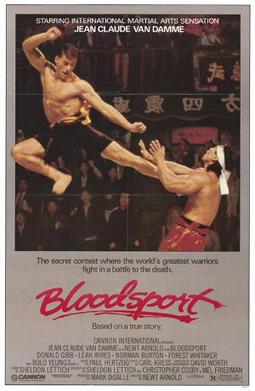
8. Bloodsport (1988)

“Bloodsport” is a real martial arts classic from the 80s when very few people knew what MMA is. The movie tells the true story of Frank Dux who was a skilled martial artist and author. It consists of some great fighting scenes and displays of skills. Also, the film is well balanced between the slow drama scenes and fast action. 

In the movie, Dux takes part in the “Kumite” tournament where fighters from various combat styles fight against each other. Although this is a martial arts movie, Kumite resembles the modern-day MMA fighting as it allows fighters to use any martial arts style to beat the rival. 

The leading actor is Jean Claude Van Damme, and this was the starting role that made him famous. As always, Van Damme did a great job of showcasing his athletic abilities and talent for acting.

7. The Hurt Business (2016)

This is a great documentary movie if you are looking to learn more about the history of mainstream MMA. And the movie also shows you the secrets behind the sports amazing rise. The film features UFC stars like Ronda Rousey and Jon Jones and other famous MMA faces. 

This movie is well researched and constructed. As a result, both MMA fans and regular people can learn a lot from it since it includes much unique info you’ve like never heard of. For instance, it gives you a detailed insight into the dangers of the sport and how retired fighters deal with brain traumas. This is something you can’t hear or see that often in other movies and TV shows about MMA. 

What’s interesting, however, is that the film came out the same year the UFC got sold for $4 billion dollars. So be sure to watch it if you want to find out why somebody would pay so much money for one MMA promotion. 

Also, the director Vlad Yudin did a great job of going into the emotional core of the sport. The movie reveals the personal side of fighters and problems they have to go through that the public doesn’t get to see such as depression and financial struggles.

6. Never Back Down (2008)

This film on its own has been responsible for thousands of hothead teens joining MMA academies around the world. From hard workouts and intense fights to the great soundtracks, everything in this movie is there to hook you on MMA. This movie had a huge impact on young people and many see it as an MMA version of the legendary “Karate Kid”. 

The story in the movie is a bit cliché. It follows the life of a college student named Jake who joins MMA to learn how to defend against the bullies and control his aggression. Jake manages to overcome personal issues with hard work and discipline in the MMA gym. But, he has to face the bullies in the illegal MMA tournaments to stop them once and for all. 

You have to be realistic about this movie as it was never meant to win an Oscar. It is a great one for all young people since it sends a lot of positive messages. For instance, it’s very inspiring because it shows how personal struggles can be overcome with the hard work in the MMA gym. 

The film was so successful that they filmed the second part in 2011 and the third part in 2016. However, in our opinion, the first one is the best.

5. Warrior (2011)

“Warrior” is, perhaps, the most popular MMA based movie. It’s one of the rare fighting films that are very popular among non-fight fans too. This is mainly because it presents MMA fighters as skilled fighters who are like everyday people. And the movie also features famous actors like Tom Hardy. 

Warrior is a film that tells the story of two brothers both competing in the same MMA tournament for a $5 million dollar prize. The movie includes a lot of drama as both brothers have to face many family issues from the past. 

Further, fighting scenes looks very authentic. This is because actors like Hardy have actually spent a lot of time preparing for the fight scenes training with MMA coaches. So Hardy has done a really good job portraying himself as an MMA fighter as a result.

Also, Warrior is a great movie for people who know nothing about the sport. It gives you a great look at what MMA stands for.

4. Fightville (2011)

Fightville is a much-underrated documentary that follows the underground MMA scene. The film focuses on a group of MMA fighters with their troubled backgrounds. And it explores why they have decided to join MMA and what they want to achieve. 

This group of talented MMA fighters works their way up in the mixed martial arts world. And one of those fighters is the former UFC interim champ, Dustin Poirier. I mean, it’s really emotional watching Dustin fighting on a regional circuit and dreaming about fighting in the UFC. It gives me chills every time I hear Dustin speaking about it. 

I truly believe this is a highly underrated MMA film. The directors have done a great job of giving us an insight into how the regional MMA scene looks like and from where all those UFC talents come from. If you consider yourself to be a fan of this game, you simply have to watch “Fightville”.

3. Smashing Machine (2002)

If you want to learn more about what it takes to be an MMA fighter, don’t look any further from “Smashing Machine”. This film goes deep into the private world of the former UFC fighter Mark Kerr. It will give you the best insight into what MMA fighters go through to succeed and how their world looks like. It is perhaps the best MMA documentary movie ever filmed.

This movie will get you behind the closed doors of Mark’s life and help you realize why not every person can be a fighter. It shows you how much fighters have to train, how dedicated they are, and what they have to sacrifice to succeed. 

Also, this movie is not filmed to present MMA fighter in a positive manner only. It is very raw and shows you the ugly side of MMA as well. The main goal of the movie was to present fighters as humans who also make mistakes.

The movie includes everything from Mark’s addiction to drugs to the relationship problems with his girlfriend. And at the same time, Mark needs to stay professional and prepare for the upcoming MMA event in Japan. 

The movie does a great job showing the contrast between fame and the dark side of Mark Kerr’s life. It is one of the best movies out there simply because it shows that pro-MMA fighters like Mark are no different than anyone else.

2. Choke (1999)

Choke” is one of the best, if not the best BJJ documentary out there. The film gives us an insight into the life of perhaps the best BJJ fighter in MMA, Rickson Gracie. The movie follows Rickson as he prepares to defend his Vale Tudo title in 1995 Japan Open. At the time, Vale Tudo was the best MMA promotion in the world and the home of the elite fighters. 

But the charisma and eloquence of Rickson Gracie is something that will keep your attention and force you to rewind some of the scenes many times. This is because the film gives you a rare glimpse into the mind of Rickson Gracie as he prepares for his fights.

After watching this movie, you will know what separated Rickson from all the rest and why he was such a good fighter. And it will certainly inspire you to train BJJ or at least learn more about it. 

If we put a BJJ story to the side, “Choke” is also a great insight into what MMA events looked like in the beginnings, long before MMA became a mainstream sport. And it will help any new fan of MMA sport realize why BJJ is so effective in MMA. The movie also includes some amazing footage of Rickson’s breathing techniques. 

You just can’t call yourself an MMA or grappling fan without watching this movie.

1. Enter The Dragon (1973)

Even though Bruce Lee wasn’t an MMA fighter, not including any of his movies on this list would simply be wrong. And let’s be real; the famous movie “Enter the Dragon” has an MMA tone all over it.

In the opening scenes, Lee competes in a sort of MMA match. He is wearing open finger gloves which were a new thing back then. In fact, many pros believe these gloves were an inspiration for the creation of modern MMA gloves that came a few decades later.   

Also, you can see Lee using many MMA techniques in the movie. For instance, he ended up winning one fight by placing an armlock submission. This is a BJJ technique often used in MMA. 

Bruce Lee is often called the father of MMA because he believed that no one style is the best. He was the first martial artist to realize that a fighter must learn other types of fighting styles to become a complete fighter.

“Adapt what is useful, reject what is useless, and add what is specifically your own.”

Bruce Lee

This famous quote resembles the modern-day MMA. In this movie, Lee is mixing his Kung Fu base with other fighting styles such as BJJ to beat his rivals, which makes him a true MMA fighter in the movie. 

The movie itself is a piece of art and perhaps Lee’s finest performance. It was released shortly after Lee’s sudden death in 1973. Perhaps no other film is more responsible for inspiring people to become martial artists than this film.

MMA Fighters Who Succeeded Despite Starting Late

0
Image Credit: Refill via Wikipedia

Age does play a factor in MMA and in any other combat sport out there as well. This is why you can often hear coaches saying that MMA is a young men’s game and that it is important to start as young as possible if you want to succeed. 

Each fighter has around nine years of athletic prime which they must use to perform at their best and succeed. Although this may vary, the fighter’s prime usually starts at 24 years of age and lasts until they are 33-34. For this reason, becoming an MMA fighter at 30 years old is considered really late.

So it’s very important for MMA athletes to start training early and enter their prime years as skilled fighters ready to take on the competition. The ones who start late, however, will always be behind in the learning curve and their chances of succeeding are very, very low.  

However, there have been some exceptions in MMA history in which fighters who started late, way out of their prime years, have managed to do well and even reach the highest heights of the sport. Let’s see who they are in the list below.

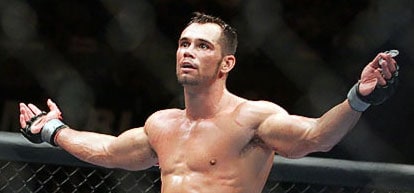
20. Rich Franklin

Franklin is the former UFC champ who started training in MMA very late because he actually worked as a math teacher at Oak Hills High School in Ohio. While in his 20s, Franklin didn’t even think about competing as a professional cage fighter, pursuing greatness and entertaining millions of people around the world.

It’s crazy that, while he was working as a math teacher, most of his future rivals were already working their way up in the MMA world. 

Further, Franklin also didn’t have any serious background in any martial arts style. He trained karate during the 90s and also studied submission fighting from videotapes. 

When he started competing in MMA at the age of 24, Franklin was one of those guys who weren’t athletic or very talented. But he made up for the lack of experience and skills with an insane work ethic and sheer dedication. It’s amazing how he went from living the life of the average American to becoming a global MMA star in just five years. 

Franklin became the UFC middleweight champ in 2005, and many fans see him as one of the best 185lbs fighters in the history of the sport. As a fan favorite fighter and a true legend of MMA, he entered the UFC Hall of Fame in 2019.  

19. Shonie Carter 

Most MMA fans know Shonie Carter as the former “WEC” 170 pound champion, but, he also had short stints with big promotions like the UFC and Bellator. However, he spend the majority of his career fighting in low and mid-tier shows where he won over 10 different belts, but also suffered many losses.

Carter joined MMA quite late at the age of 24 and he arrived from wrestling. In fact, he was such a good wrestler that he took part in Olympic trials but didn’t make it to the national team. During this time, he was also training in Judo and jujutsu where he managed to achieve a black belt rank. Later on, he moved to Kung Fu and Karate where he also owns a black belt.
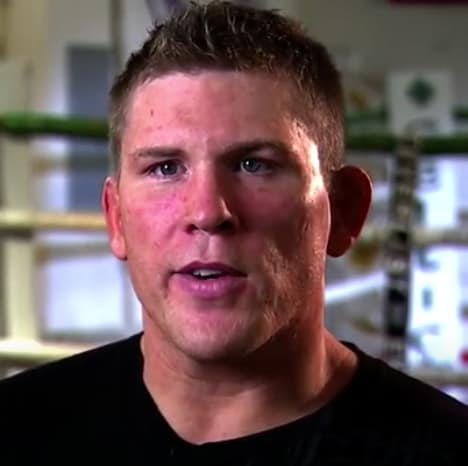
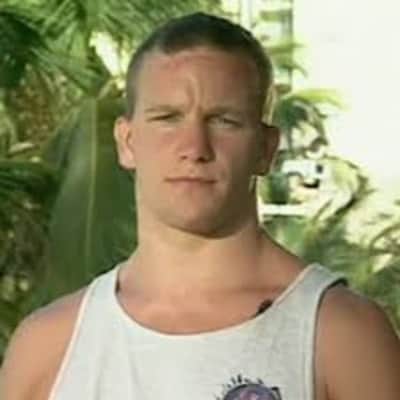
Although he started MMA quite late, Carter was a busy fighter who managed to compete an amazing 91 times in MMA (51 wins, 32 losses, 7 Draws, and 1 No-Contest). Like that’s not amazing enough, he also had a very good kickboxing career where he put together a record of 57 wins and just 5 losses.

18. Francis Ngannou

ChinaImages/Depositphotos.com

Francis is the most intimidating UFC fighter and champion who started training MMA at the age of 26. Unlike the other fighters, Ngannou doesn’t have a background in some other combat styles either. In fact, he is coming from very humble beginnings and his life is a real Cinderella story. 

Francis grew up on the poor streets of Cameron, working physically difficult jobs from a young age and dreaming about becoming a great boxer. When he was in his early 20s, he decided to migrate to Paris, France, to follow his boxing dream and pursue a better life. When he arrived and started training, his coaches urged him to try MMA because it was already too late for him to succeed in boxing. 

Francis didn’t have any previous fighting experience. But he is, in fact, a very gifted athlete. One of the secrets behind his rise lays deep into his genetics and the amazing power he has in his wrists. I mean, Francis has that rare power to put people to sleep with a single punch

Believe it or not, he joined the UFC roster in 2015 after just two years of training in MMA as a promising prospect from France. He made his presence known even quicker by scoring six straight finishes inside the UFC cage, 5 devastating knockouts and 1 submission. This secured him a fight against Stipe Miocic for the title, which he lost at UFC 220. 

However, Ngannou would bounce back with four KO wins in a row to earn the second shot at Miocic, and this time, knock him out at UFC 260 to finally win the UFC belt. 

Francis truly has one of the most inspirational stories which show us that age doesn’t play a factor as long as you follow your dreams. 

17. Dan Henderson 

Photo by East718

When you take a closer look at Henderson’s MMA resume, there is an argument to be made that Henderson might be among the greatest fighters of all time. Things go to another level when you realize that he achieved the following despite starting his MMA career at the age of 26, which is very, very late by the modern standards:

  • Pride Middleweight Champion
  • Pride Welterweight Champion
  • First fighter to win titles in two separate weight classes in Pride
  • Pride Welterweight Grand Prix Champion
  • Strikeforce Light Heavyweight champion (won the title at 40 years of age)
  • UFC 17 Middleweight Tournament winner
  • UFC Hall of Famer (2018)

How can a person start fighting in MMA so late and win all of these prestigious belts, you may ask? Well, Henderson was one of the best wrestlers and he represented the US at the 1996 Summer Olympic Games. Inspired by wrestlers who enjoyed a lot of success in MMA at the time, Henderson made a decision to retire from wrestling and focus on MMA in 1997, and the rest is history. He remains one of only two fighters to win tournaments both in UFC and PRIDE.

16. Mirko Crocop 

Photo by KRK.TV

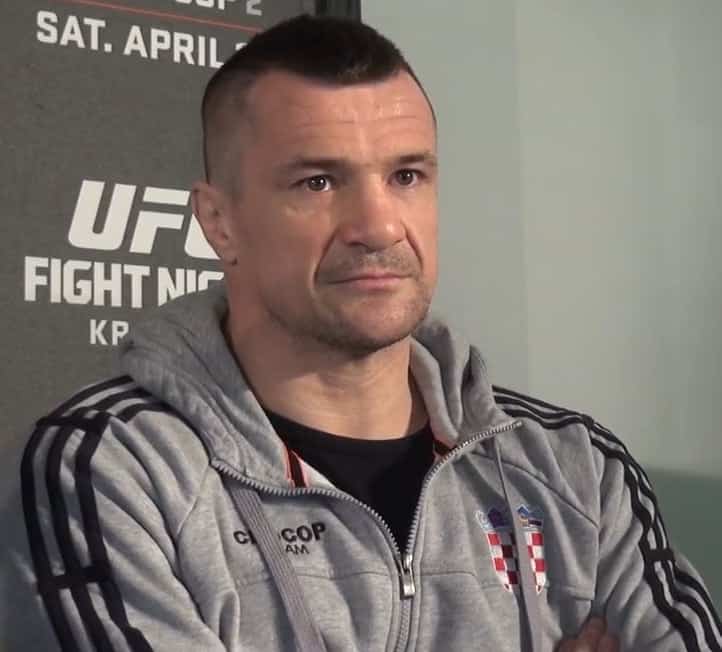
One of the best and most feared standup fighters in history of Pride FC and UFC, Mirko CroCop, actually started MMA when he was 26 years old. Before he got into combat sports, he was a member of the “Lucko Anti-Terrorist Unit” in Croatia. In 1996, he decided to pursue a career in kickboxing when he was 22 years old and he made his pro-kickboxing debut in K-1, the biggest combat sports promotion at the time. In his first fight, he beat none other than Jerome Le Banner who was one of the best kickboxers at the time, which shows you how talented CroCop was.

After competing at the highest levels of K-1 for around 4 years and beating legends like Musashi, Sam Greco, and Peter Aerts, CroCop decided to transition to MMA at the age of 26 in spite of having limited grappling training. But once again, instead of working his way up in the smaller shows, the Croatian went directly to PRIDE FC, the leading MMA promotion at the time. He faced Wanderlei Silva in his 4th fight (draw) and beat the legendary Kazushi Sakuraba in his fifth MMA bout. Over the course of the next 10 years, Crocop would win the following titles:

  • K-1 World Grand Prix Champion (2012)
  • Rizin World Openweight Grand Prix Champion (2016)
  • Pride World Open-Weight Grand Prix Champion (2006)
RECOMMENDED READING:
10 MMA Fighters that are or were Police Officers

15. Stipe Miocic 

Photo by Erik Drost

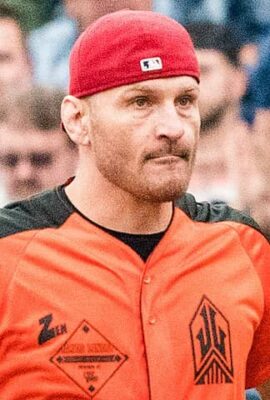
Stipe Miocic, the most dominant UFC heavyweight champ started his MMA career at 27 years of age. Though this is considered to be late by modern standards, Miocic didn’t need much time to rise to the top.

What’s more, he needed less than 2 years to work his way up on the regional scene by scoring six straight KOs before signing with the UFC in 2011 when he was already 31 years old. Five years later, he won the heavyweight title in 2016 by beating Fabricio Werdum at UFC 198.

Miocic wrestled a lot in college where he reached all the way to the NCAA Division I at Cleveland State University. Later in his early 20s, he would switch over to boxing where he became the Golden Gloves champion. It was this combination of elite wrestling and boxing skills that helped Miocic succeed in MMA in such a short time span and despite starting late.

14. Roy Nelson 

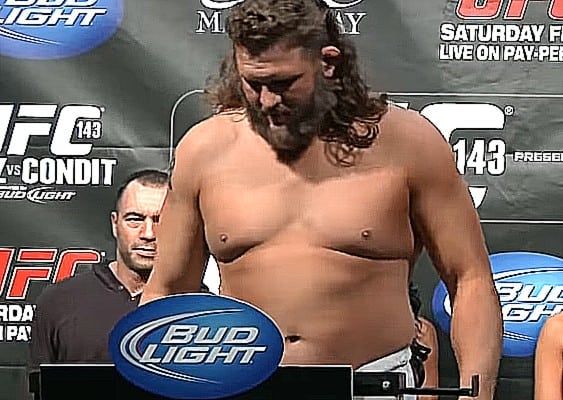
In the eyes of most MMA fans, Roy Nelson is one of the hardest hitters in sports history. His infamous overhand right had put many people to sleep, including the likes of Stefan Struve, Matt Mitrione, and Antonio Nogueira. But what most fans don’t know about Nelson are two astonishing facts.

First, he arrived in MMA when he was already 27 years old. He spent the first four years competing in smaller shows before taking part and winning “The Ultimate Fighter 10” tournament and securing a contract with the UFC when he was already 34 years old. Despite starting pretty late, he had a long UFC career which was a mix of spectacular one-punch knockout wins, and unfortunate losses. 

Second, he doesn’t have a striking background at all which is crazy considering that 15 of his 23 wins were brutal knockouts. No, Nelson is actually a black belt in BJJ under none other than Renzo Gracie. He also competed in various BJJ tournaments and was a Pan American Champion (brown belt +100kg). 

13. Greg Hardy

Greg Hardy is a former NFL star who decided to make the transition to MMA at 28 years of age. Many people didn’t give Hardy any chance to succeed since he came in late and without any background in martial arts. But Hardy proved them all to be wrong with his amazing ability to learn and improve at a high rate.

Like most NFL players, Hardy is very athletic and has a strong work ethic. The thing is, he already knew what it takes to become an elite athlete and what he had to do to succeed in MMA. He dedicated his entire life to learning and growing as a martial artist. The coaches at American Top Team have done a great job of making the most out of Hardy’s athleticism and talent.

After just a few months of training, Hardy kicked off his MMA career with three wins in the amateur competition before receiving a call from the UFC. He went on to score two TKO wins on the “Dana White Contenders Series TV Show” that secured him a contract with the UFC. Just two years after, Hardy would headline the UFC event against the heavyweight contender, Alexander Volkov. Despite losing a five round decision, Hardy left a good impression and has finally earned respect from the fans. 

Hardy grew from being a total amateur to the UFC contender in less than two years. After the Volkov fight, he would bounce back with two strong wins in less than 6 months and it all looked like Hardy is about to become a contender. However, he had a hard time dealing with top level competition as he went on to lose his next three fights and parted ways with the UFC in 2022. 

 Love him or hate him, you have to respect his efforts and talent.

12. Jorge Rivera 

Rivera is an MMA veteran who had a lot of success competing at the highest levels of the UFC. At one point in his UFC career, he was a contender in the 185 weight class and most fans remember him for his fierce rivalry with Michael Bisping and their fight at UFC 127.

If he was to win that fight, Rivera would have gotten really close to fighting for the UFC middleweight belt. However, the TKO loss he suffered in the second round stopped him from his title campaign, and he retired from the sport just a year later in 2012 at the age of 40.

This was a huge success for a fighter who entered the MMA gym at 25 years of age. On top of that, he didn’t have any elite background in martial arts and he actually made his pro debut quite late at the age of 28. Prior to getting into MMA, Rivera was a member of the United States Army where he served from 1989 to 1991.

11. Houston Alexander 

Photo by jamie.lovelock

Houston Alexander was a big name back in the 2000s and a man known for having KO power in both of his hands. But, one of the craziest things about him is the fact that he started fighting in MMA when he was 29 years old. Plus, unlike some other fighters on this list, he didn’t have any type of elite martial art background.

Alexander used to wrestle a lot in college, and at the same time, train hard in a boxing gym, but he never competed as a professional. Still, cross training between these two combat arts would prove to be a devastating combo of skills when he decided to switch over to MMA where he fought in various organizations, including Bellator and UFC where he managed to win a couple of fights.

Though he didn’t win any world titles or major belts, people still remember Alexander as a very talented fighter who, if he would have started training MMA sooner, could have had a much better career. 

10. Pat Miletich 

Photo by Pat Miletich

Pat Miletich is a UFC veteran and one of the pioneers of modern MMA training. Back in the 90s, he was the first one to open the famous “Miletich Fighting Systems” which was the first mixed martial arts academy. MFS was the first gym where fighters could cross-train in various striking and grappling martial arts at the same time.

This was huge because, at the time, most MMA athletes were experts in just one martial art and needed to switch between different gyms to develop all around skills. But MFS allowed them to achieve that in one place, and it was revolutionary.

Miletich was also a very skilled fighter and the UFC 16 welterweight tournament winner, and the first UFC welterweight champ. Despite starting at 29 years of age, Miletich managed to secure himself a place in the history books as one of the most important figures in MMA.

9. Mark Kerr 

Also known as “The Smashing Machine”, Mark Kerr is a true legend of MMA and one of the pioneers of the sport. He came into cage fighting as a top NCAA Division 1 wrestler at 29 years of age in 1997 and enjoyed instant success.

In his first year as a pro MMA fighter, Kerr scored three wins at the “World Vale Tudo Championship” before moving to the UFC where he won back to back UFC heavyweight tournaments (UFC 14 and UFC 15) with four wins. He did it all in 10 months, which was astonishing achievement.

He later signed with the Japanese Pride FC organization, where he won five fights and his career took off. Despite all of the losses he suffered throughout the 2000s, Kerr remains one of the most talented fighters ever.

8. Brock Lesnar

Brock Lesnar is the most famous WWE athlete to make the move to MMA and fight inside the UFC cage. He did it at the age of 29 while still being very popular in the wrestling entertainment world. With the limited training, Lesnar dove right into elite competition soon after he felt he was good enough to compete. 

Lesnar hadn’t even competed in amateur matches before going pro. Instead, he fought against one of the best UFC fighters at the time, Frank Mir in his second MMA fight. Despite the loss, Lesnar went on to capture the UFC belt just two fights later by beating Randy Couture at UFC 91. It took only two years for Lesnar to go from being a total amateur to winning the UFC belt. 

Many people think Lesnar did well in the UFC simply because of his huge size and strength. Yet, this couldn’t be further from the truth since Lesnar did show a decent level of MMA skills. Over the years, he developed strong striking skills he used well to set up his takedowns. Some may agree or not, but Lesnar retired from MMA as a complete mixed martial artist. 

LEARN MORE
Get the full report on Pro Wrestling vs Amateur Wrestling – Key Differences Explained

7. Holly Holm

Photo by MMAnytt

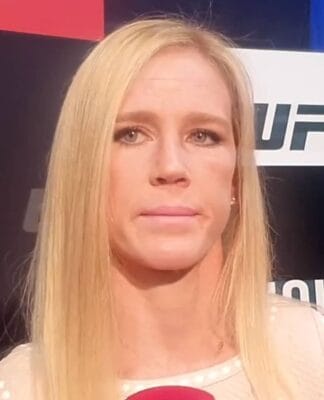
The former UFC champ Holly Holm set off on her MMA journey very late at the age of 29. However, she came into the sport after successfully competing at the highest levels of boxing and kickboxing for many years. In fact, Holly was a very famous boxer and a champ in many elite boxing promotions like WBA and WBC. 

To say her elite striking skills transitioned well into MMA would simply be an understatement. As a gifted athlete, she managed to quickly pick up the basics of grappling and add it to her great standup base. Her wrestling defense improved enough for her to stop the takedowns, or get back up, and keep the fight standing. 

Holm was already in the third decade of her life when she started competing in MMA. But she quickly worked her way up by scoring six KOs in just nine MMA fights. After just four years of fighting in MMA, she received a shot at the UFC title against, at the time, unbeatable Ronda Rousey. At UFC 193, Holm managed to put her standup skills to work and KO the greatest female fighter out cold. Her incredible performance against Rousey remains one of the biggest upsets in combat sports history.

RECOMMENDED READING:
10 Greatest Female MMA Fighters Of All Time!

6. Shane Carwin

Photo by Peter Gordon

Shane Carwin is one of the greatest UFC champs ever who started fighting in MMA very late at the age of 30. This is mainly because Shane spent his 20s pursuing a higher education, working a day job and training as an amateur. Although he doesn’t look like the most educated guy with all those tattoos and intimidating physique, Shane actually has two bachelor’s degrees:

  • Bachelor’s degree in Mechanical Engineering (Colorado School of Mines)
  • Bachelor’s degree in Environmental Technology (Western State College)

Yet, Shane didn’t spend his college days just reading books. He actually wrestled at college and went on to become an NCAA Division II wrestling runner-up. When he shifted to MMA, Shane managed to quickly add decent boxing and BJJ skills to his wrestling base to develop all-around fighting skills. His athleticism and talent allowed him to learn quickly and catch up with the fighters who started training much earlier. 

Shane stormed through the MMA fighting scene by going on a 12 fight winning streak and winning the UFC interim heavyweight title. In this run, Shane scored eight KOs and four submission wins, and at one point in time, was by far the most feared fighter. 

5. Mark Hunt

Photo by The Wifechaser

Hunt is a former UFC fighter who joined MMA late at the age of 30. Before that, he spent more than five years competing in the legendary “K-1” Kickboxing promotion where he managed to win the prestigious “World Grand Prix” title in 2001. 

Three years later in 2004, he made a decision to switch over to MMA, and sign with the best promotion at the time, Japanese “Pride FC”. It didn’t take long for Hunt to unleash his full potential and become famous. In his first four fights, Hunt beat Wanderlei Silva and Mirko Crocop who were the best of the best fighters during the Pride FC era.

Later on, he would sign with the UFC where he would score many memorable “walk-off” knockout wins and even fight for the heavyweight title against Fabricio Werdum at UFC 180 (lost via TKO in the second round). 

Apart from devastating knockouts, people also remember Hunt for his amazing takedown defense and ability to keep the fight standing. The thing is, he put a lot of effort into improving his BJJ and wrestling defense to become a complete fighter.

4. Daniel Cormier

Photo by X2o

Cormier has done so much in MMA that people tend to forget he actually began fighting in MMA at the age of 30. That is late by all standards and it is amazing what he has managed to achieve in the sport in such a short time span:

  • UFC heavyweight champion
  • UFC Light heavyweight champion
  • Strikeforce heavyweight champion
  • King of the Cage heavyweight champion

Cormier arrived in MMA from wrestling where he competed at the world stage and is a former Olympic wrestler. He represented the US at the 2004 Summer Olympic Games where he finished 4th, and he has won multiple National and Pan American Championships.

He retired from wrestling to join the AKA Academy, famous for turning great wrestlers into vicious strikers. It didn’t take long for Cormier to develop good kickboxing skills, which combined with his elite wrestling, allowed him to dominate MMA competition. 

In fact, his striking skills improved so much that he actually scored eight KOs in his first 15 MMA fights. He truly became one of the best strikers in both divisions he competed in. After just six years of fighting in MMA, Cormier crowned himself with the UFC light heavyweight title in 2015. He then went up in weight to challenge and win the UFC heavyweight title in 2019.

3. Mark Coleman

Photo Credit:twitter@Markcolemanmma

Mark Coleman is one of the pioneers of MMA and he is also known as the “father of ground and pound” technique. Coleman came into the sport in 1996 at 31 years of age after successfully competing in wrestling where he was a Pan American Champion multiple times, and the NCAA Division I wrestling champion.

In his first year as an MMA fighter, Coleman managed to win UFC 10 tournament with three straight finishes, UFC 11 tournament with 2 finishes, and become the first-ever UFC heavyweight champ by beating Dan Severn at UFC 12.

Later, Coleman would move to PRIDE FC where he won the Openweight Grand Prix Tournament in 2000 and defeated many legendary fighters. In 2010, he also became the first ever UFC Hall of Famer.

2. Yoel Romero

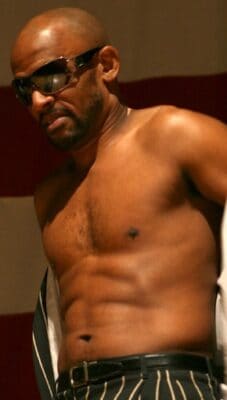
Romero is a once in a lifetime athlete and one of the scariest 185lbs fighters ever. His efforts inside the cage go to an extra level when you become aware of the fact he started his MMA career at 32 years of age. 

Romeo is, without a doubt, one of the best wrestlers to ever compete inside the MMA cage. He is the former Olympic silver medalist in Greco-Roman wrestling and a World Cup winner on three occasions. 

Right upon stepping into MMA, Romero started to put a lot of effort into improving his standup skills. He trained along with the best boxers in Cuba and MMA fighters at famous “American Top Team” academy in the US.

Romero used his insane power, speed, and precision to put many people to sleep and quickly work his way up in the MMA world. His finishes were so violent that he actually became known as one of the most feared standup fighters which is crazy considering how little time he had to prepare for MMA. 

In his career, he fought for the UFC title three times, but he failed to crown himself on all occasions. In 2020, he left the UFC to sign with Bellator at the age of 43. 

1. Randy Couture

Photo by Mark Richardson

When Randy joined MMA at the age of 34, many people thought he was in for just a couple of fights. He came into MMA as an NCAA Division I wrestler and with a lot of experience competing at the world wrestling stage. 

Despite the top level grappling skills, many pros thought Randy was simply too old to succeed in a young men’s game. But he proved them all to be wrong as he went on to fight for the next 14 years. And he also became one of the most successful and loved UFC fighters. 

The most amazing fact about Randy is that he fought at his best when he was deep into his 40s. Most of the fighters his age and his former opponents were already retired at that point. But Randy was still out there, fighting and beating younger fighters like Tito Ortiz and Vitor Belfort.

The most memorable moment of his career came when he beat Tim Sylvia at UFC 68 to win the UFC heavyweight belt for the second time. This was one of the most glorious wins in MMA history because Randy was 43 years old at the time and way out of his prime. 

Randy managed to do all this simply because he had a high fighting IQ and a very good strategy for every rival. Over the years, he didn’t absorb a lot of damage, and he used his wrestling to dominate every rival.

RECOMMENDED READING:
Do UFC Champions Keep the Belt?

The Difference Between MMA and Boxing: Ultimate Guide

0

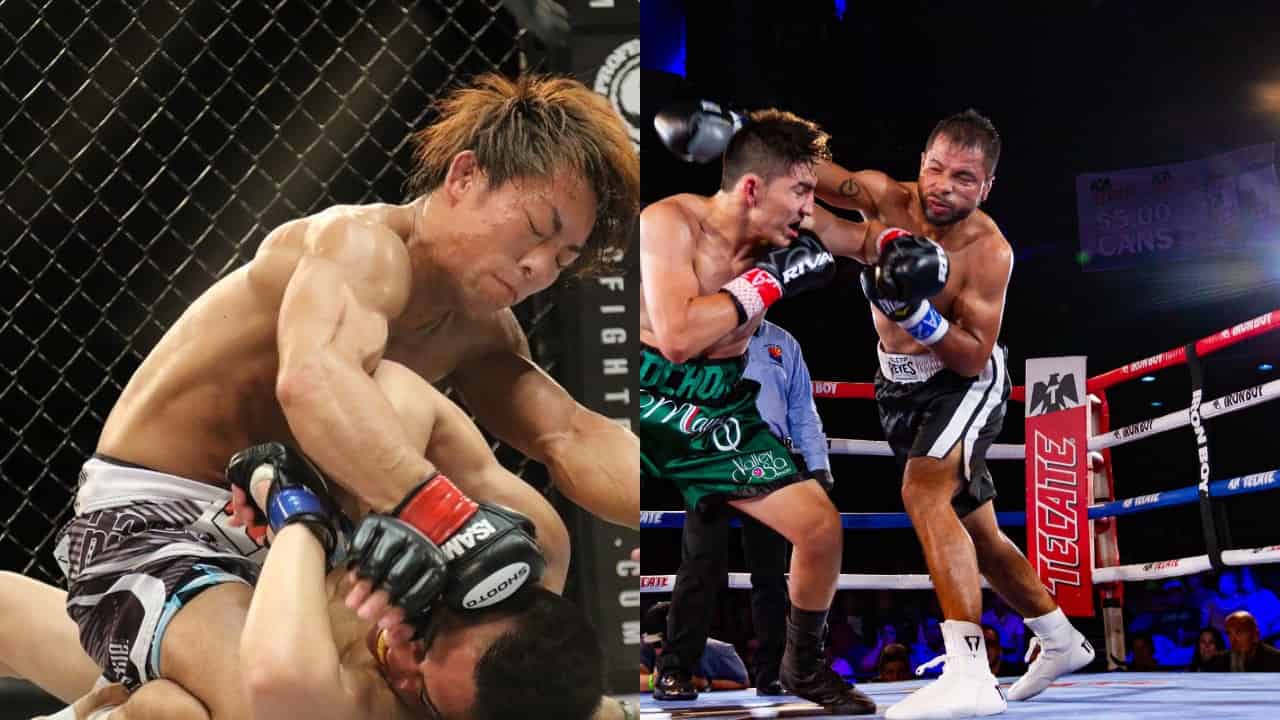
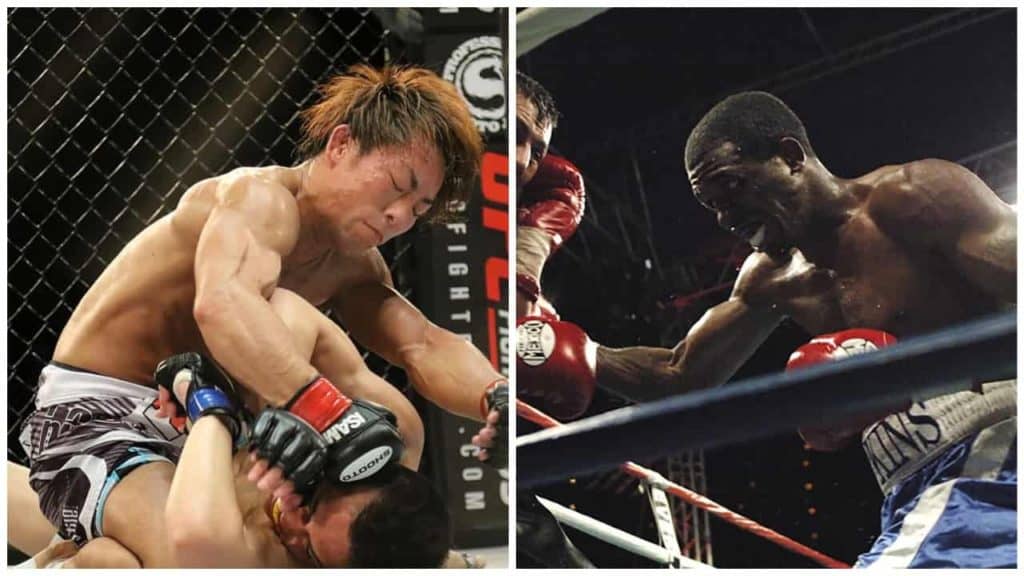
Boxing and mixed martial arts (MMA) are two of the most popular combat sports in the world. With decades of tradition, Boxing is a much older sport and more accepted around the world. 

But in spite of being a newer sport, MMA has been rising at a high rate over the last two decades. It is often seen as the fastest rising sport in the world with the potential to match or become even bigger than boxing. 

However, many people think that boxing and MMA share many similarities. But this couldn’t be further from the truth as they aren’t the same or similar at all. We even dare to say they are world apart when it comes to rules, styles, and even the size and shape of the ring. 

So I have made a decision to make things clear once and for all. In this article, I’ll explain the MAIN differences between MMA and boxing. 

Fighting Styles

Boxing

Boxing is a standup style that only allows hand striking. Compared to MMA, it is a much simpler style simply because it has less variation.

For instance, MMA fighters can throw strikes with all limbs and fight on the ground while boxing includes only the standup fight and hand strikes.
 
Although it is a simpler style, boxing is still a very effective combat style that is also good for self-defense.
 
All boxers need to have skills like footwork, head movement, and hand speed. So they are true masters in distance fighting, close brawls, and countering the attacks. These are what make up in boxing fighting.
 
Boxing covers everything you need to know to fight with hands only.
Even though it may seem easier due to hand striking only, it’s a very intensive art that really delve into the science of hand striking using various tactics such as distance, footwork, offense, defense…

MMA

MMA allows various fighting styles and MMA fighters can use any type of martial art or mix together various styles to fight in the MMA match.

No matter if its Kung Fu, Muay Thai, or wrestling, MMA allows all styles as long as they are within the official rules.
 

MMA is the most realistic style and the closest you can get to legal street fighting. Unlike boxing, MMA gives a fighter much more options and it actually covers all three elements of fighting:
 
1.Standup fighting  2.Clinch Fighting  3.Ground Fighting 

Over the years, many combat styles have proved useless inside the MMA cage. And both coaches and fighters have realized what works in MMA and what don’t.
So modern MMA stands for a mixture of the following four major arts in which every fighter needs to be good at:
 
• Boxing (standup fighting)
• Muay Thai (standup; clinch fighting)
• Wrestling (ground; clinch fighting)
• Brazilian jiu-jitsu (ground fighting)

Fighting Rules

Boxing

The sport of boxing has been regulated by the famous Queensberry rules since 1867. Giving to these rules, fighters can use only their hands to strike, and they are not allowed to hit the rival below the belt area. Other strikes such as elbows or spinning strikes are also forbidden as well as strikes in the back of the head

When a boxer gets knocked down, the rules allow them to recover and get up within the standing count of 10 and continue to fight. Also, some states and boxing associations include the “three-knockdown rule”.

A fighter who got knocked down three times within a round is not allowed to continue. But, we have to mention that most of the boxing associations like WBA or IBF actually don’t apply this rule.

MMA

MMA fights have been regulated by the Unified Rules of Mixed Martial Arts since the early 2000s. It’s worth mentioning some rules may vary between the countries and promotions when it comes to weigh-ins, anti-doping policies, and strikes. But the general rule set is the same for all. 

Set against boxing, fighting rules in MMA are much, much different. First, when an MMA fighter gets knocked down, the action doesn’t stop and there is no 10-second count as in boxing. The rules allow the fighter to follow the knocked down rival to ground and finish them with more strikes or BJJ submission.

And also, the referee can make a subjective decision to stop the fight if they determine that the fighter is not intelligently defending him/herself while receiving hard strikes. 

Unlike in boxing, MMA fighters can land strikes with all limbs like knees, elbows, punches, and kicks. They can throw strikes/place submissions during the standup fight, clinch, or while the rival is on the ground. 

Most of these strikes are all good as long as they don’t land on the back of the head. The ones that are not allowed are “12 to 6 elbows”. This means that fighters can’t throw elbows from straight up (12 o’clock) to straight down (6 o’clock).

Also, a fighter can’t land a knee to the head while their rival has one or both knees on the ground. Since MMA fighters wear open finger gloves, they are also not allowed to poke the eyes or grab the fence/ropes. 

MMA also includes a controversial “stand-up” rule. The referee can stand both fighters up if they are passive during the ground or clinch fighting. This means that fighters need to stay active and show the intent to advance to the dominant position. If they don’t, the referee has a full right to stand both fighters back on their feet and reset the action. 

Weight Classes 

Boxing

Boxing has 18 different weight classes while the amateur competition has 14. These weight classes are in brackets of between 3-8 pounds. 

This is a whole lot more compared to MMA. The lowest weight class in the UFC is a 125lbs flyweight division (for men). Yet boxing has seven more weight classes that go below the UFC’s lowest 125lbs division. This is why boxing has so many champions and fighters who hold titles in multiple weight classes. 

Also, boxing heavyweight division has no upper limit, and fighters can step in whatever weight they feel good at. 

MMA

Giving to the Unified Rules, MMA has 14 weight classes with the weight difference from 5 to 20 pounds. But, leading promotions like the UFC include only eight weight classes for men and four for women. 

This is mainly because the rules and regulations in MMA are always evolving and changing. So as of 2017, the Unified Rules have introduced the birth of four new MMA divisions (225lbs, 165lbs, 175lbs, and 196lbs).

These weight classes are yet to be adopted by promotions such as the UFC or Bellator. And we can’t expect that to happen anytime soon since adding more weight classes is not an easy thing. 

As a result, MMA fighters need to cut more weight than boxers because the difference between the weight classes is huge. They also miss the scale more often and even back up from the fights due to the weight cut issues. And unlike in boxing, it’s very hard for any MMA fighter to become a champ in multiple weight classes. 

Also, most MMA promotions include the upper limit for the heavyweight division and all fighters need to hit the scale at 265 pounds or less. 

Fighting Rounds and Time limits

Boxing

Each professional boxing fight lasts from 9-12 three-minute rounds. There is a one minute break between the rounds fighters can use to rest and get the advice from the coaches. So this means that professional boxing provides 36 minutes of fighting action. 

Yet, there are exceptions in which these rules don’t apply. For instance, boxers who make their professional debut are often scheduled for four three-minute rounds. The number of rounds gradually increases as they move up in competition.

MMA

In MMA, the number of rounds and time limits are the same for both women and man competition. Professional MMA fights consist of three five-minute rounds. Only the title fights and main events are five 5-minute rounds with a one-minute break between. So MMA fans can see 15 minutes of action during the regular MMA match. And 25 minutes when there is a title on the line. 

Gloves!

Boxing

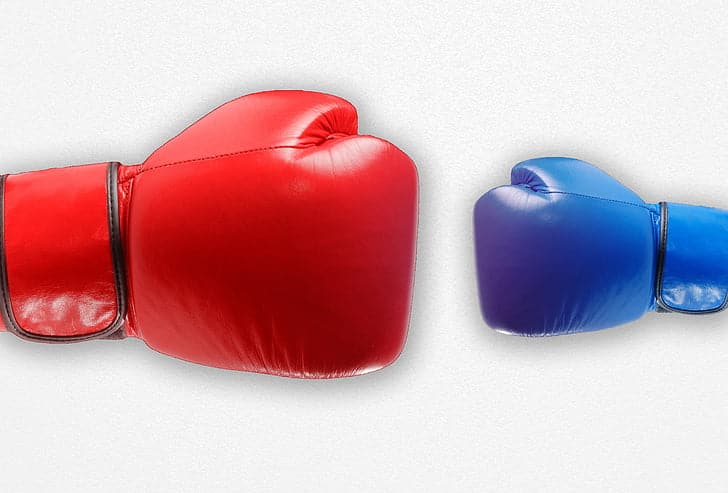
All boxers must wear padded gloves that protect their knuckles and the opponent from sustaining bad head or body injuries. Also, boxing gloves have a round shape that prevents cosmetic damage like deep cuts that can cause serious bleeding. 

Since boxers can only use their hands to strike, their gloves have much more padding and cover bigger area. This is very important as boxers are putting their knuckles to huge stresses every time they throw a strike. So a bigger area and more padding prevent many injuries from happening. 

There are many types of boxing gloves a fighter can use. Here are the most common types and their sizes:

  • Bag gloves (Size: 8-16 oz)
  • Sparring gloves (Size: 4-20 oz)
  • Competition gloves (Size: 8-12 oz)
  • Lace up gloves (Size: 8-16 oz)

MMA

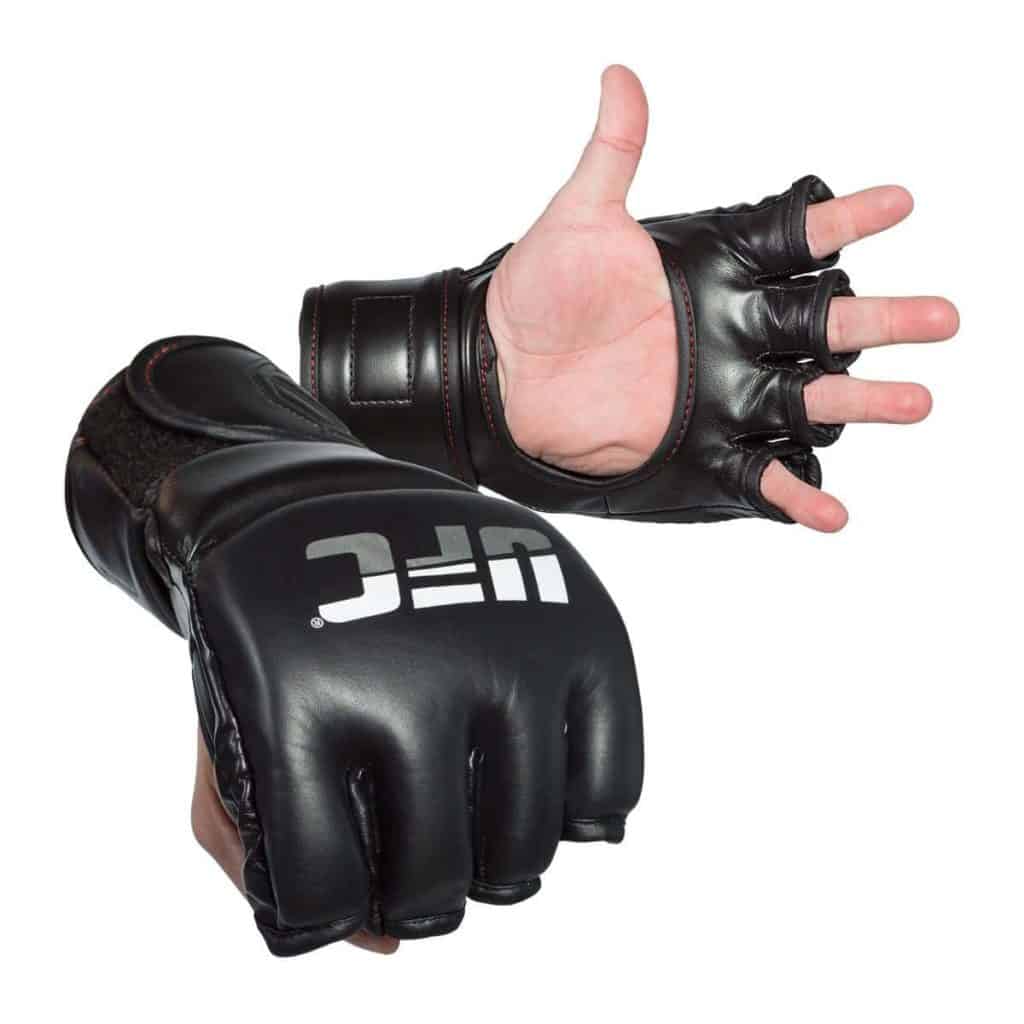
MMA gloves differ from the boxing gloves in every possible aspect. First, MMA fighters wear open finger gloves that allow them to grab the rival in the grappling exchanges. This is because MMA fighters can’t score a takedown or place submissions with the closed wrists.

These gloves include less padding and a smaller area of protection. Though it doesn’t sound that way, MMA gloves actually provide a good protection as they usually include stiffer, more stable padding.  

MMA gloves also come in various forms and sizes: 

  • Competition gloves (4-6 ounces)
  • Sparring gloves (around 7 ounces)
  • Grappling gloves 

The shape and size of the ring

Boxing

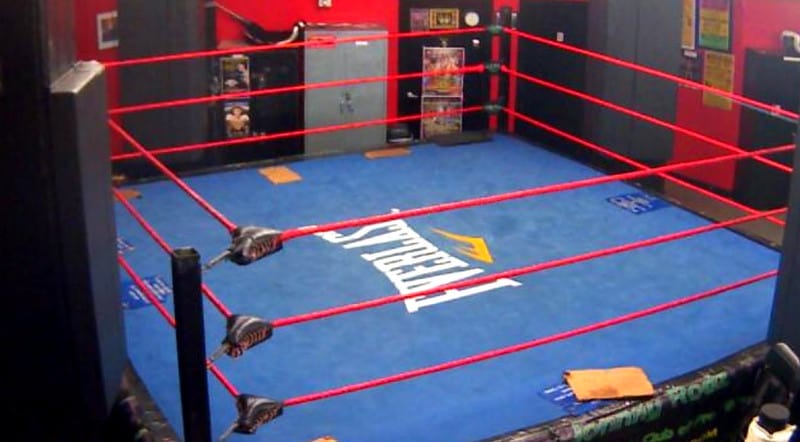
Whether it’s an amateur or professional bout, all boxers fight in a ring. A modern-day boxing ring consists of a 16-20ft raised square platform with a post at each corner. Further, four ropes are attached to the posts which keep the fighters safe from falling outside the ring.

Boxing Ring

MMA

MMA fighters fight inside the steel cage or a ring depending on the promotion. Also, the size and shape of the cage differ between the promotions. For instance, UFC uses the famous octagon-shaped cage that has a diameter of 30ft (9.1m) and 6ft tall walls (fence).

Their competitors at Bellator, however, use a more rounded and bigger cage that is 36ft in diameter with 1018 square feet of the fight area.

UFC Octagon (Credit: Lee Brimelow via Wikimedia)

Many MMA promotions around the world also use the square ring. The most famous one was the legendary Japanese MMA promotion, Pride FC. 

Organizations 

Boxing

Boxing is the combat sport with perhaps the most organizations (60+). Even boxing fans can often get lost by the number of champions, and belts boxing has. Yet, only the following four are the major ones: 

WBA (USA), WBC, IBF (USA), WBO (PRI) 

Things can get even more confusing when you realize each of these four federations has its own rules. It’s important to know that each boxing champ can fight against the champion from other organizations. So a boxer who owns WBA and WBC belts can unify all major titles by defeating a boxer who holds IBF title. For instance, Lennox Lewis unified his WBC title with the WBA and IBF titles when he defeated Evander Holyfield in 1999. 

MMA

The MMA world is much different than boxing when it comes to promotions. MMA is still a young sport that doesn’t have many elite promotions. In fact, the Ultimate Fighting Championship (UFC), which was the first organization to promote MMA fights in the west, is the leader in the MMA fighting business

Over the years, the UFC has faced many serious competitors like the famous Japanese MMA promotion, Pride FC. In fact, Pride was even bigger than the UFC at some point during the early 2000s

But the UFC actually ended up buying Pride when the Japanese promotion collapsed in 2007. From that point, the UFC became an absolute leader in the MMA business. As the leader in the sport, the UFC is the home of the best fighters in the world, and it has the biggest audience as well. 

There are other MMA promotions like Bellator and Japanese ONE FC but their market share and influences are very small compared to the UFC. 

10 WORST Excuses for a loss in MMA that Nobody Believes

0

Editor’s note: The views and opinions expressed below are those of the author and do not necessarily reflect the views of mmachannel.com, its affiliates and sponsors.

Losing is a part of every sport and something that will happen to 99.9% of the athletes. But, losses are not that bad if you know how to go along with them. You see, many great athletes look at losses as a chance to get better and grow. But when it comes to MMA, it’s very hard to embrace the loss mainly because of huge ego disturbance. 

Just imagine yourself preparing for months, trash-talking the opponent, predicting how you will knocked them out cold. And then, lose a fight in front of millions of fans watching. That’s a tough pill to swallow. 

So, what do MMA fighters do when they can’t accept the loss? Yes, they usually start coming up with excuses we all don’t want to hear. These excuses just irritate the fans and disrespect the rival who won the fight fair and square. 

In spite of all this, we can always hear fighters making excuses and looking like sour losers. In most cases, it is their ego speaking out of their mouth in a hope to downplay their loss. But in reality, no-one buys these excuses and they only make the fighter look even worse in the eyes of the fans. Once you accept the fight; you lose the right to make excuses after it’s over. 

So let’s look at some of the worst excuses MMA fighters make after losing a fight but nobody believes these excuses anymore.

10. I didn’t follow the game plan

This may sound like the loser is simply admitting a mistake of not following the game plan that cost him a victory. They usually follow this up by giving the opponent full credits for winning the fight. 

But when you look deep into it, this is just another lame excuse. The loser is trying to say that he/she had the winning strategy, but they didn’t use it and that is the only reason why they lost. Also, they would go on to follow with similar excuses like I couldn’t find my rhythm or pull the trigger. 

The thing is, the secret behind winning an MMA match is to execute a perfect game plan. This means that you must neutralize the opponent’s strengths and capitalize on their weaknesses. So, “I didn’t follow my game plan” means that your rival used a good strategy to neutralize your game. It was the opponent who stopped you from pulling a trigger or finding a rhythm. 

9. I had a bad weight cut

As we know, MMA fighters cut a lot of weight and this can affect their performance in the fight. But this is a part of the game and nobody forces the fighters to cut weight and compete in the weight class far below their natural size. 

The thing is, some fighters have an easier time cutting weight than others. Fighters who have a hard time cutting weight may fatigue faster in a fight or feel weak. Although this can be the cause of the loss, it can’t be used as an excuse. This is because weight cutting is an optional thing. It is the fighter’s choice to drop weight and compete in a lower division. 

Instead of blaming it on a weight cut, these fighters should move up in the weight and join a higher division where they have no pressure of cutting massive weight to perform better. We have seen many fighters moving up in weight after a couple of losses and performing better. 

8. It wasn’t my night

We are not sure why, but you can often hear fighters coming up with abstract excuses and this one of them. Clearly, this excuse means that a losing fighter could win a fight on any other night. But he/she simply had an off night that stopped them from performing to the best of their abilities. Even after the loss, these fighters still believe they are more skilled and would win 9/10 bouts against the rival who just beat them. 

But for the fans, this fighter is so hurt by the loss that he/she can’t even come up with a reasonable explanation for it. Instead, they will say “It wasn’t my night” which doesn’t mean anything and only shows how terribly their ego is hurt. 

7. I had some personal issues

You can often hear fighters pointing out that they couldn’t prepare or perform because they were going through some tough time. What’s more, they usually don’t even say what the issue was. 

The thing is, we all go through tough times. Whether it’s an emotional problem in a relationship or something else, we all have to show up at work and give our best. And most of us don’t use personal issues as an excuse for our mistakes at work. 

Like all humans, all great athletes have gone through tough times at some point in their careers. But what separates the great fighters from average ones is the ability to put personal issues to the side and maintain high focus. 

For instance, Cody Stamann came into his bout at UFC 250 just a week after his brother’s death. This is perhaps the worst personal issue a fighter can carry inside the cage. But Cody managed to put his personal issues to the side, and pull off one of the most inspirational wins in history. 

6. I was injured but didn’t tell anyone

MMA is a brutal sport and fighters are getting injured all the time. But some fighters use injuries as an excuse for their bad performance and losses. Giving to them, they couldn’t train properly or the injury stopped them from using their best weapon in a fight.  But MMA fans are not buying this excuse simply because the fighter was healthy enough to show up and perform.

Ask any fighter and they will all tell you the stories about injuries in the fight camps. Even Daniel Cormier once said that almost every fighter comes into the fight carrying some injury. This is because MMA fight camps are brutal and the fighter’s bodies are going through huge stresses on a daily basis. 

The thing is, fighters can always pull out of the fight in case they can’t prepare for a fight. Nobody forces them to step inside the octagon at all costs. So even if they were carrying some injuries, it was their decision to show up on the fight night and they shouldn’t use it as an explanation for the loss. 

5. I underestimated my opponent

Underestimating the opponent is never good idea regardless of the sport. This is especially true for MMA where there are so many ways you can lose a fight and where everybody has a chance. So using the fact you underestimated the opponent as an excuse is horrible in many ways. 

The loser wants everybody to know that he/she thought the fight was going to be a walk in the park. So, they didn’t train as hard as they usually do and they didn’t take seriously the opponent’s skills. That’s silly, and it only makes a loser look worse in the eyes of the fans. 

This is not just a terrible excuse; it actually speaks a lot about the fighter’s approach to the game. Underestimating the rival means that you got taken over by your own ego. And you became arrogant enough to not give your rivals any chances. 

As a skilled fighter, you must always respect your rivals. You see, anybody can beat anyone in MMA. It takes only one punch for you to go from the highest heights to the lowest lows and all fighters need to respect that fact. 

4. I took the fight on short notice

This excuse may sound reasonable at first. But, it is still not something you want to hear from a loser after the fight. Fighters usually use this excuse to point out that they didn’t have enough time to prepare. If they were to have a full training camp, they would have likely won the fight.  

Yet, this is just a lame excuse. These fighters didn’t have any complaints when the promotion offered them a short notice fight. They took it knowing they would not have a full training camp and time to prepare. Finally, these fighters believed they could win despite all the issues that come with short notice fights. So when they lose, it is 100% their fault and they should have not taken the fight. 

In the fighting business, not all opportunities come under ideal circumstances. In the leading promotions like UFC, fighters can expect the call to step in, sometimes on a 24h notice. This is the opportunity that can often change their lives for better and if somebody thinks they are not ready for it, they shouldn’t accept it. Maybe some other fighter is ready for such a moment. 

3. I was gassed out/feeling weak

The excuses like “I was gassed out” or “I was feeling weak” are actually funny because they don’t explain or justify anything. It’s perhaps easier for a loser to put blame on poor conditioning than lack of skills that actually caused them to lose a fight. 

This is perhaps the worst excuse a fighter can make simply because it sounds odd and there is no logic behind it. I mean, they probably gassed out because the opponent was pushing a high pace. They also might feel weak inside because of the body punches they have absorbed. Or they simply didn’t train enough to be in top shape. Whatever the cause is, it is 100% their fault for losing a fight and there is no point in saying stuff like that. 

2. I got caught

This is one of the worst excuses a fighter can make after experiencing a knockout or submission loss. In translation, “I got caught” means the opponent knocked them out with the punch or kick they didn’t see coming. And they will say the same thing for submissions. 

But this excuse is just a desperate attempt from a losing fighter to downplay the terrible loss. It easier for them to believe the opponent got lucky and that their win doesn’t have anything to do with the technique or skill.  They would often go even further saying they dominated the fight up to the point they got “caught”. 

The problem with this excuse, however, is that the point of knocking/submitting someone out is to hit them with the strike they won’t see. So in the mind of a losing fighter, “lucky punch” may not be based on skill. But in reality, it represents a perfect execution of the technique.

I mean, this is not just a terrible excuse; it is also the worst way to disrespect the winner.

* Honorable Mention *

Fighters making excuses when they win

Ironically, fighters often make excuses when they win, and those are just the worst ones. I mean, that is the next level of arrogance that only makes a winner look bad. As much as a fighter should stay humble in defeat, they should do the same when they win. 

But it seems like some fighters can’t feed their ego by just winning a fight. Instead of being humble, they will make various excuses to brag even more and praise their win. For instance, they love to say they came into the fight injured and talk about how they couldn’t perform at their best. 

This means they could have fought much better even though they just knocked out their opponent en route to win. I mean, just imagine how a defeated fighter feels listening to this nonsense.

1. Blaming the judges/referees

You can hear fighters blaming the judges or referees for their losses after almost every MMA event.  Like in any sport, both judges and referees can make mistakes. But this doesn’t mean that all close decisions or stoppages are bad. In fact, MMA judges and referees are professionals who make the right decisions in most of the fights.

What some losers can’t realize is that, as skilled fighters, it is their job to finish the fight or be dominant enough to secure a decision. If a fighter fails to do this and leaves it in the hands of the judges, then they simply lose a right to argue against the judge’s decision. 

The same stands for the fighters who blame the referees for stopping the fight too soon. Despite the fact they were in serious trouble or even knocked/submitted out, these fighters simply can’t accept the loss. Things get even worse when you realize the cameras clearly show them being out and unable to continue.  So blaming the referee, who by the way saved your life, only makes you look like a fool in front of millions of fans watching. 

Even if they were not out, it was their fault for ending up in a situation in which the referee had to intervene.

How to Increase Punching Power at Home Explained

0

MMACHANNEL  strongly recommends that you consult with your physician before beginning any exercise program. You should be in good physical condition and be able to participate in the exercise. MMACHANNEL is not a licensed medical care provider and represents that it has no expertise in diagnosing, examining, or treating medical conditions of any kind, or in determining the effect of any specific exercise on a medical condition.

Have you ever watched a boxer or MMA fighter like Francis Ngannou knocking someone out, and asked yourself from where did this destructive power come from? At first, fighters like Ngannou may look superhuman to us, and the power in their hands mysterious. But in this article, I will explain to you the science behind this kind of punching power using simple language. And also, we will show how you can increase the power of your punches at home. 

The thing is, knowing how to throw a knockout blow is very important whether you are a skilled fighter or a regular guy trying to punch in a self-defense situation. Sometimes, it only takes one punch to eliminate the rival that stands in front of you whether it’s a street or a ring.  

So if are interested in learning how to punch harder, make sure to read this article.  We can’t ensure you will become as powerful as Ngannou. But the tips and exercises below will surely increase the power in your punches.

Muscle Groups that Generate Punching Power

The power behind every punch originates from the specific muscle groups in our bodies. So if you want to punch harder, you must focus on increasing the strength in these muscle groups. 

But before you can start working out, you need to know that not all types of muscles increase punching power. So let us explain to you the structure of the muscles and what types are ideal for punching. 

Types of muscle fibers

The muscles in our body consist of two main types of muscle fibers known as “Slow-twitch (Type I)” and “Fast-twitch (Type II)” muscle fibers. The difference between them is quite simple, and everyone can understand it. 

Slow-twitch vs. Fast-twitch Muscle Fibers

Type I fibers are much smaller compared to Type II, and they actually produce much less force and power. Also, Type I fibers fatigue slower and can keep going for long periods of time. So, slow-twitch fibers don’t play any role in increasing punching power. They are actually great for sports that require high endurance like swimming and running.

The ones that increase the punching power, however, are Type II or fast-twitch muscle fibers. They are larger than Type I fibers and can produce a lot of power in a very short time period. Or in other words, they allow you to generate a huge power in a single punch and KO the rival. Thus, Type II fibers are ideal for combat sports like boxing and MMA. 

They can be further divided into two sub-categories:

  • Type IIa fast-twitch muscle fibers (is a mix of type I and type IIx muscle fibers) 
  • Type IIx fast-twitch muscle fibers

The thing is, both sub-categories can produce explosive power for punching. There are various ways you can recruit type II muscle fibers. But the best way is through plyometric exercises which we will explain later in this article.  

There is No Power Without the Technique

The most common reason why some people can’t throw a powerful punch is improper technique. You see, it doesn’t matter if you have strong muscles. Power without the technique is useless in combat sports and here is why. 

To throw a hard punch, you must generate a lot of force and transfer it from your body to the target standing in front of you. The only way you can do this is to execute the moves with proper technique. For instance, if you rotate your hips too soon or late, you will waste the energy and it will all result in a weak punch. 

So, you must learn how to execute punching techniques the right way prior to doing any exercise to boost power in the muscles. In a fight, you will need much more than strong shoulders and forearms to knock the rival out cold. 

The secret behind generating a huge punching force lays in the unification of the waist and the proper stance. That said, let us explain to you how you can add extra force to your punch below

One of the most important aspects of throwing a powerful punch is the rotation of the hips. So make sure to always rotate your hips in the direction of the punch. 
The next thing you must learn is how to rotate your knee inwards sync with your hip rotation. To execute this move, you must first move your foot outwards.

The motion of the foot should be like the way people grind out cigarettes. Try to move your foot outwards now and you can see how your knee goes inwards by itself. 
The final move is to push the back foot off the ground in sync with the hand you are throwing. 

Bear in mind that you need to put many hours into drilling these “simple” moves until they become stamped into your muscle memory. So take 30 minutes of your time every day to stand in front of the mirror and practice how to throw the punch the right way. We assure you will feel huge gains in a short period of time.

Workouts for Improving Punching Power at Home

Knowing how to throw a punch with proper technique doesn’t mean you can punch hard. As said earlier, muscles also play a huge roll in producing the force and energy for a punch. 

To increase the punching power, you must focus on recruiting fast-twitch muscle fibers by performing the workouts below. These exercises will help you to increase the muscle mass needed for generating a lot of force. 

The best thing about these workouts is you don’t need a fancy gym to improve the power of your punches. You can do these exercises at home and enjoy the same results as in the gym. 

Plyometric Exercises 

Plyometric training (plyos) is a group of intense exercises in which muscles exert most force in short intervals of time. The main goal of plyos is to increase fast-twitch (Type IIa) muscle recruitment. This enables you to generate more energy in the muscles and punch harder. 

As we are about to see, these exercises are simple and you don’t need any specific equipment to perform them at home. 

Plyometric Push-Ups Explained 

Plyo push-ups are an advanced exercise and a great way to improve strength in the upper body section. This exercise might be tough for beginners. But it is very important since it aims at the muscle groups responsible for generating punching power like triceps, abs, and shoulders. 

Before shifting to plyometric push-ups, make sure you have enough strength to perform at least 30 regular push-ups. 

How to perform plyo push-ups: 

1. Begin from the standard push up position with your hands on the floor
2. Make sure to close your feet together and keep the hands slightly wider than shoulder-width
3. Like when you do standard push-ups, make sure to keep your back flat and don’t let your buttocks sink 
4. Start lowering yourself to the ground 
5. Once you hit the bottom position, push yourself up with one explosive movement and bring your hands off the floor
 
6. Make sure to land with your hands on the ground and repeat the process
7. When you feel comfortable, try clapping while in the air


Box Jumps Explained 

This is one of the best plyometric exercises for improving the lower body segment. Boxers and MMA fighters perform this exercise to develop quicker footwork that allows them to throw punches with better technique and more power. 

There are many ways you can perform box jumps. But the marching technique is arguably one of the most popular ways among martial artists. 

How to perform the box jump (marching technique): 

Put the box in front of you and place one foot on it
With one explosive movement, jump and land with the opposite foot on the box and make sure to land with the other foot back on the floor
Repeat the process

When you feel comfortable and ready, raise the height of the box to increase difficulty. 

Isometric exercises

Isometric training is a form of exercise that involves a static contraction of a muscle or a muscle group. This means that the muscle length and joint angle does not change during the contraction of the muscles. Martial artists perform these exercises to develop strength in abs, biceps, and triceps so they can punch much harder.   

Since isometric workouts are quite simple, you can perform them at home and they don’t require much time either. Listed below are a few isometric exercises:

Overhead hold

Overhead hold is a great exercise for increasing punching power because it improves muscles in the shoulders that are responsible for generating power. The exercise requires light to medium weight to perform. People usually use a light dumbbell or a kettlebell, but, you can also perform the exercise by using any suitable object from your home. 

How to perform the overhead hold: 

1. Take the weight in your hands and extend the arms above the head.
2. Hold the weight steadily and always make sure that your arms are fully extended.
3. As a beginner, hold the weight for 30 seconds.
4. Repeat five times.

You can increase the level of difficulty by standing on one leg while holding the weight above your head. 

Body Hold 

The body hold is one of the most popular isometric exercises for improving the abdominal muscles. Abdominal muscles are very important for generating power as they connect the whole body together. So, the abdominal muscles actually combine the power generated in your legs, hips and arms into one total force that allows you to punch harder. 

Here is how you should perform the body hold exercise: 

Sit on the floor with your feet flat and knees bent.
 
Slowly raise your arms and legs simultaneously to create a V shape with your body.
Stay in this position for 15 seconds and repeat it five times. 

Plank Hold

Many boxers and MMA fighters perform this exercise because it targets various muscle groups responsible for generating power in the punches. It will increase your power in the abdomen muscles, quadriceps, and the anterior portion of the deltoid. In short, this single exercise will torch your core like no other exercise out there. 

How to perform the plank hold: 

Begin the exercise with the body in the horizontal position.
 
Put the weight of the body on the toes and forearms.
 
Make sure to keep your hips forward (butt clenched) and don’t let your hips sink.
Hold this position for 30 seconds and repeat it five times.

HIIT (high-intensity interval training) 

HIIT training includes a group of intense series of exercises you must perform in a short period of time. It is great for improving punching power because these exercises will increase the recruitment of fast-twitch muscle fibers. As a result, you will enjoy a greater speed in your limbs and arm strength.

HIIT not only recruits Type IIa muscles, but it also improves your balance and coordination. This is very important since you need a good balance to maintain a proper stance and coordination to put all the sequences of a punch together. 

The HIIT workouts are very hard to perform, but, the benefits of doing it are huge. HIIT workouts will significantly improve your cardio and endurance levels, and are also great for increasing muscle mass and bone density. 

Study at the BMC Sports Science showed that people who followed the boxing HIIT program for 12 weeks have reduced body fat by 13.2% and the total mass by 4.1%. They have also increased VO2 max levels and the sense of vitality by 54%. 

HIIT workout should last from 15 to 30 minutes with less intense recovery periods. But the intensity and the duration of workouts really depend on your fitness levels. 

To enjoy most benefits, you should perform HIIT workouts four times a week. Since your muscles suffer during these grueling workouts, make sure to have a proper rest between the workouts.

Other Training Tips on How to Improve Punching Power

Knuckle conditioning

Increasing strength in your knuckles doesn’t mean you will improve the power of the punches. But harder knuckles allow you to deliver more damage with every punch. Also, it stops knuckle injuries from happening which is very important considering there’s a big chance you can get hurt when throwing punches with full power.

The science behind knuckle conditioning may sound odd. You must perform various exercises and actually damage the knuckles enough to produce micro-fractures. So when the knuckles start to heal, they will deposit extra calcium in these micro-fractures. This will naturally make the bones denser and knuckles much harder. 

Bear in mind that, if you feel any pain that lasts more than 2 days, make sure to take a break of at least 1-2 weeks. Also, you should never punch a wall to make your knuckles harder. That stuff works only in the movies.

Knuckle push-ups

This form of push-ups is one of the best exercises for developing strong knuckles. If you are a beginner, start with a soft surface like carpet or yoga mat. As you become more familiar with the exercise, move to the harder surfaces. 

How to perform knuckle push-ups:

The first thing you need to do is to close your fists.
 
Get into the standard push-up position and place your fists on the floor shoulder-width apart.
Make sure to place your weight on the first two knuckles and keep the back straight.
 
Perform the standard push-up movement.

If you have a hard time balancing yourself on the knuckles, try to use your thumbs to improve stability. 

Punching rice

Although this may sound and look funny, it is actually a great way to develop strong knuckles. 

  • Take a bowl that’s wider than your fist and feel it with rice at least seven inches deep
  • Put your fingers into the bowl and grab a handful of rice
  • Squeeze the hand as hard as possible and place it back into the bowl 
  • Start twisting the knuckles into the rice.
  • Punch the rice until the skin on your knuckles break and your knuckles feel sore

There are other ways you can use rice to strengthen your knuckles. For instance:

  • Grab the handful of rice and squeeze the hand as hard as you can. 
  • Release the hand and repeat the process.

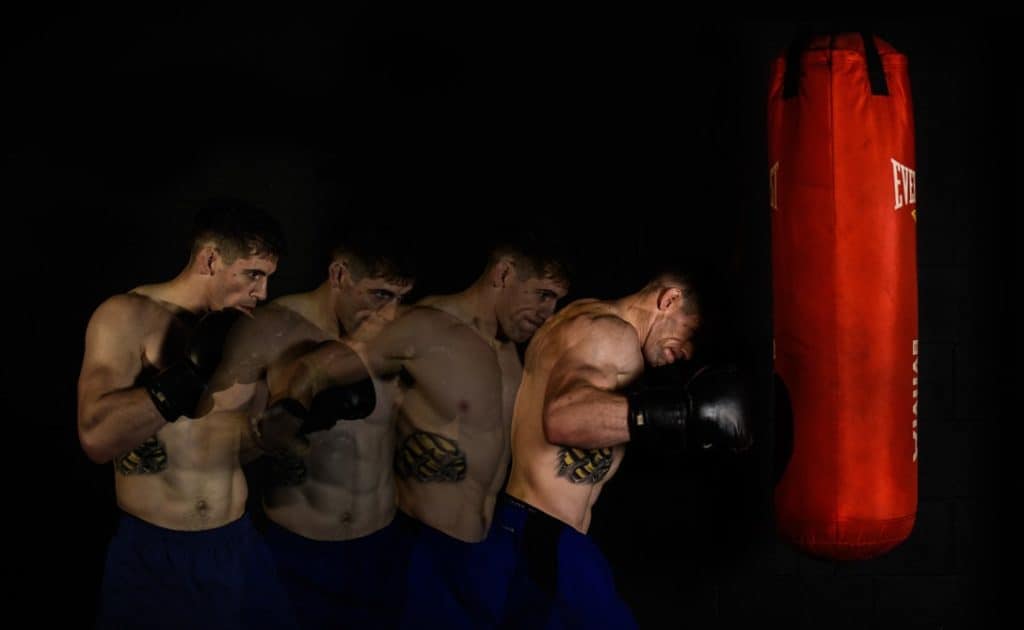
Punching a heavy bag

Punching a heavy bag without gloves is synonymous with knuckle conditioning. Here is how you should do it the right way: 

Use the boxing hand wraps or thick cotton to strip over you knuckles before you start punching the heavy bag. 
If you are a beginner, never use the punching bag without wrapping your hands.
 
Start punching the bag using simple punches like jab and make sure to use less power. 
As you become more familiar with it, increase the power and speed of the punches.

10 MMA Fighters that are or were Police Officers

0

This may sound odd, but there is a close relationship between MMA and law enforcement. You see, MMA is widely known as a combat style that covers all the elements of fighting and is very useful in real-life situations. So in order to improve their self-defense skills and safety on the job, many thousands of cops around the world actually train in some form of MMA to enhance their defensive tactics.

In MMA history, there have been many MMA fighters who worked or are still working as cops. These fighters can use their combat experience gained inside the cage and elite fighting skills to better protect people on the streets. Also, MMA fighters can handle the pressure of a law enforcement job and know how to stay calm in stressful situations.

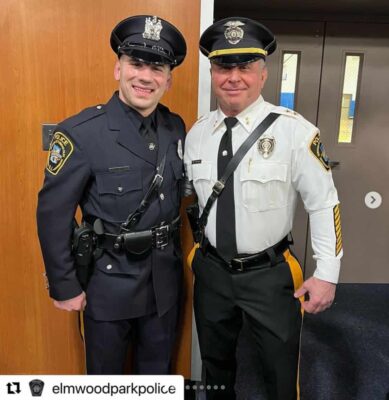
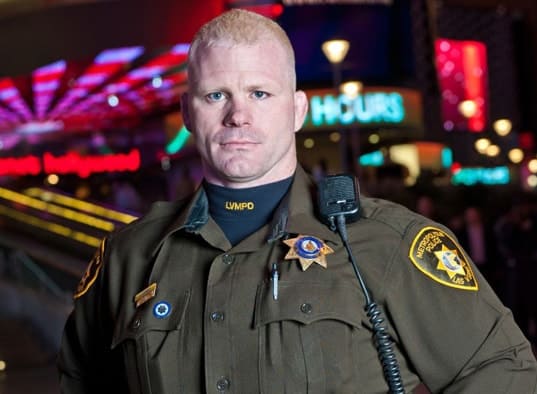
We have decided to bring you a list of 10 MMA fighters that are or were police officers.

Honorable Mentions

Sean Gannon

Former UFC fighter Sean Gannon

Sean Gannon lived the life of an average American working as a Boston Police Officer. But his life changed when the video that showed Sean fighting in a bare-knuckle street fight went viral. 

In this video, Sean fights against none other than the “King” of street fights, Kimbo Slice. What’s more, the video shows Sean defeating Kimbo, handing him the first loss on the street. 

As you would expect, the Boston Police opened an investigation into Sean’s actions. Also, he ended up being on the front pages of many newspapers, including the “Boston Herald.” 

But soon, he would receive a call from the UFC that wanted to give Sean a chance to prove himself inside the cage. Sean made his UFC debut in 2005 against Branden Hinkle at UFC 55. He went on to lose via TKO and never returned to fight again in the UFC or elsewhere.

In fact, Sean suffered a few concussions and was unable to return to his job as a police officer. So in 2006, they moved him to the Boston Regional Intelligence Center, where he worked on a drug Intel.

Unfortunately, Gannon passed away in September 2021, not long after retiring as a police officer after 20 years on the force. The cause of death is unknown to the general public.

Jimmie Rivera

Photo via Instagram @jimmierivera

Jimmie Rivera, a New Jersey native, is a former UFC bantamweight fighter who is now a proud member of the Blue Family. Rivera began his MMA journey at 18 years old and quickly made a name for himself after racking up 7 undefeated amateur wins just shy of 2 years.

It wasn’t long before Rivera signed with Bellator MMA and also competed in different promotions such as Cage Fury Fighting Championship, World Series of Fighting, and King of the Cage organization, where he became the champion.

Rivera was later featured on the Ultimate Fighter TV show but lost the opportunity to sign with the UFC when he lost the fight in the entry round.

But after competing in various MMA organizations, Rivera eventually got another opportunity to fight in the UFC when he got a call to replace injured fighter Ian Entwistle at UFC Fight Night 72. He made sure he didn’t waste that opportunity by scoring a spectacular KO in the 1st round vs. Marcus Brimage.

Rivera then went on to fight top contenders like Pedro Munhoz, Urijah Faber, Aljamain Sterling, and Petr Yan, amassing a respectable record of 7 wins and 4 losses during his tenure with the UFC. However, at the end of his UFC contract in August 2021, Rivera’s contract was not renewed.

When the COVID-19 pandemic severely affected MMA gyms and MMA events starting in January 2020, it was a tough time for Rivera, as there was not much economic opportunity for an MMA fighter. Rivera soon realized he had to find a new line of work other than relying mainly on MMA fighting as a means to support his family. After seriously discussing his career path with his wife, he eventually decided to join the Elmwood Park Police Department in New Jersey as a police officer.

In January 2023, he graduated from law enforcement training at the Passaic County Police Academy after spending 27 weeks there. But in Rivera’s case, this was not typical police academy training for him because he was still teaching and training while going to the police academy 6 days a week. But he wouldn’t have it the other way, as he likes to stay really busy, unlike many people.

Rivera still competes in the Bare Knuckle Fighting Championship, but now he primarily focuses on making positive changes in his community using his wealth of MMA skills.

10. Chris Daukaus

Daukaus is a former police officer for the City of Philadelphia, and his father was also a police officer.

He began training in mixed martial arts a year before enrolling in the police academy to satisfy his competitive drive. However, his career goal changed after he began competing in MMA and achieved great success as an MMA fighter.

When Daukaus signed with the UFC, that was all the motivation he needed to quit his police job. His wife also encouraged him to pick one profession over another, not both. So after spending almost ten years fighting on the street to catch bad guys as a police officer, Daukaus resigned to turn his fighting career into a full-time job and pursue his dream of becoming the best UFC champion.

“Once I got signed to the UFC, I kind of was like, ‘OK, this is probably a possibility that I can leave the job,’ ” Daukaus says of police work. “And then once I started getting the wins, I was like, ‘OK, this is definitely a possibility of me leaving the job.’ ”

Chris Daukaus

9. Josh Haynes

(Image Credit: Vegasphotographyblog.com)

Josh Haynes is a former MMA fighter who had a respectable MMA career and was also a coach at the “Xtreme Couture” gym. But his actions as a police officer made him a hero we all need to admire. 

Some fans may recall Josh for his role in the third season of “The Ultimate Fighter” show. He went all the way to the finals, where he lost to Michael Bisping. 

Josh fought twice inside the UFC, and he lost both of the fights. After fighting for several more years, he retired in 2010 to follow a career in law enforcement. Since retiring from MMA, Josh has been working as a police officer in Las Vegas, according to MMA Insight

In 2017, Josh was on duty during the Las Vegas shooting at Mandalay Bay and was one of the first responders. On that awful night, Josh put his own life in danger to save a rookie officer’s life. The young officer was shot in the shoulder and is in serious condition. 

While under fire, Josh managed to save the young colleague by getting him out of the area. Since it was impossible for the ambulance to arrive at the scene, Josh drove the wounded officer right to the hospital. 

Later on, President Donald Trump visited both Josh and the wounded officer at the hospital.

RECOMMENDED READING 
What Is Verbal Judo for Police? The Gentle Art of Persuasion Explained

8. Phillip Miller

Miller was a huge MMA talent but never reached his true potential. Just as he was about to turn into a star, Miller left a promising MMA career to join law enforcement. 

Miller was the hottest UFC prospect at the beginning of the 2000s. He compiled a record of 16-0 and defeated some great fighters like Jake Shields.

He stormed through the MMA scene by displaying elite wrestling skills and an amazing BJJ game. Upon joining the UFC, he went on to dominate the first two fights, and everybody saw him as a future champ.

But instead of following his MMA career, Miller decided to retire at the peak of his prime in 2003. In his own words, the main goal of every fighter is to get in, have a great MMA career, and leave the sport. He didn’t want to be one of those fighters who stay long with the sport and risk long-term damage to their health. 

Miller left the sport to join law enforcement and spend the rest of his career protecting the streets of Los Angeles. 

7. Paulo Thiago 

(Credit: Toglenn via Wikimedia)

Few fight fans are familiar with the career of the former UFC welterweight fighter Paulo Thiago. Though he didn’t leave any special mark inside the UFC cage, some fans still remember him for his unique background in law enforcement. 

Thiago joined the UFC roster as a member of the elite Brazilian Special Forces called BOPE For those who don’t know, BOPE units are a part of the Brazilian Military Police in Rio de Janeiro. They are also largely seen as one of the best special forces units in the world. 

You see, the streets of Rio are largely known as one of the deadliest in the world. So, as a member of BOPE, Thiago was facing all that urban warfare brings to the table. Hostage rescues and fighting against drug lords and gangs were just some of his daily tasks. 

Thiago spent six years as a BOPE officer. In his own words, putting his life on the line every day helped him harden his man’s spirit. Competing in MMA matches was something he did for fun and pure enjoyment. 

6. Trevin Giles

Giles is a skilled UFC fighter who also serves as a full-time police officer in the Houston Police Department.

Giles joined the UFC roster as a well-rounded fighter with an undefeated record of 11-0. He created a huge buzz by knocking out James Bosnovic in his debut and Antonio Neto in the next fight. But shortly after, Giles would put his UFC career on hold for a year to go through the Police Academy. 

After graduation, he got a job as a police officer and has been balancing between the two careers ever since. Giles often points out that working as a cop and being a UFC fighter is very tough. But the secret behind a good balance is to have a perfect daily routine. 

In one of his interviews, he said that his day job as a cop and fighting in the cage share many similarities. Both jobs are scary, yet he feels a little more nervous going into the fights than protecting the streets.

5. Mike Russow

(Image Credit: UFC)

Mike is a former UFC fighter who worked as a cop throughout his entire MMA career. Balancing between the two careers is never easy. But Mike showed us it can be done with a lot of discipline and work ethic.

”It’s very demanding. You just have to do a really good job with time management. Most of these guys I’m fighting; they’re young, and they just do it fulltime. With me and other guys out there, we have to work, do our eight hours, and go to bed, get up, train, and then go to work.”

Former UFC fighter Mike Russow (source)

Mike had amassed a record of 15-1 before joining the UFC. He came into the promotion as a decorated wrestler with excellent BJJ skills. Right from the start, he made his presence known by scoring four straight wins. But the losses in his next two fights would force him to rethink his career and retire from MMA shortly after.

After retiring from fighting in 2013, he focused entirely on the law enforcement job and protecting the streets of Chicago.

4. Jerry Bohlander

Jerry is the former UFC 12 tournament winner and one of the true pioneers of MMA. After retiring in 2004, he made a decision to fulfill his childhood dream and become a cop.

The thing is, Jerry grew up in a violent setting, and he always wanted to take a different road and wear the police uniform. But before joining law enforcement, he would go on to pursue a professional MMA career. 

Jerry was one of the best BJJ fighters during the 90s and fought in the light heavyweight division. He trained at the famous Lion’s Den gym alongside other UFC fighters like brothers Ken and Frank Shamrock and Guy Mezger. In his UFC career, he managed to win the UFC 12 tournament and score five finishes.

Jerry retired from MMA in 2004 with a record of 11 wins and 4 losses. Shortly after, he became a Napa County Sheriff’s Deputy Officer. In his law enforcement career, he worked with The Napa County Special Investigation Bureau (NSIB) and as a peace officer. 

3. Tim Sylvia 

Photo Credit: Tim Sylvia on Instagram

Tim is the former UFC heavyweight champ who later became a police officer. In his own words, becoming a cop was Tim Sylvia’s childhood dream and something he would love to do after high school. 

However, after graduating from high school, Sylvia put his dream aside and pursued a professional career in MMA. Soon after his UFC career was over, Sylvia decided to apply for a part-time job as a police officer in Illinois and fulfill his dream.

After successfully completing all physical and mental tests, Tim joined the police squad on a part-time basis in Milan, Illinois.

When Tim began his time as a police officer, Tim continued to fight in various MMA promotions across the world. But balancing between the two jobs was a bit of a struggle for him. He would train for his fights during the workdays and patrol the streets on the weekends. 

Now that Tim has retired from MMA fighting, he can be seen competing in Slap Fight Championship.

2. Forrest Griffin 

Before winning the first season of “The Ultimate Fighter” TV show and signing a contract with the UFC, Griffin served as a sheriff at Richmond County Police in Georgia and worked as a patrol police officer with the University of Georgia.

At one point, Griffin left the law enforcement job to pursue a career in MMA. But after his career as a fighter didn’t go as he expected, he returned to his old job at the Richmond County Sheriff’s Department. But his luck would change this time because UFC President Dana White convinced Griffin to participate in the Ultimate Fighter TV show, and the rest is history as we know it.

He went on to become the UFC Light Heavyweight Champion and one of the all-time fan favorites. Griffin holds notable wins in the UFC over great fighters like Tito Ortiz, Rich Franklin, and Quinton Jackson.

RECOMMENDED FOR YOU
Are U.S. Police Trained in Martial Arts? Police Training Q&A

1. Mirko Filipovic (CroCop) 

Mirko Crocop(Credit: KRK.TV via Wikimedia Commons)

We bet you knew that Mirko would be on this list from the first moment you saw the title of this article. I mean, how not? His nickname “CroCop” literally means “Croatian Cop.”

Mirko entered the world of military and police Special Forces as a 19-year-old kid. He became a member of the Lucko Anti-Terrorist unit around 1996. The name “Crocop” was born as a result of Mirko’s service in this unit and his Croatian nationality. 

Many fans don’t know that CroCop fought in various kickboxing and boxing tournaments while being a Special Forces member. At the time, he used Lucko facilities to train and prepare for competing at the world kickboxing stage. He went on to be a K-1 runner-up twice while serving full-time in the Special Forces. 

After years of service, Mirko made a decision to leave the Special Forces in 2001. He left his job to devote himself fully to his MMA career. This proved to be the right move, as Mirko went on to become one of the best MMA heavyweight fighters of all time.

To this day, he is perhaps the best standup fighter in the history of MMA, and people remember him the most for his amazing highlight reel left-high kicks that knocked just everyone out cold. 

Mirko left a special mark in combat sports as he was the only fighter to win K-1Pride FC, and RIZIN championship titles.