Home Blog Page 43

Why Does UFC Have Interim Champions?

0

Whether you are a fan of MMA or not, you have likely heard about the term “UFC Interim” champion. Of course, we all know what being a UFC champ means. But, the word “Interim” adds new meaning and can easily confuse people who are new to the sport of MMA. It usually leads to many questions like:

  • Is the Interim champ ranked higher or lower than the primary one?
  • What is the point of Interim belts if we already have one champ?

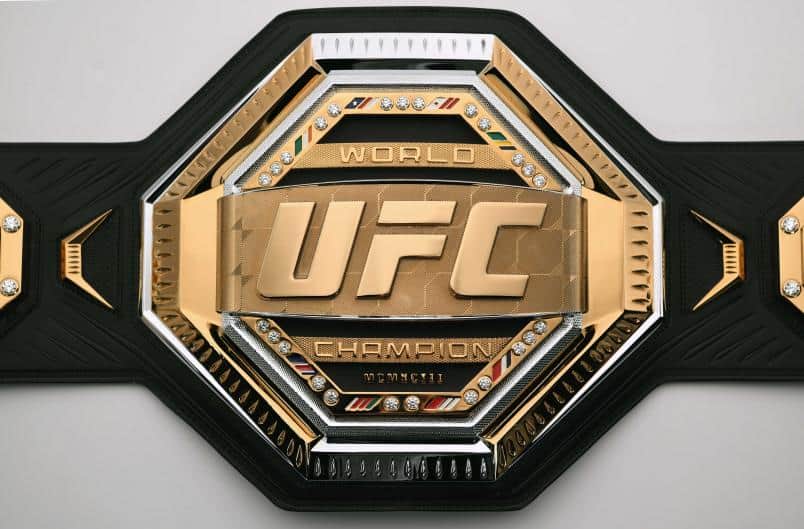
UFC creates an interim champion when the current champ is unable to defend their title due to injuries, contract disputes, refusal to fight, or personal issues. When the current champ returns, however, they must defend their title against the interim champion.

In this article, I will bring you all you need to know about the Interim belts and champions. You will learn why they exist and why MMA promotions like UFC use them. 

What are the UFC Interim Titles?

UFC creates an Interim title when the current champ is unable to defend the title due to various reasons. Instead of giving up the belt, the current champ would not vacate the title during the absence from fighting. But the UFC will often create an Interim title so that the division can have a new champion and keep the show running.

But, it’s important to know that not any fighter can fight for the Interim belt. UFC would always book the two fighters who deserve a shot at the title the most. Most of the time, the two highest-ranked contenders in that division will fight for the interim belt. But, the rankings do not always play a major factor and the UFC might give a title shot to a fighter who is ranked below the highest-ranked contender. 

When the UFC champion decides to come back, he/she must unify the title by fighting the interim champ. The current champ can’t avoid the interim champ and fight against some other fighter.

When the Champ Gets Injured 

This is one of the most common reasons why UFC creates Interim belts. If the reigning champ gets injured and can’t defend the title, UFC will then create an Interim title. This is because the UFC can’t wait for the injured champion who is out indefinitely and hold up the title contention.

There have been many UFC champions who couldn’t defend their titles due to injuries. The best instance came when the UFC heavyweight champ, Can Velasquez got injured in 2013. 

At the time, Cain battled with many injuries and was out of the sport for over two years. The UFC couldn’t wait for Cain to return, so they created an Interim title to continue with the division. 

At UFC 180, Fabricio Werdum beat Mark Hunt to win the Interim belt. Cain returned from a long absence to face Werdum in a unification bout at UFC 188 in Mexico City. However, Werdum would choke him out in the second round to unify both titles and become the undisputed champion. 

Contract Dispute Can Create Interim Champion

Over the years, there have been many UFC champs who didn’t defend their titles due to contract disputes. In this case, UFC used interim belts to keep the show running by crowning the next best fighter in the division. In the meantime, the UFC would attempt to resolve the contract dispute with the current champion who, upon return, must face the interim champion to unify the titles. 

Why would a champion have a contract dispute with the promotion, you may ask? Well, UFC champs often use their world champion status as a leverage to re-negotiate new contract with better terms.  

One good example is the former UFC champ, B.J. Penn. While being a champion, Penn and the UFC could not come to an agreement to settle the contract dispute and they even ended up in court at one point. 

It all started when Penn won the UFC 170lbs title by choking out Matt Hughes at UFC 46. Penn didn’t want to defend the title, and he went on to sign a deal with the Japanese K-1 promotion. The UFC owners were furious because they thought Penn breached his contract and they created the interim belt subsequently to crown a new champion and move on without BJ Penn.

RECOMMENDED FOR YOU:
What Is K-1 Kickboxing? The Beginner’s Guide to K-1

When the Champion Refuse to Fight the Next Title Contender

Even though this happens rarely, there have been champs who refused to defend their titles against the next highest ranked fighter in the division for various reasons. One of the most common excuses champions use to justify their refusal to fight is the challenger does not deserve a shot at their title. 

In the eyes of most fans, you are not the real champ if you refuse to fight the next highest ranked fighter. In this scenario, the UFC would not strip the champ of the title. But, they will create the interim belt to keep the show running and crown a new champion, which is usually the next highest ranked fighter in the division. This puts the current champion in unavoidable situation because, as said earlier, he/she must fight the interim champ upon return to become the undisputed champ once again.  

For instance, this scenario took place when Tito Ortiz refused to fight Chuck Liddell

It all started when Tito stopped Ken Shamrock to defend his 205lbs title for the fifth time at UFC 40. At the time, Chuck was next in line to fight Tito and there was a huge hype behind this matchup. But, Tito and the UFC just couldn’t get on the same page to fight each other. 

Instead of waiting for Tito, UFC created an Interim title. Randy Couture won the Interim belt by stopping Liddell in the third round. And, Randy would unify it a year later by beating Tito at UFC 44. 

When a Champion Seeks Multiple Titles

Some of the UFC champs often move up or down in weight division to fight for the second championship belt. But, if the champ decides to leave the weight class and not come back soon, the UFC will not wait for them and they will use the Interim title to crown the new champ. 

Once they win or fail to capture the second title, they must go back to defend the throne against the Interim champ. If they don’t, then they have to vacate the belt or the UFC would strip them of the title. In that case, the Interim champ gets promoted to the undisputed status. 

In 2015, Conor McGregor won the 145lbs title by finishing Jose Aldo at UFC 194. Then, he made a decision to move up the weight and fight for the 155lbs belt. Since he didn’t want to defend or give up the 145lbs title, the division needed a new champ. 

To solve the problem, UFC created an Interim 145lbs title and booked Jose Aldo and Frankie Edgar to fight for it. Aldo became the Interim champ by winning a decision. But, he would later be promoted to the undisputed status since Conor never came back to defend his title at 145lbs.

Who was the First Interim UFC Champion?

The first UFC fighter to become the UFC interim champ was Randy Couture. He did it in 2003 by knocking out Chuck Liddell at UFC 43. It is worth mentioning that this was Randy’s debut fight in the 205 lbs division after moving down from the heavyweight division. 

Randy Couture

But, how did it all play out? Back in 2003, Tito Ortiz was the most dominant champ. But for some reason, he refused to defend his title against Chuck Liddell and he took a 10-month layoff. The UFC didn’t want to wait for Tito and they have adopted the concept of “interim belts” from boxing to solve this problem. 

After losing the heavyweight belt, Randy decided to move down in weight and face Chuck for the light heavyweight Interim belt. By beating Chuck, Randy became the first-ever UFC Interim and multi-division champ.

From 2003 to the present times, the UFC has created many interim titles because this concept has proved useful on many occasions. 

Who were the UFC Interim Champions?

UFC began using the Interim title concept in the early 2000s. They have created the first one in 2003 and the first interim champ was Randy Couture. The concept proved useful in MMA and the UFC would follow with many more interim champs in the future. 

Throughout UFC history, there have been around 20 UFC Interim champions. Here are some of the most famous ones:

Heavyweight 

  • Andrei Arlovski – UFC 51
  • Antonio Rodrigo Nogueira – UFC 81
  • Shane Carwin – UFC 111
  • Fabricion Werdum – UFC 180

Light Heavyweight (205lbs)

  • Randy Couture – UFC 44
  • Jon Jones – UFC 197

Middleweight

  • Robert Whittaker – UFC 213
  • Israel Adesanya – UFC 236 

Welterweight 

  • George St. Pierre – UFC 79
  • Carlos Condit – UFC 143 
  • Colby Covington – UFC 225 

Lightweight

  • Tony Ferguson – UFC 216
  • Dustin Poirier – UFC 236
  • Justin Gaethje – UFC 249

Featherweight 

  • Conor McGregor – UFC 189
  • Jose Aldo – UFC 200
  • Max Holloway – UFC 216 

Bantamweight 

  • Renan Barao – UFC 149

There are Interim Titles in Other Sports as well 

MMA was not the first sport to use the concept of interim belts. And, the UFC is not the only MMA promotion to include interim champions.  

First of all, other MMA promotions like Bellator use interim titles to deal with their champs being inactive. For instance, Joe Warren won the Bellator interim title at “Bellator 118”. He then unified the title a few months later by beating Eduardo Dantas at Bellator 128. 

Further, we can find many interim champs in boxing, kickboxing, and even wrestling. For instance, boxer John Ruiz won the WBA interim title in 2005 by beating Hasim Rahman.

Related Questions:

What is the Difference Between “Interim” and “Undisputed”?

Undisputed is a term that comes from boxing and it means there is only one champion per weight class. Yet, we must point out that being a boxing world champ is not the same as being an undisputed champ. Not all champions are undisputed and here is why.

A fighter can be a world champ in one of many boxing organizations. But the undisputed boxing champion is a boxer who wins the titles in all four major organizations

· WBA 

· WBO 

· WBC

· IBF 

For instance, Bernard Hopkins became the undisputed champ in 2005 by beating Oscar de la Hoya. He retained WBA, IBF WBC titles, and the win over Oscar secured him the fourth, WBO title. This way, Bernard was able to win all four major titles in the middleweight division and become the undisputed champ. 

Interim titles are there to replace the inactive champion. Some champions can’t defend the title due to injury or legal issues. In that case, boxing or MMA promotion will create an interim title and book two highest ranked fighters to fight for it. Once the champ comes back, they must unify their title by fighting the interim champion. 

What does “Undisputed Champion” mean in the UFC?

The term “undisputed” means there is only one UFC champion per weight class. Yet, being an undisputed UFC champ is basically the same as being a regular champion, and here is why. 

The term undisputed comes from boxing. An undisputed boxing champ is a fighter who holds the belts in all four major organizations: WBA, WBC, WBO, and IBF

In MMA, there is only one major promotion called the UFC. And you only have to win the UFC title to become the undisputed champ. This means that almost all UFC champions are actually undisputed. The only time when this is not the case is when the UFC creates the Interim title. 

If an undisputed UFC champ can’t defend the title for some reason, the UFC will create the interim belt. The reigning champ will keep the title, but, the division will have the second, interim champ. The interim and reigning champ must fight each other and the winner will become the undisputed champ.

For instance, coming into his bout against Jose Aldo, Conor McGregor was the UFC interim 145lbs champ and Aldo was the official champ. Since this meant that 145lbs had two champions, neither of these two was undisputed. Conor became the undisputed champ only when he knocked out Aldo in the opening 13 seconds of the fight to unify both titles.


Why Do MMA Fighters Have Disfigured Ears?

0
Randy Couture (Photo Credit: Gage Skidmore via Wikimedia)
UFC Fighter Khabib Nurmagomedov

* Disclaimer: The contents of this website, such as text, graphics, images and other material are intended for informational and educational purposes only and not for the purpose of rendering medical advice. The contents of this website are not intended to substitute for professional medical advice, diagnosis or treatment.

Even if you are not a combat sports fan, you have likely heard about the famous street rule that says “Never mess with a person who has cauliflower ears.” The persons having those have likely paid their dues in MMA or other fighting sports. 

This type of ear defect is very common among MMA and fighters competing in grappling arts whose ears are frequently injured. And, you can see athletes from other sports like Rugby having disfigured ears as well. 

Even though cauliflower ears may look risky, they are not. This is not a terrible injury and you can heal it fast if you get medical care on time. But if you left the injury untreated, it can lead to bad and permanent deformity of the ear.

And, we have to make one thing clear. Not all MMA fighters have cauliflower ears and training MMA doesn’t mean you will deform your ears. Generally, wearing a headgear greatly reduces the chance of you disfiguring your ears

So if cauliflower ear is the reason that holds you back from joining the MMA classes, I have great news for you! In this article, we will bring you closer to why MMA fighters get cauliflower ears and how you can prevent it. We will show you how you can train MMA without worrying much about disfiguring your ears. 

Why Most MMA Fighters Have Cauliflower Ears?

The reason is simple; MMA is a sport that involves striking to the side of the ear and grappling exchanges that rub off the ear, which are the two main causes of cauliflower ears.

Let’s see how the four most important fighting styles in MMA contribute to the development of cauliflower ears:   

  • Boxing – as we know, boxing is a striking art in which fighters are punching each other to the side of the head all the time. A couple of hard punches can easily damage the external part of the ear. And to prevent this, boxers wear headgear which is a padded helmet that protects their ears and head. 
  • Muay Thai – the art of eight limbs is perhaps the most brutal standup style in the world because it includes elbow and knee strikes as well as kicks to the head. Moreover, most of the head kicks and elbows actually land to the side of the head, directly hitting and damaging your ear. 
  • Wrestling – cauliflower ears are common injuries in wrestling. The sport is just too hard on your ears, and you can deform them in a very short time. This is because wrestlers are often smashing their ears while battling for head control and position. That’s why you can often see them wearing ear guards that look more like headphones. 
  • Jiu-Jitsu – just like wrestling, BJJ is a grappling art and many BJJ fighters have cauliflower ears. BJJ training includes a lot of rolling on the mats with the partner. During the rolls, your ears rub on the mats or against the partner which can damage your external part of the ear. And some submissions like the famous “triangle choke” may damage your ears as well.

The Cause and Symptoms of Cauliflower Ear

The process of developing the Cauliflower ear is very simple in combat arts. The main causes of this type of ear deformity are frequent hits (strikes) to the ear or when the ear gets rubbed during the grappling exchanges.  

A small blood clot gets created each time you get hit in the outer part of the ear. This blood clot forms between the connective tissue of the upper ear and cartilage. The clot stops the blood flow to the cartilage, which damages the tissue, causing it to die. As these tissues die, the ear will start healing itself by forming a much tougher fibrous tissue which results in an ear that looks like a cauliflower. 

The medical explanation of what causes cauliflower ears may sound complex. But, spotting the early symptoms is not. The first sign of cauliflower ear may be the swelling of the ear. The damaged area of the ear can also become red or bruised which is a sign of the lack of blood flow.

If you spot these changes on your ear, don’t panic. Make sure to call a doctor and get medical care as soon as you can. 

Here are the most common symptoms of cauliflower ears: 

Pain in the ear
Swelling on the outer part of the ear
Bruising 
Headache or severe bleeding
Ringing in the ear

Why Some People Prefer Cauliflower Ears Instead of Treatments

You may find this hard to believe, but there are MMA fighters who want their ears to look deformed. Some of them go even further by damaging their ears on purpose just so that they can have cauliflower ears and here is why.

In most MMA/Martial Arts circles, cauliflower ears are a sign of toughness and battle experience. And, many fighters wear them as a badge of honor, conveying a clear sign to the people around them they train MMA/Martial Arts and that you shouldn’t mess around with them on street. 

Cauliflower ears have also become a somewhat popular trend among teenage martial arts students. Many of them who train BJJ or wrestling left their ears untreated on purpose just so they can look tougher in the eyes of more senior students. 

Further, even some of the most famous UFC fighters proudly wear cauliflower ears. The most famous ones are the former UFC champs Randy Couture and Khabib Nurmagomedov.

(Photo Credit: Gage Skidmore via Wikimedia)

For instance, Randy’s ears are so damaged that you can’t escape but asking yourself how he even hears anything?

What Is The Best Way to Prevent Cauliflower Ear? 

Most people think that there is no way you can avoid damaging your ears training MMA. However, this couldn’t be further from the truth as you can train and compete in MMA without worrying too much about your ears.

The most important thing is to wear headgear or ear guards during the training sessions.

Ear Guard

Further, wearing protective gear is not enough. You must be extra cautious that this type of gear fits well with your size of the head. This is a common mistake MMA students make and one of the reasons why they often damage their ears despite wearing headgear. Wearing headgear that is too big or below your size doesn’t mean your face and ears are protected.

If the headgear you wear is too tight and below your head size, it will always rub against your ears. Even though this may not hurt much, it will deform your ear over a certain period of time.

And, wearing a headgear that is above your head size won’t prevent cauliflower ears either. A headgear that feels loose may slip out of place during the training, leaving ear exposed. So instead of wearing a headgear that feels loose or too tight, get the one that fits with your size and is comfortably secured around your head. 

The Treatment For Cauliflower Ears To Avoid Deformity

If you spot any changes in your ear or you feel any pain, there is still a good chance you can avoid a cauliflower ear. The first thing you can do is to take the ice and apply it to a damaged area of the ear. Ice is good for all types of injuries since it reduces the swelling and lowers the pain. Yet, this is just first aid; you must go to a doctor for medical care as soon as possible.

A doctor can treat the injury much better by draining the collection of blood inside your ear that stops the blood flow to the affected tissues. The process is not painful or complicated. He/she will make a small incision so that the blood can drain out of the injury. Or in some other cases doctors may use a needle to drain the blood out of the damaged area of the ear.

Once that’s over, they will use stitches to reconnect the tissues and place a special bandage to ensure the ear heals in the correct shape back again. Here is a great video of how MMA fighters get their ear drained:

After the treatment is over, doctors might prescribe you antibiotics therapy to prevent infections. You should avoid training or doing any type of activity that may damage your ear once again. The rest period really depends on the injury, and you shouldn’t make decisions on your own. You should return to training and other activities once the doctor approves it. 

Can Cauliflower Ear Be Cured Or Is It A Permanent Deformity?

Unfortunately, the cauliflower ear is a permanent deformity in most cases. If you don’t take medical care on time, there’s a big chance the deformity is just too big to heal or reshape back to its normal condition

The only thing that may help you, in this case, is the cosmetic ear surgery called Otoplasty. This is a medical procedure that repairs or reshapes the outer ear and it is widely considered a non-risky procedure. 

Otoplasty is not a complex surgery and you won’t feel any high pain. The doctors will first give you a local anesthetic before making a cut behind your damaged ear. They will remove some part of the cartilage or reshape your ear by using stitches. 

These stitches may stay permanent to hold the back of the ear in place and the scar usually fades over time. The surgery lasts around 1-2 hours on average, and you may expect to be back in training in six weeks. 

What Is Shootfighting That You Should Know About?

0

Shootfighting is a big subject matter that takes a good bit of explanation. The questions we hope to answer for you not only will be what shootfighting actually is. Rather, we’ll also let you know where it originates, the history behind it, those who famously used it, and much more.

You may not hear the term “shootfighting” spoken much these days. There’s a reason for that. A man by the name of Bart Vale bought the term and trademarked the term. He would become the co-founder of the International Shootfighting Association(ISFA). They’re pretty much the only people who use the term today.

You should first know that there are two forms of shootfighting. One is the actual martial art itself, which has tournaments governed by the aforementioned International Shootfighting Association. This martial art mostly grew in popularity in the early days of MMA yet it also became well-known in the world of professional wrestling too. In martial arts, you’ll see legit fights based on the style. For this reason, shootfighting is very real. In fact, some might claim that shootfighting was the original form of Mixed Martial Arts. Just like MMA, shootfighting mixes quite a lot of things in, but we’ll go over more of that below.

Second, shootfighting in pro-wrestling simply relates to what the word “shoot” means in pro-wrestling vernacular. Here, a “shoot” means something is real and not scripted or faked. Meaning, if you’re shootfighting…this was not part of the original, agreed-upon script.

Incidents like this have happened in matches, but usually only comes in the form of a “receipt.” This means that a wrestler is doing an equal shot back toward the opponent, to get him or her back for the legit shot they hit them with. Yet matches that are pretty much real have not been practiced in the United States since the early 1900s on a major stage.

Usually, shoots are uncommon in places like the WWE or American organizations today. Yet this is not the case in other countries.

Shootfighting Style is Influenced by Catch-Wrestling

Shootfighting is based on catch-wrestling, which is a hybrid style of wrestling overall. 

You used to see these types of catch-wrestling players in major Fairs or Carnivals, where they’d be challenged by random people. Typically, they used a big, strong person for this. In the circus, where this was also in play, the “Strongman” might also work as the shootfighter of the group. However, that was not always the case, as there might be another bigger man (and sometimes woman) used specifically for the wrestling/shootfighting side.

The concept of catch-wrestling began in Britain but also made its way to the United States and Mexico.

The success of this style led to the development of Professional Wrestling. This, later on, became a scripted sport but used to be completely real and ALL based on catch wrestling content. Europeans STILL train their young pro-wrestlers in the catch-wrestling style well over 100 years since its invention too.

Catch Wrestling a.k.a Catch-As-Catch-Can:

Eventually, catch-wrestling led to the invention of many different moves. The problem is that there were many invented moves that worked well but were sadly outlawed from these tournaments. This became so common that it birthed a new sub-style under the catch-wrestling banner where there were fewer restrictions.

Underground fights happened all over the world, especially in The UK. This was a period in which unsanctioned or the underground fight game was perfectly okay, so long as you just did not do it in front of an officer. It was here where the new sub-style of catch wrestling was born. It came to be known as “Catch-As-Catch-Can.”

It comes from the idea that every hold or submission was legal. The only thing you could not do was aim for the eyes or attack the groin. Outside of this, as long as you could catch a wrestler in a lock or hold, you could do whatever to win.

Due to the style taking off in places like Europe & Japan, and eventually, Mexico & America, the concept of shootfighting came out of it. Later on, other disciplines would be added to it such as Muay Thai. That would result in shootfighting as a martial art being established completely.

Catch-Wrestling was no longer all shootfighters were known for by this point. With the introduction of Muay Thai, more holds and the clinch was established. Yet, more importantly, vicious strikes were legalized too.

The Most Notable Shootfighting Company: Pancrase:

Japan and several other Asian nations are responsible for most of the world’s martial arts. There are some that originate elsewhere but for the most part, Asia is the martial arts hub of the world. It should come as no surprise that a Japanese company was home to some of the most famous shootfighting tournaments ever. 

Those fights happened in the most popular shootfighting territory in the world, Pancrase. It involved numerous people who would one day get into major MMA promotions.

Pancrase gets their name from Pankration, the former Greek Martial Art used in the original Olympic Games. They also involved a lot of the same styles as Pankration where pretty much anything was considered legal. Only a few things were outlawed, which fit shootfighting perfectly. 

The original rules in Pancrase were as follows:

Closed-fisted punches are allowed, except to the head, and palm strikes to the head. Fighters must break a submission hold when the opponent reaches the ropes, but fighters who claim a rope break forfeit a point. Those who claim a specified number of rope breaks (between three and five) will be disqualified.” These rules were based on Pro-Wrestling concepts but they later changed their rules to fit MMA standards.

Shootwrestling’s Violent History In Japan

In professional wrestling, there are numerous styles. In Japan, the style they are known for is “Strong Style.” This is a type of wrestling that focuses more on strike and submissions over things like throws or “signature moves.” In Japan, wrestlers do not get away with doing a lot of fake or scripted fights. They want their wrestling to look good and come off as real as possible. This can lead to some problems.

There are numerous examples of this, but probably the best to mention was an incident that happened in 2017 to former New Japan Pro-Wrestling star, Katsuyori Shibata. During a match with Kazuchika Okada, the two were using violent strikes. Since Japanese wrestling has to look as real as possible, a lot of the strikes are “stiff.”

This means they are actually making contact, yet also hitting in a pretty hard way. The two were doing headbutts on each other during the match, with Okada landing numerous shots to the same area of Shibata’s head. The count was somewhere near 40 headbutts between the two, with Okada landing more.

After the match concluded, Shibata walked out of the ring and collapsed. He suffered what is known as a subdural hematoma, or a severe brain bleed. New Japan Pro-Wrestling(NJPW) banned headshots like this after but the damage was done. Luckily Shibata survived, but he nearly died simply due to this more violent style of wrestling that other companies might mark as a “shoot.”

This is just one of the cases of “shoot” shots in Japanese wrestling culture. Japan bases a lot of its wrestling on the shoot-style of wrestling, making it to where it has a massive connection to shootfighting overall.

Differences Between Shootfighting & Catch-Wrestling

While shootfighting is based on catch-wrestling, it is not entirely like it. Catch Wrestling is a hybrid wrestling style but it’s comprised completely of holds and submissions. There are no strikes and there are several rules in organized competition. 

In shootfighting, there are very few rules. Meaning, you could get away with far more holds or submissions that would get you disqualified in a catch-wrestling tournament.

Not only that, but the introduction of strikes made shootfighting completely different. In catch-wrestling, strikes are not legal. You also win by getting a pin or tap-out. This truly comes down to the specific rules of a tournament. Meanwhile, in shootfighting….pins are not involved. You can still win by submission (tap-out), but you can also win by a Knockout.

Catch Wrestling also has tournaments with people of multiple weight classes on a professional level. Shootfighting only has one professional division currently, the Heavyweight. They base their Heavyweight Division on all people above 200lbs, however. All others are part of the amateur competition circuit.

Differences Between Shootfighting & MMA

The International Shootfighting Association(ISFA) is really the only place for professional shootfighting tournaments, yet their rules are not far off the rules seen in overall shootfighting. For the ISFA, pro fights run 30 minutes non-stop. They have no round breaks at all. Amateur fights run 10 minutes completely, also without round breaks.

Fighters are allowed to kick, knee, and even elbow ANY part of the body except the groin area in shootfighting. They are also allowed to headbutt and punch to the body. However, they do not wear gloves to free them up to wrestle, which is why they are not allowed to use open-palm strikes to the head. Yet slaps and closed fist punches are legalized.

In MMA, there are many strikes that are not legal. They also wear gloves so most shots to the head are legal, but specific elbows on the ground are not. Yet in shootfighting, all ground shots are legal.

In Shootfighting, any form of takedown or throw is completely legal too, and you can even hit an opponent who is already down on the ground. All joint locks and chokes are 100% legal, even chokes to the side of the neck. Of course, there are some fouls such as the punch issue and groin hit. Yet they also foul those that use eye-gouging and strikes against the windpipe.

Rules in Shootfighting:

A fight is won in shootfighting when a fighter is knocked out for a ten count, just like boxing. However, fights also end if a person is knocked down in any way as well as if they are forced to submit. Fighters can grab a rope to break a submission hold during a fight, but it counts as a 1/3 knockdown. Grabbing the rope 15 times in a fight is an automatic loss. 

However, if no winner is decided in the full 30 minutes of a pro-fight, the fight overall is considered a draw.

Shootfighting takes place inside a normal wrestling ring and not an octagon like most MMA promotions use. 

Although Pancrase had been the most popular shootfighting company for years, they changed up their rules years back. They now utilize the “Unified Rules of Mixed Martial Arts.” Which basically means they are an MMA company now, no longer a Shootfighting company.

That said, do not get them confused today with a shootfighting organization due to this change.

Notable Shootfighting Competitors

There are several, and we mean several people who have been involved in shootfighting tournaments. Some of them went on to become major names in the world of MMA. Meanwhile, others went into pro-wrestling or never made it out of the shootfighting game.

Some of the names you might know are people like Nathan Marquardt, Minoru Suzuki, Josh Barnett, Bas Rutten, Frank Shamrock, Ken Shamrock, and Carlos Condit.

Ken Shamrock

Most of the men mentioned above were champions at some point in the world of shootfighting, in particular Pancrase. Ken Shamrock was the first King of Pancrase Champion. Shamrock actually began his major fight career in Pancrase, becoming a legit top fighter well before the invention of the UFC. He would eventually go back and forth between Pancrase and UFC before he signed on with the WWF(E). His King of Pancrase Tournament win in 1994 was impressive but most believe his brother, Frank, was better.

Frank Shamrock was considered the pound-for-pound best fighter in the world at one point. His work in Pancrase was immense too. He also won the King of Pancrase Championship, doing so 2 years after Ken did it. He’d later go on to make history in the UFC too.

Minoru Suzuki is now a professional wrestler who has been successful throughout Japan. Yet he had around 50 shootfighting bouts, most with Pancrase, from 1993 to 2002. He won the King of Pancrase Openweight Championship in 1995 then had 2 successful defenses.

Josh Barnett also got into the world of professional wrestling yet also went back and forth between it and MMA. Before this, he was a shootfighting champion with Pancrase. He won the Pancrase Openweight Championship, defended it twice, and the title was retired, Making Barnett the last to ever hold it. He’d also become a UFC Heavyweight Champion later too.

Nathan Marquardt and Bas Rutten might be the most successful shootfighters. Nathan was a 3-time Pancrase Middleweight Champion, he was also the first to win it. Bas Rutten won the King of Pancrase Openweight Title 3 times and became the Undisputed, Unified KOP Champ too. He had 2 successful defenses of the title as well. He too won the UFC Heavyweight Title.

Shootfighting Techniques

There are several shootfighting techniques that are seen in multiple different martial arts disciplines. Therefore, it would be tough to claim that they have techniques unique just to their sport. However, due to the legality of so much, shootfighting teaches many different holds or submissions that would be considered incredibly dangerous and wouldn’t be allowed in most martial arts tournaments.

This is why pretty much every street fight would likely involve things you’d see in shootfighting, minus groin shots & eye-gouging. The issue with pinning down any specific techniques here is that they borrow from every other martial art. Specifically, we mentioned their connection to catch wrestling, catch-as-catch-can, and Muay Thai. Yet they also borrow a lot from Kenpo.

Of course, American Kenpo is basically modern-day street fighting. There are several other styles that lean toward other specified martial arts, such as China’s version as well as the Japanese. Many of those tend to use specific bases, such as the five animal Chaun Fa techniques. Japan adds in the Buddhism martial arts styles and bases too.

Therefore, depending on what Kempo style you add in shootfighting, you’ll get specific techniques unique to those styles.

Shootfighting Schools

It’s not exactly hard to find shootfighting schools across the world, as there has been some version of it all over the place for decades. In America, the International Shootfighting Association(ISFA) happens to have classes open to all. They have specific schools or those they endorse all over the United States. You can check those schools out here.

However, if you’re not in America and still want to take classes….the ISA also has a school they endorse in India. Yet you can also find several that teach base versions of it such as wrestling, Kenpo, Muay Thai, etc. You do not need to only train in shootfighting to know how to be a shootfighter. It might even be best to actually train in other martial arts before you go into shootfighting.

This way, you know a good bit about the others and the dangers they present. This could make you respect shootfighting even more and know your limits. Overall, you can simply learn by watching online these days too. Many places such as the ISA also have videos online to watch. On top of this, schools sometimes do direct satellite campuses or offer videos. Ultimately, there are many options.

Is BJJ a Safe Martial Art to Learn?

0

Over the years, Brazilian jiu-jitsu(BJJ) has emerged as one of the most popular fighting styles in the world. The reason for this is very simple. BJJ is very useful for self-defense and it is the most important style in modern MMA. In fact, many young people became familiar with BJJ through the popular UFC or Bellator events. 

The thing is, MMA is the fastest rising sport in the world and as close you can get to legal street fighting. And since BJJ is one of the most effective styles you can use inside the cage, it quickly became very popular among people who want to learn self-defense. 

But, there are many people who would like to learn BJJ but they think it is too dangerous for them. However, BJJ as a sport on its own is the safest martial art one can learn because there’s no striking in BJJ. It doesn’t even matter if you are young, old, male or female, BJJ is safe for everyone. 

If you doubt still, let me explain further to you below why BJJ is the safest martial art to learn. I will bring you many reasons why you and even your kids should join the classes.

Is BJJ More Dangerous than Striking Arts?

In BJJ, you must rely on your movement and strategy to win instead of using sheer strength and power. And on top of that, BJJ training doesn’t include any type of striking which is one of the main reasons why it is so safe

Unlike most other fighting styles, BJJ allows you to defeat your rivals without even hurting them. This is because the main goal is to take the opponent down and finish them with the submission. And submissions are a far safer method to neutralize the opponent than strikes. 

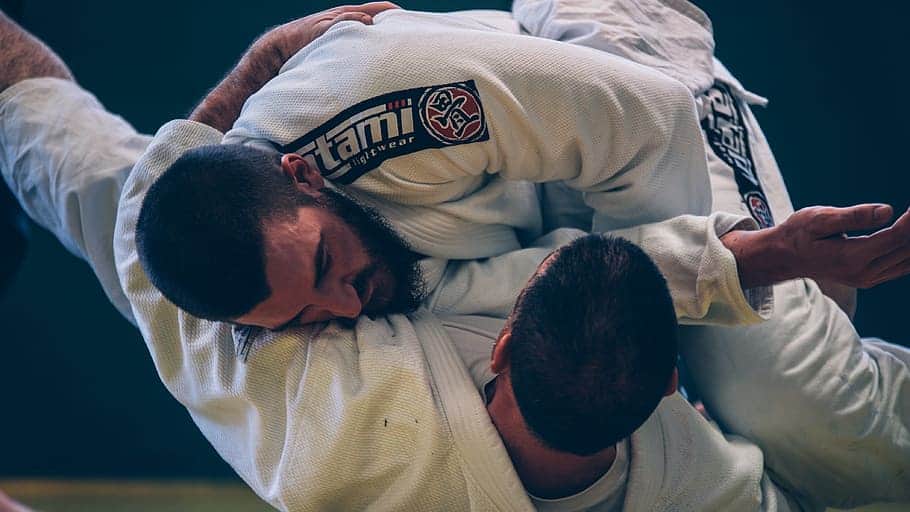
For instance, once on the ground, BJJ fighters will secure a dominant position (back mount e.g.) and sink in the submission around the opponent’s neck (rear-naked choke). 

The guy in blue gi applying the rear naked choke

This kind of choke stops the blood flow to the brain and your rival could be out in a couple of seconds. Even though this may sound dangerous, this is much safer than hitting a person with punches or kicks. BJJ chokes and BJJ joint locks simply do not cause physical injuries like punches or kicks when properly applied. 

Is BJJ Hard on Your Body?

BJJ is also known as a “gentle art” that has a much lower injury rate compared with the other arts like Muay Thai.

For instance, absorbing hard punches and kicks on a daily basis in boxing or kickboxing will take a toll on your body. But, BJJ is much easier on your body since learning BJJ doesn’t involve striking techniques.  In training, your body won’t have to absorb any type of impact as it has to in other striking arts. Thus, you can spend more time learning BJJ without getting hurt

The research performed by the SAGE journals showed us that BJJ is the safest fighting style compared to the other combat arts such as taekwondo or wrestling.  

Don’t get us wrong, there’s always a chance you can injure yourself in BJJ training too if you are not careful. But the actual risk of receiving injuries is very low and the bad things usually happen by accident. 

For instance, if a partner catches you in a choke, you can avoid pain or injuries by just tapping out. No matter what the situation is, you can always tap out and the partner would let go of the submission.

In boxing or Muay Thai, you can’t tap out when the partner breaks your nose with the punch or dislocates the knee with the kick. It’s already too late to say sorry and this is just one of the reasons why BJJ is much safer. 

How Does BJJ Benefit Your Body?

BJJ is actually a full-body workout. Rolling on the mats will force you to move every part of your body and activate all the muscles. This makes BJJ one of the rare workouts that improve your strength in both upper and lower body segments. 

BJJ training falls into the group of aerobic activities. Training hard will increase your heart rate which improves your cardio and endurance levels. And it also reduces your blood pressure and makes your heart stronger. 

BJJ also helps you lose weight as rolling on the mats with the training partner burns your fat. You would be surprised how much weight you can lose in BJJ, almost the same as you can lose by running or swimming. Like swimming, BJJ is a total body workout that moves all muscle groups in your body to work together.

Your flexibility will naturally increase when you learn BJJ. This is because learning BJJ techniques will maneuver your body into various positions.

BJJ is One of the Most Effective Martial Arts

BJJ is one of the most effective fighting styles and it will prepare you for any type of scenario in which you have to defend yourself. It is the only effective fighting style that allows a smaller person to defeat a bigger opponent. You will learn how to use body movements, leverage, and submission techniques you can apply on a much bigger person instead of relying on size and strength. 

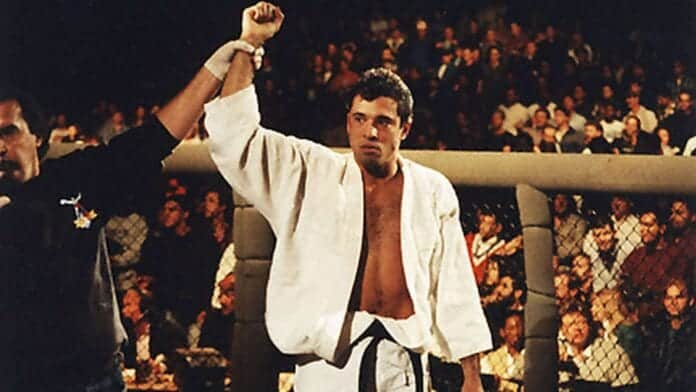
The best instance is the BJJ legend Royce Gracie and what he was able to achieve in the early days of UFC.

Royce Gracie in the early days of the UFC

Back in the day, UFC events were as close as it gets to the legal street fighting venues, without rules or weight classes. Despite being a smaller fighter in almost every UFC fight he participated in, Royce only used BJJ techniques to defeat his opponents with various fighting styles who were almost twice as big.

As a result, BJJ is a battle-tested martial art and the effectiveness of BJJ is well documented if you need further information to convince yourself. Just watch old UFC fights where Royce Gracie fought in to see how effective BJJ is.

BJJ is the Perfect Martial Art for Children

Physically BJJ teaches kids how to defend themselves without hurting their opponents during the training. The lack of striking clearly makes BJJ the safest art and you can rest assured your children will not come home with a broken nose. 

Photo Credit: U.S. Airforce

Yet, there are many parents who don’t have the slightest idea of what BJJ is and how safe it is for their kid. These people usually associate BJJ with MMA fighting where striking is involved and matches are often brutal. But you must know that BJJ is a separate sport that is just a part of MMA fighting. So we must separate BJJ from MMA when we are speaking about how safe is BJJ for your child. 

Mentally, your child will learn how to control the emotions and calm the mind to relax the body. The reason why your children will learn to be calm is that BJJ techniques do not work when a child is stiff or overaggressive.

BJJ is all about the fluidity of the body movement and you have to be relaxed to perform techniques the right way. With this in mind, children will be conditioned to be calm during the BJJ training session which is very beneficial in shaping children to control their emotions.

On top of that, BJJ training is playful and your kid will have a ton of fun rolling around the mat while learning new techniques. And it is also great for children because it teaches them all about respect and helps them develop a strong work ethic from an early age. 

Anyone can learn BJJ

Regardless of age, gender, or fitness levels, anyone can attend BJJ classes. The best thing about BJJ is it gives every person a chance to succeed. You can climb through the belt ranking system even if you are in your 70s. All you need is a strong will and motivation to start with the classes. 

Photo Credit: Mark Bonica via Flickr

Further, BJJ classes and instructors are very accommodating and this is one of the main reasons why anyone can learn BJJ. If you are struggling in training, don’t panic and be nervous.  All you have to do is talk to your BJJ instructor to personalize your learning process according to your fitness level, age, or comfort level.

You don’t have to focus on learning fast and trying to keep up with the other students who are more athletic and much younger than you are. There’s no need to rush things in BJJ or be too competitive in training.

BJJ allows you to take your time and learn at your pace, no matter how slow it is. If it takes you longer to learn certain moves, it’s perfectly acceptable. Every BJJ student can practice a certain move as much as they want until they get it right. 

If you have a hard time rolling with the more skilled partner, don’t get nervous. Consult with your BJJ instructor, and they will help you by matching you with someone who will respect your pace and go easy with you.

If you’re a woman currently thinking about starting BJJ, I strongly encourage you to read an article entitled, “10 Most Compelling Reasons Why Women Should Learn BJJ.”

BJJ Can Cause Injuries If not Cautious

Even though BJJ is a very safe fighting style to learn, one needs to realize that BJJ techniques may cause injuries if techniques aren’t applied correctly. The safety of BJJ is truly a matter of how you apply the techniques and how aware are you of the dangers of these moves during training.

Let’s take the popular rear-naked choke technique as an example. If you decide to don’t let go of the choke, a person can go unconscious in a couple of seconds because the choke is stopping blood flow to the brain. 

So, the first thing every beginner learns in BJJ classes is to let go of the choke the moment it’s locked in. Every BJJ student knows this and the injuries due to prolonged submission hold happen very rare as a result.

And, every BJJ coach will teach you how important it is to tap out whenever you end up in a submission. Tapping out is there to stop prolonged submission holds or any type of injury. 

Learning BJJ is very safe, but, doing the techniques the wrong way is the main cause of injuries. Thus, it is very important for you to first focus on finding a good BJJ school that includes highly skilled BJJ instructors. These instructors will teach you the proper technique and the safety of their students is always their number one priority.  

How to Find a Reputable BJJ School that Focuses on Safety?

BJJ is the safest martial art to learn. Yet, there are some bad BJJ instructors that do not emphasize the safety of their students. Ultimately, choosing a reputable BJJ instructor with verifiable BJJ black lineage will promote a safe environment for students to progress from their white to black belts. In order to avoid bad BJJ instructors, you can read more about how to spot a bad martial art school here.

Here are some of our tips on how you can find the right BJJ school:

• When you arrive at the school for the first time, don’t take anything for granted. Make sure to always take a free trial class to gather as much information as you can.
• Talk with the main instructor and see if they can verify their credentials. Learning from an unskilled BJJ instructor is a very dangerous thing. They will teach you an improper technique which can result in you injuring other people.
• BJJ schools that care about safety always keep a high level of hygiene in the gym. Training on dirty mats can lead to many serious infectious diseases. 
• Look if there’s any type of bad behavior or bullying and how the instructor reacts to it. If they don’t react at all, there’s a lack of leadership and authority in the gym, and this often ends in students hurting each other in training.

10 Movie Stars Who Are/Were True Martial Artists

0
Photo Credit: BagoGames via Flickr

A few things in this world are as enjoyable as sitting at home after a long day and watching a good martial art movie. Admit it or not, we all love to see intense fighting scenes and the execution of exciting martial arts techniques. Over the years, the film industry gave us some iconic fighting films, some of which are true pieces of art. 

And in this article, we will focus on a group of most popular actors who were or still are real martial artists. Their martial arts skills are the reason why their movies are very authentic and thrilling to watch. 

There have been many great actors who got into martial arts in the late stages of their lives or to prepare for the upcoming movies. But we’re bringing you the actors who were dedicated martial artists long before they succeeded in the movie industry

10. Wesley Snipes 

Snipes was one of the most famous actors during the 90s, and his roles in action movies were legendary. Yet, people tend to forget that Snipes is a legit martial artist and a black belt in many fighting styles. 

Snipes got into martial arts at the age of 12 when he started training in Shotokan Karate school. He went on to earn a 5th-degree black belt before moving to Hapkido where he also has a 2nd-degree black belt. 

He also trained in Capoeira and Kung Fu as well as in other fighting styles like BJJ and Kickboxing. Do you now understand why his action movies are so good and fighting scenes like the ones in “Blade II” look so authentic?

Further, he took part in some martial arts contests as well. And it was in one of those competitions the film agents spot his athleticism and talent. He truly is one of the best martial arts masters to ever show up on the big screens. 

Wesley Snipes movies to watch:

  • Blade (1998)
  • Blade II (2002)
  • The Art of War (2000)

9. Dolph Lundgren

Dolph is a Swedish actor best known for his role as a Russian boxer in the legendary “Rocky 4” movie. What many people don’t know is that Dolph is a serious martial artist in real life as well. 

In his own words, Dolph had a rough childhood and he found martial arts to be very helpful. He started by training Judo and Goju-Ryu. After three years of training, he shifted to Kyokushin Karate where he earned a 2nd-degree black belt in 1978. 

Further, Dolph was a team captain of the Swedish Kyokushin karate team. He won the European tournament in 1980 and 1981 as well as a heavyweight tournament in Australia in 1982. These are truly amazing achievements.

In the early 80s, Dolph made a debut on big screens by having a small role in the “James Bond: A View to a Kill movie”. But shortly after, he would receive a role in the “Rocky “4 film which made him one of the most iconic villains in movie history. Some of the great movies starring Dolph Lundgren are: 

  • Universal Soldier (1992)
  • The Punisher (1989)
  • Showdown in Little Tokyo (1991)

8. Steven Seagal 

Along with Bruce Lee, Steven Seagal is one of the most popular martial arts actors in history, or at least, of our era. Yet, people have been divided when it comes to whether his fighting skills are legit or not. No matter what the world thinks of it, we all have to respect what Segal was able to achieve in the aikido world.

Born in the US in 1952, Seagal had a very interesting martial arts path. In 1971, he moved to Japan when he was just 19 years old. Soon he would meet his future wife whose father was a famous martial arts master who introduced Seagal to Aikido.  

In 1983, he moved back to the US to open the first Aikido school in Hollywood. In fact, Seagal was the first Aikido master outside of Japan to operate the dojo. And as a 7th dan black belt, he is one of the most respected Aikido masters in Japan. 

Seagal joined the film industry around 1987 and over the years he became synonymous with aikido. Some of his greatest movie roles are: 

  • Under Siege (1992)
  • Above The Law (1988)
  • Hard To Kill (1990)

7. Jean Claude Van Damme

It’s fair to say that Van Damme was a total package when it comes to martial arts movies. He was athletic, good looking, and a real martial artist. Back in the day, people argued whether his fighting skills and record are authentic. But, for the sake of our argument, we will stick with what’s known to be true. 

Van Damme got into martial arts at the age of 12 when his father signed him up to the Shotokan Karate classes. He started competing in Karate after three years of training and was a member of the Belgian national team that won the European Team Karate Championship in 1979.

We also have to point out that Van Damme trained Taekwondo and Muay Thai. And, he was heavy into weight lifting which led to him winning “Mr. Belgium” bodybuilding title. 

Van Damme retired from competition in 1982 to pursue a career in acting. He’s had a career of which most actors can dream of and was a leading star in some of the greatest martial arts movies:

  • Bloodsport (1988)
  • Kickboxer (1989)
  • Lionheart (1990)
RECOMMENDED FOR YOU:
What Are The Different Styles of Karate? Simply Explained

6. Cynthia Rothrock

Photo Credit: Cynthiarothrock.org

Rothrock is perhaps, the most skilled female martial artist we have ever seen in the movie. Both movie and martial arts fans saw her as a perfect mix of beauty and badass. And she was one of the rare western actors to achieve real stardom in China.

Cynthia started training martial arts at the age of 13 and she went on to become a master in many styles. I mean, just take a look at what she was able to achieve: 

  • Tang Soo Do (8th-degree black belt)
  • Taekwondo (black belt)
  • Karate (black belt)
  • Eagle claw (black belt)
  • Wu Shu (black belt)
  • Northern Shaolin (black belt)

She also took part in many martial arts contests, including the weapon based ones. In her career, she won the first place 32 times, and 12 times in the ones that included weapons. Moreover, she often fought against men as there were no women’s divisions back then.

In 1983, the famous Black Belt Magazine inducted her into the Hall of Fame. And she was also the first woman to be on the cover of a martial arts magazine. This made her really famous and shortly after, she would receive her debut movie role.

Here are some of her best movies you must watch:

  • Yes, Madam! (1985)
  • China O’Brien (1990)
  • Righting Wrongs (1986)

5. Billy Wayne Blanks 

Billy Wayne was a king of underground martial art movies in the 90s. And in our opinion, he was a highly underrated actor who was also a serious martial arts expert in real life. 

Billy was born in 1955 with an anomaly in his hip joints that impaired his movement. As a young child, he enrolled in Taekwondo and Karate classes. But his trainers thought he would not achieve much because of his limitations. 

With the sheer dedication and strong will, Wayne was able to succeed against all odds and become a master in the following arts:

  • Taekwondo – 7th degree black belt
  • Kung Fu – 4th degree black belt 
  • Karate- black belt 

Further, he was the seven-time World Karate champ and a member of the US Karate national team. In his career, he won 36 medals in competitions all across the world and was inducted into the Karate Hall of Fame in 1982. 

Billy also trained in other fighting styles like boxing. He became a Golden Gloves champ in 1984 and the Tri-State winner. Interestingly enough, he trained in dancing and ballet with the intent to improve his fighting skills. 

He used the knowledge he gained in martial arts and dancing to create a “Tae Bo” fitness system.

Here are some of his best movie roles: 

  • The Last Boy Scout (1991)
  • Lionheart (1990)
  • The King of the Kickboxers (1990)
RECOMMENDED FOR YOU:
Karate vs. Taekwondo: Key Differences And Similarities

4. Jet Li 

Jet Li is a famous martial arts actor who took part in many great fighting movies like the “Kiss of the Dragon”. The main reason why his movies are so popular and authentic is because Li is a legit martial arts expert. 

Li started his martial arts journey in Wushu at the age of eight, and he had a lot of talent. Li went on to win the Chinese national contest after just three years of training. In fact, he was so good he often fought against adults and people bigger than him. In his career, Li won fifteen gold medals and one silver medal.

Li retired from competing in Wushu at the age of 19 and went on to start an acting career. In the 80s, he took part in many iconic Asian martial arts movies which made him really famous. And with the help of his friend Jackie Chan, Li moved to the US where he became a global superstar. 

Jet Li movies to watch:

  • Fearless (2006)
  • Hero (2002)
  • Fist of legend (1994)
  • Once Upon a Time in China I and II (1991; 1992)

3. Chuck Norris 

On the set of The Delta Force (1986)
Yoni S.Hamenahem

Don’t let those memes and jokes about Chuck Norris fool you as he is a high-level martial artist. In fact, Chuck is a master in many fighting styles and he also took part in various martial arts contests. 

He started by training in Tang Soo Doo while serving in the US Air Forces as an Air Policeman in the 50s. He left the job just a few years later to open his own martial arts studio in 1962. Over the years, he was able to achieve a black belt status in the following styles:

  • Tang Soo Doo – ninth-degree black belt
  • Taekwondo – eight-degree black belt
  • Karate – fifth-degree black belt

On top of that, he also created his own style for self-defense called Chun Kuk Do. The system stands for a mixture of various grappling and striking styles. 

Norris took part in many Karate contests, and he owns a very good martial art record. He was the multiple All-American Karate champion and the International Karate champion in 1969. In the same year, he received a “Fighter of the Year” Award from the famous Black Belt Magazine. 

During one of those competitions, he met the famous actor Bruce Lee who asked him to play a villain role in his new movie, “Way of the Dragon”. The movie was a huge success and Chuck became the movie star overnight. 

Here are some of his best movie roles:

  • Lone Wolf McQuade (1983)
  • Code of Silence (1985)
  • The Delta Force (1990)
RECOMMENDED FOR YOU:
Top MMA Fighters Who Served In The Military

2. Don “The Dragon” Wilson 

Photo Credit: LindaGJohnson via Wikimedia

We just can’t escape the fact that Wilson is probably the most forgotten martial arts actor. This is mainly because he wasn’t a megastar like Jean Claude Van Dame. But, he had a large fan base simply because he had roles in many iconic underground action movies. And on top of that, he was the greatest kickboxer to ever show up on the big screen and many people see him as the best full-contact kickboxer in American history.    

Born in 1952, Don started his martial arts career in Karate school. But he would shift to kickboxing just a year later and start competing from the mid-70s. 

Inside the ring, he was a true showman, and always ready to entertain the crowd. But it’s the great fighting skills that won him an amazing eleven world titles and he put together a record of 72 wins out of which 48 were KOs.

In his prime, Wilson fought against the best kickboxers and Muay Thai fighters from Thailand. He was very popular back in the day, and one can argue that he was a Bruce Lee version of kickboxing. 

Don appeared in many iconic martial arts action movies in the 90s. Some of his greatest movie roles are:

  • Crooked (2006)
  • Red Sun Rising (1994)
  • Out for Blood (1992)

1. Bruce Lee

Photo Credit: BruceLee.com

Bruce Lee is, by far, the most famous and skilled martial arts movie star ever. I mean, the man is synonymous with martial art films. He was the first martial arts star and he deserves all the credits for the rise of martial arts movies in the western world. 

Lee is also responsible for inspiring millions of people around the world to start with martial arts or working out. No other martial artist in history had a greater impact than Bruce Lee did. For instance, the famous MMA fighter Bas Rutten was inspired to enroll in martial arts after watching Bruce Lee’s movie, “Enter the Dragon”. 

Lee started training martial arts at a very young age. He was a master in many fighting styles like Wu Tai Chi Chuan, Kung Fu, and Wing Chun. But, he was best known as a founder of a very unique self-defense style for that time called Jeet Kune Do.

The idea behind Jet Kune Do resembles the concept of modern MMA. This is because Lee believed there’s no such thing as the best fighting style. And that one must be open to learn other styles just like modern MMA fighters have to. So Jet Kune Do end up being a martial art system created as a mix of various other fighting styles. For this reason, Bruce Lee is often called the father of MMA because of his philosophy of combining aspects of various fighting disciplines into a personal style.

Even in modern times, Lee’s movies are still inspiring millions of younger generations. Bruce Lee’s best movies to watch:

  • Enter the Dragon (1973)
  • The Way of the Dragon (1972)
  • First of Fury (1972)

Tips That Can Help You Avoid COVID & Other Diseases at MMA Gyms

0
(Image Credit: Nick "THE TOOTH" Gullo via VICE Fightland)
(Image Credit: Nick “THE TOOTH” Gullo via VICE Fightland)

* Disclaimer: The contents of this website, such as text, graphics, images and other material are intended for informational and educational purposes only and not for the purpose of rendering medical advice. The contents of this website are not intended to substitute for professional medical advice, diagnosis or treatment.

Due to the recent Coronavirus known as COVID-19 hitting the world in a massive way, we’ve seen many go into a major panic. This is all understandable, as it’s quite a scary time. Moreover, this has impacted businesses with many shutting down, limiting capacity, and instituting mandatory facemasks inside their establishments. Some states in the United States have made the masks mandatory too.

COVID-19 is very contagious due to being a virus. Like so many viruses known to man, they can spread like wildfire. The current COVID-19 impacts your respiratory system, as it’s essentially Viral Pneumonia that has become quite deadly. Millions worldwide have died as a result. That is why knowing how to keep safe but still live your life like normal is essential. This is especially true for those who want to go to gyms and exercise and/or train.

Martial Arts Gyms had to shut down for a while and many re-opened, with some attempting to take precautions. Others? Not so much.

This surprised us, as we feel there needs to be a discussion of how you can keep safe at a Martial Arts School or MMA Gym of any kind. Keep in mind, human to human contact is incredibly important in martial arts. This is especially true when grappling, as you’ll be right by a person’s mouth and nose consistently.

Even before the recent Pandemic began, there was a problem at some gyms involving skin conditions such as Staph. There were even cases of Hand, Foot, and Mouth disease passing at some gyms. Let’s discuss some “Stay Safe” options to change things!

Some stuff we put might seem trivial, but if you follow our instructions to the letter, we’ll all be safer for it.

Why Are MMA Gyms A Breeding Ground For Infectious Diseases?

People tend to forget that MMA Gyms are problematic places to be during spikes in viruses, but this could be the same with your regular workout gyms too. In the latter, it is often requested to wipe down equipment but you’re not fully cleaning them after each use. This is one of the biggest problems with mats at an MMA Gym.

Professional Wrestlers or those in training also deal with this problem. While some people might have sinus trouble or allergy issues from all of this when they first come in contact with it, that is a low-end issue. The high-end is seeing viruses spread around. It makes sense, as these mats are going to be carrying bacteria from a person’s feet, hands, mouth, nose, and even blood in some cases.

The mats are just one issue here. Keep in mind that you’re also going to be in close contact with another person in most places. MMA is a close contact sport, obviously. While you might be able to keep far enough from someone while practicing striking, this is not the case when you practice Wrestling, Sambo, Judo, or BJJ for instance. Of course, this is just the start of it.

If you’re going to a gym that practices one martial art specifically, such as Jiu-Jitsu or even Muay Thai, you’re going to be with someone in very close range at all times where there’s no social distancing at all.

What Kind Of Diseases Are Prevalent In MMA Gyms? 

If something is going around, it’s very likely an MMA Gym could spread it with so many people working with each other. This means small infections like a Sinus Infection could spread as well as other Respiratory diseases such as Strep Throat, Pneumonia, Bronchitis, and many more.

Yes, infections can pass in environments like this due to sneezing, heavy breathing, coughing, etc. Viruses are more problematic as those can spread by mere breathing.

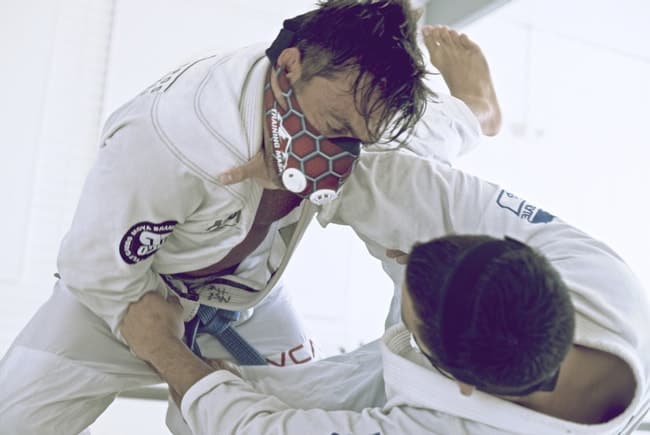
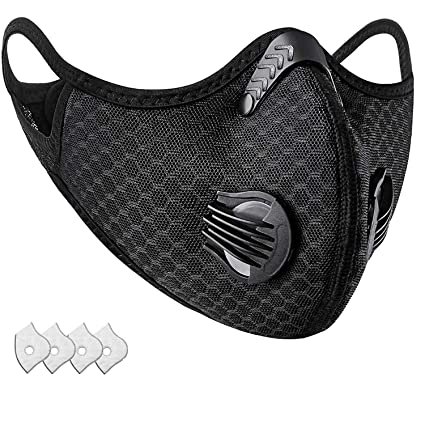
Breathable Mask is an Effective Gear to Avoid Catching Diseases at MMA Gyms

Now the right question has come up to bat. How can people avoid not only catching but also spreading viruses among other things at MMA Gyms? In some ways, it’s hard for the person to do this on their own. It takes other students as well as the Gym Owners too. Simply doing obvious things will help here. The best thing one might be able to do currently is to look into masks that are breathable.

What we mean is, there are masks that unlike the medical masks you see all over the place, have an opening or a few openings. People then put specially designed filters in them that will be switched out off and on. The filters are not expensive to replace and often places like Amazon have them at a good price.

This will help your breathing, allowing you to wear the mask during training without getting too hot nor will you have to deal with too much carbon dioxide build-up.

Change Out From Your Gi When You’re Done Training

This one might seem obvious but for some reason, we’ve heard of or noticed people who have not changed out of their Gi when they complete training for the day. Some might go to a place to eat in their Gi or merely wear it in a partial form for a while afterward. Some might go to a friend’s house still in their Gi or see family members in it. More often than not this is a bigger problem with kids but adults have a problem with this too.

Keep in mind that your Gi is a great protector for you during training or fights. It prevents sweat, spit, fleam, and even blood from contacting most of your body. Yet like doctors and nurses, who use scrubs or coats in hospitals, they too must remember to take this off when they’re not on the clock. It is obvious for them to use common medical sense and change out of those clothes and even wash them on a routine basis.

Martial Artists MUST do this too, as we do not need to further spread stuff around that we came in contact with at the gym, If possible, take a change of clothes to wear when you leave the gym if you do have to go somewhere else before going home, like a store.

Nurses will have many scrubs to go through as doctors often have many coats. Yet Martial Artists might not have several Gi to choose from. Therefore, you need to be sure to wash it before you go back to your gym. This will, hopefully, help prevent possible viruses from spreading around. You’d be surprised how much gets on these things.

Here’s how to properly launder your Gi or other clothing to stop spread diseases according to the Center for Disease Control and Prevention(CDC).

Avoid Touching Your Mouth Or Eyes During Practicing

Due to your hands coming in contact with those you’re training with the most, it’s probably a good thing to avoid touching your eyes or mouth while at practice. If you cannot help but do this or there is a reason to touch, many gyms will have paper towels around. You can simply use one or a few to touch your face with during times it’s needed.

Many find it best to bring their own towels from home, however. This ensures that they know where it came from, that it’s clean, and only THEY used it. If we had to choose which we’d prefer, gym paper towels vs towel from home, we’d go with the latter all day long. If nothing else, using your own towel to wipe off sweat can be a very useful thing. You never have to touch your face with your hands this way.

Once you’ve completed training for the day, you’ll then need to go to the gym bathroom to wash your hands or take some hand sanitizer with you to use after training. This all hinges on if the gym has a place to wash your hands and soap around. However, hand sanitizer can be useful for you and your training partner to use. This way, you’re helping his or her hands stay clean as well as your own.

Take A Shower Immediately After Martial Arts Class

When you’re done training, you’re going to likely be a sweaty mess. Going home and getting a shower is going to be good regardless. Yet in times like these, you’re going to need to do this even more so. If you come in contact with viruses or diseases, your body won’t always absorb them completely. In fact, our skin sheds small layers all the time.

This is why if you take a shower upon getting home, you could likely rid your body of prospective viruses or diseases that can affect you.

Do Not Practice With Someone Who is Sick

It is obvious that you cannot control the actions of others. If they get sick, it’s understandable that they might still want to train. However, they should not have come to the gym even if they felt good enough to be there. If you know they are sick, you do not have to train with them. It might be a bit weird to do. But the best thing to do in this situation is politely declining to train with them that day.

Do not feel bad nor feel uncomfortable declining to train with someone who’s sick because it’s your health in the end. You can only protect yourself in the end.

Stay Home If You Are Sick

Why risk getting others sick if you do not have to do so? We know some of these gyms can get expensive but you can always make up the day or two of lost training. World Health Organization(WHO) recommends people to stay home if you are sick and suggests the following:

Many viruses or diseases some of us can live with or survive can actually kill others. You can read more about this topic here. Sadly, this is the reality of some sicknesses.

Basically, we’re saying be cognizant of others if you are sick and just stay home. Of course, injuries are different. You obviously do not need to go to a gym if you’re unable to train properly. Nor should you go if you’re bleeding from an injury. Go to the ER!

Tell Your Coach Of Health Concerns

Like what we mentioned with possible injuries, you should also alert your Coach or Instructor if you have specific health concerns. For example, if you see something that is clearly unsanitary or hazardous, do not hesitate to talk to them about it. If he or she is not keen to fix this issue, then they do not care about their students.

If they do not bother to fix the problem and you see this even more than twice, we’d recommend finding a new gym. There is no reason to stay and train at a place where the owners and employees do not address your health concerns.

What Can An MMA School Do To Prevent The Spreading Of Diseases?

There’s quite a lot that an MMA School can do to stop the spreading of disease or viruses. In fact, a lot of the protective things involved at gyms will start with the owners and instructors. Responses from the schools need to be to make their place a clean, healthy place for athletes to train. What can they do? Let’s examine a few things.

Disinfect The Mats

It should be pretty obvious that mats are going to pick up a lot of bacteria during training. People also going to sweat on them and eventually, they are going to develop quite a funk if you do not clean them. This is why we’d recommend cleaning them at least 3 to 5 times per day.

Here’s the guideline by the World Health Organization(WHO) about disinfecting the surface:

In non-health care settings, sodium hypochlorite (bleach / chlorine) may be used at a recommended concentration of 0.1% or 1,000ppm (1 part of 5% strength household bleach to 49 parts of water). Alcohol at 70-90% can also be used for surface disinfection. Surfaces must be cleaned with water and soap or a detergent first to remove dirt, followed by disinfection.  Cleaning should always start from the least soiled (cleanest) area to the most soiled (dirtiest) area in order to not spread the dirty to areas that are less soiled. 

All disinfectant solutions should be stored in opaque containers, in a well-ventilated, covered area that is not exposed to direct sunlight and ideally should be freshly prepared every day.

In indoor spaces, routine application of disinfectants to surfaces via spraying is not recommended for COVID-19. If disinfectants are to be applied, these should be via a cloth or wipe which is soaked in the disinfectant. 
Source: World Health Organization

You want to do this after the day concludes, of course. However, if you clean them between classes as well, it’ll be very helpful. Essentially, you’re doing this to keep germs and bacteria from the last class off the mats so that it does not spread around. When we say 3 to 5 times per day, we’re using this number based on the average number of classes at a gym.

This number might be more or less depending on the gym. However, cleaning them at the end of each day is a must for EVERY gym.

Good Air Ventilation

While disinfecting mats is a good thing to do, you should also have good air ventilation to prevent airborne diseases.

This helps in a few ways. First, it helps with keeping a good temperature in the gym so that it does not get too hot or even too cold. At the same time, this ventilation will also help with removing air that has been contaminated from people coughing and sneezing.

Even breathing heavily can spread bacteria around in the air. CDC mentions the importance of indoor ventilation here.

This why a good circulation of fresh air in and bad air out will be very helpful to trainees in a gym. This is also useful for instructors! A good ventilator is useful but even something as simple as investing in some good fans can do wonders. Do keep in mind that gyms are typically hot, moist, and even dark enclosed environments. All are great breeding grounds for viruses and diseases.

By removing these issues in the gym, things become drier. This will, as a result, cut down on the number of bacteria as they are not great at living in this type of environment for too long.

Simply, Don’t Allow Sick People To Train With Others

It should go without saying that letting sick people train at your gym is not a good thing to do. You’re allowing them to possibly infect the place and that does not have to happen. If they are, simply do not allow them to train with others. They could work on the equipment away from everyone else if your gym has stuff like that lying around.

However, you’ll need to clean all of this as well as the area they are in. This is why it’s best to simply send them home. You can also always work out something cost-wise for them so that they do not feel cheated financially by missing a day. Removing any possible issue like this will cut down on the spreading of diseases like COVID among many more at MMA Gyms.

These Are The Most Common Skin Diseases Associated With Mats In Martial Arts Schools

Just on the normal end of things, you could catch at an MMA Gym are skin diseases like Impetigo, Scabies, and Cellulitis. You can also catch more severe things like Tinea Corporis, known by most as Ring Worm. It is also possible to catch the Herpes Simplex, as one Type can be spread by saliva. It tends to mostly spread during kissing or “other stuff,” but accidental spit flies through the air consistently in MMA Gyms too.

Finally, you could catch something that left untreated could kill you such as Staphylococcus Aureus, known mostly as Staph. There are various versions of it, but the worst possible form of this infection is MRSA. Here’s a micro image of MRSA.

MRSA spreads easily in athletic facilities, locker rooms, gyms, and health clubs because of shared equipment and skin-to-skin contact. Keep surfaces clean to prevent MRSA from spreading.

When should I clean athletic equipment and facilities?

Always keep athletic facilities, such as locker rooms, and shared equipment clean whether or not MRSA infections have occurred among the athletes.

Shared equipment should be cleaned after each use and allowed to dry.
Repair or dispose of equipment and furniture with damaged surfaces that do not allow surfaces to be adequately cleaned.

Clean equipment, such as helmets and protective gear, according to the equipment manufacturers’ instructions to make sure the cleaner will not harm the item.
Source: Center for Disease Control and Prevention(CDC)

It puts people in the hospital all the time and it’s hard to get rid of once you have it, which is why you should always practice good hygiene before and after going to an MMA Gym. This helps to protect you and those you train with.

Meanwhile, MMA Gyms need to do the same by keeping their gym clean completely.