In MMA and UFC fights, the term “reach advantage” is commonly used. However, it may not be clear what reach actually means in this context or why it is significant. This article will explain the meaning of reach and how it is measured in MMA and UFC fights.
What is Reach and How it’s Measured
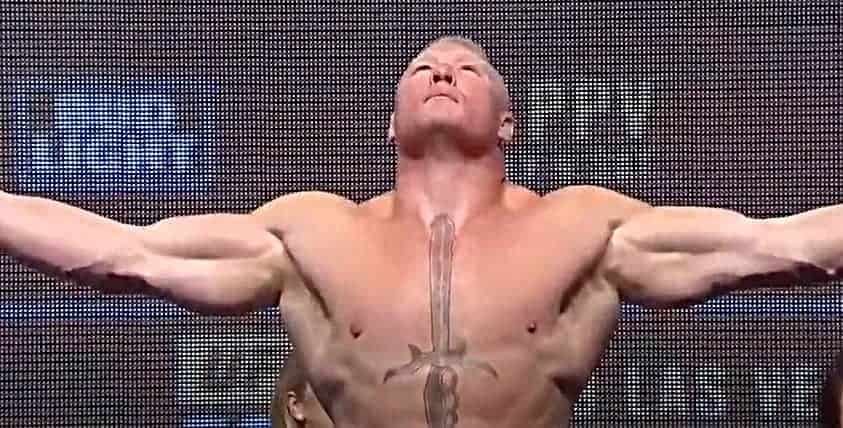
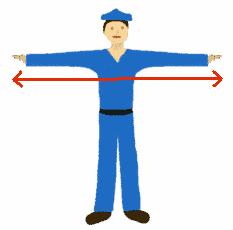
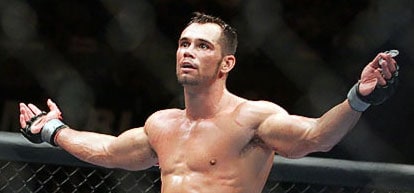
In MMA/UFC, a fighter’s reach is the total length of their two arms. To measure reach, the fighter stands with arms extended out to the side like a cross, and the distance from one middle fingertip to the other is measured in inches. This technique is widely used and considered the most traditional way to measure reach in boxing as well. Another term for reach is wingspan.
Why Is Reach Important in MMA/UFC?
When it comes to MMA fighting, having a longer reach gives an advantage because a fighter can strike their opponent from a greater distance. However, a fighter with a shorter reach must get closer to land their punches accurately on their opponent’s target.
This means that shorter reach fighters must put in more effort and strategy to close the distance and land punches. In contrast, fighters with longer reach can stay at a safe distance and avoid getting hit by their opponent’s punches.
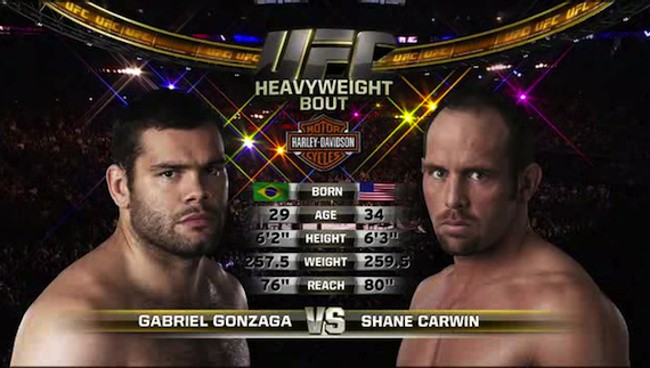
Have you ever questioned the reason behind displaying the “tale of the tape” before every UFC match, which includes the fighters’ reach? It’s because having a longer reach is considered a significant physical advantage in MMA fights.
Can a Fighter With a Short Reach Succeed in Combat Sports?
It is possible to excel in combat sports even if you have a short reach. A long reach does not necessarily guarantee victory in a fight. Having a longer reach only provides a physical advantage and does not necessarily translate into having a skill advantage.
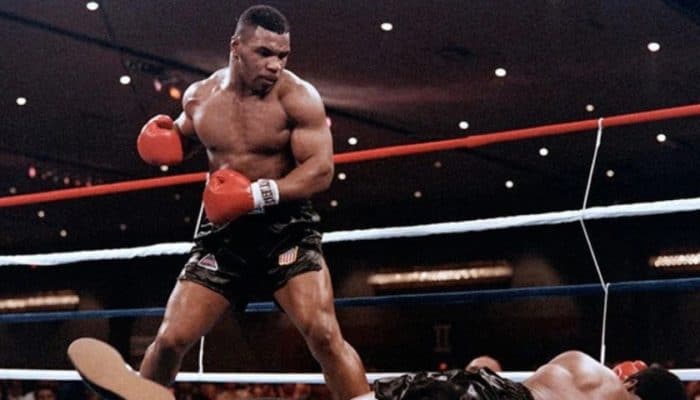
Take the example of boxing legend Mike Tyson, who had a short reach yet managed to knock out many of his taller opponents with longer reaches during his prime.
Boxing legend Mike Tyson
Tyson may have had a shorter reach, but his speed and agility compensated for it, making him a very formidable opponent. With lightning-fast movements, he made it difficult for his rivals to land a blow, even if they had a longer reach than him. Additionally, his opponents found it challenging to dodge his rapid punches, despite their longer arms.
Final Thoughts
Having a longer reach is a physical advantage for a fighter. But if the fighter is not skilled in fighting because they don’t know how to utilize their long reach to their advantage, the long reach doesn’t mean anything in combat sports.
For this reason, even if you have a longer reach advantage, you must still learn how to utilize your physical advantage best. Conversely, if you have a short reach, train smarter by improving your speed and agility, which will overcome your opponent’s physical advantage.
Therefore, it’s important to remember that fighting is a complex game with many variables. No advantage is a 100 percent advantage.
Editor’s note: The views and opinions expressed below are those of the author and do not necessarily reflect the views of mmachannel.com, its affiliates and sponsors.
In modern MMA, almost every pro fighter has a strong background in, at least, one specific martial art. If you look at UFC fighters for instance, most of them were trained in various fighting styles before they shifted to compete in MMA. You can often hear how one fighter joined MMA as a world champ in BJJ, while there are others who have a strong collegiate wrestling background.
For instance, BJ Penn was a world champion in BJJ before he started to fight in MMA. And, Henry Cejudo is an Olympic gold medalist in wrestling before shifting to cage fighting.
Fighters who have a strong background in martial art have a much easier time adapting to MMA since they are already familiar with some aspects of fighting. This gives them a great advantage over the fighters who came into MMA without any previous martial art experience.
This illustrates why being an MMA fighter without any prior martial art experience is very challenging. But surprisingly, there have been some exceptions who are well-known MMA fighters. The following is a list of MMA fighters with no martial arts or before they became MMA fighters.
Geoff “Handz Of Steel” Neal
Looking at how technically sound Geoff Neal is on the feet, one might assume that he comes from some type of striking based martial art background. But in reality, Neal never trained in any type of martial art before he started training in MMA. He is a former college football player who jumped straight into MMA from college football.
Despite the lack of prior martial art experience, Neal made sure to work his way up the right way. Before turning pro, he spent a lot of time training and sharpening his skills in amateur competition. After amassing an amateur record of 10-1, he turned pro in 2012. Up to that point, Neal had already been into MMA for over two years and gained valuable experience in amateur matches.
After going 7-2 as a pro in the regional circuit, Neal signed up to be a contestant in the Dana White’s “Contenders Series”. The objective of this series is for Dana White to recruit new talent for the UFC and Neal quickly seized that opportunity to prove how talented he was. In the Contenders show, Neal needed less than two minutes in the first round to finish Chase Waldon via technical knockout and subsequently, was signed by UFC. Despite the lack of martial art background and even working a full-time job while fighting, Neal has become one of the top MMA fighters in his division.
Kevin Ferguson a.k.a Kimbo Slice
https://youtu.be/L0GH5cw4ajo
Don’t let Kimbo’s impressive street fighting videos fool you, he wasn’t into any martial art before MMA nor was he a pro boxer. We assume he did work out on the heavy bag to prepare for his street fight matches, but he was never fully committed to any type of martial art training before he became a MMA fighter.
Kimbo became an overnight sensation through his recorded street fighting videos in the early 2000s. He used to post the videos of him fighting in backyard circuits on the internet and they would instantly go viral and received millions of views from all over the world.
At the time, Kimbo had a job as a bouncer and bodyguard in Miami and was earning additional money by taking part in illegal street fighting matches at which he looked like an unbeatable fighter. The hype behind him got massive and fans desperately wanted to see him moving into MMA and taking on real skilled opponents.
In 2008, “EliteXC” MMA promotion wanted to cash in on Kimbo’s popularity by signing him in. After years without serious martial art training, Kimbo finally set about learning some proper MMA techniques. And, we have to point out he was already 30 years old at the time.
Even though Kimbo wasn’t the most technical striker as an MMA fighter, his striking skills which he honed as a street fighter worked for him to a certain degree in the beginning. Kimbo kicked off his journey with three stoppage wins, out of which one came against the UFC legend, Tank Abbott. A few fights later, he signed with the UFC. Slice made his UFC debut against UFC veteran Houston Alexander and won by unanimous decision.
In the end, Kimbo’s career as a professional MMA fighter produced a mixed result. But for many fans, Kimbo left an indelible trace by being the first to do well in MMA as the most famous street fighter of all time.
Greg Hardy
The UFC fighter, Greg Hardy, is a former NFL player who transitioned into MMA without any background in martial arts. If you are not familiar with him, Hardy was a NFL defensive end. In his career, he played for Dallas Cowboys and Carolina Panthers and was a very good player who made it to the pro bowl.
Due to Hardy’s legal cases outside of football, the NFL suspended him for violating the personal-conduct policy. In the end, these legal issues contributed to Hardy’s downfall as a football player. He left the NFL in 2016 to pursue a career in MMA. But this time, Hardy took it seriously. He joined AKA gym in Florida, kept himself a low profile, and worked diligently to become a top MMA fighter.
Hardy didn’t have any background in martial arts. But, as a gifted athlete, he was able to quickly pick up new MMA skills. He had no real problem of readjusting to intense MMA training and being coached. Hardy was already used to going through hard training harkens back to a tough NFL training camp he had to go through many times.
As a result, he kicked off his amateur career with three KO wins, showing insane punching power. Shortly after, he got the chance to prove himself on Dana White’s “Contenders Series” show where he earned the UFC contract with another two stoppage wins.
Hardy would elevate his game in the next few years and become a top MMA fighter. Hardy’s boxing skills improved significantly, which mixed together with his power makes him a tough matchup for anyone facing him.
Jimi “Poster Boy” Manuwa
Despite the lack of previous boxing experience, Manuwa went on to become one of the best strikers in the UFC’s 205 lbs weight class. At one point, he was one of the top contenders who was very close to fighting for the belt.
Manuwa was into weight lifting in 2007 when he suffered a ruptured chest muscle injury. Upon healing, he wanted to focus on doing something else. Instead of going back to weight lifting, he started training MMA with his friends in the local gym.
After just one year of training, Manuwa started working his way up in the UCMMA promotion based in England. He quickly made a name for himself by scoring many brutal KOs. After just a couple of KO wins, the UFC spotted his talent and they wanted to give him a contract. Yet, Manuwa wisely turned down the initial offer, believing he still lacked the skills needed to fight in UFC.
In 2012, Manuwa finally signed with the UFC with a perfect record of 12-0 and a 100% finishing rate (11 KOs). In a very short time span of his MMA career, Manuwa has evolved into an elite striker. He KO’d some huge names like Ryan Jimmo, Ovince St. Preux, and Corey Anderson. He even went on to win a decision against the UFC champ, Jan Blachowicz.
Matt “Meathead” Mitrione
Matt Mitrione is a former NFL player who became one of the top heavyweight fighters in MMA. Mitrione grew up playing mostly football. He enrolled in a Karate school as a child to deal with his extreme hyperactivity but he didn’t train in any martial art as an adult before fighting in MMA.
Mitrione spent his college days playing football for Purdue University. After college, Mitrione played in the NFL for a few years. In 2003, Mitrione battled with multiple leg injuries and had seven surgeries. This forced him to be out of the sport for more than 16 months. When he came back in 2005, Mitrione just wasn’t the same player.
It was around this time Mitrione started training mixed martial arts. He spent four years training and learning how to fight before turning pro in 2009. Mitrione then joined the tenth season of the Ultimate Fighters show. In spite of losing in the quarterfinals of the show, UFC made a decision to give Mitrione a contract. This proved as a great investment by the UFC as Mitrione went on to become a top MMA fighter in the upcoming years. He had some notable wins against some big names like Kimbo Slice, Derrick Lewis, and Gabriel Gonzaga.
After seven years of fighting under the UFC banner, Mitrione moved to Bellator in 2016. The biggest moment of his career came when he beat one of the greatest MMA fighters of all time, Fedor Emelianenko.
Rich “Ace” Franklin
Franklin was a math teacher before he started MMA fighting. Despite starting late and without any previous martal art background, Franklin went on to become a UFC champ in a very short time span.
Rather than training wrestling or BJJ in his 20s, Franklin pursued a high education at the University of Cincinnati. He went on to earn a bachelor’s and a master’s degree in math, and worked as a math teacher at Oak Hills School in Ohio.
Franklin wasn’t even thinking about fighting in his 20s. But on the other side, his future UFC opponents were already working their way up in the MMA world while he was working as a math teacher. Yet, Franklin has always had a passion for fighting. Before MMA, he spent a lot of time learning martial arts on his own by watching videotapes of submission grappling. In spite of having no martial art background, Franklin’s quickly learned BJJ and Muay Thai at a high level even though he started training MMA at a later age.
He kicked off his MMA career in ’99 and was able to compile a record of 12-0 before receiving a call from the UFC. Inside the UFC cage, he scored many KOs and submission finishes. The biggest moment of his career came when he beat Evan Tanner at UFC 53 to win the UFC 185 lbs belt. Rich Franklin was inducted into the UFC hall of fame on July 5th 2019.
Final Thoughts
Whether you inspire to become a fighter or not, the lesson here is that you don’t always need special talent to achieve your goal. Sometimes all you need is hard work and dedication. I hope these fighters’ stories will inspire you to achieve your life goals regardless of your background.
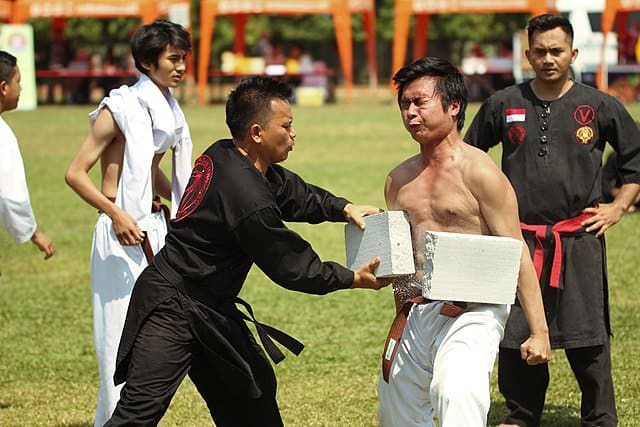
Photo Credit: Kbidols - Haryadi Andradjati via Wikimedia
Photo Credit: Kbidols – Haryadi Andradjati via Wikimedia
Editor’s note: The views and opinions expressed below are those of the author and do not necessarily reflect the views of mmachannel.com, its affiliates and sponsors.
It is clear that some of the traditional martial arts have been effective, yet as of late increasing number of people have claimed most of the traditional martial arts are not as useful as some assume. These people might have a point, but we wanted to examine this and discuss it. There is a lot of grey area here, and we wanted to fill in the gaps that some people refuse to do for you.
Why Most Traditional Martial Arts Don’t Work in Real Life.
The following are some of the big reasons why most of the traditional martial arts don’t work in real life.
1. Don’t learn how to de-esclate
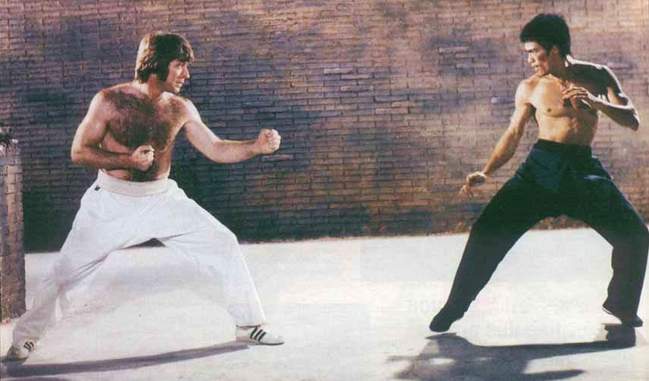
Bruce Lee once said the following in the movie entitled, “Enter the Dragon”
“You can call it the art of fighting without fighting”
Bruce Lee
Lee’s quote here reminds us that the best thing one can do is walk away from physical battle if possible. If you’re realizing that things are getting heated enough to cause violence, you have to know how to diffuse the heated situation FIRST.
Physical violent should always be the last line of defense if possible. But many of the traditional martial arts don’t consider this approach as the number one option before getting into a physical battle. Many of the traditional martial arts emphasize too much on teaching you how to fight first rather than diffusing the situation first.
2. Don’t learn to recognize pre-assault indicators
People have to learn body language to know when and how someone might attack them. Reading the intent as well as understanding a perfectly knowing the environment can all be incredibly important. For example, if the assailant is clinching a fist, that’s a good sign that he/she is ready to attack you and you must be able to spot these pre assult indicators so that you can make a counter move much quicker. However most of the traditional martial arts focus too much on reactive moves while the assilant is attacking you. Action is always faster than reaction so anticipating what is about to happen helps the defender’s to make a sound judgement in that situation.
3. Difficult to learn
Different moves or techniques can take some people months or years to do perfectly. Pretending like they can be done perfectly every single time by a novice is completely idiotic. That is why the best self-defense tactics do not require a lot of special knowledge or long-term training. The best stuff can be as simple as movement, escape, or evasion tactics.
These can be easy, because they usually are done with one to two moves max, and are designed to create space between you and the person attacking you. As a novice, the last thing you need to think about applying in a split-second self-defense situation is a complicated defense concept.
4. Unrealistic training
This is one of the worst, most horrific offenses we’ve seen from martial art instructors. It’s especially a huge problem among those who share their stuff on YouTube. They’ll set up flashy, impressive-looking demonstrations.
These videos are always well-rehearsed and everything looks good. Yet if you try to apply some of these methods in real life, you’re more than likely going to get hurt. A lot of the time, the biggest issue avoided is the difference between height and weight and the basic physics involved in how that helps a lot in fights. There is a reason martial arts or fighting overall has weight classes, people. Why is that avoided here?
On top of this, they might teach small stuff that is situational and will only work in those times. Therefore, it cannot help you when your enemy attacks you in a completely different way.
5. Most traditional martial arts have not evolved
When you’re taught a specific martial art, you’re learning it from a person who usually spent years learning and applying those techniques. They learned it from another person who did the same thing.
If they fight someone who differs from this, they very well could see a bad result. Mostly because martial arts are often taught in a bubble where you learn one specific way of doing things and those are applied against other people who learn the same stuff. Yet when you fight outside of this bubble, things can go bad because your art might not translate as well outside your martial art.
The entire idea behind Mixed Martial Arts or MMA is to prove this concept. That one martial art is not always 100% effective against every person you’ll face off with. Most of the time, you have to know your world as well as others. Then know how to modify and evolve on the fly. When something goes south, you must know when to bail and when to keep going. A lot of martial arts do not teach this even in specialized self-defense courses.
Are Traditional Martial Arts Effective In Street Fighting?
The answer to this is both yes and no. If you are an experienced martial artist, there is a solid chance that your martial art could be effective if it came down to JUST hand-to-hand combat. If the opponent has a gun or knife, then your chances of coming out alive drop drastically even if you’re some 9th Dan Black Belt!
What Is The Most Useless Martial Art?
Ultimately, when it comes to self-defense only, there are not a lot of “useless” martial arts. They all can teach you something worthy of your time. Yet if you had to know one that won’t do you as much good, pretty much any that involve weapons. This includes things like Kendo, Kenjutso, Yabusame, and even fencing. Yes, fencing is technically a martial art and yes, it’s incredibly useless to you in a random fight.
What Martial Art Is Best For Street Fighting?
This is not exactly cut and dry because you have to consider if it’s one versus several or one on one. You have to be sure it does not involve weapons too.
One of the most effective in a one on one situation is Brazilian Jiu-Jitsu(BJJ). This martial art focuses a lot on effective submissions and takedowns, with some small striking involved. In the UFC’s original run, they were related to “human dogfighting,” due to all the carnage that took place there. Fighters with different fighting styles fought each other to find out who was the best. The very early UFC events were the closest thing to actual street fighting with a very few rules in place. It was almost like a testing environment to find out which fighting style prevails in the end.
The man who came out on top repeatedly was very well known BJJ practitioners, Royce Gracie. Royce beat every other fighter by using his submission skills. As a result, it’s well proven in the fighting cage to work against many different fighting style.
Which Martial Art Style Is The Best?
If you want to get a great experience and learn how to do a lot of key martial arts techniques, then you should check out Japanese jujutsu. Japanese jujutsu does not get much attention nowadays because of the extreme popularity of Brazilian Jiu-jitsu(BJJ) that gets all the attention when it relates to the topic of martial arts.
https://youtu.be/NMlO9BGY0l0
Just jujutsu, not BJJ. In BJJ, they only teach BJJ. Meanwhile, in jujutsu, they actually combine a lot of art forms into one. You’re taught things from the regular jiu-jitsu world but you’re also taught striking techniques. You’ll learn about takedowns and wrestling movements. This will include movement on the ground, normally taught in wrestling gyms.
You’ll be taught how to throw opponents, similar to what you might see in Judo or Sambo. On top of this, you’ll learn all about numerous submissions that can be applied all over the body for tons of different situations.
* RELATED QUESTIONS *
Is Taekwondo Effective In Street Fight?
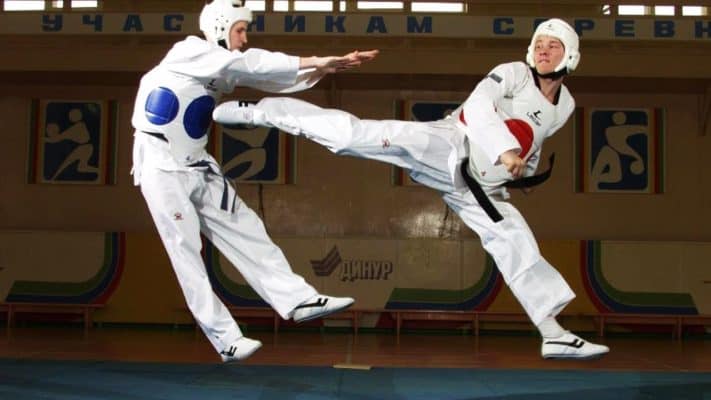
The answer to this is, yet again, yes and no. Taekwondo is a striking martial art and therefore, it can be pretty effective in fights. Yet TKD is mostly known for its kicking techniques. It’s really the best martial art to learn about every known version of a kick and how to do impressive damage.
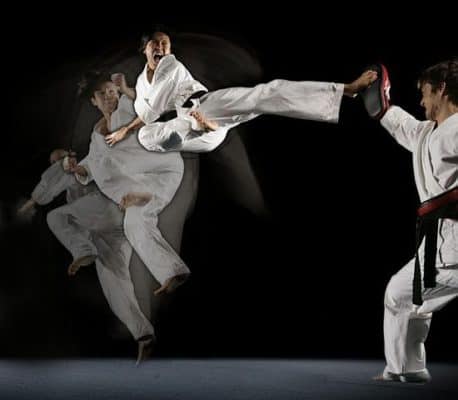
Taekwondo kick
Yet in a street fight, you have to know when and where to apply a kick. Plus, you have to be pretty fast and nimble enough to keep yourself balanced in a potentially hostile or problematic situation. It might also depend on who you’re fighting too.
If you’re asking us if a Taekwondo expert could beat a trained, championship-level boxer in a fight, the answer is likely no. As punches can come much faster than it takes to deliver a solid kick. On top of this, you have to consider the potential power in those punches. Combined with the idea that they can close you off and not allow for the set-up of kicks, yet still, deliver powerful punches.
Therefore, it depends on the opponent. The sport is terrific and worthy of your time, but we would not learn Taekwondo “specifically” for self-defense purposes.
Listed above are just an overview of the effectiveness of Taekwondo in a street fight but there are much more. Read the full report on “Is Taekwondo Effective in a Street Fight?”to learn everything there is to know how effective is Taekwondo in a street fight.
Is It Worth Learning Traditional Martial Arts?
Always. Not only can traditional martial arts be a terrific outlet to let out some pent-up aggression you might have, but they can be awesome ways to get some great exercise. Not for nothing, you’re also learning how to do damage to people if you have to defend yourself.
Our main issue with traditional martial art is that students are not being taught properly to prepare them in real life situations. We’d also recommend you learning about body language and psychology too if you really want to prepare yourself in street fighting situations.
Why Is Kung Fu Not Used In MMA?
Kung Fu is one of the most popular martial arts in the world,. So, why are we not seeing great Kung Fu practitioners show up in MMA? The answer is pretty simple. Kung Fu like what you see in the movies just does not exist. This is played up for Hollywood and they tend to exploit Kung Fu as the art they’re using while they use others along with it. Not to mention, add some extra Hollywood magic that you won’t see in real life.
Kung Fu in real life is a great martial art, but it is simply a striking sport. Kung Fu experts simply do not translate to the world of MMA because MMA requires more than just striking. That is not to say that there are no fighters in the UFC or MMA at all from Kung Fu, There are some like Cung Le who uses Kung Fu as his base style. Others like Roy Nelson, Muslim Salikhov, and others either trained in Kung Fu or have experience in it.
Yet people do not make it their only style if they get into MMA. You cannot be a pure striker and last in the world of MMA. Therefore, Kung Fu is technically used in MMA. It is just that it is not the only thing a person utilizes.
In fact, Wrestling itself goes back likely before humans evolved into Homo Erectus. We very well could have been wrestling with each other for over 100,000 years. Yet it was not recorded by anyone until the 20th Century BCE. The infamous Tale of Gilgamesh, which dates back to the 18th Century BCE, references the use of weapon fighting. Things like swords, an ax, bow, and spear were all mentioned.
The Indian martial art known as Kalaripayattu was said to have been invented in the 10th Century BCE. It was likely the very fighting style that kept the Indian land free from major invasions for centuries. On top of this, one could say it gave us our base martial arts concepts that other martial arts used later on or improved upon. Things like joint-locks were utilized as well as the use of strikes using the palm, among many others.
https://youtu.be/oI84oM_bJeg
The first Olympics references Pankration, Wrestling, and Boxing as three main sports. The first Olympics dates back to the 8th Century BCE.
By 477 AD, the first Shaolin Monastery was built where they’d develop martial arts styles we still utilize today.
The number of rounds in MMA fights may not be the same for every MMA promotion throughout the world. However the U.S. based MMA organizations such as UFC, Bellator, including oversea MMA promotion ONE Championship all follow what is called, “UNIFIED RULES OF MIXED MARTIAL ARTS.” These unified rules were established to set framework for universal MMA rules in MMA fights.
These unified rules are supposed to be adopted by every state athletic commision in the United States which regulates Mixed Martial Arts fights(MMA). These rules were created to protect the safety of the fighters. As a result these rules set the number of rounds for every sanctioned MMA fight and the duration of each round as you will in the below.
What Does Unified Rules of MMA Say About Fight Rounds?
According to the Unified Rules of MMA, the following is the universal rule for how many rounds in MMA fights.
Each round shall consist of a five (5) minute duration (professional), with a one (1) minute rest period between rounds.
a. No contests shall exceed five (5) rounds and/or twenty-five (25) minutes.
b. Bouts may consist of one (1), two (2), three (3), four (4), or five (5) rounds, with a five (5) minute duration.
c. No contestant shall exceed competing more than five (5) rounds and/or twentyfive (25) minutes of fighting in a twenty-four (24) hour period.
Different MMA organizations may have different rounds. It is the sole discretion of each MMA promotion to decide whether to have three rounds of fight or five rounds of fight. UFC, for example, decided to have 5 rounds of fight for main event fights regardless of whether it’s a title fight or not.
The following table shows the number of rounds for the most popular MMA promotions in the world and compare them.
Lee, B. (Director). (1972). The Way of the Dragon(Return of the Dragon) [Film]. 20th Century Fox
Editor’s note: The views and opinions expressed below are those of the author and do not necessarily reflect the views of mmachannel.com, its affiliates and sponsors.
Due to the rapid rise of modern Mixed Martial Arts(MMA), most people have become familiar of how effective MMA techniques are inside the cage after watching UFC fights on TV. However, people often wonder if these MMA techniques can really work in a street fight and not just inside the cage.
If you find yourself in a scenario in which you have to defend yourself against the assailant, MMA works the best in a street fight compared to other combat arts. This is because MMA is the only fighting system that is designed based on a real fight as closely as possible. As a result, what you learn in MMA training will be easily applicable in a street fight.
With that in mind, I will further explain all the reasons why MMA works in a street fight as well as a few of MMA limitations that are important to know.
How Can MMA Help You In a Street Fight?
1. MMA will prepare you to fight wherever the fight takes place
MMA is the only martial art that will teach you how to fight in all areas of fighting. You will learn how to strike on the feet, handle the assailant in the clinch, or submit them on the ground. This is the main reason why many people see it as perfect for self-defense and street fighting.
Since there isn’t a martial art that will prepare you for fighting in all areas, MMA integrates multiple martial arts into one system to cover three fundamental areas of the fighting.
· Standup (Muay Thai; Boxing)
· Clinch (Judo; Wrestling)
· Ground (Wrestling, Brazilian jiu jitsu)
As a result, MMA fighters are well-rounded and versed in various standup and ground fighting martial arts. Just like skilled fighters who compete inside the cage, you will know how to handle the assailant wherever the fight will take place in a street fight.
Many street fights often end up on the ground where most people are very uncomfortable with on their back. As an MMA trained person, you will have huge advantage since you can apply various BJJ chokeholds and joint locks to neutralize the attacker on the ground. Or you can use wrestling moves to keep them on the bottom and do damage from top position.
2. MMA teaches you only the best fighting techniques
With MMA training, you won’t spend a second of your life learning unproven moves that seem to work only in action movies. Instead, every single technique you learn is proven to work and can help you in the street fight as a result.
The reason for this lays deep into what MMA represents as a concept. In the early 90s, MMA emerged with the idea to promote style vs. style matchups. Early MMA events were wild and often seen as street fighting with few rules in place. There were no weight classes, banned strikes, or even time limits. Although these events were violent, they helped us to distinguish which combat art works in fighting and which doesn’t.
Over the years, fighting styles like BJJ, wrestling, and Muay Thai have emerged as very effective. On the other side, martial arts like Aikido and Chinese arts proved ineffective on many occasions. In some way, you can look at MMA fighting as a testing ground in which you can find out what works in real life and what don’t.
As a result, modern MMA fighters are cross training between different martial arts and learning only the techniques that have been proven as very effective. With MMA training, you will be confident in your fighting abilities because every single technique you learn has been battle tested inside the MMA cage.
3. You will be physically conditioned to outlast your attacker
Mixed with fear and adrenalin, fighting drains your energy really fast. Both you and the attacker might gas out very quickly if you are not fit enough.
With MMA training, you will be well conditioned to outlast your assailant should the fight goes longer than expected. MMA training is cardio intensive and often seen as a full body workout. Training for just a couple of months will increase your cardio levels and get you in top shape.
If you look at any MMA fight, you can often see how vital it is to be fit, and how easy it is to beat the opponent who gasses out. At some point, fighter with bad cardio becomes a sitting duck waiting for the end to happen and street fighting is no different if you get tired too quickly.
4. MMA teaches you how to stay composed in a street fight
When you are in a street fight, the key thing is to keep your mind calm and be composed. This is very important since most people tend to hit the panic button and overreact during a fight. Not every human has the ability to deal with such pressure. But, MMA teaches you how to control this sudden rush of emotions and make rational decisions.
All the skills in the world mean nothing if your mind is not locked in place. Fear and adrenalin increase heart rate which forces you to breathe faster and gas out much quicker. They call this pre-fight anxiety. On top of that, it will mess with your reaction time and the way you fight. That’s why MMA fighters must embrace the crowd and magnitude of the moment, keep their head cool and stay composed throughout the fight.
Sparring is the best way to reduce pre-fight anxiety because it simulates the pressure of being in a real fight. Even though you are doing it in a gym and it is all safe, sparring will give you a very similar rush of fear and adrenalin. Over time, you will get used to this feeling and know how to control your emotions, including the fear of fighting.
Keeping your mind calm in a street fight allows you to make rational decisions, and stop yourself from overreacting. You will have a clear vision of the situation and will know how to apply techniques you learned in training to defend yourself.
5. MMA is the best martial art for self defense
Out of all martial arts, MMA might be the best if you want to learn how to defend on the streets. Even though it was not designed for self-defense, it ended up as superior to most other fighting systems.
Other martial arts like boxing, BJJ, or karate are simply too one-dimensional. They will teach you only how to fight in one aspect, standing up or fighting on the ground, not both. MMA is superior to any other martial art because it mixes standup and ground fighting techniques together into one fighting system. With MMA training, you will learn how to box, use BJJ submissions and wrestling moves to score takedowns.
This is crucial because you never know in which area of fighting you might have to defend yourself in street fighting. One moment you can fight the assailant standing up, and in a split of a second you might have to defend on the ground.
MMA Is NOT Effective In These Street Fight Situations
1. MMA doesn’t include illegal and dirty techniques
There are no laws or rules in street fighting and both parties can use all types of dirty and illegal tactics. Some people may start pulling your hair, gouging eyes or biting. MMA is limited here because it is not designed to put focus on how to defend against these illegal moves.
Even skilled fighters should never overlook the ability of an untrained person to use dirty techniques. As a trained fighter, you will focus on using the techniques you learned in training, not expecting that someone can hit you in the groins or put a finger in your eye. In your mind, these moves are illegal and you are not conditioned to face dirty tricks and illegal moves. But assailants, on the other hand, will do whatever it takes to win a street fight and their intention can be deadly.
You may use a wrestling move to take them down but it can prove as a bad move once the assailant starts gouging your eyes. They can cause permanent damage to your eye in a split of a second and turn the fight momentum to their side.
You may be a better fighter on paper. But, street fighting has no rules and MMA won’t teach you well how to defend against illegal tactics. Fighting systems like Krav Maga are a much better option if you want to learn how to defend against biting, groin strikes, eye gouging and other illegal moves.
2. MMA is not designed for multiple attackers
MMA is a combat sport that teaches you how to fight one on one and you won’t learn how to handle multiple attackers. There are various fighting systems that “teach” how to fight against more than one attacker. But they all include very questionable techniques that work only in moves and here is why.
Every person has only two arms and a pair of eyes with a limited scope which means our bodies are limited to fight against multiple attackers. In reality, each person attacks differently and our minds are not fully capable of observing multiple attackers at a time. It all goes to another level when you add emotions and adrenalin to it.
MMA or any other martial art won’t help you much when you are fighting against multiple attackers. The only thing that helps you in this type of scenario is to run as fast as you can.
3. MMA won’t teach you how to deal with deadly weapons
MMA is a hand to hand combat that doesn’t include weapons of any kind. It won’t teach you how to use weapons in a street fight or to defend against one. Disarming weapons requires special type of military or police training.
This is because fighting with and without weapons are two totally different worlds. There is a real science behind knowing how to disarm the attacker.
To snatch someone’s weapon without getting hurt or even killed requires perfect distance, speed and distraction. If you are not trained for these things, you should never, not in any scenario, try to disarm the attacker. Even if you are the most skilled fighter in the world, fighting techniques you know won’t help you this time.
It is very hard to apply any type of martial art technique against the armed assailant simply because their actions is always faster than yours. It takes only a second for the one to pull a trigger no matter how fast you are as an MMA fighter.
4. MMA is hard to use in certain street settings
Although MMA is very useful on the streets, it is not designed to help you in all street settings. When you train MMA in the gym, you learn new techniques and how to apply them in a safe environment. You don’t have to worry about people around you, debris or where the fight takes place.
You spend each sessions training in the same gym, most of the time with the same people and the risk of injuries is low. Fighting on the street, however, is chaotic, dangerous and violent. You just can’t simulate all the street settings in the gym.
For instance, MMA will teach you how to fight standing up, in the clinch or on the ground. But it won’t teach you how to fight in the bar full of people, obstacles and limited space. In the bar for instance, you might have a hard time maneuvering because of confined space or slippery floor. Or, you can’t see clear due to dimmed lights. Fighting in this type of settings will limit your ability to apply MMA techniques.
* RELATED QUESTIONS *
Can MMA be used for Self-Defense?
MMA is probably the best fighting style you can learn for self-defense. It teaches you effective techniques you can use in street fighting and how to fight wherever the fight takes place. This is because MMA fighters fight standing up, in the clinch and on the ground. To do so, they must learn the best standup and ground fighting techniques that all work in real life as well.
Is MMA Better than Boxing for Street Fighting?
MMA is better than boxing when it comes to street fighting because it includes a broader range of techniques. Boxing is good for self-defense but it will only prepare you how to fight standing using only your hands to defend yourself. MMA is much better because it prepares you for any kind of fighting scenario. It teaches you how to use punches and kicks on the feet, score takedowns or submit the assailant on the ground using BJJ moves.
Every street fight begins on the feet where you can use boxing to neutralize the assailant. But street fights often end up in the clinch or on the ground and boxing won’t help you there. With MMA training, you will know how to score takedowns from the clinch and secure a dominant position on the ground.
Boxing is one of the best fighting styles. But MMA as a concept is closer to street fighting and it should be your option if you want to learn how to defend on the streets.
Are MMA Fighters Allowed to Street Fight?
MMA fighters can fight on the street like any other person, but this is illegal and the law is the same for all. On the streets, you can put your MMA skills to work only if you are a victim of an attack and your life is in danger.
Skilled fighters should always use MMA techniques only for self-defense. As a trained fighter, you have a huge advantage over an untrained person and you can hurt them bad pretty quickly. Every skilled fighter should aim at winning a fight while keeping the attacker unhurt and safe. It is a thin line between defending and becoming the attacker yourself.
Most of the time, MMA fighters do their street fighting inside the cage or a gym. They don’t want to ruin their careers fighting on the streets. But over the years, there have been many UFC fighters who got into street fighting without thinking much about their reputation.
One of the most famous was the former UFC champ, Bas Rutten. Bas got in trouble with six bouncers in a night club in Sweden and went to solve a problem by beating them up. Even though he said he did that to protect himself, Bas ended up doing some jail time.
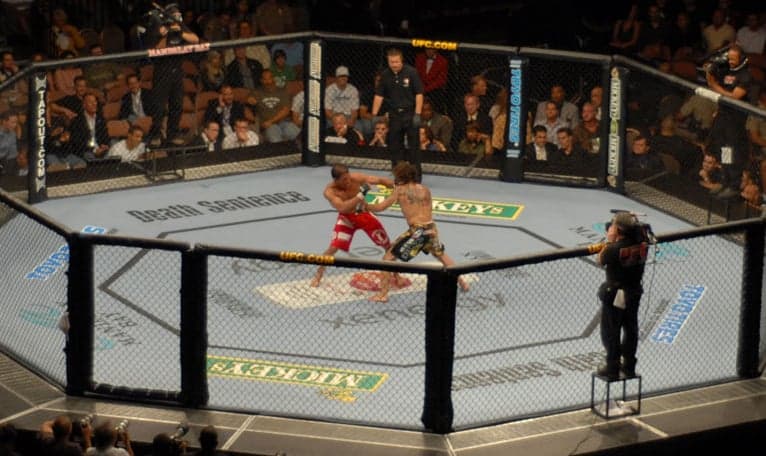
Many casual fans see UFC fights as street fighting with few rules in place. At first, it may look like that since fighters can use any type of fighting style to compete. But, one must know that they compete under the unified rules of MMA which make the sport very safe. Over the years, MMA has seen many changes in rules which made it one of the safest sports out there.
Every fighter needs to be well aware of these rules when fighting inside the cage. If he/she do not stick to them during the fight, they will receive a penalty from the referee or even get banned from the UFC. In addtion there are certain substances that are strictly banned in the UFC.
In this article. We will go through all that’s banned in the UFC so you will know why these things are banned.
What Strikes are Banned in the UFC?
Strikes listed below are banned to keep the fighters safe from sustaining serious, long-term injuries.
Head Butting
UFC fighters can’t use head butts to do damage in any way and these strikes are banned. Headbutting someone can lead to severe injuries or produce nasty cuts. Landing just a single one would probably get you disqualified from the match.
Yet, some fans may recall that head butts were legal back in the early UFC events. However, they needed to get rid of them shortly after since head butts were too brutal and not suitable for the broad audience.
In modern days, we can often see fighters clashing heads during wild brawls on the feet but this is not the same as head butts. These head clashes happen by accident as each fighter is moving their head to avoid strikes or create angles.
Head clashes can also lead to serious injuries and even change the course of the fight. But, the referee would not penalize a fighter since this happens by accident in most cases.
Groin Strikes
Groins strikes are banned in the UFC. But in modern MMA, you can see an accidental groin strike in just about every UFC event. So, all UFC fighters must wear a groin cup to protect this sensitive area.
Most of the time, a groin strike is landed when a fighter is throwing a front kick to the body, inside kick to the thigh, or a knee in the clinch. When this happens, the referee would stop a fight and give the fighter who absorbed the groin strike up to five minutes to recover. If they have sustained some damage and can’t continue, the referee would then stop the fight.
This took place at UFC 55 (2005) when Alessio Sakara suffered one of the most brutal groin strikes ever. His opponent, Ron Faircloth, fired a vicious inside kick that landed right in the groin area. Sakara was in severe pain and not able to continue so the fight ended up as a “no contest”
Striking on the Back of the Head or Spine
UFC fighters can punch their opponents while fighting on the ground. But, they are not allowed to strike the back of the head or spine which is known as a “rabbit punch”. The back of the head is a very sensitive area and a place where our main functions for breathing and heart beat are. Taking repeated strikes to this specific area can lead to serious health problems.
It’s very rare to see a fighter striking the back of the head during a standup fight. This is because fighters stand in front of each other most of the time. But, things get risky when the fights hit the canvas and one fighter starts throwing strikes to the grounded opponent.
A fighter on the bottom would often turn into fetal position to defend or try to stand back up. But doing this the fighter leaves the back of the head exposed and unprotected. This is the moment when strikes to the back of the head land by accident and often without any intention.
The referee would first warn a fighter about the strikes by yelling “Watch the back of the head!” But, if a fighter keeps on landing illegal punches, the referee would stop the fight, take a point or disqualify the fighter.
Knees and Kicks to the Grounded Opponent
UFC allows fighters to land kicks and knees to the grounded opponent. But, they are not allowed to land these strikes to the head and can strike only the body of grounded opponents. But to understand this rule in total, we must explain what “grounded/downed fighter” means in the UFC.
A fighter is grounded when any part of their body (other than the soles of the feet) is in contact with the ground. Or in other words, the fighter is safe from knees and kicks to the head if her/his one knee, palm, or closed fist is touching the canvas.
An illegal knee lands, in most cases, when a downed fighter is trying to stand up. As they are standing up, the opponent who is on top of them may land a knee to the head, not seeing that the fist or knee is still in contact with the ground. When this happens, the referee would stops the fight, give the fighter time to recover and issue a serious warning to their opponent.
Stomp Strikes to the Grounded Opponent
UFC fighters are not allowed to land stomp strikes on the opponent who is lying on the canvas. It doesn’t matter if it lands to the head or body, these type of strikes are illegal in the UFC. Even though they do not look as hard as roundhouse kicks, stomps are really risky. They usually have a lot of force behind and landing them can do much damage since the fighter lying on the ground is absorbing all the impact.
Yet, stomp strikes are not totally banned from the UFC. Fighters can use them in the clinch to land foot stomps like Kamaru Usman did against Jorge Masvidal.
12-6 Elbow Strikes
UFC fighters can’t strike with the point of the elbow or in a 12-6 motion (clock analogy). No matter if it is a standup or ground fight, fighters can’t bring the elbow from straight up (12 o’clock) to straight down (6 o’clock). This is because landing an elbow this way is devastating and can break orbital bone.
But, many fans think this rule is too strict since other elbow strikes can do the same or even more damage. In spite of huge criticism and many people advocating for its change, 12 to 6 elbows are still banned in the UFC.
One of the most famous “victims” of this rule was none other than the most dominant UFC champ ever, Jon Jones. At “TUF 10 Finale”, Jones opened his fight with Matt Hamill with an early takedown. He then moved into the full mount and started striking with elbows and punches. But, some of these were 12-6 elbows and landing cleanly on the Hamill’s face. You can see an example of 12-6 strike in UFC star Jon Jones fight and learn more about 12-6 elbows in the following video.
The referee stopped the fight due to illegal strikes and gave Hamill time to recover. But Hamill told the referee he was unable to continue. As a result, the judges declared him a winner, handing Jon Jones his first professional “loss”.
Throat Punches
UFC fighters are not allowed to land strikes or kicks to the throat. Due to the nature of the sport, we can often see punches and kicks landing on the neck or throat by accident. These are also illegal, but no referee will stop the fight because of being accidental strikes.
The referee would stop a fight only if a fighter is hurt or showing an intent to strike a throat. For instance, fighters are not allowed to pull the head of their opponent with one arm to expose the neck area and strike the throat with the other hand.
Throat punches are very risky and banned in every professional combat sport.
What Moves are Banned in the UFC?
Eye Gouging and Eye Poking
UFC does not allow any type of eye gouging or eye pokes and this rule has been in place since the early events.
According to the unified rules, fighters are not allowed to gouge the eyes of their rivals and one would get immediately disqualified for doing such a thing. What we do see often, however, are eye pokes which are also illegal.
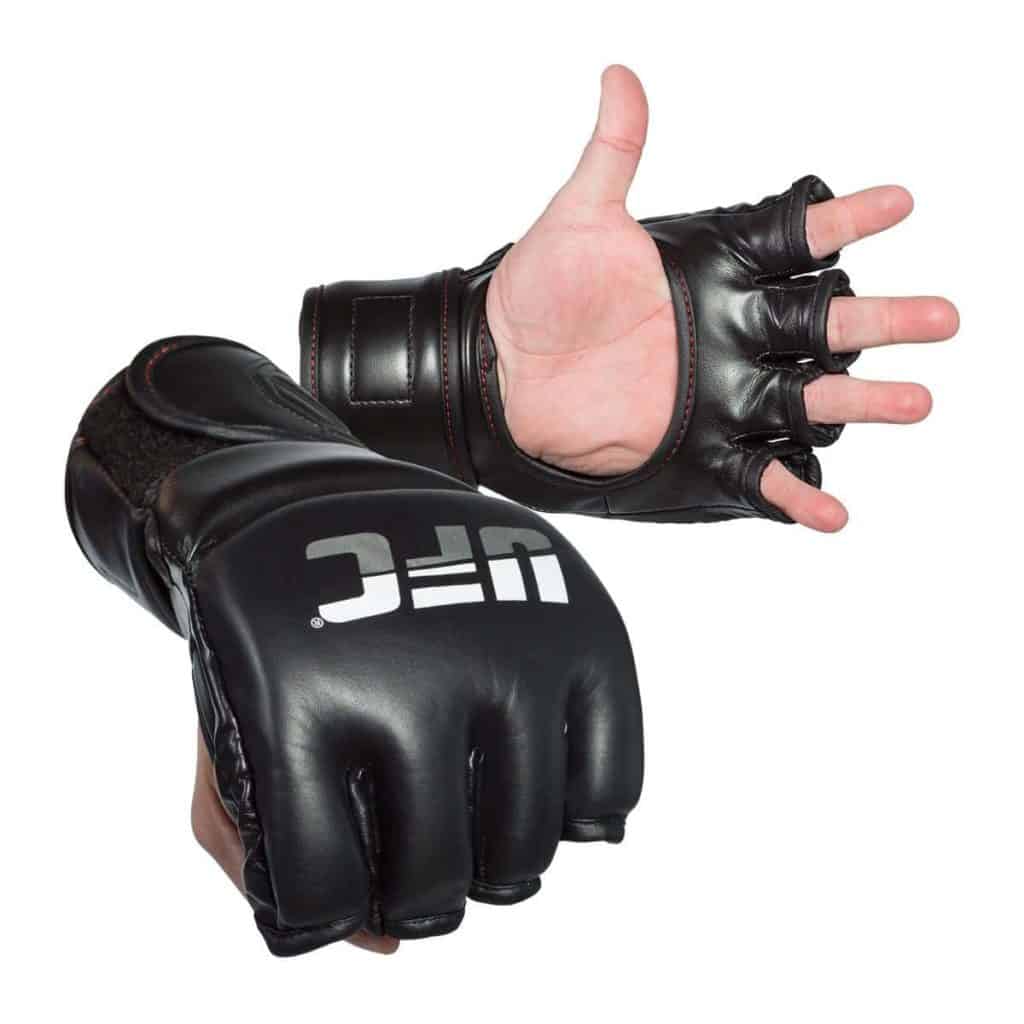
Unlike boxers, UFC fighters wear open-finger, 10 OZ gloves. This type of glove allows MMA fighters to get a hold of each other and grapple.
But this means they can also fully extend their fingers which leads to many accidental eye pokes. Eye pokes are a huge problem in modern MMA, and we can see them in just about every UFC event.
When a fighter lands an eye poke, the referee will stop a fight and give a fighter five minutes to recover. In most cases, they will call a doctor to come in and check the eye. Before the action carries on, they will issue a serious warning to a fighter or even take one point for them.
Grabbing or Holding on the Fence
UFC fighters are not allowed to grab or hold the fence with their fingers or toes. You can see fighters do this while defending a takedown against the fence or while trying to escape from the bottom position.
But, UFC fighters can put their feet and hands on to the fence. They can even push off the fence with their hands or legs to escape from the clinch or any other situation. It all becomes illegal when they start grabbing the fence in order to prevent the opponent from taking them down to the ground.
If this happens, the referee will, in most cases, issue a one point deduction and reset the fight in the center.
No Small Joint Manipulation
UFC fighters are not allowed to manipulate small joints at all. You rarely see fighters doing such a thing because this rule is very strict. Unlike eye pokes or groin strikes, a fighter can’t break their opponent’s fingers or toes by accident.
Breaking fingers and toes are taught in martial arts like Krav Maga but you can’t use them in MMA. Instead, MMA fighters focus on using BJJ submissions to manipulate large joints like arms, shoulders or legs. Here are the most popular large joints submissions in MMA:
• Heel hook
• Armbar
• kimura
• Knee bar
Even though chokes and joint locks are legal, fighters still need to give their best to not hurt their opponent. They must let go of the submission as soon as the opponent taps out or the referee tells them to stop. Holding on to submission is a clear sign they are trying to hurt their rival and break their arm or leg.
MMA fighter Rousimar Palhares got stripped of his WSOF title shortly after he won it against Jake Shields. For some reason, Palhares didn’t want to let go of the submission when the referee stopped the fight and he nearly broke Shield’s arm because of that.
Fish Hooking
Fish hooking is probably the most illegal things a fighters can do inside the cage and strictly banned in the UFC. Fish hooking is when a fighter puts their fingers into the mouth, nostrils and starts pulling them from the body. Even though this move is taught as self-defense in some martial arts, this move is completely banned in UFC as well as in other combat sports.
What Substances are Banned in the UFC?
Since 2015, UFC has been working together with the USADA anti-doping agency. USADA deals with fighters who use illegal performance-enhancing drugs like anabolic steroids. By doing so, they keep the sport clean and competition fair.
UFC fighters are not allowed to take any substances banned by USADA. You can check the entire list of the banned substances on the official USADA website. Here are some of the most important ones:
· Anabolic Agents (Steroids)
· Peptide Hormones and Growth Factors
· Beta – 2 Agonists
· Hormone and Metabolic modulators
· Diuretics and masking agents
USADA is spending a lot of resources on keeping the UFC clean. USADA is responsible for testing every UFC fighter(who is under contract) numerous times a year to monitor if anyone takes performance enhancement drugs.
UFC fighters are required to give urine and blood sample at any time and any day when a USADA offical shows up to test the UFC fighter. USADA can literally come to your wedding, and you would have to go to the bathroom first to fill in the cup before saying “yes” to your future wife.
This is the reason why UFC is one of the most drug-free sports organizations in the world, if not the most.
*Related Questions *
Are There Any Banned Martial Arts in the UFC?
UFC fighters can use any martial art to fight as long as the techniques fit within the unified rules of MMA. In other words, the UFC does not ban any fighting style. But, some martial arts like Krav Maga do not fit well since they use moves like eye-gouging/pokes or breaking fingers.
Are There Any Fighters Who Have Been Banned from the UFC?
Over the years, there have been many MMA fighters who have been banned from fighting in the UFC. In most cases, fighters get banned for violating USADA or unified rules of MMA. We are going to address some of the most popular fighters below:
· Paul Daley –sucker punched Josh Koscheck after the final bell at UFC 113.
· Rousimar Palhares – refused to release the submission after the referee called the fight to stop.
· Wanderlei Silva – received a life time ban from the UFC after refusing to undergo a USADA test.
Can You Kick a Downed Opponent in the UFC?
UFC fighters are not allowed to kick or knee a downed opponent to the head. But, they can throw and land these strikes to the body as much they want. In fact, mixed martial arts is the only fighting sport that allows you to kick, punch, or knee the grounded opponent.
What States is UFC Illegal in?
UFC is legal in all 50 U.S states. In the early 90s, UFC was legal in just a few states and even got banned from the state of New York in 1997. But in the next two decades, UFC would heavily fight for its legal acceptance, and get legal in all 50 U.S. states. The last one to approve it was the state of New York in 2016.
Are Inhalers Banned in UFC?
UFC fighters are not allowed to use inhalers since they are banned by the USADA anti-doping agency. This is because inhalers contain an ingredient called vilanterol. According to the USADA, vilanterol is a form of Beta-2 agonists which is a banned substance. By using beta-2 agonists, fighters can increase muscle mass or reduce body fat.
The first major incident with inhalers came at UFC on ESPN 6 in Boston. Greg Hardy was seen taking a hit from the inhaler between the second and third rounds. Hardy went on to put on a good fight and win a decision. But, the commission overturned his win to “no contest” because of his illegal use of an inhaler.
Are Soccer Kicks Legal in UFC?
Soccer kicks are not allowed in the UFC and this technique is banned under the unified rules of MMA. These kicks are similar to the ones we have in soccer game when a player is kicking the ball. In MMA, fighters throw this kick in the same motion but they are landing it to the opponent who is lying on the ground or is trying to stand up. According to doctors, this type of kick can result in broken necks and other serious injuries.
Soccer kicks were legal during the early days of the UFC but they got banned with the birth of unified rules in the early 2000s. Even though UFC fighters couldn’t use them, soccer kicks were legal during the 2000s in other MMA promotions such as the Japanese “Pride FC”. The most notable fighters who used soccer kicks are Brazilians Mauricio Rua and Wanderlei Silva.
In modern times, soccer kicks are not banned in all MMA promotions. Both “ONE FC” and “Rizin Fighting Championship” allow its fighters to use soccer kicks and land them to the head or body of their opponents.