Home Blog Page 41

Sambo: Very Effective Russian Martial Art Explained

0
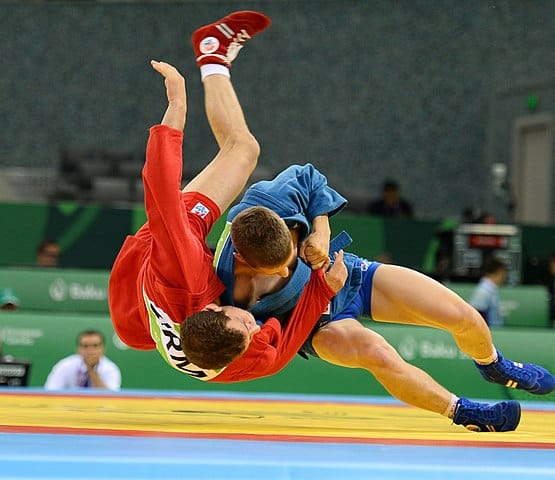
Image Credit: President.az via Wikimedia Commons

Sambo is a national sport in Russia that is also popular all across the former Soviet republics. But this martial art is unfamiliar to many people outside of Russia and it’s not due to being inferior to other arts. Sambo is actually a very effective martial art.

Even though Sambo has been around since the 1920s, it wasn’t receiving much attention from the public until Sambo trained fighters started winning major fights in MMA. Sambo, in some way, resembles modern MMA fighting. It stands for a unique mixture of the best techniques from different martial arts like judo, jujutsu, and various styles of wrestling. 

When you understand the origin of Sambo and how it evolved, you will understand more clearly why this art is so effective as I will explain to you in this article.

The History of Sambo 

In the 1920s, Russian military needed a new combat system which would improve fighting abilities of their servicemen. They selected Vasili Oshchepkov and Viktor Spiridonov, both skilled martial artists, to come up with a new fighting system. 

Viktor was a skilled wrestler and an expert in Japanese jujutsu while Vasili was one of the first foreigners to learn Judo under Kano Jigoro. Their vision was to mix most effective martial arts of that time into one style of fighting. 

By mixing grappling and striking techniques together, they came up with a fighting system that prepares a person for any fighting scenario. This was a very innovative approach for that time and we would have to wait around six decades to see the birth of similar fighting style called Mixed Martial Arts(MMA). 

The final result of their work was a self-defense system that originated from Judo, catch-wrestling, Jujutsu, and others. They took only the best techniques from each of these arts so that a person could learn only the most effective techniques.

According to world-class Sambo coach Bruno SCHMITT, who educated us, the Russians called this new system “Combat Sambo Spetznas.” The word “Sambo” translates to “self-defense without weapons.”

Image Credit: CFS SAMBO FRANCE

Sambo became a part of the Russian military combat training three years later in 1923. And with the help of Anatoly Kharlampiyev, who had strong political contacts, Sambo got accepted by the USSR Committee of Sport’s in 1938.

Three Types Of Sambo

There are two major forms of Sambo called “Sport Sambo” and “Combat Sambo”. The third form is called “Freestyle Sambo.” The following paragraphs explain all three forms in depth:

Sport Sambo

This form has a lot in common with catch wrestling and Judo. Events include only grappling without striking and the emphasis is on throws, pins, and submissions. Unlike in Judo, fighters can use leg locks and there are less grip restrictions. But on the other side, they are not allowed to use chokeholds during the fights

Sports Sambo competition

Combat Sambo

The original form of Sambo was created in the 1920s for Russian military self-defense. This new self-defense system was first called “Combat Sambo Spetznas.”

Combat Sambo Spetznas is a hybrid mixture of striking and grappling martial arts put into one fighting style. This form was designed and used by the military. It is very similar to Krav Maga, with lethal techniques to defeat their opponents by any means possible, who may be armed or unarmed. 

Fighters can use punches, elbows, kicks, and knees, as well as painful groin strikes, headbutts, and soccer kicks. It’s a complete self-defense system that teaches you to fight both standing and on the ground. And once the fight goes to the ground, Sambo teaches how to apply various grappling techniques.

In 1990, the French redesigned the Sambo by eliminating all deadly techniques. This safer form was developed to allow Sambo practitioners to test their combat skills in sporting competitions without using deadly techniques. The French named this safer version of sambo “Sambo Global,” which looks very similar to modern-day MMA fighting.

However, when the USSR regime ended in 1991, the Russians changed the name of “Sambo Global” to “Combat Sambo.” At the same time, the Russians changed the name of their Sambo from “Combat Sambo Spetsnaz” to “Combat Sambo” by dropping “Spetsnaz.”

Therefore, “Combat Sambo” has two different forms. The first form is the French version, which was created for sporting events. The second form is the self-defense version of the Russian military, with all the deadly techniques.

There are two major sambo federations as well. (The following information has been provided to us by Sambo coach Bruno SCHMITT.)

“The World Combat Sambo Federation,” based in Russia, is where many Russian military people compete without head and shin guards. This federation promotes rules that are similar to those in professional MMA fights. This is the federation where former UFC champion Khabib Nurmagomedov won his World Combat Sambo championship.

https://youtu.be/Vf51084tHqo
Khabib Nurmagomedov is competing under the World Combat Sambo Federation

The second Combat Sambo Federation is called the “FIAS Federation.” FIAS adopts a different set of rules in their competitions than the World Combat Sambo Federation. Their rules require Combat Sambo competitors to wear head and shin guards when they compete. And competitors have limited time to ground and pound their opponent before the referee resets the fight.

https://youtu.be/9bkl2P8bUbk
Combat Sambo competition under the FIAS Federation

Freestyle Sambo

In 2004, the American Sambo Association (ASA) founded freestyle Sambo version that was similar to the Russian “Sport Sambo” as the focus was on throws and fast groundwork. Yet, freestyle allows all of the submissions that are were not allowed in Sport Sambo like chokeholds. ASA created this type of Sambo to attract non Sambo practitioners from judo and jujutsu to participate in Sambo events. However, the ASA’s version of Sambo shut down after 12 years and around 35 events and is no longer allowed in Sport Sambo.

RELATED:
What Are The Different Styles of Wrestling? A Beginner’s Guide

Required Uniform/Gears In Sambo

In all forms of Sambo, fighters must wear the following gear:

  • Cotton Jacked known as “Kurtka” or “Sambovka”
  • Wrestling shorts
  • Shoes
  • Head gear (just in Combat Sambo)
  • Shin guards (just in Combat Sambo)
  • Open finger gloves (just in Combat Sambo)

Is Sambo Good For Self-Defense?

Sambo is one of the best martial arts one can learn for self-defense. It is one of the rare fighting systems that will teach you how to fight wherever the fight takes place. Unlike some other arts, Sambo is not one dimensional and it covers all elements of fighting similar to MMA does. Here are some of the crucial skills you will learn in Sambo that you can apply in street fighting:

  • Powerful Judo throws and sweeps
  • Wrestling takedowns
  • Various chokes and joint locks

Having strong grappling skills and knowing how to take a person down gives you a big advantage in street fighting. You see, every person can throw a punch but not many people know how to defend against takedowns or fight on the ground. Taking the attacker down gives you space to either run away or secure a dominant position from which you can apply submissions. 

Combat Sambo training also teaches you how to use punches, kicks, elbows and knees to do damage. This form even includes “dirty” techniques like groin strikes one can use for self-defense. Not many other fighting systems will teach you how to use or defend against illegal tactics. 

What Are The Differences Between Sambo And MMA?

At first, Sambo and MMA may look similar on paper. But, they differ a lot when it comes to rules, the way fighters compete or the uniform they are wearing. 

  • Sambo fighters compete on wrestling mats while MMA fighters compete in a steel cage or a boxing ring. 
  • Sport Sambo fighters must wear either red or blue cotton jacket, wrestling shorts and shoes. MMA fighters, however, wear just a shorts and a pair of 4-oz gloves. 
  • Sambo matches last five minutes. This is much less than in MMA where matches last 3 rounds with 5 minutes each or 5×5-minute rounds if there is a title on the line. 
  • The action is Sambo is really fast as fighters don’t have to keep their energy for later rounds. MMA is a bit slower since fighters need to be more tactical and give their best not to gas out quickly. 
  • Like in MMA, combat sambo fighters can fight both standing and on the ground. But, they don’t get any points for landing strikes unless they score a knockdown. The emphasis is on grappling and top control. Fighters win the most points when they score a takedown, control the opponent on the bottom or attack via submission. This is not a case in MMA as their judges evenly score both striking and grappling aspects. 

Even though these two fighting styles differ in many aspects, Sambo is often seen as a really good base for MMA. Sambo fighters in MMA are a though matchup for anyone because they are all-round and can fight any type of fight. Whether it’s striking on the feet or grappling on the mats, they can do it all. 

What Is The Difference Between Sambo And Judo?

Sambo emerges from Judo and these two arts have a lot in common. But, Sambo also consist of techniques from other fighting styles like wrestling and jujutsu. And unlike in judo, Sambo fighters can use strikes to do damage while Judo is based on grappling only. 

Sambo fighters use a lot of Judo throws and joint locks but not all of them. When it comes to chokeholds, Sport Sambo fighters are not allowed to use them while Combat Sambo fighters can. And both forms allow leg locks that Judo forbids. 

Further, fighters don’t use just judo techniques to score takedowns. No, they also learn how to execute various Greco Roman and catch wrestling takedowns you won’t learn in Judo. So set against Judo, it’s fair to say Sambo is a more rounded art.

What Are The Differences Between Sambo And BJJ?

BJJ is a grappling based martial art that doesn’t include any striking at all. The point is to use throws to take the rival to the ground where you can submit them with chokes and joint locks.

Sambo, on the other side, comes from Judo and has two forms. First one is Combat Sambo which is a mix of striking and grappling martial arts put into one style of fighting. The second one is Sport Sambo which is very close to BJJ because it is also a grappling art that doesn’t include any striking. 

For the sake of our argument, let’s compare Sport Sambo with BJJ:

  • In BJJ gi competition, fighters wear a gi jacket, pants, and belts around their waist. Sambo fighters wear a similar cotton jacket, wrestling shorts, and shoes. 
  • BJJ focuses on securing a dominant position over the opponent and submitting them. Sambo fighters are not allowed to pull guard and the action is much faster. Sambo’s emphasis is on scoring powerful takedowns and establishing top control. 
  • BJJ fighters can use various chokeholds that are not allowed in Sport Sambo. 
  • Matches in BJJ last from 2-10 minutes depending on the experience of the fighters while Sambo matches last 5 minutes each.

Who Are The Best Sambo Fighters In MMA?

In MMA, there have been many great fighters who had a strong background in Sambo. And some of them we listed below were even UFC champions and one of the best in the history of the sport.

Fedor Emelianenko 

Fedor is the former PRIDE FC champion whom people often see as the greatest heavyweight fighter in the history of the sport. Even though this stays open for a debate, no-one can deny Fedor was the most dominant one. He is, perhaps, an ideal example of how useful Sambo is for MMA. 

Image Credit: Thaifighter911 via Wikimedia Commons

Before shifting to MMA, Fedor was a skilled Sambo fighter. He even competed in Sambo tournaments while fighting in pro MMA matches at the same time. Here are some of his notable Sambo achievements:

  • Four time World Champion 
  • One time European Champion
  • Six time Russian Champion

Khabib Nurmagomedov

Khabib is one of the greatest UFC champions who has a really strong background in Sambo. He is a grappling wizard who uses a lot of Sambo techniques while fighting in MMA. Looking at his style, you can see he is a master in clinch control. He also very good at using trips, throws, and his ground and pound are the best in the business. These are all techniques he learned training Sambo as a child. 

Khabib grew up in the rough setting of Dagestan. He spent his childhood training Judo and Sambo under the supervision of his main coach and father, Abdulmanap. He also took part in many amateur competitions and was a Sambo World Champion on two occasions (2009; 2010).

Top MMA Fighters Who Have Competed In Boxing

0

MMA fighters usually have a strong background in one martial art which is their “Core skills”. That said, boxing is often seen as one of the best core skills for MMA. Fighters who have strong boxing skills usually do well in MMA fighting and there are many reasons why.  

You may assume that Boxing skills that utilize just their hand strikes is not of importance in MMA fighting. But, not a single martial art out there will teach you better footwork, head movement and how to throw punches than boxing does. These skills play a huge role in MMA fighting and one might have a difficult time competing without them. 

Over the years, there have been many great MMA fighters who had a strong boxing base and even experience fighting in pro boxing matches. Some fighters we have included in our list were even UFC champions but people somehow don’t know much about their boxing history. So in this article, we are bringing you 10 best MMA fighters who have competed in boxing. 

11. K.J Noons

Photo Credit: fightinginsider.com

Noons is a former pro boxer who fought in the best MMA promotions such as UFC and now defunct Strikeforce MMA. Growing up in martial art family, Noons got into boxing at the age of eight and he spent his youth competing in amateur boxing matches. But instead of turning into pro boxing, he decided to fight in MMA first. 

After scoring a couple of good wins in MMA, Noons switched over to make his pro boxing debut in 2004 with the win over Ernest Lesure. In the following years, he would fight both in pro-MMA and boxing matches at the same time.

After almost five years of fighting in two sports, Noons made a decision to retire from boxing in 2009 with a record of 11-2. At the time, his MMA career started to rise, notably when he beat Nick Diaz and Yves Edwards to win and defend the “Elite XC” lightweight title. 

But, Noons failed to deliver in the biggest MMA promotions. In 2010, he kicked off his Strikeforce career strong by scoring two back to back wins. But, it would all fell apart because he went on to lose four out of his next five fights. Despite the negative record, he somehow was able to land a contract with the UFC where he fought two times and went 1-1.

10. Chris Lytle

Photo Credit: Ben Kevan via Wikimedia Commons

Lytle is a retired UFC fighter and the former Cage Warriors welterweight champ who had a solid pro boxing career. Some fans may think we are making a mistake here because most of us know Lytle as an amazing BJJ fighter. But he actually has really good boxing skills he rarely showed in MMA. Don’t look any further from his pro boxing career if you need any proof. 

Lytle kicked off his boxing career in 2002 while he was still active in MMA. In the next three years, he was able to compile a record of 13-1-1 and win the “Indiana Boxing Association” title. Just months before his last boxing bout in 2005, he signed with the UFC which is maybe a reason why he left boxing. 

But, it seems like Lytle made the right decision as he went on to have a really good UFC career. He is a true UFC veteran with 20 UFC pro fights on his record and his notable wins were against Matt Serra, Dan Hardy, and Matt Brown.

9. Jennifer Maia

Photo Credit: Larissa Joly via Wikimedia Commons

Maia is a former “Invicta FC” champ and the UFC title challenger who has a strong pro boxing background. In her own words, Maia dreamed about making a career in boxing. But, seeing that MMA is becoming more popular forced her to rethink and shift over to cage fighting. 

Maia actually started her fighting career in the Muay Thai gym at the age of 15. But, she moved into boxing five years later and made her pro debut in 2008. During her short boxing career, she fought for the “Centri de Boxe” promotion in Brazil where she went 3-0 as a pro. Just a year later in 2009, she left the sport of boxing to fight in MMA matches. 

After working her way up for the next three years, Maia signed with the biggest female MMA promotion, Invicta FC in 2012. She won the flyweight title four years later which secured her a contract with the UFC. After going 3-2 inside the UFC octagon, she faced Valentina Shevchenko in a flyweight title bout but lost via decision at UFC 255.

8. Vitor Belfort

Photo Credit: Tiago Cata

Belfort is one of the pioneers of modern MMA and perhaps one of the most intimidating strikers in UFC history. Even though we all know him as a vicious striker, Belfort didn’t come into MMA from a boxing background. Instead, he discovered his passion for boxing in the midst of being a top MMA fighter. This lead Belfort to switch over to boxing after winning the UFC title and while being in his prime. 

Belfort made his boxing debut in 2006 when he beat Josemario Neves in Brazil. The fight ended quickly with Belfort sending Neves three times to the canvas in the opening minute of the bout. In spite of having an impressive debut, this was his last boxing fight.

Two years later in 2008, Belfort wanted to sign with one of the biggest boxing promotions called “Golden Boy”. His plan was to fight against the former boxing champ James Toney in a 6-round pro boxing match. But, this boxing match never came to fruition because Toney instead signed with UFC to fight Randy and subsequently lost via submission.

7. Jorge Masvidal

Photo Credit: TheMacLife via Wikimedia Commons

Masvidal is one of the best strikers in modern MMA who possess technical boxing skills. Although he later added strong kicking skills to his game, boxing has always been his biggest strength. Masvidal’s mastery of boxing skill was full-on display when he knocked Derrent Till out with a perfect timing boxing combo at UFC Fight Night 147. Here’s a highlight clip of that fight.

Masvidal grew up fighting on the streets of Miami and training in the boxing gym. He had a knack for fighting from a young age as he was involved in numerous street fighting.

Masvidal eventually became an MMA fighter. But just five fights into his journey as an MMA fighter, he decided to shift to pro boxing in 2005. However, he was in for just one pro boxing bout in which he beat Joseph Benjamin via decision. 

Shortly after, he went back to MMA where he started making a name for himself in the Strikeforce promotion. He signed with the UFC in 2013 but needed a couple of years to unleash his full potential. In the first couple of years with the UFC, his career was a mix of great KO’s wins and decision losses.

But just as we all thought he was about to end his career in 2017, Masvidal needed less than a year to turn things around and grow into a huge UFC star. In 2019, he scored three amazing KO’s, out of which one was the fastest in UFC history against Ben Askren (5 seconds). In 2020, he accepted a short-notice title bout against Kamaru Usman for the UFC’s 170 lbs title, but he went on to lose a five-round decision.

6. Cody Garbrandt 

Photo Credit: MiggyTube TV via Wikimedia Commons

The former UFC 135 lbs champ Cody Garbrant is a fighter with arguably the fastest hands on the UFC roster. He is a pure boxer inside the cage and a great instance of how useful boxing skills are in MMA fighting. 

Born in Ohio, US, Garbrant grew up in a martial art family. His uncle was a former Olympic alternate in boxing who enrolled Garbrant into boxing at the age of 15 and was his main trainer. 

Garbrant used to go into pure boxing wars with his brothers and they used to beat each other really hard. This helped him to develop both great fighting skills and strong mental toughness from a very young age. During this time, he also fought in amateur boxing matches and he had ambitions to go into pro boxing as well. 

He won two back to back “ABA Junior Boxing” titles and was able to put together a record of 32-0 as an amateur. But despite all the talent, he never turned into pro boxing as his mother thought the sport was too violent. Instead, he wrestled during the high school days and then turned into pro-MMA in 2012. 

Being trained in wrestling and boxing allowed him to quickly work his way up in the MMA world and sign with the UFC. He won the UFC title just four years after he made his pro-MMA debut, which is a very short time span. 

5. Israel Adesanya 

Photo Credit: informationcradle.com

We all know Adesanya for his amazing kickboxing skills. But, did you know he also fought in pro boxing matches? He got into boxing in 2014 when, after suffering two losses in kickboxing, he wanted to try his luck in a boxing ring. 

But Adesanya was in for a rough start as he lost a decision to Daniel Ammann in his debut. He would bounce back with five straight wins in 2015 which shows us he had the talent needed to succeed in boxing as well. 

It’s worth pointing out that he also had seven kickboxing and three MMA matches the same year he scored five wins in boxing. So in total, Adesanya fought 15 times in three different sports in 2015. Can you imagine what would have happened if he focused on boxing only?

Despite the initial success, he left the sport of boxing after just one year in which he compiled a record of 5-1. He stayed in kickboxing for a couple of more years before fully committing to MMA in 2017. 

We could often see him using a lot of boxing techniques in his UFC matches. His timing, head movement, and punching combos are second to none. These were the skills that helped him win the UFC title in less than two years with the promotion.

RECOMMENDED FOR YOU:
Top 15 Skinny MMA Fighters Who Are Tougher than Big Fighters

4. Conor McGregor

image credit: wikimedia commons@Andrius Petrucenia

Conor McGregor was a boxer long before becoming UFC champ and global star. He started his fighting career by joining the “Crumlin Boxing Club” when he was 12 years old. Over the next years, he grew into a skilled boxer by training with two-time boxing Olympian, Phil Sutcliffe. 

During his boxing days, McGregor used to fight in amateur matches. He was talented and seen as a prospect after becoming All-Ireland champ at the youth level. But in spite of all the boxing potentials he had, McGregor never committed to a pro boxing career. Instead, he shifted to MMA shortly after his family moved to West Dublin when he was 16 years old. 

At the peak of his UFC fame, many fans thought he had all the skills to fight against elite boxers. And in 2017, McGregor took on one of the greatest boxers in Floyd Mayweather in a pro boxing match. The historic event took place in Las Vegas and was one of the biggest fights in the history of combat sports. 

Despite the fact this was his pro boxing debut, McGregor went on to give Mayweather some problems in the early rounds. Even though he landed a couple of good shots on Mayweather’s chin, he got TKO’d in the 10th round.

3. Anderson Silva

Anderson Silva is often seen as the best UFC fighter of all time. But even the loyal Silva fans tend to forget that he once was a pro boxer. He started his boxing career in the early 90s fighting in amateur matches across Brazil.

Silva turned pro in 1998 and made his debut fight against Osmar Teixeira which he lost via knockout. After the loss, Silva didn’t want to continue with boxing and he put his entire focus on succeeding in MMA instead. 

But after having a lot of success fighting in the Japanese MMA promotion called “Pride FC” and “Cage Warriors”, Silva returned to boxing to have one more fight. In 2005, he knocked out Julio Cesar De Jesus in the second round to win his first pro boxing match. Shortly after, his MMA career exploded when he signed with the UFC and beat a title contender Chris Leben in his second UFC fight.

Throughout his MMA career, Silva has never hidden his love and passion for boxing. While he was in his prime and UFC champ, he was open for various boxing matches. There were talks about him fighting against Roy Jones Jr. but this fight never happened. It never came to fruition.

2. Holly Holm 

Photo Credit: Tantamle via Wikimedia Commons

Holm is a former UFC champ with the best boxing resume on this list. Before MMA, she was a famous name in the female boxing world and the highest-ranked female boxer in all-time pound-for-pound rankings. For many years, she fought and dominated on the world stage against top opponents. She is by far the most technical female standup fighter we have ever seen compete in MMA. 

Holm started her fighting career in kickboxing. After winning many world titles, she moved to boxing in 2002 where she enjoyed the same success. In the next 10 years, she was able to put together a record of 33-2 and win many titles. 

We have to point out that Holm won boxing titles in three different weight classes and has 16 title defenses in total. And, she received many “fighter of the year” awards and was the highest ranked female boxer when she retired in 2013. 

Holm kicked off her MMA career with seven straight wins before signing with the UFC in 2015. It’s fair to say we have never seen a female MMA fighter with such technical standup skills. From lateral movement to mixing kicks with the punches, everything she did on the feet was perfect. 

In her third UFC fight, she was able to pull one of the biggest upsets in sports history. At UFC 193, she handed Ronda Rousey the first loss by knocking her out cold to win the UFC title.

1. Francis Ngannou

ChinaImages/Depositphotos.com

Francis Ngannou, who is from Cameroon and a former UFC heavyweight champion, is famously known for having the most powerful punch ever recorded. His road to trying out professional boxing has been a long one.

When Ngannou was 22, he began training in boxing, but due to his economic situation, he couldn’t commit himself to full-time boxing training. Still, he never gave up his dream of becoming a boxer one day.

Ngannou moved to Paris to follow his boxing dream and pursue a better life. When he started boxing training, his coaches urged him to try MMA instead because they believed Ngannou could become a great MMA fighter.

Eventually, Ngannou started his MMA training at the age of 26, much later than many other MMA fighters. Despite starting late, Ngannou became a UFC heavyweight champion in 2021 at UFC 260 by defeating Stipe Miocic via KO.

But in January 2023, due to a contract dispute, Ngannou was released from his UFC contract. He will eventually sign a new deal with PFL MMA in May 2023 that also allows him to box professionally simultaneously. And boxing was something he had always wanted to do alongside his MMA career.

Seizing the new opportunity to box, Ngannou leveraged his fame as a top MMA fighter to crossover into the boxing world against top heavyweight boxing champion Tyson Fury on October 28, 2023, in Saudi Arabia. In the bout, Ngannou did far better than most people anticipated. He was able to knock down Fury in the third round but lost in a split decision after 10 rounds.

Despite losing, going the distance against the best heavyweight boxer in the world in his first-ever boxing match is a great feat that no other MMA fighter has been able to achieve.

Top MMA Fighters You Never Thought They Were Bullied

0
Photo Credit: UFC@Zuffa LLC

It sucks when you hear of someone being bullied or even experience it yourself. Bullying can come in different forms, with the two most notable being the mental and physical versions. In some cases, they can happen at the same time with the exact same bully. Other times, they might be separated. It is possible that you look at athletes and assume they never experienced such an issue. Yet even top MMA fighters dealt with it.

It’s true! MMA Fighters might not experience bullying so much today, as they are obviously fighting professionally. It’s rare to see such a thing happen when you know the person being picked on is likely capable of breaking several bones. That said, some people actually began their run in martial arts simply due to bullying.

Martial arts can teach people how to defend themselves. However, “defending yourself” is not just protecting yourself or others from being robbed, but it can also be useful in helping you simply defend yourself from random attacks. Of course, “random attacks” might happen with bullies as they might physically abuse you on a weekly or even daily basis.

Bullies thought twice about picking on some MMA fighters. Many have stories from times that they had to put a person in their place. Their bullies likely tried to steer clear of them as often as possible afterward. Who are some of the top fighters to experience bullying that you never thought were bullied? We’re glad you asked.

Mike Perry

Photo Credit: MMAnytt via Wikimedia Commons

Mike Perry has won Fight of the Night & Performance of the Night a few times each in his UFC career. He has a purple belt in Brazilian Jiu-Jitsu and trained for years in other martial arts. That said, you’d be surprised to hear of a tough guy like Perry being bullied. Yet he actually dealt with this quite a lot, especially in High School.

Perry has spoken about this several times now, but the main issue he dealt with was built on race. Perry attended a school with several minorities while he was one of possibly 10 white people in the entire school. The school is in Flint, Michigan, an area of the state that has experienced a lot of hardship over the years. Perry recalled how the same issue happened at other schools, but the bullies never made him back down.

Of course, that led to Mike getting into several fights that resulted in suspensions, as well as several issues with the law. At one point, he was even put under House Arrest and even spent time in jail. While all of Perry’s actions were certainly not triggered by his bullies, his decision to never back down resulted in some realizing he was not someone to mess with. Perry is now on the right path, and he thanks the fight world for that fresh start.

Nick Diaz

The life of Nick Diaz might need to be made into a film eventually, as he’s had a lot of lows in his life. He had to grow up at a young age as he dealt with several issues that one never should have to go through. The bullying began for Nick when he was young. He recalled a story regarding this during an interview with MMA Fighting, he claimed:

 I’ve never had another job. I didn’t graduate eighth grade. I could have, but I got into too many fights in middle school. I was moved from school to school, put on drugs, and made fun of by classmates. Because after being disruptive in class the teachers would always tell the other kids I was on meds and sometimes don’t take them.

From mmafighting.com

On top of the problems in school, Nick went through a horrible tragedy when he was told that his girlfriend and childhood sweetheart committed suicide. He claimed that was when he was a grown-up and had to move forward. He won his first fight via choke and mentioned that all he could think about was her. However, he soon moved forward into fighting and made it his new life passion.

Today, both Diaz brothers are looked at as two of the toughest badasses in the MMA world. It can be kind of shocking to hear that Nick dealt with bullying, especially the mental kind. Yet he is proof that one can move past this and still have a good life, even after dark periods.

RECOMMENDED FOR YOU:
Top 15 Skinny MMA Fighters Who Are Tougher than Big Fighters

Mark Hunt

https://twitter.com/JugntByMarkHunt/status/1037279241975427073?s=20

Most of the time, we think about bullying issues that involve those at least near our age. We might be a Freshman while they are a Senior, but that tends to be the biggest gap. Moreover, you kind of expect bullying to happen in a school setting. Perhaps, you might see it occur at your place of employment. Then on other occasions, you might see it at a recreational place you like to attend like a bar, skating rink, etc.

The last place you expect to deal with horrible bullying is in your own home. Moreover, the last person you expect to bully you is one of your own parents. However, that is exactly what Mark Hunt had to deal with. His father bullied him badly, He opened up about this a number of years ago with a New Zealand on-line publication called Stuff. He told them a story regarding a time his father tied him up and beat him, saying:

My old man was ruthless. He terrorized us. He’d start with the mental games before he even found the implements to hit us with. He once tied me up in the garage with my hands above my head and beat me with a frigging broom handle. I got away and my brothers came after me. They said f***ing get back there or we’re all gonna get it.”

From Stuff.co.nz

All of this made Hunt sort of turn into a bully himself, as the trauma caused a lot of problems for him. Mark turned to the fight world, where he found a sense of calm in the personal storms of his life. From kickboxing to MMA, Hunt has been quite successful in his career. If you want to read more about Mark Hunt’s life, you can find his autobiography on Amazon by clicking here.

Paige VanZant

Photo by Harry Murphy/Web Summit via Wikimedia

There are horrible issues in life then there is what Paige VanZant went through. Before she became a fighter, and well before her days in the UFC, Paige had to survive. We do not mean surviving like what you might see on the Discovery Channel. Rather, Paige had to survive mental and physical torture that no man or woman should ever have to experience.

Paige opened up about the trauma she dealt with as a young teenager back in Oregan in her autobiography. She attended a party at the age of 14 and was sadly sexually assaulted by multiple boys that evening. While most could have easily seen VanZant as the obvious victim in all of this, that was not what she experienced.

Everywhere she turned, classmates at her school gave her dirty looks and made fun of her. All over something she did not control nor want to even happen. The bullying lasted for years, and it seemed to be endless. One story she recalled was once returning home to find a bunch of condoms hanging in a tree by her home.

All of this made Paige consider suicide, as she felt it was the only way out of the pain she was experiencing. It is horrible how cruel people can be to others for no reason other than just to be cruel.

Paige jumped into the world of fighting to properly defend herself after all of this occurred. She never wanted to be assaulted nor pushed around again, and that resulted in her decision to get into Brazilian Jiu-Jitsu. Eventually, she had the chance to work for the UFC and even appeared on ABC’s Dancing with the Stars. All of this proves to young girls that you can get out of the darkness and have a new better life, just as Paige managed to do.

Israel Adesanya

It goes without saying that Israel Adesanya has had one heck of a career. While he hails as a man from the great nation of New Zealand, he was actually born in Nigeria. Israel left the popular African nation in 2001 at the age of 12 when he and his family moved to New Zealand. While moving from Nigeria to New Zealand might not sound like a massive deal to some, it certainly was for Israel.

Not only did he leave behind family and friends, but he also came to a mostly white nation. He recalled in an interview with MMA Junkie that he was one of the few black kids at his school. Israel claimed was “a runt,” where he had to deal with bullies that went after him over the color of his skin. Yet on top of this, he was on the smaller side and that made life even harder.

The mental side of bullying takes a toll on someone as well. It’s not just that you are being physically attacked by people. Yet they are also cutting you with hurtful words, which can often hurt you worse. Israel admits to breaking down and crying due to all the issues he faced. That made him look himself in the mirror and start using positive affirmations to help himself.

Yet at the age of 18, Adesanya watched a kickboxing movie that made him want to get into the sport. He even moved to China for a while to be closer to all the action. While in kickboxing, Israel also trained in MMA. Adesanya would leave the sport of kickboxing behind in 2017 with a final record of 75-5!

He put all his focus on MMA and has since become one of the best fighters on the planet. In the UFC, Israel has held gold and won Fight of the Night & Performance of the Night multiple times. He grew well into his body and has now become a threat that no bully would ever try to mess with. Thus proving that in spite of all the problems Israel went through, he is making all the bullies of his past regret their actions.

RECOMMENDED FOR YOU:
Why Are MMA Fighters Skinny And Don’t Have Big Muscles?

Georges St-Pierre

Photo Credit: scienceduck via Flickr

Georges St-Pierre is one of the greatest mixed martial artists who ever lived. Perhaps, he might be THE greatest to ever live. Regardless of your opinion on who the “best of all time” happens to be, GSP is usually Top 5 on every list. That is for good reason, as he became a legend in the octagon, beating some of the greatest fighters in history. He has several records for his run as UFC Welterweight Champion alone!

However, before he jumped into the world of fighting, GSP was bullied heavily. He claimed in his book “The Way of the Fight,” that he was quite a nerd in his youth. He was small, skinny, and had acne problems. That made him an easy target for bullies back in his home town in Quebec, Canada.

He mentioned one very horrible experience he dealt with in the book. Three older bullies actually jumped him when he was young. They stole his lunch money and stripped him of his clothes while fellow classmates actually stood and watched, laughing the entire time at him. This was quite a traumatic experience yet Georges states that this was one of the main reasons he got into the world of fighting. He cites that he got into fighting mostly so he could defend himself against one particular bully.

Of course, most know by now that Georges has spent most of his life learning every dang martial art there is.

He’s now a 3rd Dan Black Belt in Kyokushin Karate, yet he was a 2nd Dan in the martial art by his early teenage years. He also earned a black belt in Brazilian Jiu-Jitsu. He not only learned how to defend himself but he also advocated for others.

After he became a famous fighter, GSP started his own Anti-Bullying Foundation simply called the “GSP Foundation.”

St-Pierre later returned to the school where he was bullied as the UFC Welterweight Champion. He spoke to the students about his bullying story and why it was not a good thing to do to others. This also gave the young students hope that if a nerd like GSP could become an all-time great fighter, they might be able to do the same. If not, they could at least find their way into martial arts to defend themselves just like he did.

Chris Weidman

Photo Credit: Peter Gordon via Wikimedia Commons

Chris Weidman shocked the world when he beat Anderson Silva twice years ago, setting him up on a path to stardom in the UFC. Yet the world was not all sunshine and rainbows for the MMA Fighter. He was bullied relentlessly as a child and was once even hospitalized as a result of it. While he had sort of forgotten the extent of the bullying he went through, when speaking at an Anti-Bullying event, he realized just how bad he had it.

It was here that he realized that his brother had severely bullied him to an extent that no one should ever allow. Weidman told Yahoo Sports:

My brother definitely had a history of beating me up and abusing me…I grew up getting bullied and fighting a lot. My brother was probably one of the toughest kids from my neighborhood and he didn’t make it easy on me. He made sure I was getting beat up as much as possible growing up. If he wasn’t beating me up, he was making his friends beat me up. He threw a 10-pound weight on my head because I wouldn’t get him a cookie. [It] split my forehead open pretty good.

From Yahoo Sports

Weidman does believe that the trauma and adversity he went through made him into the person he is today. However, horrific bullying like this could have completely ruined the young Christopher before he ever became a star in the MMA world. Of course, it was issues like this that made Weidman consider finding a way to defend himself against his brother and his brother’s friends.

He was able to get into wrestling where he went on to become an NCAA Division-1 Champion. Chris also managed to earn his black belt in Brazilian Jiu-Jitsu. Weidman even runs his own training school to help other kids learn how to fight, especially those who are there to simply learn how to defend themselves from potential attackers.

Daniel Cormier

Daniel Cormier(DC) is the only man to ever hold the UFC Heavyweight & Light Heavyweight Championships at the same time. He was even the first and only to defend one while holding the other. Before DC became world-famous for taking down nearly everyone he fought in the octagon, he was a kid like the rest of us were. He went through a traumatic bullying experience as a kid, with one bully being the chief problem for him.

DC spoke about this on ESPN’s Highly Questionable, where he referenced a guy named Gilbert Francis that bullied him religiously mostly from his 2nd grade to 4th grade in school. Here’s a clip of that video.

https://youtu.be/ilDHzUjXaxg

It is so amazing to hear DC be incredibly open and honest like this. Where he can say even as an adult there are issues that plague him regarding his childhood bully. The man is a star in the world of MMA, yet also was a star in the amateur wrestling world where he was an NJCAA Wrestling Champion & All-American. He was later an NCAA All-American, competed on the USA Wrestling team, and even took part in the Summer Olympics.

DC’s decision to get into wrestling and learn how to defend himself against pretty much anyone was clearly sparked by the bullying he went through, along with the joy he had in the sport. Today, any bully would think twice before trying DC.

Ronda Rousey

Ultimately, bullying can come in several different forms. Ronda Rousey has been involved in martial arts pretty much her entire life. Her uncle is “Jude” Gene LeBell, and her mother AnnMaria De Mars is a Judo Black belt who won the gold medal at the 1984 World Judo Championships in the -56kg division. You could say that Rousey literally had no choice but to become a martial artist.

However, that does not mean that people avoid bullying you. Ronda had felt she was bigger than she was for a good portion of her young life, causing her to develop bulimia. This was not helped by bullies saying small catty things to her about her size. She lost her father very young in life, and it caused a lot of emotional damage that led her to have trouble with her weight.

Yet she was not oversized and her run in Judo only helped her get in good shape but this was not the traditional female figure that everyone was “brainwashed” to believe was proper. Rousey overcame her issue in this department by accepting who she was. This journey of self-discovery and acceptance allowed her to get past the crap people might say. 

She kept to this concept into her UFC career and has spoken heavily in favor of women accepting their bodies, even when it’s not considered a “traditional” look.

Of course, Ronda has also dealt with physical bullying. A few times she got into physical altercations with people. At one point, as she recalled on several television shows, she beat up a group of guys defending herself. Another time, however, she and her friends beat another round of bullies. Here’s that video clip:

Those bullies sued Rousey when they found out who she was. Of course, Ronda was shortly into her MMA career at that point.

All of this shows one thing. Rousey never backed down from people and overcame mental bullying issues. Her training in Judo helped her a lot, Of course, she holds a 6th Dan Black Belt as well as Olympic Bronze Medal and 3 Pan-American Gold Medals, While it would be asking a lot for someone else to have all of this success, Judo prepared her for so much.

If you are interested in reading more about Ronda Rousey’s journey, you can find her autobigraphy on Amazon by clicking here.

RECOMMENDED FOR YOU:
Does Judo Have Submissions? Yes, Here’s What You Need To Know

Uriah Hall

Uriah Hall had a difficult childhood filled with bullying issues. He was often bullied but did not back down from them, attempting to fight them but struggled to do so. This caused him to get beaten up tremendously. People often forget that Hall was not born in the United States, as he was actually born in Jamaica. 

When he moved to the United States, he began going to a school that had bullies everywhere. A lot of the bullying started verbally, which caused Hall to get into altercations on the regular. Hall wrote about a few instances with bullies for The Cauldron, with one standing out. A time when he was beaten up on the school bus at age 13.

In fact, the bus attack incident was so brutal that one of Hall’s other bullies actually stepped in to stop the attacking bully. Hall claimed that he got off the bus humiliated over what happened. He did not want to go back to school after this and even contemplated suicide. His mother took him to a therapist to help but what ultimately assisted Uriah was martial arts. The rest, as they say, is history.

His mother enrolled him in a local martial arts studio where he would train to learn how to defend himself. Hall has repeatedly reference today how MMA or Martial Arts literally saved his life. Hall actually ended up getting a black belt pretty young in life in Kyokushin Karate, which he is now a second-degree black belt in. Today, he also holds a blue belt in Brazilian Jiu-Jitsu.

Why Does MMA Use An Octagon? Quick Answer

0
(Credit: Lee Brimelow via Wikimedia)
Photo Credit: Wikimedia

The UFC octagon is often loosely referred to simply as “the cage” by many MMA fans. The only MMA promotion that uses the octagon is the UFC. The rest of the MMA organizations do not use the octagon in their events. In the following, you will quickly learn everything you need to know about the octagon.

The UFC Octagon Is Trademarked

The name “Octagon” is intellectual property that is owned by the UFC. Therefore, no other MMA promotion can set up a fighting cage to the exact same specification as the UFC Octagon, nor can any other MMA promotion refer to their cage as the “Octagon.”

The octagonal competition mat and fenced-in design are registered trademarks and/or trade dress of Zuffa, LLC and are symbolic of the highest quality mixed martial arts events presented under the UFC® brand name.

UFC.com

Why Does UFC use an octagon?

According to the UFC, the UFC octagon was created primarily for safety. The Octagon has an eight-sided fence wall that surrounds the padded canvas to protect fighters from falling out during a fight, unlike in a traditional ring where fighters can fall out between the ropes and cause injuries.

Photo Credit: abc.net.au

On the UFC website, the UFC further explains why they use Octagon than the ring:

A robust plastic-coated fence eliminates the chance of athletes tumbling out of the Octagon, as they can in a traditional ring during boxing, kickboxing, or Muay Thai bouts. This is unique in combat sports, as it eliminates the advantage of competitors who are well-versed in the art of “cutting off the ring” as a boxer or kickboxer may do. There are many examples of MMA athletes competing in other organizations falling from a traditional ring during competition, often resulting in unnecessary injuries.

UFC.com
RECOMMENDED FOR YOU:
When Did UFC Start? UFC Ultimate History Explained

The Different Octagon Sizes in UFC

Currently, there are two sizes of octagons that have been used by UFC, and here are some details of the two octagons.

Full SizeSmaller Size
Exterior Diameter: 38 feet (11.5m)Exterior Diameter: Not Specified
Height from Canvas to Top of Fence: 5 feet, 9 inches (1.8m)Height from Canvas to Top of Fence: 5 feet, 9 inches (1.8m)
Interior Diameter: (Fighting Space) 30 feet across (9.1m)Interior Diameter: (Fighting Space) 25 feet across (7.62m)
Interior Area: ~ 746 ft2Interior Area: ~ 518 ft2
Canvas: Textured and hand-painted; used only once for each eventCanvas: Textured and hand-painted; used only once for each event
Source: UFC.com & Sportskeeda.com

Does the size of the octagon affect the outcome of the fight?

According to the analysis done by MMAfighting.com, the smaller size of the octagon has a 55% finishing rate compared to the 48% finishing rate in the full-sized octagon. This is due to the belief that fighters have less space to maneuver around in the smaller octagon, which forces them to face each other more and fight.

Top MMA Fighters Who Served In The Military

0

MMA and the military have more in common than you would ever guess. Both ask for strict discipline, hard training, and mental focus to succeed. In addition, the pressure one has to deal with on the battlefield or in the cage is very high and the margin for error is small. 

This is the main reason why fighters with military backgrounds do well in MMA. They tend to be more disciplined, easier to work with, and always ready to train harder than the others. There’s no fooling around in the military and it is all about working hard to achieve your goals. 

For example, United States Marines Corps might not teach you the most technical fighting skills you can apply in MMA, but they will indoctrinate you how important it is to work hard and to never give up.

Over the years, there have been many top MMA fighters who came from strong military background. In this article, you will see that the reason why the fighters listed below have done well in MMA is because of their deep rooted miliary background.

11. Luigi Fioravanti

Photo Credit: Pixelens.com

Fioravanti is a former US marine who had a short stint fighting in the UFC.  He served in the US Marines as an antitank assault man and took part in Operation Iraqi Freedom in 2003. He spent five months fighting in the Iraqi war before leaving the military just a year later in 2004. 

While he was in the military, Fioravanti used to train jiu-jitsu, kickboxing, and do a lot of sparring. This was enough for him to make a pro-MMA debut the same year he left the military. In fact, he went on to win seven fights in a row in less than two years which was enough for the UFC to give him a shot. 

Yet, he failed to deliver against elite fighters like Chris Leben and Jon Fitch. After his short stint with the UFC, Fioravanti went on to fight in various other MMA circuits. He retired from MMA in 2016 with a record of 26 wins and 15 losses.

10. Benoît Saint-Denis

Benoit Sant-Denis is a young, promising UFC fighter hailing from France. While serving in the military, he began training in kickboxing and BJJ in 2017 and gained some valuable experience in combat sports by competing in various BJJ tournaments in France. After training for only a year, he began competing in MMA in 2018. It took several more years of training and competing before he finally made his UFC debut on October 30, 2021.

Before starting his career in MMA, Saint-Denis served in the 1st Marine Infantry Paratroopers Regiment, a French Army Special Forces Command unit. Unlike many other UFC fighters, Saint-Denis is not going to be afraid of fighting anyone in the Octagon, as he has already been conditioned to face a real-life deadly threat when he fought against terrorist groups in Mali and other parts of West Africa.

Back in 2017, he was awarded the Medal of the Nation’s Gratitude and the Combatant’s Cross for his military service. He served in the army for five years and left in March 2019 to focus solely on his MMA career.

9. Colton Smith

Smith is the former UFC fighter and the winner of “The Ultimate Fighter” TV show in 2012. His story is very inspiring because Smith had been on active duty during his MMA career. Just imagine how much discipline and organization it takes to fight against the best fighters while serving in the army at the same time. 

In the army, Smith reached the rank of Sergeant first class and served two tours in the both Iraqi and Afghan wars. And he also fought in the army “Combatives” tournament where he finished second in 2009. 

It was around this time Smith began fighting in MMA matches outside the military. Being trained in the Combatives and high school wrestling, it didn’t take long for Smith to work his way up. Shortly into his MMA career, he got the call from the UFC to take part in “The Ultimate Fighter” season 16 in 2012. 

Smith ended up winning the show and receiving a contract with the UFC. But, he had a hard time dealing with top-level fighters like Robert Whittaker and Michael Chiesa. After losing the third fight in a row, Smith left the UFC in 2014 to fight for four more years in various other promotions before retiring and opening his own MMA gym in Stafford, Virginia.

8. Jorge Rivera

Rivera is a former UFC fighter who in his prime was a tough matchup for anyone in the 185 lbs weight class. He joined the Army in his early 20s and was a 19K Armored Cavalry Scout at Fort Polk, Louisiana. However, he would leave the army after just two years of service to pursue an MMA career. 

Upon leaving the Army, Rivera spent the next four years training hard in the gym. When he turned pro in 2009, he was already 29 years old which is quite late for any person to start a career in MMA. 

Despite the lack of previous martial art background and starting late, Rivera worked his way to the UFC in less than two years. He fought under the UFC banner for over seven years in total during which he scored eight wins and six losses.

7. Brandon Vera

Photo Credit: Wikimedia Common

Vera is a veteran of the US Air Force and a former UFC fighter. He joined the U.S. Air Force in 1997 and was a member of the wrestling team. During his service, he trained with some of the best wrestlers at the US Olympic Training Center in Colorado Springs. 

But his wrestling career cut short due to the elbow injury he suffered in training. The injury was so bad Vera was unable to use his right arm for quite a long time. As a result, he got released from the Air Force after two years of service in 1999. 

Upon recovering, Vera started training MMA and made a pro debut in 2002. He quickly made a name for himself by winning the WEC heavyweight title in his 4th pro MMA fight. Shortly after, the UFC would sign Vera as the hottest prospect at the time. 

Vera kicked off his UFC journey with four stoppage wins out of which one came against the former UFC heavyweight champ, Frank Mir. The win over Mir launched Vera into the contender position, but he failed to secure a shot at the title by losing to Tim Sylvia at UFC 77. 

It’s fair to say Vera never recovered from this loss as he suffered five losses in the next eight fights. After leaving the UFC in 2013, he joined the ONE FC promotion where he was able to win a heavyweight crown. 

6. Jake Ellenberger 

https://twitter.com/EllenbergerMMA/status/1215718646158200832?s=20

Ellenberger is the former UFC fighter who in his prime was one of the most violent finishers on the roster. He came into MMA from the US Marine Corps where he served as a heavy equipment mechanic for 10 years. The biggest thing Ellenberger took away from the military days was the discipline that would help him grow into an elite UFC fighter later.

When I joined (Marine Corps) I had no direction, no discipline in my life. It was kind of a wake-up call. It gave you that structure to prepare you for anything you chose to do in life, including mixed martial arts.

Jake Ellenberger

Ellenberger put together a perfect record of 12-0 fighting on the regional scene which propelled his status that lead to signing with the UFC in 2009. After losing his UFC debut fight, Ellenberger bounced back by going on a six-fight winning streak out of which he finished four via KO. He beat some huge names like Jake Shields and Diego Sanchez. 

Despite the initial success, his career would take a steep dive. In his last 11 fights, Ellenberger would lose an astonishing 9 bouts and score just 2 wins. He left the UFC and retired from MMA in 2018 while being on a four-fight losing streak.

5. Liz Carmouche

Carmouche is one of the pioneers of woman MMA and perhaps the first female MMA fighter with a strong military background. Before joining MMA, she served in the US Marine Corps for five years as an aviation electrician. From 2004 to 2009, she took care of the Marine helicopters and she did three tours of duty in the Middle East. 

After leaving the military in 2009, Carmouche started focusing on fighting in MMA. Despite the lack of any prior background in martial arts, she made her pro debut after a few months of training.

In her own words, she was always getting the butt end of the deal of everything in the military. But this helped her to improve her mental toughness and work ethic she transferred well into MMA.

Carmouche made a name for herself fighting in the “Strikeforce” and “Invicta FC” promotions back when the UFC didn’t have women’s weight classes. When UFC lunched women’s divisions in 2013, Carmouche took part in the very first UFC female bout against Ronda Rousey which she lost by decision. She went on to fight in UFC for six years before moving to Bellator MMA promotion in 2020.

RECOMMENDED FOR YOU:
10 MMA Fighters that are or were Police Officers

4. Neil Magny

Magny is a UFC veteran who has been fighting at the top of the UFC’s 170lbs weight class for a long time. Before MMA, he served in the military for seven years as a light-wheeled mechanic in the Illinois National Guard. He even had a short stint in the Afghanistan war during which he reached the rank of Army National Guard Sergeant. 

In the military, Magny was a member of Combative team in the National Guard where he learned the art of hand to hand combat. He won two amateur tournaments within the army called “All-Army Combatives” and “All-Guard Combatives”. 

Magny started fighting in MMA matches while still being in the active service. In one interview, he said being an army Sergeant has helped him to prepare mentally for MMA fighting and all that comes with it. 

You have to focus on the goal or task at hand. That’s something that transfers over from the military to training. You’re in training camp for six days a week; away from friends and family. You’re not eating things you enjoy, just kind of having that discipline and courage to sacrifice for that goal.”

Interview with mmamania.com

After working his way up on the regional circuit, Magny joined the UFC in 2013. At one point in his career, he was on a seven-fight winning streak out of which five of them were in a single calendar year. He beat some huge names like Hector Lombard, Kevin Gastelum, and former UFC champ, Robbie Lawler. 

3. Brian Stann 

Brian Stann is the former decorated U.S Marine who had a decent UFC career as well. Stann joined the US Naval Academy in 1999 and he served in the US Marine Corps for nine years. During his service, Stann reached a rank of Captain and was commanding the 2nd Mobile Assault Platoon.

In 2005, Stann’s unit got ambushed by the enemy while trying to secure the bridge. Stann and 41 marines fought the enemy for six days before the tanks and air support arrived to rescue them. For his heroic actions, Stann received a silver star which is the nation’s third-highest award. 

Just one year later in 2006, he joined the “WEC” MMA promotion while still serving on active duty as a commanding officer. While balancing between two careers, he was able to amass a record of 6-0 and win the WEC 185lbs title. 

After losing his WEC title in 2008, Stann left the military to sign with the UFC where he fought for next four years. His UFC career was a mix of unfortunate losses and amazing KO wins. MMA fans will forever look back on his last UFC fight against Wanderlei Silva at “UFC on Fuel TV 8”. Even though Stann lost, the fight included a lot of back and forth action and was certainly one of the most exciting fights in history. Here’s the highlights from that fight.

Shortly after retiring from fighting in 2013, Stann landed a job as an analyst/commentator with the UFC and he became really good in it. But in 2017, he quit the job with the UFC to become a real estate executive. 

2. Tim Kennedy 

Photo Credit: Chief National Guard Bureau via Wikimedia Common

Tim Kennedy is a former UFC and Strikeforce fighter who has an unique background in the military. Kennedy was a member of the Amry special force unit called “Green Beret”. This unit is responsible for carrying out some of the most complicated and dangerous military tasks. He went on many tours in both Iraqi and Afghani wars for which he received a Bronze Star Medal for valor under fire. While serving in the Army, Kennedy still competed in MMA events simultaneously.

Kennedy actually made his MMA debut in 2001, three years before joining the military. He had a lot of success fighting in the Strikeforce MMA promotions where he fought two times for the 185 lbs title but never got it. In 2013, he signed with the UFC and he had a strong start by going on a three fight winning streak. 

But, he would lose the next two fights and retire from the sport in 2016. Even though he is not fighting in MMA anymore, Kennedy is still active in the military.

1. Randy Couture 

Randy Couture

The former UFC two-division champ, Randy Couture, served in the U.S army for six years before moving into MMA. Couture joined the Army in 1982 shortly after high school and was a member of “101st Airborne Division.” He had a job as an air traffic controller and attained the rank of Staff Sergeant before resigning in 1988. 

Couture wrestled a lot while being in the Army and he developed good boxing skills as well. After leaving the military, Couture focused on wrestling only. He went on to compete in the “NCAA Division I” and “All – American Wrestling” for the next ten years before shifting to MMA in 1997. Couture was already 34 years old when he made his pro MMA debut. 

Despite starting late, he was able to reach the top of MMA and the UFC in a very short time span. Elite wrestling skills and discipline he carried from the military helped him to win the UFC title the same year he made his pro-MMA debut (1997).

Couture fought in the UFC for 14 years and he became one of the greatest in history. He won the UFC heavyweight crown in his fourth professional MMA bout by beating Maurice Smith in 1997. Six years later, he would drop to the 205 lbs weight class to beat much younger Tito Ortiz at UFC 44 to win the second title. With the win over Ortiz, he became the first-ever UFC fighter to win titles in separate weight class.

Krav Maga Vs MMA: Which One Is Better?

0

Editor’s note: The views and opinions expressed below are those of the author and do not necessarily reflect the views of mmachannel.com, its affiliates and sponsors.

When it comes to combat arts, you often hear Krav Maga and MMA. On the surface, they both appear to be similar fighting systems to the untrained eye.

But when you look deeper into these two fighting systems, they aren’t quite the same as they look. As a result if you are trying to find one quick answer as to which one is better to learn, nobody can answer that because these two fighting systems are designed for two different intended purposes. Krav Maga is designed to prepare you for real-life self-defense situations and whereas MMA is designed to prepare you for full contact combat sport.

I will explain further what these two different purposes are and will show you which one of these two fighting systems is better in different situations so you can determine which one is suitable for you to learn.

What Is Krav Maga?

Krav Maga, considered to be one of the world’s most useful martial arts, used to be known to only one region. It was developed by the Israeli Armed Forces as a way to train everyone in the nation in some form of self-defense. It was formed by Imi Lichtenfeld, who trained as a boxer and wrestler while defending the Jewish Quarter of Israel against several fascist groups as he served in Czechoslovakia. 

Imi was there during the late 1930s and would begin providing lessons in the martial art when he immigrated to Mandatory Palestine. Those lessons were taken by the team that would one day become the Israeli Defense Forces or IDF. Krav Maga has been present in the IDF ever since.

https://youtu.be/N-ss_OfxsgA

Krav Maga is sort of a combination of several different martial arts while also a standalone martial art in some aspects. First, it takes from boxing, aikido, wrestling, judo, and even karate. It was formed to be useful to any person of any size, allowing it to be useful to all who are taught the proper way to employ Krav Maga.

The name actually translates literally to “contact combat” for a reason. You’re often close to an opponent in war, and knowing how to defend yourself against potential issues can be crucial. Usually, Krav Maga is best employed when a person is up close, as you’re wanting to employ something that can allow you to put a person down when they come near you.

Usually, they could be carrying something like a bat or knife. Therefore, knowing how to disarm them as well as put them on the ground can be helpful. At the same time, you might be unarmed and unable to disarm them. Therefore, you need to know how to escape and create distance. Krav Maga teaches that as well.

Pretty much anything you need to know to defend yourself is important. Yet offensively, some of the things you’re taught will be, for the most part, striking as well as takedowns and throws. Yet they can also employ brutal groundwork combat too, such as impressive submissions like a choke or arm/leg lock. Not to mention, you’ll learn the escapes for all sorts of potential submissions.

Krav Maga Misnomers:

While most of the combat you learn will be for use in close-contact situations, this is not the only thing. Krav Maga is all about teaching the up-close combat style because, in a military or self-defense situation, that is needed the most. Yet they also teach strikes such as mid-section to head kicks too.

Sometimes, you need to create distance. Few things do this better in unarmed combat than a properly placed kick. This is where karate tends to come in the most. Karate teaches a lot of different strikes, but most people know the martial art for the impressive kicks it teaches.

In Krav Maga, you won’t learn all versions of Karate kicks. You will mostly be taught those that will result in distance creation. Think of things like the infamous “Teep Kick,” also known as the Front Kick or Push Kick. You might also learn some sidekicks to the mid-section, as well as a few kicks to the shin/calf. They tend to teach “some” head kicks too. However, you’ll learn far more of those in other martial arts.

This is why Krav Maga should not just be assumed as a close-quarters martial art. It can be employed with some medium distance issues too.

What Is MMA?

MMA stands for Mixed Martial Arts. For many years, there was a lot of talk regarding who would win between people of different fighting backgrounds. For example, could a Boxer defeat a Wrestler? This was actually put to the test when Pro-Wrestling Antonio Inoki fought Muhammad Ali many years ago. Ali had to be hospitalized due to the severe leg shots he took. Although, this fight was just for show mostly.

Others such as a Karate Black Belt might feel they could easily defeat a Taekwondo black belt. All of this was just talk until someone actually did something about it. That was how MMA truly formed. While fights involving people from multiple martial arts happened off and on for years, there was no true set organization to make it happen.

Some Japanese organizations tried to promote MMA fights but nothing really went anywhere significant. That was until the Ultimate Fighting Championship was formed to promote MMA fights, better known today as simply UFC.

The UFC put fights together involving some of the best fighters on the planet in numerous martial arts disciplines, with two men seemingly standing out the most. The first was a catch-wrestling or Shootfighting stand-out named Ken Shamrock. The other was the now infamous Brazilian Jiu-Jitsu stand-out, Royce Gracie.

MMA Changes:

When the UFC originally began, few rules were applied. It was said to be essentially “human dogfighting.” Therefore MMA rules were put into place to stop this problem. Led by the UFC, rules were applied to keep fighters safer, and very few changes have been made to the rules ever since. Some MMA organizations have different rule-sets, but most tend to follow the Unified MMA Rules.

MMA became so popular that now many fighters begin their martial arts journey in MMA Gyms. Instead of traditionally training in one discipline then moving into another, people can simply begin with mixed martial arts. This is a huge change, but one that is not exactly shocking to see with the popularity of UFC and other MMA organizations.

The big difference between MMA Gyms and your traditional martial arts studio is that there is often not a belt system to move up in. You also might not learn everything from a major discipline in the best possible way. When you train in everything, you leave a lot of things out. As the main concept is to teach only the most necessary concepts, not an entire martial art.

What Are The Main Differences Between Krav Maga vs MMA?

Krav Maga and MMA differ in a few ways. The first is obvious.MMA is a mix of several different martial arts. Wheres Krav Maga is a single martial art. Therefore, that alone is the easiest thing we can point to. Yet there is much more to it than that.

Krav Maga is a martial art usually intended for close-quarters combat. When we say this, we mean anything within your standing reach. For example, put your arms straight out in front of you without bending your body. Whatever is within the distance between your shoulders and hands or fingers is going to be your specific reach. Everything that can be done within that reach is what you’ll see in most close-quarters martial arts.

Krav Maga teaches you how to handle yourself against anyone, literally. No matter their size, there is a move Krav Maga experts can employ to escape and/or put them down. Remember, this martial art was designed for military types to use. Clearly, they do not really care about what one might seem to think of as “fair” or “safe” to do to another person.

That is where MMA differs, as there are rules you’re taught to follow here. There are limits you do not go beyond. There are holds or submissions you simply do not do and might not even be taught, to begin with. In Krav Maga, you learn anything one might need to know to put a person down for a specific period of time or even for good.

That is likely the biggest and most important difference between the two.

Which One Is Better For Self-Defense Or In Street Fighting?

Both can be useful to you. MMA is a complete system, and you will learn some useful strikes and even a lot of groundwork stuff like positioning and submissions. However, due to MMA Gyms only teaching what you truly “need” to know, a lot of things fall through the cracks. They are often teaching you to know how to fight in a sanctioned MMA fight.

Krav Maga’s entire concept is to teach you how to stay alive by defending yourself in life-threatening situations. Therefore, Krav Maga is likely the best overall pick between the two for self-defense. On the same end, both can be useful for street fights.

There is something to be said, yet again, for MMA Gyms teaching you when to hold back and ignoring any rulebreaking moves. Krav Maga has no such concept. Even though they do have Krav Maga competitions that often utilize Unified MMA Rules, the Instructors teach you the entire martial art. Things like competitions are given very little thought in Krav Maga’s teaching.

Obviously, if we were to compare the two on the surface without consideration for how they are taught, MMA would be the easy choice. Learning numerous martial arts over one is going to be a good thing. Yet due to the fact that we cannot ignore the other, Krav Maga is best here.

Which One Is Better For Fitness?

Both can be great for fitness needs, but the clear answer here is MMA. This is simply due to MMA teaching so much stuff that you’ll be pretty well-rounded fitness-wise by the end of a given week. Boxing today, Wrestling tomorrow, etc. Both alone are good for fitness, yet you’re going to do this and more in a given week or month?

MMA Training

Clearly, there is a lot more potential for proper, well-rounded fitness training in MMA over Krav Maga.

Is Krav Maga Used In MMA?

Technically, yes. Since Krav Maga does employ a lot of moves you’ll learn in several different martial arts, you’ll likely see a lot of Krav Maga moves in MMA. However, are there many Krav Maga experts in the world of MMA? Not usually.

Perhaps the most well-known Krav Maga expert who has fought in MMA notably is Karolina Kowalkiewicz. Even then, she also trained in Muay Thai too, and thus, did not just have a Krav Maga background.

However, overall Krav Maga is not really useful in the world of MMA. Of course, MMA has rules and there are very few rules applied in Krav Maga? Most of the things one might want to do with their Krav Maga background might be illegal in the world of MMA. As a result, you won’t see many Krav Maga practitioners in MMA.

Keep in mind too that Krav Maga is really meant for close-up combat needs. In MMA, you need to know how to handle any type of style that comes at you. That is not going to be helpful to someone who only knows Krav Maga. Especially when they cannot apply a lot of the illegal moves that they might do in a street fight or something similar.

Is Krav Maga Dirty Fighting?

In our book? No.

The reason for this opinion is that you must understand why Krav Maga involves what it does. Clearly, they are teaching you things that could truly injure or even end a person’s life. However, it was developed literally for an Armed Forces unit. In war, there are no rules. The war does not stop when you get knocked out or begin to bleed a lot.

The war does not end when you tap out or when someone throws in a towel. In most other martial arts, especially competitions, these types of things are there to utilize. Krav Maga was not formed for fitness or recreation. It was formed to literally help a person survive as they are being attacked by another person who is wanting to end their life, rob, or abduct them.

As a result, there is no such thing as doing something too dirty when it’s about your own survival. Krav Maga might not have many rules, but the reasoning for it is obviously understandable.

Final Thoughts

We always like to tell people that if you’re wanting to just learn how to fight or need something to get proper exercise, MMA is perfect. These gyms will teach you a lot of useful material and you’ll get proper exercise along the way.

Yet if you’re in a place where your life could be in jeopardy at any point, or you have a lot of criminal activity around you, Krav Maga is great. It will give you all the tools you need to survive anything that comes your way.