Home Blog Page 39

Will Martial Art Make My Child More Aggressive?

0

Disclaimer: The contents of this website, such as text, graphics, images and other material are intended for informational and educational purposes only and not for the purpose of rendering medical advice. The contents of this website are not intended to substitute for professional medical advice, diagnosis or treatment.

Martial arts is one of the most popular forms of exercise. It can also be a great way to learn self-defense techniques. But many parents worry that it could make their children more aggressive. So, is this claim true?  

Learning martial arts won’t make your child more aggressive. It can help them learn techniques to stay calm, even in emotionally charged situations. Teachers also focus on the need to use violence as a last resort. Martial arts tactics can also prove useful for children with ADHD. 

Though it’s unlikely that martial arts will increase aggression, this myth persists. Here are some of the things that prospective parents should know if they are thinking about enrolling their children in a martial arts class. 

How Does Martial Arts Affect Children’s Behavior? 

Like most extra-curricular activities, martial arts will have an impact on a child’s behavior. But to understand how it can affect them, it’s important to look at the principles that are being taught by martial arts instructions. 

One of the key values of martial arts is respect. Children are taught to have respect for their opponents. More importantly, they are taught to have respect for themselves. 

Self-esteem is one of the most important predictors of behavior. A Spanish study tracked over 2,000 students between the age of 12 and 16. They found that those who had a high level of self-respect tended to have better relationships with their parents. They also discovered that they were less likely to act aggressively

Another crucial part of martial arts training is self-control. Martial arts teachers consistently emphasize the need to avoid potential conflicts. Students are taught that violence should only be used as a last resort. Because of this, studies have shown that those who take martial arts are less aggressive than those who take other sports like hockey.  

Another popular reason why martial arts are so popular is that it provides an engaging way to keep children physically fit. Martial art classes promote pushups and other exercises that seek to build physical strength. They also focus on improving the range of movement. This can have several impacts on mental health. For example, physical activity has been linked to an increase in cognitive functioning in children

Should An Aggressive Child Take Martial Arts?

Some parents might struggle with a child that is already showing aggressive tendencies. Often, these individuals can benefit from taking martial arts classes. 

Martial arts can be an effective way of channeling aggressive feelings into a more productive activity. This can be a good way to reduce the risks of a violent outburst. As we mentioned, martial arts can often be used as a technique to teach self-control and develop emotional restraint. These skills can be a valuable way of managing aggression.  

However, these types of students will require a skilled instructor. They must be taught the importance of self-control. The instructor might need to learn how to handle potentially violent outbursts. 

It’s also important to remember that aggressive tendencies are often the result of underlying problems. If these issues aren’t addressed, the violent behaviors will often get worse over time. Alone, martial arts won’t be enough to suppress these actions. The child will require seeing a professional to discuss the issue. Depending on the type of behavior, the child might need additional medical treatment. 

Is Martial Art Good For A Child With ADHD?

Attention Deficit Hyperactivity Disorder (ADHD) can have a profound impact on a child’s behavior. It can manifest in a few ways. For example, they might have difficulty focusing on one task for an extended period. In other cases, it might be harder for them to pay attention or they might act impulsively.  

There are a few reasons why martial arts might be preferred to other types of sports for those with ADHD. For example, the tasks will be broken up into smaller chunks. Because of this, it will be easier to maintain focus and make consistent progress. There are also frequent milestones, which makes it easy to measure achievements. 

Martial arts can teach some valuable techniques to help those who have been diagnosed with ADHD. For example, they might be able to learn how to improve concentration. Martial art places a lot of emphasis on the need to focus, particularly when instructions are being given. Those with ADHD might also benefit from having a productive outlet for their excessive energy. 

Though scientists are still studying the connection between ADHD and martial arts. However, there are clinically significant results that it can have a positive effect.  This supports anecdotal evidence from martial arts teachers and parents. 

What Is The Best Age For A Child To Start Martial Arts?

As the evidence mounts that martial arts can teach valuable life skills to children, parents are becoming more interested in enrolling their children. But this has raised some questions about what the right age to get kids interested in martial arts is. 

This can often depend on the child and the type of martial art they are seeking to learn. Often, they will be ready to start basic classes at the age of four. This will let them learn some of the foundational moves. However, they will often need to be between 10 and 13 before they can start serious training. This will ensure that they will be able to cope with working in a group. 

To get more specific advice, parents are advised to talk to the instructors at the martial arts school. 

Regardless of their age, parents should make sure that their children feel comfortable attending martial arts training classes. This ensures that they will be motivated to learn. There are numerous types of martial arts to explore. If they don’t like one branch, parents will be able to take their child to another school. 

What Martial Arts Is Best For My Child?

There are a few types of martial arts that parents will be able to try. Each of these will have programs designed specifically for children. 

First, they might want to explore taekwondo. This form of martial arts places a heavier emphasis on kicking. This can provide a good introduction to many of the techniques associated with martial arts. As an Olympic sport, this will provide lots of opportunities for young people to put their skills to the test. 
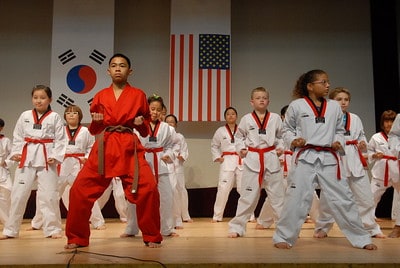
Photo by Hong Seung-hui

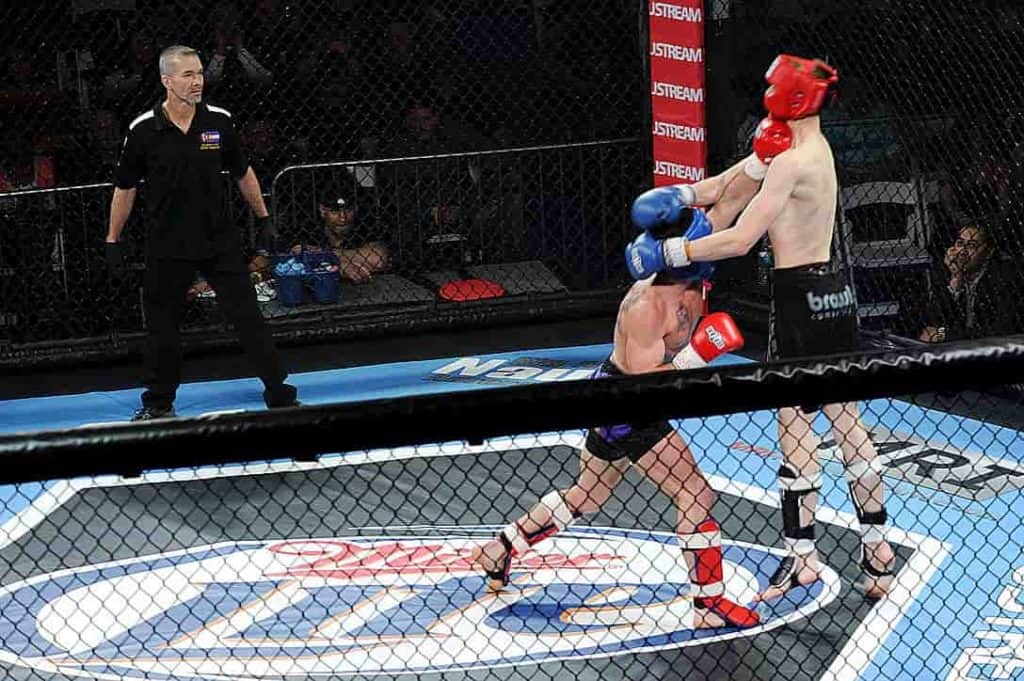
If children want something more advanced, they can explore kickboxing. This will combine the kicking styles of taekwondo with western boxing styles. This can be an exciting way of putting martial arts skills to the test. However, because it is more complex, it’s recommended for older teenagers. 

Karate is another popular option. This has been brought to prominence recently through television shows like Cobra Kai. There are many branches of Karate, each of them focusing on a slightly different aspect. 

With so many options, children should be encouraged to try multiple forms of martial arts. This will allow them to find the one that appeals the most to them. If they don’t enjoy themselves after a few sessions, they can move to a different style.

RECOMMENDED FOR YOU:
Karate vs. Taekwondo: Key Differences And Similarities

Final Thoughts

Martial arts are a popular pastime, particularly amongst children. Regular sessions can have a range of positive benefits. For example, it can help boost self-esteem and increase emotional control. This has been shown to reduce aggression in children. It can also boost cognition and help kids with ADHD. Because of these advantages, parents should consider encouraging their children to pursue martial arts. 

Gi or No-gi Jiu-Jitsu: Which One Is Right For You?

0
Photo by Brazilian Jiu-jitsu news

There are countless different practices and disciplines in the world of martial arts to focus on and learn. Even within individual martial arts, there are often subtle or apparent differences that practitioners will need to familiarize themselves with and specialize in. This decision is undoubtedly the case with Brazilian Jiu-Jitsu, as there are two main branches of this discipline: Gi or No-Gi.

Choosing between Gi and No-Gi Brazilian Jiu-Jitsu comes down to preference. Gi Jiu-Jitsu involves combatants wearing the Gi, which allows for grabbing clothing and is more complex. No-Gi Jiu-Jitsu does away with the traditional uniform and is much more similar to street fighting.

This article will go over the many nuanced differences between the two forms to determine the best specialization of Brazilian Jiu-Jitsu (also referred to as BJJ) for you. 

What Is Gi Or No-Gi?

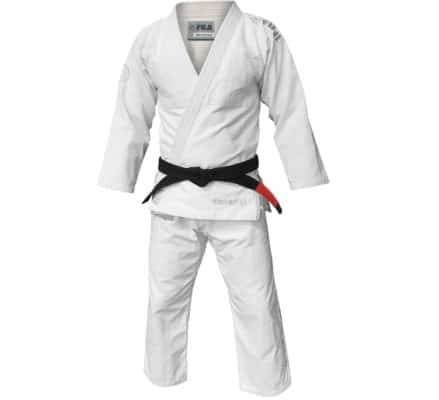
The Gi is the name for the traditional uniform worn by BJJ practitioners. The clothing itself is made up of a heavy cotton jacket, reinforced trousers tied with a drawstring, and a belt that denotes the combatant’s rank. The International Brazilian Jiu-Jitsu Federation (IBJJF) enforces many regulations regarding the exact requirements of a combatant’s Gi, outlined below.

Jiujitsu Gi
  • The only colors allowed for international competitions are solid blue, white, or black. However, some jurisdictions relax this rule to allow any single solid color.
  • The Gi must be constructed of cotton or equivalent material and be in good condition with no rips or tears and must not be thick or hard to the point that an opponent will be obstructed by it.
  • The jacket must reach down to the thighs, and the sleeves must reach to the combatant’s wrist while the arms are extended in front of the body.
  • The belt must be between four and five centimeters wide, and the color must correspond to the practitioner’s rank. The belt must be tied securely into a double knot in competitions, tight enough to ensure that the jacket remains closed.
  • BJJ athletes will not be permitted to compete if their sleeves or pants are not proper length or with a t-shirt underneath the jacket, except for female participants.

There are many other rules regarding the exact specifications a Gi must adhere to for a formal competition. However, it is worth noting that the Gi is not only the name of the traditional uniform used in BJJ. It also denotes the difference in a practitioner’s fighting style that comes with wearing the Gi. 

(No-Gi outfit)
Photo by Theentropykid

In contrast to the above, No-Gi involves wearing a less strictly enforced uniform of a “rash-guard” top with a kind of athletic shorts underneath. Unlike Gi BJJ, No-Gi BJJ has very few requirements of the practitioner’s clothing, but there are enormous differences in how this variant is practiced relative to Gi BJJ.

RECOMMENDED FOR YOU:
What Do BJJ Gi Colors Mean? Answers for BJJ Gi

What Are The Main Differences?

Aside from the uniforms worn, the primary difference between Gi and No-Gi Brazilian Jiu-Jitsu is the types of holds and grapples permitted. BJJ as a martial art is based around controlling your opponent, forcing them into a position where they have to submit to you by eliminating all of their options. 

Most rules allow combatants to grab the Gi of their opponent in specific locations in Gi BJJ, most often the sleeves, collar, lapel, and pants. It is worth noting that competitions with rules enforced by the IBJJF may have additional restrictions that limit these options further. Still, those differences will depend entirely on the ruleset used for the competition.

When competing in No-Gi BJJ, there are no “handles” on the opponent’s clothing, and practitioners are usually not allowed to grab their opponent’s clothing at all. This difference means that there is a greater emphasis on balance, body mechanics, and techniques like overhooks to force your opponent to submit without using their clothing to your advantage.

What Are The Technical Differences?

Several technical differences arise from choosing to practice Gi or No-Gi Brazilian Jiu-Jitsu. One of the most well-respected modern BJJ instructors, John Danaher, simplified the differences down to the skills that practitioners develop from practicing one discipline or the other. He stated that the Gi helps develop combatants’ defensive skills, while No-Gi is excellent for building offensive skills. He goes on to state that there are three primary technical differences that No-Gi brings to the table (Bjjsuccess.com, 2020):

1. No-Gi Provides Less Friction

When worn during a competition, a Gi creates a lot of friction, especially as the matches go on and it becomes wet with sweat. This added friction slows down the pace of matches and forces the combatants to wait for opportunities to present themselves and handle each obstacle in turn. In contrast, No-Gi matches are generally more frantic and based around reaction, where speed and strength can be sufficient to overcome lack of technique. These qualities alone are usually not sufficient when wearing a Gi.

2. Fewer Grips In No-Gi

As mentioned above, the thick collar, lapel, sleeves, and pant legs of a Gi provide additional grip opportunities, allowing BJJ practitioners to control their opponents more easily. As stated by Danaher, training in No-Gi ensures that students improve their pinning and submission techniques because they cannot rely on the grips that the Gi provides to do the work for them. This change requires a greater focus on body positioning to render their opponent immobilized when trying to force them to submit.

3. Fewer Stranglehold Chances in No-Gi

The ease with which BJJ practitioners can use the Gi jacket to set up strangleholds forces students to protect their neck and forces beginners to learn the importance of defensive options. There are far fewer stranglehold options in No-Gi BJJ due to the removal of the jacket, and the few that are still available are less effective than they would be in Gi. This point reinforces Danaher’s explanation that No-Gi is ideal for training offensive options as combatants need to have an excellent submission form to combat both the slipperiness of the format as well as the fewer hold options available.

RECOMMENDED FOR YOU:
How to Wash White BJJ Gi and Remove Stains

Which Is Better, Gi or No-Gi Jiu-Jitsu?

It is impossible to state whether Gi or No-Gi Brazilian Jiu-Jitsu is better than each other. Both disciplines have numerous reasons for practitioners to develop their skills. If you are considering one or the other, it is often valuable to look into your reasons for learning BJJ in the first place. 

There are enormous benefits to be gained from learning a martial arts discipline, and BJJ can provide those benefits whether you choose Gi or No-Gi. The following categories are common questions about which discipline to choose and how each variant will affect practitioners.

Which One Is Better For Beginners?

It is generally accepted that Gi Brazilian Jiu-Jitsu is a better choice for beginners because of the focus on learning proper grips and techniques. Additionally, some BJJ experts state that it is harder to transition from learning No-Gi BJJ exclusively to learning Gi BJJ than to do the inverse. 

These experts came to this decision because an enormous part of Gi BJJ is based around traditional hold and grapples, which can be more challenging to learn if you are not familiar with the fundamentals of wrestling in the conventional uniform. Conversely, Gi BJJ practitioners may find the speed and lack of grip off putting in No-Gi BJJ, but the transition is considered more accessible by many.

Ultimately, beginners can learn both disciplines simultaneously. As John Danaher mentioned above, new entrants into the art of Brazilian Jiu-Jitsu will benefit from the nuanced differences between the two styles. The benefit of learning Gi BJJ will provide stalwart defensive capabilities. In contrast, No-Gi BJJ training will provide incredible speed and offensive capabilities that will not require the grips that the Gi provides. Most high-level BJJ practitioners will learn both techniques eventually, so it is worth building a foundation in both styles. 

Which Is Better For Self Defense/Street Fighting?

For a long time, most Brazilian Jiu-Jitsu experts’ consensus was that the Gi is unrealistic for real-world self-defense situations. It is improbable that people on the street will be wearing a traditional martial arts uniform. Additionally, the speed and ferocity of No-Gi BJJ are more akin to the frantic scramble that most street fighting ends up becoming. As such, it was often suggested that BJJ students learn No-Gi BJJ if they want to know the discipline for self-defensive reasons.

In recent years, however, there has been a shift of this mindset to consider Gi BJJ’s practical applications in real-world situations. The most obvious reason for this shift is the underlying philosophy that BJJ teaches regarding your opponent’s clothing. Essentially, this philosophy is that any attire, whether it be a t-shirt, a jacket, pants, or anything else, can be used as a weapon against the wearer if you have the understanding of how to use it effectively.

It is worth noting that when Kanō Jigorō introduced the traditional Keikogi (the precursor to the Gi that is used in Judo), it was designed to emulate the every-day clothing worn by the Japanese at that time. Despite the many differences between the dress from over a century ago and modern clothing, the fact remains that it is more likely for a street fight to occur where the participants are wearing some variation of jacket and pants than a spandex outfit as No-Gi BJJ utilizes. 

While street clothes are not the same as a Gi in terms of grip, Gi BJJ has become more accepted as an effective self-defense discipline, and BJJ beginners should not choose No-Gi BJJ purely on the principle of using it for self-defense. However, it is worth noting that the grappling and hold techniques that No-Gi BJJ teaches will ensure that practitioners are prepared to handle any type of threat regardless of the clothing worn at the time.

Ultimately, either style will benefit practitioners in a street fight, and it is worth becoming skilled in both formats to provide the most options possible to stay safe in an altercation in the real-world.

RECOMMENDED FOR YOU:
BJJ vs Japanese Jiu-Jitsu – Key Differences and Similarities

Is Gi Brazilian Jiu-Jitsu Suitable For MMA?

Gi Brazilian Jiu-Jitsu is not as directly applicable for the MMA ring as No-Gi BJJ. Still, there are benefits from practicing Gi BJJ that translate exceptionally well into the format of mixed-martial arts. The first reason to practice Gi BJJ for MMA training is that it is more prevalent and easy to find than strictly No-Gi BJJ. While there are gyms that specialize in No-Gi, most gyms will have more classes in Gi than not, and as any practitioner will state, the more time spent on the mat, the better.

Additionally, the defensive conditioning that comes from practicing with a Gi cannot be overstated. Many martial disciplines involve training the practitioner with weights, as it improves their speed when the weights are removed. When BJJ practitioners wear a Gi, it creates significantly more friction and makes it harder to escape from specific submissions. If a BJJ fighter can escape while wearing a Gi, removing it will make evading holds even easier.

However, with all that in mind, because MMA involves significantly more striking and often involves rules regarding grappling, the direct application of No-Gi BJJ is more in line with most MMA fights. It is, therefore, most effective to train in No-Gi BJJ but develop skills in the Gi as well to maximize efficacy in the MMA ring. This increased efficacy is why so many top UFC champions over the years have had black belts in Brazilian Jiu-Jitsu and train while wearing the Gi. 

In many cases, learning Brazilian Jiu-Jitsu while wearing the Gi encourages technique over raw speed and strength. This practice is essential for MMA fights, mainly because a fighter’s technique will often be the deciding factor in winning a match. Training with a Gi will slow down the bout and force participants to focus on their positioning. This focus on positioning benefits learners who are faster and more athletic than their training partners because it is all too easy to lean on that strength and speed.

The excellent defense that training in a Gi forces BJJ practitioners to learn will force them to use their body position and technique rather than using excessive power to get out of holds from their opponent. Especially if a practitioner is used to being the strongest one in most bouts, this is essential training. They can never ensure that they will always be the strongest fighter in the ring. Relying on raw strength and speed alone is unreliable when going up against the many skilled combatants who participate in MMA.

RECOMMENDED FOR YOU:
What is Gracie Jiu-Jitsu? Fully Explained

Should I Focus on Gi?

You should focus on Gi Brazilian Jiu-Jitsu if:

  • You intend to learn the fundamentals of BJJ most effectively, and you want a broad range of training applications, both for self-defense and competitions.
  • You are interested in transitioning into other martial arts disciplines or moving into No-Gi after building a base capability in Gi BJJ.

Should I Focus on No-Gi?

You should focus on No-Gi Brazilian Jiu-Jitsu if:

  • You find the traditional and fundamental aspects of BJJ less enticing, and you intend to focus on MMA applications specifically.
  • You intend to learn Gi BJJ only for training purposes, and you don’t intend to compete while wearing a Gi.

To Gi or No-Gi, That Is The Question

While the question of choosing whether to train in Gi or No-Gi is a hotly contested one, the best answer is significantly more straightforward. Gi and No-Gi Brazilian Jiu-Jitsu are two sides of the same coin. For serious competitors in this martial art, you can gain the most benefit from training in both disciplines simultaneously.

Remember that in most cases, training in a Gi will make it easier to transition into practicing No-Gi, and the fundamentals that you learn from the former will benefit you throughout many different disciplines. Look around at your local BJJ gyms and inquire about what their instructors focus on, as it is most beneficial to learn from the instructors that specialize in their chosen discipline. No matter what choice you make, it is never too late to incorporate both sides of the BJJ coin.

How Much Does Height And Reach Matter In Combat Sports?

0

Regarding qualifying factors for combat sports, height and reach are some of the most important elements to determining natural ability. Most combat sports separate fighters into different classes based on their weight, but their height and reach can vary massively within these categories.

Both height and reach play a significant role in every combat sport. Generally speaking, a taller fighter with a longer reach can strike their opponent more safely, but they are also at risk of being a larger target if their opponent makes it past their range. They must have reliable defensive capabilities to overcome that disadvantage.

Combat sports are incredibly nuanced, and while height and reach are undeniably crucial to the sport, the way in which they affect an individual fighter’s abilities can differ enormously. Continue reading to learn more about how these elements affect every fighter and every match.

Is It Better To Be Taller Or Shorter In A Fight?

One of the most hotly debated topics surrounding combat sports is whether it is more advantageous to be taller or shorter in a fight. The reason it is such a divisive concept is that there is no clear answer to the question. There have been numerous successful fighters on either end of the spectrum across multiple disciplines, making a definite answer nearly impossible.

There are advantages to being tall and being short, and there are disadvantages to both extremes. Review the following pros and cons of height variations to learn more about the inherent advantages and disadvantages of each.

Advantages For Tall Combatants

  • Generally increased range. There are certain exceptions to this rule, which will be discussed later in this article, but in most cases, the taller the fighter, the greater their reach. A fighter with a more extended reach than their opponent can strike without fear of reprisal.
  • Better defensive capabilities in individual sports. Especially in boxing, a taller fighter has the advantage of their opponent needing to punch upwards, which can lessen their effectiveness unless they are familiar with that particular matchup.
RECOMMENDED FOR YOU:
Top 13 Tallest MMA Fighters of All Time, Ranked

Disadvantages For Tall Combatants

  • A higher center of gravity. In most instances, a taller fighter will be easier to throw off balance and have a more challenging time recovering their stance.
  • Weight class disadvantage. This aspect, in particular, is vital to consider when comparing shorter fighters to taller ones. It is easier to fit into a lower weight class as a smaller fighter, which can allow these combatants an advantage against others in their weight category.

Advantages For Shorter Combatants

  • Being shorter and smaller often provides the benefit of greater agility. A smaller body requires less energy to move around the arena, which can give an advantage in terms of endurance.
  • Close range. Shorter fighters can often beat taller opponents if they can position themselves close against their opponents, nullifying the range advantage. Since shorter fighters tend to have shorter limbs as well, they can execute full-power strikes more efficiently while eliminating their opponent’s range advantage.
RECOMMENDED FOR YOU:
Top 15 Shortest MMA Fighters of All Time, Ranked

Disadvantages For Shorter Combatants

  • Getting into closer range. As effective as shorter fighters can be when they close the gap, it can be challenging to get past a taller fighter’s range. Most combatants with a range advantage are familiar with using that advantage to wall out their opponent and prevent them from getting close enough to strike.
  • As the match goes on in specific fighting disciplines and the combatants become exhausted, the taller fighter may end up leaning on the shorter fighter and using them to support their weight, alleviating some of their exhaustion and adding to their opponents.

However, it is of the utmost importance to be aware that every one of these advantages and disadvantages can be overcome with technique and practice. Understanding the natural advantages and disadvantages that stem from being tall or short is the first step for combatants to develop their skills to overcome those hurdles. 

What Matters More In A Fight, Height or Weight?

Both height and weight play significant roles when determining an advantage in a fight. Especially in an unregulated fight, the heavier opponent will have an advantage as they have increased muscle mass, allowing them to hit harder and withstand strikes from their opponent more easily.

It is for this reason that combat sports separate fighters based on weight class. Creating different categories for fighters to compete in based on their weight helps to level the playing field. These categories prevent combatants from needing to spar against an opponent that creates an unfair disadvantage.

While height does play an important role, it determines the fighter’s style more than weight does. While taller fighters generally end up being in higher weight classes than shorter fighters because of their increased size, their height does not give them an ensured advantage beyond greater reach. Additionally, shorter fighters often find themselves in advantageous weight matchups because they can put on more muscle mass than taller fighters without being pushed up a weight class.

What Is Cutting Weight?

As mentioned above, weight classes exist to ensure some degree of equality between combatants by ensuring that participants are similar in terms of their overall weight. In professional fighting competitions, fighters agree to show up for the weigh-in at an acceptable range for their competing category. Cutting weight is the practice of rapidly losing weight before their weigh-in to compete at a specific weight class.

Through the process of dehydrating themselves, fighters can lose up to 30lbs over a period of 48 hours. In most professional fights, the combatants are then allowed 24 hours to rehydrate themselves before they compete. This practice often results in fighters weighing themselves in up to two categories lower than they will weigh on the day of the competition itself. 

There are numerous dangers involved with cutting weight for a professional competition, and even more risks with amateur fights because the window to rehydrate before the match starts may be much shorter. Nevertheless, weight cutting is a common practice for most combat sports and is unlikely to change in the coming years.

What Is An Ape Index?

At this point, we have established that one of the few concrete, natural advantages in combat sports is that of greater reach. Having the ability to strike an opponent while staying out of their range is often a significant factor in determining who wins in a fight. While taller fighters generally have greater reach due to their increased stature, it is not always the case. Sometimes, combatants have greater reach than their height would suggest, which led to the creation of the Ape Index.

Ape Index refers to the measure of a fighter’s arm span relative to their height. In most cases, the average arm span of a person is the same as their height. Ape Index is measured by subtracting a person’s height from their arm span, which would result in a neutral ratio for the average person. 

The average boxer has an arm span that is approximately 2.5″ longer than that of a regular individual, which translates to an Ape Index of 2.5″. It is important to note that this difference does not indicate that boxing increases a person’s arm length. However, people with longer arms have that advantage of reach, making them more likely to become boxers than people without that advantage.

Below are some of the height, reach, and corresponding Ape Indices of fifteen boxing champions.

FightersHeightReachApe Index
1) Sony Liston6’1″84″+11.0″
2) Hasim Rahman6’2.5″82″+7.5″
3) James Douglas6’3.5″83″+7.5″
4) Sam Langford5’6.5″74″+7.5″
5) Steve Cunningham6’3″82″+7.0″
6) Lennox Lewis6’5″84″+7.0″
7) Primo Carnera6’6″85″+7.0″
8) Adonis Stevenson5’11”77″+6.0″
9) William Landon Jones5’9″75″+6.0″
10) Larry Holmes6’3″81″+6.0″
11) Paul Williams6’1″79″+6.0″
12) Tommy Burns5’7″73″+6.0″
13) Marvin Hagler5’9″75″+6.0″
14) Charley Burley5’9″75″+6.0″
15) Thomas Hearns6’1″78″+5.0″

While reach does contribute enormously to success in boxing, specifically due to the focus on punches as the primary form of attack, it can benefit fighters in other disciplines as well. MMA is another combat sport with many champions possessing higher than average Ape Indices, as shown below.

FightersHeightReachApe Index
Sergei Pavlovich6’3″84″+9.0″
Jon Jones6’4″84.5″+8.5″
Kevin Lee5’9″77″+8.0″
Uriah Hall6’0″79.5″+7.5″
Francis Ngannou6’4″83″+7.0″
Paul Daley5’9″76″+7.0″
Miguel Torres5’9″76″+7.0″
Georges St-Pierre5’10”76″+6.0″
Dalcha Lungiambula5’10”76″+6.0″
Brock Lesnar6’3″81″+6.0″
Alexander Volkanovski5’6″71.5″+5.5″
Tony Ferguson5’11”76.5″+5.5″
Tyron Woodley5’9″74″+5.0″
Conor McGregor5’9″74″+5.0″

How Do You Fight Someone With A Long Reach?

Boxing, MMA, and other combat sports are filled with examples of shorter fighters with less reach defeating taller or longer reaching opponents. While their individual techniques differ depending on the combatants’ specialties, there are unifying principles that exist across this spectrum.

Fighters who possess longer-ranged punches or kicks also have the advantage that their limbs have a greater torque, resulting in a more powerful strike in most instances. However, this additional force is only generated at the end of the strike, which creates a situation where shorter combatants have a way to take advantage.

Photo Credit: Brucelee.com

A good analogy is that of a baseball bat. In baseball, the batter tries to strike the ball with the end of the bat, as their swing generates the most force at the farthest end. If the batter hits the ball with the end of the bat closer to their hands, there will be significantly less force behind the swing, which results in the ball traveling less distance.

The same concept applies in combat sports. If a taller person with a longer reach connects their strike without reaching their limb’s almost full extension, they cannot generate the maximum amount of force possible. Conversely, shorter opponents with shorter limbs can achieve their maximum extension over a shorter distance, which gives them an enormous advantage if they can close the distance between themselves and their opponent.

In boxing, this concept of fighting in very close quarters is referred to as “in-fighting” or fighting from the inside. The vast majority of shorter boxers fight from the inside to negate the reach of their taller opponents, but they are only able to do so if they have the speed and mobility to get past the taller opponent’s reach.

A famous example of this tactic is Mike Tyson, who was shorter than many of his opponents and had an average Ape Index, meaning that many of his opponents outranged him. Tyson would use deceptive head movements and defensive options to lull his opponent into making an unsafe strike. Then Tyson would slip past his opponent’s reach and hit them with close-range hooks and uppercuts to win many matches. 

Tyson would take this technique one step further by never leaving that close range, especially early in his career. For many smaller fighters, half of the challenge is getting into that close range to be able to strike their opponent, but the other challenge is managing to get back out when their offense has worn out. Tyson would overcome that challenge by never letting down his aggressive approach and preventing his taller opponents from using their range and power over that longer distance.

How To Punch Harder

Having explored many of the advantages that greater range brings to combat sports, many people may assume that longer arms punch harder. This concept is true to a point, but as mentioned above, this is only the case if the punch coming from a long arm can reach close to its full extension and if the fighter with the more extended arm can move their body entirely.

Learning how to punch correctly, whether with long arms or short ones, is the best tactic to deliver a more powerful blow. There are many techniques and practices to understand how to do this properly, but they all revolve around certain basic principles.

Martial artist Bruce Lee described the theory behind his famous one-inch punch as the importance of putting weight behind your strike, and the way to do that is by using your entire body. Moving your whole body one inch will deliver a more powerful strike than moving your arm one foot. The trick to generating power in this way is to move your entire body all at once, even if only over a short distance.

This concept also applies to the importance of fighters using their legs to create additional force behind their punches. The leg muscles are some of the strongest ones in the entire body, and using them to generate extra power behind punches is necessary to deliver powerful strikes. 

Lastly, it is vital to understand the importance of using range effectively. The most potent punches are not delivered at the arm’s maximum extension but instead just before that point. This distance generates the full amount of force before it dissipates when the arm reaches the end of its extension. 

Conclusion

Height and reach are undeniably important elements of combat sports. In particular, while reach confers an advantage to the fighter with longer limbs, it is not an insurmountable obstacle, and proper training and education can overcome that hurdle. The history of combat sports is filled with examples of fighters on every part of the spectrum excelling at these disciplines. While natural advantages play their role in individual fighters’ careers, the training and practice that those combatants underwent were more critical than their innate capabilities.

What Is USADA UFC?

0
Photo Credit: UFC.USADA.org

The Ultimate Fighting Championship (UFC) is the largest mixed martial arts competition in the world. However, this brought an increased responsibility to establish the best possible standards. Because of this, the USADA program was brought in. But what is USADA and how does it affect the UFC? 

USADA is the United States Anti-Doping Agency. It helps detect people using banned substances, which can artificially improve their performance. USADA also needs to assign a penalty for rule violations. This program was begun in October 2015 and continues to play an important role in the sport. 

The USADA program plays a big role in modern UFC. To understand why this organization is so important, we need to look at what they do. 

What Does The USADA Do?

The USADA organization is responsible for making sure that United States athletes aren’t misusing drugs to enhance their performance. They do this across all sports in the United States. This includes athletes performing at the Olympic and Paralympic level. 

The USADA has signed the World Anti-Doping Code. This is regulated by the World Anti-Doping Agency (WADA). These rules help regulate what substances are banned and what the testing standards should be. It intends to make sure that all the countries around the world are following the same procedures. This code is periodically and reviewed and updated. 

There are a few ways that the USADA program tries to remove doping from the UFC. They educate fighters and the public about the dangers these substances can pose. They also fund research into these drugs and how they can be better detected. 

However, the most-well effective deterrent is regular testing. This is conducted randomly, so there is no way for an athlete to prepare. If someone is found to have drugs in their system, USADA will determine the punishment that they will face. 

Who Controls The Testing Process? 

The UFC has expressed a desire to have one of the best anti-doping programs in the sports world. Because of this, they have no say in the program. All the tests are conducted and evaluated by USADA. This ensures that they can stay impartial, applying any penalties fairly. 

When Did USADA Get Implemented In UFC? 

The USADA organization was started on the first of October in 2000. However, the UFC didn’t implement USADA in the UFC until 2015. This was done in two stages. 

This first stage began on February 18. This is when the UFC first announced that they were planning on joining the USADA program. However, the first phase of its implementation didn’t begin until the first of July. 

During this time, the USADA program focused on educating the fighters and their management teams. They told them how the program would work and what they needed to do to be in compliance. Some of this was done by visiting the gyms and talking to athletes one-on-one. 

USADA also created a website. This contained resources for fighters and their teams. This told them everything they needed to know about the program. It contained a list of the rules they were expected to follow. It also had a full list of the banned substances

These rules have since been printed in six languages. This ensures that the international athletes on the roster know what is expected from them. 

It wasn’t until October that the testing portion of the USADA program was begun. In the first year, there were 271 tests conducted. 

Today, they aim to have a minimum of 2,750 tests per year. This is enough to make sure that each athlete is tested a minimum of five times each year. 

Can UFC Athletes Refuse A Drug Test?

USADA relies on a random drug test. They can occur at any time, 365 days a year. The athletes won’t be given any advance notice before the test is due to be performed. If they are randomly selected for a drug test, the fighter must comply. 

If they refuse to do the test, they must provide compelling evidence. For this defense to be successful, the refusal must be unavoidableWithout a compelling justification, a refusal to complete a test is treated the same as a positive small result. In most cases, this means that they will face a two-year suspension. 

What Are The Testing Protocols? 

Once they are selected to provide a sample, the athletes will need to start filling out paperwork. As they do this, they will be told about their rights and responsibilities. From the time they are selected to the time the test is taken they will be chaperoned. 

There are two types of tests that might be performed. The first is a urine collection. This will be done at a secure location. The Doping Control Officers (DCO) or chaperone will first ask them to select a container. Then, they will watch as the test is performed. The athlete needs to provide at least 90mls of fluid. Then, the cup is sealed and handed back to the DCO. 

After they have given the sample, the athlete will need to choose which bottle is used to package the sample when it gets sent to the lab. They’ll also need to separate the A and B samples. During this process, the DCO won’t touch the bottles. In the end, they will measure the specific gravity. If it isn’t high enough, they might ask for another sample. 

The other option is to get a blood test. This is more comprehensive.  Again, the process starts with the athlete being informed of their rights and doing the necessary paperwork. They will then need to select which kit will be used. 

Before the test, the athlete will need to stay seated for 20 minutes. Then, the Blood Collection Officer(BCO) will prepare their arm. They can then start to draw blood. No more than two tablespoons of blood will be removed. This ensures that their performance in the Octagon won’t be impaired. The blood will then be placed in a secure tube and sent to the lab to be tested. 

What Happens When an Athlete Fails Their Test? 

After the lab detects that a banned substance, they contact the UFC to report the incident. After this, there will be an adjudication process. This gives them a chance to defend themselves. 

Sometimes, the athlete might request to have their B sample tested. If this comes back negative, it can be enough to overturn the original result. They have the right to have a representative present when the tube is opened. This ensures that it isn’t tampered with in the lab.

RECOMMENDED FOR YOU:
What is Banned/Illegal in the UFC?

When Is A Failed Test Announced? 

The UFC has control of when the results of a failed test are announced. When the initial result comes back, the athlete will have six months to defend themselves. Sometimes, the failure can come as the result of an unintentional use. This is usually caused by a contaminated supplement. In other cases, they might be granted an exemption. 

Once the result has been adjudicated, it will be announced. This is designed to protect the athlete’s reputation. However, while the adjudication process is going on, the athletes won’t be able to compete. 

Final Thoughts

The UFC is determined to be a strong leader in anti-doping matters. To do this, they have started a partnership with the USADA. This is an independent body that tests samples from athletes to make sure that they are complying with the rules. With over 2,750 tests performed each year, fans can be confident that they are witnessing fair fights in the Octagon. 

Why Is Boxing Called The Sweet Science? – Ultimate Answers

0
Photo Credit: Cliff via Flickr
Photo Credit: Cliff via Flickr

Boxing is one of the oldest and most popular fighting styles in the world. At first, seeing two people beating each other in the ring may look brutal and even simple in the eyes of average people. In the end, we can all throw a punch, right? Still, boxing is much more and there is a reason why it is often called “Sweet Science”.

The term “Sweet Science” is used to describe how technical boxing is, although boxers only use their hands. Boxing teaches how to be in a tactical advantage position and read the opponent’s moves in advance by preparing with counter moves. Boxing is all about the scientific approach to combat.

One has to spend many years training or following the sport to truly understand what is happening inside the ring. It is much more than two people beating and trying to knock each other with punches.

In this article, we will go deeper into what the term “Sweet Science” means. We will do our best to break the science of boxing to you using simple language and a lot of examples.

History Of The Term “Sweet Science”

The term “sweet science” has been around since 1813. The man who first came up with this term was the sports journalist Pierce Egan. He used the word “science” to describe how boxers need to be technical and have a game plan to win a match.

Even though this was a long time ago, the sport of boxing was surprisingly advanced back then. For instance, boxers were very strategic, and they used many techniques we are seeing in modern days like ducking and slipping the punches.

Even though it may sound weird at first, Sweet Science is actually an ideal term to describe boxing. Take a closer look at a single boxing match and the first thing you will notice is how calculated both fighters are. The way they move, throw faints and punches, dodge strikes and read the opponent is a science to some extent. In some way, the two boxers fighting in the ring are actually playing a game of chess. 

The term “sweet science” became popular in modern times when A.J. Liebling published his book “The Sweet Science” in 1956. The book includes the most iconic moments in boxing history, and it instantly became very popular. In 2002, “Sports illustrated” ranked it in number one place on their list of the greatest sports books of all times.

But, why it is “sweet”? The answer is really simple. Seeing a boxer outclassing the opponent by executing a perfect game plan always gives you that “sweet” feeling. It is one of those feelings where, even if you are not a fan of that boxer, you still admire them for putting on an incredible performance.

Boxing Styles And Techniques Explained

Boxing is a complex sport that consists of various styles, tactics, and techniques. As in any sport, every boxer is different and they all have strengths and weaknesses in their game. The science of boxing is about the way you use your strengths to control the fight and beat the opponent. Boxers do this by utilizing the mix of footwork, slipping and bobbing, waving, creating angles, blocking, and punching. 

To make it even simpler, let’s look at some of the famous boxing styles and techniques.

Styles

Swarmer – tends to overwhelm their opponent with pressure and high output of strikes. Although these strikes are not too powerful, they can do huge cumulative damage. These boxers have very quick footwork, hand speed, and insane cardio levels. They are the ones attacking, pushing the pace, and leading the dance.

Defensive or out-boxer – this type of boxing style is all about having good defense and keeping your distance. The secret is to use quick footwork and long range strikes to keep the distance and do damage. They also have really fast counter punching skills they use to catch the opponent coming in. 

Boxer puncher – this style is a mix of all styles put into one. Boxer puncher has good hand speed, power in the punches, fast footwork, good counters, and defense. They can fight on the outside, trade wild blows in the pocket, or focus on volume and pushing the pace. The drawback of this style is boxer-puncher does not excel in a single aspect. They usually lack mobility and have a poor defense.

Brawler/Slugger – this is the least technical style that is not a good instance of boxing science. Brawlers are usually very aggressive and always looking for the close range exchanges. They don’t mind taking some damage to land a knockout punch they are always looking for. The trouble is the lack of mobility, and brawlers are often very predictable and could be reckless at times.

Techniques

Punches – boxers can do damage by using their hands only. They use jabs, crosses, and other straight punches to do damage and keep their distance. They land other punches like uppercuts, hooks, and body shots at much closer range.

Slipping and Bobbing – boxing puts a lot of emphasis on defense and slipping and bobbing are among the most important techniques when it comes to defense. The main goal is to keep your head off the centerline by moving it from side to side or back and forth. Slipping punches is also great because it sets you up to land a counter punch.

Footwork – this is a skill that separates great boxers from the average ones. Footwork plays a key role since it impacts the way you punch, slip or dodge strikes and perform other techniques.  

What Was Boxing Originally Called?

Boxing comes from Ancient Greece where it was called “pugilism”. The name “pugilism” comes from the words “pugnus” (Latin word for ‘fist’) and ‘pyx’ which means ‘with a clenched fist’. If we translate it to modern usage, it means “prizefighting” which describes a sport where fighters earn money competing.

The name ‘boxing’ came much later during the bare-knuckle days in the 17th century. At the time, boxers would travel across the countries and challenge local fighters to duels in a square ring with a couple of posts and ropes. One of the first people to use the term boxing was author Pierce Egan in the 1800s when he called it “boxiana”. 

Best Boxers Who Represent Sweet Science

In boxing history, there have been many fighters who are a great instance of how sweet science looks in practice. Most of them have been very strategic which mixed together with their amazing skills made them look unbeatable inside the ring. Let’s see who they are in the list below:

Floyd Mayweather Jr. – often seen as the best defensive boxer in history, Mayweather is a great instance of why boxing is called sweet science. He is an outside boxer who has amazing footwork and counter punching skills. He is a master in exposing every single hole in the opponent’s game, keeping his range and absorbing minimum damage.

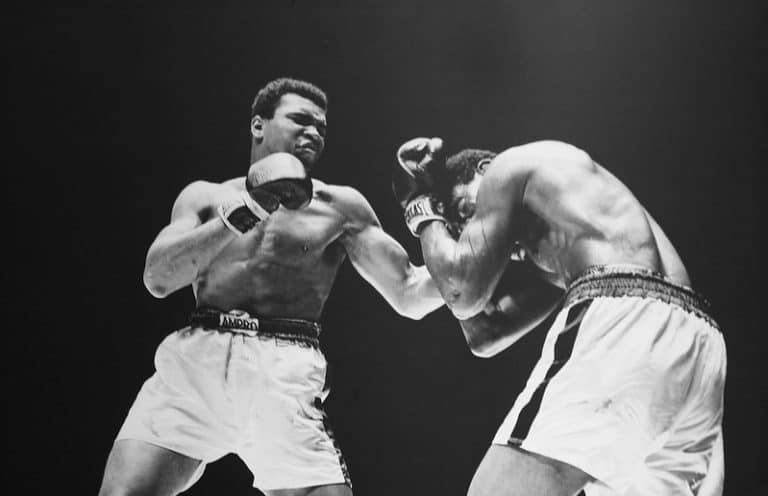
Muhammad Ali – one of the reasons why Ali was so great was his amazing speed, intelligence, and footwork. Ali was one of those fighters who had the ability to see everything coming at him in advance. First, he would use amazing footwork and head movement to make the opponent miss most of the punches until they got tired. Then he would attack using angles and fast hand speed to put them out. He was a true showman who made most of his opponents look like amateurs standing in front of him.

Willie Pep – Pep was one of those boxers who could do it all inside the ring. He had great hand speed, power, accuracy and his ability to block and dodge punches was what set him above the others. He knew how to box on the outside, keep his distance, and counter. Still, he was also not afraid of wild pocket exchanges. At one point in his career, Pep was on the 63 fight winning streak.

How Do Boxers Prepare For A Fight?

When boxers prepare for a match, boxers would first study the strengths and weaknesses of their opponent. Coaches would break the opponent’s style frame by frame to the deepest details. Then, they would come up with a plan on how to use their own strengths to expose all the holes in the opponent’s game. This includes positioning, combinations, angles, and many other elements.

Photo Credit: Boxing AIBA via Flickr

The next step is to create a training camp and work on specific offensive and defensive techniques and strategies to win a match. Fighters would drill these techniques and plans every single day for months. They also need to work on their cardio and follow a strict diet program.

Once in a match, their mind would spot the patterns they practiced in the camp and trigger the response on its own. Or in other words, boxers would throw a punch or move away without even thinking about it. The work you see inside the ring is just a final product of the scientific approach that goes into preparation. 

Related Questions:

Who Invented Boxing Gloves?

Boxing gloves first appeared in the 18th century with the birth of the first boxing rules put together by Jack Broughton. Initially, boxing gloves were used only for training while matches remained bare-knuckle. However, this changed with the arrival of “Marquess of Queensberry Rules” in 1967. This set of modern rules made boxing gloves mandatory for both practice and pro matches. The first modern design of boxing gloves came towards the end of the 1980s.

Types of Boxing Gloves?

There are many types of boxing gloves that come in different shapes and sizes. Here are the most common types of boxing gloves:

Sparring gloves – boxers wear this type of glove to protect their hands in sparring sessions. These gloves are usually heavier than the ones boxers wear in pro matches but are much safer. They usually wear from 4 oz to 10 oz size gloves, but, there are some fighters who prefer lighter and less safe ones that go above 10 oz.

Bag gloves – like its name suggests bag gloves protect your hands while you are punching the heavy bag. These type of gloves are only for this purpose and it’s not recommended to use them in sparring. The size usually goes from 8 oz to 12 oz. Some senior boxers may use 14 oz or even 16 oz gloves while hitting the heavy bag.

Competition gloves – the design and production of these gloves has to be done according to the official regulations. They are usually less padded than other types of boxing gloves and come in three different sizes: 8 oz, 10 oz, and 12 oz.

Lace up gloves – they are used by pro boxers for both training and competition. Lace up gloves provides a close fit around the wrist which is usually padded for more comfort. The design includes a single lace crossing both sides which allows you to tight them hard around the hand. They come in the following size: 8oz, 10 oz, 12 oz, 14 oz, and 16 oz.

Is Boxing A Martial Art?

Boxing is a true martial art that is also very popular in form of sports competitions. Even though some people try to argue against this, boxing is a martial art since it meets all the criteria. Saying it is just a sport is not right and here is why.

First of all, every single technique you learn in boxing works in real-life situations. This makes boxing great for self-defense scenarios where you have to defend yourself or others. No other martial art will teach you better footwork, blocks, movement, and punches. Training includes a lot of sparring in which you can feel how it is to be in a real fight and to control your emotions.

Second, boxing is good for both physical and mental health. The training sessions are intense and will get your body and mind in top shape. Boxing also helps you to develop a strong mindset and higher pain tolerance which impacts your life outside the gym as well.

In the end, how can we say boxing is not a martial art when it is one of, if not the oldest combat style? The earliest records of boxing date way back to the 3rd millennium BC and it has been a part of the Olympic Games since 688 BC. It has a much, much longer history than most other martial arts.

Why Do Boxers Put Vaseline On Their Faces?

Before and during a boxing match, we can often see the cutman putting some Vaseline on the boxer’s faces. They usually apply a few dabs of Vaseline around specific areas around the eyes socket, nose, lips and eyebrows. But, why they do this? Well, Vaseline is a petroleum jelly which protects fighter’s faces during the match and here is how. 

When your skin is dry, there is a higher chance that the opponent’s punch would open up a cut or do other damage. This is because there is a lot of friction between the flat surface of the glove and dry skin. When you apply some Vaseline to the same areas, the punches would usually slide off and not drag the skin across the edge of the bone. 

We have to point up that boxers can’t use Vaseline as much as they want in a fight. The referee has the right to instruct the corner to remove an excess deposit of Vaseline on the boxer’s face. 

How Do MMA Fighters Deal With Bad Vision?

0

MMA is a game of pinpoint accuracy, and fighters without glasses or contacts could have a leg up on the competition. Being close to your opponent is going to be crucial to your success in training and competition. Blurred vision could leave you open for serious injuries. How do MMA fighters who have glasses or contacts fight?

Before assuming that you can compete in an event, you must check with the governing body to determine how the fighter’s eyesight will be tested. Some states require that 20/400 vision without contacts is the lowest a fighter can score. Don’t let that scare you off! Read on and learn how fighters with glasses and contacts compete in MMA.

Ways To Deal With Bad Vision In MMA

Eyesight for fighters is constantly being compromised. Repeated blows to the face and closeness of the opponent will limit what can be seen. Having a clear picture, when you can get it, of your opponent could mean the difference between winning and losing. Near-sighted fighters could even opt not to wear anything into the cage if they wished.

Being near-sighted is not going to have much effect on the fighter. As long as they are able to make out the opponent’s body shape from across the ring, being able to read what is on his trunks could be another story. Going into the cage with low or bad vision is a gamble for any fighter. Be prepared to defend yourself at all times.

Glasses should not be worn when you are competing or sparring. Once a solid punch lands on a pair of glasses, they could be destroyed. Not to mention the fact that the lens could cut you or your opponent if it breaks. Rec-specs, glasses on a headband, are great for training but will not be allowed for competition.

Contacts can be worn if you are competing in state-sanctioned Mixed Martial Arts tournaments or bouts. If they are knocked from your eye, they may not be retrieved from the floor. The referee will not stop the time or the opponent. If they are dropped, they are gone. Glasses are never allowed in competition. 

Keep Your Opponent Close To You

If vision is a problem, the best thing to do is get close to your competition. When they throw punches or kicks, you should be able to feel them with your body. Often soaking up strikes or forcing them to land away from the target is your best defense in a body clench. Learn to use your closeness to disrupt your challenger’s ability to throw power punches.

By placing a foot between your opponent’s stride when they are throwing punches it will negate their power. Eyesight isn’t that important when working on this strategy. You can feel your opponent when they shift their weight to throw and move into them before they can build up momentum and deliver a powerful punch.

Being close to your opponent is going to mean that you might take some big shots. Prepare by spending extra hours with your sparring partner. Additional time will also give you time to adjust to your opponent’s weight. If you are fighting a hard striker, your best bet is to hope that your proximity doesn’t allow them to get the torsion needed for a hard punch. 

Stay On The Ground As Much As Possible

Leaning on the ground game is another excellent way to protect against bad eyesight in the cage. Staying the guard or half-guard will allow you to control what your opponent is doing. If you are lucky enough to be on top, you can gain control of the limbs much easier, which goes a long way when grappling for MMA.

The main thing about being on the ground is that your view is already obstructed. Your opponent’s body could be the only thing you see. Being down on the mat like this allows you to feel more than you see, which plays heavily on training and rolling with your mates at the gym. Knowing your body where you are in the cage is an essential MMA skill.

Ground and pound is a famous MMA strategy that has taken several stars to the top of the UFC and Bellator MMA ranks. It works well for fighters with bad vision and protects against wild punches or haymakers common when standing up. Bad eyesight isn’t a problem with a powerful strategy like ground and pound. 

Fighters Who Use Contacts or Glasses

One of the most overlooked parts for fighters with bad vision is ways to train that transfer to the fights. You should know that if you wear glasses, you will have to move to contact lenses if you intend to fight. Glasses and rec-specs are not allowed in any kind of competition due to their delicate nature.

Choose drills that are going to increase your ability to overcome your eyesight barriers. Work from outside of your sight-range back towards your face. This allows you to build compensation for the holes in your range of vision. 

Train Timing To Increase Defensive Chances And Response Time

Being able to pick up strikes before they land or are thrown is a skill that can be trained no matter how well your eyesight works. Timing also improves response time, which is the time that it takes for you to adapt to whatever attack your opponent is using. Improving how you respond to attacks gives you more options to defend against lack of eyesight.

Some ways to train timing for MMA are:

  • Double-End Bag Work – The double-end is a common training tool in boxing. For MMA, the application is the same but should be tweaked for your shortcoming in sight. The trick to using the double-end is to place a separate piece of colored tape on each side of the bag as it moves toward you, alternate hands for the corresponding color of tape showing on the bag.
  • Create Space – The MMA game has lots of close-up clenches and holds that cut of space for you and your opponent. Having poor eyesight could mean that you lose your bearings in the gym. Use a heavy bag and small rushes with two-step retreats to make a pattern you can remember. Not being able to see requires repetition of movement.
  • Use Punching Paddles – Punching paddles are small punching bags attached to long poles. These poles allow you to simulate punches and kicks thrown from outside the range of your vision and work great for color-coded defense work.

Just about any drill can be changed around to work with weak vision. The trick is to use repetitive movements and colors. The colors allow you to look for changes in the opponent’s movements and adapt accordingly. Repetition is necessary because you can move with your eyes closed and still know your location in the ring or your opponent.

Conclusion

Fighting MMA with glasses isn’t going to be allowed. They are fragile and have pieces that could injure both fighters. Contacts, soft lens contacts are permitted to be used in MMA. If they are lost in competition, there will be no time out to search for them. Fighters should prepare and train for their shortcomings with eyesight with repetition and memory drills.

Preparation for whatever your opponent can throw at you is an excellent rule of thumb when training for any type of fight. Training your timing will allow you to pick up strikes before they are thrown, which decreases your need for perfect eyesight. Remember, there are ways to prepare your MMA game for weak eyesight.