Home Blog Page 38

What’s the Difference Between Gracie Jiu-Jitsu and BJJ?

0
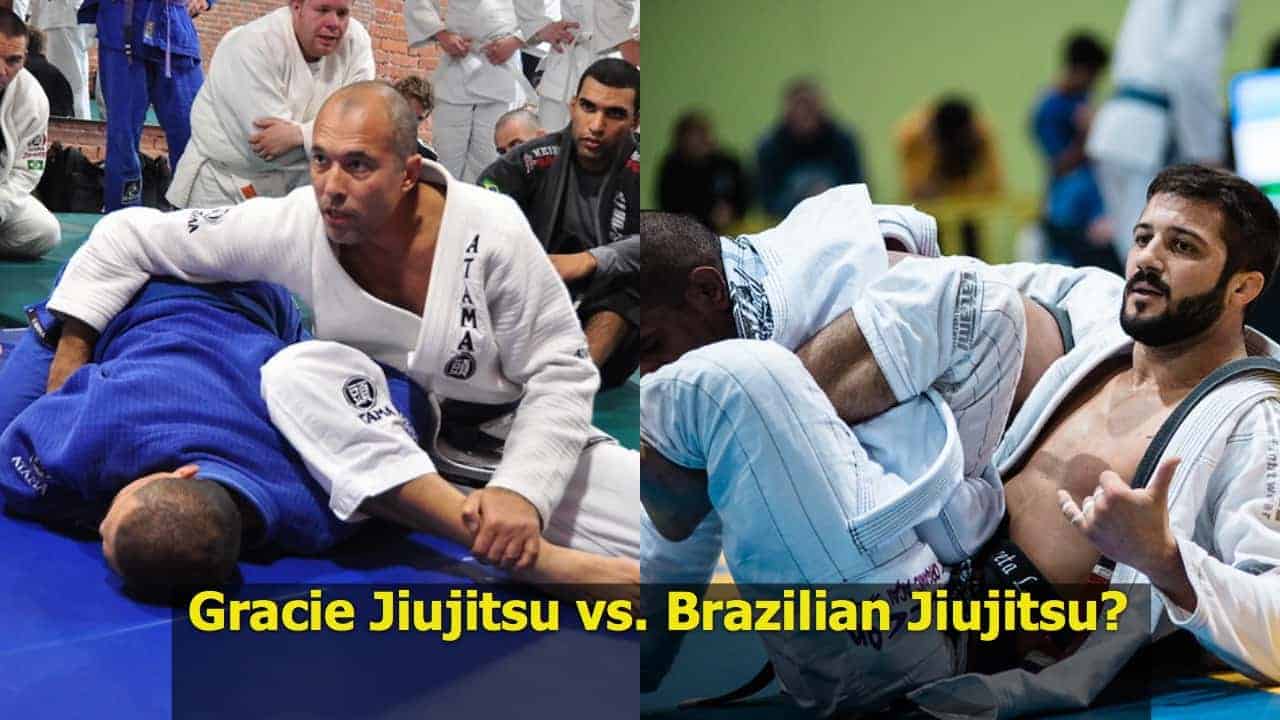
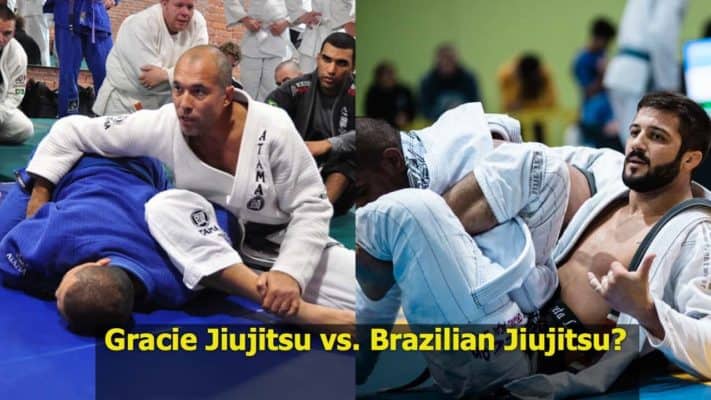
Photo by MartialArtsNomad.com & Richard Presley

You may have heard the terms Gracie Jiu-Jitsu (GJJ) and Brazilian Jiu-Jitsu (BJJ) and are interested in learning more. I certainly was when I first started looking into Jiu-Jitsu as a potential new hobby. Many people become confused with the difference between the two or think they are the same thing. This article will help clear up some of that confusion.

Gracie Jiu-Jitsu is a form of Brazilian Jiu-Jitsu, but they differ in a number of ways. GJJ aims to teach anyone to defend themselves against a bigger and stronger opponent, regardless of age, size, gender or fitness. BJJ uses the same techniques, but is designed more for the sport of grappling. 

There are a few points of difference between the two forms of Jiu-Jitsu, which I will discuss in this article. There are also many similarities, as well as reasons why one might be better than the other.

GJJ vs. BJJ – The Main Differences

Purpose

The main objective of GJJ is to prepare the student for any street fight as a means of self-defense. They should not be held back by their size, age, gender or fitness. It also teaches students about how to use their body to live a healthy life. This includes refraining from harmful substances such as drugs, alcohol and cigarettes. It is not only a fighting style, but a way of life.

On the contrary, BJJ focuses more on the sporting aspect of Jiu-Jitsu. The students are still prepared for self-defense, but learn more about grappling with other trained students. BJJ students will be trained to submit their opponent in a structured, rule-based competitive environment.

Intended Opponents

The opponents targeted by GJJ are larger, stronger and unskilled members of the public. This is because the Gracie method teaches students that everyone should be ready for a street fight. Helio Gracie, the Grand Master of GJJ, was a smaller man and developed his techniques based on the fact that most of his opponents would be larger and stronger than he was.

BJJ trains their students to grapple with other students or other trained fighters. Your opponents are generally people of a similar skill level, with students being encouraged to grapple with people of a similar belt or someone more experienced.

Techniques – Restrictions

The GJJ techniques must adhere to three rules. They must be energy efficient, use natural movements and be applicable in an everyday situation. Although energy efficiency is important in all BJJ techniques, the use of natural movements is important in GJJ so any person can do them.

In BJJ, there are some techniques that people of a certain size or age cannot perform, such as flying armbars. They may look impressive, but these techniques would not be acceptable in the Gracie methodology because they are not realistic in everyday situation. These techniques rely on physical attributes, such as speed or strength, which some people may struggle with.

In general, all GJJ techniques are part of BJJ, but not all BJJ techniques are applicable to GJJ. There are a lot more techniques in BJJ which may be considered unnecessary in the Gracie method.

Training Style

There are still rules in GJJ, but students will be taught to practice their techniques in a ‘fight simulation’. It is not ethical or realistic to practice their techniques in a real-life situation (a street fight). Therefore, one student will use Gracie techniques against another student who is given extra weight and boxing gloves as an advantage. Essentially the opponent will be allowed to fight however they like to try to win.

This is not the case in most BJJ training. BJJ revolves around rules and structure, which is the environment that students will find themselves in when grappling at training or in a competition. There are certain techniques that are ‘illegal’ to perform, so the student knows that these are not a possibility and they will fight their opponent accordingly.

Belt System for Beginners

The belt system of GJJ is controversial among other BJJ students. Essentially, Gracie students do not engage in any competitive sparring leading up to gaining their blue belt. This is because the Gracie method focusses on equipping the student with the skills they need to defend themselves in any street fight, right from the start.

A GJJ student will only receive their blue belt when they have learned the 36 core techniques required to defend themselves against a bigger, stronger and more athletic opponent. They must demonstrate sharp reflexes and respond instinctively.

In BJJ, the belts are awarded once a student has demonstrated that they can evenly grapple with someone of that level. For example, a blue belt can only become a purple belt once they have proven that they can submit another purple belt. There is less structure to the beginner belt system than in GJJ.

Similarities Between the Two

Same Origins

Both GJJ and BJJ stem from the same origins. They both were born out of Brazil from the techniques developed by Helio Gracie. These techniques were based on those found in Japanese Jiu-Jitsu, but were modified to allow Helio, a frail smaller child, to keep up with his brothers.

Shared Techniques

Although there are some techniques in BJJ that are not used in GJJ, both styles share the same techniques. This includes mounts, chokes, arm bars, locks, bridges, triangles and many more. As I mentioned earlier, all the techniques found in GJJ can be found in BJJ. These techniques all fall into one of four categories:

  • Sweeps
  • Submissions
  • Controls
  • Escapes

Belt System – Colours, Stripes and Promotions

The belt system in both GJJ and BJJ was derived from Japanese martial arts. They both follow a color system, which I have outlined below, starting with a white belt for beginners.

  1. White Belt
  2. Blue Belt
  3. Purple Belt
  4. Brown Belt
  5. Black Belt
  6. Red Belt

The tip system is another element of the belts that is common in GJJ and BJJ. While a student is improving within a particular belt, they can earn ‘tips’ or ‘stripes’ on their belt. This means they are improving, but not quite at the level required to be promoted to another belt. There are a total of four stripes in each belt (except black and red belts).

RECOMMENDED FOR YOU:
BJJ Black Belt Lineage – Why It’s Important To Verify

Which One is Better?

Trying to choose which Jiu-Jitsu style is better can be a controversial topic. It is also difficult given the close origins of the two. Below are a few different reasons someone might prefer one over the other.

Better at Winning in a Fight

Of the two grappling styles, people generally want to know which type will win in a fight.

By its nature, GJJ is designed to focus on winning street fights. Therefore, it can be argued that GJJ is better in self-defense situations. However, in a competition, BJJ specifically trains you to adhere to the rules of a fight, get the most points and submit a trained opponent.

In saying that, there have been many cases where GJJ has come out on top over other forms of Jiu-Jitsu. In fact, the Gracies are the reason the UFC was created. Royce Gracie in particular was a world champion; no other martial art could stand against his grappling techniques.

Another good example is John Danaher’s ‘Death Squad’. Danaher trained under Renzo Gracie and his own students are well-known for their skilled grappling techniques. Currently, his student Gordon Ryan is contested as the best grappler in the world. Looking through history, it would appear that most of the world’s best grapplers were either part of the Gracie family or trained in the Gracie method.

This means that GJJ is not only better for self-defense, but has been known to produce champions in formal competitions as well. This would lead you to believe that GJJ is the better of the two.

Other Considerations

There are other elements to Jiu-Jitsu that might make you believe BJJ is better than GJJ, and it comes down to personal preference. Some elements to consider are:

  • Which is the most fun?
  • Which is healthier for you?
  • Which is better entertainment?

Some students who have trained in both GJJ and BJJ have said that they found BJJ more fun. GJJ seems to be the more disciplined and serious of the two types of Jiu-Jitsu. However, this discipline makes GJJ very beneficial to your health if closely following their philosophies which include their “Gracie Diet“. For example, GJJ is less lenient on smoking, drugs and alcohol.

In terms of entertainment, both types of grappling seem to be just as enjoyable to watch. However, given that there are additional techniques involved in BJJ, this may give it more entertainment value compared to GJJ.

Which One Should I Choose?

Considering all of the above, this is your personal choice. You should consider what you value in your training and why you would like to learn Jiu-Jitsu.

If you are more interested in adopting a new way of life, the health benefits and discipline involved in GJJ might interest you. This is also a good option if your main goal is to be prepared to defend yourself or your family.

If you are more interested in learning Jiu-Jitsu as a sport, then BJJ is likely a better option for you. You will be trained specifically to grapple within a competition setting, as well as some self-defense. You also may find it more relaxed than the Gracie method.

Both have their benefits and both are incredibly rewarding to train in. Hopefully this article has helped you understand the differences between the two.

Do You Need to be Flexible to Do Martial Arts?

0
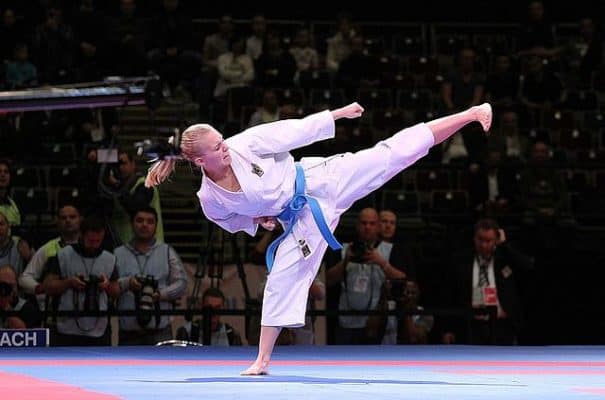
Photo by Claus Michelfelder

MMACHANNEL  strongly recommends that you consult with your physician before beginning any exercise program. You should be in good physical condition and be able to participate in the exercise. MMACHANNEL is not a licensed medical care provider and represents that it has no expertise in diagnosing, examining, or treating medical conditions of any kind, or in determining the effect of any specific exercise on a medical condition.

Flexibility is an important aspect of physical fitness that is often overlooked or downplayed in comparison to more “flashy” physical abilities like strength or speed. However, in the world of martial arts, flexibility can be an aspect as important as any other physical attribute.

Flexibility is important in varying degrees in different martial art styles. Some martial arts require high levels of flexibility to properly execute certain techniques. All martial arts require some flexibility, but it is a part of your physical makeup that you can work on to improve.

Watching accomplished martial artists can be an eye-opener for these experts’ flexibility in performing their combat style. This flexibility has taken years of training to achieve, so does limited flexibility exclude you from learning martial arts?

How Flexible Must You Be To Do Martial Arts?

Flexibility is a very useful attribute to have for any martial art, but the different styles have different flexibility requirements to execute techniques correctly.

This means that the importance of flexibility in martial arts differs between disciplines, giving options to less flexible people.

Flexibility is also a physical attribute that can be worked on and improved by specific exercises to gain the necessary range of motion to execute martial arts techniques correctly. 

So, if you currently do not have the flexibility required for a particular martial art, you can actively work on this aspect to improve your flexibility

Training in a martial art will also improve your flexibility to some degree as your training level progresses, but some martial arts may require additional exercise routines that focus on improving flexibility.

What role does flexibility play in martial arts?

The first and perhaps the most obvious way that flexibility is important in martial arts is in terms of technique. 

Many martial arts techniques, especially those found in styles like Karate or Taekwondo, rely on high, sharp kicks or fast, fluid movements. 

These techniques can be difficult to execute properly without a good range of motion in the joints, especially in the hips and legs.

In addition, flexibility can also play a role in defense. Being able to move and bend your body in a variety of ways can make it more difficult for an opponent to land a solid hit or grab hold of you. 

This is especially true in styles that rely on evasion and redirecting an opponent’s attacks, like Judo or Aikido.

It’s important to note that flexibility is not the be-all and end-all in martial arts. While it can certainly be helpful, it is just one aspect of physical ability, and many other factors can contribute to martial arts success.

For example, strength and power are also important in many martial arts styles, particularly those that involve striking or grappling. 

In addition, cardiovascular endurance and overall conditioning are crucial for sustaining the demands of training and competition.

Working on improving flexibility can still be a valuable pursuit for martial artists, as it can help with technique execution, defense, and overall physical conditioning

There are many ways to improve flexibility, including stretching and the practice of specific martial arts techniques.

Can non-flexible people learn martial arts that require flexibility?

Is it possible for people with less flexibility to learn martial arts requiring greater flexibility? 

Flexibility is a valuable attribute to have in martial arts, and there are many ways that practitioners can work on improving it. This means that a lack of flexibility does not exclude you from learning a martial art that requires more range of movement.

What it does mean is that you may have to put in some additional training in exercises designed to increase your level of flexibility. 

Flexibility can vary widely from person to person, and some individuals may naturally have a greater range of motion in their joints than others. This is due to varying factors, including genetics, age, and overall physical condition.

Flexibility can be improved in the following ways.

  • Range of motion exercises. These exercises are created to improve suppleness in joints and ligaments.
  • Stretching exercises. These routines lengthen muscle fibers, making them more flexible.
  • Practicing martial arts techniques that require flexibility. Actively focusing on practicing techniques that require flexibility will progressively improve your flexibility.

Martial Arts That Require Less Flexibility

As mentioned, some martial arts styles require less flexibility than others. You can train in one of these martial arts with only a moderate amount of flexibility and still become accomplished in these styles.

Working on your flexibility will make you more proficient in these styles and allow for more fluid movements, which are important for some disciplines. 

As a general rule, most grappling-based martial arts require less flexibility than other forms of martial arts.

  • Boxing. Boxing does not require much flexibility but requires a good range of motion in shoulders and hips, which generate much of the power in this sport.
  • Brazilian Jiu Jitsu (BJJ) BJJ requires a good range of motion in all major joints but does not include kicks, high kicks, and jumps like Taekwondo.
  • Judo. Judo is a grappling-style martial art using locks and throws and, as such, requires less flexibility than many other martial arts.
  • Sambo. This Russian martial art focuses on ground fighting and judo-style grappling. 
  • Aikido. This martial art is a fluid, flowing style which requires some level of flexibility but does not include kicks and jumps that require a higher level of flexibility.Fluid motion is needed to redirect your opponent’s energy and use it to your advantage.
  • Krav Maga. Developed for self-defense and close hand-to-hand combat for soldiers. This martial art requires less flexibility. 
  • Kenjitsu. A Japanese martial art focusing on swordsmanship
RELATED:
10 Safest Martial Arts That Are Effective In Real Life

Martial Arts That Require More Flexibility

Martial arts that require a higher level of flexibility may be more challenging for someone with a low degree of flexibility.

Anyone with low flexibility attempting to learn these martial arts must be aware that they will need to put in extra effort to improve their flexibility level.

As a general rule, any martial art that includes kicks, especially high kicks and jumps, requires a greater degree of flexibility to master.

  • Taekwondo. This martial art relies heavily on kicks, requiring high levels of suppleness and flexibility. In-flexible people can easily sustain an injury in this martial art and struggle to master the techniques.
  • Kung Fu. All the Kung Fu style martial arts, such as Wing Chun, require more flexibility to be effective in the techniques.
  • Capoeira. This martial art requires extreme flexibility due to the far-reaching, fluid, dynamic, and high-energy techniques. This martial art is often called the dancing martial art and should not be undertaken by people with limited flexibility.
  • Karate. Karate employs the use of forward and back kicks that require a high degree of stability and flexibility.
  • Muay Thai. A form of kickboxing from Thailand that uses a variety of kicks, including high kicks, as part of the important techniques in this combat style. 

How to Become More Flexible for Martial Arts

One way to improve flexibility is through stretching. Static stretches, involving holding a position for a set amount of time, can be a good way to increase flexibility in specific muscles or muscle groups. 

Dynamic stretches, which involve continuous movement and are often used as part of a warm-up, can also help improve flexibility.

Another way to improve flexibility is by practicing specific martial arts techniques. Many martial arts techniques, such as high kicks or deep lunges, can help to increase flexibility in the muscles and joints used in those movements.

Range of motion exercises that work major joints of the body and create suppleness and strength in the muscles around these joints will improve overall flexibility.

Tai Chi is another way to build on balance and flexibility in a controlled way that will benefit almost any martial art training.

Final Thoughts

Flexibility is important in most martial arts, but the level of flexibility required to master these fighting styles differ. Certain martial arts can only be mastered with a high level of flexibility.

Flexibility can be improved by practicing certain exercise routines that focus on stretching muscles, joints, and ligaments to improve range of motion and flexibility.

What Is The Difference Between MMA and Martial Arts?

Photo by Sven Mandel & Claus Michelfelder

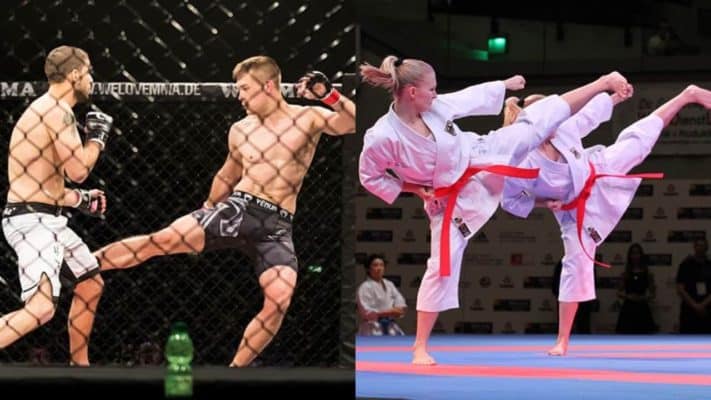
Mixed martial arts (MMA) is literally a mixture of techniques from various martial arts put into one style of fighting. This is why many people think MMA is not a real martial art, as it uses techniques from other arts. But the main difference between MMA and traditional martial arts is the concept. 

MMA puts a lot of emphasis on sports and prizefighting. It teaches you how to fight under the rules, win fights and you can earn a lot of money and become very famous. On the other side, martial arts is more about the culture, being in top shape, with the main focus on improving oneself.

In this article, I will explore deeper into the differences between MMA and martial arts to help you decide which one is right for you. And in the end, we will see if MMA could, to some extent, be seen as real martial art.

What are the Main Differences Between MMA and Martial arts?

A lot of people think that MMA is a real martial art mainly because of its name “Mixed Martial Arts”. But in spite of this, there are a lot of differences between these two, and here are the notable ones:

  • MMA is a very popular sport where the main goal is to win a match. Although some martial arts include competition like karate, the emphasis of the art is on improving oneself.
  • Most martial arts include forms of meditation exercises where the goal is to focus on calming your mind. MMA won’t teach you these exercises, but a lot of fighters do them on their own.
  • Some martial arts, notably from China, teach techniques that do not work in real fighting. MMA differs a lot here as each technique you learn works in real life as well.
  • Some traditional martial arts include a strong cult following. Culture in MMA gyms is oriented more to the modern way of living and doesn’t include any type of cults or following.
  • MMA is a mainstream sport in which fighters can earn huge money. Some martial arts include competition like karate or judo, but you won’t get rich or very famous competing. 
  • Most martial arts focus on just one element of fighting like judo on grappling or boxing on the standup. In MMA, you will learn how to fight in the standup, clinch, or fight on the ground. This makes it more versatile than most martial arts. 

Is MMA Better For Self-Defense than Traditional Martial Arts?

In many self-defense scenarios, MMA could help you much more than training in other martial arts. Even though MMA is widely known as a popular sport, its concept makes it close to ideal for self-defense. This is because it prepares you to fight in all elements using only the techniques that you can apply in a real fighting situation:

  • Standup (Muay Thai, Boxing, Karate)
  • Clinch (wrestling, Muay Thai, BJJ)
  • Ground fighting (Wrestling, BJJ)

Or in other words, whatever happens and wherever the fight goes, you will be trained to face any type of fighting situation. Also, MMA training includes a lot of sparring which gives you a sense of what it’s like to be in a real fight. You will spar in the standup throwing strikes, use takedowns and fight on the ground. In some way, MMA fights/sparring is often all over the place just as fights on the streets. So once in a street fight, you will know how to keep your mind calm and which techniques to use to stay out of trouble or escape from it. 

However, MMA won’t teach you how to use or defend against dirty tactics and weapons like some martial arts would. This is often seen as the biggest drawback of MMA when it comes to self-defense. But still, is MMA the best fighting style for street fighting? 

This really depends on the type of situation you are in. Set against martial arts, MMA is certainly better because it covers most situations you can find yourself in. 

Can a Martial Artist Beat an MMA Fighter in a Streetfight? 

MMA is superior to most martial arts when it comes to street fighting. But, there are a couple of martial arts that stand a high chance against an MMA fighter in a match without the rules. This is mainly because MMA won’t teach you how to use dirty tactics while some martial arts will like Krav Maga.

You see, MMA is a sport that prepares you how to fight under the rules. Even though MMA fighters are well rounded, they are not allowed to use any dirty moves like eye gouging or groin strikes. When they receive an illegal strike to the groin area, for instance, the referee would stop the match and give them time to recover. The same stands for other dirty tactics like eye pokes, biting, and many others.

But as we know, you can do anything you want in street fighting as there are no rules. This is where some martial arts have an advantage since they will teach you how to use dirty moves.

MMA fighters are simply not used to these types of strikes as they never practice them in the gym. Although they land now and then due to the nature of the sport, dirty tactics are not a part of their training. Once in a street fight, most MMA fighters would crumble like average humans upon receiving a groin strike for instance.

Still, landing dirty moves is not an easy thing to do, notably when a person standing in front is a skilled MMA fighter who has far better fighting skills. 

Can an MMA Fighter Go Into Martial Arts Competition And Win?

MMA fighters are masters in many fighting styles as they know how to wrestle, box, or execute judo throws. This makes some people think they can take part in martial arts tournaments and win. Even though this sounds right on paper to some extent, the reality is a bit different.

First of all, the goal in MMA is to mix techniques from various martial arts into one style of fighting. Or in other words, fighters do not excel in one art, they are just using certain techniques from it. Second, the rules in martial art competitions differ a lot from the ones in MMA.

Here is one instance of how it all looks in practice.

In 2017, MMA star Conor Mcgregor moved into boxing to face Floyd Mayweather in a boxing match. MMA fighters know how to box so it was reasonable to assume they can beat boxers in their game, right? Well, things didn’t go as planned for the Irishman since Floyd went on to play with him for 10 rounds before knocking him out.

The same thing happened to the former UFC fighter, Ben Askren. In 2019, he stepped into a wrestling match against an Olympic gold medalist, Jordan Burroughs. Bear in mind that Askren has a strong NCAA Division I wrestling background. He built his entire MMA success on utilizing his amazing wrestling skills. But, he was away from wrestling competition for almost a decade.

Once the match started, Burroughs went on to literally walk right through Askren to take him down to the mat. He gave Askren a wrestling class and reminded us that MMA fighters can’t go into martial arts competition and expect to win. 

Can a Martial Artist Beat an MMA Fighter In an MMA Match?

Martial artists certainly have good fighting skills but those are not enough to beat MMA fighters in their sport. In fact, it would be a miracle to see a martial artist coming into MMA and succeeding. This is mainly because most martial arts are too one dimensional for MMA no matter if we are talking about grappling or striking.

For instance, Karate stands for a solid base for MMA that teaches you really good footwork, kicks, and blitz attacks. They are real masters in moving in to land a strike and get out really fast without being hit back. But once in an MMA match, skilled MMA fighters would take them down without even putting much effort into it. And once the fight goes on the ground, karate fighters would look lost because they never learned how to fight there.

The same stands for other arts like Judo. Their throws, trips, and sweeps are very good techniques that also work in MMA as well. But Judo fighters don’t know how to defend vicious kicks or punches in the standup. Even if they get the clinch, taking an MMA fighter down is not easy simply because they all know how to defend against it.

We can continue to give you examples from other martial arts as well, but you can see our point. MMA is far more versatile than most martial arts and we don’t have to mention the difference in rules. 

What Martial Arts Are Allowed in MMA?

You can use any martial art to fight in MMA as long as the techniques are within the rules of the sport. But bear in mind that being an expert in just a single martial art is not enough to fight in MMA. All fighters must know how to combine techniques from various martial arts to cover all the aspects of the sport.

Over the years, many fighting styles proved bad for MMA like Aikido since their techniques are not effective enough. Some other ones like Kung Fu are bad because they put a lot of emphasis on dirty moves like eye-gouging or groin strikes that are not allowed in MMA. 

But on the other side, different types of martial arts have emerged as very useful in MMA fighting. Here are some martial arts that are allowed in MMA and what type of techniques they bring to the sport:

  • Muay Thai – roundhouse kicks, knee, and elbow strikes
  • Boxing – footwork, punching combos, head movement
  • Karate – movement, angles, straight punches, fast kicks
  • Taekwondo – various spinning and jumping kicks, ability to fight from both stances
  • Wrestling – double/single leg takedowns, top control trips and throws
  • BJJ – chokeholds, joint locks, sweeps, escapes

Which Martial Art Is The Best For MMA?

MMA is still a young sport that is evolving really fast and we can’t say for sure which martial art is the best. In the beginning, MMA fighters were experts in just one style of fighting. We saw a lot of style vs. style matchups in which BJJ fighters were superior to fighters from other arts.

But according to the modern data, most of the UFC champions in history have actually come from wrestling.

Saying which one is the best is unrealistic because modern MMA fighting is a sport in which being an expert in one art is not enough. You can’t compete using just BJJ or Muay Thai skills like you could in the early days. In modern times, MMA fighters cross-train in the following four martial arts to become well-rounded fighters:

  • Muay Thai – is often seen as the complete striking art as it teaches you how to use all limbs as weapons in a fight. The emphasis is on powerful kicks and clinch where you can land knee and elbow strikes.
  • Boxing – is crucial for MMA as it teaches you all about the movement and punches. We are not sure if any other martial art will teach you better footwork and head movement than boxing.
  • Wrestling – is often seen as the best base for MMA as it allows you to take the opponent down and control them on the bottom.
  • Jiu Jitsu – is so important that you can’t expect to succeed in MMA without BJJ skills. It teaches you how to take the opponent down and use various chokeholds and joint locks to submit them.

Is MMA a real martial art?

We don’t see any reason why MMA couldn’t be seen as real martial art. Some people think it isn’t because it is a mix of techniques from other arts. But, remember that some real martial arts also include techniques from other arts. The best instances are Russian Sambo, which is a mix of judo and catch wrestling. The other one is BJJ which originates from Judo. In fact, most BJJ throws, trips, joint locks, or chokeholds are actually Judo techniques.

Next, let’s not forget that the way wrestling, boxing, or judo techniques work in MMA is much different. Due to the nature of the sport, you don’t shoot for a takedown the same way you do in wrestling. Or, you don’t stand in the same stance or throw the same punches as in boxing. The mix of various grappling and striking techniques in MMA is really unique and you have to adapt every single martial art technique to it.

Even though MMA is a popular sport, it is still far better than most martial arts when it comes to self-defense. It is the only fighting style that will teach you how to fight in all elements of fighting. For instance, MMA is far more practical in real life than Kung Fu or Aikido that people see as real martial arts while MMA is not.

And there is the other argument that MMA is not a real martial art because it doesn’t focus on self-improvement. This is not true in our opinion as there are many studies showing MMA improves your confidence, makes you more patient, and can help deal with various mental disorders.

Related Questions

Why Is There No Kung Fu In MMA?

In modern MMA, you can clearly see the lack of traditional martial arts, notably the ones from China. You will rarely see MMA fighters having a background in Chinese martial arts like Kung Fu. The reason for this is simple, the concept of most Chinese martial arts like Kung Fu simply does not fit well into the sport of MMA and its rules.

First of all, Kung Fu includes dirty tactics like eye-gouging and strikes to the groin area that are now allowed in MMA. Landing these strikes would force the referee to instantly stop the fight and can get you disqualified.

Next, some of the fundamental techniques you learn in Kung Fu are really bad for MMA fighting like the stance for instance. Kung Fu fighters tend to hold their hands stretched in front since the emphasis is on intercepting the strikes coming at you. Standing in this type of stance can get you seriously hurt in MMA and we are not joking about it. 

Kung Fu

There are many other issues with Kung Fu in MMA. One of the biggest is the lack of sparring and competition. Sparring allows you to test the techniques you learned against the training partner. It’s also important as it gives you a feeling of being in a real fight with a person trying to hurt you. And the lack of this feeling is what would make most Kung Fu fighters look lost in an MMA match.

How Hard Can an Average Person Punch?

0
Photo by Eric Molina via Flickr

From the boxing ring all the way down to a street brawl, throwing a punch is a natural movement of the human body when in combat. However, not every punch or every person throwing one is created equal. There are various factors that go into a person’s efficacy at this martial skill, but where does the average person fall on this scale?

Without the training and conditioning that boxers and martial artists go through to strengthen their punches, the average person has a much lower PSI. Most individuals’ average punching power falls between 60-170 PSI, with outliers on both ends of that range.

There is significant debate around how much training can contribute to a person’s punching capability vs. their genetic predisposition. Read on to learn more about the elements that make up a punch and elevate the aspects that can be improved.

What Is The Average Person’s Punching Power?

Determining the average person’s punching power is a challenging equation as many elements go into determining the answer. Additionally, while PSI (Pounds per Square Inch) is a commonly used way to measure punching power, it is only part of the overall equation. 

Technically speaking, the use of PSI to determine punching power works by dividing the force of the punch by the surface area of the striking point, the part of the fist or glove making contact with the measuring device. However, this means that smaller, harder objects will generate the same PSI even if the force behind the strike is different. 

Physics states that ‘punch force’ is based on how much mass your punch has (the weight of your body that can be directed into a strike) and how quickly you move that mass (generating momentum) to hit a target. 

The most optimal unit of measurement to measure punching force is the Newton, named after Sir Issac Newton, generally abbreviated as N. For context, a person weighing 176.37 lbs (80 kg) exerts approximately 800 N of force on the ground beneath their feet by simply standing still. The average punching force of amateur boxers is around 2500 N

Do Boxers Hit Harder Than MMA Fighters?

While there is significant contention surrounding the idea of what punching harder means, it is generally accepted that boxers hit harder than MMA fighters on average. The primary reason for this disparity is the concept of specialization compared to generalization. The average MMA fighter likely specializes in one or multiple martial arts and then also learns aspects from the rest of the martial arts that are likely to be used against them.

Conversely, boxers train exclusively in throwing punches and conditioning their body to make those strikes more effective. Boxers also practice attacking from different angles, which gives them the ability to deliver incredible force by applying it to the correct location at the right time. This technique involves using their opponent’s momentum to generate even more energy at the point of impact.

A punch delivered to a target like your opponent’s chin will be even more potent if that opponent is turning their head in the opposite direction by committing to their own attack. Part of the training that boxers undergo involves learning how to time a punch to land where the opponent’s momentum contributes to the overall impact and damage, with explosive results.

Since MMA fighters need to be able to fight opponents with a wide variety of skill sets and techniques, there is less focus given to the many angles that boxers need to consider, resulting in less powerful punches. It is important to note that MMA fighters will still possess a more powerful punch than an everyday person with no combat training. Still, because they have a significantly wider range of options and obstacles, they fall slightly lower than boxers in terms of punching specifically.

Are Punchers Born or Made?

There are excellent arguments on both sides of how much genetics factors into a person’s punching capability. Most experts agree that some of the strongest punchers of all time, such as George Foreman, Mike Tyson, and Earnie Shavers, have a genetic predisposition towards throwing a punch that gives them a degree of advantage in the ring. 

The genetic benefits that these fighters and many others possess are not always the same. Included below are some of the different genetic advantages that indicate a greater likelihood of being a powerful puncher. 

Muscle Fibers

Some people, especially athletes of various disciplines, have a higher percentage of either slow-twitch or fast-twitch muscle fibers. Both of these specialized fibers are advantageous for physical competitors, but they differ in how they provide that benefit. 

Fast-twitch muscle fibers correlate to the instantaneous explosive power of those muscles, which is related to activities like jumping, sprinting, and punching. These fibers generate enormous energy for short periods but fatigue quickly. Conversely, slow-twitch fibers can maintain strength for more extended periods but without the ‘burst’ potential. 

So if a person naturally possesses fast-twitch muscle fiber, they are more likely to be able to punch harder if given the appropriate training and technique.

Big Hands

It’s worth noting that having larger than average hands and wrists will not generate more force behind your punches, but they will allow you to transfer the power that you generate more effectively. Mike Tyson is an example of a boxer who had large hands, which was one of the many reasons for his strength in the ring.

Hand Speed

Some of the most effective boxers were not massive fighters in the heavyweight category but were combatants that could throw fast punches that relied on their hand speed, such as Manny Pacquiao. Even if your body has less mass than your opponent, it will translate into powerful punches if you can move that mass with significant speed. 

Back Muscles

Certain kinds of punches, especially overhands and hooks, get most of their strength from your upper back muscles. These muscles can be improved by weight training, pull-ups, push-ups, and other exercises, but if you have a naturally robust and broad back, it will be an advantage when throwing punches.

Leg Muscles

Proper punching technique dictates that a correct punch begins from the feet and legs as you rotate your body to generate as much force as possible. This concept is another example where Mike Tyson, whose punches were renowned for their power, possessed thick legs that contributed to his prowess. It is worth noting that powerful leg muscles only translate into punching power when the proper technique is involved.

There are many more genetic factors, both significant and otherwise, that contribute to punching power. However, it is worth noting that no matter how many natural advantages a person has when it comes to throwing a punch, they will not surpass an average person who has trained in a martial discipline.

As such, genetic advantages only come into play when combatants are evenly matched in terms of experience and technique. At that point, those slight differences begin to play a much larger part as the playing field is level.

What Was The Hardest Punch Ever?

Determining the hardest punch ever is a challenging prospect as many older boxers were renowned for having potent strikes. However, modern measurement techniques have made the anecdotal evidence from the decades previously largely irrelevant. 

In terms of modern individuals, the strongest recorded punch is by Francis Ngannou, according to the UFC Performance Institute. The Cameroon-born UFC fighter recorded a punch that measured 129,161 units that broke the previous record held by Tyrone Spong, a kickboxer.

https://youtu.be/LC_t7h1JTls

According to Dana White, the president of the UFC, Ngannou’s punch reaches the equivalent of 96 horsepower, which he describes as “being hit by a Ford Escort at top speed. It’s also the equivalent of being hit by a sledgehammer being swung full force from overhead.”

Who Has The World’s Fastest Punch?

As mentioned above, the strength of a punch and the speed of a punch is not the same thing, but they both contribute to overall punching efficacy. According to Guinness World Records, the record for the fastest punch is held by Keith Liddel, an author, mathematician, and boxer. The punch in question registered at 45 mph

For comparison, most boxers commonly register punches between 30-35 mph. It is worth noting that while Liddel is an outlier in the speed of his record-holding punch, it is difficult to take advantage of the techniques required for an effective punch at top speed. He and other fighters do not punch at that speed in a fight as it would be less effective than slower punches with greater force behind them.

RECOMMENDED FOR YOU:
What Is The Average Punching Speed? Punching Speed Analyzed

What Exercises Increase Punching Power?

It is vital at this moment to create a distinction between improving punching power and improving punching efficacy. Training and learning the elements that make up a martial discipline such as boxing will result in a more effective punch, one that will be more likely to incapacitate an opponent. A more powerful punch will be a strike that has more significant force behind it. 

The following exercises will increase your body’s capacity to deliver a more powerful punch but must be used in combination with technique to become a more effective fighter.

Plyometric Push-Up

Plyometric push-ups differ from standard push-ups by having an explosive burst of energy involving the arm, shoulder, and pectoral muscles. These muscles all influence an individual’s punching power and are a primary reason for this exercise. A brief description of a plyometric push-up is as follows.

  • Begin with a standard push-up, and dip your body downward as per the traditional method, but push high and fast enough that your hands lift off the ground, then catch yourself, drop, and repeat.
  • Ensure that you keep your core and gluteal muscles tight throughout the exercise to get the best possible results.
  • To ensure you’re achieving the proper height, try clapping your hands together or against your chest in mid-air as you lift off the ground.

Throwing a Medicine Ball

Just as the plyometric push-up trains your central muscles, use a medicine ball to increase the power of your arms. Use the following explanation as a guideline for this exercise.

  • Lie flat on the floor on your back and throw a heavily weighted medicine ball as high as you can by pushing it forward and outward from the chest. At the ball falls, catch it with both hands and repeat the exercise until you are too tired to continue.
  • Stand upright in your standard boxing stance, and throw a medium-weight medicine ball against a wall or to a partner. When you throw the ball, keep it in the palm of your hand and push it forward as hard as possible as if you are throwing a punch.

Heavy Bag Training

A staple of training, using the heavy bag in either a boxing or an MMA style will increase your punching power enormously. Ensure you wear bag gloves to protect your hands, and begin practicing.

  • Start by hitting the bag in any combination of hooks, uppercuts, and straight punches in ten-second intervals. Follow that by resting for ten to fifteen seconds with footwork and light jabs, then repeat. The exercise should last for about three minutes total, with approximately one-minute rests between each set.

Your access to these training methods may depend on gym accessibility, so work with what you have to develop your strength, and you will see an increase in your punching power as time goes on.

How to Punch Faster?

As discussed throughout this article, the essential elements that go into a punch are speed, force, and technique. While the above section will go over exercises to increase the strength behind your punches, and a boxing or MMA coach will teach technique, it is crucial to train your speed as well. 

Some of the best boxers of all time, like Muhammad Ali and Floyd Mayweather Jr., are famous for their speed and striking the opponent before getting hit themselves. Review some of the following exercises for training your punching speed to improve your overall ability.

Fast Push-Ups

Push-ups are such an effective means of strengthening muscles used when throwing punches, and doing these exercises quickly will allow your muscles to fire faster and result in more rapid punches.

  • Ensure that you do not sacrifice the form of your push-ups for speed. Your exercises are only as effective as the form involved, and poor form can result in injury as well.

Jumping Rope

Jumping rope is another effective workout that is used extensively in boxing training. Like push-ups, jumping rope can help develop the fast-twitch muscles in your shoulders and upper back responsible for delivering fast punches.

  • Once you develop a rhythm, periodically increase the speed, and introduce variation into your footwork. This exercise will increase your speed and endurance by providing high-intensity moments coupled with longer-lasting endurance training.

Shadowboxing With Weights

Shadowboxing is a vital part of boxing for many reasons. It conditions your body to handle the rigors of combat movement and is the best way to practice the techniques required to be a skilled boxer. You can enhance this workout by adding light weights to your hands as you go through your regular shadowboxing routine.

  • Begin with weights ranging from 2-5 lbs, depending on your current fitness level, but begin with lower weights and build from there.
  • As you stimulate the muscles involved in punching while following the proper technique and movement, you will notice an increase in speed as you repeat this exercise when you drop the weights.

The most effective puncher, whether through boxing, MMA, or other disciplines, will be the person who combines strength, speed, and technique. As you develop your skills inside the ring, ensure that you train your body to keep up with your practice to ensure that you become the most capable version of yourself.


Plyometric Push-UpsMedicine Ball ThrowHeavy Bag TrainingFast Push-UpsJumping RopeShadow boxing (w)
Muscle BenefitsArms, Pecs, ShouldersArms, HandsFull BodyArms, Pecs, ShouldersCardioFull Body
Speed BenefitsN/AN/AFootworkArms, Pecs, CoreFull Body, ArmsFull Body

Conclusion

On the surface, throwing a punch may seem like the most straightforward movement in the world, but there are many layers of depth and complexity that scale with understanding. The difference between a person throwing a punch with no knowledge of the mechanics involved and a person with years of training and expertise behind them is astronomical. 

However, there are many levels between those two extremes, and a fundamental understanding of how to improve your strength, speed, and self-awareness will go a long way to delivering an above-average punch.

Related Information

How Hard Can an Average Person Kick? – Do you also want to learn about how hard can an average person kick?  This article explores everything you want to know about how hard an average person kicks.

Do UFC Champions Keep the Belt?

0

If you’ve ever seen or heard of the UFC, you would know that the champion receives a large belt following their victory. However, there is some confusion over whether this is the same belt passed from one champion to the next, or whether the belt is like a trophy that the champion is able to keep.

UFC Champions will always keep their physical belts, regardless of their future status. That is, even if they lose a fight, vacate their title, or are stripped of their title, they will keep their belts. Their belts do not get passed on to new champions.

From 2001-2018, UFC champions won a Classic Championship Belt every time they won or defended the championship title.  From 2019 onwards, champions won a custom UFC Legacy Belt, which is adorned with one ruby for every additional title win. In both instances, the fighter keeps the physical belt.

I will explain these belt systems in greater detail below. However, there have been inconsistencies and exceptions to the rule that make the belt system more complex. One of these complexities includes champions who win multiple titles, which I will also explain.

Do UFC Champions Keep the Belt?

Up until 2019, UFC champions would win a new belt every time they were named champion or defended their championship title. This belt is known as the UFC Classic Championship Belt. However, from 1995-2001, these belts were awarded sporadically due to budgetary issues.

From 2001-2018, the old system allowed champions to accumulate as many belts as they could win, meaning they could potentially retire with multiple UFC championship belts as their prize.

UFC Classic Belt
Photo by Andrius Petrucenia

However, there have been many inconsistencies to this system over the years. For example, Demetrious “Mighty Mouse” Johnson was only awarded one Classic Championship Belt for 10 consecutive championship wins. After some dispute, he did eventually receive all 10 belts and went on to win two more after that.

This sometimes flawed system was changed when the UFC introduced the Legacy Belt System from January 19th, 2019.

Photo by UFC.com

The Legacy Belt System awards the champion one gold belt, which is designed specifically for the fighter. It is customized with their name, weight division and the country they represent.

In addition to this, the belt is adorned with 16 white cubic zirconia stones, with eight on each side. Each time the champion wins or defends their title, one cubic zirconia stone will be replaced with a synthetic ruby, starting from those on the left.

Regardless of circumstance, at no point does a UFC champion need to return the belt they received when they won their title.

There are certain circumstances that cause a champion to lose their title, which I have outlined below.

  • The champion fails to defend their title in a fight.
  • The champion’s title has been stripped. This can be due to leaving the UFC for another fighting competition, taking extended leave without promise of return or cheating.
  • The champion has forfeited their title. This can be due to personal reasons, retirement or wanting to focus on a different weight division.

However, even champions who have lost their title have kept their physical UFC champion belt.

No champion to date has been stripped of their title since the new Legacy Belt system was introduced. Therefore it is unknown whether a champion being stripped of their title would affect their Legacy Belt in any way.

The confusion behind whether or not a UFC champion keeps their belt stems from people interchanging the words championship ‘title’ with championship ‘belt’. When it is reported that a champion has had their ‘belt’ taken away, this simply means their championship title was removed, not the physical belt.

For this reason, there have been many UFC belts manufactured over the history of the UFC. Having the Legacy Belt System in place should make the belts less common and therefore more valuable.

Can a UFC Champion Hold Two Belts at Once?

In the old system, a UFC champion could own several physical championship belts. However, in terms of holding the title of undisputed champion, it is difficult to hold two titles at the same time.

In total, there are 12 weight divisions in the UFC, which includes eight divisions for men and four divisions for women. Therefore, the maximum number of undisputed champions at any given time is 12.

For a champion to have two titles at any given time, they will need to win the championship in one division and then either lose weight or gain weight to compete and win in another weight division.

The first fighter to ever hold two titles at the same time was Conor McGregor in 2016. McGregor became the undisputed champion in both the featherweight and lightweight divisions. For his two titles, he was awarded two belts.

Therefore, it is possible that the same fighter can become champion in multiple weight divisions, and therefore hold two championship belts at once.

There was initially some confusion over McGregor receiving his second belt, but this was later clarified and he did, indeed, receive two Classic Championship Belts.

In total, there have only been seven fighters to win championships in multiple weight divisions, but only four have held two titles at the same time. These double champions (or “champ champs”) are listed below.

Conor McGregor2016Featherweight Champion Lightweight Champion
Daniel Cormier2018Light Heavyweight Champion Heavyweight Champion
Amanda Nunes2018Bantamweight Champion Featherweight Champion
Henry Cejudo2019Flyweight Champion Bantamweight Champion

In the new Legacy Belt System, the champion is awarded one belt for each weight division, but will receive rubies on their belt for subsequent wins in those divisions.

In the old belt system, as mentioned previously, the champion would win another belt every time they were named champion. For example, prior to 2019, Amanda Nunes received a new belt for every title, totalling five belts. 

In the new legacy belt system, she has won three titles in the Bantamweight division and one in the featherweight. That’s a total of four titles, but she has been given two belts; one bantamweight belt with two rubies, and one featherweight belt.

Another complication to the belt system is that it is possible for two UFC fighters to hold a title in the same weight division at the same time. This is made possible by what is known as the interim championship title.

The interim championship title is only created when the undisputed champion is on extended leave. This is often due to medical reasons, but there have been several different reasons over the years.

An interim champion will receive a belt for their victory, and then be given the opportunity to fight for the title of undefeated champion when the true champion returns. If they then lose the fight, they lose their interim champion title, but keep the belt they were awarded.

There have been some cases where interim champions have been upgraded to undisputed champion by default when the true champion has relinquished their title or had it stripped.

Who Holds the Most UFC Championship Belts?

Jon Jones holds the record for the most UFC championship titles, totalling 14 championships. These were all in the light heavyweight division.

However, like Amanda Nunes, Jones’ career has spanned across the two belt systems. He won his first 11 belts in the Classic Championship Belt System, whereas he won his last three titles in the Legacy Belt System.

Therefore Jones received 11 UFC belts prior to 2019 and then one Legacy Belt in 2019. His following two titles in 2019 and 2020 added two rubies to his current Legacy Belt. Therefore, in theory, Jon Jones owns 12 physical UFC belts.

Some of these were also interim belts, which look exactly the same as the belt of the undisputed champion. This is a controversial topic among fans, who believe the interim belts should be made to look different so they can be differentiated.

Regardless, if approaching the question from a technical perspective, it is actually George St-Pierre who owns the most physical UFC belts. St-Pierre won all 13 of his championship titles prior to the 2019 Legacy Belt System, meaning that he has a total of 13 Classic Championship Belts.

Overall, regardless of whether a champion won a Classic Championship Belt, Legacy Belt or Interim Belt, or lost their championship title, they will always be able to keep the physical UFC belts as a trophy for their victory.

What Is Dirty Boxing In MMA/Boxing?

0
Photo by mmawiki.org

While watching any boxing or MMA event, you can often hear broadcasters using the term “dirty boxing”. But this may confuse many fight fans who don’t know what “dirty boxing” means in the fighting world. Even though it is a bit complex when you look deep into it, it is not that hard to understand what’s dirty boxing all about.

Dirty boxing is when a fighter throws short punches from the clinch position while holding the opponent’s back of the head to gain a tactical advantage. It’s called “dirty boxing” to describe a set of unorthodox boxing techniques in combat sports, which can be on the borderline of being illegal.

As long as fighters are doing it right, dirty boxing is legal and can be a really effective technique. In this article, we will dig deep and bring you all you need to know about this unique group of techniques and tactics.

Where Did The Term Dirty Boxing Come From?

There is no precise record of who was the first person to use the term “dirty boxing”. The origins of this term could be found in the striking element of Filipino martial art called Suntukan. Suntukan is not a sport and it puts a lot of emphasis on self-defense and using “dirty street fighting” tactics like eye gouging and groin strikes.  It includes some of the other dirty boxing moves we can see in modern boxing and MMA like: 

  • Headbutts
  • Forearm strikes
  • Hammer fists
  • Back fists
  • Shoulder butts
  • Elbow Strikes
RECOMMENDED READING:
What Is Shadowboxing? Everything a Beginner Needs to Know

Is Dirty Boxing Effective For Self-Defense?

Dirty boxing is not a martial art on its own but a set of fighting moves that are very useful for self-defense. The way you can learn these moves is by training in martial arts like MMA, Muay Thai or boxing. Both of these arts will teach you how to use dirty boxing moves like:

  • Clinching
  • Elbow strikes
  • Knees in the clinch
  • Forearm strike
  • Hammer Fists

Dirty boxing might be the most important tool in street fighting. In most cases, street fighting includes intense close-range grabbing, pulling, or ground fighting. It is a chaos that looks much different from the pro boxing or MMA fighting we watch on TV. And these are the situations in which dirty boxing truly shines.

While at close range, one of the best dirty boxing moves is to initiate the clinch. From this position, you can land vicious Muay Thai elbow and knee strikes. Or you can go the traditional way and use some Suntukan moves like eye-gouging, hammer fists, or head butts in a self-defense situation. Whether it’s a bar fight or in the open, these are all very useful self-defense techniques.

Which Dirty Boxing Moves Are Used In Boxing?

Let’s be honest, the first thing that comes to our mind when we hear the term “dirty boxing” is a pro boxing match. It’s not that boxers are using more dirty moves than fighters from other arts. But over the years, the term itself has become a part of boxing culture.

Here are some of the most famous dirty boxing moves used in modern boxing. We must say some of the moves are on the borderline of being illegal:

Create a referee blind spot:

This is a dirty boxing move that, when done right, creates an angle in which the referee can’t see what are you doing. The goal is to get a clinch and maneuver the opponent in a position where the referee can’t see what’s going on. This gives boxers a chance to land illegal strikes like headbutts or sneaky elbows, and get away with it.

One of the masters of moving the opponent in such a position was Bernard Hopkins. First, he would press them against the ropes and create a blind spot for the referee. Then, he would hit the opponent with illegal short elbows or hold their wrists.

Clinching to recover:

Boxing fights often end up in a clinch in every round, so knowing how to fight in this position is crucial. In most cases, boxers would duck under and go for a clinch to defend against the opponent’s attack. Or, it can be a very useful tactic when a boxer gets hurt. 

When a boxer gets hurt by a punch, the worst thing that can happen is to allow the opponent to follow up with more strikes. So to stop them, a hurt boxer would grab the opponent around the waist or neck to stall the action and a couple of seconds to recover. You can see boxers doing this in just about every match.

Forearm push:

This is one of those sneaky moves in boxing which can often lead to a brutal KO. The trick is to place your forearm on the opponent’s face during the close-range exchange. By doing so, you can limit their vision so that they can’t see a follow-up punch that usually lands with a lot of power. And as we know, punches you don’t see are often the ones that result in a KO.

Head positioning:

In a boxing match, we can often see fighters clashing and battling for a head position. Average people may think they are doing this because they are just leaning on each other to get some rest. But in reality, head control is a very important dirty boxing technique that gives you a great advantage in various situations. It allows you to maneuver the opponent where you want them to be, or set up the punching combo.

RECOMMENDED FOR YOU:
What is a Rabbit Punch in Boxing/MMA? Easily Explained

Which Dirty Boxing Moves Are Used In MMA? 

Dirty boxing plays a big role in modern MMA, maybe even bigger than in boxing. This is because in MMA fighters can use all limbs as weapons to strike in the standup, fight in the clinch, grapple, or fight on the ground. There are so much more opportunities to use dirty boxing in MMA than in boxing. Here are some of the most famous dirty boxing moves in MMA:

Clinching to wear out the opponent:

MMA rules allow fighters to fight in the clinch as much as they want. The referee won’t separate the fighters unless they are inactive for a certain period of time. This means MMA fighters can use the clinch to take some rest or recover after being hurt much more than boxers. And since MMA is more versatile than boxing, there are more benefits to clinching as well.

For instance, fighters would press the opponent against the fence and wear them out with strong pressure. This strategy works well against powerful opponents as they will gas out quickly because they exert all their strength to get out of being pressed against the fence.

Shoulder bumps/Strikes:

Although this may sound weird at first, shoulder strikes are actually a great dirty boxing technique. If you don’t trust us, just recall the shoulder strikes Conor McGregor had landed on Donald Cerrone at UFC 246 in 2020. The Irishman managed to break Cerrone’s orbital bone which resulted in a great TKO win for McGregor.

There are many positions from which you can use shoulder strikes in the clinch. The most common one is the “over-under” which McGregor used in Cerrone fight. Fighters usually land these strikes against the cage, but they often do it in the center as well.

Elbows and knees in the clinch:

Elbow and knee strikes usually come from Muay Thai training and they are the most effective dirty boxing techniques in MMA. Or at least, we can all agree they can produce the biggest damage like deep cuts, swellings, severe bleeding, and even broken ribs when placed right. Fighters would first wrap their hands around the opponent’s neck to break their posture by pulling the famous “Thai clinch”. From this position, MMA fighters would explode with a vicious knee to the stomach or go high to the head.

When it comes to elbow strikes, the process is very similar. Fighters can land them from various positions, including Thai clinch. These elbows can do a lot of damage and even knock the opponent out when placed right.

Single collar tie:

This is one of the best dirty boxing moves MMA fighters use in the clinch to land very hard strikes, notably uppercuts. They do it by faking their way into the opponent’s range with a jab or other strikes to get the clinch. Then, they would grab the opponent with one hand behind the neck, and blast them with the other one. From this position, fighters can land uppercuts, hooks over the top, or even elbows.

RECOMMENDED READING:
Why Are MMA Fighters Bad at Boxing? The REAL Reason Explained

Famous MMA Fighters Who Often Used Dirty Boxing

Nick and Nate Diaz

Brothers Nick and Nate Diaz are widely known as one of the most skilled boxers in modern MMA. What always stood up in their boxing game was the ability to dirty box in the clinch against the fence. Or, they can box from the outside using long strikes as Nate did against Michael Johnson.

Like pro boxers, they would place their head on the opponent’s chest and explode with a barrage of punches. The best instance of their dirty boxing skills are Nate’s second fight with Conor McGregor, and Nick’s bout with Paul Daley.

Randy Couture

The former UFC champ in two weight classes, Randy Couture, is perhaps the best instance of how useful dirty boxing is in MMA. He would use solid head movement skills to dodge the strike and get into the opponent’s range. Once there, he would position his head on their chest and secure a single collar tie position.

This allowed Couture to break their posture and start striking them with the other hand. He was a true master in doing this. Couture also used a single collar tie to have his opponent off balance by using both hands to shift them from side to side.

Daniel Cormier

Even though most fans know him as a skilled wrestler, Cormier had really good standup skills and he often used dirty boxing moves in MMA. In fact, don’t look any further from his fights with Jon Jones and Stipe Miocic if you need an instance.

In most of his fights, Cormier fought under big height and reach disadvantage but he would make up for the lack in size with clinching and dirty boxing. Just recall how he grabbed a single collar tie to blast Miocic on the break to win the Heavyweight title in 2018.

Famous Boxers Who Used Dirty Boxing

Bernard Hopkins

As said earlier, Bernard Hopkins is the former boxing world champ who used a lot of dirty boxing moves in his fights.

He was very good in initiating the clinch, and maneuvering the opponent to create a blind spot for the referee. Once there, he would do certain illegal moves like holding the opponent’s wrists, blast them with sneaky elbows and get away with it because the referee couldn’t see it. 

Floyd Maywheather Jr.

Floyd Mayweather is arguably the greatest boxer of our generation and one of the secrets behind his success are his amazing dirty boxing skills. Even though most fans know him as an outside boxer, Floyd was also a master during the clinch. He would often place his lead hand over the opponent’s face to interrupt their vision and follow up with a power punch that would land clean in most cases. This is one of those techniques most boxers won’t train and it would catch them off guard. 

RELATED QUESTIONS

Is dirty boxing legal?

Yes, dirty boxing is legal as long as the moves you are using are within the rules of the sport you are competing in. Or in some cases, you can get away with some illegal moves if the referee can’t see what you are doing. The sports in which you can see fighters using dirty boxing moves the most are Muay Thai, MMA and boxing. 

Boxers use it to land various legal and illegal strikes like elbows when they are fighting in the clinch. Dirty boxing is also a big part of MMA where fighters can use an even broader set of dirty boxing moves.

Where I can learn dirty boxing techniques?

You can learn dirty boxing moves training in various striking arts like boxing, MMA or Muay Thai. But bear in mind that dirty boxing is a group of advanced techniques you won’t spend much time learning as a beginner. It is one of those things that comes with years of training and fighting inside the ring. You need to have a really good base before you can even think about adding dirty boxing to your game.

In our opinion, MMA and Muay Thai are the best martial arts when it comes to dirty boxing. This is because they are more versatile than boxing. You will learn how to throw elbows, knees, head position in the clinch, or even how to strike with hammer fists while fighting on the ground.

More videos on Dirty boxing: