Home Blog Page 37

Do MMA Fighters Get Brain Damage?

0
Photo by Susumu Nagao

Disclaimer: The contents of this website, such as text, graphics, images and other material are intended for informational and educational purposes only and not for the purpose of rendering medical advice. The contents of this website are not intended to substitute for professional medical advice, diagnosis or treatment.

Over the last several decades, an increasingly long list of combat sports has grown in popularity thanks to the explosive growth of UFC and MMA. However, seeing some of the ferocious talent and capability that these combatants have when facing off against each other raises the question of how often those blows to the head and face result in severe neurological damage.

Studies have shown that MMA fighters are at a higher risk of suffering brain damage. This risk goes up the longer an MMA fighter’s career goes on, and researchers have determined that some regions of the brain, in particular, suffer significant degradation.

Despite these dangers, there is no shortage of combatants ready to face off against each other in the ring. As such, it is vital for existing and aspiring MMA fighters to be aware of the risks involved with this sport and how they can mitigate and overcome them.

What Percentage of MMA Fighters Get Brain Damage?

While finding exact numbers regarding the percentage of brain injuries among MMA fighters is challenging due to the inherent difficulty of recording this data, a 2018 study determined that approximately 23.6% of MMA fighters suffered from a brain injury. 

If one in four MMA fighters is suffering brain damage from their matches, many might believe that the risks presented by the sport are too high to engage in competitions. However, the challenge is that evaluating brain injury is not an exact science, and there is a lot of room for uncertainty and error. 

The study mentioned above examined five years of records from 2010 to 2015 for amateur and professional MMA fighters. While the 23.6% statistic yielded is accurate based on the details of the review, it fails to take into account the long-term effects of fighting in the MMA ring.
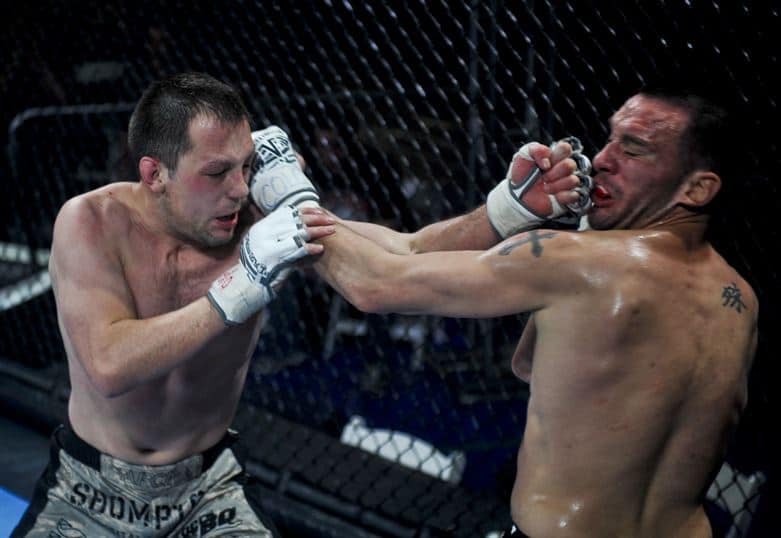
Another study conducted in 2013 determined that the longer a fighter’s career lasts, the more likely they are to suffer reduced connectivity between the basal ganglia, and other regions of the brain. However, even in this instance, the study was published as an abstract. The data and conclusions brought to light by it are only considered preliminary until a peer-reviewed journal publishes them. 

Ultimately, this means that while the studies conducted towards brain injuries in MMA fighters show notable signs of long-term neurological damage, there must be further studies in this field to yield meaningful scientific data.

Has Anyone Died in an MMA Fight?

As of April 2019, there have been seven recorded deaths from sanctioned contests and an additional nine deaths from unregulated bouts. However, none of these deaths have occurred in the UFC, despite being the largest MMA promotional event. Due to the inherent risks associated with unsanctioned events, this article will focus only on the fatalities in sanctioned events.

Sam Vasquez

35-year-old Sam Vasquez competed at an event called the Renegades Extreme in Houston, Texas, on October 20, 2007. He lost the fight through knockout in the third round and lost consciousness again shortly after the bout. When taken to the hospital, he was diagnosed with a subdural hemorrhage. 

Despite medical staff removing a section of the skull bone to allow for brain swelling and a tube to enable cerebral spinal fluid to be drained, he slipped into a coma for 48 hours before his death on November 30.

Vasquez’s death is notable due to being the first fighter to die from injuries in a sanctioned MMA competition in North America.

Michael K Kirkham

30-year-old Michael Kirkham competed at an MMA competition at the University of South Carolina on June 26, 2010. His opponent Carlos Iraburo knocked Kirkham to the canvas within seconds of his pro debut and then landed a handful of strikes to Kirkham’s head, which led to a referee stopping the match forty-one seconds in. 

Kirkham lost consciousness at that point, never recovered, and was pronounced dead two days after the fight. The autopsy report listed the cause of death as “subarachnoid hemorrhage of the brain.” Since Kirkham had been TKO’d in his previous amateur bout a few months prior, the leading Doctor Joe Estwanik, the former medical advisor to the North Carolina Boxing Authority, speculated that it could have been second-impact syndrome.

Tyrone Mims

30-year-old Tyrone ‘Teestea’ Mims competed in an amateur MMA competition in Mount Pleasant, South Carolina, on August 11, 2012. During the second round, Mims lost consciousness, and despite EMS attempting to revive him at the scene and transporting him to hospital, he was pronounced dead that night.

Notably, the initial and final autopsies were inconclusive, stating that no evidence of concussion or brain trauma was detected, and a toxicology report did not reveal the presence of drugs or alcohol. Coroner Rae Wooten speculated that Mims might have had an irregular heart due to electrical dysfunction that is not visible after death. 

Booto Guylain

29-year-old Booto Guylain experienced a head injury during the third round of his MMA match against Keron Davies at EFC AFRICA on February 27, 2014. While he was stabilized on-site and taken to the hospital, he died a week later, on March 5, 2014, due to complications related to the swelling of his brain.

Donshay White

37-year-old Donshay White lost a sanctioned amateur heavyweight fight against Ricky Muse in Louisville, Kentucky, on July 16, 2017. Notably, it was his first match since 2015. After the fight concluded, he collapsed backstage and later died in the ambulance. 

White’s death was ruled as hypertensive heart disease, and while the autopsy revealed he suffered from high blood pressure, he was not taking medication. Additionally, White passed his physical assessment on the day of the fight.

Rondel Clark

26-year-old Rondel Clark, competing at welterweight, lost his second amateur match in Massachusetts on August 12, 2017. The match was halted about two minutes into the third round when Clark seemed too fatigued to defend himself, and the fight was ruled a TKO victory for his opponent.

Later, Clark was reported to have difficulty breathing, was carried out on a stretcher, and taken to hospital, where he died three days after the fight. Clark reportedly did not take much damage during the fight. However, his kidneys began to fail at the hospital due to severe dehydration, which caused his entire body to stop functioning. 

His autopsy officially concluded he died from extreme rhabdomyolysis, which is the rapid breakdown of muscle tissue caused by physical overexertion combined with dehydration, likely brought on due to weight cutting to meet the criteria for the match.

Mateus Fernandes

22-year-old Mateus Fernandes died a few hours after his sanctioned amateur match in Manaus, Brazil, on March 30, 2019. Despite winning the first two rounds, he was dropped to the canvas, where he reportedly had seizures and was then transported to the hospital for treatment. 

At the hospital, Fernandes suffered four heart attacks and died that same evening. Despite passing the pre-fight blood exams, he was alleged to have spent the night before the fight taking drugs, leading to his heart attack.

Of these seven deaths occurring in sanctioned events, only three of the fighters died due to some damage to their brain. However, as the other four fighters passed away due to a combination of pre-existing conditions and the harsh effects of MMA combat, the fact that just under half of these deaths involved brain damage is worthy of note.

MMA Long Term Effects

The specific long-term health effects of MMA combat are still relatively unknown. However, in a recent survey of 170 active MMA fighters, 55.3% stated that they fully expect the injuries sustained through their MMA career will affect their post-competition life. On top of that, another 12.9% of competitors allowed for the possibility that they may sustain injuries that will affect their post-competition life. Only 30% believe they will walk away from MMA competition with no lasting effects.

According to this same study, the most specific fear for many UFC and MMA competitors is the extreme likelihood of experiencing Chronic Traumatic Encephalopathy (CTE). The survey results state that 61.2% of MMA fighters believe that their career does cause them some worry that they may suffer long-term brain damage, with another 9.4% saying maybe and 28.8% saying no.

Chronic Traumatic Encephalopathy (CTE)

According to the Alzheimer’s Association, Chronic Traumatic Encephalopathy is a progressive and fatal brain disease associated with repeated traumatic brain injuries (TBIs) resulting from concussions and repeated blows in the head. Additional studies have shown that people who experience TBI in their early or mid-life are 2-4 times more at risk of developing dementia later in life.
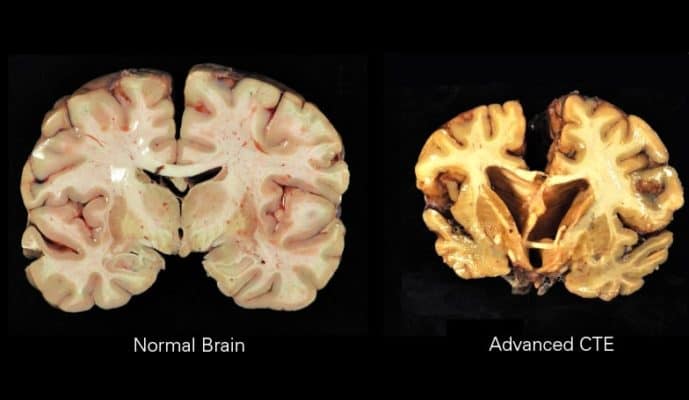
While research on CTE diagnosis, causes, symptoms, and risk factors are all still in the early stages, it is most commonly linked to those participating in combat sports and military veterans due to the likelihood of enduring repeated blows to the head. Not all scientists agree on all CTE symptoms, but this disease is often associated with memory and thinking problems, confusion, personality changes, and erratic behavior, including aggression, depression, or even suicidal thinking.

Like Alzheimer’s, CTE involves tau proteins that develop in nerve cells associated with dementia. However, some researchers have determined that CTE creates a unique pattern of abnormal tau buildup in the tissues surrounding the blood vessels that differs from other brain diseases involving tau. Unfortunately, there is currently no cure or treatment for CTE, though some medicines may temporarily treat the cognitive and behavioral symptoms.

Ultimately, more research is needed to fully understand CTE, its relation to dementia, and how to prevent this disease from affecting more athletes. The Concussion Legacy Foundation, The Alzheimer’s Association, and the National Institute of Neurological Disorders and Stroke and Brain Injury Research Institute are all taking steps and investing in research initiatives to learn more about CTE.

How Do MMA Fighters Avoid Brain Damage?

The only way for MMA fighters and other combat athletes to prevent brain damage is by avoiding hits to the head. This preventative measure presents challenges due to the two avenues in which combatants must change the status quo. The first is through the rules implemented in the UFC and other MMA arenas, and the second is through changes to training regimens.

Unfortunately, because of the way that MMA handles sanctioned fights, the likelihood of strikes to the head becoming taboo is very low. Many martial arts are reliant on striking the opponent in the head to secure a knockout, and as long as that remains the most effective way to do so, the rules are unlikely to change. 

This situation means that there must be a change in training mentality. Currently, there is a widely established precedent of taking the punishment in the gym and fighting through headaches or other pains that may indicate CTE or other brain injuries. While some gyms have pulled back on full-on sparring, others keep this old-fashioned approach, which is where much of the long-term damage is theorized to occur.

Chris Nowinski of the Concussion Legacy Foundation states that the best method for fighters worried about their brain health is to limit full sparring at the gym and save their endurance for the actual fight. 

MMA vs. Boxing – Which Causes More Brain Damage?

There was a study in 2006 that suggested that the risk of injury in MMA is comparable to professional boxing. However, the types of injuries sustained are more variable, which creates several differences in the experiences of professional and amateur MMA fighters compared to those of professional and amateur boxers.
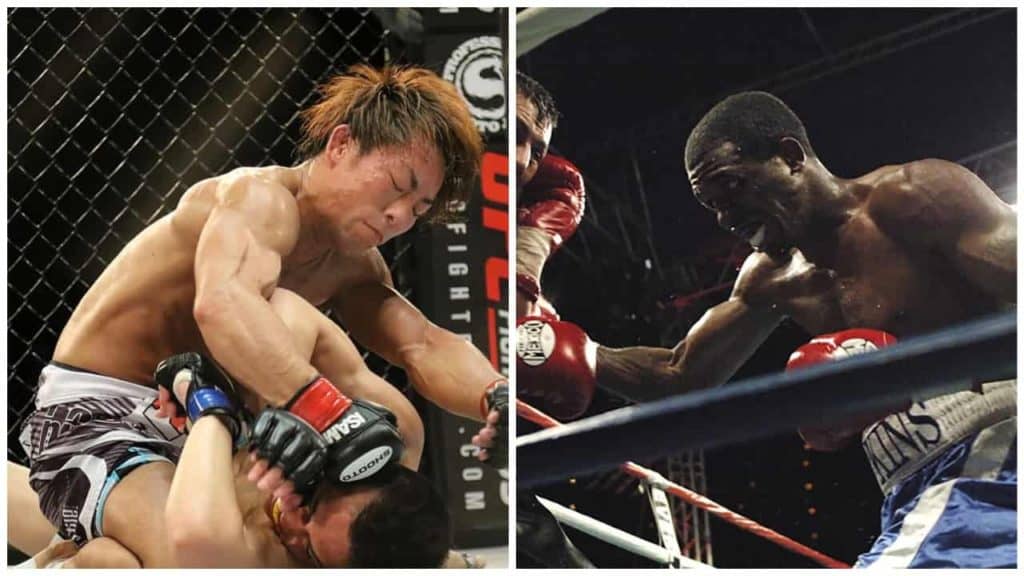
Organized boxing in one form or another has existed for over a century, whereas organized MMA is still less than 30 years old. Due to the massive changes in regulations and public perception over that time, there have been far fewer fatalities in MMA than in boxing. However, if both sports had existed for a more similar period of time, those results would likely differ significantly.

It is worth noting that because MMA is a more diverse sport than boxing, with fighters coming from numerous disciplines and backgrounds, there are many different ways for a fighter to attack their opponent. Conversely, boxers are only allowed to punch the head and body of their opponent above the belt, and as a result, boxers receive far more strikes to their head than MMA fighters do.

As noted earlier in this article, brain damage from diseases like CTE comes from a higher volume of head strikes, and a boxer may receive a few hundred punches to the head and face in a single match. Therefore, although MMA fighters can strike their opponents in the head, they are less likely to experience life-altering head injuries than boxers due to the lack of repetitious headshots.

Additionally, because MMA developed safety regulations more quickly than boxing over a shorter period of time, and MMA regulators learned from the rules and mistakes that boxing officials made, MMA competitions developed more regulations and more leeway for referees to stop a match.

What Is Being Done To Reduce The Risk Of Brain Damage In MMA Fighting?

As mentioned above, many organizations are researching ways to combat the effects of brain injury through CTE or other diseases. Still, the underlying answer is that there must be a culture shift among UFC and MMA to reduce the risk of brain damage. 

The slowly increasing awareness of the potential damage that sparring can have is the first step in this much-needed culture shift. However, it also relies upon individual fighters not going overboard when fighting their opponents.

For example, if fighters are willing to take a knockout at face value and not continue striking their opponent after they hit the floor, it can reduce that cumulative damage that leads to many of those TBI-related injuries. Many of the studies conducted on combat sports acknowledge that repeated minor injuries are most likely to cause the slow buildup of long-term damage.

As such, if there is a significant enough increase in the awareness of all fighters across MMA disciplines and advancements in treating and preventing brain damage, there is the potential for the long-term effects of MMA and UFC fights to be significantly diminished.

Final Thoughts

While there have been significant strides made in recent years to combat the potential for brain damage in MMA fighters, it is a genuine concern for many existing and retired combatants. Brain damage is a complicated science and one that can sometimes only be diagnosed post-mortem. As such, MMA fighters and organizers must take the time to research as much as possible and continue to make changes to ensure the relative safety of all combatants. 

As the scientific awareness of brain injuries expands and more studies and research can be conducted, the long-term effects of MMA fighting may be mitigated or dealt with entirely. Ultimately, this progress relies on awareness in both the public and private sectors, so every fan and participant of this excellent sport should take the time to educate themselves and others to see the change that needs to happen.
Is Brazilian Jiu-Jitsu (BJJ) an Olympic Sport?

0
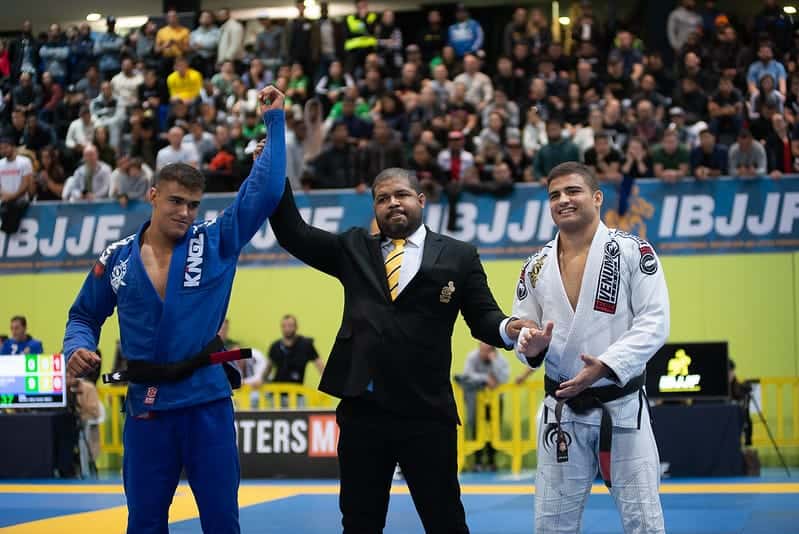
Photo by Richard Presley

Brazilian Jiu-Jitsu (BJJ) has been increasing in popularity since its establishment in the 1920’s. There are many tournaments and championships around the world each year and it even made its debut in the Asian Games in 2018. This raises the question of whether or not BJJ is also an Olympic sport.

Brazilian Jiu-Jitsu is currently not an Olympic sport. To qualify, it will need to be represented by an independent non-profit international organization, adopt worldwide competition standards that are approved by the Olympic Committee and maintain Olympic-standard anti-doping regulations.

This article will discuss in more detail why BJJ is not an Olympic sport and what might be holding it back from becoming one. It will also touch on why other martial arts have been allowed to compete, as well as when BJJ might be included.

Why is BJJ Not an Olympic Sport?

The Olympic Games have already accepted Judo, Taekwondo and Karate into the program, so the question stands why the International Olympic Committee (IOC) have not accepted BJJ. There are three main reasons, which I will explain.

There is No Official Governing Body

The IOC requires that the governing body of the sport apply for admittance into the Olympic Games and establish their eligibility. To date, no international organization has been successful in this application and, therefore, Jiu-Jitsu still is not an Olympic sport.

There are many different organizations that oversee Jiu-Jitsu training and tournaments around the world that could serve to be the governing body of BJJ. The International Brazilian Jiu-Jitsu Federation (IBJJF) is just one of these organizations, and is one of the most noteworthy.

The IBJJF hosts several championships, both local and worldwide, outlines set rules for the sport and oversees over 1,000 academies across the world. This federation was also created by Carlos Gracie Jr., son of one of the founding fathers of Gracie Jiu-Jitsu.

However, other notable Jiu-Jitsu organisations include, but are not limited to:

  • Sport Jiu-Jitsu International Federation (SJJIF)
  • Ju-Jitsu International Federation (JJIF)
  • Abu Dhabi Combat Club (ADCC)
  • UAE Jiu-Jitsu Federation (UAEJJF)

The UAEJJF, in particular, applied to represent Jiu-Jitsu in the 2024 Paris Olympic Games, but was unsuccessful. One mandate of the IOC is that all international federations involved in the Olympic Games must be non-government organizations. With its close relationship to the UAE government, this is something that will always work against the UAEJJF.

Until an eligible international federation applies to represent the sport of Jiu-Jitsu in the Olympic Games, it will not be considered for the program.

Rules Have Not Been Standardised

Among the many federations that oversee JJ/BJJ, the rules of each competition are outlined by the individual organizations and are therefore open to variation. They are also evolving with time as the sport becomes more popular, resulting in constant updates to these rules.

In order to become an Olympic sport, Jiu-Jitsu must have an agreed-upon set of rules to govern the competition. These rules will also be subject to change by the IOC to suit their purposes, as was the case with Judo. Over time, Judo has become much more regulated, such as prohibiting leg locks and limiting groundwork.

In addition to this, BJJ is a sport that not every spectator can understand and appreciate. For example, some positions of control will get you points while others won’t. In the IBJJF rules, you can earn points if you have someone in Mount, but you won’t get any points if you have them in Side-Control. These intricacies can make it difficult for a non-trained spectator to appreciate, making it less appealing to the masses.

It is also common practice in BJJ to stall the fight in order to accumulate more points. This is something that would be considered boring in the eyes of the IOC, who want every sport to increase the value of the Olympic Games.

Even World Champion Andre Galvao acknowledged that only the No-Gi version of the sport would be suitable for the Olympics. The Gi is the official uniform of Jiu-Jitsu, but makes it easier for competitors to stall and slow the pace of the fight for more points.

If the rules of BJJ are not entertaining for the masses, it will be difficult to be accepted into the Olympics.

Infrequent Drug Testing

It is only recently that drug-testing has become more regulated in BJJ competitions. Organizations such as the IBJJF have now partnered with USADA (U.S. Anti-Doping Agency) to help keep the competition fair.

Prior to this, competitions were not regulated, allowing doping to go undetected and without penalty. The IOC take doping very seriously in their program, and therefore insist that any sports involved in the Olympic Games must be regulated to make the competition fair for all.

Most signatories of the World Anti-Doping Agency (WADA) adopted the anti-doping code in 2004, including the UWW (United World Wrestling) and the JJIF. Since then, younger organisations like the IBJJF have begun to adopt anti-doping schemes. The IBJJF has been contracting the WADA/USASA since 2013 to manage their anti-doping efforts.

Although IBJJF is not a signatory of the WADA/USADA, it is a step in the right direction. If other Jiu-Jitsu federations do the same, this increases the chances of BJJ becoming an Olympic sport.

RECOMMENDED FOR YOU:
Do UFC Fighters Get Drug Tested? – Fully Explained Here

What’s Holding BJJ Back from Becoming an Official Olympic Sport?

It would appear that the three reasons mentioned above have held BJJ back from becoming an Olympic sport. However, as I mentioned, Jiu-Jitsu organizations are already taking action in implementing anti-doping schemes to make their competitions Olympic standard.

As for the standardization of the rules, this is something that may never change between the differing organizations such as IBJJF and UAEJJF. However, the fact that other martial arts have already been accepted into the Olympic Games proves that it can be done when working cooperatively with the IOC.

The key thing holding BJJ back from the Olympics is the lack of an international governing body. I mentioned earlier that the UAEJJF have shown interest in entering Jiu-Jitsu into the Olympic program, but were denied due to their eligibility. 

The UWW is a possible candidate, having shown interest in Olympic-level Jiu-Jitsu and being the governing body of Olympic wrestling. If UWW were to work together with the IOC to make Jiu-Jitsu an appealing sport for Olympic spectators, the application will be more likely to succeed.

However, there is some controversy over whether or not BJJ should be entered into the Olympics, which is likely why some eligible organizations have been hesitant to put their name down.

One of the true BJJ legends, such as Renzo Gracie, believe that handing Jiu-Jitsu over to the Olympics just like how Judo did will make it cater only to elite athletes and will change the heart of the Jiu-Jitsu they know and love. 

“We have a part of the jiu-jitsu community who wants to see [the sport in the Olympics] and actually the majority don’t want it. Because they believe we’d be treated like judo and in the end, a lot of people would lose their way of making a living like wrestling in the United States.”

Renzo Gracie

So it would appear that it is not so much the sport itself that is holding BJJ back from the Olympic stage, but the effort to preserve the nature of the sport.

Why is Taekwondo an Olympic Sport – but Not Brazilian Jiu-Jitsu?

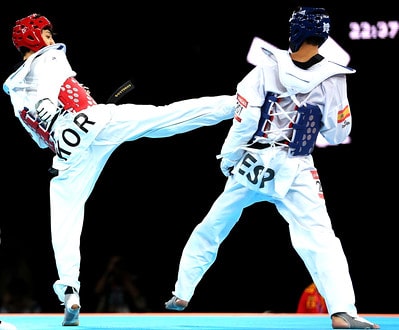
Taekwondo, Karate and Judo are all Olympic sports. These martial arts were only included in the Olympic program after years of effort. These efforts began in 1974 for Taekwondo, which didn’t become a reality until the 2000 Sydney Olympic Games, where it made its Olympic debut.

Taekwondo is an Olympic sport
Photo by the Republic of Korea

It is only recently that efforts have been made to make BJJ an Olympic sport, and even then it cannot qualify until it becomes tailored to the Olympic ideals by a non-government organization that is willing to represent it.

This was made possible for Taekwondo when the sport was admitted to the Amateur Athletic Union, which is known for establishing sports standards that align with the IOC.

If BJJ went down the same path and representatives persisted for as many years, then we may see BJJ become an Olympic sport in the future.

When is Jiu-Jitsu Going to be an Olympic Sport?

As I mentioned earlier, it was only after 26 years of effort that Taekwondo became an Olympic sport. Similarly, Judo also took decades to be accepted and Karate was only introduced to the Olympics for the 2020 Tokyo Olympics, nearly 50 years after the first attempts began.

At this stage, Jiu-Jitsu still seems to be in a stage where it is growing and adapting to the current culture, with the introduction of BJJ to many countries around the world and many adaptations developing. All these adaptations make it difficult to settle on one set standard for the Olympics.

In addition to this, if it takes as long as the other martial arts, it could be another decade or two before we see Jiu-Jitsu on the Olympic program. 

According to Britannica.com, the IOC will now aim to introduce new sports to the Olympics only when others are discontinued. This is a way of managing the large scope of the Olympics. Therefore, another sport may have to be discontinued for Jiu-Jitsu to be considered. The fact that there are already three forms of martial arts, as well as wrestling, may make this less likely.

With all of this in mind, it doesn’t look like Jiu-Jitsu will become an Olympic sport in the near future.

15 Rare Martial Arts You Have Never Heard of

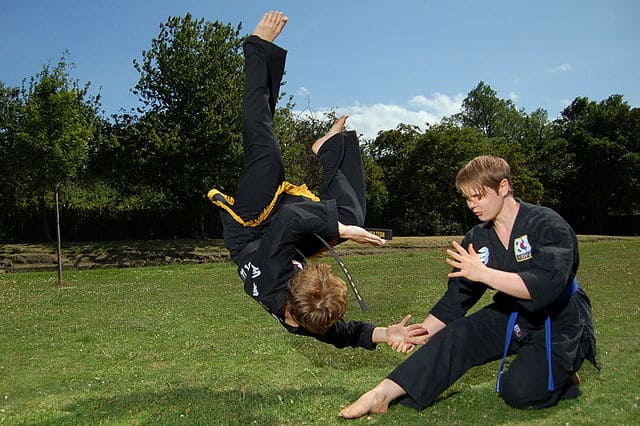
Photo by Stu Younger
Kuk Sul Won (Martial Art)
Photo by Stu Younger

When we hear the word “martial art”, most of us think about just a few fighting styles like Judo, Karate, or Wrestling. But let’s be honest, most fans of the fighting sports will have a hard time naming more than ten martial arts. This is normal as, over time, some arts have become more popular than others due to various reasons. 

But throughout history, humans have created hundreds of different martial arts. There are plenty of arts out there you have likely never heard of. In fact, we dare to go even further saying you didn’t know most of the ones we have included in our list below.

Keep reading this article if you want to find out the rarest martial arts you have likely never heard of and what is so special about them.

15. Suikendo

Suikendo is a Japanese martial art founded by the famous karate sensei Tadashi Yamashita. The word “Suikendo” comes from the words Sui (water), ken (fist), and do (way). So in translation, it means “the way of the fist that flows like a water” which describes the entire concept of this style.

In some way, Suikendo looks a lot like karate. This is not a surprise because Yamashita is a 10th-degree black belt in Shorin-Ryu karate. So most Suikendo punches, kicks, and other strikes have origins in various forms of karate. But the only difference is that it puts more focus on mixing martial arts techniques with dancing, dynamic movement and flexibility. 

14. Rough and Tumble

Rough and Tumble was a very popular martial art in the US during the 18th century, and it will go down in history as one of the most brutal ones as well. It is also known as “gouging” which gives you a good insight into how brutal it was. During these wild times, lower-class used it to settle disputes or fight in various gatherings.

People who took part in Rough and Tumble have fought without any rules in the early days. They could bite the opponent, gouge eyes, throws strikes to the groin area, and use many other dirty and brutal moves. Just about every match ended with serious eye injuries, deep cuts, severe bleedings, and there were more than few deaths.

The entire concept of this fighting style was about using these dirty tactics. But in 1752, the state of Virginia banned these types of matches and many other states would follow in the next years.  

13. Okichitaw 

Okichitaw is a modern martial art founded by George J. Lepine in 2002 in Canada. Lepine was a master in many styles like Taekwondo, Judo, and Hapkido. He later used his skills to develop his own fighting system that focuses on aggressive hand to hand fighting.

The concept of this art is based on weapons and hand to hand combat techniques. It consists of a lot of basic techniques like throws, pulls, and trips and here are the most important weapons:

• Gunstock war club

• Tomahawk

• Long knife

In Okichitaw, students must learn how to use these weapons or defend against them. Training also deals with the mental aspect of fighting and all the fears and emotions that come with it. Though various exercises, students learn how to overcome these fears and how to stay calm in the heat of the moment.

12. Kino Mutai

https://youtu.be/jtVJzqMweHQ

Kino Mutai is a Filipino self-defense art. This art teaches grappling, pinching, biting to defeat a stronger and bigger attacker in a street fight. At first, this concept of beating a bigger opponent sounds like the one in BJJ. But Kino Mutai is far more brutal as it is made up of various dirty tactics that can do huge damage.

In fact, students must spend a lot of time learning the anatomy of human body. They must get familiar with all sensitive parts and learn how to strike them to disable the enemy in a fight.

Like that’s not brutal enough, they also learn brutal eye-gouging moves. Although it sounds very brutal, these brutal techniques were designed to save your own life in street fighting where there are no rules.

These Kino Mutai techniques could be also seen in the other Filipino arts like Eskrima.

11. Systema

Systema is a martial art that emerges from Russia where it has been used by various Special Forces like KGB and modern Spetznaz. The earliest records of systema date back to the end of the

Soviet Union in the early 90s. It is a rare art that teaches you all about how to:

• Defend against weapons like knives, and even firearm

• Fight against multiple opponents

• How to use blocks and various strikes in close range combat

In some way, it reminds us of modern Krav Maga where even the training looks very similar. The main goal of Systema is to train you for any type of fighting scenario you may face on the streets or in combat. 

This means students learn tactics to fight in a small or open space, with or without weapons. Training is intense, includes a lot of sparring, and instructors will constantly play with your feelings like fear. Even though this sounds scary, it is the only way you can learn how to stay calm during the fight. 

On paper, it doesn’t include any dirty tactics, but we doubt that the military does not teach them.

10. Canne de Combat

Canne is a martial art that focuses on self-defense and it is also a part of French history to some extent. It emerged in the 19th century when the upper French class used it for self-defense in big cities such as Paris. At the time, Paris was not all about coffee, croissants, and romantic nights. No, it was a wild town full of thieves, and you needed to know how to defend against them.

The word “Canne” means a “walking stick”, and the art teaches you how to use it to defend and keep the enemy at distance. Some other famous French martial arts like “Savate” have actually emerged from Canne de Combat. 

With a couple of changes to improve its safety, Canne became a sport in 1970 with rules in place and techniques. Matches look a lot like fencing as all fighters must wear full-body gear and a fencing mask.

RECOMMENDED FOR YOU:
8 Worst Martial Arts for Self Defense

9. Bataireacht

Bataireacht means “Stick Fighting” and it is a part of Irish martial arts. The name speaks a lot about how old it is as the word “Bataireacht” can be traced all the way back to Old Irish language, which is one of the oldest in Europe. This martial art was very popular in the 18th century among Irish gangs called “factions”. These gangs used it to fight in various gatherings like weddings or even funerals.

During this time, the Irish people were under English rule and they were not allowed to carry any weapons. The only thing they could have was a walking stick, which they learned how to use as a weapon in a fight. You see, people fighting each other using sticks has been around since the birth of mankind but this form is really special and effective. The Irish really mastered it over time and there are still schools all over Ireland and even in the US where you can learn it.

RECOMMENDED FOR YOU:
21 Rare Weapon Based Martial Arts You Have Never Heard of

8. Bokator

Bokator is one of the oldest fighting systems. It comes from Cambodia where the ancient armies of Angkor used it to fight against their enemies 1700 years ago. The name “bokator” means “pounding a lion” which refers to a legend telling that bokator student once killed a lion with a single strike. He stood face to face with a giant lion and used a single, well placed knee to kill the beast and save his life.

Bokator was one of the first fighting styles to focus on all elements of fighting. Students learn how to use all limbs as weapons to fight in the standup, clinch, or on the ground. It is a very complex fighting system with 8000-10000 different techniques.

It includes some really useful techniques like elbow and knee strikes, kicks, submissions, and various other ground fighting techniques. But at the same time, the art puts a lot of focus on using and defending against weapons like:

• Baboo staff

• Short Sticks

• Swords

7. Lerdrit

Lerdrit is a modern martial art used by the Royal Thai Army’s Palace Guard and other military and police forces. The art has its origins in Muay Thai, but it puts more focus on self-defense tactics. It will teach you the same techniques you learn in Thai boxing like kicks, elbow and knee strikes. But since this is a military version, it also teaches you how to eliminate the threat using very brutal moves.

First, fighters must learn all the pressure points and train how to both attack and defend them. The focus of the art is on close range fighting where the goal is to do damage with strikes and then take the opponent down and subdue using pins.

6. Kalaripayattu aka Kalari

https://youtu.be/oI84oM_bJeg

Kalaripayattu is one of if not the oldest Indian martial art that was a precursor to many other modern fighting styles. It has a really long history with its origins dating all the way back to over 3,000 years ago. Over the years, this martial art has seen a lot of changes, and it has many forms out of which two are the most important ones:

  • Northern style – the emphasis of this form is on movement and weapon training. It centers on training stances, using wooden and metal weapons, and hand to hand combat.
  • Southern style –puts more focus on hard sparring as one of the best ways to prepare for actual combat. It teaches techniques very similar to the ones we can find in Muay Thai and Judo which makes it very versatile.

But, there is a third form called “Marma Art” which focuses on the human body and its pressure points. Students must learn around 108 nerve points and how to disable or even kill the enemy by striking these areas.

5. Silat

Founded by the countries in Southern Asia, Silat on its own is not a single martial art. The word “Silat” refers to a group of hundreds of different fighting styles. The earliest records of this art date back to the countries like Vietnam, Laos, and India around the 3rd century BCE. In modern times, it is still present and used by various military groups and it is practiced in countries like Malaysia.

Silat consists of techniques from various striking and grappling arts which makes it an all-around fighting system. It has over 100 forms and most of them focus on:

• Footwork

• hand movement

• striking the pressure points.

All students wear a black uniform or “bandana”, which they believe has magical powers. The art also puts a lot of emphasis on weapon that are usually farming tools like:

• Keris

• Parang

• Lembing (spear)

• Sarong

4. Bakom

Bakom is a hybrid martial art put together by the former Marine Roberto Puch Bezada in the 1980s in Lima, Peru. It is a fighting system that trains you to disable or eliminate the enemy using various brutal tactics.

Bakom includes a lot of techniques from Jujutsu like chokes and joint locks and mixes them with various street fighting moves. The key techniques are the ones that can break the opponent’s bones like arm or leg locks. But this is just a start as students also learn how to execute some really brutal moves like:

• Break the opponent’s neck

• Strike vital organs

• Apply hidden weapons

• Use dirty tactics

The focus of the art is on blitz attacks and catching the opponent off guard. Or in other words, if you feel your life is in danger, be the first one to attack, do a lot of damage and run away. And in Bakom, ending the attacker’s life in the process is a part of survival tactics and that’s what makes it so brutal.

3. Kuk Sool Won

Kuk Sool Won is a modern Korean martial art founded by Suh In-Hyuk in 1958. After the Korean War, Suh set on a journey to travel all across the Far East to explore different fighting styles. He met various martial arts masters from whom he learned many new techniques. Suh did all of this with an intent to develop his own fighting style.

He even sent his younger brother Seo In-Sun to take the classes from the founder of Hapkido. This would all end in them creating a fighting style that is a mix of techniques from the following arts:

• Tribal Martial Arts

• Buddhist Temple martial arts

• Royal Court martial arts

Or in other words, Kuk Sool Won is a mix of techniques from Hapkido, Kung Fu, and Korean martial arts like Taekkyeon. Students learn how to throw/block punches and kicks, use body throws and trips to advance to the ground where they can apply various joint locks. Training also includes weapons, meditation practice, and even martial arts healing methods.

RECOMMENDED FOR YOU:
Do Most Traditional Martial Arts Actually Work?

2. Abir

Abir is a martial art that is the rarest of the rare. It is, perhaps, the oldest martial art in Israel with the earliest records dating back to the 18th century BC. This is a really rare art since it is practiced only by the Jews in specific areas of Israel. 

The word “Abir” means “Gentleman” which explains why this fighting system is often seen as too soft. It differs a lot from other arts most of us know. The system doesn’t focus on creating violence or hurting the opponent, which forces many people to believe it is not that good for real fighting. 

Each technique in Abir is named after a letter from the Jewish alphabet. The focus is on natural movement and learning various moves like trips and throws. Students must learn to perform in a flow and how to disable the enemy relying on technic rather than using sheer power. And since the art embraces the Biblical Hebrew culture, classes include a lot of praying and all students must wear turbans, skirts, and gowns.

1. Bando

Bando is a martial art that comes from Burma. Some people think it is a part of Burmese martial arts, which is not true as bando is a system on its own. Like in most Asian arts, bando moves are based on the movements of various animals. This is why many techniques carry the names of some famous animals like:

  • Eagle – striking and blocking with both hands
  • Python – chokes and locks
  • Monkey – dynamic movement
  • Scorpion – pinching and hitting the nerve centers

Bando focuses on both defense and offense with an emphasis on fast counter attacks. It teaches you how to use all limbs to strike, even how to do damage using shoulder strikes and head-butts. Some of the most famous techniques you have likely heard of are the “Scorpion Kick” and “Bull Attack”.

Is Boxing Good for Self Defense? The Ultimate Answers

0

If you’ve ever watched MMA, you’ll know that there has always been competition around which fighting technique is best. In reality, the main thing we should know is how to defend ourselves against an attacker. Boxing in particular is very popular, but can appear to be more weighted towards offensive strikes. This raises the question whether boxing is also good for self-defense.

Boxing is good for self-defense because it teaches you how to block an attacker and fight them if necessary. Boxing also improves fitness, strengthens motor skills and mentally prepares you for a fight. However, people often learn another martial art so they can also fight on the ground if required.

I will discuss the benefits of boxing as self-defense in more detail below. It is also important to know the disadvantages of boxing and why people will often combine this with another martial art.

Why Boxing is Good for Self Defense

Boxing teaches you a wide range of skills that can be very effective in a self-defense situation. 

1. Blocking Strikes

Not only will a boxer learned to strike their opponent with their fists, they will also learn how to defend themselves against those strikes. Therefore, if you learn all the different ways to strike an opponent with your fists, you will be prepared for any punch your attacker may throw at you.

Blocking can involve a variety of techniques. The most common is protecting your head and body with your arms. Boxers are taught to keep their arms up so that can move them quickly to their face to block a punch.

Another technique is the light footwork. The lighter you are on your feet, the easier it is to evade your attacker. A boxer’s stance allows them to shift their weight back and forth between their feet to change direction at a moment’s notice. 

Finally, boxers are trained to use their muscles for self-defense. When evading oncoming strikes, they will keep their muscles loose to move out the way. When bracing for impact, they will tense up their muscles so that the bones or organs underneath will be protected.

Bracing immediately after a strike will also prevent whiplash, which can contribute to concussion or being knocked out.

2. Striking Accuracy

As I mentioned earlier, you will learn many different types of punches, but also how to execute them well.  There is an art to increasing the power, speed and accuracy of your punch. With practice, you will get close to perfecting these skills. 

Once you have an understanding of different punches, you will be able to recognize which punches your attacker uses. This means you will know, not only how to block that punch, but which counterattack to use to be most effective.

A boxer’s stance will help to ground their strikes. Planting your foot and swinging your hips gives a punch much more power than if you were to just use the strength of your shoulders.

Although it may not be your original intention to cause your opponent damage in a self-defense situation, doing so can stun or knock out your opponent, giving you time to escape. Sometimes, if faced with multiple attackers, you could use your knowledge to neutralize one and defend against the other.

3. Discipline

A very good lesson in boxing is that you should never seek a fight. The discipline that a boxer must demonstrate in training helps to take the emotion out of the fight so that they can keep a level head.

If you remain calm, you will be able to see the futility of a fight and hopefully avoid more fights. You will also be able to moderate your strikes and defense so that you find a balance between subduing your attacker and escaping.

4. Fitness

Boxing can provide a well-rounded workout. Not only do you use the muscles in your upper body, but you also use those in your hips, thighs and calves, etc. I will explain this in greater detail further on.

This full-body workout at each training session will greatly improve your fitness. If you are running, jumping, striking and weight-lifting at every training session for an hour, you will be able to withstand the intensity of a holding off your attacker and have the endurance to escape when you get the opportunity.

5. Stability

Having light feet and a good stance is what helps keep boxers from being knocked to the ground. Boxers do their best work in face to face combat, so it is important for them to learn how to remain stable on their feet.

If they do happen to get knocked to the ground, boxers are taught to recover quickly to their feet. They also do this in a way that protects them from being knocked down again on the way up.

6. Motor Skills

There are certain motor skills that you will develop in boxing that will come in handy in a self-defense situation. 

Firstly, boxers are taught to maintain eye contact with their opponent so that they can watch every move they make and react accordingly. This develops excellent hand-eye coordination.

This also develops a rapid reaction time. By keeping your eye on your attacker at all times, you learn to react faster than before. The more you practice, the better your brain will become at anticipating your opponent’s moves.

Another great motor skill is your reflexes. These are movements that occur without having to think about them. After training for a while, you should notice your reflexes improve. This means you are able to have your mind on something else while your body begins defending itself.

This is particularly important if you are attacked from behind, being caught unaware. In this scenario, your reflexes will kick in faster, giving your brain time to catch up and register what is happening. This also gives you more time to work out what you should do about it.

7. Mental Preparation

If you are sparring with others on a weekly basis, you will become increasingly familiar with the fighting environment. You will begin to feel more comfortable with the idea of facing an opponent that has the potential to beat you.

You will also become more familiar with getting hit in the head and stomach. If you are not used to these strikes, you could potentially become stunned if this happens to you in a street fight. This is something that could mean the difference between life and death. You can’t afford to stand there, stunned.

8. Confidence

The final benefit that boxing can offer in a self-defense situation is confidence. When you know that you’ve faced trained opponents before, on a regular basis, you should feel more confident facing a (most likely) untrained opponent.

From your training sessions, you will know that you are capable of blocking a hit and landing some of your own punches if necessary. Similar to what discipline offers, having confidence will help you think more clearly in the situation.

Your movements will be more controlled and you can read the attacker/situation better when you are feeling calm. You will also be confident enough in your technique to know that you can identify opportunities for you to get away.

To top things off, coming across as confident can be a deterrent for potential attackers. They are much more likely to target those that look like they are unprepared for a fight. If you still get attacked, standing confidently face-to-face with your attacker might be enough to make them back down.

Other Considerations: Weaknesses

Although boxing teaches you many good techniques for self-defense, there are still situations that boxing does not prepare you for. One big disadvantage is that boxing does not teach you how to fight or subdue your opponent on the ground. You may know how to get back up, but if your attacker is able to keep you on the ground, you will be stuck.

For this reason, good self-defense incorporates a variety of martial arts. Brazilian Jiu-Jitsu, in particular, is known for its benefits in self-defense and ground grappling.

If you had even a basic knowledge of submitting opponents on the ground, you would have the means to win the fight wherever it takes you. This is why many MMA fighters learn multiple styles of fighting.

Another thing that some people fail to consider is that striking someone and knocking them to the ground always carries the risk of serious harm. Even if done in self-defense, you will still be partly to blame for your opponent’s injuries, both legally and morally.

There have been reported cases of a single punch knocking people to the ground and killing them. This is certainly the worst case scenario, but still something you may struggle to live with for the rest of your life.

How Dangerous is Boxing?

As I just mentioned, boxing does have a dangerous aspect to it. Even in a controlled setting, sparring can put you at risk of a brain injury. But when using boxing as self-defense in a street fight, your opponent is intentionally trying to harm you. You, therefore, have an even higher risk of getting hurt.

Below is an outline of some of the risks involved in boxing:

  • Brain damage
  • Broken bones
  • Eye damage
  • Mental health disorders (from multiple knocks to the head)
  • Cuts and bruises on the body

Normally, boxers will strap their hands and wrists and wear protective gear, such as boxing gloves and headgear, in an effort to protect themselves from injury. In a street fight, there’s almost no chance that you will have these ready or nearby. Even with training, you can still injure yourself and have to be careful.

You also still have the chance of being hit. You won’t fully know what your attacker is capable of until you start sparring, and they may be just as experienced as you. Even in a controlled setting, it would be unrealistic to expect you can evade every strike.

A hard enough punch to the body can cause cuts and bruises, broken bones, concussion or internal bleeding from a powerful blow to the liver or kidneys.

To make things worse, blunt trauma can sometimes be the hardest to assess on initial inspection, because the damage is usually caused internally.

As I mentioned earlier, you also pose a danger to your attacker whenever you strike them. All it takes is for them to move into your punch or fall awkwardly and the blow may be fatal.

Is Boxing Hard to Pick Up?

Boxing is not a hard sport to learn, but it is a hard skill to master. From an outward perspective, it just looks like you need to keep your arms up and swipe at your opponent when you see an opportunity. But there’s much more to it than that.

Firstly, boxing is incredibly physically demanding. It works almost every muscle in your body and keeps your heart rate high. You may find that you cannot keep up with the physical demands at first, until your cardiovascular system improves and your muscles become stronger.

Boxing is also very scientific. Beginners often punch using the muscles in their arm and wrist, making their strikes less powerful and more prone to injury. The more you study boxing, the more you begin to understand that the power of a punch comes from the ground.

Boxers will use their legs, hips, core, back and shoulders to deliver a single punch. All of this occurs in a split second when you see the opportunity to strike.

There is also an art to knowing where to target your punches. Most people assume they should aim for their opponent’s head. But people often will protect their head to prevent a knockout.

As you become more skilled, you will learn that certain organs, such as the kidneys and liver cause just as much damage and pain when hit. Even your opponent’s thigh can be hit enough times to make it difficult for them to weight-bear.

How Do Boxers Withstand Punches?

Boxers are trained to avoid hits as much as possible by staying light on their feet and moving fast to evade any strikes. This is because they know the implication of too many hits over a lifetime can be deadly. 

This is also why boxers tuck in their chin and protect their face. The skull is very thick and can withstand a punch, whereas the face is more delicate and a direct hit could cause some serious damage.

In saying that, boxers do also train to take a punch well when required.

You may have noticed the thick neck and shoulders on most boxers. This is because they have developed incredibly strong muscles to hold their head steady when taking a blow.

Injuries to the brain more often occur from the rebound effect on the skull than from the impact of the punch. Therefore, if boxers are able to keep their head steady when taking a hit or falling to the ground, they will prevent their brain from getting knocked.

It’s also similar with other parts of the body. If a boxer can develop strong abdominal and back muscles, they will be able to brace for impact and protect their organs.

Is Boxing a Strength or Cardio?

Boxing is primarily a cardiovascular exercise, meaning it raises your heart rate and keeps it raised for a prolonged period of time. As illustrated by Harvard Medical School, you can burn more calories in an hour-long boxing session as you would on a 5-mile run.

However, boxing is also a form of strength training. You develop the strength in your muscles from constant movement, as well as through resistance training. Boxing will not only strengthen your upper body, but also muscles in your legs and torso. This is because boxers are taught to get their strength from the ground.

In particular, the following muscle groups are strengthened with boxing:

  • Shoulders
  • Arms
  • Legs (claves, thighs, hamstrings)
  • Hips
  • Core (including abs)
  • Back (upper and lower)

Should I Learn Boxing or Kickboxing?

Boxing involves standing punches, whereas Kickboxing includes kicks, knees and takedowns as well. Boxing can be good for developing excellent striking technique with your fists, but you won’t be prepared for a fight that involves other parts of the body.

Kickboxing will train you in a variety of attacks that you can use in self-defense. Because you need to learn how to strike with different parts of the body, you also need to know how to defend against these attacks. Overall, this gives you more well-rounded training to defend against an attacker.

If punches were the only threat, a boxer is more likely to show greater skill and have better self-defense in that area. However, your attacker could be anyone and they will more likely use whatever means necessary to bring you down.

For these reasons, it would be better to learn kickboxing for self-defense purposes.

However, even kickboxing does not teach you grappling techniques for when the fight goes to the ground. As I mentioned earlier, this is why many fighters will choose to learn a martial art, such as Brazilian Jiu-Jitsu, to learn to submit their opponent on the ground.

Are U.S. Police Trained in Martial Arts? Police Training Q&A

0

There is a long history of martial arts and the techniques used by these disciplines being implemented by police forces around the world. As the country with the third-largest police force globally, the U.S. police undergo training to prepare them for situations where these techniques come into play. 

U.S. police officers are not fully trained in martial arts while in a police academy. Police officers are instead trained in various Defensive Tactics to deal with different types of physical threats from uncooperative suspects and subdue them safely and lawfully.

However, many police officers do learn elements of martial arts such as Krav Maga, Judo, and Jiu-Jitsu to supplement their training. 

Read on to learn more about the training that police officers undergo and how they can supplement that training with specific martial arts to bolster their capabilities without resorting to firearms.

What is Defensive Tactical Training for Police?

In the police academy or on the job when necessary, police officers are trained in defensive tactics. Police Defensive Tactics (DT) are a collection of self-defense techniques that are specifically designed to be utilized by police officers in the areas of arrest. DT also covers control tactics and techniques, intermediate weapons, and defense against sudden attacks, including being assaulted with any edged weapon. That being said, police officers are trained to apply these defensive tactics lawfully.

Police officers do not undergo extensive martial art training such as Karate or BJJ on the job nor in the police academy unless each police officer decides to take martial art classes independently outside of their work.

The following video is an example of the Police Defensive Tactics technique.

How Do Police Officers Start Training?

Police training occurs in the often referenced police academies that exist throughout the United States at both a federal and a state level. Every state in the country has an agency that reviews police academies and the programs associated with them and certifies academies accordingly. 

Most states have specific requirements for the physical and academic prowess of applicants that need to be completed before entry into the academy, and some states require additional certifications on top of that to qualify. Some states allow for open enrollment in police academies. Still, many more require that cadets need to be hired directly by a pre-existing police department for them to be allowed to attend training. 

State certification agencies or departments may also require applicants to pass psychological evaluations, background checks, drug screenings, polygraph exams, firearms qualifications, and driving capability demonstrations as prerequisites as well. Notably, physical combat training and martial arts are absent from many police departments and academies’ requirements.

How Long Are Police Officers Trained?

With the list of qualifications varying heavily between states and at a federal level, it is worth noting that the academy training at these levels differs significantly as well. According to police training, officers in Los Angeles receive approximately 960 hours of training before working the streets, and New York police officers receive around 700 hours of training.

Conversely, some states, including Tennessee, Nevada, and South Carolina, only require their officers to receive around 480 hours of basic training, based on information collected by the Institute for Criminal Justice Training Reform. Many states allow officers to work for their departments before completing basic training has even been completed.

This wide variety of educational timeframes has raised questions of whether there should be a federal set of minimum standards that each state should undergo. However, many believe those police requirements should differ based on community, on the understanding that those officers know their community’s needs best.

What Are Police Taught During Training?

Police officers undergo many different forms of training. While the specific details of each training regimen differ from state to state and at a federal level, some subjects are universal across the board.

To use the United States Capitol Police as an example, trainees undergo twelve weeks of generalized police training at the Federal Law Enforcement Training Center in Georgia. These twelve weeks consist of some of the following areas of study, according to the USCP website.

  • Officer Safety and Survival
  • Terrorism
  • Communications and Interviewing
  • VIP Protection
  • Constitutional and Federal Law
  • Physical Security
  • Criminal Law
  • Firearms
  • Arrest Techniques
  • Tactics for Fighting Unarmed
  • Defensive Tactics
  • Driver Training
  • Drugs of Abuse
  • Physical Fitness

Capitol police officers are given another thirteen weeks of specialized training through the United States Capitol Police Training Academy in Cheltenham, Maryland. Graduates are then appointed to work with experienced training officers, to develop their skills further on the job.

Police Training Environment

Note that the above list does not necessarily cover every skill and training subject covered by each individual state and local police force. Additionally, many basic training programs have immense variability between the stress levels presented during training. 

A 2011-2013 study of the recruits’ training environments show a wide variance in the stress levels presented to recruits through their basic training. 

  • 23% of recruits experienced an “all or mostly stress” environment.
  • 25% of recruits experienced a “slightly more stress than non-stress” environment.
  • 34% of recruits experienced a “balanced stress and non-stress” environment.
  • 11% of recruits experienced a “slightly more non-stress than stress” environment.
  • 7% of recruits experienced an “all or mostly non-stress” environment.

This discrepancy in the training environment that new officers undergo is highlighted further through a study that notes that officers without additional martial arts training experience higher anxiety levels than officers who undergo this training. 

This study also notes that the results showed that ongoing martial arts training performed better under high anxiety situations than officers who do not have that experience. However, even with additional martial arts training, the officers performed worse under high-anxiety conditions than they did under low-anxiety conditions. 

Nevertheless, there are enormous potential benefits for officers to study martial arts before and during their time in the police force, and the critical consideration is to determine which martial art is the best suited to assist officers in police work.

What Martial Art Is Best For Police?

There are so many martial disciplines available for study today, and with a growing number of gyms and dojos that teach martial arts, there is no lack of variety. However, determining the best martial art for police to use requires an analysis of the aspects that benefit police officers, the situations in which martial art would be helpful, and the benefits each martial art specialization provides.

The first step in this process is to take a look at the specific needs that a police officer has in martial arts over a general practitioner.

  1. Police officers have to be able to subdue a criminal suspect without causing physical harm by striking them. This difference means that martial arts that place a heavier emphasis on grappling are more effective because of the control they can provide the practitioner.
  2. Many martial arts are proven to be less effective when the opponent is carrying a weapon. For police officers, who may need to subdue an individual holding a knife or a firearm, this is a crucial consideration.
  3. Any martial arts that a police offer learns needs to be within the regulations and policies that their department mandates. While martial arts are unquestionably helpful for police officers to learn, many aspects of those martial arts fall outside of the legal capabilities that police officers have.

This list is not an exhaustive account of the requirements police officers have of a martial arts discipline, but it is an excellent starting point to determine the best choices for officers to learn. Based on these criteria, the best options of martial art for officers to learn are Krav Maga, Judo, Brazilian Jiu-Jitsu, and Danzan Ryu Jujitsu.

Krav Maga

Krav Maga originated as a military self-defense and combat technique developed for the Israel Defense Forces and Israeli Security Forces by Imi Lichtenfeld in the 1930s. Lichtenfeld created Krav Maga as a hybrid martial art that sources techniques from Boxing, Judo, Aikido, Karate, and Wrestling. The concept was to take all of the most effective, simple, and practical strategies from these martial arts and make them easy to teach to military conscripts rapidly.

Unlike many martial arts that have a focus on sport, competition, and spirituality in addition to combative techniques, Krav Maga is focused entirely on real-world situations and teaches efficient and frequently brutal techniques.

Like most martial arts, teachers of Krav Maga instruct students to avoid physical confrontation whenever possible. However, if a situation proves impossible to de-escalate, Krav Maga promotes finishing a fight as aggressively and quickly as possible by aiming attacks at the most vulnerable parts of the body. Training does not limit practitioners that avoid severe injury, and in fact, many of the techniques learned through Krav Maga can cause permanent damage or even death to opponents.

These principles provide many benefits to police officers, but they come with a variety of drawbacks as well. The historically military use of Krav Maga has advantages by teaching a very practical and efficient system of combat that provides police officers the ability to deal with combat situations quickly and with little harm to themselves or civilians.

Conversely, Krav Maga can be a problematic martial art for police officers because of the potential to cause serious harm to their opponents. Many of the techniques learned through Krav Maga are illegal even inside of an MMA ring. Therefore, they can easily violate the policies that officers need to abide by regarding the use of excessive force.

Ultimately, Krav Maga can be a very effective martial art for police officers to learn, as long as they adapt it to avoid causing significant harm to the individuals they need to restrain. This restraint can be introduced by training in other martial arts disciplines to reduce the potential for fatalities to occur.

RECOMMENDED FOR YOU:
Top MMA Fighters Who Served In The Military

Judo

Unlike Krav Maga, Judo has a competitive sport element deeply entrenched within it. In Judo competitions, the objective is generally to either take down or throw an opponent against the ground, subdue an opponent through the use of pinning, or force them to submit through a choke or joint lock. Outside of the purely competitive environments, Judo contains elements of striking with both hands and feet and the use of weapons, but these are not allowed in competitions or sparring.

Judo places an emphasis not only on the use of combative techniques but also on the mental and emotional fortitude that can help with the de-escalation of dangerous situations as well as preventing fear and anxiety from taking over in high-stress cases. 

Since police officers need as much mental fortitude as physical to overcome those stressful situations that happen when they respond to calls, the discipline that Judo provides is beneficial. When combined with the focus that Judo provides on controlling and throwing opponents, Judo can be ideal for police officers to learn how to prevent a situation from getting out of control and how to quickly resolve it if it does.

Brazilian Jiu-Jitsu

Of all the martial arts available to learn today, Brazilian Jiu-Jitsu (BJJ) is quickly growing as one of the most commonly practiced martial arts techniques by law enforcement in the United States, Canada, Brazil, and other countries as well. BJJ revolves around the idea that a smaller and weaker person can successfully defend themselves from an opponent who is bigger, heavier, and stronger than them through the use of leverage and weight distribution.

Many street fights inevitably devolve into ground-based fighting, which is the primary location where BJJ thrives. Unlike most of the other martial arts on this list and practiced worldwide, BJJ gives police officers and the individuals they apprehend the ability to emerge from the conflict with the least amount of physical harm to every party involved. By rendering an opponent harmless by taking them to the ground and reaching a point where they must submit, police officers can control the conflict and reach a less harmful resolution.

The primary downside to BJJ when it comes to law enforcement is that BJJ is essentially only effective when used against one opponent at a time. In a real-world situation in which a police officer or other practitioner needs to deal with multiple assailants at once, BJJ will not necessarily be adequate to handle situations like that. However, in terms of the vast majority of cases in which a police officer needs to restrain an individual, BJJ will be the most effective way to prevent all parties from being injured while effectively locking down a danger. 

Additionally, the Gracie school of Brazilian Jiu-Jitsu is more suitable than traditional sport versions of Jiu-Jitsu because they focus more on the self-defense aspects than the competitive sport elements. Furthermore, there are a tremendous number of BJJ instructors and gyms throughout the United States, so acquiring training in this martial art is often easier than some of the rarer techniques mentioned.

Danzan Ryu Jujitsu

Unlike the other martial arts on this list, Danzan Ryu Jujitsu is based on several centuries-old techniques. Originally this martial art was taught as a defense system when a warrior lost his weapon in battle. A combination of control holds throws, takedowns, and nerve stimulation techniques are taught as part of Danzan Ryu Jujitsu.

When a situation devolves into a street brawl, Danzan Ryu Jujitsu provides the ability not only to take down opponents of larger sizes but it allows practitioners the ability to escape from many situations that would be difficult to manage without additional training. As Danzan Ryu and Brazilian Jiu-Jitsu incorporate many similar techniques, practitioners will have the same ability to handle ground-based fights and street brawls that make Brazilian Jiu-Jitsu so effective.

The non-lethal holds and methods of restraining and controlling opponents showcase how effective Danzan Ryu Jujitsu can be for police officers to handle violent situations. Unfortunately, Danzan Ryu and other Japanese Jujitsu styles are significantly less common than their Brazilian counterpart, so it may be challenging to acquire skilled training than it would be for other martial arts.

RECOMMENDED FOR YOU:
10 MMA Fighters that are or were Police Officers

The Key Reasons Why Police Officers Should Learn Martial Arts

Each of the above martial arts provides many advantages and disadvantages for police officers. It is impossible to state that one is better than the rest for use by law enforcement, but learning at least one martial art is exceptional for police officers to learn for the following key reasons.

  • Martial arts provide many non-lethal methods for police officers to restrain criminals and other problematic individuals. This capability helps prevent lethal methods like firearms from being used and provides more excellent self-defense for officers to ensure that they escape from situations unscathed.
  • Regular training in martial arts provides excellent physical health benefits and ensures that practitioners are in peak physical condition, which helps all police work elements.
  • The majority of martial arts teach mental discipline, which can ensure police officers are more capable of dealing with stressful situations than they would be otherwise. This self-control is vital to ensure police officers remain in control of dangerous situations and that no harm comes to civilians or themselves.
Quick Note: Did you know that growing number of Law Enforcement Officers(LEO) are receiving Gracie Jiujitsu training in the police academy to prevent excessive use of force? What is Gracie Jiujitsu? article explains everything you need to know about Gracie Jiujitsu to find out if it's right for you.

Conclusion

Martial arts are undoubtedly one of the best practices that police officers can undergo to give themselves all of the necessary advantages when dealing with law enforcement situations. Whether an officer can devote the time to practice a single martial art or combine techniques and practices from other martial arts to understand physical combat better, the advantages that these disciplines provide are more than worth the effort. 

Police training is unquestionably lacking in terms of providing the necessary physical and mental techniques to allow officers to handle tense situations. Since official training is insufficient, the onus is on police officers to fill in the gaps in their knowledge, as that education may be the difference between losing and preserving life. Ultimately, police officers are the first responders to many emergencies, and that role requires excellent decision-making and physical prowess, things that martial arts will provide.

How to Wash White BJJ Gi and Remove Stains

0

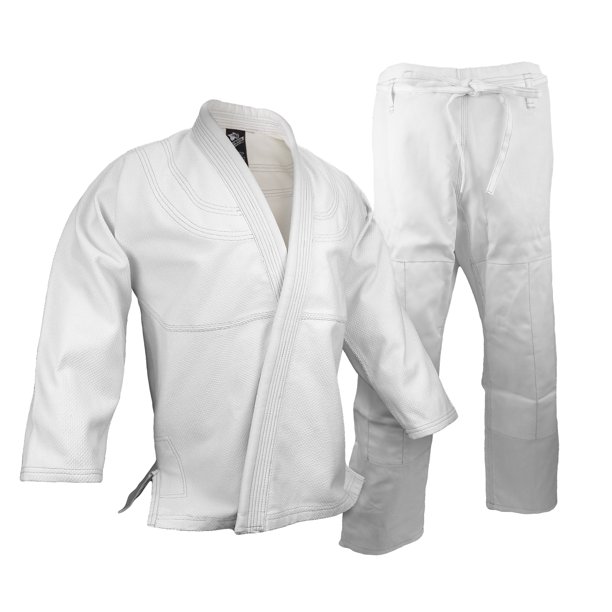
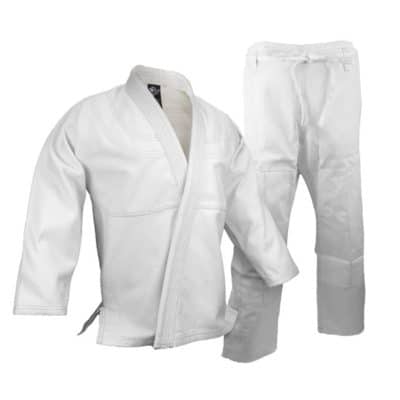
When it comes to washing clothes, there is always a right way and a wrong way to do it. That’s because not every garment is made of the same fabric. This is also applicable for BJJ Gis. And most people who practice Jiu-Jitsu don’t know how to wash their white Gis. If you are one of them, well you are in the right place. 

To wash a white BJJ Gi, remove the stains first, turn the Gi inside out, and put it in the washer. Then select the cold water in the washer, add fabric brightener along with detergent, choose a gentle washing setting, and start the washing process. To remove stains, you can use fabric stain removers like white vinegar, Oxiclean, lemon juice, etc.

In this article, I will provide a step-by-step guide on how to wash white BJJ Gi and remove stains from it. I will also provide some extra tips on keeping your Gi bright white and more. So, keep on reading. 

How Do I Wash My BJJ Gi?

Take off your Gi and start washing as soon as you are done with your Jiu-Jitsu class. The longer sweat, bacteria, odor, and blood stay on the fabric, the harder it will be to get rid of them. Follow the steps below to properly wash your Gi:  

Step 1: Remove Stains

Get rid of the stains on your Gi before the wash. Use a fabric stain remover for this purpose. Before using such a product, check the label to make sure you are using the right type of stain remover for your Gi. 

Fabric stain remover

Also, follow the instructions that come with the product to find out how much you should use and how long you will have to leave it on the stain.

Step 2: Turn Your Gi Inside out 

Turn your Gi inside out before the wash to preserve the patches, and prevent colors from fading away.

Step 3: Put it in the washer 

Choose the cold water setting on your washer. If you don’t have this setting on your washer, choose the coolest temperature available. Start washing the cloth by choosing a gentle wash setting.

While washing your Gi, it is recommended to use organic or mild detergents to avoid any sort of fabric damage. Also, don’t use too much detergent. Using too much detergent and not rinsing it out completely can cause mold growth on your Gi. Add fabric brightener along with detergent to the water

Step 4: Let it Dry 

After washing and rinsing, air dry your Gi. Avoid damp areas for drying your clothes. You can use a dehumidifier or a small fan to speed up the air-drying process. This way, your Gi will stay safe from heat damage.

Note: It is always recommended not to mix your Gi with other clothes when washing. If you do mix it, make sure all the clothes have the same color and are made of the same fabric. Also, avoid using bleach when washing your Gi altogether. This is to prevent the fabric from damaging.

How Do I Keep My Jiu Jitsu Gi White?

After an intense workout session, a Jiu-Jitsu Gi can retain dirt, oil, sweat, and odor. As a result, your white Gi will become yellowish in time. Many people use chlorine bleach to keep their fabric white. But in the case of Gi, it is a bad idea. Chlorine bleach will weaken the fabric and over time, the Gi will tear. 

But fortunately, there are many alternative fabric whiteners that you can use to keep your Gi white and maintain its pristine condition. These whiteners have no negative side effects on the fabric. These fabric brighteners are given below:

Baking Soda

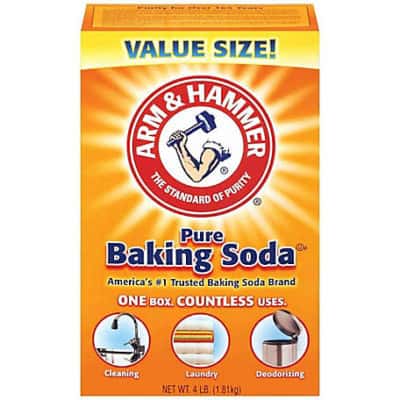
Baking soda has good whitening properties. That’s why it is used in everyday household cleaners and whitening toothpaste. And you can use it to whiten your Gi. Add ½ a cup of baking soda into the wash along with your regular detergent for a brighter and whiter Gi instantly.

Vinegar

This is one of the ingredients that you can find in any household kitchen. And it is a great alternative to bleach to whiten your Gi. Just add three-quarters of a cup of vinegar with your regular detergent to the wash.

Borax

You can find borax in any supermarket’s laundry aisle. It has long been valued as a laundry brightener. You can mix about half a cup of borax with the regular detergent and use it to wash your gi. Borax will clean any type of stain from your laundry, thus making your Gi as white as it was when you purchased it.

Hydrogen Peroxide

You can add ½ a cup of hydrogen peroxide to your wash as well as your regular detergent. And your Jiu-Jitsu Gi will come out as white as ever. Hydrogen peroxide has very good whitening properties and is very effective in removing stains from fabric.

Sunlight

Believe it or not, sunlight is one of the best and easiest tools that you have available to whiten your Jiu-Jitsu Gi naturally. After washing the fabric, just hang it to dry in the sun. You will be amazed at how effective this whitening method is.

For the best result, use any of the fabric brighteners I’ve mentioned above during your wash and then dry your Gi out in the sun.

RECOMMENDED FOR YOU:
What Do BJJ Gi Colors Mean? Answers for BJJ Gi

How Do I Stop My Gi from Shrinking?

Most of the Gis that you can find in the market are made of cotton fabrics. Cotton has the tendency to tighten/shrink when wet. The shrinkage will be more in case you use hot water to wash your Gi rather than cold water. 

Hot water weakens the fabric. As a result, your Gi will last much shorter than you think. To deal with this shrinking problem, use cold water. And avoid using dryers altogether. Air dry your Gi. 

Another thing, after washing and rinsing your Gi, pull the sleeves tightly and use something like clothespins to keep them taut. If you don’t have one, hang the Gi facing down and put some weight on each sleeve. By doing so, gravity will prevent your Gi from shrinking.

Also, while buying Gis, get one with longer sleeves (or even a size larger) and then pre-wash it using hot water. This will shrink the Gi to the right size. Once it has been pre-shrunk, always use cold water to wash it. After each wash, your Gi will still shrink some, but the shrinking rate will not be as much as one that hasn’t undergone the pre-shrinking process.

How Do You Get Blood Out of a White Gi?

Getting blood stains out of any fabric is a challenging task. The same is also true for Gis. If the bloodstain is fresh, immediately soak the stained area in cold water. This will loosen up most of the stain. Never use hot water in this case because this will just make the bloodstain set in. 

Now scrub the stained area until most of the blood is out of the Gi. Use detergent or soap to wash the stained area to get rid of the stain completely. Make sure that you’ve got rid of the blood completely before drying your Gi. Because heat will set the bloodstain, and you will be stuck with a permanent blood spot on your Gi.

For older bloodstains, ammonia water solution works best. Mix an equal amount of water and ammonia together and apply the solution to the stained spot. Let the ammonia sit for some time and then scrub the spot to get rid of the blood. After getting rid of all the blood, wash the Gi following the same steps mentioned before.

Final Thoughts

If you want to keep your BJJ Gi in its pristine condition, it is important to take care of it. And washing and drying the Gi using the correct method is part of this process. Your Gi is an important part of your Jiu-Jitsu training. So, make sure to take care of it properly.

Hopefully, through this article “How to Wash White BJJ Gi and Remove Stains” I hope I been of any help. Stay safe. And thanks a lot for stopping by!