During an MMA fight, getting punched in the face is inevitable. There are a few methods that MMA fighters use that will decrease the chance of them having to forfeit due to severe cuts or lacerations.
Getting hit by the opponent with a leather MMA or boxing glove against the face can cause crucial lacerations that could lead to forfeiting a match. To prevent this from happening, fighters apply vaseline on their face. The jelly-like substance will decrease the friction between the face and the glove.
All professional fighters wear vaseline on their faces during a fight. This article will give you a better understanding of the importance of vaseline for professional fighters.
The Reason Why Fighters put Vaseline on Their Face
When fighting, it is obvious that the athletes will get hurt. A scratch on the face doesn’t sound detrimental. The opposite is true. A severe cut can quickly end a match. Vaseline gets applied to lower the chance of a fight-ending prior due to a fighter having severe laceration. The vaseline gets applied to the fighter’s face before and during a fight. Vaseline has a few benefits these are:
1. The vaseline protects the fighter’s face from the leather gloves of their opponent. Leather is a hard material that can easily cut the tender skin in the facial area. Vaseline being a jelly substance, will help decrease the friction between the fighter’s face and the leather glove. Having less friction automatically means less chance of skin tearing.
2. Vaseline is a lubricant that will help the skin become more elastic and allowing it to stretch more. When the skin is stretchier and elastic, it will be less likely for the skin to tear when receiving a hard punch from the opponent.
3. During an MMA fight, it is inevitable that fighters will get wounded and get hurt. Vaseline is applied to the open wounds to help stop the bleeding. When a cut is too severe, applying just vaseline won’t be enough. Therefore it is often used in combination with a coagulant.
4. Ending a fight early due to severe cuts is not very popular amongst MMA organizations and spectators. Fights ending quickly due to forfeiting gets seen as an anticlimax. Therefore the rule of vaseline being put on the face of the athlete is allowed.
Vaseline will not help to decrease the amount of pain. In the end, the main reason that vaseline is applied to a fighter’s face is to work as protection and for fights to not end early on due to severe laceration.
There aren’t any specific rules regarding how much vaseline is allowed by a fighter during a fight. The referee, however, can determine how much vaseline can be applied to the fighter’s face.
Often Vaseline gets applied to the most crucial areas like the nose, cheekbones, jawbone, ears, etc. It is best not to apply too much vaseline to the face. Otherwise, there is a chance that fighters get the vaseline in their eyes, and as you can imagine, a fighter does not desire this.
Who is a Cutman in a MMA/Boxing Fight?
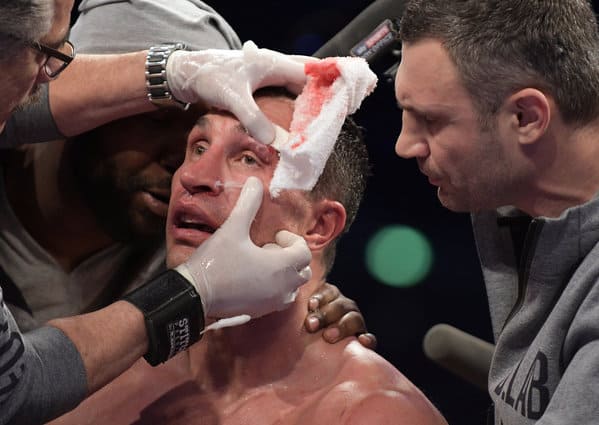
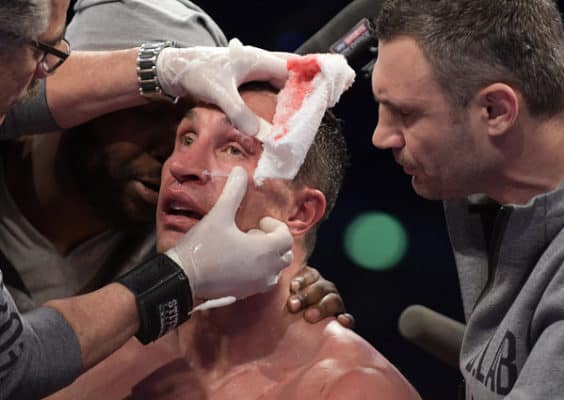
The fighters don’t apply the vaseline on their face themselves. There is a person who does this for them, also known as a Cutman. The Cutman is on the side of the ring in case the athletes get hurt. The Cutman will prevent or treat cuts, bleeds, wounds, swellings, and lacerations.
https://youtu.be/3lEQx5CEoec
The Cutman treats the fighter in the corner during the one-minute break between fights. Only having one minute to treat someone asks for expertise, speed, and professionalism. The job that the Cutman does during a fight can make the difference for a fighter to win or lose a match by lessening the impact of facial wounds during the fight.
The Cutman may only apply vaseline to the face of a fighter during a match. Using vaseline on other parts of the body (also known as greasing) is not allowed. Vaseline is slippery, causing less impact when getting hit and making it harder to complete a submission.
Can you put any Medication on Fighters Face During a Fight?
A fighter’s health is essential, not just outside of the MMA cage but also during a fight. Therefore a Cutman may use other products and medication on the fighter’s face besides vaseline to help the fighter. These additional products are:
Water: Water is given by a Cutman either to drink or to cool the fighter off, throwing damp clothes or towels over their shoulders and legs.
Ice: The Ice is often put inside a plastic bag and used to help against swelling.
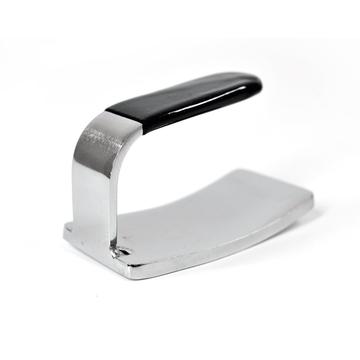
A metal plate or Enswell: An Enswell is a small metal that lies in Ice. The metal gets put against parts of the body where their opponent’s hit caused swelling.
Enswell
Adrenaline Chloride: Adrenaline Chloride constricts the vessel and is used to close wounds during a fight quickly.
Coagulant and Cotton Swabs: The cotton swabs are used to apply the Adrenaline Chloride and Coagulant to close wounds quickly and to stop the bleeding as best they can.
How are Cuts Treated During the Fight?
When a fighter gets severe cuts, the Cutman will, first of all, apply pressure to the wound, trying to close it off as quickly as possible. During a match, the Cutman is allowed to treat a wound with Adrenaline Chloride which is usually a 1:1000 solution to reduce bleeding quickly. Only the topical use of Adrenaline Chloride is allowed in the fight.
Vaseline is often applied around a cut and not directly in the cut. A coagulant will be applied inside the cut to try and stop the cut from bleeding as soon as possible.
How is Swelling Treated During the Fight?
When a fighter gets a hit, there is a big chance of that area swelling up. Swelling is caused by fluids and blood that go to the damaged tissue. Putting ice on the swollen area will help constrict the vessels making it harder for fluids and blood to reach the damaged tissue. In other words, this means this will prevent the swelling from getting more significant. The ice will also help numb the pain making it easier for a fighter to continue the match.
To prevent swelling and pain, it is best to put the ice directly on the area where the fighter got hit. In MMA fighting, the Cutman will apply ice using an enswell during the one-minute breaks. Often a Cutman uses a small metal plate kept in ice to press directly on the bruise. After a match is over, the fighter will continue putting ice on the swollen areas to stimulate the healing process.
Conclusion
Fighters have vaseline on their face during a fight to work as a buffer and to protect the skin. A Cutman will apply a bit of vaseline before the fight and during the one-minute breaks. Apart from vaseline, there are also a few other tools that may be used to help a fighter with bruises, swellings, and wounds. After reading this article, you will better understand the importance of vaseline for a professional fighter and why it is used during boxing and MMA matches.
When we think of martial arts, non-weapon based martial arts such as BJJ or Karate comes to our minds first. But what’s often forgotten is that there are just as many weapon-based martial arts as non-weapon based martial arts. Since ancient times, humans have created weapon-based martial arts to prepare combatants to win in wars or in battles. For this reason, weapon-based martial arts played a very crucial role in combat.
In this article, we will focus on weapon-based martial arts and there’s a good chance that you have probably never heard of these weapon-based arts. Keep reading this article to find out the 21 Rare weapon-based martial arts even though they have been created over the centuries, and what is so special about them.
21. Zulu Stick Fighting
Zulu Stick Fighting is an art founded by Nguni people in South Africa. The name means “playing with sticks” which is a great way to get an insight into what this art is all about. Each fighter uses two sticks, one for offense and one for defense while wearing limited armor. Many other forms of this art include shields like “Bantu stick fighting”.
In modern times, Zulu stick fighting is a part of the tradition and culture of South African people. They “fight” in various ceremonies like weddings where two families get into a fight with sticks to get to know each other. There’s even a referee or a “war captain” who is there to keep it all safe and in order.
20. Eskrima
Eskrima is a Filipino martial art that focuses on both weapons and hand to hand fighting. Its students learn how to use kicks, punches, joint locks as well as dirty tactics. But the main focus of the art is on weapons and learning how to handle various ones like:
· Yantok (stick)
· Baraw (Knife)
· Bolo (machete)
· Bankaw (staff)
Eskrima is a versatile fighting system and very good for self-defense. It trains a person for various fighting scenarios they can face on the streets. Students learn how to fight with or without a weapon, and even how to disarm the attacker.
19. Historical Fencing
Most of us know the sport of fencing as a part of the Olympic Games since 1960. But what most people don’t know is that there is a sub-style called “Historical Fencing” that focuses more on real fighting. In this form of fencing, students learn how to handle various types of sharp swords to attack or defend. It is far more effective than the fencing we watch in the Olympics when it comes to self-defense.
In some schools, students also learn how to use various arm locks to disarm the attacker.
18. Sojutsu
Sojutsu is Japanese art and its earliest records date all the way back to the feudal period. The name translates to “art of spear” as the art focuses on a spear called “yari” as the main weapon. Yari is a straight headed spear that has many long and short variations. It was very popular during the feudal period in Japan.
The goal is to learn how to use this weapon both on foot and from horseback. In training, students learn how to block, thrust or stab the opponent. In the feudal period, the big part of the training was learning how to attack the weak spots of samurai warriors. These were the small body areas not covered in armor.
17. Tahtib
Tahtib is an art that emerged in ancient Egypt around 3000 BC. There are a lot of drawings inside the ancient pyramids showing men fighting with sticks that look a lot like tahtib. This makes it one of the oldest martial arts in the world.
The name “tahtib” means the “art of being straight and honest though the use of a stick”. As its name suggests, the main weapon in tahtib is a 4-foot long stick made out of rattan wood. Students learn how to use it to strike or defend all body areas with the emphasis being on targeting the head.
Over the years, Tahtib has moved away from real fighting to folk dancing with wooden sticks. It is still a part of Egyptian culture and usually performed during various ceremonies or to entertain tourists.
16. Siljun Dobup
Siljun Dobup is a sword-based martial art that was created by combining Japanese and Korean traditions. Students learn how to handle a katana sword as well as how to keep high focus while executing cutting techniques.
In training, beginners start by using swords made out of wood due to safety reasons. Once they master all the basics, they go ahead on using sharp swords made out of steel. But, the concept of training doesn’t include any form of sparring. Students practice cutting skills in an exercise called “tameshigiri”.
When it comes to the mental aspects, they also perform various breathing exercises. The goal is to learn how to control breathing and keep the mind calm while performing.
Silambam is an Indian art that is among the oldest martial arts in the world. The exact origins of the art are not clear. But according to some sources, the earliest records date all the way back to 1000 BCE. It is an art that focuses on staff made out of bamboo. And the length of each weapon depends on the physical size of the student. Here are the most popular ones:
Maduvu - this weapon consists of two deer horns pointing in the opposite direction. They are connected with two crossbars which is also a handle of the weapon.
Arual– this is a type of machete that is usually around 3–6 feet in length.
Kattari– a short and very sharp knife
Sedikuchi– this weapon looks a lot like a baseball bat but covered with plenty of small metal balls.
14. Gatka
The exact origins of Gatka are still not clear. But from what we know, this art emerged in ancient India, thousands of years ago. Gatka is an art that focuses on wooden sticks called “soti”. Students use soti to simulate real swords and practice self-defense. We must point up that Gatka has two forms:
Rasmi or traditional form
Khel (sport form of Gatka)
This art is also seen as a complete fighting system as it focuses on both mental and physical aspects of combat. It teaches you how to stay calm in a fight and handle various weapons like:
Talwar (sword)
Tegh (sword)
Bagh Nakh (metal craw)
Barcha (spear)
13. Taiho Jutsu
Taiho Jutsu is a Japanese art used by the feudal police to arrest armed criminals. It has origins in other arts from Japan like “jujutsu”. Back in feudal period, the focus of Taiho Jutsu was on capturing criminals without hurting them. They used various throws and joint locks to subdue the criminal and arrest them. But, they were also skilled in striking as they trained how to throw punches and kicks. The main weapons in this art are:
Jutte (iron truncheon)
Tesson (iron fan)
yori-bo (wooden staff)
Torinawa (arresting ropes)
12. Gungsol
Gungsol is a Korean martial art that looks a lot like the Japanese art called “Kyudo”. It is an art based on archery and using a composite reflex bow called “Gakgung”. This is a famous weapon we can also find in many other eastern arts. But in Gungsol, students learn how to use this weapon while standing, and riding a horse.
Gakgung is a weapon made out of wood or water-buffalo horns which is a reason why it is also called “horn bow”. The design is special as it is a highly reflexed bow and both ends of the bow curve away from the archer. This allows archer to create a lot of power and shoot up to 350m (380 yards).
11. Itto-Ryu
Itto-Ryu is a Japanese art that focuses on sword fighting. It has many forms and was a precursor to some modern arts like Kendo. The most famous forms of Itto-Ryu are:
Enshin
Kogen
Hokushin
Ono-ha
The classes in Itto-Ryu may vary between the schools and forms. But the main structure of the training is very much the same:
Kata - beginners start by learning basic techniques in a pre-arranged form. They learn basics using a wooden sword called “Iaito”.
Kumitachi - once students master all the basics, they must apply techniques in a form of sparring. It is a safe part of training as students are still using wooden swords instead of real ones.
Tameshi Giri - is the last part where students are using real swords called “shinken”. They must drill various cutting skills, learn how to control their breathing, and stay calm.
10. Jojutsu (jodo)
Jojutsu is an art that comes from Okinawan Islands in Japan with the earliest records dating back to the 17th century. The main weapon in jojutsu is a short staff called “jo” which looks very similar to bo staff in “bojutsu”. But, Jo is around 3 to 5 feet long, which means it is much shorter than bo which is around 6 feet long. In modern times, there are two main forms of jojutsu:
Koryu
Seitei Jodo
9. Bojutsu
Bojutsu is a Japanese art where students learn how to use sticks as a weapon. The name “Bojutsu” comes from the word “Bo” which means staff or piece of wood, and “jutsu” meaning the art of method. At first, staff may look like a less effective weapon compared to swords for instance. But, this simple weapon is very versatile in the hands of Bojutsu masters.
The main goal of Bojutsu is to use staff as an extension of the limbs. The people who really used Bojutsu was the lower class in feudal Japan. This was during the period when the government allowed only the Samurai class to wear swords.
8. Bataireacht
Bataireacht is an Irish martial art that focuses on stick fighting. It is one of the oldest fighting styles in Europe that was really popular in the 18th century among Irish gangs called “factions”. At the time, the Irish people were under English rule which meant they were not allowed to own any weapons.
But, the Irish realized how they can use simple wooden sticks as a very versatile weapon in a fight. And they could carry these wooden sticks around as the English didn’t see them as a lethal weapon. One of the most popular weapons in Bataireacht is a walking stick. Students learn how to use them to do big damage from both distance, and in close range fighting.
In modern times, this martial art is still a part of Irish culture, and there are many schools in which you can master it.
7. Yabusame
Yabusame is a form of mounted archery that emerged in Japan. Its origins are not clear but the earliest records of this art go all the way back to the 12th century. The goal of the art was to prepare a samurai warrior to use a spear (Yumi) while riding on a horse in a battle. And the way they were training was very unique.
Yabusame archers would ride a horse at full speed across a 300-yard track. The goal was to hit three wooden targets within 20 seconds or less. And they didn’t use just wooden targets as some evidence suggests they were shooting arrows at live dogs. At the time, Yabusame archers were an elite group of warriors that consisted of only the best soldiers.
6. Shintaido
Shintaido is a hybrid martial art created in the 1960s in Japan. The art is a mix of techniques from other arts like karate, kenjutsu and bojutsu into one style. In training, students learn how to fight without weapons using kicks and punches. But they also train how to use various weapons like staff (bo) and wooden swords (bokken).
Even though Shintaido looks like a hard style on paper, it isn’t. The art puts a lot of emphasis on various meditative exercises as the goal is on overcoming oneself. Its students must learn how to perform in a soft and gentle way instead of using sheer force and aggression.
5. Mau Rakau
Mau Rakau is a New Zealand martial art created by Maori people. Most of us know Maori people for their famous “Haka” dance or “war cry of Maori”. This intense dance is the way they show their bravery and warrior spirits. But, they have also created a “Mau Rakau” which is an art that focuses on weapons like:
Taiaha - this is the most important weapon in Mau Rakau. It is a short spear that is around 1.5 to 1.8 feet long and made out of wood.
Mere - this weapon is a short club made out of heavy stone or hardwood.
Patu (club or pounder)
In modern times, Maori people use these weapons as gifts to honor people who showed courage in certain situations. This is one of the ways they keep their history and tradition of the art.
4. Iaido
https://youtu.be/XH7-m4k2VUY
Iaido is a Japanese martial art created in the 16th century that focuses on sword fighting. The main goal in Iaido is to learn how to draw a sword from a sheath as fast as possible to counter the sudden attacks. Its students use three main weapons in training:
Bokken
Iaito
Shinken
Iaido training doesn’t include sparring and students carry out the moves in pre-arranged forms (kata). It is very popular among older people since training is not hard on your body or cardio intense.
3. Jukendo
https://youtu.be/J5crj_k1VnE
Jukendo is an art from Japan created by the military in the 18th century. Even today, most Jukendo students are actually members of the military staff. The art focuses on using a bayonet weapon which is a knife or a short sword. Here are the key elements of training:
Kihon– this is where students learn offensive and defensive techniques using a bayonet
Kata– is a part of training where students practice techniques in a pre-arranged form
Shiai Geiko– is a form of practice where students must wear full Jukendo armor
Kumite- is a sparring match between the two students
During training and sparring, all students must wear protective gear that consists of:
Helmet
Gloves (kote)
Chest protection (do)
Hip protector (Tare)
Urabuton (a piece of thick cotton placed under the left armpit)
2. Krabi-Krabong
Krabi-Krabong is art from Thailand. It is closely related to other arts from this region like Muay Boran. This is mainly because both arts were created around the same time and they have a lot in common. For instance, students learn Muay Boran kicks, punches, trips, and throws. But the emphasis of Krabi-Krabong is on using all kinds of weapons like:
Krabi (curved sword)
Daab song mue (double swords)
Ngao (bladed staff)
Staff (krabong)
Krabi-Krabong is a very versatile fighting system as it teaches you how to fight both with and without weapons. It prepares a person for just about every fighting scenario in which you have to defend yourself.
1. Kendo
Kendo is a modern Japanese art that has its origins in Itto-Ryu. Instead of real swords, Kendo focuses on using swords made out of bamboo called “shinai” and “bokken”. Students use “shinai” swords for sparring while “bokken” swords are for “kata”. And, they also wear protective armor (bogu) and a uniform (dogi).
“Dogi” is a uniform that consists of a top (keikogi) and trousers (hakama). On the other side, protective gear consists of:
Helmet
Body protector (do)
Gloves (kote)
Groin and hip protector (tare)
Many other arts are very similar to kendo like “Jukendo” and the Korean art called “Kumbo”. But the biggest difference is that both of these arts use real swords made out of metal.
The Ultimate Fighting Championship, or UFC, is widely known as the largest Mixed Martial Arts (MMA) promotion company in the world. It has held over 500 events as of 2020. However, many fans of MMA don’t seem to realize that the UFC actually came from very humble beginning before claiming its spot at the top of the MMA world. This is why I’ve written this post to explain exactly how and when UFC started.
The first UFC began on the 12th November 1993 when WOW Promotions produced its first-ever mixed martial arts event, the Ultimate Fighting Championship (which would later be renamed to UFC 1: The Beginning). The event was held at the McNichols Sports Arena in Denver Colorado and was also broadcasted live on PPV (pay-per-view).
Although this is widely seen as the first UFC, inspiration for the event can go as far back as 1989 and involves some very interesting stories that would play a key role in the creation and growth of the UFC into what it is today.
When Was UFC Started?
It all began when a certain entrepreneur known as Art Davie sought to answer the following question;
“Who would win in a fight between a boxer or a wrestler?”
To answer his question, Davie brought proposals to John Milius, a well-known screenwriter and director, as well as Rorion Gracie, a prominent Gracie Jiu-Jitsu Grandmaster, detailing plans for a certain elimination style tournament dubbed as “War of the Worlds”. Davie was reportedly drawn to Rorian via a Playboy article in September 1989 that he released offering to fight anyone in the country for a winter-takes-all prize of $100,000.
Davie was eager to promote a competitive tournament format that featured crossovers from various popular fighting styles. As such, the “War Of The Worlds” took inspiration from the video series Gracie’s In Action that was promoted by the Gracie family in Brazil.
The video series featured their signature fighting style, the Gracie Jiu-Jitsu defeating martial arts of other disciplines such as kickboxing and karate. Davie was eager to provide the same sort of excitement and anticipation as those videos, and John Milius agreed to act as the event’s creative director.
After setting up a business plan and gathering funding from 28 investors, WOW Promotions was founded. Key founders of the company include Art Davie, Rorion Gracie, John Milius as well as Bob Meyrowitz and David Isaacs who are all seen as the first owners of the company that would become the UFC.
WOW Promotions was the earliest form of the UFC as we know it today and was created with plans to start putting Davie’s tournament format into action as well as potentially developing it into a television franchise.
This became a reality on November 12, 1993, when WOW Promotions, partnered with SEG (a similar pioneer in pay-per-view television), released their first event which they would dub “UFC 1: The Beginning” at a later date.
A practiced salesman and active marketer, Davie used his initial question “Can a wrestler beat a boxer?” as the primary way of developing interest in the show. At the time, most martial artists were specialized in only one discipline and rarely came into contact with opponents of different styles and skills.
Because of this, there was a burning interest amongst martial arts fans to see exactly what would happen when fighters of completely different disciplines clashed head-to-head.
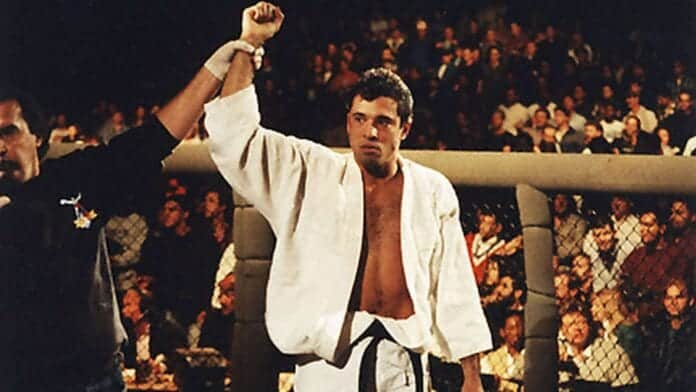
The result of the inaugural tournament was a victory to Royce Gracie, whose skills in submission earned him victory in the first-ever UFC tournament and propelled his fighting style, Gracie Jiu-Jitsu, to greater popularity.
The live event itself was extremely low-profile. Initial plans for a 16-man tournament had to be scaled back as many of the biggest names in the martial arts world at the time showed no interest in participating. The venue itself was also less than half-packed on the day and did not see much attention from the media.
However, the TV Show was a resounding success generating over 85 thousand subscribers on pay-per-view. New audiences would also be attracted once the event was eventually released on home video. The UFC 1 is seen as a pioneer for tournaments featuring fights between practitioners of different martial arts, and its success made sure that there would be demand for tournaments of a similar style in the future. This would end up playing a key role in the rise of UFC as the most dominate MMA promotion company in the world.
Who Were The First UFC Fighters?
UFC 1 had initial difficulty in gathering enough fighters for the events. Art Davie had initially sent out many public invitations but found himself rejected by many of the big-name martial artists that the time, such as Dennis Alexio, former Undisputed World Heavyweight Kickboxing Champion.
Despite efforts by Davie in placing ads in various martial arts magazines calling for fighters, many kickboxers in particular had shown no interest in participating. Eventually, the producers settled for an 8-man tournament format, with a total of $50,000 on the line for the eventual winner.
The eight participants of the tournament and their eventual results were:
Royce Gracie (Gracie Jiu-Jitsu)
Royce Gracie is a member of the influential Gracie family who are known as creators of the style of martial arts known as Gracie Jiu-Jitsu (more commonly known as Brazilian Jiu-Jitsu). He is one of the many members of the family who played a key role in the creation of and promotion of the UFC.
Before the UFC, many of the Gracie’s had already had experience in fighting martial artists from different disciplines in contests known as the Gracie Challenge.
Royce’s eventual win in the first-ever UFC tournament brought immense fame to the Brazilian Jiu-Jitsu style of martial arts. During the event, he ended up beating all of his opponents via submission and shocked many by how he was able to sweep aside opponents that were bigger and significantly outweighed him.
Today, BJJ remains one of the most dominant styles of fighting in the MMA worlds and is second only to Wrestling in producing the most UFC champions over the years. A lot of this can be attributed to the success Royce has had with this fighting style in the field of MMA. He would go on to win UFC 2 and 4 whilst also fighting to a draw against professional wrestler Ken Shamrock in UFC.
Patrick Smith (Kickboxing, Taekwondo)
Patrick Smith is an American kickboxer that also incorporates some forms of taekwondo in his fighting style. As the UFC 1 was to take place in his hometown of Denver, Smith was seen as an easy addition to the show which desperate for fighters to fill its ranks. During the year where UFC 1 took place, Smith was ranked as the No 1 super heavyweight kickboxer in the US.
Smith’s first and only round was against wrestler Ken Shamrock. During the match, Smith was taken down and easily submitted by his opponent, which led to heavy boos from his home crowd fans in Denver who were expected a knockout and were not aware of any submission rules.
Despite his performance in UFC 1, Smith would be reinvited to UFC 2 where he saw greater success, winning against fighters such as Ray Wizard and Scott Morris before being defeated by eventual winner Royce Gracie in the finals.
Ken Shamrock is a professional wrestler best known for the time he has spent in the UFC. Shamrock is widely seen as one of the greatest fighters to have graced MMA alongside Royce Gracie, with whom he shared a fierce rivalry.
This rivalry arguably began at UFC 1, where Shamrock was one of the favorites to take the entire tournament due to his dangerous style of submission wrestling. Unfortunately, he would end up meeting a similarly strong fighter in Royce during the semi-finals and end up losing via submission.
The two would meet again for a rematch at the Superfight Championship at UFC 5, where they fought to a draw. Shamrock would also later become the first UFC Superfight Champion after defeating Dan Severn at the UFC 6.
Shamrock would move on to feature in over 15 main events and co-main events and set many new pay-per-view records during his time in the UFC. He and Royce Gracie would later become the first two fighters inducted into the UFC Hall of Fame in November 2003.
Arthur Jimmerson was the only pure boxer that competed in UFC 1 and was defeated in the first round by the eventual winner Royce Gracie.
During the tournament, Jimmerson earned himself the nickname Art “One Glove” Jimmerson as he fought his match wearing only one glove to protect his jab hand. During the round, Gracie won by successfully taking down the boxer and grapevining his legs as well as binding his arms to prevent any counterattack. After unsuccessfully trying to get out of the hold, Jimmerson eventually tapped out.
The UFC would be Jimmerson’s only MMA match. He would return to boxing soon after and finish his career with a record of 33-18.
Gerard Gordeau was scouted to take part in the UFC 1 when the event organizers started researching various high-level fighters in Holland.
They approached many martial artists including kickboxing champion Ernesto Hoost but were declined by all. As such, Gordeau was the only one willing to take part in the tournament and was advertised as a savate artist due to his status as the 1991 World Champion Savate.
According to Gordeau, he was initially supposed to face Royce Gracie in the first round of the UFC 1 (rather than the finals where the two would eventually meet), but the matchup was changed when the event organizers discovered that he had previously competed in the Fighting Network Rings, a Japanese combat sports promotion. Gracie would end up being pitted against boxer Art Jimmerson whilst Gordeau would face sumo wrestler Teila Tuli.
Gordeau vs Tuli was the very first match in the UFC 1, and as such is also known as the first-ever televised match in the history of the UFC.
Tuli would open the match with a tsukidashi attack that Gordeau avoided and countered with a roundhouse kick that would be seen as one of the most iconic moments of the entire tournament. The kick landed straight into Tuli’s face, knocking out three of his teeth. A following right uppercut by Gordeau also ended up cutting Tuli’s eye, forcing the referee to intervene and stop the match.
The victorious Gordeau would advance into the next round, but not in prime condition. The roundhouse kick from the bout with Tuli had injured his foot (two of Tuli’s teeth had ended up stuck in his foot), and the uppercut had also broken his hand, causing a swollen fist.
Despite this, Gordeau still ended up dominating the next round against kickboxing champion Kevin Rosier and eventually moved on to face Royce Gracie in the finals.
In the final match, Gracie managed to submit Gordeau with a rear-naked choke and ended up taking the win. According to Gordeau, Royce was well aware of his injuries and took various advantages of this to take the win via submission. One could only wonder as to what the results might have been had Gordeau been the one facing Gracie in the first round.
After his performance in UFC, Gordeau was reapproached to fight again in UFC 2. However, he ended up declining due to differences over his payment agreements from UFC 1. Gordeau instead took part as a cornerman, whilst his training partners Remco Pardoel and Freek Hamaker ended up taking his place in the tournament.
Teila Tuli (Sumo)
Teila Tuli, or Taylor Wily, was a sumo wrestler of American Samoan descent. His fight against Gerard Gordeau in the first round of the UFC 1 was his only MMA fight. Tuli would return to sumo wrestling but also end up retiring in July 1989 due to problems with his knees.
Before the bout, Teila weighed in at 440 lbs and had a history of being undefeated in his first 14 fights. This caused some to describe the match as one of the top five David vs Goliath matchups in MMA history.
Despite this, Tuli still ended up losing to Gordeau. The match was stopped after Tuli suffered multiple injuries including the loss of up to 3 teeth from a roundhouse kick to the face.
Kevin Rosier was an American kickboxer that had seen much success before being invited to the UFC 1. His first match would be against Zane Frazier, an American Kenpo expert. The match was the longest out of all the bouts in the tournament and ended with a win to Rosier, despite Frazier capitalizing on the lack of regulations around groin attacks to land a low blow on Rosier.
Exhaustion over the long round by Frazier allowed Rosier to recover and come back with a flurry of blows that drove Frazier against the fence.
Frazier was then dropped onto the mat and suffered several stomps to the head before his corner threw in the towel.
Rosier’s next fight was against Dutch Savate fighter Gerard Gordeau. Rosier was clearly in better health due to injuries suffered by Gordeau in the previous round and also outweighed the Dutchman by almost 100 pounds. Despite this Gordeau dominated the fight and ended up taking the win after landing a stomp to Rosier’s liver, causing him to tap out.
Zane Frazier (American Kenpo)
Zane Frazier is an American karateka and kickboxer who saw numerous successes in karate before eventually shifting to kickboxing. At the time of UFC 1, Zane was already the two-time World Kickboxing Federation superheavyweight champion.
The first round of the tournament pitted Frazier against American kickboxer Kevin Rosier, who ended winning despite a strong start by Zane. The entire match was a slugfest, with Zane taking advantage of the lack of regulations to land a low blow on Rosier and Rosier responding by knocking Zane to the floor and landing multiple stomps before his corner threw in the towel. Due to his injuries, Frazier had to be rushed to a hospital immediately after the fight due to respiratory failure.
Frazier was later diagnosed with asthma and would end up retiring 15 years later.
Who Owns The UFC Now?
The UFC is primarily owned by one of the giants in Hollywood entertainment, Endeavor. Endeavor currently owns 50.1% of the UFC and acquired this position in July 2016, when it bought a majority stake in the UFC parent company Zuffa from the Fertitta brothers.
During this time, Endeavor was known as WME-IMG before reorganizing in October 2017 and renaming itself to Endeavor. WME-IMG partnered with its owner, Silver Lake Partners, Kohlberg Kravis Roberts and MSD Capital to take over the MMA company in a deal reportedly valued at $4 billion.
Dana White, President of the UFC and widely seen as the face of the brand, also announced that he would be continuing in his role as president of the company, and was given a stake in the company following the purchase.
The Fertitta brothers had previously acquired the UFC in 2001, when Bob Meyrowitz, owner of SEG (the partner of WOW Promotions) sold the company for approximately $2 million. Zuffa LLC was created to become the new parent company of the UFC and to provide greater legitimacy to the sport of MMA.
Just about every martial art can fall into one of two major categories. The first group is striking where the most well-known arts are Muay Thai and Karate. The other group is grappling where we have BJJ, wrestling, and Sambo. But the real question is which one between the two is more effective for self-defense, grappling or striking?
Of course, there’s no real data showing which fighting style is more effective for self-defense scenarios. But, we can form our opinion using the results and data from MMA fighting which is a sport where fighters can utilize both grappling and striking techniques.
According to data, most UFC champs come from either wrestling or BJJ. This suggests grappling is a more effective fighting style than striking and there are good reasons for this. Grappling can nullify striking in most self-defense scenarios because grapplers learn how to utilize grappling techniques to counter striking. On the other side, striking arts aren’t designed to stop grappling techniques. Strikers only learn how to fight against strikers so their skills are very limited when it comes to defending against grappling techniques.
Keep reading this article as we will explain to you in more detail why grappling is better than striking for self-defense.
Grappling vs Striking: Which is More Effective in Self-Defense?
Grappling is more effective for self-defense than striking and here is why. A trained striker might be really good at fighting someone their own size in a stand-up fight. But in a street fight, there are no weight classes and you don’t get to choose to fight someone your size. Your attacker might be much bigger than you.
In a striking art, being a smaller fighter can be a major hurdle fighting against a much bigger opponent. A trained striker who is 5’4” and 135lbs, for instance, will have a hard time defending against a person who is over 6’2”, and weighing 250lbs in a self-defense situation. In other words, a small person, no matter how good of a striker, will face difficulties dealing with the power and big disadvantage in size and reach.
However grappling arts differ a lot here as they teach you how to defeat the opponent regardless of their size much more effectively. Grappling techniques can be used to nullify your opponent’s physical advantages by taking them down to the ground using leverage and technique to take the top position to restrict the opponent’s movements.
As a result, your chance of defeating a bigger and stronger opponent is greatly increased when using grappling techniques than striking techniques.
Grappling vs Striking: Which Style is Better?
Keep in mind that when it comes to style vs style, grappling is much more superior to striking arts. Skilled boxers or Muay Thai fighters are not trained to defend against grappling techniques. They only train how to deal with another striker by learning punches, kicks, and other strikes. This is why grapplers can neutralize any striker by taking them down to the ground.
Strikers would have a hard time fighting off their back where they are at a huge disadvantage. They simply don’t know how to use grappling techniques to get back up or defend against submissions.
It would be just a matter of time before a skilled grappler can place a choke or a joint lock to submit the striker.
Striking is good for self-defense as long as you fight on the feet and the attacker is throwing at you. You can use your striking skills to counter their attacks and defend. But in reality, street fights are often chaotic and include a lot of close-range grabbing, pulling, and grappling. This is where boxing or Muay Thai skills won’t help you much for self-defense while BJJ and wrestling work really well in these scenarios.
Grappling or Striking – Which One is More Effective in MMA?
Grappling arts have proven to be more effective in MMA fighting than striking. In the early days and before cross training, MMA fighters were experts in just a single fighting style. We saw many style vs. style matchups in which grapplers were dominating strikers. In fact, over 60% of the fights in 1994 ended via submission which shows you that grappling was much better than striking in the early days. But the game has changed a lot since then as fighters began to cross-train to learn how to fight both standing and on the ground.
As a result, the submission rate in the UFC has dropped down to 21% in 2019 for instance. But this doesn’t mean that grappling has become less effective. No, this is because nowadays more than half of the UFC fights end in a decision, and fighters have become good at defending submissions. But does this make grappling less effective you may ask? Well, the answer is no.
First, takedowns and top control are often a deciding factor when it comes to decision wins. Grapplers are the ones who can dictate the place of the fight by scoring takedowns. And they will take any striker down who doesn’t have good defense without much effort.
The same stands when it comes to top control. Grapplers can use their skills to stay on top of their opponent who has good striking for the entire fight. This nullifies the risk of a grappler being hit by the striker in the standup and allows them to impose their game. And staying on top is also a good tactic to tire the opponent out since fighting from the bottom position causes faster exhaustion.
Even the purest and most skillful strikers in the UFC can’t succeed without learning how to defend against grapplers. Strikers can’t transition to MMA from striking and do well without any grappling training. Just look at how pro-boxer James Toney failed when he decided to test his boxing skills in MMA. But on the other side, top grapplers who came into MMA without any striking have all done quite well by using their grappling skills primarily. Here are some of the best instances:
This shows you that grappling is clearly more effective than striking when it comes to MMA.
And with strikers getting better at defending submissions, grapplers have found a way to win fights via ground and pound. A lot of TKO finishes in the UFC come when a grappler starts raining down punches from the top position using their grappling skills.
Grappling or Striking – Which One is Harder to Learn?
The answer really depends on the type of grappling or striking art we are talking about. It is also based on your talent as some people may have an easier time learning how to grapple than how to strike and vice versa. But overall, we must say that grappling arts tend to be harder and take longer to master.
For instance, BJJ and wrestling are often seen as the best arts when it comes to grappling. They are both very complex, notably the BJJ which is often seen as a “human chess match”. It consists of hundreds of techniques and you need to spend many years working hard on the mats to learn them.
This is much, much longer than the time you need to spend in the striking gyms. Of course, strikers like pro boxers or Muay Thai fighters must train from an early age. But an average person needs around 1–2 years of boxing training to develop solid skills and start competing.
Still, we must say striking arts are physically harder on your body when it comes to training and injuries. Absorbing punches, kicks, elbows, and knees on a weekly basis will take a toll on your body in the long run. Strikes simply lead to more injuries than grappling and rolling on the mats.
Should you learn Grappling or Striking First?
This depends on many factors like age, talent for sports, your personal preference, or what you want to achieve. Do you have any intentions to fight in MMA later? Do you like grappling more than striking or vice versa? The best way is to attend a trial class in both arts before making a final decision. Here is our suggestion that might help you make the right choice.
Grappling arts tend to be safer as they do not include any striking so the risk of injuries is much lower in the long run. They are also more complex and harder to master so it is very important to enroll in training as soon as possible. There are hundreds of techniques to master and you will learn and develop skills at a very slow pace.
If we stick with the facts, then grappling should also be your choice if you want to fight in MMA. This is because most UFC champs actually come from grappling arts like BJJ or wrestling. And over the years, having an elite ground game and solid striking skills proved to be an ideal combo of skills. Here are some of the best instances:
Bear in mind that there’s nothing wrong in going into striking first either. The ideal option would be to train in both grappling and striking at the same time since this will make you an all-around fighter. Fighters from both types of fighting styles could improve their game and fill all the holes by cross-training.
Can a Striker beat a Grappler in a Street Fight and Vice Versa?
Fighters from both grappling and striking have all the weapons and skills to beat each other in any type of fight. The winner of this type of matchup would be a fighter who manages to impose their game. But, who would win also depends on what type of fight we are talking about?
If they fight in the open like outside of the bar, in the park, or parking lot, then skilled strikers have a good chance of beating grapplers. They can use footwork to stay mobile and at a safe distance from which they can use kicks and punches to do damage.
For instance, strikes like Muay Thai kicks can generate the same force as hitting a person with a baseball bat. Now imagine what would happen when a grappler, who has never been kicked before, receives one. Or they can catch a grappler coming in with an uppercut or a knee which happens often in MMA. Just look at how Derick Lewis knocked out skilled wrestler Curtis Blaydes if you need an instance.
But bear in mind that grapplers like BJJ fighters and wrestlers also understand the elements of standup fighting. They all have a feeling for distance, how to cut the movement of the opponent, and time their entries on a takedown.
Grapplers have a big advantage if the fight is in a small space or at close range. In this case, strikers do not have enough room to circle around and keep their distance. Once a wrestler or BJJ fighter secures a strong grip, just about every striker would be taken down. And once there, grapplers know how to keep the opponent on the bottom or apply chokes and joint locks.
We would always bet on a skilled grappler to win against a skilled striker who doesn’t have a good takedown defense.
What is the Best Grappling Art?
Brazilian jiu-jitsu is, perhaps, the best and most versatile grappling art. Even though there are many others like judo and wrestling, BJJ is clearly the best. It is good for self-defense, fitness and a great base for MMA fighting.
Founded in the 1920s by the famous Gracie family, BJJ has its roots in Judo. Since each fight starts on the feet, students must learn how to use throws and trips to take the fight to the ground. The focus of the art is on ground fighting. Students learn how to secure a position, various escapes, sweeps, and submissions to finish the fight.
When it comes to self-defense, BJJ is close to ideal as it is the only art that allows you to beat a stronger, heavier, and taller opponent. You can achieve this by relying on leverage and technic rather than using sheer power. And its chokes and joint locks work the same no matter how big the opponent is. It even doesn’t matter if the opponent overpowers you and puts you in the bottom position. You can still use sweeps, escapes, and submissions off your back to beat them.
Training is great since it’s never too late to start, and it really doesn’t matter if you are male or female. Although the beginnings are always hard, you will have a lot of fun in every class. This is mainly because each class includes a sparring session in which you practice the techniques in live-action with the partner.
Muay Thai is, perhaps, the best striking art that teaches you how to use your entire body as a weapon. There are plenty of other great arts like boxing or karate, but Muay Thai might be the best.
Muay Thai is often seen as a complete striking art that will teach you all about striking. Fight experts also call it the “art of eight limbs” since students learn how to use punches, kicks, elbows, and knees. And let’s not forget it also covers the basics of grappling like trips and throws.
The emphasis of Muay Thai is on counter-attacks, landing vicious kicks from distance, and clinch fighting. The entire concept of the art is based on doing big damage and finishing a fight as fast as possible. It will teach you all about hip rotation and how to throw each strike with huge power.
Training is cardio intense and burns up to 1000 calories per hour, which makes it very popular among people who want to lose weight and get in shape. It also includes a lot of sparring which is often seen as the only way you can prepare for real fighting. But this is optional and some people train Muay Thai just for fitness and to improve their strength.
And for last, Muay Thai techniques fit well within the rules of MMA fighting. What it brings to the table are vicious kicks, and elbows, and knees in the clinch. Just about every great KO we have seen in MMA includes some elements of Muay Thai.
In recent times, we can often see MMA fighters finishing a fight using leg kicks only. Look no further from how Dustin Poirier finished Conor McGregor if you need an instance.
Brazilian Jiu-Jitsu (BJJ) is continuing to rise in popularity, with gyms opening up across the country. It also seems like many of the UFC champions have some form of BJJ training. This raises the question whether this is an essential martial art for MMA fighters. This article will therefore explore the importance of BJJ in MMA.
BJJ is incredibly useful, but not essential, in MMA. It is one of the best martial arts for ground fights, but does not train fighters for clinching and stand-up fights. Other martial art combinations, such as Sambo and Wrestling, teach ground technique as well as clinching and stand-up fighting.
I will explain the reasons behind this in more detail below. This article will also explore which martial art can beat Jiu-Jitsu and why BJJ lessons are so expensive.
How Important is Jiu-Jitsu in MMA?
MMA fighting can be broken down into three key components; stand-up, clinch and ground fighting. Below is the definition of each.
Stand-up Fighting: Hand to hand combat in a standing position. This includes boxing and kickboxing.
Clinch Fighting: Grappling your opponent in a standing position. This includes Wrestling and Judo.
Ground Fighting: Hand to hand combat on the ground, which also involves grappling your opponent. This includes BJJ, Sambo or Collegiate Wrestling.
As you can see, each martial art will focus on one of these components. This is why fighters will often combine techniques they have learnt from different martial art disciplines. In order to succeed in MMA, it is best to learn techniques in all three fighting styles.
In the early years of the UFC, Royce Gracie demonstrated that the techniques of BJJ could help him defeat any martial art. His opponents were unable to defend against his unique style of fighting.
BJJ Legend Royce Gracie
However, over time, Jiu-Jitsu has become more popular within MMA and many fighters have either trained in BJJ or have trained to defend themselves against it. For example, even Conor McGregor, who is known for skill in stand-up fights, is a brown-belt in Jiu-Jitsu. He specializes in Boxing, but is trained in Jiu-Jitsu in case the fight is taken to the ground.
However, BJJ is not the only martial art that prepares a fighter for ground fighting. Khabib Nurmagomedov is a great example of someone who has not trained in Jiu-Jitsu, but is an excellent ground-fighter. He has trained in Sambo, Judo, Pankration, Wrestling and Kickboxing, and he had never lost a fight prior to his retirement in 2020.
For this reason, MMA fighters do not need to know Jiu-Jitsu specifically to succeed, but they do need to have training in all three styles of fighting. Knowing how to fight standing, in clinch and on the ground will prepare them for taking on any opponent or situation.
What Level of BJJ is needed in MMA?
You do not need to have any particular belt in BJJ to compete in MMA. The belt system is also difficult to gauge in MMA because many fighters, such as Demetrius Johnson in his early UFC career, train in No-Gi Jiu-Jitsu.
Because of this, they may have the skills of a higher belt, but are technically still classified a lower belt. For example, Demetrius Johnson was considered a white-belt for years while being able to submit black belts. He was later awarded his brown belt when he began training in Gi-Jiu-Jitsu.
Although you do not need to be a particular belt to participate in MMA, most successful fighters that have trained in Jiu-Jitsu are at least a purple belt.
Can I Do MMA without Training in Jiu-Jitsu?
You can enter the MMA without any prior training in BJJ. However, if you want to succeed in MMA fighting, it would be very wise to train in some form of ground fighting, such as those mentioned above.
Ground fighting techniques include ground control, submissions and striking while on the ground. Instead of BJJ, you could learn these techniques in Judo, Sambo, Combatives, Pankration, etc.
If you have no prior experience in ground fighting and your opponent grapples you to the ground, you will struggle to defend yourself and regain control of the fight.
Is BJJ Still Effective in MMA?
BJJ is an excellent martial art to prepare you for ground fighting and is therefore still effective in MMA. BJJ specialist Charles Oliveira, for example, defeated many of his opponents utilizing his BJJ skills and also has the most submission wins in UFC history. However, as a solitary martial art, BJJ is not as effective today as it was in 1993 when Royce Gracie dominated the UFC.
BJJ fails to prepare students for stand-up fighting where they are expected to strike their opponent. It also does not focus on learning takedowns to get an opponent to the ground where they will have the advantage. In order to learn techniques that are not taught well in BJJ, such as takedowns, most fighters will train in at least one other martial art as well.
In addition to this, fighters these days are aware of the BJJ techniques and, instead of training in Jiu-Jitsu, are training themselves to overcome BJJ positions of control and submissions. For example, fighters are learning how to keep their airways open or keep the pressure off their joints so they have enough time to escape.
Should I Train MMA or BJJ?
If you want to learn about all components of MMA fighting, you should train MMA. But if you want to focus on learning about ground techniques only, then train BJJ.
Keeping in mind that more MMA fighters are adapting their fighting style so they can defend against BJJ techniques, it is a natural assumption that BJJ should be adapted for MMA.
One great example is the use of the cage during an MMA fight. In MMA, the fighters are surrounded by the cage and can sometimes use the cage to their advantage. The cage can be used to defend, such as avoiding a takedown, or it can be used offensively by pin your opponent while clinching or striking.
In Jiu-Jitsu there is no cage. BJJ practitioners normally grapple on an open mat and will lose points and have to reset their position if they go off the mat.
As I mentioned earlier, BJJ is a good skill to have in MMA, however, fighters need to adapt their BJJ technique to account for the cage. It is also better to combine BJJ with at least one other martial art to improve skills such as takedowns and striking.
What Martial Art Can Beat BJJ?
Damian Maia is one of the highest-ranked Jiu-Jitsu fighters in the MMA, with a 5th-degree black belt. However, even he has experienced losses in the UFC. The majority of Maia’s defeats have been by decision, but he has also been knocked out.
On the ground, Maia’s opponents are unable to submit him, proving that BJJ is an excellent skill for ground fighting. However, when the fight does not go to the ground, other martial arts are able to dominate and win.
Another thing to consider is that the point system is different between BJJ and MMA. Training in BJJ does not teach a fighter how to accumulate the most points in the MMA point system, which explains why a 5th-degree black belt can lose a fight by decision.
Therefore there have been fighters from various martial art backgrounds that have defeated high-ranking BJJ fighters. This makes it difficult to pinpoint one specific martial art that can defeat BJJ.
However, Khabib Nurmagomedov, seems to believe it is the combination of Combat Sambo and Wrestling that is “unstoppable”. He acknowledges that Jiu-Jitsu is perfect for ground fighting, but not good when it comes to takedowns. Khabib, now retired, was the undefeated UFC Lightweight Champion. Interestingly, Shamil Gamzatov, another undefeated UFC fighter, also practices Sambo.
Should You Specialize in BJJ Before Going into MMA?
With all this in mind, specializing in Jiu-Jitsu would be very beneficial to you as a fighter going into MMA. It will give you the skills you need to submit your opponent on the ground.
However, you should also learn a martial art that will train you in takedowns, such as wrestling or sambo. Finding the perfect combination and specializing in each will set you up to fight any opponent.
Why is Jiu-Jitsu Class so Expensive?
Jiu-Jitsu can cost anywhere between $100 and $200 each month. This may seem expensive, but people are willing to pay because of its excellent reputation and practical use in self-defense.
One of the reasons BJJ is so expensive is that it takes a long time before a practitioner is able to teach Jiu-Jitsu. Generally, instructors will be ranked a purple belt at least before starting their teaching career. White and Blue Belts in BJJ are considered beginners and intermediate students, respectively, and do not have enough experience to teach.
It can take 2-5 years to progress to a blue belt, depending on how dedicated you are. It can then take at least another two years to get your purple belt. That means it will take someone 4-7 years to be at a point where they can start teaching others. The experience of the instructors is reflected in their prices.
Other factors include the cost of owning or renting the gym and hiring other staff to manage clerical work, admin, etc.
Despite the high cost, BJJ is still a very effective martial art to learn for self-defense and it will be very beneficial in an MMA fight.
Mixed martial arts (MMA) is famous for combining a wide variety of fighting styles from all over the world. Despite this, when it comes to finding success inside the ring, statistics tend to skew in favor of wrestling compared to all the rest. I did some research on why this is the case, and have discovered many reasons to explain wrestling’s dominance in MMA.
According to famous MMA color commentator Joe Rogan, wrestlers dominate MMA because the wrestling style allows fighters to “dictate where the fight takes place”. Wrestlers tend to have an easier time putting their opponent into a disadvantageous position and are also equipped with the tools needed to keep them there.
But this isn’t the only reason as to why wrestlers continue to see great success in professional MMA. There are also a host of other factors at play that combine to give wrestling the edge over other popular fighting styles.
Why Is Wrestling So Effective In MMA?
According to research by Sebastian Rivera, a two-time All-American for Northwestern, between the years 1997 and 2018, wrestling has produced a total of 27 UFC champions, more than any other major fighting style and beating the second most dominant fighting style, Brazilian Jiu-Jitsu (BJJ) by a hefty 10 champions.
One reason for wrestling’s dominant position in MMA is because the wrestling style which favors controlling the opposition also translates well into the competitive MMA environment. A study by the UFC Performance Institute claimed the following:
“…controlling an opponent, be it on the feet or ground fighting, is of significance and also has a high effect on the probability of winning a fight”.
This might be due to the way fights are scored in the UFC. In the official unified guidelines, judges are expected to evaluate fights based on three prioritized criteria: Effective Striking/Grappling, Effective Aggressiveness, and Fighting Area Control.
Top-tier wrestlers that manage to take down their opponent can prevent counterattacks or attempt to gain points by suppressing their opponent’s ability to strike back.
In other words, they can limit their opponents’ opportunities to score via both Effective Striking/Grappling and Effective Aggressiveness. At the same time, they also can gain points for Fighting Area Control, as they are the ones who are dictating the pace, place, and position of the match. Without a way for the opponent to win back points, most wrestlers are able to win rounds simply by staying on top of their opponent and not doing anything else.
If we also take into consideration the visual aspect and how that might play into the way judges score fights, then a downed and suppressed fighter is always going to look worse off regardless of what official guidelines state. It is important to keep in mind that while many rules are in place to guide the decisions of the judges, inevitably, the final call is based on each individual’s subjective feelings on what they see.
The takedown itself is also another area where judge bias may come into play. Takedowns tend to be heavily weighted on the judges’ scorecards. Which can make the fight tailored specifically for wrestling, a style that prioritizes takedowns as a way of controlling the opposition.
One fighter that dominates much of a single round can often see the table completely turned if an experienced wrestler manages to score a takedown in the closing seconds. Conversely, if the wrestler managers to take down his opponent in the early stages, he can simply focus all his energy on keeping the opponent pinned and still be winning on the judges’ scorecards despite not being able to use the takedown for any offensive actions.
Does Wrestling Intensity Have Dominance over MMA?
One factor we should consider is the vast number of wrestlers being trained over time compared to other styles in MMA as well as the intensity of the training wrestlers tend to undergo.
As a famous Olympic sport with a rich history that stretches as far back as 776 BCE, wrestling continues to see greater participation than many of the other fighting styles that make up the MMA industry. Wrestling is often associated with extensive high school and college programs, and even partial scholarships that can provide great opportunities for hopeful athletes.
The average wrestler tends to begin training at a very young age, with Bill Campbell, wrestling coach for Northfield Athletics, stating in a guide that kids can begin as young as age 4 or 5. And the intensity and duration of training tends to be higher than other dominant fighting styles. Wrestlers tend to see the sport as more than a hobby.
High numbers of pro-wrestling tournaments and the impact of global organizations like the WWE should also be taken into account. Due to the intensity of training and competitive atmosphere surrounding the wrestling industry, many professional wrestlers that transition to MMA are usually already well-equipped to deal with performing on stage in front of an audience. Many of them are also likely to have many matches on their records.
Because of this, the quality of wrestling athletes transitioning to MMA may be on another level compared to other dominating fighting styles. Research by college wrestling coach Mike R. into the statistical relationship between wrestling pedigree and MMA success also concluded that there is likely a correlation between amateur wrestling success and MMA success.
At the time this study was conducted back in 2012, there were still many promising wrestling Olympian athletes outside MMA ready to make a transition over to should the opportunity arise. If a proportion of these athletes did indeed choose to move over to MMA, then that may be one of the reasons explain wrestling’s continued dominance.
Other styles that contribute to MMA tend to not see the same level of participation at the highest level. The second most dominant style, Brazilian Jiu-Jitsu, is not an Olympic sport, and despite growing popularity, still pales in comparison to wrestling in terms of the sheer number of participants.
An article by Andrew Barr puts forward the theory that wrestling’s dominance in MMA is but a temporary spike and will eventually subside as more and more new fighters continue entering this field.
According to Andrew, wrestling superiority in MMA is mainly because fighters who come into MMA only do so after training in their sport of choice for a long time. In other words, many of the current MMA fighters have to adapt their knowledge and skillset from their previous discipline into MMA, rather than training in MMA from the start.
Because wrestling translates better into MMA compared to all the other popular styles, it should come as no surprise that fighters with a wrestling background continue to dominate within the ring. For example, fighters with a background in a style that favors striking can find it difficult to defend from the wrestling takedown.
However, as the sport continues to develop and grow in popularity, we may begin to see the next generation of fighters start training MMA early on with the goal of eventually becoming a professional MMA fighter, rather than starting with another discipline and transitioning to MMA.
If so, then this new breed of fighters will likely have been training in a wide variety of styles which may level the playing field by making them less susceptible to techniques like wrestling takedowns.
Others argue that wrestling will continue to play a dominant role in MMA simply because it is a better base for the sport compared to other fighting styles like Brazilian Jiu-Jitsu and can help future MMA fighters forge the sort of athleticism that will be of great use regardless of what style they choose to focus on later on in their career.