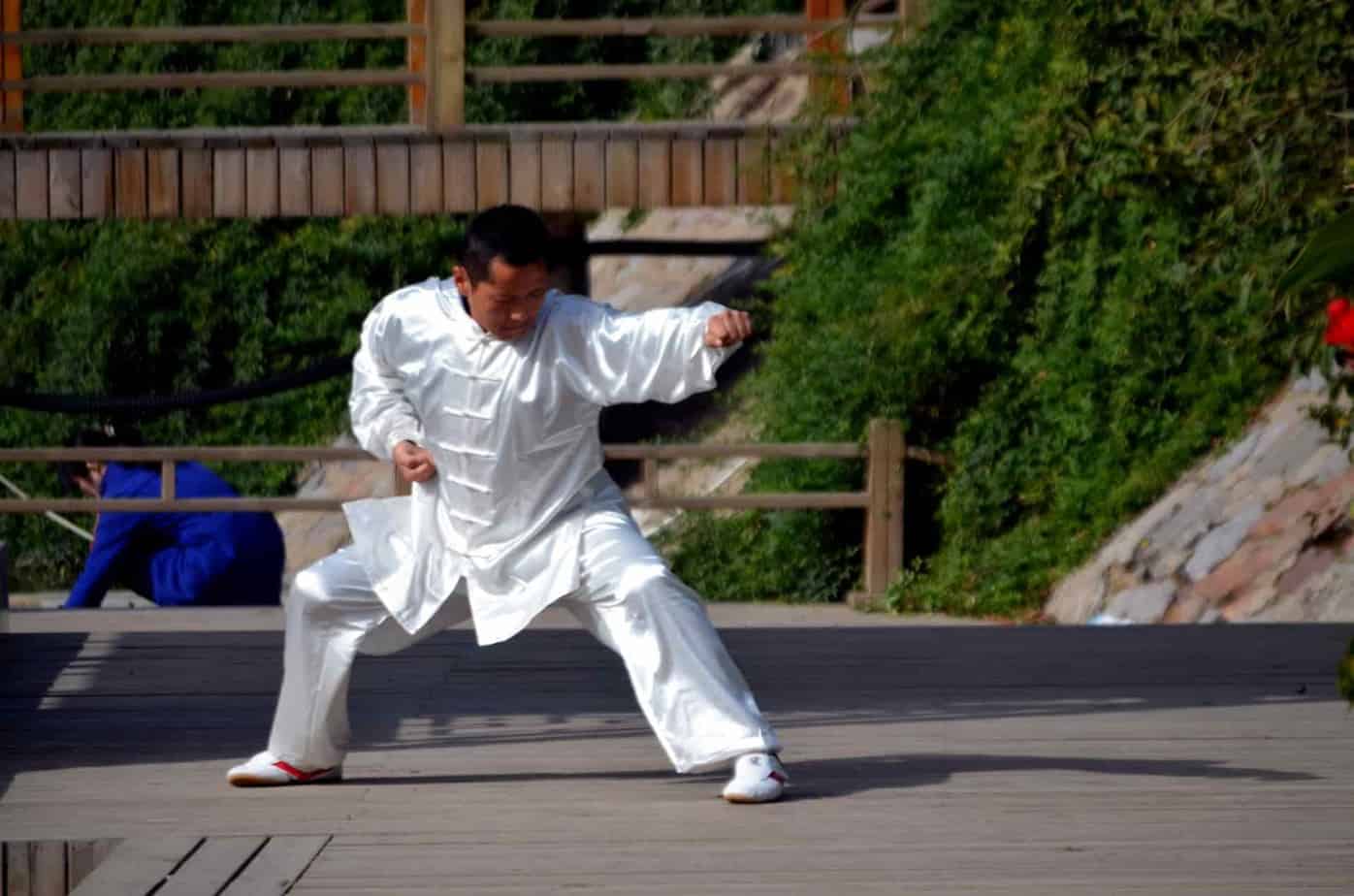
Mixed Martial Arts (MMA) is one of the most popular combat sports in the world. One of the aims of this sport is to bring a range of fighting styles together. Despite this, not all martial arts are represented. This has led many to question, why isn’t kung fu used in MMA?
There are several reasons why kung fu isn’t prominent in MMA. Some forms of kung fu focus on illegal maneuvers and strikes. Another issue is the focus on strikes, which can leave fighters vulnerable to grappling techniques. Additionally, the way that kung fu often puts a greater focus on inner peace and self-defense, rather than the offensive techniques needed for MMA.
Despite these difficulties, many fighters have incorporated elements of kung fu into their fighting style. Keep reading to learn more about the relationship between kung fu and MMA.
Why is Kung Fu Not Used in MMA?
Several aspects have limited the use of kung fu. Though one of the biggest is the conflict with the MMA rules. All MMA fighters are expected to follow a strict set of rules. These are called the Unified Rules of Mixed Martial Arts. These dictate what a fighter can and cannot do during a match.
For example, moves like eye-gouging, biting, and throat strikes are outlawed. This is designed to ensure that no one is seriously injured. On the other hand, some aspects of kung fu focus on strikes that would be banned in MMA. For example, Wing Chun focuses on attacking the soft tissues. This is because this form of martial arts is focused on ending the fight as quickly as possible. Often, the best way of doing this is hitting a sensitive area, like the groin.
Additionally, there are some doubts about how effective kung fu would be in a combat situation. We’ll delve into these potential concerns later.
However, it’s important to note that kung fu is a broad term, which covers a range of martial arts. Some of these techniques have been incorporated into the MMA. Some of these elements include;
The “Drunken Master” style. This is designed to start slow, lulling the opponent into a false sense of security. Then, all of a sudden, the fighter will unleash a quick barrage of shots. These are designed to be unpredictable, making them more difficult to combat.
Connor McGregor uses some hits to the shoulder that could have their origin in kung fu.
The Feeding Crane technique has become a prominent way of trapping and controlling the opponent’s movement.
The principle of using an opponent’s weight and strength against them is a common practice for many kung fu styles.
Kung fu also emphasizes learning to predict the opponent’s moves and planning ahead.
Why Did Kung Fu Not Do as Well as Other Martial Arts in MMA?
While some elements of kung fu are used in MMA, it doesn’t have the same popularity as other martial arts. For example, many fighters will study judo or Jiu-Jitsu, but won’t pay attention to kung fu. There are a few factors that might have contributed to kung fu becoming maligned.
First, it could be linked to the way that kung fu is taught. Often, teachers will emphasize the importance of self-defense. While this is important, sports combat will place more focus on how the techniques can be used for offense.
Secondly, one of the biggest issues is the lack of sparring contests in many kung fu schools. This makes it difficult to practice the skills that students will require to fight in MMA. Even when these contests do occur, it is typically against those who practice the same type of kung fu. MMA, on the other hand, necessities the fighters understanding and learning a wide range of martial arts forms.
Thirdly, it neglects some important aspects of MMA. For example, there is a lack of ground techniques and clinch holds. These are important aspects of modern fighting, with many athletes priding themselves on a strong wrestling and grappling background.
Other martial arts offer more practical fighting styles. Because of this, these styles will attract more attention from the athletes. As a result, they get more attention from the MMA community. Making this situation worse is the attitude of some teachers, who claim to have mystical abilities. This has led to some embarrassment as they were challenged and defeated by MMA fighter Xu Xiaodong. This has made more people skeptical about Chinese martial arts and their effectiveness in the world of combat sports.
Another potential issue is that MMA requires fighters to wrap tape around their knuckles. This can limit the effectiveness of some of the strikes when compared to being delivered with a bare fist. However, arguably, this is something that will impact all disciplines of martial arts.
However, one of the biggest issues is the focus on how kung fu can help students find inner peace. This has become increasingly popular, with many teachers honing in on this aspect. Many schools place a greater focus on physical fitness than they do on preparing for combat.
What Martial Arts are Not Allowed in MMA?
One of the benefits of MMA is that all styles of martial arts can be employed. No disciplines are banned. Though some aren’t used because they won’t be effective enough to damage an opponent. But this doesn’t mean that anything goes. Certain elements of combat have been banned. For example, fighters won’t be able to do any of the following;
Biting
Scratching
Raking the eyes
Small joint manipulation
Throat strikes
Fish hooking
Using the cage to gain leverage
Kicking someone when they are down
The penalties for breaking these rules can vary. Sometimes, it will be accidental. In this case, the fight will be temporarily paused and the opponents will be given a warning. If it was intentional, they might be disqualified.
Kung Fu – Is it Effective as a Combat Art?
Over the years, kung fu has often been branded as “fake”. While many of the tactics taught can, when used properly, injure an opponent there is still a question of how well kung fu would do in an MMA-style fight.
As we mentioned, there are several issues that kung fu fighters might face. This includes things like not focusing on grappling and a lack of focus on combat situations. However, there are some reasons why kung fu can be valuable in a fight.
One of the biggest reasons why kung fu would be valuable is because it emphasizes flexibility. The attack style will change, depending on how the opponent is reacting. Additionally, many forms of kung fu place a lot of emphasis on striking.
Eyewitness reports of kung fu master Bruce Lee show how dangerous this could be. According to those who witnessed him fight, his punches could send opponents flying as far as eight feet. This shows that, in the right hands, kung fu could be powerful enough to win a real fight. Though it should be noted that Lee studied multiple disciplines, rather than narrowly focusing on one type of kung fu.
Final Thoughts
Kung fu dominated the martial arts scene during the 70s, with masters like Bruce Lee and Jackie Chan helping popularize the fighting style. However, when MMA rose to popularity, many of the fighters chose to ignore kung fu. There are several reasons why this might have happened. Some of the techniques and strikes used in kung fu aren’t allowed in MMA. Another important contributing factor is that kung fu teachers don’t focus on sparring, which can make it harder for students to learn how to apply the techniques to a real fight. Despite these flaws, kung fu is still a good choice for those looking for basic self-defense methods.
Most martial arts have a grading system or a hierarchical system where colors of belts and gi have significance and denote progress in the martial art. Different martial arts place different significance on the colors of gi and belts, so knowing what you should choose for your gi can be a little confusing. If you are looking to study Brazilian Jiujitsu or BJJ, you may be interested in finding out if there is significance to gi colors in this martial art.
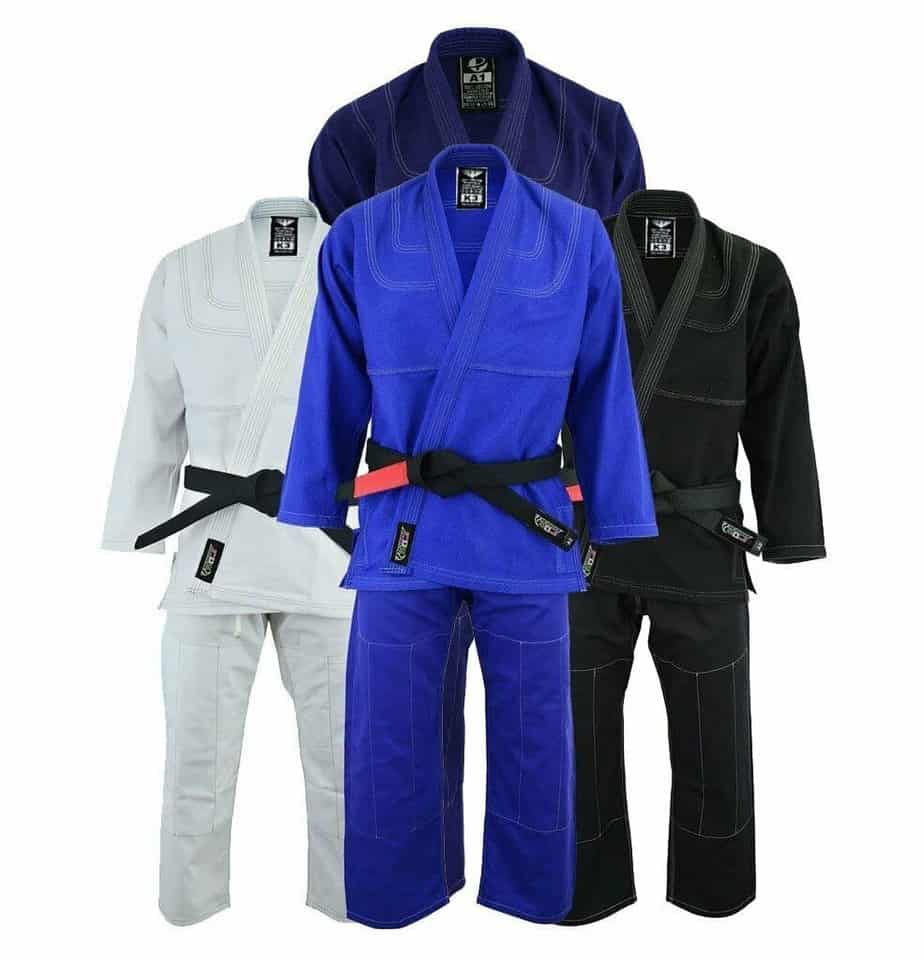
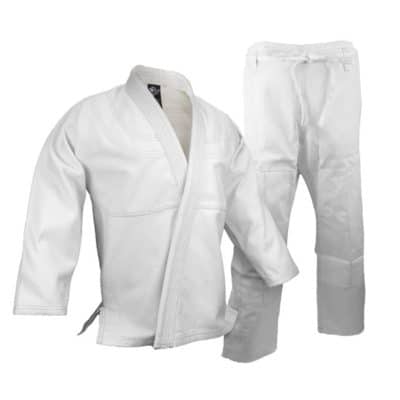
BJJ does not put any significance on the color of the gi used for training, but the most commonly accepted colors are white blue, and black. If you will be training other martial arts other than BJJ, then a white gi would be the best choice because it is the most accepted across all disciplines.
When looking into the correct gi colors for a martial art, it is important to not only know what rules the martial art prescribes but also what the dress code is at your local training facilities. Sometimes the training facility imposes their own dress code on students, which you need to be aware of before you go out shopping for your gi.
What Do BJJ Gi Colors Mean
Although there is no ranking associated with the color of the gi used in BJJ, there are some formalities to the color of gi if you intend to compete or attend seminars. The International BJJ Federation only recognizes the use of a gi in white, blue, or black for the purposes of competition.
The color of the gi in BJJ holds no significance as to the level of progression in the martial art. The traditional color of the gi is white but blue or black are also acceptable to practice the art. The color of the gi is likely to be dictated by the dress code required by your training facility.
Before you go ahead and buy your gi for training BJJ, check with your local training facility as to what they allow for training at their venue. The colors that are most commonly used are white, blue, or black. The colors that are generally used for beginners are white or blue.
Why Are Gi White?
For most martial arts, there is an emphasis placed on tradition, formality, and discipline. These principles are displayed throughout the practice of the martial art as well as in mental attitude and in the dress code. So why is the traditional color of the gi white?
White is the color of purity, cleanliness, and simplicity, which are all key foundational characteristics in many martial arts. The white color also levels the playing field where students cannot have inflated egos since everyone is the same. The only designation of progression is the belt.
Having a white gi also required the discipline of washing a gi properly after training to ensure that the gi was white once again for the next training session.
Many martial arts take the white colors to the belts as well. In a martial art such as Aikido, you are a white belt until you become a black belt. Even though there is a grading system, you will continue to wear a white belt until you gain the black belt qualification, and at this point, you are allowed to distinguish yourself from other students by wearing a black belt and a black hakama.
Does Gi Color Matter In BJJ?
The color of the gi has no significance in BJJ with regards to rank or etiquette. However, there are some formalities about the colors that are preferred when practicing BJJ.
The color of the gi does not matter in BJJ, but the color is often dictated by the training facility where you will be training. The most commonly accepted colors are white, blue, and black. If you intend to compete or attend seminars, then your gi needs to be one of these colors.
The mixing of colors of gi is not allowed, so, for example, you cannot wear a blue top with white trousers. The top of the gi and bottom of the gi needs to be of the same color.
What Gi Color Should I Choose As A Beginner?
As a beginner in a martial art, you want to portray an attitude of humility and not stand out from the crowd. Wearing a different color gi to everyone else may be seen as being egotistical and that you consider yourself better than your fellow students.
The safest color to choose for a gi as a beginner in a martial art, including BJJ, is white since this is the most widely accepted color for a martial arts training uniform. Some training facilities implement their own rules for gi colors, so check with your school before buying a gi.
Most schools allow you to attend the first few classes without a gi. At these introductory classes, you can check what color gi the other students wear and buy appropriately.
What Do You Wear Under Your Gi?
Traditionally, the gi was underwear that the trainee stripped down to for training. In the modern setting, you need to wear appropriate clothing under your gi.
You need to wear sports underwear under your gi pants. A man can wear nothing under his gi top, or he can wear a training shirt. Women should train with a sports bra and a training shirt under their gi top since the gi often comes loose during a vigorous training session.
Many people opt for wearing compression pants, often known as cycling or fight pants under their gi pants which offer coverage should your gi pants fail.
How Many Gi Should I Own?
There is no correct number for the amount of training gi that you should own. The main consideration is that you show up to each training session in a clean gi.
You can get by with owning 1 gi if you can get it washed and dried before your next training session. The requirement is to have a clean, fresh gi for each training. Many people who train more frequently find it convenient to have 2 or 3 gi that they rotate in and out of the laundry.
If you train up to 5 times a week, two gi uniforms may not be enough, but a maximum of 3 should more than suffice to rotate for your training.
Can I Wear A Black Gi As A White Belt?
Some people may consider the wearing of a black gi as presumptuous if you are a white belt, but there is no rule within BJJ that prevents you from wearing a black gi if you have a white belt.
You can wear a black gi as a white belt. In a BJJ class, you will be judged by your attitude rather than the color of your gi. In some training facilities, it may not be allowed for you to train with a black gi, so check with your school before getting a black gi.
The acceptable gi colors for most training facilities are white, blue, or black, irrespective of what color the belt is that you have achieved.
Is It Disrespectful To Wear A Black Gi?
Some beginners to martial arts may wonder if the wearing of a black gi is disrespectful. The answer depends largely on the martial art and on the school where you train. Generally, for BJJ training, a black gi is acceptable.
It is not considered disrespectful to wear a black gi, even as a beginner, if your training school allows the wearing of a black gi. What is considered disrespectful is wearing a gi that is not clean. If your school allows the wearing of a black gi, then go ahead and wear one if you want.
Some martial arts disciplines are very traditional and require that their students wear a white gi only, but most modern schools are not as traditional and will allow a gi of other colors.
Can I Use A BJJ Gi For Judo?
The gi used in Judo is often made from a heavier duty material because the discipline requires the throwing of the opponent, often by holding onto the gi.
If your BJJ gi is white or blue and does not have a lot of patches or branding on it, then it will most likely be acceptable to use for Judo. A black gi for practicing Judo would generally be considered unacceptable. It would be wise to check the acceptable colors with the school beforehand.
Judo normally adheres to the more traditional, conservative ways of the traditional arts, but some schools may be a little flexible in this regard. It is always best to check with the training facility to establish the correct protocols regarding gi colors.
How Do I Choose A BJJ Gi?
Most gi manufacturers use a sizing chart that gives the size rated on a scale of A0 to A5, where the A stands for adult, and the associated number relates to your height. The cut of the gi is usually designated by L for long, S for short, and H for heavy. Here are some tips for choosing your BJJ Gi.
For color, you should stick to a gi that is white, blue, or black. The basic size chart is as follows:
A0 for under 5’4’’ in height
A1 from 5’4’’ to 5’8’’
A2 from 5’8’’ to 5’9”
A3 from 5’9” to 6’2”
A4 from 6’2” to 6’6”
A5 over 6’6”
Choose between short, long, or heavy, relative to your build.
As a beginner in BJJ, it would be best to start with a gi that is as clean and free from branding and patches as possible until you know what is acceptable at your training school.
Japanese Jiu-Jitsu (JJJ) a.k.a “Japanese Jujutsu” and Brazilian Jiu-Jitsu (BJJ) are two separate martial arts. However, many people can be confused because they share a similar name. If you are also unsure of the differences between the two disciplines, this article explains all the important questions related to these two arts.
JJJ and BJJ share techniques such as joint locks, chokeholds, grappling and takedowns. However, BJJ does not teach the strikes or throws seen in JJJ. Both arts promote discipline, respect and integrity in their students, but the grading system varies and BJJ has a higher focus on competitions.
I will explain these differences and similarities in much more detail below. I have also included the origins of both BJJ and JJJ and how they are related to one another, as well as where you can find a JJJ school and how it compares to BJJ.
What is the Difference Between Japanese Jiu-Jitsu and BJJ?
Japanese Jiu-Jitsu (JJJ) is an ancient martial art that includes hundreds of techniques, which I will explain throughout this article. There are many martial arts based off of these traditional techniques, including Judo and Brazilian Jiu-Jitsu (BJJ). I will explain more about their relationship further down, but below are the key differences between JJJ and BJJ.
Techniques
In regards to technique, the differences between JJJ and BJJ lie in the type of techniques that are taught to the students. JJJ includes a wider variety of techniques compared to BJJ, including distance fighting (strikes), close-quarter fighting (throws) and ground fighting.
BJJ focuses primarily on ground fighting, but will also incorporate close-quarter fighting (grappling and takedowns) with the sole purpose of getting the opponent to the ground.
The reason BJJ will train students to bring their opponent to the ground is that your opponent loses most of their power when on the ground. An attacker on the ground can no longer use their entire body to throw a punch or throw you. This helps to protect you from fatal strikes or falls.
BJJ focuses more on techniques that will render your opponent harmless, whereas JJJ will also teach techniques that are considered offensive, such as striking. Below is a summary of different types of techniques used in each discipline.
JJJ was originally created for use on the battleground, where both offense and defense are necessary to defeat your enemy. This meant that practitioners would learn to defend themselves against trained and armored opponents, as well as weapons. They would be taught to disarm, neutralize and ultimately defeat their opponents.
In modern schools of JJJ, students still learn most of these dangerous techniques but are taught ‘break falling’, a method of practicing dangerous throws safely for the purpose of training. Any weapons that are used (in the more traditional schools) are usually wooden for sparring.
BJJ, on the other hand, teaches students how to defend themselves in a safe way for both themselves and their attacker. The purpose is not to defeat their opponent, but to neutralize them so that they are no longer a threat.
For this reason, BJJ does not involve weapons of any kind or disarming techniques. BJJ practitioners are taught to avoid the fight wherever possible and to only use their training in a self-defense situation. The one exception to this is competition Jiu-Jitsu.
Sport and Competitions
As a BJJ practitioner, you can compete in the IBJJF World Championship, Abu Dhabi World Pro, Pan American, Brazilian Nationals, European Open Championship, Asian Open Championship, UAEJJF Grand Slam, Jiu-Jitsu World League and SJJIF Worlds. These are all well-known Jiu-Jitsu competitions.
However, without a BJJ belt ranking, a JJJ practitioner cannot compete in any of the above. This is because the belt ranking system in JJJ is different to that in BJJ, which I will explain further down. Some of these competitions, such as the IBJJF tournaments, even require the competitor to be a registered BJJ practitioner within their organization to compete.
Even if a JJJ used the same belt system, the rules in these competitions also align with the techniques practiced in BJJ. Points are only awarded for takedowns, sweeps, knee on belly, passing the guard, back control, back mount and mount.
Japanese Jiu-Jitsu practitioners are likely to have learned these techniques, but there are other JJJ techniques that are prohibited, such as strikes. Other techniques, such as throws, are legal provided they are not considered a ‘slam’. However, these will not accrue any points, making them impractical. This is why those who want to compete will join a BJJ academy.
Belt System
Japanese Jiu-Jitsu originally did not use a belt system. This system was introduced by Jigorō Kanō in his Judo school and adopted by other martial arts in the years that followed. Modern Japanese Jiu-Jitsu schools have adopted a belt system that mimics the Judo belt system.
Jigoro Kano
Therefore, Japanese Jiu-Jitsu Schools that use a belt system have adopted the Judo system. This includes a series of colored belts, known as ‘Kyu’ belts, followed by different degrees of black belt, or ‘Dan’ belts.
There is some variation among schools in the colored belts, but the black belt system is the same, which I will explain further down. Of the colored belts, there is usually a white, yellow, orange, green, blue, purple and brown belt.
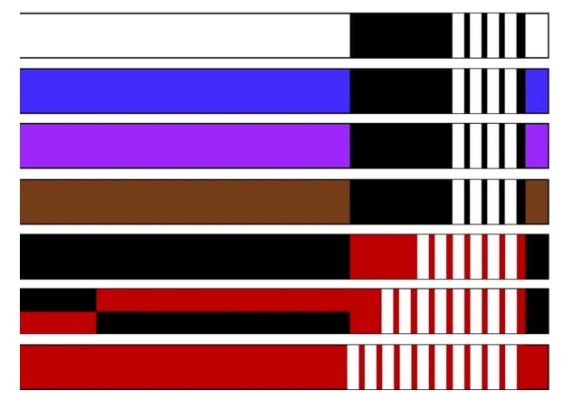
Although BJJ practitioners have also adopted the Judo belt system, it has been modified so that there are only four belt colors before black belt. These include the white, blue, purple and brown belt. BJJ also discarded the use of the terms ‘Kyu’ and ‘Dan’, simply referring to each practitioner by their belt color.
There are also interim stages between each belt color. In Judo and JJJ, this involves receiving one colored stripe on your Kyu belt before progressing to that color. In BJJ, this involves receiving a series of ‘tips’ or ‘stripes’ on each belt before progressing to the next color, with a total of four tips for each colored belt before black belt.
Grading
The grading system between JJJ and BJJ is also quite different. For BJJ, this involves training with a black belt and being awarded when they believe you are ready. The black belt promotes their students based on observation regarding their performance during training sessions.
A JJJ school, on the other hand, has formal grading, where the student must perform a series of techniques in front of their assessor in order to be deemed worthy of a promotion.
Those without a belt system still have a formal grading to deem the student competent. Most JJJ school also incorporate Japanese theory into their syllabus, such as the history of Jiu-Jitsu or relevant Japanese terminology.
What are the Similarities between Japanese Jiu-Jitsu and BJJ?
There are also a number of similarities between the two arts. This is to be expected when you consider that BJJ was based off of Mitsuyo Maeda’s knowledge of JJJ and Judo.
Mitsuyo Maeda
Techniques
As I mentioned above, the techniques themselves are quite similar between BJJ and JJJ. Although BJJ does not include throws or striking, the joint lock, chokehold, grappling and takedown techniques are the same.
For example, the principles of an arm bar are the same in both disciplines, pulling the opponent’s arm back until the elbow locks and hyperextends. One key difference is that joint locks or chokeholds can also be performed standing in JJJ.
Black Belts
The black belt system is standard across JJJ and BJJ. Although the black belts in BJJ are not referred to as ‘Dan’, black belts will still progress one degree at a time. They will progress until they reach the point of receiving their red/black belt, red/white belt and their red belt as a higher-degree black belt.
BJJ Belt Ranking System
One difference that sets the two black belt systems apart is that the red belts are awarded at different stages in the black belt system. In JJJ, the red/white belt (‘coral belt’) is awarded as a Roku Dan (6-stripe black belt), whereas red belt is only awarded to ninth and tenth degree BJJ black belts. According to Renzo & Royler Gracie, red belt is reserved for the following black belts only.
“for those whose influence and fame takes them to the pinnacle of the art”
All martial arts have carried on the ancient practices of discipline, respect and integrity. These are all still an important aspect in both BJJ and JJJ.
Discipline refers to obeying the rules of the dojo and adhering to a particular code of behavior. Students are taught to stay in control of their own bodies and mind by refraining from alcohol and drugs and overcoming things like anger issues that would alter their behavior. In saying that, not all students will heed this advice.
Respect includes showing respect for your teachers, dojo and other students. For example, BJJ students will often perform a ‘fist bump’ before and after each training session as a sign of respect. This can be likened to JJJ students bowing to one another. Both disciplines still bow to their masters before and after training.
Integrity is a big part of martial arts, particularly when it comes to your skill level. There have been cases of people purchasing a black belt online so that they can start their own dojo and charge inexperienced students for lessons. This is a great breach of integrity, and it is the integrity of others that usually exposes these people.
What is Japanese Jiu-Jitsu?
Japanese Jiu-Jitsu is an ancient martial art, derived from the word ‘Jūjutsu’. When spoken and written in the English language, ‘Jūjutsu’ became known as ‘Jiu Jitsu’, mainly because of the shorter pronunciation of the letter ‘u’ in ‘Jutsu’. However, they both mean the same thing.
Japanese Jiu-Jitsu
The word ‘Ju’ means ‘gentle’ or ‘yielding’ and the word ‘Jutsu’ means ‘art’ or ‘technique’. This is why Jiu Jitsu is often known as ‘The Gentle Art’. It is described as offensive and defensive techniques that use any opponent’s body against them, instead of using a weapon. However, JJJ did sometimes incorporate the use of small weapons, such as knives or clubs.
The term Jiu-Jitsu first began leading up to the Edo period, a time of peace for Japan. This martial art emphasized subduing your opponent without causing them serious harm. Teachers also began incorporating lessons that strengthened the student’s mind.
During this time, JJJ was influenced by the philosophy of Zen, which aims to focus one’s mind and bring inner peace. From a martial art perspective, this gave the practitioner the ability to remain calm when in a threatening situation.
As time went by, different styles and schools of Jiu-Jitsu developed, with teachers including their own techniques. This made Jiu-Jitsu a very broad term, and it is therefore difficult to assign a single group of techniques to the art.
For this reason, there is no unified order to learning the techniques. As conveyed by the Jujitsu division of the United States Judo Association (link here), students are instead graded based on how many of each type of technique they have mastered.
Both Judo and BJJ derived from Japanese Jujutsu, and there is so much more to learn about Japanese Jujutsu. This article, “What is Japanese Jujutsu? Here’s What You Should Know”, will explore deep into Japanese Jujutsu.
Is Jiu-Jitsu Japanese or Brazilian?
As I mentioned, the term ‘Jiu Jitsu’ comes from the Japanese word ‘Jujutsu’, meaning the ‘gentle art’. The techniques themselves, such as a chokehold, cannot be traced throughout history, but the combination of these techniques into the art of ‘Jiu Jitsu’ is fundamentally Japanese.
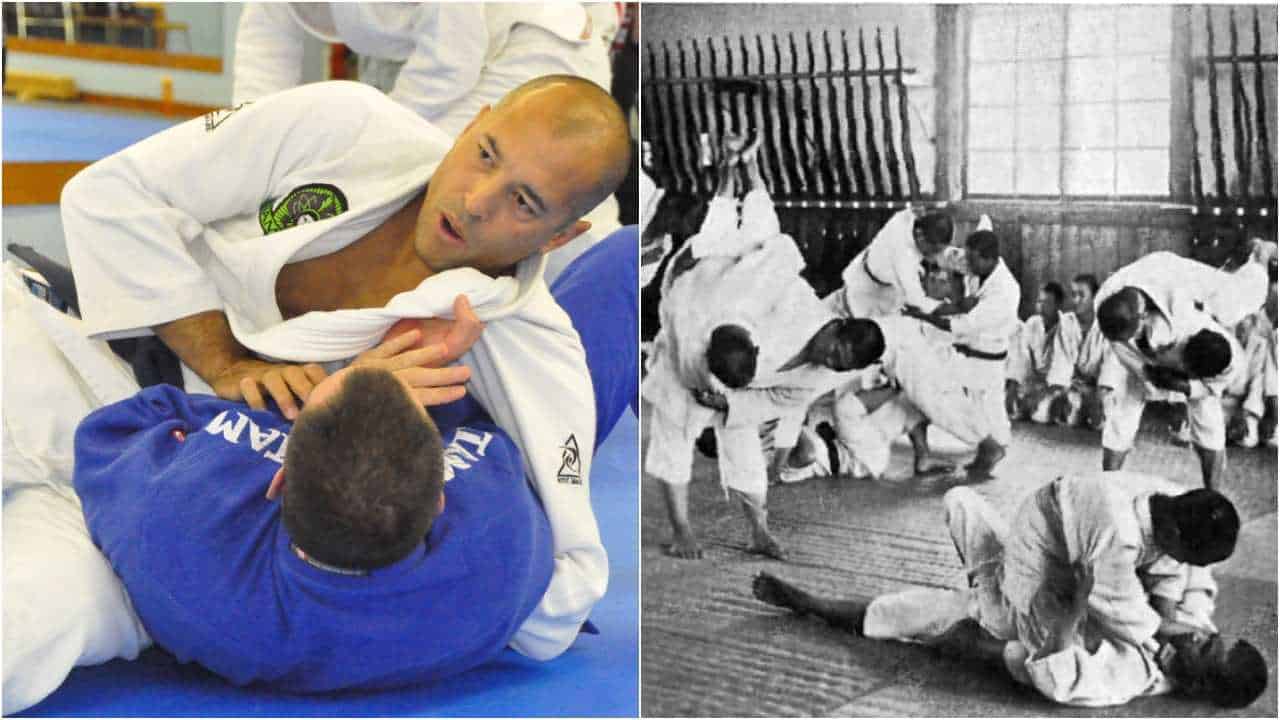
It wasn’t until these techniques were modified by Jigoro Kano and passed on to Mitsuyo Maeda that Japanese Jiu-Jitsu made its way to Brazilian shores. Kano’s modifications birthed the art of Judo, which Maeda then introduced to Brazil.
One of Maeda’s student’s was Carlos Gracie and his sons. His weakest and smallest son, Hélio, had to modify these techniques to allow him to keep up with his brothers in the art. These techniques were then passed onto Hélio’s children and introduced to the world by Royce Gracie through the UFC, beginning what is now known as Brazilian Jiu Jitsu.
Japanese Jiu-Jitsu still teaches relevant self-defense techniques such as grappling with your opponent and using submission techniques such as chokeholds and joint locks. However, it is reasonable to believe that they are not applicable to all body shapes and sizes, which I will explain.
The reason Brazilian Jiu-Jitsu was formed was because Carlos Gracie’s youngest and weakest son, Hélio, was unable to keep up with his brothers in their Jiu-Jitsu and Judo training. These techniques, passed on from Mitsuyo Maeda, were already tailored to accommodate the smaller size of Judo founder Kano Jigoro.
The fact that Hélio still could not defend himself effectively against his brothers demonstrated that these techniques were not applicable to everyone. Hélio’s adapted techniques were passed on to his own children, including Royce Gracie. Royce then went on to prove that the techniques were effective, even against trained fighters in the UFC.
A good self-defense technique should be applicable to all people, regardless of size. This is particularly important because it is generally smaller, weaker people that are targeted in attacks.
For this reason, Japanese Jiu-Jitsu techniques will provide you with the knowledge of self-defense, but it may not be applicable to weaker people facing a real-life self-defense situation. In saying that, any knowledge is better than none.
Is Japanese Jiu-Jitsu Still Practiced?
Japanese Jiu-Jitsu is certainly not as popular as BJJ, and schools that teach JJJ are harder to come by. Pure JJJ is known as ‘Koryū Ju Jutsu’, meaning ‘traditional Jiu Jitsu’. Koryū Ju Jutsu was still widely practiced until Japan’s defeat in WWII and the death of many JJJ practitioners.
Now, most instructors of JJJ are certified through a governing body, such as the United States Ju-Jitsu Federation (USJJF). They will usually teach out of mixed martial arts schools. Sometimes they will even combine Jiu-Jitsu and Judo techniques in the same class. On the USJJF website, you can find a list of schools that offer Japanese Jiu-Jitsu.
There are still some instructors that try to keep the purity of Jiu-Jitsu, such as Sensei Anna Seabourne, one of the highest-qualified instructors outside of Japan who teaches ‘Takenouchi-ryū’.
Takenouchi-ryū was founded in 1532 and is considered one of the oldest forms of Japanese Jiu-Jitsu. After studying the traditional art for 12 years in Japan, Seabourne now passes on her knowledge in her UK-based dojo.
However, even Takenouchi-ryū techniques are not entirely Jiu-Jitsu in nature. This ancient art also includes the use of staffs, swords, fans, ropes and healing techniques. For this reason, the style of JJJ that does not use weapons and is governed by organizations such as the USJJF is more fitting for our modern interpretation of the ‘gentle art’ of Jiu-Jitsu.
These modern schools will teach a selection of techniques that are more applicable to the lifestyle and needs of the students of today. Of the hundreds of JJJ techniques available, the techniques that are chosen will prepare the students to defend themselves in current society.
Which is Better to Practice? BJJ vs Japanese Jiu-Jitsu
The differences between Japanese Jiu-Jitsu and BJJ may be enough for you to choose one over the other. As I mentioned earlier, BJJ seems to be a more effective method of self-defense because it is more applicable to individuals of any size and fitness level.
In addition to this, if you would like to compete in Jiu-Jitsu, BJJ offers the opportunity to compete in many countries around the world. There are also more BJJ schools, making it more likely that you can find a dojo near where you live.
However, if you would like to learn a broader range of skills, including striking and throwing, JJJ’s rich history offers hundreds of techniques to choose from. It is also a good martial art to learn if you enjoy Japanese culture and traditions. Some of these, such as the use of the traditional Japanese names, have become lost in Brazilian Jiu-Jitsu.
When martial arts are mentioned, the first mental picture that comes to mind for most people is the fighting arts of Asian regions, mostly those of East Asia. While these fighting styles are martial arts, the title is not exclusive to these types of combat. But does martial arts include other forms of hand-to-hand combat such as wrestling?
Even though it is not viewed as traditional martial art like Karate, wrestling fits into the definition of a martial art as a fighting system with codes, traditions, and a set of prescribed movements to best an opponent in combat. By this definition, wrestling is certainly a martial art!
Wrestling is viewed by many to be a modern form of hand-to-hand combat sport that does not have much history and that it has no place being included under the umbrella of martial arts. However, this is an incorrect perception since wrestling has a long and varied history and is often taught to armed forces to incapacitate or get the upper hand against an enemy at close quarters.
Reasons Why Wrestling Is A Martial Art
A martial art is defined as a system of combat that has prescribed moves, techniques, and traditions that can be used for self-defense, law enforcement, military application, competition, and the development of the mind, body, and spirit.
Wrestling is a martial art because it is a hand-to-hand combat sport that clearly exemplified the description of a martial art, and it has application as a combat technique for law enforcement and the military as well as sport and self-defense. It also has prescribed moves and techniques.
The term martial art was originally used to describe the combat systems that existed in Europe as far back as 1550. The name stems from ancient Latin, and it means the arts of Mars, who was the Roman god of war.
Many people hold the opinion that the term martial art should be dropped in favor of a more all-encompassing name such as fighting systems to avoid exclusion. The thinking is that many of the systems included under martial arts are not martial in the sense that they were never intended to be used by professional soldiers.
However, there are many styles and techniques that are included under the banner of martial arts that are more spiritual than physical, such as Tai Chi.
Wrestling is a hand-to-hand full-contact combat sport that has techniques that are taught to various armed forces around the world as self-defense or close quarter combat.
For these reasons, wrestling is most definitely a martial art.
What Are The Different Wrestling Styles?
Wrestling takes many different forms, and there are styles of wrestling from many different countries that are steeped in the culture and traditions of those nations and their people.
There are many different styles of wrestling globally that have their roots in the various cultures and traditions found in the countries that they originate from. The styles developed differently to serve the various purposes and needs within those cultures.
To give an idea regarding the complexity of wrestling as a sport and as a global martial art, here are some of the styles of wrestling practiced around the world.
Greco-Roman wrestling. This style is practiced worldwide, and it is a wrestling style that is included in the Olympic games.
Freestyle wrestling. Sometimes termed scholastic or collegiate wrestling, this style is also included in the Olympic games.
Shuai jiao. This style includes several jacket-wrestling styles native to China.
Folk wrestling. This is any traditional style of wrestling that is not recognized as an official sport but has cultural roots. This includes styles such as Kurash from Central Asia, Mongolian wrestling, Oil wrestling which is the national sport of Turkey, Ssireum, the national sport of Korea, and Scottish Backhold, to name a few.
As is evident from the long list of wrestling styles that come from a multitude of nations and cultures, wrestling has earned its place as a valid martial art across the globe.
Why Is Wrestling Not Seen As A Martial Art?
There is certainly no doubt that wrestling is a popular sport across the world that generates much public interest and can be as lucrative as other sporting events. But this is part of the problem with public perception about wrestling.
Wrestling is often not viewed as a martial art because it is seen more in light of a sport rather than being a fighting technique or a style that offers merit as a means of self-defense. Most other fighting styles are promoted as a self-defense activity that precludes wrestling in the public eye.
This, however, is only a perception, and many of the large money styles such as WWE don’t do much to promote a legitimate martial art image for wrestling.
Is Wrestling An Effective Martial Art?
Each martial art has its strengths and weaknesses, and wrestling is no different. There are techniques in wrestling that are extremely effective in subduing an opponent, but the moves may not be effective in every scenario. But that comment can be made about any martial art.
Wrestling is an effective martial art because it teaches you to read your opponent’s body language and anticipate moves. It also teaches means of effectively keeping positional control to avoid an opponent being able to pin you down. It also destabilizes an opponent’s balance and effectiveness.
Wrestling teaches not only offensive moves but also teaches defensive, evasive moves that can help you to evade an attacker in the real world.
What Martial Art Beats Wrestling?
The key to the wrestler’s advantage is that he is constantly placing his opponent on the defensive, keeping them on the back foot, so to speak. If you are facing a martial arts opponent who is an accomplished wrestler, it is usually a poor strategy to try to beat him at his own game. To vanquish such an opponent, you would need to use a fighting technique that incorporates more strikes than grappling to stay away from your opponent’s strengths.
A martial art that keeps an opponent at a distance and incorporates strikes in its techniques will have an advantage over a wrestler and could beat a wrestler. This would include styles such as Muay Tai, Taekwondo, boxing, and Karate. It would also require that you stay out of reach of the wrestler.
The famed Bruce Lee is even quoted as stating that the hardest opponent to overcome is a wrestler because his basic intention is to crush his opponent and also to wear his opponent out by making the opponent carry the wrestler’s weight at every opportunity.
The key to beating a wrestler is staying out of reach and using your ability to strike from a distance.
Why Is Wrestling Considered The Best Background To Transition To MMA?
MMA fighters come from many different fighting backgrounds and had experience in a variety of martial arts before turning to MMA. The foundations that these early martial arts experiences give these fighters often determine their success in MMA.
Wrestling is considered a core background for MMA because it teaches how to take down an opponent quickly and efficiently and how to avoid being taken down. Wrestlers transition well to MMA because the wrestling style allows fighters to dictate where the fight takes place. Because these techniques are key to success in MMA fights, wrestling experience is vital to continued and lasting success in an MMA ring.
The MMA has seen more champions that come from a wrestling background than from any other martial arts discipline.
Street fights are normally a combat experience where no rules apply, and anything goes. If you find yourself faced with a street fight and you have any form of formal martial arts training, you will have skills that you can use to your advantage in the street fight.
Wrestling will definitely help in a street fight because your experience will give you the ability to read your opponent, anticipate strikes, and put your opponent off balance. You will also have the speed, agility, and knowledge of how to overcome and subdue an opponent.
A street fight is always a tricky situation because of the lack of rules and fair play. If your opponent is armed with a knife or a firearm, any martial art would have difficulty in this situation, and sometimes peace is the better part of valor.
Conclusion
Wrestling has a long and varied history across many countries and cultures. The skills learned in wrestling are often taught to law enforcement and military personnel as a means to subdue a suspect or an enemy.
Wrestling is most definitely a martial art and an important foundation skill in many other fighting styles. It is also a core skill in the ring as an MMA fighter.
Clouse, R. (Director). (1973). Enter the Dragon [Film]. Warner Brothers Pictures.
Mixed martial arts may seem like a new sport, but it actually dates back to the early 1900s. It wasn’t until 1993 that MMA gained international recognition when the UFC was created. In 1994, Bruce Lee became an iconic figure in the world of mixed martial arts after his death and is now considered by many to be one of its founders. But what is the reasoning behind many giving Bruce Lee this accreditation?
Bruce Lee is widely considered to be the father of MMA because of his philosophy of combining aspects of various fighting disciplines into a personal style. This is a cornerstone principle for any MMA fighter that gets into the ring. A fighter who rigidly sticks to one discipline is disadvantaged.
In below, I will illustrate further details to explain why people consider Bruce Lee as the father of MMA.
Why Bruce Lee Is Viewed As The Father Of MMA
Bruce Lee was not the first person to mix combat sport disciplines, but he was a visionary in the world of martial arts, which challenged norms and recognized the restrictions in limiting oneself to a single style of fighting. Bruce Lee was the first well-known martial artist who conceptualized this mindset into a philosophy of incorporating aspects of various styles into your own style.
Original Incarnation of MMA
The concept of mixed martial arts as competition is not a new concept. We have mentioned that it has only been considered a sport since the early 1900s, but in actual fact, it dates back much further than that, back to the days of the Ancient Greek Olympics.
This fighting sport called Pankration was included in the Olympic games as early a 648 BC. There were very few rules to this sport, where all strikes and holds were deemed legal, and the only activities that were not allowed in the match were the unsportsmanlike behavior of biting and gouging.
The fights were not broken up into rounds but continued until one fighter was no longer able to continue the fight or offered submission, which was indicated by raising the index finger.
The sport proved to be a hit at the Olympics and was one of the most popular events that the spectators supported avidly.
This is not the only version of mixed combat competition in humanity’s history. Similar full contact exhibitions and sporting events were known to have been held in Egypt, Japan, and even in India and Brazil.
This points to the fact that mixing techniques and fighting styles in combat competition pre-dates the influence of modern martial artists such as Bruce Lee.
How Did MMA Start?
Mixing various fighting styles in various physical combat-style sporting events became very popular in the early 1900s where there was an upsurge in the popularity of combat sports. This is why much of modern MMA claims this to be the era where MMA was birthed and from which it grew to the sport we know today.
Fighters from various disciplines of combat sports began to pit their skills against each other, often in highly publicized events, which drew a lot of public interest.
For example, French practitioners of savate, a form of kickboxing, were matched up against English bare-knuckle boxers. Savate fighters also went up against Judo champions, and boxers were matched against karate students.
This mixing of the combat arts was the birthplace of the modern MMA competition events where fighters who do not limit their skills to one fighting discipline are matched against each other.
Who Is The Founder Of Modern MMA?
The mixing of fighting disciplines in the early 1900s does not owe its origins as the brainchild to one particular person. There was no individual organizer or promoter for these events that can point to one person as the founder of MMA.
There have been some notable personalities that have contributed to the growth and development of MMA and who spearheaded its popularity among the general public.
As early as 1901, there were bouts that were organized between champions in their fields in highly publicized events. Frank Slavin, a boxing title contender, went up against wrestling champion Frank Gotch. Even the likes of famed boxing champion Muhammad Ali went into the ring with Japanese wrestling champion Antonio Inoki in a fight that was billed as “The War Of The Worlds,” which ended in a draw.
MMA was formalized in 1993 with the formation of the UFC, or Ultimate Fighting Championship, which was founded by Rorion Gracie of Brazilian Jiu-jitsu fame and fight promoter Art Davie.
Where Does Bruce Lee Fit Into MMA History?
So, where does Bruce Lee fit into the picture of the history of modern MMA, and why is he credited as being one of the fathers of this fighting movement?
Bruce Lee was an iconic figure who gained public appeal through his movies and his martial arts prowess. The most notable aspect about Bruce was that as he studied traditional martial arts, he recognized that no style was perfect in isolation, and each style had points that worked in its favor but also had weaknesses in certain areas.
Clouse, R. (Director). (1973). Enter the Dragon [Film]. Warner Brothers Pictures.
He also recognized that people are not all the same body shape and stature, which made certain martial arts impractical for them to participate in.
Bruce Lee’s philosophy around martial arts can be summed up in his famous quotes,
“Research your own experience. Absorb what is useful, reject what is useless, add what is essentially your own.”
“The best fighter is not a Boxer, Karate or Judo man. The best fighter is someone who can adapt on any style. He kicks too good for a Boxer, throws too good for a Karate man, and punches too good for a Judo man.”
Bruce Lee
It is this philosophy and mindset that is the core foundation of the ethos of MMA, which Bruce Lee embodied in his adoption and adaptation of many fighting styles into his own repertoire.
This way of thinking and open-mindedness about other styles is what set Bruce Lee apart from other martial artists of his time. It is also this way of thinking that has led people to credit Bruce with being one of the fathers of modern MMA.
Is Jeet Kune Do MMA?
JKD or Jeet Kune Do is not MMA, and it is also not a fighting style. Bruce Lee himself did not describe it as a new fighting style but rather as a new concept or mindset in the world of martial arts. Bruce Lee said, “You either understand it, or you don’t, and that is that.”
Jeet Kune Do is not MMA. It’s a martial arts philosophy introduced by Bruce Lee to free people from being restricted to one style of martial arts and to rather incorporate aspects of other styles into a personal style. JKD is not the same as MMA, but the concept of JDK is at the heart of MMA.
JKD is taught, and there are movements associated with the discipline, but it was never intended to be a static, isolated style, but rather a concept that would allow the practitioner to be open-minded about other styles and incorporate aspects of them into their own style.
As such, JKD is dynamic and ever-changing and allows a fighter to adapt to their opponent and draw on a wide range of techniques to counter the opponent’s style. This makes a fighter more versatile and able to adapt to changing fighting conditions and skills that their opponent is displaying.
Conclusion
Bruce Lee is often considered as one of the fathers of modern MMA. His martial arts philosophy, Jeet Kune Do, in many ways was a precursor to mixed martial arts and would go on to influence generations of fighters. The popularity of UFC and other major mixed-martial arts events has grown exponentially since Bruce Lee’s death; it seems fitting that his work continues to inspire those who follow him.
Today’s MMA fighters are still influenced by Bruce Lee’s philosophies on fighting, such as self-defense techniques and fitness training methods for any person who wants to get into shape or just needs some exercise.
Bruce Lee had many valuable lessons he shared with people about how they could live their lives through hard work and dedication and to be open-minded about taking the good out of various disciplines and making it your own. His influence ranges from high school students all the way to fighters in the ring, and his legacy and contribution to the establishment and the development of MMA is undeniable.
Disclaimer: The information contained in this article is provided for informational purposes only to illustrate what some professional MMA fighters do, and you should NEVER attempt to follow what these fighters do in this article.
Ultimate Fighting Championship (UFC) fighting demands a lot from its athletes who have to be strong, lean, flexible, fast, and powerful. Also known as MMA (Mixed Martial Arts) fighters, the athletes who partake in UFC fights are always looking for ways to reduce their weight so they can fight in a lower weight class and have an advantage over their competitors.
Rapid weight cut begins approximately five days before the weigh-in. First, fighters start dehydrating themselves slowly, cutting out all carbohydrates and restricting salt (sodium) intake. Then, on the final day, fighters sweat excessively to shed extra weight right before the official weigh-in.
While cutting weight is a part (and plague) of the sport of UFC fighting, many of the ways it is done by fighters are not healthy and can lead to health problems later in life. Let’s take a look at how UFC fighters cut weight so rapidly, why they do it, and what the consequences are.
What Does Cutting Weight in UFC Fighting Mean?
Simply put, weight-cutting is a process carried out by fighters in combat sports that involves dehydrating the body as much as possible in preparation for an upcoming fight. The primary purpose of weight-cutting is to enable fighters to compete in a lower weight class than to compete in their natural weight class.
Rapid weight cutting usually takes place a few days before the weigh-in process of a fight when fighters dehydrate themselves to weigh less and fight in a lower weight class. Once they have made it into a certain weight class for the fight, they then rehydrate themselves to their normal weight which will give them an advantage over their opponent.
Fighters use various techniques that range from extreme dieting and dehydration to sweating excessively by taking hot baths, sitting in saunas for hours, and wearing sweatsuits. They will also change their diet to lose as much weight as possible and eat meals that are high in fat and protein, low in carbohydrates, sugar, and starch-free, and entirely free of salt.
Weight cuts can vary in severity depending on the athlete. Some fighters only drop a few pounds so they can fight in a division that is close to their natural weight, while others undergo extreme weight cutting, losing up to 30 pounds to have a huge advantage over their opponent.
Rapid weight cutting is a dangerous practice and can lead to athletes putting themselves at risk during a fight due to loss of strength and can lead to long-term health risks.
Why Do UFC Fighters Cut Weight?
UFC competitions are split up into weight divisions, which are based on a weight range. Fighters are weighed in a day before the bout and fall into one of these categories according to their weight on the day.
Fighters attempt to lose weight before a fight weigh-in to fall into a lower-weight class. Tall, strong fighters who can fight in a lower weight class may have a significant advantage over shorter, smaller and weaker competitors. So, it is advantageous for a fighter to fight in a weight class lower than his own.
This leads to fighters always trying to cut weight rapidly before a fight to get into a lower weight class. The weight is usually put back on quickly after the fight.
As mentioned earlier in the article, there are three main ways that UFC fighters cut weight rapidly before their bout: extreme dehydration, dieting, and sweating.
Fluid Restriction
UFC fighters will manipulate their water intake and dehydrate their bodies to lose as much weight as possible in the week running up to the fight. Fighters will begin the dehydration process by reducing their water intake over five days before the bout weigh-in, drinking two gallons on the first day, followed by one gallon on each of the next days. This causes the body to go into “flush mode” to filter water out rapidly.
Water intake is then reduced to half a gallon the next day, then a quarter of a gallon, and finally, no water on weigh-in day. The body continues to be in “flush mode” even though no water is being taken in, thus dehydrating the body and causing weight loss.
A report in the Journal of the International Society of Sports Nutrition states that 39 percent of MMA fighters will choose to go without water the whole day to make their weight.
Calorie Restriction
The second part of rapid weight cutting that fighters undergo before a fight is calorie restriction or dieting. UFC fighters generally follow a strict diet during the five or six days before weigh-in to help with weight loss.
Athletes will cut out all forms of carbohydrates, starch, and sugar and only meals that are high in protein and fat. They will also cut out all forms of salt and foods that have salt as the sodium in salt retains water in the body. They might also use a natural diuretic in the last few days before weigh-in to encourage kidney functioning and additional water loss.
Excessive Sweating
The third way UFC fighters use to cut weight rapidly before a fight is to sweat excessively so they lose water. They do this by running on treadmills in sweatsuits, sitting in the sauna for hours, sleeping in thick duvets, or taking very hot baths. These methods can be dangerous and often leave fighters feeling weak at the weigh-in.
How Long Does It Take UFC fighters to Cut Weight?
The time it takes a fighter to cut weight depends on the individual athlete and factors such as their height, weight, body shape, and physical condition. It also depends on the amount they want to lose to make the desired weight.
Most fighters will try and cut between 15 and 30 pounds to make the desired weight, however, some athletes will go to the extreme and lose up to 30 pounds of weight to gain a large advantage over their opponents. This, however, is an extremely dangerous practice and tends to be frowned upon.
How Much Weight Do UFC Fighters Cut?
The amount of weight UFC fighters cut before a competition will vary from athlete to athlete, and will depend on their individual goals. Some fighters will only undergo small weight cuts so they can fight in a category that is close to their natural weight and avoid the excruciating dehydration and rehydration process.
Weight cuts tend to vary from division to division. It’s usual for lighter and smaller fighters in the flyweight or bantamweight divisions to cut less weight before a bout than fighters in the heavier divisions where more rigorous weigh cutting takes place.
Some UFC fighters go to extreme lengths to cut weight to make their weight class. These include:
Ronda Rousey, who lost 17 pounds in 24 hours in November 2013 after spending five hours in a sauna.
Darren Till dropped 5.5 pounds in one night to make the UFC welterweight limit in 2018, however, he collapsed and lost his vision.
Jorge Masvidal lost 20 pounds in a mere six days when he cut weight for his fight against Kamaru Usman in July 2020 but almost passed out.
Former UFC bantamweight champion Renan Barao cut between 30 and 40 pounds before a rematch with TJ Dillashaw in August 2014 but passed out from dehydration.
One of UFC’s greatest light heavyweights, Anthony Johnson, dropped between 50 and 60 pounds to cut to the welterweight class.
Current Women’s Featherweight World champion, Cris Cyborg, dropped an excruciating 26 pounds before one of her early UFC fights.
What are the Dangers of Cutting Weight?
The process of cutting weight is part and parcel of UFC fighting and if done correctly, can have huge advantages for fighters on bout night. However, many fighters go to extremes with excessive dieting, dehydration, and sweating, which can have long-term risks to their health.
Severe Dehydration
Depriving the body of water – a substance crucial to its survival can lead to a host of health problems. Water in the body drives blood flow to the muscles, which delivers oxygen and various nutrients, and removes waste from the muscle cells.
Two of the greatest dangers of severely dehydrating the body are decreased kidney function and the risk of heat illness or stroke. The kidneys need water to filter the blood and to maintain the correct balance of potassium and sodium, both of which are essential for the functioning of cells in the body. Without enough water, the kidneys cannot filter the blood, which can lead to kidney failure, and death.
Severely dehydrated bodies are also at risk of heatstroke as no sweat is produced to cool the body down. Any exercise that increases the heart rate will push the body temperature up and without sufficient sweat to cool it down, the body will collapse from overheating. This can lead to heat illness, heatstroke, and death.
There is also evidence that dehydration causes a higher risk for concussions and other brain injuries.
Extreme Dieting
While calorie restriction isn’t dangerous in the short term, extreme dieting wreaks havoc on the metabolism, which can lead to health implications that can be life-threatening. Severe dieting can cause physical problems such as physical fatigue, atrophy of the muscles, acidosis, constipation, dehydration, seizures, and gallbladder disease.
Mentally, a lack of sufficient calories can lead to irritability, depression, and other eating disorders like anorexia and bulimia, which are sadly a common occurrence in combat sports.
Excessive Sweating
Fighters often spend hours in hot baths or saunas to sweat out as much water as possible to drop their weight. Sweating excessively may lead to rapid weight loss, however, it can have dire consequences.
Sweat contains electrolytes that are needed for the nerves to ensure the heart is beating regularly. A loss of electrolytes through extreme sweating creates a risk of heart arrhythmia, heart attacks, and death. Just three percent dehydration can lead to a 30 percent decrease in overall performance while at the same time putting immense strain on the major organs in the body.
Excessive sweating can lead to chronic dehydration which has a plethora of dangers and risks as discussed above, as well as kidney failure, kidney stones, hypertension, urinary tract failure, intestinal failure, and dementia.
What Happens After Weigh-In?
After a weigh-in, the rehydration process begins when fighters need to replace the electrolytes and water they have lost, as well as build up their strength for the upcoming bout.
UFC fighters will usually rehydrate by drinking an electrolyte-based sports drink, such as Gatorade to replace the lost electrolytes and water. They may also take fluid replacement solutions like Pedialyte that is often given to diarrhea sufferers. Another popular drink that fighters take after weigh-in is coconut water, which is naturally rich in electrolytes and potassium.
Fighters will typically ingest three to five gallons of water and electrolytes in the 36 hours building up to the bout. They will drink this water at regular intervals to rehydrate their bodies and not overload them with too much water. By drinking at regular intervals, it allows the digestive system to continue to function normally, helps the muscles to become supple and the body to return to optimal working order.
Fighters will also change their diet and start eating high-energy foods to replace the nutrients that were lost during the weight cutting and build up strength for the upcoming bout. This is very controlled as binge eating after weigh-in can lead to digestive track issues and make the fighter lethargic before their match.
Their diet will consist of healthy foods that are high in protein and other nutrients to aid muscle recovery, and build strength and stamina such as lean proteins, vegetables, and carbohydrates to keep blood sugar levels up.
To digest and process the food properly before the fight, nutrition experts recommend that fighters eat small meals every 30 minutes until the actual fight.
What are the Rules for Making Weight in the UFC?
UFC rules for weight cutting can vary from state to state in the United States. While the UFC has a set of standard rules in place for cutting weight, each state’s Athletic Commission rules supersede the UFC rules and take precedence over the UFC rules.
For example, in the state of California, the California State Athletic Commission (CSAC), which regulates all sanctioned professional and amateur boxing, kickboxing, and mixed martial arts, has taken strict measures to prevent drastic weight-cutting by adding another weigh-in on the day of the fight. If the fighter has regained more than 15% of the weight on the day of the event, CSAC will cancel the fight.
CSAC explains the main reason behind this rule:
The idea behind the rule is that it will deter fighters from cutting a large amount of water via severe dehydration in order to make weight, only to gain it back for competition a day later. It is not uncommon for MMA fighters to gain anywhere from 8% to 18% of their weight back from the weigh-ins to the fight.
For non-title bouts, athletes cannot weigh more than one pound over the limit as set by the UFC or the state’s Athletic Commission body. For title bouts, a fighter cannot weigh in at more than half a pound over the limit set by the UFC or the state’s Athletic Commission body. If the fighter does weigh in over the limit, he/she will face some form of penalty such as forgoing a portion of their purse.
What Happens When a UFC Fighter Doesn’t Make Weight?
When a fighter doesn’t make his or her weight at the weigh-in, there are several consequences.
Non-Title Bout
In a non-title bout, a fighter who missed his weight loses a minimum of 20% of their match purse – more if the difference of weight missed is greater. The amount lost is awarded to the opponent for agreeing to the fight. The opponent can also refuse to take part in the bout if the fighter misses weight.
Title Bout
When the current champion or titleholder does not meet the weight requirements for the fight, two things can happen. The fight can go on if the amount of weight missed isn’t too great, but it will then convert to a non-title bout and there will be no match for a championship belt. The titleholder who missed the weight could also be stripped of their title. That is exactly what happened to UFC fighter Charles Olivera, who was the 155-lightweight champion but was stripped of the title when he missed the required weight by a half pound at the weigh-in.
The second thing that may occur is that if the challenger misses their required weight at the weigh-in, the champion can refuse the fight, or the fight may be converted to a non-title fight. If the challenger then wins the fight, the challenger will not be awarded the championship belt and the title-holder will retain his/her title. The challenger will also lose a portion of their match purse to their opponent.
Weight cutting in the Ultimate Fighting Championship (UFC) is a grueling process that many athletes undertake to gain an advantage over their opponents. Fighters go through relentless dehydration and dieting regimes to cut weight so they can fight in a lower weight class, often with detrimental side effects.