Home Blog Page 32

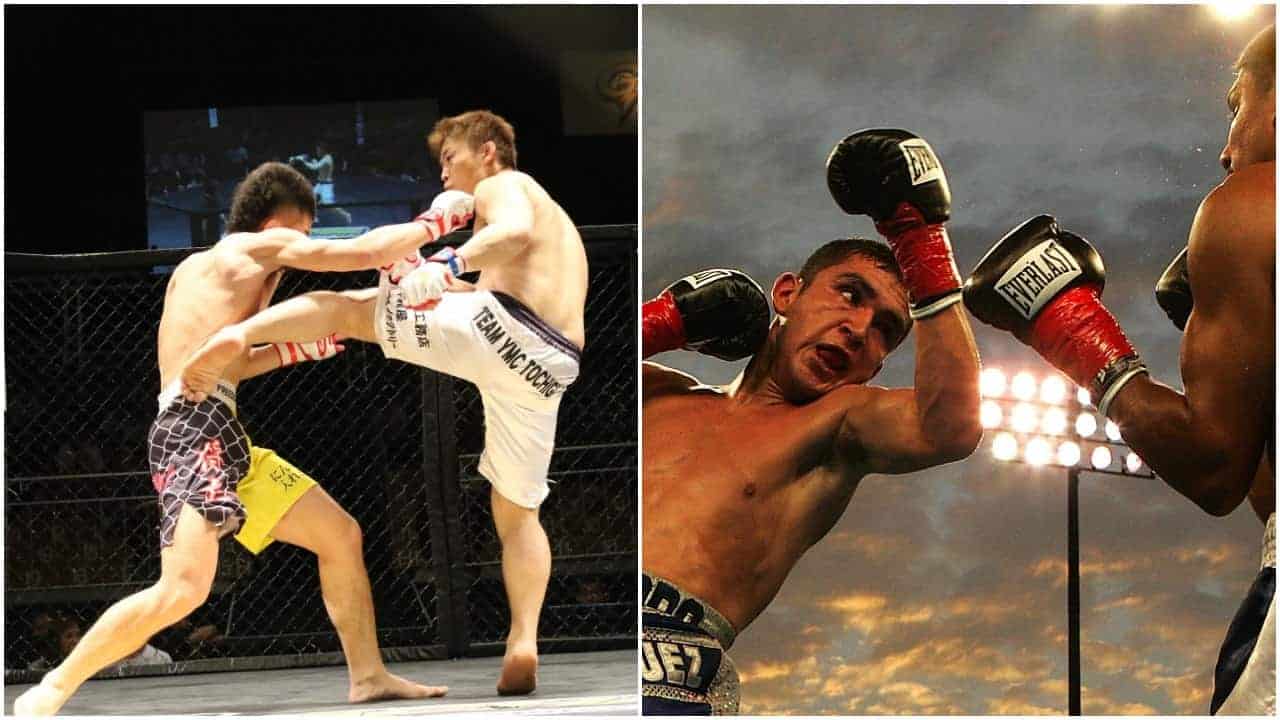
MMA vs Boxing – Which is More Popular? Simple Analysis

0

MMA has become increasingly popular over the past decade. Some even wonder whether it has now taken over boxing in its popularity. Looking solely at the PPV purchases, it is easy to think that boxing is still more popular than MMA. However, this article explores a number of other measures to determine which is more popular between MMA and boxing.

Boxing has more PPV purchases than MMA and was rated more popular in America by the Washington Post. However, Google Trends suggest that MMA is more popular on a worldwide scale, with many fans in Europe, South America and the Middle East. MMA also has more fans on Facebook, YouTube and Reddit.

You can find these exact statistics below, as well as some reasons why MMA is more popular than boxing. I have also included which fighters earn more between MMA and boxing.

MMA vs Boxing: Popularity Comparison
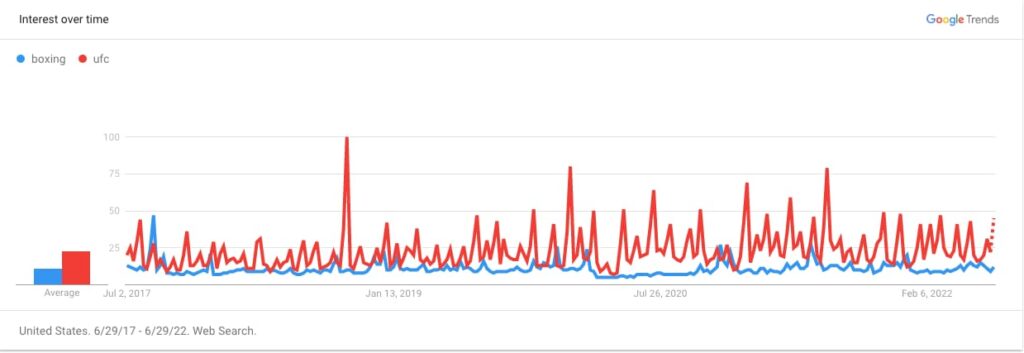
1. Google Trends consistently show that ‘UFC’ as a search term is much greater than ‘Boxing’ worldwide.

2. UFC and boxing show similar trends in the USA, whereas South America, Europe and the Middle East show stronger preferences for the UFC.

3. Popular forums, such as Reddit, show that MMA is more popular than boxing, with 1.6million members in the MMA Subreddit and 1million members in the boxing Subreddit.

4. Free video content from YouTube favors MMA, with 11.8million subscribers on the UFC channel, 7.9million subscribers on the ESPN channel and less than 1 million on the Top Rank Boxing channel.

5. Facebook shows that the MMAFighting.com page has 2.2million Likes and the UFC page has 2.8million Likes, whereas Showtime Boxing has less than 2 million Likes.

6. The highest-selling boxing PPV (Mayweather vs. Pacquiao) generated 4.6million purchases, whereas the highest-selling MMA PPV (Khabib vs McGregor) generated 2.4million purchases.

7. A small 2017 study was conducted with a sample size of 1,000 people by the Washington Post. This revealed 25% of US adults followed MMA, whereas 28% followed boxing.

Reasons Why MMA is More Popular than Boxing

Boxing Matches are More Prone to Delay

In the UFC, champions must defend their title against any challenger. If they refuse to fight without a valid reason or they take extended leave and avoid a difficult fight, they can be stripped of their title. This then allows others to fight for an interim champion. The fights are set up by the UFC to generate the most public interest, which usually involves selecting a contender from the top five for their weight division.

In boxing, a champion has more control over who they fight. There are politics surrounding contracts with TV networks that prevent two fighters from coming together. There are also several promotional organizations offering to arrange fights between boxers. If a boxer receives multiple offers, this gives them more choice over who they fight.

Unfortunately, this has resulted in many highly-anticipated fights being delayed, causing fans to lose interest. It has also fuelled fan theories that champions will ‘duck’ fights to avoid a difficult opponent, which further reduces the popularity of boxing.

MMA is Easier to Understand

When it comes to understanding who is the reigning champion, MMA is much easier to understand. There is only one major organization, the UFC, which governs high-level MMA fighting. There is only one champion for each of the eight weight divisions in the UFC.

Boxing has four major governing bodies, including the WBA, WBC, IBF and WBO. Each of these organizations has its own champions for 17 different weight divisions. This means that there can be 68 boxing champions at any given time.

To make it more confusing, some champions are awarded ‘Super Champion’ if they hold titles over all four organizations or have defended their title at least five times. Someone else is then able to be awarded the title of ‘Regular Champion’ in that weight division. This makes it difficult for spectators to understand who the true world champion is for each weight division.

Fighters are Difficult to Follow in Boxing

The UFC is broadcast on ESPN, which means that those with access to ESPN have access to all UFC fights. Therefore, an MMA fan can easily follow the career of their favorite fighter through the ESPN network.

In boxing, matches are set up by different promotional organizations and therefore aired on different TV networks. This means that fans may need access to several sporting networks in order to follow the career of any particular boxer. Some of these networks include ESPN, Fox Sports, Showtime, DAZN and NBC.

Is MMA the Most Popular Sport in The World? 

MMA and boxing are the two most popular combat sports in the world. However, they still do not surpass non-combat sports. According to the World Atlas (link to website), association football (soccer) is the most popular sport, with an estimated four billion followers.

In comparison, according to IMG ARENA (link to website), there are only around 300million UFC/MMA fans worldwide. This is a very small following compared to non-combat sports. As a result, MMA does not even make the top 10 most popular sports in regards to its fan base according to the World Atlas.

MMA Fighters vs Boxers: Who Makes More Money? 

Salary is incredibly variable in MMA and boxing, depending on factors such as popularity, sponsors and who you fight. Overall, boxers have the potential to earn the most money, but MMA fighters have a much better average income.

The best comparison is earnings per fight. The UFC payout scheme means a fighter can earn anywhere between $10k and $3million per fight. There are then bonuses, such as $50k for ‘Fight of the Night’, and money from endorsements. Khabib Nurmagomedov, for example, was able to earn $6million from his fight against Justin Gaethje in UFC 254.

Professional boxing, on the other hand, starts out at around $1,000 per fight for boxers early in their career. With most boxers having less than 10 fights per year, this makes the income incredibly low for those starting out. In contrast, top-tier champions such as Floyd Mayweather Jr., receive millions of dollars in payouts per fight. Mayweather Jr.’s all-time record was reportedly $280 million for one fight, a payout he received from his fight against Conor McGregor in 2017.

However, unless you’re one of the world’s top boxing champions, the average salary of a professional boxer is much lower than that of MMA fighters in the UFC. Professional boxers will earn an average of around $37,500 per year, whereas the average UFC fighter will earn around $148,000 in a year.

Can MMA Overtake Boxing? 

Some believe that boxing is still more popular than MMA due to higher PPV statistics. However, this is not always a true representation of popularity considering multiple fans can come together to watch matches from the same account.

As mentioned at the beginning of this article, Google Trends and social media demonstrate that MMA is the more popular sport. These measures are also a more accurate depiction of individual preference, rather than relying on an account that may or may not be accessed by multiple people.

The trends seen on Google also demonstrate that, although there are similar preferences in the US, other areas such as Europe, South America and the Middle East prefer MMA. This highlights the fact that the study done by the Washington Post represents only a small portion of the MMA fan base. Therefore, it is not a true representation of its worldwide popularity compared to boxing.

In regards to PPV, MMA overtook boxing during the lockdowns associated with the Covid-19 pandemic in 2020. This could be due to the fact that people could no longer gather together to watch matches from the same account, or due to the fact that the UFC was able to continue broadcasting fights from Fight Island.

Boxing may rise again, but MMA has shown a rapid increase in popularity over the last decade. If this trend continues, it will certainly overtake boxing in all measures of popularity.

Is Boxing Still Popular In The US? 

Boxing still has its appeal to the American population. Some people will always prefer the thrill and pace of stand-up fighting compared to the mix of standing and ground fighting in MMA. Many boxing fans do not like the idea of winning through submissions and chokes, and prefer a simpler rule-set, where punches are the only offense.

Ben Askren vs. Jake Paul

In addition to this, new interest has been generated with the introduction of YouTubers Logan and Jake Paul. The popularity of both boxing and MMA greatly depends on the talent and personalities within the sport at the time. Conor McGregor has played a large role in attracting MMA fans, just as Mike Tyson’s skill attracted boxing fans. Introducing a YouTuber to the boxing scene may be just what is needed to boost its popularity.

Why Is Boxing Declining

As I mentioned previously, the Covid-19 pandemic did not affect the UFC as much as other sporting events due to the use of Fight Island to host its fighters. UFC President Dana White fought hard to keep the momentum going and work around restrictions to resume broadcasting.

Boxing, on the other hand, was forced into decline as organizers canceled more and more events. The money was no longer available to fund big fights, so fans were no longer able to watch their favorite boxing champions. This then led to a decline in views and many fans choosing to watch MMA for entertainment instead.
How Hard Can an Average Person Kick?

0

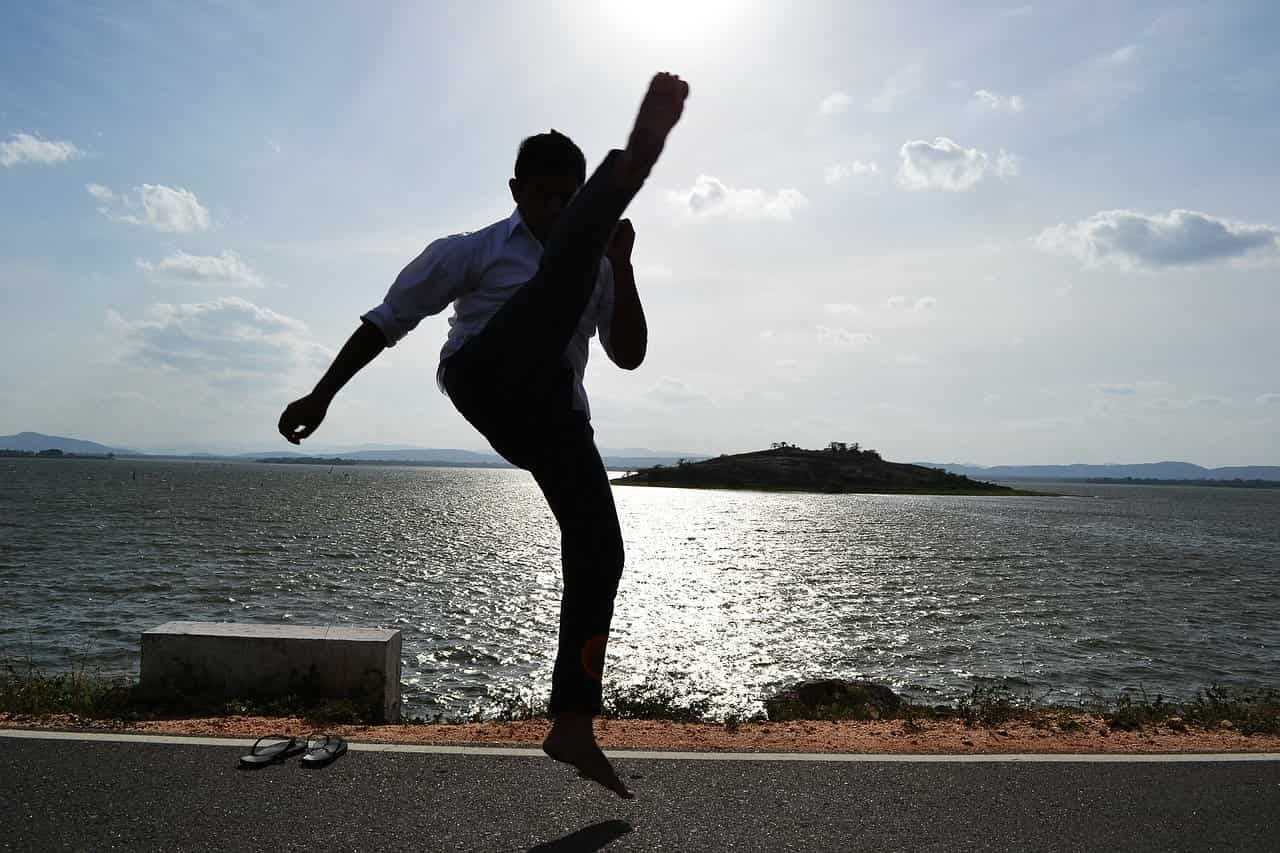
There are many variables that are contained within the question of how hard a person can kick. Physical condition as well as age, sex, and height can all affect the answer to this question. The answer has been a source of a lot of attention due to martial arts enthusiasts and sports-related interests.

The average adult human can kick with 1,000 pounds of force. The average child can deliver 600 pounds of force. These numbers can increase greatly with training or due to height, weight, and unique skill at kicking activities.

The force of a kick can also be altered by the kind of kicking motion that is used to deliver the force.

How Much Force is an Average Kick?

An average kick for an adult delivers around 1,000 pounds of force. Experts in martial arts are able to deliver as much as a ton of force, but this is the result of years of training and specifically utilized skills. The amount of force that is needed to deliver a kick in a sports setting is not as much as this and even 1,000 pounds of force can be quite effective for many sporting needs.

Professional soccer players can kick the ball hard enough to send it 30 meters per second, which amounts to about 1,200 pounds of force. A youth player will be able to deliver a speed of 14.9 meters per second which amounts to about 600 pounds of force.

How Much Force Does the Kick of an Average Man vs Woman Deliver?

The average man is 70-80% stronger than the average woman. This means that their kick will be 162% more powerful on average. Women can kick with a force of 300 to 500 pounds of force on average, but there are outliers to these numbers as well.

The force of a kick is calculated by using the formula, Force (F) = Mass (M) x Acceleration (A) where the units are F (Newton) = Mass (kg) x Acceleration (m/s2). This method is used to make sure that you are able to calculate the right amount of force per kick, no matter what the kicked item is or the kicking conditions and styles are.

Martial arts and sports kicking are very different, and creating the same force may not be needed or necessary when you are not engaging in kicking for defense or for fighting. Football and soccer are two of the sports that do require a similar amount of potential force per kick that martial arts and MMA might require. These sports are largely populated by men, so good statistics on women’s average for this kind of activity are not readily available in some cases.

In MMA, women are able to deliver knock-out kicks that have around 50 pounds of force. This is more than enough force to knock someone out when delivered correctly. This means that the average force of a kick can also be altered for effectiveness in unique situations per sport.

How Hard Can a Very Well-Trained Martial Artist Kick?

A highly-trained martial artist can kick with up to 9,000 newtons of force. This is like 900 kg of weight being thrown at someone or something! There is also an increased level of effectiveness of a kick if the martial artist is taller and heavier. These numbers are almost always calculated with the use of male martial artists kicking for the test, not female martial artists.

There have been studies that have shown that female martial artists can kick with about the same amount of force as male martial artists. The 9,000 pounds of force that were mentioned in relation to the average kicking force of male martial artists can be accomplished by female martial artists as well. The effectiveness of a kick in martial arts is more highly prized than the force in many contexts, as not every blow is designed to be a knockout blow.

Who Has the Hardest Kick in the World?

MMA is often the standard for these kinds of statistics, and the current list of the top 5 MMA hardest kickers includes Rafael dos Anjos, Stephen Thompson, Jose Aldo, Justin Gaethje, and Edson Barboza. According to an MMA expert, Edson Barboza is arguably the most powerful kicker in the world at this time.

There are still some records for hardest soccer kicks that have yet to be beaten, and one of these records is held by David Hirst who still holds the record for this skill by delivering a shot that went 114 mph in 1994.

The hardest kickers in the world are most often funneled into the martial arts, where kicking for knock-out blows creates excessive shows of force that would not be possible in other contexts.

How can I Increase my Kicking Power?

Kicking power is largely connected to strength and overall fitness. Even a shorter person will be able to improve their overall kicking strength with the right training regimen on their side. Sticking to a routine of workouts that are directed at leg strength and core strength can generate big results for your overall kicking power.

·         Sumo Deadlifts

These are very effective exercises and they can develop a very strong core as well as strong legs. You will want to slowly increase the weight that you can deadlift over time as your body develops and gets used to the weight that you are currently training with. This is a great exercise to use as it protects your back from injury while lifting heavyweight.

·         Jumping Back Squat

This is an exercise that develops explosive power in your legs. You will want to do this with a fairly lightweight bar or just using your body weight. You will simply squat the weight, then jump at the top. This is a very effective way to increase your ability to drive upwards and outwards with your legs, essential skills for kicking strength.

·         Jump Split Squats

This is like the jumping back squat but done with split legs that alternate per jump. This is a great exercise to work on your standing leg’s balance as well, which can help you to deliver a more forceful kick.

·         Box Jumps

This is a really good training method for harnessing the explosive power of your legs. Jumping straight up with your body weight to resist your jump is a great way to train the legs as well as the core and to help you to direct power generated by your legs in chosen directions. This translates directly to actual kicking skills training.

The Power of Your Kick is Related to Your Strength Training Regimen as Well as Your Sport

In most instances, the sport that you are training to compete in as well as your weight training strategy will greatly improve or reduce your ability to kick with a lot of force. You may not need to kick with a lot of force for your sport, but if you do, you need the right training protocol on your side as well to improve your skills.

Kicking force is linked with sex and size as well, but you can overcome limitations related to these factors in some degree through proper training. Female MMA competitors are often able to be as effective as male competitors despite the sex and size gap. This is all related to training and this opportunity is open to everyone who wants to alter their physical training regimen to include this kind of training.

The most powerful kick is a result of a combination of training and specific skill sets that are required for unique sporting events.

Related Information

How Hard Can an Average Person Punch? – There is significant debate around how much training can contribute to a person’s punching capability vs. their genetic predisposition. This article explores everything you want to know about how hard an average person punches. You should definitely check it out to learn about punching as well.

BJJ vs Judo – Key Differences and Core Similarities

0
Photo by Richard Presley & Korea.net

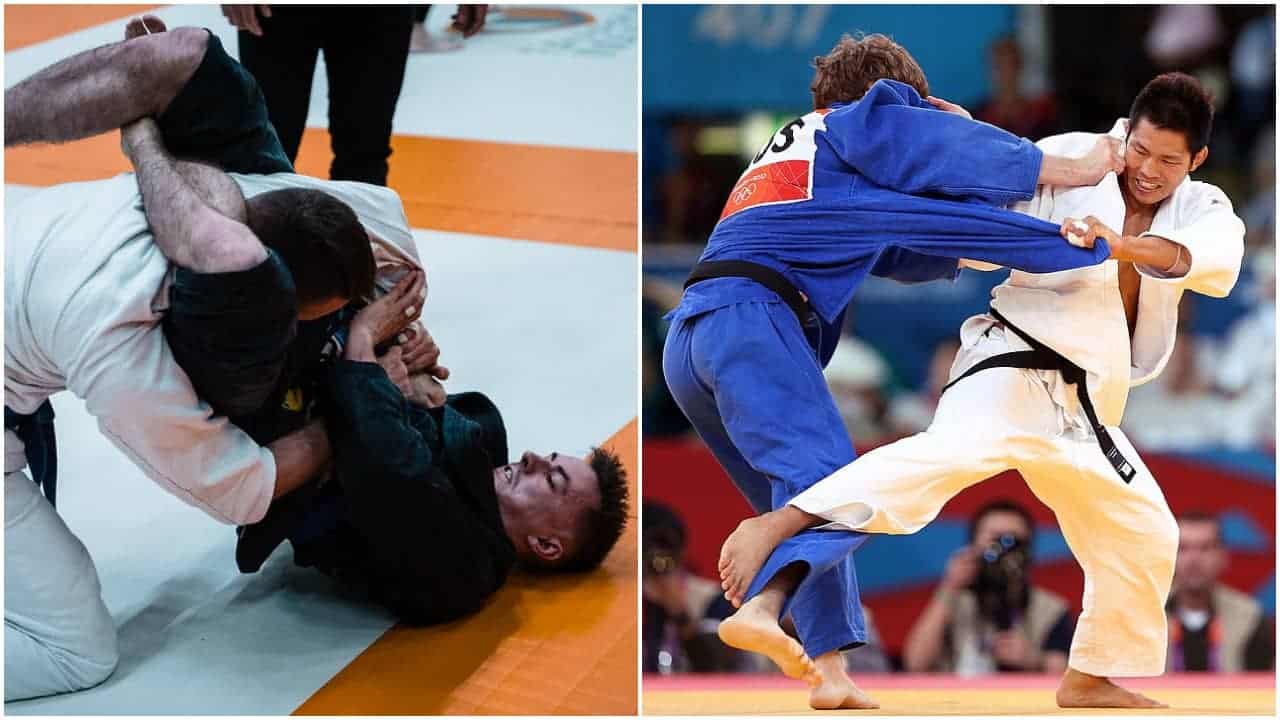
It is difficult to decide which martial art to dedicate yourself to, especially when they share similar techniques. Brazilian Jiu-Jitsu(BJJ) and Judo are very closely related through their Japanese Jujutsu origins, giving them several similarities. However, there are also a number of key differences that distinguish the two as separate martial arts. This article will discuss these key differences and similarities.

Both BJJ and Judo use a Gi, have similar techniques and were created for anyone of any size or fitness level. However, BJJ matches have a time limit and favor ground-fighting over standing due to a different point system. Judo is also more fast-paced and regulated and has a different belt system.

I will explain these similarities and differences in more detail below. I have also included which is more effective in real-life situations.

What are the Key Differences between BJJ vs Judo?

BJJ and Judo are derived from a similar background. However, there are surprisingly quite a few differences when you look closely at the two martial arts. One of these differences is that Judo is recognized as an Olympic sport, whereas BJJ is not an Olympic sport. There are more key differences below.

Point System

In Judo, a match is won when you receive one full point, known as ‘ippon’. This can be received instantly by throwing your opponent onto their back, submitting them with a choke or arm-lock, or pinning them down for 20 seconds.

Half points are known as ‘waza-ari’. Two of these will result in winning the match, including throwing your opponent partly on their back or pinning them down for more than 10 seconds. 

Opponent penalties can also allow you to win a match. Receiving three minor penalties (‘shido’), or one major penalty (‘hansoku-make’), results in automatic defeat.

A BJJ match is won by submitting your opponent through chokes or joint-locks, or by accumulating the most points. Points in a BJJ match are unlimited and awarded when gaining positions of power. All of these positions are ground-based.

For this reason, BJJ practitioners will quickly take the fight to the ground, whereas Judo practitioners prefer to stay standing. The Judo points system encourages practitioners to fight on their feet, so that they are able to throw their opponent and win.

Time Limits and Pace

There is also no time limit in a Judo match. Practitioners are expected to keep the pace going and the referee will reset the competitor’s position if they feel the match is not progressing. Any form of stalling will incur one Shido.

In BJJ, matches have a time limit because BJJ competitors are able to stall. This will prevent submission as they accumulate more points. Once the timer runs out, the person with the most points wins. BJJ matches are typically 5-10 minutes long, unless someone submits to a choke or joint lock.

Technique Limitations

Judo is a much more restricted sport than BJJ. There are many techniques that can be used in BJJ that would incur penalties in Judo, such as holding your opponent’s wrist, using two hands to break a grip or performing a joint lock on any joint other than the elbow.

In BJJ, practitioners can use Judo techniques without penalty. Any Judo throw is considered a takedown, provided it results in a dominant position. However, passing guard, back control, back mount and mount are all worth more points than any takedown.

Gi Specifications and No-Gi

The Judogi is more regulated than the BJJ Gi. A ‘sokuteiki’ is used to measure the Gi, ensuring all competitors have the same grip opportunities. This makes the competition fair, considering Judo throws rely heavily on Gi grips.

The BJJ Gi still has standard specifications that must be met. However, because BJJ techniques do not rely as much on using your Gi, these specifications are more lenient. This results in more variation in the Gis worn by BJJ competitors. The BJJ Gi is generally tighter, has a shorter jacket and is not as thick as the Judogi. Judo requires more durable material because Judo techniques put much more strain on the Gi.

In addition to this, BJJ also offers a no-Gi competition. This usually involves competitors wearing a rashguard or other tight-fitting clothing so that the techniques used do not rely on wearing a particular uniform.

The Belt System

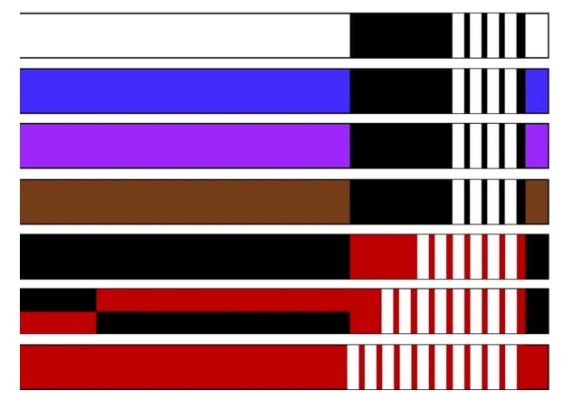
The BJJ belt system can be seen as a simplified version of the Judo belt system. It was derived from Judo, but instead of having 5-6 belts before black belt, BJJ practitioners only have four. Judo also uses the traditional terms ‘Kyu’ and ‘Dan’ for their belts.

Judo Belts (Ranking System)
BJJ Belts (Ranking System)

There is also only one step between each Judo belt, whereas there are four ‘stripes’ to acquire for each BJJ belt. This means it generally takes longer to progress to another belt in BJJ. On average, it takes around 10 years to reach a black belt in BJJ, whereas it can take 4-6 years in Judo.

RECOMMENDED FOR YOU:
What’s the Difference Between Gracie Jiu-Jitsu and BJJ?

What are the Core Similarities between BJJ vs Judo? 

Judo and BJJ are both considered ‘gentle’, with Judo translating to ‘gentle way’ and Jujutsu meaning ‘gentle art’. Although there are techniques such as throws and chokes, these are done in a way that prevents serious injury to the opponent. The key similarities of these gentle martial arts are listed below.

The Use of a Gi

Jigoro Kano (Founder of Judo)

Although there may be differences in the Gi specifications, both Judo and BJJ use the traditional Gi. The Gi was designed by Jigoro Kano, the founder of Judo, to suit the needs of his students. This design was then used and adapted in BJJ, which was born out of Judo and Japanese Jujutsu.

Designed for All

The original purpose of both BJJ and Judo is very similar. Jigoro Kano, the creator of Judo, originally adapted techniques he learned from Japanese Jujutsu so that smaller, weaker individuals could learn to defend themselves. He wanted individuals to be able to use the techniques without relying on their strength or size. Being a smaller man, he developed the techniques to use an opponent’s strength and momentum against them.

In a similar way, Helio Gracie adapted techniques from Judo and Japanese Jujutsu to create BJJ. Helio Gracie was even weaker than Jigoro Kano, being unable to climb a flight of stairs without becoming breathless. Therefore, he needed techniques that anyone can perform, regardless of their strength, size or fitness level.

Helio Gracie(One of the founders of BJJ)

Similar Techniques

Being derived from the same Japanese martial art, Japanese Jujutsu, Judo and BJJ share many common techniques. I mentioned earlier that there are techniques used in BJJ that are not permitted in Judo. However, the techniques that are permitted are essentially the same.

For example, the techniques used to lock an opponent’s elbow involve immobilizing the body while stretching or twisting the arm beyond its natural capability. Chokes and ground fighting techniques are also similar.

RECOMMENDED FOR YOU:
BJJ vs Japanese Jiu-Jitsu – Key Differences and Similarities

Which One is More Effective in Self Defense? 

Both Judo and BJJ complement one another. BJJ provides you with a broader range of ground-fighting techniques, whereas Judo provides you with a wider skill set in fighting on your feet. This is why many practitioners will choose to learn both martial arts.

However, when it comes to self-defense, BJJ offers a more practical skillset. Statistically, as much as 73% of street fights will end on the ground, as shown in this study. Most attackers will try to knock or pin their victim to the ground so they cannot escape or strike.

BJJ takes that advantage away from your attacker, making you the more skilled fighter when on the ground. However, if the fight remains standing, Judo can be more effective at taking down your opponent.

Another thing to consider is that Judo techniques are designed to use with a Gi. Although some attackers may be wearing clothes that can be gripped, this will not always be the case. Therefore, even some Judo techniques might be ineffective in a real self-defense situation.

BJJ appears to be more popular than Judo due to more exposure. BJJ is practiced by many high-profile fighters in MMA and the UFC and therefore receives more social media coverage than Judo.

BJJ was also originally introduced to the world on a global platform by Royce Gracie when the UFC began. Judo, on the other hand, was only passed on through traveling Judo masters. Although this still helped the spread of Judo, it was not as popular as BJJ. 

There are also many more opportunities to study BJJ. Online instructional videos and books make it more accessible to the public if it is not offered at your local gym. Free podcasts and YouTube videos are also very informative.

RECOMMENDED FOR YOU:
What is Gracie Jiu-Jitsu? Fully Explained

Is Judo Hard on the Body? 

Judo is a full-contact sport and is therefore hard on the body. Although the rules of Judo are in place to protect practitioners from injury, it is still very common to receive bruises, muscle strains and sprains. The most common mechanism of injury is being thrown by your opponent.

Knee injuries are most common in Judo because they are under strain with every quick change in direction. Shoulders and fingers are also commonly sprained, dislocated or broken from being thrown down by the arm. Overall, research from the 2008 and 2012 Olympic Games suggests an injury rate of about 11-12% in Judo (link here).

Can Judo Beat BJJ? 

Judo has proven effective against BJJ in the past, such as in the 1951 fight between Masahiko Kimura and Helio Gracie. After two rounds, Kimura was able to throw and pin Gracie to the ground, take his arm and break it before Gracie’s teammates officially threw in the towel.

Masahiko Kimura vs Helio Gracie 1951

The theory behind why Judo can beat BJJ is that Judo is a more diverse martial art, teaching both stand-up fighting and ground fighting. BJJ, on the other hand, focuses heavily on ground fighting.

Although a BJJ practitioner is more competent on the ground, they are still more evenly matched than if they were standing. A Judo practitioner is better at ground fighting than a BJJ practitioner is at stand-up fighting. This is why Judo can beat BJJ in a fight.

RECOMMENDED FOR YOU:
Does Judo Have Submissions? Yes, Here’s What You Need To Know

Is Judo Effective Without a GI?

Judo is only effective without a Gi if you practice the throws with natural handholds instead of gripping the Gi. However, this relies on the individual’s own discipline and study to practice in this way because gyms do not offer no-Gi Judo classes.

In saying that, many gyms train in MMA, and therefore offer opportunities to practice no-Gi grappling. This would allow Judo practitioners to practice their natural throws, assuming their grappling partner is willing.

RECOMMENDED FOR YOU:
Is Judo Effective In A Street Fight? Most Asked Questions

What is a Rabbit Punch in Boxing/MMA? Easily Explained

Photo by WorldSeriesBoxing

No matter if you are into combat sports or not, you have likely heard about the infamous rabbit punches.  We can hear fighters and referees complaining about them in just about every boxing or MMA event. But in case you are not familiar with what is the rabbit punch, stay with us as I will explain it to you in a very simple way. 

A rabbit punch is a blow that lands on the back of the head or top of the neck. It is illegal because back of the head is a place where our key motoric and brain functions are located. A single rabbit punch can cause serious spinal cord and brain injury that could be fatal in some cases. 

Keep reading this article to find out more about Rabbit punches, and what makes them dangerous.

What is a Rabbit Punch in Boxing or MMA?

A rabbit punch is a strike that lands right on the back of the head, base of the skull or top of the neck. In this day and age, this type of punches are illegal in just about every fighting sport due to the danger it poses. 

But despite being illegal, rabbit punches are a common thing and you can see them in every boxing or MMA event. In most cases, rabbit punches land without intention and by accident due to the nature of the sport.

For instance, head movement plays a big role in boxing. Boxers move their head up and down, left and right all the time to slip and dodge punches. But by doing so, they are exposing the back of their head, which they can’t protect the same as the face or side of the head. So even if the opponent is aiming for the face, the punch might land behind the ears on the back of the head. In most cases, this happens during the clinch or other close-range exchanges.

In MMA, on the other side, there are fewer rabbit punches since it is a more versatile sport than boxing. Fighters can strike using punches, kicks, elbows, knees, and also fight on the ground. Ground fighting is, in fact, a place where most rabbit punches land in MMA, notably when one fighter is in a mount position.

Mount Position
Photo by Matthew Walsh

Once they pass the guard and get the full mount, MMA fighters would start raining down punches to score a finish. The danger of rabbit punches increases when the fighter on the bottom turns their back and exposes the back of their head to the barrage of punches coming from the top. The bottom fighter has to do this as a part of the procedure to escape. They will stop protecting the back of the head and start using their hands to escape from a position, which is the moment when most rabbit punches land.

Why it’s called Rabbit Punch?

The name “Rabbit punch” comes from hunting where it is a method hunters use to end a rabbit’s life without ruining the rabbit’s fur. They do this by striking the back of the rabbit’s skull with a club to break its spinal cord. Or they grab the rabbit by the neck with one hand, put the palm of your other hand right below the chin, and press it straight back until the neck breaks. It is often seen as the quickest and most human way you can end a rabbit’s life.

We are not sure about who was the first person to use this term in combat sports, but, it has been around for many years. It is mostly used by boxing commentators and other experts while the world of MMA stills hasn’t adopted this term in total.

Why is Rabbit Punch illegal in MMA and Boxing?

Rabbit punch is illegal in most fighting sports because it can lead to serious spine and brain injuries. Back of the head is a place where our spinal cord is located, which is an integral part of the human Central Nervous System. Being hit hard can damage the spinal cord and cause paralysis or other spinal injuries. Just a single strike to this area can cause disability. That’s how sensitive this area is.

And it’s not just the spine injuries, rabbit punch leads to brain injuries as well. The brain stem, located at the base of the skull, is a key part of motor and sensory systems. It also regulates our cardiac functions like heart and breathing rate. This part of the brain is so sensitive that a punch to this area can cause fatal injuries.

Back of the head is more sensitive than other parts like face or side of the head. This is the main reason why rabbit punches are dangerous and illegal in fighting sports. In a match, the referee is responsible to warn fighters to avoid striking this area, or even disqualify them from a match if needed.

What are the penalties for throwing Rabbit Punches in Boxing and MMA?

Rabbit punches are illegal and it’s up to the referee to take the action. How the referee is going to deal with it depends on various factors like:

  • Was the punch intentional or not?
  • How hard the rabbit punch was?
  • Can a hurt fighter continue or not?
  • Damage done

In most cases, the referee would issue a serious warning by yelling “watch the back of the head!” They might even pause the fight to make it clear to a fighter that he/she needs to stop striking back of the head.

If the fighter repeats the foul, the referee would deduct a point. In some cases, the referee might even deduct up to two points without issuing a single warning. This happens when the blow was clearly intentional and aimed to hurt the fighter. If the opponent can’t continue after a rabbit punch, the referee will disqualify the fighter who threw the punch.

Are all Rabbit Punches illegal?

No, there are cases, notably in boxing, where landing rabbit punches won’t get you in trouble. Here is one scenario where rabbit punches are not illegal.

Let’s say a boxer starts throwing a barrage of punches, trying to knock the opponent out. If at that moment, the opponent turns their back and receives a strike to the back of the head, it would not be a foul. A fighter who is striking is not at fault because he/she is clearly aiming for the face. It is the opponent’s fault for turning their back and exposing the back of the head to the barrage of punches.

This is why boxers should never turn their back to the opponent, no matter what happens. In the end, punches to the face are far less dangerous than the ones to the back of the head.

Has Anyone Died due to Rabbit Punches?

There is no evidence or report suggesting that a fighter has died due to rabbit punches in a boxing or MMA match. But there were fights, notably in boxing, in which strikes to the back of the head might have contributed to the loss of lives or serious injuries. One such fight was a boxing match between Terrell Williams and Prichard Colon that took place in 2015.

During the fight, Williams landed repeated rabbit punches. In the 7th round, he blasted Colon with a hard rabbit punch that sent him down to the canvas. The referee deducted the point from Williams since the blow was intentional and aimed to hurt Colon. The fight continued and two rounds later, Williams would knock Colon down with another rabbit punch. But this time, the referee took no action. In the end, Colon got disqualified after the ninth round due to the bizarre incident when the members of his corner took his gloves off thinking the match was over.

Shortly after the fight, Colon started to feel dizzy and weak in the dressing room. He started vomiting and was soon rushed to the “Fairfax Inova Hospital” where he underwent surgery due to the bleeding on the left side of his brain. Colon spent 221 days in a coma and now is in a vegetative state.

Related Questions

Are throat punches legal in MMA/Boxing?

Direct punches to the throat are illegal in both boxing and MMA. But due to the nature of fighting sports, throat punches often land without intention. This is notably true in MMA where fighters wear small 4 OZ open finger gloves where the risk of throat strikes is much higher.

Unlike in boxing, MMA fighters can fight in the clinch and on the ground. These close-range exchanges are usually when we can see fighters landing throat strikes without any intention. In fact, the risk of throat punches gets really high when the fight hits the ground. This is because it’s really hard to aim your punches while grappling at the same time. Due to the rapid change of positions and the opponent trying to escape, some punches may land on a throat.

But we have to point up that not a single UFC fight got stopped due to a throat strike.

Can you fake a kick in boxing?

There’s not a rule in boxing that stops you from faking a kick as long as the kick does not land on the opponent. Of course, you are not allowed to strike the opponent with any type of kick. But using kicks as a faint to fool the opponent or set up a combo is legal, though we must say that boxers rarely do this. You will never see high-profile boxers faking kicks.

The benefits of faking kicks in boxing might be to distract the opponent. Some boxers would lift their leg up like they are about to throw a kick, and then strike the opponent with a jab or a hook instead. But on the other side, faking kicks has more than a few cons as it disrupts your balance. This may not sound like a big deal, but it’s much easier to score a knockdown when you catch the opponent off balance. And in boxing, being knocked down means you lose a point in that round, so faking leg kicks does not make a lot of sense.

What Punches are illegal in Boxing?

Boxing rules are very simple and easy to understand. Boxers can use only their hands to punch above the waist, and they are not allowed to:

  • Strike with their shoulder, legs, elbow, forearm, or head.
  • Hit the opponent with the backfist, inside of the glove, or with an open glove.
  • Throw rabbit punches to the back of the head or neck.
  • Hit the opponent on the break from the clinch. Once the referee breaks the clinch, each fighter must take a full step back before continuing.

Violating these rules may force the referee to issue a warning, deduct a point, or even disqualify the boxer from a match.

What Strikes are Illegal in MMA?

MMA is a versatile sport in which athletes fight in the standup, grapple and fight on the ground. In some way, they use all limbs as weapons to strike on the feet, or submit the opponent using various chokes and joint locks. But if we stick with the Unified Rules of MMA, more than a few strikes are illegal in MMA like:

  • Strikes to the back of the head, neck, groin or throat 
  • Soccer kicking the downed opponent
  • Striking the head of a grounded opponent with a knee
  • Landing the elbow strike from straight up to straight down (infamous 12–6 elbow rule)
  • Stomping the grounded opponent
  • Fighters are not allowed to headbutt the opponent

When it comes to penalties, MMA is very much like boxing. The referee can issue a warning, deduct a point or disqualify the fighter from a match. This really depends on a type of foul, how bad it was, and whether the hurt fighter can continue or not.

MMA referees would usually issue a warning for light eye pokes and strikes to the groin area, or back of the head. In most cases, they deduct a point for repeated fouls or if a foul directly affected the outcome of the match. Most disqualifications come due to fighters landing knees to the grounded opponent.

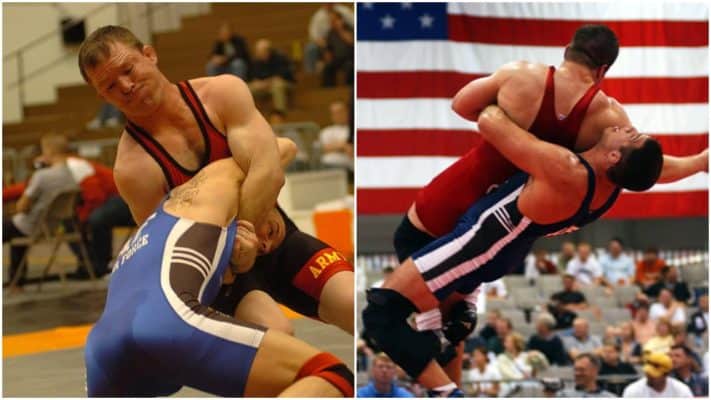
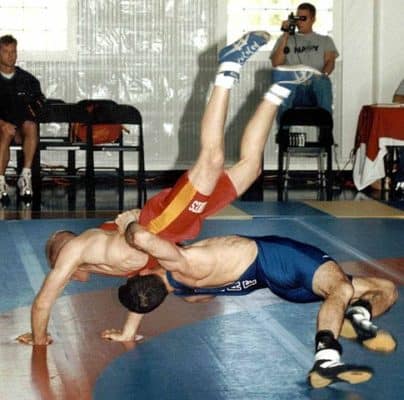
Freestyle Wrestling vs. Greco Roman: Key Differences and Comparison

0

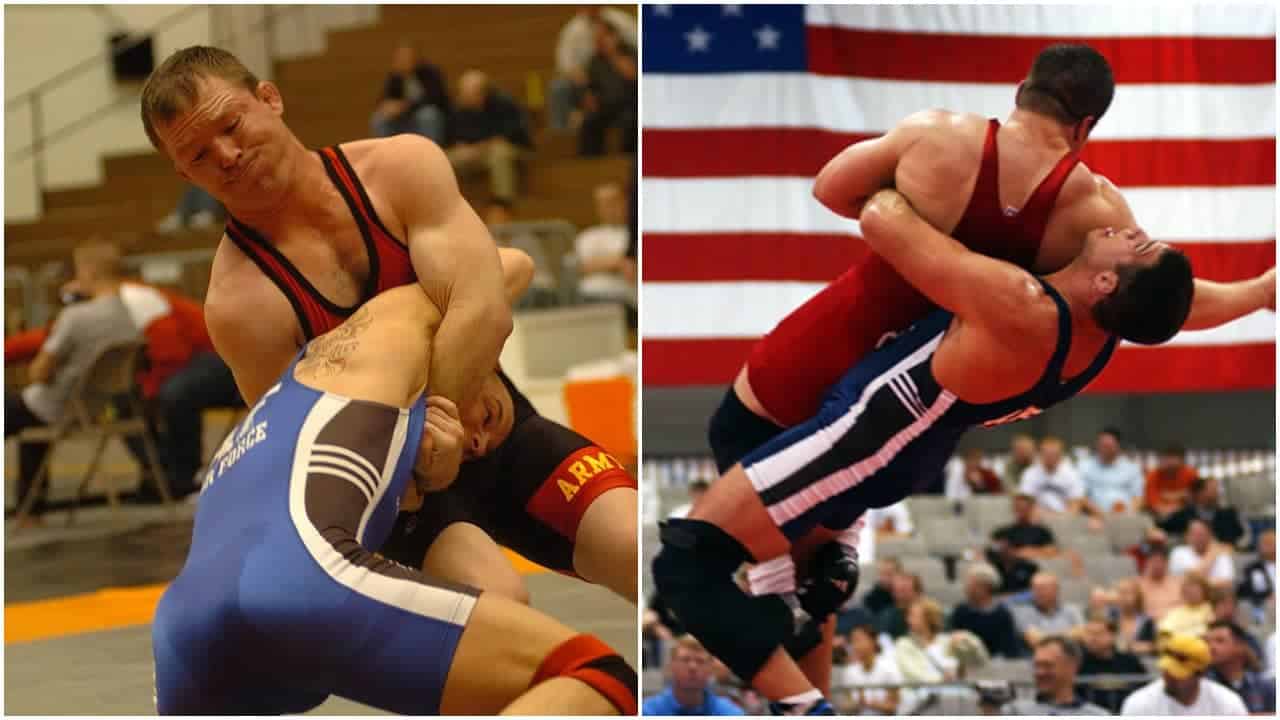
Wrestling is a martial art that has an ancient and diverse history that incorporates many different cultures and origins. Greco-Roman and Freestyle Wrestling are modern forms of Wrestling that evolved from different Wrestling styles around the world. There are some key differences that distinguish these two wrestling styles from each other.

The key difference is that freestyle wrestling involves all parts of the body while Greco-Roman does not allow contact below the waist. 

Additionally, Greco-Roman wrestling requires constant contact. While both have a points-based scoring system, the way these points are distributed is different. 

Both these styles have attained popularity as a sport in many countries worldwide. However, they are two distinct styles that subscribe to a different code and set of rules.

Quick History of Freestyle Wrestling

The modern form of Freestyle Wrestling has its origins in Britain and the United States and gained popularity in the mid to late 1800s. In those early days, it became a crowd-pleasing spectacle at local fairs and district festivals and developed a great rivalry between participants.

Freestyle wrestling

In its early form, it was often known as Catch-as-catch-can Wrestling, and in this form, it was introduced to the United States of America by Irish immigrants towards the latter part of the 1800s. The popularity of this style of Wrestling spread far and wide across the continental USA. In this era, matches were extremely long, some lasting up to 8 or 9 hours, making the wrestling match a test of endurance as well as skill and strength.

The length of the matches has been reduced to two 3-minute sessions, with a break of 60-seconds between the two sessions. In the early days, the match could only be won by a fall, but in 1941 a points system was introduced and widely accepted as the means to score a match and declare a winner.

Freestyle Wrestling – Rules, and How to Win

In Freestyle Wrestling, you are allowed to attack all parts of the body and use all parts of the body to take down your opponent. You can use the whole body in freestyle. Your goal is to get your opponent onto their back with both shoulder blades touching the mat simultaneously.

If you pin your opponent’s shoulder blades to the mat for one second, the referee will stop the match, and you are the winner. If neither wrestler can pin their opponent to the mat, the match can be won by scoring points instead.

The match is scored by the awarding of points to the wrestlers for the following situations.

  • A takedown. A takedown will score between 2 and 5 points depending on the type and success of the takedown.
  • The reversal. A single point is scored if a wrestler manages to get out of a hold from his opponent and reverse the attack.
  • Exposure or danger position. If a wrestler gets his opponents back on the mat for a few seconds, he is awarded between 2 and 3 points.

There are also penalty points where a point is awarded to a wrestler if his opponent infringes certain rules of the match, such as going out of bounds off the mat, performing an illegal move, or showing passivity.

A participant in a Freestyle Wrestling match is declared the winner in the following circumstances.

A win on points. If there is no win by any other means during the match, at the end of the time period, the points are tallied up and a winner declared.

Win by fall. Even if a wrestler is behind on points if he manages to hold both his opponent’s shoulders to the floor long enough for the referee to declare a total control of the fall, usually between 0.5 and 2-seconds. After a successful fall, the match is ended, and the wrestler who performed the fall is declared the winner.

Win by technical fall. If a wrestler gains a 10 point lead over their opponent, they are declared the winner by technical fall, and the match is ended.

A win by default. If one wrestler is unable to continue or simply fails to show up for a match, their opponent is declared the winner by default.

A win by injury. If a wrestler is injured during the match and is unable to continue, his opponent is declared the winner by medical forfeit. If the injury was caused by an illegal move, the injured wrestler is declared the winner.

Win by disqualification. If a wrestler contravenes the rules and receives 3 cautions during the course of the match, he is disqualified, and the opponent is declared the winner.

Quick History of Greco-Roman Wrestling

Greco-Roman Wrestling originates from the ancient civilizations that inhabited the Mediterranean regions of the ancient world, mostly Greece and the Roman Empire. The style was formalized by a Frenchman and became known as Flat Hand Wrestling which alluded to the fact that no strikes were allowed in the match.

Greco Roman wrestling

This style of Wrestling is distinguished by only allowing holds above the waist, and also painful or torsion holds that twist joints to cause pain was illegal according to the rules.

Greco Roman Wrestling – Rules, and How to Win

In Greco-Roman wrestling, the goal of the game is to wrestle the opponent and win by either pin or by points. In Greco-Roman wrestling, you are ONLY allowed to use your torso and arms to take down your opponent.

As such, using your legs or attacking your opponent’s legs is strictly prohibited. Compared to freestyle wrestling, Greco wrestling is much more limited in attacking and defending.

Your goal is to get your opponent onto their back with both shoulder blades touching the mat simultaneously. If you pin your opponent’s shoulder blades to the mat for one second, the referee will stop the match, and you are the winner. If neither wrestler can pin their opponent to the mat, the match can be won by scoring points instead.

The Greco Roman Wrestling match format is two 3-minute periods. If the match is at a draw at the end of both periods, a third and deciding period will result, and the wrestler who has won two of the three periods is declared the winner.

The match is scored in a similar fashion to a Freestyle Wrestling match.

  • A takedown. A takedown will score between 2 and 5.
  • The reversal. 1 point is scored if a wrestler gets out of a hold from his opponent and reverses the hold.
  • Exposure or danger position. If a wrestler gets his opponent back on the mat for a few seconds, he is awarded between 2 and 3 points.

There are also penalty points that are awarded to the opponent if a wrestler infringes the rules.

In Greco-Roman Wrestling, a wrestler can achieve a win in the same manner as Freestyle Wrestling.

  • A points win. If there is no win by other means during the match, at the end of the time period, the points are tallied up and a winner declared. If the points result in a draw, a third session of Wrestling can result in deciding the winner.
  • Win by fall. A wrestler is declared the winner, and the match is stopped if he manages to hold both his opponent’s shoulders to the mat long enough for the referee to declare a total control fall, usually between 0.5 and 2-seconds. A fall can win the match even if a wrestler is behind on points.
  • Win by technical fall. If a wrestler gains an 8-point lead over their opponent, they are declared the winner by technical fall, and the match is ended.
  • A win by default. If one wrestler is unable to continue or fails to show up for a match, their opponent is declared the winner by default.
  • A win by injury. If a wrestler is injured during the match and is unable to continue, his opponent is declared the winner by medical forfeit. If the injury was caused by an illegal move, the injured wrestler is declared the winner.
  • Win by disqualification. If a wrestler contravenes the rules and receives 3 cautions during the course of the match, he is disqualified, and the opponent is declared the winner.

The Main Difference Between Freestyle And Greco-Roman Wrestling

Greco-Roman and Freestyle wrestling are very similar in their formats and rules, but there are some aspects of each style that make the two distinct from each other.

The main difference between Greco-Roman and Freestyle Wrestling is that in the Greco-Roman style, no attacks below the waist are allowed. It is illegal to use your legs to take down an opponent or grab their legs to take them down. On the other hand, you can use the whole body in freestyle wrestling to attack your opponent.

There are some very minor differences in some of the scoring between the two styles and the format of the matches. For example, should there be a draw in a Greco-Roman style match, the match can be extended to a third session to determine a winner. This is not the case in a Freestyle match; if the match is determined by points and each wrestler has equal points, the match is declared a draw.

Both freestyle and Greco-Roman wrestling are featured in the Olympics. But they will follow a very different set of rules. For example, in freestyle wrestling, both men and women will be able to compete. However, Greco-Roman wrestling is limited to men. 

Which Is Harder Freestyle Or Greco-Roman?

Both wrestling styles require strength, fitness, and agility in order to best an opponent, and there would be a learning curve associated with becoming competent in either Freestyle or Greco Roman Wrestling. However, there are some aspects that make one style more difficult than the other.

Greco-Roman Wrestling is more difficult to learn than Freestyle Wrestling. This is mostly because of the restriction in Greco-Roman Wrestling of holds below the waist being illegal and not being allowed to use your legs or to grab your opponent’s legs to initiate a takedown.

These restrictions require a lot more ingenuity and more difficult moves to take down your opponent and get them on the mat to attempt a fall or pin.

Which Wrestling Style Is Better For MMA?

Both Greco-Roman and Freestyle Wrestling are great wrestling styles to learn for MMA, but freestyle may have the edge because takedown techniques using the legs are allowed in this style. Because this is also permissible in MMA, you would be learning techniques that Greco-Roman deems illegal. 

For this reason, many MMA fighters prefer to learn the Freestyle Wrestling style, which includes learning takedown techniques using the legs.

Which Wrestling Style Is Good For Self-Defense?

Both Freestyle and Greco-Roman Wrestling styles have a lot to offer when teaching techniques for self-defense, but The Greco-Roman style may have some limitations in this regard.

Freestyle Wrestling is the better style to learn for self-defense because you will learn how to take down your opponent or attacker by going for their legs and using your legs as well. These techniques are illegal in Greco-Roman Wrestling and are therefore not taught.

In a self-defense situation, you want to have as wide a repertoire of moves and techniques available to you as possible, and Freestyle Wrestling offers more in this regard than Greco-Roman Wrestling.

Why Is Real Wrestling Not Popular?

There is a significant difference between professional Wrestling and amateur Wrestling; professional Wrestling is seen more as entertainment rather than a sport, while amateur wrestling remains true to the sport.

When thinking about wrestling, the first images that come to mind are often associated with the WWE, rather than Olympics-style wrestling events. There are several reasons for this. First, wrestling companies, like WWE, have been able to work their way into the social fabric. Even casual fans are familiar with people like Dwayne “The Rock” Johnson. They also have crafted characters that stick in people’s minds, like the Undertaker. 

Real Wrestling has become less popular because of the glitz, glamour, and entertainment value that professional Wrestling has brought to the world stage. This, along with the short matches, has led to real Wrestling, or amateur Wrestling, losing some of its popular appeals.

However, the sport of wrestling is struggling. It was even briefly dropped from the Olympic Games. There were a few reasons for this. The main one is that It can be confusing for spectators, especially those who aren’t familiar with the intricate scoring process. 

Despite these hurdles, there is reason to be optimistic about the future of the sport. The number of students that are learning to wrestle is rapidly increasing. Amateur Wrestling is a sport and cannot compete with the entertainment value that professional Wrestling brings to the public.

Conclusion

Greco-Roman wrestling has a long history, appearing in the first Olympics. While freestyle wrestling is more modern, it has the same object, attempting to get control of an opponent. However, there are plenty of things that separate these sports. This includes the type of body parts involved and the way that the bouts are scored.

Is Krav Maga A Martial Art? – Most Asked Questions

0

Many people have heard of Krav Maga and are aware of the fact that it is a system that is great for self-defense. Some techniques that are taught in Krav Maga are taught to MMA fighters to incorporate into their repertoire to enhance their countering of an opponent’s attack. Krav Maga has a reputation as being an effective system, but is it a martial art?

Krav Maga is not classified as a martial art. Instead, it is a self-defense and fighting system that was developed for the Israeli Defense Force as a hand-to-hand combat style that was taught to their soldiers. Krav Maga is a mixture of techniques from boxing, wrestling, karate, aikido, and judo.

Krav Maga is a respected self-defense and fighting system that incorporates techniques from other fighting styles and martial arts. It also has its own moves that were developed from the street-fighting experience of Imi Lichtenfeld, the Hungarian-born Israeli martial artist. Krav Maga is generally considered to be one of the most effective fighting systems, so why is it not considered a martial art?

Why Is Krav Maga Not A Martial Art?

Photo by David Kahn

If Krav Maga is recognized as an effective self-defense and fighting system, why is it not considered as a martial art? Surely the other martial art styles are also classified as self-defense and fighting systems?

Krav Maga is not intended to be a martial art and is not considered as such. It is not a style developed by itself, but it incorporates techniques from many other martial arts that already exist. A martial art is a codified system with rules and ceremony, but Krav Maga is intended for survival.

Krav Maga is not meant to score points or impress instructors or judges, win competitions, or teach students honor or discipline. It is intended to deal with real-world threats and to put your attacker down hard and fast so that you can make your escape and survive.

What Is Krav Maga Based On?

Krav Maga, which, when translated means contact combat, was developed by a Hungarian-born Israeli by the name of Imi Lichtenfeld. He was a martial artist that engaged in street fighting in defense of the Jewish community in Bratislava, Czechoslovakia, against the fascist groups who were attacking them.

Krav Maga is a self-defense and fighting and survival system that was developed by incorporating part of other fighting styles, including Karate, Judo, Aikido, Boxing, and Wrestling. The techniques were refined in street-fighting situations and developed into a system of its own. 

Imi Lichtenfeld had training in Boxing and Wrestling as well as a variety of other martial arts. He incorporated techniques from Aikido, Judo, and Karate. He took the most effective techniques from each of these styles and developed Krav Maga, which he further developed in the street fighting he was involved in.

Krav Maga was developed from the mid to latter half of the 1930s, and when Imi Lichtenfeld moved to the middle east in the 1940s, he started teaching his system to the soldiers who would become the Israeli Defense Force.

The other fighting arts that Krav Maga derives its techniques from are as follows.

  • Strike techniques. The strike techniques in Krav Maga are mostly derived from Karate and Boxing.
  • Throws and takedowns. These techniques are drawn from Aikido, Judo, and Wrestling.
  • Ground-work techniques. The techniques used for fighting on the ground were derived from Judo and Wrestling.
  • Escape techniques from holds and chokes. These tactics were developed from Aikido, Judo, and Wrestling.
  • Empty-hand weapon defense. The methods of defending against a weapon with nothing in your hands were developed from Aikido techniques.

Does Krav Maga Actually Work?

Many traditional martial arts and fighting styles and systems receive much negative publicity as not being effective in real-world circumstances or situations. This is often because of their philosophy of defense rather than aggression and some arts that do not concentrate on strikes. How does Krav Maga compare to these martial arts as an effective fighting style; does it actually work?

Krav Maga does actually work and is acclaimed as a real-world fighting style. It was developed for use in close quarters combat and was used in real life by the founder of the system. Krav Maga is widely acclaimed to be one of the most effective modern fighting systems for the real world.

Krav Maga takes the best techniques from many different martial arts and combines them into one highly effective fighting style. Many other armed forces use parts of martial arts techniques to incorporate into their unarmed combat training, but Krav Maga is one of the few that is taught as a complete system to soldiers and special forces.

The fact that Krav Maga is taught as a complete system to soldiers is a testament to the fact that the style is effective and works in a real-life situation. No army is going to waste their effort teaching their soldiers hand-to-hand combat techniques that don’t work out in the field.

There are some critics of Krav Maga that believe it is not a suitable system to teach civilians as a self-defense system as it will not be effective for everyone. Their reasoning behind this is that it is a system that is taught to fit strong soldiers, and many of the defense techniques require speed, aggression, and strength, which is beyond the ability of the average civilian.

Is Learning Krav Maga Hard?

Learning any martial art is difficult and requires patience, persistence, and above all, practice and discipline. If you consider Krav Maga not to be a martial art, is it any easier to learn than the other traditional martial arts?

Krav Maga is not hard to learn. It is easier to learn than other martial arts because it was developed to teach to soldiers who did not have years for training and learning to master the fighting system. The moves needed to be easy to learn and attain proficiency in months rather than a lifetime.

This does not mean that Krav Maga is easy and does not require dedication and discipline. The soldiers that are taught this fighting system train every day, so you cannot expect to pick up the moves in a couple of months, only training a couple of times a week.

However, if you attend Krav Maga classes more than once a week, it is entirely feasible to have attained useable skills that will be a good foundation for self-defense in the space of about 6 months. These skills will, however, be the basics, and it will take further time to learn the more advanced and more difficult techniques.

Most students who first start out learning Krav Maga without any prior martial arts training will be trained in repetitive base techniques to gain muscle memory and speed. Most students will progress from these basics to more advanced techniques after 4 months of training 2 to 3 times a week.

Does Krav Maga Use Weapons  

There are many fighting styles and martial arts that do not include training with or the use of weapons as part of the fighting style. Other martial arts include weapons that are specific to that style of martial art. Since Krav Maga is a modern, real-world fighting and self-defense system, does it include training with weapons?

Krav Maga does not have weapons that are specific to the fighting system, but as part of the training, you are taught how to use everyday objects as effective weapons against an attacker. Training with a weapon means you need to have the weapon with you at all times to use it when the need arises.

The theory is that learning to use a specific weapon means that you need to carry it with you at all times in order to have it available when a self-defense situation arises. The philosophy of Krav Maga being a real-world self-defense and fighting style means that it takes into account real-life situations where you may not have a weapon available.

In these circumstances, Krav Maga teaches you to turn everyday objects into weapons that you can use to defend yourself. The system is also heavily weighted with effective techniques for disarming an armed assailant quickly to remove the threat of the weapon, which then levels the playing field.

LEARN MORE
Get the full report on 21 Rare Weapon Based Martial Arts You Have Never Heard of

Does Krav Maga Teach Knife Fight?

Krav Maga is not only a self-defense system, but it is also a fighting system. Considering that it is a system intended for soldiers, knife fighting would surely be considered to fall within the scope of the training?

Krav Maga teaches techniques for defending against a knife attack and using a knife to defend yourself. Because Krav Maga is a real-world fighting system, it needs to include training with weapons that could potentially be used against you in an attack, how to disarm an attacker and use the weapon.

Krav Maga was developed for military personnel, and a knife would be a common weapon used in military combat. Thus, the fighting system needs to teach defense against a knife attack and how to use a knife to defend yourself.

In the civilian world, a knife is often a weapon of choice by assailants because it is easy to carry unobtrusively on their person and then bring it out to perpetrate a crime. Training how to deal with a knife attack, disarm the attacker and, if necessary, use the knife to defend yourself would be training included as part of the Krav Maga system.

Does Krav Maga Teach Grappling?

If an attacker catches you by surprise, you could find yourself on the ground fighting for your life. If all the techniques that you have learned are from a standing perspective, you may find yourself at a disadvantage when you are on the ground with your attacker on top of you. 

Krav Maga does teach grappling techniques. The groundwork or grappling techniques that are taught as part of Krav Maga have their roots in techniques from Judo and Wrestling. These two martial arts specialize in grappling methods, which is why their techniques are used in Krav Maga.

Krav Maga teaches many techniques for groundwork, including grappling techniques from other martial arts that specialize in these methods. However, Krav Maga includes techniques, such as kicks to the groin, which would be considered illegal moves in sport martial arts. This means that many of the defenses taught in this fighting system are adaptations of techniques from other fighting styles to make them relevant to real-life situations.

LEARN MORE
Check out our article on Krav Maga Vs MMA: Which One Is Better?

Does Krav Maga Have Belts?

When Krav Maga was taught as a purely military discipline, there were no gradings or belts. There were levels of difficulty, starting at a basic level and moving up the levels to more advanced techniques. When the system was adapted for civilian use, a grading system was introduced, which included colored belts to designate progress in the style.

Krav Maga does have belts; the belts start at white and then progress to yellow, orange, green, blue, brown, and black. Once the black belt level has been attained, there are various Dan levels within the level. The black belt Dan qualifications start at 1st Dan and increase up to 5th Dan.

Krav Maga is not and makes no claims to be a traditional martial art, so it does not conform to the many ceremonial-type traditions of these ancient arts. The belt system was introduced for students to be easily identified as to which level they have attained in the fighting system.

The Krav Maga system is divided up into 5 different levels, with increasing levels of difficulty in the techniques from level 1 through to level 5. There are six belts that fall within these levels, the black belt being the sixth belt that you can achieve.

In most training facilities, you start with a white belt and undergo 4 months of training, and after undergoing an examination of your techniques, you qualify for a yellow belt. At some training facilities, trainees start off with a yellow belt and wear this belt throughout their level 1 training, not only once they complete the training.

With diligent training of 2 to 3 times a week, you can achieve an orange belt after 6 months of training level 2 techniques, green belt after 9 months training at level 3, blue belt after 12 months training at level 4, and brown belt after training at level 5 for 12 months.

After this, a black belt can be achieved, and different training is undertaken to reach the various Dan degrees. Taking all this training into account, it can take about 3.5 years of training to get to the black belt level in Krav Maga.

RECOMMENDED FOR YOU:
Karate Belt Ranking System – EASILY Explained For Beginners

Is Krav Maga Worth The Money?

The costs of learning a self-defense and fighting system are not cheap, but they are also generally no more expensive than attending a good gym. A Krav Maga training session is usually high intensity, and you will burn a lot more calories than going to the gym, and you will be learning a valuable skill.

Krav Maga is definitely worth the money that you will spend on getting this training. The costs can range from $80 per month to $200 per month, depending on the demand for the classes in your area, the availability of instructors, and the size of the class. But you will learn a valuable life skill.

Considering that once you have paid your monthly membership, you can train 10 to 15 hours a week, the cost per training session actually works out to be fairly cost-effective. Krav Maga training is usually more expensive than learning a martial art because there are fewer instructors available who are available for offering classes.

RECOMMENDED FOR YOU:
Why Are BJJ Classes So Expensive? Simply Explained

Is Krav Maga Good For Beginners?

A beginner who knows very little about defending themselves would do well to start learning the skills taught in Krav Maga. The techniques do not take a lifetime to master like some of the traditional martial arts require. You will quickly learn skills that you can apply in real-world situations to take care of yourself.

Krav Maga is a great system for beginners to learn. People who want to learn how to defend themselves effectively will benefit from this training. Because the Israeli Defense Force included women, the system is designed to be able to teach both men and women these techniques for self-defense.

Krav Maga can be taught to men and women, both tall and small because it is a real-world system that takes all these variables into consideration. The benefit for beginners is that you would progress quickly in your learning of the system, as long as you put in the dedicated time and commitment to learning the techniques.

Can I Learn Krav Maga At Home?

In our modern age, we are fortunate to have high-quality video recording capability and even video streaming capability. This gives many of us the opportunity to access training material that would otherwise be beyond our reach. Can Krav Maga be a skill that you can learn at home, making use of modern technology?

You can learn Krav Maga at home. There are several online Krav Maga training centers that offer instruction via online videos. These centers allow you to even complete your belt testing via video with a partner, which will allow you to earn belts and progress in the system all while training at home.

Of course, training in-person at a training facility where you can get one-on-one training from an instructor and spar with fellow trainees can be an invaluable experience. However, if circumstances prevent you from in-person training, you can certainly learn Krav Maga at home.

Learning this type of system at home will require personal discipline to put in the right amount of training each week and to watch the training videos over and over to make sure you are getting the techniques right.

Conclusion

While Krav Maga is not considered a martial art, it is certainly an effective self-defense and fighting system that teaches real-world techniques. The methods that are taught come from other fighting styles and martial arts that specialize in certain types of defense.

These styles are incorporated and adapted in Krav Maga to create a completely different self-defense system that can be learned in a much shorter time frame than traditional martial arts.

If self-defense is your reasoning behind looking into fight training, Krav Maga is definitely an option worth considering and looking into as a serious contender!