Home Blog Page 30

Is Jeet Kune Do Effective? Here’s a Closer Look

0
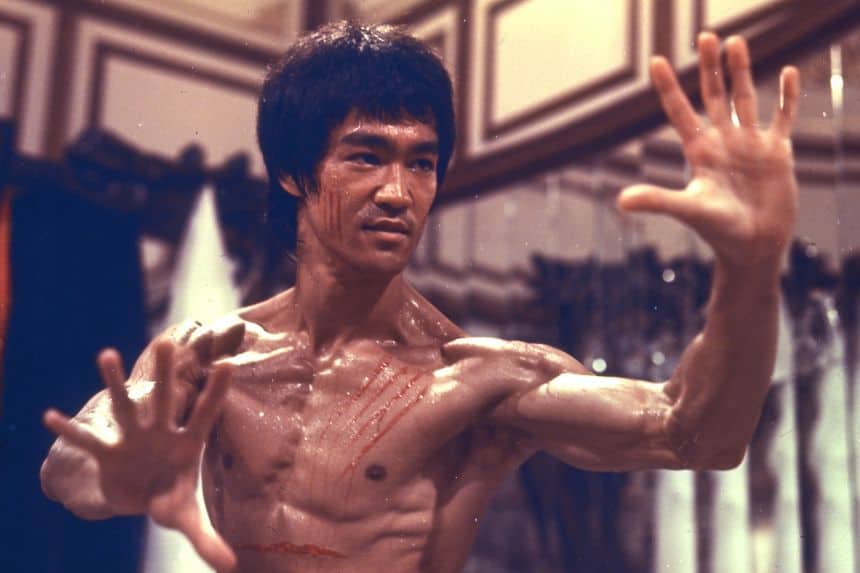
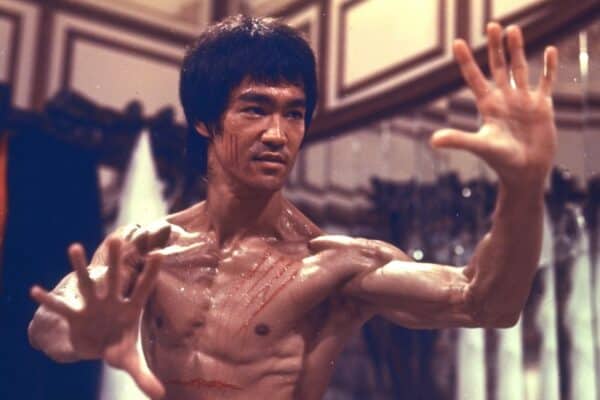
Clouse, R. (Director). (1973). Enter the Dragon [Film]. Warner Brothers Pictures.

Jeet Kune Do(JKD) is not only a martial art style, but a philosophy that was founded by the legendary Bruce Lee. In 1971 Bruce Lee wrote an essay entitled “The Tao of Jeet Kune Do.” In it, he described his martial art and philosophy. Does Jeet Kune Do still have relevance, and is it a practical martial art today?

Jeet Kune Do is effective. Its effectiveness lies in breaking traditional rules of martial arts, making use of what is effective and useful rather than fighting according to a prescribed set of rules. The focus is to anticipate, intercept and use your skill to counter without hesitation.

Jeet Kune do is so much more than just a combat style, which was the intention of the philosophy by its founder Bruce Lee. He saw the value in techniques from many different fighting styles, and he incorporated these into his own fighting style and adapted them to be effective without the need to fight according to rules. 

What Is Jeet Kune Do?

Jeet Kune Do, or JKD, is a Martial art expression that was developed by famed martial artist Bruce Lee. It was this style, or rather the philosophy behind the style, that has resulted in many people referring to Bruce Lee as the father of modern MMA. If you want to learn more about what makes Bruce Lee the father of MMA, see my article on Bruce Lee – Why He Is Considered The Father Of MMA.

Bruce Lee struggled to put a name to his martial art expression because he felt that it would limit the philosophy behind his martial art, which went directly against the essence of the philosophy. He went back and forth between various names before settling on Jeet Kune Do in 1967.

The translation of Jeet Kune Do is “Way Of The Intercepting Fist,” where the keyword in the name is “Intercepting.” The philosophy behind “Intercepting” was considered to be applicable not only to combat-style fighting but also mentally, physically, and spiritually.

Jeet Kune Do symbol

The requirement of Jeet Kune Do is to train oneself in all aspects of life, both mental and physical, to cultivate oneself to the point that you have all the tools necessary to face any given situation. 

The idea is to equip oneself to the point that when faced with any situation, you can draw from your experience, knowledge, and training to “Intercept” the situation and use the tools you have available without needing to think about it.

The core philosophy around Jeet Kune Do is “using no way as way; having no limitation as limitation.” This implies learning from multiple sources, absorbing what you find useful, rejecting what is not, and adding your own experience to it.

What Does Jeet Kune Do Focus On?

Because of this philosophy around Jeet Kune Do, Bruce Lee incorporated moves and techniques from multiple other martial arts that he believed had merit and usefulness but not incorporating the techniques that he deemed not useful.

The focus of Jeet Kune Do is that your fighting style is personal, and each person will find different things useful from other styles than what Bruce Lee did. The key to JKD is to always be learning, always improving, always adapting, and growing. This means your martial art style may change over time as you change.

The focus of JKD is a combination of philosophy and practical fighting techniques, and skill. The primary focus is on the philosophy since if you grasp this aspect, you will be open to learn from any martial art style and grow your fighting style by incorporating components into your own style.

There is no focus on rigid or prescribed moves and patterns in JKD. The focus is on adaptability. The techniques that are taught are intended to change the way you approach martial arts from prescribed movements to anticipating or intercepting your opponent’s moves and attacks.

Is Jeet Kune Do Still Effective?

The combat style of Jeet Kune Do is effective because the foundation of the style are moves that Bruce Lee adapted from other styles and brought them into his philosophy, which allowed him to improve on them rather than stick to the prescribed execution of the technique.

Much of the techniques developed for JKD were to make the style effective for real-life combat situations. This meant being able to adapt your style to the situation and use different moves and techniques dictated by the situation rather than by your learned fighting style.

Because JKD was developed for street fighting, the techniques taught as part of this style are definitely still relevant and effective today. However, the philosophy of not sticking to a single “way” but developing your own adaptations are still relevant and is the foundation philosophy of modern MMA. 

Is Jeet Kune Do The Best Fighting Style?

It is difficult to classify any one martial art or fighting style as “the best” fighting style since they all have their strong points and flaws. The very thought of proclaiming JKD as the best fighting style goes against the philosophy of the martial art.

According to the philosophy, there is always room to improve and learn new techniques and to adapt and evolve.

JDK is certainly one of the best fighting styles because of its practical application, strikes that are designed for real-world situations, low kicks that are difficult to counter, and efficient use of your energy. One of the core aspects of the martial art that makes it very useful is learning to anticipate your opponent’s moves. 

The combination of the moves taught as part of JKD and learning to anticipate and intercept make Jeet Kune Do a very effective martial art to learn for self-defense.

Is Jeet Kune Do Deadly?

All martial arts and fighting styles have the potential to be deadly; it all depends on the attitude of the fighters involved. Jeet Kune do was developed to be an effective fighting style that can be used in self-defense.

Jeet Kune Do can certainly be deadly, especially if the student has focused on learning and mastering the strikes taught in the martial art. All fighting styles have the underlying capability to cause serious injury and even death, depending on the intensity with which the combat techniques are performed

Is Jeet Kune Do More Effective Than Wing Chun?

Wing Chun is a classical martial art that has very strict rules and disciplines in the fighting style. It has prescribed movements and techniques, fixed positions, forms, and movements and relies on a straight-line attack and defense.

Yip Man & Bruce Lee practicing Wing Chun

Jeet Kune Do is better than Wing Chun, especially in a real combat situation, because it is more adaptable and fluid, and there are more techniques that are taught as part of the style. Jeet Kune Do incorporates some Wing Chun techniques, but they are performed without the rigidity of rules.

The key of JKD is effectiveness rather than adhering to a set of traditions and rules in a fighting style. This makes JKD more fluid and effective in more situations than Wing Chun.

Is There A Difference Between Jeet Kune Do Vs. MMA?

The key aspect where Jeet Kune Do and MMA meet is in the philosophy. MMA incorporates many different fighting styles, and the fighters learn many different martial arts and other fighting styles to compete, and JKD incorporated techniques from other styles.

The difference between Jeet Kune Do and MMA is that MMA is a sport that is governed by rules, and the techniques that are used in the sport can only be used within the confines of the rules. JKD has no rules, and any technique that is useful is incorporated.

JKD is not governed or limited by rules that would contravene a sporting code, which makes it different from MMA, where opponents must remain within the prescribed guidelines of the sport.

Is Jeet Kune Do Hard To Learn?

JKD is a martial art that emphasizes simplicity and function rather than form and technique. This makes it easier to learn some of the techniques used in JKD because there are no hard-and-fast rules. As long as the way you execute the technique is effective, you are good to go.

You can make progress quickly in JKD as long as you are diligent in your training and practice. The essence of JKD, however, is that you never stop learning and improving. You can learn techniques within a few weeks to be able to defend yourself, but the style is a lifelong journey.

This is not to say that it will take a long time to learn effective techniques, just that you will never stop learning, adapting, and improving in the style.

Is JKD Still Taught?

Many may consider that JKD died when Bruce Lee passed away, but this is not the case. Many of his students have pursued the philosophy and the training they received from Bruce Lee and developed schools that train with the same principles.

JKD is still taught today. It is one of the martial arts that many MMA fighters focus on for the aspect of anticipating an opponent. Due to the flexibility of the style, trainers train their students in JKD differently. The World JKD Federation seeks to promote the philosophy of Bruce Lee’s original art

Bruce Lee’s untimely death left the world without any formal teaching from the master himself, but the students that he taught have tried to continue with his work and development of the style. However, many of his students also admit that they still do not fully understand everything that encompasses JKD.

Conclusion

JDK is an extremely effective martial art that is one of the most useful styles to learn for self-defense. It teaches you to not only fight from a prescribed set of rules but to adapt your style to effectively counter your opponent.

Many people enjoy learning Jeet Kune Do because of its lack of traditional rules and formalities, bringing a level of freedom to martial arts that many other styles lack.

Is Taekwondo a Sport? FAQ about Taekwondo

Taekwondo(TKD): Tae  (foot), Kwon  (hand), Do  (art) is a South Korean martial art that is very popular all around the world. Most people know it just as a sport that is a part of the Olympic Games.

Taekwondo can be both a martial art and a sport. Taekwondo at its core is the art of self-defense that has many forms and styles.  But Taekwondo has also been promoted as a sport when the World Taekwondo(WT) organization was established as the international governing body for the sports competition internationally.

Keep reading this article to find out all you need to know about Taekwondo and why it became a sport and much more. 

Brief History of Taekwondo

The story of Taekwondo begins shortly after the end of WW2. This was a time when a lot of new martial art schools called “kwans” started to open up in Korea. Each kwan used to teach their own style of fighting such as “Taekkyeon”, which is an art that has origins in Chinese arts.

In the 1950s, nine main kwans decided to create a unified Korean martial art and they named it “Tang Soo Do”. At the time Tang Soo Do was a Korean form of karate that was a mix of techniques from Shotokan, Subak, and Kung Fu. But a few years later, they would change the name to “Taekwondo”.

Tang Soo Do officially became “Taekwondo” with the birth of “Korea Taekwondo Association” in 1959. This marks the birth of the unified Korean martial art, and Taekwondo as a sport.

Is Taekwondo a Sport or an Art?

Taekwondo is a martial art that is a very popular sport. The initial forms of the art, better known as “traditional Taekwondo”, have all put a lot of emphasis on self-defense, and these forms are still present. Students learn how to use all limbs as weapons to punch, kick and execute some basic throws.

But over the years, Taekwondo grew into a national sport in South Korea, and in other parts of the world as well. In order to promote TKD competitions internationally, the World Taekwondo(WT) organization was created to oversee the sport aspects of TKD.

The sport grew so fast that the entire emphasis of the art has moved from self-defense to competition and fighting under the rules. The biggest moment came in 2000 when Taekwondo was finally confirmed by IOC Executive Board to include on the Olympic programme of the Sydney 2000 Olympic Games.

This is the reason why, nowadays, most schools teach you how to fight under the rules. Taekwondo as a sport has become so big that you will rarely find a gym that will teach you traditional skills.

Are Punches Allowed in Taekwondo?

Yes, Taekwondo teaches you how to use punches to strike the opponent. But bear in mind that the way you use punches differs between the styles and forms. In competition, fighters can only throw punches to the upper body below the head and neck. They are not allowed to punch the head, which they can do using kicks only.

On the other side, traditional Taekwondo focuses more on self-defense and it teaches you how to use punches to strike the head. In fact, students learn solid punching combos as well as how to strike the head using elbows. Still, learning how to fight under the rules is far more popular in modern times. Most schools put emphasis on competition and students spend little to no time learning self-defense moves from the traditional form.

This is the reason why Taekwondo fighters rarely use punches, which gives average people a wrong perception that punches are not allowed at all.

Is Taekwondo Dangerous?

In short, yes. Taekwondo is a safe sport, but like any other martial art where you have kicks and punches, it carries a risk of injuries. It’s fair to say that it is much safer than some other arts like boxing because it includes far fewer strikes to the head.

This means that training Taekwondo could lead to various joint injuries and even fractures, but the risk of serious, long-term injuries like brain damage is very low. The most common injuries are joint and muscle strains, and small fractures. The top five locations of injury are the foot, knee, ankle, thigh and head.  

Students are throwing hundreds of hard kicks per class which is the reason why there are so many leg injuries. If you are on a receiving end, a strong kick might break your rib, which to be fair, is a common injury in all martial arts.

But overall, we are not talking about the injuries that could have an impact on your life or health in the long run. These injuries also do not take much time to heal and are a part of many other sports out there like soccer or football. 

The rate of injuries is really low in Taekwondo because most schools put a lot of emphasis on safety. All students, no matter how skilled they are, must wear full safety gear when doing any live drills or sparring. 

What are the Rules of Taekwondo?

The rules of Taekwondo may vary between the forms and styles, but most of the major rules are very much the same. Here is all you need to know about the general rules of Taekwondo, scoring of the matches and equipment. 

General Rules

  • The main goal in a Taekwondo match is to outscore or knock the opponent out by landing kicks and punches in the allowed target areas. 
  • Each bout lasts three rounds with each round being two minutes. A rest period between the rounds is one minute.
  • Each bout includes one referee and three judges scoring the contest.
  • Athletes compete on the 10m square mats.

Equipment and Uniform

  • All fighters must wear a gi top and pants made out of thick cotton and a rank belt around their waist.
  • Head guard
  • Groin guard
  • Shin guards
  • Chest protector
  • Mouth Guard
  • Hand guards and wraps
  • Forearm guards

Scoring 

  • Fighters get 1 point for every strike that lands on the body, 2 points if the kick lands on the face, 3 points for a head kick. And there is an extra point for every knockdown scored. 
  • To score a point with a kick, fighters need to land a kick with a part of the foot below the ankle. Otherwise, the judges won’t register this strike as a point. 
  • Fighters must land a punch to the body with tightly clenched fist to score 1 point. 

What is the Strongest Kick in Taekwondo?

The emphasis of Taekwondo is on kicks and its fighters are masters in executing them fast and with a lot of power. They spend each class learning how to throw various spinning and jumping kicks. But, which Taekwondo kicks generate the most power and do the most damage? Here are the top 3 strongest kicks in Taekwondo:

  • Back leg roundhouse kick — this is a regular type of roundhouse kick that we can also see in other arts like Muay Thai and MMA. To throw it with a lot of power, be sure to pivot both your lead leg and your hips in the direction of the kick. The power behind this kick lays in the rotation of the hips.
https://youtu.be/McqhEl-aNZQ
  • Tornado kick — this is a very powerful kick because you need to rotate the body 360 degrees. This much rotation generates a lot of momentum and can easily break the opponent’s ribs or knock them out. There are even variations of this kick where they rotate their bodies up to 540 degrees.
https://youtu.be/2KQ0vEB4oNk
  • Turning back/side kick– this is the most popular kick in Taekwondo which MMA fighters often use in fights. The key is to pivot away from the target and throw a kick straight backward and land it with your heel.

How Many Belts are there in Taekwondo?

The belt ranking system in Taekwondo differs a lot from the ones in other arts like Judo or Karate. And the ranks also vary between the styles and forms (WT, ITF and ATA) and are separated into “junior” and “senior” sections. Or you can look at these two sections as “color belts” (junior), and “black belts” (senior).

Junior rank students wear a color belt around their waist called “geup” which in Korean means “rank”. Depending on the style, the number of colors (geups) goes from 8 to 12. Let’s have a look at three main Taekwondo associations, and see how the belt ranking differs between them. 

ITF

There are 10 geups (ranks) from white belt to black belt, and 9 dans after the black belts. Here is how it looks:

  • White belt (10th Geup)
  • Yellow Stripe (9th Geup)
  • Yellow belt (8th Geup)
  • Green Stripe (7th Geup)
  • Green Belt (6th Geup)
  • Blue Stripe (5th Geup)
  • Blue Belt (4th Geup)
  • Red Stripe (3rd Geup)
  • Red Belt (2nd Geup)
  • Black Stripe (1st Geup)
  • Black Belt 

World Taekwondo (WT)

World Taekwondo is the most famous organization and most schools around the world use this belt ranking system. The system they are using is very simple and easy to understand as there are 11 ranks and 9 color belts:

  • White Belt
  • Yellow Belt
  • Orange Belt
  • Green Belt
  • Purple Belt
  • Blue Senior Belt
  • Brown Belt
  • Brown Senior Belt
  • Red Belt
  • Junior Black Belt
  • Black Belt

American Taekwondo Association

Just about all Taekwondo schools in the US use this belt ranking system to promote their students. However, ATA is not popular outside the US where most Taekwondo schools use WT and ITF rules. In ATA there are 10 ranks and 9 color belts:

  • White Belt
  • Orange Belt
  • Yellow Belt
  • Camouflage Belt
  • Green Belt
  • Purple Belt
  • Blue Belt
  • Brown Belt
  • Red Belt
  • Black Belt

Is Taekwondo and Karate the same?

No, Karate and Taekwondo are two separate martial arts that, apart from various health benefits, do not share much in common. These two arts are a world apart when it comes to origins, emphasis, and techniques they teach. Here is all you need to know about how these two differ from one another:

History

Karate comes from Okinawan Islands in Japan, and its origins go all the way back to the 14th century Ryu Kingdom. At the time, carrying any type of weapons was not allowed, so people used karate techniques as a weapon for self-defense.

On the other side, Taekwondo came much later in the 1950s in South Korea. At the time, there were many schools (kwans) with each kwan teaching their own fighting style. In the 1950s, all kwans have decided to unite and work together on creating a unified Koran fighting style. The final result of their work was Taekwondo.

Emphasis

The emphasis of karate varies between forms and styles. But in most of them, the focus is on striking with punches, kicks, and some forms include knee and elbow strikes as well. Students learn how to attack in a blitz to move in fast, land a strike, and go back to a safe distance without being hit back. That is the whole point in most popular karate styles like Shotokan. The other popular forms are:

  • Gory-Ryu
  • Wado-Ryu
  • Kyokushin

Most Taekwondo forms put a lot of emphasis on kicks since punches are seen as a secondary weapon. Students spend most of the time learning various jumping, spinning, and all types of kicks.

But, there’s also a traditional Taekwondo that includes a wider range of techniques. Students learn how to use all limbs as weapons to strike as well as some basics of grappling. In fact, traditional Taekwondo includes over 3000 techniques for self-defense. But this form is not that popular anymore.

Still curious? Click here to find out Karate vs. Taekwondo: Key Differences And Similarities

Is Taekwondo Harder than Karate?

Both of these arts are very hard to master and saying which one is harder is not an easy task. To become a master in any martial art, you must spend years training hard on the mats. The same stands for these two arts where you can’t achieve anything without hard work.

On average, a person needs to spend 3 to 5 years training Taekwondo before reaching a black belt rank. Of course, this also depends on how gifted you, and how dedicated you are to classes. Some schools even have a minimum where you can’t get a black belt without at least 4 years of training.

In karate, on the other side, the length for getting a black belt varies between forms and styles. But on average, it takes around 5 years for a dedicated student to reach a black belt rank. Some students might get there faster but as in any other art, this depends on a style, school, and talent.

Is Taekwondo Good for MMA?

Taekwondo as a fighting system is not that popular for cage fighting because it is too one-dimensional. It won’t teach you advanced punching skills or how to grapple. But this doesn’t mean that Taekwondo is bad for MMA as some of its elements and techniques are really useful. 

In fact, not a single martial art out there will teach you better kicks, and you also learn how to fight from both stances and keep your range. These skills play a big role in modern MMA fighting, notably the kicks which have become the main weapon. This is a reason why some of the best MMA fighters in history have a strong background in Taekwondo like: 

  • Bas Rutten
  • Anderson Silva
  • Anthony Pettis

Is Taekwondo Effective in a Street Fight?

The modern-day art of Taekwondo focuses on teaching a sport(safer) version of Taekwondo that is not well applicable during street fighting.

The modern-day version of TKD is geared towards preparing you to score points in a competition setting rather than preparing you to win in a street fight situation.

Taekwondo also is all about standing fights. In a street fight situation, many fights end up on the ground where kicks and hand strikes that are taught in Taekwondo are no longer effective at all.

If you want to learn more, get the full report on Is Taekwondo Effective in a Street Fight?

What is Japanese Jujutsu? Here’s What You Should Know

0

Japanese Jujutsu also known as Japanese Jiu-Jitsu (JJJ) is one of many martial arts to choose from if you want to learn how to fight. However, distinguishing between the martial arts can be challenging, particularly when there are others with similar names, such as Brazilian Jiu-Jitsu (BJJ). This article will help you understand the unique attributes of JJJ so that you know exactly what to expect as a student.

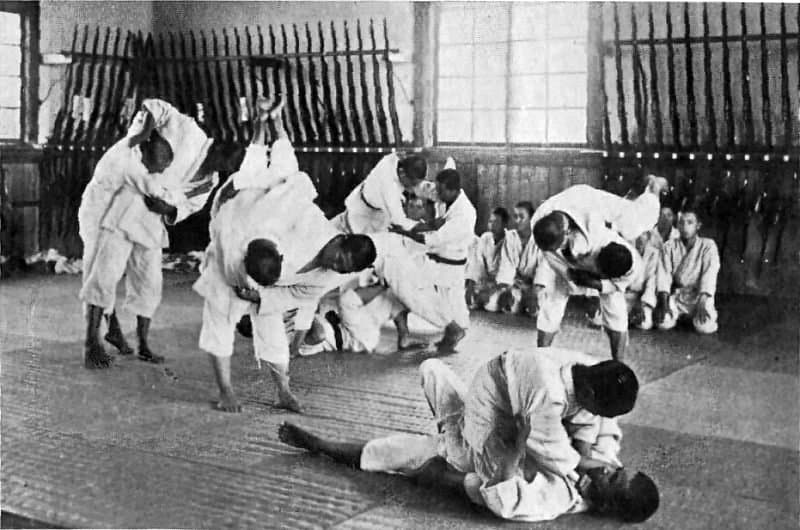
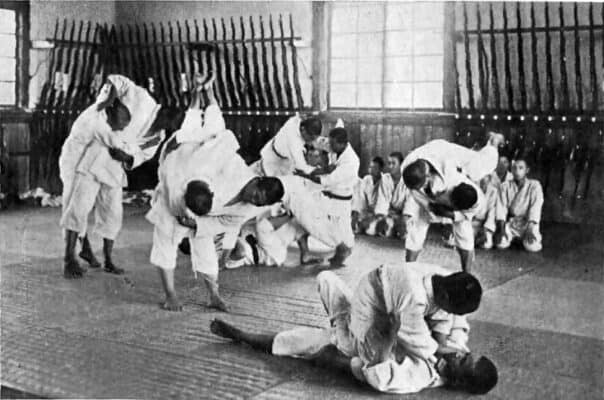
Japanese Jujutsu is an ancient martial art from which others, such as Judo and BJJ, were derived. It involves immobilization, throwing, striking, defense and sometimes the use of small weapons. Students also study technique theory, Japanese history and terminology, the human body and first aid.

There are more intricate details about JJJ below that will help you understand how it differs to other martial arts. There are also key differences between BJJ and JJJ that may lead you to believe that one is better than the other.

Brief History of Japanese Jujutsu

Japanese Jujutsu (JJJ) is an ancient martial art used in warfare, which stems from sumo and other Japanese martial art techniques. These techniques originate from the Nara period, but one of the oldest known styles of JJJ is Shinden Fudo, which was established in 1130AD.

The term ‘Jūjutsu’ means ‘gentle art’. This is because the techniques require very little of your own strength and use your opponent’s strength against them. ‘Jujutsu’, ‘Ju-Jitsu’ and ‘Jiu-Jitsu’ are all different spelling variations of the same techniques. The variations only came about due to the Western pronunciation of the word.

There have been many styles of Japanese Jujutsu taught over the centuries, but the techniques flourished just prior to the peaceful Edo period. In this time, warfare was reduced and hand-to-hand combat was the preferred fighting method, with weapons used more for decoration.

Although JJJ has been around for hundreds of years, the Japanese did not start using the term ‘Jujutsu’ until the 17th century, where it was used to encompass a variety of grappling styles. Even today there are many different JJJ schools, known as ‘Ryu’ that have their own unique styles and techniques.

There are a number of martial arts that were adapted from JJJ techniques. Some of these include Judo, Brazilian Jiu-Jitsu, Aikido and Sambo.

RECOMMENDED FOR YOU:
What is Gracie Jiu-Jitsu? Fully Explained

Did Samurai Use Jiu Jitsu? 

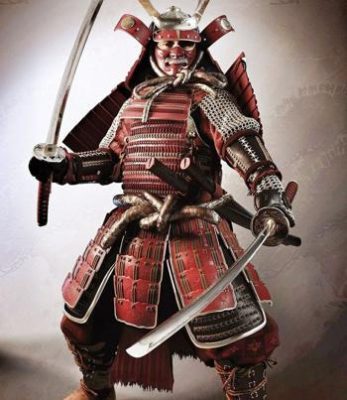
Samurai warriors used Jujutsu as one of their fighting styles to combat armed opponents with heavy battle armor. The Japanese Samurai were the noble warriors of Japan from the 12th century until their abolishment in 1876. They were some of the first warriors to use Jujutsu as a technique in warfare.

Samurai

They recognized that, in the event that they were unarmed, striking was completely ineffective against an enemy. Introducing grappling, joint locks, throws and chokes to their fighting style allowed them to overcome their opponent by using their own force against them.

What Does Japanese Jujutsu Teach? 

A Japanese Jujutsu syllabus is taught to students over a number of years as they progress through each ‘Kyu’ and ‘Dan’, which is the belt system used in JJJ. Students learn a combination of fighting techniques and theory throughout their journey to prepare both their body and their mind for defending themselves and others. 

Fighting Techniques

Japanese Jujutsu teaches a broad range of fighting techniques, including offense and defense.  Every school syllabus is different in exactly what techniques are taught, but most include the following.

Immobilization

  • Ground grappling (Gatame Waza)
  • Joint-locking (Kansetsu Waza)
  • Strangulation (Shime Waza)
  • Pinning (Osae Waza)

Throwing

  • Throwing techniques (Nage Waza)
  • Break-falling techniques (Ukemi Waza)

Striking and Defense

  • Striking techniques (Atemi Waza)
  • Blocking and parrying
  • Postures and guard techniques

These are broad terms used to summarise hundreds of techniques that can be taught in JJJ. Some schools will include the use of weapons in their striking syllabus, such as Kenjutsu Kata (‘way of the sword’) and Jo-jutsu Kata (‘way of the wooden staff). On the other hand, some schools will only teach unarmed techniques.

Theoretical Knowledge

Japanese Jujutsu also encompasses a wide range of theory so that students have a well-equipped mind for a fight. Black belts may even be required to produce written papers proving the depth of their knowledge of Jujutsu theory. Students usually will learn aspects of the following as they progress through their training.

  • Japanese history 
  • Japanese terminology
  • Theory behind each fighting technique
  • Anatomy and physiology
  • First aid and other ‘healing arts’

Is Japanese Jujutsu Effective in a Street Fight? 

Japanese Jujutsu techniques are effective in a street fight. They provide the skills necessary to strike your opponent or defend yourself, as well as provide first aid if needed.

However, many JJJ techniques can seriously harm your attacker. Ideally, you should be able to defend yourself and control your attacker without anyone getting hurt. Unfortunately, if your attacker falls to the ground and hits their head after a strike or throw, the head injury could be fatal. Death is never the best outcome, regardless of whether they tried to hurt you.

RECOMMENDED FOR YOU:
What Is Combat Jiu-Jitsu? An Introduction To Combat Jiu-Jitsu

What is the Major Difference between BJJ and JJJ?

Although BJJ was derived from Japanese Jujutsu(JJJ), there are still a number of key differences that separate the two martial arts. These are listed below.

Purpose

JJJ was originally intended for war, meaning that many techniques were designed to seriously injure or even kill your opponent. BJJ, on the other hand, was tailored as a means of self-defense. The primary purpose is to defend against an attacker without causing them any serious harm.

Techniques

As mentioned above, there are hundreds of techniques within JJJ, grouped into broad categories. There are also over 600 recognized techniques in BJJ. However, BJJ does not include striking or throwing techniques of any kind.

All offensive techniques in BJJ can be categorized into choke-holds or joint-locking. Instead of throwing opponents to the ground, BJJ practitioners will ‘sweep’ their legs. This ties in with the primary purpose to prevent serious harm to your attacker in BJJ.

Belt System and Grading

Many JJJ schools have adopted the colored belt system designed by Jigoro Kano, the creator of Judo. Belts are divided into ‘Kyu’ for colored belts and ‘Dan’ for black belts. There are 10 Kyu to progress through before reaching Dan. However, some JJJ schools do not use the belt system at all.

In order to be promoted to the next belt, a JJJ student must be formally assessed by performing a number of techniques in front of an assessor. In addition to this, they must demonstrate the theoretical knowledge required for that belt.

In BJJ, belts are named according to their color, such as ‘blue belt’. There are only four colored belts before black belt, but each have four ‘stripes’ to progress through. In addition to this, students receive promotions when their instructor thinks they are ready, simply through observation during lessons.

Competitions

JJJ is more of a way of life than a sport, teaching students discipline, respect and theoretical knowledge. Sport Jiu-Jitsu competitions are the only means of competing as a JJJ practitioner, but the rules prohibit a number of JJJ techniques, such as kicks to the legs or strikes to the face.

BJJ, on the other hand, is very competition-focussed. There are several BJJ competitions, such as the IBJJF World Championship and Abu Dhabi World Pro, which practitioners can take part in. BJJ practitioners can use almost all BJJ techniques in these competitions because they will not cause serious harm to the opponent (if controlled and used correctly).

RECOMMENDED FOR YOU:
BJJ vs Japanese Jiu-Jitsu – Key Differences and Similarities further explains everthing you need to know about the difference between BJJ vs Japanse Jiu-jitsu.

Which Is Better BJJ or Japanese Jujutsu? 

BJJ and JJJ both have their strengths and weaknesses. Overall, BJJ is more practical, teaching students techniques that will help control an attacker. Although it does not specifically train defense against weapons, it focuses on knowing how to avoid a fight and when to engage in a fight safely.

Japanese Jujutsu is still useful for fighting, but includes a much broader curriculum. This means you may find JJJ better than BJJ if you are interested in learning about Japanese culture, the history of JJJ, how the human body works and how to treat injuries. JJJ also offers striking techniques, so people who would like to learn offense as well as defense may prefer JJJ.

Are Weapons Used in Japanese Jujutsu? 

Japanese Jujutsu is mostly hand-to-hand combat, which is why it flourished when carrying a weapon became illegal in 17th-century Japan. However, it was not a completely weapon-free martial art, including those listed below.

  • Knives
  • Wooden staff
  • Short swords
  • Ropes

Many modern JJJ schools do not include the use of weapons in their curriculum, but will still teach defense against weapons. Schools will tailor their weapon defense training to common street weapons, such as bats, pocket knives and guns. However, you can still find some schools that will train their students how to use these smaller weapons.

Is Japanese Jujutsu Still Practiced Today?

Japanese Jujutsu is still practiced internationally today across hundreds of schools, known as ‘Ryu’. Many senior instructors have studied in Japan or under a Japanese master. However, each school adheres to one particular style of Japanese Jujutsu, such as Takenouchi-Ryu, which is one of the oldest forms of Japanese Jujutsu.

In addition to this, JJJ has also become more widespread through the use of the internet and online instructional videos. Many instructors will record certain techniques and upload them for others to learn. This has allowed JJJ to reach those that may not have a local school available.

In terms of using JJJ in a practical setting, most practitioners prefer to think of JJJ as a way of life. Although it provides a means of self-defense when the situation arises, it also teaches discipline and respect that can be used in everyday life.

Top 15 Best Asian MMA Fighters of All Time – Ranked

0

Asia has always been a home of talented fighters, no matter what type of combat sport we are talking about. When it comes to MMA, fans tend to forget that Asia is a pioneer of this sport where the first MMA promotions have emerged. No, the first MMA promotion wasn’t the UFC, it was the Japanese “Shooto”, founded in 1986.

At one point in time, fighters from Asia used to dominate the scene, and they are more than present in modern times as well. But with the rise of MMA in the western world, it seems like the new generation of fight fans don’t know much about the true MMA legends from Asia.

This is the reason why I have decided to bring you a list of the 15 greatest Asian MMA fighters. Be sure to read this article to find out who they are, their stories and how they contributed to the rise of MMA.

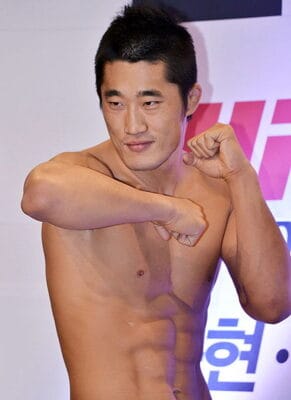
15. Dong Hyun Kim

Photo by ACROFAN

Born in South Korea, Dong Hyun Kim is a retired UFC legend who, at one point, was a serious contender in the UFC’s 170lbs weight class. Although he didn’t win any titles, Kim was able to win the hearts of many fans across the world. In his UFC career, he won many “fight of the year” and a “knockout of the year” awards.

Kim started his martial art journey at 14 years of age by training in Judo and Taekwondo. Later on, he would join the MMA gym where he became the main sparring partner of Yushin Okami, who at the time, was a top MMA fighter. He became famous fighting for the Japanese “Deep” promotion where he was a welterweight champ.

In 2008, he received a call from the UFC to join their roster. He had a long career which he ended with 13 wins, 4 losses, and 1 no contest, and was close to fighting for the title on two occasions. The first time, he was on 4 fight winning streak but the loss to Tyron Woodley cost him a title shot. Kim bounced back with 3 wins, but the loss to Colby Covington stopped him from fighting for the belt once again.

14. Hayato Sakurai

Photo by Larry Burton

From vicious low kicks and wild judo throws to his insane shoot wrestling skills, Hayato Sakurai was a total package. And on top of that, he was a very exciting fighter to watch.

Born in Japan, Sakurai spent his youth training in Judo and Karate before moving into Shoot Wrestling and MMA later. From 1996 to 2001, he dominated the famous “Shooto” promotion where he was a middleweight champ. His first loss was against the great Anderson Silva, the first loss of his professional MMA career.

Sakurai was so famous that, after bouncing back with a win, he got a call from the UFC to jump right into the title fight. Yes, Sakurai fought for the UFC title against Matt Hughes in his UFC debut. He lost via TKO in the fourth round at UFC 36, and he would never fight again for the UFC. Instead, he continued his career in PRIDE FC where he lost in the Grand Prix finals against Takanori Gomi in 2005.

13. Mark Munoz

Born in the United States Navy Base in Yokosuka, Japan, Mark Munoz is a former top UFC fighter. When he was just two years old, he moved with his Filipino parents to California, US. This is where Munoz fell in love with wrestling and he went on to win a prestigious NCAA Division I Wrestling championship in 2001. Just two years later, he would start training in MMA and make his pro debut five years later for the “PFC” promotion.

Munoz joined the UFC roster in 2009 and was, at one point, seen as a hot prospect. Though he had a solid career, Munoz was one of those fighters who had failed to deliver when it mattered the most. He lost many crucial fights that, in the case he won, would have launched him into the title contender position. One such fight was the one against Yushin Okami in 2010, and against Chris Weidman in 2012.

Though he never won the UFC title, Munoz became a part of UFC history. At UFC 138, he took part in the first-ever five-round non-title UFC bout against Chris Leben, which he won via TKO in the second round.

12. Yushin Okami 

Yushin Okami is a legendary fighter from Japan who faced and beat some of the best fighters. He is among the toughest 185lbs fighters UFC has ever had, and it’s a shame that he never won any major titles in his career. He failed to win both the UFC title (against Anderson Silva) and the WSOF title (against David Branch).

He started his MMA career fighting for various Asian promotions during the 2000s like “Pancrase”. But a lot of fans know him for his win over the great Anderson Silva at “Rumble on the Rock 8” in 2006. He became a star fighting for the UFC where he holds wins over many great fighters. He beat Alan Belcher twice, Mark Munhoz, and Hector Lombard. 

11. Cung Le

Photo by Mike Dunn

When it comes to Asian MMA fighters, Cung Le might be the most famous of them all. Born in Vietnam, Le is a former kickboxer and MMA fighter who also has a talent for acting. He played small and big roles in some very popular movies like “Tekken” and “Dragon’s Eyes”. Although some of his movies were big, people know him best for his fights inside the MMA cage.

Before moving into MMA, Le spent a lot of time training Wushu Sanda and fighting in pro kickboxing matches. After amassing a record of 17–0, he decided to start training BJJ, and test his skills in MMA matches. He signed with the “Strikeforce” promotion in 2006, which at the time was the home of many elite MMA fighters.

Le kicked off his career with 5 KO/TKO wins which secured him a shot at the 185 lbs title which he won by finishing the great Frank Shamrock. He would later sign with the UFC, but he failed to achieve the same success as in “Strikeforce”. Still, fans will forever remember his KO win over Rich Franklin at “UFC on Fuel TV 6”, for which Le received a “knockout of the year” award in 2012.

10. Takanori Gomi

Photo by Bruno Massami

Gomi is a true legend of Pride FC and Japanese MMA. He was one of the best fighters during the glory days of Pride FC who had a really unique fighting style.

Born in Kanagawa, Japan, Gomi kicked off his MMA career by winning the “Shooto” lightweight title in 2002. A year later, he moved to Pride where he won the lightweight Grand Prix and Championship in a single year (2005). In fact, Gomi is the only Pride lightweight champ and a man who holds a record for the fastest KO in Pride history. He needed just 6 seconds to finish Ralph Gracie at “Pride Bushido 3” in 2004.

Unlike most fighters from Japan of that time, Gomi was a sprawl and brawl type of fighter. He was a master in mixing his great wrestling defense with elite boxing skills he used to score many KOs. Gomi often fought from both stances and his overhand right was the best in the business.

9. Chang Sung Jung 

Photo by ACROFAN

Better known as “Korean Zombie”, Jung is a fighter who puts Korea on the map when it comes to MMA. Although he has never won a world title, Jung is more famous than some UFC champions and the reason is very simple. He has been through many wars in his career and was never in a boring fight.

Born in Pohang, South Korea, Jung had a hard time dealing with bullies while growing up. This led him to enroll in Hapkido when he was 14 years old and later started learning kickboxing. Approximately four years later, he started training in judo and BJJ, which along with his striking skills, made him an all-around fighter.

This combo of skills proved great for cage fighting as Jung went on to quickly made a name for himself in MMA. He won the “Pancrase” title in his third pro fight, before moving to WEC, and later UFC. If you look at his record, Jung might not be a perfect fighter. But the fans love him because of his exciting fighting style. Whether it’s a grappling or striking exchange, Korean Zombie is always ready to put on a show.

8. Kyoji Horiguchi

Photo by Gyutan329pii

Horiguchi is an MMA superstar from Japan and it’s really hard to put into words how skilled he is. He is, perhaps the hardest flyweight puncher in history who was able to win titles in big promotions like:

  • Shooto
  • Rizin FF 
  • Bellator 

Horiguchi is often seen as the second-best flyweight fighter in MMA history. He has beat just about every flyweight there is except for the great “Mighty Mouse” Johnson. The two fought for the UFC title in 2015 with Horiguchi losing to a submission in the fifth round. 

Despite being 4–1 inside the UFC at the time, Horiguchi signed with RIZIN FF and go on a 13 fight winning streak before losing to Kai Asakura in 2019. 

7. Yuki Kondo

Yuki Kondo is one of the pioneers of Asian MMA and a true legend of the Japanese “Pancrase” promotion. He has been with the promotion for over two decades and has over 100 fights on his record. In his long career, he also had short stints with the UFC and PRIDE FC.

Kondo comes from a strong background in Shorinji Kempo and he started fighting in MMA in the early 90s. He made his “Pancrase” debut in 1996, back when this Japanese promotion was a home of the best MMA fighters in the world.  One of the biggest moments of his career came when he beat Frank Shamrock in 1996, which was a huge upset back then. Shamrock was at the peak of his prime at the time while Kondo was an up-and-coming fighter.

In his career, he managed to win the Pancrase title in three different weight classes which make him one of the greatest champions. He won the light heavyweight title in 2003, middleweight title in 2010, and was also a two-time open weight champion. At the peak of his prime, he also fought for the UFC light heavyweight title which he lost against Tito Ortiz at UFC 29.

6. Yoshihiro Akiyama

Photo by Pabian

Born in Osaka, Japan, Akiyama is a true MMA legend. In MMA circles, he is best known for his fights in the “K1-HERO” promotion where he was a light heavyweight champion. And of course, his famous nickname is “Sexy-Yama”.

Akiyama came into the world of MMA as a decorated Judoka. As an “Asian Games” gold medalist, he enjoyed legendary status in Japan and his arrival in MMA was a big deal back then. But on top of that, he was a showman who knew how to sell the fight and entertain the crowd. 

In 2009, his move to the UFC received huge media coverage. His arrival was so big that the promotion put him on the famous “UFC 100” main card. And the world went crazy when Akiyama managed to win his debut fight against Alan Belcher. Still, the hype around Akiyama was short-lived as he went on to lose five of his next 6 UFC fights.

5. Shinya Aoki

Photo by Evolve MMA

Aoki is an MMA superstar from Japan and one of the most dominant Asian fighters. It’s a shame that most western fans don’t know about Aoki because he has never fought for the UFC or any other western promotion. No, he has become famous for fighting for ONE FC, PRIDE FC, and DREAM.

It’s really hard to put into words how dominant Aoki was in his prime. He held a title in just about every promotion he fought for, which gives you a great insight into how skilled he is. What sets him above the others are his insane BJJ and wrestling skills, which is a combo he used to win most of his fights.

Aoki has over 30 submissions on his record out of which some came against elite BJJ fighters which makes Aoki one of the best finishers in the sport of MMA.

4. Weili Zhang

Weili is the former UFC strawweight champ who will go down in history as the first-ever Chinese UFC champion. This was huge not just for China, but for the entire eastern world as she is also the first-ever East Asian UFC champ. She needed less than a minute to achieve this against Jessica Andrade in 2019.

Born in Handan, Hebei, China, Zhang got into martial arts at a very young age. She spent her youth training in various Kung Fu styles and Sanda before moving to BJJ later. This mix of grappling and striking skills helped her to quickly shift over to MMA, and become a star in a very short time span.

On her road to becoming the UFC champ, Zhang left nothing but carnage in every fight. Her game is an ideal balance of proper striking technique, and insane power behind each strike she throws. Though she lost her crown in the first title defense, Zhang deserves a lot of credit for bringing new Asian fans into the sport of MMA.

3. Lyoto Machida

Photo by Marcos Joel Reis

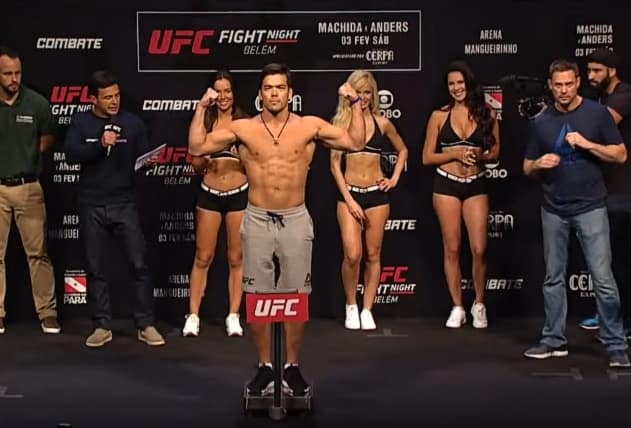
Machida is widely known as one of the best Brazilian fighters. But what people often don’t notice is that he has Japanese descent. His father, Yoshizo, was a highly-ranked person in the “Japanese Karate Association”. When he was 22, Yoshizo moved to Brazil where he met his future wife, Ana Claudia who, by the way, has Italian descent.

Machida deserves a lot of credit for changing the sport, notably when it comes to striking. He was the one who showed the world how effective Karate is in MMA. When he arrived in MMA as a skilled black belt in Karate, no one knew how to deal with his style of fighting. His footwork and blitz attacks were a very tough puzzle to solve for many great fighters of that time.

At one point in his career, Machida was on a 16 fight winning streak, out of which 8 of his wins were in the UFC. The biggest win of his career was the one against Rashad Evans that won him the UFC light heavyweight title. And the other great one was when he beat “Shogun” Rua in his first title defense.

2. BJ Penn

Photo by BMF BMF

In the eyes of many MMA fans, BJ Penn is one of the greatest UFC fighters we have ever seen compete, and he is a mixed Korean descendant. Though maybe not the best, BJ was a true fan-favorite fighter who, while in his prime, was very exciting to watch. He was always ready to put on a show for the fans, which his UFC records are clearly showing.

Penn was just the second fighter who was able to win UFC titles in two weight classes. He won the 170 lbs title in 2004 by beating the great Matt Hughes, and later the 155 lbs title with a win over Joe Stevenson in 2008. He was also able to win many world titles competing in BJJ tournaments, and was awarded “Lightweight of the decade” by “Bleacher Report”. Penn was truly one of those fighters who come once in a lifetime and deserves a lot of credit for putting the UFC on the map.

1. Kazushi Sakuraba

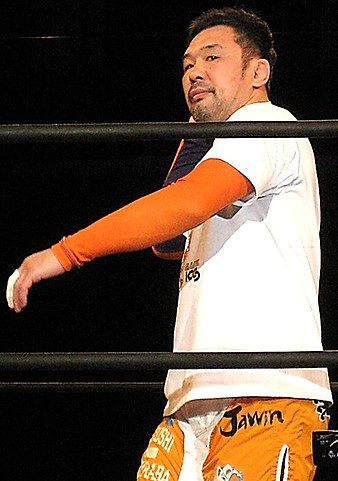
Sakuraba is an MMA legend from Japan who is better known by his nickname “The Gracie Hunter”. It’s really hard to put into words how famous Sakuraba was during the 2000s. He was the first one to beat the great Royce Gracie, and break that aura of invisibility created by this Gracie Jiu-jitsu family.

The first time we heard about Sakuraba was in 1997 when he won the UFC heavyweight tournament in Japan. Bear in mind that he did this in his third pro-MMA bout. He would then move over to PRIDE FC, which at the time was more popular than the UFC and home of the best fighters.

Though he never won the PRIDE title, Sakuraba went on to defeat many legends of his time. But most MMA fans know him for his wins over Royler and Royce Gracie. These two wins secured him a legendary status in his native Japan. In fact, he is still a very popular figure in the MMA world, and one of the most charismatic fighters we have ever seen.

Key Difference between UFC “Fight Night” and “Numbered” UFC

0

Fans of the UFC will have two ways of keeping up with the action. They can either watch Fight Night or a numbered UFC event. But this poses a big question. What is the difference between these shows? 

The biggest difference is the price. UFC Fight Nights are broadcast on ESPN as part of a subscription. UFC fights are sold on a PPV basis. Another key difference is the type of names involved. Fight Nights tend to focus on rising stars while UFC numbered fights have established fighters. 

There are two main televised events that the UFC will broadcast. Keep reading to learn more about how each of them works.

What is UFC Fight Night? 

While UFC Fight Night is now a regular feature, it stems from humble beginnings. It originally began as the climax to the popular reality TV show, UFC Ultimate Fighter. Interestingly, the headline fight featured Ken Shamrock against Rich Franklin. The success of the event and the reality show proved that there was a big market which the UFC could tap into. 

UFC Fight Nights are broadcast on the ESPN+ network. Typically, these events will feature up-and-coming fighters. Though, occasionally, the events will feature a headline with one of the bigger mid-tier stars. It would be very unusual to see a major star, like Connor McGregor, fighting on UFC Fight Night. 

This program serves a few important roles for athletes. First, it allows them to introduce themselves to the audience. This can be a good way to grow a fanbase and develop momentum. Secondly, it will allow them to impress Dana White, who owns the UFC. 

The show also forms an important role for the business side of the UFC. It provides a steady stream of future stars. It’s also used to promote upcoming numbered events. For example, there might be interviews with the stars who will be headlining the events. This lets them build hype and excitement for UFC events, increasing the number of pay-per-view sales they receive. 

What is a UFC “Numbered” Event?

A numbered event is a pay-per-view fight. These tend to be much bigger events than Fight Nights. There are a few reasons for this. These are: 

  1. It features more well-known stars
  2. Headlined by a title fight
  3. More hype, created by the UFC Fight Night events

These events also have an important role in the business side of the business. The sales of pay per view form a crucial part of the revenue stream. For example, the UFC 257 event got over 1.6 million buys. Increasingly, this is where the company is deriving a lot of its revenue from. 

What Do the Event Numbers Mean? 

Some fans are confused about the way that UFC events are named. Often, it will just be a number. These numbered events move in sequential order. For example, the first UFC PPV event was one. The next one was two and so on. 

What is the Difference Between UFC and UFC Fight Night? 

There are a few important differences between these events. Some of the most important distinctions are: 

  • Where you can watch. Fight Night is available to anyone who has an ESPN+ subscription. To watch a numbered event, you will need to pay for the PPV. 
  • Price. UFC Fight Night is included with ESPN+, which costs around $69.99 a year. On the other hand, you will need to pay around $69.99 for the pay-per-view event. 
  • Importance. UFC events will hold title changes and bigger matches. 
  • Regularity. UFC Fight Nights are a fairly regular occurrence, happening weekly in the lead up to a pay-per-view. UFC numbered events will occur less frequently.  

How Many UFC PPVS are There Per Year?

The number of PPV events that UFC holds each year varies. However, it is often around one per month. This averages out to 12 events per year. 

How Often is UFC Fight Night? 

The frequency of the Fight Nights will also vary a little. For example, in 2019 UFC signed with ESPN. This deal meant that they needed to produce 42 events for the network. While these events won’t be held each week, there will be at least two or three ahead of numbered events. 

Does UFC Have an Off-Season?

Individual fighters will need to take a rest between matches. This gives their bodies some time to recover and allows them to prepare for the next match. However, UFC has built up a steady roster of stars. When one is injured, another will be able to take their place. Because of this, there is no off-season and the UFC can able to produce events throughout the year. 

What is the Highest PPV Buys in UFC History?

The UFC has several revenue streams. Though one of its most important is the number of people who are buying Pay-per-view (PPV) To date, the highest number of buy-ins came from the UFC 229 event. The headline was Connor McGregor fighting Khabib Nurmagomedov. This result in 2.4 million PPV buys. This doesn’t include the amount of money earned by people paying to attend the event in person. 

Several factors will determine the number of people who buy PPVs. However, history shows that the fighters are the biggest driving factors. Big names like Connor McGregor and Israel Adesanya become synonymous with big rises in UFC PPV buys.

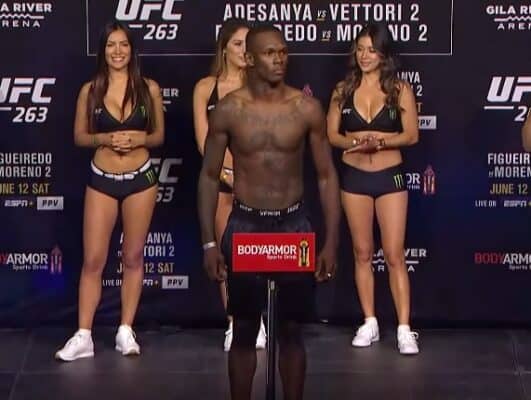
Israel Adesanya

While the number of PPV buys is a good indication of how popular the card is, it isn’t the only way that the UFC can make money from an event. They will be able to sell tickets to the fight. They will also sell merchandise. Furthermore, they can sell the replays of the fight. This includes DVDs or licensing fees from television networks. Also, sponsors pay to have their advertisements placed around the venue or inside the octagon. 

Does UFC Fight Pass Have Every Fight?

For many fans, the cost of keeping up with PPV purchases can be a big problem. At an average of 12 per year and a cost of $69.99 per match, they would need to pay around $840 to see them all. As a result, many people turn to the UFC Fight Pass. The company refers to this as “The Netflix of Fights.” It will only cost around $10 per month to subscribe. 

If you opt to get the Fight Pass, you will be able to get access to a lot of content. This includes: 

  • Access to preliminary events for UFC fights
  • All the historic UFC matches
  • Original content, like interviews with the fighters
  • Events from other organizations. For example, you will be able to see Strikeforce. These events might be live. 
  • Martial Arts(Mostly Kung Fu) movies
  • The official UFC podcasts

However, if you want to see the UFC numbered bouts live, you will still need to pay a premium. After a month, the event will be included in the subscription service.

Is the Ultimate Fighter on UFC Fight Pass? 

One of the most popular TV reality franchises in the UFC is The Ultimate Fighter. This follows a group of up-and-coming fighters as they live and train together. Each episode ends with a fight. 

Since it first went to air, the show has built a large audience. The UFC Fight Pass has every episode of the show. It also has other reality shows, like Dana White’s Contender series. 

Final Thoughts

UFC is a major sports provider, broadcasting multiple events each year. These can be broken down into UFC Fight Nights and UFC numbered events. Fight Nights are available to anyone with an ESPN subscription. But if you want to see the bigger names and title fights, you will need to buy the PPV. This system works for the UFC, allowing them to build new names and promote their latest PPV events.  

What Is A Haymaker Punch In Boxing? Easily Explained

0

Boxing has many punching styles and techniques that fighters use to attack their opponent or counter the attacks from their opponent. A haymaker is one such punch in a boxer’s repertoire that could win the fight if it lands or put you in a spot of trouble if you miss! But what is a haymaker punch exactly, and is it effective in boxing?

A haymaker is a punch that is thrown with full force and total commitment. The punch is similar to a hook but employing the shoulders and the hips to enhance the power of the blow. The punch is intended to be a knockout blow, but if it misses the target, it can leave the fighter open to a counter.

A haymaker punch could be a match-winning blow if the punch is landed on the jaw of the opponent due to the force that is behind the punch. A full-force haymaker could put the fighter launching the punch in a difficult position if the punch does not land effectively and give the opponent an opening to retaliate. Is the haymaker still an effective punch, and how do you throw this punch in boxing?

What Is a Haymaker Punch?

A haymaker is a punch that is thrown by a boxer with full force, employing the shoulders, hips, and bodyweight of the boxer to put maximum force behind the blow. The blow is similar to a hook but delivered with much more force.

A haymaker punch is often considered to be a punch used by untrained, amateur fighters, and when swung by fighters of this level, they are seldom effective because they are telegraphed

Professional fighters have used the haymaker to devastating effect, but in this case, the punch is well-timed and can catch an opponent unawares. The haymaker punch is intended to be a knockout punch, but if it does not knock the opponent out, it can cause severe damage to the opponent, such as cuts, which disadvantage the opponent.

The origin of the term “haymaker punch” is unclear, and there is little reference as to when it was first used in a fighting context. It is thought that the term is used because this punch resembles the action of people who harvest hay with a scythe.

The roundhouse swinging action of the scythe when harvesting hay closely resembles the movement used by a fighter who throws a haymaker punch.

RECOMMENDED FOR YOU
What Is The Average Punching Speed? Punching Speed Analyzed

What Is a WILD Haymaker Punch?

Haymakers are often thrown by fighters in desperation if they are outmatched or struggling to maintain an effective defense against an opponent.

In this case, a wild haymaker is often thrown in an attempt to get the other fighter to back off or in the hopes that the wildly thrown punch will connect and knock the opponent out.

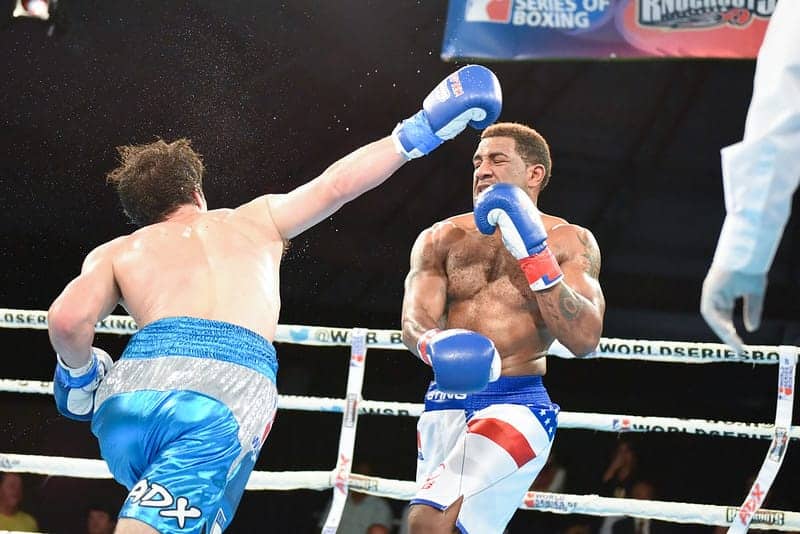
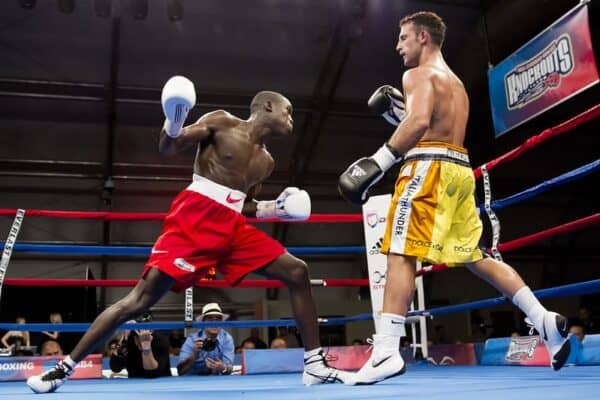
Wild haymaker punch
Photo by WorldSeriesBoxing

When a haymaker punch is thrown in this manner, it is often termed a wild haymaker punch. Some fights have been won by fighters who have been outclassed to that point in the fight but have been lucky enough to land a wild haymaker on their opponent and win the fight.

RECOMMENDED FOR YOU
What is a Rabbit Punch in Boxing/MMA? Easily Explained

Do Fighters Throw Haymaker Punches?

Even though a haymaker can be an effective punch, it is often seen as a punching style that is commonly the domain of an untrained amateur fighter.

This does not disqualify the haymaker from the professional ring or as an effective punch for well-trained fighters.

Many highly trained, professional fighters have effectively used the haymaker punch as a fight-winning blow. The difference between a haymaker thrown by an amateur and one delivered by a trained fighter is the timing of the punch and not telegraphing the punch.

This allows the fighter throwing the haymaker to catch the opponent by surprise and prevent them from taking countermeasures to avoid or deflect the blow.

Seasoned fighters may not use the haymaker as often as fighters with less experience, but should the opportunity present itself, a fighter will not hesitate to use this potentially fight-winning punch.

How Do You Throw A Haymaker Punch?

A haymaker punch starts off in the same way as throwing a hook. The arm is pulled back to the position for throwing the hook, but then the shoulders and the hips are also twisted back to prepare to launch the punch.

The punch is led by the rotation of the hips, followed by the shoulders, in the direction of the punch. The arm and fist then follow behind the momentum of the hips and shoulders, which delivers much more power to the punch.

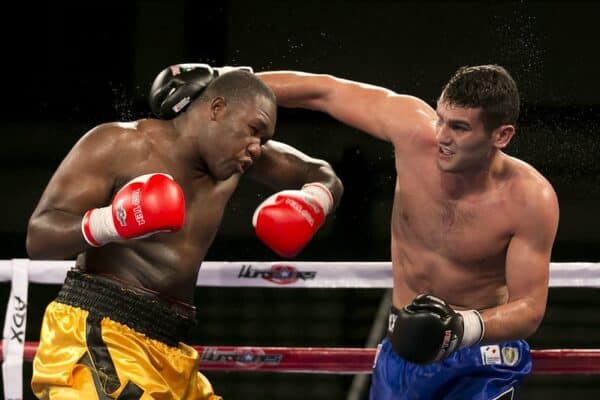
A haymaker punch in motion
Photo by WorldSeriesBoxing

The haymaker can also have an overhand component to the punch, which makes the punch come from above or over the head of the fighter throwing the punch rather than in a horizontal plane.

The fighter will also often lunge forward with their body to add the mass of their body weight to the momentum of the punch.

This is where the haymaker could be a problem for the fighter that throws the punch. If the punch misses the target, the fighter’s momentum from the force of throwing the punch can cause them to be off-balance and stumble forward, opening themselves up to a counterattack from their opponent.

How Do You Defend And Counter A Haymaker?

Haymaker punches thrown by inexperienced fighters are often telegraphed, giving time to take defensive action against the punch and to counter the attack with an attack of your own. Even if you see the haymaker late, you can take evasive measures to minimize the force of the attack.

Defending Against A Haymaker Punch

The following moves are defensive measures against a haymaker punch.

  • Duck under the punch. This may not work if the punch has an overhead component but is effective if the haymaker comes from a horizontal plane. The haymaker is most often aimed at the head, so moving your head down a few inches will allow you to duck under the punch.
  • Lean back or step back. Leaning your head back or taking a step back will put you out of reach of the blow and potentially cause your opponent to over-extend and lose balance.
  • Step forward. Stepping forward closer to your opponent will make the haymaker ineffective since the power in the punch is in its extended range. Stepping in closer to your opponent will take the force out of the punch.

In all these defensive measures, always keep the forward shoulder facing the punch up to protect your jaw against the punch. If you mistime your defense and the blow lands on your shoulder, it will be deflected away from your head.

Countering a Haymaker Punch

Even though a haymaker is a powerful punch, it can be countered because the person throwing the haymaker commits fully to the punch and can be off-balance or open themselves up to a counter should the punch miss its target.

You can counter a haymaker with the following techniques.

  • Step back, step in, and uppercut. Step back to get out of the range of the haymaker, then quickly step in with a short, sharp uppercut.
  • Step forward, block, and counter with a body punch. As you step forward towards your opponent, lift your arm facing the haymaker to block it, and throw a body punch to the ribs as a counter. 

There are other fighting tactics you can use to counter a haymaker, but these basics should give you a good start.

Is a Haymaker The Strongest Punch?

The haymaker is probably the punch in boxing that is thrown with the most power, making it the strongest punch, but it is not necessarily the most effective. A haymaker can be fairly easily defended against and countered by an alert opponent. There are other more effective punches that can also knock out your opponent and put you at less risk from a counter.

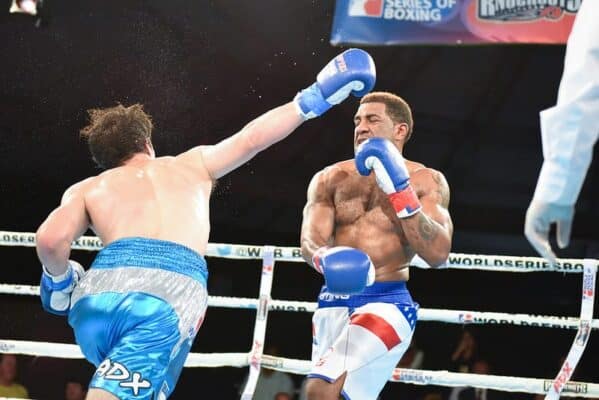
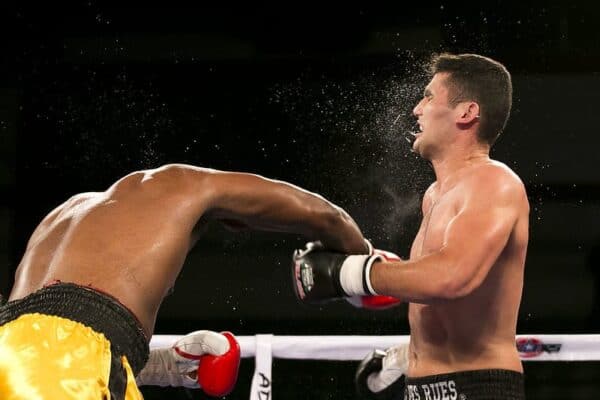
A haymaker punch landed
Photo by WorldSeriesBoxing
RECOMMENDED FOR YOU
How Hard Can an Average Person Punch?

Conclusion

A haymaker can be a devastating punch if it is executed correctly and if the punch lands on its intended target. However, it is not a punch that is used often by professional fighters because it has the potential to open yourself up to a counterattack that could put you on the defense.

If a haymaker lands, it is a strong punch that could win the fight by knocking out the opponent or injure them enough to put them on the defensive!