Home Blog Page 29

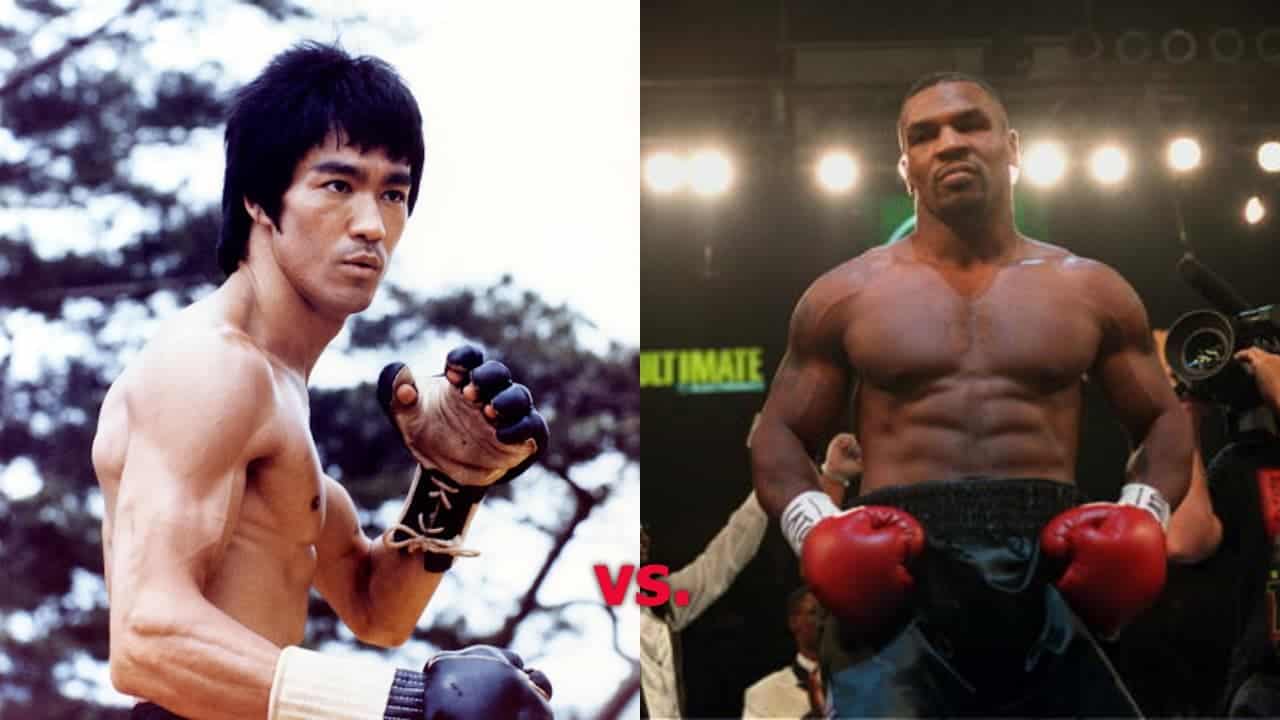
Bruce Lee vs Mike Tyson – Who Would Win in a Fight?

0

The question has been asked, would Mike Tyson or Bruce Lee win in a fight, and Mike Tyson has responded, respectfully, that he himself would win because he is the heavier fighter. This has probably outraged many Bruce Lee fans who have no doubt that physical size does not matter.
Clouse, R. (Director). (1973). Enter the Dragon [Film]. Warner Brothers Pictures.
Mke Tyson’s photo by Abelito Roldan

Mike Tyson would win in a match against Bruce Lee. With not only his size behind him, Mike Tyson also has power and speed combined with experience in the ring that would advantage him greatly in a pure hypothetical fight against Bruce Lee.

Bruce Lee never had an actual sanctioned competitive fight and his lack of experience in professional fights would disadvantage him in the ring. There is no doubt that Bruce Lee is an incredibly powerful martial artist who set the bar exceedingly high and has been the inspiration of many fighters today, boxing and MMA alike. So why would Mike Tyson win the fight?

Bruce Lee – The Man Behind the Legend in Martial Arts. 

At 5’7″(171cm) tall and 135 lbs(61kg) light, Lee had an exceptional physique, almost as if his body was born specifically for specializing in martial arts. Bruce Lee has been one of, if not the most prominent names in the Martial Arts universe.

Bruce Lee was a legendary master in martial arts, an actor, director, philosopher, and martial arts instructor. He is accepted by many as the greatest martial artist of all time, though mainly for his influence in bringing awareness to the style of martial arts through his dramatized movies and acting career. 

Acting colleagues would go on to say that Lee’s punches were exponentially powerful and punctuated. Lee’s speed and strength in his kung fu abilities would be an advantage over any opponent. 

In an interview with Bruce Lee’s fellow actor and kung fu student, James Coburn said of Bruce Lee:

“His whole life was related to martial arts. He lived, breathed, fought, moved, everything was dedicated to his highest principle of his own self-evolution. He created himself. He demanded of himself, great excellence and was a true artist in that respect.”

James Coburn

Coburn also goes on to say that Bruce had a 700-pound bag hung up and when Lee kicked it, it would double over. Lee’s power is quite obviously an ability he was revered for across the world in martial arts. 

Although Bruce Lee was a master of Kung Fu, he was well ahead of his time and found that kung fu was too restricting for what he wanted to portray on screen. In 1967, at a karate contest that Lee was invited to, he tried to introduce a new concept of contact fighting and he was condemned by many for his forward-thinking views on martial arts. 

Lee defied what he knew and established his own style of fighting called Jeet Kune Do which he trained many actors, athletes, and students throughout his time. He dedicated his life to mastering Jeet Kune Do, which would allow him to bring more awareness to martial arts on the Hollywood screen. 

However, confirmed in Lee’s Biography written by Matthew Polly (2018), Bruce does not have fighting experience in a sanctioned fight. Lee has had few actual fights, and his experience is limited to three recorded fights. 

One of the recorded fights was an interschool boxing tournament in 1968 against Gary Elms. Although Lee won the fight, he disliked the experience and felt the boxing equipment stifled his power. 

Therefore, without doubting Lee’s extremely talented abilities, there is speculation over whether he would win in an actual sanctioned tournament against someone as powerful and fast as Mike Tyson. 

Mike Tyson – The Baddest Man on the Planet

Mike Tyson is one of the best heavyweight fighters of all time. His nicknames include “Iron Mike”, “Kid Dynamite”, and “The baddest man on the planet”. 

With a total of 58 fights, 50 wins, and only 6 losses, Tyson has the experience needed in the boxing ring to win a professional sanctioned boxing match. 

With 44 Knock Outs behind his name, Mike Tyson is not only heavy in muscle, and powerful in strength, but adds speed and agility to his fighting stance through extensive training and coaching that has led him to his fame in the boxing ring today. 

At 178 cm in height and 220lbs (99kg), Tyson has the advantage of being heavier and slightly taller than Lee. Some would, however, argue that this is not an advantage. That’s why it’s crucial to mention that Tyson has the speed to outmatch his opponents as well as the strength. 

According to Thrillist.com who crunched the numbers and worked out how hard and fast Mike Tyson’s punches are, they claim it would be the equivalent of being shot in a bulletproof vest by 13 men with .22’s. Not only strong, but fast, and excruciatingly painful. 

Tyson was not brought up in a friendly neighborhood and was often the target of bullying. This led him to learn how to fight at a young age to defend himself. Unfortunately, Tyson was constantly in trouble with the police, which then turned out to be the beginning of his career in boxing, when he was sent to a reform school to try and better manage his behaviors and criminal acts toward violence. 

Tyson has been in training for boxing since he was 13 years old, has been winning in the ring since he was 18 years old, and has been taught by boxing champions and legends his whole life. Tyson’s experience against formidable opponents is an advantage for Tyson to win a boxing match against Bruce Lee, or any other inexperienced fighter in the ring. 

To add to Mike’s name, he is positioned at number 1 at espn.com for the hardest-hitting boxer in heavyweight history and sky sports has deemed him “the most ferocious fighter to step into a professional ring”. 

That brings us to ask the question, could Lee take the impact of a hit by Mike Tyson?

Does Physical Size Matter in a Fight?

This is one of the more contentious questions in the history and world of fighting. Weight is in fact, deemed a huge advantage by many. From what we can study and determine, size will matter in a fight but will only matter dependent on the ability of each fighter. 

The UFC for example, arranges fights dependent on weight class, rather than height, and age. The weight classes are to match fighters based on their relative size so that there is no way of criticism defining that a winner has won with the advantage of being bigger, and vice versa. The matches are fought in weight class so that opponents are similarly matched in size, and therefore strength. Speed, however, is up to the fighter and their abilities. 

In the case of Mike Tyson vs Bruce Lee, they train and perform in two different styles of fighting. In the real world, this means they would never compete against each other. Mike Tyson is a heavyweight champion who is versed against other heavyweight boxers and who weigh similar to his 220lbs (99kg). Bruce Lee, if he decided to compete, would be a martial artist and at 135lbs (61kg) would be classed as Bantamweight or Featherweight. 

Size can be an advantage as it can give a fighter more power in strength and punches, as well as the ability to possibly absorb, for lack of a better word, strikes from their smaller opponents. 

What Do the Men in Question Have to Say About It?

Bruce Lee had commented about how would he have fared against boxing legend Muhammad Ali. Even though Ali is not Mike Tyson, we can have a better idea as to what Lee himself thought about facing a heavy-weight boxing legend during his time.

In an interview with American Film Director Robert Clouse, he acknowledged that once in conversation with Bruce Lee they were talking about a possible future fight that Lee had been questioned about between Muhammad Ali and himself. Clouse states that Lee’s reaction was to claim he would not win.

“Everybody says I must fight Ali some day.” Bruce said, “I’m studying every move he makes. I’m getting to know how he thinks and moves.” Bruce knew he could never win a fight against Ali. “Look at my hand,” he said. “That’s a little Chinese hand. He’d kill me.”

American Film Director Robert Clouse

Similarly, Mike Tyson has been asked which of them would win in a fight against the other. Mike Tyson has shown the utmost respect for Bruce Lee and called him an inspiration as well as the ultimate warrior in philosophy. Tyson goes on to say that if Lee could really beat him in a fight, “this would be a very interesting world because that should just not happen”

Conclusion

Both men, Tyson and Lee, have been inspirational fighters for present and future generations of martial arts and boxing. In a sanctioned fight between Mike Tyson and Bruce Lee, Tyson’s combined abilities of strength, speed, and size, would give him an overall advantage. Fighters have, of course, proved people wrong before, perhaps Lee could have proved us wrong with his strength, speed, and immense determination. We’ll never know the definite answer but combat sports fans will always discuss this hypothetical matchup for many years to come.
Taekwondo vs Kickboxing – Key Differences and Comparison

0

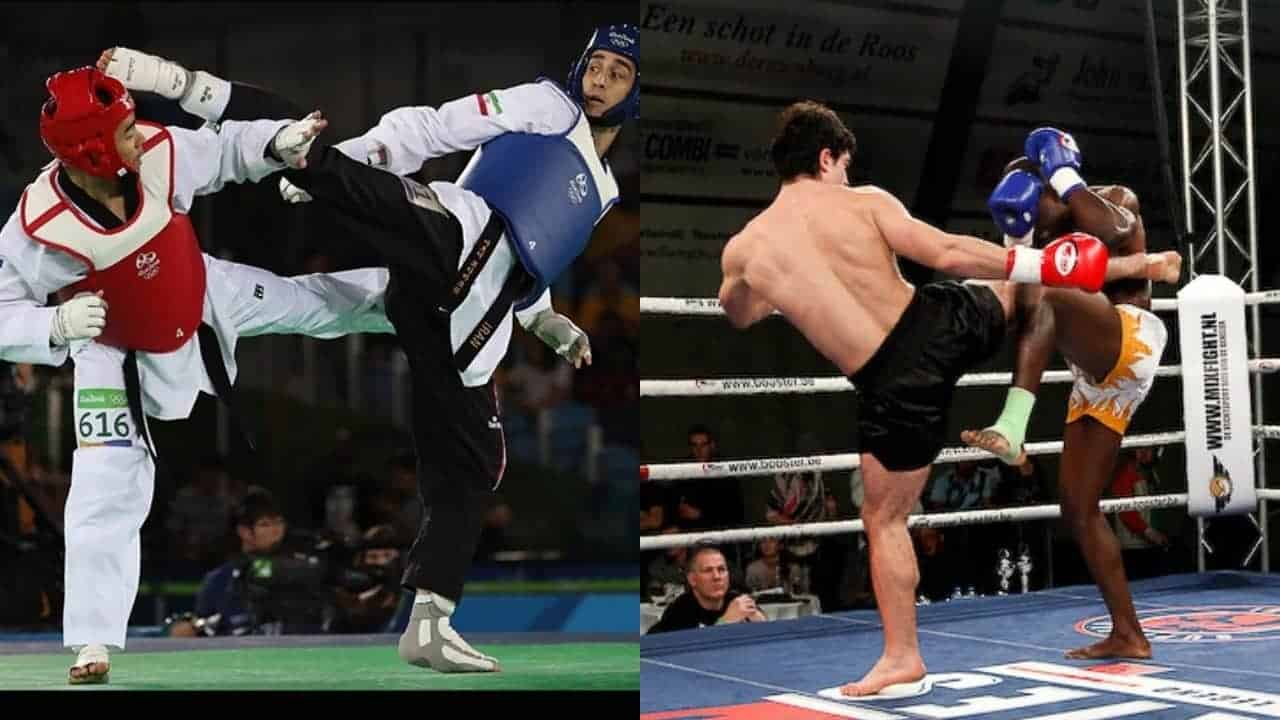
Taekwondo (TKD) and kickboxing are among the most popular striking arts. But apart from few similar techniques, these two arts do not share much else in common. In fact, these two are a world apart when it comes to rules, emphasis, or history.

The emphasis differs between Taekwondo and kickboxing. Taekwondo is a martial art that emphasizes kicks, with hand strikes serving as a secondary weapon. In contrast, kickboxing emphasizes the use of all limbs as weapons, such as kicks, punches, and knee strikes.

Keep reading this article to find out more about how kickboxing and taekwondo differ from one another. We will explore which one is better for self-defense, MMA, and how do they compare against each other in various aspects.

History of Taekwondo

Taekwondo comes from South Korea where TKD is a national sport and a part of the culture. It emerged after WW2 in the 1950s as a fighting system created for the military and self-defense. After the WW2, a lot of schools called “kwans” started opening up all across Korea. Each of these kwans used to teach their own fighting systems, out of which most originated from China.

In the 1950s, all kwans have made a decision to unite, and create a unique Korean fighting system. The result of their work was a martial art called “Tang Soo Doo”, which was an initial form of modern Taekwondo. Later on, in 1959, they have changed the name to Taekwondo and found the first organization.

History of Kickboxing

Kickboxing is a full-contact fighting system that emerged in the late 1950s in Japan. It is a mix of karate, boxing, and Muay Thai techniques put into one style of fighting. It has many forms out of which the most popular ones are:

  • Dutch style
  • American kickboxing
  • K-1

The story of kickboxing begins in the 1950s and the fierce rivalry between Muay Thai and karate. This was a time when fighters from both of these arts used to fight each other in matches. To find balance between techniques and make matches fair, Japanese created a hybrid martial art called “Japanese kickboxing”. 

In the next two decades, kickboxing would expand beyond Japan, and become very popular in the western world. Some of the countries that pioneered kickboxing in the west were Netherland and the U.S.

What is the Difference Between Taekwondo and Kickboxing?

The main difference between these two arts is the emphasis and rules of competition. Taekwondo is a fighting system famous for putting a lot of emphasis on kicks. Its students learn how to throw fast jumping, spinning, and all types of other kicks while punches are a secondary weapon. Kickboxing, on the other side, also puts a lot of emphasis on kicks but, as its name suggests, it includes boxing techniques as well. 

Here is the easiest way you can spot all the major differences between these two arts. 


TaekwondoKickboxing
Definition
Taekwondo is a striking martial art famous for kicking techniques. It is a fighting system created for self-defense that is also a very popular sport.Kickboxing is a hybrid fighting system that focuses on striking. It is a mix of various Karate and Muay Thai techniques put into one style of fighting.
OriginsTaekwondo emerged in the 1950s in South Korea.Kickboxing emerged in Japan in 1950s.
EmphasisAlthough the art combines kicks and punches, the emphasis of Taekwondo is on fast and precise kicks. Punches are seen as a secondary weapon. The emphasis of kickboxing is on teaching a person how to use all limbs as weapons to combine kicks with punches. 
TechniquesTaekwondo teaches various types of fighting stances, blocks, punches, and all types of jumping, spinning and roundhouse kicks. Kickboxing teaches very effective punching combinations, and how to follow up the punches with fast and powerful kicks. 
AimIn its initial form, Taekwondo was a fighting system created for self-defense. But in modern times, it is a very popular sport that puts a lot of emphasis on competition and teaching you how to fight under the rules. Kickboxing was created as a combat sport in Japan. The main goal is to learn how to fight under kickboxing rules that may vary between styles and forms. But still, its techniques and the concept of training are very effective for self-defense and street fighting. 
Styles and FormsTraditional  Hong-style,  Songahm-style Jhoon Rhee-style, Kukki-style
Japanese kickboxing, American kickboxing, Dutch-style, K-1 kickboxing
OrganizationsAmerican Taekwondo Association, International Taekwondo Federation, World TaekwondoWorld Kickboxing Association, International Kickboxing Federation, World Association of Kickboxing Organizations

Taekwondo vs. Kickboxing: Which is More Effective for Self-Defense?

Kickboxing is better for self-defense because it is a more versatile fighting style that is more brutal as well. Students learn how to throw advanced kicks and punches with a lot of power to hurt or knock the opponent out. They learn how to mix footwork, kicks and punches to fight at all ranges. It’s fair to say that kickboxing is a complete standup art that teaches you all about striking.

On the other side, we can’t say the same for Taekwondo which focuses too much on kicks and Olympic-style TaeKwonDo. The initial forms did teach solid punches, elbow and knee strikes, and even some basics of grappling. But in modern days, Taekwondo is all about kicks and fighting under the rules. Students learn limited hand strikes which they can use to strike only the upper body area below the neck.

The other problem is that Taekwondo is a point-fighting sport. Fighters get points for every strike they land on the opponent, and each point resets the fight. This means that throwing fast and precise kicks is more important than power. You will rarely see fighters loading on the kicks, trying to hurt or knock the opponent out. This approach is wrong for self-defense because learning how to score points won’t prepare you well in a self-defense situation. The goal is always to finish the fight as fast as possible in a self-defense situation.

Taekwondo and Kickboxing are both solid options if you want to learn self-defense. But, bear in mind that the emphasis in both arts is on sports competition and fighting under the rules. You will spend every class learning how to fight under the rules, or in the case of Taekwondo, score points.

In the article, “Is Taekwondo Effective in a Street Fight,” I discuss in more detail why I think Taekwondo on its own will not prepare you well for a real fight.

Taekwondo vs Kickboxing: Which One is Easier to Learn?

On average, it takes less time for a person to get good at kickboxing than vice versa. Still, this doesn’t mean that Taekwondo is harder by any means. No, Taekwondo has a belt ranking system and strict promotional criteria. This is the main cause why the progress is slower than in kickboxing.

Students need, on average, around 3 to 5 years of consistent training to get a black belt. But this is also based on the style of Taekwondo, school, and how talented you are. In some schools, for instance, there is a minimum length of training time before you can earn a black belt, which is around 4 to 5 years.

Overall, Taekwondo training is safe, fun, and good for your health. It includes a lot of stretching exercises, grueling cardio workouts, and students throw hundreds of kicks per class. They often practice techniques alone in pre-arranged forms, and spar against other students.

Kickboxing doesn’t have a ranking system or any type of rank. As a beginner, you won’t have a hard time picking up the basics since the techniques are not that complex. You need to spend around 3 months working hard on the heavy bag, learning the basics, before you can move to live drills or sparring. On average, students need to train kickboxing for around 1 to 2 years to get good at punching and kicking.

The truth is, you won’t achieve anything in both of these arts in a short period of time, no matter how talented you are. Which one is easier to learn really comes down to your talent, the school you choose to train in, and many other factors.

Which One is More Dangerous to Learn?

Taekwondo is much safer than kickboxing mainly because it includes far less head strikes as the emphasis is on kicks. Yes, you can still get hurt in Taekwondo, but these injuries are also a part of other striking arts and sports in general.

Taekwondo is much safer than most other striking arts. First of all, all students must wear protective gear whenever they are sparring or doing any type of live drills. Even when they are sparring, the focus is on speed and precision, not power or to hurt the opponent.

But what makes Taekwondo really safe is that it doesn’t include punches to the head. According to the rules, fighters can land punches only in the upper body area below the neck. This is crucial when it comes to safety since punches to the head lead to brain damage. This doesn’t mean that you can’t get hurt in Taekwondo training. Throwing hundreds of kicks per class and sparring on a daily basis leads to many injuries like:

  • Joint strains
  • Joint dislocations
  • Leg, rib, and foot fractures

Kickboxing is more dangerous than Taekwondo because it includes more strikes to the head. And, there is no scoring points for each strike in competition. The focus is on throwing strikes with a lot of power to hurt the opponent or knock them out. This means that there’s a lot of hard sparring where, despite wearing gear, you can get hurt. The most common injuries are:

  • Ankle sprains
  • Contusions
  • Lacerations
  • Concussion and brain damage
  • Facial cuts and fractures

Training in both of these arts is dangerous because students do a lot of sparring where they exchange hard kicks and punches. And wherever we have full contact striking, there is a high risk of injuries as well. No matter what you do or what type of protective gear you wear, the risk of injuries is always present in striking arts.

Which One is More Effective for Hand Striking?

Kickboxing is much more effective than Taekwondo when it comes to hand striking. It teaches you really good punching combos, the same ones you can find in boxing. It is a much better option if you want to learn how to punch as Taekwondo will only teach you how to throw basic hand strikes. 

As its name suggests, kickboxing is a mix of kicks and boxing hand strikes. In training, students learn the same punching combos as in boxing, but not all. For instance, a Dutch style of kickboxing is famous for putting a lot of emphasis on hand strikes. Dutch-style fighters would often throw three or five punch boxing combo before landing a low/high kick.

In modern days, Taekwondo schools won’t teach you advanced punching combos. You will only learn how to punch the upper body area below the neck using basic hand strikes. Back in the early days, the traditional form used to teach the students how to throw punches to the head. But this form is not popular anymore. 

Which One is More Effective for Kicking?

Taekwondo is a much better option when it comes to kicks. And the truth is, not a single martial art out there will teach you better kicking skills and how to use legs in a fight than TKD. This doesn’t mean that kickboxing is bad by any means, but its kicks are simply not as versatile.

The founders of Taekwondo believed that legs are the longest weapon one can use in a fight and can cause the most damage. Since day one, the emphasis of the art has been on kicks while punches are often seen as a secondary weapon. Most of the time, students learn how to execute fast and precise kicks from all ranges and angles. They are masters in this aspect of martial arts and no one could come even close to their kicking level. Techniques consist of various jumping, spinning, and other types of kicks. Some of the most popular ones are:

  • Tornado kick
  • Axe Kick
  • Side kick
  • Back kick
  • Front Snap kick

Kickboxing also teaches you good kicking skills but it’s not as versatile as Taekwondo. 

Which One is Better for MMA?

Kickboxing is better than Taekwondo for MMA fighting because it is a more versatile style that fits better within the rules of cage fighting. It trains you how to use kicks and punches to fight at all ranges, while Taekwondo focuses too much on kicks and point fighting. This doesn’t mean that TKD is bad, in fact, some elements work really well in MMA. But kickboxing is much better.

When it comes to striking, MMA is a sport where fighters exchange strikes at distance, close range or in the clinch using all limbs. This is where kickboxing plays a big role because it teaches you just that. Each technique you learn in kickboxing works really well in MMA fighting.

The biggest downside is, you won’t learn how to grapple or fight on the ground. But when it comes to the standup aspect, kickboxing is close to ideal for MMA.

Taekwondo is too one-dimensional for MMA where fighters use all limbs as weapons to strike, grapple, or fight on the ground. Yes, the kicks you learn work really well but the lack of advanced hand strikes is why kickboxing is a better option.

Taekwondo vs Kickboxing: Which One is Right for me?

Which one is right for you really comes down to your personal preference, and what you want to achieve with your training. The best way is to attend a trial class in both schools and see which one is better for you.

Kickboxing should be your choice if you want to learn self-defense or shift to MMA later. It is a complete striking style that will teach you advanced punches, kicks, and how to mix them together. Training includes a lot of sparring, which is good for both MMA and self-defense.

Taekwondo is better if you want to learn the best kicking techniques, basic punches, break boards, become flexible and get in top shape. Depending on the style you choose to train in, you will learn effective self-defense tactics that might help you get out of trouble. But overall, you will spend most of the time learning how to fight under the rules, score points and win matches. 

Does Judo Have Submissions? Yes, Here’s What You Need To Know

0
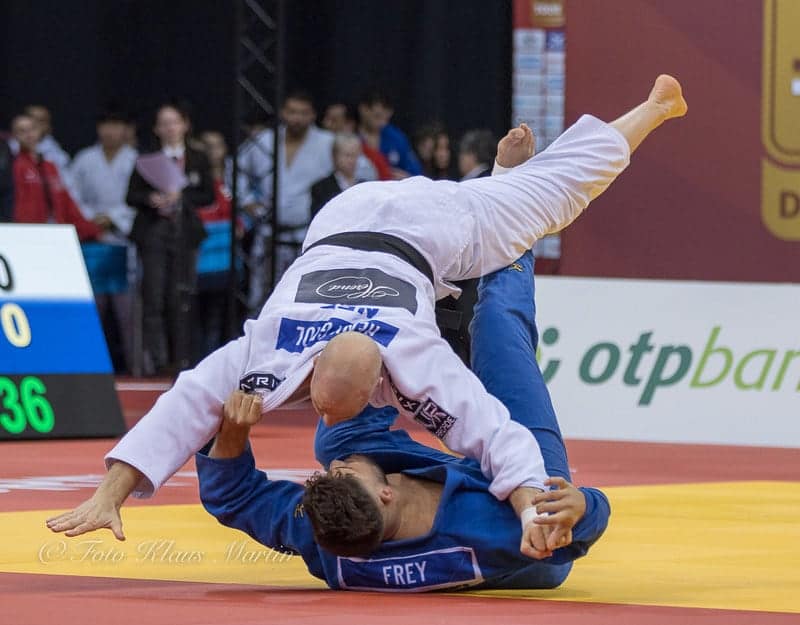
Photo by Judo international pictures

Many Judoka are seen throwing or pinning their opponent to win a match. It can sometimes be unclear whether or not Judo includes submissions in its syllabus. Contrary to popular belief, Judo does have submission moves according to their Judo syllabus.

The Judo syllabus teaches submissions, including choke-holds(without neck cranking) and joint locks. However, most people won’t notice there are submissions because Judo’s primary emphasis is on techniques that involve throwing your opponent to the ground to win the match.

I have provided a more detailed look into Judo submissions below, including a comprehensive list of permitted techniques. I have also explored illegal techniques and made comparisons with BJJ, including which would be better in a self-defense situation.

How Is Judo Different Than Other Martial Arts?

Judo is one of few martial arts that uses your opponent’s strength and momentum against them, instead of relying on your own strength. This is where Judo received its name, which means ‘the gentle way’. This is similar to Jujutsu, which means ‘the gentle art’.

Even though Jujutsu uses the same principles and shares similar techniques, Judo can still be distinguished by its unique syllabus. Judo specifically involves throws, pins, elbow locks and choke-holds. Among the many techniques used in Judo, there are three main categories of techniques, listed below.

  • Throwing techniques (Nage Waza)
  • Grappling techniques (Katame Waza)
  • Striking techniques (Atemi Waza)

Although there is ground grappling involved in Judo, it is mostly distinguished by the use of standing grappling and throws. This is also one key point of difference between Judo and its close relative, Brazilian Jiu-Jitsu. In Judo, the most points (an ‘ippon’) are awarded for successfully throwing your opponent to the ground.

Does Judo Teach Submissions?

The Judo syllabus teaches submissions, including choke-holds and joint locks. However, submissions are not as popular in competitions for a number of reasons.

In a Judo competition, the referee will stop the fight and reset to a standing position if they believe there has been no progress for 5-10 seconds. Most of the time, a submission will take time to establish control and get into the right position. This makes it seem like the fight is not progressing.

Fighting for a submission also expends a lot of energy. Most Judoka prefer to save their energy for their throws. A well-executed throw awards the Judoka an ‘ippon’, which means they automatically win the match.

Because submissions are not as popular as throws in Judo, the student syllabus will focus more on throws and grappling than on submitting your opponent.

Does Judo Have Groundwork?

Groundwork in Judo is known as ‘Ne Waza’, and is taught to all Judoka. Regardless of whether you prefer standing and using throws, every Judoka will find themselves on the ground at some point in their Judo career. Learning to fight for control on the ground is therefore important.

However, most Judoka prefer not to take their fights to the ground because it is harder to earn an ‘ippon’ on the ground. An ippon is awarded for either throwing your opponent to the ground, pinning them for 20 seconds, or submitting them with a choke or elbow-lock.

It is also very easy to reach a stalemate in Ne Waza. As I mentioned earlier, the referee in Judo will reset the match if they believe there has been 5-10 seconds of no progress. This leads to much of the groundwork in Judo being reset to a standing position.

Despite Ne Waza being unpopular in Judo, a Judoka that does not understand these techniques leaves themselves vulnerable to being submitted or pinned on the ground. It is therefore important to at least be able to defend yourself on the ground.

What Submissions Are Allowed In Judo?

As I mentioned earlier, submissions that are permitted in Judo include choke-holds and joint locks. More specifically, only joint-locks involving the elbow are permitted and chokes can only be performed if the neck is not cranked.

Below is a list of variations of an armlock that are permitted in a Judo competition. These attack the elbow, but can sometimes put pressure on the shoulder as well. Any arm lock that only twists the shoulder and not the elbow, such as the ‘chicken wing’ technique, is not permitted.

  • Ude Garami (Bent Arm Lock)
  • Ashi Gatame (Leg Arm Lock)
  • Ude Hishigi Te Gatame (Hand Arm Lock)
  • Ude Hishigi Sankaku Gatame (Three Corner Arm Lock)
  • Ude Hishigi Juji Gatame (Cross Arm Lock)
  • Ude Hishigi Ude Gatame (Straight Arm Lock)
  • Ude Hishigi Hara Gatame (Stomach Arm Lock)
  • Ude Hishigi Waki Gatame (Armpit Arm Lock)
  • Ude Hishigi Hiza Gatame (Knee Arm Lock)

The Ude Garami is one example of an armlock that affects both the elbow and the shoulder. Variations of this technique include the ‘Kimura’ and ‘Americana’ submissions. Because it can be seen as a technique that locks the elbow, this is permitted in Judo.

Chokes (‘Jime’) can block either blood flow or your opponent’s airways until they submit or lose consciousness. You can use both the Judogi or your limbs to choke your opponent. Below is a list of different chokes seen in Judo.

  • Sankaku Jime (Triangle Choke)
  • Hadaka Jime (Rear Naked Choke)
  • Kata Te Jime (One Hand Choke)
  • Ryo Te Jime (Two Hand Choke)
  • Juji Jime (Cross Chokes – normal, reverse or half)
  • Kata Ha Jime (Single Wing Choke)
  • Okuri Eri Jime (Sliding Lapel Choke)
  • Sode Guruma Jime (Sleeve Wheel Choke)
  • Tsukkomi Jime (Thrust Choke)

As you can see, there are a number of different chokes that are permitted in Judo. As long as the opponent’s spinal column and neck are in no danger, such as when the neck is cranked, the choke is permitted.

As an example, a triangle choke is only allowed if the Judoka does not pull down on their opponent’s head to create more pressure. The Guillotine Choke, on the other hand, is usually not allowed because this puts too much pressure on your opponent’s neck, potentially injuring their spine. However, some more lenient referees may allow it.

What BJJ Submissions Are Allowed In Judo?

Based on the lists mentioned above, below are a number of BJJ submissions that are permitted in Judo.

  • Arm Bar
  • Americana
  • Kimura
  • Omoplata
  • Reverse Omoplata
  • Straight Armlock
  • Triangle
  • Rear Naked Choke
  • Ezekial Choke
  • Lapel Chokes (such as the Bow and Arrow)

Are There Any Judo Techniques That Are Illegal In BJJ?

Judo is more strict than BJJ when it comes to prohibiting certain techniques, mainly because it has been more regulated to prevent injury. Therefore many BJJ techniques are illegal in Judo, whereas there are very few Judo techniques that are illegal in BJJ.

The Judo techniques that are illegal in BJJ are throws. This is because it is illegal to throw an opponent onto their head or neck in BJJ. There are two throws in Judo, the Ure Nage (Suplex) and Hikikomi Gaeshi, where the head or neck hitting the mat is a byproduct of the throw.

Under the IBJJF rules, any throw where the opponent is thrown onto their head or neck is prohibited. Under the IJF rules, there is an exception if a throw is attempted and the head defense is involuntary, which is the case in the throws mentioned above.

Does Judo Have Strikes?

Striking techniques are part of the Judo curriculum, known as ‘Atemi Waza’. However, these are not allowed in competition and are only practiced in practice drills (Kata). They are also not allowed in free sparring (Randori).

These striking techniques are taught as part of self-defense training. There are many techniques in Atemi Waza, including various strikes to your opponent’s body using the arms and legs.

Which Is Better For Self-Defense Judo Or BJJ?

There are arguments for both Judo and BJJ being the better martial art in a self-defense situation. Judo is more of a balanced martial art, teaching students how to fight standing and on the ground, as well as how to take down your opponent. This prepares people for any situation they might find themselves when attacked.

BJJ, on the other hand, focuses heavily on ground fighting. This means if the fight is still standing, there are not many techniques to draw on to attack, or defend against, your opponent. This is why most BJJ practitioners will pull guard (sit on the ground) or wait for the perfect opportunity to take their opponent to the ground before engaging in the fight.

A small study showed that around 72% of fights end up on the ground, either from falling or being deliberately taken to the ground. This statistic supports the use of BJJ techniques to defend yourself in a street fight because you are more experienced in ground fighting than a Judoka. However, if there are multiple opponents or your opponent is able to get up and use a weapon, BJJ techniques are limited for self-defense.

It is therefore ideal to learn a combination of Judo and BJJ techniques to prepare yourself for any situation, knowing that most fights will end on the ground but some may remain standing. If you needed to choose between the two, Judo provides you with more opportunities to control your opponent (takedowns and throws as well as grappling and submissions)

Choosing between BJJ and Judo can be challenging because they seem similar. However, this article BJJ vs Judo – Key Differences and Core Similarities can definitely help you choose which art is right for you.

Can You Double Leg Takedown In Judo?

The Double Leg was originally recognized as a Judo takedown, known as the Morote Gari. However, as of 2014, the IJF no longer allows these takedowns in competitions. This means that it can still be taught in Judo, but is not as popular because it can only be used outside of competitions, such as in a self-defense situation.

Do UFC Fighters Get Drug Tested? – Fully Explained Here

0

The UFC has strict policies when it comes to drug testing. It really doesn’t matter if a fighter is a champion or an up-and-coming fighter, the rules are the same for all. The UFC puts a lot of effort and resources into keeping the sport clean and they are testing all fighters multiple times per year. But, have you ever asked yourself how UFC drug testing works?

UFC fighters get tested for various banned substances both in and off competition. Since 2015, the UFC has been cooperating with the biggest anti-doping agency called USADA. This agency handles the testing, analyzes the results and punishes the fighters if they violate the rules.

They test UFC fighters for various substances like: 

  • anabolic steroids 
  • growth hormones
  • estrogen blockers
  • narcotics

Keep reading this article to find out more about how UFC is testing the fighters. We will go deep into what substances are not allowed and how often UFC fighters get tested.

Do UFC Fighters Get Drug Tested?

Yes, all UFC fighters get tested for Performance-Enhancing Drugs(PEDs). Since 2015, the UFC has been cooperating with the U.S. Anti-Doping Agency (USADA) with the goal to keep the sport clean. USADA agents will first plan the testing, select the fighter, and then collect urine or blood samples. If the results are positive for PEDs, USADA will punish the fighter by giving them long suspensions. How long the fighter will stay out of the sport really depends on the type of violation.

The UFC fighters get randomly tested for PEDs multiple times per year on average. USADA performs a minimum of 2,750 tests per year, which is around five tests per fighter, per year. But bear in mind that some fighters get tested more than others.

But one thing is for sure, the UFC and USADA spend a lot of resources on testing fighters as much as they can. They are ready to do all to increase the chances of catching the fighters taking PEDs. USADA doesn’t care where the fighter is training or living at that moment. USADA agents will travel all around the world to test fighters at any time and in any place.

It doesn’t matter if a fighter is sleeping, eating dinner with friends, or has a meeting with their sponsors. They must take a break and provide a sample to USADA officials.

The UFC may ask its fighters to undergo extra tests performed by the state athletic commission. If the UFC event takes place in Texas, for instance, the athletic commission from this state has the right to ask for additional testing.

Can UFC Fighters Refuse a Drug Test?

No, UFC fighters are not allowed to refuse a drug test. They must provide urine and blood samples whenever USADA agents show up. In the case they fled from a test, fighters will receive a long suspension. And from what we have seen thus far, refusing a test is not worth the length of a suspension. 

When USADA notifies a fighter that they have been selected for testing, fighters can delay it. But they can do this only if they have a valid reason for it. Training or media work are not valid reasons to avoid drug testing.

In UFC history, there have been a couple of fighters who tried to run away from USADA tests. One of the most famous fighters who tried to do this was Wanderlei Silva. In 2014, Silva fled a random drug test ahead of his bout against Chael Sonnen at UFC 175. Silva would later admit that he had run away from a test because he was taking diuretics. As a result, he got a three year suspension from the competition.

When Did UFC Start Cooperating with USADA?

USADA became a part of the UFC’s anti-doping program in 2015. It all started on June 3 when the partnership between these two organizations became public. This was the first time in the history of MMA that the world-leading anti-doping agency would test the MMA fighters. The UFC tested its fighters for PEDs before. But, this was nowhere near as strict and serious as the way USADA is doing testing.

Photo Credit: UFC.USADA.org

Before the test started, USADA spent the first couple of months just educating the fighters about PEDs and how the testing would look like in the future. They traveled all around the world to visit the most famous MMA gyms and educate both coaches and fighters. Once they did that, USADA started testing athletes in October 2015. 

In some way, the arrival of USADA into the sport of MMA marks the beginning of a new era. It changed the image of the UFC, which was no longer seen as barbaric. Thanks to USADA, UFC has gained tremendous credibility of becoming a mainstream sport like NFL or NBA.

This also helped the MMA to become legal in all U.S. states, and the UFC to sign many TV deals. The biggest one was, of course, the one with the largest sports network, ESPN.

If you are a UFC fan, it is worth knowing more details about how USADA affects UFC fighters.

How Does USADA test for PED?

The USADA testing protocol starts as soon as the fighter signs with the UFC. Once they become a part of the promotion, they enter the testing pool as well. This means that USADA can collect the samples and test the fighter whenever they want. They can ask for blood and urine samples while fighters are both in and out of competition.

It’s important to note that the process of testing differs between the urine and blood samples. Here is all you need to know about how does USADA tests UFC fighters for PEDs.

Blood samples

  • The first step is to plan a test and select a fighter
  • USADA doping control officer (DCO) will notify the fighter in person about the testing.
  • Athletes can’t run away or avoid testing. They can delay the process but only if they have a valid reason for it.
  • Athletes must remain in a seated position for 20 minutes prior to the blood draw.
  • The DCO will collect the blood sample and provide any after-care measures.
  • The DCO will then put blood samples (tubes) in a security bottle and complete the paperwork with the fighter.
  • Once they get the blood sample, the officer will ship it to a WADA laboratory for further tests.

Urine samples

  • USADA officials can collect urine samples both in and out of competition. They can even do it on fight night without any advanced notice. The DCO will notify the athletes in person.
  • An athlete must select a sealed sample collection vessel and inspect it to be sure that it has not been tampered.
  • Fighters must provide at least 90ml of the urine sample under the direct observation of DCO. It’s important to note that a DCO must have a clear view of a fighter filling in the vessel.
  • Next, the athlete will choose the security bottle in which DCO will put in the urine sample. Both parties must check the code numbers and inspect the bottles before placing B and A samples into the bags.
  • Athletes and DOC will complete the paperwork and ship the samples to the WADA laboratory.

What Substances are Banned in UFC?

The USADA has a very strict policy on prohibited substances. There is a clear list of banned substances each fighter has to be aware of. Here is all you need to know about it.

Non-approved substances

  • Anabolic agents — are the male sex hormone. Athletes take this hormone by injecting it into the muscle to increase testosterone levels. This hormone increases muscle strength and helps the body to recover from injuries.
  • Growth factors— is a group of proteins that boosts the growth of specific tissues. Athletes use it to recover from joint, tendon, or muscle injuries.
  • Beta-2 agonists– athletes use it to treat various respiratory diseases like asthma.
  • Hormone and metabolic modulators- this substance can speed up or slow down the specific enzyme reactions. In most cases, MMA fighters use it to stop the effects of anabolic steroids.
  • Diuretics and masking agents- diuretics help MMA fighters to cut weight more efficiently. And they use masking agents to hide the effects of other banned substances, such as anabolic steroids.

Substances prohibited in competition

  • Stimulants– athletes use stimulants to enhance their performance in various ways. In most cases, they use it to enhance aggression and motivation. One of the most famous stimulants is the “amphetamine”
  • Narcotics– in most cases, athletes use narcotics to suppress the pain from intense training or injuries.
  • Cannabinoids– help fighters relieve stress and mental exhaustion from intense training.
  • Glucocorticoid– resembles cortisol. Athletes use it to treat injuries, pain, asthma, and many other diseases.

In addition, you can read more about what is banned/illegal in the UFC.

What Substances are Allowed in UFC?

Although USADA has strict policies, UFC fighters can take legal supplements, vitamins or medication to keep their bodies strong and healthy. Or, they can take various medications to treat injuries or a specific disease.

But, each supplement or medicine they take must be off the USADA list of prohibited substances. Here is a list of some of the substances UFC fighters are allowed to use. If you want to learn more, you can check the entire list here:

  • Antibiotics
  • Anesthetics
  • Antacids
  • Antidepressives
  • Ear drops
  • Heart medications
  • Contraceptives
  • Pain relievers such as Aspirin
  • Sleeping pills
  • Various Cold and Allergy medications.

How many UFC Fighters Have Failed PED Testing?

USADA started testing UFC fighters in 2015 and in the first six months, their agents tested 353 fighters. Between 2015 and 2016, USADA got 35 positive test results for banned substances. One of the most famous UFC fighters who failed PED testing during that time was the former champ, BJ Penn. Over the years, the UFC roster got bigger and USADA increased the number of tests as a result.

If we move to 2020, USADA tested 720 UFC fighters and they did it across the 48 different countries. And we also have to point up that 89% of the tests were out of competition. In total, USADA did 3,230 urine tests and 327 blood tests, which is 3,557 tests in total for 2020. They issued 21 sanctions out of which most were for anabolic agents. Some of the most famous fighters who failed a drug test in 2020 are Jamahal Hill and Luis Pena.

Who is the Most Tested UFC Fighter?

One of the fighters who got tested the most is Paulo Costa. The Brazilian joined the UFC in 2017, and in the next four years, the USADA tested him over 60 times. This means that Costa had to provide blood and urine samples 15 times per year on average.

The other fighter who got tested a lot is the former UFC champ, Holly Holm. The USADA tested Holm over 60 times since joining the UFC roster in 2015, 10 times per year on average. If you want to find out more about how often UFC fighters get tested, you can check each athlete HERE.

Do UFC Fighters Get Tested for Diseases?

Yes, UFC fighters do get tested for various diseases as these tests are a part of the “MMA fighter package”.  In fact, keeping fighters safe and healthy is very important to the UFC. MMA is a brutal sport where just about every match includes deep cuts and severe bleeding. In some matches, we can see the blood flying all over the cage, even spraying the people sitting beside it.

If just one fighter has a serious infection, they can spread it on the opponent or people sitting beside the cage. To keep the fighters safe from various diseases, UFC tests its fighters for:

  • HIV
  • Hepatitis C
  • Hepatitis B

The Most Famous UFC Fighters Who Tested Positive for Steroids

Over the years, many famous UFC fighters have failed PED tests. Since 2015, we saw many legends of MMA who failed drug tests and getting long suspensions as a result. Some of the most famous are:

  • Jon Jones — is the most dominant UFC champ in history who has failed drug tests many times in his career. The first time, he tested positive for cocaine after the UFC 182. Then, he tested positive for cocaine once again just days before the UFC 200 event. In 2016, his results came out positive once again, but this time for Turinabol, for which he got a 15-month suspension.
  • Anderson Silva– is often seen as one of the best fighters in history. But, he tested positive for anabolic agents just a few days after his bout against Nick Diaz at UFC 183. In fact, Silva tested positive for two different anabolic steroids, which was a serious violation. And the same tests showed that he used banned sleeping pills. In 2015, he received a one year suspension and had to pay a $380,000 fine.
  • TJ Dillashaw– is the former UFC 135lbs champ. In 2019, he tested positive for EPO shortly after losing his bout against Henry Cejudo. In his own words, Dillashaw took EPO on purpose, and he received a 15-month suspension for that.

Can UFC Fighters Use Recreational Drugs?

As of 2021, UFC fighters can use recreational drugs such as marijuana. The UFC changed its policy and will no longer punish the fighters who use this drug. This was a big change because, in the past, we saw many fighters getting long suspensions. The best instance is Nick Diaz who received 5 year suspension for testing positive for marijuana.

UFC fighters don’t have to worry about this anymore, but, they have to be careful. Marijuana is risk-free as long as they are not using it to enhance their performance in a fight. Or in other words, fighters can’t use it on fight night. As for other drugs, the USADA prohibits most of them. 

What Does Undisputed Champion Mean in the UFC? Easily Explained

0

UFC is the Ultimate Fighting Championship based around the full-contact combat sport of mixed martial arts (MMA). Skilled fighters from around the world who have trained and developed in fighting styles, all enter the UFC octagon with hopes to achieve the status of the undisputed champion. 

To be the undisputed champion in the UFC means you are the number one fighter in your weight class. There is only one championship belt in each weight class, and the fighter holding that belt is considered the undisputed champion.

They will be undisputed until they either retire, lose a fight or have their belt stripped from them for political reasons. 

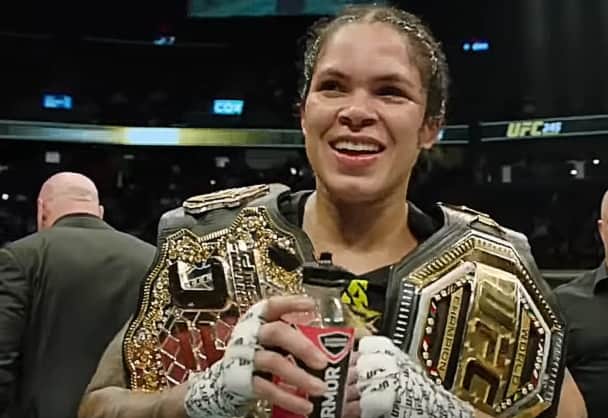
UFC Champ Amanda Nunes

An individual undisputed UFC champion can be the holder of more than one championship belt if they fight and win in different weight classes. For example, in the women’s UFC, Amanda Nunes won the Bantamweight championship title in 2016 and went on to fight in and win the Featherweight championship title in 2018. Amanda Nunes was the first woman in UFC history to be classed as the undisputed champion in two weight classes. 

What Does Undisputed Champion Mean in UFC?

In the Ultimate Fighting Championship, an undisputed champion is the winner of the championship title in the weight class they fight in. They have trained, fought, and won the fight for the championship belt and are, therefore, labeled the undisputed champion. 

The winner of the fight for the championship title will become the undisputed champion. 

What is the Difference Between Interim and Undisputed Champions in UFC?

If an undisputed champion becomes inactive for any reason, such as medical issues, injury, or suspension, an Interim Champion will take their place. 

The interim champion will be the next in line to fight for the championship title of that weight class. They will essentially “take over” the championship role as a temporary undisputed champion and will usually be guaranteed a fight with the actual champion when they return. 

Holding the interim belt will sanction their fight ticket to be the number one contender for the official undisputed belt. 

This makes the official undisputed champion’s position, now officially disputed, by the interim champ. The fight between these two UFC fighters will determine the outcome of the disputed title, effectively unifying the dispute so that there will once again be only one undisputed victor for that weight class.

Why Does the UFC Have Interim Champions?

Like most cases in the work industry, in show business especially, there is a common saying “The show must go on”. This is no different in the world of MMA and UFC. 

The UFC has interim champions largely to keep the fights going. When undisputed champions cannot fight due to various reasons, an interim title fight may happen to create a new champion who will take their place and continue to effectively fight in the UFC octagon in their place. 

This successfully continues to generate sales for UFC events where they would otherwise lead to a marginal profit loss because of contestants’ inability to fight numerous times a year because of sickness or injury. 

Much like the position of the undisputed victor, the interim champion will continue to hold the interim title until they either lose a fight, have their title stripped from them for political or medical reasons, or when they retire. Fighters have been known to have their interim title stripped from them for their inability to fight due to injury. 

They can also lose their title when the undisputed champion returns to the ring to take back their title belt. The two champions usually in most cases but not all will fight for the belt, unifying the two titles. The winner takes the undisputed role as champion and there is once again, only one undisputed champion. 

By having an interim championship belt in place, the fans, fighters, and the UFC all win. As fights will continue to entertain the fans, fighters continue to compete in the sport they professionally train for, and the UFC generates continuous revenue.  

Without interim champions, the UFC could potentially fall under fire for not having enough fights generated to keep the fans coming back. Thus, losing profit, ceasing to be able to provide future fights in the UFC octagon.

Listed above are just an overview of why UFC created Interim champions but there are much more. Read the full report on “Why Does UFC Have Interim Champions?” to learn everything there is to know about why UFC created interim champions.

What is Unification Fight?

You may have heard the term “Unification Fight” or “Unification bout” used in the UFC. 

When two fighters hold the championship belt, one as the undisputed and one as the interim undisputed, they must unify the belt when the original champ is ready to come back to the octagon. 

Unification is necessary to have only one named champion for any given weight class. 

The original champ may be out of action due to personal reasons or injury and as such the interim belt is awarded to the fighter who wins the interim champion fight. When the time comes, the belt needs to unify as one overall championship title belt for that weight class. 

In a unification bout, the two champions technically dispute each other’s status as undisputed champions and will fight for the undisputed title. 

Unification is hence the process of being united or made into a whole

Oxford Languages Definitions.

What is the Difference Between Undisputed and Undefeated in UFC?

To be an undefeated fighter is to be a contestant who has not been defeated in a UFC fight. 

To be the undisputed champion is to be the winner of a UFC fight for a championship title. 

UFC champions can be contestants who have been defeated in multiple fights but have still made their way up to the top of the line to fight and become the undisputed champion. 

If a combatant has never lost a fight in their UFC career they are deemed as undefeated. They may have a draw or a no contest (NC) but that does not add a loss to their name and as such will still be classed as undefeated. 

An undefeated contestant is not a champion until they have beaten the undisputed champion. 

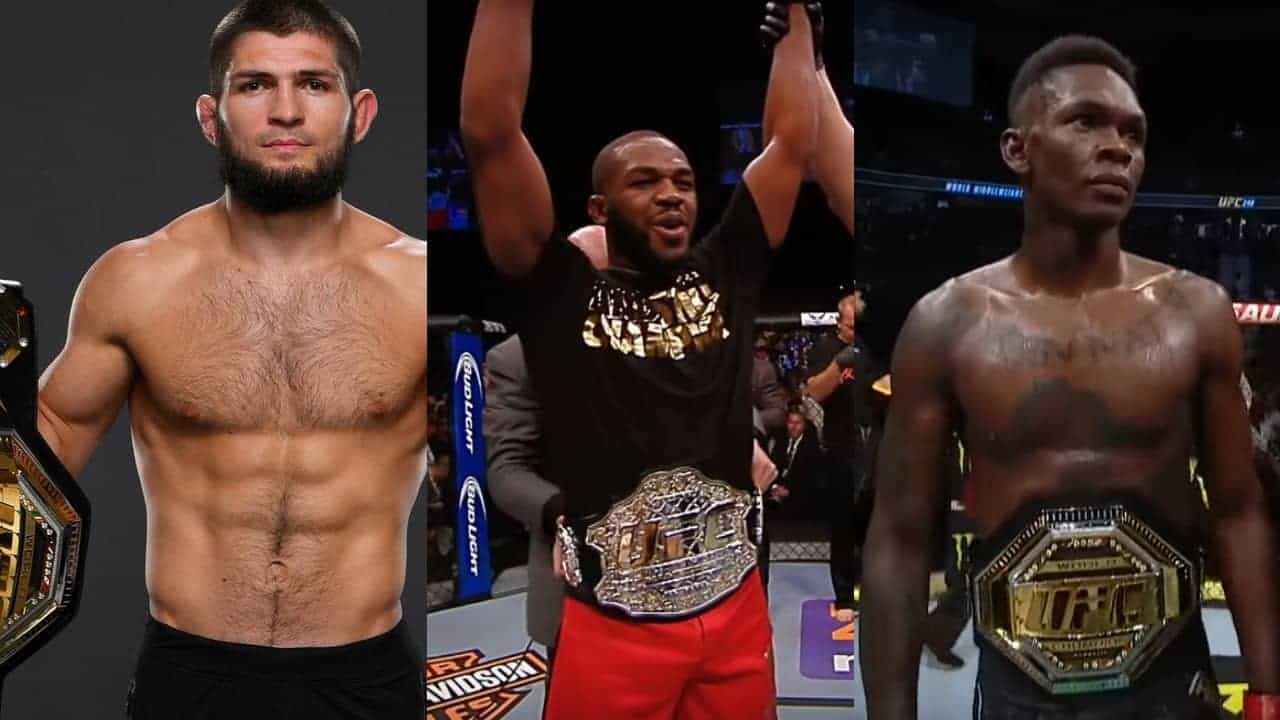
  • Khabib Nurmagomedov is an undefeated combatant in UFC, with 29 wins and 0 losses to his name at the time of his retirement in 2020. 
  • Khabib Nurmagomedov is an undefeated and undisputed lightweight champion.
  • Conor McGregor was the first male to hold 2 undisputed championship belts in the featherweight and lightweight divisions but has had 6 losses in his UFC career. He is not an undefeated champion but has been an undisputed champion. 
  • Phillip Miller was a mixed martial arts fighter for numerous fighting leagues. He was undefeated throughout his whole career, winning 16 fights in total, but was never an undisputed champion before his retirement in 2003. 

What is Pound-for-Pound Rankings?

Pound for pound rankings has been a part of the UFC since 2013. A voting panel made up of media members vote on who they believe to be the top UFC fighters based on their weight class and their performance in the octagon. 

The members on this panel include writers, reporters, journalists, and radio presenters from varying media outlets such as MMA Weekly, MMA Oddsbreaker, Fight Network, and numerous other media platforms that represent the sport of UFC, and MMA among other sports. 

Not all members agree on every aspect of the vote that has been made, but the votes will rank each active UFC fighter and place them in a position on the Pound for Pound ranked system. 

This system helps the UFC to determine future contests, contract negotiations, and who will be in line for the interim undisputed champion placement if necessary. The pound-for-pound ranking system, consequently, has a huge impact on UFC combatants fighting careers and future matches within the UFC. 

You can see the pound-for-pound and weight class rankings here on the official UFC site, where the list is regularly updated after fights to show the contestant’s new ranking position based on how well their fight went.

If you ever wonder about how the UFC ranking is determined, you need to check out an article entitled “How Do the UFC Rankings Work?“.

How to Become an Undisputed Champion

To become an undisputed champion a UFC combatant must challenge, agree, and be placed in a fighting match in the UFC octagon with a current champion. The fight must be for a weight class championship belt in which both fighters will fight to hold the weight class title. Ultimately, the winner of this match will become the undisputed champion of that weight class. 

How Do the UFC Rankings Work? Fully Explained Here!

0

UFC is the leading MMA promotion and home to over 600 skilled fighters. To make it easier for the fans to navigate through each weight class and find out who are the best fighters, the UFC uses the famous “ranking system”. This is a system MMA took from boxing and the way it works is very simple.

Photo by UFC

The UFC rankings system is very straightforward. More than 20 media members from various MMA networks vote on the rankings. Their job each week is to vote on the top 15 fighters in each weight class. The UFC then uses their votes to determine fighters’ position in the rankings.

Keep reading this article as we will go into more details about how UFC rankings work.

How are Rankings Determined in the UFC?

The way UFC rankings work is very simple. The rankings are voted on by more than 20 media members from various MMA networks. Each week, their job is to vote who are the top 15 fighters in each weight class. They also vote on pound-for-pound rankings to find out who the best fighters are regardless of the weight class. The UFC then collects all the votes and uses the final results to make the changes in the rankings.

There are no strict criteria on how the members of the voting panel should vote. The rankings are entirely based on their opinion only, but at the same time, they must stay neutral. In most cases, they use current as well as past fighter results to decide fighters’ position in the rankings. 

They use data and stats such as wins and losses. Most of them focus on recent fights and results as well as the reputation and legacy of the fighter. Some other factors that play a big role in their votes are the method of victory and the quality of opponents.

It’s important to point up that they do not vote for interim and undisputed champions. This is because the champ is clearly the best in the weight class while the interim champ is the second best.

If you are curious about what is an interim champion, I wrote an article all about “why does UFC have interim champions” that I strongly encourage you to read.

How often are UFC rankings updated?

The UFC rankings are updated every week. The panel consisting of media members must vote and update the rankings within 48 hours of the last UFC event. Even when there are no UFC events on Saturday, they still need to give their votes which are, in that case, just a formality. Here is one example on how UFC updates the rankings.

For instance, let’s suppose a #8 ranked fighter competes against the #5 fighter on Saturday. If he/she wins the fight, the media members would, in that case, vote for that fighter to climb the rankings and enter the top 5. By Tuesday, the UFC would make the changes by moving the #8 ranked fighter up inside the top 5, while the losing fighter would drop down few places. This is a short explanation of how the UFC updates its rankings.

Who votes on UFC rankings?

People who vote on UFC rankings are the media members, in most cases journalists, who work within the MMA industry. Back in 2013 when the rankings started, there had been around 100 journalists. In modern days, this number has dropped down to between 20 and 30 people.

These journalists and networks they work for are not based in the US only. No, the votes on UFC rankings come from all parts of the world like the US, Brazil, Russia, or Australia. However, the names of the people who vote on the ranking are not disclosed to the public.

In the past, the UFC used to publish the names of all the members of the voting panel on their website. People were able to see who these people were and their backgrounds to better understand what made them qualified to decide which fighters were the best in the world. We could also see the details on how each panelist voted. But this is no longer the case since the UFC has decided not to disclose who votes on the UFC ranking.

As a result, we don’t know the names of all people who vote on the UFC rankings. But, here are a couple of past and present names (source):

  • Rodney James Edgar (former MMA fighter and journalist)
  • Eric Kowal (MyMMAnews)
  • Shawn Dallas Hall (MMA Fight Coverage)
  • Scott Lewis (Inside Fighting Radio)
  • Ashah Tafari (MMA NYTT)

Who are the media networks that decide the UFC rankings?

All media members who have the right to vote work for the major MMA or Sports networks. These networks come from all around the world like Brazil, Russia, Sweden, and, of course, the US. Most of these networks focus on MMA only and here is a shortlist of the most popular ones:

  • FighteNews
  • Gazeta Esportiva
  • Inside Fighting Radio
  • Portal do Vale-Tudo
  • Burbank Leader
  • ESPN.com
  • MMA Weekly
  • NY Post
  • Canal Combate
  • Fight Network

How many ranks are there in UFC?

The UFC rankings cover all the weight classes. Each weight division includes the ranking list of the best 15 fighters and there is also a pound for pound ranking list that takes the weight out of the equation and ranks the best fighters from all divisions. Since there are 12 UFC weight classes for both men and women, this means that we have 13 ranks, including the pound for pound list as well.

What Does Pound for Pound mean in the UFC?

Pound for pound, or P4P, is a ranking list that consists of only the best fighters from all weight classes. This term comes from boxing and one of the first fighters to receive this “title” was Sugar Ray Robinson. At the time, people called him a pound-for-pound king which meant “the best boxer in the world regardless of the weight class”. In modern days, pound-for-pound has become a part of the official ranking system in various sports like boxing, MMA, and wrestling.

The first media network to come up with the “pound for pound” ranking list was “The Ring” magazine in 1990. When it comes to MMA, the UFC created the pound-for-pound ranking list in 2013. It’s important to point out that there are also a couple of unofficial ranking lists by various MMA media such as ESPN, Sherdog, and Tapology.

Why is pound-for-pound important in the UFC?

A pound-for-pound ranking list is very important in the UFC because it shows us the best fighters regardless of the weight class. In some way, you can look at the #1 ranked pound-for-pound fighter as the “Ultimate Fighter”. He/she is, in most cases, the most skilled fighter who has faced and beat every opponent from their weight class or era. These are the finest athletes in the world and are often seen as the greatest as well.

In theory and on the fundamental level, a pound-for-pound best fighter has the skills to face and beat fighters from all weight classes. But we will never see this in the UFC, and these debates will forever remain without an answer. The UFC will never match a 205 lbs fighter against the best from the 125lbs weight class simply because the state athletic commission will not approve the fight.

Instead, modern MMA fighters and boxers focus on “beating” each other on the pound-for-pound ranking list by accomplishments and records.

How are UFC pound-for-pound rankings determined?

The process of ranking the best pound-for-pound fighters is the same as for weight classes. There are around 20 to 30 selected journalists from various MMA media networks who vote on the pound-for-pound rankings on a weekly basis. But the only difference is that this list ranks the best fighters from all weight classes.

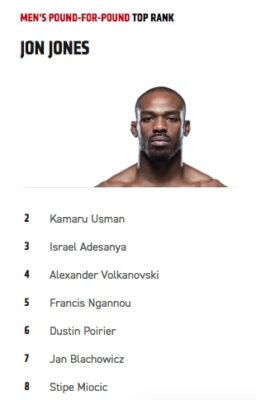
UFC Pound-for-Pound Ranking

The pound for pound list consists of, in most cases, champions of each UFC weight class, and other best fighters. To find out which one is the best, the members of the panel would look for the most dominant fighters who have been on the longest winning streaks or have most title defenses for instance. They will also look at their legacy, the quality of the opponents they faced, and other factors such as how active they have been in their careers.

Who are the best pound-for-pound ranked UFC fighters of all time?

Since the introduction of the UFC rankings in 2013, there have been many great fighters who entered the pound-for-pound ranks. But some of the greatest fighters who held the #1 spot or have been inside the top 5 were:

  • Demetrious Johnson — is the most dominant UFC flyweight champion in history with 11 title defenses. At one point in his UFC career, he was on a 13 fight winning streak, out of which 12 wins were in title bouts.
  • Jon Jones— is often seen as the pound for pound the best of all time. He became the youngest UFC champ by winning the title at the age of 23. He went on to beat every fighter from his weight class and era, and a couple of fighters from the new generation as well. 
  • Anderson Silva — is the most dominant 185 lbs fighter of all time and the former UFC champ. In his career, he defended his crown 10 times and holds a record for the longest title reign in history (2457 days). 
  • Jose Aldo — at one point, Aldo was among the best P4P fighters. He is the former WEC and UFC 145 lbs champion who had defended his title seven times in his career. 

What are the main problems with UFC rankings?

Although UFC rankings are a very helpful tool and good for the sport, the concept is far from ideal. In fact, there are many issues with the ranking system and we hope the UFC will address them in the future. Here is all you need to know about some of the biggest problems with how the ranking system works.

The lack of voting criteria

Don’t get us wrong here, it’s great that the voters have full freedom to express their opinions. But at the same time, this causes a lot of confusion when it comes to certain scenarios.

For instance, one of the biggest problems is the inactive fighters. In recent years, we can see a lot of high-level fighters taking long breaks. And journalists who vote on the rankings are the ones who are advocating for a change because inactivity has a big impact on the way they vote. There are no criteria on how they should deal with these fighters and their place in the rankings:

“I’ve handled these situations before in the past and thought to myself, ‘Should I take it upon myself?’ For instance, when Nate Diaz went that long time between fights, he was still available to be ranked for a long time before he was finally pulled and it was very difficult knowing should I keep him in or not?”

David Brown of the Cherokee Scout, source

Biased voting

The members of the voting panel are also the fans of the sport and they have their favorite fighters and the ones they don’t like. If you combine favoritism with the lack of voting criteria, you have a perfect recipe for biased voting. And this has happened a couple of times in the past.

The best example of this came shortly after the UFC 194. This memorable event saw Conor McGregor knocking out Jose Aldo in just 13 seconds. After the event, most journalists voted to move the Irishman up in the pound-for-pound ranking list, which was the only right decision. But the panelist from Brazil, Marcelo Russio, actually moved McGregor down the rankings, which was completely out of line. 

Lack of transparency and credibility

The biggest issue with the UFC ranking system is the lack of transparency. We don’t know who all the panelists are, and how qualified they are. Some of the known panelists are very credible like Brett Okamoto and Mice Raimondi. But in reality, most panelists are unknown, and fans do not know anything about their backgrounds.

Related Questions

How is ranking determined in Bellator MMA?

Bellator introduced its official ranking system in March 2021. The rankings are voted by the panel of media members from various MMA networks, very much the same as in the UFC. Bellator asks the media members to vote for the 10 best fighters in each division, and pound for pound as well. They must submit their votes due to Monday following each Bellator event. The votes are handled by “Combat Registry”, which is a third-party independent of Bellator.

Some of the inaugural media members are:

  • Brian Campbell — CBS Sports
  • George Garcia- MMA Junkie
  • Ken Pishna — MMA Weekly

Bellator rankings differ a lot from the UFC rankings since Bellator has voting criteria. The media members have the full freedom to give their opinions on which fighters are the best in each division and pound for pound. But, there are some rules when it comes to:

  • Inactive and retired fighters and the ones under medical suspension
  • Fighters who compete in multiple weight classes

These rules do not have an impact on their final decision on who are the best fighters. It’s more of a guideline on how they should deal with inactive fighters who are holding up the rankings.