Home Blog Page 28

How Much Do UFC Fighters Earn? – Here’s a Closer Look

0

Disclaimer: The following fighter salaries and UFC pay structure information is sourced from various websites and media reports. We do our best to get the most accurate information. As a result, this article does not guarantee 100% accuracy.
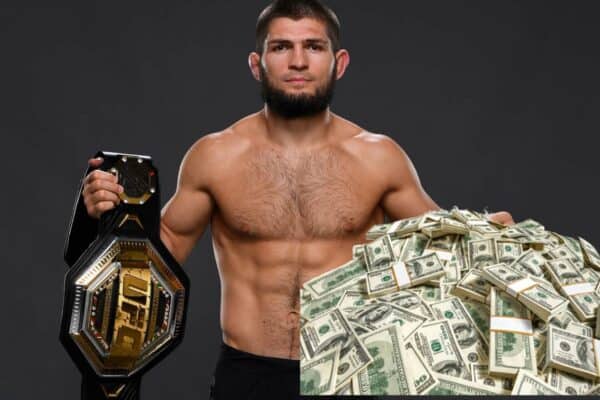
Photo by UFC

The question of how much money a UFC fighter makes does not have a straightforward answer. The amount a UFC fighter makes is different for every fighter and greatly depends on their fight card in a UFC fighting event. 

The average salary estimated for UFC fighters in 2020 was US$147,965. UFC fighters are paid for making the weight, turning up to fights, the number of fights they partake in, and other endorsements outside of the UFC’s domain, including sponsorship support. 

How Much Does a UFC Fighter Make a Year?

UFC fighters do not earn a typical annual salary but instead earn a salary based on a signed and agreed contract with the UFC which determines their base wage for the year for turning up to and fighting in a set number of events and also for making weight. 

UFC fighters are classed as “contractors”, which essentially means they can negotiate their pay based on how many fights they plan to partake in during the year and also on their popularity. The more popular a UFC fighter is, the higher their base salary will be because they essentially bring more money and fame to the UFC. 

Sponsorship and endorsements play the main role in how a UFC fighter gets paid. Conor McGregor, for example, was paid US$5 million for his match against Dustin Poirier in January 2021. He also received a share of the pay-per-view (PPV) revenue, sponsorship pay from the UFC’s main uniform sponsors and other sponsorship endorsements and deals which earned him approximately 20 million(in U.S. dollars) in 2020/21 according to Statista. 

  • The average salary estimated for UFC fighters in 2020 was US$147,965. 
  • 38% of UFC fighters in 2020 earned a six-figure salary. 

Who Are the Highest-Paid UFC Fighters?

Some of the highest-paid fighters in the UFC earn millions just for making weight and turning up to a fight. As per their contracts, fighters can also earn more for winning the fight, but might not necessarily take home less if they lose the fight. 

Here are some of the top paid UFC fighters and their earnings in 2020:

  • Khabib Nurmagomedov took home the highest UFC income in 2019/20 with US$6,090,000
  • Conor McGregor, as an entrepreneur and founder of Proper No.12 Irish Whiskey, took home an estimated US$120million in 2019/20. An estimate of US$3,060,000 of that was from his UFC earnings. 
  • Israel Adesanya earned US$1,230,000 for his involvement in the UFC 
  • Justin Gaethje earned US$920,000 and
  • Stipe Miocic made US$790,000 for his UFC fights in 2020.

As you can see, there is a large difference in the pay amounts between Khabib and Stipe, although they both only fought in one match each in 2020. 

UFC Salary Structure

Here is a list of how UFC fighters are paid and what type of endorsements and sponsorship deals will add to their yearly and individual fight income:

  • Contracted fights
  • Base salary per fight
  • Sponsorship
  • Venom 

The primary sponsors of MMA pay fighters in each fight night event. A small sponsorship rate ranging between $2,500 and $40,000 depending on the fight card they’re in and how many UFC fights they have scheduled for the year according to their contract. 

  • Fight of the night bonus: The favorite fight of the night, judged by UFC management, will award both the winner and loser of the most entertaining fight with a US$50,000 bonus.
  • Win bonus: Most fighters can establish a “win bonus” in their contracts. Fighters with a higher contracted salary for the year may not have a win bonus added to their contracts, this is all negotiable. 
  • Fight Card: Being matched with another fighter in the main televised fight card will earn a UFC fighter a higher salary. 
  • Performance of the night bonus: Another bonus endorsed by UFC management is the performance of the night which is awarded to the best and most exciting individual performance of the night. 

Here is how fighters can be grouped depending on the money they made for a single fight in 2020.

  • Highest paid tier: Highest paid UFC fighters made anywhere between US$500,000 to US$3million for participating in a main fight card in 2020. Fighters like Conor McGroegor, the retired Khabib Nurmagomedov, Nate Diaz, Stipe Miocic, Amanda Nunes, and Jon Jones to name a few would be the names found in this tier. 
  • Middle paid tier: Fighters in the middle tier were paid between US$80,000 and US$250,000 per fight. You will see names like Petr Yan, Aljamain Sterling, Jimmie Rivera, and Dominic Cruz making this kind of cash for a single event in the UFC Fight Night. 
  • Lowest paid tier: Fighters in a lower tier, also known as the Undercard, will be paid an approximate minimum of US$10,000 and anywhere up to US$80,000 per fight for signing up with the UFC and participating in fight night. Lesser-known fighters like Yorgan De Castro, Jairzhino Rozenstruik, Michelle Waterson, and Sam Alvey all make less than US$100,000 per fight. Keep in mind, this can change at any time if their contracts are re-negotiated and if they become more popular or land better sponsorship deals. 

Multiple factors need to be taken into consideration when asking how much money a UFC fighter makes. Fighters currently in the lower paid tier group may work their way up to a much higher pay bracket either through popularity, or being matched for popular fights, as well as working their way up in the rankings by continuing to defeat opponents and be matched in a main card fight on UFC’s Fight Night. 

Male UFC Salary vs Female UFC Salary

There is a large difference in the amount of money made between male and female MMA UFC fighters. According to thesportsdaily, Amanda Nunes took home the highest female UFC salary in 2020 with approximately US$450,000. This was based on Amanda’s contracted fight salary of US$350,000 and her win bonus of US$100,000. 

Female UFC fighters earned only 41% of the amount that male MMA fighters did in 2020. This gender pay gap has been commented on and questioned numerous times. Although in an interview with Dana White in July 2019, White advised that Cris Cyborg was paid a base wage of US$500,000 in December’s UFC 232 card in 2018. This put Cris Cyborg on par with male fighters Jon Jones, and Alexander Gustafsson. 

It might look like a gender pay gap, but when taking into consideration that female UFC fighters, Weili Zhang and Joanna Jedrzejczyk, were in the top 4 earnings in the UFC 248 Main Card, behind Israel Adesanya and Yoel Romero, the two female MMA fighters were well ahead of other male fighters in their fight earnings. 

Because UFC fighters can negotiate their contracts based on how popular they are with UFC fans and how much money they bring into the UFC through pay-per-view earnings, it rears the question, are female UFC fighters as popular as male UFC fighters? 

As female fights in the UFC progress, so does their popularity. The gender pay gap between men and women in the UFC is decreasing every year as the women bring more money into UFC. 

Highest Paid Male UFC Fighter 2020 VS Highest Paid Female UFC Fighter 2020

  • Khabib Nurmagomedov took home US$6,090,000 in 2020
  • Zhang Weili earned US$290,000 for fighting in 2020 

Zhang Weili has become extremely popular in China, where she was born, and is one of the female UFC stars leading the way into a more equal UFC world for women. 

The main difference here is that Khabib earns more in sponsorship endorsements and is a popular fighter with the UFC fans. As of September 2021, there are 607 men and only 117 women on the UFC roster. This makes it difficult for UFC management to match and schedule fights with the women contenders. 

As seen in this survey in statista, there is also a much higher level of male fans compared to female fans who watch UFC. This may or may not be a reason why women in UFC is not as popular, yet. 25% of females who partook in the study, advised they had never even heard of UFC. While 14% of men claim they are ‘avid’ fans of the sport. 

Do UFC Fighters Still Make Money if They Lose?

UFC fighters still make money if they lose a fight. Because they are paid based on a contracted salary amount for the year, UFC fighters merely need to show up for their fight to be paid regardless of whether they win or lose. 

Incorporate the sponsorship wages, pay-per-view endorsements, and possible bonuses, occasionally the loser of the match will still take home more than the winner. 

In the UFC 263 Main card, Brandon Moreno was paid a base wage of US$100,000 and an additional US$100,000 for winning the fight against Deiveson Figueiredo, taking home a total of US$200,000 for the night. His opponent, although the loser of the match, still took home his contracted base wage for the night which was a total of US$210,000. Figueiredo took home more than the winner. 

In July 2021, Conor McGregor and Dustin Poirier fought in the UFC Main Card 264 and although McGregor lost the match, he took home millions more than Poirier. The exact amount is unknown, but assessments based on previous fights and take-home salaries estimate that McGregor took home approximately US$23 million while Poirier took home around US$5 million. 

The Expenses Of Being a UFC Fighter

Every UFC fighter has a dedicated team backing them to the top. Typically, more professional, and higher-level fighters have more on their team like training partners, as they can afford it through their set contract with the UFC. 

Fighters are given weeks-notice, generally up to 8 weeks, to get prepared for a fight. This takes them to what is known as “training camp” to get ready for their fight card. 

Here are the things people rarely consider when contemplating how much money a UFC fighter makes:

Gym Fees

Most fighter gym fees will be paid on a per-fight-basis. The gym will take anywhere between 5-10% of a fight purse earned for a fight. 

Medical Bills

Depending on how the fight goes will determine what medical treatments need to be made and how much they will cost. The UFC’s insurance policy covers injuries made in competition.  

Management Team

UFC fighters have a manager or a management team who arrange their sponsorship deals, UFC contracts, marketing promotions, and their fight matches. The standard management fee for the work a management provides is 20% of a fighters purse. 

Coaching

Coaches come with the gym and as such will be included in the 5-10% of the fees the gym takes. What’s not included, however, is the necessary private coaching that coaches can charge up to US$150 an hour. Fighters getting ready for an upcoming fight, may need numerous additional coaching hours. 

Transport, accommodation and miscellaneous

Nutritionists, massage therapists, supplements, dieticians, visas, food, and taking your coaches and training partners along with you to a fight all add up. Fighters like John Cholish explain that these costs can get as high as $6000 for some. 

Taxes

We all need to pay our taxes and UFC fighters are no different. Similar to contractors, UFC fight earning do not consider tax deductions. Fighters need to pay the government at the end of the financial year and Miles Jury recommends putting aside approximately 30% of a fight purse for an adequate amount to pay taxes. 

In the eyes of a newly signed UFC fighter, fees and payments to distribute to outside sources as part of their UFC career, can take whole figures off their ‘take-home’ fight wage. 

At the end of the day, fighters may have to pay approximately 10-20% of their fight purse to their team behind the scenes. 

If a fighter is contracted with the UFC for US$20,000 a fight, minus the above approximate fees, they might only take home US$8000 before tax, medical bills, and private coaching. This is the reality for many up-and-coming UFC fighters. 

Do UFC Fighters Have Second Jobs?

Many MMA fighters have second jobs to be able to support themselves at the beginning of their UFC career to supplement their income. 

  • Handz of Steel fighter, Geoff Neal, in the Welterweight class of the UFC, is ranked number #10 in the welterweight division. Neal’s secondary job next to UFC fighting, is waitering in his hometown in Dallas. Neal has stated openly that his decision to work in a restaurant was mainly due to other fighters unwilling to fight him.
  • Stipe Miocic has a full-time job alongside his UFC career. The American Mixed Martial Artist is a full-time firefighter and Paramedic in Cleveland. Stipe makes more than enough in a fight to sustain a lifestyle without a second career and his reasons for continuing his career as a fireman is that he “likes being there for a person that needs you”
  • Dominick Reyes is the UFC fighter known for ‘almost’ beating Jon Jones in the light heavyweight division in 2020. Before Reyes was an up-and-coming star in the UFC, he was training while working full time as a teacher. Reyes works as an IT technician while training for his next unscheduled fight in the UFC. 
  • Al Iaquinta has established a real estate business while waiting for his next fight. 

UFC fighters that are currently at the top of the pay chain, weren’t always there and had to work their way up to become the champions they are today that no longer have to work second jobs. 

  • Conor McGregor was a plumber and is now a multimillionaire with his own whiskey company
  • Dustin Poirier worked in distribution before and at the start of his UFC career to keep up with fees bills. Dustin now runs a charity in Louisiana called “The Good Fight Foundation” to help raise funds for underserved communities. 

RECOMMENDED FOR YOU:

What is Gracie Jiu-Jitsu? Fully Explained

0

Whether you are new to Jiu-Jitsu, or have been training for a while, you have probably heard of the Gracie family. In particular, you may have heard of ‘Gracie Jiu-Jitsu’ (GJJ), and noticed people interchanging this term with ‘Brazilian Jiu-Jitsu’ (BJJ). I have written this article because, although the differences between the two are subtle, they are easy to recognize once you know more about GJJ.

Gracie Jiu-Jitsu is the trademarked term for BJJ training developed by the Gracie family. GJJ focuses heavily on self-defense, starting with 36 essential combative techniques. Overall, students learn over 600 techniques, using repetition, fight simulation and focussed sparring to master each one.

I will cover the details of Gracie Jiu-Jitsu throughout this article, including how it differs from other BJJ training schools, costs and how long it takes to become a black belt. Interestingly, not all of the Gracie family choose to operate under ‘GJJ’, such as Carlos Gracie Jr’s ‘Gracie Barra’. I will explain more about Carlos’ BJJ school further down as well.

History of Gracie Jiu-Jitsu

Gracie Jiu-Jitsu began in the early 1900’s by the Gracie family in Brazil. It is a form of Brazilian Jiu-Jitsu, which incorporates all Jiu-Jitsu techniques that came from Brazil. Many of these techniques were actually taken from the techniques used by the Gracie family.

Over time, various branches of Brazilian Jiu-Jitsu have formed, including Gracie Barra, which I will explain in more detail further down. However, the term ‘Gracie Jiu-Jitsu’ was trademarked by the family to distinguish their unique training from the rest of the BJJ world.

Helio Gracie is known as the founder of Gracie Jiu-Jitsu, being the one to adapt the Jiujutsu techniques he learned from his brothers. Although Helio’s brother, Carlos, was the first to train in Jiujutsu under Mitsuyu Maeda, it wasn’t until the techniques were adapted that they were recognized as a unique entity; ‘Gracie Jiu Jitsu’.

Helio Gracie

Helio’s techniques focussed on using leverage and timing instead of strength and speed, to accommodate his weaker physique. These techniques became well-established over time in the first Gracie Jiu-Jitsu school, which was founded in 1925. They proved time and time again to be effective, even against bigger and stronger opponents. This is what made Gracie Jiu-Jitsu rise in popularity.

Helio’s grandson’s, Rener and Rorion, run one of many Gracie Jiu-Jitsu organizations. This particular organization is known as ‘Gracie University’, which claims to maintain the true teachings of the Gracie family. These teachings include unique BJJ training methods, as well as healthy habits for the body and mind. 

What Makes Gracie Jiu-Jitsu Different?

Gracie Jiu-Jitsu is unique in its teaching style. The GJJ curriculum is incredibly structured and focuses heavily on self-defense in the beginning of a student’s training. The focus for every student before becoming a blue belt is learning to defend against an untrained attacker, regardless of their size and strength.

Students will initially learn 36 core self-defense techniques, known as the Gracie Combatives. Once the student has learned these techniques, they receive a ‘Combatives Belt’. This is a stepping stone to receiving a blue belt, which takes at least another six months of mastering the Gracie Combatives.

Once the student reaches their blue belt, they enter what is known as the ‘Master Cycle’. From this point onwards, the student learns how to defend against trained attackers, as well as learn techniques that can help in a competition setting. The Master Cycle consists of three different classes of training, which are used to master each technique. These are outlined below.

Rapid Mastery

Rapid Mastery can be likened to performing drills in a BJJ class. It is a repetitive process where the student will practice a newly learned technique on a training partner over and over again. Each time the technique is repeated, the training partner applies a little bit more resistance, starting with no resistance at all.

This continues until the student fails to perform the technique. The student and their partner will then continue to practice at this level of resistance until they can perform the technique with more resistance. Once the technique can be performed with 100% resistance, the student can move onto fight simulation.

Fight Simulation

Fight Simulation is the Gracie family’s method of preparing their students for a street fight, regardless of which technique they are learning. This involves the student using their newly learned technique against a training partner in a ‘fight’.

The student’s training partner wears weighted gloves and will aim to strike, while the student’s main goal is to submit their partner using the new technique. This is unique to the Gracie curriculum and something that students find very challenging but incredibly rewarding.

Focussed Sparring

Focussed Sparring can be likened to ‘rolling’ with your training partner. The student will use all the techniques they have learned so far against their partner, who uses 100% resistance. They will incorporate the new technique to try to submit their partner in a series of sparring exercises.

All of these methods allow students to become ‘masters’ of each Brazilian Jiu-Jitsu technique. Students work their way methodically through all of the techniques until they are awarded their black belt. I will discuss more about belt promotions in GJJ further down.

Is Gracie Jiu-Jitsu Good Self-Defense? 

The primary focus of Gracie Jiu-Jitsu is to prepare students to defend themselves in a street fight. Until students reach their blue belt, you will not learn anything else except the core techniques required to defend yourself against an untrained attacker. For this reason, Gracie Jiu-Jitsu is very good for self-defense.

Even after students reach their blue belt, they then move onto learning more self-defense techniques to defend against a trained attacker. These techniques are all put to the test in a ‘fight simulation’ class, which I will explain further down. This is the closest thing to practicing techniques in a real street-fight situation.

Is Gracie Jiu-Jitsu Good For Law Enforcement? 

Gracie Jiu-Jitsu is good for law enforcement because it teaches fundamental techniques for controlling an opponent, regardless of their size and strength. As a law enforcement officer, you are expected to have the ability to apprehend suspects on a regular basis.

While law enforcement officers still carry weapons, the use of a weapon to apprehend a suspect can be dangerous and should be a last resort. Gracie Jiu-Jitsu provides the skills necessary to use minimal force to control the threatening individual. It is worth mentioning that Jiujitsu trained officers are reportedly less likely to engage in violent clashes with suspects as reported by HBO Real Sports. Watch the following video for more detail.

Gracie University offers the Gracie Survival Tactics program for dedicated law enforcement training. The Jiu-Jitsu techniques used in this program have been proven effective for officers wearing utility belts and uniforms. They use leverage-style techniques to control an opponent without injury to the officer or suspect.

Within this program, law enforcement officers are taught how to de-escalate a dangerous situation and assess how to apprehend a suspect with minimal force. Teaching GJJ students to de-escalate the situation using words can allow the suspect to calm down and prevent any form of grappling.

Officers may also find themselves in a situation where they do not have a weapon or arresting aids, and may need to pin and neutralize a suspect while waiting for backup to arrive. Gracie Jiu-Jitsu provides the skills necessary to restrain an individual while expending very little energy.

The US Army has already adopted Gracie Jiu-Jitsu techniques as part of their training program. These include 36 fundamental self-defense techniques, known as the Gracie Combatives. There are several programs within Gracie Jiu-Jitsu that advertise good self-defense training for law enforcement.

Not only does Gracie Jiu-Jitsu help prepare law enforcement for combat, it also teaches individuals to live a healthier lifestyle. This lifestyle promotes physical, mental and emotional health, something that can be a problem for some law enforcement officers. Training in Jiu-Jitsu can therefore be a way of relieving stress from the job and maintaining good health.

RECOMMENDED FOR YOU:
Are U.S. Police Trained in Martial Arts? Police Training Q&A

How Long Does It Take To Get A Black Belt In Gracie Jiu-Jitsu? 

There are over 600 techniques in the world of Brazilian Jiu-Jitsu, and a GJJ student must master all of them before being awarded their black belt. This process takes 8-14 years, depending on the dedication of the student, how many classes they attend and how many hours they dedicate to training each week.

GJJ students begin with the 36 core self-defense techniques in the Gracie Combatives program, which takes 8-12 months to complete. They then continue on their self-defense journey towards blue belt, which takes another 6-12 months. This time is spent mastering the 36 combatives techniques, including testing the techniques in fight simulation exercises.

Once a student has received their blue belt, they should be prepared to take on any untrained attacker in the street. This is when they will begin learning more techniques through the Master Cycle. These techniques will help defend against trained attackers or help prepare students for competitive Jiu-Jitsu.

From this point, it takes students approximately 3-4 years to progress through each belt until students have earned their black belt. This includes progressing through blue belt, purple belt and brown belt.

What’s The Difference Between Gracie Jiu-Jitsu And BJJ?

Both BJJ and GJJ draw from the same collection of techniques. As I mentioned earlier, this includes over 600 techniques. However, there are a few key differences between the two, which I will highlight below.

Structure

The main difference between the two types of Jiu-Jitsu is that GJJ offers students a very structured method of learning these techniques, while BJJ teaches these techniques at different stages depending on which gym you attend.

BJJ instructors can be anyone, provided they are a higher belt than their students. Generally, students should only start teaching once they have been awarded their purple belt. Each instructor has their unique style of teaching and can teach techniques to their students in whatever order they like.

GJJ, on the other hand, is only taught through Certified Training Centres or schools run by Gracie family members. These training centers and schools are governed by the Gracie family and remain uniform in their teaching practices. This keeps training consistent for every student so they know what they can expect.

Different Training Focus

Another key difference is the focus of the training. The primary focus of GJJ is to teach students self-defense. This is why students must learn the 36 combative techniques before they can earn their blue belt. As mentioned earlier, a blue belt GJJ student should be able to defend themselves against any untrained attacker.

Although some BJJ schools focus on self-defense, there is generally a heavy focus on competitive sparring. Most gyms will have their own team of students representing them in different competitions, so they choose to prepare all students for this pathway.

Belt Promotions

In GJJ, students are only promoted to the next belt when they have mastered a set number of techniques through the Master Cycle. Once they have proven they can use these techniques in both focussed sparring and fight simulations, they will be promoted.

BJJ students are promoted by their coach when the coach deems them ready. This is a subjective measure of the student’s performance based on how well they roll with other students. Students that can submit or roll with a higher belt will be promoted or given another ‘stripe’ on their belt.

Which is Better?

Both GJJ and BJJ have their benefits. Whichever one is considered ‘better’ depends on the individual student’s goal. For those who want to learn Jiu-Jitsu for self-defense, GJJ is much better.

This is because you will be able to defend yourself against an untrained attacker by the time you receive your blue belt, which can occur within 12 months. Students can then progress onto defending themselves against trained attackers as they receive subsequent belt promotions.

Students also have the ability to practice techniques in the fight simulation classes mentioned earlier, which is the closest ethical way of practicing your street fighting skills. This is something unique to GJJ.

Although BJJ will still help prepare you for a street fight, the focus is more on preparing students to fight other BJJ practitioners. Some of the techniques taught from the very beginning of your training may not be practical or realistic in a street fight. For this reason, if you are interested in fighting in competitions, BJJ is a better training path.

There is much more to learn about the difference between Gracie Jiujitsu and Brazillian Jiujitsu. This article, “What’s the Difference Between Gracie Jiu-Jitsu and BJJ?”, will explore deep into the difference between these two.

What’s The Difference Between Gracie Jiu-Jitsu And Gracie Barra? 

Gracie Barra is an organization founded by Carlos Gracie Jr. The organization got its name because Carlos started his first BJJ school in ‘Barra da Tijuca’ and the school soon became distinguished as ‘Gracie Barra’.

Gracie Barra has a different curriculum to that of Gracie Jiu-Jitsu. Therefore, although they are both run by members of the Gracie family, they are not the same.

Gracie Jiu-Jitsu has a heavy focus on self-defense and stems from the teachings and philosophies of Helio Gracie. Helio was the grandfather of Gracie University founders Rener and Ryron.

Gracie Barra, on the other hand, has more of a sporting Jiu-Jitsu focus and stems from the teachings of Carlos Gracie, who is the father of Carlos Gracie Jr. Carlos Gracie was the first of the original Gracie brothers to learn Jiu-Jitsu, but Helio was the one to adapt these techniques to make them easier for disadvantaged individuals.

Therefore, the techniques taught in both GJJ and Gracie Barra come from the same origins, but their focus is what differentiates them.

GJJ, through Gracie University, also offers a wide range of online training courses and does not have as many training centers as Gracie Barra. The founders of Gracie Barra believe it is more important to learn BJJ in person, rather than through instructional videos.

How Much Does Gracie Jiu-Jitsu Cost?

Gracie Jiu-Jitsu costs can vary, depending on which training center you choose to train with. Here (link to Gracie University website) is a list of all certified training centers, which each have their own unique pricing. However, each training center offers exactly the same programs, taught by different instructors.

Gracie University offers a 10-day free trial to any newcomer, where all the costs are covered, including the hire of a Gi. However, once this free trial is over, programs are charged per month. This fee usually includes eight classes within a month, which generally ranges between $100 and $220 for the eight classes.

To save on costs, you could buy the online programs, which can be purchased as a subscription or one-off payment. Classes are around $8-$14 as a once-off payment, giving you access to that class indefinitely. The subscription programs start at $20 per month and give you access to a wider range of content for that month.

Another cost-saving strategy is to join a Gracie Garage. These garages can be run by anyone, and are essentially unofficial training centers. Depending on the preferences of the garage owner, you may contribute to the subscription fee or pay a small flat-rate fee to join.

Related Questions 

Is Gracie Combatives Effective? 

The Gracie Combatives program is very effective training for self-defense. This is reflected in the fact that the program was created for the US Army and these techniques are still used in their training program.

However, these techniques may not be useful in a competition setting. They primarily prepare you for an untrained attacker, not grappling with other BJJ practitioners.

What is Gracie Diet?

The Gracie Diet involves mixing foods from six categories in a way that reduces fermentation and maintains a balanced pH. Pork is prohibited, alcohol and tobacco are discouraged and meals are consumed 4.5 hours apart for digestion. Benefits include better short and long-term health and weight loss. The Gracie diet is for all people who want to eat healthy. This diet was not designed only for Jiujitsu practitioners. Read the full report on the Gracie Diet to learn more about this very beneficial diet.

Who is Rickson Gracie?

Most of the fans remember Royce Gracie through his domination inside the UFC octagon. However, it appears that the myth and the legacy of his half-brother Rickson are unknown among modern fans. Rickson is considered the toughest Gracie of all time.

Rorion Gracie deliberately selected the younger Royce to introduce Brazilian Jiu-jitsu to American people instead of Rickon who was the best in the family. The reason may be confused at first, but it speaks a lot about the Gracie family. You can learn more about why Rickson Gracie was not chosen to represent Gracie Jiujitsu at the beginning of UFC in the following article, “Why MMA Fans Should Know About Rickson Gracie!”

What is Japanese Jiu Jitsu?

Japanese Jiu-Jitsu ( or ‘Jujutsu’) is the original martial art that inspired BJJ and GJJ. JJJ techniques were used in ancient times against Samurai, where weapons were ineffective against the heavy armor of the time. These techniques included dangerous throws, joint locks and chokes, and even involved the use of small weapons.

https://youtu.be/NMlO9BGY0l0

JJJ techniques were adapted to suit smaller and weaker individuals by Jigoro Kano, who subsequently created the martial art of Judo. Techniques from both Judo and JJJ were later brought to Brazil, where the Gracie brothers, particularly Helio Gracie, adapted them further to allow frail students to learn the techniques as well.

As you see above, Japanese Jujutsu is truly the godfather of modern martial arts today. It is worth knowing more about this ancient martial art if you are a true fan of modern martial arts. You should check out our report on “What is Japanse Jujutsu?” which explores deep into how and why Japanese Jujutsu was created.

RECOMMENDED FOR YOU:
BJJ vs Japanese Jiu-Jitsu – Key Differences and Similarities

What are the Different Styles of Kickboxing? Simply Explained

0

When we say “kickboxing”, most people think of one of the best combat sports. But kickboxing is a broad term, even confusing to some extent as it stands for both a group of specific martial arts and a fighting system on its own.

In the wider sense, kickboxing is a group of arts that mix punches and kicks like Muay Thai, Savate, Karate, or Sanda. But at the same time, kickboxing is a fighting system on its own, created in the 1950s in Japan. This is the main reason why people are often confused by the term kickboxing. 

There are five major kickboxing styles: Muay Thai, Dutch kickboxing, Full Contact Karate, Savate, and Sanda. What distinguishes each kickboxing style from the other kickboxing styles is the rules, which explain how you can strike and where you are allowed to strike.

As you will see below, kickboxing has many styles and forms and to average people, they all might look the same. But when you look into it, you can see that these forms differ a lot from one another. In this article, we will explain to you different rules and styles of kickboxing, and answer all the major questions about this striking style. 

Different Rules of kickboxing

Kickboxing is a fighting system and combat sport that emerged in the 1950s in Japan. Like any other combat sport, there are different styles of kickboxing that are defined by different rule sets.

K-1 (Asian/Unified rules)

This is one of the most popular forms created by the famous promotion called “K-1” from Japan. The letter “K” stands for karate, kickboxing, and Kung Fu. Back in 1993, K-1 wasn’t created as a style of kickboxing. It was just the name of the promotion that used to promote kickboxing matches and it had its own rules. But K-1 became very popular over the years, so much that we saw the birth of K-1 as a new style of kickboxing

K-1 kickboxing is very popular mainly because fighters compete at a high pace. Each fight includes 3–3 minute rounds, which means that fighters can fight at a high pace the entire fight. Fighters can use kicks, punches, as well as knee strikes to hurt the opponent and finish the fight.

2. American Kickboxing (Full Contact)

This form emerged in the 1970s in the US. Back in those days, karate and western boxing were the most popular combat sports in the country, and the mix of techniques from both of these combat sports is how American Kickboxing got created. 

Fighters wear trousers, and matches last from 3 to 10 rounds, with each round being 3 minutes. They can strike only above the waist using kicks and punches. Elbows, knees, striking below the waist and fighting in the clinch is not allowed.

3. Semi-Contact

The Semi-Contact rule is a variation of American Kickboxing. It is also known as point fighting and it looks very much like karate competition. The emphasis is on light contact and scoring points with fast and precise strikes, instead of chasing a knockout with powerful strikes. All male fighters must wear a shirt, trousers as well as shin guards, boots, and headgear.

4. International Rules

This form is also known as “freestyle”, or “Low Kick” in the US. The rules are the same as in full contact except that it also allows low kicks. Fighters can throw kicks, punches, both above and below the waist. Strikes like elbows and knees are not allowed as well as fighting in the clinch. The length of the matches is the same as in full contact, 3–10 rounds with each round being 3 minutes long.

3. Dutch Style Rules

This is, perhaps, the most famous style that emerged in the 1970s when martial artist Jan Plas brought kickboxing from Japan to the Netherlands. Unlike other styles, it is a mix of techniques from Muay Thai, Kyokushin karate, and western boxing. What makes this style unique is the heavy emphasis on hand strikes and boxing techniques.

The rules of Dutch-style are very much the same as the ones in K-1 and Muay Thai with few exceptions. For instance, fighters can land kicks, punches, and knees. As for the elbow strikes, they are allowed only if both parties agree to it.

Kickboxing Rules

RulesEmphasis and Techniques
K-1 Rules (Asian or unified Rules)Striking both above and below the waist and fighting in the clinch is allowed. Kicks, punches, and knees
American kickboxing Rules (Full Contact)Striking below the waist is forbidden so there are no leg kicks. Fighters can use only kicks and punches.  
Semi-Contact RulesEmphasis is on light contact and scoring points with fast and precise strikes. Fighters can utilize kicks and punches and must wear a shirt, trousers, boots, shin guards and headgear. 
International RulesFighters can strike both the area above and below the waist utilizing kicks and punches. Fighting in the clinch, elbow and knee strikes are forbidden. 
Dutch Style RulesThe emphasis is on western boxing techniques, and mixing them with the kicks. Fighters can strike both above and below the waist using punches, kicks and knees. 

What are Different Styles(types) of kickboxing?

Here are most popular types of kickboxing, and we have also created a table of all types which you can find below.

  • Muay Thai – is one of the best striking arts and a national sport in Thailand. The focus of the art is on using all limbs as weapons to strike with kicks, punches, knees, and elbows. The emphasis is on hard kicks and fighting at close range and in the clinch.
Muay Thai Fight
  • Savate – is a French form of kickboxing that is a mix of English boxing techniques and foot kicks. It differs a lot from other styles because its fighters wear unique designed boots, trousers, and a vest. The main difference is that savate fighters can land kicks only with their foot, not with the shin or knee as in other forms of kickboxing.
Savate Fight
  • Lethwei – is the most brutal form of kickboxing as it is bare-knuckle and fighters can utilize headbutts. The rules and the techniques they use are very much the same as the ones in Muay Thai. They can use all limbs to fight using kicks, punches, knees, elbows, and notorious headbutts.
Lethwei Fight

Different Styles(types) of Kickboxing

Muay ThaiIs a hard kickboxing style that allows strikes above and below the waist, and clinch fighting.  The emphasis is on hard kicks, fighting in the clinch with elbows and knees, and punches.
LethweiLethwei is a brutal kickboxing style that is very similar to Muay Thai. But on top of kicks, punches, knees and elbows, Lethwei adds notorious headbutts, and fighters compete bare knuckle. 
Japanese KickboxingJapanese kickboxing is a mix of Muay Thai techniques and rules, and techniques from Kyokushin karate. It emerged in the 1960s in Osaka, Japan. 
Shoot BoxingIn addition to kicks, punches, knees and throws, Shootboxing utilizes standing submissions like chokes and joint locks. 
Kun Gek DoThis is a Korean form of kickboxing that is a mix of Taekwondo and Muay Thai techniques. 
Sanda (Sanshou)This is a Chinese version of kickboxing where fighters can strike using kicks, punches, fight in the clinch and execute throws and sweeps. Elbow and knee strikes are not allowed, with the exception of some competitions. 
Yaw-YanYaw-Yan is a Filipino version of Kickboxing that is very similar to Muay Thai when it comes to rules and techniques. 
Karate (Full Contact)Karate has many styles and forms out which most focus on mixing kicks and punches. Some styles allow elbow and knee strikes as well as throws and fighting in the clinch. 
SavateSavate is a French martial art that represents a mix of English boxing techniques and foot strikes.

Which Style(Type) of Kickboxing is the best?

Muay Thai is the best and most popular type of kickboxing. It is much better and more effective than other types like French Savate or Sanda. The others might think that Lethwei is better, and there is a strong argument for that. But Muay Thai teaches you the same skills, and it is much safer overall.

Muay Thai is a complete striking art that will teach you all about real fighting. Students learn how to fight at all ranges using all limbs as weapons and deliver each strike with a lot of power. The emphasis is on hard kicks, clinch fighting using brutal elbows and knees, and boxing. It is very effective for self-defense and it is also a very popular sport as well. 

The other good kickboxing style is Lethwei. But this style is too brutal as fighters compete bear knuckle. It teaches the same techniques as Muay Thai, but it adds the infamous headbutts. It is a very dangerous style, and not everyone’s cup of tea, that’s for sure. On top of that, it is not as accepted across the world or as popular as Muay Thai, which is one of the reasons why Muay Thai is better.

What is the Difference between K-1 and Dutch Style of Kickboxing?

K-1 is a set of rules created by the famous Japanese “K-1” promotion that later became a new style of kickboxing. The emphasis of this style is on fighting at a high pace and throwing each strike with a lot of power. The matches have 3 rounds, with each round being 3 min long. Or in other words, fighters can push a high pace and don’t worry too much about gassing out. It is, perhaps, the most intense style of kickboxing that is very popular in all parts of the world.

Dutch style, on the other side, is not any less effective. The rules are very much the same as in K-1 but the main difference is the emphasis. The emphasis of the Dutch style is on western boxing and mixing them together with the kicks. Instead of throwing each strike with a lot of power, the focus is on technique, accuracy, and high output. Dutch style fighters would often throw five punch combo before finishing it with a leg kick, which is a style that differs a lot from K-1.

Overall, K-1 and Dutch styles are very similar with each one having pros and cons. 

How is Muay Thai Different from Dutch Style Kickboxing?

At first sight, Muay Thai and Dutch-style kickboxing might look the same as these two styles share a lot in common. But when you look deep into it, these two differ a lot when it comes to rules, techniques, and emphasis. Here is all you need to know.

Emphasis

The emphasis in Muay Thai is on kicks and throwing each strike with a lot of power. Instead of having a high output, fighters focus on doing big damage with a single strike and they always push for a knockout. Although fights can end in a decision, the main goal of Muay Thai is to finish the opponent.

In Dutch style, on the other side, the emphasis is on the high output of strikes, and western boxing techniques. Most fighters tend to have very technical striking, and they focus on picking the opponent apart with high volume, accuracy, and relentless pace. While Thai boxers focus on a single power strike at the time, kickboxers rarely do such a thing. They would explode with five punch combo and finish the attack with a kick or a knee.

Kicking Techniques

Muay Thai is also known as the art of eight limbs as fighters can strike using kicks, punches, knees, and elbows. However, boxing is not that important in Muay Thai as the emphasis is on advanced kicking techniques. Fighters use punches just to set up the kicks or close the distance to pull the famous Thai clinch from which they can land knee and elbow strikes. Muay Thai fighters tend to fully extend their leg when throwing a kick, and they land with their lower part of the shin (tibia).

There are many variations of how you throw a kick in kickboxing. In Dutch Style, fighters would lift their leg up, snap the knee and connect with their foot.

Rules of competition

Muay Thai rules are pretty simple and do not vary too much across different promotions. Here are some general rules of Muay Thai you should be aware of:

  • Muay Thai fighters compete in the ring
  • Matches have 5 rounds with each round lasting 3 minutes, and there is a 2-minute break between the rounds.
  • Fighters can strike using punches, kicks, elbows, knees
  • Clinch and throwing the opponent to the ground is allowed
  • Promotions use a boxing scoring system to pick a winner if a fight ends in a decision.

Dutch style rules of kickboxing are very similar to the ones in Muay Thai:

  • Fighters compete in the square ring
  • Matches have 3 rounds with each round being 3 minutes long, and there is a 1-minute break between.
  • Fighters can throw kicks, punches, knees, while elbows are forbidden.

What Fighting Style is Used in the Movie “Kickboxer”?

In the movie “Kickboxer”, the main actor and martial artist, Jean Claude Van Damme used techniques from:

  • Karate
  • Taekwondo
  • Muay Thai

Van Damme got into martial arts at a very young age by training in “Shotokan” karate. After earning a black belt in the late 1970s, he would start competing in various karate and kickboxing matches, and become a European karate champ.

Later on, he would move to live in the U.S. where he started training Tae Kwon Do and Muay Thai, two of the most popular arts of that time. This mix of karate, Tae Kwon Do, and Muay Thai skills really made Van Damme’s fighting style unique. In his movies, notably the “Kickboxer”, we could see him throwing various spinning kicks, doing splits, and chopping bamboos with kicks.

Is TKD Better than Kickboxing?

No, Taekwondo(TKD) is not better because kickboxing is a more versatile fighting style. In short, Taekwondo is too one-dimensional as it puts too much emphasis on the kicks. Students rarely learn how to throw punches, even when they do, they can strike the body area below the neck. This is mainly because the Taekwondo rules favor kicks, and forbid punches to the head. Although the initial forms of the art used to teach solid hand strikes, and even the basics of grappling, modern taekwondo is all about the kicks.

Kickboxing also puts a lot of emphasis on sport and competition, but most styles are also very effective for self-defense as well. Kickboxing teaches you advanced kicks, punches, and how to mix them together with knee and elbow strikes. In most styles, the focus is not on scoring points like in Taekwondo, but rather on knocking the opponent out. This on its own makes kickboxing much better for real fighting and self-defense in general.

Taekwondo vs Kickboxing – Key Differences and Comparison – This article delves into the key difference between TKD and Kickboxing. Knowing this key difference will greatly help you decide which striking art is right for you.

Top 15 Skinny MMA Fighters Who Are Tougher than Big Fighters

0

Most average people think of MMA fighters as athletes with big muscles. In reality, however, a lot of them prefer to stay skinny and may not even look like fighters at all. Still, MMA fighters are the finest athletes and there is a good reason why MMA fighters tend to be skinny.

In MMA, big muscles don’t play a big role like in other sports. This is because big muscles burn more oxygen, forcing the heart to work faster, which results in a fighter gassing out quickly. On top of that, big muscles tend to fatigue faster, which is overall bad for MMA fighting. Fighters need strong muscle endurance, or in other words, to be skinny in order to last longer in a fight.

There are so many tough, skinny MMA fighters who have been quite successful. But in this article, we’ll look at the top skinny fighters from the UFC since the UFC is the best and biggest MMA organization. So make sure to read the rest of the article because I will show you all the top 15 skinny UFC fighters from the past and present who are seriously tough and you will learn about their accomplishments.

15. Stefan Struve

Photo by Jason Gambone

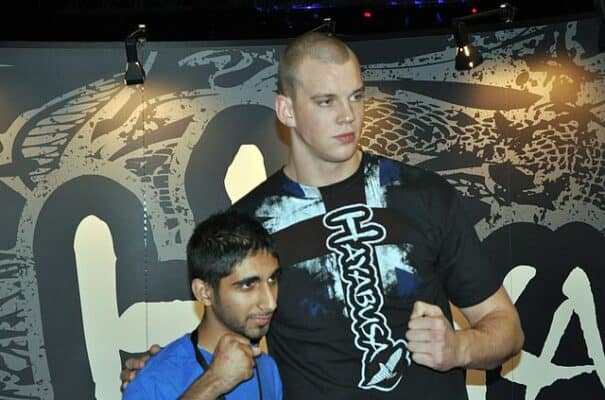
Struve is one of the tallest, if not the tallest fighter in the history of the UFC. While active, he used to fight at around 265 lbs, which means he was among the heaviest fighters in the UFC as well. This may sound odd, but Struve actually looked quite skinny mainly because of his height. He is a 7 ft giant with a reach of over 215 cm.

Looking at his body frame, you would never guess that he is a pro-MMA fighter who competes against the best fighters in the UFC. His body frame is better designed for playing basketball than combat sports. He didn’t have big muscles, neither had he looked chubby like most other heavyweights. Still, Struve used the mix of long reach and solid kickboxing skills to beat many great fighters from his era.

For instance, he knocked out perhaps the greatest UFC heavyweight, Stipe Miocic. He also holds wins over the legend Antonio Nogueira and Pat Barry.

14. Chase Hooper

Chase Hooper is a talented UFC fighter who looks like an average high school kid. He is so skinny that you can’t escape but to ask yourself how on earth he has enough strength to fight against the best fighters in the UFC. He stands 6″1′(185 cm), has a reach of 75.5 inches (192 cm), and competes in a 145 lbs weight class (66 kg).

Although he is yet to achieve something big, Hooper has proved that he belongs in the UFC. He is a talented grappler who needs to grab just a single part of your body to take you down and place a submission. And his striking getting better with every fight. 

13. Zabit Magomedsharipov

Although he is a fighter who excels in every aspect of the game, Zabit might be the most talented striker we have ever seen. Coming from Dagestan where it is known for producing wrestling-based fighters, you would expect that this skinny fighter is all about wrestling, top control, and submissions. But what truly makes him better than others are his versatile striking skills. His standup game is a unique mix of:

Zabit might have skinny arms and legs, but this all becomes irrelevant once you see him fighting inside the cage. From footwork and speed to the way he mixes punches and kicks together, everything he does is very technical and precise. He is a master in getting the most out of every single inch of reach and height advantage. 

12. Neil Magny

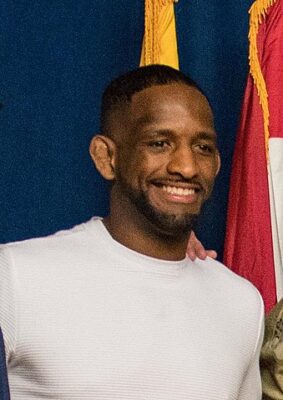
Magny is a UFC veteran who has been fighting at the top of the UFC for more than a decade. Standing 6″3′ tall, Magny is a very tall fighter for the 170 lbs weight class, and he has really long reach of 80″ (203 cm). With such a big body frame, Magny can’t allow himself to add more muscle mass because he already cuts a lot of weight to fight in a division where most other fighters are smaller than him.

Although he may look skinny compared to other fighters, Magny doesn’t lack the strength at all. He likes to use his long reach to keep his range and has a strong grappling and BJJ game which he often uses as the main strategy. Despite being skinny, he has a really good clinch game and it’s really hard to shake him off once he gets a hold of you or is in the top position.

In his career, he beat many great fighters like Robbie Lawler and Kelvin Gastelum.

11. Donald Cerrone

Photo by fightlaunch

Cerrone is a UFC legend and, perhaps, the greatest fighter to never win the UFC title. In his career, he has fought in 155 lbs and 170 lbs weight classes, and he looked skinny while fighting in both weight classes. Cerrone has never had big muscles as he prefers to stay skinny and ripped. Still, being a skinny fighter in the weight classes where a lot of fighters look swole didn’t stop him to reach the highest levels of the sport.

He is a true definition of a fighter who doesn’t care who, where, or when. Cerrone would fight in a parking lot if needed. Although this has cost him a greater career, no one could deny that he is the fan-favorite fighter you have to respect. He holds many UFC records including, as of 2021, most wins in UFC history, and most post-fight bonus awards. This shows you how exciting Cerrone is to watch, and why he has such a large fan base all around the world.

10. Sean O’Malley

Photo by Optic Gaming

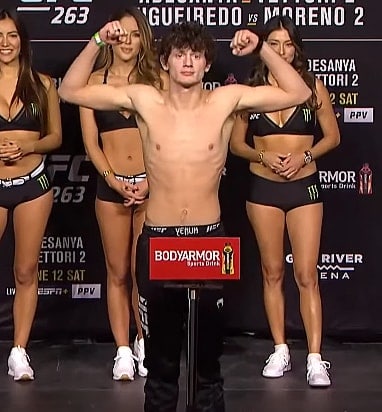
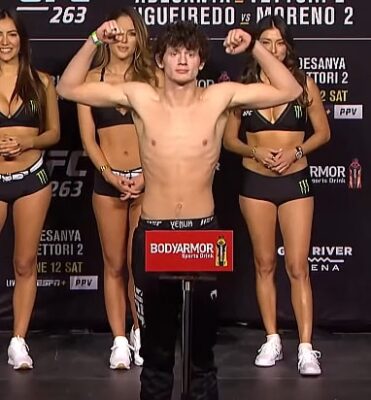
O’Malley might be the skinniest MMA fighter on the UFC roster, but at the same time, is also one of the best. Standing 5″11′ and fighting in the 135 lbs weight class, O’Malley often looks drained and even sick on weight ins. Looking at him standing on the scale, it’s really hard to spot a single muscle on his body. He is just too skinny and lengthy. Still, this didn’t stop him from scoring many highlight real knockouts.

He is one of those fighters you can meet in person and never guess they are pro fighters. He doesn’t even look like an athlete at all. But at the same time, his striking skills are very good, the best in the division that’s for sure. His feeling for distance, footwork, timing on the strikes, and accuracy are second to none. Instead of using sheer force, O’Malley relies on the insane speed of kicks and punches, and times the attacks perfectly. 

9. Dan Hooker

Hooker is a top UFC fighter and probably the skinniest one in a lightweight division. Though he is tall and lengthy, Hooker is so skinny that he often looks like a smaller and weaker guy in a fight. But as most elite strikers, he prefers this type of athletic body so that he can enjoy the advantage in speed and agility, which combined with his elite kickboxing, makes him a scary individual.  

Fighting out of the City Kickboxing gym where he trains with Israel Adesanya, Hooker knows how to get the most out of his lengthy body. In his UFC career, he knocked out many fighters who looked bigger than him like Gilbert Burns.

8. Tony Ferguson

Photo by DiarioMMA

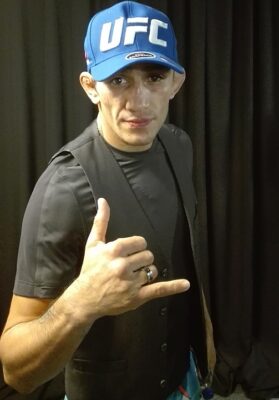
Ferguson is one of the best UFC fighters who doesn’t have big muscles neither he relies on physical strength in his fights. Instead, his game is a mix of technical striking, solid wrestling, good BJJ, and insane cardio. He is one of those tricky fighters that will smile at your strongest punch, and come back at you like a zombie. It doesn’t matter if the opponent is a skilled wrestler or striker, Ferguson is a tough matchup for anyone.

In his UFC career, he won “The Ultimate Fighter 13” show, and once was on a 13 fight winning streak. In 2017, he beat Kevin Lee to win the UFC interim title, but as the fortune would have it, he never fought for the undisputed crown. Still, many MMA fans see him as one of the best and most respected UFC fighters ever.

7. Nick and Nate Diaz

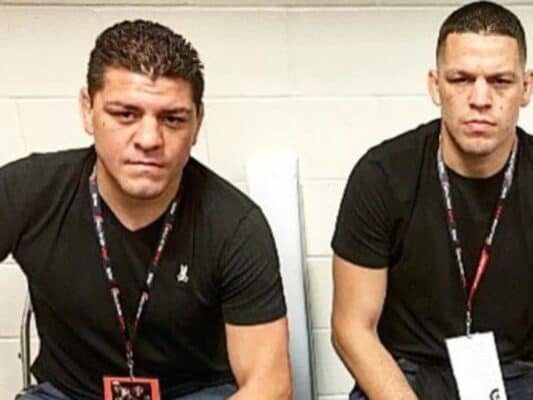
The famous Diaz brothers, who fight in the UFC, both look and fight the same. They are both skinny fighters who have a strong base in BJJ and are talented boxers. In fact, many experts believe that the Diaz brothers are among the few MMA fighters who could do well in pro boxing. And they are the ideal example of how you can make up for the lack of strength and power with the high volume and durability.

Nick and Nate are both very skinny and they look like average people who visit the gym twice a week. Instead of lifting weights and building muscles, they focus on aerobic activities such as marathons and triathlons. The conditioning they bring into MMA is amazing as they have cardio to fight at a high pace for five full rounds. 

They tend to drag their opponents into the deep waters and overwhelm them with cardio and high output of strikes. 

6. Royce Gracie

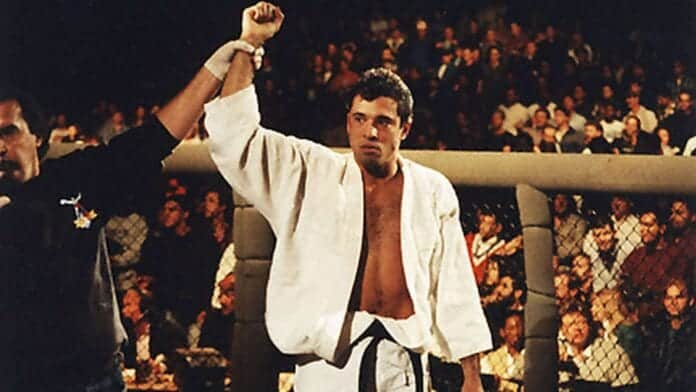
Royce Gracie is, by far, the most influential MMA figure who changed the way we see the fighting game. He is the winner of the UFC 1 tournament held back in 1993. But this on its own is not what secured Royce a place in the history books, but rather the way he achieved that.

Back in the early days, the UFC barely had any rules. There were no weight classes, anti-doping policies, illegal strikes, or even rounds. Coming at UFC 1 event, Royce was just one skinny fighter representing Gracie Jiu-Jitsu and weighing 170 pounds. He shocked the world by defeating fighters who looked like bodybuilders in spite of Royce being so thin. And like that wasn’t enough, he fought against multiple opponents on the same night.

Royce Gracie proved that size doesn’t play a big role in fighting. Royce was the epitome of a real martial artist who can defeat much bigger opponents by relying on his techniques rather than strength. Royce was a martial art version of David versus Goliath.

5. Charles Olivera

Photo by Renan Silva

Charles Oliveira is a great example of why being skinny is good for MMA. He has long physical attributes and looks longer than most of his opponents. When he joined the UFC, he had a problem dealing with skilled strikers on the feet, as his game was all about BJJ. He lost a couple of crucial fights against Paul Felder and Max Holloway where he didn’t know how to take the advantage of height and reach in the standup.

But over the years, he worked hard on bringing his striking game to a higher level. On his road to winning the UFC title, Oliveira broke the record for the most finishes in UFC history. Although he used his elite-level BJJ skills to finish most of the opponents, he scored a couple of great KOs as well. The right hook he landed to knock out Michael Chandler and win the UFC title is a great instance of how powerful Oliveira is despite looking skinny.

4. Max Holloway

Photo by BMF BMF

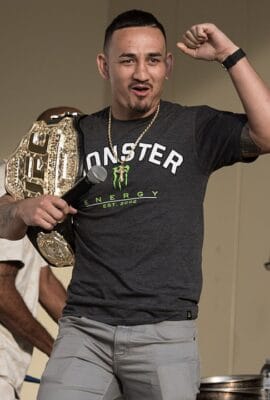
If you came across him on the street, most people would think that Holloway is just an average skinny guy. You would never guess that he is one of the best UFC fighters in history. He looks even skinnier on fight night because he cuts a lot of weight to fight in the 145 lbs weight class. On weigh-ins, Holloway often looks drained and like he is about to collapse.

Although he looks skinny and fragile standing on the scale, Holloway is a beast on fight night. He doesn’t have the power to KO the opponent with a single strike or explosive strength to wrestle. What he has are high-level Muay Thai skills, which combined with his good takedown defense and high output, make him a scary fighter. Against Calvin Kattar, he broke the record for most significant strikes landed (+445), and strikes attempted (+744).

These numbers give you a great insight into why Holloway is such a good fighter. He will keep coming at you and simply won’t get tired. While the other fighters are slowing down from the third or fourth round, skinny Max is only increasing his pace and output which he would not be able to do with big muscles which would deplete oxygen in his body much faster. 

3. Israel Adesanya

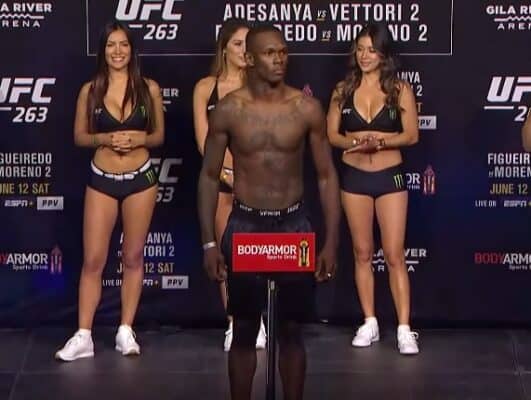
Adesanya might be the skinniest fighter on the UFC roster. Still, this didn’t stop him from reaching the pinnacle of MMA and winning the UFC 185 lbs title. In fact, he prefers to stay skinny and use long physical attributes to win fights. He is fast, agile, accurate, and can fight at a high pace the entire fight. You won’t see him slowing down, and he has a lot of power in his strikes for a man his size.

In his career, he faced many fighters who were physically bigger than him. The one that stands out was his fight against muscular Paulo Costa. Adesanya, who had much less muscle mass, used the advantage of speed and mobility to destroy Costa early in the fight.

Costa had a hard time checking the kicks on time, closing the distance, or landing a single strike. Things got even worse for him when he started to slow down, which allowed Adesanya to close the show in the second round.

RECOMMENDED FOR YOU:
Top 15 Greatest Kickboxers In UFC History – Simply The Best

2. Anderson Silva

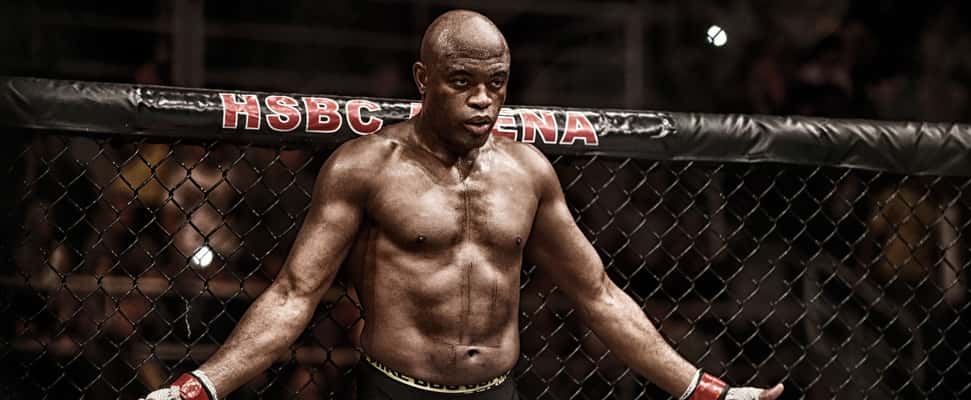
Silva is often seen as the greatest 185 lbs fighter of all time who has been skinny throughout his entire fighting career. Even in his prime when he was playing around with the best fighters of that time, he looked like an average man. He didn’t have big muscles, six-pack, or looked intimidating in any way.

But his skills were much ahead of his time. Silva would fight from both stances, attack from all angles, and he used speed and precision striking to knock out many opponents who were bigger than him. 

Despite looking skinny, Silva was able to reach the highest levels of MMA. Silva was a fighter who reminded everyone that being technical is far more important in MMA than having big muscles.

1. Jon Jones

Photo by Vengo Films

Jon Jones is the most dominant UFC fighter of all time and once in a lifetime athlete. We can often see champions come and go, but no one stays on top for more than a decade like Jon Jones. He beat every single fighter, not just from his era, but from the new generation of fighters as well.

Standing 6″4′ (193 cm), Jones is among the tallest fighters in the 205 lbs weight class and has a long reach of 84″ (215 cm). What Jones does best is using his long reach to keep his range, pick the opponent apart from the distance, and control the pace of the fight.

He prefers to fight behind his long jab and using various types of front kicks to keep his range or hurt the opponent. He is a pioneer of the famous “Oblique kick”(see the video below) in MMA, which is a side-kick to the knee you can often see him throw in fights. He might not be physically strong or explosive, but Jones is a master in using his long limbs to neutralize any threat and his high fight IQ.

What Happened to Bruce Lee? – FAQ All You Want to Know

0
Clouse, R. (Director). (1973). Enter the Dragon [Film]. Warner Brothers Pictures.

Bruce Lee is highly esteemed in the martial arts and MMA community and the martial arts film industry. His teachings and philosophy around self-defense and fighting techniques were both controversial and revolutionary at the same time. His fighting skill and martial arts prowess granted him much respect, and his techniques influence many fighters to this day. 

Bruce Lee was a legendary martial artist, fighter, actor, and moviemaker who had a short but influential life. His fighting prowess and understanding of martial arts were unmatched in his time. He developed his own martial arts fighting philosophy, culminating in the Jeet Kune Do style.

Bruce Lee is considered to be an icon in the martial arts world and in the action movie genre. He brought change to a world of martial arts steeped in tradition and introduced much of the Western world to the Eastern fighting arts. His movies were instrumental in kickstarting the popularity of martial arts action movies.

Who Was Bruce Lee?

Bruce Lee was a martial artist, an actor, and a movie director. He also instructed students in martial arts and founded his own style based on his philosophies.

Bruce Lee was born Lee Jun-fan on 27th November 1940 in the Chinatown district of San Francisco, USA. His parents were from Hong Kong, and they moved back to Hong Kong, where Bruce was raised in Kowloon. Bruce Lee Learned martial arts in Hong Kong and developed a passion for film from his father.

Bruce Lee with his parents in 1940

His father was a star in Cantonese opera and introduced Bruce Lee to the film industry. Bruce was cast several times as a child actor in a few movies. 

His early martial arts training included Wing Chun, boxing, Tai Chi, and the street fighting scene in Hong Kong. Bruce relocated back to the USA when he was 18-years old to finish his education, which is when he began to instruct others in martial arts.

Bruce drew a lot of attention at various Karate competitions he participated in during his early days after returning to the USA.

His martial arts skill and his love of the film industry led to him being cast in a number of significant martial arts movies and eventually directing and acting in his own movies in this genre.

Bruce Lee’s martial arts prowess and the success of his martial arts films made him a popular and recognizable figure in both the martial arts world and the movie industry.

Bruce Lee developed his own martial arts style, called Jeet Kune Do, which means the “way of the intercepting fist.”

How Did Bruce Lee Die?

Bruce Lee had a very short life and died at a young age, but his life nonetheless impacted the film and martial arts world.

Bruce Lee died on 20th June 1973 at the age of 32-years, and his death came as a shock to the film industry and the martial arts community. The official cause of death was cerebral edema, an excess fluid accumulation in the brain attributed to the combination of compounds in a painkiller, Equagesic.

Bruce Lee was with his producer, Raymond Chow, and colleague Betty Ting Pei to go over the movie script for Game Of Death. After discussing the script, Mr. Chow left for a meeting and was scheduled to meet with Bruce for dinner.

After Mr. Chow left, Bruce complained of a headache, and Betty Ting Pei offered him a painkiller, Equagesic, which he took and went to lie down. When Bruce did not show up for dinner, Mr. Chow returned to the apartment where he found Bruce and was unable to wake him.

A doctor responded to the scene, who tried to revive Bruce while an ambulance was called. The ambulance took Bruce Lee to the Queen Elizabeth Hospital, where he was declared dead on arrival.

His untimely death sparked much controversy and conspiracy theories regarding his death, some of which are still bandied about today. His long-time friend, Chuck Norris, a fellow martial artist, attributed the death to the combination of a muscle relaxant Bruce was taking for a damaged disc in his back and the painkiller he took for the headache.

Who Was The Last Person To See Bruce Lee Alive?

The death of Bruce Lee was surrounded by mystery, intrigue, conspiracy, and rumor. Many of the stories around his death are colored by conjecture and urban legend regarding the man. Following the official reposts, there was only one person who was with him at the end.

Betty Ting Pei, according to official reports, was the last person to see Bruce Lee alive. She was his colleague in the movie Game Of Death. Bruce was with Betty and producer Raymond Chow, going over the script at Betty’s apartment. Chow left, making Betty the last person to see Bruce Lee alive.

Chow left Betty’s apartment for a meeting, which was when Bruce Lee took the fateful painkiller for a headache and went to lie down. When Bruce Lee failed to turn up for a dinner appointment, Raymond Chow went back to the apartment to look for him.

He found him still lying down and was unable to rouse him. A doctor was called, who tried to revive Bruce until the ambulance arrived to take him to the hospital. Bruce Lee was declared to be dead on arrival at the hospital.

What Happened To Bruce Lee’s Family?

Bruce Lee’s parents remained in Hong Kong when Bruce returned to the USA to complete his education and remained in Kowloon, Hong Kong, where he grew up.

Bruce Lee’s father, Lee Hoi-Chuen, was a respected Cantonese opera star, and he died at the age of 64 in 1964 of a heart attack. His mother, Grace Ho, died in 1996. Bruce Lee was the fourth of a total of five children, Phoebe Lee, Agnes Lee, Peter Lee, and Robert Lee being his siblings.

Lee Hoi-Chuen died just six days after the birth of his grandson, Brandon Lee, the son of Bruce Lee, and his wife, Linda Lee Cadwell. 

Bruce Lee’s mother was a member of the respected, wealthy, and influential Ho-tung clan family. They were an affluent business family, well known for their philanthropy in Hong Kong. She did not enter the spotlight of her husband or her son’s fame, and she died in 1996.

Pheobe Lee, Bruce Lee’s eldest sister, was born in 1938 and is still living at the time of writing. Agnes Lee is likewise still living and works with her sister Pheobe to preserve the legacy of Bruce Lee.

Peter Lee resided in Australia and was an Assistant Director of the Hong Kong Observatory. He passed away in 2008. Robert Lee, the youngest son of the Lee family, is a musician who lives and works in the USA. He was the producer of the Hong Kong movie, “Bruce Lee, My Brother”, in 2010.

Who Was Bruce Lee’s Wife?

Bruce Lee was 24-years old when he married his wife in the USA. She was born in Everett, Washington, and was of British, Swedish, and Irish descent.

Bruce Lee’s wife was Linda Emery, who he met while giving a martial arts demonstration at her school. She was studying at the same university to become a teacher. She became a martial arts student of Bruce Lee, and they married on 17th August 1964. She is currently known as Linda Lee Cadwell.

Linda Lee Cadwell
Photo by Steve Durgin

Linda Lee studied to become a teacher at the same university that Bruce Lee attended and became a martial arts student under his instruction at the martial arts school that he had started. They married shortly after.

After the death of Bruce Lee, Linda continued to promote his philosophy and martial art Jeet Kune Do. In conjunction with her daughter, Shannon Lee, and Ian Keasler, her son-in-law, they established and ran the Bruce Lee Foundation. The Foundation is dedicated to teaching and promoting the philosophy, writings, and martial art of Bruce Lee.

Linda Lee Cadwell retired in 2001 and let the Foundation and the Lee family estate run to her daughter and son-in-law.

Who Are Bruce Lee’s Children?

Bruce Lee and Linda Emery were married in August 1964, and in the February of 1965, their first child came along.

Bruce Lee had two children with Linda Lee Cadwell. Firstborn was his son Brandon Lee in 1965, and four years later, in 1969, Shannon Lee was born. Brandon Lee was only eight years old and Shannon was four years old when their father, Bruce Lee, died. Brandon Lee passed away in 1993.

Bruce Lee & Brandon Lee as a kid

Brandon Lee, their eldest child, was born in Oakland, California, in the USA. From a young age, he studied martial arts with his father. He regularly went to the movie sets where Bruce Lee was working, which sparked his interest in filmmaking and acting.

Brandon Lee was fascinated by his father’s life, and his larger-than-life image sometimes intimidated Brandon. He followed in his father’s footsteps and learned his father’s martial art Jeet Kune Do. Like his father, Brandon became an actor and served as a fight choreographer for the movie industry.

Shannon Lee, Brandon Lee’s younger sister, was born in the April of 1969 in Santa Monica, California. She followed into the film industry and became an actress. She also studied martial arts, starting with her father’s Jeet Kune Do in her early years under one of her father’s students, Richard Bustillo. However, she only began studying martial arts seriously in the late 1990s.

She later studied Jeet Kune Do further under Ted Wong. She also studied Taekwondo, Wushu, and kickboxing.

How Did Brandon Lee Die?

Brandon Lee was an up-and-coming actor who followed in his father’s path into movie making, particularly films which made use of his martial arts skills. Brandon Lee died tragically on 31st March 1993.

Brandon Lee

Brandon Lee died tragically during the making of the movie The Crow. He was shot on the set with a gun that was supposed to be loaded with blanks. He was taken to hospital, where a .44 bullet was found to have passed through his abdomen and lodged in his spine. He died during surgery from his injuries.

After acting in a number of movies that did not live up to expectations, being cast for the movie, “The Crow” would have launched Brandon Lee’s acting career. Filming of the movie had been underway for some time when the accidental shooting happened.

A prop gun was used in the scene, and blanks were supposed to have been used in the gun. The investigation uncovered that part of a bullet had become lodged in the barrel of the gun and was expelled from the barrel when the blank was fired.

The gun was fired in Brandon Lee’s direction from a distance of about 15 to 20-feet. The blank in the gun forced the piece of bullet from the barrel and struck Brandon Lee in the abdomen. He was rushed through to the hospital but passed away while in surgery.

The authorities ruled that his death was the result of negligence, with no foul play suspected in his death. Much controversy and rumor followed his death, with some conspiracy theories running rampant as to the cause of his death.

Was Bruce Lee A Black Belt?

Bruce Lee was a respected martial arts fighter who gained respect from many other martial arts fighters and in combat sports in general.

Bruce Lee did not obtain a black belt in any of the martial arts disciplines that he studied. He held belt rankings lightly, commenting that a belt did not mean much when facing a real-life fight on the street. Wing Chun was the main martial art that Bruce Lee studied in Hong Kong.

Bruce Lee studied many martial arts styles but did not rise through the ranking system to qualify with a black belt in any of the disciplines. He was more interested in learning the best aspects of the various styles that he could adapt to his own fighting style.

Bruce Lee felt that many styles were limited by their rules and regulations, formalities, and traditions, which limited the adaptation abilities improvisation abilities of a fighter. 

Did Bruce Lee Get Paralyzed?

There is much legend around the life of  Bruce Lee, and it is sometimes difficult to separate fact from fiction. There are reports of Bruce Lee being paralyzed, but this is not quite accurate.

Bruce Lee was not paralyzed, but he did injure his back in an exercise session. The injury was severe, and doctors told him he would never be able to do martial arts again and would have difficulty walking. The injury required that he take a year off, but he recovered through determination and training.

When Bruce Lee Received the diagnosis from the doctors, he was devastated but determined that he would recover. He researched his injury and about the body and worked out his own path to recovery.

His injury kept him bed-ridden for many months, but with determination and training, he recovered from the injury in the space of a year. 

Even though he was able to return to practicing martial arts, his back injury caused him pain and difficulty throughout the rest of his life. It is suspected that the medicine he was taking for his back contributed to his death.

How Many Days Did Bruce Lee Train?

Bruce Lee was considered by many of his peers to be the ultimate athlete. His dedication to fitness, taking care of his body, and improving his skill level in his fighting style was unprecedented in his day.

Bruce Lee trained 7-days a week. He had a fanatical approach to his training and performed some form of exercise, conditioning, or fight training every day of the week. He trained multiple times a day, focusing on different aspects in each session. This extreme training regimen made him extremely fit.

For Bruce Lee, his focus was on his training, and everything else was secondary. He fitted other commitments such as filming around his training schedule.

His friend, Chuck Norris, is quoted as saying that Bruce Lee was the hardest working man he had ever known!

RECOMMENDED FOR YOU:
Did Bruce Lee Ever Fight Chuck Norris?

What Was Bruce Lee’s Workout?

Bruce Lee started his day early; he was up at 6:00am every day to begin his routine. While he did not train every day at this time, it was the time that he rose every day. He trained for a minimum of 2.5-hours every day.

Bruce Lee’s workout consisted of stomach, waist, flexibility, and endurance training every day. Weight and kick training on Tuesdays, Thursdays, and Saturdays. Punch training was Monday, Wednesday, and Friday. This was besides specific fight training in various martial arts disciplines.

https://youtu.be/dIieST6RfTY

Bruce Lee changed up his training program on a regular basis to focus on parts of his body that were lacking in conditioning. His investigation into multiple martial arts styles often highlighted inadequacies in his training, which he then adapted to focus on weaker areas.

Who Actually Taught Bruce Lee?

Even though Bruce Lee studied martial arts throughout his life, he received most of his foundational martial arts training during his youth in Hong Kong.

Ip Man, also know as Yip Man, was Bruce Lee’s foundational martial arts trainer. He was trained in the Chinese martial art of Wing Chun Kung Fu and studied this fighting style for several years. Bruce Lee also trained in boxing at school and became the Hong Kong schools boxing champion in 1958.

Yip Man & Bruce Lee

Ip Man initially refused to train Bruce Lee due to his mixed heritage, which went against the Chinese tradition of not teaching martial arts to foreigners. Bruce Lee’s friend and fellow martial arts student, William Cheung, persuaded Ip Man to take Bruce on as a student.

Bruce Lee trained with various martial arts masters over the years in various disciplines. He trained Taekwondo with Grandmaster Jhoon Rhee.

Why Did Bruce Lee Create Jeet Kune Do?

Bruce Lee studied different forms of martial arts and was interested in everything that each style had to offer. However, he felt that there were certain elements that were missing from styles practiced in isolation the did not produce well-rounded fighters.

Bruce Lee felt that the restrictions placed on fighters in traditional martial arts led to strengths in the style but also weaknesses. He took the strong points from various styles and added his own influences to them to create Jeet Kune Do, translated as the Way Of The Intercepting Fist.

Bruce Lee not only used the best techniques from different martial arts styles but also introduced his experience and influence from streetfighting to modify traditional techniques and create his own new ones to form his personal Jeet Kune Do form.

His philosophy is that this would be an ever-changing style that you could adapt and make your own without the restriction of conforming to a certain form based on tradition. 

Is Jeet Kune Do EFFECTIVE?

Jeet Kune Do(JKD) was developed by Bruce Lee because he saw the limitations in the application of traditional martial art styles in real-world situations.

Jeet Kune Do symbol

Jeet Kune Do is an effective fighting style because the philosophy around the style is to take the best from other styles and make them your own. It includes adapting moves with streetfighting techniques that are intended to make the style effective in real-world situations.

Jeet Kune Do is an effective style that MMA fighters can learn as their foundational style because of its versatility and the encouragement to adapt in a fight to counter your opponent’s style.

There is so much more to learn about Jeet Kune Do. This article, “Is Jeet Kune Do Effective? Here’s a Closer Look”, will show you why Jeet Kune Do was way ahead of its time when Bruce Lee created it.

Where Is Bruce Lee Buried?

Bruce Lee was a larger-than-life figure when he was alive, and his legend continues as strong as ever to this day. His life still influences fighters and martial arts styles and provides encouragement to many to pursue their dreams.

Bruce Lee was buried on 31st July 1973 in the Lake View Cemetery in Seattle, Washington State, USA. His son, Brandon Lee, who also died tragically at the young age of 28-years, is buried next to Bruce Lee. Their gravesites remain a tourist attraction, visited by thousands of people each year.

Bruce Lee & Brandon Lee gravesite

Decades after Bruce Lee’s death, people still pile flowers on his gravesite on his birthday as a token of remembrance to show he is not forgotten and still influences the lives of others today.

What Is Bruce Lee’s Most Famous Movie?

Bruce Lee made many movies in his lifetime, particularly as a child. By the time he was 18-years old, he had already appeared in more than 20 movies.

Bruce Lee’s most famous movie is Enter The Dragon, which was made in 1973 and directed by Robert Clouse. It is considered to be the most influential and successful martial arts film ever made and is still regarded as such. It was the last complete movie that Bruce Lee made before his death.

Enter The Dragon was an iconic martial arts movie that popularized this genre in the Western world. It also resulted in a huge boost of global interest in martial arts.

How Many Movies Did Bruce Lee Make Before His Death?

Bruce Lee was introduced to the entertainment industry at an early age through the influence of his father, who was a star in Cantonese opera. Some of his appearances were a few guest appearances as a baby in early films, but his roles grew more influential as he grew older.

Bruce Lee made 28 movies throughout his lifetime. The majority of the films were as a child actor in Asian movies. As an adult actor, he only made 5 completed movies, including the only Hollywood movie, Enter The Dragon. Many of the movies he wrote, produced, and directed were made in Hong Kong.

Bruce Lee’s moviemaking career was on the rise, and his films were getting better with each movie he was involved in. Even though his latest movies are considered to be iconic, his career was cut short by his untimely death, leaving us to wonder about what he might have accomplished.

Why Is Bruce Lee Considered The Father Of MMA?

Bruce Lee was a fanatical martial artist who sought to improve his fighting skills as well as condition his body to be the ultimate fighting machine. He felt that traditional styles were too restrictive, which made them lose relevance in real-life situations. 

Bruce Lee is touted by many to be the father of MMA because of his philosophy regarding fighting styles and techniques. He became disillusioned with traditional fighting styles and selected the best techniques from multiple styles, and created his own style, which could be considered a mixed martial art.

Bruce Lee’s attitude towards fighting was to take the best techniques from different styles and adapt them into his own style to increase the repertoire he had when facing an opponent. The knowledge of multiple styles gave the advantage and the adaptability to defeat an opponent who had only mastered one style of fighting.

If you want to learn more about what makes Bruce Lee the father of MMA, see my article on Bruce Lee – Why He Is Considered The Father Of MMA.

Conclusion

Bruce Lee has legendary status in the movie industry, the martial arts community, and the fitness world. His dedication and relentless pursuit of perfection in both his career as a moviemaker and martial artist have garnered his iconic status.

His life was an example and a motivation to many while he was alive, and he continues to influence martial arts and the action movie culture decades after passing away at the young age of 32.  

Top 15 Shortest MMA Fighters of All Time, Ranked

0

Physical attributes like height or long reach play a big role in combat sports like boxing where size does matter. But MMA is the most versatile one where physical attributes are not as important as in other sports. Being tall, strong, and having long reach doesn’t mean that you can win by definition. Short fighters can have equal chances to succeed in MMA.

Yes, physical attributes give you an advantage in the striking aspect. But shorter fighters can make up for the lack of height with the set of other skills. They can use wrestling or BJJ techniques to take the opponent down and fight on the ground. This is just one way how shorter fighters win fights despite their limited physical attributes.

Over the years, there have been many short MMA fighters who enjoyed great success fighting in MMA. In the list below, you can find 15 fighters who have reached the top of the sport despite their limited physical attributes.

15. Alexander Volkanovski – 5’6” (168 cm)

Photo by MMAnytt

Volkanovski is the UFC featherweight champ who may not be the shortest fighter in the world. But bear in mind that 5’6″ is an average height of flyweight and bantamweight fighters. What Volkanovski was able to achieve in the featherweight division where just about every fighter is taller than him is truly amazing. He might be short, but on the other side, has a huge advantage when it comes to physical strength.

Before joining MMA, Volkanovski was a talented rugby player and a “player of the league” in Australia in 2010. During those days, he walked at around 215 lbs (97 kg), which was huge for a man his height. He made his MMA debut in the middleweight division, before moving all the way down to featherweight. Although he dropped a lot of weight, he maintained most of the strength, power, and explosiveness from rugby.

In the UFC, he is always fighting against much bigger opponents. For instance, he became the first Australian UFC champ by beating Max Holloway who is 5’11” (180 cm).

14. Marlon Moraes – 5’6” (168 cm)

Moraes is the former WSOF bantamweight champ who also once fought for the UFC title. Despite being just 5’6″ tall (168 cm), the Brazilian was able to quickly rise to the highest levels of MMA. He is a very skilled striker who has left nothing but carnage in every single fight. 

He started training Muay Thai and BJJ at a very young age which is the main reason why he has such well-rounded skills. Before shifting to MMA, he enjoyed a lot of success fighting in Muay Thai and was a national champ in Brazil. 

Though he is a short fighter, Moraes carries a lot of muscles and is physically very strong. This mix of strength and perfect striking skills makes him a tough matchup for anyone in the UFC. For instance, his kicks and clinch work are, perhaps, the best in the business. 

13. TJ Dillashaw – 5’6” (168 cm)

Photo by Ciro616161

Dillashaw is the former UFC bantamweight champ and one of the shortest fighters of that weight class. But the lack of height and reach didn’t stop Dillashaw from beating the best of the best fighters on the UFC roster. And let’s not forget that most of the fighters he faced and beat in the UFC were physically bigger than him.

He is a great instance of how shorter fighters can win striking exchanges against taller opponents. To make up for the lack of long reach and height, he utilizes fast footwork, mobility, speed, and precision. He is always on the move, switching stances all the time and changing angles. It’s really hard to predict what he is going to do next which makes it hard for his opponents to take the advantage of height and reach. One of the best examples of this was his fight against Cory Sandhagen.

12. Sean Sherk – 5’6” (168 cm)

Sherk is the former UFC 155 lbs champ who fought his entire career under huge reach and height disadvantage, which never stopped him on his way to greatness. In fact, he is often seen as the greatest lightweight of his era.

What set Sherk above the rest fighters of that time were his great submission wrestling skills. He used the mix of speed, agility, and elite wrestling skills to a great extent to beat fighters who were much bigger than him. He was physically very strong for a man his size, and very explosive during his wrestling attacks.

Sherk won the vacant UFC lightweight title by beating a much taller Kenny Florian in 2006. In his career, he also fought against Nick Diaz who is 6’1″ (185 cm), and George St. Pierre 5’10” (178cm). Despite such a huge height disadvantage, he was able to win a decision over Diaz.

RECOMMENDED FOR YOU:
Top 15 Most Muscular MMA Fighters of All Time – Ranked

11. Tenshin Nasukawa – 5’4” (165 cm)

Photo by MMAnytt

Nasukawa is a kickboxing and MMA star from Japan. The western world knows him the best for his boxing bout against Floyd Mayweather, which he lost. But don’t make a mistake about him, Nasukawa is a very talented striker. Despite being short, he enjoys huge success fighting against bigger opponents.

Nasukawa is a southpaw fighter who likes to stay on the outside and catch his opponents coming in. He has versatile striking skills and is very exciting to watch. You can often see him throwing wild spinning and jumping techniques. But above all, he has great timing, picks his shots well, and is very accurate.

In his career, he won many world titles in kickboxing and is a two-time “All Japan Shin Karate Grand Prix” champ.

RECOMMENDED FOR YOU:
What Is Japanese Kickboxing? Easily Explained For Beginners

10. Frankie Edgar – 5’6” (168 cm)

Frankie Edgar is a true legend of MMA and the former UFC lightweight champ who was undersized in just about every UFC fight. He fought the best of the best UFC fighters in three different weight classes, and no matter how big the opponent was, Edgar always had an answer.

Edgar always looks like a smaller fighter inside the octagon. But at the same time, he is a very skillful fighter who can quickly change between styles to find a way to win. If he has a hard time dealing with the striker on the feet, he would use his wrestling to advance the fight to the ground and win with strong top control. Or he can do it the other way around.

In his career, Edgar faced many fighters who were much bigger than he is. If you want to see how a shorter fighter can win a fight against a much taller opponent, just look at his fight against Yair Rodriguez. Edgar used his wrestling to great effect to neutralize Yair’s long reach to beat him on the ground.

RECOMMENDED FOR YOU:
Top 13 Tallest MMA Fighters of All Time, Ranked

9. Ray Borg – 5’4” (165 cm)

Most MMA fans know Borg as a former UFC contender who fought for the flyweight title. But what they often miss about him is that he is only 5’4″ tall. Still, Borg has had a great UFC career despite often fighting against bigger and taller opponents.

One of his greatest wins came against Louis Smolka who is 5’9″ (175 cm). Borg used a methodical wrestling approach to neutralize the height advantage and win the fight. In 2017, he fought for the UFC title against Demetrious Johnson, but he lost it to a spectacular flying armbar.

8. Jarred Brooks – 5’3 (160 cm)

Brooks is among the shortest MMA fighters and a great instance of how you can make up for the lack of height with strong fighting skills and hard work. Most fans know him for his short stint with the UFC where he went 2–2. But Brooks has had a lot of success fighting for other big promotions like “Rizin” and “WSOF”.

Brooks started wrestling from a young age which would pay dividends later upon shifting to MMA. On his road to the UFC, he won the “House of Fame” flyweight title. And one of his biggest wins came against “Junji Ito” who was a four-time Shooto title challenger. 

He won his UFC debut against a much bigger and taller Eric Shelton but would lose the next two bouts out of which one loss was to Deiveson Figueiredo. Brooks bounced back from two losses with a win over, once again much taller Roberto Sanchez. Just as we thought he was about to rise, the UFC released him in 2018.

7. John Lineker – 5’3” (160 cm)

Photo by MMANytt

Although he might be small on paper, Lineker actually looks big and carries a lot of muscles. He might be short, but at the same time, he has a solid reach and is physically very strong. In his career, he fought in four different weight classes and enjoyed solid success in the UFC.

Lineker kicked off his UFC career in the flyweight division by losing his debut and bouncing back with four straight wins. But after missing weight four times, he moved up in weight to fight at bantamweight first, and then featherweight division. It’s fair to say that he enjoyed the most success at bantamweight where he holds wins over Ian McCall and John Dodson.

In 2020, Lineker parted ways with the UFC and he joined “ONE FC”.

RECOMMENDED FOR YOU:
How Much Does Height And Reach Matter In Combat Sports?

6. Joseph Benavidez – 5’4” (163 cm)

Photo by X2o

Benavidez is only 5’4″ (163 cm) tall which makes him one of the shortest UFC fighters in the history of flyweight division. Still, he was able to rise to the top of the game and beat many great fighters who were bigger than him. In fact, many people see him as the greatest flyweight fighter who never won the UFC title. In his career, he got the chance to fight for the UFC crown 4 times, but he failed every single time.

Although he has a strong base in wrestling, Benavidez is not afraid to keep the fight standing. What makes him better than the others is his ability to mix kicks, punches, and takedowns together. He likes to overwhelm his opponents with strong pressure and is always pushing a high pace. This strategy allowed him to beat elite-level fighters like Henry Cejudo.

5. John Dodson – 5’3” (160 cm)

Dodson is one of the shortest UFC fighters in history. Although a couple of more fighters are 5’3″, it seems like Dodson is the smallest of them all. He doesn’t have bulky muscles as he looks like an average athlete. He might not be among the strongest fighters on the flyweight roster, but he is for sure among the fastest.

Dodson spends his entire career training at Jackson’s MMA. He found an ideal formula on how to use his speed and agility to compromise for the lack in size and reach on the feet. His entire MMA game revolves around moving fast and attacking in a blitz. And despite being among the smallest fighters, Dodson actually has a lot of power in his hands. He scored many knockouts and the best one was against the former UFC champ, TJ Dillashaw.

In his UFC career, he fought for the flyweight title two times, and is the winner of “The Ultimate Fighter 14” show.

4. Norifumi “Kid” Yamamoto – 5’3” (160 cm)

“Kid” Yamamoto is a legend of Japanese MMA who reached the highest levels of the sport despite being 5’3″ tall. In his career, he fought in both kickboxing and MMA, and he did it across three different weight classes. But despite being small, he carried knockout power in every single weight class he fought at.

Kid Yamamoto used to make up for the lack in height and reach with both skill and insane power in his hands. In the eyes of many fight fans, he is the Mike Tyson of the lighter-weight classes. In his prime, he could knock any fighter out cold with a single punch. This is also one of the reasons why he had such a strong fan base all around the world as smaller fighters, in most cases, do not score that many knockouts.

Sadly, on September 18, 2018, Yamamoto has died from stomach cancer at the age of 41.

3. Hector Sandoval – 5’2” (157 cm)

Standing at 5’2″ (157 cm), Sandoval might be the shortest fighter we have ever seen compete in the UFC. There have been many fighters listed at 5’3″, but we can’t recall any fighter shorter than that. Still, a few inches in height didn’t stop Sandoval from having a solid stint in the UFC, and overall, a decent MMA career.

Sandoval fought most of the time in the flyweight division. Despite fighting in the lightest division, he was still undersized in most of the matches. The biggest moment of his career came when he won the “Tachi Palace” flyweight title. Later on, he would join the UFC roster and beat many opponents who were much taller and bigger than he was. For instance, he scored a first-round finish against Matt Schnell who is 5’8″.

2. Henry Cejudo – 5’4” (163 cm)

Photo by MMAnytt.se

Cejudo is among the most successful combat sports athletes. He is the former Olympic gold medalist in wrestling who shifted to MMA to win the UFC title in two separate weight classes. And he won the first title by beating, by many, the greatest MMA fighter of all times, Demetrious Johnson. Like that wasn’t enough, he moved up in weight to fight and win the bantamweight title in 2019.

Cejudo is a great instance of how short and small fighters can succeed in MMA by relying on their skills and talent. No matter how big the opponent was, no one could deal with the pace, takedowns, and top control of Cejudo. And over the years, he has developed solid striking as well which he used to knock out Dominick Cruz and TJ Dillashaw.

RECOMMENDED FOR YOU:
Does Wrestling at an Early Age Stunt Your Growth?

1. Demetrious Johnson – 5’3” (160 cm)

Photo by MiggyTube TV

Would you believe if someone tells you that a fighter whom many people see as the best of all time is also one of the shortest fighters? Although this may sound odd, the former UFC champ Demetrious Johnson is only 5’3″ (160 cm) tall. Still, this didn’t stop the popular “Mighty Mouse” to win the UFC flyweight title, hold it for six years, and clean the division with 11 title defenses. He was so dominant that the UFC wanted to shut down his weight class due to the lack of competition.

Despite being short, DJ is still close to ideal to the “ultimate fighter” as he is good in every single aspect of the game. From technical striking, great grappling to dangerous submissions, DJ in his prime was a tough puzzle to solve.

What people tend to forget about him is the fact that he started his MMA career fighting in the bantamweight division. He even fought for the title against Dominick Cruz, which he lost in 2011.