Home Blog Page 27

What Is The Average Punching Speed? Punching Speed Analyzed

0

Speed is an important part of fighting, especially the speed of your punch. Most MMA fighters are at the peak of physical fitness, but fitness does not equate to a fast punch. This is why all fighters train specifically to increase their punch speed during their training. What is the average speed of the human punch?

The average speed of a boxer’s punch is 20 mph, while the punch speed of the average person is significantly slower at about 15 mph. Fighters with exceptional punching speeds have achieved punch speeds of up to 32 mph in boxing and 45 mph in martial arts punches.

Increasing the speed of your punch can be a significant advantage during a fight and can serve to surprise your opponent and catch them off-guard, allowing the punch to reach its mark. Hand speed training is a part of every fighter’s training regime, but how do you know what speed to aim for?

How Fast is a Human Punch? – Physics

People who support and participate in fight sports are always debating how fast the human punch is. Surprisingly, with all the hype around this metric, there have been very few attempts to scientifically measure the speed of a human punch.

Generally, the fastest punches in boxing are determined by eye by observers rather than scientific measurement. Because a punch is not in a straight line, it is a difficult prospect to measure the speed of a fighter’s strike.

Recent development in technology has made scientific measurement of punch speed more of a reality than the general guess by observation. This has led to some statistics around punch speeds being more accurate and readily available.

There is a difference between the fastest punch and the average speed of a punch. The average punch speed of most boxers is around 20.4-mph. The average punch speed of someone untrained in boxing, the average speed is around 15-mph. When compared against the punch speed of people not trained in boxing, one can see how speed training can increase a fighter’s punch speed.

The punch speed measured in mph is impressive, but it is even more impressive when you evaluate the time to throw a punch of this speed. Because a punch travels a relatively short distance, the time taken from when it has begun to the time it lands can be faster than the blink of an eye.

Some measurements of boxers’ punches have revealed that a fast punch can take between 60 and 100 milliseconds to complete! Manny Pacquiao was recorded as delivering knockout punches that were delivered in 0.12-seconds!

How Punch Speed Is Measured

Historically, fighters’ punches were measured by eye, and fighters were presumed to be fast punchers if their punches appeared to be faster than others by observation.

Technology to accurately measure a fighter’s punch has been seriously lacking in the fight world, and with the advent of smartphones, some apps have come out that purport to measure punch speed. The theory is you throw a punch with your phone in your hand, and the accelerometer in the phone will measure the velocity of the punch.

Hysko has taken this idea further and has developed a sensor worn on the wrist which incorporates a 3-axis gyroscope to measure the punch velocity accurately. The wrist sensor then feeds data back to the app, which trainers can use to evaluate the punch speed of their fighters.

This is a relatively new technology, so there is not much data available from fighters across the board to accurately determine who has the fastest hand punch.

How Fast Do Boxers Punch?

There is a difference between punch speeds in different fighting styles. Boxing-style punches are different from martial arts punches, and there is a corresponding difference in speed and power.

Boxing punches focus not only on speed but also on the power behind the punch, which is enhanced by mass behind the punch and the forward momentum of the fighter.

Martial arts punches are more focused on speed than power, which makes the martial arts punch faster, but it does less damage than a boxing punch.

Most boxers have an average punch speed of about 20-mph, but boxers who are considered to have exceptional hand speed can attain punch speeds of up to 32-mph!

This indicates that boxers who work on their punch and hand speed can have a dramatic advantage over opponents. Hand speed equates to faster punches and faster hands to block incoming punches and avoid getting hit.

Who Is The Fastest Puncher?

There is much debate in fighting circles about who has the fastest punch, and it is difficult to give a definitive answer. There are fast-punching fighters in MMA, boxing, and among martial artists who have never been scientifically evaluated for their punching speed.

This means that we only have the data from fighters who have undergone testing to determine punching speed.

Keith Liddell currently holds the Guinness World Record for the fastest martial arts punch. The punch was recorded at 45-mph.

How Do You Punch Faster?

The following drills are proven to improve your hand speed:

Basic shadowboxing (no equipment)—starting with a good fighting stance, throw 30-50 jabs as fast as you can and pull back as fast as you can without pausing. Concentrate on the speed of your hand. You can repeat this process with a different type of punch, jab-cross-hook-upper cut.

Shadowboxing with a resistance band—wrap a resistance band around your upper body and grab the resistance band in each hand. Every time you punch while grabbing the resistance band, the tension in the resistance band will pull your hand back, slowing down your punch. Practice different types of boxing combos. When you punch without a resistance band, your hand speed will increase because there’s no tension pulling your arms back.

Shadowboxing with weights (small dumbbells)—hold a small 2-3 lb dumbbell in both hands and begin shadowboxing. Start shadowboxing for 45 seconds with the dumbbell. After 45 seconds, start shadowboxing without the dumbbell. Repeat this process three times. Because your hands are lighter when you punch without dumbbells, your hand speed will increase. Punching with a dumbbell also strengthens your arms when you punch, which will lead to less fatigue in your arms when punching.

Conclusion

A fast punch for many fighters may seem as elusive as the holy grail, but any fighter can improve their punch speed with dedicated and persistent training where speed is the focus.

Unfortunately, most fight training is weighted more on strength and power, with speed-focused training receiving less attention than it deserves. 

If the speed training is done correctly, the power will come as an additional benefit since the muscles involved in increasing speed are also responsible for delivering power in the punch.

Related Questions

How Hard Can an Average Person Kick?

The average adult human can kick with 1,000 pounds of force. The average child can deliver 600 pounds of force. These numbers can increase greatly with training or due to height, weight, and unique skill at kicking activities.

What Is Dutch Kickboxing? Basic Guide to Dutch Kickboxing

0
Photo by Mixfight.com

Dutch kickboxing” is one of the best styles of kickboxing. People who are not heavy into combat sports might have a hard time spotting how Dutch-style differs from other styles as they all look very much the same. But in reality, this is very easy to understand if you know what to look out for.

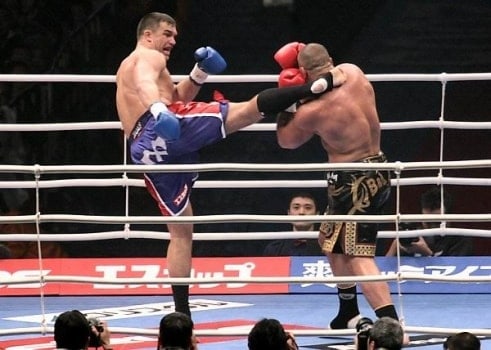
Dutch kickboxing emerged in the 1970s in the Netherlands and it is a mix of Muay Thai, Kyokushin, and western boxing techniques. It differs from other styles because the emphasis is on non-stop forward pressure, high output of punches, and low kicks. If a kickboxer is using punches far more than kicks in a fight, that fighter is probably trained in Dutch Style. 

Keep reading this article to find out more about this style and what makes it special. We will explore its history, how it compares with other styles, and of course, bring you the best fighters.

History of Dutch Kickboxing

The story of Dutch kickboxing begins in the 1970s. During this time, there was a big rivalry between two arts, Muay Thai and Karate. Fighters from both arts used to fight each other all the time under various custom rules. To find a balance between the rules and make matches fair, they created “Japanese kickboxing”, a mix of rules and techniques from both arts.

In the 1970s, a Dutch martial artist, Jan Plas, would travel to famous Mejiro Gym in Japan. This is a gym that pioneered kickboxing, and where Plas and his friends would learn this new art. They would go back to Netherland and open up another Mejiro Gym in Amsterdam, and found the first-ever “Dutch Kickboxing Association”.

Over the years, they would add more tools and weapons to create Dutch Style. They used Japanese Kickboxing as a base on top of which they added western boxing techniques. And the emphasis moved from kicks to hand strikes which is why Dutch-style differs so much.

In the decades that followed, Dutch fighters would enjoy a lot of success against Thai boxers and fighters from other styles of kickboxing. In the 80s and 90s, Dutch-style would emerge as, perhaps, the best style of kickboxing that is more than present in modern times as well.

What is the Difference Between Dutch Kickboxing and Muay Thai?

Dutch kickboxing has origins in Muay Thai which is a reason why these two styles look similar. But on the other side, these two styles differ a lot when it comes to emphasis, rules, and techniques. Here is a detailed explanation.

Emphasis and techniques

Also known as “the art of eight limbs”, Muay Thai is a total package when it comes to striking. Its fighters use all limbs as weapons to do damage with kicks, punches, knees, and elbows. The emphasis is on powerful kicks and fighting in the clinch using elbow and knee strikes. You will rarely see fighters throwing advanced boxing combos at all. They use punches just to set up kicks or get inside the range, and that’s it. And on top of that, they tend to throw single power strikes rather than combinations.

Dutch style, on the other side, differs a lot. Yes, fighters can strike with kicks, punches and knees, and fights visually look similar. But, they are not allowed to use elbow strikes, knees to the head, or use trips and throws. The emphasis is on western boxing techniques, high output, constant pressure, and fighting at a high pace. Fighters tend to explode with a barrage of punches and finish every boxing attack with a kick.

Differences in Rules Between Dutch Kickboxing and Muay Thai

Muay Thai rules are very much the same across all promotions and are easy to understand:

  • Length of the matches: every match includes 5 rounds of action, with each round being 3 minutes long. The rest period between the rounds is 2 minutes.
  • Techniques: fighters can strike with kicks, punches, knees, and elbows. They can also throw the opponent down using sweeps, trips and throws. 
  • Clinch fighting: fighters can clinch to land knee and elbow strikes as well as to throw the opponent down.

Dutch kickboxing rules are very similar with few exceptions:

  • Length of the matches: matches last 3 rounds with each round being 3 minutes long. The rest period between the rounds is 1 minute.
  • Extra round: If the fight ends in a draw, there is one extra round.
  • Techniques: Dutch kickboxers strike with kicks, punches, and knees. Sweeps, trips, and elbows are not allowed.
  • Clinch fighting: fighters can clinch only to land a knee strike to the body.

What’s the Difference Between Dutch Kickboxing and American kickboxing?

Dutch and American kickboxing do not have much in common. These two styles differ a lot when it comes to rules, emphasis, the way you execute techniques, and many other aspects. 

Emphasis and techniques

Also known as full-contact, American Kickboxing emerged in the 1970s. It is a mix of techniques from traditional karate, and western boxing which makes it similar to the Dutch style. But it differs a lot because it doesn’t include any Muay Thai techniques, and fighters are not allowed to strike below the waist. Also, there are no knee strikes in the clinch.

Dutch Style differs a lot because it puts more emphasis on western boxing, and techniques from Muay Thai and karate. The main goal in Dutch style is to outbox the opponent and destroy their legs with fast and powerful low kicks. Throwing high kicks is also important, but not as much as in American kickboxing. Fighters can strike both below and above the waist using kicks punches and knees. 

Differences in Rules Between Dutch Kickboxing and American Kickboxing

Although these two styles may look similar when it comes to techniques, American and Dutch styles differ a lot when it comes to rules and here is a detailed comparison. 

American kickboxing rules:

  • Length of the matches: matches include between 2 and 10 rounds with each round being 2 or 3 minutes long with 1 minute rest between.
  • Protective gear: fighters wear boxing gloves, trousers and kick-boots. 
  • Techniques: Striking below the waist, elbows, knees, clinch fighting and grappling are not allowed. Fighters can use sweeps, but this depends on the referee. Landing kick with a shin is rarely legal

Dutch-style rules:

  • Length of the matches: 3-3 minute rounds with 1 minute rest between. In case of a draw, there is 1 extra round. 
  • Techniques: punches, kicks, knees in the clinch. Elbow strikes and throwing opponent to the ground is not allowed.
  • Clinch fighting: fighters can clinch only to land a knee strike to the body.

Can you Clinch in Dutch Kickboxing?

Yes, you can clinch in Dutch kickboxing to do damage to your opponent. But bear in mind that this type of clinch differs a lot from the one in Muay Thai where fighters can clinch as much as they want. In Dutch kickboxing, fighters can clinch only to land knees to the body. And they can do that for up to 5 seconds before the referee separates the fighters. You are not allowed to clinch to take a rest, stall the action, or land any other strikes rather than knees to the body.

Although five seconds don’t sound like much, it is more than enough to do serious damage. One of the masters of the clinch battle in Dutch kickboxing is Alistair Overeem. He finished a lot of his opponents with knees both in kickboxing and MMA.

Is Dutch Kickboxing Used in MMA?

Yes, Dutch kickboxing is more than present in modern MMA fighting. In fact, you can’t expect to succeed or do well in MMA without, at least basic kickboxing skills. There are some cons to Dutch style in MMA like the lack of clinch. But on the flip side, not a single style will teach you how to better mix kicks with the punches than Dutch Kickboxing. And this is crucial for MMA.

One of the best Dutch style techniques in MMA are fast low kicks. This technique is very effective in cage fighting and has become one of the main weapons. In modern days, it is a common thing to see fighters finishing a fight with this specific technique.

Though they look simple, low kicks play a big role in MMA for various reasons. First, it is a simple technique that doesn’t burn a lot of energy, and second, you can use them against wrestlers. The biggest downside of any style of kickboxing is that wrestlers can catch their leg and high kicks in motion. But Dutch Style low kicks come so low and fast that wrestlers just can’t catch it.

The other great skill that the Dutch style brings into MMA is footwork and head movement. For instance, Muay Thai fighters tend to stay flat footed and in the center line all the time. This leaves them open for a takedown against wrestlers. But Dutch style is more versatile in this aspect because it puts more focus on footwork, head movement, and angles.

Dutch Style Kickboxing concepts explained by Alistair Overeem

Is Dutch Kickboxing Effective for Self-Defense?

Yes, Dutch kickboxing will teach you all about real fighting and it is great for self-defense. You will learn how to fight at all ranges using kicks, punches, and knees in the clinch. Although it doesn’t include any grappling, every single striking technique you learn works in real life and is often enough to keep you safe.

In training, students spend a lot of time drilling the moves on the heavy bag, hitting the pads, and sparring. In fact, they spar a lot as this is one of the best ways fighters can prepare for real combat, both in the ring and on the streets. Sparring gives you that same rush of adrenalin and fear you feel when someone attacks you on the streets. But over time, you will learn how to control your emotions and stay calm. 

As far as fighting in standup is concerned, Dutch-style will prepare you to deal with anything the opponent throws at you. But the biggest downside is the lack of grappling, and it also won’t teach you how to defend against dirty tactics or weapons.

Famous Dutch Style Kickboxers

In the 1990s and 2000s, Dutch-style fighters used to dominate the scene. Here are just some of the most famous Dutch Style fighters who are also the most successful ones.

Rob Kaman— used to train directly under the founder of Dutch style, Jan Plas, and is one of the first Dutch superstars. “Mr. Low Kick” has retired with 97 wins on his record, out of which 77 were vicious KOs, which gives you a good insight into how skilled Kaman was.

Ramon Dekkers— is perhaps the most violent Dutch kickboxer in history who had dynamite in both of his hands. He was a true legend of Muay Thai and one of the first foreigners to beat Thai fighters in their own game.

Ernesto Hoost— is a four time K-1 World Grand Prix winner often seen as the best fighter in the history of this promotion. Known for his crisp boxing and vicious kicks, Hoost retired from the sport with 99 wins and just 11 losses.

Andy Sauwer — is a two time K-1 World Max champ and multiple world champ across different organizations. He is an ideal example of the modern Dutch style and is one of the most technical kickboxers of all time.

Peter Aerts— is a true legend of Dutch kickboxing and a three time K-1 World GP winner. He competed at the top for over 2 decades, and he retired with 108 wins and 81 knockouts on his record.

Related Questions

What are the Different Styles of Kickboxing?

Kickboxing is a broad term that stands for all martial arts that mix punches and kicks together. Here is a list of different styles of kickboxing:

  • Muay Thai
  • Savate
  • Karate
  • Lethwei
  • Japanese kickboxing
  • Shoot Boxing
  • Sanda
  • Yaw Yan
  • Kun Gek Do

What are the Rules of Kickboxing?

Kickboxing as a combat sport and a fighting style on its own has emerged in the 1950s in Japan. Here are three major styles of kickboxing that are defined by different sets of rules:

  • American Kickboxing
  • Dutch Style 
  • K-1 Kickboxing

What is the Best Kickboxing Style?

The best and most versatile kickboxing style is Muay Thai and it’s really hard to argue against that. It is often seen as a complete striking art that will teach you how to use all limbs as weapons. This makes Muay Thai close to ideal for self-defense, or any type of fighting scenario, including MMA.

What makes Muay Thai better than other styles of kickboxing are a wide range of weapons, fighting in the clinch and concept of training. Muay Thai teaches you how to use all limbs as weapons to strike with kicks, punches, knees and elbows. Most other styles do not include elbow and knee strikes, which is bad for self-defense or MMA. The same stands for fighting in the clinch. Training is cardio intense includes a lot of hard sparring and will push your mind and body over the limits in every class.

Muay Thai is also good for self-defense because it a brutal art where the main goal is to knock the opponent out. In training, you won’t learn how to score points or win decisions. Instead, students learn how to throw each strike with a lot of power and knock the opponent out cold. 

What is K-1?

K-1 is the Japanese promotion that promotes kickboxing matches since 1993. The founder Kazoyushi Ichii founded K-1 with an idea to find out which striking art is the most effective, and which striker is the best in the world. 

Back in the early 90s, fighters from various striking arts have fought each other under unique K-1 kickboxing rules that later became an official style of kickboxing. Although K-1 is still present, the glory days of the promotion were between 1993 and 2010. During this time, there were two main formats of competition:

  • K-1 World Grand Prix — an openweight top 16 elimination tournament
  • K-1 World Max — middleweight top 16 elimination tournament

K-1 quickly became very popular all around the world. During the 90s and 2000s, it was the most popular combat sport, even bigger than MMA and boxing at the time. This was because K-1 rules favored a high pace fight which was the reason why K-1 fights are so exciting. The bouts included 3–3 minute rounds, and in case of a draw, there was one extra round. The most famous fighters who fought in K-1 were:

  • Ernesto Hoost
  • Buakaw
  • Semmy Schilt
  • Remy Bonjasky
  • Peter Aerts

What Is K-1 Kickboxing? The Beginner’s Guide to K-1

0
Photo by kyuzogym.com

At one point in time, K-1 kickboxing was the biggest and most popular combat sport in the world. It was much bigger than mixed martial arts, and there is a strong argument that it was larger than boxing as well.  It’s a shame that modern-day fans of don’t know much about this, perhaps, the most exciting combat sport ever.

K-1 is the kickboxing promotion that emerged in 1993 in Japan with the idea of finding out which striking martial art is the best. The letter “K” stands for karate, Kung Fu, kickboxing, and Kempo. K-1 was so popular that the “K-1” set of rules later became the official kickboxing style.

But, this is just the tip of the iceberg when it comes to K-1 and what made it so special. Keep reading this article to learn more about this unique promotion from Japan. We will explain the rules of K-1, how it differs from other styles of kickboxing, and remember the best fighters. 

History of K-1 Kickboxing

The story of K-1 begins in the early 1980s in Japan. At the time, the former Kyokushin Karate master, Kazuyoshi Ishii decided to form a new style of karate called “Sedokaikan”. He did this with the idea to gather the best strikers from other arts, and let them fight against each other. In some way, Ichii wanted to find out which striking art is the most effective one, and which fighter is the best.

In the initial form, fighters fought under the famous Kyokushin knockdown rules. But to find the right balance that would make matches fair, the rules had changed closer to the kickboxing rules, and in some way, this marks the beginning of K-1. Realizing that Sedokaikan karate is turning into kickboxing, Ishii has decided to form another promotion called “K-1” in 1993. 

The letter “K’ stands for various striking arts like Kung Fu, Karate, and Kickboxing. The first event took place in March 1993, in Tokyo Japan in front of just 2,100 people in the audience.

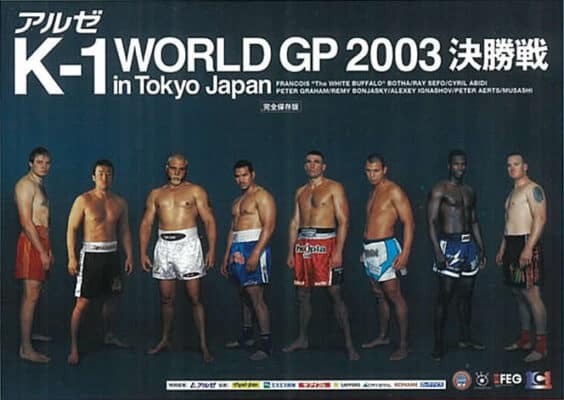
K-1 poster by K-1world.com

But this new form of kickboxing would explode in the following years, and become the #1 combat sport in the world. And although K-1 went through many ups and downs, even got shut down at one point, it managed to survive. Ever since 1993, K-1 has been giving the world from 10 to 30 events every single year with the “World Grand Prix Finals” and “World Max Finals” being the biggest and most popular. These are the two elimination tournaments where 16 best K-1 fighters fought for a world title. 

What Are The Rules of K-1 Kickboxing?

K-1 rules are very simple and easy to understand. Here is all you need to know about them:

  • Fighters compete in a square ring wearing boxing gloves and a shorts
  • Each match includes 3 rounds with each one being 3 minutes long. The rest period between the rounds is 1 minute. In case of a draw, there is one extra round.
  • There are 10 weight classes in pro K-1 and 19 in amateur competition.
  • Fighters can strike with kicks, punches, and knees
  • Backspin blows are allowed but only if the strike connects with a part of the glove. Landing backspin blows with elbow or forearm is illegal.
  • Sweeps and throws are not allowed
  • Fighters can clinch but only with an intention to attack with a knee. Stalling the action is not allowed.
  • Each match includes one referee and three judges sitting beside the ring scoring the fight

What Is The Difference Between K-1 and Kickboxing?

K-1 is an organization that promotes kickboxing matches and an official style of kickboxing. Comparing K-1 with kickboxing is like comparing NBA with basketball. Average people who don’t know much about combat sports tend to mix these two terms with one another, thinking these are two separate sports. But this is a huge mistake, and here is why.

Kickboxing is a combat sport that emerged in the 1950s in Japan. Over the years, many different kickboxing promotions, styles and rules have emerged all over the world. Here are the three main styles of kickboxing that are defined by different sets of rules:

So comparing K-1 with kickboxing is a big mistake as we are talking about the same sport. The right way is to compare K-1 with other styles and rules of kickboxing like American and Dutch styles. For instance, you can’t compare NBA with the sport of basketball. The only right way is to compare NBA with other leagues that have different rules, like European league for instance.

What Is The Difference Between K-1 and Muay Thai?

This is the same as comparing NBA with the European League basketball. Both Muay Thai and K-1 are styles of kickboxing, but the rules are a bit different. In fact, the rules are so similar that K-1 fighters are often switching over to fight in Muay Thai and vice versa. Here are all the differences you should be aware of:

Emphasis and strategies

Muay Thai is one of the most brutal fighting styles, but at the same time, it is often seen as a complete striking art. It teaches you how to use all limbs as weapons to strike with kicks, punches, elbows, and knees. The emphasis is on hard kicks and fighting in the famous “Thai clinch” using elbows and knees. And Muay Thai fighters focus on landing a single power strike rather than throwing combinations.

K-1 kickboxers on the other side can also strike with kicks, punches, and knees, but elbows are not allowed. The emphasis is on western boxing, high output, and pressure. For instance, they would throw a five-punch combo and finish it with a single kick, instead of loading on a single strike like Thai boxers.

Rules of competition

Muay Thai rules are very much the same across all promotions. The matches have 5 rounds with each round being 3 minutes long and there is a 2 minute break between the rounds. Fighters can fight in the clinch, and they can also use sweeps and various throws to take the opponent down.

K-1 rules are very similar with few exceptions. The matches in K-1 last 3–3 minute rounds with one-minute break between the rounds. Fighting in the clinch is allowed as long as one fighter is landing knee strikes. They are not allowed to clinch to take a rest, hold the action, or throw the opponent down to the ground. And, K-1 fighters are not allowed to strike with elbows.

RECOMMENDED FOR YOU:
Taekwondo vs Kickboxing – Key Differences and Comparison

What Is The Difference Between K-1 World GP And K-1 World Max?

“K-1 World GP” and “K-1 World Max” are two different formats of K-1 competition. Fighters from both formats fight under the same rules, but the only difference is the weight. K-1 World GP was an open weight tournament, while “K-1 World MAX” was a middleweight tournament.

K-1 bosses introduced the “World Max” format in 2002 with an intention to gather all the best middleweight fighters (70kg; 155 lbs). The term MAX stands for “Middleweight Artistic Extreme”. But bear in mind that World Max Finals was the final tournament. There were also plenty of other events where fighters fought to secure a place in the finals. From 2002 to 2014, K-1 gave the world a total of 14 World Max finals.

K-1 World Grand Prix, on the other hand, was a more popular elimination tournament. It was an open weight tournament held every year between 1993 and 2012, and the World Grand Prix events were usually the biggest. As for the World Max, there were also plenty of smaller events in which fighters competed for one of 16 places in the World Grand Prix finals. Securing a place in the finals was a big deal as winning the title in K-1 GP was considered the biggest achievement in kickboxing.

The format of events has changed a lot in 2012 when the “K-1 Global Holdings Limited” acquired the rights to K-1. In modern days, World Grand Prix format is still present but it is no longer an open weight tournament. 

Who Are the Best K-1 Fighters of All Time?

There have been many great K-1 fighters and choosing the best ones is not an easy task. Here is the list of best fighters from K-1 including the World Grand Prix and World Max. The list also includes fighters from different eras and is ranked in no particular order.

Ernesto Hoostis often seen as the greatest K-1 fighter of all time with 4 World Grand Prix titles on his record. He was the first K-1 superstar and his nickname “Mr. Perfect” ideally describes Hoost as a fighter. What always stood up in his game were incredible boxing skills and very hard low kicks.

Semmy Schiltstanding 6’11” and weighing around 255 pounds, Schilt was a giant. Although he was huge, Schilt was very skilled and mobile for a man his size, and an expert in multiple martial arts. He is also a four-time World Grand Prix winner and alongside Hoost the best K-1 fighter of all time.

Andy Hugwasn’t the most successful K-1 fighter, but for sure, he was among the most popular. He was good looking, charismatic, and his fighting style was very exciting. He was one of the first fighters to use karate techniques like Axe Kick and the famous Tornado Kick in kickboxing. In 1996, he won the K-1 GP but would lose a battle against cancer just four years later and die on August 24th in 2000.

Remy Bonjaskyis a three-time K-1 World Grand Prix winner and one of the most exciting fighters in history. He was a pure Muay Thai fighter who used to throw all kinds of flying and spinning techniques. But his trademark move was the famous flying knee, which earned him a nickname “The Flying Gentleman”.

Peter Aerts — is also known as the Dutch lumberjack. He is the three-time World Grand Prix winner and a true legend of K-1. Most of his fights were chaotic brawls and he fought in K-1 for 16 years. It’s really amazing how Aerts was able to deal with the best fighters from different eras for such a long time.

Buakawis the most popular K-1 World Max fighter and a two-time champion. He came into K-1 from Muay Thai where he is also a multiple world champion.

Masato Kobayashiis one of the best Japanese kickboxers and a two time World Max winner. During the golden age of World Max, Masato has fought and beat the best of the best. He holds wins over Buakaw, Andy Souwer, and Mike Zambidis.

Giorgio Petrosyanis the two time “World Max” champion and perhaps, the most technical striker of his era. From his incredible standup defense, to the speed of his strikes, Petrosyan was always a step ahead of his opponents. But it was the precision of his striking that earned him a nickname “The Doctor”.

Related Questions

Who is the Best K1 Fighter of All Time?

Who is the best K-1 fighter of all time really comes down to two names: Ernesto Hoost and Semmy Schilt. However, picking who is the best between these two is very hard, almost impossible, and here is why.

Both Hoost and Schilt have four K-1 World GP titles each, but they fought in different eras. Hoost used to dominate during the 90s until Schilt took over in the 2000s. They were both the most dominant fighters of their generation, and they fought each other three times. 

The first fight ended in a draw while Schilt won the second and third. But it would be wrong to say that Schilt is better simply because Hoost was in his late 30s and past his prime when they fought each other the second and third time. 

Hoost retired with 121 fights on his record, 99 wins out of which 62 were brutal KOs. Schilt, on the other side, had 50 pro fights, 43 wins out of which 20 were by knockout.

Can You Clinch in K-1?

Yes, you can clinch in K-1 but bear in mind that this type of clinch differs a lot from the one in Muay Thai. K-1 fighters can only clinch during the attack to land vicious knees to the body or head. If the attack is productive, the referee would allow the clinch battle for up to five seconds before separating the fighters. Fighters are not allowed to stall the action, take a rest, or throw the opponent down to the ground. These moves are illegal in K-1.

Are Sweeps Allowed in K-1?

No, K-1 fighters can’t use sweeps, trips, or any other grappling move to throw the opponent down to the ground. The only thing they can do is to clinch during the attack to land knee strikes, and they can do this for about five seconds. Sweeps and throws are legal in Muay Thai.

What’s the Difference Between MMA and Kickboxing?

MMA and kickboxing are two separate combat sports that do not have much in common. As its name suggests, mix martial arts is a mix of techniques from various fighting styles put into one style of fighting. It is the most versatile combat sport that covers all the elements of fighting. Fighters can grapple using wrestling moves, fight on the ground, and strike on the feet.

Kickboxing, on the other side, is a fighting style that focuses entirely on the standup fight. Depending on the style, fighters can throw kicks, punches, knees, and even elbows in some types like Muay Thai. It doesn’t include grappling or ground fighting, but athletes can fight in the clinch in some forms.

Although it doesn’t cover all the aspects, kickboxing is one of the most important styles in MMA fighting. In modern days, fighters can’t expect to succeed in MMA without having at least basic kickboxing skills.

What is the Difference between Taekwondo and Kickboxing?

The main difference between Kickboxing and Taekwondo is the emphasis. Taekwondo is an art that focuses on kicks, while hands strikes are a secondary weapon. Kickboxing, on the other side, has many forms out of which the emphasis in most is on using all limbs as weapons. It includes kicks, punches, and under K-1 rules, knee strikes as well.

Is Taekwondo Effective for MMA Fighting? Full Analysis

0

The Korean martial art of Taekwondo(TKD) is an incredibly popular martial art all over the globe.  In the last twenty years, the sport of Mixed Martial Arts has become the most popular battleground for fighters with different martial arts backgrounds to compete against each other.  This has made many people wonder if TKD can be effective and dangerous in MMA.

Taekwondo skills alone aren’t effective in MMA, because it is regarded as too one-dimensional. It is limited almost entirely to an array of different kicks. Taekwondo techniques must be combined with another discipline in order for an MMA fighter to succeed in a fight.

In this article, I will explore why Taekwondo alone is not effective in MMA, as well as look at how Taekwondo was used by high-level fighters to succeed in MMA.

Is TKD Effective in MMA?

There are a few reasons why Taekwondo just didn’t appear to be used in MMA competitions. There are several different versions of Taekwondo, but the most recognizable one is the Olympic point fighting sport, which some have referred to very derisory as “safe space karate”. This point-based sparring is looked down upon by MMA practitioners because it doesn’t appear to be based on realistic fighting. 

Both MMA fights and street encounters aren’t immediately paused upon a single strike being landed, before fighters are reset and told to continue. In competitions judged on points, it often makes sense to throw quicker, but lighter tip-tap strikes which may lack the power to cause any concerning damage to a highly-conditioned mixed martial artist.  Thereby, not fitting the paradigm of a realistic fight.

This competition style of Taekwondo has rules which place severe restrictions on what a fighter can do with their hands, limiting to only utilizing kicks.  This is obviously hugely detrimental in an MMA environment as both throwing and defending against punches is a key part of the sport.  

A fighter trained purely in Taekwondo is likely to be unused to blocking or slipping punches and almost certainly won’t be able to throw precise or powerful punches of their own. This is further confounded by the fact that they usually hold their hands with a very low guard.

This sole reliance on kicks and the constant movement required to throw them, may also be incredibly draining on a Taekwondo practitioner’s stamina and without a great gas tank, they may struggle with the later rounds of the fight.

However, it would be foolhardy to say that Taekwondo was useless. Over the last ten years, more and more fighters have been emerging who have had significant Taekwondo training.

RECOMMENDED FOR YOU:
Is Taekwondo Effective in a Street Fight? Q&A

Do MMA Fighters Use Taekwondo?

An argument could be made that Taekwondo has always been around MMA, but hiding in plain sight. While Anderson Silva is one example of a high-level Taekwondo practicing legend, Bas Rutten is another, who defied his conservative parents when he began studying Taekwondo, before transitioning to Kyokushin Karate.  Pride FC Champion, Mirko Cro Cop trained Taekwondo from the age of seven. 

However, to prepare for ground fighting, all these fighters have trained in Brazilian Jiu-Jitsu(BJJ) extensively and not just focusing on Taekwondo training. Ground fighting is just as important as stand-up fighting in MMA.

MMA fighting can be broken down into three main components; stand-up, clinch and ground fighting. Below is the definition of each.

Stand-up Fighting: Hand-to-hand combat in a standing position. This includes Taekwondo, boxing and kickboxing.

Clinch Fighting: Grappling your opponent in a standing position. This includes Wrestling and Judo.

Ground Fighting: Hand-to-hand combat on the ground, which also involves grappling your opponent. This includes BJJ, Sambo or Collegiate Wrestling.

As you can see, each martial art will focus on one of these components. This is why fighters will often combine techniques they have learned from different martial art disciplines. In order to succeed in MMA, it is absolutely essential to learn techniques in all three fighting styles.

That being said, over the last five to ten years though, a good number of featherweight and lightweight fighters have been showcasing their high-level Taekwondo skills in MMA.

Notable MMA Fighters with Taekwondo Backgrounds

Edson Barboza

Barboza has thirteen knockout victories in the lightweight division is celebrated for his incredible blend of Muay Thai and TKD, both of which he began learning from an early age. Perhaps his most dazzling display of Taekwondo was back in UFC 142 when he landed a spinning wheel kick knockout of Terry Etim, earning him a “knockout of the year” award.  

Yair Rodriguez

TUF: Latin America winner who is arguably the purest example of a Taekwondo practitioner in the sport has grabbed both “Performance of the Night”, and “Fight of the Night” bonuses with flying kicks and a legendary last-second elbow out-of-nowhere KO over the Korean Zombie. Yair presents an awkward arsenal to all of his opponents, utilizing great timing and precision, making it very uncomfortable for his opponents to attempt to predict his devastating tornado kicks, cartwheel kicks and spinning back kicks.

Nina Nunes

She may unfortunately be more famous for being Amanda Nunes wife, but that isn’t to say that the American Taekwondo practitioner isn’t a force to be reckoned with in her own right. Nina’s 3rd-degree TKD black belt was on a four-fight streak tear until losing a tough decision fight to Tatiana Suarez before taking a break to become a mother.  

Although her first fight since returning to the Octagon ended in defeat via armbar submission to Mackenzie Dern, Taekwondo practicing MMA fans are no doubt clamoring for Nina Nines’ slick footwork and vicious kicks to light her opponents up again.

Valentina “The Bullet” Shevchenko

Flyweight Champion, Shevchenko is one of the most intimidating female fighters in all of the UFC.  “The Bullet” is a very apt nickname for her fast and devastating style. The Ukrainian, who was influenced by her mother began training Taekwondo at the age of five and later went on to become a Muay Thai world champion.  Shevchenko took the UFC gold from Joanna Jedrzejczyk at UFC 231.

Rose Namajunas

Strawweight Champion, Namajunas is one of the most well-rounded athletes in all of the UFC.  Namajunas took up Taekwondo at the age of five, whilst trying to escape the harsh reality of her rough home life. Rose would earn a black belt four years later and pick up karate and BJJ soon after, moving onto earn black belts in both.  

One of her best displays of Taekwondo would be against Tecia Torres at Invicta FC 6. Despite losing the fight, Rose threw axe kicks, roundhouse head kicks and plenty of front kicks. Rose’s belt-grabbing lead roundhouse kick knocked out of Weli Zhang also appeared to look straight out of a Taekwondo match.

Benson Henderson

Henderson, whose Korean mother insisted that he take up the art began practicing at the age of nine, so that he would learn about family culture and tradition. Benson earned a black belt in the art and fulfilled his mother’s wishes, prior to shifting to wrestling and gaining a black belt in Brazilian Jiu-Jitsu as well.  One of his most famous fights, would be against Anthony Pettis, who Henderson beat by decision in a legendary five-round fight.

Perhaps what elevated this fight to the regard its held in, was Henderson’s resilience in surviving a Matrix-style-cage-running head kick thrown by Pettis that would have left other fighters completely bereft of their senses. 

Anthony “Showtime” Pettis

“Showtime” had always wanted to take up boxing as a child, but his protective mother was highly against seeing Anthony and his brothers put their face at risk and in lieu of the sweet science, Pettis took up Taekwodno from the age of five.  He was already a third-degree Taekwondo black belt when he joined Roufusport when he was eighteen.  

Although he defeated Benson for a second time to win the lightweight UFC belt at UFC 164, Pettis’s career has had peaks and troughs since then, with the fighter currently on a two fight losing streak in the PFL. He still celebrates his Taekwondo, however, stating “for me the biggest thing I take away from Taekwondo is the use of distance and range, which teaches you where to strike from”, Pettis is adamant that rangey-strikes present a problem for wrestlers attempting to shoot.

RECOMMENDED FOR YOU:
Karate vs. Taekwondo: Key Differences And Similarities

Are TKD Kicks Effective in MMA?

In a vacuum, devoid of punches, grappling, submissions and takedowns, taekwondo competitors learn to kick very well. After all, as Bruce Lee famously said “don’t fear the man who practices ten thousand kicks, fear the man who practices one kick ten thousand times.”

They have some of the fastest, sharpest and most deceptive kicks in all of martial arts. Additionally, they are incredibly accurate.  A well-executed taekwondo strike will have pinpoint precision. Just because a Taekwondo fighter has learned to throw these kicks with reduced power in a point fighting scenario, doesn’t mean they can’t throw these kicks with full power in another environment. Rangier fighters will often be able to control distance with these kicks as well, occasionally spelling doom for the unsuspecting fighter, unused to these kicks.

In MMA competitions, fighters may be used to defending against Muay Thai roundhouse kicks, but the snappier Taekwondo kick though much less common, is still used, alongside its more powerful jumping or 360 variant.  

Barring question-mark kicks, Muay Thai kicks are typically less chambered and are designed to kick through the opponent. The majority of the kicks are thrown from the back leg as the greater distance away from the opponent will allow for more opportunity to build the power of the kick. The focus is on destroying their body to prevent them from fighting back.  

Taekwondo on the other hand is much more focused on deception and precision. Chambered kicks can change direction at the last second, completely baffling the opponent into putting their guard into an unfavorable position.  

This misdirection and guard bypassing especially applies to both inside and outside crescent kicks, along with axe kicks, which kick straight up and drop the heel on top of the opponent’s head or chest and hook kicks. Hook kicks used by the likes of Edson Barboza account for some of the most stunning and devastating knockouts in all of MMA.  Much like crescent kicks they can wrap around an opponent’s guard to strike the side of an opponent’s head.    

Lastly, although Muay Thai’s teep kicks are somewhat similar, to Taekwondo’s push kicks (Mireo Chagi), used to disrupt combos and create distance, Taekwondo’s front kicks (ag chapi) are unparalleled in their precision.  It is this kick that Anderson Silva utilized to knock out long-time rival Vitor Beflort.

RECOMMENDED FOR YOU:
Taekwondo vs Kickboxing – Key Differences and Comparison

What is the Best Martial Art for MMA?

In terms of number of champions, Taekwondo has only four practitioners listed as UFC champions. Compare this to the grappling arts of Wrestling which produced 37 UFC champions, or Brazilian Jiu-Jitsu which 36 champions have practiced, it seems apparent that grappling arts are far more effective overall. Unfortunately for Taekwondo, it is not the most successful striking art either, with boxing overshadowing it with 23 champions and Muay Thai with 19.  

Despite this, the incredibly talented fighters who have taken their Taekwondo skills and developed their arsenal on top of this, wowing crowds with huge kicks and gaining fans along the way. In a world where ticket sales can determine the likelihood of getting that title fight, being able to pull off a perfectly executed spinning hook kick is only going to enhance the chances of a fighter’s financial success.

What is Savate? How Savate Evolved from Street Fighting

0
Photo by Osvaldo george

Most martial arts practitioners and MMA fighters have heard about Savate but could probably not offer further information around this fighting technique. Just because many fighters are not familiar with the ways of Savate is not a reflection on the effectiveness of the combat style. So what exactly is Savate, and how does it stack up against other martial arts?

Savate is a French-developed style of kickboxing that originated as a form of streetfighting. The style uses both hands and feet as weapons, but the kicks can only be executed with the feet. The use of shins or knees is not allowed in the Savate fighting style. Both high and low kicks are used.

Many believe that the Savate techniques have their origins in Pankration, and some moves probably came from this early martial art. However, the style has more recent roots in streetfighting techniques developed in the south of France. We will explore the roots of Savate and its development into the modern style and its relevance in the world of combat sports.

Brief History Of Savate

Savate takes its name from a French word that means “old shoe” in specific reference to the boots that the French military and sailors wore.

Savate has its origins in Marseille, a port town in the south of France in the early 19th century. The sailors who frequented the port developed the fighting style by incorporating streetfighting and high kicks partnered with open-handed slaps.

The reason that open-handed slaps were used instead of punching with a fist was that the law at the time considered a strike with the fist to be a strike with a deadly weapon and carried strict legal penalties.

Two notable characters stand out in the history of Savate that brought the fighting style from the streets to a formalized fighting style as a sport. Savate then became a well-known fighting style in Paris and in the northern parts of France.

Michel Casseaux was the first person to open a fighting school that taught and promoted Savate as a fighting sport. It took some time for the fighting style to rise above its reputation as a streetfighting style and gain public acceptance.

Charles Lecour was a student of Michel Casseaux and learned the technique at his training facility. Charles Lecour was exposed to the English port of boxing and participated in a sparring match with Owen Swift, a British prizefighter. Lecour saw the disadvantages of his martial art against a boxer when he lost the sparring bout to Owen.

Lecour studied boxing and incorporated the techniques to his style to improve the effectiveness of the style. Stick fighting was also incorporated into the methods when taught as self-defense but excluded when taught as a sport.

A student of Lecour, Joseph Charlemont, and later his son, Charles Charlemont, further developed the technique that led to the style being codified into a sport fighting style that we know as Savate today.

Is Savate A Real Martial Art?

Several disciplines have arisen from traditional Savate, and these disciplines are not considered to be martial arts, and they are more fitness and sport-oriented.

Traditional Savate is a real martial art since it developed into a combat style suitable for military use. Savate combines both attack and self-defense techniques and incorporates the use of weapons in the form of sticks, where these humble weapons can be lethal.

The French military teaches their soldiers Savate techniques for hand-to-hand combat in their close-quarter combat training.

Is Savate Good For Self-Defense?

Although Savate originally developed as a street-brawling combat system, this history stands the technique in good stead as a defensive tactic against attacks using streetfighting techniques.

Savate is good for self-defense because a large component of the techniques taught is oriented to defensive strategies against a street attacker who does not follow any rules of engagement. The combination of kicks and boxing can be used effectively against an attacker.

There is a discipline of Savate called Savate Defense, which is dedicated to teaching self-defense techniques from the style, rather than the complete curriculum.

What Is The Difference Between Savate And Kickboxing?

Savate techniques rely heavily on kicks to thwart an attack, which is why the combat style is named after an old shoe, or boot. The inclusion of boxing-style punches makes Savate closely resemble kickboxing, so how do these two styles differ?

Savate differs from kickboxing in that the blows from hands and feet are not delivered with full force. Savate only allows kicks that result in the foot making contact with the opponent, while kickboxing allows knees and shins to be used. Savate has a ranking system, while kickboxing does not.

Many kickboxers learn Savate-style kicking and incorporate the techniques into their kickboxing repertoire.

RECOMMENDED FOR YOU:
What are the Different Styles of Kickboxing? Simply Explained

Did Bruce Lee Do Savate?

Savate is a practical, effective martial art with streetfighting roots and techniques that appealed to Bruce Lee’s concept of developing a practical fighting style with real-world application.

Bruce Lee did study Savate when he was developing his Jeet Kune Do philosophy. His mandate of studying other styles and incorporating the best aspects of those styles into his techniques led to incorporating some aspects of Savate into Jeet Kune Do.

Is Savate Good For MMA?

Savate has many striking and kicking techniques that bear a close resemblance to other fighting styles, such as Muay Thai. When an MMA fighter uses these techniques, it is uncertain which is the originating style for the strikes.

Savate is good for MMA because the strikes and kicks taught are designed to be effective in the real world, and they are similar to other martial arts that focus on strikes with the hands and the feet. MMA fighters can benefit from learning Savate and modify the techniques to be practical for an MMA bout.

Many people say that Savate is not good for MMA fighters to learn because it does not incorporate shins, knees, elbows, and clinches. However, the same criticism can be made for other martial arts that MMA fighters learn to enhance their fighting skills, such as Brazilian Jiu-Jitsu or Muay Thai.

Is Savate Hard To Learn?

Like any martial art, learning Savate is not something you can take up to learn and become a master practitioner in a year. There is a difference between learning the techniques and mastering them. 

Savate is not hard to learn but takes time to master. It is a comprehensive combat style with many components that can take up to a year to learn with continuous training and practice under a good instructor. Becoming completely proficient in Savate can take several years beyond this.

Combat skills in any martial art require constant practice and discipline to continually hone the skill and perfect the techniques. Savate is no different, and while you can become effective in the methods in the space of a year, it will take several years of practice to be considered a master.

Conclusion

Savate in the early days was considered a fighting style for thugs and street brawlers, but its development into a bona fide fighting style has led to it gaining respect and recognition in the martial arts world.

The practicality of the style and its real-world application make it effective and popular as a self-defense martial art. Although it is not a popular style for MMA fighters to learn since many believe other styles offer more, Savate certainly has techniques that can prove useful to an MMA fighter.

Top 13 Tallest MMA Fighters of All Time, Ranked

0

When you think of tall athletes who are above 6’6”, most of us instinctively associate them with basketball or football players. These are the sports where height plays a big role as it gives you a tremendous advantage. But are there tall MMA fighters who succeeded?

MMA is the most versatile combat sport where being tall has many pros and cons when it comes to fighting. If we look back in history, being very tall in MMA fighting will not lead to much advantage as you think, in a lot of cases, tend to struggle inside the cage. Very tall fighters are more prone to be easily taken down by skilled wrestlers than shorter fighters, which is just one of many cons.

But as in any sport, there are exceptions where tall MMA fighters used the advantage of height to a great extent to succeed. Keep reading this article to find out the best MMA fighters who are at least 6’6″ tall, and their interesting stories. 

13. Ricardo “The Mutant” Morais  —  6’8″

Back in the 90s, Ricardo Morais was one of those violent fighters that looked like they came straight out of horror movies. He was not just one of the tallest fighters, he also had big muscles and looked very intimidating. On top of that, he had good Muay Thai skills and was always pushing for a finish. 

Morais kicked off his career in the mid-90s by taking part in various bare-knuckle MMA matches. After amassing a record of 8–1, he got a chance to fight against Mark Coleman at Pride FC 8 in ’99. Let’s not forget that Coleman was one of the best and most popular fighters during that time. Still, Morais was able to go toe to toe with Coleman and put on a solid performance.

Although he lost the fight, this was the biggest moment of Morais’s career. He fought a couple of more times after the Coleman fight and he retired in 2006 with a record of 10 wins and 4 losses.

12. Dan “The Sandman” Christison  —  6’8″

Most MMA fans remember Christison as a fighter who didn’t like decisions. He went to a decision six times in his career, and he lost them all. But on the other side, he is 21–1 in fights that have ended before the final bell which gives you a great insight into how wild Christison was.

With a reach of 85″, Christison still holds a record for the largest wingspan in the UFC. But on the other side, he never used his long reach to gain an advantage in a fight because he was a grappler. “The Sandman” was all about taking the fight to the ground and finishing the opponent with submissions or ground and pound.

In his career, he fought under the UFC banner just two times. He made a successful debut in 2006 against Brad Imes but would lose a decision in his next fight against Frank Mir at UFC 61. He continued on to fight in various smaller promotions like IFC, CFC, and Warrior MMA before retiring in 2010.

11. Steve Mowry – 6’9”

Mowry is a Bellator MMA fighter who is among the tallest fighters on the roster. Although he is 6’9”, Mowry is very athletic and skilled in all areas of MMA. And on top of that, he is very durable and has an iron chin. Most of his Bellator fights are chaotic brawls in which he nearly got finished few times.

Mowry kicked off his pro MMA career in the popular “Titan FC” promotion. While with Titan FC, Mowry quickly rose to the top and garnered a lot of attention by scoring two brutal KOs and two submission finishes. Bellator was the first major promotion to spot this star in the making and they offered him a contract in 2018. In the first next three years, Mowry has scored five straight finishes, three submissions and two TKO’s. 

What he does best is using his height and long limbs to destroy his opponents in the clinch with hard knees and punches. The knee that he landed on Shawn Teed to put him out at Bellator 249 was beautiful.

10. Wes Sims  —  6’10”

Photo by mmabay.co.uk

Sims is not just one of the tallest fighters in the history of the UFC, but one of the wildest as well. He was quite famous back in the day mainly because of his exciting style. Out of 42 matches, he went to a decision just 3 times in his career which shows you how exciting his matches were to watch. And although he was 6’10” and weighing around 260 lbs, Sims was a very skilled fighter.

In his career, he fought for various promotions and he rarely stuck in one place. He would often switch between the promotions which is one of the reasons why he never won any titles. But most fans know him for his rivalry with the former UFC champ, Frank Mir.

These two fighters faced each other first time at UFC 43 when Sims got disqualified for landing repeated foot stomps. Mir would get his revenge less than a year later at UFC 46 where he finished Sims with brutal knees and punches.

9. Sean McCorkle  —  6’7

McCorkle is a former UFC fighter and one of the few athletes who came into MMA from college basketball. But during his college days, he also trained BJJ with the UFC veteran, Chris Lytle who influenced McCorkle to start competing in MMA in 2005. 

The scary fact about McCorkle is that he fought as a super heavyweight. He used to weigh over 315 pounds in most matches and was often looking twice as big as his opponents. And if we combine his physical size with strong grappling skills, we get a scary fighter who didn’t need much time to become famous.

After putting together a record of 12–0, McCorkle signed with the UFC in 2010. In his debut, he beat the K-1 and MMA legend, Mark Hunt at UFC 119 which remains the biggest moment of his career. But the hype around him was short lived as he went on to lose the next two fights before leaving the UFC in 2011.

In his career, he also fought for the Polish “KSW”, “Bellator MMA”, and “Legends of Fighting” promotions.

8. Paul “The Polar Bear” Varelans  —  6’8″

Varelans is one of the UFC pioneers who fought during the early days of the UFC. Standing 6’8″, Varelans came into MMA from football, and he had a little bit of boxing training. But during the wild beginnings of MMA, this was more than enough for the UFC to sign him in and let him fight at the UFC 6 tournament.

Varelans surprised everyone by knocking out Cal Worsham in his debut. But he would suffer a KO loss against the legend Tank Abbott in the semi-finals. He came back to UFC 7 tournament where he reached all the way to the finals. Yet, he lost once again, this time against one of the most skilled fighters of that era, Marco Ruas.

On January 16, 2021, the sad news came that Paul Varelans lost the battle against the Covid-19 after spending a month in an induced coma.

7. Gan McGee  —  6’10”

McGee is a retired MMA fighter who once was the tallest fighter on the UFC roster. On his road to the UFC, he left nothing but carnage in just about every fight he fought. He would push for a takedown from the opening second of the fight, and once in the top position, he would quickly close the show with a barrage of punches. 

But, things didn’t go as planned for McGee in his UFC debut against Josh Barnett as he got finished in the second round. He bounced back with three straight wins in the WEC promotion before coming back to beat the legend, Pedro Rizzo at UFC 39.

The next stoppage win over Alexandre Dantas secured him a shot at the title against Tim Sylvia. The two faced each other at UFC 44 in 2003, and Sylvia went on to finish McGee in the first round with a barrage of punches,

McGee left the UFC after this fight, and he went on to fight two times in PRIDE FC and lose both fights before retiring in 2009.

RECOMMENDED FOR YOU:
Top 15 Shortest MMA Fighters of All Time, Ranked

6. Travis Browne  —  6’7″

Photo by Rushmoore

Browne is a former UFC heavyweight fighter who once was just a step away from fighting for the title. He came into the UFC in 2010 and didn’t need much time to rise to the top. Just a few fights into his UFC career, Browne was already seen as a future star and potential champion.

Despite being physically big, he knew how to use this advantage in MMA. His kickboxing skills were very good, and he had an iron chin. In his UFC career, he scored four “knockout of the night” bonuses, which came against some of the true legends of MMA. He knocked out Alistair Overeem with the famous front kick, Josh Barnett and Gabriel Gonzaga.

Although he was on the rise, Browne’s career took a steep dive in 2016, and he never recovered from it. He retired from MMA in 2017 while being on a four-fight losing streak.

5. Alexander Volkov  —  6’7″

Photo by S.Troshchenko

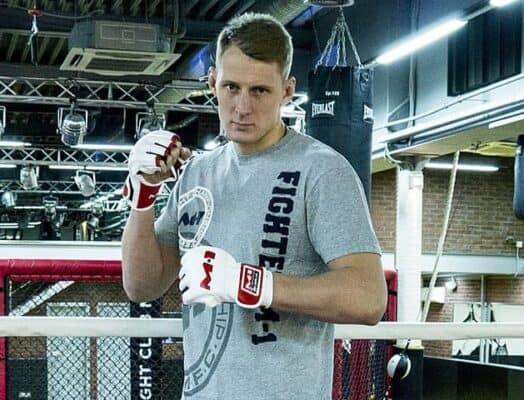
Standing 6’7″, Volkov is one of the tallest and physically biggest MMA fighters in history. He joined the UFC in 2016 as a former M-1 Global and Bellator MMA champion, so the hype around him was quite big, and for the right reason. He looks and fights like a monster.

But make no mistakes about him, Volkov is a very technical and methodical fighter. He does a really good job of using his long reach to pick his opponents apart from the distance. And once he smells blood, he needs just a single strike to land clean to close the show.

He proved that the hype was real by scoring four wins in a row. Bear in mind that the UFC put him right into the fire. His first four wins came against Stefan Struve, Roy Nelson, and Fabricio Werdum who was a former champ at the time. However, he would lose a couple of crucial fights that put his title aspirations on hold.  

4. Hong Man Choi  —  7’2″

Photo by 67microbus

Better known as the “Korean Colossus”, Choi is a mountain of a man. Standing 7’2″ tall, Choi used to weigh in at around 352 pounds and is one of the biggest fighters in history. He became a huge star while fighting in the Japanese K-1 kickboxing promotion where he was a 2005 World Grand Prix Champ.

On his road to winning K-1 prestigious title, he beat some K-1 legends like Mighty Mo and Semmy Schilt. But let’s not forget that he was a part of a lot of freak shows where he fought against fighters who were half his size. For instance, he beat Kaoklai who was 5’11” and used to weigh 174 lbs.

Choi would later switch over to fight in MMA, but he never achieved the same success as in K-1. He fought for “DREAM” promotion where he faced and lost to famous fighters like Fedor Emelianenko and Mirko CroCop.

3. Tim Sylvia  —  6’8″

Photo by Ben Kevan

Tim Sylvia is a former two-time UFC heavyweight champ who is often seen as one of the best heavyweights of all time. But although he was a giant, Sylvia was also very skillful and mobile for a man his size, which made him a tough matchup for anyone.

He wasn’t one of those heavy hitters who always push for a knockout swinging power shot. No, Sylvia was a skilled striker who did a good job of mixing kicks with the punches, changing angles, and picking his shots well. The accuracy of his boxing was what made him better than the other heavy-weight fighters. And also, it is one of the reasons why he has retired with 22 KO wins on his record.

Syliva left the UFC in 2008. He went on to fight for various smaller promotions before retiring from the sport in 2013. Sylvia is also one of the few MMA fighters who became a Police Officer on a part-time basis in Illinois.

2. Semmy Schilt  —  6’11”

Photo by Amw9991

Schilt is one of the tallest kickboxers in history who also fought a lot in MMA. With four K-1 Grand Prix titles and Glory heavyweight title, he is often seen as the greatest kickboxer of all time. Although he was tall, heavy, and long, Schilt was really agile and very technical for a man his size. He never relied too much on using sheer power, but rather on technique, which by the way was pinpoint perfect. And we are not talking just about striking as Schilt had a decent BJJ game as well.

But before he became a champion in K-1, Schilt used to fight in MMA during the 90s. He was a huge star in the Japanese “Pancrase” promotion, where he was open weight champion. During those days, he often fought against fighters who were half his size such as Yuki Kondo or Ikuhisa Minowa.

Schilt also had two fights in the UFC. He won his debut against Pete Williams at UFC 31, before losing to Josh Barnett at UFC 32.

1. Stefan Struve  —  7’0″

Photo by Jason Gambone

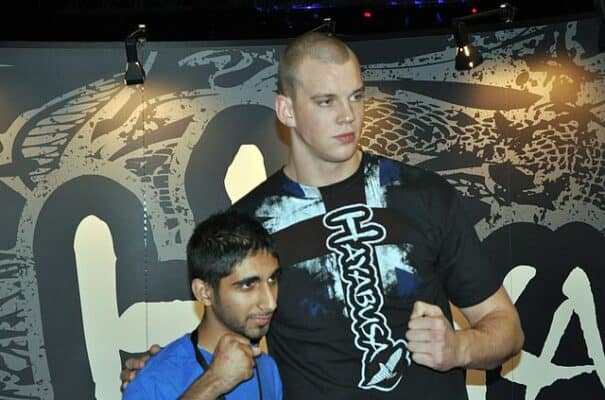
Struve is the former UFC contender who is the tallest fighter in the history of this promotion. He came into MMA from kickboxing where he fought as a pro before getting into MMA later. In his prime, Struve was a tough matchup for anyone due to his height and long reach. Many great fighters like the UFC champ Stipe Miocic or BigFoot Silva got knocked out by Struve. 

But on the other side, Struve didn’t have the speed in his strikes and was moving much slower than his opponents. Because he was so tall and skinny, he had a hard time dealing with wrestlers who, in most cases, were able to take him down without much effort. And on top of that, his standup defense was full of holes as he suffered many brutal KOs.

Still, no one could deny that Struve was a top UFC fighter at one point in time. He proved that you can succeed in MMA despite being 7’0″.