Home Blog Page 26

Top 11 World’s Deadliest Martial Arts Revealed – Ranked

0
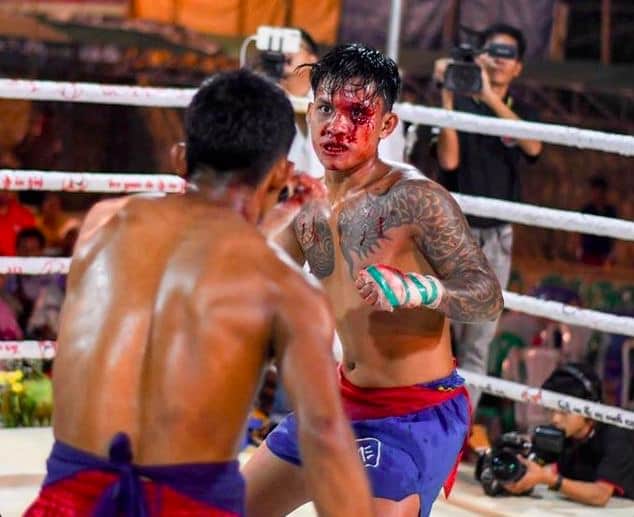
Lethwei fights
Photo by Lethwei Master

Most people associate martial arts with fighting sports like MMA or Boxing. These are combat sports where athletes fight under the rules. In war or on the street, however, fair rules do not exist where your attacker’s intention is to inflict as much pain as possible, which can lead to death. To counter against these lethal attackers, people have created some of the deadliest martial arts to defend themselves. As you’ll see below, these martial arts can be very brutal and can also cause death. Even though you may see sports versions of the following martial arts in some cases, these deadly martial arts were first designed to prepare you for any situation that may bring harm to you.

Keep reading this article to find out about these deadliest martial arts. We will explore their origins, and what makes them lethal.

11. Kalari (Kalaripayattu)

https://youtu.be/oI84oM_bJeg

Kalari is one of the oldest martial arts that comes from India and this art was designed for war. The earliest records go all the way back to 3,000 years ago and the name “Kalari” means “battlefield”. It covers both armed and unarmed combat and is an all-around system. It includes punches, kicks, grappling, as well as healing methods. Students also learn how to attack body pressure points that can cause extreme pain, injury, or result in death.

When it comes to training, Kalari students first learn weapon-based techniques. Later on, they would start learning hand-to-hand combat and how to mix it with weapons. The emphasis is on mobility, fast and violent attacks, and causing as much damage as possible. In modern times, there are two main styles of Kalari: Northern and Southern 

10. Combat Sambo 

https://youtu.be/j-1DdMc39Cg

Combat Sambo is a famous fighting system that emerged in the 1920s in Russia. Most people know it by MMA fighters who use it to compete in cage fighting or as a very popular sport, notably in the eastern world and former Soviet republics. Still, let’s not forget that Sambo is also a very brutal art developed for war and real combat. 

Back in the 1920s, the Russian military created Sambo to improve the fighting abilities of its soldiers. The system is a mix of techniques from various grappling and striking arts like:

  • Judo
  • Boxing
  • Folk Wrestling

There are two forms called “Sport Sambo” and “Combat Sambo”. The Combat version includes dirty moves like soccer kicks, groins strikes, and headbutts. It won’t teach you how to fight under the rules as the focus is on real combat. Students learn how to break bones, choke the opponent out and smash their faces with strikes.

RECOMMENDED FOR YOU:
Top MMA Fighters Who Served In The Military

9. Lethwei

https://youtu.be/t7HYNINWJe0

Lethwei is a very brutal fighting system that is also known as “Burmese Boxing”. Despite the fact that it includes dirty moves, this art is legal in many countries and the matches are quite popular. It looks very much the same as Muay Thai, as both arts share similar techniques and place of origins. Still, it’s fair to say that Lethwei is far more brutal. Fighters compete bare knuckle and the rules allow them to use headbutt strikes during the fight.

In its initial form, Lethwei was a hand-to-hand combat system used by the military to fight in wars. The modern version is less brutal, but still, the focus is on throwing each strike with violent intention. It is a complete striking system that teaches you all about real combat.

In training, students learn how to use the entire body as a weapon to strike. The aspect that stands out is headbutts and the fact that they fight bare-knuckle. Although this sounds brutal, this pays off when it comes to self-defense and street fighting.

For instance, most people break their fingers or wrist in a street fight when they punch bare-knuckle. Even the pro fighters tend to hurt their hands because they are not used to striking without gloves. But Lethwei teaches you how much power to use when punching bare-knuckle, and it trains your body to absorb these strikes.

8. Brazilian Jiu Jitsu (BJJ)

In modern times, BJJ is often seen as the best fighting system one can learn for self-defense. Don’t look any further from how practical BJJ skills are in modern MMA if you need any proof. 

Though BJJ is a popular sport that looks safe on TV, let’s not forget that it is a deadly martial art. You can end a person’s life with ease with some of its moves as there’s no tap out in the warzone or some other street-fighting scenarios.

BJJ is an art that originates from Judo and it includes similar techniques. The Gracie family moved the emphasis from throws to ground fighting. Students learn how to secure a dominant position from which they can apply chokes and joint locks that are very dangerous. If you are not careful with these moves, it can all easily end up in a fracture, or you can put your opponent to pass out which can lead to death if you prolong the chokehold.

Training is not that dangerous because it doesn’t include any striking. You won’t break bones or choke other students unconscious. But on the other side, you can easily do this in a real fight which is why BJJ is on this list.

RECOMMENDED FOR YOU:
What is Gracie Jiu-Jitsu? Fully Explained

7. MCMAP

MCMAP is a combat system developed by the U.S military in 2001. The full name of this system is “Marine Corps Martial Arts Program”. The program trains marines for both unarmed and armed combat they may face on the battlefield. It is a brutal system that apart from violent techniques, focuses on the mental aspect. Marines learn how to deal with the stresses of fighting, and training improves their moral and leadership skills.

MCMAP has origins in various arts like BJJ, wrestling, Judo, Thai boxing, and many, many others. In short, it includes only the most effective techniques you can apply in a real combat. Marines learn how to use all limbs to strike, grapple, apply chokes and joint locks, and deal with weapons like knives, bayonets and even firearms. Training also includes dirty tactics like throat strikes, eye-gouging, and stomps.

It’s worth mentioning that MCMAP has its own belt ranking system. Which techniques you learn is based on your rank:

  • Tan Belt — basic
  • Gray Belt — Intermediate
  • Green Belt — Intermediate
  • Brown Belt — Advanced
  • Black Belt 1st degree — Advanced
  • Black Belt 2nd degree — ultimate level
RECOMMENDED FOR YOU:
Top MMA Fighters Who Served In The Military

6. Bakom

This is one of the deadliest fighting systems created by the Peruvian military in the 1980s. The founder of the system is Roberto Bazada who is a former marine and a skilled jujutsu fighter. He used BJJ as a base on top of which he added techniques from various other arts like boxing, and street fighting moves.

Although Bakom includes well-known techniques from BJJ and boxing, it differs a lot when it comes to the way you use them in a fight. The emphasis is on fast attacks, and causing as much pain with every move. Or in other words, you learn how to break bones, neck, strangle the opponent or kill them with strikes. It also teaches you how to gouge eyes or target vital organs.

On top of that, soldiers learn how to surprise their opponent with hidden weapons, or attack them from the back. In short, the focus is on doing anything in your power to terminate the opponent’s life.

5. Eskrima

https://youtu.be/fgpr9sZC61E

Eskrima is a very brutal fighting system and national martial art in the Philippines. It is also known by the names “kali” and “arnis” and the earliest records of this system go all the way back to the 15th century. The emphasis of the art is on training a person to fight both with and without weapons like:

  • Sticks
  • Knives
  • Various bladed weapons 
  • Improvised weapons

In short, Eskrima is an all-around art used in many wars. In WW2, for instance, Filipino soldiers used Eskrima to fight against the Japanese in a hand to hand combat. It is a battle-proven system designed to kill people.

Students learn how to use footwork to fight at all ranges, with the emphasis being on short-range. The exact concept of training and techniques vary between the schools and styles. But in most, they learn advanced movement and striking, basics of grappling, and how to manipulate joints and dirty tactics.

In modern days, students spar wearing full-body protective gear. But they also often challenge each other on duels where they fight with wooden and metal sticks without any gear.

4. Silat

Silat is a martial art that comes from Indonesia. It is an all-around fighting system that teaches you how to strike, grapple, use weapons and dirty tactics. In fact, the entire system is based on dirty and aggressive moves which is the reason why Silat is so brutal. It is very effective and many military forces from this region use it as a part of their training.

The earliest records of Silat go all the way back to the 8th century and there are many forms and styles. There is even the sport version where students learn how to fight under the rules. But the purest form is the one that focuses on breaking bones with joint locks, gouge eyes, smash groins and use bladed weapons. And on top of that, students tend to spar without any protective gear while using these dangerous weapons.

The emphasis is on blitz attacks, causing the most pain with every move, and targeting vital body areas. Students learn how to strike groins, kidney, gouge eyes, and even how to stab soft body parts with a knife. 

The sport version is much softer and far less dangerous as fighters are not allowed to strike the face or below the waist.

RECOMMENDED FOR YOU:
What Is Dirty Boxing In MMA/Boxing?

3. Kajukenbo

This martial art is among the most brutal ones on this list. It emerged in the 1940s, in a time when Hawaii paradise was a violent place to be. Five skilled martial artists decided to form a new hand-to-hand system that would be practical on the streets for real combat. The final result was a fighting system that consists of techniques from:

  • Karate
  • Boxing
  • Kenpo
  • Judo
  • Jiu jitsu

Although this sounds like Kajukenbo is a type of fighting style that would be perfect for MMA, it’s not. It was created for intense street fighting and on top of grappling and striking skills, it adds dirty tactics. It is very practical because it includes only the moves that you can apply in a real fight. One of the founders had a famous quote that perfectly describes Kajukenbo as a style:

“The workout isn’t over until I see blood on the floor” and “the best teacher is pain”

Although this doesn’t sound nice, it’s what real fighting is all about. Even in modern times, the classes tend to be violent, painful, and brutal. Instructors will push your nerves, mind, and body over the limits in every single class.

2. LINE (Combat System)

L.I.N.E is a hand-to-hand combat system created by the U.S military in 1989. The founder of this system was Master Sergeant Ron Donvito and U.S Marine Corps used it as a part of their training from 1989 to 2007.

Like most other military combat systems, LINE is a mix of techniques from various grappling and striking martial arts. But what makes it special was the unique design of the system and concept of training. The focus was on preparing Marines to apply the techniques in specific conditions like:

  • In the case of extreme fatigue and against the superior attacker
  • While being in a full combat gear
  • Under low visibility (night, smoke, gas)

Still, what makes LINE very brutal is the fact that the main focus was on killing the opponent. Marines didn’t have to worry too much about the rules of engagement and how much force they are using. No, the main object was to kill the enemy. 

LINE is no longer a part of the military training as it was replaced by MCMAP.

1. Krav Maga

https://youtu.be/N-ss_OfxsgA

Krav Maga is, perhaps, the most famous fighting style when it comes to self-defense. Israeli military created it as a mix of striking, grappling techniques, and dirty tactics put into a single fighting system. The main goal of the art is to train you to deal with any threat you may face on the streets. And just as real fighting is, Krav Maga training is intense and brutal.

The best thing about krav maga is that it teaches you to fight at all ranges in it covers most scenarios. It trains you to deal with:

  • Multiple attackers
  • Weapons like knives, staff, or firearms
  • Fight in close or open space

The classes are intense and the emphasis is both on the physical and mental aspects of fighting. Students do a lot of simulation exercises where they attack and hit each other with various weapons like sticks. They learn how to deal with knives, staff, or even firearms.

But the key is to train your mind to stay calm in the heat of the moment. This is the only way one can assess the situation they are in, dangers, and how to escape as fast as possible. If that means that you have to grab a bottle and blast the attacker in the head, krav maga will encourage you to do just that. Or maybe the only option is to gouge the eyes or blast the attacker with a punch to the throat, it doesn’t really matter as long as you are doing it for self-defense.

RECOMMENDED FOR YOU:
Are U.S. Police Trained in Martial Arts? Police Training Q&A

What Is Sanda Chinese Kickboxing? Introduction To Sanda

0

China is a home of many martial arts out of which Sanda(formerly known as Sanshou) might be the most popular modern one. People often mix it with other striking arts like Muay Thai because of the appearance of similar techniques and rules. But Sanda is a unique fighting system, much more versatile than most other striking arts. 

Sanda is a full-contact martial art, often seen as a sport version of Kung Fu. It consists of hand strikes, kicks, elbows, and knees as well as trips, throws, and wrestling takedowns. In some way, you can look at Sanda as kickboxing with takedowns and grappling.

But there is more to Sanda that makes this martial art even more unique than other styles of kickboxing. Keep reading this article to learn more about Sanda and what makes it one of the best striking arts. We will explore its history, techniques and see how it compares with other similar arts.

History of Sanda 

Sanda emerged in the 1920s in China. At the time, the military needed a new combat system to improve the fighting abilities of its soldiers. They created a Sanda, which means “free fighting”, as a mix of techniques from various Chinese arts like Kung Fu, Lei Tei, Shuai Jiao. Later on, they would add techniques from western arts like boxing and judo. Over the next four decades, police and military were the only ones trained in Sanda.

But it would all change in the 1960s when the Chinese government regulated Sanda as a combat sport. Their main goal was to gather techniques and rules from all Chinese arts, and put them into one style of fighting. The final result was a fighting system that is a mix of striking and grappling techniques. However, the Sport version differs a lot from the military as it is much safer. And it also doesn’t include techniques like chokes, joint locks and elbow strikes. 

It’s worth pointing up that Sanda wasn’t that popular because it wasn’t seen as pure Chinese art. Although it has its origins in Kung Fu and other Chinese arts, it also includes a lot of techniques from non-Chinese arts like boxing and judo. It looks a lot like Muay Thai or western kickboxing with wrestling techniques.

In modern times, Sanda is among the most popular combat sports in the eastern world and countries like Russia, China and Armenia. Although it is not that popular in the west, we can see the sport rising at a steady pace.

RECOMMENDED FOR YOU:
What are the Different Styles of Kickboxing? Simply Explained

Is Sanda A Real Martial Art? 

Yes, Sanda is a real martial art and there is a strong reason why this is so. First, it has a long history and origins in various other famous Chinese arts like Kung Fu. But Sanda is far more practical in real life as it teaches you only techniques you can apply in real combat.

As a result, Sanda is a much better option when it comes to self-defense. Techniques you learn in training are simple, practical, and can help you get out of trouble. Students do a lot of sparring and live drills which are the best methods to prepare for combat. Most other Chinese fighting systems that have a status of martial art do not include sparring at all and do not work well in real-life fighting situations. 

In Sanda, fighters rarely train alone, do kata, or any other pre-arranged practices. These practices won’t help you much to prepare for matches or self-defense. Instead, the focus is on sparring in a spontaneous action with the partner, and training for a real combat. This doesn’t mean that Sanda is the best fighting style, but it meets all the criteria to be real martial art. 

What Are Wushu Sanda Rules? 

Sanda is a very popular combat sport, notably in the eastern world. The rules differ between organizations, but the general ones are very much the same. Here are the most important rules in Sanda matches:

  • Fighting area: Sanda fighters compete on an elevated square platform. This platform originates from “lei tai” and is 80cm in height, 8m in width, and 8m in length. Around the platform, there is a 30cm thick cushion to prevent fighters from getting hurt when falling off.
  • Protective gear: chest protector, headgear, mouthpiece, pair of full padded gloves, and a jockstrap.
  • Length of the matches: Sanda matches have 3 rounds in total with each round being 2 minutes long. There is a 1 minute rest period between the rounds
  • Techniques: Sanda fighters can strike both the upper and lower body areas. They can strike with punches, kicks, elbows, and knees. When it comes to grappling, they can use various wrestling moves, trips, and throws from judo.
  • Weight classes: Sanda competition includes 7 weight classes for women and 11 for men.

(Side note: “Wushu” is the Chinese term for “martial arts”)

Does Sanda Have a Belt System?

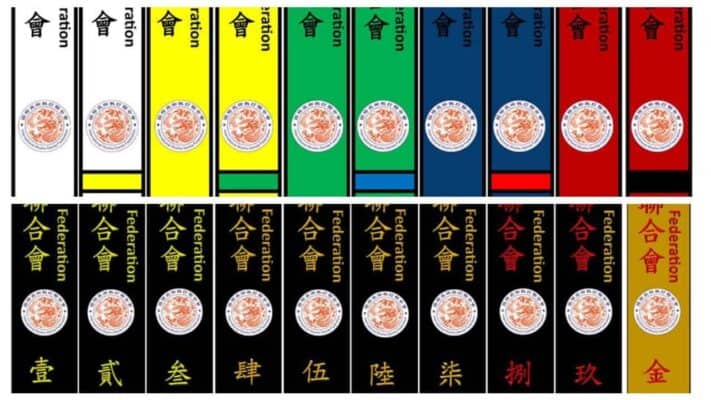
Yes, Sanda has a belt ranking system. The beginners start from the white belt (level 1) and they must go all the way up to the red and black belt (level 10). Once a student completes 10 ranks, they must pass an exam to qualify for the black belt rank. However, their Sanda journey doesn’t end here as the black belt is further divided by another 10 ranks. 

LevelColor Belt
Level 1White Belt
Level 2 White-Yellow Belt
Level 3Yellow Belt
Level 4 Yellow-Green Belt
Level 5Green Belt
Level 6Green-Blue Belt
Level 7Blue Belt
Level 8Blue-Red Belt
Level 9Red Belt
Level 10Black Belt
Sanda Belt System
Photo by International Wushu Sanda Federation

Is Sanda Good For Self-Defense? 

Sanda is good for self-defense as all techniques you learn work in real life as well. It is one of the rare fighting systems that teach you how to use your entire body as a weapon. It is a versatile system that covers both the striking and grappling aspects, which is really important for self-defense. Once you get in trouble on the streets, the one who has better skills and more weapons wins the fight in most cases.

The best thing about Sanda is that it teaches you how to fight at all ranges. You will learn how to fight at distance, at close range, in the clinch, or even some basics of ground fighting. Students learn how to use kicks, punches, elbows, knees, and wrestling takedowns and throws. 

No matter if a fight is in the parking lot, or in the bar, you will have weapons to use to defend yourself. Even if the opponent is bigger and manages to get a hold of you, Sanda trains you how to use leverage to throw them down to the ground. The grappling aspect is crucial because most average people don’t know how to defend wrestling or judo moves. It doesn’t matter how big or strong they are, it takes years to learn how to defend against these moves.

Although Sanda has many pros, the biggest downside is that you may have a hard time finding a gym to train. The sport is not that popular in the western world, which might force you to take classes in other similar arts like Muay Thai or Kickboxing.

Is Sanda Good For MMA? 

Sanda is a versatile art that is more than present in modern MMA. Although not as much as other arts like Muay Thai for instance, many top-level UFC fighters have a strong base in Sanda. Some of the most popular ones are Weili Zhang and Muslim Salikhov.

Overall, Sanda is a solid base for MMA. The way you learn how to keep distance, move, and mix kicks with the punches would help you a lot in cage fighting. Still, the aspect that stands out is the speed of strikes and movement. 

Bear in mind that even the most skilled Sanda fighters must attend wrestling and BJJ classes to succeed in the game. You can’t expect to shift over from Sanda to MMA and do well without any cross-training. 

Although Sanda covers both striking and grappling aspects, there are more than a few cons. For instance, grappling throws and takedowns you learn in Sanda might look like you can use them in MMA. But these techniques are not advanced enough.

In modern times, just about every MMA fighter has a good takedown defense and will defend against your Sanda attacks. That’s why even the UFC standout Zhang needed to cross-train to develop all-around skills and not just rely on her Sanda skills.

RECOMMENDED FOR YOU:
What Happened to Bruce Lee? – FAQ All You Want to Know

Is Sanda Hard To Learn? 

Sanda training is very hard and it takes a lot of time and practice to become a skilled fighter. People tend to think that Sanda is easy but bear in mind that training differs a lot as the emphasis is on hard sparring and endurance. This means that workouts are intense, and hard on your body. The risk of injuries is not that high, but you can get hurt while trading strikes in sparring or matches.

Training session lasts around 2 hours, but this depends on the school and level you are at. As a beginner, you won’t have a hard time picking up the basic techniques. It’s not that hard to learn how to stand in a proper stance, and basic kicks, punches, and how to mix them together. You may find the classes to be physically hard, but it all gets much easier as you get stronger and more flexible.

The biggest downside of training is the fact that Sanda is not that popular outside of China. It’s very hard to find Sanda schools in the US for instance, and even if you do, we are not sure if the quality of the classes is the same as in China.

Are Elbows and Knees Allowed in Sanda? 

Yes, Sanda is one of the rare arts that includes elbow and knee strikes, but only in training. Due to safety reasons, elbow strikes are not allowed in competition, but you can utilize knee strikes. This is the main reason why Sanda matches look a lot like “K-1” as the rules are quite similar.

Elbow and knee strikes do not play a big role in Sanda as much as in other arts like Muay Thai. The emphasis is on throws and mixing kicks with the punches due to rules that forbid elbow strikes.

Even if they change the rules and allow elbow strikes, it would not make a big difference. According to rules, fighters can clinch just for a few seconds which is often not enough to land knees or elbows as you can do in Muay Thai. Sanda fighters would rather use these couple of seconds to execute judo throws or wrestling moves to take the opponent down.

Overall, Sanda includes knee and elbow strikes and students learn how to use them in training. You can later apply these techniques in a self-defense scenario, but not in matches.

What Is The Key Difference Between Sanda and Kickboxing?

These two arts may look the same on paper. Both teach you similar techniques and the rules are very much the same. So much, that people often see Sanda as kickboxing with takedowns.

The key difference is that Sanda is a much older martial art that includes elbow and knee strikes as well as grappling moves. Kickboxing, on the other side, is a combat sport that includes punches, kicks, and knee strikes. Here is a detailed look at how these two fighting systems differ from one another:


Wushu SandaKickboxing
HistorySanda emerged in the 1920s in China. It has roots in various Chinese arts like Kung Fu, lei tei and Shuai Jiao. It became a sport in the 1960s.Kickboxing emerged in the 1950s in Japan. It has origins in various styles of karate, Muay Thai and western boxing. 
TechniquesSanda includes punches, kicks, and knee and elbow strikes. It also trains you to use grappling throws and wrestling techniques.Kickboxing consists of kicks, punches, and knee strikes. Grappling or any wrestling moves are not allowed.
RulesSanda fighters compete on an elevated platform that is 80cm in height. Matches have 3 rounds and each round is 2 minutes long. Elbows are not allowed in competitionKickboxers compete in a square ring.  Matches have from 3 to 5 rounds, and each round is 3 minutes long.

What Is the Key Difference Between Sanda and Muay Thai?

Sanda and Muay Thai have a lot in common. But there are also many differences. Here is a detailed look into how Sanda and Muay Thai differ from one another:


SandaMuay Thai
HistoryThe initial form of Sanda was created by the Chinese military in 1920s. It became a popular sport four decades later in the 1960s. The earliest records of Muay Thai date all the way back to the 14th century Siam Kingdom. It started to rise all over the world in the 1970s. 
TechniquesSanda is often seen as a sport version of Kung Fu. Fighters use different types of hand strikes(jab,Cross,Hook,Overhand,Uppercut,
Back-fist), kicks, knees, and elbows. They can also clinch and throw the opponent with trips, throws and wrestling techniques. 
Muay Thai is very much the same when it comes to striking as its fighters also use 8 points of contact to strike with kicks, punches, knees and elbows. Fighters can also clinch (for much longer than Sanda fighters), and take the opponent down with trips and throws. 
EmphasisThe emphasis of Sanda is on fast and precise striking, quick movement and throws. Fighters tend to focus more on hand strikes and mixing them with the kicks, very much like the western kickboxing.The emphasis of Muay Thai is powerful kicks and fighting in the clinch with knees and elbows. Fighters focus on throwing each strike with a lot of power and goal to hurt the opponent with each strike.
RulesMatches have 3 rounds Each round is 2 minutes long The rest period between the rounds is 1 minuteMatches have 5 rounds Each round is 3 minutes long The rest period between the rounds is 2 minutes

Why Do MMA Fighters Take Ice Baths? Simply Explained

0
Photo by thedragonzone.com

There are many ways that an MMA fighter will prepare for a match. One of the most interesting parts of this routine is taking an ice bath. But how does this help them prepare for their match? 

There are three primary reasons why MMA fighters use ice baths. First, it will reduce inflammation, reducing muscle pain. Secondly, it can be used to improve recovery time. Third, it can clear their mind, so they can focus on the fight ahead. 

As you can see, ice baths have a profound impact on the body. This allows athletes to prepare their bodies for the octagon.  Keep reading to learn more about what an ice bath is and the scientific reasons for using it. 

What Are Ice Baths?

Let’s start by talking about what an ice bath is and how athletes take them. The tub will be filled with cold water. To further lower the temperature, ice cubes will be added to the bath. This should lower the water to around 50 degrees Fahrenheit or ten degrees Celsius. 

How long the athlete will sit in the water will often depend on how experienced they are. If this is their first time taking an ice bath, they might only stay in the water for around five minutes. However, the standard is between 10 to 15 minutes. During this time, the ice water will cover the majority of their body, up to the chest. This will be long enough for them to start experiencing the health benefits. 

Why Do MMA Fighters Take Ice Baths?

Taking an ice bath can often be unpleasant. The sudden exposure to low temperatures can force oxygen out of your body, which can make you feel winded when you first go into the bath. The cold can cause pain, particularly in the hands and feet. These effects will be worse the first few times that the athlete takes a cold bath. Over time, they will start to build resistance. 

The reason why many MMA fighters continue to stick with this practice is because of the benefits they can experience. These can include

  • Reducing muscle pain
  • Improving sleep, so they have less fatigue before a fight
  • Decreasing the effect of heat
  • Lower inflammation to improve recovery speed
  • Helping to clear their mind and manage stress

Because of this, athletes who complete an ice bath will often be able to improve their performance in the octagon. Because of this, it has become a standard part of training. Today, most coaches will encourage their fighters to at least try taking an ice bath.

https://youtube.com/shorts/Qr0fHKCoKJA?si=zrSUChMgtsCK8Y9P
Brock Lesnar is taking an ice bath to recover after training
RECOMMENDED FOR YOU:
How Dangerous is MMA Fighting? Here’s a Closer Look

Should All Athletes Take Ice Baths?

The prevalence of ice baths raises an important question. Should all athletes take ice baths?  Studies have found that when the body is placed into a cold environment the veins will constrict. This slows blood flow. 

Whether taking an ice bath is the right option will usually depend on the circumstances. Cold temperatures have proved to be effective at reducing inflammation. This is a good way of controlling swelling and pain. This can be a good option after a grueling fight, helping to improve recovery

However, if the athlete is preparing for a fight, they might not be the best option. An ice bath will control inflammation. While painful, some inflammation is needed to build muscle. Studies have shown that those who took ice baths regularly during a three-month strength training period built less muscle. Furthermore, a small amount of inflammation might be good for recovery. 

Because of this, researchers concluded that taking ice baths might be good for athletes who are in a tournament, where they need to make a quick recovery. But if they have the time, they might be able to build muscle more effectively without the ice bath. 

This area is still being researched by scientists. Because of this, the full effects it has on the body are still being discovered. For most average people, though, there won’t be any need to take an ice bath. 

What Are the Risks of Ice Baths? 

An ice bath won’t be suitable for everyone. There are a few risks associated with this activity. These include: 

  • Heart attacks. When you go into cold water, the blood flow around the body will slow down. For people with underlying heart conditions, this might increase the risk of a heart attack or a stroke. 
  • Tissue damage. There is a chance that you can damage soft tissue if you stay in the bath for too long. This will result in an injury that is similar to the effects of frostbite. 
  • Fainting. There will be less blood flowing to your spine and brain. This can cause fainting. It can also cause drowsiness or blurred vision. 

It should be noted that these effects won’t impact everyone. But for those who are impacted, it can be very dangerous. For example, heart attacks can be fatal. As a result, an athlete will often be monitored by a coach or doctor as they enter the ice bath. This allows them to take swift action if they are negatively impacted.

Does an Ice Bath Burn Fat?

While many MMA fighters will use ice baths to help them manage inflammation, some people claim that they can be used to burn fat. This idea was popularized by authors like Tim Ferris. However, scientists say that an ice bath will have little impact in this area. 

In reality, an ice bath can have the opposite effect. Cooling the body will slow metabolism, this will make it harder for you to burn fat. For those interested in this area, it will be best to raise your body temperature by doing activities that make you sweat. This can mean going to a gym or visiting a sauna.  

Is a Cold Shower the Same as Ice Bath?

Cold showers will offer similar benefits to an ice bath. However, they won’t provide the same immersive experience. In this case, the primary benefit will be your mental health. A cold shower can give you time to focus and de-stress after a busy day. It can also be a good way to get used to cold water if you plan on doing ice baths. 

Is Cryotherapy the Same as an Ice Bath?

At first glance, cryotherapy is similar to an ice bath. Both will rapidly cool your body. However, there are a few unique features that help set cryotherapy apart. These include: 

  • Lower temperatures. An ice bath will only be able to get down to 50 degrees Fahrenheit (10 degrees Celsius). However, cryotherapy can get the air temperature low as negative 300 degrees Fahrenheit (-184 degrees Celsius). 
  • Shorter usage times. An athlete will have to spend between 10 to 15 minutes in an ice bath to get the benefits. Because of the lower temperature, they will only have to spend between two to five minutes in a cryotherapy chamber. 
  • Cryotherapy can be targeted. While an athlete might opt to go into a whole-body chamber, others will prefer to target areas. Cryotherapy can be applied to specific parts of the body. 

Like ice baths, the benefits of cryotherapy are still being actively investigated. Though it should offer the same effects as an ice bath, within a shorter period. 

Final Thoughts

Ice baths have become a common tool for MMA trainers. After a fight, it can be a good way for them to reduce the inflammation and pain their fighters are experiencing. It can also be a good tool to use before a fight, allowing them to clear their minds. While many athletes will swear by an ice bath, the science is unclear. It might be able to reduce inflammation, but it also slows muscle growth. Because of this, it’s recommended that it is used selectively, rather than as part of a daily routine. 

How Fast Can The Average Person Kick? – Fully Explained Here

0

Kicking plays a role in many sports, including soccer, rugby, football, and combat sports such as MMA and martial arts. Is the kick an effective means of attack and defense in combat science? How fast can the average person kick, and can it really do much damage?

The average person can generate kicks that travel at 60-mph, while trained athletes and martial artists can generate kicks that exceed 70-mph. The speed of the kick will be determined by the style of the kick, and different types of kicks will range in speed and power.

Since time immemorial, kicks have been a part of combat and martial arts and have proven effective in certain combat styles. A kick is not only to hurt an opponent enough to slow them down but can also be fast and powerful enough to end the fight. Mastering an effective kick is instrumental in becoming a well-rounded fighter!

How Fast Is The Average Kick? – Physics

The kick from an average person who does not have any sport or combat training is substantially slower and less powerful than a trained athlete.

The average person can initiate kicks that travel at 60-mph, while trained combat sports fighters and athletes such as soccer players can generate kicks at 80-mph. This is an increase in speed of more than 33% over that of the average person.

Athletes that participate in sports that require kicking train the muscles used in the body to increase their kicking speed and power and learn techniques such as timing and momentum that contribute to the force of the kick.

RECOMMENDED FOR YOU:
What Is The Average Punching Speed? Punching Speed Analyzed

Who Has The Fastest Martial Arts Kick?

There is always much debate about who has the fastest punch and kick in the fight world. These statistics are always subjective because there may be a martial artist out there that has never subjected themselves to measurements of their kick speeds. The fastest known kick or punch would be a better description of these statistics.

The person who is still considered to have the fastest kick in martial arts is Frank Dux, with a kick of 72-mph. These were Muy Thai kicks used in full-contact martial arts free-sparring fights in the confines of a ringed area. His fights were dramatized in the movie Bloodsport.

His kicks are reported to be the fastest kicks used during an actual fight. Other records have been set for fast full-contact kicks where the kick has been the focus of the event rather than part of an actual fight.

Who Has The Fastest Kick?

Many sports utilize kicking as part of the techniques of the sport, and some of the fastest kicks ever are in sports other than combat sports. Soccer is one of the most obvious, and there are players in this sport that exceed the speed of the average human kick.

The fastest kick ever record is held by the Spanish soccer player Francisco Javier Galan Marin, who is recorded by Guinness World Records as having a kick of 80.1-mph or 129-kph. The kick used was a soccer-style kick, kicking a soccer ball from a stationary position.

This is the fastest kick that has been officially recorded, but it does not mean that it is the fastest kick ever. Many martial artists do not enter record-breaking attempts to measure the speed of their kicks.

Kick Speed Vs. Punch Speed – Which Is Faster?

There are some surprising results when considering the speed of a punch against the speed of a punch. One would think that a punch would be faster than a kick because of the shorter distance a punch has to travel to make contact.

Kicks are faster than punches because a kick must travel a longer distance to the target, which allows a kick to build up speed. A martial arts kick is powered by much larger muscles in the legs and hips than muscles used in the arms and shoulders to generate a punch.

Another aspect of a kick that generates velocity is the action of the kick. Many of the fastest and most powerful kicks are not traveling in a straight line but in a circular motion. The foot at the end or extremity of the arc will be traveling significantly faster than the leg at the pivot point.

This means that the foot is traveling extremely fast when it makes an impact with the target. The distance the foot must travel allow it to gain faster speeds than a fist in a punch.

The snap kick in Muy Thai kicking to an opponent’s legs or abdomen where the shin makes contact with the opponent is one of the fastest combat kicks.

How Fast Were Bruce Lee’s Kicks?

Bruce Lee was known for his speed and power in his martial arts skills. His famous 6-inch punch is still legendary for speed and power. He studied many martial arts, including styles that relied heavily on kicking techniques. Practicing these techniques increased his kicking speed and accuracy.

There is no official measurement for the speed of Bruce Lee’s kicks, but some claim that he could kick up to six times a second. However, this is not a verifiable claim.

When filming the movie Enter The Dragon, Bruce Lee’s kicks had to be filmed in slow motion to capture the movements properly, and so they did not appear to be unrealistic.

Which Martial Art Teaches The Fastest Kick? 

Many martial arts disciplines focus on kicking techniques as an important part of their fighting style. This translates to some styles having better and faster kicking techniques than others.

The martial arts that have the best and fastest techniques are as follows.

  1. Muy Thai
  2. Capoeira
  3. Taekwondo
  4. Wushu
  5. Karate

These styles all focus on powerful, fast-kicking styles as part of their combat repertoire.

How To Train For Faster Kicking (How To Kick Faster)

There are training methods to improve your kicking techniques and improve your kicks’ speed and power. The methods of training will depend on the style of kicks that you are training for. Different kick styles require the training of specific muscle groups to improve the sped of the kick.

We will examine some of the training techniques used in the martial arts form that has the fastest kicks; Muy Thai.

  1. Train slow. To kick fast and effectively, you need to have perfect technique. Practicing your kicking techniques slowly builds muscle memory soo that when you kick with speed, your technique is still good. Training slow also builds muscle strength to hold the positions for longer.
  2. Exercise your core. Kicks do not only come from the leg but also the core muscles of the abdomen. A strong core also gives you better balance and confidence in the kick.
  3. Add ankle weights to your kick training. When you practice your kicks, adding ankle weights will build strength in the muscles used to execute the kick. When you take the ankle weights off, you will be surprised and the improvement in the speed of your kicks.
  4. High-speed kick repetition. Count how many kicks you can perform in a 30-second interval. Focus on technique, power, and speed. Try to beat your count from your last training session.
RECOMMENDED FOR YOU:
How Hard Can an Average Person Kick?

Conclusion

Kicking is an important aspect of most combat sports, especially martial arts. As a consequence, good kicking techniques are important to have in your repertoire as an MMA fighter. 

A fighter who can pull a well-timed, well-executed kick out of the bag at the right moment can win the fight with this move or, at the very least, gain an advantage over the opponent.

What Is Combat Jiu-Jitsu? An Introduction To Combat Jiu-Jitsu

0

Brazilian Jiu-jitsu(BJJ) is one of the most popular and fastest-growing martial arts in the world. This popularity is largely due to the success of MMA, where Jiujitsu has been tested against various other martial arts and proved its effectiveness time and time again. Since its inception, there have been various modified versions of Jiu-jitsu. One that intrigues many people is Combat Jiu-jitsu or CJJ. 

Combat Jiu-Jitsu(CJJ) is a hybrid version of Brazilian Jiu-Jitsu that was primarily developed by Eddie Bravo to make Jiu-Jitsu matches closer to reality-based like Mixed Martial Arts(MMA). CJJ incorporates Jiu-Jitsu techniques with open palm strikes to make Jiu-Jitsu matches much more realistic.

Read the below to find more interesting facts about this unique style of Jiujitsu and why you should consider this unique style of Jiujitsu

What is Combat Jiujitsu?

Combat Jiu-jitsu is a hybrid version of Brazilian Jiu-jitsu that combines hand slapping (open palm strikings) with the sport of Jiu-Jitsu. The key goal of designing Combat Jiu-Jitsu was to make Jiu-jitsu more practical in real-life altercations by allowing competitors to strike each other on the ground with open hand slaps. Combat Jiu-Jitsu matches can only be won by submission or TKO.

RECOMMENDED FOR YOU:
What is Japanese Jujutsu? Here’s What You Should Know

Who Invented Combat Jiu-Jitsu?

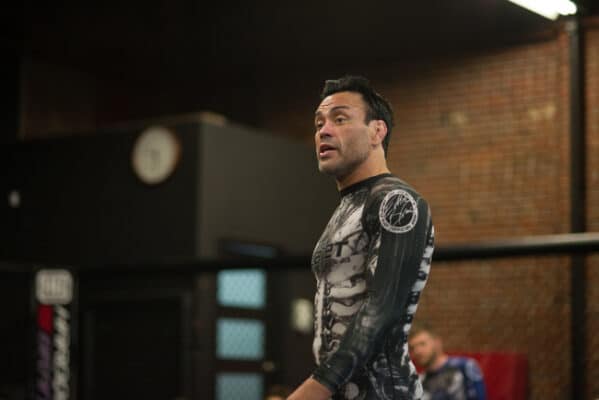
The 10th Planet Jiu-Jitsu founder and visionary coach, Eddie Bravo, primarily developed Combat Jiu-Jitsu because he felt that rules-orientated competition in Brazilian Jiu-jitsu had become overly saturated with stall tactics and unrealistic moves, which deviated from being a true martial art for self-defense. For this reason, Eddie developed Combat Jiu-jitsu to become more applicable in self-defense situations.

Eddie Bravo
HIGHLY RECOMMENDED:
What Makes John Danaher the Greatest BJJ Coach? A Closer Look

Brief History of Combat Jiujitsu

When Eddie Bravo first showcased the concept of combat Jiu-Jitsu in 2013 and initially was scoffed at by some of the high-level BJJ practitioners. But the eccentric rubber-guard pioneer held the belief that competition rulesets such as IBJJF had moved away from the intended purpose of the martial art and was at risk of becoming less practical as a form of self-defense. By introducing open-palm strikes to the ground-based grappling, Bravo hoped to replicate real-life altercations with a higher degree of authenticity.  

These open-palm strikes cause CJJ to appear to be similar to Japanese hybrid wrestling promotions such as Pancrase, which were popular in the early 2000s but in many ways brings CJJ closer to the Kodokan Judo Mitsuyo Maeda taught Carlos Gracie in the early 20th century. In fact, video recordings of Gracie challenge from the ‘80s and ‘90s tend to show the defending Gracies using slaps and punches in order to advance their position.

Gracie Challenge footage from the 90′

After creating CJJ, Bravo began running competitive matches at his invitational events. At Eddie Bravo Invitational(EBI) 11th event, Chad George, JM Holland, Sheridan Moran and Nick Honstein competed for the bantamweight title. For the attending crowd, these 135 lbs provided the most exciting bouts of the evening, with the big slaps drawing cheers from the audience. At the same time both high-level MMA and BJJ athletes giving the matches credence on social media platforms, even if some did compare the events to being like Russian slapping contests.

The invitationals have done their bit to increase curiosity in Combat Jiu-Jitsu and consequently, more Jiu-Jitsu athletes have come to give the slap and grapple game a go.  Since then, Bravo has begun hosting Combat Jiu-Jitsu Worlds events, with the first one happening in 2018.

Eddie Bravo Invitational(EBI) 11th event recap
RELATED:
What is Gracie Jiu-Jitsu? Fully Explained

What Are Combat Jiu-Jitsu Rules?

  • CJJ rules are significantly less complex than regular BJJ rules. This is largely due to there being no point system.
  • CJJ matches are only won by submission, TKOs caused by the open-hand slaps, or by EBI overtime rules.
  • All submission moves are allowed.
  • Matches are only one round and last ten minutes.  At the end of the ten minutes, if there are no submissions or TKOs, matches continue in overtime round.
  • Only one minute is allowed for stand-up grappling. The referee will then stop the action and employ the “get down rule”, where a coin flip will occur.  The winner of the coin flip chooses whether they want to begin with double underhooks on the bottom, or on top in butterfly guard.
  • Open palm striking is ONLY allowed on the ground.
  • Purgatory Position is when one competitor is on the ground while their opponent is standing and stalling action. A competitor can only be in purgatory position for thirty seconds. Any time past this 30 seconds is added to the overtime round.
  • When one competitor stands up while entangled with their opponent, this is not purgatory position.

Combat Jiu-Jitsu EBI overtime Rules

The following information about EBI Overtime rules is sourced from Eddie Bravo’s 10th Plannet JJ site.

  • If neither competitor has won by TKO or submission after ten minutes of competition, overtime rules start with a coin toss. The winner of this toss is given the option of attacking from the back, “spiderweb” or from an armbar position.
  • The competitor who goes first is referred to as competitor A, the other is competitor B.
  • If competitor A secures a submission, competitor B is given the same amount of time and has to secure a submission faster than competitor A to win the match. If competitor B is unable to secure a submission faster than competitor A, competitor B loses.
  • If competitor A can’t secure a submission and competitor B escapes, then the round continues with competitor B on offense. If B secures a submission, then B is the winner. If B does not secure submission and A escapes, then it goes to the second round of overtime.
  • If after 3 rounds without a winner due to escapes, all the escapes times are added up. The competitor with the quickest overall escape time is the winner.
RELATED:
What is ADCC Submission Fighting World Championship? A Simple Guide

Can You Strike in Combat Jiu-jitsu?

Standing strikes or kicks aren’t allowed in Combat Jiu-Jitsu, perhaps as this would make the sport too similar to MMA, but open-hand slaps are allowed when at least one competitor is on the ground. As of 2017, a fighter with their back on the ground can also swing up-kicks if their opponent is still standing. Punches, knees and elbows are not allowed and there is an emphasis on the slaps being used to open up guards, prevent stalling and progress fighters’ attempts to score submission victories.

What Is the Key Difference Between Combat Jiujitsu and BJJ?

The key difference between Combat Jiujitsu and BJJ is of course the addition of ground-based open palm strikes and up-kicks. CJJ is also more akin to no-gi competitions with submission rules.  

Traditional sport Brazilian Jiu-Jitsu matches can be won via both submission and on points, while Combat Jiu-Jitsu has no point system. BJJ has become significantly more sports orientated since the mid ‘90s and for some, both no-gi and gi-based variants of BJJ have become stagnant, with guard pulling techniques slowing down the pace of matches.  CJJ is much more face paced to simulate the real fighting.

RECOMMENDED FOR YOU:
BJJ vs Japanese Jiu-Jitsu – Key Differences and Similarities

Combat Jiujitsu vs BJJ – Which One Should I Choose?

Choosing whether to train CJJ or BJJ generally comes down to two key factors.  The first one is your reason for training – if you want more practicality, then BJJ is arguably much more useful. By allowing slaps, CJJ becomes somewhat closer to replicating a street fight. BJJ is traditionally seen as “the gentle art” and while injuries do happen as they do in any contact sport, the vast majority of practitioners can have a hard sparring session and still turn up to work today looking presentable. CJJ can put the martial artist at risk of perforated eardrums, or facial bruising which not everyone is prepared to do.  

While CJJ is becoming more popular, finding classes in your local area may not be the easiest feat. Additionally, most of the classes you are likely to find are run by BJJ gyms with traditional gi or no gi classes. Attending a CJJ may be a privilege afforded to only trusted members of the gym’s class i.e. those who have been training BJJ for either months or years under the watchful eye of the head instructor.  

If you are entirely new to either variant, then training both Gi and No-Gi BJJ would allow you to focus on the fundamentals of the art before mixing in somewhat jarring slaps. Training in a vacuum allows you to perfect the techniques before testing them in increasingly realistic scenarios.  

It is also worth stating that some people like training martial arts for different reasons. The practicality of arts like Aikido and various forms of Kung Fu are often disputed, but some find training these arts to be therapeutic, fun, or reconnecting to an older culture in a similar manner to historical re-enactment societies. Unless your opponent just happens to be wearing a suit or a jacket, gi-techniques have fairly limited usage in a bar fight or if you’re defending against a mugger, but that is not to say that gi-jiu jitsu can’t be fun, or provide a great learning experience.

What Is American Kickboxing? Here’s What You Should Know

0
Photo by Don Wilson

Kickboxing has many styles and forms out of which one of the most popular styles is the “American Kickboxing” or now recognized as “Full Contact Kickboxing”. It is a unique style that differs a lot from other styles like Dutch and K-1. This is notably true when it comes to rules and emphasis.

American Kickboxing style emerged in the 1970s that is based on both western boxing and karate techniques. This unique style of kickboxing prohibits striking below the waist. Striking above the waist was for perceived safety reasons when American Kickboxing was created.

Keep reading this article to find out more about American kickboxing and how it compares with other styles. We will also explore its history, rules, and most famous fighters.

History of American Kickboxing

The story of American Kickboxing begins in the 1970s. At the time, the most popular combat sports were full-contact karate and western boxing. But with kickboxing rising in other parts of the world, the Americans wanted to create their version of this sport. And it all started when martial art gyms started to mix karate and boxing techniques together. They used full contact karate as a base on top of which they added western boxing. 

On January 17, 1970, the American audience saw the first ever kickboxing bout. The match took place between Shorin Ryu fighter, Joe Lewis, and Kenpo fighter Greg Baines. The people who put this event together were Lewis himself, and the promoter, Lee Faulkner. These two are pioneers of kickboxing in the U.S and the American style.

https://youtu.be/K3yzy-D8eCE
Joe Lewis vs Greg Baines, Kickboxing, January 17, 1970

Lewis and Baines fought under the full contact rules. They could use punches, kicks, knees, as well as elbows and sweeps. The fight ended with Lewis scoring a KO in the second round. These initial events were promoted under the karate association and called “full-contact karate”. But later on, this new combat sport would change its name to “kickboxing”.

Kickboxing officially became a combat sport in the US with the birth of “Professional Karate Association” in 1974, and “World Kickboxing Association” in 1976.

James “The Dragon” Turner, who is the current IKTA European Kickboxing Champion, informed us that the sport is now known around the world as “Full Contact Kickboxing.”

The term “American Kickboxing” is often used, but it is usually used to distinguish the sport from others. The actual name of the sport or discipline in the combat sports world is “Full Contact” or “Full Contact Kickboxing.”

What Are The Rules of American Kickboxing?

American kickboxing rules are also known as “full contact” rules, which is a term from karate. The rules differ a lot from the other styles of kickboxing when it comes to rounds, gear fighters have to wear, and forbidden strikes. Here are the most important rules:

  • The length of the matches goes from 2 to 10 rounds with each round being 2 minutes long. The exception: in some very early prototype matches circa 1974 and for a while afterward, some matches featured three-minute rounds. By the time the general rules of the sport were consolidated by the late 1970s, it was and remains universally recognized in all organizations that Full Contact has two-minute rounds.
  • The rest period between the rounds is 1 minute.
  • Fighters can strike with kicks and punches only. They are not allowed to strike with knees, elbows, or fight in the clinch. However, they can use sweeps to throw the opponent down to the ground.
  • Striking below the waist is NOT allowed. This means no leg kicks.
  • Spinning techniques like backfists are legal as long as the strike connects with the glove.
  • Fighters compete wearing long pants, pair of boxing gloves, and kick boots.

What’s The Key Difference Between Muay Thai and American Kickboxing?

Muay Thai and American Kickboxing are two styles that do not have much in common. These two striking styles are a world apart when it comes to emphasis, strategies, and rules. Here is all you need to know about it.

Emphasis and Techniques

Muay Thai is a versatile style where fighters use all limbs as weapons. They can do damage with kicks, punches, elbows, knees at all ranges, including in the clinch. The emphasis is on hard kicks and fighting in the clinch using elbows and knees. And, fighters prefer throw single power strikers rather than to have a high output. They use punches just to set up the kicks, or to close the distance to fight in the clinch.

American kickboxing, on the other side, is more limited than Muay Thai because American kickboxing is technically a different entity Fighters compete using punches and kicks to strike above the waist only. Knee and elbow strikes are not allowed, as well as fighting in the clinch. The emphasis is on high kicks, and mixing them with western boxing techniques. Fighters tend to fight at a much higher pace than their colleagues from Muay Thai.

Muay Thai vs. American Kickboxing – Difference and Comparison:

Muay ThaiAmerican Kickboxing
Rules
Muay Thai rules are simple and do not vary between the promotions:

American Kickboxing rules are also known as full-contact rules of kickboxing
Length of the matchesMatches last 5 rounds, with each round being 3 minutes long. The rest period between every round is 2 minutesMatches have from 2–10 rounds, with each round being 2 minutes long. The rest period is 1 minute.
TechniquesFighters strike above and below the waist using kicks, punches, knees, and elbows. They can also execute various trips, throws, and sweeps to throw the opponent down to the ground.Fighters can land strikes only above the waist using kicks and punches. Fighting in the clinch, elbows, knees, trips and throws are not allowed. But, fighters can use sweeps.
Protective gearFighters compete bare-chested, wearing shorts and a pair of boxing gloves.Fighters compete bare-chested wearing long pants, shin guards under their long pants, kick boots, and pair of boxing gloves.

What’s The Key Difference Between Dutch Kickboxing and American Kickboxing?

Dutch Kickboxing and American styles of kickboxing differ a lot from one another. The main difference is that the American style doesn’t allow strikes below the waist, while Dutch does. Also, the matches are much shorter in the Dutch style, and fighters can use knees in the clinch.

Emphasis and Techniques

Dutch-style is a mix of western boxing, Kyokushin karate, and Muay Thai techniques. The emphasis of this style is on boxing and mixing the punches with the fast low kicks, and knees in the clinch. You can spot a Dutch-style just by the way a kickboxer is focusing more on hand strikes rather than on kicks. They also tend to fight at a high pace and have a high output of strikes. You will rarely see them throwing one strike at a time.

On the other side, the American style is a mix of western boxing and full contact karate techniques. The emphasis is on hand strikes and high kicks because the rules do not allow you to strike below the waist. The matches last much longer than in Dutch style (from 2 to 10 rounds), and fighters are not allowed to fight in the clinch or use knee strikes to do damage.

Dutch Kickboxing vs. American Kickboxing – DIfference and Comparison:

Dutch Kickboxing American Kickboxing
RulesDutch-style rules are very much the same as famous K-1 rulesRules differ a lot from Dutch Style
Length of the matchesMatches include 3 rounds, with each round being 3 minutes long and there is a 1 minute break. If the fight ends in a draw, there is 1 extra round.Matches have 2–10 rounds with each round being 2 minutes long, which is much longer than in Dutch style. The break between the rounds is 1 minute, and there are no extra rounds.
TechniquesFighters use punches, kicks, and knees to strike both above and below the waist. They are not allowed to use elbow strikes, or grappling moves like trips and throws to throw the opponent down.Fighters compete using kicks and punches to strike only above the waist. They can also use sweeps to throw the opponent down to the ground. They are not allowed to use knees, elbows, clinch or perform grappling moves like in some other kickboxing styles.
Protective gearAll fighters must wear shorts and a pair of boxing glovesUnlike in Dutch style, American kickboxers must wear long pants or trousers, shin guards under their long pants, kick boots and pair of boxing gloves.

Is the American Kickboxing Style Effective in MMA?

The skills you learn in American kickboxing work quite well in MMA fighting. But on the other side, this style is not as popular as some others like Dutch, K-1, or Muay Thai. This is mainly because the American style(Full Contact) is a bit limited due to its rules.

If we look at MMA, fighters can strike with kicks, punches, knees, and elbows, targeting the entire body area. They also fight in the clinch and can execute various throws and sweeps. American style fits well when it comes to punches, and mixing them with high kicks and footwork.

But its biggest downside is the lack of low kicks, which play a big role in modern MMA. You won’t learn how to throw or defend against kicks below the waist at all. And since they don’t have to worry about leg kicks, American-style fighters tend to stand in the wide stance and put a lot of weight on the lead leg. In MMA, this leaves them open for vicious leg kicks and takedowns.

The other issue with the American style in MMA is the lack of clinch, and knee and elbow strikes. It won’t teach you how to throw or defend against these strikes, or against trips and throws.

RECOMMENDED FOR YOU:
How Dangerous is MMA Fighting? Here’s a Closer Look

Best American Kickboxing fighters

Joe Lewis — is a pioneer of American kickboxing and, perhaps, the most famous fighter of this style. He became the first heavyweight champion in 1971, and PKA world champ in 1974. He deserves a lot of credit for making this sport popular in the US.

Joe Lewis

Dennis Alexio — is a former world kickboxing champ in three separate weight classes. In his career, he won WKA, ISKA, and PKA world titles and was one of the best in history. What made him special was the fact that Alexio is a master in multiple striking arts like Muay Thai, boxing, and karate. He retired from the sport with 68 wins, out of which 63 were KOs.

Rick Roufus — is the older brother of the famous MMA coach, Duke Roufus. Rick had a solid career, and he won the world titles in PKA and IKF, and ISKA organizations. He used to have really fast hands, and very powerful kicks which he developed training Taekwondo.

Benny Urquidez— won multiple world titles in kickboxing and is one of the most popular American fighters. He was the first one to travel to Japan and beat their fighters in kickboxing, and he also won PKA, WKA, and STAR world titles.

Don Wilson— is an 11-time kickboxing world champ. In his career, he won ISKA, PKO, WKA, PKA, and STAR world titles, fighting across three different weight classes. He is also a famous actor and you can see him in movies like “The Martial Arts Kid” and “Ring of Fire.”

Don “Dragon” Wilson
RECOMMENDED FOR YOU:
10 Movie Stars Who Are/Were True Martial Artists

What Is The Best Kickboxing style?

What is the best kickboxing style? That is a matter of strict opinion. That being said, many MMA experts consider the Muay Thai style to be the best striking art. This is because the Muay Thai style has greatly influenced many MMA fighters who have had great success in stand-up fighting in MMA matches.

Their success in stand-up fighting using Muay Thai techniques has greatly influenced public opinion about what is perceived as the best style due to the popularity of MMA. This is not to say other kickboxing styles are inferior to the Muay Thai style.

Muay Thai is often seen as a total package when it comes to striking because its fighters use all limbs as weapons. It is a versatile style that fits well in MMA fighting because it will teach you how to mix kicks, punches, elbows, knees, and the basics of grappling together. Muay Thai is one of the very few striking arts that will teach you how to fight at all ranges, notably in the clinch, which plays a big role in cage fighting.

Some people may find Muay Thai too brutal. But on the other side, it will train you for real combat scenarios, both mentally and physically. Training is cardio intense, and the emphasis is on sparring, which is a great way to train a person for real-life fighting.

Students learn how to fight on all ranges but the emphasis is on hard kicks, and fighting in the clinch with knees and elbows. Every single technique you learn in classes works in real life, and this makes it very effective for self-defense.

Other styles like K-1 and Dutch-style are also very effective. But you can’t compare them with Muay Thai simply because these two are not versatile enough.

What is K-1?

K-1 is a popular kickboxing promotion from Japan that has origins in “Seidokaikan karate”. Back in 1993, Kazuyoshi Ishii founded K-1 with an idea to find out which striking art is the most effective, and which striker is the best. In the early days, the world saw many style vs style matchups, and fighters competing under unique K-1 rules. Here is a brief look into K-1 rules:

  • Matches include 3–3 minute rounds with a 1-minute break between. There is one extra round if the fight ends in a draw.
  • Fighters can strike with kicks, punches, and knees in the clinch.
  • They can land strikes both above and below the waist.

It didn’t take long for K-1 to become very popular all around the world. The matches were very exciting mainly because fighters fought at a high pace all the time. The fights rarely went to a decision, often ending in brutal KOs. K-1 was so popular that it was bigger than modern MMA during the 2000s and even bigger than boxing. Winning the K-1 title meant that you are the best striker in the world. It was the most prestigious title. The two main K-1 competition formats were:

  • K-1 World Grand Prix
  • K-1 World Max

K-1 is more than present in modern times, but it is not as popular as it was in the 90s and 2000s. 

What is Dutch kickboxing?

Dutch kickboxing is the most popular style of kickboxing. It emerged in the 1970s thanks to Jan Plas and other martial artists who brought kickboxing to the Netherlands. In the following years, they would make a lot of changes, and create a unique Dutch style. They used Kyokushin and Muay Thai as a base on top of which they added techniques from western boxing. The final result was a style with an emphasis on hand strikes, forward pressure, low kicks, and high output. 

Fighters trained in Dutch Style used to dominate in K-1 during the glory days of this promotion in the 90s and 2000s. Even in modern times, people see the Dutch style as the best kickboxing style.