Home Blog Page 25

Is Judo Effective In A Street Fight? Most Asked Questions

0

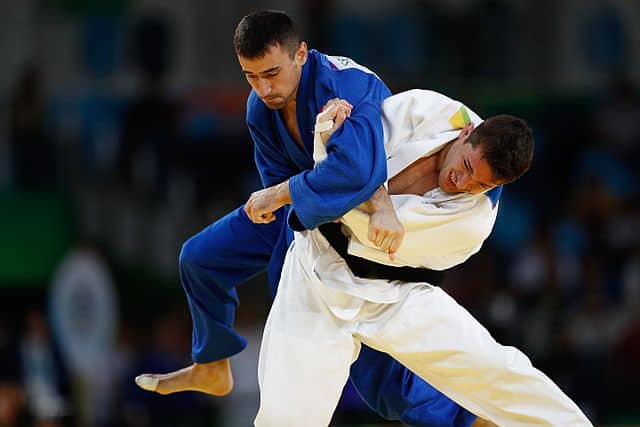
In Judo, good grappling skills you learn in Judo can often allow a smaller person to defeat a larger one in a street fight, as solid groundwork will give distinct benefits to the user.

Judo’s disadvantages with regard to a street fight include a lack of preparation for strikes and weapon attacks. Judo also relies heavily on gi techniques, so these need to be honed for anyone hoping to use the art for self-defense. So is Judo still effective in a street fight situation?

Training in Judo improves one’s understanding of handling street fighting situations more than the average person on the street. This is because training in Judo will allow them to subdue their attacker or help them get back to their feet to make an escape to avoid a worse situation.

As such, Judo can work effectively in a street fight, but Judo has its limitations that you need to be aware of. This way, depending on the situation, you can choose wisely when to apply Judo techniques in a street fight situation or not use them at all.

In this article, I will illustrate further where Judo works very well in a street fight and explore some of the downsides of using Judo in a street fight. So let’s get started!

The Evolution of Judo

Judo, or “the gentle way” was first created in 1882 by Jigoro Kano. Kano was a student of Jujutsu, the martial art used by the samurai of feudal Japan, when it came to passing down the knowledge of the art to his students, decided to remove some of the more dangerous techniques.  This “Kano Jiu-Jitsu, more commonly referred to as judo would focus on two key principles: “Seiryoku-Zenyo”, or the most efficient use of energy and “Jitta-Kyoei”, or the principle of mutual benefit and welfare.  

Judo quickly evolved into a sport with a complex ruleset.  The objective was to bring an opponent to the ground via takedown or throw, then immobilize or subdue them through pin, or submission hold such as an armbar, or rear-naked choke.  Although this practice can make judo very proficient for self-defense, there have been many suggestions that sport judo has essentially watered down the effectiveness of the art for this purpose.  

Removing strikes from the equation can leave practitioners unprepared for the opponents they are likely to encounter on the street.  Perhaps as a consequence, martial arts such as Brazilian Jiu-Jitsu, Sambo and Krav Maga sprouted from Judo roots, with a broader focus on both defending against and utilizing attacks other than throws and submissions.  Over the last few decades, sport judo rulesets have removed some of the more efficient takedowns seen in both wrestling and BJJ to differentiate itself from the two arts and to prevent Eastern European athletes from dominating the art.

RECOMMENDED FOR YOU:
Does Judo Have Submissions? Yes, Here’s What You Need To Know

Does Judo Work In A Street Fight?

In an unarmed street fight, Judo is undeniably useful.  A judo practitioner typically has a higher level of athleticism, balance, coordination and as a result of being on the receiving end of many hard throws, toughness.  They should also be equipped with a large number of grappling techniques, including throws, choke-holds and joint-locks.  Many of these movements have been integrated into various police officer’s curriculums across the globe.  

A huge number of street fights end up on the ground, either through one person attempting to take their opponent to the ground, or accidental trips and falls.  Judokas almost always have a far higher understanding of ne-waza, or ground-fighting than the average person on the street.  Having this knowledge will either allow them to subdue their opponent, or help them get back to their feet to make an escape.  Additionally, throwing an attacker to the ground, can stun them, or even knock them unconscious giving the judo user time to leave the scene, or call for assistance.  

What Are The Advantages And Disadvantages of Judo?

Any martial art which puts emphasis on live sparring, as opposed to drilling, or forms such as kata will typically empower the martial artist in a real-life situation.  Judo practitioners do this frequently, typically, with their sparring rounds beginning in a standing position.  From here, they will aim to out grapple their sparring partners with throws and holds.  This will build core strength, balance, coordination and overall fitness, which in a street fight are incredibly useful.  These attributes will typically lead to improved levels of confidence and an understanding on how to use the body that benefits the martial artist.  Confident people are typically less attractive targets to bullies and muggers.  

When it comes to defending one’s self, judo users not only have the benefit of this fitness and confidence, but also an arsenal of throws and submission holds.  Perhaps one of the most useful things in judo is an emphasis on learning how to break fall.  Break falls teach the user to reduce the impact of their body hitting a hard surface at full force.

https://youtu.be/NFPPrhxPFR4

There are several disadvantages to judo as a self-defense art, however. Firstly, unless an instructor is “old school”, they are unlikely to teach strikes, kicks, takedowns which attack the legs, or defending from any of these attacks.  Judo is only truly effective at incredibly close range.  With no head movement, blocks or evasive footwork, getting to this grappling range, can be difficult.  If an attacker has any level of boxing training, or is naturally fast or heavy-handed, they may land punches which can disorient, injure or knock out the trained grappler.   

Similarly, someone from a wrestling, American football or rugby background may be able to put a judoka on their back, which although they may typically be more prepared for, can stun them, leaving them vulnerable to strikes, bites or eye gouges.  That being said, how likely is it that an attacker will be a well-prepared street fighter, or super athlete?  

They however may be more likely to have a weapon, or able to grab an object which could be utilized as a weapon.  Judo does not prepare someone to fight someone with a weapon, makeshift or specifically designed.  In almost all instances, it is better to extricate one’s self from a dangerous situation, either by doing your best to calm a heated situation from escalating, or by simply running away.  This latter option should be used by almost all martial artists when weapons are brought into the fray, whether a black belt in judo, or a champion Muay Thai fighter.

Can Judo Work Effectively Without Gi?

The traditional and durable garb worn by Judo players  “the gi” is used primarily to create a hygienic training system.  However the gi is an extremely important aspect of judo, which gives competitors immense control over each other and allows them to pull off some of the more spectacular techniques that may be impossible in the absence of the jacket.  

Despite this significance, many of the throws may be designed for grabbing hold of the gi worn in judo classes, they can be modified for grabbing hold of someone’s limbs, or torso.  Judokas should endeavor to add this training to their schedules, if they hope to use them in real-life situations, cross-train, or compete in either wrestling or MMA.  Kubi Nage (neck throw), Seol Nage (shoulder throw), O Goshi (Major Hip Throw) and Ashi Waza foot throws are probably the most practical techniques for no-gi grappling.  

For the most part, techniques remain the same, but grips may change and it is important to look for them.  A great majority of the time, people tend to wear garments which function much like a gi – a business suit or leather jacket is similar in size and shape to a gi jacket.  A t-shirt, although less grab-able, can still be used, although again, the judo player may want to work on practicing throws against someone wearing a t-shirt, if they are concerned about any street or bar encounter.

RECOMMENDED FOR YOU:
Gi or No-gi Jiu-Jitsu: Which One Is Right For You?

Are There Any Punches or Kicks in Judo?

In sport judo, there are no kicks or punches, however it is fairly common for gyms to practice atemi waza – body-striking techniques, such as punches, chops and kicks in kata routines.  It is much less common for gyms or groups to practice these strikes in live sparring. 

Any fighter looking to compete in MMA or be prepared for the street should endeavor to take up a striking martial art, such as boxing, kickboxing, Muay Thai, karate or even Taekwondo with an experienced, practically-minded instructor. 

Did Judo Ever Have Strikes?

In the early days of judo, its designer Jigoro Kano included Atemi Waza, based on some of the older techniques passed down from previous forms of Jiu-Jitsu.  As well as uke waza (defending blocks), there are 23 striking techniques in judo, including roundhouse kicks, downward knife hand strikes, eye gouges and attacks to the throat.  

Can Judo Beat Jiu-Jitsu?

While both arts are grappling focused, Judo is scored more heavily on standing and throwing an opponent, while BJJ tends to focus on newaza(Ground techniques). It is not unheard of for a BJJ blue belt to submit or control the fight with a judo black belt on the ground , however a judoka could essentially throw a BJJ practitioner to the ground and never follow up on the ground.  In this manner, a judoka could essentially strike their opponent with the ground itself in order to stun, or injure their combatant. 

Judo vs Jiu-Jitsu – Which Style Is Better For Self-Defense?

The advantages of Judo over BJJ is that throws can be a great way to protect one’s self in a real-life scenario.  A judo user can grab a neck, or lapel and unbalance their attacker, after this, sweeps can be used to toss them to the ground.

BJJ may be much more useful if the fight goes to the ground, but this often leaves the practitioner vulnerable to getting kicked, or stamped on by other assailants.  A great judo player could even throw multiple opponents subsequently if they are skilled enough.  Staying on their feet should allow the judo to extricate themselves from the dangerous scenario more easily.

RECOMMENDED FOR YOU:
BJJ vs Judo – Key Differences and Core Similarities

Judo vs Jiu-Jitsu – Which Style Is More Effective in MMA?

Many people will argue that no style is better than any other, all have their own different advantages and disadvantages and what matters more is the skill level of a practitioner, however, MMA has often acted as a ground to see if this theory stands up to the test. 

With MMA, Martial artists are able to discover which techniques are useful in real-life situations, while discarding those which aren’t.  Unfortunately for Judo, there have been only a few high-level judokas to have any significant success in MMA.  On the other hand, there have been many incredibly high-level BJJ artists either winning or competing for UFC titles.  

Do UFC Fighters Use Judo?

There have been a number of high-level judo users fighting in the UFC and other MMA organizations, such as Pride FC, Strikeforce and Bellator.  Yoshiro Akiyama, Karo Parysian, Kazuhiro Nakamura were all big names in the mid 2000’s, while former Olympic Silver medal winner, Ronda Rousey was for years the most dominant female champion in the entire sport.  Arguably the greatest heavyweight fighter of all time, “The Emperor” Fedor Emelianenko was also a black belt in judo and competed in a great number of judo competitions before turning to MMA.  Despite these exciting fighters of the past, there have been fewer truly successful Judo fighters in recent years.  

How Long Does It Take to Become Proficient In Judo?

As with any martial art, there are various factors which will effect how fast someone will be to get proficient at Judo.  Someone practicing multiple times a week will take roughly 3-5 years to get at a level that they can compete in.  As people often develop mental blocks to learning new physical skills in later life and the fact it typically takes longer to recover from bad knocks and falls, younger people will typically develop their skills quicker.  Compared to Brazilian Jiu-Jitsu, which martial artists can become competent enough to get the grasp of the basic BJJ techniques within six months and this can be somewhat discouraging.

RECOMMENDED FOR YOU:
How Long Does it Take to Learn BJJ for Beginners? Q&A

Is Judo Hard to Learn?

Although it is specifically designed to be teachable and easy to understand, Judo has quite a steep learning curve and has a reasonably high injury rate compared to other martial arts.  As you may expect, students with a naturally high level of coordination and balance should learn quicker than those who don’t.

Much of the focus of judo classes is placed on how to breakfall correctly.  Once a practitioner has a good grasp of this, students may turn their attention to learning the various throws, along with to a lesser extent, the groundwork.  This will initially be focused on the more basic sweeps and throws, but the more classes a practitioner attends, the more techniques they will learn.  The Gokyo no Waza is the typical syllabus taught in Judo consists of 40 throwing techniques.  However, in 1982, eight techniques along with Shinmeisho No Waza were reinstated.  

Is Judo Safe to Learn?

Like all contact martial arts, practitioners can put themselves at risk honing their skills. Injuries are not uncommon. Throwing, as well as being thrown can put immense stress on a person’s body.  To toss an opponent, a judoka typically takes the weight of their opponent on their back or knees.  This can put pressure on joints and the spine.  Over time, this may lead to further issues and it is important to monitor them.  Additionally, it is important that judo users look after their hands.  While blisters and callouses may appear in the early days of taking the art up, judo players will find that their hands harden and acclimatized to the gi grips and throws involved.    

Conclusion

Judo is a fantastic art, but like all martial arts it has its own specific strengths and weaknesses.  For street fighting purposes, other grappling arts such as BJJ and wrestling have their own merits, while the enhanced cardio levels, hand speed and coordination provided by boxing or Muay Thai can be extraordinarily effective in other circumstances.  
Top 15 Greatest Kickboxers of All Time – Ranked

0
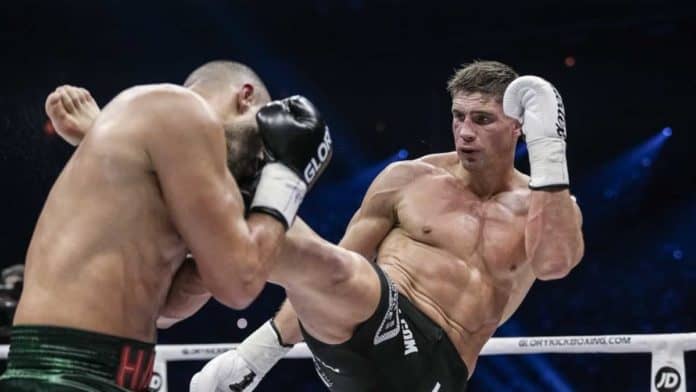
Photo by GLORY Kickboxing

Kickboxing is one of the most exciting combat sports that started to rise in the 1960s in Japan. It exploded in the early 90s with the birth of the famous K-1 promotion that was the most popular combat sport promotion in the 90s and early 2000s. In modern times, kickboxing might not be as popular as it was, but it is still the most exciting form of combat.

In this article, we are going to rank the top 15 best kickboxers of all time. We will bring you fighters from different eras, and explain why they deserve a spot on this list.

15. Jerome Le Banner

https://youtu.be/00l61u_RPQQ

Le Banner is arguably the best French kickboxer of all time, and one of the best K-1 fighters to never win the Grand Prix title. Known for his gigantic size, big muscles, and aggression, Le Banner was a force to be reckoned with in the 90s. Not a single fighter who shared a ring with the Frenchman walked away without taking heavy damage.

People loved him because of his reckless fighting style that brought him a lot of success, but on the other side, a lot of losses as well. He would often throw defense and game plan out of the window, stand in the center, and bang with some of the hardest punchers like Mark Hunt. Despite not winning the K-1 title, Le Banner was able to win I.S.K.A and W.K.N. World titles.

RECOMMENDED FOR YOU:
What Is K-1 Kickboxing? The Beginner’s Guide to K-1

14. John Wayne Parr

John Wayne Parr is one of the most famous kickboxers who had been in the game for more than two decades. Over the course of his career, he won an amazing 14 titles fighting in Muay Thai, Kickboxing, and even pro boxing. But unlike most other kickboxers, Parr didn’t make a name for himself fighting in the western world. No, he did in Thailand.

Parr traveled to Thailand as a teenager with a dream to become a Muay Thai champion. He became one of the very few foreign fighters who managed to beat Thai boxers in their sport, and in 1997, he received a “Best Farang Fighter in Thailand” award.

13. Badr Hari

Badr Hari is a top kickboxer and the former K-1 superstar. Even though he never won the K-1 World Grand Prix title, Hari is by far the most famous fighter of his era. He had that bad boy image, brawl fighting style, and a huge fan base around the world. The biggest moment of his career came in 2007 when he won the K-1 heavyweight title by beating Yusuke Fujimoto with a wild head in the first round.

Inside the ring, Hari is a wild man who has never backed down from a fight, which is a reason why so many people love and respect him. He is a pure brawler who, despite looking wild, is also very technical inside the ring. His kicks are very powerful, but it is the power of his punches that often catches his opponents off guard.

He is by far the most talented kickboxer ever who has never reached his full potential due to the incidents he created both inside and outside of the ring that cost him a greater career.

12. Andy Souwer

Andy Souwer is a legend of K-1 and perhaps the best representative of the Dutch Style of kickboxing. He won the K-1 World MAX title two times in 2005 and 2007, is a four-time “Shootboxing” champ, and “It’s Showtime” 70MAX world champion. In 2021, Souwer retired with an amazing 161 wins on his record, 98 knockouts, and 22 losses.

Inside the ring, Souwer was a pure Dutch Style fighter. He used to move forward all the time, throw a high output of punches, and finish each combo with a hard low kick or a knee up the middle. Though he didn’t have great punching power, Souwer used to make up for the lack of power with relentless pace and accuracy. His opponents have all had a hard time keeping up with his pace.

11. Georgio Petrosyan

Petrosyan might be the most technical kickboxer of all time. His tactical and strategic fighting style earned him the nickname “The Doctor”.

Petrosyan became famous while fighting in K-1 where he was undefeated for almost 5 years. In that time span, he faced and beat the best of the best like Albert Kraus, Mike Zambidis, and Andy Souwer. He also fought a lot in Thailand at the famous Lumpinee stadium where he enjoyed solid success competing against the best Thai boxers. In his career, he won multiple world titles fighting across five different weight classes:

  • ONE kickboxing Grand Prix Champion
  • ISKA world champion
  • K-1 World MAX winner in 2009 and 2010
  • WKN and WMC Muay Thai champion
RECOMMENDED FOR YOU:
What are the Different Styles of Kickboxing? Simply Explained

10. Rico Verhoeven

Verhoeven is a Dutch kickboxing World champ who represents a new generation of kickboxers. He competes in the heavyweight division and is known for his athleticism, speed, and technical skills. It’s fair to say that the world has never seen a man his size move and perform so well. Everything he does in a fight is well calculated and he rarely makes any mistakes. 

He has been ruling the Glory kickboxing promotion since 2014, and has cleaned one entire generation of kickboxers. 

9. Mirko CroCop

CroCop is a legendary kickboxer who fought in K-1 during the glory days of the promotion. Back in the late 90s, he clashed horns with some of the best fighters, but he just couldn’t win the prestigious Grand Prix title. The closest he came was in 2000 when he was a runner-up.

However, after spending more than a decade fighting in MMA, CroCop came back to kickboxing in 2012. He would put together a six-fight win streak, and finally win the K-1 title in his native Croatia. During this campaign, he beat some legends like Ray Sefo, and fighters from a new generation like Ismael Londt.

When it comes to skills, CroCop used to be the most feared man both in MMA and kickboxing. What he did best was keeping his range, before exploding with crisp boxing combos and of course, wild roundhouse kicks. His signature move was the left roundhouse high kick, which is a weapon he utilized to score many brutal knockouts.

RECOMMENDED FOR YOU:
How Hard Can an Average Person Kick?

8. Buakaw

Although there have been many great Thai fighters who fought in the western world, Buakaw was the first one to become a mainstream star. He is widely regarded as the best and most accomplished fighter of all time when it comes to kickboxing. Back in his native Thailand, he used to be the #1 ranked fighter at the Lumpinee Stadium, which is the highest you can get in the Muay Thai world. Outside of Thailand, he was able to win the K-1 World MAX title two times along with WMC and WBC titles in Muay Thai.

In his prime, Buakaw was very athletic, technical, fast, and explosive. He always looked calm and patient inside the ring, but once he picks enough data, it would be game over. Like a pure Thai boxer, he would land fast and powerful kicks, and his clinch game was the best in the business.

7. Ramon Dekkers

Ramon Dekkers will go down in history as the most violent and aggressive kickboxer of all time. His nickname “Turbine From Hell” perfectly describes who he was as a fighter. A power puncher who had bombs in both hands, a strong chin, and insane cardio.

Dekkers moved forward all the time swinging and landing bombs which is why he is considered a Mike Tyson of kickboxing.

He fought a lot in Thailand and is of the very few Europeans who managed to beat Thai fighters in their own game. He came into Muay Thai from kickboxing rules, and in his own words, he had a hard time adapting. But over the years, he would reach legendary status in Thailand, and become a huge star.

In 2012 at the 85th anniversary of the King of Thailand, Dekkers received a prestigious award from the Royal Family for his service to the sport. But sadly, Dekkers would die just a year later in 2013 at the age of 43.

RECOMMENDED FOR YOU:
How Hard Can an Average Person Punch?

6. Rob Kaman

Rob Kaman is one of the pioneers of Dutch-style kickboxing who came out of the famous Mejiro Gym in Amsterdam. Back in the late 70s and 80s, he trained directly under the father of Dutch Style, Jan Plas. In his career, he won 9 world titles in both kickboxing and Muay Thai, and is often seen as the best kicker of all time. He finished 9 fights with brutal leg kicks, which shows you how devastating his kicks used to be.

Kaman spent his youth training soccer for the top European club called “Ajax FC”. His strong background in soccer is one of the reasons why he had so fast and powerful leg kicks. At the age of 16, he would switch over to kickboxing where he fought as a pro for the next 20 years before retiring in 1999 with a record of 97 wins out of which 77 were knockouts, and 12 losses.

RECOMMENDED FOR YOU:
What Is American Kickboxing? Here’s What You Should Know

5. Andy Hug

It’s really hard to put together any list about top kickboxers without talking about Andy Hug. He was one of the most exciting K-1 fighters of all time who enjoyed a god status in Japan. He was the face of kickboxing in the 90s, good looking, charming, and very talented.

Hug came into kickboxing from Kyokushin karate where he was a European and World champion. Inside the K-1 ring, he never hesitated to throw wild techniques like axe kicks, tornado kicks, and the famous spinning heel kick known as the “Hug Tornado”. And he didn’t throw these techniques just to entertain the crowd, no, he was landing and doing damage with these moves.

The biggest moment of his fighting career came when he won the K-1 World Grand Prix title in 1996 by beating Mike Bernardo. He also has wins over Ernesto Hoost, Peter Aerts, Ray Safo, and Sam Greco.

In 2000, the sad news came that Andy Hugh lost his battle against leukemia on August 24, just two weeks before his 36th birthday.

4. Remy Bonjasky

Bonjasky is a legend of K-1, and perhaps the best kickboxer of the 2000s. He won the K-1 World Grand Prix title three times, all in spectacular fashion. He was a very exciting fighter to watch who has left nothing but carnage every time he fought in the ring.

Standing 6’4″, Bonjasky had a high reach and he used it to perfection. He preferred to land heavy kicks from the distance, before exploding with crazy flying kicks and knees. Back in the day, he would score a flying roundhouse kick knockouts, that’s how skilled he was. This fighting style earned him the nickname “The Flying Gentleman”.

Bonjasky never used boxing to do damage but it’s worth pointing up that his defense was superb. He retired from the sport in 2017 with a record of 78 wins and 20 losses. Nowadays he has his own “Bonjasky Academy”, and is focused on producing new Dutch champions.

3. Semmy Schilt

Standing 6’11” and weighing around 255 pounds, Schilt is a mountain of a man. But at the same time, it’s weird that a man his size is also one of the most talented combat sports athletes. He is a three-time K-1 World Grand Prix champion, Glory heavyweight champion, and he also fought a lot in MMA where he was a King of Pancrase champ.

Despite being so tall and heavy, Schilt never lacked agility and speed inside the ring. He is among the most technical kickboxers of all time who retired from the sport with 43 wins and 6 losses on his record. During his time in K-1, he beat some of the best fighters like Peter Aerts, Badr Hari, Jerome Le Banner, and many, many others.

RECOMMENDED FOR YOU:
Top 13 Tallest MMA Fighters of All Time, Ranked

2. Peter Aerts

Aerts is a legend of kickboxing who stayed on top of the game for more than two decades. From the early 90s to the fall of K-1 in 2011, Aerts had been fighting only the best of the best, and often fighters who were much younger than him. In this time span, he became the K-1 World Grand Prix champ three times.

In the 90s, Aerts was so dominant that the fans gave him the nickname “Mr. K-1”. His other nickname “The Lumberjack”, however, perfectly describes his brutal fighting style. Instead of an ax, Aerts would use his long and powerful kicks to demolish his opponents. He would chop their lead leg from all ranges before going high and knocking them out. No matter if he was backed against the ropes, Aerts always had the ability to create space to throw hard kicks, mainly thanks to his strong background in Kyokushin karate. 

Aerts retired from the sport in 2020 with a record of 108 wins and 81 knockouts, and runs his own gym “Fight Institute Peter Aerts”.

1. Ernesto Hoost

Hoost is, perhaps, the best K-1 fighter in history which also makes him one of the best kickboxers of all time. He fought in K-1 for more than a decade, and he won the K-1 title four times, which is a record.

The reason why he is often regarded as the best is that he won all of his K-1 titles during the glory days of the promotion. From the late 80s to the mid-2000s, Hoost fought only against top-level competition and he beat them all. He retired with 99 wins and 21 losses on his record.

His nickname “Mr. Perfect” is the only thing you need to know about his fighting style. Being tall and lengthy, Hoost was a master in using his long reach to keep his range and demolish his opponents from the distance. From pinpoint perfect leg kicks to crisp boxing combos, everything he did on the feet was perfect.

Interested in learning more about kickboxers? We know the feeling. Here’s an article we think you’ll like: Top 15 Greatest Kickboxers In UFC History - Simply The Best

What Is Japanese Kickboxing? Easily Explained For Beginners

0
Photo by K-1world.com

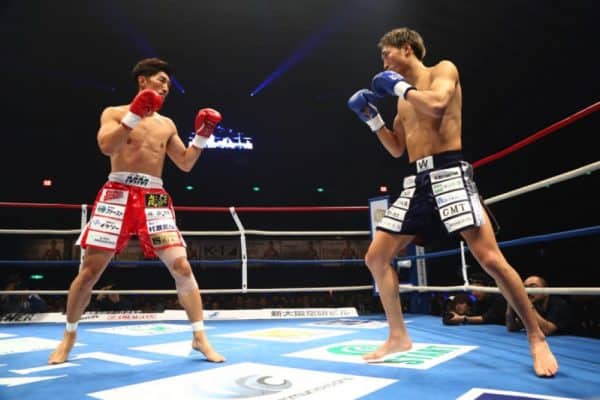
Kickboxing is a term that has two meanings. First, it stands for a group of arts that mix kicks and punches together like Muay Thai and Sanda. And, it is also a combat sport on its own created in the 1950s in Japan.

Japanese kickboxing is a hybrid version of karate with full-contact rules, which is based on a mix of karate and Muay Thai rules put into one style of fighting. The founders of this style were Tatsuo Yamada and boxing promoter Osamu Noguchi, who first named their style “Kickboxing.”

Keep reading this article to learn more about Japanese kickboxing. We are going to explore its Japanese kickboxing history and see how it compares with other styles of kickboxing. 

What Is Japanese Kickboxing?

Japanese kickboxing is a martial art created as a hybrid mix of karate techniques and Muay Thai rules. It emerged in the 1950s in Japan as a result of a big rivalry between these two arts. In its initial form, most techniques came from Kyokushin while the rules were from Muay Thai. But over time, Japanese kickboxing has evolved a lot and now also includes advanced techniques from western boxing. 

The emphasis is on fast footwork, blitz attacks, high output of punches, and fast kicks. It is a clean style where all fighters are very technical when it comes to both offense and defense. Japanese kickboxers tend to be disciplined during the exchanges, always keeping their hands up and delivering fast counterattacks. 

In the initial form, Japanese kickboxers could also use dirty tactics like headbutts and powerful throws. The main idea behind this decision was to make it different from Muay Thai. But these moves got banned in 1966 to improve safety.

History of Japanese Kickboxing

The story of Japanese kickboxing begins in the late 1950s and early 1960s. At the time, there was a big rivalry among Muay Thai and karate, the two best striking arts of that time. Fighters from Japan used to travel to Thailand to compete in Thai boxing matches and vice versa.

A man who set things moving was karateka Tatsuo Yamada who began to study Muay Thai in more detail. He even invited a couple of Thai fighters to be his guests in his own dojo “Nihon Kempo Karate-do”. Back in those days, karate was all about light contact and there was no direct striking with full power. 

In some way, Yamada studied Muay Thai with the intent to upgrade karate as a system. He set an outline for new martial art and a combat sport that would come to be known as kickboxing.

Though Yamada was the first one to play with karate and Muay Thai, he is not seen as the only father of kickboxing. No, that title goes to Osamu Noguchi, a boxing promoter who was the first one to put together rules based on karate and Muay Thai.

He created a new combat sport and martial art which he called “Kick Boxing”. Yes, Noguchi was the first one to use this term and found the first “Kickboxing Association” in 1966. In the following years, kickboxing gyms would start opening up all across Japan. 

One of the first and most famous ones was “Mejiro Gym” which has produced many great kickboxers and where foreign martial artists could come and learn this new form of combat. One such man was a Dutch martial artist Jan Plas who would go back to the Netherlands and develop the famous “Dutch Style”. 

Is K-1 a Japanese Kickboxing?

No, K-1 is not Japanese Kickboxing. K-1 is the name of the famous kickboxing promotion from Japan that emerged in 1993. The letter “K” stands for Kung Fu, karate, and kickboxing, and this promotion is directly responsible for the rise of kickboxing in the 90s and 2000s.

The man who created K-1 was Kazushi Ishii, and he did it with one goal in mind: to find out which striking art is the best. Fighters from all forms of karate, Muay Thai, Kung Fu, and kickboxing used to fight against each other under the unique K-1 rules. The events were also a place where a lot of Japanese kickboxers used to compete.

K-1 events were among the most popular sports events in the 90s and 2000s. The matches were exciting to watch mainly because the rules favored a high pace action. Matches were 3–3 minute rounds, which means that fighters didn’t have to worry too much about getting fatigued. They could throw each strike with full force, and that’s why a lot of K-1 matches ended in brutal KOs.

Although there were a lot of fighters from Japan, it’s fair to say that Dutch kickboxers ruled the K-1 scene. For instance, out of 19 K-1 World Grand Prix champions, 15 of them were Dutch fighters. 

Who Are The Most Famous Japanese Kickboxers?

Japan has always been a home of elite kickboxers. Here are some of the most famous names from different eras.

  • Masato Kobayashi — is a retired Japanese kickboxer. In his career, he won the K-1 World MAX tournament two times in 2003 and 2008. He also beat some big names like Andy Souwer, Buakaw, and Albert Kraus. He retired with 55 wins and 6 losses on his record.
  • Tenshin Nasukawa — is a Japanese superstar and multiple champ in karate and kickboxing. In his career, he won ISKA and RISE world titles in two separate weight classes.
  • Yoshihiro Sato — used to fight during the glory days of K-1 World MAX. He won the 2006 and 2007 World MAX tournaments in Japan and was also ISKA, WKA, and WPKC world champion.
  • Satoshi Kobayashi — is a Japanese kickboxing legend who also fought in Muay Thai. In 2000 alone, Kobayashi won AJKF, WKA, WPKC Muay Thai world titles.

Is Japanese Kickboxing Better Than Karate?

The answer to this question really depends on: better for what? First of all, let’s not forget that Japanese kickboxing has origins in Kyokushin karate. In fact, the initial form was based on karate techniques mixed with Muay Thai full contact rules. So these two share a lot in common, but differ a lot when it comes to rules, concept of training and the way fighters execute techniques. All in all, you can look at Japanese kickboxing as a better version of karate. Its concept of training and techniques are more practical for real-life fighting and here is why.

Back in the 1960s, the emphasis of karate used to be on light contact and point fighting. There were no direct strikes, or heavy shots that could knock the opponent out cold. This was the biggest weak point of karate which got solved with the birth of kickboxing. Tatsuo Yamada improved karate and made it more effective by adding full contact rules from Muay Thai.

So when it comes to real fighting, yes, Japanese kickboxing is better than most forms of karate. It is more practical and teaches you how to throw each shot with a lot of power to knock the opponent out. Over time, this kickboxing style has evolved and changed a lot. In modern days, fighters also use western boxing techniques, have better movement, and are far more aggressive.

But bear in mind that it is easy to shift from karate to kickboxing because the techniques are quite similar.

What Is the Difference Between Japanese Kickboxing and American kickboxing?


Japanese KickboxingAmerican Kickboxing
History and originsJapanese kickboxing emerged in the late 1950s in Japan. The people who created this style were Tatsuo Yamada and Osamu Noguchi. 
Noguchi founded the first kickboxing association in 1966, and this marks the birth of Japanese kickboxing. 
American kickboxing got developed in the 1970s in the US. The original founders of this style were the karateka Joe Lewis, and promoter Lee Faulkner. 
They both organized the first full-contact karate event which would later become known as American Kickboxing. 
Strategies and emphasisJapanese Kickboxing is a mix of karate techniques (mostly from Kyokushin) and Muay Thai. 
But on top of that, it puts a lot of emphasis on western boxing and mixing hand strikes with low/high kicks and knees. 
The focus of American Kickboxing is on western boxing and karate kicks above the waist. 
Fighters use advanced boxing combos which they mix with kicks to the body or head. 
Length of the matchesMatches have 5 rounds and each round is 3 minutes long. There is a 1-minute break between each round. Matches go from 3 to 10 rounds where each round is 2-3 minutes long. There is a 1-minute break between each round.
TechniquesPunches, High-Kicks, Low-Kicks, Elbows, Knees, Clinch Fighting
Punches, High kicks, Spinning kicks
*Fighting in the clinch is not allowed as well as using elbows, knees and low kicks. 
Fight GearPair of boxing gloves Shorts Mouthguard
Pair of boxing gloves Pants  Mouthguard Kick boots
Notable fightersMasato Kobayashi, Tenshin Nasukawa, Masaaki Noiri, Satoshi KobayashiRick Roufus, Dennis Alexio, Bill Wallace , Demtrious Havanas

What Is the Difference Between Japanese Kickboxing and Muay Thai?


Japanese KickboxingMuay Thai
History and originsJapanese kickboxing has origins in Karate and Muay Thai. It emerged in the late 1950s and its original founders were Tatsuo Yamada and Osamu Noguchi. 

Muay Thai has origins in the combat system called Muay Boran. It emerged in the 19th century in Thailand where it is a national sport. 
Strategies and emphasisThe main goal in Japanese kickboxing is to learn how to use all limbs as weapons to strike with kicks, punches, knees and elbows.
The emphasis is on high output, speed, footwork, western boxing and attacking in a blitz.
Muay Thai fighters use all limbs as weapons to deliver each strike with a lot of power and violent intention. 
The emphasis is on hard kicks and dirty fighting in the clinch using elbows and knees.
Length of the matchesMatches include 5 rounds with each round being 3 minutes long and there is a 1-minute breakMuay Thai also has 5 rounds where each round is 3 minutes long. But the rest period between the rounds is 2 minutes.
Fight gearPair of full padded boxing gloves, Shorts MouthguardPair of boxing gloves, Shorts, Mouthguard, Armbands (optional)
Notable fightersMasato Kobayashi, Tenshin Nasukawa, Masaaki Noiri, Satoshi KobayashiBuakaw Banchamek, Somrak Khamsing ,Saenchai

What Is the Difference Between Japanese Kickboxing and Dutch Style Kickboxing?


Japanese KickboxingDutch Style Kickboxing
History and OriginsTatsuo Yamada and Osamu Noguchi are original founders of Japanese kickboxing in the late 1960s. 
This style of kickboxing has origins in karate and Muay Thai.
The Dutch Style of kickboxing emerged in the 1970s in the Netherlands. The original founder of Dutch-style was Jan Plas.

Strategies and emphasisJapanese kickboxers mix kicks, punches, elbows and knees together to fight at distance or in the clinch. 
The emphasis is on hard kicks, clean and precise striking, and fast counterattacks. 

Dutch-style is a mix of karate kicks and western boxing techniques. 
The emphasis is on forward pressure, high output of punches, and hard low kicks.

Length of the matchesMatches have 5-3minute rounds with a 1-minute break between the rounds.Matches include 3-3 minute rounds with a 1-minute break between. 
TechniquesKicks, Punches, Elbows, Knees, Clinch Fighting, Trips and throwsKicks, Punches, Limited clinch work (5 seconds), Knees

What Is The Best Kickboxing Style?

The best style of kickboxing is Muay Thai because it is the most versatile. It’s not that other styles are inferior, but Muay Thai is clearly above the others when it comes to weapons and damage you can do. It is a complete striking system that will teach you all about how to use all limbs as weapons to fight at all ranges. Apart from striking, it also includes the basics of grappling which can help you a lot in a self-defense situation for instance.

Muay Thai students learn how to mix kicks, punches, knees, and elbows in a fight. The emphasis is on heavy kicks, the famous “Thai Clinch” where the goal is to land knees and elbows and throw each strike with violent intention. There is no playing around in Muay Thai as you always need to push for a finish.

Muay Thai training is cardio-intense and hard on your body. Classes consist of brutal cardio workouts and hard sparring. Although this sounds like too much, it is the only way you can prepare your mind and body for real fighting on the streets or inside the ring. And it is also a great base for MMA where it plays a key role in the standup aspect.

There is also an argument that Lethwei is more effective than Muay Thai in a real fight. Mainly because it allows notorious headbutt strikes and its fighters compete with bare-knuckle, which adds more to the realism of the art. But bear in mind that Lethwei is far more brutal, dangerous, and it is not legal in most countries outside of Myanmar.

What are the Different Styles of Kickboxing? Simply Explained – This article explains different styles of Kickboxing in depth which will greatly help you distinguish one style from other styles.

Related Questions

What Is Glory Kickboxing?

Glory is one of the biggest kickboxing promotions in the world that is based in Singapore. It is home to the best kickboxers on the planet, spectacular matches, and its events are very popular. It all started with the downfall of the famous Japanese K-1 promotion back in 2011. At the time, Glory owners wanted to buy out K-1, which they failed to do. Instead, they bought a famous Dutch kickboxing promotion called “It’s Showtime” which secured them a top production, and contracts with some of the best and most famous fighters. 

Glory events are very popular and you can watch them on the biggest sports networks like ESPN. In 2019, Glory signed a partnership with the UFC so the events are also available on the UFC Fight Pass platform.

What Is The History of Kickboxing? – What You Need To Know

0

Kickboxing is a term that is a bit confusing to many people. First, it stands for a group of martial arts that mix punches and kicks. And second, it is a fighting system on its own, very popular in all parts of the world. 

Kickboxing has origins in Muay Boran, an art that would later become known as Muay Thai. The modern form emerged in the 1950s in Japan as a mix of Karate and Muay Thai rules and techniques. The founders of modern kickboxing were Tatsuo Yamada and Osamu Noguchi.

Keep reading this article to find out more about the history of kickboxing. We will also explore all of its styles, fighters, and see how it compares with other striking arts.

What Is the History of Kickboxing?

The earliest origins of kickboxing trace back to the 13 and 14th centuries and art called, Muay Boran which was a precursor to Muay Thai. This was a combat system used by the Siamese warriors that would later grow into a very popular sport. The biggest change came in the 19th century and the reign of King Rama V.

The King was a big fan of Muay Boran matches, and he assisted in the creation of the first rules. As a result, the matches got to be much safer, and the events became a part of various festivals and celebrations. From the 20th century, people would start calling this sport “Muay Thai”.

The story of modern kickboxing, however, started to unfold in the late 1950s. At a time when there was a big rivalry between Muay Thai and Karate. A karateka called Tatsuo Yamada was one of the first to start studying Muay Thai. And he also welcomed a couple of Thai fighters in his own dojo.

Tatsuo Yamada
Yamada Tatsuo(Left)

Though loyal to karate, Yamada was fascinated by the full contact rules of Muay Thai. Bear in mind that, at the time, Karate rules didn’t allow fighters to strike each other directly and with full power.

So Yamada started to experiment with karate and Muay Thai techniques and rules and in some way, he set an outline for a new fighting system that would later become Kickboxing. But as the fortune would have it, Yamada won’t be remembered as the father of kickboxing.

Who Is Considered The Father of Kickboxing?

The man who is often seen as the father or the inventor of kickboxing was a famous promoter, Osamu Noguchi. In the late 1950s, he created a new martial art and a combat sport where fighters from karate and Muay Thai could fight each other. Noguchi used karate as a base on top of which he added techniques and full-contact rules from Muay Thai. He named this new sport “Kick Boxing” because it was a mix of kicks and punches from boxing.

Noguchi went on to create the first “Kickboxing association” in 1966, and soon after, organize the first event in Osaka on April 11. He will go down in history as the father of the sport, and the first man to use the term “kickboxing”

How Many Styles of Kickboxing Are There?

Kickboxing is both, a fighting system on its own, and a term that stands for a group of martial arts that mix punches and kicks together. This means that kickboxing has many different styles. If you want to explore all of them in more detail, check out this article, “What are the Different Styles of Kickboxing? Simply Explained“. For now, here is a list of all styles:

Kickboxing Techniques Explained

Although there are many styles and forms of kickboxing, core techniques are nearly the same for all styles of kickboxing. They teach various kicks from karate and Muay Thai and how to mix them with western boxing techniques. Some other styles like Muay Thai add more weapons on this base like knee and elbow strikes. Here is a list of the most popular techniques from all styles:

PunchesKicksElbowsKnees
JabRoundhouse kickSpinning elbowStraight knee
HookFront KickDownward elbowCurving knee
UppercutSide KickHorizontal elbowDiagonal Knee
CrossSpinning kickDiagonal elbowFlying knee

Is Kickboxing Hard To Learn?

Becoming a master in any martial art is a lifelong journey for most people. The same stands for Kickboxing which is an intense and difficult style to learn. You won’t achieve anything without hard work, dedication, and above all, passion. Still, how long does it take for an average person to master all the techniques?

On average, beginners need from 4 to 6 months to pick up all the basics and start sparring. They need one more year of hard training to reach an advanced level. This is also a level where they are capable of applying the techniques in a real fight or self-defense situation.

Kickboxing techniques are quite simple even for beginners. You won’t have a hard time picking up the basics, regardless of your athletic level. It doesn’t even matter if you have never thrown a punch before. The first months could be hard and even painful for some people. But it would all become much easier once you get stronger, more flexible, and learn how to throw strikes the right way.

Which Country Has The Best Kickboxers?

In modern times, the best kickboxers come from two countries: Thailand and Netherlands. Thailand is a home of Muay Thai and they are often seen as the best kickboxers on the planet. On the other side, the Netherland is home to the famous “Dutch Style” of kickboxing.

When it comes to modern kickboxing matches, it’s fair to say that Dutch-style has given the world the best fighters and most famous champions. This is notably true if we look at K-1, the biggest kickboxing promotion ever.

The biggest K-1 format was “K-1 World Grand Prix”, which was an open weight tournament. Out of 19 World Grand Prix champions, 15 of them were Dutch fighters.

The reason for this is quite simple, kickboxing is a national and one of the most popular sports in the Netherlands. It is the home of the best gym, top coaching staff, and fighters in the world.

What Is K-1 Kickboxing?

K-1 is the name of the famous kickboxing promotion from Japan that used to be very popular in the 90s and 2000s. In fact, K-1 was, at one moment, the most popular combat sport in the world, even bigger than MMA and boxing. K-1 was so popular that its rules became an official style called “K-1 Kickboxing”.

The man who created K-1 was Kazuyoshi Ishii in 1993. The letter K stands for “Karate, Kickboxing, and Kung Fu”, which is a mix of techniques kickboxers used at the time. Ishii wanted to create a combat sport where fighters from different striking arts could fight against each other. In some way, he wanted to find out which striking art is the most effective, and which fighter is the best.

K-1 was an instant success in Japan and would quickly grow in other parts of the world as well. Ishii enjoyed the best deals with the biggest TV networks at the time, and the matches were very exciting and packed with action. This was mainly because K-1 rules favor a high pace fight as there are only 3–3 minute rounds. Fighters didn’t have to worry too much about their stamina, and could compete at a high pace the entire fight.

What Is Dutch Style Kickboxing?

Dutch Style kickboxing emerged in the 1970s in the Netherlands. A couple of years before that, a Dutch martial artist called Jan Plas would travel to Japan to master kickboxing. He joined the famous “Mejiro Gym”, which was one of the first kickboxing gyms. Plas would travel back to the Netherlands and open another Mejiro Gym in Amsterdam. He would also found the “Dutch Kickboxing Association”, which marks the birth of kickboxing in Europe.

Jan Plas used the Japanese style as a base on top of which he added western boxing techniques. So Dutch style is a mix of techniques from three separate martial arts:

  • Kyokushin karate
  • Muay Thai
  • Western boxing.

The emphasis is on forward pressure, high output of punches, and hard low kick. Dutch-style fighters would rarely attack with a single power punch as the emphasis is on throwing combos. Some of the most famous Dutch Style kickboxers are:

  • Ernesto Hoost
  • Rob Kaman
  • Ramon Dekkers

What Is American Kickboxing?

American style of kickboxing started to develop in the late 1960s. The founder of this style was karateka Joe Lewis who also trained Jeet Kune Do with Bruce Lee in the 60s. Lewis wanted to change the rules of karate from point fighting to full contact which he did in 1970.

“Joe Lewis was twice voted as the Greatest Fighter in the History of Karate. He is one of the few true superstars of the martial arts and is widely acclaimed as one of the most influential martial artists of all time.”

sidekickdojo.com
Joe Lewis: Father of American Kickboxing

Together with the promoter Lee Faulkner, Lewis held the first-ever kickboxing event in which he fought in the main event against Greg Baines. Lewis was the first one to use a mix of boxing and karate techniques in a full-contact match, and he won by knockout in the second round.

This marks the birth of American style of kickboxing which differs from the other two styles because it doesn’t allow low kicks. It is a mix of karate and western boxing where the emphasis is on high kicks and hand strikes. Clothing is also different as fighters must wear trousers and kick-boots.

American Kickboxing style

What Is Japanese Kickboxing?

Japanese style emerged in the 1950s in Japan and it was the first version of modern kickboxing. One of the early pioneers of this style was karateka Tatsuo Yamada who had his own dojo called “Niho Kempo Karate do”. Yamada would start exploring Muay Thai, and even bring some of the fighters to his karate dojo. He wanted to create a sport that would be a mix of karate and full contact rules from Muay Thai.

But the man who actually did this was a promoter, Osama Noguchi in 1966. Japanese style is a mix of karate techniques (mostly from kyokushin) and Muay Thai rules. Fighters can use kicks, punches and knees to strike both above and below the waist. Limited clinch fighting is allowed and matches have from 3 to 5 rounds with each round being 3 minutes. 

What Is The Difference Between Muay Thai And Kickboxing?

These two striking systems have a lot in common because kickboxing has origins in Muay Thai. But at the same time, these two differ a lot when it comes to rules, emphasis, techniques, and many other factors. Here is a brief look at all the differences.

Emphasis

Muay Thai is a striking art where the emphasis is on hard kicks and fighting in the clinch using elbows and knees. The main goal is to throw each strike with a lot of power to hurt or knock out the opponent.

Kickboxing, on the other hand, differs a lot. The focus is on forward pressure, high output of strikes, and boxing combos. Kickboxers tend to use footwork and punches far more than Thai boxers and this is the biggest difference.

Rules

Muay Thai rules are simple and easy to understand. Matches have 5 rounds with each round including 3 minutes of action. Fighters have a 2-minute break between the rounds and they compete wearing full padded gloves and shorts. Matches can end via decision, knockout, or disqualification.

Kickboxing has many different rules. But in most, matches last 3 rounds where each round is 3 min long. There is a 1-minute break between the rounds, and kickboxers compete wearing full padded gloves and shorts.

Techniques

Muay Thai is an art where fighters can use all limbs as weapons. They can strike with punches, kicks, as well as with elbows and knees at close range or in the clinch. On top of that, they also learn how to execute basic trips and throws from the clinch.

Kickboxing is not as versatile as Muay Thai since its fighters use “only” kicks and punches. Most modern kickboxing styles like K-1 or Dutch style have limited clinch fighting, while elbow and knee strikes are not allowed. The entire focus is on mixing kicks with the punches.

Is Kickboxing Good For MMA?

Kickboxing plays a big role in modern MMA fighting. In fact, you can’t expect to succeed or reach the high levels of the game without, at least, basic kickboxing skills. Some of the greatest UFC champions like Israel Adesanya have all had a strong base in some styles of kickboxing.

Whether we are talking about K-1, Dutch style, or Muay Thai, most styles of kickboxing fit well in cage fighting. MMA is a sport where fighters can use all limbs as weapons to fight at all ranges, including the clinch. Most styles of kickboxing cover all the ranges, and Muay Thai is the best when it comes to clinch fighting.

Muay Thai teaches you the best when it comes to how to better mix kicks with the punches, or fight in the clinch using knee and elbows. But the aspect that clearly stands out are vicious Muay Thai low and high kicks. In modern MMA, you can’t survive without knowing how to defend or throw legs kicks with proper technique. Sooner or later, someone would expose this hole in your game, and it would be a very painful experience. Leg kicks are a great way to neutralize the opponent’s movement, set up the attack, or keep your range.

Top 15 Most Muscular MMA Fighters of All Time – Ranked

0

In modern MMA, having a lot of muscles or most swole is not necessarily an advantage as big muscles require more oxygen and cause fatigue faster in strenuous activity. This is the reason why MMA fighters prefer to stay lean and look ripped. They search for an ideal balance between strength and muscle endurance.

Still, there have been more than a few fighters who proved that big muscles can work in MMA fighting. Despite carrying a lot of muscles on their frame looking closer to jacked bodybuilders, these fighters have all been able to reach the highest levels of the sport and even become UFC champions. Keep reading this article to find who they are, and their interesting stories.

15. Joaquin Buckley

Buckley is a top UFC fighter who is not as famous as some other fighters from this list. But the man is so big that he often looks like his muscles are about to blow up. Maybe genetics play a big role in the way he looks, but for sure, Buckley spends a lot of time lifting weights as well. 

Inside the cage, Buckley is all about being patient, and waiting for the perfect chance to move in for a kill. He is a technical striker who, despite his massive size, moves really well and is very flexible. Don’t look any further from the way he knocked Impa Kassanganay with the famous spinning back kick if you need any proof.

Once he sees the opening, Buckley would start swinging haymakers and he is one of those fighters who need only one shot to knock you out.

14. Cris Cyborg

Photo by Michael Dunn

The former UFC 145 pound champ is the most muscular female fighter, and she hits really, really hard. She often looks much bigger than her opponents on fight night, and it’s the power in her strikes that catches her opponents off guard. 

Cyborg came into the UFC as the Invicta FC champ and the most intimidating woman on the planet. She went on to score 4 finishes in 5 UFC fights, all brutal KOs. And she also won the 145 lbs belt in the process. Although she lost the crown to Amanda Nunes, Cyborg would move to Bellator promotion to win another world title in 2020.

13. Rousimar Palhares

Palhares is a former UFC contender who looked like a Hulk in his prime. His entire upper body used to be packed with nothing but big muscles, and he probably had the biggest arm girth in the 185 lbs weight class. If you combine this with top-level BJJ skills, you get a terrifying fighter who had the ability to advance the fight to the ground at his will. And once he would do that, it would be just a matter of time before he sets up his favorite submission, the infamous heel hook. 

Unfortunately, despite having a solid career, the UFC released Palhares from his contract for not letting go of the submission after the initial stoppage on two occasions. He would later join the WSOF promotion in 2014 and win their 170-pound belt. But once again, he got suspended for not letting go of the submission against Jake Shields. 

12. Tyron Woodley

The former UFC 170 pound champ used to carry a lot of big muscles. The size of his thighs, biceps, and shoulders were massive and Woodley has built his career on being explosive, and utilizing his power to put people to sleep with a single strike. Despite being so swole, that never compromised his speed, agility, and cardio.

Back when he came into the UFC from Strikeforce in 2013, Woodley looked like a tank, and he used to punch like one as well. Inside the cage, he was like a time bomb ready to explode at any given moment. He would wait for an ideal chance to move in, close the distance in a split of a second, and land with full power. It’s amazing how a man so big could move so fast.

The best example of how powerful Woodley is, was his fight against Robbie Lawler at UFC 201 in which he won the world title. Just as the fight had entered the third minute, Woodley exploded with a devastating right hook and Lawler instantly went out. 

11. Kamaru Usman

Usman is among the most muscular 170-pound fighters in UFC history. Whether it’s genetic, heavy lifting in the gym, or a mix of both factors, Usman looks like a fighting machine. He carries a lot of muscles and has a really low body fat percentage.

Inside the cage, he looks super strong and is well versed in all aspects of the MMA game. No matter if it’s wrestling, striking, or ground fighting, he has enough skill and power to deal with any threat. But what makes him special is the fact that he has really good cardio. You will never see him gassing out in a fight, which is special considering how much muscle mass he carries on his frame.

Usman is a fighter who can easily push a high pace for full five rounds, which he proved many times. When you look at Usman vs. Colby Covington fight, Usman twice went a five-round battle against Colby Covington, and he looked as fresh as he was in the first round in the fight. In fact, we haven’t seen him slowing down in a fight ever.

10. Shane Carwin

Photo by The Doppelganger

Back in his prime, Carwin had big shoulders, biceps, and was always looking very intimidating standing inside the octagon or on the scale during the weigh-ins. And despite walking at around 255 pounds, he also had a six-pack which was crazy for a man that big. 

Carwin didn’t just look like a beast, he was a monster inside the cage too. Fans tend to forget how violent he used to be, and that he retired from MMA with a 100% finishing rate. On his road to winning the UFC interim title, he finished the best fighters of that era like Frank Mir and Gabriel Gonzaga.

9. Hector Lombard

Lombard is a man associated with violence, knockouts, and jacked muscles. From big forearms, biceps, to jacked back muscles, Lombard looked like he was made out of bricks. 

He is a former Olympic Judoka who has never utilized his strong grappling skills in MMA. Instead, he fell in love with his power and knocking people out cold. 

In his career, he enjoyed the most success fighting in Bellator where he was a 185-pound champ and a season 1 tournament winner. During his run, he scored 8 knockouts, out of which the one against Jay Silva came in just 6 seconds. Lombard would switch to the UFC in 2012, but he failed to repeat the same success as he had in Bellator.

8. Paulo Costa

Paulo Costa received a lot of attention from both the media and the fans when he signed with the UFC in 2017. People could not believe how big he is, and how on earth he cuts all the way down to 185 pounds while carrying so much muscles. And before you even think he has been using PEDs, let’s not forget that Costa was the most tested UFC athlete in 2019 according to USADA and that he passed all the tests.

Costa kicked off his UFC career with four straight KOs and he quickly gained a reputation for being the hardest hitter in a division. Despite carrying around 200 pounds of pure muscles on fight night, his gas tank is quite big. In 2021, he went through a 5 round war with Marvin Vettori at UFC Vegas 41, and although he lost the fight, Costa went to distance without gassing out.

7. Cheick Kongo

Kongo is an MMA veteran who had a lot of success competing on the highest levels of the UFC and Bellator. Apart from his good striking skills, most fans know Kongo for his muscular frame and minimal body fat. On top of that, he is 6’4″ tall and has really long reach which makes him a tough matchup for anyone. 

Kongo has always preferred to carry a lot of muscle mass and stay at around 235 pounds. He looked lean and ripped throughout his entire career, but it’s fair to say that his physique looked the best at UFC 144 weigh-ins. Kongo stepped on the scale looking like a terminator.

6. Kevin Randleman

Randleman was, perhaps, the most feared fighter during the glory days of PRIDE FC. Just seeing him standing in the ring with all those bulky muscles was as scary as it gets. Maybe his nickname “The Monster” perfectly describes who he was inside the ring: explosive, fast, and powerful.

Standing 5’10”, Randleman was often a smaller man in a fight. But at the same time, he used his speed and athleticism to cover the distance in a split of a second, dive for a takedown or throw a punch. His opponents, in most cases, didn’t have enough time to react and stop his attacks. The way he knocked out Mirko CroCop is an ideal instance of that.

The biggest moment in his career came when he beat Pete Williams at UFC 23 to win the UFC title. He would later switch over to PRIDE FC where he enjoyed solid success.

If you want to see how strong and explosive he was, do not look any further from his fight against Fedor Emelianenko. At “Pride FC: Critical Countdown”, Randleman executed one of the best and most brutal suplex throws ever, and he nearly killed the Russian with it.

Sadly, Randleman passed away on February 11, 2016 due to complications from pneumonia. He was only 45. Randleman will be dearly missed by his fans and his contribution to the sport will never be forgotten.

5. Mark Kerr

Kerr is one of the pioneers of modern MMA and a fighter with the most imposing physique of his era. Although his body had gone through many changes, there are no words to describe how scary Kerr was in the 90s. He looked like a terminator and a man who could easily win the Mister Olympia competition

He signed with the UFC in 1997 and he came into the sport as a World Vale Tudo champ and NCAA Division I wrestling champion. He would go on to win UFC 14 and 15 tournaments before moving to PRIDE FC in ’98 where he also enjoyed solid success. 

On top of that, he won the ADCC Submission Wrestling World Championships three times. And bear in mind that he did this while he was fighting at the highest levels of MMA at the same time.

RECOMMENDED FOR YOU:
UFC Fighters Where Are They Now? 15 Forgotten UFC Legends

4. Mark Coleman

Mark Coleman is an MMA legend and one of the most jacked fighters in history. Back in the 90s, he was one of the pioneers of wrestling in MMA. In fact, he is often seen as a father of ground and pound techniques that changed the MMA game forever.

Apart from the fact that he looked like a giant, Coleman was a top wrestler who knew how to make the most out of his size and skills. Once the fight would hit the ground, Coleman would get a strong top control, and posture up to unload with devastating strikes. In his incredible career, he won:

  • UFC heavyweight champion
  • UFC 10 and 11 tournament winner
  • Pride Grand Prix OpenWeight Tournament winner (2000)
  • One of only two fighters to win both PRIDE FC and UFC Tournaments.
RECOMMENDED FOR YOU:
Why Do Wrestlers Dominate MMA?

3. Yoel Romero

Photo by Эркек

Romero might be the most intimidating 185-pound fighter ever. He has so much muscle mass that he actually visually looks like a heavyweight fighter. And it’s not just about big muscles and raw power as Romero has a perfect body frame. He could easily enter some fitness competition and win it straight away.

Romero kicked off his MMA career quite late at the age of 32. He spend his 20s competing at the highest levels of wrestling where he won the silver medal at the 2004 Olympic Games in Athens. Like most other fighters who carry a lot of muscles, Romero is explosive and strong. Though he is powerful and intimidating, Romero lacks the stamina and endurance to fight at a high pace the entire fight.  

This is the reason why he is hesitating a lot and waiting for a perfect chance to attack in a fight. He prefers to keep his output low and preserve his energy. Although this approach cost him a couple of wins, it also brought him a lot of success.

2. Brock Lesnar

Photo by Miguel Discart

Before joining the UFC, Lesnar used to be a WWE superstar, and like all other pro wrestlers, a jacked monster. He is among the scariest fighters that have ever set foot inside the cage, and just looking at his physique is as intimidating as it gets. He is 6’3″ tall, and during his UFC days, he used to weigh 265 pounds, all solid muscles.

Looking at his size, one could make a wrong perception and say that Lesnar wasn’t a real athlete. But despite starting late at the age of 29, he needed less than 2 years to go from making his MMA debut, to beating Randy Couture for the UFC title at UFC 91.

The MMA world has never seen a man so big being so agile and fast.

RECOMMENDED FOR YOU:
11 Most Intimidating MMA Fighters Of All Time

1. Alistair Overeem

Overreem body went through some drastic changes over the years, with the biggest one coming when he left the PRIDE FC in 2007. In his own words, Overeem got big just by eating 6-7 times a day, mostly horse meat.

Apart from big muscles, Overeem is known as among the best strikers in the game, and the mix of these two factors was what made him so dangerous. He looked the most swole between 2009 and 2015. In this time span, he won the following titles:

  • Dream heavyweight title
  • Strikeforce heavyweight title
  • K-1 World Grand Prix Champion
RECOMMENDED FOR YOU:
What Is Dutch Kickboxing? Basic Guide to Dutch Kickboxing

What Is Lethwei? Burmese Bare Knuckle Boxing Explained

0
Photo by Lethwei Master

There are various types of striking arts out there that look similar to one another. This is notably true for kickboxing where most styles share the same techniques and rules. But the one striking art that clearly stands out is Lethwei, or “Burmese Boxing”, and the reason is very simple.

Lethwei is one of the most versatile striking arts ever created as it trains you to use your entire body as a weapon. At the same time, it is very a brutal fighting system since fighters compete bare-knuckle, and it includes dirty moves like headbutts.

Stay with us as we are going to take a closer look at Lethwei and what makes it special. We will explore its history, techniques, rules, and how it stands against other striking arts.

History of Lethwei

Lethwei is one of the oldest striking arts. Its origins go all the way back to the Pyu Empire in Myanmar which ruled from the 2nd century BCE to the 11th century. At the time, people from this region used Lethwei as a hand-to-hand weapon to fight in many wars. But even in ancient times, they also used it as a form of entertainment, and the matches were very popular. And of course, very brutal and dangerous.

The interesting fact is that, back in those days, Lethwei matches looked a lot like the ones in modern times. People fought in the sandpits without gloves, and there were no judges or decisions. The events were open to any male who wanted to test their skills and courage against other males. There were no decisions, judges, or draws as matches could end only via knockout. Though this may sound brutal, that is how Lethwei matches look in modern times as well.

Lethwei would change a lot when Kyar Ba Nyein made a decision to pioneer modern Lethwei. He was a former boxer who fought in the 1952 Olympics and was a man who put together first rules and regulations. Despite becoming legal, the sport very much remained closed within the Myanmar borders all the way up until the 2000s.

This is why the people in the western world, even the ones who follow combat sports, have never heard of Lethwei. The sport is simply too brutal, which is why it is illegal in most countries.

The biggest change came in 2016 with the birth of the “World Lethwei Championship(WLC)”, the first global promotion. WLC started to hold events under modern rules, and it also allows fighters from other countries to come and test their skills in Lethwei competition.

Lethwei Fighting Techniques Explained

Lethwei is not a complex art and techniques are quite simple and easy to pick up. Yes, fighters compete bare-knuckle and use headbutts, but apart from these brutal moves, Lethwei is the same as most other striking arts. In fact, it shares the same kicks, punches and clinch work with Muay Thai. 

The focus is on mixing kicks with the punches from the distance, and fighting at close range and in the cling using elbows and knees. The emphasis is on dirty boxing in the clinch, and doing as much damage with a single strike, always chasing a knockout. Here is a list of most popular Lethwei techniques:

PunchesKicksHeadbutt strikesElbow strikesKnee strikes
JabRoundhouseHead Butt in the clinchHorizontal ElbowJumping knee
CrossSpinning back kickFlying head buttDownward ElbowStraight knee
HookInside/outside low kickShooting head buttUpward ElbowUpward/downward knee
BackfistHook kickUpward/downward head buttFlying ElbowDouble flying knee
Superman punchSidekickSide head ButtSpinning ElbowSpear Knee
OverhandAxe kickThrusting Head ButtReverse Horizontal elbowSide Knee strike

Lethwei Fighting Rules

There are two different types of Lethwei rules: Modern and Traditional. These two sets of rules share much in common when it comes to techniques and what is legal and illegal. However, the biggest difference is the fact that traditional rules do not include a scoring system and judges. There are no decisions and fights end only via knockout. This makes this set of rules much more brutal from the modern ones that have judges and decisions. Here is a detailed comparison:


Traditional RulesModern Rules
Scoring systemTraditional rules do not have a scoring system. Fighters can win only if they knock the opponent out. 
If the match goes to distance, it would be declared a draw no matter how dominant one fighter was. 
When a fighter gets knocked down, there is a 20-second count. 3 counts in a single round is considered a knockout, and 4 during the entire duration of the fight. 
Modern rules include three judges sitting beside the ring and scoring the fight.
Judges pick the winner based on aggression, number of significant strikes per round, damage, and blood drawn.
Three knockdowns in a round is considered a KO, or 4 per the entire duration of the fight.


Length of the matchesLethwei matches include from 3 to 5 rounds of action. Championship fights are always booked for 5 rounds. 
Each round is 3 minutes long and there is a 2 minute break between each round. 
Lethwei matches include from 3 to 5 rounds of action. Championship fights are always booked for 5 rounds. 
Each round is 3 minutes long and there is a 2 minute break between each round.
Injury Time OutLethwei fighters who got knocked out or injured in a fight, can take a 2 minute time out to recover. Once the time expires, they decide whether they want to continue fighting or not. According to modern rules, there are no injury timeouts. They got rid of this rule in 1996, and this was also the time when they introduced the scoring system and judges.
Protective gearLethwei fighters compete without the gloves. 
Fighters can wrap their hands with a tape, gauze or electrical tape. 
They compete bare-chested wearing just a shorts, groin cup and gum shield. 
Lethwei fighters compete without the gloves. 
Fighters can wrap their hands with a tape, gauze or electrical tape. 
They compete bare-chested wearing just a shorts, groin cup and gum shield.
Promotions Annual Myanmar Lethwei World Championship, Air KBZ Aung Lan Championship ,
International Lethwei Federation Japan Challenge Fights
World Lethwei Championship
Annual Golden Belt Championship
TechniquesKicks, Punches ,Knees, Elbows ,Headbutts, TakedownsKicks, Punches, Knees, Elbows, Headbutts,  Takedowns

Is Lethwei A Good For Self-Defense?

Yes, Lethwei is a great option if you want to learn self-defense. Lethwei techniques are real life practical. Each technique you learn works in real life because Lethwei fights are the closest thing to real fights, and unlike most other arts, it will teach you how to use dirty moves as well.

First of all, Lethwei is good for self-defense because it teaches you how to strike with all limbs, including your head. Students learn advanced kicks, punching combos from western boxing, and how to fight in the clinch with elbows and knees. They also learn basics of grappling like trips, throws and takedowns, which are valuable skills. 

The emphasis is on throwing each strike with a lot of power as the traditional rules don’t include decision wins. You must find a way to knock the opponent out, and this approach transfers well into street fighting.

On top of that, Lethwei fighters compete without gloves, and use dirty moves like headbutts. Fighting bare-knuckle may sound brutal at first, but on the flip side, this has many benefits. Most people tend to break their wrists or fingers when punching bare knuckles as they don’t know how much power to use. The same stands for pro boxers or Muay Thai fighters who are not used to strike without gloves. The glove protects your hands, even when you land at a bad angle.

But Lethwei trains you how to strike and do the most damage without hurting your hand. And even better than that, it trains your body and mind to absorb these strikes, which is crucial for street fighting where there are no gloves or rules.

Lethwei is still illegal in most countries outside of Myanmar. This is the reason why all Lethwei events and matches take place in Myanmar. Despite its long history, the sport is still a new thing, and above all, it is too brutal, bloody, and violent for most people.

The first Lethwei promotion called the WLC emerged in 2019 and it is yet to spread all around the world. For now, people can watch the events on popular streaming platforms like UFC Fight Pass. The UFC interest in the sport shows you that Lethwei is garnering a lot of attention.

Still, it’s fair to say that the sport is still too brutal for the mainstream audience, notably the one in the west. Not many people like to see bare-knuckle matches, and fighters using headbutts. The matches are violent, bloody, and visually look far away from anything that’s safe. But things might change in the future. 

If you look at the U.S and European markets, there is a rise of interest in bare-knuckle boxing. These events look nothing less brutal than Lethwei, and are legal in many countries. That’s why it won’t be a surprise if many countries start to legalize Lethwei matches too.

RECOMMENDED FOR YOU:
Which Martial Art Has The Most Injuries? FAQs

Key Differences Between Lethwei and Muay Thai

Muay Thai and Lethwei are so similar that people often mix them with one another. From rules to techniques, these two arts share much in common. But at the same time, these are two separate martial arts that differ from one another in various aspects. Here is a detailed comparison.


LethweiMuay Thai
Place of originsThe first Lethwei event took place during the Pyu Empire, present day Myanmar, in the 2nd century BCE. Muay Thai comes from Thailand and the first event took place in the 18th century. 
TechniquesKicks, Punches, Knees, Elbows, Trips and throws, HeadbuttsKicks, Punches, Knees, Elbows, Trips and Throws
Protective GearLethwei fighters compete bare-knuckle, without the gloves. They must wrap their hands in gaze or tape.  All fighters must wear groin cups and gum shields.Muay Thai fighters compete wearing full padded boxing gloves.
They also wear groin cups and gum shields. 
Length of the MatchesLethwei matches last from 3 to 5 rounds. 
Each round lasts 3 minutes and fighters have 2 minutes of rest between the rounds. 
Muay Thai matches, in most cases, last 5 rounds.
The length of the rounds is 3 minutes, and like in Lethwei, fighters have 2 minutes of rest between the rounds. 
RECOMMENDED FOR YOU:
Muay Thai vs. Boxing – Who Would Win and Differences Explained

Is Lethwei Better Than Muay Thai For Self-Defense?

On paper, Lethwei might be better than Muay Thai when it comes to self-defense because it is more versatile and brutal. This doesn’t make Muay Thai bad by any means and you won’t make a mistake if you join the Muay Thai classes. But if I have to say which of the two arts has an edge in street fighting, that has to be Lethwei, and here is why.

First of all, Lethwei includes the infamous head butts and trains you to fight bare knuckle and focus on a knockout. This makes it as real and as close to street fighting as it gets. Once the fight breaks out, there are no gloves, forbidden strikes, or referees. The faster you put the opponent out, the better chances are for you to get back home safe.

But the aspect that stands out is the lack of full padded gloves. Lethwei trains you to fight bare-knuckle, and this is perfect for self-defense. Once in a fight, people tend to swing punches with full power and break their hands or fingers upon landing. Lethwei teaches you how to strike and how much force to use to do a lot of damage without hurting your hands.

And the same stands when it comes to defense. Boxers or Muay Thai fighters block strikes with full padded gloves, which you can’t do in a street fight. In Lethwei, you learn how to defend bare-knuckle, and it conditions your body to absorb these strikes.

RECOMMENDED FOR YOU:
Muay Thai vs Boxing: Which One is Better?

Is Lethwei Good For MMA?

On paper, Lethwei is good for cage fighting as it teaches you how to fight at all ranges using all 8 limbs as weapons. Fighters learn very much the same techniques as in Muay Thai, which are very practical. But on the other side, there are more than a few cons and reasons why Lethwei is still not a part of MMA.

For instance, you can’t use vicious head butts in MMA, in fact, you would get disqualified for pulling such a move. Yet, let’s assume that fighters can easily adapt to MMA and stop using this strike. If we exclude head butts, we get a striking art very similar to Muay Thai.

In fact, it is even better than Muay Thai in some aspects. For instance, Lethwei fighters compete without gloves and this would transfer really well into MMA where fighters use smaller 4 OZ open-fingered gloves.

But the biggest problem is the fact that Lethwei is still not legal and popular outside Myanmar. There are no gyms in which you can train, compete, or train under experienced coaches. It is still isolated from the rest of the world and that’s why most people end up in the Muay Thai gym instead.