Home Blog Page 24

What Is Ground And Pound In MMA? A Beginner’s Guide

0

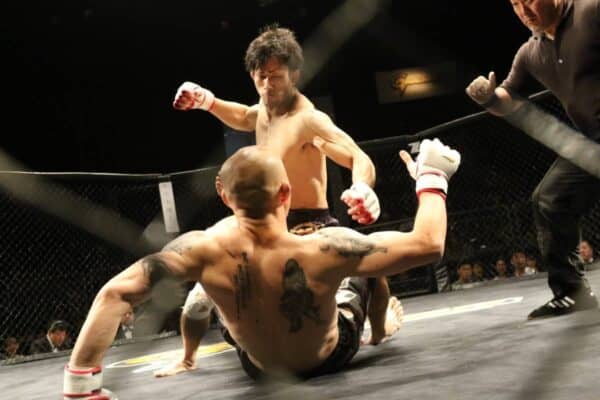
Mixed martial arts(MMA) is a versatile combat sport where fighters compete both in the standup and on the ground. It is the only combat sport that allows a fighter to strike the grounded opponent using the famous “ground and pound” techniques. Though this may look brutal, ground and pound is a very important aspect of modern MMA fighting. 

Ground and pound is a specific technique where a fighter in top position is striking the opponent on the bottom with punches, elbows, and knees. The man who pioneered ground and pound in MMA was Mark Coleman, and he was also the first one to use this term in the 90s.

Keep reading this article to find out more about ground and pound in MMA.

What Is Ground And Pound In MMA?

Ground and pound is a technique MMA fighters are using when they are in the top position to strike a grounded opponent. Although it may look simple, the ground and pound technique is very complex, and not all MMA fighters are skillful in doing it. 

First, you need to get into a position from which you can start throwing ground and pound. Or in other words, a fighter needs to take the opponent down using takedowns, trips, or the other move. Once the fight hits the ground, the next goal is to secure a dominant position. If a fighter decides to start striking without previously securing a strong top control, they are risking losing a position. This is why they must get into a strong top position like:

  • Back mount
  • Full mount
  • Side control
  • Half guard
  • Guard

Once in a dominant position, they would posture up and start striking the grounded opponent with punches and elbows. They can also use knee strikes to the body from side control for instance. These strikes may look “soft” on TV, but some fighters have the ability to generate huge force in ground and pound, and knock the opponent out.

Who Started Ground And Pound Techniques?

The pioneer of ground and pound technique in MMA was a wrestler, and former UFC champ, Mark Coleman. He is often seen as the “Godfather of Ground and Pound”, and this specific technique was a big part of his fighting style. Also, Coleman was the first one to use the term “ground and pound” during the pre-fight interview prior to UFC 14 event held in 1997.

Photo Credit:twitter@Markcolemanmma

Coleman came into MMA from wrestling and made his debut at UFC 10 tournament in 1996. At the time, Coleman was among the most muscular fighters who used this mix of strength and top wrestling skills to rule the sport in the 90s. His game plan was very simple on paper, but really hard to execute. He would first take the opponent down, secure a strong top control, and then posture up to unload with the barrage of punches. He also used various other brutal moves like headbutts to smash their faces, which was legal at the time.

Coleman put the ground and pound technique on the map, and in some way, he revolutionized the sport. Though there was ground fighting before him, Coleman was the one who used it in a strategic way to win fights, and he changed the game forever.

Bear in mind that, at the time, fighters trained in BJJ used to rule the sport. Wrestlers would often end up being submitted in the top position simply because they were not skillful enough to defend against chokes and joint locks. But Coleman created a blueprint on how wrestlers could avoid playing the BJJ game on the ground and finish BJJ fighters with strikes.

RECOMMENDED FOR YOU:
Why Do Wrestlers Dominate MMA?

What Strikes Are Allowed In Ground And Pound?

According to the “unified rules of MMA” fighters can use all types of punches as long as they are not hitting the back of the head of the opponent. The rules allow them to strike the face, and even the side of the head, but not the back of the head because this is a very delicate area where our spinal cord is located. These strikes are also known as “rabbit punches” and could lead to serious injuries.

Next, MMA fighters can also use vicious elbow strikes to do damage from the top position. But, bear in mind that they are not allowed to strike downward using the point of the elbow. This is also known as the “12 to 6 elbow”, which is an illegal strike in MMA. Landing the elbow from the upper position (12 o’clock) to the lower position (6 o’clock) is illegal in modern MMA. The most famous fighter who was a victim of this specific rule was the UFC champ, Jon Jones.

MMA fighters can also use knee strikes to ground and pound. According to rules, MMA fighters can land knee strikes only to the body of their opponent. Landing a knee to the head of the grounded opponent is illegal and would get you disqualified from a match.

Different Styles Of Ground And Pound Explained

In MMA, there are many ways fighters can attack the opponent with ground and pound techniques. These ground and pound styles are basically defined by the top position you are in:

Standing position — this style of ground and pound is the most destructive one, but at the same time, carries a high risk. From a standing position, fighters can generate a lot of power in every punch. However, the grounded opponent may blast you with an up-kick, or catch into submissions like leg locks, or armbar, and triangle as you are striking.

Guard position — is the safest and most common position on the ground. On one side, it allows you to establish strong top control, land punches, and vicious elbows. But on the other, a skilled opponent may fight back with submissions or strikes from the bottom.

Half guard positionin modern MMA, most fighters prefer to strike from the half-guard position. This position is great because it gives you enough space to strike while maintaining strong top control.

Side control position — is a very dominant position, especially if you get into a crucifix position. The crucifix is one of the most dominant positions and if a fighter manages to get it, the finish is guaranteed. 

Full mountthis is the most dominant position when it comes to ground and pound. Once an MMA fighter gets into a full mount position and starts raining down hard punches, it’s game over in most cases. Fighters on the bottom may try to explore and escape, but it usually all ends in a quick finish.

Back mountis also a very dominant position from which a fighter can easily finish the fight with punches. It is a very tricky position for a fighter on the bottom who, in most cases, ends up being in a turtle position, protecting their head. If they choose to escape and get back to their feet, they must drop their hands and expose their head to ground and pound shots coming from the top. 

Who Are The Best ‘Ground And Pound’ Fighters In MMA?

Throughout MMA history, there have been many great MMA fighters whose game has relied upon strong ground and pound techniques. Here are some of the most famous fighters who have had a strong ground and pound game:

  • Mark Coleman — is a pioneer of strategically using ground and pound techniques to win matches in MMA. The former UFC and PRIDE FC champ is also the one who come up with the name “ground and pound”.
  • Khabib Nurmagomedov — is a former UFC lightweight champ who has built his success on utilizing top grappling skills and strong ground and pound. On top of that, his game was vicious as he had the ability to generate huge power in every shot he threw from the top position.
  • Tito Ortiz — is a former UFC 205 lbs champ who had strong top control and great ground and pound skills. While Coleman is a godfather of ground and pound, Ortiz is a fighter who elevated this specific technique to another level. One of the best examples of his ground and pound skills was his fight against Elvis Sinosic at UFC 32.

Honorable mentions:

  • Cain Valasquez
  • Randy Couture
  • Georges St. Pierre
  • Fedor Emelianenko
  • Matt Hughes
RECOMMENDED FOR YOU:
UFC Fighters Where Are They Now? 15 Forgotten UFC Legends

Is Ground And Pound Dangerous?

Yes, ground and pound techniques are very dangerous and can lead to serious injuries like fractures or deep cuts. Seeing an MMA fighter throwing “soft” strikes from a top position may not look dangerous. But bear in mind that skilled fighters know how to generate a lot of power in these shots.

For instance, the force of the impact could be much higher when you are striking the grounded opponent. When a fighter receives a shot on the feet, their head snaps backward or to the side which reduces the force of the impact. But the physics is a bit different when the opponent is absorbing punches while lying on the ground. Their head doesn’t have space to move backward, or in other words, it must absorb the entire force of the impact. The best example of this was when Stipe Miocic knocked out Alistair Overeem at UFC 203 in 2016.

The other dangerous situation is when a fighter on top is in the back mount position. This means that the back of the head of the grounded opponent is exposed to punches. Although the grounded fighter would cover up and get into a turtle position, they are still vulnerable to the back of the head punches, which can cause serious injuries.

Ground & Pound from back mount position
Photo by Matthew Walsh

Dangers of ground-and-pound techniques go even higher if we move to street fighting, but more about that later.

How To Defend Against The Ground And Pound?

Although ground and pound is a very effective technique, there are many ways you can defend against this type of attack. No matter if the fight is inside the cage under the rules or out on the streets, the procedure is very much the same for all scenarios. Once in the bottom position, the main goal is to control the opponent’s posture, and do not allow them to posture up and create space to throw punches. A fighter in a top position needs space to land punches and elbows, and your objective is to stop this. There are dozens of ways you can do this, and here is a popular one.

The most common way to defend against ground and pound is to pull guard. The key is to wrap the opponent with both legs and wrap up one or both of their arms. This way, you can control their posture, and prevent them from landing punches and elbows. And this also creates a chance for skilled grapplers to attack with various submissions, reverse the position, or start working their way back to the feet.

Pulling Guard in MMA

Can You Throw Elbows In Ground And Pound?

Yes, MMA fighters are allowed to use elbows as a weapon to hurt or knock out the grounded opponent. According to “Unified Rules of MMA”, fighters can use elbow strikes as long as they are not landing an elbow from a straight-up position to straight down. This is the famous “12 to 6 elbow” rule that is based on the concept of a clock on the wall where 12 is a straight-up position and 6 is straight down.

Elbows are a very effective ground-and-pound technique that often contributes to the finish of the match. The most common grappling position from which fighters unload with the barrage of elbows is half-guard and full mount. From these positions, fighters can generate a lot of power in every strike, and landing an elbow could cause more damage than a punch.

A well-placed elbow can slice through the opponent’s skin like a knife and open up a huge cut. These cuts usually lead to severe bleeding, which often end up in a doctor’s stoppage. Also, in the eyes of the referees, elbow strikes are far more brutal than punches. If the fighter is intelligently defending, MMA referees would often allow them to absorb a lot of punches, and give them every chance to recover. But once a fighter starts raining down vicious elbows, the referees would, in most cases, instantly stop the fight.

Can You Throw A Knee Strike In Ground And Pound?

Yes, MMA fighters are allowed to strike the grounded opponent with knees, but they can only target the body. They are not allowed to strike the head of the grounded opponent because that move is too dangerous and illegal. However, you don’t see UFC fighters, for instance, striking with knees simply because punches and elbows are far more efficient. You need a lot of space to land a clean and powerful knee to the body and hurt the opponent with it. On the other side, punches do not require as much space, and fighters can throw them from every position. 

However, well-placed knees to the body can do a lot of damage to the liver and the opponent’s ribs. The best example of this came when Mateusz Gamrot took the back of Carlos Ferreira and finished him with a single well-placed knee to body at UFC Vegas 45. The other great position on the ground to land a knee is side control.

Is Ground And Pound Effective In A Street Fight?

Yes, ground and pound techniques are very effective in street fighting, but, you have to be careful. Using ground and pound on the streets is fraught with danger and could easily end up being deadly. Striking the grounded opponent can cause serious damage, especially if the opponent is laying on the concrete. This is because they must absorb the entire force of the impact, and this could be lethal if their head bounces off the concrete.

Things could get even more dangerous if the opponent panics and decides to turn their back. A person in top position landing a barrage of punches could easily hit the back of the head. This is notably true for people not trained in martial arts who, due to the rush of adrenalin and fear, have blurred minds and can’t aim their shots well. The back of the head is a place where our spinal cord is located, along with many other important nerves. Just a single punch to this area could be lethal or paralyze the person.

Overall, ground and pound techniques are very effective in a street fight but are not recommended to use.

RECOMMENDED FOR YOU:
Grappling vs Striking – Which is More Effective?

Vale Tudo – A Precursor To MMA Explained For Beginners

0
Mark Kerr(Top) at International Vale-Tudo Championships 3
Photo by SI.com

Despite how mainstream it’s become, mixed martial arts (MMA) is still relatively new. After all, the premier organization in the UFC only held its first event in 1993 which further highlights just how fast-growing the sport is. But while the UFC held its first event in 1993, that wasn’t the first time the world got to witness any form of MMA. Vale Tudo was there first before modern-day MMA was born.

Vale Tudo is a full-contact combat sport that is often referred to as No Holds Barred(NHB). It means “Anything Goes” because it’s a combat sport with very few rules, thereby it is considered far more violent than modern MMA. Vale Tudo is originated in Brazil and gained popularity during the 20th century.

As you see here, many decades prior, audiences watched Vale Tudo, which is essentially MMA but with next to no rules whatsoever. Regarded by many observers as the progenitor of MMA as we know it today, here’s everything you need to know about the hybrid combat sport.

What Is Vale Tudo?

Vale Tudo is a full-contact combat sport that first started gaining traction during the 1920s. Also known as “No Holds Barred,” it featured two fighters with similar or different styles facing each other in a ring or open space, and was usually a sideshow event at carnivals or festivals with spectators looking on. It is most notable for its lack of rules which is one of the reasons why it has become outlawed as a whole in recent years, at least with most major promotions.

History Of Vale Tudo

Vale Tudo literally translates to “anything goes” and first became popular during the 1920s in Brazilian circuses. It cannot be traced to a single match, but rather, developed organically into a sport that resembles MMA in the modern world. In addition to having virtually no rules, there were also no promotions, weight classes or championships in its early years.

From the 1960s in particular, it became mostly an underground subculture with fights taking place mostly in dojos or small gyms. It was primarily based in Rio de Janeiro, but many fights also occurred in the northern and southern regions of Brazil as well as the state of Bahia.

In the early 1990s, it gained traction again due to Rorion Gracie of the revered Gracie family, who emigrated to the United States and introduced it when Rorion helped found the UFC. Certain Vale Tudo promotions were even televised on Brazilian TV as well as pay-per-view. However, given the nature of the sport, it became outlawed and went underground again. Promotions such as Jungle Fight notably ditched the Vale Tudo ruleset (or lack of ruleset) in favor of the unified MMA rules we have today.

What Are Vale Tudo Rules?

As aforementioned, Vale Tudo means “anything goes” which is why there were no rules involved in the sport. This meant groin strikes, neck strikes, headbutts, eye-gouging and many other things that we wouldn’t normally see in combat sports today were very much legal. The only ways to win were by knocking your opponent out or submitting them.

As the sport became controversial, measures were taken not only to prevent any injuries, but also make the sport more safe and appealing to modern audiences. Groin strikes and eye-gouging were outlawed while fingerless gloves were introduced for example. With that said, it still lacks many rules and its underground nature as a whole is the reason why it is not a sanctioned sport today.

RECOMMENDED FOR YOU:
What is Banned/Illegal in the UFC?

How Did The Gracie Challenge Influence Vale Tudo?

Carlos Gracie of the famous Gracie family introduced “The Gracie Challenge” in a newspaper during the 1920s. It was an open challenge to anyone for a Vale Tudo style match with a Gracie with the winner earning a cash prize. From there, competitors from various combat sports backgrounds took part including boxers, Capoeira fighters, judokas and wrestlers as they looked to defeat the Gracie jiu-jitsu style practiced by the members of the esteemed family. These events were sometimes private while other times, they were public events.

Carlos, his brother Helio Gracie, as well as their sons all took part and were usually the smaller fighters. They defeated multiple fighters of various combat sports backgrounds while experiencing few losses. The goal of the Gracie Challenge was to prove the superiority of the Gracie jiu-jitsu system and in the process, Vale Tudo became increasingly popular.

Is Vale Tudo The Father Of MMA?

Vale Tudo is essentially a hybrid mixed martial arts sport. Many in Brazil still refer to MMA as Vale Tudo and it certainly played a big influence in the development of MMA as the sport that we now know given how it was a style-vs-style matchup that mixed various martial arts.

RECOMMENDED FOR YOU:
Bruce Lee – Why He Is Considered The Father Of MMA

What’s The Difference Between Vale Tudo And MMA?

Both Vale Tudo and MMA are similar in that they combine multiple martial arts and involve two fighters competing in a ring. The difference, however, is that Vale Tudo has far fewer rules than MMA. In fact, the early days of Vale Tudo had no rules. So while groin strikes and eye gouges are forbidden in mixed martial arts, it’s very much legal in the sport of Vale Tudo. While later iterations of Vale Tudo have adopted a more safer ruleset so that eye-gouging and groin strikes were illegal, it still pales in comparison to the unified rules of MMA as we know it today.

Does Vale Tudo Still Exist?

Vale Tudo still exists today with events mostly taking place in Brazil. However, any Vale Tudo events that are still held are mostly underground given the nature of the sport. As per Sherdog site, promotions such as Universal Vale Tudo Fighting, International Vale Tudo Championship and World Vale Tudo Championship have not held any recent events with their last ones being in 1997, 2016 and 2002 respectively. Vale Tudo Japan most recently held an event in 2021 with their last one prior to that taking place in 2016. However, Vale Tudo Japan fights are more or less considered MMA.

Famous Vale Tudo Fighters

There are quite a few famous Vale Tudo fighters. Among them include Marco Ruas who was one of the many pioneers of MMA given his proficiency in both striking and grappling. Because of this, he would go on to win many Vale Tudo fights before competing in the UFC. He would notably win the UFC 7 tournament which took place in 1995 and scored two submissions as well as a knockout that night.

Another was judoka Masahiko Kimura who famously broke Helio Gracie’s arm using the Gyaku ude-garami lock in a 1951 Vale Tudo match. Gracie notably refused to tap which led to the break, with Carlos later forfeiting on his behalf. The Gracies would then name the lock the “Kimura” in honor of his victory and it’s a move that is still commonly used and referred to by his last name even today.

Euclydes Hatem was a Brazilian catch wrestler who is most well-known for being the founder of Luta Livre, a Brazilian martial art. He dominated most of his Vale Tudo fights with strangles and wrestling and notably defeated George Gracie, the cousin of Carlos and Helio. He is said to have been undefeated in his Vale Tudo fights.

What Is Japanese Shootboxing? A Guide For Beginners

0
Photo by amirmosadegh.ir

It’s a shame that a new generation of combat sports fans is not familiar with Shootboxing, and how exciting and unique this sport is. But if you want to learn more about Shootboxing, its rules, fighters, and history, you are in the right place.

Shoot boxing is a Japanese martial art created in 1985 by the former kickboxer Caesar Takeshi. It is a hybrid mix of techniques from kickboxing and shoot-wrestling. Shoot boxing fighters are allowed to strike using all limbs, grappling moves, and standing submissions.

Keep reading this article as we are going to explain everything about Shoot Boxing in more detail.

History Of Shoot boxing

The name Shootboxing has two meanings. First, it stands for a combat sports promotion founded by Ceasar Takeshi in 1985 in Tokyo, Japan. Takeshi was a former top kickboxer and a former “Asia Pacific Kickboxing Federation” champion. At one point in his career, Takeshi started to train in pro wrestling with Satoru Sayama. At the time, Sayama was a famous name in the wrestling world and the two used to train together in the Super Tiger Gym.

After spending enough time on the mats, Takeshi decided to create his own style of wrestling. Yet, his initial project was a failure, but soon after, he would get another unique idea. He created a new combat sport that is a mix of techniques from shoot wrestling and kickboxing. The final result of his work was Shoot Boxing, and he held the first event on September 1, 1985.

What Are Shootboxing Rules?

The rules of Shootboxing are very simple and easy to understand. Here is a list of all major rules:

Fighting area– fighters compete in a square ring, the same as the one in kickboxing or boxing. The size of the ring ranges from 18 to 22 feet square, and the ring platform is around 3–4 feet from the ground.

Duration of the match — Shoot Boxing matches have two classes. The first class is an “Expert” class where matches have 5 rounds with each round being 3 minutes long. The second class is the “Freshman” class where matches have 3 rounds, with each round being 3 minutes long. There is a 1-minute break between the rounds.

Ways to win a matchfighters can win via knockout, technical knockout, doctor stoppage, submission, or disqualification.

Techniques — Shoot boxers can strike both above and below the waist using punches, kicks, elbows, and knees. They can also fight in the clinch and execute various trips and throws to take the opponent down. Also, they are allowed to use standing chokes, wrist locks, and joint locks to submit the opponent.

Forbidden moves– fighters are not allowed to strike the back of the head, spine, groins, and throat. Kicking or punching the grounded opponent is also not allowed. A fighter is grounded if at least one hand or a knee is in contact with the ground.

Scoring– Shoot Boxing matches include three judges sitting beside the ring. They score the fight round by round using the famous 10-point scoring system taken from boxing. The winner of the round gets 10 points while the loser gets 9, 8, or 7. After the fight is over, they sum up all the points from each round to determine a winner. There are no draws as if the fights are equal in points, the judges must decide who won.

Uniform and protective gear — Shoot boxers compete wearing shorts or leggings, mouth guard, and full padded gloves.

Is Shootboxing Effective For Self-Defense?

Shoot Boxing is an effective form of combat and its techniques are very practical when it comes to self-defense. It is a versatile system that trains and prepares you to deal with any threat on the streets. Here is a brief explanation of why Shoot Boxing is so effective for self-defense.

First of all, Shoot Boxing is a standup martial art where fighters use all limbs as weapons. They learn how to strike using kicks, punches, knees, and elbows both from the distance and inside the clinch. The striking aspect and concept of training is very similar to the one in kickboxing and Muay Thai. But on top of that, Shoot Boxing adds the basics of grappling like trips and throws. And trains its fighters to utilize standing submissions like chokes, joint locks, and wristlocks.

Street fights are often chaotic, all over the place, and include a lot of grabbing and pulling at close range. Shoot Boxing techniques fit well here because you would have a weapon to use no matter where the fight takes place. If the fight ends up in the clinch, you would know how to do damage with brutal elbows and knees. This is a position from which an average person would have a hard time escaping.

Next, let’s not forget that most average people don’t know how to grapple. Blocking a strike is a natural reaction and most people know how to cover their heads. But one has to spend many years learning how to defend a takedown or any type of grappling attack. And this gives you a big advantage in a fight. If the attacker grabs you or gets in your face, Shoot Boxing teaches you how to take them down using throws and trips or neutralize with a submission.

The only downside is the fact that Shoot Boxing is not that popular around the world. It’s almost impossible to find a gym outside of Japan.

Do MMA Fighters Use Shootboxing?

No, MMA fighters do not use Shoot Boxing techniques inside the cage, neither there have been fighters with a strong background in this martial art. This doesn’t mean that Shoot Boxing techniques do not work in cage fighting. In fact, it is the total opposite of that as its standup techniques, as well as throws and some standing submissions are very effective. 

The thing is, Shoot Boxing is not that popular in the western world, and there are maybe just a few gyms where you can learn it. Most Shoot Boxers go to kickboxing and vice versa, and you can rarely see them switching over to cage fighting. Instead of Shoot Boxing, most top strikers in the UFC are trained in martial arts like Muay Thai and Boxing as these two arts are very popular and well spread all around the world. 

What Is The Difference Between Shootboxing And Shootfighting?


Shoot BoxingShootfighting
History and OriginsShoot boxing is a Japanese martial art created in 1985 by the former Kickboxer, Caesar Takeshi. It is a hybrid mix of techniques from kickboxing and shoot wrestling. Shootfighting is a martial art and a combat sport that emerged in the early 90s. It has origins in martial arts like Catch Wrestling, Kenpo, Muay Thai, and Jujutsu. 
Emphasis and strategiesShoot Boxing is a standup martial art where fighters strike using all limbs. They can also perform grappling moves and standing submissions.Shootfighting is a hybrid combat system that is very similar to the modern mixed martial arts competition. The emphasis is on mixing striking, grappling and ground fighting together.  
TechniquesKicks (low/high), punches, knees, elbows, trips, throws, sweeps, standing submissionsKicks (low/high), knees, elbows, headbutts, open hand palms, slaps, takedowns, joint locks, and chokes. 
Duration of the matchExpert Class matches have 5 rounds with each round being 3 minutes long and there is a 1 min break between.
Freshman class matches have 3-3 minute rounds with a 1-minute break between the rounds. 
Shootfighting matches last 30 minutes and there are no rounds or time-outs. Amateur matches are 10 minutes long.

What Is The Difference Between Shootboxing And K-1?


Shoot BoxingK-1
History and originsShoot boxing emerged in 1985 in Tokyo, Japan. The founder of this combat sports promotion was Ceasar Takeshi, a former kickboxer. 
Shoot Boxing is also a martial art that has origins in kickboxing and Shoot wrestling. 
K-1 is the most famous kickboxing promotion founded in 1993 in Japan. The founder of this promotion was Kazuyoshi Ishii. 
During the 90s and 2000s, K-1 was the most popular combat sport. Its rules would later become an official style of kickboxing. 
Emphasis and strategiesShoot Boxing is a versatile martial art where fighters compete in standup. They use all limbs as weapons to strike, but they are also allowed to take the opponent down and execute standing submissions. K-1 is a style of kickboxing where the emphasis is on fighting at a high pace, throwing high output of punches, hard kicks, and always pushing for a knockout. 
TechniquesKicks (low/high), punches, knees, elbows, throws, trips, sweeps, and standing submissionskicks (low/high), punches, knees
Duration of the matchesExpert Class matches have 5 rounds with each round being 3 minutes long and there is a 1 min break between.
Freshman class matches have 3-3 minute rounds with a 1-minute break between the rounds. 
K-1 matches are 3 rounds with each round being 3 minutes long, and the rest period between is 1 minute.
RECOMMENDED FOR YOU:
What are the Different Styles of Kickboxing? Simply Explained

What Is The Difference Between Shootboxing And Thai Boxing?


Shoot BoxingMuay Thai
History and originsShoot boxing first appeared in 1985 and the father of this combat sport was Ceasar Takeshi. It has origins in kickboxing and shoot wrestling. 
The first Shoot Boxing event took place on September 1, 1985. 
The earliest records of Muay Thai go all the way back to the 14th century Siam Kingdom. It has origins in the military combat system called “Muay Boran”.
Later on, King Rama V would create a sport version that would become known as Muay Thai
Strategies and emphasisShoot boxers utilize all limbs as weapons to strike, execute throws from the clinch, or set up a standing submission. 
The emphasis is on knocking the opponent out or getting a submission finish. 
Muay Thai fighters use all limbs as weapons to strike at all ranges, including the clinch. The emphasis is on landing hard kicks from the distance and clinch fighting with elbows and knees.
TechniquesKicks (low/high), punches, knees, elbows, throws, trips, sweeps, standing submissions (chokes, joint locks, wristlocks)Kicks (low/high), punches, knees, elbows, trips, throws, and sweeps.
Duration of the matchesExpert Class matches have 5 rounds with each round being 3 minutes long and there is a 1 min break between.
Freshman class matches have 3-3 minute rounds with a 1-minute break between the rounds. 
Muay Thai matches have 5 rounds and each round is 3 minutes long. The break between the rounds is 2 minutes.
Protective gearShoot Boxers compete wearing open gloves, shorts or leggings, groin cup and mouthguard
Thai boxers compete wearing armbands (optional), full padded gloves, shorts, a groin cup, and a mouthguard.

What Is The Difference Between Shootboxing And Japanese Kickboxing?


Shoot BoxingJapanese Kickboxing
History and OriginsShoot Boxing got created in 1985 in Tokyo Japan. The founder of this unique combat system was Ceasar Tekashi. He created Shoot Boxing as a mix of kickboxing and shoot wrestling techniques. Japanese Kickboxing emerged in the 1950s in Japan. It has origins in karate and Muay Thai, and the fathers of this combat system were Tatsuo Yamada and Osamu Noguchi
Strategies and EmphasisShoot boxing fighters mix striking and grappling techniques to fight in the standup. The emphasis is on striking with all limbs and mixing strikes with throws, trips, and standup submissions. Japanese Kickboxing is one of the most technical styles of kickboxing. Fighters compete at all ranges using karate kicks, western punches, and knee and elbow strikes. The focus is on the high output of strikes while maintaining a high level of technique.
TechniquesKicks (low/high), punches, knees, elbows, trips, throws, sweeps, standing submissions (chokes, wristlocks and joint locks)Kicks (low/high), punches, knees, and elbows. 
Duration of the matchExpert Class matches have 5 rounds with each round being 3 minutes long and there is a 1 min break between.
Freshman class matches have 3-3 minute rounds with a 1-minute break between the rounds. 
Matches have 5 rounds where each round is 3 minutes long and there is a 1-minute break between the rounds.
Protective gearShoot Boxers compete in a square ring wearing open gloves, shorts or leggings, a groin cup, and a mouthguard. 
Fighters compete in a square ring wearing full padded gloves, shorts, groin cups, and a mouthguard.

What Is The Difference Between Shootboxing And Boxing?


Shoot BoxingBoxing
HistoryShoot Boxing is a modern martial art created in the 1985 by the former kickboxer Caesar Takeshi. 
He organized the first-ever Shoot Boxing event on September 1, 1985.
Boxing is one of the oldest forms of combat and its origins go all the way back to the 2nd and 3rd millennium BCE in Ancient Egypt.
It emerged as a combat sport in Ancient Greece at the 23rd Olympiad held in 688 BCE. 
Strategies and EmphasisShoot Boxing is a versatile combat sport where the main goal is to mix striking with grappling and submissions. 
The emphasis is on high output of strikes, doing damage inside the clinch, getting takedowns and submitting the opponent from a standing position. 
Boxing is a martial art where the main goal is to learn how to mix footwork, punches, and head movement to win the match.
The emphasis is on throwing each punch with a lot of power, and knocking the opponent out. 
TechniquesKicks high/low, punches, knees, elbows, throws, trips, sweeps, and submissions.Punches
Duration of a matchExpert Class matches have 5 rounds with each round being 3 minutes long and there is a 1 min break between.
Freshman class matches have 3-3 minute rounds with a 1-minute break between the rounds. 
Pro boxing matches have from 4 to 12 rounds but the high-profile bouts are always 12 rounds. Each round is 3 minutes long and there is a 1-minute break between. 
RECOMMENDED FOR YOU:
Why Is Boxing Called The Sweet Science? – Ultimate Answers

Top 3 Best Martial Arts For Kids – A Basic Guide For Parents

0
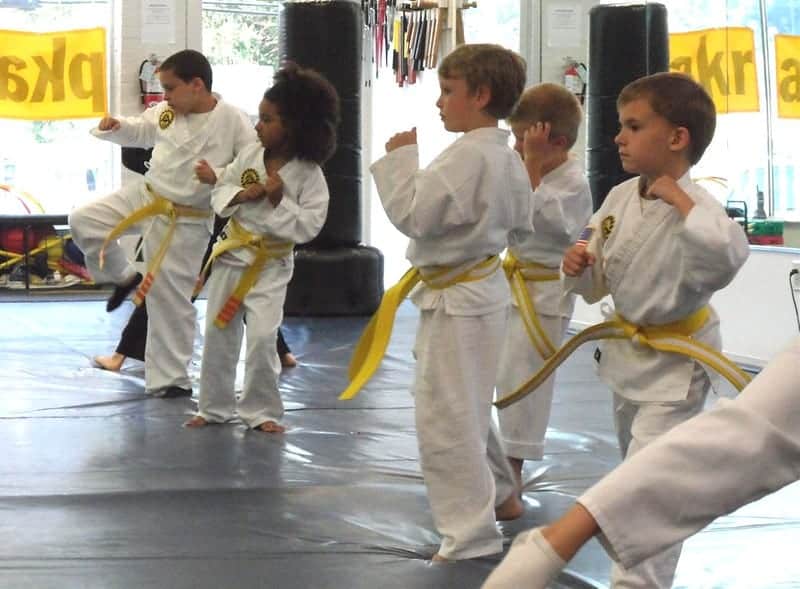
Photo by PKA Karate

Martial arts may seem like an intimidating prospect, especially for kids, but the truth is that martial arts pique the interest of many children internationally. If your kid is excited about martial arts and wants to get involved, what is the best martial art for them to join, and is it safe for them to do so?

The best martial arts for kids are Brazilian Jiu Jitsu, Karate, and Taekwondo. These martial arts do not use weapons, and the beginning stages of the learning process can be broken down into forms and skills achievable for children. Martial arts promote discipline and self-control in kids.

Some forms of martial arts are not ideal for kids, but other forms are perfect even for kids of a young age. Martial arts have numerous benefits for kids, and even if it may seem dangerous, under the right instructor, many forms of martial arts are safe for kids. Let’s explore the best martial arts for kids and find out which is best for your family.

What Martial Art Is Best For My Child And Why?

Martial arts can be dangerous, and they are a challenge to enter into, but if your kid is interested in martial arts, there are some safe options to choose from and some martial arts that are ideally suited for younger children.

The best martial arts for kids to learn are those that do not work with weapons. Carrying and wielding weapons of any variety is not ideal for kids of any age, as this can very easily lead to serious injury and harm.

With this in mind, there are several martial arts that are well suited for children, even those of a young age. When considering a martial art for children, weapons are not the only aspect; other factors also bear consideration.

The martial arts that are the most suitable for kids to learn are those that have relatively simple movements and principles as the basis for students to begin. This means that the basics of the martial art can be broken down into simple movements and forms that children can easily understand and execute well.

This further narrows down the martial arts well suited for the younger generation, so let’s take the time to look at some of the 3 best options and learn why they are so ideally suited for young students.

Brazilian Jiu-Jitsu For Kids

Brazilian Jiu-Jitsu, often abbreviated to BJJ, is one of the best martial arts for kids to study. This form of Jiu-Jitsu is focused on self-defense and particularly teaches kids how to defend themselves from larger opponents.

The main components of BJJ are grappling and groundwork that focuses on submissions, distance control, levering, and positioning. 

These moves and techniques are ideal for kids because they do not rely on physical strength to be effective. This contrasts with martial arts that are focused on striking with kicks and punches.

This martial art is considered one of the gentler options, which is ideal for kids; the basic movements and techniques are easily broken down into easy beginner steps that kids understand well.

Karate For Kids

Karate is an excellent form of martial arts for kids to learn, as it is broken down into three sections: the basics, known as Kihon, forms known as Kata, and sparring known as Kumite. These three aspects of Karate highlight that sparring is only one part of the martial art. 

Karate is very focused on self-discipline and therefore emphasizes the basics and the forms of the martial art in the beginning years much more than sparring

This means that children will learn the etiquette and form of the martial art and practice self-discipline long before they are required to spar with an opponent. 

This makes Karate ideal for even very young children, as learning the Kata forms and Kihon basics is very achievable for kids, even very young children.

Taekwondo For Kids

Taekwondo is a good martial arts option for kids because there is a lot of physical training involved that develops the entire body, with a special focus on core strength and dexterity.

This martial art form specializes in kicking and punching techniques, particularly head-height kicking, spin kicks, jump kicks, and fast kicking techniques.

Taekwondo is more ideally suited for older kids, as the heavy focus of Taekwondo on kicking may be too challenging for younger kids to learn since balance is a key part of the techniques.

This martial art offers a full-body workout, and it can be broken down into more simple movements and practice exercises that kids can earn quickly. It focuses on comradery and teaching youngsters several important skills for personal development.

RECOMMENDED FOR YOU:
Karate vs. Taekwondo: Key Differences And Similarities

How Do Martial Arts Help Children?

Participating in martial arts has many befits for children. Regardless of the form of martial art that you choose for your child, all martial arts share similar benefits.

Martial arts help kids develop physical fitness, stamina, and dexterity while strengthening core muscle groups and developing coordination and control

Self-discipline and self-confidence are also major factors in every martial art. Therefore, they will teach kids these valuable life skills along with others such as respect, honor, and mental fortitude. 

Attending martial arts classes also helps kids develop social skills and make friends with others through interaction and common interests.

What Is The Best Age For A Child To Start Martial Arts?

The age at which a child begins learning martial arts depends on the physical and mental requirements of the martial art. Some forms of martial arts are easier than others for kids, while some are too big of a challenge for very young children.

Kids can start certain martial arts from as young as three years old, while others require kids to be slightly older. 

Most kids start martial arts such as Karate and Brazilian Jiu-Jitsu from the age of four or five years, while others such as Taekwondo may only be possible from eight years old or older due to the physical demands of the martial art.

The age that a child starts martial arts is usually decided by the instructor teaching the class. If the instructor is comfortable teaching a child from a very young age, then the minimum age that the instructor decides is a good age to begin.

RECOMMENDED FOR YOU:
Does Wrestling at an Early Age Stunt Your Growth?

What Is The Safest Martial Art For My Child?

All martial arts can be dangerous, but some are safer than others. The safest martial arts for kids are those that do not require weapons or violent kicks and punches from the beginning.

Brazilian Jiu-Jitsu is said to be the safest martial art for kids as this form of martial art focuses heavily on grappling and submissions rather than weapons or striking.

Other martial arts such as Karate and Aikido are also very safe options for children due to the lack of sparring in the beginning years of learning the martial art.

RECOMMENDED FOR YOU:
10 Safest Martial Arts That Are Effective In Real Life

Do Martial Arts Classes Make Children Violent?

Many parents’ concern is that learning a martial art will make a child violent. In truth, learning a martial art will not make a child violent, but it has been proven to reduce violence and aggression in kids and teenagers.

Martial arts classes reduce aggression and violence because every martial art focuses on discipline, diligence, and self-control. No martial arts teach children or any other students to harm others on purpose, but rather how to defend themselves.

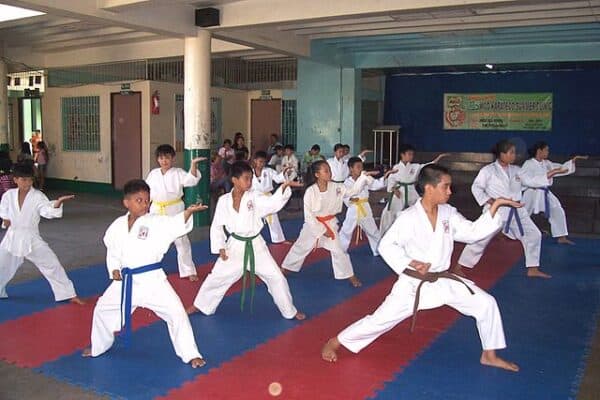
Photo by Jjskarate

Martial arts teach all their students that they should not engage an opponent outside of class for any purpose other than self-defense.

This article, “Will Martial Art Make My Child More Aggressive?”, will fully explain why learning martial arts won’t make your child more aggressive so make sure to check it out.

RELATED:
Is Boxing Good For Kids? A Basic Guide For Parents

Conclusion

Martial arts can be very beneficial for kids and is a great way to improve and maintain physical fitness while learning valuable life skills such as diligence and self-control.

Not all martial arts are well suited for kids, but those that are can be started from as young as three years old.

Brazilian Jiu-Jitsu, Karate, and Taekwondo are all ideal martial arts for kids as they do not use weapons and are well suited for children’s strength, mental capacity, and physical ability.

What Are The Different Styles of Karate? Simply Explained

0
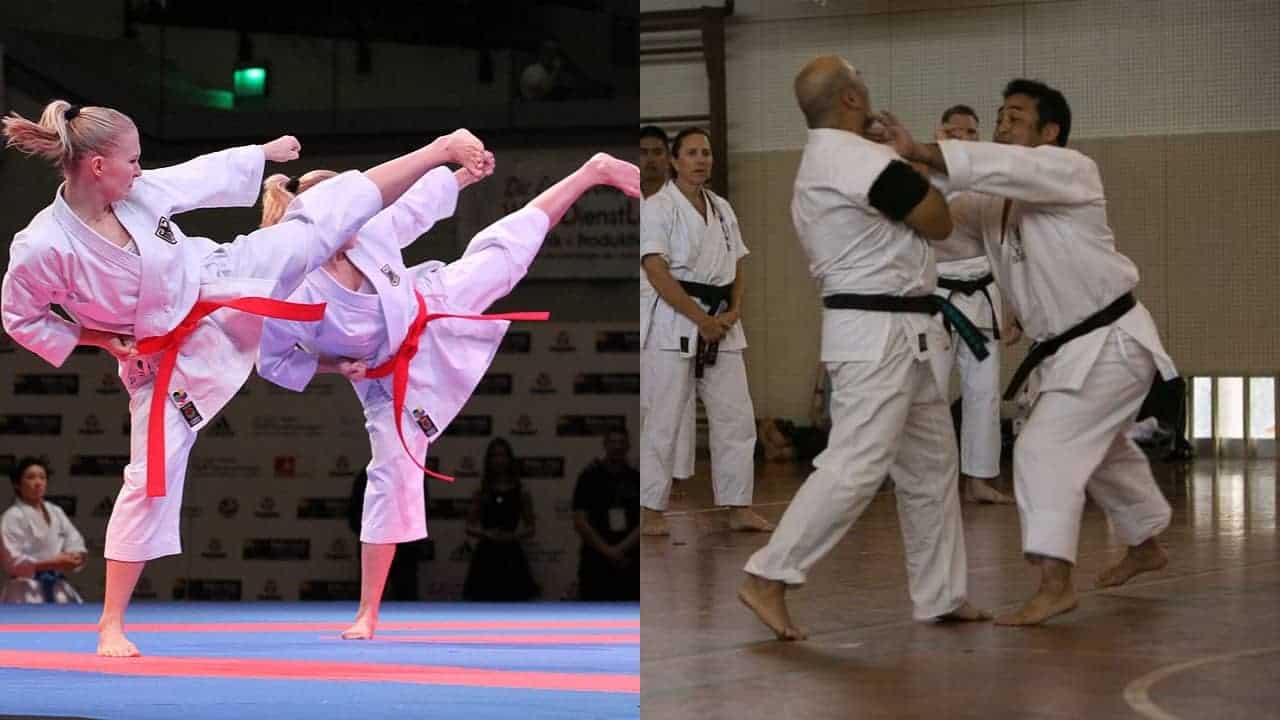
Photo by Claus Michelfelder (Left Photo)

Karate is, perhaps, the most popular martial art, well spread all around the world. It emerged in the Okinawan Islands in the 14th century and is a national sport in Japan. However, the term karate is a bit confusing as there are many different styles, forms, and rules.

Karate has dozens of different styles and forms. But, there are four major styles created in the Okinawan Islands that later influenced the birth of other styles and forms that came later. These four main styles are:

  • Goju Ryu
  • Shotokan
  • Wado Ryu
  • Shito Ryu.

Keep reading this article to learn more about different types of karate, and find out which are the best and most effective.

History of Karate

The earliest records of karate go all the way back to the 14th century in the Ryukyu Kingdom. Its story has started when a large group of families moved from China to the Ryukyu Islands (present Okinawan). Some of these people were skilled martial artists who began teaching Chinese martial arts upon arriving on the island. In the 15th century, the King would ban all the weapons so unarmed martial art practices started to evolve at a high rate.

This was a time when the three initial forms of karate appeared, named by the three main cities they emerged from:

  • Shuri-te
  • Naga-te
  • Tomari-te

Moving to the 19th century, one of the most important figures was Matsumura Sokon. He was a student of Shuri-te and Tomari-te karate, and he used this as a base to create the fourth style “Shorin-Ryu”. Later on, one of his students, Itosu Anko, would play a big role in the rise of karate on the main island of Japan. First, he helped karate to get recognition from the government. And shortly after that, karate katas became a part of Okinawan public schools. This is the main reason why Anko is often seen as the father of modern karate.

The biggest change came when Japan annexed the Ryukyu Kingdom in 1879 and many Okinawans started migrating to the main islands of Japan. Karate started spreading fast with many teachers opening schools all across Japan, and some of the most famous ones were:

  • Kenwa Mabuni (founder of Shito-Ryu)
  • Gichin Funakoshi (founder of Shotokan karate)
  • Kanken Toyama (founder of Shudokan)

At the beginning of the 20th century, karate started to rise at a high rate. In 1922, the “Japanese Ministry of Education” accepted Karate to be a part of Japanese universities. From this point, karate would start to grow and evolve fast, and it became the national sport in Japan. This was also a time when the name was changed from “Chinese Hand” to “Empty Hand”, which in some way marks the beginning of Japanese karate.

RECOMMENDED FOR YOU:
Karate vs. Taekwondo: Key Differences And Similarities

How Many Different Styles of Karate Are There?

Karate is well spread all across the world and there are dozens of different styles and forms. Yet, it’s crucial to remember that the four major styles of karate influenced the birth of most other styles. Here is a short explanation of each one:

  • Shotokan — is a style created by Gichin Funakoshi who is often seen as a pioneer of karate in Japan. Born in Okinawa, Funakoshi later moved to Tokyo, where he founded Shotokan in 1938. The emphasis of this style is on wide stances and linear methods, and attacking in a blitz using elbows, knees, kicks, and punches. It has three main elements: Kihon (basics), Kumite (sparring), and kata (forms). In modern times, it is by far the most popular among people who want to learn self-defense.
  • Wado-Ryu — is a style founded by Hironori Otsuka in 1939. It is famous for its emphasis on hand and foot strikes, joint locks, and throws. It has origins in Shotokan and Shito-Ryu styles of karate and its throws and joint locks come from Ju-jitsu. It differs from other styles as it focuses more on fluid movements and much shorter stances.
  • Shito-Ryu — is a style founded by Kenwa Mabuni in 1934 and is one of the most technical styles of karate. Students learn around 94 different katas and the main goal is to move from one technique to another in a flow. Training includes a lot of sparring and teaches a person how to strike with all limbs, grapple, and attack with joint locks.
  • Goju-Ryu — is a style developed by Chojun Miyagi in 1930 and is a mix of hard and soft techniques. The emphasis of this style is on fast and precise counter-attacks, breathing power, and both circular and linear movements. It consists of hand and foot strikes, as well as takedowns, throws, and joint locks. 

Some other popular styles of karate are:

  • Kyokushin
  • Shorin-Ryu
  • Enshin
  • Uechi-Ryu

What Is The Hardest Style of Karate?

Kyokushin karate is the hardest style of karate. While most other styles consist of both hard and soft techniques, Kyokushin is all about power and damage. It embraces a hard method of training and hard sparring without the gear. Karatekas trained in this style learn how to kick and punch bare-knuckle, which is what makes it brutal and even dangerous in the eyes of the layman. But at the same time, they are all very strong, durable, and have superb conditioning.

Kyokushin is a modern style created in 1964 by Mas Oyama. It has origins in Goru-Ryu and Shotokan, and despite being brutal, it is also a very technical style. The emphasis is on striking utilizing hard kicks. Students learn how to rotate their hips and weight transition to generate a lot of power in every strike without using much energy. Like in all other styles, they utilize advanced footwork, angles and are very, very accurate.

Since it is oriented towards full contact and damage, Kyokushin is among the most effective styles for self-defense. Its hard method of training and lack of protective gear train both your mind and body for real combat. Back in the day, students could also throw punches to the head. But this was just too brutal and caused a lot of serious injuries. In modern times, Kyokushin doesn’t include punches to the head, only to the upper body area below the neck.

How Many Belts Are There In Karate?

The number of belt ranks differs between the styles of karate, schools, and even countries. However, most styles and schools have from seven to ten belt ranks called Kyu which means “lower belts”. For instance, Shotokan has 8 Kyu ranks, Shito-Ryu has 9 while Goju Ryu has 10 ranks. Here is a list of the belts and how long does it take to progress through all the ranks:

BeltHow long it takes to get it
White3 months 
Yellow6 months 
Orange6 months
Green9 months
Blue12 months
Brown12 – 18 months
Black Belt12-18 months

Total time to reach a black belt: around 5 to 6 years

Once they reach a black belt, students then move to the advanced grades called “Dan levels”. In some way, this is where the most important journey begins, and the grades vary between styles and can go from 6th to 10th Dan. Here is a list of all:

RankMinimum ExperienceAge
1st Dan (Shodan)1 year 
2nd Dan (Nidan)1 year training 
3rd Dan (Sandan)2 years 18 and over
4th Dan (Yondan)3 years
5th Dan (Godan)4 years
6th Dan (Rokudan)6 years
7th Dan (Nanadan)7 years50 and over
8th Dan (Hachidan)7 years60 and over
9th Dan (Kyudan)8 years
10th Dan (Judan)9 years
RECOMMENDED FOR YOU:
Karate Belt Ranking System – EASILY Explained For Beginners

What Is The Difference Between Kihon, Kata And Kumite?

Kihon, Kata, and Kumite are the three parts of karate training. Here is a brief explanation of each one:

  • Kihon — means basics of karate. Beginners must spend a lot of time learning the basics to build a strong base. They endlessly drill stances, punches, kicks, and blocks until they get it right. All students must master all the basics before they can progress to the advanced levels.
  • Kata — is a set of forms where each form stands for a sequence of martial arts movements. Karateka practice kata alone, and they do this to memorize and perfect the movement and techniques. Depending on the type of kata, they perform different stances, punches, and kicks.
  • Kumite — means sparring between two karateka. This is a part of training where the main goal is to apply techniques in a real fight. But of course, the focus is on light contact and executing techniques the right way.

How Long Does It Take To Get A Black Belt In Karate?

On average, students need around 5 years of training in karate to reach the black belt rank. But bear in mind that this depends on the style of karate, school, your talent, dedication, and passion for learning. That said, some people may earn a black belt in less time while some need up to 7 years. Beginners start from the white belt rank, and depending on the style, must progress through six more ranks before reaching a black belt.

The progression through the ranks is slow and the promotional criteria is very strict. Once a student feels ready and wants to go to the higher rank, he/she has to pass the exam where they need to display a certain level of competency to pass on to the next rank. In most karate schools and styles, the grading is held around four times per year.

Is Karate Effective For Self Defense?

Karate is a martial art created for self-defense and its techniques are designed to work in street fighting. One style of karate that clearly differs from the others in this aspect is Kyokushin that is a full-contact karate style. It embraces a hard method of training and throwing each strike with violent intention and goal to knock the opponent out. Its concept and methods of training are really effective for street fighting. 

Traditional forms of karate, the ones from Okinawan Island were designed specifically for street fighting. But over the years, notably in modern times, the emphasis has moved from self-defense to sports karate and competition. 

In this day and age, most karate dojos are heavily oriented towards tournaments and competition, while traditional self-defense methods are slowly falling into oblivion. To prepare for tournaments, karatekas develop skills, habits, and automatic reactions that they can’t use on the streets. The rules of karate competition differ so much from real fighting that it would be dangerous to apply the same moves in a street fight. This is the main reason why modern-day karate (sports karate) is not that practical for street fighting.

Even when they do teach self-defense, modern methods are much softer than traditional ones. Students learn how to beat the opponent with technique rather than using power and landing hard strikes. This approach allows you to win a fight on the streets without causing injuries, which sounds nice on paper.

But bear in mind that fights on the street are chaotic brawls where you can lose your life or get seriously hurt in a split of a second. You need to be aggressive, even violent in some cases to protect your life or the lives of your loved ones. Once the fight breaks out, the last thing you need to do is to rely upon the automatic reactions that you have developed for scoring points in tournaments. 

Is Karate Effective In MMA?

Karate is more than present in modern MMA. There have been many successful UFC fighters trained in specific styles of karate. In fact, it’s fair to say that karate is one of the very few traditional martial arts that have found its place in the world of cage fighting. Still, it’s worth pointing up that it is not the most effective as other martial arts like Muay Thai fit better within the rules.

What most karate styles bring to the MMA is fast footwork, blitz attacks, and laser precision. MMA fighters trained in karate are always on the move bouncing in all directions, striking with kicks and punches from both stances, and are very hard to hit. It’s really hard to cut their movement or land a clean strike because they never stick in one place.

They are masters in keeping their range, moving in to land a strike, and moving out without being hit back and delivering fast counters. This is why karate fighters are a tricky matchup for any fighter, and so hard to beat inside the cage.

Of course, fighters like Stephen Thompson are also good in other aspects of MMA like grappling and have a decent BJJ defense. You can’t expect to switch over from karate and succeed or go far without developing an all-around set of skills. But overall, karate represents a solid base for MMA.

Which Style of Karate Is The Best For MMA?

In order to see which style of karate may be the best style, let’s look at some of the most famous karate based fighters in MMA and their style of karate:

Lyoto Machida— Lyoto Machida is a former UFC 205 lbs champ and one of the pioneers of karate in modern MMA. There were a couple of fighters before him, but it’s fair to say that Machida put karate on the map when it comes to MMA. “The Dragon” grew up on the mats training in Shotokan karate from a young age and is a 3rd dan black belt in Shotokan. His father Yoshizo Machida was highly ranked in the Japan Karate Association and a master in Shotokan karate as well. 

Stephen Thompson —  Thompson holds black belt ranks in Kempo karate. Thompson is one of the most talented UFC fighters in history. When it comes to the new generation of fighters and fans, he is the face of karate in MMA. Thompson prefers to stay in a wide stance, keep his hands low, bounce around in all directions, and attack in a blitz. He is, perhaps, the best instance of how effective karate is in MMA. In his career, he fought two times for the UFC title but failed on both occasions.

Robert Whittaker — is one of the best 185-pound fighters in the history of the sport that has a strong background in karate. When he was just seven years old, his father enrolled him in Goju-Ryu karate dojo to learn self-defense tactics. Whittaker went on to train hard for eight years, and earn a black belt before moving to Hapkido.

RECOMMENDED FOR YOU:
What Is American Kenpo Karate? A Basic Guide To American Kenpo

What Is UFC Fight Island? Everything Explained

0
UFC’s Octagon on ‘Fight Island’ in Abu Dhabi
Photo by UFC.com

Dana White, the owner of the UFC, has made waves by announcing that the UFC has acquired an island. This would be known as Fight Island and will go on to host some amazing events. But what is this venue and why did the UFC build it? 

Fight Island is located on Yas Island in Abu Dhabi. It was initially used as a way for the company to keep operating during the COVID-19 pandemic. The remote location allowed them to set up a secure bubble to keep their athletes safe. In the future, they intend to keep using this location to stage fights. 

The Fight Island is a highly ambitious project by the UFC, with the company expecting to incorporate the venue into events. Keep reading to take a closer look at this island and answer some of your burning questions. 

What Is UFC Fight Island?

The best place to start is by talking about what this island is. This is a location in Abu Dhabi. This is a manmade island, which the UFC was able to use to host their events. There are a few reasons why Dana White, the owner of the UFC, chose to use this location. 

One of the biggest initial considerations was the COVID-19 pandemic. As the virus spread around the world in 2020, it forced businesses to change their practices. The UFC was no exception. They needed to find a way of keeping the close-contact sport going while complying with new regulations. 

Fight Island turned out to be the ideal solution. It allowed the fighters and their teams to fly in. There, they would be able to quarantine and form a bubble. This was also a good way to allow international fighters to compete together. 

While the restrictions might have eased, the UFC intends to continue to keep using the venue. The company hopes that this will become an attraction, signaling to the audience that a major fight is about to occur. And in an interview with Bro Bible, Dana White said “Fight Island is going to be so badass that it’s about to be this destination in Abu Dhabi for fight fans.”

Why Is UFC On Fight Island?

The UFC originally moved to Fight Island because of the global pandemic. They needed a place where they could comply with the regulations while still putting on an entertaining show. An island provided the ideal location. They could get all the fighters to quarantine safely in a bubble. 

When the pandemic originally struck, Dana White started searching for an international island to host the fights. Eventually, he settled on Fight Island. There were a few things that attracted Dana White to the island. These elements included: 

  • Control over who comes into and out of the area
  • Easily accessible for all international fighters
  • Well-established infrastructure
  • Located close to hotels
  • Enough space to build a stadium. 
RECOMMENDED FOR YOU:
Tips That Can Help You Avoid COVID & Other Diseases at MMA Gyms

Where Is The Fight Island Located?

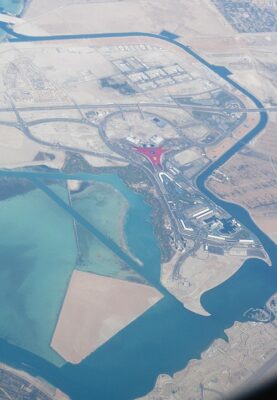
What UFC fans refer to as Fight Island is a manmade island known as Yas Island. It’s off the coast of Abu Dhabi. The island is owned by Abu Dhabi developer Aldar Properties. They intend to keep expanding the island, adding more attractions. 

Aerial view of Yas Island
Photo by Dapaan

How Does Fight Island Keep Fighters Safe?

There are a few ways that fight island was able to keep fighters safe and allow the UFC to keep operating during the pandemic. This is because it allowed them to build a bubble. There are multiple steps that an athlete and their team need to go through before they can enter the bubble. These include: 

  1. Fly to a hub city. 
  2. Take a COVID test before flying to Fight Island
  3. Take another test once they arrive. They need to isolate until the results of this test are revealed
  4. A third test is taken, used to confirm the results of the second test. 
  5. Before they fly home, they will need to complete another test. 

By the end of this process, the UFC can be fairly confident about the health of their fighters. If there are any positive tests, they will be able to pull or reschedule these fights. The ability to keep fighters in isolation until the results are confirmed ensures that a positive case won’t disrupt the whole event.

RECOMMENDED FOR YOU:
Do UFC Fighters Get Drug Tested? – Fully Explained Here

Are Fans Allowed At UFC Fight Island?

When the UFC first came to Fight Island, they didn’t have any fans. This was the same as most of the events that occurred during the COVID-19 pandemic. However, as the world has started to open up again, the potential for fans to come and watch the fight has expanded. The company will start by having 2,000 spectators at the event. 

However, the number of hotels already present on the island might allow the company to increase the capacity in the future as restrictions begin to ease. It’s estimated that the Etihad Arena can house up to 18,000 fans

Is UFC Fight Island Permanent or Temporary Place For UFC Events?

UFC has always traveled around the world, performing shows in a range of destinations. Because of this, it’s unlikely that they would settle down in one area as a permanent home.  However, they have shown a willingness to use Fight Island for larger events. This has included longer events, like a month-long residency. 

This kind of strategy will likely continue moving forward. The UFC has previously expressed interest in making Fight Island the home for larger events. This is similar to the “Rumble in the Jungle” concept that has worked successfully for boxing. At the very least, the Abu Dhabi government remains open to the possibility of having more events. Plus, they have the infrastructure available to make this a possibility. 

How Much Did Fight Island Cost to Build?

The UFC takes up a relatively small part of Yas Island. This is one of the biggest tourist attractions in Abu Dhabi, attracting thousands of tourists each year. Some of the other locations on the island include: 

  • Ferrari World
  • Yas Water World
  • Yas Marina Circuit, which is commonly used by F1
  • Hotels and a golf course

It should be noted that Yas Island is expanding.  It’s believed that they could be considering adding a SeaWorld and a Warners Bros Movie World. At present, the island is only 55 percent complete. 

Because of these additions, Yas Island is worth a sizable investment by the Abu Dhabi government. For example, the track alone cost $1.3 billion. The exact financial details of Fight Island remain closely guarded. Though, it’s believed that it was a sizable investment made by the Abu Dhabi government. 

Some of the locations were slightly modified to suit the needs of the UFC. For example, a gym was built in the ballroom of the hotel, where the fighters and their teams can train. There was also a practice octagon constructed on the beach. The bill for this was paid by the Abu Dhabi government, as a way of promoting the country.

Does the UFC Own Fight Island?

While the UFC might be able to use the island, they won’t own it. Yas Island is owned by the Abu Dhabi government. While this might seem like an inconvenience, the company has been using this partnership to its advantage. It’s believed that Abu Dhabi helped them develop some of the infrastructure needed for Fight Island. 

In exchange, the government gets an attraction to bring tourists to the country. It also gives them a way of promoting their country to a global audience. 

Final Thoughts

Fight Island is set to become a fixture for the UFC, using it to host their biggest fights. This is a win for both the company and the Abu Dhabi government, who are using these events as a way of promoting their country as a tourist destination.