Home Blog Page 21

Muay Thai vs. Boxing  –  Which Style is Better? (Easily Explained)

0

Stylistically, Muay Thai and boxing are two different fighting systems with different techniques. For example, you learn to kick and punch in Muay Thai, whereas in boxing, you learn how to strike with your hands well.

Therefore, to say which style is better between Muay Thai and boxing heavily hinges on analyzing how these two systems perform under different conditions because it’s not a case of one size fits all type of conclusion. Nevertheless, here’s a simplified version of the consensus on which style is better.

Muay Thai is considered a more robust fighting style than boxing because it teaches you to use all your limbs as weapons, whereas boxing only teaches you to use two hands. Also, Muay Thai teaches how to fight in a clinch position to limit the opponent’s movement, which is illegal in boxing.

Let’s start by analyzing why Muay Thai is widely regarded as a better style than boxing.

Boxing vs. Muay Thai  –  Key Differences.

Though both are striking arts, boxing and Muay Thai differ a lot from one another in just about every aspect. Here is a simple and detailed explanation of all the key differences:

History

Boxing is one of the oldest forms of combat with its origins dating all the way back to ancient Egypt around the 3rd millennium BC. There are many cave drawings inside the Thebes showing people trading punches with their hands being wrapped. But as a combat sport, boxing emerged in ancient Greece in 688 BC at the 23rd Olympiad.

Muay Thai emerged in Thailand and its origins go all the way back to the 14th century and the combat system called “Muay Boran”. At the time, Siamese soldiers used Muay Boran as a hand-to-hand combat system to fight on the battlefield. Later on, the matches would come to be a part of various festivals that used to be very popular in the region. In the 19th century, King Rama V made a decision to legalize these matches, and name this sport version Muay Thai.

Concept

On paper, boxing is a simple system as it focuses only on mixing hand strikes with upper body movement and footwork. There are no leg strikes, clinch, grappling, or hitting the area below the waist. It is a pure form of fist fighting where you don’t have to worry much about anything else besides punches in terms of weapons but it is more technical and strategic than Muay Thai.

Muay Thai is much more versatile as it trains a person to use all limbs as weapons in a fight, which is the reason why people call it “the art of eight limbs”. The emphasis is on hard leg kicks, mixing the kicks with basic western boxing combos, and dirty boxing inside the clinch using elbows and knees. On top of that, the training covers some basics of grappling like trips, sweeps, and throws that are allowed in matches.

Stances and guard

Since boxers have to worry about the kicks, most boxers prefer to stay in a wide-bladed stance and lean heavy on the lead leg. This allows them to effectively slip/dodge punches, bob weave, and generate more power. As for the guard, most boxers hold their lead hand a bit further out from their face, and the other one close to their chin. They keep both of their arms close to their bodies and elbows extended to protect the rib-cage area from hard body and liver shots.

Muay Thai differs a lot here because of the kicks and clinch fighting. Most fighters tend to stay in a squared stance with their feet shoulder-width apart which allows them to quickly defend or attack with kicks and knees. Unlike boxers, they keep both of their hands in front of their face, slightly angled toward their opponent to create distance and respond to upcoming kicks, punches and elbows. 

Footwork and range

Footwork and movement play a big role in boxing. This is mainly due to the fact that boxers fight at a much close range and they use footwork to create angles, keep their range and out position their opponent. In fact, you can’t expect to succeed or become good at boxing without good footwork which is the most underrated skill in boxing. This is why boxing is often referred to as “sweet science” because it requires a lot of technical skills to become a good boxer.

Muay Thai fighters, on the other side, prefer to stay in front of their opponent and block the punches and kicks with their hands and legs. You will rarely see them applying lateral movement, bouncing around or rapidly changing direction as most of them stay flat-footed. 

Boxing Rules:

  • Lenth of the matches: pro-boxing matches have from 4 to 12 rounds, with each round being 3 min long, and the rest period between the rounds is 1 min. In total, high profile boxing match includes 36 min of action.
  • Legal strikes: boxers can only use their hands as weapons to do damage with punches. They are allowed to strike only the upper body area above the waist.
  • Illegal strikes: strikes to the back of the head (rabbit punches), strikes below the waist, kidney punches as well as using legs, takedowns, or any other techniques besides punches.
  • Scoring: each boxing match includes 3 judges sitting beside the ring and scoring the fight using a 10-point system. The winner of the round gets 10 points while the loser gets 9, 8, or 7 depending on how dominant the winner was.

Muay Thai Rules:

  • Lenght of the matches: Muay Thai matches have 5 rounds with each round being 3 min long. Unlike in boxing, there is a 2-min break between the rounds.
  • Legal strikes: fighters are allowed to do damage with punches, kicks, elbows, knees, as well as to throw the opponent using trips, throws, and sweeps.
  • Illegal techniques: fighters are not allowed to strike the back of the head, groin area, or hit the grounded opponent.

Gloves:

Boxing gloves are more padded and rounded to increase hand protection. The gloves are also more rigid and far less flexible than the ones in Muay Thai to prevent any movement of the wrist and knuckles upon landing a hard punch.

Muay Thai gloves are a bit more flexible as fighters need to grab their opponent to clinch, catch kicks and execute throws. Blocking kicks is also a reason why Muay Thai gloves have more padding on the sides.

Muay Thai vs Boxing – Which Is Better For Self-Defense?

On paper, Muay Thai is a better option as it is more versatile than boxing, and it puts more emphasis on throwing each strike with full power and finishing the fight as fast as possible. It includes a wide range of weapons, and trains you to fight at all ranges, including the clinch. But on the other side, boxing might be equally effective in a lot of scenarios for one specific reason.

The most common way of attack out on the street is by swinging a punch. No one would bother, notably people not trained in martial arts, to throw kicks, go for takedowns simply because punches are the fastest and most natural way you can hurt a person standing in front. And this is why boxing is close to ideal for self-defense.

Not a single combat system would teach you how to defend and attack using punches better than boxing. It doesn’t matter if the attacker is bigger or stronger, boxers have great timing, spatial awareness, know how to block or slip the punch, and deliver fast, powerful and precise counters.

Boxing also might be a better option because the learning curve is much shorter. There are far fewer techniques than in Muay Thai that are also much easier to learn. On average, students need from 6 to one year of training to develop solid skills they can apply in a real fight.

On the other side, most street fights are chaotic brawls with a lot of grabbing and pulling at close range and this is where Muay Thai and its clinch fighting aspect shine the most. The only fair answer is that both martial arts are highly effective for self-defense, and which one is better really comes down to personal preference.

RECOMMENDED FOR YOU:
Grappling vs Striking – Which is More Effective?

Muay Thai vs Boxing – Which Is Harder to Learn?

To find out which one is harder to learn, you need to take a look at the set of different factors and consider which one:

Technically difficult: Muay Thai

Muay Thai is a far more versatile martial art when it comes to techniques. It consists of dozens of different punches, kicks, elbows, knees, clinch positions, and throws. On top of that, you need to learn how to mix it all together while boxing focuses on hand strikes only.

High intensity: Muay Thai

Both boxing and Muay Thai are aggressive systems where the emphasis is on power, damage, and knockouts. Students do a lot of intense cardio sessions, various drills to improve timing and muscle memory, grueling strength workouts, and above all, a lot of hard sparring. You won’t earn or learn anything in both of these arts without sweat, blood, pain, and even tears.

Muay Thai might be slightly more intense due to its emphasis on raw power while boxing is a bit more technical.
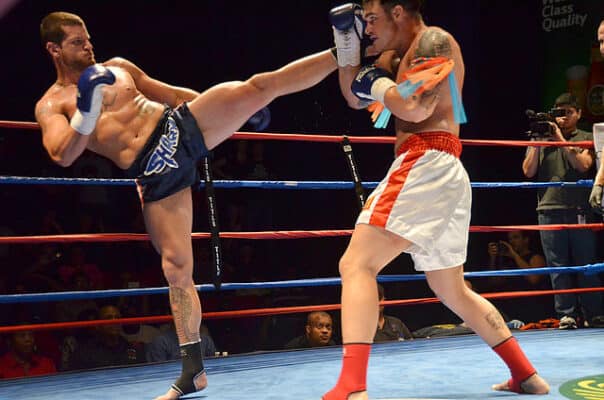
Photo by Eric Langley / CC BY

Takes longer to learn: Muay Thai

Boxing consists of punches mixed with footwork and movement. Most of the techniques are direct, simple, and as a beginner, you won’t have a hard time picking up the basics. On average, students need around 6 months to 1 year of training to develop solid boxing skills, the skills they can apply in an amateur match or self-defense scenario on the streets.

Muay Thai takes more time simply because there are more techniques to master. Students need from 2 to 3 years of training to achieve the same level of proficiency as you would with one year of boxing. 

High injury rate: Muay Thai

Overall, Muay Thai is harder on your body and training carries a higher risk of injuries than in boxing. There are a lot more fractures, torn muscles, knee injuries, contusions, and various other “light” injuries. But since boxing includes far more head strikes, it carries a much higher risk of facial and brain injuries.

RECOMMENDED FOR YOU:
Which Martial Art Has The Most Injuries? FAQs

Muay Thai vs Boxing – Which Martial Art Is Better For Fitness?

The only fair answer is that both Muay Thai and Boxing are great options if you are looking to improve your fitness. Training in both may help you lose weight, get stronger, boost endurance, and get more flexible. Classes are a mix of anaerobic and aerobic workouts that on one side, burn a lot of calories, and on the other, make your upper and lower body stronger.

The structure of training is dynamic, there is very little rest, and you are going to be on the move and sweat all the time. Your body might hurt after every session and feel sore, but the fitness benefits of this type of workout are huge.

Studies have shown that a single hour of training in both Muay Thai and boxing can burn up to 800 calories. So if you commit yourself to classes, expect to lose weight and get in top shape in a record-breaking time. Last but not least, throwing hundreds of kicks and punches per class helps you relieve stress, and improve mental health. 

Though these two differ in many aspects, there is a lot in common when it comes to the physical and mental benefits of training. It is fair to say that boxing is a bit more popular option among average people because it is less intense, and a bit easier to learn.

Muay Thai vs. Boxing – Which Style Is Better For MMA?

Muay Thai has an edge over boxing for MMA because it is more versatile and it better fits within the rules of cage fighting. MMA is a sport that allows fighters to use all limbs as weapons to fight at all ranges, including the clinch. Out of all striking arts, Muay Thai is the only one that covers all of these aspects. Boxing gives you a better understanding of footwork, movement, angles, timing, and distance. But there are also a couple of big downsides.

First of all, boxing is limited in MMA because the entire emphasis is on punches. It won’t teach you how to defend against kicks, takedowns, clinch, knee, or elbow strikes, not to mention fighting on the ground. For instance, standing in a boxing stance in MMA is bad as it leaves a fighter prone to vicious leg kicks and takedowns.

Muay Thai, on the other side, is better but not ideal. It is often seen as a total package for MMA when it comes to standup fighting. Apart from punches and kicks, it trains you to fight in the clinch, and even some grappling basics.

The conclusion is that Muay Thai is a better base for MMA on paper because the learning curve is much longer for a boxer. Upon switching to MMA, Muay Thai fighters can immediately start working on grappling. Boxers, on the other side, first need to learn the kicks, clinch, elbows and knees which can take a lot of time before they can finally move to grappling.

RECOMMENDED FOR YOU:
Top 10 Reasons Why MMA Is The Hardest Sport

Muay Thai vs. Boxing – Who Would Win?

Fighters trained in Muay Thai have more weapons at their disposal, and with that, better chances of beating a boxer. But how the fight would play out really depends on numerous factors like the place of the fight, are the fighters similar in skill and size, and many other elements.

Muay Thai fighters have the advantage over boxers in most scenarios because they are superior at all ranges. If the fight is in an open space, boxers would have a hard time dealing with the kicks and closing the distance without receiving a knee, or front kick straight in the face or body. And even if they manage to move in without taking damage, Muay Thai fighter would wrap their hands around their neck, and initiate the clinch position from which they can unload with knees and elbows. Boxers are not trained to fight in the clinch and would look lost in this position and have hard time escaping or defending. 

Though they might be superior on the streets, Muay Thai fighters would lose just about every boxing match inside the boxing ring on the top level. One of the Muay Thai fighters who managed to do well in boxing was Saenchai, but bear in mind that he did it on the regional scene in Thailand.

RECOMMENDED FOR YOU:
What are the Different Styles of Kickboxing? Simply Explained

Should I Learn Boxing And Muay Thai At The Same Time?

Training in both Muay Thai and Boxing at the same time has many benefits as long as you are doing it the right way. These two arts complement each other in many different ways and visiting both gyms can only improve your game and make you a complete striker. 

On one side, Muay Thai fighters can learn a lot about footwork and head movement. This can help them learn how to dodge/slip punches, deliver fast counters, create better angles, and stay off the centerline of attack. On the other side, boxers can learn how to throw and defend against the kicks, as well as how to fight inside the clinch.

But if you want to pursue a career in one martial art, then you should be careful because cross-training might have a negative impact on your skills. It can have a negative impact on your stance, guard, timing, and feeling for distance. On the other side, fighters who often switch between Muay Thai and boxing classes are MMA fighters looking to elevate their striking game.

Conclusion

Ultimately, both Muay Thai and Boxing are great to learn and take part in. However, if you plan to jump into MMA then you’ll likely benefit most from Muay Thai. At the same time, you’ll also be capable of handling yourself in potential street fights or in times when you need to defend yourself against an attacker.

Boxing is a sweet science, which can be fun to watch and double as a terrific workout. In fact, there is far more money in boxing at elite level than in any other fighting sport on the planet right now. Therefore, if you needed to learn one just for a potential fighting career and if you like striking martial art, consider boxing.

It’s up to you what you decide here. However, we recommend you do your own research further before taking lessons or joining classes.

What Is GLORY Kickboxing? Introduction To GLORY Kickboxing

0
Photo by Seeuws

Although kickboxing is not as popular as it used to be back in the 90s and 2000s, it is still more than present in the combat sports world. There are many good promotions that put on high-quality shows, with one of the most popular being “GLORY” Kickboxing.

GLORY is the leader in the modern kickboxing industry and home to the most talented strikers and biggest events. It is a promotion based in Singapore and owned by a French businessman, Pierre Andurand who is one of the richest hedge funders. The promotion consists of seven weight classes in total and holds most of its events in the US and Netherlands.

Keep reading this article to learn more about GLORY Kickboxing. We are going to bring you closer to its history, rules, and fighters.

History of GLORY Kickboxing

Photo by GLORY Kickboxing

The story of GLORY begins in 2011. At the time, the downfall of the largest kickboxing promotion, K-1, had already started which opened the doors for new promotions to emerge and penetrate the market. The CEO of Total Sports Asia, Pierre Andurand, and his partner Scott Rudmann spotted an opportunity. Their initial plan was to buy K-1 along with their production team and contracts, but the two sides failed to settle the deal.

Since the K-1 got sold to a different company, the two partners have decided to launch a new promotion. In 2012, they bought three promotions to lunch their own brand “GLORY World Series”:

  • United Glory
  • Golden Glory
  • It’s Showtime

The deal with “It’s Showtime” was the most beneficial one. It secured them a top event production team, and active contracts with some of the best kickboxers at the time. As a new player on the market with good financial support, Glory had enough resources to keep fighters like:

  • Peter Aerts
  • Remy Bonjasky
  • Semmy Schilt
  • Giorgio Petrosyan

The first-ever Glory event was held in 2012 in Stockholm, Sweden. Over the course of the next 10 years, Glory would put on over 90 shows all around the world, and become a leader in the market.

RECOMMENDED FOR YOU:
What Is K-1 Kickboxing? The Beginner’s Guide to K-1

What Are GLORY Kickboxing Rules? 

Glory Kickboxing rules are very similar to the ones in K-1, and with that, are very easy to understand. Here is a detailed overview of all the major rules:

  • Lenth of the matches - there are 3 classes of Glory matches: A, B, and C class. A class matches have three or five rounds (title fights) with each round being 3 minutes long. In case of a draw in a title fight, there are one or two extra rounds. B class matches have three rounds with each round being 3 minutes long. C class matches include 3 rounds of action with each round being 2 minutes long.
  • Legal strikes -fighters can strike both upper and lower body using their legs and hands. They throw all types of low/high kicks, western boxing combos, and knees to the body or head. Spinning back fist strike is also allowed.
  • Illegal strikes -elbow strikes of any type, striking the grounded opponent and punches to the back of the head (rabbit punches) or torso. Fighters are also not allowed to execute throws, trips, takedowns, sweeps, or clinch.
  • Gear– all fighters must wear full padded boxing gloves, shorts, mouthguard, and groin cup.
  • Scoring and judges– each match includes three judges sitting beside the ring. They score the fight using 10 point “must” system taken from boxing.
  • Ways to win - fighters can win a match via decision (split, majority, unanimous), knockout, or by scoring 3 knockdowns in a round, or 4 in a fight.

GLORY Competition Format

Glory competition format consists of single matches, tournaments, and Glory rivals. Here is a brief explanation of all three formats:

  • Single matches — are regular matches between fighters within one weight class. Glory has 7 weight classes in total out of which 6 are for men, and 1 is for female fighters. Each weight class includes a ranking system where the main goal is to move up the ranks and challenge a titleholder for the belt. It is the same as in other combat sports like boxing or MMA/UFC for instance.
  • Tournaments — there are different types of tournament forms. The most popular is the World Championship where fighters compete for the world title of a specific weight class. Other ones are Contender, Slam, or Grand Slam tournaments. 
  • Glory Rivals — is a new format launched in 2022. Glory partnered with Enfusion in Europe and RISE in Japan with an intent to put on cross promotional fights. The main idea is to find out who is the best fighter regardless of the promotion.

Does GLORY Kickboxing Perform Drug Testing?

Glory doesn’t have clear and strict anti-doping testing policies. But on the other side, this doesn’t mean that Glory is not testing its fighters at all. If the event is in the US, the Athletic Commission of that specific state will perform drug tests on the day of the fight. If the event is in Europe or Asia, then governing bodies of these countries would carry out the same tests.

Still, bear in mind that the standard of this type of testing is not the same as the ones performed by USADA for instance. This is also the main reason why only one fighter in Glory history (as of 2022), has tested positive for PEDs via this method of testing. That fighter was Jarrell Miller and he received a nine month suspension in 2014.

In 2018, GLORY started working with a Dutch testing agency “Doping Autoriteit Netherlands (DAN)” to test its fighters. The main idea was to clean the sport from PED users, and make matches safe and fair. The final result of their effort was that 4 popular Glory superstars tested positive for using PEDs:

  • Badr Hari – suspended for 19 months
  • Ariel Machado – suspended for 20 months
  • Mladen Brestovac – reprimanded
  • Hesdy Gerges – (free from accusations)
RECOMMENDED FOR YOU:
Do UFC Fighters Get Drug Tested? – Fully Explained Here

Who Are The Most Famous GLORY Kickboxing Fighters?

Some of the most popular Glory kickboxers are:

  • Rico Verhoeven — is often seen as the best kickboxer of his generation. Some even see him as one of the best in history as well. He stands 6″5 and weighs over 255 pounds, and is packed with solid muscles. But although he carries a lot of muscles, he moves really fast and is very technical. In 2013, he won the Glory heavyweight title and, as of 2022, defended it 10 times.
  • Artem Vakhitov — is a multiple World and European Muay Thai champ, and Glory light heavyweight king. He is one of the most technical strikers who also has a very exciting fighting style. What clearly stands out in his game are very good boxing skills. 
  • Antonio Plazibat — is the hottest prospect in Glory that comes from Croatia. In 2019, he won the “Newcomer of the year” award, and in 2021, a “most improved fighter of the year” award. Plazibat is also a former K-1 champ, and WAKO Pro World low kick champ.
RECOMMENDED FOR YOU:
Top 15 Greatest Kickboxers of All Time – Ranked

Are There Any Former GLORY Fighters In MMA?

In MMA history, there have been many great fighters who came into the sport from kickboxing. These fighters have not just managed to do well, but to reach the pinnacle of the sport. Some of the most famous names are Mirko Crocop, Mark Hunt, and Alistair Overeem. But what about a new generation of kickboxers? Well, there have been a couple of Glory fighters who moved to MMA and fight in UFC like:

Israel Adesanya — back in 2016, Adesanya was one of the most talented fighters on the Glory roster. Just a year later in 2017, he fought for the middleweight title against the champ, Alex Pereira. The two met at “Glory of Heroes 7” with Adesanya ending being knocked out in the third round. Shortly after, he made a decision to fully focus on MMA and he needed less than 2 years to go from making his UFC debut to winning the 185 lbs title. The majority of MMA fans see him as the best striker in the history of the sport.

Alex Pereira — is one of the best Glory fighters and a former champ in two different weight classes. He made his pro-MMA debut in 2015 with a loss at Jungle Fight 82 in his native Brazil. He would bounce back with 2 stoppage wins in 2016, before taking a break to compete in kickboxing for the next 4 years. In 2020, he got back into MMA to knock out Thomas Powell at LFA 95. A year later, he would make his UFC debut with a highlight reel knockout at UFC 268.

Gokhan Saki — Gokhan Saki is a legend of K-1 and one of the best fighters to never win the K-1 World GP title despite all the efforts. After K-1, Saki moved to Glory in 2012 where he had a lot of success fighting at the top level. In 2017, he made his UFC debut by scoring a highlight reel KO against Henrique Da Silva, before losing to Khalil Rountre Jr. He left the UFC in 2018, and decided to take 3 year break before signing with Glory once again in 2021.

What Type of Kickboxing is GLORY?

Watching Glory events, you can see fighters from different styles of kickboxing competing under the unique Glory rules. It doesn’t matter if a fighter has a strong base in Dutch, Japanese, or American style(Full Contact Kickboxing) of kickboxing, they can all quickly adapt to Glory rules and do well. In the end, Glory rules are designed in a way so that kickboxers from all styles could come in and adapt to it very quickly, or that is how it is on paper

For instance, Muay Thai fighters might have a hard time adapting because their game leans heavily on clinch fighting using elbows, which is not allowed in Glory. Muay Thai fighters also tend to execute a lot of throws, sweeps, and trips which are also not allowed in GLORY. But on the other side, there have been many top-level Muay Thai fighters who have conquered Glory promotion despite all the differences in rules. 

The Glory rules are actually very similar to Dutch-style kickboxing and are very much the same as the famous K-1 rules. The only difference from Dutch style is the fact that you can use knee strikes to the head in Glory, with everything else being the same.

RECOMMENDED FOR YOU:
What are the Different Styles of Kickboxing? Simply Explained

Where Is GLORY Kickboxing Based?

Glory Kickboxing is based in Singapore and is owned by “GSUKCO LIMITED” and businessman Pierre Andurand. Glory also has offices all around the world such as the ones in the US (Denver), and in Amsterdam, Netherlands. This is due to the fact that these are the two biggest kickboxing markets and Glory, in fact, holds most of its events in these two countries.

Are Knees Legal In GLORY?

Yes, knee strikes are legal in Glory, and fighters can land them both to the body or head of their opponent. However, bear in mind that Glory rules do not allow clinch fighting. Or in other words, fighters can grab or hold their opponent only to immediately attack with a knee strike to the body or head. If a fighter goes for a clinch without doing any damage, the referee would instantly stop the action and separate the fighters. 

What Is Not Allowed In Kickboxing?

Here is a list of techniques and moves that are not allowed in the majority of kickboxing promotions like K-1 and Glory:

  • Landing elbows from the distance or inside the clinch. 
  • Take the opponent down using throws, trips, sweeps, or takedowns. 
  • Striking the grounded opponent using legs or hands.
  • Landing punches to the back of the head (rabbit punches) or back of the torso.
  • Landing direct kicks to the knees such as oblique kick, front kick, and side kick. 
  • Utilize dirty techniques such as headbutts, bite the opponent or strike the groin area.
RECOMMENDED FOR YOU:
What Is Lethwei? Burmese Bare Knuckle Boxing Explained

How To Watch GLORY Kickboxing

You can watch all Glory events on pay-per-view at gloryfights.com from anywhere in the world. You can also watch the events on your tablet or phone by downloading their app “GLORY Fight Fight Fight”. Preliminary card is always available for free at their website, and Glory’s Facebook and Youtube channels. The price may vary between the events but is usually around $24.99. In 2019, Glory has also partnered with the UFC which means that you can also watch all the events at UFC Fight Pass.

How To Become A UFC Fighter? (COMPLETE BEGINNER’S GUIDE)

0

There are a number of mixed martial arts promotions today and you can make a pretty good living in many of them if you are a top star. However, the goal for just about every MMA fighter is making it to the UFC. After all, it is the premier and most popular promotion in the world featuring the best and biggest stars in the sport.

But how exactly can an aspiring MMA fighter get into UFC? Do they wait for the call up from the regional scene? Take part in Dana White’s Contender Series? Or maybe take part in The Ultimate Fighter? Or is it your record that matters or who your manager is?

The most common ways to get into UFC are the following: Join a reputable MMA gym, compete in local MMA circuits to gain experience and to be scouted, apply directly to UFC to be considered, and contact influential MMA management.

In this article, you’ll find more intricate details on how to become a UFC fighter. I will also address some of the commonly asked questions in regards to signing with the UFC.

How Do You Get Into The UFC?

1. Join a reputable MMA gym

Influence and connections can also play a big role. Suppose a fighter trains at a large, reputable MMA gym and has the opportunity to train with current UFC fighters. In that case, they will have an easier time connecting with UFC recruiters through the UFC fighters they train with than an aspiring fighter at a small gym somewhere else.

2. Compete in local MMA circuits to gain experience and to be scouted:

There are a couple of ways to get into the UFC. First and foremost, it should be noted that you will not get into the UFC with minimal experience. There are exceptions such as CM Punk, but those are unique situations which mainly depend on how popular the aspiring UFC fighter is along with their following. But as a whole, you will need some level of experience in the amateurs as well as the regional or local circuit before getting signed to the UFC.

Provided you have that, the UFC is always scouting for the next big thing. This is highlighted in UFC’s YouTube series “Looking For a Fight” where UFC president Dana White or UFC representatives attend local shows and seek out talent to sign. Any fighters that interest or impress UFC will either be signed directly into the UFC or will be given the opportunity to feature in Dana White’s Contender Series. This is a seasonal competition aimed at scouting talents to sign for the UFC.

The biggest star in the UFC today to come out of the Contender Series is bantamweight striker Sean O’Malley whose 2017 knockout of Alfred Khashakyan earned him a contract with the promotion. Even those who don’t end up getting signed receive plenty of exposure. One such example is Brendan Loughnane who many felt White should have signed. Instead, the PFL picked him up.

3. Apply directly to UFC to be considered

Fighters aspiring to compete in the UFC can also apply to become a fighter through the UFC portal. Fighters create a profile and submit your professional fight record. You are then considered for shows like Looking For A Fight, Contender Series and The Ultimate Fighter. The Ultimate Fighter is one of the most notable ways to get into the UFC where if a fighter wins the competition, they will earn a six-figure UFC contract. In some scenarios, fighters who don’t win the competition but impress as a whole are also given contracts.

That said, not every fighter has to go through those shows to get signed with the UFC. If UFC scouts notice you have extensive experience and an impressive record in other sports like kickboxing or boxing, you may get the opportunity to sign with the Las Vegas-based promotion based on your potential to become a great MMA fighter.

One such example is Gokhan Saki who was signed by the UFC in 2017 despite only having an 0-1 professional record. But because of his extensive kickboxing record, he was given the opportunity. There’s also just simply impressing on the regional scene whether it’s by having exciting finishes or just having a solid record where fans want to see a fighter compete in the UFC.

4. Contact influential MMA management

Having an influential and powerful manager can also help a fighter not only get signed in the UFC, but have a desirable contract with the right matchups. Here are some of the most reputable management companies in MMA:

Do UFC Fighters Get A Salary?

UFC fighters do not get a salary as they are not employed by the UFC. Instead, they are considered independent contractors, with each fighter having a different contract.

For example, it’s very common for a newcomer to the UFC to have a contract where they get paid $20,000 to show up and get a $20,000 win bonus. However, bigger stars could have a contract where they get a flat $300,000 or much more to show up with no win bonus and also receive a portion of pay-per-view earnings which can be a very significant amount. As each contract ends, a fighter can negotiate a more lucrative contract during negotiations.

RECOMMENDED FOR YOU:
How Much Do UFC Fighters Earn? – Here’s a Closer Look

How Much Do UFC Fighters Get Paid?

As aforementioned, UFC fighters get paid the base show money on their contract, and if applicable, they also get a win bonus. However, that’s not the only way UFC fighters get paid. UFC fighters also receive sponsorship money as part of the UFC’s deal with Venum. ESPN was the first to publish the details.

Fighters receive compensation by wearing Venum gear throughout fight week, weigh-ins and during their fights. The current Venum pay(sponsorship money) tier is as follows:

  • Fighters with 1-3 UFC fights receive $4,000
  • Fighters with 4-5 UFC fights receive $4,500
  • Fighters with 6-10 UFC fights receive $6,000
  • Fighters with 11-15 UFC fights receive $11,000
  • Fighters with 16-20 UFC fights receive $16,000
  • Fighters with 21+ UFC fights receive $21,000
  • Fighters challenging for a UFC title receive $32,000
  • Fighters defending their UFC title receive $42,000

UFC fighters are also eligible for bonuses. This comes in the form of a Fight of the Night bonus or Performance of the Night bonus which is usually handed out to a select number of fighters at each UFC event. This bonus is usually $50,000 which can make a lot of difference, especially for fighters in the lower tiers of fighter pay. It’s also been known that the UFC sometimes gives out locker room bonuses to fighters under special circumstances. These figures are usually undisclosed.

Champions and headliners are also eligible to earn pay-per-view points whenever they compete in a pay-per-view event. Fighters eligible for pay-per-view points essentially get a fixed dollar amount for every pay-per-view buy within a certain range. For example, it’s possible that a fighter receives 0 points if their event sells less than 100,000 buys. However, if they are eligible to earn $2 for every pay-per-view buy bought in excess of 100,000 buys, they can essentially make an extra $200,000 if the event ends up selling 200,000 buys.

Finally, UFC fighters can also get paid through various endorsement deals and business ventures which are not associated with the promotion.

RECOMMENDED FOR YOU:
How Many Times A Year Do UFC Fighters Fight? Fully Explained

Do UFC Fighters Still Get Paid If They Lose?

UFC fighters are compensated regardless of whether they win or lose a match. Losing fighters are also eligible for locker room bonuses as well as Fight of the Night bonuses.

Is There An Age Limit For Fighting In The UFC?

It appears one would need to be at least 18 years of age to compete in the UFC. In general, however, most fighters tend to sign with the UFC after they have some amount of experience which is why it is rare for teenagers to sign with the promotion.

The oldest fighter to ever compete in the UFC was Randy Couture when he competed at the age of 47. There is no strict age limit, but in general, most fighters tend to have their last fights in the UFC in their early forties.

Who Was The Youngest UFC Fighter Ever?

Bantamweight fighter Raul Rosas Jr., at age 17, is the youngest fighter to sign with UFC after winning a unanimous decision over Mando Gutierrez on Dana White’s Contender Series.

How Hard Is It To Get Into MMA?

Given the increasing popularity of MMA, it’s not as hard to get into as it was a few years ago. There are MMA gyms in just about every country now with all the major cities worldwide having multiple options to choose from. Simply enroll in a gym and remain committed and focused on your goal.

If you want to end up going professional, let your coaches know and they’ll keep you informed of any local events to participate in. Sometimes, gyms also hold their own fight nights where aspiring fighters can gain experience as well as spar or fight with more seasoned professionals.

How Do I Start A Career In MMA?

It’s important to have a decent level of experience before embarking into a career of MMA. It is recommended to train for a year before having some amateur fights to get a feel of the fighting experience. With that said, every fighter is different and some like former UFC featherweight champion Max Holloway had their first amateur fight after only a few training sessions. Amateur fights are unpaid (or pay minimal amounts) and are usually favorable matchups for the future elite fighters. Most top-level fighters in the UFC today have an amateur record assuming they weren’t competing in any other sports prior to starting MMA.

Once you are ready for the next step, it’s time to go professional. Most fighters start off by fighting for local or regional promotions to gain experience and build up their records before going to the more popular promotions such as the UFC, Bellator and PFL.

Can You Start MMA With No Experience?

You can certainly start MMA with no experience whatsoever in combat sports. Greg Hardy is one such example as the former NFL player decided to start his MMA journey in 2016. He had his first pro fight in 2017 and would eventually sign with the UFC in 2019. However, starting with no combat sports experience means taking a lot more time to catch up with the highest level of opponents who have been training for much longer.

Most fighters, however, have some martial arts experience before embarking into MMA. This can be in the form of boxing, judo, jiu-jitsu, wrestling, kickboxing, Muay Thai or karate to name a few of the arts. Conor McGregor, for example, started off with boxing before getting into MMA. There is no guarantee fighters with experience in combat sports will do well in all facets of MMA, but having a decent base in one of the more popular arts is always beneficial when choosing to pursue MMA as a full-time career.

RECOMMENDED FOR YOU:
MMA Fighters Who Succeeded Despite Starting Late

Pro Boxing vs. Amateur Boxing — What Are The Differences?

0

Boxing is one of the earliest martial arts or combat sports in our human history, but differences have evolved in the sport between two main camps. Professional boxing and amateur boxing come from the same roots but are quite different sports. What main differences divide professional and amateur boxing into two different disciplines?

The differences between professional and amateur boxing are remuneration, training, boxing style, and the format of the sports. The aim of professional boxing is entertainment, and big hits and knockouts are key. Amateur boxing is sport-oriented, and the aim is to score points.

Professional boxing and amateur boxing have the same basic foundation, but each type of boxing has different goals in terms of the purpose of the sport and the rules that govern each sport. We will examine these differences to establish what sets them apart from each other.

What Is The Difference Between Professional Boxing And Amateur Boxing?

Boxing has evolved over the years into two main streams of the sport. The professional boxing world is significantly different from the amateur boxing world. This impacts the way the fighters train and what is expected from them in the ring.

The main differences between professional and amateur boxing are as follows:

  • Payment. Professional boxers box for money, and it is their job, while amateur boxers do not box full time but rather as a sport. Professional boxers get paid large fees for fights since it is their livelihood. Amateur fighters do not earn money directly for a bout but can get paid indirectly. Earnings are usually low, and they have a ceiling of earnings to retain amateur status. 
  • Knockouts. Professional boxing aims to knock the opponent out to win the bout, while the main aim of an amateur bout is to win on points.
  • Big hits. Professional boxers try to do as much physical damage to their opponents as possible. This gains points and wins on technical knockouts. Amateur boxing focuses on technique and aims to outbox the opponent and score more points than the opponent rather than injure them.
  • Entertainment. Professional boxing is all about entertaining the crowd, which is where the revenue for paying the fighters comes from. Amateur boxing is all about the sport aspect of boxing rather than crowd entertainment.
  • Protective headgear. Amateur boxers wear protective headgear to help protect boxers from knockouts and the associated injuries. Professional boxers do not wear protective headgear.
  • Different gloves. Amateur glove color is limited to red or blue, often with a white area on the front, and all point-scoring blows on the opponent must be landed with the white area of the gloves.
  • Ring size. The ring size for amateur bouts must be between 16 by 16 feet and 20 by 20 feet to be a legal ring. Ring sizes for professional bouts can differ.
  • Amateur bouts are shorter. Male amateur boxing bouts are a maximum of 3 rounds, with each round being 3 minutes in duration, while female bouts are 4 rounds of two minutes each. Professional boxing bouts are usually 12 rounds of 3 minutes duration each.
RECOMMENDED FOR YOU:
Is Boxing Considered A Martial Art? Yes, Here’s Why

What Makes Someone An Amateur Boxer?

An amateur boxer will generally have a career outside of boxing and will participate in boxing as a sport rather than their main income-earning stream.

Amateur boxers train very differently, focusing on speed and boxing techniques. Since amateur boxing bouts are short, less stamina is required, but speed, accuracy, and technique are important to score as many points in the 3 rounds as possible.

Male amateur bouts are a maximum duration of 3 rounds, with each round lasting 3 minutes. Since only clean, accurate blows count for points, the amateur boxer trains for this aspect of the sport to maximize their point-scoring opportunity in the short bouts. The rest period between every round is 1 minute.

RELATED:
What Is Golden Gloves Boxing? Everything You Need to Know

What Is A Professional Boxer?

A professional boxer is someone who has chosen to box as a career and earn their living through the sport. The prize money in a bout can be substantially more than for an amateur bout.

Professional bouts can last up to 12 rounds of 3 minutes each and the rest period between every round is 1 minute, making stamina a key aspect of a professional boxer’s training regime. Professional boxers also train for strength and power in their punches since the main aim of the fight is to knock out or incapacitate the opponent, although points scored can also win a fight.

A professional boxer will train every day since it is their job and will focus on strength, power, and stamina in their training.

Can An Amateur Boxer Beat A Pro?

If an amateur boxer took on a professional boxer using professional boxing rules, it would be unlikely that the amateur boxer would win the bout. The strength and stamina of the professional would overwhelm the amateur boxer.

If an amateur boxer took on a professional boxer in a bout with amateur rules, the amateur boxer stands a chance to win the bout on points if he can keep out of reach to prevent the professional boxer from landing heavy blows.

RECOMMENDED FOR YOU:
Is Boxing Good for Self Defense? The Ultimate Answers

What Is The Age Limit To Enter In The Amateur Boxing Field?

People can start amateur boxing as young as 13, but sanctioned amateur bouts have both an upper and a lower age limit.

The age for competing as an amateur boxer is officially between the ages of 13 and 40 years of age. While you can train in boxing above the age of 40, you will not be allowed to participate in competitive bouts.

Do Amateur Boxers Get Paid?

Amateur boxers do not generally get paid directly for their bouts, but there are ways for the fighters to be compensated and still retain amateur status.

Amateur boxers can receive money from endorsements, government grants, and boxing federations. Most amateur boxers do not get paid, but some promoters pay amateur fighters where they see talent to help the boxer achieve higher standards with the view of them going pro.

How Many Amateur Bouts Do You Need To Fight In Pro Boxing?

There are no criteria that must be met to become a pro boxer. Therefore as amatuer boxers, there is no magic number of amateur bouts required before an amateur boxer will be allowed to fight professionally. The criteria depend on the individual fighter and when they are ready physically to participate in a professional bout.

Some amateur fighters can get to this point after a few amateur bouts, while others may need 150 bouts or more before they are ready for the pro boxing world. That being said it is recommended to have around 20 amateur fights under your belt before turning into a professional boxer.

In contrast, there have been instances where some people have learned to box while serving in the military or even while incarcerated and they became pro boxers without having any amateur bouts. Without amateur experience, however, it’s difficult for someone to succeed as a pro.

How Do You Become A Pro Boxer?

Most amateur boxers go professional after competing in major tournaments such as the Olympics or a similar prestigious tournament.

Many professional boxing scouts scour the amateur boxing gyms looking for talent in the amateur arena that may translate to a successful professional boxing career.

As a result, the most common ways to go pro are to excel in a prestigious amateur boxing tournament or work hard enough to gain sufficient skills to be noticed at the gym by a professional boxing promoter.

The route to becoming a professional boxer is to first join a gym, train, get a good coach, obtain an amateur boxing license, win some bouts, excel at a prestigious tournament, hire a manager, earn a professional boxing license and work hard to improve your skills.

RECOMMENDED FOR YOU:
MMA vs. Boxing: Which Is Harder To Learn? (Best Explained)

Why Are Pro Boxers Not Allowed To Compete At The Olympics?

Professional boxers are not allowed to compete at the Olympics because the Olympic games are for amateur athletes.

Professional boxing is also a completely different sport from amateur boxing, with different rules and expected outcomes.

Are Olympic Boxers Better Than Professional Boxers?

Olympic boxers are good boxers in the amateur boxing arena but are not necessarily better than professional boxers.

Olympic boxers will generally not win a bout against a professional boxer when fighting with professional boxing rules. This is due to the differences in the focus of the training method for the two different boxing types.

Why Do Some Amateur Boxers Not Go Pro?

There are several reasons that all amateur boxers do not go professional. Some amateur boxers do not have the skills to enter the professional boxing arena. Other amateur boxers are not interested in the professional side of boxing and prefer boxing as a sport as an amateur boxer.

Many people are not interested in professional boxing due to the probability of sustaining severe injuries during the sport. There is a lesser likelihood of these types of boxing injuries occurring when boxing at the amateur level.

Conclusion

Amateur and professional boxing may seem very similar at first glance. However, these two disciplines of boxing are seen as two separate sports.

The difference between the two are not only the remuneration but the training techniques and the structure of the bouts and determination of wins differs substantially between the two sports.

Amateur boxing is the platform from which most professional boxers begin their career, but many amateurs choose not to go the professional route.

Karate Belt Ranking System – EASILY Explained For Beginners

0

Most people find the karate belt ranking system a bit confusing because there are many different styles and forms. You may wonder, how the karate belt system actually works. Does it vary between different karate styles? Or how long does it take to progress from one belt to the other?

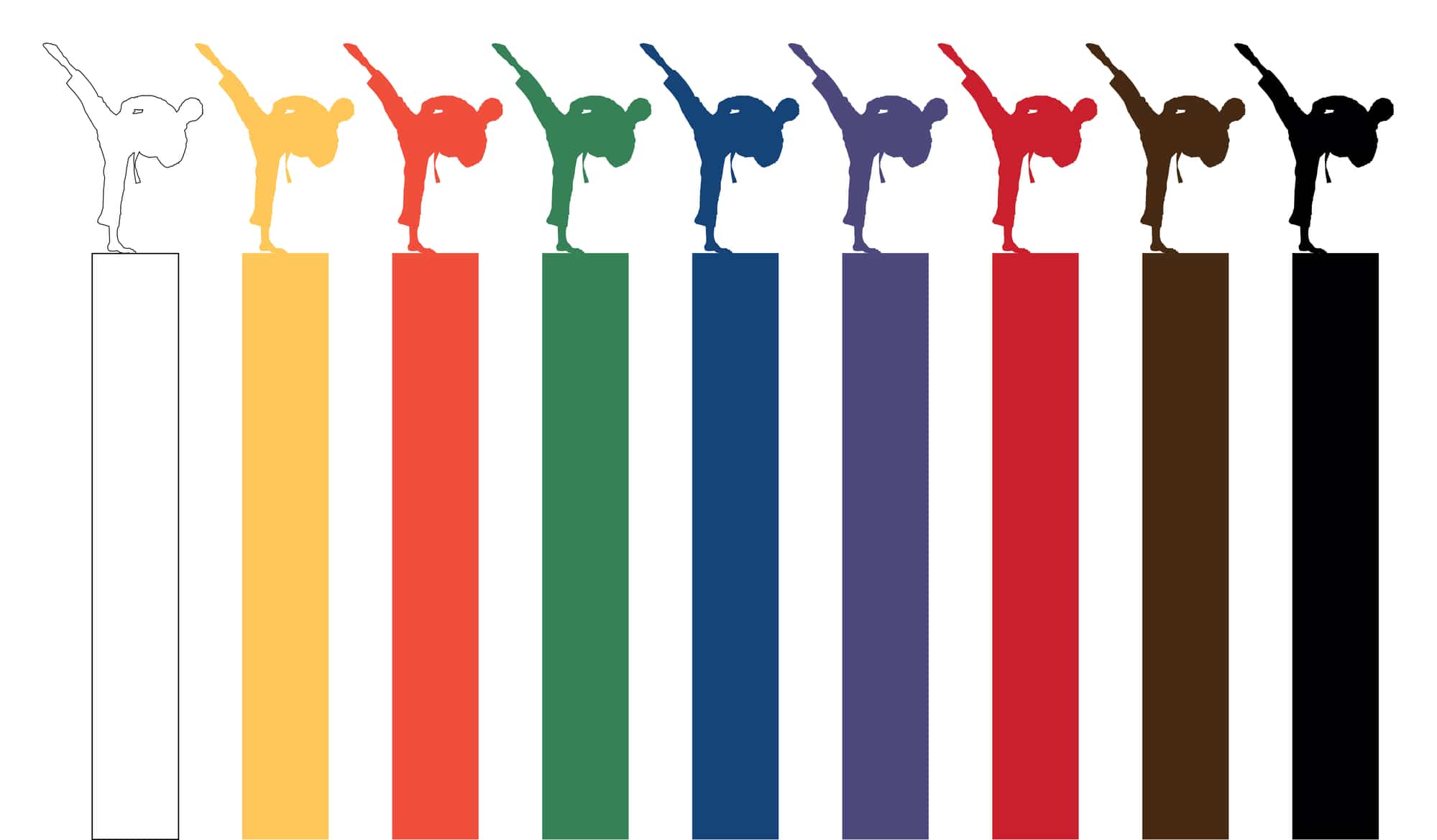
White, yellow, orange, green, blue, purple, red (in some karate styles), brown, and black are the most common colors in the karate belt ranking system. Upon black belt, there are 10 dan ranks that go from the 1st dan belt to the 10th dan black belt, which is the highest rank in karate.

Keep reading this article to learn more about the karate belt ranking system and its unique features. 

Origin of Karate Belts

Kano Jigoro

The origins of karate belt ranks come from Judo, and the famous color belt ranking system created by Kano Jigoro, a father of Judo. Jigoro took the inspiration from the popular board game called “go”, which is quite similar to chess, to create Judo grades. In the beginning, the belt system created by Jigoro had only three colors: white, brown, and black. But over the years, the ranking system has evolved and the number of grades and belts has increased.

The man who took the grading system from judo to implement it in karate was Gichin Fukanoshi, and he did it in 1924. However, there is another theory.

According to the legend, each karate student was given a white belt at the start of their journey and was told to never wash their belt. Over time, the belt would become dirty with sweat, blood, dirt, and change colors. Once it would become all black, it was considered that the student had reached a black belt rank. Although this story sounds interesting, it is far from being true.

RECOMMENDED FOR YOU:
How to Wash White BJJ Gi and Remove Stains

What Is The Order Of Belts In Karate?

In most karate styles like Shotokan and Wado-Ryu, there are two different groups of belt ranks. The first one is “kyu grades” where students start their journey, and the second is “dan grades” for advanced students that wear a black belt.

Kyu ranks are ranked in the following order:

  • White belt – 10th kyu
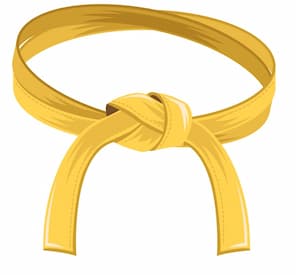
  • Yellow belt – 9th kyu
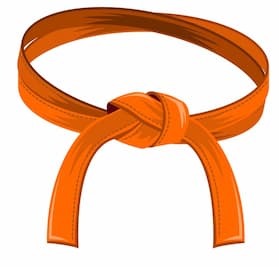
  • Orange belt – 8th kyu
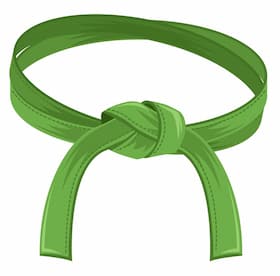
  • Green belt – 7th kyu
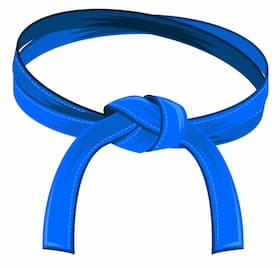
  • Blue belt – 6th kyu
  • Purple belt – 5th kyu
  • Red belt – 4th kyu *not in all styles
  • Brown belt – 3rd kyu
  • Brown belt – 2nd kyu
  • Brown belt (with Black middle stripe) – 1st kyu
  • Black Belt (1st to 10th dan)

Dan belts are ranked in the following order:

  • Shodan (1st dan)
  • Nidan (2nd dan)
  • Sandan (3rd dan)
  • Yondan (4th dan)
  • Godan (5th dan)
  • Rokudan (6th dan)
  • Nanadan (7th dan)
  • Hachidan (8th dan)
  • Kyudan (9th dan)
  • Judan (10th dan)

What Is The Difference Between Kyu and Dan Grades In Karate?

Kyu ranks are for students who are still learning techniques and are below the black belt rank. Dan ranks begin where Kyu ends, and are for masters of karate who have already reached a black belt rank. Here is a detailed explanation of both:

  • Kyu in Japanese means “class” and in karate, it indicates the levels below the black belt rank. The kyu ranking system and its structure vary between schools, styles of karate, and schools. In most karate dojos and styles, there are 10 kyu ranks, with the 10th being the beginner level, and the 1st being a black belt rank. Once a new student joins a karate dojo, they would receive a white belt (10th kyu rank). Over time, they would progress through nine more kyu ranks before they reach the 1st kyu rank, which is a black belt.
  • Dan in Japanese means “Step” or “grade” and in karate, it represents a grading system that begins once a student reaches a black belt rank. Students who made a progression through all kyu ranks and have earned a black belt now move to dan ranks. Dan ranks are basically 10 different black belts where the lowest ranks is the 1st dan black belt and the highest one is the 10th dan black belt.

What Is The Highest Rank in Karate?

Karate Red Belt
Photo by Indrek Galetin

A black belt is widely considered to be the highest rank belt. But since karate has many styles and forms, this rule may vary and not all karate schools adhere to a black belt being the highest rank

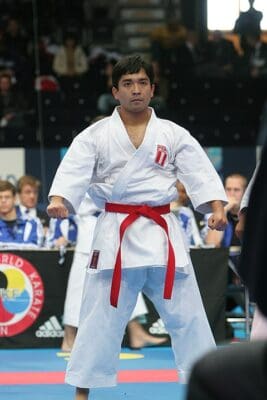
In some karate schools, 10th dan is actually a red belt. In traditional karate developed in Okinawan Islands, the red belt was the highest rank. It indicates the highest level of competence, technique, and reputation of a master. That being said, the highest kyu rank is always the black belt for all karate schools.

In other cases, the red belt is the second-highest belt in some styles like Shorinkan karate and it is presented to a student when they reach a 9th dan rank (kyudan), with the black belt being the highest, 10th dan rank. On the other hand, a red belt is sometimes a part of kyu ranking system for beginners. In contrast, a lot of red belts are also awarded posthumously.

What’s The Meaning of Karate’s Different Belt Colors?

Unbeknownst to most people, the different belt colors in karate represent the growth stages of the plant. What do different colors represent? Let’s take a closer look:

White (the birth of new light) — is worn by beginner students in the opening months of their karate journey.

Yellow belt (the first beams of sunlight) — is still a beginner belt worn by the students who have mastered the basics and want to continue learning. This is also a level where they start light contact sparring with the emphasis being on discipline, stances, and mixing kicks with punches. 

Orange belt (growing strength of the sun) — in most schools, students receive an orange belt once they have mastered the famous 10 karate self-defense moves. 

Green belt (growth of seeds and plants) — is a level where students start to learn more complex techniques. The emphasis is on learning how to mix punches and kicks with grappling moves.

Blue belt (the plant is growing towards the blue sky) — at this level, students learn how to apply techniques in real sparring. After mastering this level, they will be capable of applying karate moves in a real fight.

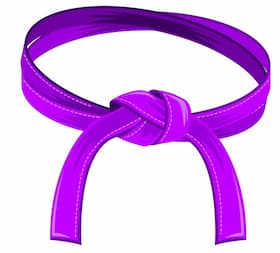
Purple belt (colors of dawn) – is a belt worn by karatekas who are slowly transitioning to the advanced levels of karate learning.

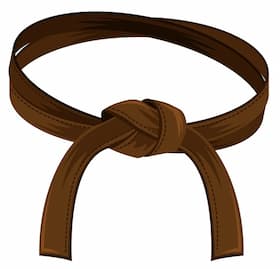
Brown belt (the plant is grown and ready for harvesting) — is a belt worn by students who are maturing and are mastering the techniques to perfection. It is also a level where a student is ready for real combat. 

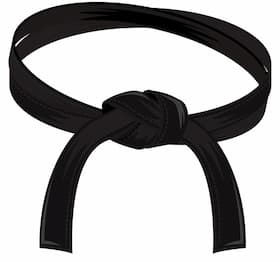
Black Belt (darkness beyond the sun) — is the ultimate kyu rank in karate reserved for students who have mastered all the techniques and have a deep understanding of both mental and physical aspects of karate. This is also a level where they start teaching and helping other students in their progression through the ranks.

RELATED:
Taekwondo Belt Ranking System – EASILY Explained For Beginners

How Long Does It Take To Get A Black Belt In Karate?

On average, students need around 3 to 5 years of hard training to progress through the kyu grading system and reach a black belt rank. Of course, the number of years may vary as it all depends on many factors like your talent, passion, and dedication to training. It is an individual thing as some students have the ability to learn faster while others may struggle or get stuck at a certain level.

A student who attends the classes twice per week would not progress as fast as a student who trains five times a week, follows a strict diet, and is always working on their strength and conditioning. But even in the ideal scenario, do not expect to earn a black belt in less than 3 years.

Also, how long does it take to get a black belt also depends on the style of karate, the school you train in, the quality of coaching staff, and promotional criteria. Some karate dojos are full of black belts which is the best indicator that promotional criteria in that dojo is low. This means that you can reach a black belt rank in a short time span, but you won’t be as proficient in karate as black belts from other schools where the promotional criteria is very strict. 

RECOMMENDED FOR YOU:
BJJ Black Belt Lineage – Why It’s Important To Verify

How Hard Is It To Get A Black Belt In Karate?

Earning a black belt rank in any martial art is very hard and the same stands for most karate styles. Regardless of your talent, fitness, dedication, and ability to learn fast, you would still need around 4 years to reach a black belt because the promotional criteria are very strict.

But on the other side, bear in mind that karate training is not that hard on your body and is not as dangerous as in other arts. Most styles emphasize light contact sparring, except for Kyokushin which is the hardest style. Rather than sparring full contact all the time, students actually do a lot of katas. These are the sets of pre-arranged forms where students perform techniques alone without a partner. Most techniques are direct, simple, and you won’t have a hard time picking up the basics and progressing through the ranks.

Karate is also not that intense and physically demanding. Yes, you have to be fit and students do a lot of running and bodyweight exercises like push-ups or sit-ups to get in shape. But these workouts are not as intense as the ones in other martial arts like Muay Thai or boxing for instance.

RECOMMENDED FOR YOU:
Karate vs. Taekwondo: Key Differences And Similarities

How Long Does It Take To Get Each Belt In Karate?

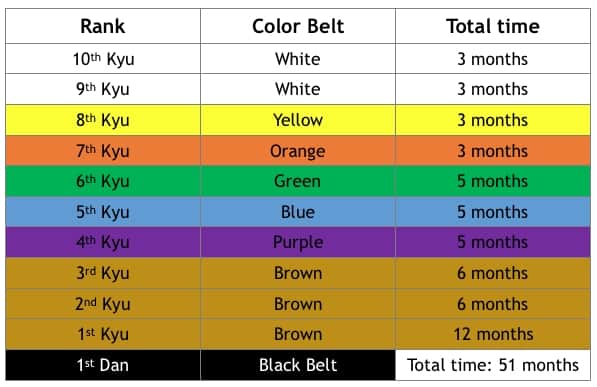
Here is a detailed explanation of how long it takes to get each belt in karate according to the traditional Shotokan curriculum:

What Is The Hardest Style of Karate?

Karate has many styles and forms out of which Kyokushin karate is the hardest and most dangerous. In short, it is a full-contact style created in the 1950s by the famous karateka, Masutatsu Oyama in Japan.

It is not just the hardest style of karate, but also the most dangerous one. Training is brutal and intense and carries a really high risk of injuries. Each dojo embraces a hard method of training where students spar full contact without any gear. They do not wear gloves, shin pads, or helmets and this is what makes Kyokushin so brutal. 

The emphasis is on powerful kicks and punching the upper body area below the neck. But despite the lack of punches to the head, Kyokushin is hard on your body and people trained in this style of karate are among the strongest people. Although it is much harder than other styles, the time required to move from one color belt to another is very much the same as in all other styles.

RECOMMENDED FOR YOU:
What Is American Kickboxing? Here’s What You Should Know

What Are The Different Styles Of Karate?

Karate is a very popular martial art that has dozens of different styles and forms. But it is crucial to know that out of all styles, the following four are major ones.

  • Shotokan — is the most popular karate style created by Gichin Funakoshi, a man often considered a pioneer of karate in Japan. He created Shotokan in 1938 with an emphasis on wide stances, fast movements, and quick attacks using punches, elbows, kicks, and knees.
  • Wado-Ryu — was created in 1939 in Japan by Hironori Otsuka. It is a style that originates from Shotokan and Shito-Ryu, notably when it comes to striking techniques. But, Wado-Ryu also emphasizes joint locks and powerful throws that come from Ju-Jitsu.
  • Shito-Ryu — is a style created by Kenwa Mabuni in 1934. It is widely regarded as a very technical style that consists of over 94 different katas student need to master. The emphasis is on striking using all limbs as weapons.
  • Goju-Ryuwas developed in 1930 by Chojun Miyagi as a mix of striking and grappling techniques. The emphasis is on circular and linear movements and fast counter attacks.

These four styles might visually look the same. But at the same time differ a lot in terms of emphasis, history, techniques, and methods of training. Also, their four major styles of karate have influenced the birth of many other styles like:

  • Kyokushin
  • Shorin-Ryu
  • Enshin
  • Uechi-Ryu
RECOMMENDED FOR YOU:
What Are The Different Styles of Karate? Simply Explained

What Happens When A UFC Fighter Misses Weight? Fully Explained

0
Photo by Bad intentionz

Weight cutting is a big part of modern MMA and all fighters go through a grueling process of losing up to 20 pounds in a week leading up to a fight. Still, this doesn’t mean that they are all successful in their attempts to cut this much weight due to various reasons. Indeed, MMA fans frequently see UFC fighters miss weight, so what happens when UFC fighters miss weight in most cases?

If a UFC fighter misses weight at the first weigh-in, the athletic commission will give them up to two hours to make the weight. But if they fail again at the second weigh-in, the bout will likely turn into a catchweight fight. The fighter who missed weight may forfeit up to 30% of their purse.

Every fighter does everything they can to make weight but fighters can miss weight for a variety of reasons as you are about to see. At the same time, as you will see below, there are consequences for missing weight in UFC.

What Happens When UFC Fighters Miss Weight?

Here are all the scenarios explained in detail:

Fighter Gets 2 Extra Hours

When a fighter comes to the weigh-ins, steps on the scale, and misses weight, the athletic commission overlooking the event would give them two more hours to cut extra pounds and make weight. In most cases, an hour or two is enough for fighters who need to cut 1 or 2 pounds.

The UFC Would Arrange a Catchweight Fight

But, what happens if they can’t lose those extra pounds and miss in their second attempt?

To keep the fight alive, the UFC would try, and in most cases succeed in arranging a catchweight fight. But first, the opponent who made weight must agree to new terms, which they usually do. For instance, if a fight was booked as a welterweight bout (170 lbs), a catchweight fight would be at around 175 or 180 pounds or any other weight that fighters, the UFC, and commission agree upon. The only thing left is for the athletic commission to give the UFC a green light, and then the fight is on.

They Lose a Portion of Their Earnings and Ranking Points

Missing weight doesn’t come without consequences. Although the fight would be changed to a catchweight bout, a fighter who missed weight would have to give 20% or 30% of their purse to their opponent. Also, they do not receive ranking points for that fight which impacts their progress through the official UFC ranking system

A Title Fight Becomes a Non-Title Fight

When a fighter booked for a title fight fails to make weight, the UFC would do the same thing and arrange a catchweight bout. However, catchweight fights are no longer for the title because the fighters would not fight within the weight limits of their weight class. For example, Deiveson Figueiredo was supposed to fight for the vacant flyweight title (125 lbs) at UFC Fight Night 172 against Joseph Benavidez. He missed weight by 2.5 pounds, and although the UFC arranged a catchweight fight, the Brazilian wasn’t eligible to fight for the title.

What Happens When a UFC Champion Misses Weight?

If a UFC champion fails to make weight, they will be stripped of their UFC title and the title will be considered vacant as a result.

If the title bout proceeds, the championship will ONLY be on the line for the challenger who made weight. Therefore if the challenger wins the bout, they will become the new UFC champion.

On the other hand, if the former champion wins the bout, they will be the number one contender for the vacant title and will have to defeat the next opponent to reclaim the undisputed title belt at a later date.

Why Do UFC Fighters Miss Weight?

Weight cutting itself is a grueling and very dangerous process and there are many different reasons why UFC fighters miss weight that often. Here are some of the key ones:

  • Health issues — losing up to 20 pounds in less than a week puts your body through huge stresses. In some cases, fighters need to stop cutting weight due to health issues where continuing the process may lead to serious health problems, and even be fatal. They would rather stop the process and live to fight another day than risk too much.
  • Lack of discipline — some fighters are not disciplined enough and would not follow a strict and well-calculated plan. They would eat more calories, sugar, or other nutrients than they are supposed to eat. For example, just one bottle of water or a piece of cake can mess up your entire weight cutting process.
  • Bad plan — most UFC fighters have a team of nutritionists that support their weight cutting process. Nutritionists would make necessary calculations, create a strict plan about how much a fighter can eat, drink and exercise, and make sure they are on the right track during the process. But as in everything in life, they could be wrong sometimes.
RECOMMENDED FOR YOU:
Top 10 Reasons Why MMA Is The Hardest Sport

Why Don’t UFC Fighters Fight In Their Natural Weight Class?

The UFC fighters cut weight to compete in a weight class below their natural one so that they can gain a physical advantage over smaller opponents, or at least, that’s how it is on paper. But in reality, all UFC fighters cut weight which means that, eventually, they end up fighting opponents similar in size despite the weight cut. 

And since everybody is doing it, you can’t just decide not to cut weight because in that case, you would compete against much bigger opponents, and here is how.

Let’s assume you walk at around 185 pounds. Naturally, you would compete in the middleweight division without cutting any weight. The problem is, your opponents would be fighters like Paulo Costa who walk at around 220-230 pounds and cut weight all the way down to the 185lbs middleweight division. After a couple of devastating losses, you would be forced to cut weight and compete, probably in the welterweight division against opponents similar to your size.

How Do UFC Fighters Cut Weight So Rapidly?

UFC fighters start cutting weight from the beginning of a training camp. However, they lose the majority of weight during fight week with some fighters cutting up to 30 pounds in five days. But how they are able to lose so much weight in such a short time span? Here is a brief look at the entire process.

Fluid intake manipulation — in a week leading up to the event, fighters would manipulate water intake to get their bodies into a “flush mode” and dehydrate their bodies to lose as much weight as possible. For instance, they would take 2 gallons of water on Sunday, 1 gallon on Monday and Tuesday, and half a gallon on Wednesday and Thursday, and no water at all on Friday until weight ins.

Low carb diet— although the exact number of carbs may vary, most of them won’t eat more than 50 grams of carbs per day because carbs pull water into the body. This means that they also don’t eat fruits, sugar, or starches. Instead of foods high in carbohydrates, they eat foods rich in protein like meats, eggs, and a lot of vegetables. They also avoid salt because salt retains water in the body and impacts the dehydration process.

A lot of sweating — UFC fighters sweat a lot during weight cuts to lose water. They would sit in the sauna for hours, take hot baths, sleep under the pile of thick duvets, or if they have enough energy, they might even go for a run.

Does Cutting Weight Affect Fighters Performance?

In 2021, 27 UFC fighters have missed weight with 14 of them ending up winning their catchweight bouts (14–13). But, it was a different story a year prior in 2020 where the same number of fighters have missed weight (27), but only 9 of them managed to win a fight. Whether missing weight is going to have an impact on fighters’ performance or not is an individual thing that depends on many factors.

For sure, a fighter missing weight is an indicator that they have pushed their bodies too far and had some sort of health issue during the weight cut. But no one has ever done a real study or some sort of research on how dehydration and the entire process affects fighters’ performance on fight night.

Some fighters said that brutal weight cuts cause a sudden drop of stamina on fight night or that you can’t absorb a strike well because the brain hasn’t re-hydrated yet. But on the other side, most fighters would say that they feel the same.

Biggest Weight-Cutting Blunders In UFC

Most of the time, UFC fighters miss weight by a small margin like 2 or 3 pounds. But, there have also been fighters who have missed weight by a large margin like:

  • Paulo Costa (210 pounds) — in 2021, the UFC booked Paulo Costa to face Marvin Vettori at 185 pounds. Due to some issues during the weight cutting process, Costa wasn’t able to make weight and he actually stepped on the scale 25 heavier. The fight was still on however because Vettori agreed to a catchweight fight.
  • Rafael Alves (157.5 pounds) — Alves was supposed to fight in the featherweight division where the upper weight limit is 145 pounds. But he showed up on weigh-ins 11.5 pounds over the limit which forced the UFC to cancel the fight.
  • Anthony Rumble Johnson (197 pounds) — leading up to his middleweight fight (185 pounds) against Vitor Belfort at UFC 142, Johnson stepped on the scale weighing a staggering 197 pounds, missing weight by 11 pounds. Since this wasn’t the first time he missed the weight, Johnson was released after missing weight a third time.

Do UFC Heavyweights Have To Cut Weight?

Yes, the upper weight limit for a heavyweight division is 265 pounds, and if it is a non-title bout, all fighters must step on the scale weighing 266 pounds or less. In MMA history, there have been a lot of big heavyweights who needed to go through a weight cutting process to meet the upper limit, and a couple of them have actually missed weight. Here are a couple of UFC heavyweight fighters who cut and have missed weight in the past:

  • Justin Tafa — in 2021, Tafa became the first UFC heavyweight to miss weight, and he did it by showing up at 267 pounds, 1 pound above the upper limit.
  • Greg Hardy — in 2020, Greg Hardy showed up on the scale at 266.5 pounds, half a pound over the upper limit ahead of his fight against Maurice Green at UFC Vegas 12. However, Hardy used an extra hour given by the commission to make weight in the second attempt.
  • Brock Lesnar — the former WWE superstar and UFC champion used to walk at over 280 pounds which means that he needed to cut weight for his UFC fights.
RECOMMENDED FOR YOU:
Why Is There A Weight Limit For UFC Heavyweight Fighters? FAQ

What Are The Rules For UFC Weigh-In?

When it comes to non-title fights, UFC fighters are not allowed to miss weight by more than 1 pound. If a title is on the line, then both fighters must be on point and not miss weight by more than half a pound of the upper weight limit for that specific weight class. This rule is the same for all weight divisions, both men and female.

For example, if a non-title fight is booked as a lightweight bout at 155 pounds, both fighters are not allowed to weigh more than 156 pounds on weigh-ins. As for the title bouts, they are not allowed to weigh more than 155.5 pounds.

If a UFC Fighter Is Underweight For a Title Fight, Is It Still a Title Fight?

Yes, UFC fighters can weigh below the upper limit of their division. But bear in mind that they need to be above the minimum limit. For instance, they can weigh anywhere between 145–155 pounds for a lightweight fight whether it is a title or non-title fight. But they are not allowed to go below 145 pounds because in that case, they belong to the featherweight division (135–145).

Yet, size is a big factor in MMA, and this is the main reason why UFC fighters always weigh closer to the upper limit. Being lighter than your opponent may impact your chances of winning the fight as a heavier opponent is usually physically stronger and hits harder.

What Happens When A UFC Fighter Misses Weight And Wins?

First, they would have to give 20% or 30% of their entire purse to the opponent who made weight and accepted a catchweight fight. They would get a win the same as they would if they made weight, but not without consequences as far as the UFC is concerned. 

The thing is, fighters missing weight and fighting at catchweight impacts the UFC business, notably if it is a high-profile title fight. So despite winning, the UFC might start looking at them as unprofessional and unreliable fighters, and possibly ask them to move up a weight class. 

Can You Go Down A Weight Class In UFC?

Yes, UFC fighters can switch between weight classes as long as they can meet the required weight limit for that weight class. Over the years, there have been many fighters who fought across three or more different weight classes, like Anthony Rumble Johnson for instance. He fought at 170, 185, 205, and heavyweight.

In short, UFC fighters would move down a weight class as long as that makes sense and if they can go through a weight cut. For instance, some fighters who haven’t had much success in, let’s say 185lbs weight class may decide to drop down to the 170lbs division where they would have a size advantage and better chances of winning on paper.

RECOMMENDED FOR YOU:
Why Are MMA Fighters Skinny And Don’t Have Big Muscles?