
Home Blog Page 20

Can UFC Fighters Pick And Choose Who They Fight? FAQ

0
Photo by Judokickbox / CC-BY-SA-3.0

You can often hear UFC fighters calling each other out in an attempt to “handpick” the opponent during the media work. And in some cases, they might end up sharing the cage with a fighter they called out, which makes some people wonder, do UFC fighters actually choose their opponents?

UFC fighters can’t choose who they are going to fight next. Although fighters often use the media platform to express who they want to fight next, the UFC matchmakers are ultimately in charge of arranging bouts between fighters.

If the matchup a fighter is pushing for makes sense in terms of rankings and many other factors, they will give them a “green light” and the fight is on, if not, they will match them against the different opponent. 

Keep reading this article to learn more about the fighters “choosing” the opponents, refusing fights, and how hard it is to make it to the UFC. 

Can UFC Fighters Choose Their Opponents?

No, fighters do not have the ability to call their own shots, and this is not how matchmaking works, not just in the UFC, but in other promotions as well. In fact, it all goes the other way around as the UFC matchmakers are the ones who would send a fight offer to a fighter or their managers first. Then, it is up to them to accept or maybe turn down the offer, which they are allowed to do.

But, fighters can use media platforms to call each other out and hype up a potential matchup. But bear in mind that the promotion has the final say when it comes to whether this fight is going to happen or not. If their wishes make sense in terms of rankings, business, and match the UFC’s interests, they will approve it. In fact, they have probably already had this matchup in mind, and the call-out would just help them promote the match better. Still, this doesn’t mean that the matchmakers are “fulfilling” their wishes all the time.

On the other side, there are global superstars like Conor Mcgregor or Brock Lesnar who enjoy huge negotiation power. These fighters are so valuable to the company, in terms of revenue and pay-per-view sales that the UFC will fulfill all of their wishes. The best example was when Mcgregor moved up division to fight Eddie Alvarez for the 155-pound title, or when he asked for a rematch against Nate Diaz.

But bear in mind that 99% of other fighters on the UFC roster do not enjoy such a privilege.

Can A UFC Fighter Refuse To Fight?

Yes, fighters have the right to refuse the fight and no one can force them to enter the cage against their will. On average, the UFC offers each fighter around 3 fights per year. It is up to them and their managers to either accept the offer or turn it down. But bear in mind that a fighter needs to have a legitimate reason for refusing to fight. If not, that might have a negative impact on their relationship with the UFC.

In some cases, they may refuse the offer to fight because they don’t have enough time to prepare for a match. Maybe they need to take a time off to heal injuries or deal with family issues like going through a divorce or the loss of the loved one. In this case, the UFC would give them time to resolve all issues, and offer them another match when the better times come.

And there are fighters who refuse to compete because they don’t like the opponent, or want more money. By doing this, they are actually trying to call their own shots, which in most cases, has a negative impact on their relationship with the company. However, this tactic most likely will not work for up-and-coming fighters who have yet to prove their worth to the company.

A good example is Yair Rodriguez who, despite having 6 wins and only 1 loss in the UFC, was fired because he turned down 2 fight offers from the UFC.

Overall, fighters who accept every fight offered can quickly earn the respect from the company and get better treatment in the future. On the other side, the ones who refuse to fight due to unclear reasons are often seen as unprofessional and unreliable. The next time the big opportunity comes around, the UFC would, of course, would most likely return the favor to a fighter who always said “yes”.

What Happens When A UFC Champion Refuses To Fight?

When a champion turns down the offer to fight, the UFC would try to solve the issue first, and if they are unable to, create an interim belt. They would book the #1 and #2 contenders of that weight class to compete for it, or that is how it is supposed to be on paper. On one side, the interim belt allows the “undisputed” champion to take time off without having to vacate their title. At the same time, it keeps the division active and challengers relevant. Once the champ is ready to return, he/she would fight the interim belt title holder for the “unified” title.

RECOMMENDED FOR YOU:
What Does Undisputed Champion Mean in the UFC? Easily Explained

How Are Title Contenders Selected In The UFC?

There are no standardized criteria that the UFC is following when they are deciding which fighter is going to compete for the title. Here is a list of major factors (not all) that matchmakers are taking into consideration:

  • Fighting style — is one of the most important factors. Fighters who put on a show in just about every match and are exciting to watch tend to rise much faster than the ones who are “boring”. They usually have a large fan base, are easier to promote, and sell more pay per views. For instance, Jorge Masvidal is an exciting fighter and he got the title shot in 2020 while he was on a three-fight winning streak. At the same time, Leon Edwards, who is considered a “boring” fighter by many, didn’t get that chance despite being on an 8 fight winning streak.
  • Fan-favorite matchups — in each division, there are matches that people would love to see. Fierce rivalries and fighters who have “unfinished business”, for instance, are great from the marketing perspective and usually sell much better. If the champion and #3 ranked contender have a public feud that gets lots of attention, the UFC would rather push for that matchup than give the #1 ranked fighter a chance.
  • Finishing rate– UFC loves fighters who finish their opponents. This adds more value to their product and attracts more viewers. UFC is more likely to give opportunities to a fighter who has a high finishing rate than the one who often wins decisions. A fighter who scored 5 straight finishes will always be in a better contender position than a fighter with 5 straight decision wins. 
  • Fan basefighters who are global stars and have dozens of million followers across different social networks usually have a much shorter road towards the title.

How Do The UFC Rankings Work?

Each UFC weight class includes a list of the top 15 fighters. The rankings are voted by a panel of around 20–30 media members. These media members are, in most cases, journalists who all work within the MMA industry. Each week, they have to submit their votes on who they think are the top 15 fighters in all UFC’s divisions.

UFC Official Rankings
Photo by UFC

They also vote for the “pound for pound” list which consists of the best fighters regardless of the weight class. It’s important to note that the people who work for the UFC do not have the right to vote in the rankings.

Each member of the voting panel must submit their vote within 48 hours of the last UFC event, which is the only major rule they must follow. The UFC would then average the total votes and make changes (if needed) to the ranking lists. Some fighters may move up, down, go from being unranked to ranked, or the other way around.

How Hard Is It To Become A UFC Fighter?

Going from the amateur level all the way up to the UFC is a long road. It is like getting into the NFL in football, or NBA in basketball, and this gives you a great insight into how hard it is to get to the UFC. In most cases, a fighter needs to prove their worth on the regional scene before they can expect a call from the UFC. But how much time does it take?

MMA is an individual sport where all truly depends on a fighter and their ability to win fights. This means that, as long as you keep winning, the UFC scouts will spot the talent in you, and you will receive a chance at some point. 

However, some fighters may come into the UFC after a couple of pro fights, while some need to spend close to a decade fighting on the regional scene. The real answer on how hard it is or how much time a fighter needs to reach the UFC truly depends on many factors like:

  • The quality of the opponents — the first thing UFC scouts search for is the quality of the opponents. They would rather choose a fighter who scored 4 wins against notable opponents, than a fighter on a 7 fight win streak against low-level ones. This is because the UFC needs to be sure that you are going to deliver against the top-level opponents.
  • Good managers– having a good manager to run your career can speed up the process. They all have good connections with UFC matchmakers and top gyms where you can train to improve your game. Even if you are yet to prove your worth, they can convince the UFC that you are a special talent and put you into the UFC contender series for instance.
  • Large fan base– UFC loves fighters who have a large fan base on the regional scene. This shows them that a fighter knows how to create attention, sell a fight, and has the potential to mimic that on the global level with the help of the UFC marketing team.
  • Exciting fighting style — it’s not a secret that the fighters who finish fights tend to rise much faster than the ones whose matches often go to distance. If you are one of them, and the finishes you scored came against average or above average opposition, then you will have a much easier road towards signing a contract with the UFC than most other fighters.
RECOMMENDED FOR YOU:
How To Become A UFC Fighter? (COMPLETE BEGINNER’S GUIDE)

Can UFC Fighters Fight Outside Of The Promotion?

As long as they have an active contract with the UFC, fighters are not allowed to fight in other promotions. They need to wait until their contract expires, or the UFC to release them from their roster.

That being said the promotion has a right to approve the fighter’s request to compete in a different promotion, but you won’t see that happening that often. In fact, the last time the UFC did this was when they allowed Conor Mcgregor to compete against Flory Mayweather in pro boxing back in 2017. 

UFC is the leading force in the modern MMA world and they would never put the power of their brand and reputation on the line by allowing cross-promotional fights. Although the concept of cross-promotional fights sounds interesting and can generate high pay-per-view sales, the UFC does not have anything to gain with these types of matchups, but on the other side, have a lot to lose in the long run.

Do UFC Fighters Choose Their Own Entrance Music?

Yes, fighters have the right to choose their own walkout song but bear in mind that the promotion is making the final decision. For example, if the song has vulgar or inappropriate lyrics, or the company has a problem getting a license to use it, they might ask the fighter to come out to a different song. Also, most promotions do not allow fighters to change songs and use different ones every time.
Is BJJ Hard To Learn? A Guide For Beginners

0

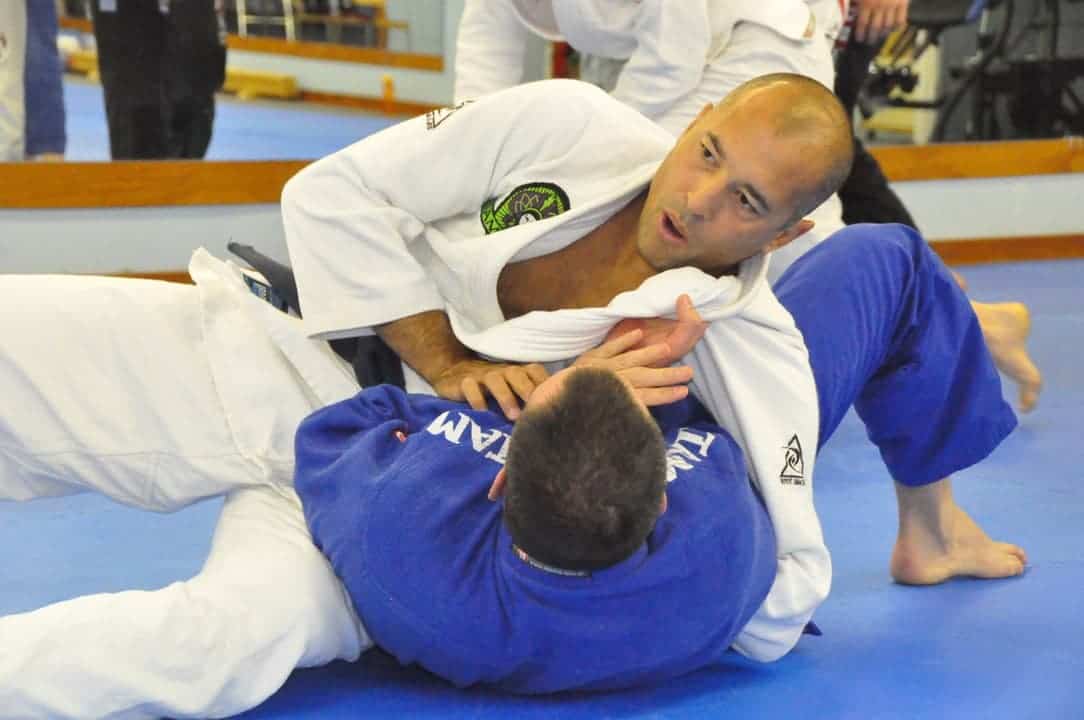
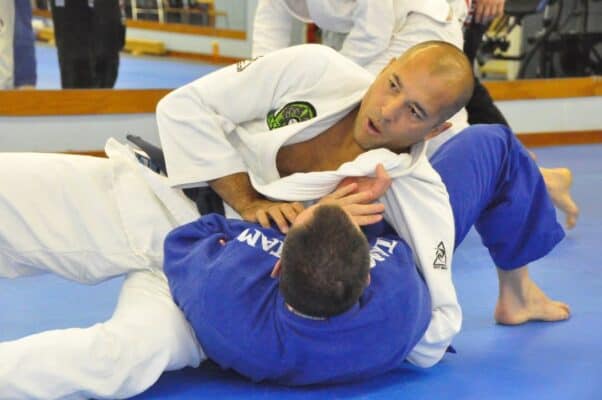
Since the early days of UFC 1, Brazilian Jiu-Jitsu(BJJ) has grown in popularity to become one of the biggest martial arts on the planet. The grappling art is sometimes compared to a human game of chess, where its users will develop knowledge of hundreds or thousands of sequences and movements ranging from transitions, joint locks to chokeholds. Much like a game of chess, deep study is required to become an expert at the art, but how difficult are the basics to learn?

Learning BJJ moves is not physically hard because BJJ is created for anyone to learn regardless of their size, strength, and athletic level. However, the total commitment that is required to become good at BJJ can be challenging for most people.

If you’re planning on taking a BJJ class for the first time, you should definitely read the rest of the article to learn why some people think BJJ is hard to learn. I will also address some of the most asked questions in regards to BJJ training.

Is Brazilian Jiu-Jitsu Hard To Learn?

When Mitsuyo Maeda, BJJ’s forefather bestowed his grappling skills upon Carlos Gracie and Luiz Franca, a huge amount of emphasis was placed upon the belief that Jiu-Jitsu was teachable to anyone. Gracie and Franca, who would become the progenitors of Brazilian Jiu-Jitsu by starting their own schools promoted this philosophy. However, despite the fact that almost anyone, regardless of their gender, age or body type can develop Jiu-Jitsu skills, the learning path a student finds themself on is undoubtedly complex.  

While fundamentals can be acquired within weeks or months of taking the first class, which make a practitioner significantly more competent at defending themselves, mastering the diverse skillset requires an open mind, huge amounts of dedication and ultimately time on the mat.  

Why Is BJJ Hard To Learn?

Grappling arts are unlike any other sport. While boxing and Muay Thai may have punches and other strikes which, in their most basic form, feel reasonably natural to the average person, Jiu-Jitsu often feels significantly more counterintuitive. This is in part because most of us enjoy our personal space and spending a significant amount of time with our bodies in close contact with another person takes a while to get used to. Additionally, some of the movements used in Jiu-Jitsu take a good amount of time to develop the adequate muscle memory for them to be proficient. Even the basic “shrimp”, or “hip escape” movement isn’t something the average person has got used to.

The second big barrier for people who are new to Jiu-Jitsu is that not everyone is keen to put their ego aside. Like any new skill, a newcomer will go through a period where they are bad at the art. Along with the self-judgment that they have towards themselves, they may also feel embarrassed when a more experienced practitioner submits them. As the technique is so much more important than size, speed, or strength, it is not uncommon for newcomers 100kg to be “tapped out” by opponents 30 or 40kg lighter.  Even highly-athletic rugby or gridiron football players can find themselves feeling as if they are drowning on the ground against even blue, or purple belts.

RECOMMENDED FOR YOU:
What is Gracie Jiu-Jitsu? Fully Explained

How Long Does It Take To Learn BJJ?

Photo Credit: U.S. Air Force

The length of time required to “learn” Brazilian Jiu-Jitsu depends on the definition of “learn”.  

The average beginner practicing BJJ 2-3 times a week should theoretically become proficient enough to defend themselves from a single unarmed attacker within 4-6 months. This is not to say that they should be looking to test this theory, as with all martial arts, a practitioner should look to extricate themselves from any hostile situation before any physical action is taken.

That being said, people excel at different speeds and it goes without saying that more classes and time spent on the mat should equate to a faster rate of development.  

Training consistently, the average student will be a white belt for the first year to eighteen months. This means they will know some of the techniques and submissions. They will have a low level of proficiency but will see progress.

At around this eighteen-month, to two-year mark, the student will likely on the verge of being promoted, or will have been promoted to blue belt. Blue belts tend to have undergone significant improvement and developed various techniques and submissions. They will be comfortable on the mat and will typically submit, or at least dominate white belts in sparring sessions.

After about four to five years in, the average student should theoretically be competent enough to receive a purple belt. Purple belts will be familiar with most of the techniques and submissions BJJ has to offer and are able to practice them to a decent standard. They will have identified some of the techniques they particularly excel at and will often find that these are their “go to” moves.

After seven or eight years, the student will be around brown belt level. Significantly more competent than almost all class members, the skills will have been honed through hours of drilling techniques and sparring. At this point the student may have begun training more unique and obscure attacks or transitions. Some brown belts might find themselves frustrated due to “plateauing”, but some joy can be found as they are called upon to instruct, or help lower-level students.  

While it is not unheard of for some prodigies such as BJ Penn or Kit Dale to achieve black belt standard within four or five years, the average black belt takes somewhere between ten to twelve years to become a black belt. At this point, the practitioner likely lives and breathes the art, so much so they may be the instructor or head of the class. This does not mean there aren’t more techniques to learn or perfect, but the student’s arsenal of attacks, transitions and defenses is broad and well honed.

ADDITIONAL READING:
BJJ Black Belt Lineage – Why It’s Important To Verify

How Often Should A Beginner Train BJJ?

To see improvements and develop muscle memory, it is recommended that a beginner should train Brazilian Jiu-Jitsu at least twice a week. Depending on their age, pre-existing injuries or health conditions and body types, training three sessions a week would be the optimal amount. This is because it takes time to prepare the body for the new stress exerted upon it. Muscles need time to recover and overdoing it greatly increases the risk of injury. It is also best to leave a day or two between training sessions to promote this recovery.

Is Jiu-Jitsu Worth The Money?

Jiu-jitsu’s value for money entirely depends on what you value. Most people value a great workout, which develops core muscles and enhances self-defense, while developing their discipline and confidence in a positive environment. If you are to ask most regular practitioners if it is worth the money, the vast majority will respond affirmatively.  

Despite this, classes or memberships can be very expensive and what you can afford, or deem acceptable will be a matter of looking at your personal finances. One benefit that Jiu-Jitsu has over various other sports is that beyond the initial investment of a good gi, along with a gumshield, a good pair of shorts and a rashguard, constant equipment purchases isn’t necessary. That is unless you get addicted to collecting colorful rashguards or gis for different occasions. 

Is Jiu-Jitsu Safe To Learn?

Compared to striking martial arts, the majority of contact sports and even some non-contact sports, Jiu-Jitsu is one of the safest physical pursuits anyone can take up. This is largely because it is less frenetic – barring in gyms or schools which are MMA focused, sparring doesn’t involve any strikes. This lack of strikes mean that concussions almost never happen.  

While chokes can render an opponent or sparring partner unconscious, almost all BJJ practitioners will submit if they feel unable to defend themselves from their opponent’s attack. The few studies that have been conducted about the long-lasting effects of chokes suggest that long-term damage is negligible.  That is to say that even if someone is rendered unconscious for as long as half a minute, they won’t have much risk of brain damage. Despite this, more studies regarding chokes and CTE need to be carried out for this to be truly confirmed. Additionally, there is some speculation about whether or not the restrictions placed on carotid arteries from chokes can lead to strokes. However, at present, there is little evidence beyond speculation which support this.

The literature linking CTE or HI-BI and repeat execution of choking techniques in MMA and grappling sports is nonexistent. This lack of evidence is especially significant given the hundreds of thousands of athletes, both past and present, who participate in choke-inclusion sports worldwide.

National Institutes of Health (NIH)

Another thing which makes BJJ safer is that weight cutting is much less common in Jiu-Jitsu competition, or at least, significantly less drastic than boxing or kickboxing. In striking arts, fighting at heavier weights will potentially increase the risk of brain damage received from being struck. More knockouts happen in heavier weight classes than lighter ones because increased weight typically leads to increased power. Again, as BJJ is much more about technique and leverage, weight, strength and power matter much less.  The lack of strikes mean cutting doesn’t confer any more safety.

While deaths are incredibly rare, accidents and injuries do happen in BJJ, but they are almost always to do with ligaments, muscles, joints and bones as opposed to the head.

RECOMMENDED FOR YOU:
Do MMA Fighters Get Brain Damage?

Is Jiu-Jitsu Hard On Your Body?

Whether BJJ is hard on your body depends largely on the gym you train in, the culture there, the style of rolling that is encouraged and how often you train. The more aggressive the spar, the bigger the risk of damage to joints and the back. Additionally, if you spar on your feet a lot, being taken down or thrown can have a high impact on your back, while landing at an awkward or unexpected angle can increase the risk of breaking a bone. Much like judo, throwing an opponent can put your own back, shoulders and hips under stress.  

Many people spend the majority of their working day by a desk with poor posture. Sedentary lifestyles can cause a build up of tension in the hamstrings and knees, which can lead to back issues. These back issues are sometimes brought to the surface by sports such as BJJ due to the pressure put on the lumbar muscles at. Additionally various submission holds, such as “twisters”, or “bow and arrow chokes” cause the body to contort at angles which can cause a lot of stress to the spine.

Although it may seem discouraging to some, almost all practitioners of BJJ who practice for several years or more will pick up an injury of some description. Dislocated shoulders, finger issues relating to gripping on gis and knee problems are all fairly frequent occurrences in the sport. Despite these injuries, most of those who stick around will argue that the “juice is worth the squeeze”.    

Tips To Avoid Getting Injured In Jiu-Jitsu

There are a number of things that are advisable if you wish to avoid injury in BJJ.

To reduce risk of damage to the joints and back, it is advisable to do mobility stretches before and after training as part of warm up and warm down routines.

If you are on the older side of things, you could consider getting a sports massage every now and then, to take stress away from the back and improve the quality of your recovery times.

Move in a controlled manner, using brute force to make up for lack of technique is dangerous not just for you, but your sparring partner. If you spar in an explosive way, you are also likely to develop a reputation for being hyper-aggressive. This will change the way your sparring partners treat you, with some choosing to avoid sparring with you as much as possible, while others will see you as an opportunity to work their own aggression out. This “fighting fire with fire” situation is likely to increase the risk of injuries significantly.

Much of injury avoidance can be chalked down to selecting the correct sparring partners. If you are a smaller person, you may want to avoid larger sparring partners as they can put a lot of pressure on your body, again particularly if they have a habit of using strength over technique. Newcomers to class are also more likely to cause injuries than experienced users. This is in part because they aren’t comfortable with the body-to-body contact, or the feeling of being trapped or restricted will cause them to move aggressively or chaotically, moving in a way that isn’t far removed from striking.

Another suggestion, which may be less favorable to some is that you spend as little time as you can starting from the standing position. As mentioned previously, both falling and throwing put a lot of pressure on your hips, shoulders, knees and back. While takedowns and throws are incredibly useful in both competition and street situations, you have to be prepared for accidents to occur as part of the training. Working on break falls can prepare you for landing on the ground better, but they are no guarantee.

For fingers, it is advisable to get finger tape and learn how to apply it. This may reduce both risk of immediate injury and arthritis.

Tap early and tap often. Do not let ego or machismo keep you from submitting when your body is under immense pressure and relief from that pressure will mean that you prevent yourself from a slipped disk, pulled muscle, or damaged ligament.  

Can You Learn BJJ On Your Own?

Without a partner to try movements out or spar with, it’s almost impossible to learn BJJ. While the internet is stacked with great instructional videos, which can help you expand your knowledge, or give you an arsenal of new “weapons” to try out in an actual gym, without an experienced instructor to give you advice, or the “pressure testing” of rolling, it’s very difficult to build muscle memory and develop efficiency.  

Grappling dummies and other tools can help you drill and develop some of the mechanics of the individual movements, but these practices only provide any real benefit to someone once they have been training in a gym for an extended period of time. It is arguably better that you spend time developing flexibility, core strength and endurance, so that your body and mind are more open to the knowledge imparted in classes.

What Age To Start Jiu-Jitsu For Kids?

Photo Credit: U.S. Airforce

While coaches vary from opinion on this matter, most of them seem to agree that when a child is 5 years old they are likely to have a positive experience from starting to practice BJJ. While some would go as young as four, the ideal starting age for BJJ is largely linked to how socially mature the child is. If they are bathroom trained, have the attention span to sit through an hour or more of a teacher giving instruction, along with the communication skills required to verbalize their needs and wants, they can stand to benefit from BJJ.

Practicing BJJ will typically instill a sense of discipline in the student as well. That is not to say that you should dump an unruly child onto an instructor already handling a large group of kids, but usually the respect they develop for teachers and other classmates can be a transferrable virtue which will make them more teachable outside of the gym. Beyond the discipline, there are a huge number of benefits the child might find, including increased cardiovascular health, confidence and longstanding friendships.  As long as you aren’t an overly pushy parent, hoping your child becomes the next Rickson Gracie or Craig Jones, the outcome will almost always be positive.

RECOMMENDED FOR YOU:
Top 3 Best Martial Arts For Kids – A Basic Guide For Parents

Final Thoughts

The journey of a BJJ student can be a bumpy road. Whether from bumps in confidence or ego due to the sometimes incredibly steep learning curve, or bumps to the body, it can be anything but smooth sailing.   The vast majority of those who have been training for several years, or who have trained in the past will recommend it. Sometimes we can all stand to benefit from being humbled and a mind activated by the desire to learn an incredibly efficient, well-respected martial art can give us a new outlook on life. If you are willing to take the risk, BJJ can give you immense joy and a huge range of other benefits.

Did Bruce Lee Ever Fight Chuck Norris?

0
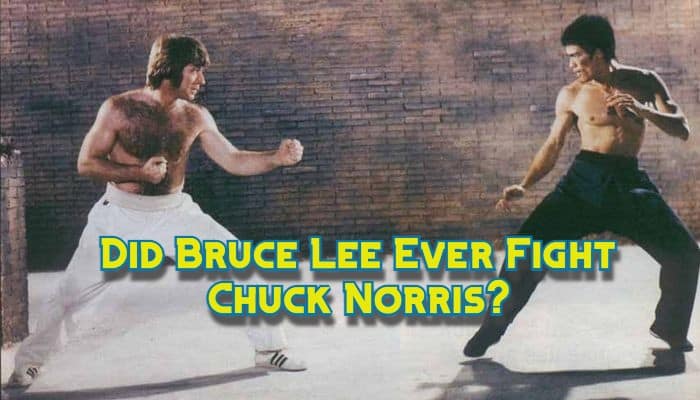
Lee, B. (Director). (1972). The Way of the Dragon(Return of the Dragon) [Film]. Golden Harvest

Bruce Lee and Chuck Norris are legendary men in their own right. Their fame and reputation extend from the world of martial arts to the action filmmaking industry. Did these two iconic action heroes ever put their martial arts skills against each other? Did they fight in real life?

Bruce Lee and Chuck Norris never fought in real life. They trained martial arts together as friends but never fought each other in a formal contest. Bruce Lee would likely prevail if they were to fight in a street fight, but Chuck Norris would likely win in a structured contest.

Bruce Lee and Chuck Norris were both rising stars in the same two public sectors at the same time. It was inevitable that their two paths would cross in the filmmaking sector and in the combat sports sector. When this intersection of destinies came about, was it friendly or antagonistic?

Who Taught Bruce Lee Kung Fu?

Bruce Lee is such a larger-than-life figure that he needs little introduction to most people. Even those who have never seen him fight have heard the name Bruce Lee and have heard of his reputation in martial arts circles and the action film genre.

Bruce Lee was introduced to the world of martial arts when he studied Wing Chun under the tutelage of the famed Yip Man. Initially, there was some resistance to Bruce Lee learning this Chinese martial art due to his mixed heritage and the long-standing rule that Chinese martial arts would not be taught to foreigners.

Yip Man(Left) and Bruce Lee

However, Bruce Lee’s hunger for martial arts was insatiable, and he was soon learning other martial arts disciplines, building his repertoire, and honing his skills.

RECOMMENDED FOR YOU:
What Is Sanda Chinese Kickboxing? Introduction To Sanda

What Martial Arts Does Chuck Norris Know?

Chuck Norris is highly regarded by many to be the quintessential All-American Action hero. He served as a military policeman in the United States Airforce from 1958 to 1962. During a tour of duty to South Korea, chuck was introduced to martial arts.

Chuck Norris started his martial arts training studying Tang Soo Do, which is a Korean martial art that uses Karate as a foundation and incorporates other Chinese martial arts in the style. Tang Soo Do was one of the foundational forms of Taekwondo.

After earning a black belt in Tang Soo Do, Chuck Norris went on to earn black belts in Brazilian jiu-jitsu and Judo. Chuck Norris went on to hold the Professional Middleweight Karate Championship title for 6 years in a row!

ADDITIONAL READING:
Karate vs. Taekwondo: Key Differences And Similarities

Did Bruce Lee Ever Fight Chuck Norris?

Bruce Lee and Chuck Norris were both launching their movie careers simultaneously. Since his childhood, Bruce Lee had been in the entertainment industry but began directing his own movies out of Hong kong.

Chuck Norris was encouraged by his friend Steve McQueen to seriously pursue a career acting in action movies.

In the movie-making industry, the paths of Bruce Lee and Chuck Norris crossed, rather than in combat in the martial arts scene. This happened when Bruce Lee offered Chuck Norris a role in his movie Way Of The Dragon or Return Of The Dragon as it was known in the USA.

Bruce Lee and Chuck Norris became friends, and although they worked out together, training martial arts. While their training involved some sparring, the two martial artists never pitted their skills against each other in a real fight.

Who Would Win In A Fight Between Chuck Norris And Bruce Lee?

Bruce Lee’s philosophy around learning martial arts was for self-defense. This is supported by his incorporation of multiple styles to form his own discipline Jeet Kune Do.

If Chuck Norris and Bruce Lee had to clash in a no-holds-barred street fight, Bruce Lee would have a higher chance to win. However, in a structured competition fight, with rules and regulations, Chuck Norris would have a higher chance to win as the more technically proficient fighter.

Bruce Lee was about learning to fight for the real world, defending yourself in a street fight rather than in a structured tournament-style fight scene with all the rules that restrict the opponents.

On the other hand, Chuck Norris was an expert in the structured format of combat martial arts. This made him very technically proficient within the bounds of the rules of the sport.

RECOMMENDED FOR YOU:
Bruce Lee vs Mike Tyson – Who Would Win in a Fight?

Bruce Lee vs Chuck Norris – Who Was A Better Martial Artist?

It is difficult to distinguish between Chuck Norris and Bruce Lee to say who was the best martial artist since they had differing views and focus in the martial arts world.

There is no doubt that both Bruce Lee and Chuck Norris were experts in their chosen disciplines. Bruce Lee was probably the better martial artist from the perspective of martial arts intention, but Chuck Norris was the better martial artist from the perspective of combat sports.

The two men had very differing views on martial arts, even though their love of martial arts and filmmaking initially brought them together.

Were Chuck Norris And Bruce Lee Friends In Their Personal Lives?

Chuck Norris met Bruce Lee while he was still competing in martial arts competitions before Chuck began taking movie making seriously. At the time, Bruce Lee was receiving attention for his role in the TV series Green Hornet.

Bruce Lee and Chuck Norris became friends and started training martial arts together and sparring against each other as part of their training regime.

Shortly after meeting Bruce Lee, Chuck Norris accepted a role in The Wrecking Crew film, starring Dean Martin in the lead role. Chuck Norris’s interest in movies further cemented his friendship with Bruce Lee and led to Chuck’s role in Bruce Lee’s film Way Of The Dragon.

What Did Bruce Lee Learn From Chuck Norris?

Considering that both men were accomplished in their respective martial arts disciplines, was there anything that Bruce Lee learned from training with Chuck Norris?

Bruce Lee’s martial arts disciplines taught that a martial arts kick should never be above the waist since this promoted instability and vulnerability for the person delivering the kick. Chuck Norris convinced Bruce Lee to train for high kicks and include this technique in his fighting repertoire.

Bruce Lee took the advice of Chuck Norris and studied and trained for high kicks, and incorporated it into his fighting style.

How Did Chuck Norris Become Famous?

Chuck Norris built a name of himself in competition martial arts before embarking on a career in filmmaking.

Chuck Norris became famous for his martial arts achievement of successfully defending his Professional Middleweight Karate Championship title in 6 successive years. While Chuck had some success with his early films, his involvement in Bruce Lee’s film The Way of The Dragon catapulted his acting and filmmaking career.

Chuck Norris also founded his own fighting style, Chun Kuk Do, and taught martial arts to many Hollywood celebrities, including Steve McQueen, Priscilla Presley, and Donny and Marie Osmond.

RECOMMENDED FOR YOU:
10 Movie Stars Who Are/Were True Martial Artists

Was Bruce Lee A Good Fighter In Real Life? 

Bruce Lee’s martial arts training was for real-world situations rather than competition combat sports. His training towards this end and incorporating techniques from multiple fighting styles made him an accomplished fighter where no rules applied.

Chuck Norris admitted that Bruce Lee’s uncanny ability to learn multiple styles and blend them together is what made him a superior fighter. Bruce Lee’s ability to adapt to another fighter’s style and counter with his own knowledge of multiple techniques gave him the advantage in real-life fights.

An actor and legendary karate expert Jim Kelly, who worked with Bruce Lee, talks about Bruce Lee’s fighting skills in this video:

Has There Been Any Documented Proof of Bruce Lee Fighting In Real Tournaments?

There are no documented instances of Brue Lee ever participating in real street fights or martial arts tournaments. However, he was threatened with expulsion from school for fighting in his early years.

Bruce Lee’s parents’ decision to send him to America to continue his education was partially driven by Bruce Lee being caught up in local street fighting in Hong Kong and local police warning his father that Bruce Lee’s participating in this type of activity will lead to trouble.

RECOMMENDED FOR YOU:
How Would Bruce Lee Do In MMA Fighting? (BEST Explained)

Final Thoughts

Although Bruce Lee and Chuck Norris did not fight against each other in real life, there is no doubt that it was their interest in martial arts and filmmaking that brought the two together as friends.

Both men have achieved iconic status in the action movie genre and in martial arts and MMA circles, generating much lore and legend around these two characters!

At the end of the day, Bruce Lee and Chuck Norris were simply friends who both enjoyed martial arts!

Is Boxing Good For Kids? A Basic Guide For Parents

Photo by Nightscream / CC-BY-3.0

Disclaimer: The contents of this website, such as text, graphics, images and other material are intended for informational and educational purposes only and not for the purpose of rendering medical advice. The contents of this website are not intended to substitute for professional medical advice, diagnosis or treatment.

When it comes to kids training in martial arts, most parents do not consider boxing as a good option due to the perceived risk associated with boxers getting knocked out. Most parents consider boxing to be a combat sport for adults and do not regard boxing as benign martial arts such as karate or taekwondo. But is this just a myth people believe in, or is boxing really too dangerous for kids?

Boxing classes are great for kids as it improves both, their physical and mental health, and above all, it is very safe to learn when taught correctly. Among many other benefits, it improves their cognitive functions, strength, and reduces anger.

Boxing training is also cardio intense and will make your kid healthier, stronger, a better person, and teach valuable self-defense tactics. In this article, you will learn all the pros and cons of boxing for kids, and whether boxing is better and safer than other martial arts.

What Age Can Children Start Boxing?

Children can start boxing as soon as they show interest in it regardless of age. Each modern gym includes a “junior” group where kids do types of workouts according to their age and abilities. Here is how it works in practice.

  • Most kids below 7 or 8 years old do not have enough strength, motor skills, and coordination to do intense and advanced drills and exercises. Instead, they do various strength and cardio workouts designed to meet their abilities, and above all, to be carried out in a playful way. Of course, there is no sparring, contact of any kind, and the main point is to tire kids out and provide them with a good workout. In the end, what a 5 year old know about the technical aspects of boxing? The only thing they care about is to play and have a lot of fun. The other problem is that you will have a hard time finding gloves small enough to fit their hands.
  • 9 or 10 year olds  is an age group where most kids have enough strength and ability to better understand the technical aspects of boxing. This is where the intensity of the workouts increases and they start doing real boxing workouts. At this age, kids spend most of the time hitting the pads, doing heavy bag workouts, jump ropes, and doing basic bodyweight exercises. In some schools, they might even do some light sparring(with protective gears) or live drills with the partner to prepare for sparring, but this varies between the gyms.
  • The age of 12 or 13 is when most parents decide to enroll their kids in boxing. At this age, most kids are athletic enough to start with proper boxing workouts. They have enough body awareness and coordination, and the ability to develop strong mental habits and discipline. This is also where they start doing sparring and taking part in amateur competitions.
RECOMMENDED FOR YOU:
Top 3 Best Martial Arts For Kids – A Basic Guide For Parents

What Are The Benefits Of Boxing For Kids?

Boxing is not just an activity where kids learn fighting techniques. No, it also has many other physical and mental benefits that will improve their overall health and have a positive impact on their lives outside the gym as well. Here are all the major benefits of boxing explained in more detail:

Health benefits

Boxing is an intense, full-body workout that will help your kid lose extra weight, prevent obesity, and make their muscles stronger and more flexible, which is crucial for overall health. For instance, kids who train in boxing tend to have a much lower Body Mass Index (BMI) than other kids since they burn more calories and fat. This on the other side enables them to eat more and develop good eating habits, which is a mission impossible for most parents you would agree. Cardio intense workouts also improve their cardiovascular health, decrease anger and stress, and help them sleep better.

Physical health

In junior boxing classes, kids do a lot of bodyweight exercises, and also stretch a lot. They do sit-ups, squats, various types of jumps, sprints, all with very little rest and a lot of sweating.

Classes are a mix of anaerobic and aerobic workouts. Or in other words, it improves both their strength (anaerobic), and boost endurance and cardio (aerobic). On top of that, boxing improves their motor skills, hand-eye coordination, flexibility, and balance. 

Mental health

  • Social skillsis one of those things you want your kid to develop as soon as possible. Each junior boxing group includes 10, 20, or more kids working together. Under a good coaching staff, they will learn all about respect, teamwork, and how to communicate and control their emotions. Being in a group of other kids and in a friendly atmosphere also decreases social anxiety and improves social skills.
  • Confidence — is one of the most important things in life, especially at a young age. Their confidence will start to rise as soon as they begin to work hard, make progress, and start gaining muscles, and being good at boxing. It will give them wings to achieve anything they want in this life. 
  • Disciplineis the furthest thing from kids. But this is where boxing helps parents a lot. Just about every boxing gym maintains a high level of discipline where all students must stay quiet, learn how to listen and obey orders. The level of discipline in a boxing gym can often be even higher than in school for example. This also might have a positive impact on the way they approach school and obligations outside the gym.
  • Reduces aggressive behavior — is one of the main worries of every parent out there, and yes, boxing helps children address anger issues. It allows them to reduce negative feelings and anger through hard work and a positive atmosphere. Each time they train hard, the mind will release chemicals like serotonin and dopamine, which instead of feeling anger, will lift their mood up and make them happy.

Improves self-defense abilities

Boxing is one of the most effective combat systems and each technique students learn works in real life as well. It will teach your child how to defend, but only to use boxing skills as a last resort. In training, coaches will teach them how to avoid conflict first, stay neutral or even run away before using boxing skills.

RECOMMENDED FOR YOU:
Is Boxing Considered A Martial Art? Yes, Here’s Why

What Are The Negatives of Boxing For Kids?

The biggest downside of boxing for kids is the high risk of head injuries which most gyms are trying to reduce. Boxing is a system where athletes use only their hands as weapons to strike the head or the body area below the neck and above the waist. That being said, boxers absorb a lot of head and body shots, which often result in minor or serious injuries.

In most gyms, kids do not start sparring or having any type of physical contact before they are 12 or 13 years old. Or in other words, your kid won’t exchange punches with other kids, neither will they “fight” each other in training. Even when they start sparring at 13 years of age, for example, they all must wear protective gear like full padded gloves, a thick padded boxing helmet, and keep it all light. In the months leading up to their first sparring session, they will learn how to use as little as 30% or 50% of power, and focus on technique.

This reduces the risk of injuries like brain traumas, concussions, or rib and hand fractures. But bear in mind that these methods do not eliminate the risk. On the other side, kids are likely to suffer a concussion in other sports such as rugby or football. Both of these sports include a high rate of brain injuries, even higher than some martial arts.

Does Boxing Make Kids More Violent?

No, boxing doesn’t make kids more violent, in fact, it does the total opposite of that in most cases. First of all, boxing allows kids to get familiar with all the dangers of violence at a very young age. They will feel on their own skin how punches hurt, that being a bully does not mean you know how to fight or make you strong, and above all, that violent behavior only leads to more trouble. But, can boxing actually help kids with anger issues?

Some kids come into boxing with anger issues. But the intensity of these issues would start to drop as soon as they feel how it is to be on the receiving end against a skilled teammate. Over time, this will put their ego into place, and make them more humble. Also, an intense physical workout in a positive atmosphere releases various “happy” hormones like serotonin, which instantly reduces anger and makes them feel happy. 

In the end, a good boxing gym maintains a high level of discipline and encourages respect between the students. Coaches are role models, leaders, and pay extra attention to teaching kids valuable life lessons. They pay even more attention to kids with anger issues, and will give their best to convert their anger into productive work, but not without the support of kids’ parents at home. 

They will not tolerate any type of mental or physical bullying in classes. Instead of letting the kids fight, they will teach them how to stay calm, rethink, and communicate. This improves empathy, self-control, and with that, reduces anger.

RECOMMENDED FOR YOU:
Will Martial Art Make My Child More Aggressive?

Does Boxing Stunt Growth For Kids?

Boxing does not stunt kids’ growth and not a single study supports this claim. Or in other words, this is just a myth that people believe in due to the fact that the most famous boxers tend to be short in height. Yes, being short has many benefits when it comes to fighting. But boxing as a workout does not make you, your kid, or any other human, shorter or will stunt your growth.

In fact, studies have shown the total opposite. Training can only increase the secretion of growth hormone and support the growth of tissues and bones, and with that, height.

RECOMMENDED FOR YOU:
Does Wrestling at an Early Age Stunt Your Growth?

Is Boxing Effective For Self-Defense?

Boxing is one of the best systems kids can learn for self-defense. It will teach them all about the physical and mental aspects of fighting, and effective techniques that might help them in trouble. Yes, it is a bit limited compared with other arts as boxers use “only” their hands as weapons in a fight. But on the other side, it is still better than most other systems, and here is why.

The most common way of the attack on the streets is by swinging a punch both when it comes to adults and kids. This is the easiest, fastest, and the most natural way one can hurt a person standing in front. You will rarely see people going for a takedown, clinch, or throwing a kick. And no other martial art than boxing would teach you how to better defend against punches on the streets. 

In training, students learn how to block, slip, dodge punches, use footwork to keep distance or create angles, and hands to deliver hard and laser precise punches. They do various drills like sparring to learn how to apply these skills in practice, develop timing, feeling for distance, and keep their mind calm in the heat of the moment.

In fact, boxing puts a lot of emphasis on sparring as the best method one can prepare for real combat. Students spend a lot of time simulating a real fight against their partner, which may be a bit scary at first. But over time, you will learn how to control your emotions, stay focused, and make rational decisions while punches are flying.

RECOMMENDED FOR YOU:
Is Boxing Good for Self Defense? The Ultimate Answers

Which Is Better Boxing Or Kickboxing For Kids?

Both of these arts are very similar when it comes to classes for kids, and share very much the same benefits. Both include junior classes where children do not spar up until they are 10 years old at least, and the structure of the training is very similar. 

In classes, kids do various playful drills that will make their bodies strong, and teach them basic fighting skills. Which one is better really comes down to personal preference. The best way to find out is to let your child attend a trial class in both arts, and let them make a final decision. 

  • Number of techniques — kickboxing has more techniques because it consists of hand, leg, knee, and elbow (not in all styles) strikes.
  • Takes less time to learn — boxing is easier to learn simply because students learn less techniques. On average, they need from 6 months to 1 year to develop solid skills that they can apply in a real fight. Kickboxing is not that complex either, but it takes a bit more time, 1 to 2 years to be more precise. 
  • Injuries — the risk of injuries is the same in both arts, maybe a bit higher in kickboxing because of the kicks. But boxing, on the other side, carries a higher risk of head and face injuries due to its emphasis on head strikes.
RECOMMENDED FOR YOU:
10 Tips To Spot Bad Martial Art Schools For Beginners

Final Thoughts

Most parents do not see boxing as the best option for their child due to its violent nature. However, boxing for kids has much more pros than cons when it comes to their physical and mental health, and improving their self-defense abilities. In most gyms, junior boxing classes are very safe because there is no sparring until your child turns 10 or more, and the safety and health of the kids is always the number one priority of the coaching staff. When it comes to injuries in training, junior boxing is nothing more dangerous than football, rugby, and even soccer.

The best thing you as a parent could do is to give boxing a chance. Instead of judging the sport and classes by the pro matches you see on TV, visit the boxing gym and have a talk with the coaching staff about the classes, methods they are using, safety, and all other issues. Be sure to observe the classes if that is what’s going to convince you that boxing is, indeed, safe for your child.

SUGGESTED READING:
Is BJJ Good For Kids? Parents Easy Guide to BJJ

UFC Weight Classes Explained – UFC Weight Classes FAQ

0

MMA is a combat sport that, according to the Unified Rules put together in the 2000s, has 15 weight classes. However, the UFC is not obligated to include all of them, which is the reason why there are “only” 8 weight classes for men and 4 for female fighters.

Each UFC fighter competes in one division where they fight against opponents similar in weight and size, and they can also move up or down in weight to change the weight class. 

Keep reading this article to learn more about UFC weight classes, and how this system works.

UFC Weight Classes (Divisions) Explained – Lbs, Kg, and St

The following are 8 UFC classes for men, and 4 for female fighters:

UFC men’s weight classes

Weight classMinimum WeightMaximum Weight
Flyweight115lbs; 52.2kg; 8.2st125lbs; 56.7kg; 8.9st
Bantamweight125lbs; 56.7kg; 8.9st135lbs; 61.2kg; 9.6st
Featherweight135lbs; 61.2kg; 9.6st145lbs; 65.8kg; 10.3st
Lightweight145lbs; 65.8kg; 10.3st155lbs; 70.3kg; 11st
Welterweight155lbs; 70.3kg; 11st170lbs; 77.1kg; 12.1st
Middleweight170lbs; 77.1kg; 12.1st185lbs; 83.9kg; 13.2st
Light Heavyweight185lbs; 83.9kg; 13.2st205lbs; 93kg; 14.6st
Heavyweight205lbs; 93kg; 14.6st265lbs; 120.2kg; 18.9st

UFC women’s weight classes

Weight classMinimum WeightMaximum Weight
StrawweightNone115lbs; 52.2kg; 8.2st
Flyweight115lbs; 52.2kg; 8.2st125lbs; 56.7kg; 8.9st
Bantamweight125lbs; 56.7kg; 8.9st135lbs; 61.2kg; 9.6st
Featherweight135lbs; 61.2kg; 9.6st145lbs; 65.8kf; 10.3st

When Did The UFC Add Weight Classes?

The UFC introduced the weight classes at UFC 12 event held in Dothan, Alabama in 1997. Initially, there were only two divisions:

  • Lightweight — for fighters weighing below 200 pounds
  • Heavyweight — for fighters weighing above 200 pounds.

Although this wasn’t an ideal solution, it was a starting point for the major changes that would come just a couple of years later.

The biggest change came in 2000 when the UFC started working with Athletic Commissions all across the US with the goal to regulate the sport. New Jersey State Athletic Commission was the first one to come up with the solution and set of rules named “Unified Rules of Mixed Martial Arts”.

Among many rules and changes, the biggest one was the birth of 15 weight classes. Bear in mind that the promotions do not have to implement all 15 divisions. This is why the UFC has 8 weight classes for men and 4 for women. But if they want, they can add more divisions whenever they want.

What Was UFC Open Weight Class?

Before the weight classes have emerged in 1997, the UFC events were open weight tournaments. Or in other words, there were no upper or lower weight limits meaning that fighters of any weight could compete.

When the UFC first started, UFC fighters often fought against much taller and heavier opponents which used to be very dangerous. But on the other side, this was normal back then as UFC events were promoted as legal street fighting venues where there were no rules or weight limits. It didn’t matter if a fighter weighs 170 or 500 pounds, the UFC allowed everyone to come in and compete under limited rules.

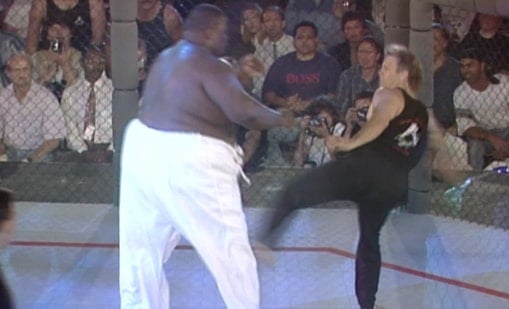
One such bizarre match saw a 200-pound karate expert Keith Hackney beating a 600-pound sumo wrestler Emmanuel Yarbrough at UFC 3. The other good example is Royce Gracie, arguably the most important figure in UFC history. He used to weigh around 175 pounds but his opponents would often be twice as big as he was.

The early years of UFC were simply too dangerous, and even barbaric in some way. The interest in the sport was there, but there was no way that this type of event would ever become legal in all states and worldwide. That’s why the UFC had decided to push for regulation, and make drastic changes in terms of rules in 1997 when they got rid of the open weight division.

UFC 3(Open weight) – Keith Hackney vs Emmanuel Yarbrough fight highlights

Why Are There Weight Classes In UFC/MMA?

The purpose of weight classes is to make competition equal, fair, and safe. Within a weight class, all fighters are similar in weight, size, height, and neither fighter enjoys a big size advantage that can influence the outcome of the fight.

For instance, the former flyweight champ (125lbs), Demetrious Johnson used to be the pound for pound best fighter in the world for a long time. But what do you think would happen if there were no weight classes, with Johnson facing someone like Brock Lesnar who used to weigh over 265 pounds? Yes, Johnson might be more technical, talented, faster, but he would be mauled by Lesnar in a brutal fashion. As a result, in order to make the competition fair, different weight classes are created so that fighters can fight in the weight class that is closest to their natural weight and face opponents of similar sizes.

Each weight class in the UFC has a name, and minimum and maximum weight limits. For instance, the lower weight limit for the lightweight divisions is 145 pounds, while the upper limit is 155 pounds. A lightweight fighter must hit the scale within these limits on the official weigh-ins that are held around 24 hours before the event.

If it is a non-title bout, they are allowed to miss the upper limit by no more than 1 pound. In case it is a title bout, then both fighters must hit the scale at the upper limit or less. The process is the same for all other weight classes.

Back in the early days, UFC didn’t have weight limits which resulted in bizarre matchups where one fighter was twice as big as their opponent. Apart from the fact that this gives one fighter a big size advantage and with that better chances of winning, it is also very dangerous. Heavier fighters can generate more force in both striking and grappling, and hurt the smaller fighter much easier than vice versa.

Despite the weight limits, some fighters would still have a higher reach, be taller, or weigh more on fight night. But these differences are negligible compared to the times when there were no weight divisions.

Another reason is the UFC or any other MMA promotion must have weight classes in order to hold legal events. In the case they don’t, then the UFC would be banned in just about every US state, and with that, all across the world as well.

Are Boxing And UFC/MMA Weight Classes The Same?

No, the weight classes differ a lot between boxing and MMA, both when it comes to the number of divisions and weight limits. Here is a detailed table explanation:

Weight ClassBoxing (Upper weight limit)MMA (Upper weight limit)
Super Heavyweight*only in amateur boxingNo Limit
HeavyweightUnlimited265lbs; 120 kg
Cruiserweight
200lbs; 90 kg225lbs; 102kg
Light heavyweight175lbs; 79kg205lbs; 93kg
Super middleweight168lbs; 76kg195lbs; 88.5kg
Middleweight160lbs; 72.5kg185lbs; 84kg
Super welterweight154lbs; 70kg175lbs; 79.5kg
Welterweight147lbs; 66.5kg170lbs; 77kg
Super lightweight140lbs ; 63.5kg165lbs ; 75kg
Lightweight135lbs ; 61kg155lbs ; 70kg
Super featherweight130lbs ; 59kg/
Featherweight126lbs ; 57kg145lbs ; 66kg
Super bantamweight122lbs ; 55kg/
Bantamweight118lbs ; 53.5kg135lbs ; 61kg
Super flyweight115lbs ; 52kg/
Flyweight112lbs ; 51kg125lbs ; 56.5kg
Strawweight/115lbs ; 52kg
Light flyweight108lbs ; 49kg/
Minimumweight105lbs ; 48kg/
Light minimumweight (Atom weight)102kg ; 46kg105lbs ; 48kg

Can Fighters Switch Weight Classes In UFC?

Yes, UFC fighters are allowed to move up and down in weight to compete in different weight classes as long as they can meet the upper and lower weight limit for that specific weight class. Of course, they also do this as long as moving up or down makes sense in terms of their careers and performance. For example, UFC’s 170lbs champ Kamaru Usman can theoretically move up and fight in a 205lbs division but that won’t be a good idea in terms of his chances of winning.

There are many reasons why a fighter may change a weight class. One of the main reasons is the brutal weight cut and the impact this process has on their bodies. At some point in their career, a fighter no longer has the ability to cut so much weight without consequences, and this forces them to move a division up where they would cut less weight. One such fighter is Darren Till who used to struggle a lot with cutting down to 170lbs. At one point, he has decided to move up and compete in the 185lbs division.

On the other side, some fighters move down in weight because they feel they will have more success competing in the lower division against opponents similar or smaller in size.

Which UFC Weight Class Has The Most Number Of Fighters? 

As of 2022, UFC’s lightweight division (155lbs; 70kg) has 111 active fighters, which is the most out of all weight classes. The second is welterweight (170lbs; 77kg) with 109 fighters on the roster. As for women’s weight classes, the strawweight division is in first place with 47 fighters, while the flyweight has 45 fighters.

Which UFC Weight Class Has The Most Knockouts? 

UFC’s heavyweight division has always been associated with devastating knockouts, which the statistic is clearly confirming. Around 50% of all heavyweight matches end up in a KO, which is not a big surprise considering that just about every heavyweight has enough power to score a one-punch KO. In second place is the light heavyweight division where around 42% of fights end in a KO, followed by middleweight 35% and welterweight 32%. 

Why Do UFC Fighters Cut Weight?

UFC fighters cut weight to compete in a weight class below their natural one. They do this to gain a physical advantage in height, weight, reach, and with that, in strength and power over the opponents. They lose up to 40 pounds in a week leading up to a fight and gain the majority of this weight back in less than 24 hours before the match starts.

But bear in mind that cutting a lot of weight is a modern practice done by just about every fighter in the UFC or other promotions. As long as the rules give fighters enough time to rehydrate and recover, they will keep cutting weight no matter what.

This means that, despite the brutal weight cut, fighters still end up competing against the opponent similar in size who did the same thing.

But this is not always the case as there have been few exceptions. For example, some fighters like Darren Till are capable of losing more weight than the others and get the advantage in size. Till used to fight in the 170-pound weight class where he was much bigger than his opponents. The other great example is Conor McGregor who used to cut all the way down to 145 pounds where he enjoyed a huge advantage in size and power.

RECOMMENDED FOR YOU:
Why Are MMA Fighters Skinny And Don’t Have Big Muscles?

Why Do UFC Fighters Cut Weight So Late?

Most UFC fighters start cutting weight a couple of weeks before the event while they are still in the training camp. However, they lose the majority of the weight, between 20 and 40 pounds in a week leading up to a fight. They do this by extreme dehydration since getting rid of the water in your body is the only way you can lose so much weight within such a short time span. Upon recovering from the cut, the majority of weight they gain back is actually water.

They do this “late” or close to an event because you can’t pace dehydration and spread the process to a couple of weeks simply because that is not possible. Not getting enough fluid for weeks while still training hard is fraught with danger and would have an impact on your health.

What Happens When A UFC Fighter Misses Weight?

When a UFC fighter misses weight in their first attempt, the commission would give a fighter another 1 or 2 hours to lose extra pounds. In most cases, an hour or two is more than enough for a fighter to cut 0.5 or even up to 1 pound and pass the scale.

When a fighter misses weight in the second attempt, the UFC would ask their opponent to agree to a catchweight fight to save the fight. If the match was supposed to be at 155 pounds, the catchweight would be at around 160 or 165 pounds depending on the circumstances.

If the opponent agrees, which they do in most cases, the athletic commission overlooking the event needs to approve the fight (which they do most of the time) and the fight is on. A fighter who missed weight would forfeit between 20–30% of their fight purse and give it to their opponent who made weight and has agreed to a catchweight bout.

ADDITIONAL READING:
What Happens When A UFC Fighter Misses Weight? Fully Explained

Do UFC Heavyweights Cut Weight?

Yes, throughout MMA history, there have been many UFC heavyweight fighters who needed to cut weight to meet the upper limit which is 265 pounds. One of the most famous heavyweights who used to cut weight was the former UFC champ and WWE start, Brock Lesnar who used to walk at around 280–290 pounds.

ADDITIONAL READING:
Why Is There A Weight Limit For UFC Heavyweight Fighters? FAQ

Who Is The Heaviest UFC Fighter Ever Fought?

The heaviest UFC fighter ever was Emmanuel Yarbrough who fought during the early days of the promotion where there were no rules or weight classes. This giant was entering the cage weighing over 600 pounds to compete against fighters often twice as small as he was, like Keith Hackney who was weighing 200 pounds. Despite such a dramatic difference in weight, Hackney managed to beat Yarbrough at UFC 3.

Emmanuel Yarborough vs Keith Hackney at UFC 3

Modern-day UFC has the upper weight limit for heavyweights, which is 265 pounds. But bear in mind that a lot of them cut weight to pass the scale and then gain the weight back before the fight starts. Or in other words, they weigh more than 265 pounds on fight night. Some of the heaviest are 

  • Brock Lesnar — around 280–285 pounds
  • Derrick Lewis — close to 280 pounds or more
  • Antonio Bigfoot Silva — 280–285 pounds

What Are Catchweights?

A catchweight in the UFC is the weight agreed upon by both fighters that do not adhere to the limits of the assigned weight divisions. For example, 155 lbs fighter and 170 lbs fighter may agree to fight at 165 lbs.

Make sure to read “What is Catchweight in UFC? Simply Explained.” This article explains everything you need to know about the UFC catchweight.

Conclusion

The main purpose of weight classes in UFC or any other combat sport is to level the playing field and make it safer. Having weight classes enable fighters to compete against opponents similar in weight and size and prevents fighters from having an unfair size advantage. 

How Would Bruce Lee Do In MMA Fighting? (BEST Explained)

0

When it comes to the most famous and the most iconic martial artist of all time, Bruce Lee, people will always wonder about his fighting skills. One of the main questions that constantly lingers on people’s minds is whether Bruce Lee would do well in modern-day MMA.

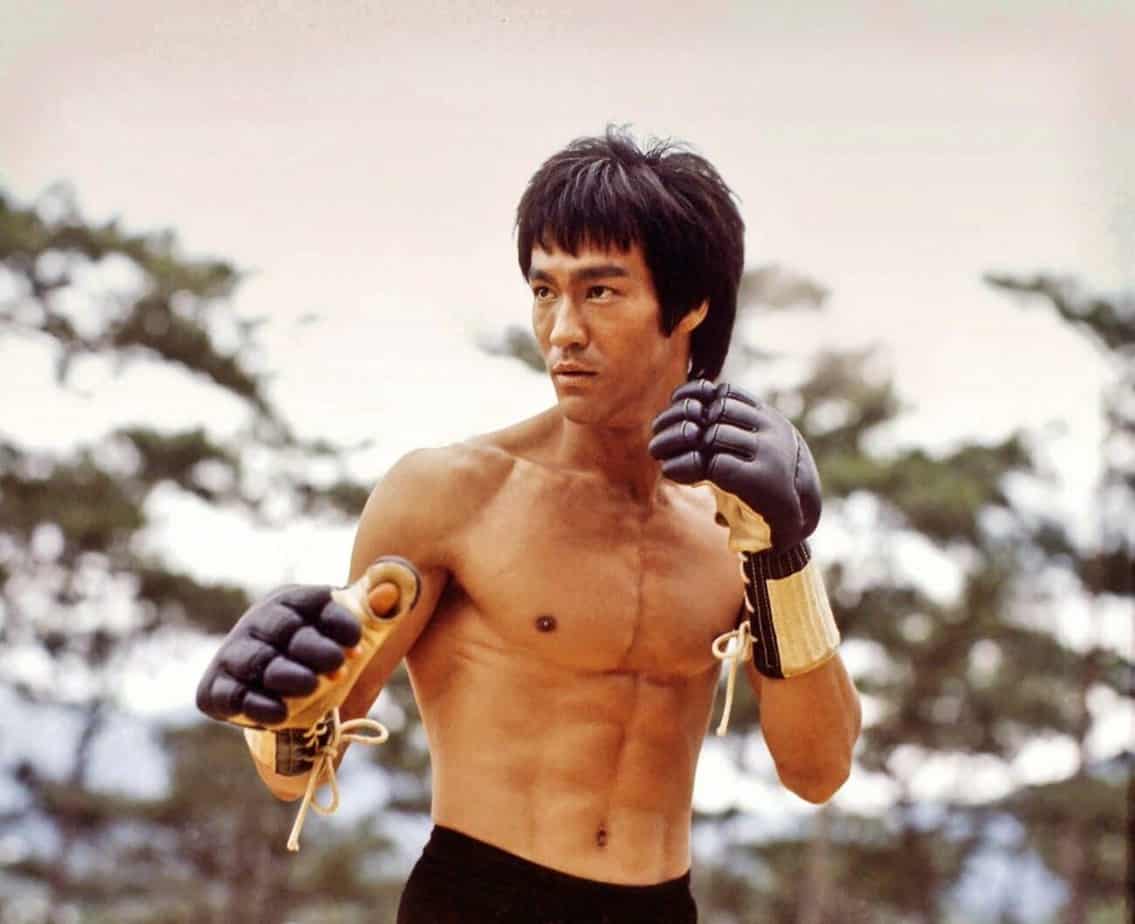
Clouse, R. (Director). (1973). Enter the Dragon [Film]. Warner Brothers Pictures.

Bruce Lee’s commitment to training, diet, discipline and training in multiple fighting styles would have made him an ideal candidate to fight in any MMA cage. But his lack of conformity to rules would probably have kept Bruce Lee from participating in this kind of sport.

In a hypothetical world, we’ll analyze how Bruce Lee would have fared in MMA based on the information we know about Lee. Would his skill and training make him potentially successful against modern MMA fighters?

Would Bruce Lee At His Peak Be Able To Contend With Today’s Top MMA Fighters?

Bruce Lee was an icon in the martial arts and film world, but was his skill all “Hollywood,” or did he have what it would take to dominate in the world of MMA? This is a question many people consider, and we will take a look at this prospect and deliver an answer.

In order to establish a baseline for our conjecture, it would be good to start with what it takes to be a modern MMA fighter and see if what we know about Bruce Lee would make him a serious contender in this arena.

Modern MMA fighters need to display the following characteristics to succeed in the ring.

  • Fitness. MMA fights can be energetic and physically taxing. Superior fitness is a key characteristic for success in the ring.
  • Stamina. Not all MMA fights end in a knockout or a submission; some go the distance. To successfully compete in MMA, you need to train for stamina and other aspects of the fight.
  • Strength. There is no doubt that strength is needed to deliver the power behind a blow to knock an opponent out or sustain a submission hold to get them to quit.
  • Speed. Hand-speed and fast footwork can enable a fighter to take advantage and go on the offensive or quickly get out of trouble.
  • Body conditioning. Not only must you be able to deliver a punch, but you need to be able to take a punch as well. This ability only comes with a well-conditioned body for these demands.
  • Skill in multiple martial arts. This is a foundational requirement for the sport. The more knowledge and proficiency you have in multiple combat disciplines, the greater your advantage over an opponent.
  • Confidence. A fighter must have confidence in his fitness and fighting skills to face opponents with varying skills to their own.

Now that we have some insight into what it takes to be an MMA fighter, we can compare these characteristics to what we know about Bruce Lee and surmise how he would stack up against modern fighters.

Bruce Lee’s Training Regime

Besides the fighting skills needed, the body aspects required for MMA fighting, fitness, stamina, strength, and body conditioning all come from commitment and discipline in a strict training regime.

Bruce Lee was renowned for his commitment to a strict training regime, and as a result, he was extremely fit and had sufficient stamina to participate in an MMA fight.

Bruce Lee also focused on total body conditioning and worked on speed and maintaining a strict diet to complement his training. This is much the same as many modern MMA fighters today, many of which follow Bruce Lee’s training program.

There is no dispute that Bruce Lee was physically capable of holding his own on the ring from a fitness and stamina point of view, but how does he compare with his martial arts knowledge and skills?

RECOMMENDED FOR YOU:
Top 10 Reasons Why MMA Is The Hardest Sport

How Good Was Bruce Lee With Martial Arts?

Bruce Lee was one of those gifted fighters who understood the concepts of martial arts and quickly understood and learned moves and techniques from a wide range of disciplines.

Bruce Lee had a particular knack for seeing the good in a variety of fighting styles and incorporating them into his own fighting style.

This led to his philosophy of taking the best techniques from any fighting style, adapting them to your own unique perspective, thus making them your own. This philosophy was the foundation for Bruce Lee’s own fighting style Jeet Kune Do.

Many other well-known martial artists, such as Chuck Norris, held Bruce Lee in high regard as an accomplished martial artist.

What Martial Arts Did Bruce Lee Know?

Bruce Lee began his martial art by studying Wing Chun under the iconic Yip Man, and this was his foundational style for most of his life. He also studied Tai Chi, Karate, Judo, Gung Fu, and boxing.

Bruce Lee also studied some non-martial arts combat arts such as fencing, which may not be a martial art, but contributed to his fighting style.

Did Bruce Lee Know Grappling?

Bruce Lee studied Judo, which is a grappling-oriented martial art, but he also learned grappling techniques from Gene LaBelle, a legendary Judo master in his own right and a professional wrestler.

Gene LaBelle was also a Hollywood stuntman and trained Bruce in grappling during Bruce’s time in Hollywood.

Gene LaBelle commented the following on Bruce Lee’s martial art skills:

People may wonder just how good a martial artist he was. Well, as I said earlier, he was the best of his time. Also, many of his former students are doing very well today. That’s a sign that he was a good martial artist and that he was able to make his students into good martial artists.

Black Belt Magazine
RECOMMENDED FOR YOU:
Does Judo Have Submissions? Yes, Here’s What You Need To Know

Did Bruce Lee Ever Participate In A Sanctioned Fight?

Bruce Lee was involved in street fighting as a teenager and got into trouble for fighting at school, but did he ever participate in a sanctioned fight?

Bruce did participate in boxing as a sanctioned activity in his early years but did not pursue this when he relocated to the USA.

Bruce Lee did not fight professionally and did not participate in any sanctioned fights in the USA. But according to James DeMile, one of Bruce Lee’s original students, he claims Lee could have beaten any professional fighters during Lee’s time. Here’s the video of DeMile talking about Bruce Lee’s fighting skills:

Why Is Bruce Lee The Father Of MMA?

Bruce Lee is often thought of as the father of modern MMA, but what has led to this iconic status being attributed to him?

The main reason for Bruce Lee being considered as the father of MMA has more to do with his philosophy than his fighting ability. 

The idea of good and bad aspects to every fighting style and studying all styles and taking the good aspects from each combat form is the philosophy of Bruce Lee’s Jeet Kune Do.

This idea of learning a variety of techniques and styles and incorporating them into your own fighting style pioneered by Bruce Lee is the basis of his being perceived as the father of modern MMA.

What’s The Difference Between Jeet Kune Do And MMA?

The idea in Jeet Kune Do for learning multi-discipline fighting styles is to improve your ability to defend yourself. The intention of Jeet Kune Do is to better prepare yourself for real-world fighting, such as street fighting, where there are no organized rules, and you need to win as quickly as possible, using any means necessary.

This focus on self-defense is where the primary difference between MMA and Jeet Kune Do becomes evident.

MMA is a sport that has rules and guidelines that participants must adhere to in order to remain within the rules of the sport.

Consequently, the main difference between MMA and Jeet Kune Do (JKD) is that there are no rules in JKD since it is self-defense-oriented, whereas there are rules in MMA since it is sport-oriented.

RECOMMENDED FOR YOU:
Is Jeet Kune Do Effective? Here’s a Closer Look

Did Chuck Norris Fight Bruce Lee?

Bruce Lee did not fight Chuck Norris in a real fight, but they did face off in opposing roles in the movie Way Of The Dragon, where Chuck Norris played the villain.

The iconic fight scene between these two martial artists became one of the most talked-about movie fight scenes for decades.

Who Is Better Bruce Lee Or Jet Li?

Both Jet Li and Bruce Lee were accomplished martial artists, and while Bruce started training Wing Chun, Jet Li trained in Wushu.

Wushu is considered by most to be a superior martial art to Wing Chun, which would make Jet Li the favorite in a contest if only these martial arts were used. However, Bruce Lee trained in multiple disciplines and had experience in streetfighting.

Jet Li is probably the better technical martial artist, but Bruce Lee would have the edge in an all-out brawl due to his knowledge across a wider range of fighting styles.

Conclusion

There is no doubt that the training, discipline, and philosophy of incorporating different styles into his technique would have made Bruce Lee a formidable MMA competitor.

However, given his lack of conformity to rules, it is unlikely Bruce Lee would have participated in this type of MMA competition since the regulations around the sport would have been too restrictive to his fighting style.