Home Blog Page 19

Is Muay Thai Good For Self-Defense? A Beginner’s Guide – FAQ

0
Photo by Eric Langley/CC-BY-2.0

Muay Thai, sometimes referred to as the deadly art of eight limbs is regarded as one of the most dangerous striking martial arts on the planet, but is it effective for self-defense? 

Muay Thai is a very effective self-defense system that focuses on delivering powerful strikes using the limbs of your body to end a fight quickly, which is very important in self-defense situations to get away quickly and safely. 

Muay Thai traces its roots from Muay Boran and other ancient forms of southeast Asian kickboxing-style arts where rules were few, but is it useful on the streets of today?  Well, the short answer is yes as mentioned above, but the long answer is it depends. Keep reading to find out!

What Does Muay Thai Teach?

The slightly more “sanitized” sport version of the Muay Thai equips a focused student with powerful punches, devastating kicks, sharp knees and elbows, as well as standing grappling techniques used to help aim those knees to the mid-section and set up leg sweeps. These attacks, along with various blocks are typically practiced on pads and bags before students develop them further in sparring bouts. Sparring helps hone footwork, distance management, balance, timing and precision.

Some Krus(teachers) will also look at the Muay Boran techniques still utilized by the Thai military, including eye gouges and throat strikes. However, this is a little bit less common, as most gyms ultimately want to produce a stable of successful professional fighters who fight under various rulesets.

Even less common are schools which teach various Thai weapon arts such as Krabi Krabong.

Krabi Krabong is a Thai weapons-based martial art that trains you to utilize any objects as weapons in self-defense situations.

Krabi Krabong training

Ultimately learning to protect the head and vital organs, how to relax under pressure and move decisively will serve most people well, providing them with increased confidence and calmness in a self-defense situation.

LEARN MORE
Check out our article on 21 Rare Weapon Based Martial Arts You Have Never Heard of

What are the Pros and Cons of Muay Thai for Self Defense? 

The Pros

Muay Thai offers a wide variety of benefits to the practitioner for self-defense. In almost all situations where self-defense is required, it is best to find ways to extricate yourself from danger. When the flight or fight reaction calls, opting for flight should be regarded as the smart way of doing things, rather than the cowardly way. However, running isn’t always an option. Sometimes we may be unfortunately facing off against a multitude of assailants, don’t have the space to run, or have to protect our loved ones from dangerous people.  

Having the skills to protect the head from strikes, as well as the footwork to evade them are probably the most important ones which Muay Thai lessons can teach.  

When faced with multiple attackers and you are forced to stand, it may be necessary to incapacitate one assailant to lower the number of approaching threats. Muay Thai can be incredibly aggressive and knowing how to throw elbows or knees – two of the strongest and sharpest weapons the body with power and precision can allow you to incapacitate someone with relative ease.  

By knocking out, winding, or causing severe cuts to someone’s face, you may not only remove them as an attacker, but unsettle their accomplices, causing them to approach with caution. This can buy you time to make an escape.

Training Muay Thai should guarantee a massive improvement to your cardio, so running is something which should be more manageable. Additionally, due to the catharsis and the mental clarity from the highly active meditation hitting pads or bags can bring, Muay Thai practitioners often tend to be more confident and composed. Confident people are often less likely to be targeted by bullies, while the mental clarity should lead to better decision-making processes.

The Cons

Muay Thai has a few drawbacks as a form of self-defense. Firstly, as it is a sport, most practitioners will have done most of their training while wearing gloves that protect the fragile bones of the hand. This may give the student false confidence in the sturdiness of their hand. Punching someone with a bare-knuckle can lead to a broken hand, which isn’t much use in a fight, can be a source of immense pain and some pricy medical bills.

Kicks also have their limitations. While leg kicks and sweeps are usually unexpected and can cause an attacker to fall, or limp, anyone throwing a body or head kick can risk becoming unbalanced and falling themselves. Like the glove situation, most Muay Thai fighters practice sparring with shin guards on and may not be used to landing kicks without them, or are they unlikely to be used to throwing kicks with shoes on, which in a self-defense scenario is almost always more likely. These alterations in the mechanics of the techniques can be subtle, but lead to complications.

As mentioned before, unless you train Krabbi Krabong, or the various forms of Muay Boran practiced by the Thai police or military, you are unlikely to have much interaction with weapons. Other martial arts such as Krav Maga will be more likely to teach weapon disarms, along with the mentality of recognizing items in any given scenario which can be utilized as a makeshift weapon. Muay Boran and Krav Maga will also teach dangerous but sometimes necessary self-defense moves such as throat strikes and eye gouges. Regular Muay Thai classes won’t teach these.  

One unexpected drawback is that Muay Thai can instill some people with too much confidence. Some people who have studied the art may end up provoking someone in a situation, when this situation could be easily diffused. Similarly, they approach a street scenario with a professional, or amateur fighter mentality. Rather than shouting for help, or looking for an exit, they can seek to “win”. Fighting usually involves getting hurt and even if you aren’t hurt, badly injuring or even accidentally killing someone due to them falling badly or receiving brain trauma can at the very least involve an expensive lawyer, undue stress, guilt and PTSD. This is all before we mention the very real threat of prison time.

Lastly Muay Thai doesn’t teach any ground fighting. A huge amount of street and bar fights end up on the ground and knowing how to grapple, to either get back to your feet, or to neutralize an attacker will serve any combatant. Wrestling or Brazilian Jiu-Jitsu is much more important in these scenarios.

RECOMMENDED FOR YOU:
Are U.S. Police Trained in Martial Arts? Police Training Q&A

Is Muay Thai Hard to Learn?

Whether Muay Thai is hard to learn depends on a number of factors, such as age, mobility, coordination, stamina and balance. The good news is that other than age, the vast majority of Muay Thai students will find that these things improve over time. 

The bad news is that learning techniques can be challenging.  Developing the muscle memory needed to throw strikes with power, speed and precision can require an enormous amount of concentration, along with an openness and willingness to learn.  

Certain attacks will require more concentration and resilience to develop. Switching stance to throw powerful kicks from the lead leg can sometimes need hundreds and thousands of repetitions to get to a high standard. However, compared to other striking martial arts such as Karate and Taekwondo, Muay Thai Krus(Muay Thai instructors) don’t tend to spend as much time on focusing on flashy kicks which need bouncy footwork to set up.  

Nak Muays(Muay Thai fighters) may be flatter footed than other martial artists, but most of the moves are easier to learn because they are more simplistic. As one Kru said “Muay Thai is like opening a cupboard and catching something falling from it before it smashes on the ground”. It is often reactionary and can feel significantly more natural.

Most combinations begin with punches, which most people are generally more comfortable throwing than kicks. While it will take a while to develop an efficient jab, cross or hook, humans have been turning their hands into clubs and whacking each other across with said clubs since the stone age.  

As with many other new skills, the hardest part of Muay Thai can be starting, losing the ego and accepting that initially, we will be bad at the new skill. It takes time, repetition and perseverance to develop efficiency and knowledge. Thankfully, for most people, Muay Thai is a fun, often social but in a way, meditative and cathartic skill to learn.

RECOMMENDED FOR YOU:
Is BJJ Hard To Learn? A Guide For Beginners

How Often Should You Train Muay Thai?

How often we train Muay Thai comes down to age, tie, fitness levels and intended outcome. For the average healthy adult, training 2-3 times a week should be enough to see the benefits. In the early stages its advisable to give the body plenty of time to rest. Striking arts can be hard on the joints, bones and sometimes shins.

Recovery time is required as the body adjusts to new routines in order to avoid excess strain or risk of pulling muscles.  Over time students may find themselves with more energy and enthusiasm making training a tempting and more manageable proposition. Professional fighters will train as often as twice a day, six days a week.

Be conscious of your other commitments. As fun and benefitting Muay Thai can be, it is wise to avoid burnout.  

How Long Does It Take to Become Good at Muay Thai?

It goes without saying that everyone learns at different speeds, for all sorts of different reasons. Some people are more naturally athletic, whilst some suffer from disabilities or developmental issues that can affect coordination, such as dyspraxia. 

That being said, the average person training Muay Thai two or three times a week should see improvements and muscle memory enhancements within a few months.

Arguably the most important fundamentals Muay Thai can provide for self-defense can develop in a few months. Knowing how to guard, block punches and kick is something that can be developed quite quickly, either through sparring or through pad holders who test or “check” the guard through tapping the boxer when they fail to maintain their guard. If the student regularly practices Muay Thai, they should undoubtedly see leaps and bounds in their cardiovascular health levels. With improved cardio, comes an improved ability to run away from a dangerous situation.

It can take years to get to a true proficiency i.e. to get to a good standard of competition level Muay Thai. Some students will compete on an interclub, or low-level amateur level within a year, but to become a professional, it requires years of discipline and dedication.

Do You Get a Belt In Muay Thai?

Colored belts that signify the level of ability or experience as found in martial arts such as Karate, Taekwondo, Judo or Jiu-Jitsu don’t exist in traditional Muay Thai classes. A Muay Thai master may give a student a colored armband as a good luck charm before they enter into a professional bout and some western gyms or franchises have been giving colored versions of these bands to communicate a rank, but this isn’t the norm. Some traditionalists may even consider this as a gimmick.

Instead Muay Thai is more akin to Western Duke of Queensbury pugilism and respect is earned when a fighter wins amateur or professional fights. In Thailand, the highest regard would be held for “stadium champions”, who would be the most dominant and successful fighters in their given weight classes at the likes of Lumpinee or Rajadamnern Stadium.

RECOMMENDED FOR YOU:
Why Is Boxing Called The Sweet Science? – Ultimate Answers

Muay Thai vs BJJ – Which Is Better For Self-Defense?

This is quite a tough question and is often situationally dependent. If you are forced to defend yourself from only one unarmed attacker, Brazilian Jiu-Jitsu(BJJ) is arguably much more useful. By grappling, or taking someone to the ground, you often negate any speed, strength or size advantages they have. Removing the threat of either having to strike or being struck can greatly reduce risk of long-term damage for you and your assailant, thereby keeping you safe from both injury, death and legal repercussions.  

On the other hand, going to the ground with one aggressor as their friend’s stamp on your head isn’t a wise move. Muay Thai with its strikes can help you handle multiple attackers or create the space to escape from a dangerous scenario. Muay Thai, which often has running as a warm-up, will also be more efficient at developing cardio useful for making these escapes.

LEARN MORE
Get the full report on BJJ vs Muay Thai  –  Which Style Is Better? FAQ

Closing Thoughts

Muay Thai is an exciting and engaging sport for both the practitioner and one which provides many benefits for self-defense. It is undoubtedly one of the most fun ways to get into shape and simply by being in shape, we can be in a better position to handle threats presented to us.

Wherever possible, it is great to cross-train in a grappling art, or in a discipline which factors weapons into dangerous scenarios. It is arguably even better to train how to diffuse dangerous situations, or to have the awareness on how to avoid them entirely. It is also wise to avoid becoming overly confident in our abilities and knowing the weaknesses Muay Thai has should add some caution with the way we interact with danger.
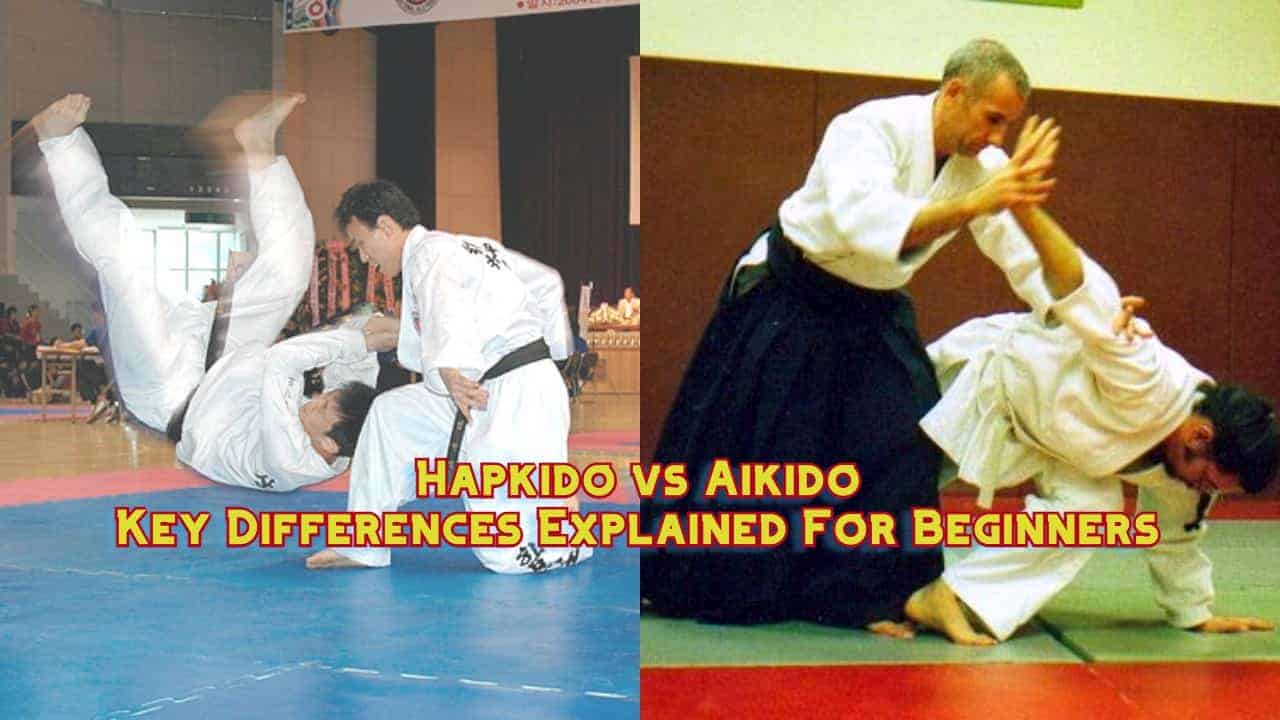
Hapkido vs Aikido – Key Differences Explained For Beginners

0
Photo by Wikimedia(left) & Christelle Fillonneau(right)

Hapkido and Aikido may sound the same leading people to think that the two martial arts are similar. The reality is that they are two completely different arts originating from different countries. What differentiates these two martial arts styles from each other?

Hapkido and Aikido are founded on roots in the Japanese martial art Daito Ryu Aiki Jujutsu. Hapkido is Korean, and Aikido is Japanese. Hapkido includes grappling and kicks, while Aikido does not and employs a more philosophical approach to self-defense.

Hapkido and Aikido are considered fairly young martial arts styles since they were founded in the early 1900s compared to other ancient styles with centuries of history. Hapkido and Aikido share similar roots, but important differences set the two apart from each other.

What Is Hapkido?

Hapkido is a martial art originating from Korea. The form is a hybrid of several fighting styles from the region and from some Japanese styles. Hapkido is considered a self-defense martial art rather than an attacking style. 

The philosophy is to be able to defend yourself adequately against an attacker rather than being an aggressor, but some offensive techniques are taught as part of the system.

The founder of Hapkido was Choi Yongsool, who created the form when he returned to Korea after World War II. He had spent 30 years in Japan, where he studied Daito Ryu Aiki Jujutsu, a Japanese martial art.

Hapkido is heavily influenced by Daito Ryu Aiki Jujutsu and is adapted from this style. Moves from Taekkyon and Tang Soo Do were incorporated into the style, as were various Judo throws and ground fighting techniques.

The name of the martial art Hapkido has the following meaning.

Hap – harmony

Ki – Power

Do – Path or way of

This means that Hapkido can be translated as “the way of power and harmony.”

Hapkido incorporates the following.

  • Joint locks
  • Throwing techniques
  • Grappling
  • Jumping kicks 
  • Punches and other hand strikes
  • Pressure points
  • Traditional weapons

The traditional weapons taught in Hapkido include the use of the following.

  • Knife 
  • Sword
  • Nunchaku – ssang-chul-bong in Korean
  • Short-stick – dan-bong
  • Cane – ji pang ee
  • Medium length staff – joong-bong
  • Gun – similar to the Japanese
  • Long staff, or bo – bong in Korean

Hapkido teaches both close and long-range fighting moves and focuses on circular movement, redirecting an opponent’s strikes and controlling the attacker. Footwork and body position are key tactics to gain an advantage over a potential attacker. The intention in Hapkido is to keep the opponent off balance and use leverage rather than matching the opponent’s strength with your own strength.

What Is Aikido?

Aikido, like Hapkido, is also considered a modern martial art since it was developed in the late 1920s. Aikido is a Japanese martial art based on the foundational principles of Daito Ryu Aiki Jujutsu, which is a traditional Japanese martial art revived in the early 20th century by Takeda Sokaku.

The founder of Aikido, Morihei Ueshiba, studied Daito Ryu Aiki Jujutsu as a student directly under Takeda Sokaku. The Aikido founder also studied Tenjin and Shin yo Ryu, which also influenced the style. 

Morihei Ueshiba developed Aikido in the 1920s and 1930s, and in those early days, it was known as Aiki Budo.

Ueshiba was a spiritual man, and his religion influenced the philosophy of Aikido which incorporates the concepts of peace, reconciliation, and to do no harm, even to your attacker. The premise of Aikido is to disable your attacker so you can diffuse the situation but not to incapacitate or destroy your opponent.

The meaning of Aikido is as follows.

Ai – Harmony or balance

Ki – Energy or life

Do – The way or path of

Aikido can be translated as “the way of harmony with universal energy,” indicating harmony with life-energy and everyone around us. Aikido promotes personal growth and development through learning the art and does not promote competition.

Although Aikido has no belt gradings, it has levels from 6th kyu as a beginner to 1st kyu and black belt. Consequently, you remain a white belt until you earn your black belt.

Aikido includes the following.

  • Empty-hand throwing techniques based on Daito Ryu Aiki Jujutsu forms.
  • Joint locking techniques based on Daito Ryu Aiki Jujutsu forms.
  • Punches and other hand strikes only as part of defensive movements.
  • No grappling.
  • No kicks.
  • Traditional Japanese weapons.

The traditional weapons taught as part of Aikido include the following.

  • Training with the spear or yari
  • Offensive and defensive techniques with the short staff, or jo.
  • Swordsmanship intended for use with a Katana or Japanese sword. These techniques are based on Kenjutsu.
  • Defense against a knife attack.

Aikido also uses circular movement and body and stance positioning to take advantage of your opponent’s energy and use it against them. The art does not require strength pitted against strength, which is why it is a particularly good martial art for women to learn for self-defense.

While the techniques learned in Aikido can be used to apply deadly force to the opponent or cause serious injury, the philosophy of the martial art calls for restraint. Aikido students are taught to only apply enough force to incapacitate the opponent sufficiently to end the confrontation.

What Is the Key Difference between Hapkido and Aikido?

Even though Hapkido and Aikido have similar roots, some fundamental differences exist between the two forms.

Aikido does not include grappling or kicks of any form, while Hapkido includes these techniques. Both martial arts include swordsmanship, but Aikido adheres to the forms of Kenjutsu as the core foundational techniques.

Aikido only teaches defensive techniques, while Hapkido teaches some offensive techniques as part of its curriculum.

RECOMMENDED FOR YOU:
BJJ vs Japanese Jiu-Jitsu – Key Differences and Similarities

What Are the Similarities Between Hapkido and Aikido?

Aikido and Hapkido have similar roots in that they both have Daito Ryu Aiki Jujutsu as the foundation for their style of martial art. 

Martial arts are often classified as hard or soft martial arts, where “hard” martial arts match force with force and strength against strength, while “soft” arts use timing, leverage, and redirection of the opponent’s force against himself. From this perspective, both Hapkido and Aikido are considered “soft” martial arts.

The throws and empty hand techniques derived from Daito Ryu Aiki Jujutsu result in similar techniques between Hapkido and Aikido.

RECOMMENDED FOR YOU:
What is Japanese Jujutsu? Here’s What You Should Know

Which Style Is Better For Self-Defense?

From the point of view of a non-violent, safer martial art that works, Aikido is the better martial art.

Both Hapkido and Aikido will teach students good self-defense techniques, especially when you are unarmed and are facing an armed attacker.

Considering the same roots in the two martial arts, they are both equivalent in terms of self-defense techniques.

Hapkido teaches additional techniques such as grappling and kicks, which may be useful aspects to have in your repertoire in the event of a street fight, but in Aikido, the focus is to diffuse the situation quickly.

Which One Is Harder To Learn?

Aikido is the more difficult martial art to learn due to the heavy reliance on the redirection of the opponent’s energy. If you do not execute the moves properly and precisely, they may be ineffectual against an attacker.

This precision requires more time to master the techniques so they become second nature, and you can execute them without thinking about them.

Hapkido takes about three years to attain a black belt, training two to three times a week, while Aikido will take about five years with the same commitment to achieve a black belt.

RECOMMENDED FOR YOU:
BJJ Black Belt Lineage – Why It’s Important To Verify

Why Is Hapkido Not Popular?

Hapkido is often taught to law enforcement officers in Korea as a means to subdue people quickly without inflicting too much damage on the person. However, among the general public, Hapkido has lost some popularity.

The loss in popularity is mostly due to the wide range of techniques that a student is required to learn. It is a complicated martial art that requires dedication and constant practice to master.

In our “instant society,” many people do not have the patience or level of commitment required to master the art.

Which One Is Safer To Learn?

Aikido is safer to learn than Hapkido because of the philosophy in Aikido to limit the harm or injury inflicted on the opponent.

Even though Aikido has this philosophy, the techniques taught can inflict serious injury or even death if the practitioner so wishes. The teaching of the art is to control your own techniques to exert only the necessary damage to stop the attack, not severely incapacitate the opponent.

Hapkido has more aggressive techniques than Aikido and does not follow the “do no harm” philosophy to the same extent.

RECOMMENDED FOR YOU:
10 Safest Martial Arts That Are Effective In Real Life

Which One Should I Choose?

Both Aikido and Hapkido are good choices for self-defense martial arts, but Hapkido offers a wider range of techniques that may be useful to defend yourself in a street fight.

For women or teenagers, Aikido may be the better choice since the focus is on using the strength and force of your opponent to your advantage without the need to be strong yourself. 

Final Thoughts

It isn’t easy to choose which is better between Hapkido and Aikido due to their similar roots. Each has its application in teaching effective self-defense techniques.

The choice between the two would be a personal one based on your stature, strength, and personal philosophies, as you have seen here.

BJJ vs Muay Thai  –  Which Style Is Better? FAQ

Photo by MartialArtsNomad.com(Left picture)

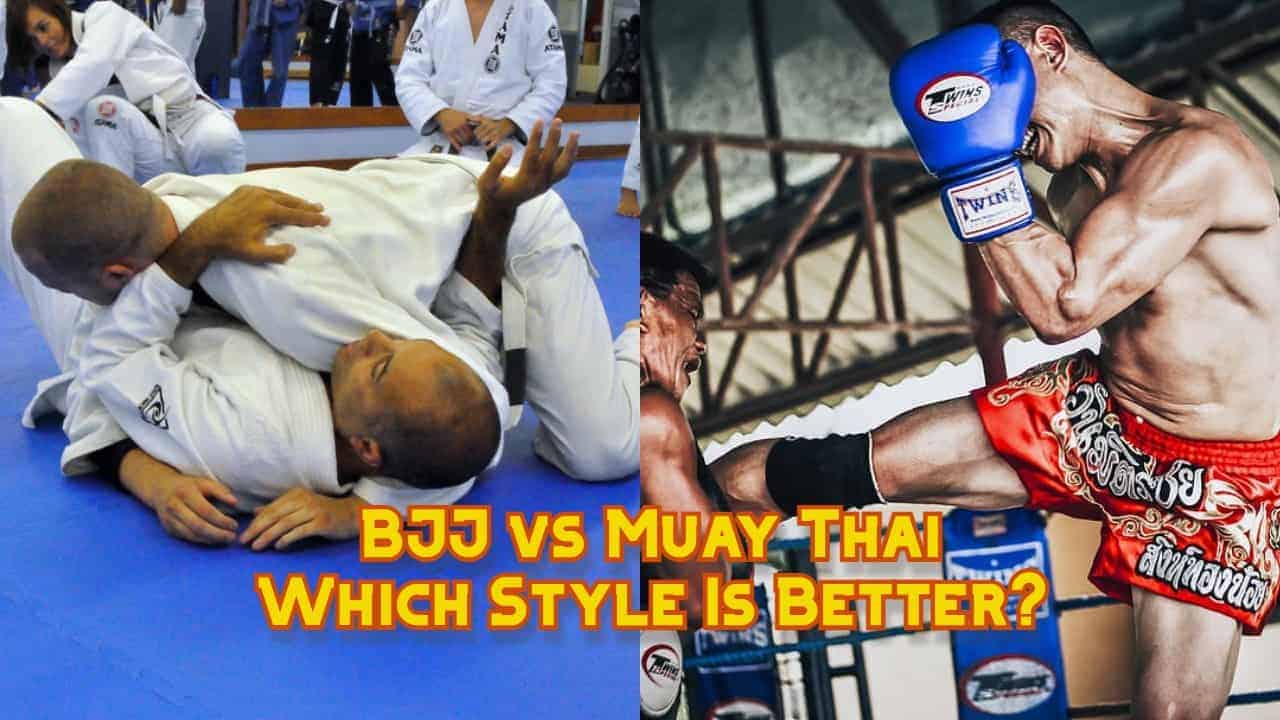
Brazilian Jiu-Jitsu(BJJ) is one of the most popular martial arts specializing in grappling and ground fighting. Muay Thai, on the other side, is often seen as a complete package when it comes to striking. The only thing these two arts share in common is the fact that both systems are highly effective in real combat, but which one is better?

BJJ focuses on grappling techniques similar to wrestling, whereas Muay Thai focuses on stand-up fighting using hard strikes. As a general rule, BJJ is better for self-defense and for people who are weaker and/or smaller, whereas Muay Thai is better for people who are taller with a reach advantage.

Saying which one is absolutely better is not an easy task as BJJ and Muay Thai each specialize in two separate worlds of fighting. To get the right answer, let’s see how these two systems compare when it comes to self-defense, MMA and many other aspects. Let’s go!

BJJ vs Muay Thai  –  Key Differences

BJJ and Muay Thai differ a lot in just about every aspect. Here is a list of all the major differences:

History

BJJ emerged in the 1920s in Brazil and its origins come from Judo. Its story has begun when a judoka, Mitsuyo Maeda, arrived from Japan to spread the sport of Judo in Brazil. The two of his most loyal students, brothers Carlos and Helio Gracie would later use judo as a base to develop BJJ.

Muay Thai comes from Thailand and its origins go all the way back to the 14th century and the art called “Muay Boran”. Siamese soldiers used to train in Muay Boran to improve hand-to-hand combat abilities. Later on, King Rama V, who was a big fan of Muay Boran, decided to legalize these matches and change the name to “Muay Thai”.

Concept

BJJ is one of the most effective martial arts designed with self-defense in mind. The emphasis is on ground fighting utilizing throws, positions, chokes, and joint locks. There are so many variables and it is so complex that people often refer to it as a “human chess match”. Instead of using sheer force, BJJ is known as a “gentle art” where athletes must be methodical, patient, and think three steps in advance.

Muay Thai is widely regarded as the most effective striking martial art one can train in. It will teach you all about the mental and physical aspects of fighting, and how to use all limbs as weapons to deliver powerful strikes. Though it is very practical in real life, Muay Thai as a concept remains a popular combat sport where people fight for money, fame, and glory.

Emphasis 

The entire emphasis in BJJ is on grappling and you won’t learn any offensive or defensive striking techniques. The primary objective of BJJ is to close the distance, and execute a takedown to advance to the ground. Once on the ground, the goal is to get into one of many dominant positions, and place a choke or joint lock to submit the opponent.

The emphasis in Muay Thai is on hard kicks from the distance, and fighting inside the clinch with brutal knee and elbow strikes. It also involves punches, but those are not as important as kicks and clinch fighting. Students also learn basic trips, throws, and sweeps which they can use to take the opponent down. But, they are not allowed to fight on the ground or hit the grounded opponent. While BJJ is more methodical, Muay Thai is more intense as it emphasizes aggression and doing as much damage with every strike.

Techniques

BJJ is the most versatile grappling system that consists of dozens of different types of techniques like:

  • Takedowns – double/single leg takedown, low single, angle pick
  • Throws – Tomoe Nage, Uchi Mata, sumi gaeshi
  • Dominant positions  –  full/back mount, side control, half-guard, crucifix
  • Chokeholds  – rear-naked choke, arm triangle, triangle choke, anaconda choke, americana
  • Joint locks  – kimura, armbar, kneebar, leg lock

Muay Thai is also known as “the art of eight limbs” because fighters are allowed to strike with:

  • Kicks — roundhouse, front kicks, sidekicks, spinning kicks
  • Punches — jab, cross, hook, uppercut
  • Knees — straight knee, horizontal knee, curved knee, diagonal knee, flying knee
  • Elbows — downward elbow, spinning elbow, horizontal elbow, uppercut elbow
  • Execute various types of trips, sweeps, and throws

BJJ vs Muay Thai – Which martial art is better for self-defense?

One thing that BJJ and Muay Thai share in common is the fact that both of these arts are very effective for any type of freestyle combat. But which one is better for self-defense and why?

Muay Thai is a total package when it comes to striking. Though it is a combat sport where there are strict rules, Muay Thai will train both your mind and body for real combat. Classes are intense, there is a lot of hard sparring, and the emphasis is on aggression, power and damage. There is no playing around with doing katas, or learning how to score points and win decisions. No, Muay Thai is all about the pressure, launching power shots, and knocking the opponent out cold. It can be a very violent striking art.

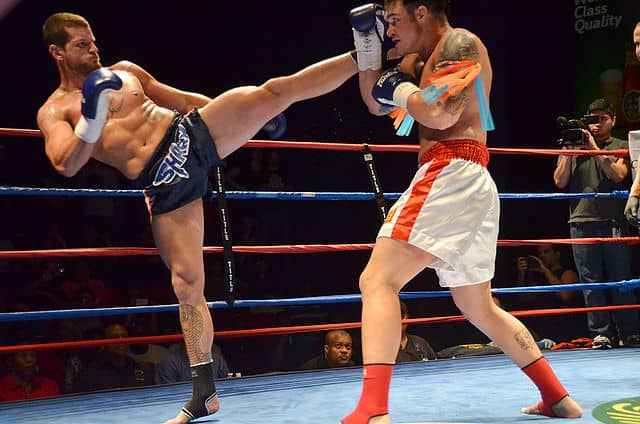
Muay Thai fight

It is very practical both in the open space where you can destroy the attacker with vicious kicks, or at close range where Thai boxers shine with the brutal clinch game. Even if the attacker tries to grapple, most Thai boxers are skillful enough to stop all types of trips, throws, and takedowns.

BJJ might be even better simply because of the fact that most people, including trained strikers, don’t know how to grapple. Throwing or blocking a strike is a natural reaction. But defending grappling attacks is all about leverage and technique and requires skill and years of training. This gives you big advantage in a fight, including against physically much bigger attackers.

Ground fighting
Photo by Matthew Walsh

BJJ is the winner of this debate because it is a more efficient system when it comes to self-defense. Also, it allows you to neutralize the attacker without causing any serious injuries. Most people who take on trained Muay Thai fighters end up looking like they have survived a head-on crash.

BJJ or Muay Thai – Which one is better for MMA?

BJJ and Muay Thai both play a big role in modern cage fighting. On one side, BJJ skills are the most important aspect of the grappling game, while Muay Thai is often seen as a total package for MMA when it comes to striking. Since these two arts are fundamentally different and cover different aspects of the sport, the only fair answer is that BOTH are equally important. 

You can’t expect to succeed in MMA without having, at least average defensive BJJ skills. All MMA fighters who are serious about their career must know the procedures how to stop the takedown, escape from a bad position, or submission on the ground. Sooner or later, the lack of ground game would catch up on you. 

The same stands for Muay Thai. You can be the best grappler in the world, but being a one-dimensional fighter would backfire on you in a very, very painful way once you end up in a cage with a skilled striker.

BJJ vs Muay Thai  – Who wins?

In theory, BJJ fighters have the upper hand because it is much easier for them to deal with strikes than it is for a Muay Thai fighter to stop a grappling attack. In reality, the outcome of a street fight between BJJ and Muay Thai fighters that share the same level of proficiency is very hard to predict. The only way to find a close answer is to see how the fighters from both arts would perform at different ranges.

Distance/open space

Muay Thai fighters need the space to operate and their best chances of winning come if the fight is in the parking lot or any other open space area. This allows them to utilize footwork to circle around, keep their range, and demolish BJJ fighters from the distance with kicks. But bear in mind that throwing wild kicks, like the ones targeting the body, can quickly backfire as this leaves them open for a takedown. On the other side, BJJ fighters won’t feel comfortable at this range at all as they might have a hard time closing the distance and taking the fight to the ground.

Clinch

Clinch position is very important for this debate as it is the place where most BJJ vs Muay Thai street fights would probably end up as both fighters feel comfortable here. On paper, BJJ has a big advantage in the clinch, but grapplers may get caught with a powerful elbow to the face, or a knee to the liver or other part of the body that can instantly cause serious pain or injury upon landing. Here is a brief look into a couple of different clinch positions this fight may end up in:

  • Thai clinch is a position that gives a Thai boxer a big advantage. It allows them to unload with a barrage of knees to the head and body, without having to worry too much about grappling attacks. The only way BJJ fighter could escape from here is to execute a trip or throw.
  • Single collar tie is also a position that favors Thai fighters. From here, they can unload with vicious elbows, knees, and execute sweeps. But BJJ fighters can counter with flying submissions like armbars and triangles.
  • Underhook— is a clinch hold used primarily to control the opponent. From here, Thai boxers can throw a powerful elbow to the side of the head, or a knee to the thigh. BJJ fighters have the advantage here and would probably go for a trip/takedown.
  • Over-under— is a position that favors BJJ fighters as they can use this position to quickly pull guard and advance the fight to the ground. On the other side, this is a terrible position for Thai boxers because they can’t do much from here.

Ground

BJJ is all about fighting on the ground while Muay Thai focuses on striking, so the conclusion is clear. Once the fight hits the ground, it would be a matter of seconds before a BJJ fighter gets into one of many dominant positions and sets up a submission.

RECOMMENDED FOR YOU:
Grappling vs Striking – Which is More Effective?

BJJ vs Muay Thai  – Which one is better for fitness?

Both BJJ and Muay Thai have a lot to offer when it comes to the health and fitness benefits. Training is a full-body workout that involves various aerobic and anaerobic workouts. It is one of the rare activities that allow you to improve strength and endurance at the same time. Which one is better really comes down to personal preferences.

Muay Thai is one of the most cardio intense martial arts and training will push both your mind and body over the limits on a daily basis. Most gyms put a lot of emphasis on endurance, so expect to do a lot of grueling cardio workouts like long-distance running, sprints, and rope jumps. They also do strength exercises but tend to focus more on the core and lower body segments because this increases the power of kicks, the main weapon in Muay Thai. On average, students can burn more than 500 calories per hour of training, which is a lot. This is why all Muay Thai fighters have low body fat index, look ripped, and have nice muscle tone.

BJJ shares similar benefits but focuses more on the core and upper body strength. Rolling on the mats with a person similar to your size or physically bigger is exhausting and will activate every single muscle group in your body. If you decide to join the BJJ classes, expect to exit the school crawling on all fours after each class in the opening month. Apart from core strength and overall conditioning, BJJ will improve your flexibility and range of motion.

RECOMMENDED FOR YOU:
Why Are BJJ Classes So Expensive? Simply Explained

BJJ vs Muay Thai – Which one is harder to learn?

In order to determine which one is harder to learn, BJJ or Muay Thai, let’s look at how these two compare in the following aspects:

Technically more difficult — BJJ

BJJ is a complex grappling system that is technically more difficult than Muay Thai. There are dozens of different throws, positions, submissions, escapes, and many other techniques one needs to master and learn how to combine together. On top of that, it takes a lot of time to develop coordination, balance, and learn how to distribute weight during the grappling exchanges. Muay Thai is a versatile striking system but is not technically as difficult as BJJ.

More intense — Muay Thai

A very small number of martial arts or combat sports are as intense as Muay Thai. The action in BJJ is a bit slower, more technical, and fighters tend to be more strategic in their approach. Muay Thai, on the other side, is all about speed, power, damage, deep cuts, broken bones, and knockouts. Training is a mix of grueling cardio and strength workouts, throwing hundreds of strikes, hard sparring, and all while having very little rest.

Takes longer to learn: BJJ

As a more complex martial art, BJJ takes more time to master. In fact, on average, BJJ students need to spend between 10 to 15 years of training hard to reach a black belt rank. The other reason why the progress is slow is the fact that BJJ includes a strict promotional criteria. Muay Thai also takes a lot of time, but most people with average talent could master it in around 3 years. In BJJ, you would be transitioning from beginner to intermediate techniques at this stage.

Higher injury rate: Muay Thai

Thai boxing is a brutal sport that has a much higher injury rate than BJJ. Even in training, people get injured all the time simply because all schools put a lot of emphasis on hard sparring as the best method one can prepare for real combat. Some of the most frequent injuries are also some of the most serious ones like concussions, leg and rib fractures, broken noses, sprained or fractured wrists, torn ACL’s, and many, many other.

BJJ on the other side doesn’t include striking at all which makes it far less dangerous than Muay Thai. But as in any other sport, people can get hurt.

RECOMMENDED FOR YOU:
Which Martial Art Has The Most Injuries? FAQs

Should I train BJJ and Muay Thai at the same time?

Training both BJJ and Muay Thai at the same time is great and has many benefits. In the end, these two martial arts complement each other in many ways. Fighters who regularly train in both gyms are actually MMA fighters looking to develop their all-around game.

If you have time to regularly visit both gyms, you can learn BJJ and Muay Thai at the same time without question. These two systems are totally different which actually a good thing is because training in Muay Thai won’t mess with your BJJ progress, and vice versa. However, as a beginner, you should focus on becoming good at one martial art first before you start cross-training. Starting both from scratch will slow down your progress a lot.

Is Taekwondo All Kicks?  The BEGINNER’S Guide to Taekwondo

0

Taekwondo(TKD) is one of the most popular martial arts that has also been a part of the Olympic Games since 2000. But despite being such a popular combat sport, there are a lot of myths surrounding this Korean martial art. Of course, one of the most famous is that Taekwondo fighters only use kicks, but is this true?

Taekwondo is not all about kicks because students learn how to strike both with their hands. But the founders believed that legs are longer and more powerful weapon than hands so taekwondo training puts a lot of emphasis on leg kicks.

This is the main reason why people trained in Taekwondo use far more leg strikes, and why so many people have the wrong perception that this Korean art is all about the kicks.

Keep reading this article to learn more about the power of kicks in Taekwondo, different rules, and techniques.

Is Taekwondo All About Kicking?

No, Taekwondo is a versatile system that apart from kicking, also involves other techniques. Students learn how to throw punches, elbow and knee strikes, and even how to grapple and fight on the ground, or that’s how it is on paper. In reality, however, all styles and most schools put a lot of emphasis on leg strikes as the most effective weapon one can use in a fight. Here are the two main reasons why this is so:

Rules of competition

The rules of the TKD competition are very much the same across all styles when it comes to the way contestants score points. Leg strikes bring you the most points in a match, twice as more than punches to be more precise. For example, according to the WT rules used in the Olympic Games, a punch to the chest brings you 1 point while a kick brings you 2 or 4. Kicks to the head are awarded 3, 4, and 5 depending on how technical the kick was, while punches to the head are not allowed at all. 

As a result, most Taekwondo schools that prepare their students for matches focus mainly on leg strikes. In some way, schools are willingly neglecting other aspects of the art because of the competition. 

Philosophy

Taekwondo emerged in the 1950s in South Korea and it means “the way of the foot and fist”. Its origins come from various martial arts such as “Taekkyon”, which is a system that also puts a lot of emphasis on kicks. 

It all came together when the nine main martial art schools from all parts of the country called “kwans” have united to create a “unified” Korean martial art. They decided to put the emphasis on kicks because of the idea that legs are longer and more powerful weapons than punches. Mixing kicks with fast footwork allows you to keep your range, and do more damage from a safe distance than you would do with punches. 

Hand strikes are seen as a secondary weapon that you are supposed to use at a close range where you don’t have enough space to throw a kick. The same stands for other Taekwondo techniques like throws, elbow, and knee strikes.

RECOMMENDED FOR YOU:
Is Taekwondo a Sport? FAQ about Taekwondo

What Are The Different Types of Taekwondo Kicks?

As a martial art that primarily focuses on leg strikes, Taekwondo involves dozens of different spinning, jumping, and many other types of kicks. Bear in mind that each group of the following types of kicks has dozens of different variations.

  • Front kick (ap chagi) — front snap kick; front thrust kick 
  • Side kick (yeop chagi) — flying, jumping, skipping, spinning side kicks
  • Hook kick (huryeo chagi)- back hook kick; step to the rear hook kick
  • Axe kick (naeryeo chagi) —jumping kick; skipping kick; front leg axe kick
  • Crescent kick (bakkat chagi) — inner and outer crescent kick 
  • Jump Kicks (ttwieo chagi)
  • Fly Kicks (mondollyo chagi)
  • Roundhouse kick (dollyo chagi) 
  • Back kick (dwit chagi)
  • Spin kicks

How Hard Can Taekwondo Practitioners Kick?

A study performed by National Geographic has shown that a trained Taekwondo athlete can throw a kick that travels at around 136mph (220kph), and deliver 2,292 pounds (1040kg) of force upon hitting the target.

This study has also confirmed that fighters trained in Taekwondo are capable of executing the fastest and most powerful kicks out of all other martial arts. The force and speed are much higher than in other systems that emphasize kicks like Muay Thai (130mph, 1400 pounds), Karate (71mph; 1421 pounds), and Capoeira (99mph; 1800 pounds).

In comparison, the average adult not trained in martial arts is capable of generating around 1000 pounds of force in a single kick while kids kick with half less force, around 600 pounds. Of course, the exact number depends on many factors like physical condition, age, sex, or height.

Does Taekwondo Have Low Kicks?

Yes, Taekwondo students learn how to strike with all types of kicks, including the ones below the waist. But this is only the case when they are doing self-defense drills as they are not allowed to use low kicks in matches. The rules allow contestants to only kick the body area above the waist such as the ribcage, torso and head.

When it comes to low kicks, Taekwondo includes various types of side kicks, front kicks and roundhouse kicks. The main goal is to learn how to throw them quickly, from all angles, and with a lot of power to smash the opponent’s legs. Students learn all about hip rotation, balance, and how to generate huge power in a kick which upon landing can cause serious injuries and even fractures.

For example, the same low kicking techniques have become one of the main weapons in modern MMA fighting. You can see UFC fighters utilizing low kicks in every fight, and even finishing their opponents as Dustin Poirier did in his second fight against Conor McGregor.

Are You Allowed To Kick Hard In Taekwondo?

Yes, students are allowed to kick as hard as they want when they are doing drills on the heavy bag, breaking boards, or even when they are sparring. As mentioned earlier in this article, studies have shown that Taekwondo practitioners are capable of throwing the fastest and most powerful kicks out of all other martial arts.

Yet, the story is a bit different when it comes to competition and the way they throw kicks in matches. According to WT rules, contestants do not have to kick hard to win points. The officials scoring the match would give the point for any clean strike regardless of the force behind it. As a result, contestants are more focused on speed and technique rather than on applying full force, which in the end, makes the sport safer.

Are You Allowed To Punch In Taekwondo?

Taekwondo is a martial art that trains you to use all limbs as weapons in a fight, including punches to the head. However, bear in mind that punches to the head are not allowed in competition. In tournaments, contestants can land punches only to the chest area below the neck, while they can strike the head using kicks only. This is the main reason why people tend to think that Taekwondo doesn’t include punches at all. 

But as a martial art designed with self-defense in mind, traditional training teaches students how to strike the head using their hands. Though these techniques are not as advanced as in western boxing, for example, punches you learn in Taekwondo are more than effective in real life. Training mostly focuses on direct and fast hand strikes, and on top of that, students learn blocks and how to mix punches with footwork and kicks to be more efficient and unpredictable.

https://youtu.be/YfGq1tLcN4I

Is Taekwondo Effective In A Street Fight?

Taekwondo as a combat system can be applied in a real fight. Most of the skills and techniques are very practical and may help you get out of trouble on the streets. But this is only if you train in a school that puts emphasis on traditional methods of training.

The biggest downside is the fact that modern practice puts too much focus on competition. Instead of learning how to fight, students train how to obey rules, score points, and win matches. This creates a big problem because the rules clearly have a negative impact on the self-defense aspect of the art.

For instance, the main goal in matches is to land a clean strike to win a point, and you don’t have to land with a lot of power. Next, there are no punches to the head, or strikes below the waist (low kicks), and the action resets after every point so there is no fluid action. The emphasis is on scoring more points than your rival by utilizing a high level of technique, not knocking them out with full power kicks. All of this would have a negative impact on your self-defense abilities out on the streets where there are no rules. 

On top of that, training also includes patterns and forms (katas) and students spend a lot of time doing these pre-arranged moves. Though this has some benefits in terms of muscle memory and maybe improves your focus, it won’t prepare you for a real fight.

ADDITIONAL READING:
Is Taekwondo Effective in a Street Fight? Q&A

What Are The Differences Between The KTA, WTF, And ITF Styles of Taekwondo?

KTA, WTF, and ITF are the three main governing bodies that are also known as different styles of Taekwondo. Here is a brief explanation of all three styles and how these differ from one another.

Korean Taekwondo Association (KTA) — is the very first governing body founded in 1959. The first president was one of the founders of Taekwondo, H.H.Choi who after running the organization for 4 years, was forced to resign. After he broke off from KTA, he went on to form ITF together with some other members of KTA who left with him. KTA style is sports-oriented rather than combat-oriented.

International Taekwondo Federation (ITF)– is a governing body founded on March 22, 1966, by General Choi Hong Hi in South Korea. After he split up with KTA in 1965, Choi Hong Hi decided to form ITF with a mission to promote and spread Taekwondo worldwide. Like other styles, ITF also involves patterns but puts more emphasis on self-defense. Training involves a lot of sparring and strikes to the head and various drills where students train for real-life fighting. Competition is not as important as in WT for example.

World Taekwondo (WT)— used to be known as World Taekwondo Federation until it was renamed in 2017. Founded in 1973 the main mission of WT is to promote Taekwondo as an Olympic sport. As of 2022, it has 211 national member associations spanning five continents. WT differs a lot from ITF rules because contestants are not allowed to utilize low kicks, and punches to the head.

Is A Punch Faster Than A Kick?

Though this may be surprising to you, kicks are actually faster than punches. What most people tend to forget is the fact that kicks are powered by much larger muscles in the legs and hips. Also, legs travel a longer distance which allows a kick to pick up speed.

An average person is capable of throwing a kick that travels at around 60-mph. On the other side, people trained in martial arts such as Taekwondo can throw kicks that travel at 130-mph or higher.

When it comes to punches, an average person is capable of throwing a punch that goes around 15mph. Trained fighters, on the other side, can generate speeds between 32-mph and even 45-mph, which is still much slower than kicks.

Which Martial Arts Emphasize Kicks Over Punches?

Here is a list of the most popular martial arts that put more emphasis on kicks than punches:

Muay Thai — is often seen as a total package when it comes to striking. It trains a person to use all limbs as weapons to cause as much damage as possible with every strike. Students learn how to mix kicks, punches, and knee and elbow strikes to fight at all ranges, including the clinch, and even execute some basic throws. But though it is a versatile art, the primary weapon in Muay Thai remains vicious kicks.

Taekwondo — is the most popular martial art when it comes to kicks. In training, students learn dozens of flashy leg strikes like jump kicks, spinning kicks, and many other types. Training also covers other elements like punches and even the basics of grappling, but kicks are by far the most important one.

Capoeira — is a Brazilian martial art that is a mix of flashy kicks, flips, spins, and dance moves. 

Karate– is one of the most popular martial arts and there are dozens of different karate styles and forms. The emphasis in most is on mixing various types of kicks with quick movements and basic punching techniques. One karate style that stands out when it comes to the importance of kicks is Kyokushin karate, also known as the hardest form of karate.

Why Are BJJ Classes So Expensive? Simply Explained

0

Out of all the martial arts classes out there, taking Brazilian jiu-jitsu (BJJ) classes is definitely on the high end as far as prices are concerned. You might be left pondering why this is the case.

As a general rule, you’re paying a high price to learn Jiu-Jitsu because certified BJJ instructors have spent many years of training to obtain BJJ black belt which is considered the most difficult black belt to get.

In this article, I will further explain some of the most important reasons that drive BJJ membership fees so high as well as provide some tips to help you save money should you decide to enroll and start your BJJ journey.

Why Are BJJ Classes So Expensive?

With BJJ, you are learning a high-level skill taught by a high-level instructor in each class. This is not the same as going to a gym where you can have any personal trainer instructing you on how many reps to take or which exercises to do.

It takes years of regular practice and rolling for one to become a BJJ black belt, where in some cases, it can take as long as 10+ years. The end result is that there’s a low supply of qualified instructors with BJJ black belts to teach the art, especially outside places like Brazil and the United States. Not to mention that one needs to become at least a second-degree BJJ black belt in order to award black belts to students. With low supply and high demand comes high costs, which is why BJJ is far from the cheapest martial art to learn and pursue.

But there is another big reason as to why they’re expensive and that’s the high costs that are associated with teaching it. First of all, renting the space can set one back plenty of money, especially if you’re in a location such as downtown New York like the Renzo Gracie Academy is. Even if it’s in a suburb outside a metropolitan area, one can still expect to spend at least a couple of thousand per month on rent.

Then there’s all the equipment you need to set up, most important of all, being mats which can cost $5,000 to $10,000. It’s extremely important to have high-quality mats and high-quality equipment in general. Add in utilities, insurance, taxes, affiliation fees and supplies among other things, and it’s easy to see why memberships can be expensive to offset these costs. After all, it’s very common for BJJ gyms or dojos to make losses initially before eventually turning profitable.

RECOMMENDED FOR YOU:
BJJ Black Belt Lineage – Why It’s Important To Verify

Why Is BJJ More Expensive Than Other Martial Arts?

BJJ is more expensive than other martial arts because it requires high-level instructors with black belts. Because there is a short supply of these instructors, memberships are expensive in order to combat the excess demand. As aforementioned, costs in running a BJJ gym or dojo are also high, so having high-end membership prices can offset these costs and eventually help them turn profitable.

But what if a gym is in a good position financially? BJJ will still be more expensive regardless simply because of the high demand. Unlike other martial arts, there is a greater percentage of adult students with more disposable income who are interested in BJJ. Many of these adults are willing to pay the required amounts to progress in their BJJ journey.

In comparison, a lot of other martial arts such as judo or karate have a smaller proportion of adult students. Many of these arts also live off of a kid’s program which can be profitable, but not as much as BJJ. Some of these other arts are also taught in subsidized or donated gym spaces with some instructors being volunteers. This is the case with judo, in particular. The end result is the costs aren’t that high compared to BJJ which allows memberships to be cheaper.

Some BJJ gyms also have to pay affiliation fees. This is when an independent gym buys the license of an existing franchise like Gracie Barra. The benefits of this is you gain access to high-level knowledge from those franchises as well as get their instructors to come in for seminars or gradings. Their instructors can also reward black belts to your students if you are not a second-degree black belt. Additionally, being associated with a franchise is also good for marketing and exposure. However, affiliate fees can be extremely expensive with some franchises requiring gyms to have at least $50,000 set aside for upfront costs. For a small, independent gym, this is a lot of money to invest.

RECOMMENDED FOR YOU:
What Is American Jiu-Jitsu(AJJ)? Beginners Guide To AJJ

Is BJJ Once A Week Enough?

If you don’t have time or are just looking to do BJJ as a casual learner, going for BJJ classes once a week can still be worth it. You can still learn a lot and have confidence in your ability. But to see some significant growth, repetition helps, especially when it comes to drilling and rolling with others.

That is why going at least twice a week is the recommended amount by most in the BJJ community. While some gyms will let you roll early on, others only allow it in advanced classes where you may need at least two stripes on your white belt which could mean six to 12 months of training. With just one class a week, this can take a lot longer.

RECOMMENDED FOR YOU:
What is BJJ Open Mat? BJJ Beginner’s Guide

How Many Times A Week Should You Train BJJ?

As a general rule, it is recommended to attend BJJ classes at least twice a week. Some leeway is allowed if you’re just starting out as you can probably do with one class a week as you get used to the martial art. In the first few classes, one can expect to learn some basic movements like bridging and shrimping. Depending on the gym, you may get to roll as well, but it will be heavily supervised.

If you have a decent grasp of the basics, twice is the ideal amount to see gradual progress over a period of time. If you are looking to expedite the process of becoming a black belt or want to compete in the future, it is probably ideal to go at least three to five times a week. With that said, it’s important to have rest days so you don’t burn yourself out.

RECOMMENDED FOR YOU:
How Long Does it Take to Learn BJJ for Beginners? Q&A

What Is The Average Cost to Learn BJJ?

The average cost of taking BJJ classes per month can vary depending not only on your country, but your city. If you’re in a city with a high cost of living, it’s natural that the costs will be higher. There’s also the number of classes you are taking to factor in which can affect the average as well as the plans your prospective gym is offering, and if you’re using the plan or going on a pay-by-the-class basis.

Let’s assume the average cost of one BJJ class is $15. The following table will reveal how much you can expect to spend on average depending on the number of classes you are taking:

Number of classes per weekNumber of classes per monthTotal cost per month
14$60
28$120
312$180
416$240
520$300

This is just an estimation assuming the average cost of one class is $15. With that said, gyms offer membership programs where you can pay a discounted price for a set number of classes per week. Certain gyms also offer plans where you can pay a certain fixed amount per month for unlimited classes. The Unity jiu-jitsu school in New York City, for example, offers an unlimited plan for $200 a month. So it’s not necessary that you will always have to pay extravagant amounts each month if you would like to become a BJJ regular.

Is BJJ Worth The Cost?

If you have the time and are prepared to spend money on your new passion of BJJ, it is certainly worth the cost. Training in BJJ provides a number of different benefits and has aided in the growth of many individuals who practice it.

Among the benefits of BJJ include:

  • Learning self-defense
  • Confidence
  • Improved strength
  • Improved endurance
  • Improved flexibility
  • Weight loss
  • Stress relief
  • Improved mental health
  • Sense of community and new friends
  • Respect and discipline
  • Improved problem-solving skills

All in all, it’s very hard to find someone that has been committed to BJJ to say anything bad about it. However, it is an investment, both with time and money, and there have been many who have stopped practicing because they don’t have one or the other. But there are ways to save money on BJJ memberships as demonstrated in the next point.

RECOMMENDED FOR YOU:
Is BJJ Hard To Learn? A Guide For Beginners

Tips For Saving Money On BJJ Memberships

There can be ways to save money on BJJ memberships if you’re cash-strapped but would like to continue pursuing the art.

One of them is to negotiate with the main instructor at your gym or dojo. Explain your circumstances involving your financial difficulties and see if a compromise can be made. Many instructors will be more than happy to work with you and find a way to keep you in the gym, especially if you display commitment and potential. Some gyms can also offer discounted prices if you are willing to help or teach kids classes. However, this is dependent on how advanced your own level of BJJ is, and if you are qualified enough to do so.

If you are paying by the class, consider their monthly or yearly plans. With yearly plans, in particular, you are more than likely to save per class than on a monthly plan.

Alternatively, if you are using an unlimited plan, but don’t go as often as you would like, consider a smaller plan or pay by the class if you go just once or twice a week to save on your monthly expenses. It’s better to pay $60 for four classes a month that you actually go to than $200 for unlimited classes.

Other ways to save money could involve your method of payment. Some gyms offer cheaper rates if you are willing to pay with cash as opposed to a credit card. You can also opt not to use additional services such as locker usage or shower access.

While everyone naturally wants to learn from the best, reputable instructors at popular gyms charge more than less reputed instructors in an independent gym. Consider an independent or less popular gym to save money while you still learn the basics. It doesn’t necessarily have to be taught by a black belt either as there are great instructors even at the brown and purple belt level. It’s also possible they are at black belt level but haven’t been promoted yet.

You can also consider online courses, videos and instructionals. There are a number of instructionals offered by prominent BJJ names such as John Danaher and Lachlan Giles, the latter of whom says most of one’s learning should be done out of the gym. There are also beginner programs such as the Gracie Combatives. This is an online program that consists of 23 one-hour classes that one can complete at their own leisure. It’s a video course, but you can still learn a lot and save plenty of money in the process.

On a side note, buying your own gear rather than buying from the gym can also save money as you will more than likely be able to find more affordable protective cups and BJJ gis elsewhere.

RECOMMENDED FOR YOU:
10 Tips To Spot Bad Martial Art Schools For Beginners

Conclusion

As aforementioned, if one has the time and money, and is willing to be dedicated to the craft of BJJ, it can be one of the most rewarding experiences ever. Not only will you be able to defend yourself and others with your self-defense skills and knowledge, but you also reap a ton of other benefits that help your body, health and mind. Regardless of your age, BJJ is recommended for everyone, and it’s never too late to start.

Pro Wrestling vs Amateur Wrestling – Key Differences Explained

0
Photo by Miguel Discart & Chris Hunkeler / CC BY-SA 2.0

Pro wrestling such as WWE and amateur wrestling both have the same roots but are very different from each other. Amateur wrestling skills are a good foundation for Pro wrestling and are transferrable to the Pro arena. So what differences set amateur and professional wrestling apart from each other?

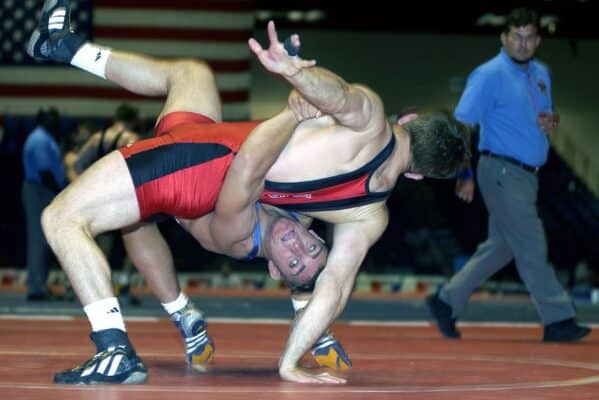
Amateur wrestling is a sport and Professional wrestling is entertainment. The rules differ substantially, and Pro wrestling allows strikes and acrobatics, whereas Amateur wrestling does not, and competitors are not paid.

Most pro wrestlers have some sort of wrestling background, but it is not a requirement for the activity. There are significant differences between amateur and pro wrestling that make them two completely different undertakings that have very few similarities other than their roots. We will delve into the differences between the two, so you can decide between sport and entertainment.

What Is Pro Wrestling?

Photo by Miguel Discart / CC BY-SA 2.0

Pro wrestling has its roots in sports wrestling insofar as it uses sports wrestling as a basis for some of the moves and techniques. However, this is where the similarity ends.

The other face of Pro wrestling is entertainment, which borrows from the theatrical and incorporates it into physical activity.

Pro wrestling is a theatrical performance where the players are all athletes, and the “actors” require physical ability to adequately play their roles.

The matchups in Pro wrestling have a theme, with good guys and villains, and some even have a storyline that persists from bout to bout. Pro wrestling is considered to be a form of performance art rather than a sport, and the performance is played out in the wrestling ring.

Due to the physical nature of Pro wrestling, the performers are still considered athletes and need to be in peak physical condition to avoid injury during the high-flying antics required of them in the ring.

Pro wrestling has its roots in classical wrestling and catch wrestling but has grown to incorporate melodrama, acts of physical strength, acrobatic maneuvers, improvised weapons, and very flexible rules.

Many people consider Pro wrestling to be fake wrestling since there is usually a pre-determined outcome for the fight, based on the theatrics rather than skills of one opponent overcoming the other.

RECOMMENDED FOR YOU:
What Is Shootfighting That You Should Know About?

What Is Amateur(Sport) Wrestling?

Amateur or sport wrestling is significantly different from Professional wrestling. Amateur wrestling has taken a different path and has more closely followed its roots in ancient forms of wrestling.

Amateur wrestling is a sport rather than a form of mass entertainment like Professional wrestling. Wrestling using similar rules to Amateur wrestling is a popular sport at college level in the USA and is termed Collegiate wrestling.

Competitors who are accomplished at college-level wrestling often go on to pursue the following jobs after college:

  1. Become a wrestling coach.
  2. Compete in the Olympics if highly skilled.
  3. Become an MMA fighter

The rules in Amateur wrestling are different and more strict than those applied in Pro wrestling. There are substantial differences in what moves are allowed, the format of the wrestling space, and the duration of the match. You can read about the general rules of wrestling here.

Amateur wrestling is governed by the United World Wrestling or UWW organization which oversees the rules, regulations, and competition organization worldwide. 

The UWW oversees many different forms of Amateur wrestling, including Greco-Roman and Freestyle wrestling which are the most popular forms.

Amateur wrestling has been accepted as a sport in two different formats in the Olympic games.

RECOMMENDED FOR YOU:
Is Wrestling Considered a Martial Art? Definitely Yes

Pro Wrestling vs Amateur Wrestling – Key Differences

Several differences set Professional and Amateur wrestling apart from each other and separate the competitors and spectators.

The main differences between the two wrestling forms include the following.

  • Rules. The rules in Pro wrestling are often unclear and generally disregarded by the competitors. The rules in Amateur wrestling are strictly adhered to with penalties for breaking the rules.
  • Aim. Amateur wrestling is a sporting competition, while Professional wrestling is entertainment.
  • Platform. Amateur wrestling takes place on a mat. Pro wrestling is conducted in an elevated ring similar to a boxing ring.
  • High-flying antics. No high-flying antics are allowed in Amateur wrestling.
  • Strikes. Pro wrestling allows strikes with the forearm and straight arm, known as a clothesline. No strikes or blows are allowed in Amateur wrestling.
  • Outcome. In Pro Wrestling, the outcome is pre-determined. In Amateur wrestling, the outcome is based on a competitor’s superior skill.
  • Use of weapons. No weapons are allowed to be used in amateur wrestling. Pro wrestlers use any available object as a weapon against their opponent.

Amateur Wrestling vs Professional Wrestling – Which One Is Tougher?

While many consider Pro wrestling to be fake, it does not detract from the fact that the competitors need to be in peak physical condition to perform the antics required in the ring.

Amateur wrestling uses fewer moves, operates within a set of rules, and does not require the physicality and acrobatics typically seen in Pro wrestling.

Consequently, Pro wrestling is seen as a tougher undertaking than Amateur wrestling, simply due to the additional demands placed on the competitors’ bodies.

Why Is Amateur Wrestling Not Popular?

Amateur wrestling is popular among athletes as a sport and often as a foundation sport to other combat sports such as MMA, but it is not popular among spectators.

From a spectator’s perspective, Amateur wrestling is viewed as slow and less exciting since many of the moves the competitors make to get the upper hand is difficult to understand for the general public.

Is Olympic Wrestling Considered Amateur?

Olympic wrestling styles are only from the sport or Amateur wrestling camp, and as such, the competitors are seen as amateurs.

While the competitors in wrestling at the Olympic level may receive some compensation from their country’s government and sponsors, it is not seen as a career in which the sportsmen get paid to participate.

What Types Of Wrestling Are In The Olympics?

There are several different forms of Amateur wrestling, but the two main forms that have been included to compete in the Olympic games are Freestyle wrestling and Greco-Roman wrestling.

While there are many other forms and styles of Amateur wrestling, these are the only two wrestling disciplines that have been included in the Olympic Games.

How Many Types Of Wrestling Are There?

Wrestling has been a part of different cultures around the world for centuries, each with different styles and rules.

Amateur wrestling has in excess of 20 different variations worldwide, including the largest category, Folkstyle wrestling, which covers more than 11 different cultural wrestling styles from many different countries.

There are also some professional cultural styles of wrestling, such as Sumo wrestling from Japan and Lucha Libre from Mexico, which has since transitioned into entertainment more than competition wrestling.

What Is The Most Common Wrestling Style?

The most common styles of wrestling are Greco-Roman wrestling and Freestyle wrestling, which are both administered by the UWW.

These two wrestling styles are the most popular because they are the only two styles represented in the Olympic Games.

Scholastic wrestling(folkstyle wrestling) is also very popular in American high schools and middle schools. This wrestling style is basically a lighter version of collegiate wrestling with some slight modifications.

Why Is Wrestling Not A Professional Sport?

Amateur wrestling is not considered a dramatic, exciting sport from a spectator’s point of view. This results in wrestling matches not gaining much support from spectators as Pro wrestling which offers spectacle and entertainment.

The salaries for professional sportsmen usually come from ticket sales, advertising during events, and merchandise sales around the sporting event. If a sport does not have public appeal, it does not draw crowds of spectators. Consequently, advertisers are not interested in promotions during the event, and ticket sales are not lucrative enough.

Why Is Real Wrestling Called “Amateur” Wrestling And Fake Wrestling Called “Pro” Wrestling?

In general, an athlete paid for their performance and where they can turn their sport into a career is termed a professional. The Pro wrestling circuit is all about entertainment, which generates sufficient income to pay the athletes to participate or perform.

Competitors in Amateur wrestling are not paid for their participation in the sport, and the sport is termed “amateur” as a result. Amateur wrestlers may receive compensation and sponsorships for their Olympic and tournament-level participation, but it is usually not enough to make a living.

Conclusion

The differences between Amateur and Professional wrestling are not only significant, but the two are also in different sectors. Professional wrestling is entertainment and is a business, whereas Amateur wrestling is strictly a sporting event.

Even so, participants in Amateur and Professional wrestling are considered athletes since both disciplines require a high level of physical conditioning, strength, agility, and stamina to participate!