Home Blog Page 17

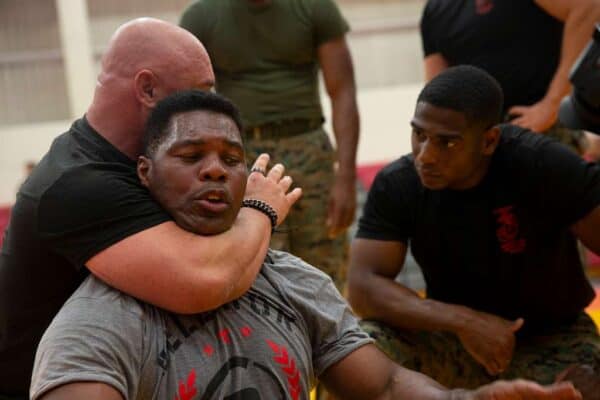
Is Krav Maga Effective? What You Need To Know

0

Krav Maga is a modern martial art compared to other combat styles. What is Krav Maga, and is it effective in real-world situations? We will discover more of the origins of this martial art and whether you should consider it a choice for a personal defense system. 

Krav Maga is effective and has been adopted by the Israeli Defence Forces as the hand-to-hand combat style of choice. The system is practical and can be learned by people of all ages. It is designed to quickly diffuse an attack and bring it to an end as quickly as possible to allow you to escape.

All martial arts have their strong points and their weaknesses, but Krav Maga is one of the most effective modern forms of martial arts around. It teaches techniques to effectively combat street attacks where rules do not apply and promote mental fortitude to push your body to its limits.

What Is Krav Maga?

The origins of Krav Maga go back to the 1930s, when Imi Lichtenfeld, a Hungarian-born Jew, was looking for a way to defend the Jewish community from anti-Semitic groups.

Imi Lichtenfeld
Founder of Krav Maga

He had a desire to protect the community from thugs and decided to organize a group of young men to patrol the neighborhood. His experience in dealing with anti-Semitic thugs taught him that competition-level martial arts would not be effective in street fights. 

His self-defense methods were designed to be both simple and efficient while ensuring they could be reproduced to teach to students at all levels of fitness and experience.

The basic principles of Krav Maga are self-defense and redirected force. As with all martial arts, pressure points and sensitive areas on the body are targeted to effectively disable an assailant.

The technique focuses on the use of momentum to add velocity to strikes and the force in throws. Because of this, size and strength do not significantly impact the fighter’s effectiveness.

RECOMMENDED READING:
10 Best Martial Arts For Women – Most Effective in Real Life

Is Krav Maga Effective for Self Defense?

While many martial arts focus on conditioning and strength, Krav Maga focuses on realistic approaches to self-defense. Students learn to apply techniques they would use in a real fight. 

This helps students adapt to the demands of close quarters confrontations and builds physical endurance. In addition to physical fitness, Krav Maga classes teach valuable self-defense and mental preparation lessons. Practicing Krav Maga will help you avoid an attack and remain calm and cool.

It is essential to remember that Krav Maga was originally created for soldiers in a war. The goal of the combative art was to terminate or incapacitate an opponent as quickly as possible.

While this training may seem intimidating, most street encounters do not end in death or lasting injuries. Those who cause injury will likely end up in prison. But these are the kinds of situations that may arise in real life.

The techniques learned in Krav Maga focus on counterattacks and quick reactions. Unlike other martial arts, Krav Maga focuses on attacking from a position of strength and does not focus on limiting injury to the attacker.

The advantages of Krav Maga as a martial art are as follows:

  • No limits to learning Krav Maga. People of all ages, sizes, shapes, strengths, and abilities can learn Krav Maga because it is effective and adaptable.
  • Practical approach to self-defense. The martial art is designed to respond to real-life situations rather than a fight bound by rules.
  • Incorporates techniques from other styles. Krav Maga borrows effective techniques from other fighting styles such as Karate, Boxing, Judo, Aikido, and Wrestling
  • Easy to learn. Krav Maga is not steeped in traditions and ceremonies, making the art easy to learn and apply.

Every martial art has its disadvantages, and Krav Maga is no exception. Although Krav maga is a modern combat style, it incorporates techniques from older styles, which includes the problems in those combat forms.

The main disadvantages of Krav Maga are as follows.

  • A false sense of security. While Krav Maga is effective, it cannot prepare you for every situation. Peaceful resolution is generally preferable to violence.
  • Very little sparring. Krav Maga focuses on technique and does not include extensive sparring.
  • Krav Maga is not a sport. Krav Maga has no competition; Krav Maga is a self-defense system, not a sport.
RECOMMENDED READING:
Is Jeet Kune Do Effective? Here’s a Closer Look

Is Krav Maga A Martial Art?

According to Webster’s dictionary, martial art is defined as “any of several arts of combat and self-defense (such as karate and judo) that are widely practiced as sport.”

That being said, this definition must include Krav Maga as a martial art since the fighting style was developed for use in combat and has been adopted and incorporated into the hand-to-hand training for the Israeli Army.

On the other hand, one can also argue that Krav Maga is not a martial art because it’s not practiced as a sport. Krav Maga was developed specifically to be used in combat rather than to score points in a sporting event. Fighting for life rather than points requires a different mindset and technique.

Whether Krav Maga can be categorized as a martial art or not is a never-ending ongoing debate.

LEARN MORE
Get the full report on Is Krav Maga A Martial Art? – Most Asked Questions

Is Krav Maga Violent?

Krav Maga does not teach violence but rather is taught to be an answer to a violent attack. Krav Maga training helps prepare students to face these kinds of situations with awareness.

While the techniques may seem violent on the surface, you will learn how to throw, take down, and position an aggressor in order to defend yourself. 

Krav Maga is not violent but helps you to improve your fighting skills and gives you a game plan for dealing with violence. Ultimately, this will help you avoid becoming the next victim. 

Is Krav Maga the Deadliest Martial Art?

“Krav Maga,” which literally means “contact combat,” is designed for war, where there is no mercy or quarter given in hand-to-hand combat. The techniques taught to the Israeli Defence Force are designed to take down and terminate the enemy as quickly as possible.

This focus of Krav Maga makes it the deadliest martial art of combat styles practiced today, as sport or self-defense. Most other martial arts tone down the devastating techniques to limit injury, whereas Krav Maga promotes the full use of these techniques to save your life!

RECOMMENDED READING:
Which Martial Art Has The Most Injuries? FAQs

Is Krav Maga Hard to Learn?

Learning Krav Maga is relatively easy in comparison to other traditional martial arts. This is mostly due to the focus in Krav Maga not on the moves being technically perfect but rather perfectly effective.

The moves and techniques can be adapted to your physique, strength, and fitness level to make the system easy to learn for anyone. 

Although many of the techniques don’t require much strength or power, they do require a certain amount of cardio stamina. Many Krav Maga schools even incorporate strength and cardio training into their routines. Regardless of your age, size, or physical condition, you can begin training immediately.

Learning Krav Maga may be hard if you’re an older adult or an inactive person. It is a demanding system that requires a high level of commitment. Training in Krav Maga may even result in bruises. That’s because the practice requires a high level of commitment on the part of the student. 

It is important to show up to every class or training session and commit to giving your all in practice; otherwise, you won’t make any progress learning the techniques.

RECOMMENDED READING:
Is MMA Hard to Learn? Easily Explained For Beginners

How long does it take to learn Krav Maga?

The answer to how long it takes to learn Krav Maga depends on how much time you’re willing to invest in the class. 

Krav Maga classes typically last between one and two hours, although workshops often last up to four hours. While there’s no required fitness level, the more you practice, the more prepared you’ll be for real-world combat. 

The truth is, it can take years to become an expert in martial art, but true mastery requires decades of study. 

Krav Maga is no different. While you can learn to defend yourself in six months, it can take you up to two years to progress from level 1 to level 2. Obviously, this varies depending on your physical condition and how often you train. 

Krav Maga vs BJJ – Which is better?

Brazilian Jui-Jitsu(BJJ) is an effective and useful martial art to know in a streetfight situation, but the training does not fully prepare you for an anything-goes fight where there are no rules.

Krav Maga does not have rules that consider certain moves illegal or unsportsmanlike. Consequently, Krav Maga better prepares you to defend yourself against a personal attack than BJJ.

Are There Ranks In Krav Maga?

The belt or level system was instituted once Krav Maga was made available to civilians in the 1960s. This created a structure for training that appealed to the masses. Today, many legitimate Krav Maga gyms adhere to this system. 

It is not required that all gyms adhere to the same ranking standards or levels, which has led to some differences in the ranking systems across the world, but there are general standards that apply.

For the civilian training program, there are 5 levels, each teaching a specific skill or technique. The levels start at level 1 and progress to level 5. Some gyms use a corresponding belt system as follows.

  • Level 1 – Yellow belt
  • Level 2 – Orange belt
  • Level 3 – Green belt
  • Level 4 – Blue belt
  • Level 5 – Brown belt

Once you have completed the program for the brown belt, you will be promoted to a black belt level, which also has dan levels associated within the rank.

Can Krav Maga Be Self-Taught?

Krav Maga can be self-taught by following instructional videos online. However, you may miss out on the fundamentals of a technique if you do not have someone to train with.

While it is possible to learn Krav Maga at home, there is no substitute for training with a qualified instructor that can give you specialized training for your size, fitness, and strength. 

You may not learn these important caveats of the fighting technique from a generic training video designed for the masses rather than your personal needs.

Who Should Learn Krav Maga?

Krav Maga is a self-defense system that anyone can learn at any stage of life and at any level of fitness and strength.

Many of the techniques taught in Krav Maga employ the use of timing and using your opponent’s momentum against them rather than applying excessive force yourself. This makes Krav Maga accessible to women and children and offers an effective self-defense system irrespective of stature.

Children are allowed to learn Krav Maga, but the program is usually modified to tone down the aggressive component of the fighting system. Most Krav Maga training venues have a training program for kids and will accept children from the age of 5-years old to begin learning the system.

RECOMMENDED READING:
Top 3 Best Martial Arts For Kids – A Basic Guide For Parents

Does Krav Maga teach how to fight people who have weapons?

Krav Maga incorporates the use of weapons in its training program as well as how to defend against various weapons.

Instructors will teach you how to use everyday household objects as weapons to defend yourself as well as using traditional weapons such as knives and firearms.

Krav Maga not only teaches how to use weapons but also how to disarm an attacker and get their weapon away from them before they have a chance to use it on you.

Conclusion

If you are interested in learning an effective combat system for self-defense, then you should take a serious look at Krav Maga as one of the best self-defense systems.

If you are more interested in fitness and competition, Krav Maga will not meet your needs, and you should consider a more traditional combat-sport martial art as an alternative.

Muay Thai vs Kickboxing  –  Key Differences Explained and FAQ

Photo by Richard Kkok (Right pic)

Kickboxing and Muay Thai are two popular striking martial arts that might look the same at first glance. In fact, if you have ever wondered, “What is the difference between kickboxing and Muay Thai?” you are not alone, as this is quite a common question within the martial arts community.

Kickboxing and Muay Thai are two different combat sports, although they may look similar. The key difference is the concept and rules, where Muay Thai enables fighters to strike using eight points of contact (kicks, punches, knees, and elbows), while kickboxing focuses only on punches and kicks.

This is just a basic explanation of how these two martial arts differ from one another, so be sure to read this article to learn more about the differences in strategies, rules, and many others.

What is Kickboxing

Kickboxing emerged in the 1950s in Japan and is a combat sport combining traditional boxing elements with advanced kicking techniques. Although this may vary from style to style, kickboxers primarily rely on the high output of punches, pressure, footwork, and head movement. Most kicks they throw originate from Karate, primarily Kyokushin.

In terms of techniques, fighters can use punches and kicks only (limited knees and clinch in K-1 style). The sport’s rules and regulations may vary depending on the specific style, such as American, Japanese, or European kickboxing, but the fundamental principles of striking, defense, and strategy remain the same across all styles.

RELATED:
Top 15 Greatest Kickboxers of All Time – Ranked

What is Muay Thai?

Muay Thai, also known as the “Art of Eight Limbs,” is a martial art and combat sport originating from Thailand. The concept puts a strong emphasis on striking techniques utilizing eight points of contact: punches, kicks, elbows, and knees; and fighters compete at all ranges, including inside the clinch from which they can throw or trip each other down to the canvas.

Although it is a complex system, Thai boxers primarily focus on landing kicks from the distance and fighting inside the clinch using knees and elbows, while punches are often seen as the secondary weapon. The emphasis is on aggression, throwing each shot with the goal to finish the fight, causing as much damage as possible, and knocking the opponent out.

Difference Between Kickboxing and Muay Thai

Muay Thai and kickboxing are conceptually similar but also differ in various aspects, especially when it comes to a number of allowed techniques and rules.

Muay Thai is more versatile and has more techniques

Muay Thai is often seen as the complete striking system as it teaches a person how to use all limbs to strike with punches, kicks, knees, and elbows. It also includes fighting inside the clinch, from which fighters can apply basic throwing techniques.

Kickboxing is different because it only focuses on throwing punches and kicks without elbows, and clinch fighting in most styles.

Fighting styles are very different

Muay Thai emphasizes aggression, power, and damage because the rules favor this approach. That’s why most of the fighters throw each strike with full power, with the goal of finishing the fight. They primarily rely on landing hard roundhouse and front kicks from a distance and fighting inside the clinch using knees and elbows. Punches are often seen as a secondary weapon they use to close the distance, set up the kicks, or protect their space.

Also, Thai boxers prefer to stay flat-footed directly in front of the opponent and have a tendency to take shots at the guard instead of using head movement.

Kickboxing is a lot different because the emphasis is on advanced boxing combinations, fast footwork, head movement, and a high output of strikes. This further makes their offensive and defensive tactics and strategies quite different. For instance, kickboxers prefer to throw a three-punch combo and finish it with a low/high kick before angling out, while Thai boxers would throw only one power shot.

Kickboxing matches are shorter

Kickboxing matches usually have 3 rounds, with each round being 3 minutes long, and there is a 1-minute break between the rounds.

Muay Thai adopts the same format, but the matches are 5 rounds, with each one lasting 3 minutes, and the minute between the rounds is 2 minutes, which gives the fighter more time to recover.

Fighting gear and attire

Muay Thai fighters wear specialized shorts known as “Sak Yant.” These shorts are usually brightly colored and often include designs and tattoos (Sak Yant) associated with protection and spiritual significance. They also wear armbands known as “Prajied,” which are cloth armbands that are usually tied around one or both biceps of the fighter, and they hold cultural and spiritual significance in Thai culture.

Muay Thai fighters wearing “prajied” armbands


Kickboxing is a pure combat sport that doesn’t include any spiritual or traditional elements. Fighters compete wearing regular kickboxing shots, gloves, hand wraps, mouthguards, and groin cups.

Spiritual aspects

While kickboxing is traditionally taken as a pure sport, Muay Thai is different because of its long history and tradition.

For example, Muay Thai is accompanied by traditional rituals and ceremonies, such as the Wai Khru Ram Muay, which fighters perform before their bouts.

Wai Khru Ram Muay is a ritualistic dance that pays homage to the fighter’s trainers, teachers, and the sport itself. It is a way for fighters to show deep respect and gratitude for those who have taught and guided them in their martial arts journey.

Wai Khru Ram Muay dance

The dance also serves as a form of mental preparation, helping fighters focus their minds and calm their nerves before the bout. The rhythmic and controlled movements can help reduce anxiety and instill a sense of confidence. Muay Thai fighters believe that this ritual invokes the protection of spiritual and ancestral forces.

However, kickboxing is different, mainly because it was designed to be a pure sport; it has no element of spiritual aspects and follows no specific tradition. Kickboxing is a globally popular sport with a far more commercialized and entertainment-oriented presence than Muay Thai.

Muay Thai vs. Kickboxing—Technical Differences Explained

Although these two disciplines are conceptually similar, there are a lot of technical differences between Muay Thai and kickboxing, even when it comes to the same techniques that are executed in different ways.

Stances and Guard

Muay Thai fighters stand in a traditional upright stance, with their feet shoulder-width apart and hips facing forward, which on one side limits their mobility but on the other enables them to block and land kicks faster. Most of them hold their arms in a high guard with their hands slightly extended away from their faces and their palms facing forward toward the opponent. The lead hand usually stretches a bit further, which gives them plenty of space to defend.

Kickboxers usually stand in a bladed stance with their lead leg significantly ahead of the back leg, which turns the side of the torso toward the opponent. Rather than staying flat-footed, most of them prefer to stay light on their feet and bounce, which enables them to change directions quickly. They keep the guard tight, with hands close to their chin and elbows tucked in to protect the rib cage.

Execution of kicks

Both disciplines use very much the same kicking techniques. But the way fighters execute and land each one is way different. Muay Thai fighters throw roundhouse kicks with their leg fully extended, and they land with the lower part of the shin. Kickboxers use a different method as they would lift their leg with their knee bend before firing a kick and landing with their foot.

As a result, Muay Thai kicks are slower but carry a much bigger force, which results in more damage. In contrast, the same kick in kickboxing travels faster, but the overall damage is lower.

Footwork and head movement

Muay Thai fighters prefer to stay flat-footed and march forward using their traditional Yang Sam Khum movement. In most matches, Muay Thai fighters stand directly in front of one another right in the centerline, and they rely less on fast footwork and angles to create openings. The same stands for head movement because they prefer to take shots at the guard without moving their head off the centerline.

In contrast, kickboxers prefer to stay light on their feet and constantly move in all directions. They would rarely stick in one place for more than a few seconds, and they heavily rely on angles and upper body movements to dodge/slip punches, angle out, and counter.

Muay Thai footwork vs. Kickboxing footwork

Similarities between Muay Thai and Kickboxing

Although kickboxing and Muay Thai are distinct martial arts, these two share several key similarities that make them exciting combat sports and effective striking disciplines. These similarities include:

Same punching techniques

Both Kickboxing and Muay Thai place a strong emphasis on striking with a combination of punches and kicks. Fighters in both martial arts utilize the same punching techniques, such as the jab, cross, hook, and uppercut, and they throw similar punching combos.

Kickboxers rely more on their hands, and they usually throw more punches, while Thai boxers emphasize leg strikes, but as far as the techniques are concerned, they use the same ones very much.

Same Kicking Techniques

Both disciplines employ roundhouse kicks, front kicks, and low kicks as fundamental elements of their striking arsenal.

The roundhouse kick targets various areas, such as the head, body, and legs, and is executed with speed and force. Front kicks offer quick and long-range attacks, while low kicks aim to disrupt an opponent’s balance and mobility.

Kickboxers tend to throw kicks with more speed, while Thai boxers have a lower output but throw each one with full force.

Similar gloves

Both disciplines include the same glove design. The gloves are heavily padded, focusing on protecting the knuckles and fingers. This padding minimizes the risk of injuries to both the fighter’s hands and their opponent’s body or head. These gloves also have extended wrist cuffs with a secure closure system, usually in the form of hook-and-loop straps or laces. The wrist support helps stabilize the wrist joint and reduces the risk of sprains or other wrist injuries.

The weight of the gloves typically ranges from 8 ounces to 16 ounces. The choice of glove weight depends on various factors, such as the fighter’s size and training goals.

Same fighting area

Both kickboxers and Muay Thai fighters compete in a square-shaped ring that may vary in size in both disciplines. There is a pole in each corner, and the poles are connected by four ropes, which serve as the boundary and prevent fighters from falling out of the elevated platform.

The ropes in traditional Muay Thai rings were made of hemp, but today, many rings use synthetic materials. The size of the Muay Thai ring can vary, but a standard ring is approximately 6.10 meters (20 feet) on each side. The height is typically around 1 to 1.2 meters from the ground (3.3 to 3.9 feet).

Similar competition format

The competition’s format is very similar, which is the main reason why these two combat sports look similar in layman’s eyes. In both Muay Thai and kickboxing, the matches are split into rounds, and the length of each one is the same: 3 minutes.

The only difference is the number of rounds, as Thai boxing has 5 while kickboxing has 3. Matches also include three judges besides the ring evaluating the action and scoring the match using strict criteria.

Kickboxing or Muay Thai—Which is more difficult to learn?

Muay Thai is more difficult, mainly because it includes more techniques, and it is much harder to master overall. A dedicated student with average talent for the sport will need around 3 years to become a skilled Muay Thai practitioner, while a kickboxing student with the same talent and dedication will need around 2.

Muay Thai is harder because, apart from learning how to strike using punches and kicks, students also need to learn how to use elbows and knees, fight inside the clinch, and execute basic grappling techniques. Learning Muay Thai also demands mental toughness, as it can be physically demanding as it involves rigorous training. There are a lot of grueling cardio and strength workouts, long-distance running, and, of course, hard sparring.

Kickboxing, on the other hand, is easier to learn, and you will need less than a year to master all the basics. But like Muay Thai, training is also physically demanding and strenuous on your body, and you need to be mentally tough to go through years of training and become an expert.

Kickboxing or Muay Thai—Which one is right for you?

Kickboxing is a good choice if you’re interested in straightforward, fast-paced striking art that is not complex to learn. It focuses primarily on mixing punches and kicks, which makes it popular among beginners because it is quite easy to learn. In fact, most people start their journey in kickboxing. After getting in shape, mastering the basics, and learning how to fight, they would switch over to more complex and demanding systems like Muay Thai.

Muay Thai offers a more comprehensive striking arsenal and is the best option if you’re interested in developing all-around striking skills. However, bear in mind that training is hard and that you will be pushed beyond your physical and mental limits on a daily basis. Many people feel enthusiastic about training initially but quickly give up when they realize how demanding this sport is.

Ultimately, your choice between Kickboxing and Muay Thai should align with your personal preferences and goals. Consider trying both disciplines through trial classes to see which one seems better, which will help you make the right decision.

What Is Shotokan Karate? Easily Explained For Beginners

Wirestock/Depositphotos.com

Karate is a very popular martial art practiced by millions of people all around the world. It is a combat system that has a long history, tradition, and various styles and forms out of which “Shotokan” is the most famous one. But what is Shotokan karate?

Shotokan Karate is one of four major styles of karate developed in Okinawa, Japan. It is a versatile style where the emphasis is on long and wide stances, linear techniques, speed, mobility, and quick and direct attacks. Modern Shotokan teaching emphasizes competition rather than self-defense.

Shotokan students also learn the basics of grappling like trips and throws. Keep reading this article to learn more about Shotokan karate. We will explore its history, pros, and cons of training, and much more about this unique karate style.

History of Shotokan karate

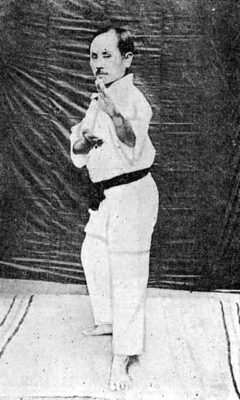
The story of Shotokan begins when Japan annexed the Okinawan Islands in 1879. This started the migration of people, including skilled karatekas, to the main islands of Japan. One of them was a karate master Gichin Funakoshi who arrived on the main islands in the 1920s with a mission to teach and popularize karate. Funakoshi was trained in two styles of karate called “Shorei-Ryu” and “Shorin-Ryu”.

Gichin Funakoshi

Prior to moving to the main islands, he was working on creating his own style. His main idea was to develop a simple style that would be a mix of soft and hard techniques from Okinawan styles and Japanese budo. Later on, he would open a gym called “Shotokan” in 1936 to teach and promote this new style. The name of the style came naturally as his dojo and the style he was teaching became so popular that people started calling it “Shotokan karate”.

The name translates to “Shoto” (pine-waves) and “Kan” meaning “house”. During the 1920s and 1930s, Funakoshi would travel through the country to teach and promote his new style. The biggest breakthrough came when he got the chance to perform at “Kodokan”. At the time, Kodokan was the biggest martial art center in Japan owned by Kano Jigoro, the founder of judo. Later on, he would also demonstrate karate to the Crown Prince, who would later become the Emperor of Japan.

Funakoshi became a very popular figure, so much so that he is often seen as a “father of karate” in Japan. But during WW2, he would lose his son Gigo, and the allied bombing run would destroy his dojo. Just two years after the war, he would also lose his wife and decide to move to Tokyo and start all over again.

The biggest moment came in 1948 when, thanks to Master Funakoshi and his efforts, the first “Japan Karate Association” was founded.

What is the difference between traditional karate and modern Shotokan karate?

Before you start discussing Shotokan karate and how practical it is, you must separate the traditional from the modern form because these two differ a lot, notably regarding self-defense. The traditional style was the one developed in Okinawan islands, while the modern ones are the ones developed on the main island of Japan. Here is a brief comparison:

Self-defense: The traditional style was created for self-defense. Thus, the entire concept of training revolves around preparing a person for real combat and various scenarios they may face on the streets. There are very little flashy moves as most techniques are designed to be effective.

In modern Shotokan, however, self-defense is also present, but not that much as the real emphasis is on competition and the character development. Students spend a lot of time learning how to compete under strict rules, instead of how to fight. They do very little self-defense training or any other drills dedicated to fighting outside of tournaments. But this may also vary between the schools.

Power and damage: In the traditional style, students used to spar full-contact and utilize brutal techniques such as knees and elbows, even dirty tactics like kicks to the groins, all while wearing limited safety gear. Most of the time, they would just wrap their hands, and that’s it.

Due to the importance of competition, modern form focuses more on light contact, and delivering fast and direct punches and kicks. The main point is to learn how to move in to land a strike or take the opponent down, and get out without being caught with the counter. To receive a point and win a match, Shotokan contestants do not have to use a lot of power as long as the strike lands on the right spot. In fact, you might get penalized for utilizing too much force in a match.

Sparring (Kumite): The traditional style puts a lot of emphasis on hard sparring. In fact, it visually looks like a freestyle match because contestants utilize all types of striking and grappling techniques together. They spar at all ranges using all limbs as weapons, including knees and elbows. They are also allowed to throw each other down to the ground, and even strike each other on the ground.

The modern style focuses more on light contact striking with kicks and punches without elbows and knees. Students never spar using full force and they always have to wear protective gear like padded gloves, head guard, mouthguard, and shin pads.

Katas (forms): Traditional style also includes katas. However, they also do a lot of “bunkai” which is a part of training where students learn how to apply katas in real life. In some way, katas without bunkai are not effective.

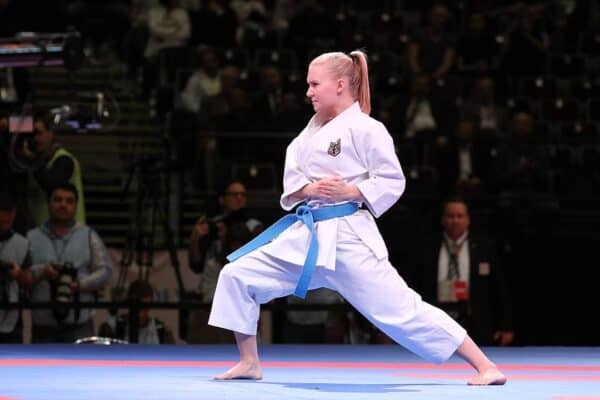
Performing kata
Photo by Claus Michelfelder/CC BY-SA 4.0

The modern form differs a lot here because it only includes katas used in competition, and students rarely do any bunkai.

RECOMMENDED READING:
Karate vs. Taekwondo: Key Differences And Similarities

What are the advantages of Shotokan karate?

Here are some of the crucial benefits of Shotokan training:

  • Solid self-defense skills – Shotokan is a versatile combat system designed to be practical in real life. You will learn how to use all limbs as weapons to throw fast and precise punches, all types of kicks, as well as knee and elbow strikes. Though it is not a full-contact style, the speed, timing, and precision you develop are often more than enough for you to deal with an attacker. The system covers all the ranges but it is fair to say that it works best when you are in the open and have space to move.
  • Footwork and stances – Shotokan karatekas stand in wide and deep stances which differ quite a lot from other styles. This type of bladed stance has certain pros and cons in combat sports, but the trick is to mix it with quick footwork and movement. Skilled karatekas are always on the move, never stick in one place for more than 2 seconds, and always bouncing around. They use this type of stance and movement to keep their range, avoid strikes, and set up attacks.
  • Speed, timing, and precision – Shotokan karate is not a full-contact system. Or in other words, you won’t see two students striking each other with full power in sparring or during the match. Instead of knocking each other and causing injuries, the main point is to overwhelm the opponent with the high output, accuracy and speed, and defeat them without causing severe injuries.

What are the disadvantages of Shotokan?

Here are some of the biggest disadvantages of training in Shotokan karate:

  • Too much emphasis on competition – Shotokan is a practical system but only if you train in a dojo that embraces traditional methods of teaching. The modern practice has, to some extent, moved away from traditional methods of training, and with that, the benefits of training have changed a lot. Instead, competing and winning matches has become the first priority in a lot of schools. This is bad because learning how to score points limits your fighting abilities. Among all other things, it has a negative impact on your ability to apply techniques in a real fight, timing, and ability to absorb or do damage in a real fight.
  • The lack of hard sparring and aggression – in Shotokan, students must be careful not to throw strikes with full force and hurt each other. Instead, the focus is on light contact, speed and technique. In fact, they might receive a warning or point deduction if they throw hard shots. On one side, this forces students to focus on developing perfect techniques. It also prevents many injuries, including the bad ones like fractures or concussions.

    But on the other side, this is bad for real-life fighting where keeping it all light and easy does not work really well. First, you won’t be able to condition your mind and body enough to absorb hard shots with light sparring. This means that you can easily get hurt in a self-defense scenario, or panic once you absorb a hard shot to the face and your nose starts bleeding. Next, there is no scoring points or the referee to reset the action when you are fighting for your life. You will be on your own on the streets, and must forget about the rules and philosophies and be aggressive to protect yourself.
  • No fluid action – there is a lot of sparring in Shotokan training. However, there is no fluid action because the sparring resets every time one of the students scores a point by landing a clean strike. On one side, this is great if you want to compete under the point fighting rules. But on the other side, this is one of the main reasons why so many people think that modern karate is not effective.
  • A lot of katas and almost no “bunkai” – Shotokan, as well as most other styles of karate, includes a lot of katas. This is a solo exercise where students practice techniques alone. Why do they do this? Well, the main point is to learn how to execute combos with proper technique and to stamp the moves into your muscle memory. But katas only provide certain benefits when combined with “Bunkai” teaching, which is learning how to apply katas in a real fight. But in modern practice, students rarely do any bunkai and they practice only katas they use in competition.

Is Shotokan Karate effective in MMA?

Shotokan karate is more than present in modern MMA. However, you must separate the traditional and modern forms. Traditional style and methods of teaching are more in line with freestyle combat and with that, modern MMA.

Still, bear in mind that this style is not as advanced as some other martial arts that work better in MMA like the following four:

Therefore, Shotokan skills alone won’t help you much, but, if you mix some of its elements with one or more martial arts presented above, it may work really well. What Shotokan brings to the table in MMA are two key skills:

  • High-level footwork
  • Fast and precise striking

Fighters trained in Shotokan style are masters in keeping their range using footwork and different kicks or straight punches. They are also very good at catching their opponents coming in, fighting from both stances, and creating angles to attack.

Although Shotokan works quite well at distance, its biggest downside remains fighting at close range. In fact, most MMA fighters trained in this style have a bad habit of keeping their hands low and extended in front. Their striking defense is quite bad because holding your hands low leaves your chin and body exposed. They also do not have a strong clinch game and are prone to takedowns.

Is Shotokan Karate effective for self-defense?

The right answer is based on the style of Shotokan. The traditional style is a combat system created with self-defense in mind and it teaches you valuable self-defense tactics. It is a versatile system that covers most of the scenarios you may face on the streets. Modern style, on the other side, neglects the self-defense aspect because it focuses more on the competition.

If you want to learn self-defense tactics, be sure to do your research and find a traditional dojo. Here, you will learn how to strike with all limbs, including elbows and knees, and even some basics of grappling. Bear in mind that these techniques are not as advanced as the ones you may find in MMA, or BJJ, but are more than enough to protect yourself on the streets. 

On top of that, training involves a lot of sparring where two students simulate a real-life fight. This allows you to learn how to apply karate moves in a fight, and condition your body to absorb hard shots.

However, most modern dojos neglect the self-defense aspect. Instead of teaching you how to fight, modern form prepares you for a match where you need to score points using soft but fast and precise striking. It is much softer than the traditional style, and with that, far less effective for self-defense.

Shotokan vs Kyokushin – What are the key differences?

Kyokushin is a full-contact style that is physically much harder than Shotokan, and often seen as a better option if you want to learn self-defense. Here is a detailed comparison. 


Kyokushin karateShotokan karate
History and originsKyokushin emerged in the 1950 and it was founded by Mas Oyama. Shotokan is one of four major styles developed in the Okinawa in the 1928. 
TechniquesKyokushin is a mix of all types of kicks, punches and knee strikes. However, fighters are only allowed to punch the upper body area below the neck. Kicks and knees to the head are allowed. Shotokan is a versatile system where students learn how to use all limbs to strike the body area both above and below the waist. They also learn the basics of grappling.
PowerKyokushin is a full-contact style where students are allowed to strike each other with full force. They throw each strike with a lot of power and intention to hurt or knock out the opponent.Shotokan is a light contact style as it emphasizes technique, speed, and accuracy. Students are not allowed to throw strikes with full force both in training and in competition.
Protective gearKyokushin students do not wear any gear, which combined with full-contact striking makes this style more brutal. But in some modern schools, students are allowed to wear gloves. Shotokan students spar while wearing full protective gear that includes padded gloves, shin pads, head guard, mouthguard and chest protector. 

How long does it take to get a black belt in Shotokan Karate?

On average, Shotokan students need between 3.5 and 5 years to progress from the beginner white belt all the way to the black belt rank. The time you need to reach a black belt rank depends on many factors. For example, some students are more talented, dedicated, and consistent than others, and with that, can reach a black belt rank in less time.

Also, the promotional criteria differ between dojos and even countries. In some, students may reach a black belt rank in less than 3 years, but they would be not as skilled as the students who train in dojos where the belt system is more strict.

LEARN MORE
Get the full report on Karate Belt Ranking System – EASILY Explained For Beginners

Which karate style has the least kata?

Uechi-Ryu is a karate style that has the least kata, just 8. It is a style developed in Okinawa by Master Uechi Kanbun at the beginning of the 20th century. The other karate style that doesn’t have katas is “Ashihara Karate” which is a modern style developed in the late 1970s in Japan.

Ashihara is a full-contact style that has origins in Kyokushin and is also known as “street karate”. It is a very versatile style that apart from kicking and punching, also includes elements of Pankration and Jujutsu.

Is Boxing Good For Mental Health? Yes, Here’s Why

0

Disclaimer: The contents of this website, such as text, graphics, images and other material are intended for informational and educational purposes only and not for the purpose of rendering medical advice. The contents of this website are not intended to substitute for professional medical advice, diagnosis or treatment.

Evidence supports the concept that learning combat sports can greatly improve one’s mental health. One of the popular combat sports is Boxing because it is easy to find a gym that trains the sport, you can do it at home with minimal equipment, and it is a physical and mental outlet.

Boxing is good for mental health because it requires extreme focus, taking your mind off the outside world and your troubles. The endorphins released through Boxing can relieve anxiety and depression, and the emotional tensions of anger and frustration can be released into a punching bag!

Mental health is an aspect of primary importance in our busy, high-stress modern lifestyle. We need to find ways to take care of ourselves both physically and mentally to combat the effects of stress and anxiety. We’ll look at why Boxing is an ideal sport that can help improve people’s mental health while giving the body a much-needed workout!

Is Boxing Good For Mental Health?

Many people consider Boxing a purely physical activity with few benefits other than getting a good full-body workout. Contrary to popular belief, Boxing can be the stress reliever and the mental health remedy you have been looking for to improve mental and physical health.

Boxing uses every part of the body and is gaining popularity among people from all walks of life, from models looking to burn fat and achieve a slim physique to business executives looking for a stimulating workout!

As more people discover Boxing as a physical workout, they realize the sport’s additional mental health benefits. There is no doubt that Boxing can contribute to improving mental health in many dimensions, including helping to combat anxiety, depression, anger, and even boost self-confidence.

How Boxing Improves Your Mental Health

Boxing is a sport that requires extreme mental focus and concentration as well as working all the muscle groups of the body.

The mental focus required in Boxing is one of the main contributors to the sport being good for mental health.

The level of focus in Boxing requires tuning out the rest of the world and concentrating with laser focus on your opponent, the punch bag in front of you, and your technique.

This level of focus helps to take your mind off other problems that are increasing your stress levels and gives your mind something constructive to focus on. This level of focus can be meditative and allow your mind to reset itself, acting as a calming influence. Many people come out of a Boxing training session feeling physically spent but mentally rejuvenated.

The endorphins released when Boxing can cause a mental “high,” which gives a euphoric sense of wellbeing. This endorphin release is known to be a stress-relieving factor.

The sweet science of Boxing which entails punching, bobbing, and weaving helps release muscle tension, which can build up throughout the body due to stress. Since Boxing is a full-body workout, it is an excellent activity to relieve muscle tension.

What Are the Mental Health Benefits of Boxing?

A high-intensity training such as boxing can help with mental health problems on several levels and for a variety of mental health problems afflicting many of us today.

The following are examples of how Boxing can offer mental benefits.

  • Anxiety. The level of focus required in Boxing helps to tune out thoughts causing anxiety. An anxious mind is usually full of a jumble of thoughts and fears. The concentration aspect of Boxing gives your mind a chance to focus and relax.
  • Depression. The endorphins released during Boxing make you feel good and lift your mental attitude, helping combat depression.
  • Anger. Anger and frustration often need a physical outlet. If anger does not have an outlet, it can build up in your mind and contribute to stress. Punching a punching bag is an ideal method to dispel your anger and frustration, which gives your emotions and your mind the release it needs.
  • Personal motivation. An activity such as Boxing that motivates you to improve can positively affect your overall outlook on life.
  • Confidence building. As your skills in Boxing improve, it will build your self-confidence as you feel more confident in defending yourself and competing against an opponent.
  • A sense of achievement. Everyone feels good when they have achieved a goal or improved themselves in some way. The physical aspect of Boxing will give you a sense of achievement as you improve in technique and as you see your body improve from the physical workout.

Does Boxing Make You Mentally Tougher?

Boxing is a sport that requires determination and builds in you the mental attitude of getting up after being knocked down.

While getting up after being knocked down is a physical act, it takes mental toughness to force yourself to get up and face an opponent that has just knocked you down. This mental training as part of the sport helps to improve your mental toughness and determination.

Is Boxing Therapeutic?

If you consider other therapeutic activities, you will find that they relieve stress and anxiety and give you mental peace, calmness, and a sense of wellbeing.

As we have discovered, Boxing helps relieve stress and fight anxiety, depression, anger, and frustration. These mental health improvements, combined with the sense of wellbeing from the endorphin release, make Boxing an extremely therapeutic sport!

Are Punching Bags A Good Way to Relieve Stress?

Punch bags are an integral part of training in Boxing. The punching bag is used to practice punches of various styles and techniques and stands in the place of a real-life opponent.

The advantage of a punching bag is that they are relatively cheap, so you can purchase one and hang it in an appropriate location in your home and work out whenever you have the need or the opportunity.

A punching bag is the ideal piece of Boxing equipment to give release to your anger and frustration while allowing you to improve your concentration and focus. The physical workout is an added bonus to the mental health benefits!

Can Boxing Give You A Brain Damage?

Boxing is a full-contact combat sport, which implies that your opponent is going to try and hit you to knock you out or injure you so that you will concede the fight.

This is the typical goal in a boxing bout with an opponent, and it comes with the risk of brain damage from being hit in the head.

When sparring in a gym with a sparring partner, protective gear is worn to protect the head from serious impact. Brain damage from sparring in the ring is unlikely and not a cause of concern.

Training Boxing does not always require fighting with an opponent, and you can get the same workout by using the various bags and other equipment typical of a training session. There is no risk of sustaining brain damage when training boxing in this way.

RECOMMENDED READING:
10 Safest Martial Arts That Are Effective In Real Life

Is Boxing More Mental Than Physical?

Boxing requires both mental and physical stamina, and Boxing cannot be done without both these attributes.

Boxing is a sport that cultivates mental toughness and discipline and builds fitness and stamina in the body. A boxer who is fit and strong physically but without mental stamina and toughness will always be beaten by an opponent with both mental and physical toughness.

Boxing is not more mental than physical, but rather a balance between the two to make a well-rounded fighter.

Is Boxing Good For Self-Defense?

Boxing is an ancient form of martial art that has been used for combat self-defense and even taught to soldiers as part of unarmed combat.

Boxing is good for self-defense because it teaches you how to defend against a punch as well as how to deliver a well-timed blow. Knowing how to punch strategically and correctly can quickly end a street fight against a person with no martial arts knowledge.

LEARN MORE
Get the full report on Is Boxing Good for Self Defense? The Ultimate Answers

Is Boxing A Safe Sport?

If you are interested in learning Boxing to help you with fitness and mental health but are concerned about safety, we can set your mind at ease.

You can train in Boxing by wearing safety gear that will protect your head and face from injury. It is also possible to train in Boxing without the need to spar against an opponent. This would be the safest way to learn Boxing if you are concerned about injury.

While this form of training will give you fitness, stamina, and mental health benefits, it will not train you to evade an opponent, block a punch, and counter-punch, which may limit the self-defense aspect of the sport.

The disadvantage of training to box properly is that there will always be some form of injury after a session. Bruises, aches, and pains from being hit will be a part of the price you pay as you toughen your body and mind and improve your skills.

Who Should Take Up Boxing?

Boxing is a high-intensity interval sport that anyone of any age can take up, and it will accomplish a number of different things for different people.

Children can learn Boxing to improve strength and coordination, young people can take up Boxing as a competitive sport, and people of all ages can use Boxing as a means to get fit, lose some weight and improve children’s mental health.

Final Thoughts

Boxing is a combat sport and a good skill to learn for self-defense, but it is much more than a physical activity. 

Boxing offers mental health benefits that can reduce stress, anxiety, and depression while building confidence and an overall improvement in your outlook on life. Boxing is the ideal martial art to learn to improve your physical and mental fitness.

More importantly, always seek the advice of your physician or other qualified healthcare provider before joining a boxing gym. Talk with your healthcare provider first about any questions you may have regarding mental health issues.

What Was The Speed of Bruce Lee’s Punch?

0
Photo by שילוני

Bruce Lee is a legend in the martial arts and action movie sector, and the legends around his prowess, strength, and speed have increased since his death. While much of his fame came through his fight scenes on the big screen, Bruce Lee was, without a doubt, incredibly fast and strong. How fast was Bruce Lee’s punch, and did the 1-inch punch really pack a lot of power?

The speed of Bruce Lee’s 1-inch punch was a staggering 118mph or 190kph and delivered with enough power to knock a 200-pound or 90kg, man back 16-feet or 5-meters. The incredible speed came from his dedication to a strict training program that focused on speed, power, and endurance.

Since much of Bruce Lee’s fame came from movie fight scenes, many skeptics discredit his martial arts accomplishments as showmanship and movie hype. Bruce Lee was a dedicated man who put effort and time into perfecting his fighting skills, which many onlookers failed to see and appreciate. We will examine his punch speed to see why it causes much debate.

How Fast Was Bruce Lee’s Punch?

The fitness and strength of Bruce Lee were a product of hours of discipline and training which he dedicated himself to every day of the week. When a person invests this much effort into developing their skills, they will inevitably stand above the crowd in their achievements.

Many onlookers were amazed at his speed and power and could not believe what they were seeing. Skeptics said there must be some form of trickery in his displays since no other martial artist had the same power and speed in their punches.

Bruce Lee’s relatively small stature was part of the disbelief of the onlookers who could not believe such power could come from such a small frame.

A testament to the man’s speed comes from his acting career, where on more than one occasion, he had to slow down his punches so they would appear on the film. When he punched at full speed, it looked like a blur on the camera because the camera’s speed was unable to keep up with his hands.

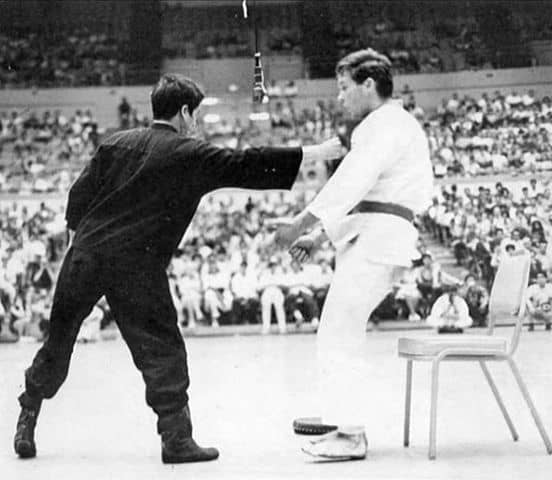
Bruce Lee’s famous 1-inch punch was the fastest of all his punches due to the short distance the punch had to travel. His 1-inch punch was clocked at an impressive 118mph or 190kph and capable of knocking a 200-pound or 90kg man back 16-feet or 5-meters.

How Strong were Bruce Lee’s Punches ?

As we have mentioned, Bruce Lee’s 1-inch punch could knock a 200-pound man back 16-feet, which demonstrated significant power in the punch.

Bruce Lee could punch with a force of 350-pounds, which is the same force exhibited by boxing champion Muhammed Ali. The impressiveness of this feat is that Bruce Lee only weighed 130-pounds, whereas Muhammed Ali tipped the scales at 260-pounds.

LEARN MORE
Get the full report on How Hard Can an Average Person Punch?

How Did Bruce Lee Do One-Inch Punch?

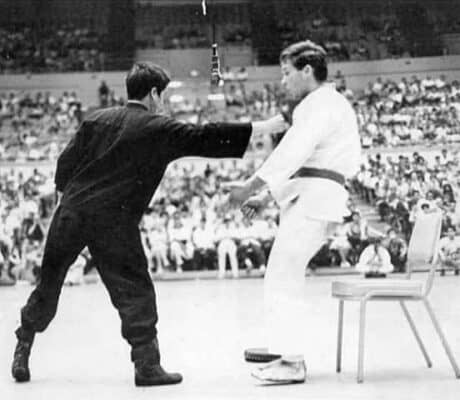
Many people disbelieve the power of the one-inch punch signature move of Bruce Lee. However, the film footage of Bruce Lee demonstrating the punch at a karate competition is irrefutable.

Full Contact Karate champion Joe Lewis was invited to punch a volunteer and was able to cause the man to move back a few feet. However, when Bruce Lee demonstrated the technique of the 1-inch punch, the man was propelled back 16-feet.

Bruce Lee performed the 1-inch punch by placing his hand in front of the target with his extended fingers touching the target. Then, without moving his hand away, he closed his hand to form a fist and punched the target from that distance, about 1-inch.

Bruce could pack so much power into the punch due to training, timing, brainpower, and using his entire body to add force to the punch.

Martial arts techniques teach the use of the entire body in a punch, extending power from the legs, hip rotation, abdominals, and shoulders. Tensing muscles at the right time also adds power to the punch. 

The brainpower aspect comes in by repeating body movements that train the brain to trigger all these muscles and movements with lightning speed without consciously performing each motion.

This translated to increased power and speed and allowed Bruce Lee to exhibit impressive power and speed in the punch. This is another example of the dedication of Bruce Lee to his training regimen to perfect his art.

How Fast Was Bruce Lee?

Bruce Lee’s overall speed and reflexes were legendary and impressed many other martial arts champions like Chuck Norris.

From a distance of 3-feet, Bruce could throw a punch in 0.05-seconds; that’s five-hundredths of a second!

Bruce Lee often had to slow his movements and reaction speed down during fight scenes in his movies to give fellow-actors time to react realistically and believably to his punches.

How Did Bruce Lee Kick So Fast?

Bruce Lee’s kicking speed was as blindingly fast as his punching ability. He could deliver 6 kicks per second, which is another result of his strenuous and strict training program.

Bruce would practice his kicks and punches with weights on his wrists and ankles and worked at increasing speed in his training while wearing these extra weights.

The effect this training has is that removing the weights in a normal fight scene results in lightning-fast reflexes and punch and kick speeds.

RECOMMENDED:
How Fast Can The Average Person Kick?

Did Bruce Lee do two finger pushups?

Bruce Lee’s physical prowess is legendary and is due to his commitment to training his body on a daily basis.

Bruce Lee performed 200 pushups without pause, using only two fingers to make contact with the floor. He was able to do 1500 normal pushups with both hands on the floor and up to 400 pushups consecutively, only using one hand!

Bruce Lee’s two finger pushup record remains undefeated and may never be broken.

How Heavy Was Bruce Lee’s Punching Bag?

Bruce Lee used a punching bag known as a heavy bag to improve his kicking and punching power. His training equipment included a standard heavy bag, which typically weighs 70-pounds or 31kg.

Bob Wall, a friend, co-actor, and martial artist, gifted Bruce Lee with a custom-made 300-pound or 136kg heavy bag, which Bruce then used as part of his training.

How Many Days Per Week Did Bruce Lee Work Out?

Bruce Lee trained 7 days a week which is a discipline that not many other athletes maintain. Even when he was not formally training, he would perform some sort of exercise throughout the day.

Bruce would use other aspects of life to multi-task and continuously train his body. While he was watching television, he would perform wrist curls so that the time was not wasted.

This dedication to training and fitness set Bruce above his peers and laid the foundation for his incredible physical feats that seemed unbelievable to most people.

Why Do People Think Bruce Lee Would Not Do Well In UFC?

Most people agree that Bruce Lee would not perform well in UFC because of his philosophy regarding martial arts.

Bruce Lee’s martial arts and fighting philosophy did not adhere to the traditions and rules of original martial arts styles, and likewise, he would have had difficulty fighting with the rules dictated by the UFC.

Bruce Lee’s fighting technique was to adapt and win at all costs. In this kind of fighting mindset, rules do not have a part to play.

There is no doubt that Bruce Lee would have had the physical ability to fight in the UFC, but the limitation of the rules in this type of fighting leads people to believe that he would not have done well in this arena.

LEARN MORE
Get the full report on How Would Bruce Lee Do In MMA Fighting?

Final Thoughts

Bruce Lee was ahead of his time regarding his philosophy regarding martial arts and his dedication to training and physical improvement of the body.

His commitment and strict training gave him the impressive speed and power in his punches and kicks that still enthrall people to this day!

Is MMA Hard to Learn? Easily Explained For Beginners

0

Mixed martial arts, or MMA, is all the rage now. It’s the fastest growing sport in the world with the premier organization in the UFC being extremely popular as well as profitable. However, competition aside, MMA is extremely rewarding to learn even for the everyday citizen.

Learning MMA is difficult because you have to learn all aspects of the art of fighting. For example, mixed martial arts (MMA) incorporates both stand-up and ground fighting, requiring years of hard work, discipline, and dedication to become proficient in MMA.

As you see it’s not a walk in the park to learn MMA. In this article, I will explain various reasons why MMA is hard to learn as well as provide general tips about starting MMA and answering frequently asked questions.

Is MMA Hard to Learn?

So to answer the main question right off the bat, yes, MMA is hard to learn. Or rather, it’s not easy to learn is a better way of saying it. This is because unlike other martial arts like boxing, judo or karate where you’re learning just one art and one art alone, with MMA, you’re learning a wide variety of arts, sometimes at the same time.

With striking, you have to learn boxing, kickboxing and Muay Thai. Not to mention, there’s the ground game with wrestling, grappling and jiu-jitsu. And let’s not forget clinching and overall conditioning.

Very few UFC fighters today start off “learning MMA” or combining a number of arts. There are some exceptions, but overall, most prominent fighters have a base usually consisting of boxing, wrestling or jiu-jitsu. That means it can be difficult even for the professionals who have to incorporate various arts that they previously never trained in. It is also why an MMA fight is viewed as a “true” or “real” fight compared to boxing for example — because you’re truly in a fight that utilizes all facets of combat arts.

How long does it take to learn MMA? 

How long it takes to learn MMA is somewhat difficult to answer. To reach a proficient level depends on a number of factors:

Athletic ability

There’s a reason a number of athletes from other sports tend to venture into mixed martial arts and find success. The more athletic one is, the more flexible, durable and strong they are. Not to mention, their fitness and cardio will already be at a high level. The end result is that picking up MMA is a lot easier than, say, someone just getting off the couch and looking to gain muscle mass or lose weight.

Time spent per week

Like any hobby or pursuit, it requires time and dedication, and the same applies to MMA. To truly master the craft, one must spend anywhere from a thousand to ten thousand hours, though, this also depends on the fighter. That is why the more hours one spends on a weekly basis, the higher their level will eventually be. Today, most of the top MMA fighters not only train almost every day, but many of them also train two to sometimes three times a day with breaks in between. 

Prior martial arts experience

As aforementioned, many MMA fighters today train in MMA having had some form of prior martial experience. Whether it’s jiu-jitsu, boxing, wrestling, judo or karate, having some experience can go a long way in learning MMA as you’ve already covered one facet of the sport in some form. Whatever art this is, can also be combined with multiple other arts and help one achieve a higher level much quicker. That is why it can take a pure boxer much less time to master MMA than someone just starting the sport with no combat sports expertise.

With all that said, there’s no way one can truly learn MMA. After all, even the top fighters today continue to learn new things every day and evolve with each fight. It’s not like the pound-for-pound best fighters are taking care of everyone in sparring or in the gym. They are also getting beat up by their training partners because that’s the only way one can grow in MMA.

Can you start MMA with no martial arts background?

Beginners with no prior martial arts or combat sports experience can certainly learn MMA. After all, everyone started somewhere and there are cases of successful fighters today who started training with no prior experience. Of course, one would need to train in other areas to be successful in MMA such as improving their strength, endurance and cardio. But that will come in time as one trains on a regular basis.

Speaking of training, there are multiple MMA gyms around the world with instructors specialized in training beginners. The basics and fundamentals will all be taught until you’re ready to progress to more advanced classes, drills and skills.

As for how long it takes to become an MMA fighter? Again, this depends on the level of the person training in MMA and whether they are willing to step in as soon as possible. The logical step is to take part in some amateur fights first. However, there are a number of cases of individuals turning professional as little as one year into their MMA journey. On the other hand, for some, it could take two to three years to become a professional MMA fighter.

Is MMA a good sport for kids?

There is no age limit for MMA. Just like someone in their fifties can start learning MMA, a child can also start training in MMA. The ideal age to start MMA for children? Ideally between the ages of 12 to 15 as this is when they become adolescents and they start exhibiting bodily changes. However, there are examples of kids training as young as the age of five, particularly in countries like Brazil, Japan and Thailand.

With that said, most children start off with one martial art rather than MMA together. In general, it’s good for kids to start learning arts like judo, karate or wrestling as this not only keeps them active, but also helps build motivation, instill discipline and provides them with self-defense skills at a young age. If they are showing a genuine interest in going up a level, they can certainly transition to MMA training later on.

LEARN MORE
Check out our article on Will Martial Art Make My Child More Aggressive?

Can you do MMA without fighting?

You can certainly train in MMA without fighting at an amateur or professional level. There are a number of MMA students who train for a number of reasons. For some, they just want a hobby. For others, they want to be part of a community and make friends with fellow students training in MMA. Some want to do it to get in shape or lose weight while there are also some who train in it for self-defense purposes.

Those who don’t compete can also take their MMA skills to the next level and potentially become coaches in the future, whether it’s at an accredited gym or if they want to start their own MMA gym. There is no hard and fast rule that if you train MMA, you have to compete against others. You can certainly have a go if you truly want to test yourself, especially with amateur fights, but most times, a good sparring session is more than enough.

Is MMA harder than Boxing?

MMA is most definitely harder to learn and train than boxing. This is because in boxing, you only have to worry about two weapons in the form of your opponent’s left and right hand. There are other aspects to boxing such as the clinch game and overall endurance, stamina and conditioning. But it’s still nothing compared to MMA where you’re using virtually every part of your body as a weapon from your elbows, knees, legs, heels and more.

And because you are focused on multiple arts at once compared to just boxing, this can also be extremely tiring for someone who has solely trained in boxing. It’s also one of the reasons why we rarely see boxers take on MMA fighters in MMA fights. The simple answer is they wouldn’t win 99% of the time because they lack the weapons and overall skills of an MMA fighter.

LEARN MORE
Check out our extensive MMA vs. Boxing: Which Is Harder To Learn? (Best Explained)

How often should I train in MMA?

As aforementioned, professional MMA fighters train anywhere from five to seven days a week, sometimes multiple times a day. Obviously, this doesn’t have to be the case for everyone as it all depends on their level and what they want to achieve. If you’re looking to MMA as a simple hobby, you can train once or twice a week.

However, if you want to make significant progress and evolve, it is recommended to go at least three times a week. This will also help you get adjusted to the physicality and eventual soreness you’ll experience with MMA training sessions which will be much more intense than other sports.

Is MMA effective in a street fight?

MMA is certainly useful and effective in a street fight. Now, one should keep in mind that if one is faced with dirty tactics such as low blows or eye-gouging, that’s a different story. But overall, being versed in MMA is very helpful if you find yourself in a one-on-one street fight. After all, Brazilian jiu-jitsu is regarded as the best art to learn for self-defense and it’s a huge part of MMA. Add in the training from boxing and kickboxing, and you’ll be well equipped if you find yourself in a street fight.

LEARN MORE
Get the full report on Does MMA Work In a Street Fight?

How Dangerous is MMA?

Much like any contact sport, MMA is not without its dangers. When one trains in MMA, they are prone to a number of injuries from sprains, ligament tears, broken bones to even concussions. But with that said, the same applies to sports that are seen as less harmful such as football or basketball. Injuries are part of every sport and can happen in the ways you least expect, even if you are training or sparring with the utmost caution.

LEARN MORE
Still curious? Click here to learn about How Dangerous is MMA Fighting? Here’s a Closer Look

How much do MMA gyms cost?

The average cost to train for MMA varies depending on a number of factors. Among them are your location and whether you’re in a metropolitan or suburban city. Just like with Brazilian jiu-jitsu, if you’re in a city with a high cost of living such as Los Angeles, you can expect to pay more than average compared to someone living in El Paso.

There’s also the number of classes you are taking to factor in which can affect the average as well as the plans your prospective gym is offering, and if you’re using the plan or going on a pay-by-the-class basis. There’s also the matter of your instructors and how highly acclaimed and decorated they are. But as far as estimates go, one can expect to pay anywhere from $50 to $200 a month.

Final Thoughts

Whether you are passionate about MMA, or simply want to lose weight, gain muscle mass, or learn self-defense skills, training in MMA is certainly worth the time and investment for everyone in the end.

Most importantly, as you make progress in MMA, you will know what it’s like to persevere and you will also know the value of working hard to overcome difficulties.