Home Blog Page 16

Top 15 Greatest Kickboxers In UFC History – Simply The Best

0

Kickboxing is more than present in modern MMA and it has been like that since the early days of the sport. If you look back in history and go from the initial events all the way to the modern-day ones, you will find top-level kickboxers in every era. 

Yes, MMA is a sport dominated by grapplers, but, a lot of kickboxers have managed to find a way to succeed in cage fighting. In fact, some of the best fighters in UFC history have had a strong background in this standup art.

In this article, you will discover the greatest kickboxers who have fought in the UFC from all eras. On top of that, you will learn more about their careers and what makes them so special.

Honorable Mention: Pat Berry
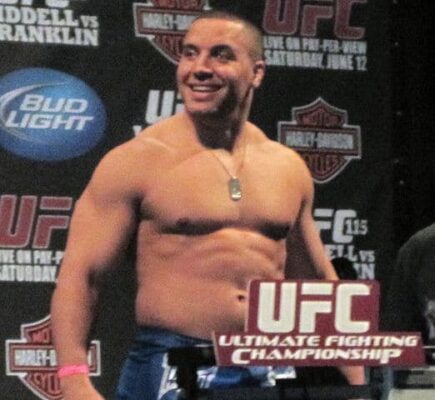
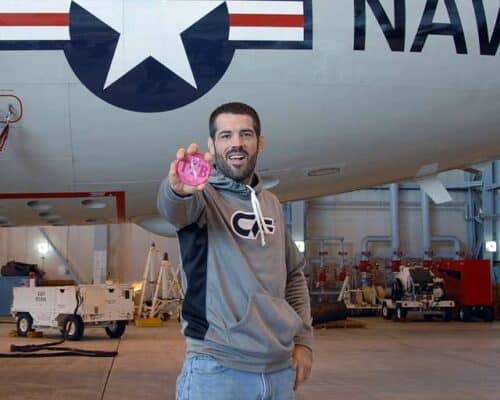
Photo by Bad intentionz

Pat Berry was a huge name in the late 2000s and a man known for top level kickboxing skills who had some of the best leg kicks in the business. What’s more, 3 out of his 7 finishes in MMA are listed as “leg kicks”. Although his MMA career was a mix of great wins and unfortunate losses, Berry was a showman and a very popular fighter back in the day.

What most people miss about Barry is the fact that he started training in martial arts quite late at the age of 21. He got into Wushu, Sanshou and kickboxing and would start competing as a pro just two years after. In his kickboxing career, he scored 17 wins and was beaten on 6 occasions.

RECOMMENDED READING:
What are the Different Styles of Kickboxing? Simply Explained

15. Stephen “Wonderboy” Thompson

Most MMA fans know Thompson as a fighter with top-level karate skills, and a man who put this traditional martial art on the map in MMA. But, he also has a lot of experience in kickboxing, which is not unusual as a lot of karatekas tend to switch over to kickboxing at some point.

Thompson got into martial arts at a very young age and he trained under the close eye of his father, Ray, who was a pro kickboxer himself. At the age of 15, he would start competing in American Kickboxing matches where he managed to retire undefeated with the record of 58–0 and achieve the following:

  • W.A.K.O World Champion (2005)
  • I.A.K.S.A. World Champion (2003)
  • I.K.F World champion (2003; amateur)
  • Multiple national champion

14. Thiago Alves

Alves is the former UFC contender and a man with perhaps the most technical standup skills of his era. He fought at the highest level of the UFC for almost 14 years and he beat some of the big names like Matt Hughes and Josh Koscheck, and most fans remember him for his exceptional leg kicks. 

Alves got into Muay Thai in the late 90s when he was 15 years old to get in shape and learn how to fight as most teenagers do. But just two years later, he would switch over to MMA where he enjoyed great success despite the lack of top level grappling skills. Although he never won world titles in kickboxing, Alves used to be synonymous with kickboxing in MMA. 

Nowadays, Alves works as the main striking coach at “American Top Team”

13. Cung Le
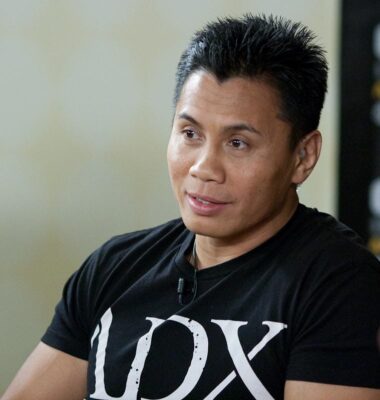
Photo by Mike Dunn

It’s really hard to put into words how popular Cung Lee was back in the 2000s when the sport of MMA just started to rise in the US. He is best known for his run in Strikeforce, where he managed to secure 7 wins and the middleweight title. He would later switch over to have a short stint with the UFC where he failed to achieve the same success. However, his KO win over the former champion Rich Franklin (UFC on Fuel TV 6) in 2012 remains one of the best right hook KOs in UFC history.

Before arriving in MMA, Le was a prominent name in the kickboxing world. He fought as a pro both in Sanshou and Kickboxing, where he put together an undefeated record of 17–0 and won the IKF Sanshou World title. He also had a couple of wins in K-1 but has never won any titles there.

RECOMMENDED READING:
What Is Sanda Chinese Kickboxing? Introduction To Sanda

12. Pedro Rizzo
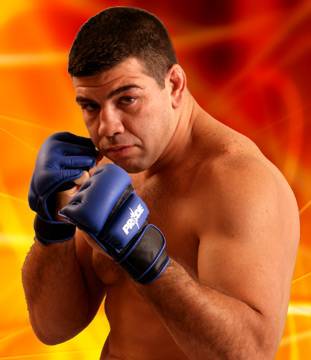
Pedro Rizzo is an MMA legend often seen as one of the best UFC fighters to never win the crown. Back in the 90s, Rizzo was a force to be reckoned with and a man with whom nobody wanted to play too much on the feet. Even by modern standards, Rizzo is among the most technical Muay Thai fighters who had brutal leg kicks and crisp boxing skills. In his long MMA career, he scored 20 wins out of which 15 were brutal KOs over elite fighters like:

  • Andrei Arlovski (UFC 36)
  • Josh Barnett (UFC 30)
  • Dan Severn (UFC 27)

Playing with Rizzo on the feet was risky, but taking him down to the canvas was nothing safer either as he was a black belt in BJJ and a 4th-degree black belt in Luta Livre.

RECOMMENDED READING:
UFC Fighters Where Are They Now? 15 Forgotten UFC Legends

11. Donald Cerrone

Photo by fightlaunch

Cerrone is a UFC legend and a fan favorite fighter who is always ready to put his elite kickboxing skills to work to entertain the crowd. However, Cerrone didn’t spend time training in martial arts as a teenager. No, when he was 20 years old, he was dreaming about becoming a pro bull rider. But when that fell apart, he made a decision to start training in kickboxing to satisfy his adrenaline nature, and this turned out to be a wise decision.

During his run in kickboxing, Cerrone managed to compile an undefeated record of 28 wins and win:

  • ISKA amateur Colorado State middleweight championship
  • Dominion Warrior Muay Thai world lightweight title

In MMA, he holds a record for most knockdowns in history, which speaks a lot about his striking skills.

10. Edson Barboza

Barbosa is a man synonymous with Muay Thai in MMA who is among the most exciting UFC fighters of all time. When he was just 8 years old, he started training in Muay Thai and competing all across Brazil. He compiled a pro record of 25 wins (17 first-round finishes) and 3 losses before moving to the US in 2009 which was also a time when he got into MMA.

As a talented striker with an exciting style, Barboza needed just five dominant finishes on the regional scene to secure his place in the UFC in 2010. In his career, he scored many memorable knockouts, but on the other side, has lost some important fights. This is the main reason why Barboza is one of those famous fighters who have never fought for the UFC gold. But if anything, he remains one of the best Muay Thai fighters in MMA history.

9. Holly Holm
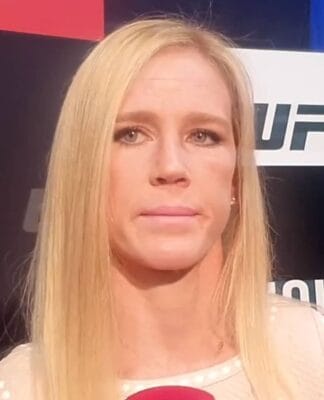
Photo by MMAnytt

The former UFC 135 lbs champ, Holly Holm, might be the most technical female strike in history, and it is really hard to argue against that. She arrived in MMA from boxing and kickboxing where she managed to win multiple world titles in both sports. As a kickboxer, she owns a record of 14 wins, 1 loss, and 7 draws (6–0 as an amateur).

In MMA, Holm is known for her fast and precise striking. She shines with fast footwork, and her ability to mix kicks with the punches is second to none. On top of that, she has a strong takedown defense, rarely makes any mistakes, and is always a step ahead of her opponents on the feet.

RECOMMENDED READING:
Top 15 Greatest Kickboxers of All Time – Ranked

8. Joanna Jędrzejczyk

Photo by KRK.TV

Jedrzejczyk is one of the very few fighters in MMA history who have built their entire success on utilizing high-level kickboxing skills. Inside the UFC octagon, she is fast, accurate, has a really high output of strikes, could take a lot of damage, and never gets tired. Or in other words, she was a nightmare matchup for anyone. In 2022, she retired as a former 115 lbs champion with five title defenses.

Jedrzejczyk started her martial art journey at the age of 16 and she fought both in Muay Thai and kickboxing for over 10 years. During this time, she won many titles and has retired with a record of 67 wins and just 6 losses:

  • Five IFMA world gold medals
  • WBKF champion (2013)
  • WKF European champion (2010)
  • WKN champion (2010)
  • WMC European champion
RECOMMENDED READING:
10 Greatest Female MMA Fighters Of All Time!

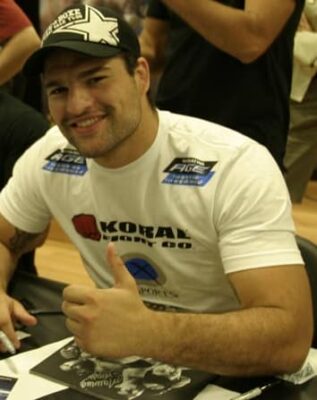
7. Mark Hunt
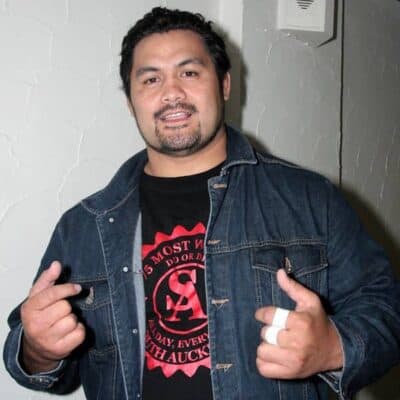
Photo by The Wifechaser

Mark Hunt is a former UFC and PRIDE FC legend who will go down in history as one of the hardest hitters. He had an iron chin, solid takedown defense, nuclear power in both hands, and cardio for five rounds. Standing in front of him and in his line of the attack was a fatal mistake. 

After knocking a couple of drunk people in the bar, one of the bouncers invited a young Hunt to his gym to train together. Just a week later, Hunt would win a regulated Muay Thai match. After scoring a couple of more wins, he signed with K-1 in 1999, and just two years later, he would win the title by beating Francisco Filho.

In 2003, he switched over to MMA where he managed to beat none other than Wanderlei Silva in his third pro bout, and Crocop in the fourth. Over the years, he managed to develop solid takedown defense, which mixed with his elite striking made him a scary individual. In 2014, he fought for the interim UFC heavyweight title at UFC 180, but Fabricio Werdum managed to finish Hunt in the second round. 

RECOMMENDED READING:
What Is K-1 Kickboxing? The Beginner’s Guide to K-1

6. Valentina Shevchenko

Photo by ElisaQualizza

Valentina Shevchenko needs no introduction here. She is the most dominant UFC flyweight champion in history, and perhaps the most feared female fighter as well. Although her game is well-rounded, what clearly makes Shevchenko better than the rest are her incredible kickboxing skills. On the feet, she is fast, accurate, and lethal, which is why she carries the nickname “The Bullet”.

Shevchenko started her kickboxing journey when she was 16 years old. Between 2003 and 2015, she managed to win over 90 matches in both Muay Thai and kickboxing and multiple world titles:

  • Eight-time I.F.M.A world champ
  • I.F.M.A Royal World Cup winner (2015)
  • World K-1 champ in Peru and Mexico (2013)
  • World Champ KF-1 MMA pro (2003)
  • World Champ KF-1 MMA pro(2005)
RECOMMENDED READING:
Muay Thai vs Kickboxing  –  Key Differences Explained and FAQ

5. Alistar Overeem
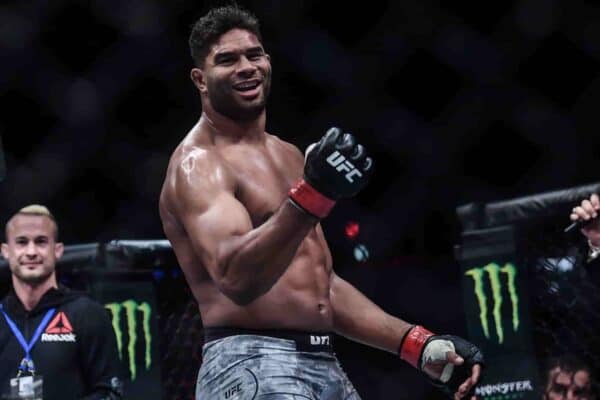
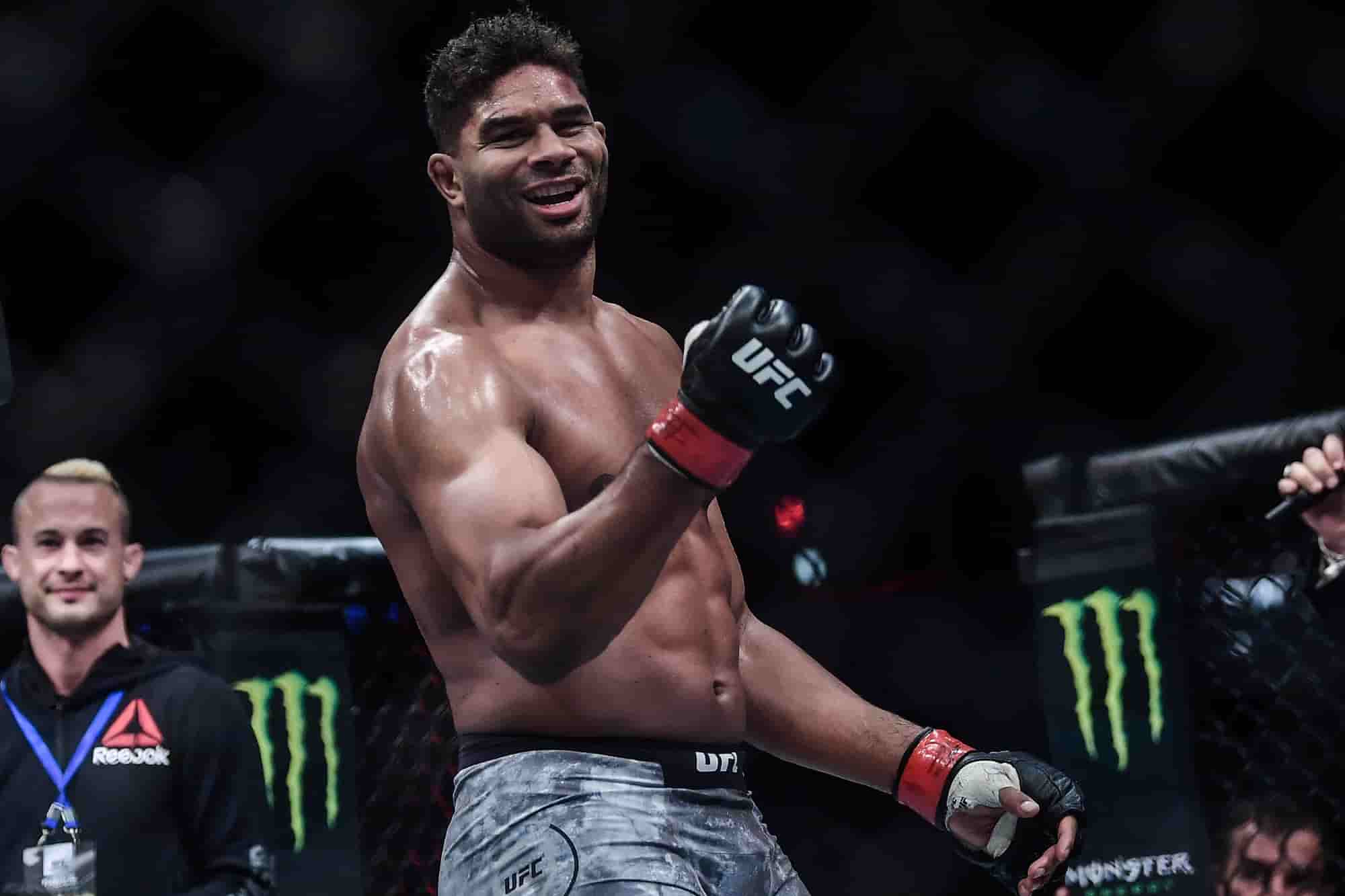
ChinaImages/Depositphotos.com

Also known as the “Demolition Man”, Overeem will go down in the history books as one of the most intimidating fighters of all time. But apart from his imposing physique and being one of the most jacked-muscled fighters, what made him really scary were his elite kickboxing skills.

Back in the 90s, kickboxing was the number one sport in Holland. But Overeem actually started his martial art journey in Judo before switching to MMA at the age of 15 to follow in the footsteps of his older brother Valentijn. In the initial stages of his career, he managed to win heavyweight titles in Strikeforce and DREAM, and score many wins in PRIDE FC. But in 2009, he decided to switch over to kickboxing and take part in the famous K-1 World GP tournament.

In his debut year (2009), he secured third place, but a year later, he would shock the world by beating the great Peter Aerts in the finals in 2010. Later on, he would go back to MMA where he would fight for the UFC belt against Stipe Miocic and lose at UFC 203.

RECOMMENDED READING:
What Is Dutch Kickboxing? Basic Guide to Dutch Kickboxing

4. Maurice Smith

The UFC pioneer, Maurice Smith, deserves a lot of credit for putting kickboxing on the map in MMA. He was one of the first elite kickboxers to transition to cage fighting, and show the world the effectiveness of this art. What made him special was his ability to keep the fight standing against elite grapplers, which allowed him to always impose his will inside the cage, and destroy his opponents on the feet. In his career, he won the UFC heavyweight title in 1997 by defeating elite wrestler Mark Coleman. As for his kickboxing career, Smith won the following:

  • W.K.A. kickboxing heavyweight champ (1983)
  • W.K.A. Muay Thai heavyweight champ (1994)
  • I.S.K.A. world Muay Thai champ (1996)

3. Mirko “Crocop” Filipovic
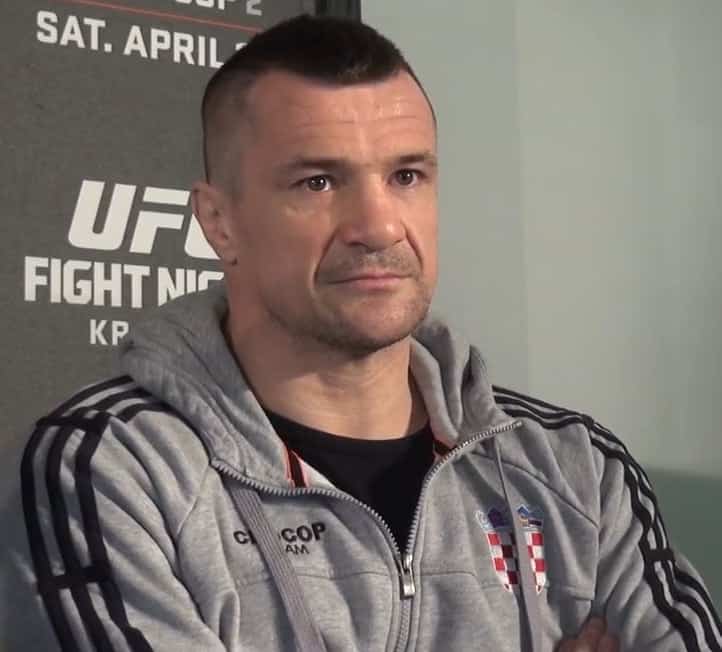
Photo by KRK.TV/ CC-BY-3.0

You just can’t compile any striking list in MMA without talking about CroCop. He is, without a doubt, among the most technical and violent strikers in the history of the sport. In his career, he fought for all major organizations like UFC, RIZIN, Bellator, and PRIDE, and he left nothing but carnage in just about every fight. But, the Croatian was also quite famous even before he arrived in MMA.

During the mid-90s, Crocop served as a member of the elite Special Forces unit called “Lucko”. During his service, he used to train with the Croatian national kickboxing team. After spotting talent in him, one of the colonels told Crocop to leave the unit and focus on becoming a pro fighter and making his country proud.

In 1996, Cropop signed with the best kickboxing promotion at the time, K-1, with an amateur record of 48–0. In his pro-debut, he beat Jerome Le Banner, one of the best fighters at the time, which speaks volume about how talented Crocop was. During his first stint with K-1, he managed to beat many great names and reach the finals in ’99 (lost against Ernesto Hoost) and 2000 (lost to Mike Bernardo)

After competing in MMA for 12 years, he would come back to K-1 in 2012 to win the prestigious K-1 World GP title in his native Croatia.

RECOMMENDED READING:
Top 6 Martial Arts for Police Officers – Why They’re Great 

2. Israel Adesanya
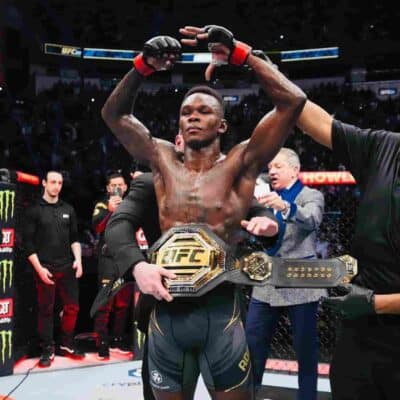
Photo Credit: Israel Adesanya (via Instagram)

The UFC champ, Israel Adesanya, is one of the best and most technical strikers the MMA world has ever seen. In fact, Adesanya is so good on the feet that it is fair to say he has elevated the striking game to another level.

Adesanya started his fighting journey at the age of 18 by training in kickboxing. In his own words, the famous “Ong-Bak” and a couple of other action movies inspired him to pursue a career in combat sports. After just two years of training, he would start competing as an amateur and put together a record of 32–0 before turning pro. This was also a time when he moved to Auckland, New Zealand to join the “City Kickboxing” gym.

As a pro, Adesanya compiled a record of 75 wins and just 5 losses while fighting under the top banners like “Glory” and “King in the Ring”. Upon switching to MMA, he didn’t need much time to succeed. In 2017, he came into the UFC as an AFC champ and needed less than 2 years to achieve the same in the UFC.

1. Alex Pereira

Image Credit: Instagram @alexpoatanpereira

There is one big reason why Pereira was one of the most talked-about signings by the UFC. Pereira, who is a former Glory kickboxing champion, is best known for defeating the reigning UFC 185-pound middleweight champion, Israel Adesanya, twice in a kickboxing match.

Therefore, when Adesanya had cleared out his entire division in the UFC as a middleweight champion, leaving him without any formidable opponent to face next, Pereira was fast-tracked to fight Adesanya for the title despite his lack of MMA fighting experience.

In their third bout in the UFC, Pereira managed to do the unthinkable by winning via TKO, but subsequently lost in their fourth fight as he was defeated via brutal KO.

Pereira has since moved up to the light heavyweight division. On November 11, 2023, at UFC 295, Pereira defeated Jiří Procházka via TKO in the second round to become the new UFC Light Heavyweight Champion.

Regardless of his future UFC achievements, Alex Pereira is arguably the best kickboxer to ever cross over to the UFC.

Here are some of Pereira’s notable achievements as a combat fighter:

  • 2021 Glory Light Heavyweight Champion
  • 2019 Glory interim Light Heavyweight Champion
  • 2017 Glory Middleweight Champion
  • 2014 Glory Middleweight Contender Tournament Winner
  • 2022 UFC Middleweight Champion
  • 2023 UFC Light Heavyweight Champion
RECOMMENDED READING:
What Is GLORY Kickboxing? Introduction To GLORY Kickboxing

How Did Bruce Lee Die? – The Truth Behind Bruce Lee’s Death

0
Bruce Lee Grave Site

For many people, Bruce Lee’s death is still shrouded in mystery. For those interested in distinguishing rumor from the truth regarding what happened on Bruce Lee’s last day, we have detailed the facts so you can discern the fiction.

Bruce Lee died from cerebral edema, excess fluid around the brain causing pressure on the brain. He experienced the same condition 2 months prior, but doctors controlled the condition with medication. The cerebral edema that caused his death resulted from taking pain medication for a headache.

Bruce Lee was a legend in his own time, but the controversy and mystery surrounding his death are almost as large as that surrounding his life! His untimely death took his fans and the movie-making industry by surprise. The facts surrounding Bruce Lee’s death became shrouded in rumor and legend. We will shed some light on the actual events and dispel some of the mystery around the death of this martial arts legend!

How Did Bruce Lee Really Die?

Bruce Lee was an extremely fit, healthy martial artist when he died suddenly in the prime of his life. The shockingly sudden nature of his death left family, friends, and fans in disbelief that he could be taken so soon.

His extreme exercise regime made him fitter and stronger than many other men his age, and many other martial artists could not keep up with his exercise program and his dedication and discipline.

For this reason, the people surrounding Bruce Lee could not believe the official report regarding the cause of his death on 20th July 1973.

Bruce Lee’s producer, Raymond Chow, was present when Bruce Lee died, and he was reported as saying that Bruce died due to an allergic reaction to a painkiller he had taken earlier that afternoon.

Raymond Chow’s statement was not entirely accurate, but the medication did play a role in Bruce’s death. The coroner ordered an autopsy on Bruce because there was no external evidence on his body as to the cause of his demise.

After the autopsy and running tests on the samples taken, the coroner ruled Bruce Lee’s death as “death by misadventure.” This cause of death implies a person took a voluntary risk that resulted in their death.

The medical explanation is that the painkiller Bruce took, Equagesic, caused cerebral edema, which is a swelling of the brain.

The painkiller is a standard medication that was not known to have any other similar side effects on other people who had taken the medication.

This fact and Bruce Lee’s peak physical condition led to many people being unable to believe that such a simple act as taking pain medication for a headache had such devastating results.

However, just when you thought the story of Bruce Lee’s death was finally put to rest, a group of experts took a fresh look at the evidence surrounding Lee’s death and concluded that Lee died of hyponatremia. Hyponatremia is when the amount of sodium in the blood is too low because the body has too much water.

They published their findings in 2022, making the new claim that Lee died as a result of having too much water in his body, but his body failed to excrete excess water.

“In other words, we propose that the kidney’s inability to excrete excess water killed Bruce Lee.”

Clinical Kidney Journal. https://doi.org/10.1093/ckj/sfac071

Bruce Lee was 32 years old at the time of his untimely death in Hong Kong.

Bruce Lee Funeral
RECOMMENDED READING:
What Happened to Bruce Lee? – FAQ All You Want to Know

What happened to Bruce Lee before he died?

Many fans do not realize that Bruce was hospitalized ten weeks prior when he passed out during a dialogue replacement session for his latest movie, Enter The Dragon. This earlier health episode that Bruce experienced when he collapsed while working on his latest movie was a warning sign that all was not well with the martial arts actor.

Ten weeks before his death on May 10, Lee walked into a tiny dubbing room to re-record dialogue for Enter the Dragon. The engineers turned off the air conditioner to avoid having its noise ruin the soundtrack. After about 30 minutes in this sauna-like room, Lee fainted and started convulsing. He was rushed to the hospital and nearly died from a cerebral edema.

History.com

He collapsed at work and was rushed to the hospital for treatment. He suffered from extremely painful headaches and seizures during this time, and doctors diagnosed cerebral edema. This results from an excess of fluid surrounding the brain, which causes headaches, swelling of the brain, and seizures.

Doctors successfully treated Bruce with Mannitol, and the condition subsided to the point where he was discharged from the hospital a few days later. This incident occurred on 10th May 1973, 2 months before his death.

This condition can be life-threatening and was an indication that Bruce may have had an underlying health condition, which was triggered on the day of his death by taking the painkiller.

On the day of Bruce Lee’s death, he was busy working on the release of his latest movie and had met with his producer Raymond Chow in the morning. Raymond Chow reported that Bruce was enthusiastic and energetic during their meeting and did not show any signs of ill health during their meeting.

After the morning meetings, Bruce went to the apartment of his friend and colleague Betty Ting Pei. There is some speculation that the relationship between Betty and Bruce was more than professional. 

They were alone in the apartment for a few hours and made plans to meet with Raymond Chow later for dinner to finalize details about a new movie deal. Bruce started complaining of a headache and not feeling well. Betty gave him Equagesic for his headache, and he went to lie down.

A few hours later, Betty went to wake him up but could not rouse him. She called Raymond Chow, Bruce’s producer, who came round to the apartment and tried to wake Bruce.

When Raymond could not wake Bruce, he called a doctor, who came to the apartment and tried to bring Bruce around for a further 10-minutes. When he was unsuccessful, the doctor called for an ambulance that took Bruce to the hospital.

The hospital was close by, but Bruce was declared dead on arrival when the ambulance arrived.

What was Bruce Lee filming when he died?

Bruce Lee made many movies during his lifetime, but the last movie he completed before his death was the famed “Enter The Dragon.”

Enter The Dragon
Clouse, R. (Director). (1973). Enter the Dragon [Film]. Warner Brothers Pictures.

Before he began filming “Enter The Dragon,” he had started on a movie called “Game Of Death,” but when the offer for “Enter The Dragon” came along, he put filming “Game Of Death” on hold till the completion of “Enter The Dragon.”

Bruce Lee died shortly before the release of “Enter The Dragon,” and he never completed the filming of “Game Of Death.”

Game of Death
Photo by Brucelee.com

Bruce was the star, producer, and director of “Game Of Death,” and he decided to put filming on hold in favor of “Enter The Dragon” because it was an offer from Warner Bros. in Hollywood, and it was the first big-budget martial arts movie ever made.

Warner Bros. offered an estimated $850,000 budget for the martial arts action movie “Enter The Dragon,” which was a lot of money for a movie budget at the time, and it was an offer Bruce Lee could not pass up. He put the filming of “Game of Death” on hold to complete the Warner Bros. movie.

Bruce died shortly before the release of “Enter The Dragon” and did not complete the filming of “Game Of Death.” Producer Robert Clouse was enlisted to complete the movie, which he did with the assistance of 2 stand-in actors for Bruce Lee. The movie was eventually released 5 years after Bruce’s death in 1978.

How Many Movies Did Bruce Lee Make Before His Death?

Many resources only credit Bruce Lee with the making of 5 movies, but his acting career spanned many more films than his iconic Kung Fu movies.

Bruce Lee acted in 26 movies in his lifetime, starting as a child actor when he was only 3 months old. He is, however, more renowned for his 5 iconic Kung Fu movies, filmed between 1971 and 1973.

These top-5 movies are as follows.

  • The Big Boss
  • Fists Of Fury
  • Game Of Death
  • Enter The Dragon
  • Way Of The Dragon

How Much Money Did Bruce Lee Make?

Bruce Lee’s estimated net worth at the time of his death was $10 million. His iconic status has allowed his estate to continue to generate millions of dollars in income each year due to royalties and other income streams.

What Is Bruce Lee’s Most Famous Movie?

Although Bruce Lee made many movies in his lifetime, his rise to stardom only really began in 1971 with his Kung Fu action movies, which started the modern genre.

Bruce Lee’s most famous movie was “Enter The Dragon,” filmed for Warner Bros. The movie was considered the best movie produced in 1973 and is still considered the best Kung Fu movie of all time.

Is there any truth to the movie Once Upon a Time in Hollywood about Bruce Lee?

In 2019, Quentin Tarantino created a movie called “Once Upon A Time In Hollywood,” which portrayed Bruce Lee in a poor light as an arrogant actor, but it’s a false representation of Bruce Lee.

The scene and the fight were completely fictional and are not a true representation of Bruce Lee or his character. Many Bruce Lee fans perceived the portrayal of Bruce Lee in the movie as in poor taste and completely inaccurate regarding who Bruce Lee was.

Friends and family agreed with the fans and were greatly troubled by the scene. They expressed their discomfort with Bruce Lee being portrayed in this way, especially by someone who never knew the man.

Quentin Tarantino was unrepentant about his portrayal of Bruce Lee, stating that the film was a work of fiction

Bruce Lee’s daughter, Shannon Lee, criticized the false portrayal of her father in the movie and found it extremely disrespectful to the memory of her father.

Many other critics viewed the scene as prejudiced against Asian-Americans, and the film was the subject of much debate in this regard.

Quentin Tarantino claimed that he used Mathew Polly’s work as the basis for the portrayal of Bruce Lee. However, Mathew Polly debunked this by publicly stating that the scene in the movie was not representative of Bruce Lee in any way.

How Old Was Brandon Lee When Bruce Lee Died?

Bruce Lee’s son, Brandon Lee, was born on 1st February 1965. When Bruce Lee died in 1973, Brandon was only 8 years old.

Even though Brandon was so young when his father died, he was still greatly influenced by his iconic father and followed in his father’s footsteps by learning martial arts and becoming an actor.

How Did Brandon Lee Die On Set?

Brandon Lee, Bruce Lee’s son, also came to a tragic end at a young age. Brandon Lee landed the part of the leading role in the movie “The Crow,” and it was on the set of this movie that he met with a fatal accident.

Brandon Lee

During the filming on the set, a fellow actor in the movie, Michael Massee, aimed a prop gun at Brandon Lee’s character as part of the script and pulled the trigger. The gun was supposed to contain blanks, but unfortunately, a projectile from a previous film set a few weeks before was lodged in the gun.

The blank charge expelled the projectile from the gun, and the bullet struck Brandon Lee in the abdomen and lodged in his spine. Brandon was rushed to the hospital, where he underwent 6 hours of emergency surgery. Unfortunately, the surgery was unsuccessful, and Brandon died from his injuries. 

The date of Brandon Lee’s death was 31st March 1993, which was 20 years after the death of his father. Brandon Lee was 28 years old at the time of his death.

How Was The Crow Filmed Without Brandon Lee?

The filming of the movie “The Crow” was close to completion when Brandon Lee was tragically killed on set. The producer decided to complete the movie using Chad Stahelski and Jeff Cadiente as body doubles for Brandon Lee.

Ground-breaking CGI effects were used to superimpose Brandon Lee’s face on the images of the body doubles in the movie scenes.

Did Brandon Lee Know Martial Arts?

Brandon Lee studied his father’s Kung Fu style Jeet Kune Do, from a young age. Brandon was not as passionate about martial arts as his father was but studied martial arts to enhance his performance in action roles as an actor.

Brandon Lee studied at the Inosanto Acadamy under the instruction of Dan Inosanto, where he learned Muay Thai and his father’s Jeet Kune Do style.

RECOMMENDED READING:
Is Jeet Kune Do Same As Kung Fu? – A Simple Comparison

Final Thoughts

Bruce Lee as a martial artist and actor has influenced people from all cultures and in all locations around the world and continues to do so to this day.

His dedication to his training and his filmmaking made him extraordinary in both these aspects of his life. The death of Bruce Lee was both unfortunate and untimely, had he was taken from this world just as he was reaching his prime!

Even though he is no longer with us, Bruce Lee and his philosophy remain an iconic influence in movies, martial arts, MMA, and his own style fighting style, Jeet Kune Do.

What Is Shadowboxing? Everything a Beginner Needs to Know

No matter if you are into combat sports or not, you have likely heard the term “shadow boxing”. Even if you have not, you have probably seen a boxer or MMA fighter training alone, moving around and striking air as if they have the opponent in front. On one side, this may look weird and awkward in the eyes of the layman. But, there is a good reason why every fighter, regardless of the skill level, is doing shadow boxing workouts in just about every training session.

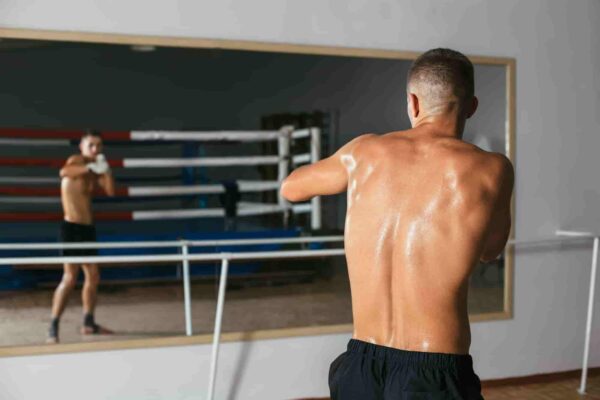
Shadowboxing is a boxing exercise in which a fighter strikes the air while moving around and visualizing their opponent as if they were in front of them. Shadowboxing improves speed, technique, and, more importantly, muscle memory so that fighters can react without hesitation in a fight.

Professional fighters use this exercise to warm up before engaging muscles in a more intense workout. This method of training is used in just about every martial art that focuses on striking like boxing and Muay Thai. Keep reading this article to learn more about shadow boxing, and why this exercise is so important in martial arts. 

What is Shadowboxing?

Shadowboxing is a unique training exercise that emerged in the sport of boxing. It is a simple exercise where students perform techniques alone and without a training partner. The key is to throw each strike and make each move as if you are in a real boxing match or a street fight.

Due to the lack of an opponent or other distractions, shadowboxing allows you to fully focus on technique, body motion, reactions, and repetition. This may sound ineffective to many, but it has been proven that shadowboxing, as silly as it looks, has many physical and mental benefits. It is one of those rare exercises that has been practiced both by beginners and pro athletes.

One thing to note is that this training method is not limited to boxers only, it is spread across various striking martial arts like:

But why do martial artists shadowbox all the time? What’s the secret?

What’s the purpose(benefits) of shadowboxing?

Shadow boxing has many benefits which is the main reason why just about every student does this exercise at the beginning or end of a martial arts class. Here is a list of some of the most important ones:

  • Enhances muscles memory

Muscle memory is crucial in combat sports or fighting in general because it allows you to execute the moves without hesitation and by relying on your instincts and reactions. Or in other words, once in a real fight, your mind will spot certain patterns and give the muscles a command to throw or block a strike. The only way you can stamp all of the techniques into your muscle memory is by repeating techniques over and over again until performing these moves comes to be natural to you. As you would assume, one of the best exercises for achieving this is by shadowboxing.

  • Improves technique

Shadowboxing is one of the best exercises when it comes to developing good techniques. This is also one of the main reasons why it is so popular among beginners who are yet to learn how to perform the right way. Since there is no opponent in front, you can focus on yourself and the way you carry out the moves. You don’t have to worry about the punches coming back at you which allows you to put the entire focus on your stance, legs, rotation of the hips, hand positioning, and other aspects. Shadowboxing is also a great way to spot bad habits and areas in your game that you need to improve.

  • Burn calories and improves strength

Throwing strikes at the air and moving around for a couple of rounds is a great way to warm up the muscles. But if you increase the intensity, this exercise can easily become an intense full-body workout. It will activate and improve the muscles in your legs, chest, and shoulders, notably among beginners who are yet to get their bodies in shape. Some senior martial artists often like to elevate this exercise to another level by wearing wearable weights.

  • Improves focus and relieves stress

Shadowboxing is a great exercise as it allows you to enter the flow and cool your mind down. There is no opponent, a heavy bag you have to hit, or any other distractions. This enables you to focus on the way you breathe, contract muscles, throw strikes, rotate the body, and move your feet. It gives you that feeling of being in the present moment and fully focused on yourself. Apart from focus, a lot of people love this boxing exercise since it allows them to release stress and anxiety.

  • Warm-up the muscles

In most martial arts schools, students perform shadow boxing to warm up the muscles at the beginning of the class. Since it activates every single muscle group in your body, it is a great way to get all the muscles going. Instead of doing different warm-up exercises to target different muscle groups, you can fire up the entire body with a couple of rounds of shadow boxing. 

Who invented shadowboxing?

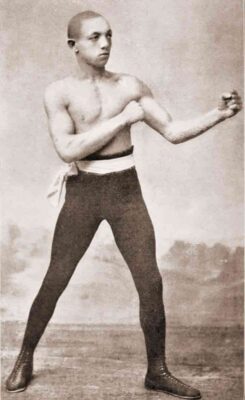
Boxer George Dixon is the man credited for inventing shadowboxing. What’s more, this boxing legend and Hall of Famer is also a man who was the first one to use a heavy bag as training equipment. Inside the ring, he was known as a very technical and intelligent fighter who had dynamite in both of his hands, and was a tough matchup for anyone.

George Dixon

In 1890, Dixon became the first-ever black athlete to win a world title in any sport. He did it by beating Nunc Wallace in London, England, and he was just 18 years old at the time. Later on, he would move up in weight to capture the featherweight title and become the first man to ever win more than 2 world titles in boxing. Like that’s not amazing enough, Dixon also holds a record for the longest boxing bout which lasted 70 rounds, or 4 hours and 40 minutes in total. The match ended in a draw, but, a 40-round brawl against Johnny Murphy ended with Dixon winning a match.

RECOMMENDED READING:
Is Boxing Good for Self Defense? The Ultimate Answers

What is the difference between shadowboxing and kata?

Shadowboxing and katas are two separate types of exercises that are actually very similar, but also differ in certain areas. For instance, shadowboxing is more dynamic as the emphasis is on performing various techniques and combos in a flow as if you are in a real fight.

Shadowboxing

Katas, the ones you might find in karate, for instance, are more static because the focus is on pre-arranged forms. The main goal is to showcase a high level of technique that visually looks nice. In some way, you can look at katas as the simplified version of shadowboxing, and here is why.

Performing Kata
Photo by Martin Rulsch

Beginners in boxing or Muay Thai spend the first couple of weeks doing a static version of shadow boxing that is very similar to katas. They would stand in front of the mirror (or not) and throw hundreds of jabs and other basic combos without moving their feet much. They do this to:

  • learn proper body mechanics
  • How to stand in a proper stance
  • rotate legs and hips
  • Develop a good boxing base

This type of static shadowbox is very much the same as katas in karate as you are drilling the same punch or combo over and over again. Later on, as they become more skilled, students would elevate it to another level by incorporating other elements like:

  • footwork
  • head movement
  • angles

Is shadowboxing as effective as real boxing?

No, shadowboxing gives you a fundamental understanding of what boxing is all about, but it does not make you a real boxer. Training alone and striking at the air has many benefits and it improves your technique. That being said, you need to train in a real boxing gym, under real coaches and spar against real training partners to develop good enough skills to fight in matches or improve self-defense abilities.

Among many other things, you can’t develop timing, feeling for distance, reactions, or condition your body to sustain punishment without real boxing training.

RECOMMENDED READING:
Is Boxing Considered A Martial Art? Yes, Here’s Why

Can you get good at boxing by just shadowboxing?

Do not expect to become a skilled boxer by doing this single exercise alone. Yes, it is great if you are trying to warm up, improve technique, speed, footwork and many other skills. It also burns a lot of calories and helps you lose weight and become stronger.

But, it would be foolish and naïve to think that you can master boxing as a system just by doing shadow boxing on your own at home or in a gym.

Thus, the final answer is no, you can’t get good at boxing by shadowboxing only, but, you can get a good insight into what boxing is all about.

RECOMMENDED READING:
Why Is Boxing Called The Sweet Science? – Ultimate Answers

Does shadowboxing make you punch harder?

Yes, shadowboxing drills may improve the power of your punches, but not by making you stronger. Punching and kicking at the empty space without a partner, heavy bag or any type of resistance does not build the muscle mass. Also, these exercises do not improve the strengths of your knuckles and bones. But, how does it increase the punching power then, you may ask?

First, shadowboxing improves your technique, body mechanics and rotation which allows you to deliver strikes with a much bigger force and with the higher accuracy. The power of the punch is actually a momentum that starts building from the muscles in your back leg. Then, it goes up all the way through the rotation of the hips and upper body until it reaches the final point, your hand. To deliver a powerful shot, you have to know how to generate the momentum the right way without wasting any energy.

Being physically strong means nothing if you don’t know or have the ability to get the most out of your physical strength in a fight, and to do that, you need to be technical. You don’t want to waste generated energy and force on sloppy movements.

Can shadowboxing increase punch speed?

Yes, doing shadowboxing drills improves:

  • speed of your punches and blocks
  • reaction time
  • footwork
  • head movement

Increasing the speed of your punches is all about repetition and mastering the motion. Or in other words, the key is to use repetition to improve muscle memory which, in the end, improves the reaction time in a fight. Instead of thinking about which strikes to throw or how to respond, muscle memory will do that for you. The next crucial thing is to condition your muscles in the upper and lower body segments which allows you to fire the combos in a faster and more explosive manner. 

However, punching speed doesn’t revolve only around muscle memory and strength because you need to develop proper technique. In fact, these two elements are useless if you don’t know how to deliver the shot in the most efficient way possible. Or in other words, without proper technique.

This is why most boxers prefer to do a few rounds of shadow boxing at the beginning of the session as a part of the warm-up and cool-off drills that also improve their technique in the long run. 

Does shadowboxing make you a better boxer?

Yes, it is an essential exercise when it comes to improving your overall boxing skills. Above all, this exercise allows you to stamp all the techniques and combos down in muscle memory which will release the tension in your mind and allow you to perform in a more fluid, natural, and dynamic way. 

Once the muscles and brain get familiar with all the moves, you would not have to think much while firing the combos as your mind and body already know what to do. It’s like boxing on autopilot. Apart from muscle memory and technique, shadowboxing also enhances:

  • the speed and accuracy
  • cardio and strength
  • focus and coordination

How can I start shadowboxing at home?

You don’t need to attend boxing classes to learn shadow boxing, though that approach would be more beneficial. Doing shadowboxing drills at home is not rocket science, and the best thing about it, you can learn it at your own pace and whenever you have free time to exercise. Also, you don’t need any specific gear like a heavy bag, pads, or a partner to assist you. No, the only thing you need is a lot of will and free space to move around like an empty garage or a backyard. 

However, bear in mind that training this way limits your progress to some extent. Training boxing alone allows you to master the basics, get in shape and overall, get an insight into what boxing is all about. But to become a real boxer, you would have to train in a real boxing school.

Shadowboxing vs Punching a Heavy Bag – Which one is better?

These are the two separate workouts with each one being equally important in striking martial arts. Which one is better is a wrong question because both shadowboxing and punching a heavy bag are crucial workouts that do not go one without the other. It is the same as asking if doing hill sprints is better than running long distances for runners; they have to do both. 

Why Are MMA Fighters Bad at Boxing? The REAL Reason Explained

0
mgillert/Depositphotos.com

In recent years, the trend of MMA fighters competing or wanting to compete in boxing has only grown. This is largely due to Conor McGregor’s 2017 boxing match with Floyd Mayweather, with many other MMA fighters looking to emulate the Irishman and earn a lucrative payday. 

MMA fans would assume that MMA fighters should be good at boxing since they are professional fighters after all who train for areas of fighting. But this is not true and there’s a good reason why MMA fighters are bad at boxing.

MMA fighters are bad at boxing because they can’t focus only on boxing training. MMA fighters have to divide their time between training for wrestling, muay thai, and jiujitsu, resulting in not enough time left to train to become good at boxing.

In order to truly understand why MMA fighters are bad at boxing, one must look at what MMA training entails compared to boxing training.

Why Do UFC/MMA fighters have terrible striking compared to boxers?

Any MMA or even UFC fighter competing in boxing against a high-level boxer will not only lose, but they will also probably get outclassed, knocked out or simply be made to look like an amateur. This might surprise you given that boxing is a predominant art in the many arts featured in mixed martial arts. There are so many fighters with crisp hands in the UFC. So why doesn’t it translate to boxing?

Well, for one, there’s the level of expertise. In MMA, fighters not only have to train their striking (boxing), but their kickboxing, takedown defense, wrestling, jiu-jitsu and much more. No art can be neglected in MMA. Boxers, however, only have to worry about their hands. Because they are solely focusing on boxing from their amateur career to daily training to their professional career, they are already at a much higher level compared to the average MMA fighter’s boxing ability. There are some MMA fighters who come from a boxing base, but even then, they are likely to lose against high-level professional boxers.

Another thing to add is because MMA fighters are so used to utilizing other parts of their bodies such as their elbows, knees, and legs, it can be very difficult to make the transition to boxing when you’re sacrificing so many of your weapons. It’s not only the weapons, but stances and overall strategy.

Someone like Khabib Nurmagomedov can get away with a decent-at-best boxing level in the UFC because he is so specialized in grappling and wrestling which, in turn, causes his opponents to worry about defending takedowns. But with no takedown threat in boxing, a boxer won’t have anything to fear and will likely have their way with Nurmagomedov.

RECOMMENDED READING:
Pro Boxing vs. Amateur Boxing — What Are The Differences?

Can MMA Fighters successfully compete in pro boxing?

As a general rule, MMA fighters’ chances of succeeding in pro boxing are not good. This is not to say that MMA fighters will always lose in pro boxing. After all, one just needs to look at former UFC middleweight champion Anderson Silva’s success since competing in pro boxing following his release from the UFC. Silva was notably able to defeat a former boxing champion in Julio Cesar Chavez Jr. even if he had a size and height advantage. Another MMA fighter who found success in boxing is former UFC and current PFL lightweight Clay Collard, though he has lost his last couple of outings in the sweet science. 

Context is required though as both Silva and Collard weren’t facing the highest level of competition, with Silva even facing a fellow UFC alumni in Tito Ortiz last year. If they were to compete against the best in their weight class, they would undoubtedly suffer defeat. But the main point is that MMA fighters can be successful and get wins in pro boxing, especially if they get carefully-selected matchups with boxers closer to their level.

Does boxing transition well into MMA?

While there are few examples of MMA fighters transitioning to boxing, there are many cases of boxers transitioning to MMA, sometimes even as a full-time career. The most notable names include former UFC women’s bantamweight champion Holly Holm, Ray Mercer, James Toney and Heather Hardy to name a few. Holm was undoubtedly the most successful boxer to transition to MMA. The others haven’t been so successful or active, and it’s only natural when you go from training one art exclusively to now having to worry about wrestling, jiu-jitsu, a clinch game, kickboxing and much more.
RECOMMENDED READING:
Is Boxing Considered A Martial Art? Yes, Here’s Why

Do MMA fighters punch harder than boxers?

There certainly seem to be more knockouts in MMA than in boxing, which may lead you to consider that MMA fighters punch harder than boxers. That’s not necessarily the case. In MMA, four oz gloves are usually used. This usually means fighters can generate a lot more power with their shots which ultimately leads to more knockouts. In boxing, however, gloves usually range from 10 oz to 12 oz which means you need a lot more natural power to get frequent knockouts.

Of course, a well-timed shot doesn’t need to be powerful and can turn the lights out even in boxing. But it’s not definitely correct to say that MMA fighters have more power than boxers.

Conor McGregor, for example, is known for his knockouts inside the UFC octagon while wearing four oz gloves. But while wearing eight oz gloves against Floyd Mayweather, McGregor was unable to hurt the former five-weight champion one bit with the strikes he was able to land. Then, when you consider the likes of Gennadiy Golovkin and Deontay Wilder, who are able to earn knockouts so frequently while wearing heavier gloves in boxing, you begin to understand that it might be the opposite and that boxers may be the ones punching harder. But this all depends on the circumstances and the durability of the opponents.

RECOMMENDED READING:
How Hard Can an Average Person Punch?

Why are MMA fighters going to boxing?

As aforementioned, a big trend that started in recent years has been MMA fighters calling out boxers or simply wanting to compete in boxing. One just needs to look at UFC welterweight champion Kamaru Usman who has been campaigning for a fight with boxing super middleweight champion Canelo Alvarez. UFC heavyweight champion Francis Ngannou has also been campaigning for a fight with WBC heavyweight champion Tyson Fury. McGregor’s boxing match with Mayweather may have kick-started the trend entirely. So what is the main reason just about every MMA fighter seems to be interested in competing in the sweet science? The simple answer is money.

High-profile boxing matches pay a lot more than high-profile MMA fights. Many of the big names in boxing can earn as much as a million dollars facing a low-level opponent. In the UFC, earning a million dollars would put you among the highest-paid fighters in the entire promotion.

Even McGregor earned just $3,000,000 as his base pay (not including bonuses, sponsorships or pay-per-view points) for his mega-fight with Khabib Nurmagomedov back in 2018. In comparison, Canelo Alvarez received a guaranteed purse of $15 million with a reported cap of $40 million for his recent fight with Dmitry Bivol. With the possibility of a higher payout in boxing, it’s clear to see why so many other MMA fighters are looking to land a big-money boxing fight.

RECOMMENDED READING:
How Much Do UFC Fighters Earn? – Here’s a Closer Look

Is UFC more popular than boxing?

MMA is certainly the fastest-growing sport in the world, especially in recent years, and it’s no surprise that it has overtaken boxing in terms of global popularity. A big reason for this is the growing popularity of the UFC and this has especially been the case since the pandemic. How can one say MMA is more popular than boxing? This can be seen by social media metrics as well as pay-per-view numbers with the UFC having far bigger events than boxing as a whole over the course of the last few years.

With that said, it is still hard to say whether the UFC is bigger than boxing. Boxing cards generally do really well when it’s on free television and given the history of the sport, will always have an audience. And when a high-level boxing match is on the cards, it will garner the attention of the world, especially in the United States. It must also be noted that four of the five highest-selling pay-per-view combat sports events are still boxing matches. So while the UFC might be more popular, whether it’s truly bigger remains to be seen for now.

MMA vs Boxing – Which is harder to learn?

When it comes to which sport is harder to learn, the natural answer is MMA. Of course, if you want to be a high-level boxer, boxing will be harder. But as far as just learning is concerned, MMA is undoubtedly harder. This is because you’re not only learning boxing and how to strike, but a number of other arts.

These include wrestling, jiu-jitsu, Muay Thai, kickboxing and much more. You are expending a lot more energy and using pretty much every weapon of your body as possible. This means you not only have to devote a lot more time to each art, but you are also taxing your body a lot more in the process compared to boxing.
LEARN MORE
Get the full report on MMA vs. Boxing: Which Is Harder To Learn? (Best Explained)

Who are the best boxers in the UFC?

With all the aforementioned, you shouldn’t believe that they aren’t any good boxers in the UFC. There are many great boxers who are sure to do well in the sport of boxing should they make a full and proper transition. Some of them include the likes of Max Holloway, Dustin Poirier, Petr Yan, Jose Aldo, Israel Adesanya and Jorge Masvidal.
These fighters are known for their striking, counter striking, pivoting and slick hands in general. When most fighters face them, they look to avoid a standup battle and instead take the fight to the ground. That’s one of the benefits of MMA as you can impose a different game plan depending on the opponent. But when it comes to a straight striking battle on the feet, these are the fighters who are generally favored to come out on top.

Final Thoughts

In the end, MMA and boxing are two different sports even if they both use the same martial art. MMA fighters will not do well against high-level boxers in a boxing match and it’s the same case when a boxer faces an MMA fighter inside a cage. However, with the right training, circumstances and opponents, fighters from either sport can still find success in the other.

Top 6 Martial Arts for Police Officers – Why They’re Great

Federal Law Enforcement Training

On average, U.S. police officers learn some elements of combat arts while in the police academy, but police officers do not undergo any advanced hand-to-hand combat training. As such, many police officers take martial arts classes outside their job to improve their self-defense skills. So, what are the best martial arts for police officers to improve their self-defense skills and protect others?

The best martial arts for police officers are Krav Maga, BJJ, wrestling, MMA, Muay Thai, and boxing, which have been proven effective in real life. Learning these martial arts will improve a police officer’s ability to handle threats more intelligently, reducing the use of deadly force in the end.

The following are the top six martial arts that have been proven to be effective. Training in the following martial arts can boost police officers’ self-defense skills by more than a couple of weeks of hand-to-hand combat training at the academy. So let’s take a look!

1. Krav Maga

Krav Maga technique

Krav Maga is a self-defense martial art created by the Israeli military in the 1950s. It is a comprehensive system designed to prepare a person for various types of combative situations and is very beneficial for police officers.

Training involves grappling, striking, dirty tactics(techniques for survival), and even weapons like knives and firearms. On top of that, students learn how to deal with multiple attackers, fight in various places and surroundings, and many other valuable skills.

Nowadays, millions of people worldwide, including police officers, practice Krav Maga. The power and effectiveness of training lie in the fact that the entire focus of the system is on the physical and mental aspects of real combat. It trains you to:

  • Stay calm under pressure
  • Assess the situation you are in
  • Make rational calls
  • Escape out of trouble in the fastest and most efficient way possible.

First, Krav Maga instructors would teach you verbal skills so that you can try and talk your way out of the fight. If that does not work and the conflict gets physical, then applying one of many grappling and striking moves is key. Most of the techniques you learn in Krav Maga are to be executed explosively, aiming to finish or subdue the attacker as fast as possible.

In most schools, the instructors do an excellent job of simulating real fighting scenarios. While in training, out of the blue, they would start yelling and insulting you, provoking, attacking from behind, and doing many other things to play with your emotions and reactions. Though this is too much for most people, this brutal training realism is the main reason so many police officers train in Krav Maga.

Advantages of Krav Maga for policeDisadvantages of Krav Maga for police
• An all-around system that entirely focuses on self-defense.
• Includes weapon-based training and dirty tactics, and defending against multiple attackers.
• Teaches you all about the physical and mental aspects real fighting.
• The emphasis is on defense and running away from the attacker. 
• There is not much sparring.
• The quality of classes and methods of teaching vary too much between schools around the world. 
RECOMMENDED READING:
Are U.S. Police Trained in Martial Arts? Police Training Q&A

2. Brazilian Jiu-Jitsu(BJJ)

Brazilian Jiu-jitsu(BJJ) is widely regarded as one of the best martial arts for police officers. It is a practical system that enables you to subdue a suspect most efficiently and safely. Yes, BJJ trains you to put the suspect in a joint lock or choke, which may result in broken bones or other injuries. But, exactly how much force to apply to the suspect is at the discretion of the police officer. In most cases, just securing a dominant position over the suspect is enough to subdue them.

BJJ has many variations like Gi and No-Gi. But the most effective form of Brazilian Jiu-jitsu and the one that is most practical in the line of duty for police officers is “Gracie Jiu-Jitsu.” This form mainly focuses on the self-defense aspect and how to apply BJJ moves in various scenarios you may face on the streets. Gracie Jiu-jitsu teaches police officers to deal with a street fight situation where there are no rules to follow or win matches and medals. No, the Gracie system is all about using BJJ to defend yourself.

Many police officers train in BJJ because this is the only martial art that teaches you how to deal with a suspect without causing serious injuries. On top of that, it is one of the rare systems that enables physically smaller people to defeat bigger and stronger opponents by focusing on leverage, balance, and technique. All of this makes BJJ skills a must-have if you are a police officer.

Advantages of BJJ for policeDisadvantages of BJJ for police
• Practical system that allows you to subdue a suspect without causing injuries.
• Focus is on leverage and technique.
• The injury rate is quite low.
• It was designed with self-defense in mind.
• No striking, weapon-based training or dirty tactics. 
• You have to be careful when applying chokes and joint locks because you can easily hurt the suspect.
• Takes a lot of time to master (around 10 years)
• Cannot handle multiple assailants
LEARN MORE
Get the full report on What’s the Difference Between Gracie Jiu-Jitsu and BJJ?

3. Wrestling

Wrestling skills are one of the most effective styles in any type of freestyle combat, which is why there are so many skilled wrestlers among police officers. Look at modern MMA fighting if you need proof of how practical wrestling is in a real fight against other fighting styles. Of course, most police officers face situations differently than in MMA matches, but the concept remains the same.

Wrestling is all about leverage, technique, balance, positioning, and weight distribution. It doesn’t include any striking, and the entire focus is on taking the fight to the ground as fast as possible with takedowns, trips, and throws—the best thing about it is that most people don’t know how to defend against wrestling attacks. So it wouldn’t make much difference even if the suspect is trained in boxing, BJJ, or Muay Thai.

Instead of using elevated use of force against the suspect who is putting on resistance, the more effective and safer way might be to change your tactic and land a takedown. This gives a police officer a strong top position from which they can subdue the suspect and put on the handcuffs. There is less chance of causing physical injuries, and it is almost impossible for the attacker to escape from the bottom. 

Advantages of wrestling for policeDisadvantages of wrestling for police
• Allows you to quickly get a dominant position over the suspect without causing injuries.
• Average people, regardless of strength and size don’t have the ability to defend against wrestling attacks.
• A lot of sparring which helps you develop good automatic reactions
• Wrestling is a popular combat sport where you won’t learn advanced self-defense tactics.
• The lack of striking, weapon-based training, or verbal tactics. 
RECOMMENDED READING:
Why Do Wrestlers Dominate MMA?

4. Mixed Martial Arts(MMA)

Mixed Martial Arts(MMA) is the most versatile combat sport where fighters are allowed to mix striking and grappling together. It is a mix of only the most effective techniques from the following martial arts put into one system:

  • Muay Thai
  • boxing
  • BJJ
  • Wrestling

Many police officers can be seen training in MMA since this is the only combat art that will prepare them to fight against all different types of fighting styles. It covers all the ranges on the feet, grappling in the clinch, and fighting on the ground. However, MMA trains you to obey the rules and win matches, not to control the suspect. But as far as the effectiveness of the techniques is concerned, MMA is top-notch.

Yes, it doesn’t teach you how to deal with weapons, verbal tactics to de-escalate the situation or any other self-defense tactics. But, not a single martial art out there would teach you a better combination of grappling and striking moves and how to apply those in a real fight.

Advantages of MMA for police Disadvantages of MMA for police 
• A versatile combat system that covers all the ranges and places.
• Includes only the most practical techniques.
• Improves mental resistance and overall fitness.
• Gives you a big advantage in any type of fight.
• The emphasis is on aggression and causing injuries.
• It is a bit limited because MMA is a combat sport that teaches you how to compete under the rules
LEARN MORE
Get the full report on 10 MMA Fighters that are or were Police Officers

5. Muay Thai

Muay Thai is a famous martial art from Thailand and is an excellent option for police officers looking to develop proper striking skills. The entire concept revolves around using all of your eight limbs as weapons in a fight to strike with: kicks, punches, knees, and elbows.

The system covers all the ranges, including the clinch from which you can pull basic grappling moves like trips, throws, and sweeps. On top of that, training emphasizes hard sparring and developing quick automatic reactions and instincts.

Muay Thai is a versatile system, and it is great for police officers because it trains you to fight at all ranges on your feet. No matter if the suspect decides to throw a punch, kick, or grab your uniform in an attempt to take you down, you will have the weapons and skills at your disposal to deal with the situation in a very efficient way.

For example, the famous “Thai clinch” is one of the most effective moves in any type of fight. If the suspect tries to get a hold of you or comes too close, you will know how to wrap your hands around their neck to break their posture and get into a dominant position. 

However, remember that Muay Thai is an aggressive system that you are supposed to use as a last resort. You won’t learn advanced verbal tactics to avoid conflict or how to control the suspect. 

Advantages of Muay Thai for PoliceDisadsvantages of Muay Thai for police
• Covers all the ranges on the feet.
• Trains you to use all eight limbs as weapons to strike or defend.
• Includes a lot of hard sparring.
• Improves reflexes, reaction time, and awareness.
• Covers the basics of grappling.
• Intense training that improves fitness and conditioning
• It doesn’t include advanced self-defense tactics.
• The emphasis is on causing damage with hard striking which is the wrong approach for police officers.
• It trains you to compete under Thai boxing rules.
• There is no grappling or ground fighting
RECOMMENDED READING:
Is Muay Thai Good For Self-Defense? A Beginner’s Guide – FAQ

6. Boxing

At first sight, boxing might not seem like an ideal option for police officers for two main reasons. First, it is limited to some extent because it focuses “just” on striking with your fists. Second, it is an aggressive fighting style where the main goal is to knock your opponent out or cause serious injuries with hard shots. For this reason, as a police officer, applying boxing techniques may appear to be excessive use of force to handle a resisting suspect. 

But why are there so many police officers training in boxing then? Some countries, like the UK even have a “Police Boxing Association.” Boxing can help you a lot on the streets for one simple reason.

In any type of fight, the most common way of attacking is by throwing a punch. If the suspect decides to attack the police officer, they will, in most cases, use their hands to do so. No one would bother to throw wild kicks or go for a double leg takedown, notably average people not trained in martial arts.

No, the fastest and most efficient way possible to hurt a person standing in front is by throwing a punch. Thus, all police officers should know how to defend against these commonly occurring hand strikes and learn how to counter-punch(must be justifiable) to defend themselves in some cases. On top of that, training is cardio intense, improves fitness, and will keep you in top shape. 

Advantages of boxing for policeDisadvantages of boxing for police
• The best martial art when it comes to hand attacks.
• Great for improving both mental and physical toughness.
• Teaches great blocks and head movement
• One-dimensional system that focuses just on strike.
• It is a combat sport that trains you to fight under the rules. • Emphasis on damage and injuries
RECOMMENDED READING:
Is Boxing Good for Self Defense? The Ultimate Answers

Related Questions

What martial arts do FBI agents learn?

FBI recruits train at the FBI Academy in Quantico, Virginia, where they receive some training in hand-to-hand combat in case they have to defend themselves. While at the academy, FBI recruits learn how to approach suspects who may or may not be combative. Recruits also learn various defensive tactics and how to apply the appropriate use of force based on the totality of circumstances. Some of the training FBI recruits undergo the following:

  • Getting familiar with violence and how it feels like to be in a fight
  • Practice various arresting techniques. 
  • How to control the suspect on the ground
  • Self-defense techniques from martial arts like Krav Maga, Judo, jiujitsu, and striking.

As such, FBI recruits do not train to become martial arts experts, which is one of the biggest misconceptions. If the FBI agents wanted to become better fighters, they would have to do that on their own time by taking martial arts classes.

What is Verbal Judo? (The Art of Fighting Without Fighting)

Verbal Judo” is a federally copyrighted and trademarked system that teaches police officers how to communicate tactfully with their suspects to make them more compliant without using force.

Even though this system is not a real martial art, it’s still a very effective art of persuasion that all police officers should learn to make confrontational suspects more calm and compliant without first using the use of force to subdue them.

Many police agencies in the United States already teach verbal judo techniques to their new recruits in police academies.

Officers learn how to approach the suspect in a non-threatening way, keep their tone low, and pick the right words to de-escalate the situation. The founder of this art of persuasion was George Thompson, and he believed that the most dangerous weapon is the tongue:

“We know that the most deadly weapon we carry is not the .45 or the 9mm, it is in fact the cop’s tongue … A single sentence fired off at the wrong person at the wrong time can get you fired, it can get you sued, it can get you killed,” said Thompson.

The Guardian

Words and the right approach are, in many cases, more effective than any other martial arts technique in resolving a heated, violent situation.

The 15 Most Aggressive Fighters In UFC History

0

Throwing caution to the wind and swinging haymakers with full force has always been a double-edged sword in combat sports. On one side, you risk getting KO’d, but on the other, this fighting style can also bring you a lot of success in the entertainment business, as long as you keep winning, of course. It can quickly bring you a lot of money, global fame, and a lot of good opportunities.

In modern times, the majority of UFC fighters are strategic, methodical and prefer to follow a strict game plan in matches. But, there has always been that other, more aggressive, and violent group of UFC fighters who is, in some way, the total opposite inside the octagon. The ones who do not try to impress the judges, win points and decisions. Instead, they rely more on their violent instincts and are always pushing for a finish. Without further ado, let’s see how they are.

15. Khamzat Chimaev

Khamzat Chimaev is the most intimidating 170-pound fighter and a man who needed less than a year to reach a contender position in the UFC (2020-2021). He is one of those fighters who doesn’t care much about when, which weight class, and who he is going to fight next and is always eager to sign a contract to fight the next opponent. He has all-around skills and is very confident and very aggressive inside the cage. Despite being a wrestler with a dangerous BJJ game, he is not afraid of stepping into a pocket and swinging bombs. He never takes a step backward and is always on the hunt. 

The best example was his fight against Gilbert Burns at UFC 273. In this fight, Chimaev threw the game plan right through the window, and he relied on sheer aggression and violent instincts to stand and bang with Burns for 3 rounds, and win a decision.

14. Cris Cyborg

Photo by Michael Dunn

In some way, you can look at Cris Cyborg as the female version of the boxing legend, Mike Tyson. Yes, she punches that hard, attacks with the same terrifying ferocity, and can shut your lights out with a single touch. She is like a predator, constantly walking down her prey and waiting for the perfect chance to unleash a barrage of punches. And when she does, her attacks usually end up with her opponent going down unconscious.

In her career, she scored more than 20 memorable knockouts, which is a lot for a female fighter. She is the only female fighter who managed to capture belts in the following four major organizations:

  • Invicta FC
  • Bellator 
  • UFC
  • Strikeforce
RECOMMENDED READING:
10 Greatest Female MMA Fighters Of All Time!

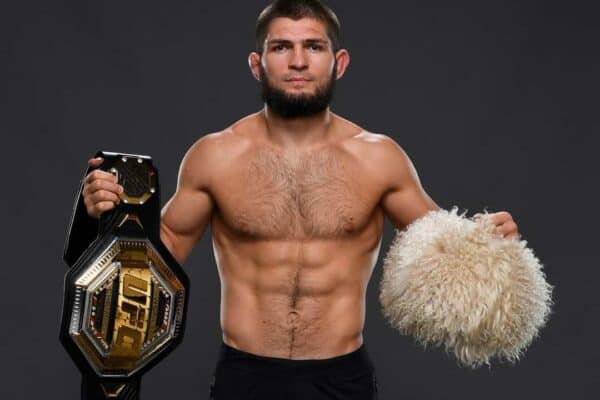
13. Khabib Nurmagomedov

Photo by UFC

You might be surprised to see Khabib taking a spot on this list. Yes, he is a humble man, always respectful and guided by strong religious beliefs. But inside the cage, he had always been aggressive, relentless, and even violent to some extent. He would break the opponent’s will with strong top control, vicious ground and pound skills, and exhausting pace. The way he demolished Edson Barboza and Michael Johnson are the best examples of how he used to break people’s will inside the cage.

Khabib looked like a man possessed in most of the fights he stepped in to compete and his fighting style is as intense as it gets. Although he didn’t score many brutal KOs, Khabib is, and always will be, one of the most aggressive fighters.

12. Vitor Belfort

Photo by Rhdesantana

Vitor Belfort is an MMA legend and the former UFC titleholder and tournament winner who had been competing on top of the sport for more than two decades. Back in his prime, Belfort was a total MMA package. He had a jacked physique, was very fast and technical on the feet, and as far as entertainment is concerned, very aggressive inside the UFC octagon.

Although he started in the 90s, his best and most violent performances came in the closing stages of his career, or the famous “TRT” days between 2011 and 2013. At the time, Belfort looked and fought like a monster that came straight out of the laboratory or horror movies. He knocked some of the biggest legends of the sport like Michael Bisping, Luke Rockhold (both later became champions), and Dan Henderson.

LEARN MORE
Get the full report on Top 15 Most Muscular MMA Fighters of All Time – Ranked

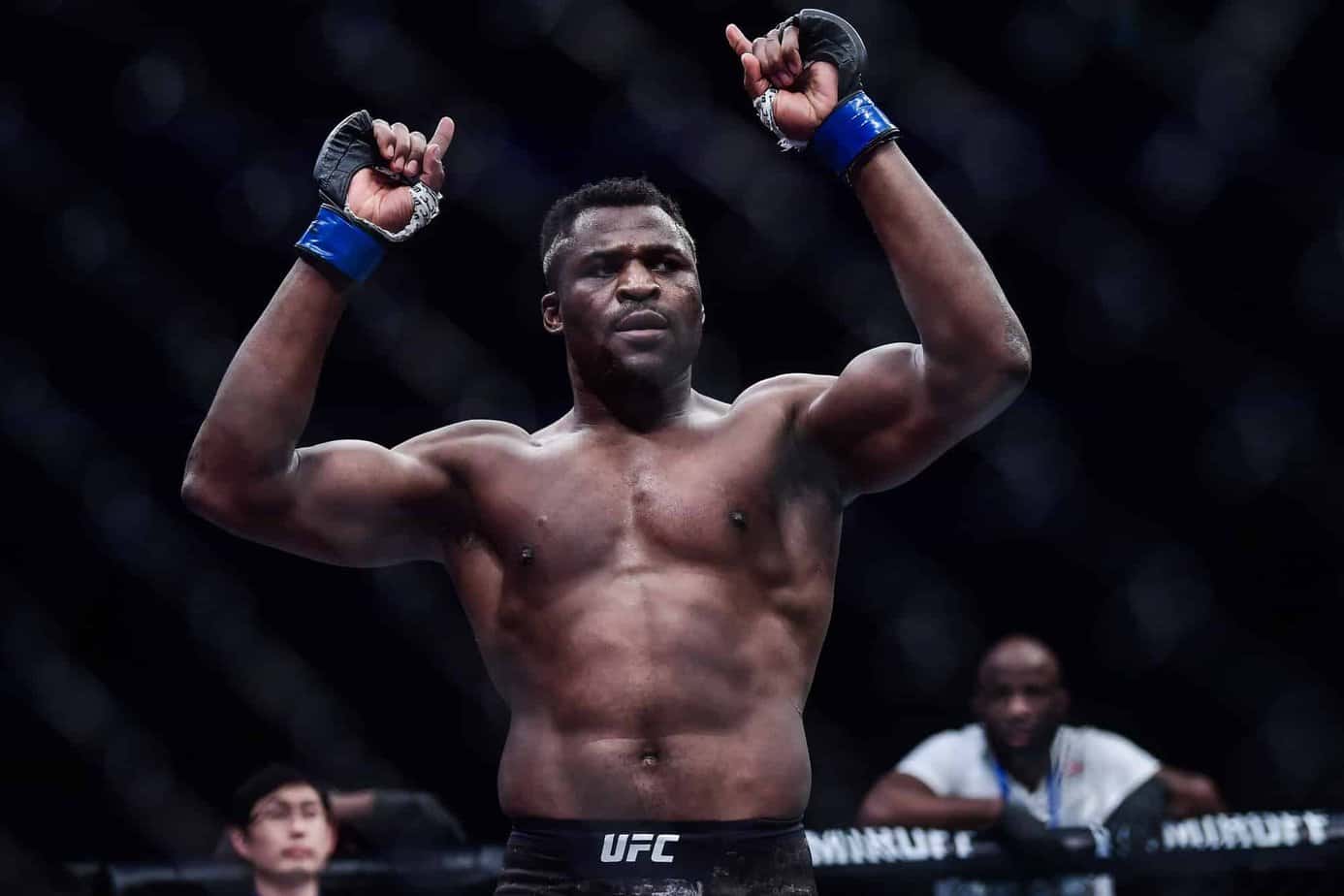
11.  Francis Ngannou

ChinaImages/Depositphotos.com

Whenever you see Ngannou on the UFC card, you know that you are about to see violence and people flying across the cage unconscious. Ngannou is, by far, the hardest hitter the world has ever seen, and if you combine this with his aggressive style, you get why Ngannou is the most feared man on the planet. From the way he lifted Alistair Overeem off the ground with the vicious uppercut to the way he recklessly charged at Rozenstruik with the barrage of punches, Ngannou is a terrifying human being inside the octagon.

He is known as an MMA fighter who doesn’t have the most technical striking skills. But throughout his career, he managed to make up for the lack of technique with sheer power and aggression. No matter what happens in a fight, Ngannou is always one punch away from winning the fight, and that’s why you can never count him out.

RECOMMENDED READING:
How Hard Can an Average Person Punch?

10. Calvin Kattar

Calvin Kattar is one of the wildest and most durable fighters on the planet who also has top-level boxing skills, maybe the best in the business. He never backed down from a fight, and the majority of his UFC matches have been brutal standup wars. Even when things are not going to plan and he is taking a lot of damage, you will never see Kattar moving backward, slowing down, or playing it safe. No, the man is all about the pressure, is ready to absorb five shots just to land one, and is often too aggressive and tough for his own good, like against Max Holloway at UFC on ABC 1. 

But despite being a wild man, Kattar is highly technical and very talented, and standing and banging for 3 or 5 full rounds is just the way he fights. Although this approach cost him a couple of wins, it also brought him a lot of love from the fans.

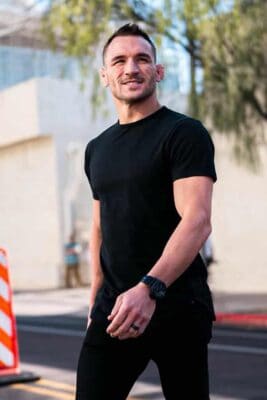
9. Michael Chandler

Photo by K22

Chandler is one of the best Bellator fighters in history, and the former UFC title challenger. Whenever you see Chandler on the card, you know that entertainment is guaranteed from start to finish. He is a hard matchup for anyone simply because of his aggressive approach and the freak power in both of his hands. He’d start swinging power shots and chasing his opponent from the onset of the first second, and it’d be difficult to shake him off.

In his career, he has left nothing but carnage in just about every fight he stepped in to compete. He is one of those fighters who throw each and every strike with full force, without carrying much about the gas tank or counterattacks. Whether it’s a kick, punch, or entry for a takedown, Chandler is very explosive and always pushing for a finish.

In some cases, this approach cost him a better result like the fight he lost against Justin Gaethje. But on the other side, it also brought him a lot of success like against Dan Hooker and Tony Ferguson.

RECOMMENDED READING:
10 Most Fearless MMA Fighters In History Who Are Undersized

8. Matt Brown

Matt Brown is a UFC legend and one of the most underrated fighters of all time. He holds a record for most finishes in UFC’s 170-pound division (14) and most knockouts (12), and he managed to achieve all of that in “just” 16 UFC fights (as of 2022). Known for his brutal Muay Thai game on the feet and dangerous submissions on the ground, Brown is simply a tough matchup for anyone, even in his 40s.

The main reason why so many fans love him is his consistency when it comes to violence inside the cage. You know what you are going to get each time Brown competes simply because of his violent nature. In his career, Brown won many post-fight bonus awards and will go down in history as one of the most aggressive fighters of all time.

7. Mauricio “Shogun” Rua

Image via Wikimedia/CC-BY-SA-2.0

Shogun is an MMA legend who managed to win titles both in PRIDE FC and UFC, and he did it in a spectacular fashion. Known for his top-level Muay Thai, Rua used to knock people left and right utilizing various brutal techniques such as soccer kicks, head stomps, and pinpoint perfect boxing skills. He quickly gained a reputation for being a very aggressive fighter who wasted no time playing games inside the ring and following tactics and game plans. Each kick or punch he throws carries a lot of force and is aimed to knock you out cold. 

The best examples of how wild and aggressive Rua used to be were his two violent brawls against Dan Henderson. Despite losing both times, Rua displayed a lot of heart, courage, and skill, which, in the end, secured him a place in the “UFC Hall of Fame 2018-Fight Wing.

6. Robbie Lawler

Photo by Atlanta Falcons

The former UFC 170-pound champ Robbie Lawler might be the most intimidating fighter in sports history. He is one of those quiet guys who rarely raise their tone during the interview and is always calm. He is not that into trash talking and even looks like an average man. But once the cage door closes, he turns into a pure madman, moving forward and swinging power shots until he rips your head off.

Over the course of his long career, Lawler has been into many violent brawls and has won a “fight of the year” award an amazing three times. They don’t call Lawler “ruthless” for nothing, right?

Still, his most violent performance came in his first UFC title defense when he finished Rory MacDonald at UFC 189. This fight stands for one of the most brutal and bloodiest displays of violence in UFC history. It is also a great example of who Lawler is as a fighter, and why people love him so much.

5. Diego Sanchez

Photo by Mark Richardson

Diego Sanchez is a man associated with violence in UFC, and a name that brings so many memories when it comes to brutal fights. Once the cage doors close, you know Sanchez is about to go full-blast, and unleash all of his violent instincts right from the opening second. He is a definition of a warrior, and back in his prime days, he was a tough matchup for anyone simply because you can’t prepare for that type of aggression.

As if the constant pressure and swinging haymaker punches were not enough, Sanchez was very durable and almost impossible to put out. He would drag you into the deep waters, and if needed, overcome adversities and lose a pound of blood in the process just to knock you out. 

4. Cain Velasquez

Photo by The Doppelganger

The former UFC heavyweight champ, Cain Velasquez, is widely regarded as one of the most aggressive fighters of all time. What made him so special were his top-level wrestling skills, solid boxing, and very, very good cardio. He was a terrifying individual simply because of the fact that he could push a high pace for five full rounds without getting tired. Most of his opponents just couldn’t keep up with his tempo and would gas out after the first round. He used to maul his opponents inside the octagon, and the majority of his fights were one-sided beatdowns.

One such beatdown came in his second and third fight against Junior Dos Santos. He beat him so bad that even Velasuez’s fans had a hard time watching their fighter mauling the exhausted Dos Santos in the fourth and fifth rounds. The Brazilian was never the same after these two fights. Velasquez literally deformed his face

3. Wanderlei Silva

Photo by LeeBrimelow

Silva is the former PRIDE FC legend and a man who holds a record for most KOs in PRIDE history, 15. In MMA history, there has never been a more violent fighter and some of his fights are really hard to watch. From vicious soccer kicks and stomps knockouts to relentless pressure and high output, Silva was the most feared fighter of his era.

While most fighters prefer to keep their range and dictate the tempo, Silva was a bit different. He would force you to fight inside the pocket, a place where he felt like a fish in the water. But although he often looked too aggressive, Silva was actually very technical during those wild brawls and in full control. This is one of the main reasons why he managed to get away with such a “reckless” fighting style, and achieve so much.

2. Justin Gaethje

Photo by K22

Justin Gaethje is a man who needs no introduction. The former 155-pound interim UFC champ is, by far, the most exciting lightweight in the history of the sport. In his career, he won multiple “fight of the year” awards, many post-fight bonuses, and has probably lost more than a few brain cells.

Despite having top wrestling skills, Gaethje is a brawler who has built his success on being in wild standup wars. He is always moving forward looking for the pocket exchanges and has a chin made out of iron. He is capable of taking huge damage and fight his way out of bad situations. Most of his fights go back and forth until he, or in most cases, his opponent doesn’t get knocked out or submitted.

Some of his memorable wars were against Michael Chandler (UFC 268) and Michael Johnson (TUF 25 finale). In both of these fights, he was in serious trouble early in the fight but managed to recover and beat them in the later rounds with strong pressure and aggression.

1. Charles Oliveira

Photo by Diego19234

The UFC champ, Charles Oliveira, is a very aggressive fighter who has prominent finishing instincts. But what makes him special, apart from his very good ground game and sharp Muay Thai skills, is his ability to recover and make adjustments in the middle of the fight. Due to his wild fighting style, Oliveira oftentimes gets caught on the feet, and even dropped early in the fight, as he did against Chandler and Gaethje. 

But, he somehow always manages to keep his cool, make small changes in his approach, and find a way to finish the fight. It often happens that these small changes and the ability to adapt is what separates great fighters from the average ones. 

Last but not least, Oliveira is a man who holds a record for most UFC finishes, which clearly shows you how aggressive he is.