Home Blog Page 15

Sambo(Martial Art) vs. BJJ  – Which is Better and Why?

0
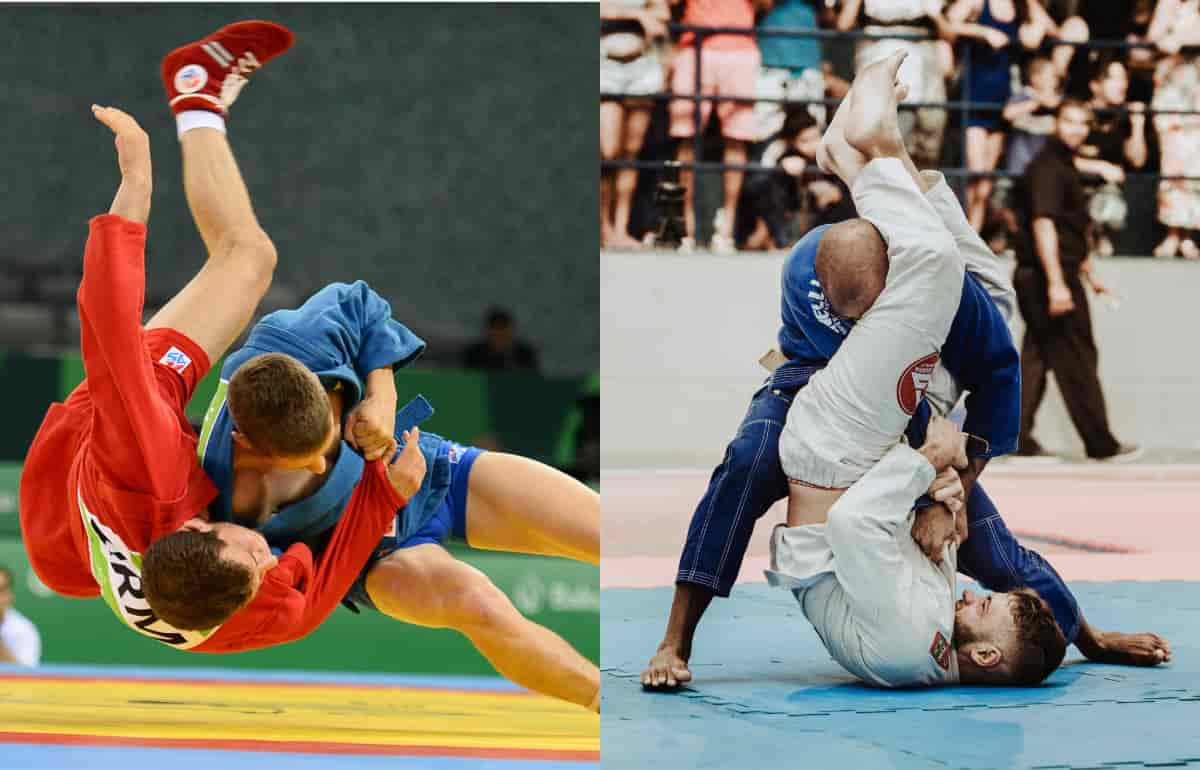
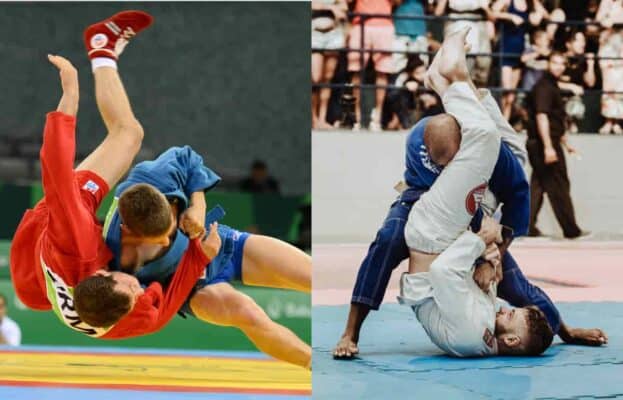
Photo by President.az (left pic) / CC-BY-4.0

Sambo and Brazilian Jiu-jitsu (BJJ) are two separate martial arts that emphasize the same aspect: grappling. Though similar in some areas, these two systems differ a lot in various aspects such as origins, techniques, objectives, and rules. That being said the ultimate question is, which martial art is better? Here’s a short and sweet answer.

Sambo is much better than BJJ when it comes to preparing you to become a complete fighter. Sambo will teach you how to fight both on the ground and standing up using strikes, whereas BJJ only prepares you to fight on the ground without any striking.

Thus, in theory, Sambo works better in various self-defense scenarios that you may face on the streets as it also incorporates weapon training. It is a mix of striking, grappling, and ground fighting techniques put into one martial art. Very much similar to modern MMA fighting.

BJJ focuses entirely on grappling and it is more advanced when it comes to pure ground fighting. It is also more accessible, and much safer to train in since there’s no striking.

This is just the tip of the iceberg when it comes to these two martial arts. Thus, be sure to read the rest of the article to learn more about how these two are different from each other when compared and which one is better in which situation.

Comparison of Sambo and BJJ

Concept and emphasis

Sambo was originally developed for the Soviet military as a means of unarmed combat in the 1920s. It was designed for real combat where the main goal is to quickly neutralize the enemy. Practitioners of Sambo carry this aggressive approach both in a self-defense scenario and in competition. Sambo was not initially created to be a sports martial art, despite having a sports version in later years.

The concept and training methods revolve around techniques from various martial arts such as:

BJJ is a self-defense martial art developed by the Gracie family in the 1920s. Most of its techniques come from judo, with the emphasis being on takedowns, throws, and advanced ground fighting. The modern practice is oriented more toward competition and teaching you how to win matches.

Styles

There are two main styles of Sambo: Sport Sambo and Combat Sambo.

  • Sport Sambo —Many of its moves are derived from Judo and wrestling. This version is all about grappling on the ground. There are no chokeholds or striking.
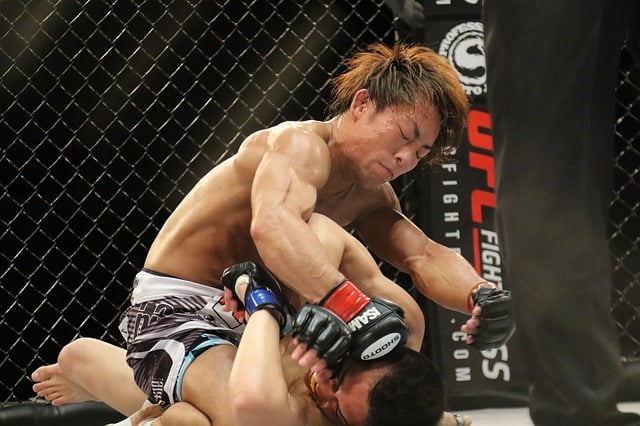
  • Combat Sambo — This style was designed mainly for self-defense purposes and is used by the Russian military. Combat Sambo looks similar to MMA fighting where fighters can use punches, elbows, kicks, and knees as well as groin strikes, head-butts, or soccer kicks. When the fight goes to the ground, sambo practitioners learn how to apply the various submission moves you see in BJJ. This form also incorporates some basic weapon-based training.
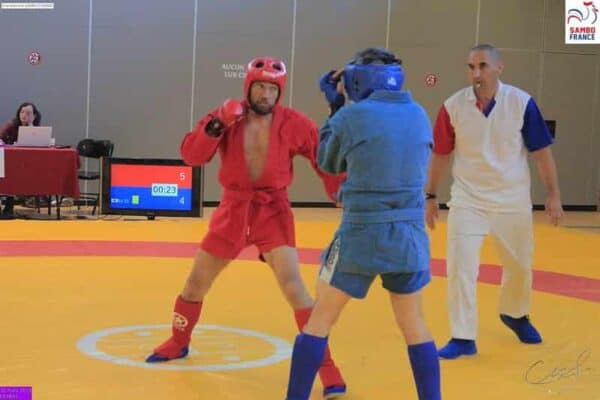
Sambo uniform
Photo by CFS SAMBO FRANCE / CC BY-SA 2.0

There are three main styles of jiu-jitsu:

  • Brazilian Jiu-jitsu (BJJ)—focuses on the sporting aspect of Jiu-jitsu. BJJ students learn how to grapple with other students in a structured, rule-based environment.
  • Gracie Jiu-jitsu —is designed for self-defense and has more elaborate techniques than BJJ. There is no competition or rules to follow, and it all revolves around real-life self-defense situations.
  • No Gi  Jiu-jitsu— is a style where athletes do not wear a Gi uniform in training and competition. They also tend to perform at a much higher pace than the ones in a Gi style due to less friction.
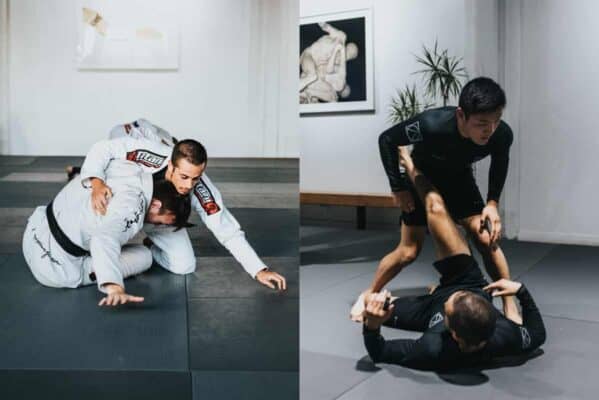
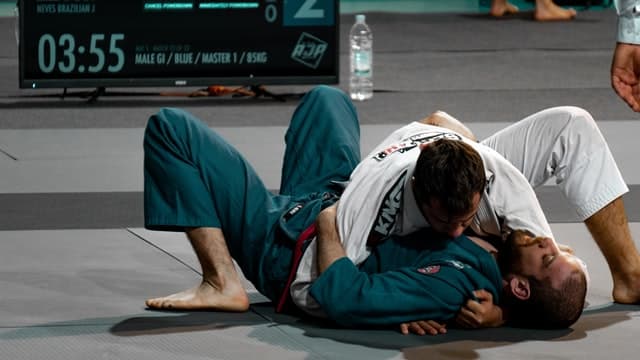
Traditional Gi vs No Gi Jiu-jitsu

Techniques and Weapons

Sambo is a versatile system that allows all styles of takedowns from all styles of wrestling and trips and throws from judo. It trains you to strike using all limbs with kicks, punches, knees, and elbows. On top of that, it includes bone-breaking joint locks and chokes. However, heel hooks, wristlocks, neck cranks, and spine locks are not allowed in competition. 

Here is a list of major BJJ techniques:

  • Wrestling takedowns (single/double leg, ankle pick, low double)
  • Judo throws (outer reap, hip throw, shoulder throw)
  • Positions (side control, back/full mount, half-guard)
  • Joint locks (kimura, knee bar, armbar)
  • Chokeholds (D’arce, rear-naked choke, guillotine choke)

Objectives in a match

Combat Sambo is an explosive style where athletes are more aggressive in their approach since the matches are quite short (5 min). The key is to pin the opponent down fast (to win points), finish the match with any type of chokes and joint locks, or knock them out. In contrast with BJJ, positions and guard do not play a big role at all, as the focus is on pins. Striking is important, but not as much as grappling mainly because striking is not awarded any points.

BJJ is a bit more strategic and the action is much slower. The goal is to take the opponent down, securing a dominant position to win points, or finishing the match with submission moves. Compared to sambo, BJJ athletes are more strategic and patient in their approach. There are no points for pins as the focus is on securing a dominant position.

Rules of competition

Sambo rules are very similar to MMA rules:

  • Match duration: 5 minutes in an 8-meter ring.
  • Outcome of the match: Decision, knockout, submission, disqualification
  • Equipment: red/blue sambovka uniform, open-fingered gloves, shoes, gum shield, groin cup.
  • Point System:
    • Fighters can win the match via submission(armlock or leglock)
    • The fight ends when there’s an 8-point difference between the two fighters.
TechniquesPoints Earned
Throws the opponents on their back while the attacker is standing* Wins a match
Throws the opponent on their back and the attacker ends up on the ground4
Throws the opponent to the side while the attacker remains standing4
Throws the opponent to the side and the attacker ends up on the ground2
Throws the opponents onto their chest, buttocks, or shoulder while standing2
Throws the opponents onto their chest, buttocks, or shoulder
and the attacker ends up on the ground
1
Attacker holding down the opponent on their back while pressing them
torso to torso for 20 seconds
4
Attacker holding down the opponent on their back while pressing them
torso to torso for at least 10 seconds
2
Source: Sambo.sport

BJJ rules:

  • Match duration: white belts: 5 minutes, blue belts: 6 minutes, purple belts: 7 minutes, brown belts: 8 minutes, black belts: 10 minutes
  • Outcome of the match: Decision, submission or disqualification
  • Equipment: A gi uniform and a rank belt around the waist, or rashguard for No-Gi. 
  • Point System
TechniquesPoints Earned
Full Mount4
Back mount 4
Take the back4
Guard passing3
Takedown2
Knee on belly2
Sweep2
Source: IBJJF

What are the key differences between Sambo and BJJ?

The key differences between Sambo and BJJ that differentiate the two fighting styles are as follows:

  • Sambo utilizes wrestling techniques, while BJJ does not include any wrestling techniques.
  • Sambo does not allow chokeholds but BJJ allows chokeholds.
  • Sambo(combat version) has striking and dirty moves such as soccer kicks, but BJJ has no striking and no dirty moves.
  • Sambo was developed for the Russian military as a hand-to-hand combat system, while BJJ was developed for all people to defend themselves.

Sambo was created for the Russian military to improve their hand-to-hand battle skills to neutralize their threats quickly in a tense situation. BJJ was created for everyone to learn how to defend themselves on the ground using submission moves in a more relaxed environment with rules.

Which one is better for self-defense (street fight)?

On paper, Sambo is a better option as it is more in line with the type of freestyle combat you may face in real life. It is more versatile than BJJ in terms of weapons, covers more scenarios, and overall, its aggressive approach is more practical. Here is a look at the pros and cons of both arts:

Pros and cons of Sambo Pros and cons of BJJ
Pros: 
All-around system
Prepares you for any fighting scenario
Highly realistic training
Focus on finishing the fight quick.

Cons: 
Not popular outside of Russia
Pros:
Very practical techniques
A lot of sparring
Allows you to win a fight without causing injuries.

Cons

No striking or self-defense training

BJJ is one of the best martial arts for self-defense. Just look how dominant its fighters are in MMA if you need any proof. It matches well against other styles, notably against aggressive people who are not trained in martial arts. It allows you to neutralize the attacker in the most efficient way possible, and above all, without any injuries. Just a takedown and a dominant position are often more than enough to subdue the attacker.

But Combat Sambo is even more effective. It will teach you very much the same takedown techniques, and good enough ground fighting skills. But on top of that, it adds advanced full contact striking with all limbs, and even dirty tactics. Yes, as a military system, it includes dirty moves as well as some basic weapon-based training.

Sambo vs. BJJ – Which is better for MMA?

The only fair answer is that both sambo and BJJ are equally important in MMA. On one side, Combat Sambo as a concept shares a lot in common with MMA and fits better within the rules. But BJJ is the king when it comes to ground fighting, which is perhaps the most important segment of the game. Here are the pros and cons:

Pros and cons of Sambo in MMAPros and Cons of BJJ in MMA
Pros:
Fits better within the rules
Covers most of the elements of MMA
Explosive striking and takedowns
Cons: 
Not as advanced on the ground as BJJ
Pros:
Most effective on the ground
Advanced positions and submissions
Hard to defend against
Cons: 
The lack of striking and offensive wrestling

MMA is a hybrid martial art that enables fighters to strike using all limbs, grapple in the clinch, take each other down, and fight on the ground. Though not as present as BJJ, Sambo is one of the few martial arts that covers all the elements of MMA. It is a mix of only the most effective techniques from various arts such as wrestling, boxing, judo, jujutsu, and karate, which makes it close to ideal for MMA.

BJJ skills are crucial when it comes to ground fighting, even superior to Sambo. But it is clearly limited due to its emphasis on one element and lack of striking, and maybe explosive wrestling. Still, don’t expect to succeed in MMA without training jiu-jitsu, even if you are the best sambo fighter in the world. 

The final answer is: Combat Sambo works better in MMA. However, upon switching to cage fighting, all fighters need to spend a lot of time training in BJJ to improve their game. Among many other skills, they must develop better positioning skills and learn how to work from guard.

Famous Sambo fighters in MMAFamous BJJ Fighters in MMA
Khabib Nurmagomedov
Fedor Emelianenko
Yaroslav Amosov 
Charles Oliveira
Fabricio Werdum
Royce Gracie

Sambo vs BJJ – Who would win in a fight?

At first sight, it might look like Sambo is superior as it is designed for real combat and is more versatile when it comes to weapons. But fighting on the streets has an infinite number of variables and possible scenarios, including the ones in which BJJ has an edge. Still, no one could argue against the fact that sambo fighters have an advantage in a 1 vs. 1 type of fight.

Here are the key advantages Sambo fighters have:

  • Puts more emphasis on pure self-defense training
  • Includes more weapons and covers more scenarios
  • More explosive and aggressive approach
  • Far more superior on the feet because BJJ does not teach you striking
  • Great takedown defense and BJJ fighters would have a really hard time scoring takedowns

First of all, fighters trained in Sambo are more aggressive and violent in their approach. They are trained to swing shots with full power, score powerful takedowns, and chase a finish from the opening second due to its heavy emphasis on finishing the fight straightaway. They might surprise and overwhelm the BJJ fighter with their explosive approach, athleticism and high pace. But the key advantage is a mix of solid striking skills and great takedown defense.

BJJ fighters would be in a world of trouble because they won’t be able to take the fight to the ground at their will. No, Sambo fighters all have top-level defensive wrestling, and they are the ones in this matchup who decide where the fight takes place. If they want, they might keep the fight standing and destroy them with long-range kicks and punches. They surely have better boxing and kickboxing skills.

The only advantage BJJ has is if the fight goes to the ground. They have better scrambles and are far superior when it comes to positioning and catching Sambo fighters into submission.

RECOMMENDED READING:
Muay Thai vs. Boxing – Who Would Win and Differences Explained

Which one is harder to learn?

On paper, Combat Sambo is harder to learn as it is a more versatile martial art. But there are also aspects of learning in which BJJ might be even harder. Here is a closer look:

More techniques — Sambo

As explained, Combat Sambo is a mix of striking and grappling techniques from various martial arts. Thus, it takes time to learn all of the techniques and develop coordination and balance to mix it all together. BJJ might have fewer techniques on paper but bear in mind that each move has an infinite number of variations.

Takes more time to learn — both

Yes, Sambo might be more versatile and with that, harder to learn. But the only fair answer is that both take up to 10 or 15 years to master. Depending on the school, do not expect to reach the highest rank in these two systems in less than 10 years.

More intense — Sambo

As a system designed for military and real combat, Sambo is far more intense. Right from day one, you will learn how to unleash your violent instincts as soon as the fight starts. Classes are intense, include a lot of full contact sparring, and it is much harder on your body. BJJ is also called a “gentle” martial art due to the importance of strategy and a methodical approach to fighting. It teaches you to stay calm, take your time, be patient, and wait for the perfect time to attack.

Safer to train in — BJJ

BJJ is one of the safest martial arts and the injury rate is 9.2 injuries per 1000 exposures of playtime. The main reason is the fact that there are no strikes, which are often the main cause of most injuries.

Which martial art is better for you?

This is an individual question and the answer is based on your personal end goals. Both of these martial arts share similar benefits when it comes to real combat, fitness, and health benefits.

But one important factor to consider here is that Sambo is not that popular outside of Russia or former Soviet Republics. You might have a hard time finding a school to train in if you live in Western Europe, the US, or South America. Even if you are lucky enough to find one, the quality of classes and coaching staff might not be the same as in Russia.

If you want to learn how to become a complete fighter, there is no doubt that Sambo is a much better option for you if you can find a good Sambo school in your area. Sambo is more versatile than BJJ, covers more scenarios, is more practical overall, and works much better in MMA as well.

If you are not interested in learning full combat skills, just start with BJJ. BJJ focuses more on building character and helping you grow into a person with good manners and exceptional grappling skills. It is very adaptable as it allows you to approach it your way and learn at your pace and according to your abilities. Thus, this makes it a far better option for beginners and amateurs who want to practice and learn martial arts at their own pace.
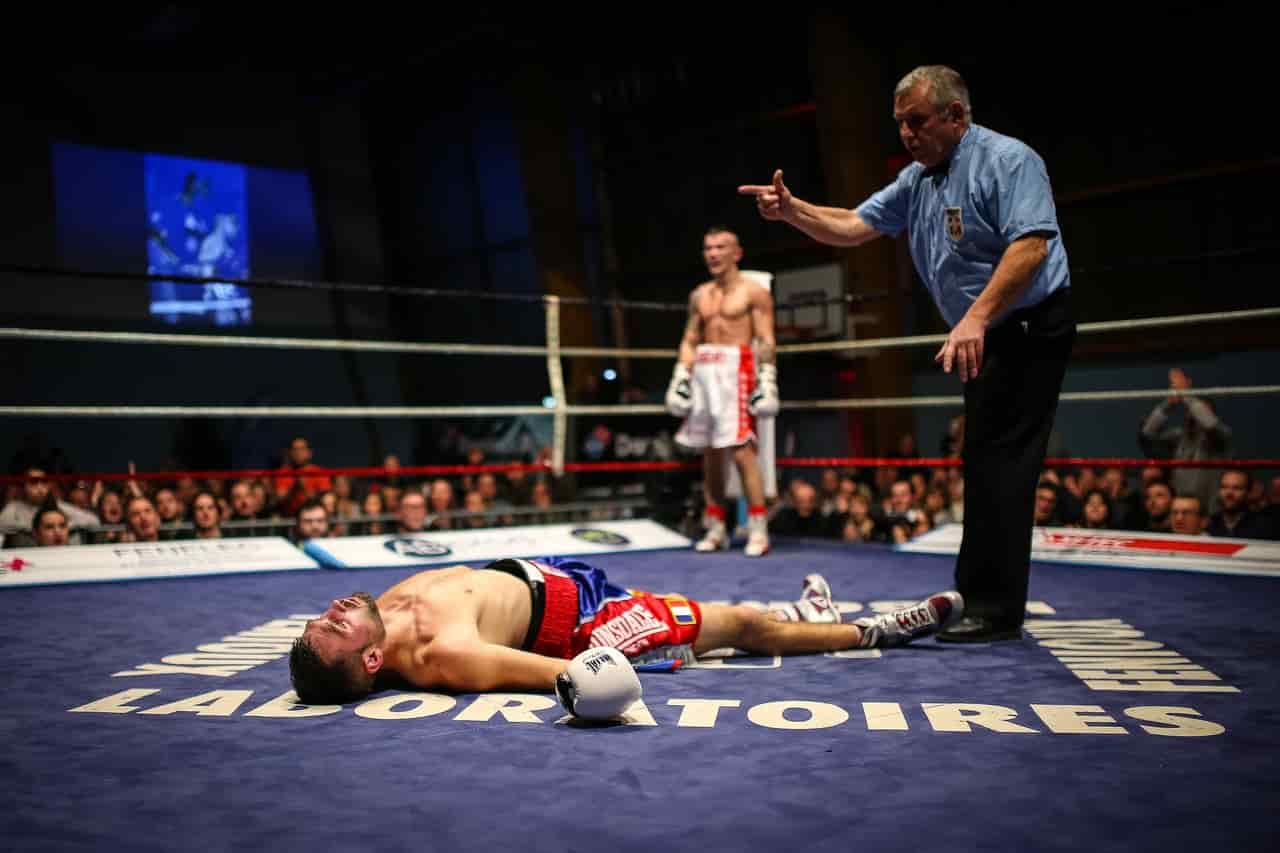
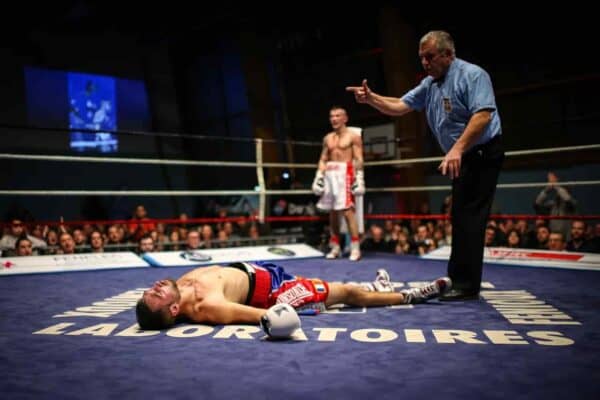
What Happens When a Fighter is Knocked Out in Combat Sports?

0

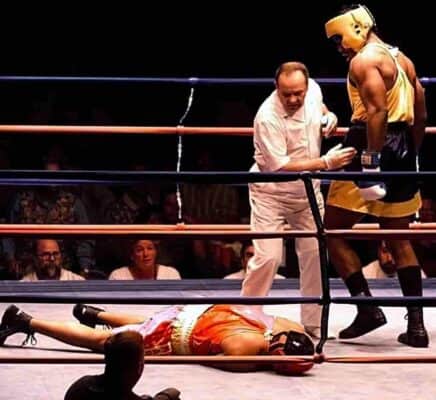
When people tune in for any combat sport, they mainly want to see one thing and one thing alone — knockouts. Whether it’s boxing, mixed martial arts or kickboxing, nothing gets the crowd going more than a crazy knockout victory.

While they’re great to witness and will always be a memorable moment, what actually happens to the fighters who get knocked out?

When a fighter gets knocked out by a blunt force to the head area, their brain shuts itself down immediately, which is why fighters often go unconscious. This is the brain’s automatic response to reset the body.

What happens to their bodies and what are the long-term effects? In this article, we will look at everything related to what happens when a fighter gets knocked out in combat sports.

What happens to your body when you get knocked out?

It should be noted that there are two types of knockouts. One is a technical knockout(TKO) which is when a fighter is not properly defending themselves which results in the referee stepping in and stopping the contest.

The other is the more well-known knockout(KO) in which a fighter goes out cold or doesn’t know where they are.

What causes the latter to happen? Essentially, your body has taken enough blunt trauma and your brain shuts itself down which is why fighters sometimes go unconscious. This is the brain’s effort to reset the body.

If a strike causes the brain to move around in the cranium(skull), this can also result in a knockout and more specifically, a concussion where the fighter doesn’t have their wits about them. In some cases, the short-term as well as long-term effects could be fatal after a knockout.

Another reason why fighters go out cold is due to their blood and oxygen flow following a fight-ending strike. The sinus regulates this flow of blood and oxygen, but when a good strike connects, it can jolt the sinus. This results in the flow of both blood and oxygen altering rapidly which can cause a blackout.

Why does the fighter’s body stiffen up after being knocked out?

When fighters go stiff, this is known as the body’s fencing response. This is when a fighter has absorbed such a strong impact that it causes a concussion and the result is an extension of the arms as they’re falling down mid-air. This response usually lasts a few seconds until the fighter’s brain and body come to its senses and the fighter proceeds to wake up.

What happens to the brain during knockout?

When the brain moves around in the cranium due to the force of a strike or punch, the fighter is dealing with a traumatic brain injury. What this does essentially forces the brain to reset by causing a loss of consciousness. A vast number of neurotransmitters will fire simultaneously which causes an overload in the nervous system. The end result is temporary paralysis, which is why fighters who get knocked out tend to stay that way usually for a couple of seconds to up to a minute. 

How long can someone be knocked out by a punch?

How long a person can be knocked out for depends on the individual and the severity of the strike they suffered that caused the knockout.

In combat sports, it’s very common to see fighters wake up in a matter of seconds. However, in some cases, it can be minutes and if it’s longer than that, it is uncommon and a cause for concern. Some fighters have never woken up as a result of serious brain injuries which have eventually led to their deaths.

Why does a jaw punch knock someone out?

It’s not necessary that a punch to the jaw will guarantee that someone will get knocked out. Any punch, no matter where it is on the head, can cause a knockout if it causes the recipient’s brain to slam inside the skull.

Punches to the jaw, however, are more likely to cause a knockout because of the rotation generated compared to a punch on the dome or forehead.

Do knockouts cause brain damage?

Knockouts do cause brain damage, but it depends on the severity of the knockout. Any knockout in combat sports will result in the dying of brain cells and brain tissue. In most cases, these brain cells regenerate and form new ones.

However, the more severe a strike, the more brain cells and tissue is damaged which could result in no regeneration of these lost parts. Essentially, the more cells die, the more brain tissue you lose. When that happens, it can lead to symptoms like memory problems, a change in mood, confusion, information being processed much slower and inevitably brain damage or chronic traumatic encephalopathy (CTE).

RECOMMENDED READING:
Do MMA Fighters Get Brain Damage?

Do fighters get a concussion every time they get knocked out?

If a fighter is knocked out cold, goes unconscious or blacks out, they have suffered a concussion. This is because all those results happen whenever the brain has suffered a traumatic injury or has been rattled inside the skull causing the body to reset and the fighter to go out cold. To keep it simple, you can be concussed without getting knocked out. But you will be concussed every time you are knocked out.

What does being knocked out feel like?

Being knocked out is similar to being asleep. In many cases, when a fighter is awoken from a knockout, they will feel better and refreshed until the pain of the strike eventually starts to affect them.

In other cases, fighters have a headache right after getting woken up. It’s also very common for fighters to have no recollection or memory of what happened right after the knockout. In the UFC, many fighters have remarked how they had no memory of giving an interview or meeting someone right after they were woken up from a knockout.

How can you wake someone up if they’ve been knocked out?

You can’t specifically wake up someone who has been knocked out. In combat sports, you usually see a fighter wake up when a referee or team member attends to them. However, this is not due to any external signal or action — it’s because the brain and body has recovered and reset from the trauma it experienced from the knockout blow.

Do UFC fighters get CT scans?

UFC fighters do get CT scans if they have been on the receiving end of a knockout. However, UFC fighters do not get CT scans prior to their fights. One big reason for this is that continuous CT scans would expose them to high levels of radiation. 

Which is more brutal: boxing or MMA?

While there can be more devastating knockouts in MMA, boxing is the more brutal sport, especially when brain damage is considered. One simple reason is that most times a fighter is knocked down or appears to be concussed in MMA, the fight is usually ended by the referee or the opponent who lands quick follow-up strikes.

In boxing, there is a 10-second count, and if the fighter is able to convince the referee they can keep fighting, they will continue to fight and potentially absorb more damage.

10 counts in boxing
Photo by Biser Todorov

There’s also the fact that there is more padding on the gloves in boxing and since the head is the main target other than the body, boxers absorb more damage to the head in the long-term compared to MMA fighters. For example, a fight in MMA can end in a submission without the loser receiving a single strike to the head. All of this contributes to the reason why there are so many more deaths from boxing due to brain damage even in recent years compared to MMA.

RECOMMENDED READING:
Which Martial Art Has The Most Injuries? FAQs

Conclusion

While knockouts are great to watch, they can have short and long-term effects that affect the fighter on the receiving end. After reading this article, you should hopefully be more than aware of what happens during and after a knockout along with the after-effects on a fighter’s brain.

Is Kickboxing Good for Self-Defense? Explained For Beginners

0

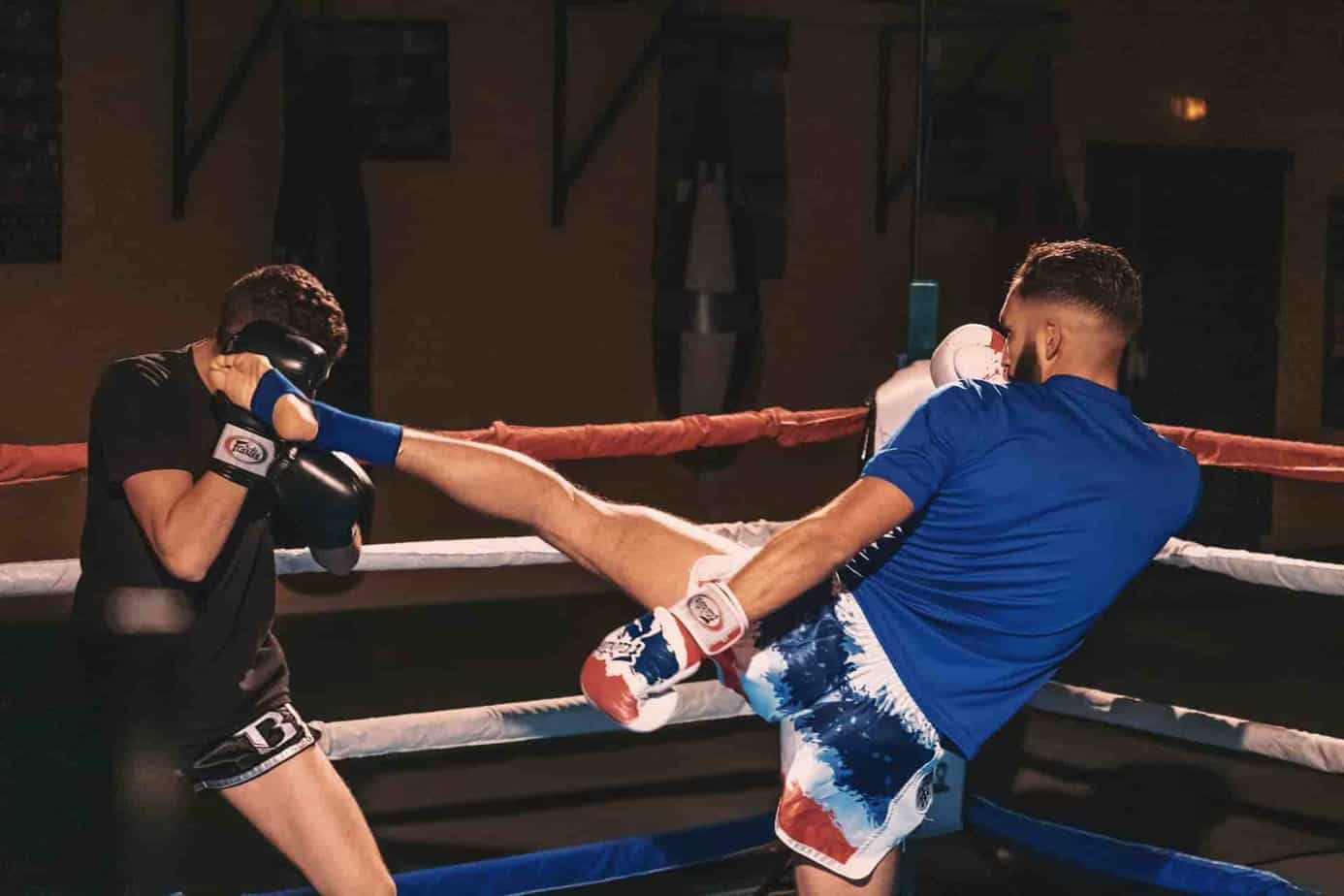
Kickboxing is practiced by millions of people all around the world, and it is one of the most popular martial arts. It meets the demands of just about every age group and people with different goals. It is a great option if you want to lose weight, improve muscle strength, or maybe switch over to MMA later. But, what about real fighting? Is kickboxing effective for self-defense?

Kickboxing is a very effective self-defense system because the training simulates a real fight with the emphasis being on learning how to apply striking techniques in real life. With kickboxing, your mind and body will be conditioned to handle a real-life threat with an effective response.

With that, bear in mind that kickboxing training is hard on your body and carries a quite high risk of injuries. The term “kickboxing” is loosely used to refer to all martial arts that mix kicks with punches (Muay Thai, Savate, and Lethwei). But kickboxing, in its original form, was developed in the 1950s, which is the form we are going to focus on in this article.

Is kickboxing good for self-defense?

Yes, kickboxing is great for self-defense as it trains both your mind and body for intense fighting. Here is a list of some of the key reasons why kickboxing is so effective:

Works well at all ranges

No matter if it’s a fight in the bar at close range, or you have to defend in the open space, kickboxing covers all ranges. Students learn how to keep their range using long-range kicks and punches, and of course, footwork.

At close range, it trains you to strike with fast and accurate boxing combos, as well as some basic fighting inside the clinch with knees (K-1 style).

Includes practical and direct techniques

Kickboxing was created as a mix of karate and full contact Muay Thai rules. As a result, you will learn how to throw different kicks with a lot of power, and how to mix those with western boxing combos. Each technique or move is designed to work in real combat against a person who is putting on real resistance and trying to fight back and hurt you. All of the moves are simple and not that hard to learn, but require a bit of athleticism and time to get them right.

PunchesKicksKnees
JabRoundhouse kickStraight knee
HookFront KickCurving knee
UppercutSide KickDiagonal Knee
CrossSpinning kickFlying knee
Basic Kickboxing Moves

Realistic methods of training

The concept and methods of training are in line with the type of fighting you may encounter on the streets. After around 6 months of training, most students start doing live drills and sparring. This is a method of training where the goal is to simulate a real fight with the emphasis being on learning how to apply techniques in real life. This helps students develop good timing, reactions, and feeling for distance. But psychological benefits are even better.

Initial sparring sessions might feel scary and your mind will probably go into panic mode after the first punch. But over time, and as you improve muscle memory, your mind and body will learn how to absorb damage and stay calm as the fists are flying. This is crucial because staying calm in a fight is the only way you can make rational decisions and apply techniques that you learned in training. It is often said that the one who stays calm in a street fight is usually the one who wins in the end.

Relatively easy to learn

Though it visually looks brutal and hard to learn, kickboxing is actually not that hard to master. It all revolves around 5–6 different punches, the same number of kicks, and how to put it all together and mix it with footwork. Most of the techniques are direct and easy to learn, but on the other side, take a bit of time to master to perfection. At first, it’s all going to feel hard and awkward. But it is all going to become much easier as you get more flexible and improve your fitness.

The Pros and Cons of Kickboxing

Training in kickboxing has a lot of physical and mental benefits as well as a couple of downsides. Here is a detailed look at the pros and cons of kickboxing training:

The Pros of Kickboxing

Practical in real combat

As discussed above, kickboxing is among the most practical systems when it comes to self-defense. The entire concept and methods of teaching are oriented toward real combat. Even if you get into training just to get in shape, you will still develop valuable fighting skills, which is good because you never know when you are going to need them.

Burns a lot of calories

Kickboxing classes are cardio-intense and throwing hundreds of kicks and punches and doing all other cardio-intense exercises burns a lot of calories. In fact, one study has shown that you can burn up to 900 calories per hour of training, which is a lot. With a bit of consistency, you may lose weight and get your body in top shape in a very short time span. 

Full body workout

Kickboxing is a mix of aerobic and anaerobic exercises that will activate every single muscle in your body. In each class, students engage upper and lower body muscles through exercises like:

  • sprints or long runs
  • hundreds of kicks and punches
  • body weight exercises like pushups, squats, sit-ups
  • exercises that improve core muscles
  • stretching before and after each session

You won’t develop big muscles as you would in a gym by lifting heavy weights. But, you will develop functional strength, tone your body and trim your waist.

Improves flexibility, coordination, and balance

Most kickboxing techniques require a lot of flexibility and core strength to perform the right way. This is the main reason why students stretch before and after each class, and do various exercises that target the core muscles. Over time, this will improve your balance, reflexes, and coordination.

Reduces stress and improves mental health

Punching and kicking the hell out of the heavy bag after a long day is a great way to relieve stress. In fact, engaging in intense physical activity releases various “happy” hormones in your mind like dopamine and serotonin, which lifts your mood up and improves mental health in the long run.

The Cons of Kickboxing

  • Quite one-dimensional – as it focuses only on mixing kicks with punches. There is no grappling and you won’t learn how to fight on the ground or defend against takedowns or submissions.
  • No dirty tactics– is a major downside when it comes to self-defense as you won’t learn how to defend or apply dirty moves. Though brutal, dirty moves are highly effective in street fighting where there are no rules.
  • The high injury rate– is also a problem as the injury rate sits at around 40 for every 1,000 minutes. But this also depends on the gym you train in, and whether you are professional or amateur.

What are the different styles of kickboxing?

Kickboxing as a martial art on its own has different styles that are actually defined by the different sets of rules. Bear in mind that the overall effectiveness of the system does not vary much between the following styles.

K-1

K-1 is, perhaps, the most popular style in modern times. In the initial form, K-1 was a kickboxing organization founded in 1993. But over time, the official K-1 rules got so popular, so much that they became an official style of kickboxing. These rules enable athletes to strike with kicks, and punches, as well as with knees inside the clinch (limited time). It is a very brutal style where the emphasis is on power and inflicting as much damage as possible with each strike.

Dutch style

Is another famous style developed in the 1960s in the Netherlands by a man called Jan Plas. Dutch style is unique because, in contrast with most other styles, puts more emphasis on punches. The focus is on advanced western boxing combos, footwork, and landing fast and precise low kicks. Fighters trained in this style would often throw a barrage of punches, before closing the combo with a hard low/high kick. 

American Kickboxing

American kickboxing, which is now internationally recognized as “Full Contact Kickboxing,” was developed in the 1970s, and it differs a lot from other styles because it doesn’t include low kicks. The focus is on punches and mixing those with high kicks. The only major downside of this style is the fact that you might have a hard time finding an American Kickboxing gym outside the US. 

Japanese kickboxing

This is the original style of modern kickboxing developed as a mix of kyokushin karate techniques and Muay Thai full contact rules. Japanese kickboxing emerged in the 1950s and the original founders were Tatsuo Yamada and a boxing promoter, Osamu Noguchi.

Interested in learning more? Here’s an article we think you’ll like: What are the Different Styles of Kickboxing? Simply Explained

Is kickboxing good for MMA?

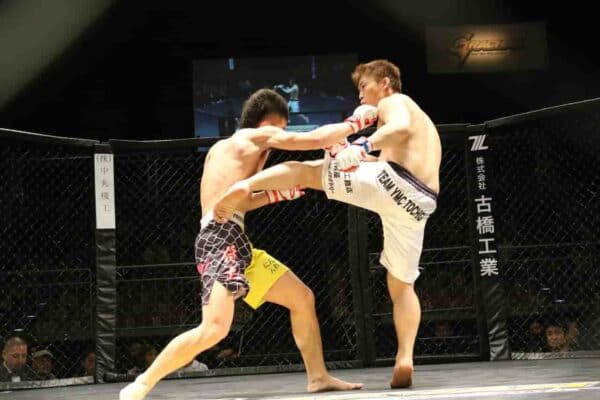
Yes, kickboxing stands for a solid MMA base on top of which you can later add other skills and weapons. Over the course of MMA history, it has been proven that Muay Thai is the most effective style when it comes to striking. But, modern kickboxing, notably the Dutch style, does not fall behind that much.

Kickboxing in MMA fights

The Dutch style is not as versatile as Muay Thai when it comes to weapons. It is quite limited actually as it doesn’t include elbow and knee striking, as well as fighting inside the clinch. Last but not least, it also won’t teach you how to throw the opponent down from the clinch. But, there are areas where the Dutch style excels and is even better than Thai boxing.

First, the Dutch style is more technical and far more advanced when it comes to punches. Fighters trained in this style also do a much better job of moving their heads off the centerline and mixing in footwork to create angles and keep their range. On top of that, top-level Dutch-style kickboxers do not need much time to develop a strong clinch game as they already have a strong base.

The best thing about kickboxing in MMA is the fact that it goes well with other styles. If you look at the top-level UFC fighters, for instance, most of them have had an elite kickboxing game.

Does Cardio Kickboxing Teach Self-Defense?

Cardio kickboxing is a great full-body workout but apart from a basic understanding of how to perform basic kickboxing techniques, it won’t teach you much else in terms of real fighting. In recent years, this form has become very popular among people, notably women, who want to lose weight, improve muscle strength, build strong endurance, and of course, socialize. However, do not sign up for cardio kickboxing classes thinking that you are going to learn how to fight in real life and here is why.

Cardio Kickboxing

Cardio kickboxing is a mix of high-intensity cardio workouts and martial arts moves. It provides you with some basic understanding of how to stand in a proper stance, throw kicks, and punches. However, the focus is not on developing perfect techniques, reflexes or learning how to apply these moves in a real fight. No, the main goal is to burn calories and fat, lose weight and get in top shape. 

As a result, there is no sparring in cardio kickboxing or doing live drills where two students are exchanging punches and kicks and simulating real attacks. This, on one side, makes training safe and free from injuries. But on the other, you can’t expect to develop crucial fighting skills without sparring. So, is cardio kickboxing for you?

The answer truly depends on what you want to achieve. If your goal is to improve your fitness and get a good workout, then go for it. But if you want to learn how to fight, then you should search for a proper kickboxing gym.

Kickboxing vs. Boxing – Which one is better for self-defense?

On paper, kickboxing is a more versatile system and with that, works better in street fighting than boxing. However, despite its limitations in terms of weapons, boxing is very practical in self-defense scenarios. The only fair answer is that both kickboxing and boxing are equally effective in this aspect. Both will:

  • Train your mind to stay calm when your life is in danger
  • Teach how to make rational decisions in a fight and apply techniques
  • Help develop good reactions, timing, and proper technique
  • Train how to neutralize the opponent in the most efficient way possible

Kickboxing has an edge if the fight is in the open space where you can utilize long-range kicks to destroy the attacker. Most people not trained in martial arts do not have the ability to absorb more than one kick to the body or leg, not to mention what would happen if your shin lands on the side of their head. 

Boxing is a better option if the fight is at close range and in a closed space. The explosive and precise combos that you learn are ideal for this type of situation. 

Which is better kickboxing or taekwondo?

Kickboxing is better simply because training is more oriented towards real combat. Each kickboxing gym includes a lot of full-contact sparring and the rules are more in line with freestyle fighting on the streets. Modern Taekwondo practice focuses too much on forms and preparing you to compete under the point fighting rules which has a negative impact on the overall effectiveness of the art.

For example, there is no dynamic action in a Taekwondo match. According to rules, the match resets each time an athlete lands a clean strike, which is not how fighting works on the streets. Next, the emphasis is on light contact, speed, and precision and you are not supposed to throw strikes with full power. Last but not least, there are no punches to the head as athletes are only allowed to land punches in the upper body area below the neck.

The techniques you learn, timing, and automatic reactions that you develop in kickboxing are superior to Taekwondo in every way.

RECOMMENDED READING:
Taekwondo vs Kickboxing – Key Differences and Comparison

Does kickboxing teach you how to punch?

Yes, as its name suggests, kickboxing is a mix of kicking and punching. In fact, modern kickboxing practice puts a lot of emphasis on hand strikes, even more than on kicks. You will learn advanced boxing combos, how to mix hand strikes with footwork, blocks, and of course, kicks.

If you want to develop good boxing skills, then the Dutch Style is the one you should look for. It is a very technical style that puts a lot of focus on advanced boxing combos, and lethal low kicks. You will learn all about using punches, angles, and head movement, to create openings and do damage. On top of that, you will learn how to mix these skills with fast and powerful kicks, and flashy moves like spinning back fists.

What is Aikido? The Ultimate Beginners’ Guide

0

Aikido is a relatively new martial art compared to some of the other ancient arts still practiced today. Many people have not heard much about Aikido, and some of the coverage of this art in the media has not been favorable. Let’s delve into what Aikido is all about, and you can decide whether it is a martial art you should consider practicing.

Aikido is a Japanese martial art style created by Morihei Ueshiba in the mid-1920s. It is derived from Daito-Ryu Jujutsu, but the focus is on self-defense with doing minimal harm to the attacker. Aikido does not require strength but focuses on throws, redirection, joint locks, and weapons.

Aikido is a martial art steeped in principle and belief, born out of a philosophy of self-defense where both parties can walk away to live another day. This Japanese martial art has grown in popularity to the point that it is practiced worldwide today. Why do some people question its effectiveness, and is there any foundation to their claims?.

History Of Aikido

The martial art of Aikido is considered to be a modern combat art since it was developed in the 1900s and does not have the same history as many other martial arts.

Even though Aikido is a relatively new martial art, it does not mean that it does not have roots in other older martial arts styles.

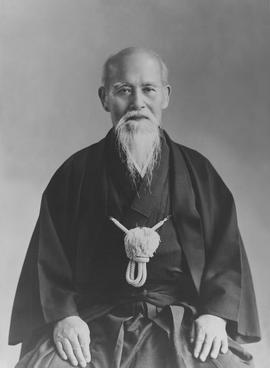
The founder of Aikido, Morihei Ueshiba, participated in the Russo-Japanese War in the early 1900s, which affected him deeply. After the war, he trained in the art of Daito-Ryu-jujutsu under Takeda Sokaku in Japan. Morihei Ueshiba sought spiritual enlightenment through the Shinto sect, Omoto-Kyo. Morihei Ueshiba developed Aikido in the mid-1920s, where he sought to combine his spiritual philosophy with his martial art.

Morihei Ueshiba, the founder of Aikido
Image Credit: Wikipedia

After World War II, Morihei Ueshiba retired to Iwama, a small village in Japan, where he continued to teach Aikido. In the early days, the style was known as Aiki-Jujutsu, but later became known as Aikido, which means “the way of harmony with life-energy” or “the way of spiritual harmony.”

After the death of Morihei Ueshiba in 1969 at the age of 85, his students continued teaching the style, but some deviated from the teachings of the founder, or Osensei.

One of Ueshiba’s most dedicated students, Morihiro Saito, known in the Aikido world as Saito Sensei, made it his lifelong commitment to teaching Aikido in the way of the founder.

The styles that were derived from Aikido became known by several names, including the following.

  • Iwama Ryu
  • Iwama ShinShin Aiki Shuren Kai
  • Shodokan Aikido
  • Yoshinkan
  • Aikikai
  • Renshinkai
  • Ki Aikido 
  • Takemusu Aikido

What Is The Purpose Of Aikido?

The purpose of Aikido is a noble one, where you learn to defend yourself without destroying your attacker. One of the founder’s favorite statements was “true and final victory over oneself, here and now,” indicating the discipline needed to overcome one’s own emotions and anger and control your response to aggression.

Morihei Ueshiba often referred to Aikido as “the way of love,” to create the foundation of caring for your attacker rather than responding in anger and vengeance and severely injuring or killing your opponent.

Aikido includes the principles of entering to not give your opponent space to conclude their attack, strikes to the body, turning movements to avoid attacks and redirecting your opponent’s energy, throws, joint locks, and weapons training.

What Are The Rules Of Aikido?

Aikido is a very traditional martial art, with much emphasis placed on respect and Japanese traditions in the art.

There are strict protocols to training in the dojo, respect for your sensei, proper execution of the techniques, and focus on training mind and body.

Aikido students are not encouraged to participate in competitions, and the martial art does not have tournaments where students compete against each other. Various Aikido dojos may come together on occasion to train with each other and learn and participate in demonstrations.

Aikido students wear a gi, similar to Judo, and start with a white belt. While there are grades in Aikido, they are not denoted by belt color. An Aikido student remains a white belt until they attain a black belt. While strikes are practiced in training, no full contact for strikes is allowed.

Is Aikido Hard To Learn?

Aikido is a fairly difficult martial art to learn because it has many traditions that must be observed, and the techniques must be executed accurately to be effective and prevent serious injury.

It is possible with extreme dedication and training 2 to 3 times per week to attain a black belt in Aikido in 4 or 5 years, but it is more common for this achievement to take between 7 and 10 years for most students.

This is not to say that you will not learn much in your Aikido journey, but rather that it takes an extra measure of commitment to your training to master the techniques in this martial art.

Is Aikido Effective In A Street Fight?

Aikido is effective in a street fight since many of the techniques taught in Aikido are for dealing with multiple attackers.

The techniques taught in Aikido can cause debilitating injury and can cause death, but the Aikido student is taught to execute the techniques with restraint.

Aikido students are taught various disarming techniques that can be used to disarm an attacker wielding a knife, a stick, or a sword.

RECOMMENDED FOR YOU:
Is Jeet Kune Do Effective? Here’s a Closer Look

Is Aikido Dangerous?

The techniques taught in Aikido are highly dangerous and can break bones, dislocate joints, knock people unconscious or even cause death. This is one of the primary reasons that Aikido students take longer to master the techniques compared to other martial arts. Great emphasis is placed on executing the techniques correctly to prevent serious injury.

Even though the moves taught in Aikido are dangerous and potentially deadly, it is part of this martial art’s philosophy to restrain yourself and only use enough force to stop the attack rather than annihilate your enemy.

Does Aikido Use Weapons?

Aikido teaches the use of weapons and includes defensive moves against an armed assailant, as well as how to use weapons to defend yourself.

The training with a knife, or tanto, is mostly aimed at teaching defense against a knife attack and removing the weapon from the attacker’s grasp.

Aikido also teaches techniques using the sword and the staff, or jo, a wooden stick measuring about 4.2-feet or 1.27-meters long.

Is There Any Sword Fighting In Aikido?

Aikido includes an extensive training program using the sword to defend and attack. Sword training is implemented using a wooden replica of a katana, called a bokken.

Many of the empty-hand techniques taught as part of unarmed combat training can be related back to the sword techniques. This makes mastering the sword an important part of the empty-hand training curriculum.

Is Aikido Popular In Japan?

Aikido is a popular martial art in Japan, with an estimated 1 million aikido practitioners in the country. 

Aikido techniques are taught to the Japanese police force and the military. The police use it as an effective means to subdue people without causing injury, whereas the military learns the style for unarmed combat techniques, which can be used to apply deadly force.

RECOMMENDED FOR YOU:
Top 6 Martial Arts for Police Officers – Why They’re Great

Why Do People Say Aikido Is Not Effective In Real Life?

Aikido is viewed in many circles as ineffective because of the style’s philosophy of “do no harm” taught to the students.

Aikido is considered a “soft” martial art, so Aikido practitioners will not exert enough force to stop an attack in real life because they have been taught to restrain themselves.

In reality, Aikido is effective, but it requires many years of training to execute the moves correctly for the techniques to have the desired effect. In our modern, “instant” society, many people do not have the discipline or the patience to put in the training to become proficient.

RECOMMENDED FOR YOU:
Do Most Traditional Martial Arts Actually Work?

What is the key difference between Aikido and other martial arts?

Many other martial arts rely on power and strength to overcome an opponent. Aikido differs from other martial arts styles in that it focuses on redirecting your opponent’s energy to work against them rather than using your strength against them.

This foundational principle of Aikido means that it can be learned by people of any age, physical ability, or strength. It is an ideal martial art for women to learn, who would not be able to match the strength of a male attacker.

Balance, positioning, timing, and correct execution of the techniques are key to redirecting the assailant’s momentum and strength to your advantage.

The techniques in Aikido intend to quench the attack without doing extensive damage to the attacker, giving the person being attacked the chance to get away from the danger. One of the key principles in Aikido is to avoid a confrontation if possible, but if the confrontation is inevitable, you have effective skills to stop the attack.

Key Difference Between Aikido Vs. Hapkido

Aikido is a Japanese martial art, whereas Hapkido is a Korean martial art. Hapkido does not have the same spiritual philosophy as Aikido and is, therefore, more aggressive in its teachings.

Hapkido places more emphasis on punches and kicks and includes the use of sticks as a weapon for attack. Aikido focuses on defense and does not include any kicks as part of the curriculum.

Still curious? Click here to learn more about Hapkido vs Aikido – Key Differences Explained For Beginners

Is Aikido Effective In MMA?

Some techniques in Aikido are useful to an MMA fighter, especially teaching balance and avoiding strikes from the opponent.

However, the aim of MMA to cause bodily harm to the opponent is completely opposite to the philosophy of Aikido.

As a result, not many of the techniques in Aikido will be effective in MMA since they each have different end goals.

Conclusion

Aikido is a controversial martial art, but it is still popular as an effective self-defense style that is still practiced worldwide in over 140 countries.

Aikido is particularly effective for people of smaller stature or strength, especially women, since the techniques taught are designed to use the opponent’s strength and momentum against them.

The techniques used in Aikido are effective and dangerous but require patience and dedication to master.

Which Martial Art Is Right For Me? – Getting Started Guide

There are dozens of different martial arts, and choosing the right one is not an easy task. In fact, some martial arts are physically more difficult, more or less effective, focus on different aspects of fighting, and have different philosophies.

In this article, you will learn about the most popular martial arts practiced by millions of people all around the world. We will guide you through each one and bring you closer by answering all the important questions. After reading through this article, you will have a much better understanding of all major martial arts styles, and it will be much easier for you to choose the one that fits you best. Let’s dive right into it.

Brazilian Jiu-Jitsu(BJJ)

BJJ is one of the most practical systems that is also a very safe martial art to train in as it entirely focuses on grappling and fighting on the ground. On top of that, it is very complex and hard to master which is why people often refer to it as a “human chess match”.  

Is BJJ good for self-defense?

Yes, BJJ is one of the most practical systems in real combat. If you need any proof, just look at how dominant BJJ is in MMA fighting, and how well it matches against other styles. The other thing is that most average people don’t know how to grapple or defend submissions as these are not our natural reactions. It takes many years to learn how to defend against BJJ, which gives you a huge advantage in a real fight.

Is BJJ difficult to learn?

Yes, BJJ falls into the group of the most difficult martial arts to learn. There are so many variables and each move is complex and requires a lot of practice to get right. That’s why, on average, students need from 10 all the way up to 15 years to reach a BJJ black belt rank, which is a

reason why you will often hear that BJJ is a “lifelong journey”. Learning truly never stops.

Is BJJ safe and what is the injury rate?

BJJ doesn’t include striking which is why the injury rate is quite low (around 9.2 injuries per 1000 exposures). Yes, training BJJ could be hard on your body and carries a certain risk of injuries, as all other sports do. But overall, it is much safer than most other martial arts.

Is BJJ good for fitness and weight loss?

Rolling on the mats with a person your size or bigger on top of you is exhausting. But in the long run, it will improve your upper and lower body strength, help lose weight, and improve your range of motion. BJJ athletes are among the most flexible, agile, and practically strong people on the planet.

Pros and cons of BJJ

ProsCons
Very effective in a self-defense situationTakes a lot of time to master
Low injury rate (no striking)Requires years of consistency and dedication
Improves mental health, flexibility and range of motionDoes not teach you any striking (not even the basics)
RECOMMENDED READING:
BJJ vs Japanese Jiu-Jitsu – Key Differences and Similarities

Mixed Martial Arts(MMA)

MMA is the most versatile combat system. In some ways, it is the closest thing humans have got to legal street fighting as it enables athletes to utilize all techniques except the dirty ones. They can strike using all limbs, wrestle in the clinch, and take each other down to fight on the ground with chokes and joint locks.

Is MMA good for self-defense?

MMA will prepare you for most scenarios that you may encounter on the streets. Whether you end up in a striking exchange or inside the clinch or fall down to the ground, you will have the skills and weapons to defend yourself. The best thing about it: each technique you learn works in real life and is designed to beat the attacker in the most efficient way possible. You won’t spend a second of your time doing fake moves or the ones that are hard to apply.

Is MMA difficult to learn?

Yes, MMA is difficult to learn simply because you have to be an expert in at least two martial arts to cover all the aspects of the game. For instance, you have to have Muay Thai/boxing skills to strike, and combine those with BJJ/Wrestling to fight on the ground. This way, MMA might take between 5 and 10 years to master. But if you switch over to MMA after years of training in some other martial art, then you will need much less time. 

Is MMA dangerous to train in?

MMA is a sport that carries one of the highest injury rates, 28.6 injuries per 100 fight participations to be more precise. Training is hard as you are constantly switching between striking and grappling, and not many people could sustain such a workload. Not to mention the constant sparring sessions in just about every class and how that increases the injury rate.

Is MMA good for fitness?

MMA training is one of those workouts that equally target the muscles in both upper and lower body segments. Each training session is a full-body workout that will push both your mind and body to new heights. 

Pros and cons of Mixed Martial Arts(MMA)

ProsCons
An all-around system that prepares you for any fighting scenarioTakes a lot of time to master
Includes only the most effective techniquesDo not sign up unless you are ready to attend the classes at least 4-5 times a week
Builds strong mental resistance and improves strength in every single muscle groupNot many people can sustain the intensity of MMA classes
Training is fun and never gets monotoneIncludes the highest injury rate out of all combat sports
RECOMMENDED READING:
Vale Tudo – A Precursor To MMA Explained For Beginners

Krav Maga

Krav Maga is a combat system created by the Israeli military in the 1950s. Unlike most other systems on this list, it focuses entirely on self-defense and there is no competition. The entire emphasis is on preparing you to neutralize the attacker in the fastest and most efficient way possible. Apart from all-around skills, it encourages you to utilize dirty tactics like eye gouging, groin strikes, punches to the throat, and much more. Or in other words, it enables you to do anything that will protect your life. If that means that you should grab a glass from the table and blast the attacker right in the face with it, Krav Maga encourages you to do just that. 

Is Krav Maga good for self-defense?

Krav Maga focuses entirely on real fighting and it is designed to prepare you for various scenarios you may get yourself into. It will teach you how to fight in different places like in the closed space like a bar or in open spaces like a street or parking lot. You will also do drills on how to deal with multiple attackers and weapons, and overall, everything revolves around explosive attacks with the goal to finish the fight as fast as possible.  

Is Krav Maga difficult to learn?

Krav Maga is an intense martial art and very hard to learn simply because there are too many variables and scenarios you need to prepare for. On the other side, it is not that physically demanding as there is no hard sparring, and neither the moves you learn are too complex or hard to execute. On average, students need around 3 to 5 years to develop good skills that they can apply in real combat. 

Is Krav Maga dangerous to learn?

Krav Maga is very physical but it is not as hard on your body as some other martial arts. Yes, you still need to learn how to strike using all limbs, but on the other side, there is no full contact sparring. The reason for this is quite simple: you can’t gouge eyes or strike the groins or apply other brutal moves in training.

Who should learn Krav Maga?

Krav Maga training will get you in top shape and help you lose weight like most sports would. But you should pick Krav Maga only if your main goal is to improve your fighting abilities as fitness and having fun in training is not a priority. 

Pros and cons of Krav Maga

ProsCons
Training focuses entirely on self-defenseThe quality of classes varies between schools and countries
Highly realistic self-defense drillsMost schools do not include full-contact sparring
An all-around system that teaches you how to fight in all placesThe discipline and intensity of the classes are somewhat the same as the one in the military.
Includes dirty tactics and weapon-based training
Teaches you how to stay calm, assess the situation you are in, and solve problems in a stressful situation
RECOMMENDED READING:
Is Krav Maga Effective? What You Need To Know

Boxing

Boxing focuses only on punches and it might look simple and easy to learn compared with other systems on this list. But despite its limitations in terms of weapons, it is, and it always will be, one of the most practical martial arts.

Is boxing good for self-defense?

Yes, boxing skills work really well in a self-defense scenario. In training, you will learn everything about distance, timing, blocks, and how to deliver fast, precise and powerful shots. If you combine this with the fact that most street fights begin with one person throwing a punch (or more), you get why boxing ranks very high in the self-defense aspect.

Is boxing difficult to learn?

In short, no, boxing does not take a lot of time to master. When you take a closer look at it, it all revolves around 5–6 different punches, how to put the combos together, and mix it with footwork and upper body movement. On average, students need around 3 months to master the basics, and a year of training to develop solid skills.

Is boxing dangerous and what is the injury rate?

Boxing training is hard on your body and it carries a high injury rate. It falls behind MMA when it comes to overall injuries, but, it ranks in the first place when it comes to severe ones like concussions and brain damage. Other injuries such as broken noses, ribs, orbital bones, or jaw are also quite common.

Is boxing good for fitness and weight loss?

Boxing is a full-body workout where the emphasis is on endurance. Or in other words, you will do a lot of grueling cardio workouts that burn a lot of calories. Training sessions are intense, there is very little rest and a lot of aerobic and anaerobic exercises. 

ProsCons
Beginner friendly and relatively easy to learnHigh injury rate when it comes to serious injuries
Includes simple and direct techniquesQuite limited in terms of techniques as it focuses only on hand strikes
Highly effective in a real fightMost boxing gyms emphasize hard sparring as the best method of teaching you how to fight in real life. 
Improves heart health, overall body strength, balance, and decreases stress.
RECOMMENDED READING:
What Is Shadowboxing? Everything a Beginner Needs to Know

Muay Thai Kickboxing

Muay Thai is often seen as a complete and most practical striking system, and in the eyes of many people, most brutal as well. It is a total package as it trains you to use all limbs as weapons to strike at all ranges, including the clinch, and even some basics of grappling like trips and throws.

Is Muay Thai good for self-defense?

Muay Thai is one of the best options if you want to develop self-defense skills. You will learn how to kick, punch, and use knees and elbows at close range, and fight in the clinch. No matter what the opponent does on the feet, you will be prepared to deal with it. The entire concept of training revolves around hard sparring and preparing your mind and body for real combat.

Is Muay Thai difficult to learn?

In terms of techniques, Muay Thai is an advanced striking system. However, the emphasis is on simple and direct techniques that do not require much time and energy to execute. Or in other words, you won’t have a hard time picking up the basics, and it usually takes between 2 and 4 years of training to become proficient.

Is Muay Thai dangerous and what is the injury rate?

The biggest downside of training in Muay Thai is the high injury rate. Of course, the injury rate differs between pros and amateurs. But still, training puts a lot of emphasis on hard sparring, and grueling workouts, and your entire body will suffer a lot. You have to approach training in a methodical way, and pay extra attention to recovery, wearing protective gear, overtraining and avoiding damage in sparring. 

Is Muay Thai good for fitness?

Muay Thai is very popular among amateurs who want to get in top shape as a single hour of training could burn up to 1000 calories. When it comes to fitness and weight loss, it is probably the best out of all martial arts.

Pros and cons of Muay Thai

ProsCons
Complete striking systemHard on your body
Perhaps the most effective striking artHigh injury rate
Works really well in real combatThere is a lot of hard sparring
Solid base if you want to switch to MMALack of ground fighting techniques
Burns a lot of calories, improves flexibility and core strength
RECOMMENDED READING:
Muay Thai vs Kickboxing  –  Key Differences Explained and FAQ

Karate

Karate is a well-known martial art that has many styles and forms. Most of the styles like Shotokan focus on striking and mixing kicks with punches. Though it has been around for a long time, modern karate is not as effective as it used to be which is why, in this day and age, it has become a great option for kids or young people who are looking to get into the world of martial arts.

Is karate good for self-defense?

If you find a dojo that embraces traditional methods of teaching, then yes, it is. The emphasis of karate has changed over time from self-defense and real fighting to competition and winning matches under the rules. The only exception is Kyokushin, which is a style you should train in if you want to learn self-defense.

Is karate difficult to learn?

Most of the karate techniques are simple and direct, and you won’t have a hard time picking up the basics. There is no full contact sparring and students do a lot of pre-arranged forms (katas) in just about every class.

Is karate dangerous?

Though it consists of punches and kicks, karate is not hard on your body, with Kyokushin being the only exception. There is no full contact sparring as the emphasis is on speed, technique, and precision, which combined with the protective gear all students need to wear, makes karate very safe.

Is karate good for fitness?

Training in karate has certain fitness benefits. But if you are an amateur looking to get into martial arts to get a good workout, then there are better options like boxing or Muay Thai.

Pros and cons of karate

ProsCons
Solid self-defense skills (if you train in a traditional dojo)No full contact sparring and students do a lot of katas
Low injury rate (no hard sparring)Modern practices is too much oriented toward competition
Many styles to choose betweenNot popular among adults and you might have a hard time fitting in. 
Builds confidence and encourages self-discipline
RECOMMENDED READING:
What Are The Different Styles of Karate? Simply Explained

Is Karate Effective in a Street Fight? A Beginner’s Guide

0

Karate is one of the most popular martial arts that is practiced by millions of people all around the world. Yet, despite being so popular, many people think that karate is not effective in real life, and that the techniques you learn won’t help you much on the streets. But where is the truth?

As a general rule, all karate falls into one of two different styles. The first is modern karate, and the second one is traditional karate(old school karate). The effectiveness of karate can be determined based on which style of karate it is.

Modern karate is ineffective in street fights because they are designed for sports competitions with rules and limits on where you can strike. In contrast, traditional karate is practical because it prepares you for real-life fighting where there are no rules and no limits.

Keep reading this article to learn more about the effectiveness of karate and different styles.

The History of Karate

Karate emerged in the Ryukyu Kingdom of Okinawa, Japan. Its story started when the people of the Ryukyu Islands got in touch with Chinese martial arts in the 14th century. This was also a time when King Sho Hashi banned all weapons on the island to protect his power. This decision forced the people to focus on developing hand-to-hand combat skills instead, which is how karate got started.

In its initial form, karate was designed to be very practical for real fighting. It was a brutal mix of striking with all limbs, grappling, fighting on the ground, and many other skills. The entire focus was on self-defense, and the following were the four initial styles:

  • Goju-Ryu
  • Shotokan
  • Wado Ryu
  • Shito-Ryu

The biggest change came in 1879 when Japan annexed the Okinawan islands. This triggered the migration of people, including skilled karatekas, to the main islands of Japan. Many of them started to open schools and travel across the country to teach karate, and this is also a time when the emphasis of karate began to change, and when many Japanese sports styles began to emerge. 

RECOMMENDED READING:
What Is The History of Kickboxing? – What You Need To Know

Three main karate categories

Karate has dozens of styles and forms which all fall into three main groups. This is crucial to know before going further into how practical each style is in real life. In fact, separating karate into these three groups gives you a good insight into which style is effective, which are not, and why.

  1. Okinawan karate

This is the initial style developed on the Okinawan islands back in the 14th century. A lot of people also refer to it as the “original karate” as it differs from the modern styles in many ways. In short, Okinawan is a brutal style that focuses entirely on self-defense and real combat. Each technique and method of training is designed to work in real life and inflict damage. Students learn how to strike with all limbs, fight on the ground, utilizes pressure point techniques, and even deal with basic weapons.

The entire concept revolves around you going into the fight to destroy the opponent in the most efficient way possible. Yes, there are a lot of katas (forms), but there is also a lot of hard sparring and randori. Some of the most popular Okinawan styles are:

  • Goju-Ryu
  • Uechi-Ryu
  • Shorin-ryu

2. Japanese karate

Japanese karate emerged at the start of the 20th century. In 1879, Japan annexed the Okinawan islands, which triggered the migration of karatekas to the main islands. These karatekas started opening dojos all across the country with the idea to spread the art of karate. But, they needed to transform and adapt karate to the social context of Japanese people. Or in other words, to get rid of all the brutal techniques and change the emphasis to get legal acceptance. As such, techniques like elbows, knees, joint locks, pressure points and hard sparring were eliminated.

This is the reason why karate became less “brutal” and oriented more towards social education instead of self-defense. Once changed, it quickly became a part of the education program at schools and Universities. Although this allowed karate to grow, it certainly damaged its effectiveness when it comes to real fighting and the fighting abilities of its students. Some of the most popular Japanese styles are:

  • Shotokan
  • Wado-Ryu
  • Shito-Ryu

3. Sports karate

Sports karate emerged from Japanese karate and, as its name suggests, focuses entirely on competition. It became so popular, notably after karate became a part of the Olympic Games, that the training methods in most modern-day dojos are oriented towards competition. The main goal is to prepare a person to compete under the point fighting rules where the focus is on speed, light contact, and precision. As a result, this form of karate is often seen as the least effective of them all.

Is karate effective in a street fight situation?

The effectiveness of karate in a street fight situation is mainly based on what style of karate one chooses to learn. Modern styles of karate are designed for sports competitions where you train to win karate tournaments. Traditional styles of karate, such as Okinawan karate as explained above, were designed for self-defense, where you have to defend yourself in real life.

That being said, regardless of the styles, the karate skills you develop are not as advanced as in some other similar arts, like boxing or Muay Thai. But at least all karate styles provide you with a basic understanding of the mental and physical aspects of real combat:

  • how to stand in a proper stance
  • use footwork to keep range and create angles
  • strike using advanced kicks and basic punches
  • block strikes and counterattacks

In most styles, the main emphasis of karate is on mixing kicks and punches with footwork and lateral movement. Each kick or punch that you learn is practical in real life.

What style of karate is the most effective for self-defense?

Karate has many styles and forms of which some are more effective than others when it comes to self-defense. Here is a list of some of the most effective ones:

Kyokushin karate

Kyokushin karate is often seen as one of the hardest martial arts because of its emphasis on brutal training methods. There is a lot of full-contact sparring where students blast each other with kicks and punches without wearing any protective gear. They do not wear any gloves, shin pads, or headgear. Though this may sound brutal, it adds to the realism of fighting you may encounter on the streets. Out on the streets, there are no rules or gear of any kind. So it is crucial for you to condition your body to absorb clean shots and learn how to strike back without hurting your hands.

One thing to note is that there are no punches to the head. Students are enabled to kick each other in the head and punch the body area below the neck.

Shidokan Karate

Founded in 1978 by Yoshiji Soeno, Shidokan karate falls into a group of modern styles. It differs a lot from most other styles because it includes techniques from other martial arts like:

  • Kyokushin
  • Judo
  • Muay Thai

In short, Shidokan is one of the very few full-contact karate styles that visually looks very similar to kickboxing. In fact, even the training methods are similar as there is a lot of hard sparring. Apart from advanced striking skills, students also learn how to fight inside the clinch, and take the opponent down with powerful throws, sweeps, and trips from wrestling, BJJ, and judo.

Shotokan (traditional)

Shotokan karate is one of the most popular styles, if not the most popular. However, the effectiveness of this style truly depends on the dojo you train in. Some dojos embrace the traditional methods of teaching, while some are not. On paper, Shotokan is a versatile system that will prepare you for most scenarios you may face in real life. But in reality, most dojos put a lot of focus on forms, and sports variations of this style.

Traditional methods, on the other side, include a lot of self-defense training and are more practical in street fighting. Instead of learning how to win matches, or do workouts that won’t enhance your fighting abilities, you will learn proper stances, movement, and how to deliver strikes in the most efficient way possible.

RECOMMENDED READING:
What are the Different Styles of Kickboxing? Simply Explained

Why do people say Karate is not effective?

Here is a list of reasons why a lot of people think that karate does not work in real life.

Effectiveness varies between styles and forms

In some way, people who say that karate is effective and the ones who say the opposite are both right. This is because the effectiveness of karate differs a lot between styles and forms. Some styles put more emphasis on real sparring, self-defense, and even damage, while the other ones focus on forms (katas) and light contact.

More about which karate styles are the most effective in the next segment of this article.

Focuses too much on competition

There is a clear difference between traditional and modern methods of teaching. Modern schools tend to focus more on competition and teaching you how to fight under strict rules. These “point fighting” rules are in contrast with what real fighting is all about as there is no fluid action.

The focus is on speed, high level of technique, precision, light contact and scoring points. The referee would reset the action after each point, which among many other things, clearly limits your abilities in a real fight. In some ways, the reflexes, habits, automatic reactions, and mindset that you develop in sports karate are dangerous in the application of a real fight.

The lack of full contact sparring

Most karate styles, apart from Kyokushin karate, do not include full-contact sparring. Instead, students are taught to overwhelm the opponent by utilizing speed, precision, and a high level of technique. According to karate philosophy, this allows them to beat the attacker without causing serious injuries, which in theory sounds nice.

But in reality, the lack of full-contact sparring has many cons and clearly limits your abilities in a fight. First, you won’t be conditioned enough to absorb full-blown shots, and your mind will probably go into panic mode when faced with a real-life fighting situation. And in most scenarios where your life is in danger, you have to be aggressive and cause damage to protect yourself.

RECOMMENDED READING:
10 Safest Martial Arts That Are Effective In Real Life

Is Karate effective in MMA?

Karate is more than present in modern MMA. Over the years, there have been many great fighters, including champions who have had a strong base in this traditional martial art. However, bear in mind that karate skills only won’t help you much inside the cage/ring. Certain elements of karate are only effective when combined with skills and techniques from other arts in MMA. Or in other words, each karateka who switches over to MMA has to learn how to wrestle, fight on the ground utilizing BJJ skills, and develop a strong Muay Thai game.

What top-level karatekas bring to the table is amazing footwork, lateral movement, and fast and precise striking. They all have an amazing ability to use footwork and long-range kicks to protect their distance. Once they decide to move in, they would attack in a blitz, and blast the opponent with high accuracy and from various angles. Fighters like Stephen Thompson are a tough matchup for anyone simply because it is hard to cut their movement, land a clean strike, and are very unpredictable.

Some of the most famous UFC fighters with a strong base in Karate are:

  • Lyoto Machida — former LHW champion and a 3rd dan black belt in Shotokan
  • Stephen Thompson — former title challenger and a karate black belt
  • Robert Whittaker — former MDL champion and a black belt in Goju-Ryu.

How long does it take to learn karate?

On average, students need to spend around 3 to 5 years training hard and consistently to achieve the black belt rank. On one side, karate training is safe, playful, and most of the techniques students learn are direct and easy to learn. But on the other side, each style includes a belt ranking system and the promotional criteria are strict. Also, bear in mind that the difficulty and progression through the ranks vary between styles, dojos, and even countries. Here is a detailed table look into how long it takes to get each belt in karate (on average):

Is Karate hard to learn?

Most karate styles are not physically demanding and all of the techniques are direct and you won’t have a hard time picking up all the basics. Since most styles emphasize light contact, there is no hard sparring, which is a part of training that usually leads to minor or severe injuries. Even when students do live drills or spar, they all must wear shin pads, gloves, and headgear. This combined with light contact makes karate one of the safest, if not THE safest striking martial art.

But as with everything else in karate, the safety and intensity of the classes depend on the style. For example, Kyokushin is a rare exception as it is known in martial arts circles as the hardest karate style. In fact, it is often seen as the hardest martial art due to the lack of protective gear and its emphasis on sparring and hard methods of training.

RECOMMENDED READING:
Which Martial Art Has The Most Injuries? FAQs

Final Thoughts  – Is karate worth learning?

Overall, karate is worth learning because it meets the demands of just about every age group. On one side, there are hard styles for people who want to enhance their fighting abilities and learn self-defense tactics. And on the other, there are soft styles that are great martial arts for kids as their introduction into the world of martial arts, and maybe elderlies who want to stay active. These styles are soft but intense enough to provide you with a solid workout, and of course, a lot of fun.

Which karate style is the right for you really comes down to your personal preference and what you want to achieve with your training. But before you join the dojo, be sure to do deep research into all the styles, and find the one that fits you the best. Hope that this article has helped you to make the right decision.