Home Blog Page 14

BJJ Belt Ranking System – Easy To Understand For Beginners

0

Brazilian Jiu-Jitsu (BJJ) belt ranking system might seem too complex or even confusing to some people. But overall, the belt order in BJJ is quite simple and easy to understand when explained right.

BJJ color belt ranks are separated into two main groups, each with five different solid color belt ranks. Each color belt has stripes or sub-ranks in the youth belts. Youth (below 16 yrs of age): white, gray, orange, green, black. Adults (above 16 yrs of age): white, blue, purple, brown, and black.

Keep reading this article to learn all about the history of the BJJ belt system, how it works in practice, and how long it takes to get each belt on average. After reading this article, we are confident that you will have a pretty good understanding of the BJJ ranking system and everything you need to know about the BJJ Belt ranking system.

The History of the BJJ Color Belt Ranking System

BJJ was created on the foundation of Judo base by brothers Carlos and Helio Gracie. Thus, jiu-jitsu shares many similarities with judo regarding techniques and belt ranks. At the same time, the color belt ranks in jiu-jitsu differ in certain aspects. But the core concept of the ranking system remains the same as the one in judo.

At the beginning of the 20th century, the father of Judo, Kano Jigoro, searched for a grading system to improve the learning process. His main idea was to somehow separate beginners from more experience students and instructors.

The solution he came up with was the color belt ranks. A piece of cloth students has to wear around their waist indicates their skill level and experience. In the initial form, there were only two belts: white and black. But over the years, Jigoro would make many changes, add more belt colors, and separate the ranking system between the youth and senior students.

Since the inception of the Judo colored belt ranking system, many other martial arts would adopt judo ranking systems, such as karate, taekwondo, and Brazilian jiu-jitsu, to indicate the level of their student’s skill set.

When BJJ began to emerge in the 1920s and 1930s, most schools had three different belt ranks:

  • White belt – is a color belt worn by beginner students who are yet to master the art of jiu-jitsu
  • Light blue – is a belt worn by practitioners who have reached the level of the instructor
  • Black belt – is a belt worn by the very true masters of jiu-jitsu

Over the years, the BJJ belt ranking system would undergo many changes and add more color belts. However, the most significant change came in 1967 when the color belt ranks became standardized globally. This system is still in use in modern days, along with many others such as:

  • Helio Gracie Lineage system
  • JJGF developed by Rickson Gracie
  • Gracie Barra belt ranking system

The belt ranks are divided into two main categories: 

  • Adult belts for people above 16 years of age
  • Youth belts for kids below 16 years of age.
RECOMMENDED READING:
BJJ vs Judo – Key Differences and Core Similarities

Youth BJJ Belt System (Fully explained)

Youth belts are reserved for students between 5 and 16 years old. The system includes five color belt ranks: White, Grey, Yellow, Orange, and Green.

Each of the five belts consists of three additional sub-rank groups: a white stripe, a black stripe, and a solid color belt. 

To make it simple and easy to understand, here is how it all looks in a table:

Youth BJJ belt system

The next thing to remember is those additional degrees (stripes) within each belt rank. Depending on the school policies and the way they operate, there can be:

  • 12 stripes per belt (Monthly system)
  • 4 stripes per belt (Triannal system)
  • 3 stripes per belt (Quartile system)

For example, once you earn a Gray belt, you will need to earn 4 stripes within the Gray belt before moving up in rank and earning a Yellow belt. Students usually receive stripes for being consistent and regularly showing up to classes. 

Most academies prefer to utilize the monthly system. But note that the one in your area might use one of the remaining two. 

Once students turn 16 years old, they switch to Adult BJJ ranks. It’s worth noting that the level you reached in the youth ranks has its equivalent in the adult ranks. It usually goes like this:

  • Grey, Yellow, and Orange belts may become blue belts
  • Green-Black belts may become purple belts if the main instructors agree
RECOMMENDED READING:
Top 3 Best Martial Arts For Kids – A Basic Guide For Parents

Adult BJJ Belt System

Adult BJJ belt ranks are reserved for students who are 16 years old or older. The system consists of five different color belt ranks, with four stripes (IBJJF) per belt. In most schools, stripes are awarded for the time spent on the mats, consistency, progress, knowledge, and performance in competition.

Once a student earns a black belt, there are six additional black belt ranks for the levels between 0-6 and red belt ranks for the levels between 7 and 10. Sounds a bit confusing? Here is a table to better understand it:

Belt colorLevel of SkillMinimum age
White BeltBeginner beltNo age limit
Blue BeltIntermediate stage16+
Purple BeltIntermediate stage17+
Brown BeltAdvanced stage18+
Black BeltAdvanced stage19+
1st degree black beltMaster/
2nd degree black beltMaster/
3rd degree black beltMaster/
4th degree black beltMaster/
5th degree black beltMaster/
6th degree black beltMaster/
Red and Black belt (7th degree)Master50+ years old
Red and White belt (8th degree)Master57+ years old
Red Belt (9th and 10th degree)Grand Master67+ years old

How Do You Progress Through the BJJ Ranks?

Unlike in other martial arts, such as karate, BJJ academies do not host official promotional tests where three or more commission members evaluate your progress. No, BJJ students get promoted by their main instructor.

Some academies hold promotions once or twice per year, usually around holidays in December, when a group of students gets promoted to the higher ranks. But still, there is no testing.

Overall, BJJ students get promoted into the higher ranks by their main instructor; in most cases, the promotion is informal. Therefore, it is up to your main instructor and their subjective evaluation to determine whether you have made the required progress and reached a certain level of proficiency to be worthy of a higher rank.

They will evaluate your progress based on factors such as:

  • Knowledge you gained 
  • Tournament experience and performance
  • Consistency and dedication to classes
  • Behavior on and off the mat and relationships you build

A belt is not just someone’s level in rolling. It’s also knowledge of Jiu-Jitsu, how they treat their team mates, if they are mentally mature for that belt level, if they understand the BJJ code of conduct, mat time, loyalty, competitions etc…

bjjee.com

Once your instructor determines that you have earned a new color belt rank, they will promote you to a higher belt at the beginning or end of a class.

Though this sounds informal (and it is), the instructor will always do their best to surprise you, make it authentic, and acknowledge the progress you have made in front of the other students. It is a rewarding experience you will remember for the rest of your life.

UFC Israel Adesanya Receives a Surprising BJJ Belt Promotion
RECOMMENDED READING:
How Long Does it Take to Learn BJJ for Beginners? Q&A

How long does it take to get each belt in BJJ?

The following is a detailed explanation of each color belt rank in BJJ up to the black belt. Learn what each color means and how long it takes to earn it.

White belt

Beginners who are just starting are white belts. At this stage, students must focus on being consistent, learning the basics of defense and escape, improving fitness and conditioning, and surviving and not losing the motivation to train.

Your days as a white belt might be among the hardest on your journey. In the opening months, you will get submitted hundreds of times, which may destroy your ego, as no one likes to lose all the time. But that’s a humbling part of the learning process that even the most talented black belts must go through initially.

Blue belt

Reaching a blue belt is where students start making significant progress and transitioning from beginner to intermediate levels of learning.

The main goals at this stage are to master all the fundamentals, develop a solid defense, learn escapes, and add more complex moves to your game. Therefore, blue belt days are crucial as you have to master all the fundamentals to perfection to develop a good base, on top of which you will later add more advanced skills.

How long does it take to earn a BJJ blue belt? 
On average, students spend 1.5–2 years training before moving to the blue belt. However, some students who come into BJJ from judo or wrestling might do it within a year.

Purple belt

By the time students have reached the purple belt rank, they have already mastered the fundamentals and are slowly transitioning to the advanced stages of learning.

At this level, students must focus on developing good automatic reactions and instincts, improving offensive and defensive skills and strategies, and start putting together more complex combos. This is also the phase where most students develop their strategies and game plans.

How long does it take to earn a BJJ purple belt?
Students spend between 2 and 4 years at the blue level before reaching the purple belt rank. This is a crucial stage where you may either give up or stick with BJJ for the rest of your life.

Brown belt

Reaching a brown belt rank means you have become an advanced student. The brown belt stage is where students have an objective look at their BJJ abilities and are well aware of their strengths and weaknesses.

This cognizance allows them to develop their grappling style, specialize in certain aspects, and maximize their potential. Brown-belt students often assist in teaching lower-ranked students.

How long does it take to earn a BJJ brown belt?
Students spend a minimum of two years training at the purple level to earn a brown belt rank.

Black belt

The black belt is the final belt rank for the adult BJJ color belt system and the pinnacle of the belt system. Being a black belt means you fully understand the intricacy of every technique and have proven that you can masterfully execute these techniques in grappling.

But achieving a black belt does not represent the end of your journey as a BJJ athlete. Instead, earning a black belt will elevate you to becoming a master of art by pursuing a higher black belt degree, continuously honing your techniques to improve your game further, and seeking the best way to teach others.

How long does it take to earn a black belt?  
Earning a black belt takes between 10 and 15 years in total. Some talented and dedicated grapplers might do it in 9 or 8 years, but this does not happen that often. It also depends on the academy you train in, the quality of the coaching staff, and many other factors, such as your athletic level and comprehension level.

The table below summarizes the entire BJJ belt system and what each belt requires:

Color belt rankMinimum AgeTime to getTotal Time
White///
Blue161.5-2 years
Purple173-4 years4.5-6 years
Brown18 2-4 years6.5-9 years
Black belt192-3 years9-15 years
Black belt (0-6th degree rank)2110-15 years20-30 years
Red and Black50 years old10 years40 years
Red and White57 years old10 years50 years
Red belt67 years oldUndefinedUndefined
RECOMMENDED READING:
BJJ vs Japanese Jiu-Jitsu – Key Differences and Similarities

Can non-black BJJ belts promote students?

Yes, according to the IBJJF standards, brown belts are enabled to promote purple belts, while purple belts can promote students into blue belt ranks. However, it’s worth pointing out that this is only allowed in academies without a black belt instructor.

For example, suppose a BJJ academy with a certified black belt is not established in a particular area or town other than by having brown or purple belt instructors in their academy. In that case, the IBJJF will respect the academy’s brown or purple belt authority to promote lower-ranking students.

Can a black belt promote a black belt?

According to IBJJF standards, a 2nd-degree black belt is allowed to promote students into black belt ranks and sign memberships and certifications. However, a black belt below the 2nd-degree ranks can only promote students to the brown belt rank.

Is There a Fee for Belt Promotion in BJJ?

No, according to the BJJ philosophies and policies, students do not have to pay any fee when promoted to a higher rank. They earned it through hard training, sweat, blood, and tears.

Yes, you must pay monthly BJJ fees, buy a GI uniform, and spend money on other equipment and accessories. However, if you train in a legitimate BJJ school, you will not be required to pay any fees for belt promotion.

The main reason why there’s no fee associated with belt promotion is that there is no official test like in other martial arts such as karate or taekwondo.

Can BJJ black belts be beaten by lower belts?

Yes, it is not uncommon to see a purple or brown belt student often beat a black belt in training. A black belt indicates that you are an expert in executing BJJ techniques, but it doesn’t make you unbeatable against lower-ranked students. Rener Gracie once famously stated that if you are ten years younger than a black belt or 20 pounds heavier, you compete on equal terms.

A BJJ black belt is often beaten by a lower-ranked student who entered BJJ from a rich wrestling background. Wrestlers are powerful grapplers and are superior to BJJ regarding takedowns and top control. Thus, a white belt with a Division I collegiate wrestling background can easily dominate blue or even purple belts during the rolls.

Final thoughts on BJJ belt ranks

The BJJ belt ranking system originates in Judo, and as you have learned in this article, it is not that complex or hard to understand. Furthermore, unlike most other martial arts, the ranking system does not vary too much between organizations or countries and is pretty much standardized globally.

The crucial thing to remember is that rankings are split between youth (below 16 years of age) and senior ranks (above 16 years of age). Each of the two includes five solid color belts, stripes (degrees), or sub-rank within each belt for youth, and students get promoted by their main instructor.

Hopefully, this article helped you better understand how BJJ belt ranking works and what you may expect on your journey.


Top 5 Best Martial Arts For Seniors – Safe And Effective

0

Disclaimer: The contents of this website, such as text, graphics, images and other material are intended for informational and educational purposes only and not for the purpose of rendering medical advice. The contents of this website are not intended to substitute for professional medical advice, diagnosis or treatment.

Getting old does not disqualify a person from learning a martial art, but you do need to choose the right martial art appropriate to your age. We picked out the ones we believe to be the safest martial arts for seniors yet still have practical application in real life.

Martial arts can improve seniors’ balance, mental acuity, and physical strength. The top 5 martial arts for seniors to study to stimulate the mind and body and learn a helpful self-defense art include the following.

  1. Brazillian Jiujitsu
  2. Aikido 
  3. Krav Maga
  4. Karate
  5. Judo

Martial arts can be a hugely fulfilling and rewarding experience for senior citizens! Many martial arts can be tailored to the challenges of age and help to train our minds and bodies to slow the effects of the advancing years. Learning the right martial art as a senior can increase your enjoyment of life while learning a helpful skill!

Why Should Seniors Learn Martial Arts?

For seniors, martial arts can be an excellent way to stay active and healthy. But, just like any other muscle in the body, the brain needs exercise, too, and martial arts is no different. 

Martial arts exercise mental and physical aspects, a great way to improve your body, mind, and memory. 

No matter your senior age or fitness level, you can find a martial art that will benefit your physical and mental health.

Here are some benefits of learning martial arts as a senior:

  • Increase range of motion. As seniors age, they often have difficulty performing specific movements. Martial arts help move all body parts to maintain suppleness and increase mobility.
  • Increased muscle tone. The actions and movements involved in training martial arts will keep your muscles toned and healthy. 
  • Increase in fitness level. Keeping fit, especially heart health is a key to strong senior years. The cardio aspects of martial arts training will help to increase fitness and keep your heart strong.
  • Improves balance. Most martial arts focus on balance to provide a stable platform to execute their techniques. The balance exercises will help senior citizens regain a greater level of balance.
  • Increase mental acuity. Martial arts requires memorizing moves and techniques and learning new skills. This stimulates the brain’s activity and can help prevent diseases like dementia and Alzheimers. Some martial arts are low impact, making it possible to train in the art even with aging knees.

Martial arts also help keep seniors mentally alert as they practice new skills. So the benefits of martial arts go far beyond learning a few techniques and going to the gym once a week. The benefits include improved mental alertness and improved physical fitness.

Senior citizens can do martial arts, provided they choose the right martial art that caters to students of all ages, fitness levels, and mobility.

The best advice is to take it slow and don’t overdo the training sessions to prevent injuries that could prevent you from continuing your training.

How to Train in a Martial Arts School Safely

As a senior training in martial arts, you need to realize that you are not as young and strong as you once were, and wisdom must be exercised in your training routines.

  • Keep your health conditions in mind. Tell your sensei or trainer of any health conditions or physical ailments you have so your training can be structured appropriately.
  • Take it slow. Don’t try to keep up with the younger people in the class.
  • Partner with people your own age. When practicing techniques, partner up with people of a similar age to yourself to avoid injury.
  • Ask for a senior class. Some dojos offer training classes where all the students are seniors.
  • Train sensibly. Don’t overdo your training and go too far too soon. You need to take your time and work up to improve strength, speed, and technique without causing injury.
RECOMMENDED READING:
Tips That Can Help You Avoid COVID & Other Diseases at MMA Gyms

Top 5 Martial Arts For Seniors

We have selected some of the best martial arts that will benefit senior citizens, both from a technical point of view and from a practical use aspect.

These martial arts will train your body and mind and give you a helpful skill you can use for self-defense if the need arises.

1. BJJ Brazilian Jiu-jitsu For Seniors

Brazilian Jiujitsu, or BJJ, is called the “gentle art” for a reason. There are no impacts to the head in BJJ and less physical impact than in many other martial arts.

Brazilian Jiujitsu teaches takedown moves, ground fighting, and submission holds, focusing on joint locks and chokeholds.

The lack of strikes in this art makes it a perfect martial art for seniors to learn. In addition, the classes’ aerobic training routines will increase fitness and mobility.

Notify your trainer if you have any joint problems, as some of the joint locks can result in pain if they are executed too vigorously. Take your training at a slower pace, and you will enjoy the camaraderie and benefits of learning BJJ.

Brazilian Jiujitsu offers techniques that seniors can find very useful in self-defense situations because the moves to bring an opponent down and subdue them are not based on strength but rather on technique.

2. Aikido For Seniors

Aikido is also known as the martial art of love because the focus of the style is not to knock your opponent out, cause debilitating injury or kill. Instead, the focus of Aikido is to apply an appropriate response to the aggression to nullify the attack without causing harm to either party.

Aikido is an ideal martial art for the elderly since it’s low impact and does not require leaps, high kicks, or other physical activity beyond the scope of an older adult.

Aikido also has a strong mental and spiritual component which seniors will find therapeutic and stimulating. 

Aikido uses throws which can be a problem for seniors with shoulder or back issues. Still, if you inform your sensei of these conditions, your training can be adapted to work around these injuries or limitations.

Aikido is ideal as a self-defense martial art for seniors because the techniques teach you to use your attacker or opponent’s strength and energy against them. For this reason, Aikido is often recommended as a useful martial art for many women and seniors.

3. Krav Maga

Krav Maga is an adaptive martial art, which means the techniques can be adapted for the person executing them. This makes Krav Maga a good choice as a martial art for seniors.

Krav Maga is a no-nonsense combat style that includes techniques from other disciplines and strikes, throws, and takedowns.

The training sessions do not include full-contact strikes or blows, so it is safe to participate in the training as a senior person.

The Krav Maga techniques are easier to learn than many other martial arts but require a lot of practice to master and execute accurately.

Krav Maga zeros in on self-defense in particular situations, so the training for a senior can be targeted for specific scenarios you are likely to encounter and teach you to defend yourself.

4. Karate For Seniors

Karate is more aggressive than other martial arts we have suggested for seniors. Still, the benefits of learning karate outweigh some concerns for seniors, as karate enhances or maintains cognitive abilities and improves physical strength.

Karate focuses on strikes, kicks, and the ability to anticipate an opponent’s strikes and provide an appropriate response.

Karate helps seniors maintain hand-eye coordination and improves concentration and mental focus skills. Karate can be dangerous for seniors because it is a contact sport that includes strikes and kicks. However, your sensei should tailor your training program for exercises and techniques more appropriate for your age and fitness level.

Karate teaches good self-defense fundamentals to seniors because it teaches students to anticipate an attack and provides the skills required to deal with it effectively.

Regular long-term karate practice had favorable effects on mood, perception of physical health confirmed by better postural control, and improved performance on objective physical testing. Adapted karate training would be an interesting option for maintaining physical activity in aging.

Marie-Ludivine, C. D., Papouin, G., Saint-Val, P., & Lopez, A. (2010). Effect of adapted karate training on quality of life and body balance in 50-year-old men. Open access journal of sports medicine1, 143–150. https://doi.org/10.2147/oajsm.s12479

5. Judo For Seniors

Judo is a martial art that focuses on throws and takedowns and has no kicks or punches. Leverage is used in many moves to take an opponent down rather than brute strength, which makes it an ideal martial art for seniors.

The Judo moves are relatively easy to learn but take time and patience to master. This martial art is quite physical, which increases aerobic exercise, promoting fitness and an increase in stamina. In addition, Judo will help to increase the flexibility and suppleness of joints and muscles.

Judo is a good style for senior citizens to learn for self-defense because it teaches how to escape holds where an attacker tries to hold you to subdue you. Understanding and executing Judo techniques will allow you to turn the tables on your attacker.

Seniors with injuries or issues to the back or problems with hips and knees may find Judo challenging and may need to look for an alternative martial art in this list.

RECOMMENDED READING:
Which Martial Art Is Right For Me? – Getting Started Guide

Final Thoughts

We have all heard the colloquialism that age is just a number, but the fact is our bodies begin to slow down and deteriorate with age. Martial arts are a great way to slow down this decline and stay fit, keep in shape, receive mental and physical stimulation, and learn useful skills.

You are never too old or physically incapable of studying and benefiting from a martial art, but selecting the right martial art to learn is the key!

Olympic TKD vs. Traditional TKD – Key Differences Explained

0
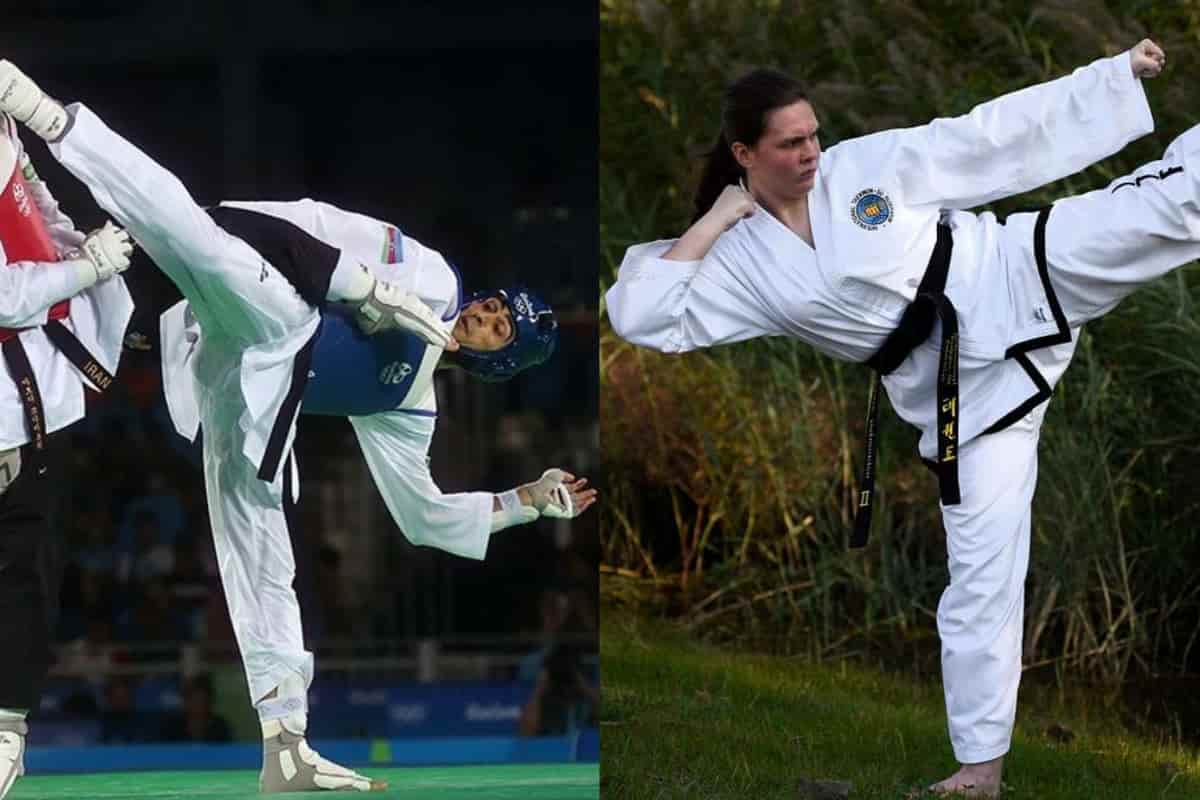
Photo by Javid Nikpour/Tasnim (left)

Taekwondo(TKD) has been a part of the Olympic Games since 2000, and the Olympic style of this Korean art is practiced by millions of people worldwide. But how this Olympic Taekwondo differs from the initial, traditional style developed in the 1950s in Korea? What are the key differences between these two styles?

Olympic Taekwondo is a sport style that emphasizes fast and precise striking, and the main goal is to prepare you to win points and matches in tournaments. On the other hand, the traditional taekwondo style focuses on self-defense, preparing you for full-contact fighting.

When people talk about Olympic vs. Traditional taekwondo, they are actually comparing two well-known styles – WT and ITF. Olympic Taekwondo (WT) is a sports style shaped and defined by the official rules, but the Traditional (ITF) style is a bit different. Practitioners of ITF utilize more techniques that aren’t allowed in WT rules.

Keep reading this article to learn more about how Olympic and Traditional taekwondo differ from one another. 

What is Olympic-style taekwondo?

Olympic Taekwondo is also known as the “World Taekwondo (WT)” or sports Taekwondo. Its story started way back in 1972 when one of the largest academies called “Kukkiwon” was founded by the:

  • Korean Taekwondo Association (KTA)
  • Korean Ministry of Culture
  • Korean Ministry of Tourism

A year later, in 1973, Kukkiwon and KTA would launch the new “World Taekwondo Federation (WTF).” The federation would change the name to “World Taekwondo (WT)” in 2017.

Olympic style (WT) taekwondo

In 1974, they would also start taking initial steps toward making the Korean art a part of the Olympic Games. The major breakthrough came in 1988 when the sport had an official demonstration at Olympic Games in Seoul and 1992 in Madrid, Spain.

Just eight years later, in 2000, Taekwondo would debut as an official sport at the 2000 Summer Olympic Games in Sydney, Australia.

The Olympic style is very much the same as the WT style regarding concept, rules, and emphasis. The entire focus is on competition and learning how to utilize Taekwondo moves under strict rules to win matches. The emphasis is on:

  • High level of technique
  • Speed, precision, balance, and coordination of the moves
  • Kicks to the torso and head of the opponent
  • Punches to the torso
  • Win matches, tournaments, and medals

What is traditional Taekwondo?

“Traditional style” stands for martial arts practiced by the nine main kwans (schools) in Korea in the 1940s and 1950s. This period was before the name “Taekwondo” came around, and this combat system was called “Tang Soo Doo.” Later, these nine kwans would unite to form the unified Korean martial art, changing the name from “Tang Soo Doo” to “Taekwondo.” And this initial style developed in the 1950s by nine kwans and general Choi Hong-Hi is what people consider “Traditional Taekwondo,” also known as ITF.

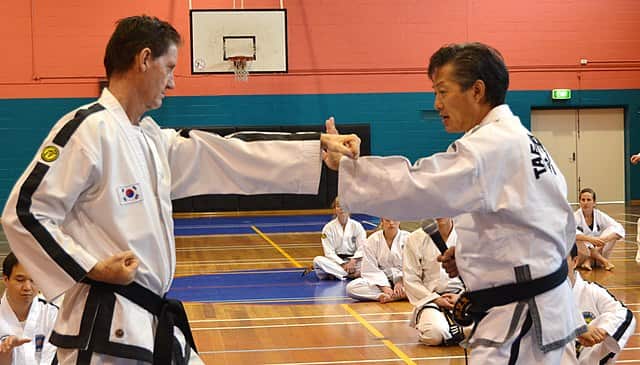
ITF Taekwondo demonstration
Photo by Muleta 68

ITF is a style created to improve the hand-to-hand combat abilities of Korean soldiers. Thus, the entire focus of this style is on self-defense and preparing you for different combat situations you may face on the streets. It is more in line with freestyle combat as it enables you to utilize all limbs as weapons to:

  • Strike with kicks, punches, knees, and elbows
  • Execute grappling moves such as trips, throws, and sweeps
  • Apply dirty tactics such as eye gouging or groin strikes
  • Defend against multiple attackers
  • Handle basic weapons such as knives and staff

Training for real-life fighting differs a lot from training to win matches. Thus, traditional taekwondo is more direct, brutal, and powerful.

RECOMMENDED READING:
Taekwondo Belt Ranking System – EASILY Explained For Beginners

Olympic TKD vs Traditional TKD – Key Differences Explained

Traditional and Olympic Taekwondo differ a lot in just about every aspect. Here is a detailed look at all the major differences:

Emphasis

Olympic TKD is a sports style where there are a lot of restrictions. It is a style defined by a particular set of rules, and there is very little self-defense training. The main goal is to apply limited taekwondo moves under the rules and win a match by scoring more points. Each skill, reactions, and habit students develop to win a competitive match.

The traditional TKD style differs significantly, focusing on self-defense and real combat. Its goal is to improve the hand-to-hand combat abilities of Korean soldiers. Unlike the Olympic style, it is more brutal and direct, and the entire training revolves around preparing you to defend yourself in the most efficient way possible.

Number of Techniques

Olympic Taekwondo rules are unambiguous, and players use far fewer techniques than in the traditional style. Kicks are primary weapons as, according to rules, win you the most points. Players also strike with their hands, but mostly with basic direct punches to the torso.

The traditional style is more versatile and includes more techniques. Students learn the same kicks and punches as in the Olympic style. They are also allowed to throw punches to the head and learn how to strike with knees and elbows at close range. Since punches to the head are allowed, they learn better defensive blocks.

Students of traditional style learn the basics of grappling like trips, sweeps, and throws from judo and how to handle various weapons such as knives and staff. The military version also teaches dirty tactics like eye gouging and groin strikes. Though brutal, these moves are effective and might help you get out of trouble on the streets.

Punches and blocks

Both styles include direct hand strikes with a clenched fist. However, the Olympic style only allows punches to the torso, while the traditional style enables you to hit both the torso and head of the opponent.

Learning to strike the head of the opponent means that people trained in the traditional TKD also tend to have better guards and blocks. Instead of keeping their hands up in fights, their colleagues from the Olympic style tend to keep their arms beside their bodies because they don’t have to worry about being punched in the head.

Kicks

Leg strikes are the primary weapon both in Olympic and traditional styles. But, the Olympic style only allows kicking attacks to the upper body and head, and the key is to land a kick with your foot.

The traditional style is a bit more oriented toward low and middle kicks and landing a kick with your heel or ball of the foot.

The speed of the kicks is also much faster in the Olympic style where athletes compete barefooted while in traditional they have to wear boots in competitions. 

Gloves 

In the Olympics, players wear open-fingered gloves made of thick polyester, similar to the ones used in MMA. However, in the traditional style (ITF), players wear boxing style full padded gloves.

RECOMMENDED READING:
Karate vs. Taekwondo: Key Differences And Similarities

Olympic TKD vs. Traditional TKD – Differences in Competition Rules Explained

The Olympic WT and traditional ITF rules of taekwondo are very similar but differ in certain areas. Here is a detailed look at both of the rule sets:

Olympic Taekwondo (WT) rules:

  • Full contact
  • Free sparring
  • Main objective: demonstrate a higher level of technique, speed, and precision and win the match by scoring more points
  • Match duration: three rounds, with each round being two minutes long. One minute break between the rounds
  • Legal strikes: kicks to the head and torso, punches to the torso
  • Illegal strikes: kicks to the leg, punches to the head, elbows and knees
  • Gear: A dobok uniform, WT-approved chest protector, headgear, groin cup, forearm and shin guards, gloves, sensing socks, and mouth guard.
  • Points: 5 points for a spinning kick to the head. 4 points for a spinning kick to the torso. 3 points for a regular kick to the head, 2 points for a regular kick to the torso, one point for a punch to the torso

Olympic.com provides additional specific details about the Olympic TKD rules.

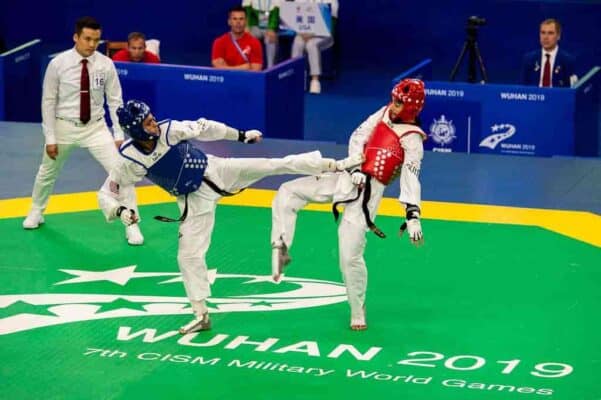
Olympic Taekwondo

Traditional Taekwondo (ITF) rules are:

  • Semi-free contact/full contact
  • Free sparing 
  • Main objective: win the match by points or knock the opponent out.
  • Legal strikes: punches to the torso and head; kicks to the torso and head
  • Illegal moves: no knee and elbow strikes and kicks below the waist.
  • Match duration: Each match has two rounds with each round being two minutes long (adults 18 years old or more)
  • Protective gear: Gloves, boots, head gear, arm and shin guards (optional), mouth guard. There are also tournaments where players compete without the arm and shin guards.
  • Points: 1 point for mid-section kick, or mid/high hand strike. 2 points for a high kick and jumping mid-section kick landed. 3 points for every clean jumping high kick landed.

You can read more details about ITF rules in the official ITF Rules of Competition booklet.

Olympic and ITF taekwondo rules are very similar. The biggest difference is the hand strikes and, of course, point fighting rules. Last but not least, ITF players wear less protective gear, and the matches have 1 round less than in Olympic style.

ITF Taekwondo

Olympic TKD vs. Traditional TKD – Which is Better for Self-Defense?

The traditional style is better if you want to learn Taekwondo for self-defense. Training entirely focuses on preparing you for actual combat you may encounter on the streets or other places. It trains your reactions, instincts, mind, and body for any intense situation. Olympic Taekwondo offers some benefits, but not as much as traditional TKD training.

The traditional style teaches you all about the physical and mental aspects of actual fighting. In training, students learn how to:

  • Strike with various types of spinning and jumping low and high kicks
  • Direct punches to the torso or head
  • Basics of grappling such as trips, throws, and sweeps (from judo)
  • Apply dirty tactics
  • Deal with common weapons

But apart from mastering all the moves to perfection, students spend a lot of time doing self-defense drills. They also simulate real attacks and, of course, do lots of sparring.

This part of training is crucial as you can’t develop automatic reactions and learn to stay calm in a fight without doing live drills. And in most schools, they also spar versus multiple opponents, which adds to the realism of traditional training.

RECOMMENDED READING:
Is Taekwondo Effective in a Street Fight? Q&A

Why is Olympic TKD not effective for self-defense?

Olympic Taekwondo differs a lot as the entire focus is on the competition. Thus, the skills you develop are not as practical regarding self-defense. In addition, the skills you develop, habits, reactions, and instincts to “fight” under the rules do not transition well into real-life fighting.

For example, due to the lack of punches to the head, athletes trained in the Olympic style have a bad habit of keeping their arms low beside their bodies. Keeping your hands down and your chin fully exposed in a street fight is dangerous. So in some way, the lack of advanced punching offense and defense is the biggest downside of Olympic Taekwondo against being considered a realistic style in self-defense situations.

Olympic TKD vs. Traditional TKD – Which is better?

These two styles differ a lot in just about all aspects. So which is better for you comes down to your personal preference, which might sound very cliche. The good news is that this is still the same martial art, and you can always switch from one style to other one and adapt very quickly. So you won’t make a mistake choosing any of the two.

If you are a competitive person and want to win matches and tournaments, then the WT style of Taekwondo should be your choice, as WT style and rules are the ones used in the Olympics.
Training in an academy that embraces sports taekwondo training is how you develop the skills for competition. Later on, winning international WT tournaments and medals is how you can secure a spot in the Olympic Games.

Traditional, or ITF taekwondo style is for people who want to get the whole Taekwondo experience and develop solid self-defense skills. It is a more versatile style where the entire focus is on self-defense training. But on the other side, ITF also includes competitions where you can test your skills against other students if you want.

Related Questions

Are you allowed to punch in Olympic TKD tournaments?

Yes, Olympic rules enable Taekwondo players to throw punches just to the upper body below the neck (torso). A single well-placed punch to the torso wins you 1 point, while kicks win you between 2 and 5 points. Kicks award more points, which is why kicks are the primary weapons in Olympic taekwondo and why players rarely throw any punches.

Landing punches to the head is not allowed under Olympic rules, but it is allowed under ITF rules.

What is not allowed in Olympic Taekwondo?

Olympic Taekwondo players are not allowed to strike with elbows and knees, just with punches and kicks. They are also not allowed to throw kicks below the waist (low kicks), land a kick with the shin or any other part rather than a foot, and throw punches to the head. In defense, they can’t use their leg to prevent an offensive kick or hold their leg up for more than three seconds to hinder their opponent’s movement.

Players are penalized for crossing the boundary line with both feet, falling to the ground, trying to push their opponents, or attacking the grounded opponent.

Who is the best taekwondo player of all time?

Steven Lopez

Lopez is not just one of the greatest Taekwondo players of all time but also one of the greatest USA athletes. In his long career, he won Taekwondo World Championship a remarkable six times. On top of that, he won the Olympic gold medals twice at the 2000 Sydney and 2004 Athens Olympic Games and one bronze medal at the 2008 Beijing Olympics. 

Hadi Saei 

Saie is one of the most successful athletes from Iran and the Olympic gold medalist in Taekwondo on two occasions. He won the first gold medal at the 2004 Olympic Games in Athens and the second gold in 2008 in Beijing. He also won the prestigious Taekwondo World Championships two times.

Hwang Kyung-Seon

Kyung-Seon is a two-time Olympic Champion. She won the first gold medal at the 2008 summer Olympic Games and the second gold medal at the London Olympic Games in 2012. While representing South Korea, she also won two World Championships in 2005 and 2007.

How Long Do UFC Fighters Train Every Day? FAQ For Beginners

0
UFC fighter Valentina Shevchenko

It goes without saying that UFC fighters need to train to the very peak of human fitness. Stamina, speed, technique and conditioning all need to be at their absolute best in order to defeat opponents at the highest level in any combat sport and the world’s most popular mixed martial arts organization is no different. 

Long-term damage to the body is a genuine risk that any fighter faces and this risk is amplified if a fighter doesn’t ensure that they are in the best possible shape to dodge strikes, resist submission attempts, and roll with the punches which do land.

That said, there is so much to learn and train if you are a UFC fighter because you have to be prepared to fight against some of the best fighters in the world with different fighting styles. Therefore, on average, how long do UFC fighters train every day?

Lower-ranked UFC fighters who typically have other full-time jobs train anywhere from 4-5 hours per day. In contrast, higher-ranked UFC fighters train 6 hours plus every day because their higher earnings from the UFC allow them the financial freedom to focus solely on training full time.

As you see here, the earning amount affects the fighters’ commitment to how long they can train every day.

So you want to know how much UFC fighters train in more detail, how often, and what training they go through? After reading this article, you will have a pretty good idea of what these UFC fighters go through every day.

How many hours do UFC fighters train a day?

The number of training hours can vary depending on UFC fighters’ rankings because their ranking can dictate how much money they earn, deciding whether they can train full-time or part-time.

In the beginning, many lower-ranked fighters may not earn enough money to sustain a living from fighting in UFC while moving up the ranking. Not earning enough income from fighting means that many low-ranked fighters have to build their training schedules around their full-time jobs to support themselves, their dreams of success, and their families.

Those in this situation may likely train around four hours a day – two hours in the morning, two hours in the evening during the week, and a longer session on a Saturday. Most take at least one day off.

As a general rule, more successful fighters or those who are higher ranked can focus more on fighting, and they will be able to invest around six hours a day into training. For example, Conor McGregor, a very successful UFC fighter, once bragged about starting his day in the gym at about 7 am and not leaving until 1 in the morning, driven by his obsession to perfect his moves learned.

What type of training do UFC fighters go through?

The type of training UFC fighters undergo depends on their style and the disciplines they are grounded. Most successful fighters started as either high-level strikers, such as Muay Thai and kickboxers, or grapplers, such as Brazilian Jiu-Jitsu black belts, sambo champions, or even wrestling Olympians.

That is not to say that more recent additions to the UFC did not come up through the ranks of amateur MMA organizations while practicing MMA as an integrated sport, but rather that many champions started in different combat sports before moving to MMA.

Fighters have to train a multitude of different arts for the cage. For example, great grapplers have to learn how to box and kick, while great strikers have to learn Brazilian Jiu-Jitsu to prepare if they get taken down or learn wrestling to counter grapple those aiming to bring them to the ground.

Many hours are spent practicing technique, and developing stamina through cardio exercises such as sprint running, burpees, swimming, and spent time in sparring as well. Conditioning exercises often involve either calisthenics or striking the body, including using medicine balls to develop the toughness of muscles by the core.

Most fighters will spend 2-6 hours per week either striking or full MMA rule sparring. Even though this will usually be light and technical for the most part, injuries are more likely to occur in sparring than outside of it.

More brutal sparring will occur in fight camp to prepare the fighters for adversaries inside the cage. Brazilian Jiu-Jitsu sparring starting on the knees may be more commonly practiced as it is less likely to cause injuries associated with striking or standing grappling.

Coming up to fights, when UFC fighters need to lose weight, they will often engage in high cardio workouts, dieting, and the use of a sauna or steam rooms to reduce both water content and body fat percentage in the body.

Some fighters will train weights depending on their body type and martial arts style.

How long is a camp before a fight?

Fight camps typically last 6-8 weeks for each fight and typically involve raising the number of training sessions and increasing the intensity of those sessions.

Some fighters may take much longer to prepare, depending on the circumstances. For instance, if their fights get postponed or they have a particularly high-profile fight ahead of them.

How do fighters train every day if they don’t have fights scheduled?

The amount that fighters train every day vastly varies for individual fighters. The majority of fighters will still train in-between fights, primarily to keep on enhancing their skill sets. There is a never-ending amount of techniques to perfect, and while it is possible to develop better cardio and conditioning closer to the fight, giving up all training will usually end in disaster.

Some fighters are known to take it easy on the dieting and will load up on cheeseburgers, beer, and other notorious empty calories in between fights, such as a very popular UFC fighter Paddy Pimblett.

How long do UFC fighters rest after a fight?

Most fighters will take a week or two off training immediately after a fight. They may take longer if they were severely injured and need to let their bodies recover or undergo physio or surgery to repair some or all of the damage sustained. Minimum time periods are also required before they are allowed to re-enter the cage. The chart below shows how long a waiting period is required before medical officials will certify a fighter to fight again.

Injury Minimum Time Before Return to the Cage
No injury sustained7 Days or 168 Hours
TKO30 Days
Choked Unconscious
30 Days
Knock Out45 Days
Facial Cut60 Days
Limb or Joint Injury30 Days to 120 Days
Broken Bone180 Days
RECOMMENDED READING:
Do MMA Fighters Get Brain Damage?

How do UFC fighters recover after training?

Various recovery methods are employed to ensure that fighters recover after training or fight night. However, injuries are not uncommon in the sport. Receiving medical attention, surgery, or even implants of metal plates to support the damage done is something many fighters will have to do whether they win or lose their fights.

Healing can take a variety of forms. Fighters get simple massage and manipulation, for instance, to reduce swelling and pain so they can sleep more comfortably and recover quicker. Some fighters also try compression recovery boots to reduce their swelling, while stretching, cryotherapy, and ice baths, can help fix soreness and minor injuries.

When it comes to recovery during training camps, the main focus is typically avoiding overtraining, which can lead to poor performance, irritability, illness, injury, and fatigue. However, some athletes don’t believe overtraining exists and assert that there is only under-recovery.

On rest days, most fighters will do some light exercise – a walk, a bike ride, some yoga, or maybe a dip in the pool. This is because it’s better for recovery to keep the body moving a little bit than to do nothing at all.

A proper diet plays another big part in recovery and is often tailored for fighters to speed up their recovery. For example, fighters take high-quality protein shakes and consume high-quality grass-fed meats to give their bodies essential amino acids to repair and regenerate muscle tissue after hard training.

Natural supplements and maintaining hydration levels also speed up the recovery process.
Lastly, sleep is essential. The body does so much repair and cellular growth when your brain is in REM sleep state.

RECOMMENDED READING:
MMA Diet On A Budget To Improve Performance

How often do UFC fighters fight?

On average UFC fighters will fight 2-3 times a year, but those making their way up the ranks may fight as many times as 5 times in a year.

On a side note, MMA fighters on the independent circuit, or fighting in smaller organizations may fight even more than this, but due to the risk involved, this is not advisable.

Conclusion

Being a professional MMA fighter requires a lot of sacrifices – an enormous amount of time spent in the gym, dietary restrictions, the dedication to avoid more hedonistic practices such as drinking and partying. 

It may mean time spent away from friends and family, or having to take a second job in order to support the career.  That being said, a fighter should know when to rest and recuperate if they want to have a long and successful career like Charles Oliviera, or legends of the sport such as Randy Couture and Dan Severn have all done. 

Gi vs No-Gi Jiu-Jitsu – Which is Better? (Easily Explained)

0

Whether you are in the grappling world or not, you have likely heard about the Gi vs No Gi Jiu-JItsu debate. It’s very unlikely that you didn’t, as this is one of the never-ending debates in the modern martial arts world. And in this article, you are going to finally find out all the differences and which one is better.

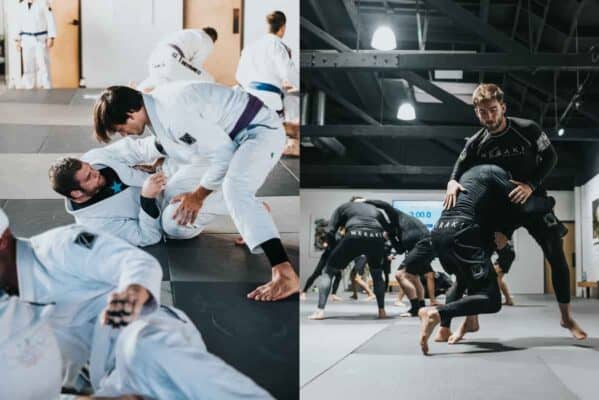
A “Gi” is a style of Brazilian Jiu-Jitsu (BJJ) where all athletes must wear a unique Gi uniform made out of thick cotton that includes a top/jacket, long pants, and a color belt rank. No Gi, as its name suggests, is a style where students do not wear the uniform, which makes it quite different in many aspects.

Gi BJJ is better than No-Gi BJJ if you want to learn practical techniques based on grabbing onto an opponent’s clothing. In contrast, No-Gi is better than Gi BJJ if you plan to become an MMA fighter, where you need to learn to apply techniques without grabbing onto an opponent’s clothing.

Sounds simple, right? Well, though similar, these two styles differ a lot in certain technical aspects, and you are going to learn all about it in this article.

Let’s dive right into it!

What is Gi BJJ?

A “Gi” is the most popular style of BJJ practiced by millions of people around the world. It is an initial style of jiu-jitsu developed way back in the 1920s by Carlos and Helio Gracie.

Training in Gi

In this style, all students need to wear a unique “Gi” uniform. The uniform includes a jacket similar to the “judogi” top, long pants, and the color belt rank around the waist. In fact, the uniform is very similar to the one in Judo but is made out of lighter materials. Students must wear it both in training and competition, and they never do any exercises without it.

RECOMMENDED READING:
What Do BJJ Gi Colors Mean? Answers for BJJ Gi

What is No Gi BJJ?

No-Gi BJJ is the modern style of BJJ where students do not have to wear a traditional Gi uniform (jacket and pants). Instead of a traditional uniform, students wear a rush guard, or just a shorts and a T-shirt.

Training in No-Gi

The exact origins of this style are not clear, but the man who deserves a lot of credit for developing modern no-gi is BJJ legend Eddie Bravo who is also the founder of Combat Jiu-Jitsu

Key differences between Gi and No-Gi Jiu-Jitsu

The difference in friction

Gi uniform creates a lot of friction during the grappling exchanges, notably when the uniform gets soaked with sweat. As a result, friction makes it harder for students to rely on sheer physical strength and speed to gain an advantage. Instead, they have to be patient, and focus more on technique and strategies to find a way to win. 

Friction slows the action down and forces you to think three steps in advance to create the perfect opportunity to attack and win the exchange. 

No-Gi differs a lot here as, due to the lack of uniform, there is far less friction which speeds up the action. This also means that physical strength, athleticism, and speed play a much bigger role than in gi training.

Difference in grips

Gi style enables you to grab and pull the opponent’s uniform in many different ways. Here are the three main gi grips practitioners use:

  • Collar grip – is a grip used to control the posture from both top and bottom positions. Or, athletes might use it to finish the opponent with the famous “loop choke”.
  • Pants grips – are often used when the practitioner is working their way from the bottom position for instance. 
  • Sleeve grips – is one of the most common grips used in Gi training both in the standup and on the ground. 

No-Gi actually includes more grip positions. There are various arm and leg grips (ankle, knee, foot etc.) and head controls:

  • Collar tie
  • Overtie
  • Wrist control
  • Ankle grip

Techniques

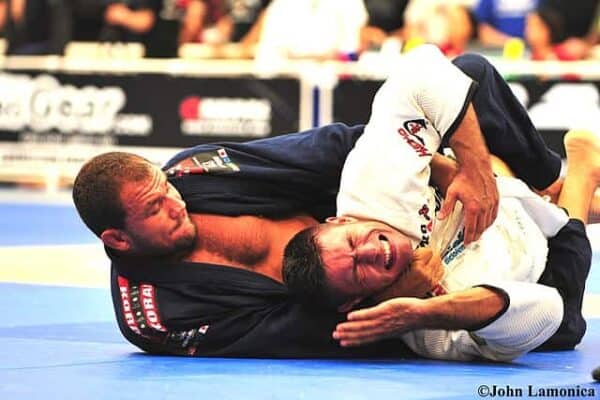
The Gi style has more techniques as there are many ways in which you can manipulate the opponent’s gi against them. Grabbing and using both your and the opponent’s uniform is the key element of the game that opens up a wide range of the way you can attack, defend or set up traps. The emphasis is on collar chokes, powerful judo throws, and open guards. 

Gi style includes most of the techniques that No-Gi has. But on top of that, it adds more as there are plenty of throwing and choking techniques specific just for Gi like the grips on the lapel and collar. A good instance is the collar choke, a very popular move in BJJ that you can’t execute without the uniform.

BJJ collar choke
Photo by John Lamonica

No-gi training focuses more on explosive wrestling takedowns, and submissions like guillotines and leg locks. 

Grappling style

Gi style is much slower due to friction, and there are also many ways in which you might use various grips to stall the action and control the opponent. You have to be patient, think three steps in advance to create the chance to attack, or spot the danger and defend.  This is just one of the reasons why gi training is also called the “human chess match”. 

No-gi differs here as the action is much faster and the physical strength and speed play a much bigger role than in gi training. Of course, the concept and goals are the same and practitioners also have to be strategic and apply various tactics to win a match, but in a different way. 

Gi or No-Gi – Which one is better for self-defense?

The answer is a matter of subjective opinion as to which one is better for self-defense. The popular opinion is that gi training is more in line with street fighting. The idea is that GI jackets and pants worn in training add to the realism as all people wear some clothing. For example, gi training can better prepare you for real-life situations where you can grab the attackers’ jackets or pants to take them down to the ground and neutralize them with a submission.

Advocates of no-gi jiu-jitsu claim that the clothes people wear today differ a lot from the ones worn when BJJ was created. Modern clothing is made out of lighter materials, is more flexible, and can be torn apart much more easily. Also, people living in warmer climates do not walk around wearing thick and heavy clothes like jackets and pants.

This is where the other opinion comes into play. Many believe No-Gi jiu-jitsu is more realistic as its frantic, aggressive pace and approach are more in line with street fighting. They say no-gi’s reliance on physical strength, speed, technique, and body mechanics is more natural and allows you to defend more efficiently and finish the fight much faster.

Of course, street fighting has many variables and both of these styles of BJJ have pros and cons. 

Gi or No-Gi BJJ – Which one is better for beginners?

Gi style of BJJ training should be your choice if you are a beginner just starting out. No-Gi is not a bad option either, but starting out and learning techniques in a gi uniform has many benefits.

First, gi training is the original style of jiu-jitsu, better for beginners as it is more technical. Since the focus is not on physical strength, you will have to master each move to perfection. It is also a much slower and less aggressive style, which enables you to focus on performing with proper technique rather than rushing things and trying to make up for the lack of technique with athleticism

Next, gi training includes almost all of the techniques that you will find in No-Gi. But on top of that, it adds even more sweeps, escapes, and submissions. As a result, you will have a much easier time transitioning from gi to no-gi training, than the other way around. In fact, most no-gi students who switch over to traditional Gi jiu-jitsu must spend a lot of time adapting to the usage of Gi in grappling as they are not familiar with it.

RECOMMENDED READING:
How Long Does it Take to Learn BJJ for Beginners? Q&A

Gi vs No-Gi – Which one is better for MMA?

No-Gi is a better option if your main goal is to develop good BJJ skills for MMA fighting. The reason is quite simple: training without a gi uniform is more in line with grappling in MMA where fighters compete wearing only shorts. All of the skills and techniques you learn in no-gi work well in MMA and when combined with other martial arts.

On the other hand, traditional Gi training is a bit limited since many techniques are dependent on the gi uniform. Since fighters do not wear Gi uniform during MMA fights, techniques they learn in Gi jiu-jitsu do not apply well in MMA fights.

To make their game work in cage fighting, all Gi BJJ practitioners wishing to participate in MMA fights must spend some time in no-gi training. Gi BJJ practitioners need to adapt to the lack of uniform (no friction) and learn additional ways of attacking and defending to fight in MMA.

Traditional Gi training can provide some benefits to MMA fighters. This is notably true when it comes to learning escapes and guard pass prevention, which is crucial skills in MMA. But overall, No-Gi is, in some ways, designed to meet the demands of modern MMA, and with that, is a far better option.

RECOMMENDED READING:
Is MMA Hard to Learn? Easily Explained For Beginners

Gi vs No-Gi – Which one is harder to learn?

Which one is harder to learn is an individual thing and is based on many different factors. Some people have easier time training in a gi, while others are better at no-gi. It all depends on your talent, athleticism, passion, and in the end, which style you prefer. To find which one might be harder, let’s take a look at some of the different factors.

More techniques – Gi

Overall, gi style has more techniques and more variations of each move. It is a bit harder from the technical perspective due to its emphasis on technique rather than athleticism.

More intense – No-Gi

No-Gi is a faster and more explosive style where being physically strong, agile and fast plays a key role during the exchanges. It is more intense than gi training as it puts more emphasis on fast and explosive attacks. 

More injuries – both

Both styles have about equal rates of injuries. But Gi jiu-jitsu might have a slightly higher injury rate because there is more friction training in gi. For example, with increased friction, escaping from a submission hold will cause more stress on your bones or muscles when your limbs rub against your training partner, which may lead to more injuries.

But overall, both styles are equally dangerous.

RECOMMENDED READING:
Is BJJ Hard To Learn? A Guide For Beginners

Can you train Gi and No-Gi at the same time?

Yes, training in both styles of BJJ at the same time has many benefits and it will make you a complete grappler and improve your overall grappling abilities. These two styles might differ from one another in certain aspects, but in the end, complement one another. Here is a detailed explanation.

Gi training helps no-gi students to improve their technique to perfection. It improves their defensive skills, teaches them how to manipulate the clothes, and be more strategic. It won’t help them much when it comes to preparing for no-gi competition. But cross training has many benefits when it comes to self-defense. It’s always good to know how to apply gi grips, and various types of sweeps and escapes specific for gi training.

No-gi training can help gi students learn how to rely more on strength and speed, wrestling takedowns, positional control, and be more explosive in their approach. Instead of gi grips, you will learn how to use arm or leg grips, and perform at a much higher pace. It also has benefits in terms of self-defense aspect as people do not walk around wearing a gi uniform or similar clothes all the time. 

Training in both styles can only make you a complete grappler in the long run.

Gi vs No-Gi – Which one is better for Police Officers?

The only fair answer is that training in both styles is the best option. If you are a police officer looking to improve your hand-to-hand combat abilities to deal with the scenarios at work in a more efficient way, then the best option is to train in both gi and no-gi. This is the only way that you can prepare, as far as hand-to-hand grappling is concerned, for most scenarios.

Due to the nature of the job, police officers need to deal with people of all ages, genders, physical sizes, and even martial arts experts. Some of these people may wear a jacket and jeans, while some may wear as little as shorts. Police officers must prepare for a myriad of unexpected situations on the street, and the only way to prepare for most of them is to train in both styles.

The best way is to start in one style and be sure to talk with your instructor about your intentions and what you want to achieve with BJJ training. They will guide you through the entire process of learning and how you can benefit from training. In some cases, they might even adapt the training to your needs, and focus more on specific aspects of BJJ closely related to the common scenarios you are dealing with on duty.

RECOMMENDED READING:
Top 6 Martial Arts for Police Officers – Why They’re Great

Final Summary: Gi vs No-Gi – Which is better?

Both of these styles are very similar and the concept is very much the same. But a single difference in clothes is a game changer and a key reason why these two styles differ so much.

Which one is better for you depends on many factors, and it mainly comes down to your personal preference and what you want to achieve. Here is a final look at both styles which might help you make the right choice:

Who should learn Gi BJJ?

Gi style of BJJ is the original style that embraces traditional BJJ philosophy, methods of teaching, strong hierarchy and respectful atmosphere. It should be your choice if you are in for the full BJJ experience that enables you to easily transition to no-gi training later on your journey. It is also a more popular style with millions of practitioners all across the world, which makes it far more accessible than the less popular No-Gi.

Who should learn No-Gi BJJ?

No-Gi classes will cost less than Gi classes as you don’t have to buy a Gi uniform. Also, the monthly payment for no-gi classes is likely lower than in traditional gi schools.

Next, no-gi is the right choice if you are a fan of fast-paced grappling, rapid transitions, takedowns, and submissions.

The culture and gym atmosphere are also a bit different as most No-Gi schools do not embrace traditional values as much as gi BJJ does. It is more in line with the modern lifestyle when you look at it from the social context.

Last but not least, No-Gi should be your choice if you want to compete in MMA, or maybe want to switch over to MMA at some point.

How To Increase Kicking Power – Easy Ways to Improve

0

DISCLAIMER: MMACHANNEL strongly recommends that you consult with your physician before beginning any exercise program. You should be in good physical condition and be able to participate in the exercise. MMACHANNEL is not a licensed medical care provider and represents that it has no expertise in diagnosing, examining, or treating medical conditions of any kind, or in determining the effect of any specific exercise on a medical condition.

Many martial arts incorporate kicks as part of their defense and attack repertoire, but these moves can be difficult to execute with precision, power, and speed. Improving your kicking power and speed will help improve your martial art’s overall effectiveness. How do you increase your kicking power?

Increasing kicking power for martial arts involves strengthening the leg, core, glute hip, and lower back muscles. These muscles are the primary source of power in a martial arts kick. Working on speed in the kick is also an important aspect of developing a good, effective kicking technique.

Kicks in martial arts can effectively stop opponents or attackers in their tracks. The kick must be delivered with power and speed to achieve its intended goal, but it can be one of the most difficult martial arts techniques to master. 

What Muscles Make Kicks Stronger?

It makes sense that you can increase your kicking strength by exercising the muscles responsible for generating the power in your kicks.

Many people mistakenly believe that the power of their kicks only comes from the major leg muscles. However, developing a strong core and hip flexor muscles can contribute significantly to increasing the power of your kicks.

The following muscles are used to generate martial arts kicks and should be trained to strengthen the muscles to improve kicking power.

  • Quadriceps. These are the large muscles on the top or front of your thigh.
  • Adductor muscles. These are the muscles in the inner part of your thigh, also sometimes known as your groin muscles.
  • Abductor muscles. This is the group of muscles on the outer side of the thigh. When these muscles are strengthened, the overall coordination of body movements is improved.
  • Hamstrings. The hamstrings are a system of muscles and tendons at the back of the thigh.
  • Glutes. The Gluteus Maximus is the large muscles of your buttocks and can contribute to increased power in kicks.
  • Hip flexor muscles. These groups of muscles are on the front and rear of your pelvis and connect to the upper part of your legs.
  • Lower back muscles. Strong lower back muscles provide increased balance, providing a stable platform to generate power in the kick.
  • Core muscles. These are your abdominal muscles. Core muscles assist with balance, and strengthening these muscles will provide extra snap to your kicks.

Martial arts kicks are as much about flexibility as they are about strength. You should not only work these muscles to increase strength but also to increase flexibility.

How Can I Increase My Kicking Strength?

Exercises that develop the muscles involved in performing a kick will strengthen the muscles and enable them to create more power and strength in the kick.

Exercises To Strengthen Leg Muscles For Kicking

Any exercise that works the legs will be helpful to increase the kicking power generated by these muscles.

Quadriceps can be exercised with leg raises or with leg extensions on a gym machine.

Quadriceps muscle workout

Hamstring muscles are the large muscle groups located at the back of the thigh that can be exercised with reverse leg curls on a gym machine. This requires lying face down on the machine with your legs out straight. Bend your knees and raise your feet until your knees are at 90 degrees. Work up to adding weights to strengthen the hamstring muscles.

https://youtu.be/bvs-Y_qgghE
Hamstring muscle workout

Adductor muscles are more difficult to exercise and easy to strain, so they need to be worked carefully. Squeezing a medicine ball between the knees or using a gym machine to simulate this movement is the best exercise. Add weighs slowly as the strength of the adductor muscles improves.

Adductor muscle workout

Abductor muscles can be worked at the gym by the seated abductor machine, which you operate by starting with your knees together and opening your legs outward against the resistance of the weights. 

You can start exercising your abductor muscles by sitting and leaning over your knees and holding your knees together with your hands. Try using your legs to force your knees open against the resistance of your hands and arms.

Abductor muscle workout

Gluteus Maximus muscles can effectively be strengthened by doing lunges. Start by using small weights and slowly increase the weights to work your glutes harder.

Glute exercises

Cycling is a great way to exercise a large number of the muscle groups needed for kicking. Cycling works your core, hip muscles, quads and hamstring muscles, and lower back. 

Core muscles and lower back can be strengthened with a range of exercises, including sit-ups, torso raises, and a variety of gym machines designed to target these areas.

One of the best ways to strengthen your kicking muscles is to practice kicking. Kicking against a heavy bag will exercise all the muscle groups used to generate the kick.

Do Squats Help You Kick Harder?

Squats are a good exercise to increase the power in your quads, hamstrings, hip flexors, and glute muscles. Squats are a good exercise to increase the strength in these muscle groups, adding power to your kicks.

You do not want to perform squats with excessive weights when training for martial arts kicks. Squats with very heavy weights will build bulk in the muscles, which can develop power, but will slow down the speed of the kick.

When exercising for improvement in martial arts kicks, you must focus on developing power as well as speed.

Who Has The Hardest Kick In The World?

There is no official record of the hardest kick in the world. But there have been several professional fighters who have shown incredible kicking strength when measured with scientific tools. One very notable case is MMA fighter, Shogun Rua.

Shogun Rua is a Brazilian MMA fighter credited with one of the most powerful recorded kick in the world. This accreditation is subjective since not every martial artist has had their kicks evaluated.

Shogun Rua was rigged with sensor equipment and performed several Muay Thai kicks against a heavy bag rigged with pressor sensors.

The Muay Thai kick recorded 2749-pounds of force, which is a significant amount of power! These readings were more than double the force of Rua’s punches recorded in the same session. His punches recorded a force of 1169-pounds.

Which Is More Powerful, Kick Or Punch?

Many people rely on their punches more than their kicks in martial arts, but a good well-timed kick can be significantly more devastating than a punch.

A kick generates more power than a punch because the size of the muscle groups involved in generating the power in the kick are much larger than those used to generate power in a punch.

Although a punch also uses core muscles and hip muscles, similar to a kick, the balance of the power is generated by the upper back, shoulders, and arms.

In contrast, the power generated for a kick comes from the thigh muscles combined with the core, hip, glute, and back muscles. The muscle groups in the legs are considerably larger than the muscles in the shoulders and back.

As a result, the power generated in a kick is typically much greater than what can be delivered by a punch.

RECOMMENDED READING:
How Hard Can an Average Person Punch?

How Powerful Is A Human Kick?

While Shogun Rua’s kick is exceptionally powerful, the average person can kick with 1000 pounds of force. This power can be increased with proper training and technique to levels similar to that displayed by Shogun Rua.

A 1000-pound force kick is the equivalent of 4448 newtons. Studies have revealed that a force of 3300 newtons or 741-pounds has a 25% chance of cracking ribs.  

How Do I Kick Faster?

Improving kicking speed is as important as working on the power behind the kick. Speed helps to increase momentum, which in turn contributes to power in the kick.

The main reason to increase the speed of the kick is so that your opponent or attacker will not see the kick coming and will be caught by the full force of the kick.

Mastering the correct technique is important to increasing speed. Start practicing your kicks in slow motion will improve technique, and accuracy, stretch your muscles and build strength. As you work up to faster speeds, you will notice that you can kick faster and faster.

Work on your core muscles and hip flexor muscles; these muscle groups add snap or speed to your kicks.

Add weights to your ankles when practicing your kicks. When you remove the ankle weights, your feet will feel lighter, and you will move more quickly. Bruce Lee used this strategy to improve his kicking speed and power dramatically.

Want to dive deeper into learning about kicking?  Read more about How Fast Can The Average Person Kick?

Which Martial Art Has The Strongest Kick?

There is some debate as to which martial art has the strongest and most effective kicks, but the general consensus is that Muay Thai has the most powerful kicking styles.

Capoeira is a Brazilian martial art with extremely effective kicks, but the techniques must be executed flawlessly for them to be delivered with full effect.

The other martial arts after Muay Thai and Capoeira with potentially devastating kicks in order of effectiveness are Taekwondo, Wushu, and Karate.

Final Thoughts

If kicks are an important part of the curriculum of the martial art you study, it makes sense to spend some dedicated time increasing the power and speed of your kicks.

Many martial arts students neglect this part of their training and focus on the punches since the kicks are more difficult to master and execute correctly.

Working on your kicking muscles and techniques will also improve your balance and stability, which will improve other aspects of your martial arts training.