Home Blog Page 13

Dana White’s Contender Series vs. TUF – Key Differences Explained

0
Credit: UFC.com

UFC is putting a lot of resources into scouting and discovering new talent all across the world. One of the most popular methods is through two popular shows — Dana White Contender Series (DWCS) and The Ultimate Fighter (TUF). But what is the difference between these two shows?

“Dana White Contender Series” is a non-UFC promotion in which fighters compete to be scouted by Dana White. The Ultimate Fighter, on the other hand, is a UFC-produced reality TV series in which fighters compete for UFC contracts.

Read this article to learn more about how these two popular shows differ from one another.

What is Dana White Contender Series (DWCS)?

DWCS show is a platform where top prospects from different parts of the world compete under one roof, vying for a spot on the UFC roster. Instead of UFC scouts traveling worldwide to seek out top prospects, Dana White created DWCS as a recruitment system for new talent right in Vegas.

Although the face of the DWCS is the UFC president, Dana White, the DWCS show is not a UFC brand. Instead, it is licensed separately from the biggest MMA promotion. In fact, Dana White needed to obtain a promoter’s license to run the contender series.

It was stated ahead of the license being approved that “this is not the UFC, this is not the UFC brand,” but instead a promotion that will allow up and coming fighters the chance to showcase their talents in hopes that one day they may compete in the UFC.

Dana White receives promoter’s license for new contender series separate from UFC

DWCS hosts one season every year, and each season consists of around ten different events, and each of these events hosts about 5 MMA fights. The season is aired usually by the end of July and lasts around two months by the end of September or mid-November. All DWCS seasons are hosted in the UFC Apex Center in Las Vegas, Nevada.

The show focuses on giving talented young fighters a chance to prove their worth directly in front of Dana White and UFC matchmakers. However, not every winner is guaranteed a spot on the UFC roster. You have to show dominance, and aggression, fight at a high pace, and in most cases, finish the match to earn a spot.

On average, more than 30 MMA fighters earn a contract per season or per year. The show is aired on ESPN+, but you can also watch it on UFC Fight Pass.

LEARN MORE
Is MMA Hard to Learn? Easily Explained For Beginners

What is The Ultimate Fighter show (TUF)?

The Ultimate Fighter (TUF) is a reality television show produced by the UFC’s sister company, Zuffa LLC. The first episode aired on January 17, 2005, and since then, the UFC has been consistently airing one season every year.

The show’s main goal is to discover new MMA talents and attract new audiences through the reality television format. In 2005, the UFC struggled to break into the mainstream. However, after years of struggling, their breakthrough moment finally came when they created The Ultimate Fighter reality show, which became an instant hit. The show brought new audiences to the sport and helped the new fans understand the game better.

The way TUF works is straightforward. Two famous UFC fighters coach two separate teams pitted against each other. At the show’s beginning, there will be 16 fighters on the show who come from diverse backgrounds, and each coach picks eight fighters to form their team. Throughout the show, fighters from team A compete against the fighters from team B.

In addition, all fighters from both teams get to reside in the same TUF house in Las Vegas for the duration of the show. With that, the fighters’ daily life is filmed and shown on TV throughout the show. They eat, sleep, drink, and party together despite pitting against each other on the show. This makes the show dynamic and dramatic as viewers learn more about fighters’ personalities and their drama interacting with other fighters on the show.

Participants of the show compete in a form of elimination tournament where there are:

  • Preliminary Round
  • Quarter-Finals
  • Semi-Finals
  • Finale

The winners of the show, as well as runner-ups and other members who left a strong impression, would earn a contract with the UFC. But the winners are the only ones who get a three-year contract worth six figures.

RECOMMENDED READING:
How Long Do UFC Fighters Train Every Day? FAQ For Beginners

What is the key difference between DWCS and TUF?

The key differences are the format of the show and the way athletes earn contracts with the UFC.

Production and goals

TUF is a reality television show designed to attract the mainstream audience. It gives the fans an insight into fighters’ everyday life, how they prepare for matches, their struggles, anxiety, fears, and ups and downs on their journey. The main goal of the show is to:

  • Find new talented fighters
  • Introduce new fighters to the existing fan base
  • Attract new audiences
  • Improve the image of the sport
  • Strengthen the UFC brand

The TUF show, in essence, educate fans and laymen to learn the sport. The show’s objective is to attract new audiences to learn more about UFC throughout the episodes, who may later become fans to purchase PPV events.

DWCS is slightly different because the show’s primary focus is finding new talents. It serves as a recruiting platform where top prospects can showcase their skills and get scouted by Dana White to earn a spot on the UFC roster.

The DWCS show gives you a basic background of every fighter. The core value of the show is exciting fights and giving fighters a media spotlight to introduce themselves to the large UFC audience.

Simply put, DWCS is a show that promotes newly signed mid-or lower-tier fighters who are often ignored by the media and their ascension to the top.

Competition format

TUF is a reality show produced by the UFC where fighters compete in a tournament format. The show includes two teams with 16 fighters competing in an elimination format.

DWCS is an MMA promotion that hosts around ten events per season in which athletes compete in front of UFC matchmakers who evaluate their talents. Fighters usually sign a one-fight deal to showcase their skills. However, they may get an opportunity to sign a UFC contract backstage if they win a spectacular fashion. The events are similar to the UFC’s preliminary cards, where low/mid-tier fighters compete.

Who became the most famous fighter from DWCS?

The most famous fighter who came out of the DWCS is Sean O’Malley thus far. He earned his UFC contract in the very first season with a win over Alfred Khashakyan. Following is a list of other popular UFC fighters produced by DWCS.

Sean O’Malley
Photo by Optic Gaming

However, remember that the show is still relatively new and has yet to produce global UFC superstars or champions.

  • Geoff Neal — earned a contract with the TKO win over Chase Waldon in season 3. 
  • Sodiq Yusuff — got his contract with a dominant decision win over Mike Davis at DWCS series 14.
  • Maycee Barber — earned a contract with a win against Jamie Collen at DWCS Series 13. 
  • Johnny Walker — got his contract after winning a unanimous decision at DWCS Brazil 2. 
  • Marina Rodriguez — secured her contract with a stoppage win over Maria de Oliveira Neta at DWCS Brazil 2
  • Jamahal Hill — the UFC’s light heavyweight contender secured his shot in the UFC with the finish over Alexander Poppeck at DWCS Series 21

Who became the most famous fighter from TUF?

The most famous TUF winner has to be the welterweight champ, Kamaru Usman, who won the TUF 21 show in 2014 with a submission win over Hayder Hassan. Later as a UFC fighter, he went on to win the UFC 170-pound title in 2019 and defend it five times in the next two years before losing it to Leon Edwards.

Since 2005, The Ultimate Fighter show has produced many top-level UFC fighters, such as:

  • Rose Namajunas — joined the TUF 20 season from Invicta FC. Although she lost to Carla Esparza in the finals, Namajunas became a two-time UFC strawweight champion.
  • Nate Diaz — is an MMA superstar who earned his UFC contract by winning the TUF 5 season by beating Manvel Gamburyan in the finals in 2007.
  • Diego Sanchez — is the winner of the very first season of the TUF show aired in 2005. Sanchez went on to compete for the UFC for 15 years before retiring in 2020.
  • Tony Ferguson — is the former UFC Interim lightweight champion who won the TUF 13 season by beating Ramsey Nijem in the finals.
  • Michael Bisping — is the UFC hall of fame and the former Middleweight champion. He earned his contract by winning the TUF season 3 show in 2003.

How do you get into the Dana White Contender series (DWCS)?

You can secure a spot in the DWCS show in two ways. The first is through the manager, and the second is by contacting the UFC directly through their online portal.

The first and most obvious requirement is that an athlete has a winning record against decent opponents. Being a champ in some smaller promotions and having an exciting fighting style is also a huge plus. Fighters with many finishes on their records are more likely to get an opportunity than the ones whose matches often go to distance.

One of the key figures that may help you get on the show is a sports agent or manager. Most modern MMA fighters have agents running their careers, booking fights, negotiating contracts, and creating opportunities. Agents with good reputations have strong connections in the industry, which they may use to secure you a spot on the show.

The other way is to use the UFC online portal to reach out to the UFC matchmakers. For example, the UFC is cooperating with talentbid.com, where you can create your fighter profile and directly apply to be a UFC fighter.

If you fit their profile, the matchmakers might call you to take part in DWCS, TUF show, or maybe jump on the short notice opportunity to make a UFC debut.

RELATED:
How To Become A UFC Fighter? (COMPLETE BEGINNER’S GUIDE)

How do you get into the TUF show?

Each year, the UFC announces the new season of TUF by publishing the application procedures for any athlete interested in participating in the TUF show. In that case, they must fill out the application and wait for the response.

If selected, the UFC will call you to participate in the final casting process to secure a place in the show. Around 50 athletes will be invited to tryouts. They might participate in a grappling and striking session in front of Dana White and UFC matchmakers to be evaluated. They also do interviews where they need to showcase their personalities.

Each TUF season has different requirements, notably regarding weight classes. For example:

  • The season might be open only for bantamweights and middleweights.
  • Athletes must be between 21 and 34 years old.
  • Athletes must have a winning record and at least three professional fights.

One important thing to note is that athletes who compete in TUF shows are not paid regularly. However, they may receive bonuses for winning certain challenges, and the UFC covers all their expenses during the show. Still, they do not receive any fight purses.

RECOMMENDED READING:
Top 16 Best MMA Gyms in the U.S. – (What You Need to Know)

Which show should I sign up for to be a UFC fighter?

Which one works better for you depends on many factors as each of the shows has pros and cons. On one side, DWCS is great because it allows you to come to the event, show a bit of personality, spectacularly finish the fight, and instantly you earn a UFC contract after the show. However, you won’t get a big media spotlight, and the contract you sign is not as lucrative as the one you can get on a TUF show. Fighters out of DWCS usually get a one-fight deal for a minimum purse.

TUF is a bit different because it is a reality show. You will get a lot of media coverage to showcase your personality, get viewers’ attention and build a fan base. You also compete multiple times in a short span of time, allowing you to make a name for yourself quickly if you succeed.

But the TUF’s biggest advantage over DWCS is the contract you get. If you manage to win the show, you will sign a six-figure contract with a guaranteed first year. Each year consists of three fights where in the first year, you get a $12,000 guaranteed purse + 12,000 if you win. For the second year, you get a $16,000 guaranteed purse per fight + $16,000 for a win. And in the third year, you will get $22,000 per fight + $22,000 if you win.

TUF vs. DWCS – Which is better to watch?

Which one is more entertaining comes down to your personal preference. But the majority of fight fans watch both.

TUF is a reality television show where you can get familiar with the fighters and their stories and maybe become a fan through the episodes. There is more drama, interactions between the fighters and coaches, rivalries, and a better narrative you can relate to.

DWCS production is very similar to UFC preliminary cards. Although the events only include yet-to-be UFC fighters, the match quality and skill level are still high. Most matches are packed with high-pace action as featured fighters are very eager to earn spots on the UFC rosters.

Related Questions

What is Dana White lookin’ for a fight show?

Dana White Lookin’ for a Fight” is a show produced by the UFC. The UFC president, Dana White, and his two best friends, former UFC champ Matt Serra and Din Thomas, travel across the U.S. in search of new MMA talents.

The show is not just about MMA fighting, as the production highlights the funny personalities of all three hosts. They will try local food and activities related to the local culture whenever they visit a particular state or town with a rich history. For example, they might ride the bulls, go paddle boarding in sub-freezing temperatures in Alaska, swim with the dolphins, etc.

Top 16 Best MMA Gyms in the U.S. – (What You Need to Know)

0

You can often hear coaches and experts saying that “iron shapes iron” and how crucial it is for athletes to train in the best MMA gyms to maximize their potential. If you look at the most successful UFC champions, they all train in large facilities under one of the best coaches.

Following is a list of what we consider the top 16 best MMA gyms in the U.S. The success of these gyms is based on the quality of coaching staff, and the number of top fighters and champions they have produced over the years.

We will analyze their coaching staff, expertise in teaching, quality of fighters, reputation, and what makes them so good. You should definitely check out one of these MMA gyms we’ll be showing you if you are lucky enough to live nearby. So let’s dive right into it.

American Top Team

Location: Coconut Creek, Florida, U.S.

American Top Team (ATT) is among the most popular MMA training facilities. Founded in 2001 by Dan Lambert, ATT is the most successful MMA gym and home to the best fighters. On top of that, ATT is a very strong brand, and there are over 40 ATT affiliates worldwide.

The main academy, located in Coconut Creek, Florida, is a training facility of 50,000 square feet of space. It hosts hundreds of pro-fighters, state-of-the-art equipment, various training programs, and of course, great coaches.

It also includes a dorm where fighters can lodge while preparing for a match. This makes ATT a top-rated destination for foreign fighters who are looking to improve their game by training under the best coaches and best training partners.

ATT’s strength is turning its fighters into the best all-around MMA fighters. When you look at ATT-trained fighters, they are some of the world’s most well-rounded MMA fighters. They know how to strike and defend against wrestlers and are well versed in fighting on the ground if needed.

The main instructors like Mike Brown, Conan Silveira, and Steve Mocco have worked with some of the most successful UFC fighters such as:

  • Tyron Woodley
  • Joanna Jedrzejczyk
  • Jorge Masvidal
  • Dustin Poirier
  • Amanda Nunes
  • Robbie Lawler

American Kickboxing Academy (AKA)

Location: San Jose, California, U.S.

Not only is American Kickboxing Academy (AKA) among the best MMA gyms in the U.S., but it is also one of the very few that have managed to stay on top for a couple of decades now. AKA is one of the longest-running MMA gyms. It was founded by the former kickboxing world champion, Javier Mendez, in 1985.

Over the years, AKA has become a very popular gym for all fighters, notably those with a strong base in wrestling seeking to develop their striking skills for MMA fighting. It is a popular destination for fighters from Dagestan and many collegiate wrestlers who seek to transition to MMA.

AKA consists of world-class striking and grappling coaches such as Javier Mendez and BJJ legend, Leandro Vieira. The gym does a really good job of helping fighters develop an all-around game.

It enables grappling-based fighters to improve their striking skills and elevate their MMA grappling skills to another level by training with the best wrestlers in MMA. The gym roster consists of the finest strikers and grapplers who are helping each other improve all the weak areas in their game.

AKA’s most well-known fighters:

  • Daniel Cormier
  • Khabib Nurmagomedov
  • Islam Makhachev
  • Cain Valasquez 
  • Luke Rockhold
RECOMMENDED READING:
Why Do Wrestlers Dominate MMA?

Kill Cliff FC (formerly known as Sandford MMA)

Location: Deerfield Beach, Florida

The story of Sanford MMA began in 2017 when two coaches, Henry Hooft and Greg Jones, founded “Combat Club.” They later changed the name to “Hard Knocks 365”, then to “Sanford MMA” before re-branding once again to “Kill Cliff FC.”

Hooft and Jones have a strong reputation and are among the best coaches in MMA. The two managed to build a strong roster of UFC fighters quickly, and the gym was an instant success in terms of the results.

The Kill Cliff FC training facility consists of over 40 world-class athletes who compete in the biggest promotions all around the world.

Apart from a high-quality coaching staff and advanced methods of teaching, the gym also includes an advanced support clinic. A place where experts help fighters recover from hard training and injuries, get nutrition advice, and enjoy many other benefits.

Over the years, the gym has produced champions such as:

  • Kamaru Usman
  • Gilbert Burns
  • Leon Edwards 

Kings MMA

Location: Huntington Beach, California, U.S.

The owner of Kings MMA and head coach, Rafael Cordeiro, is among the most respected MMA coaches in history. Cordeiro used to be a coach in the famous “Chute Boxe” gym in Brazil before he decided to move to the U.S. and focus on producing his own champions. And he did, a lot of them.

Cordeiro won “the coach of the year” awards two times in 2012 and 2016. What sets him above the rest is not only the experience he has gained over the years and the ability to pass down knowledge but also the ability to evolve and improve the concept of training methods.

Cordeiro is known for turning elite grapplers into elite strikers, which is what he did with Fabricio Werdum and Raphael Dos Anjos, for instance. Some of the other fighters he worked with over the years are:

  • Wanderlei Silva
  • Lyoto Machida
  • Marvin Vettori
  • Kelvin Gastelum

Cesar Gracie Jiu-Jitsu

Location: Pleasant Hill, California, U.S.

Founded in the early 2000s, Cesar Gracie jiu-jitsu is one of the most recognized MMA gyms in the world. It became a really popular place to train during the glory days of Strikeforce promotion, where champions in three of five weight divisions came from this gym.

As one would assume, Cesar Gracie academy has a strong reputation for being the place where you can develop the best BJJ skills for MMA. The primary grappling coaches are Cesar Gracie, Ismael Mota, Nick and Nate Diaz, and Jake Shields. All world-class BJJ athletes.

Though known for grappling, the quality of striking classes does not fall behind at all. The famous boxing coach Richard Perez is responsible for turning some great grapplers like the Diaz brothers and Gilbert Melendez into decorated strikers.

Famous Cesar Gracie Jiu-Jitsu fighter:

  • Nick and Nate Diaz
  • Gilbert Melendez
  • Jake Shields
  • Joe Schilling
RELATED:
Top 10 Absolute Best BJJ Coaches in the U.S.

Roufusport Academy

Location: Milwaukee, Wisconsin, U.S.

Founded in 2006 by the kickboxing legend Duke Roufus, “Roufusport” is widely regarded as a top MMA gym specializing in teaching top-level striking skills. In 2012, Duke Roufus partnered with the UFC fighter at the time, Anthony Pettis, a gym co-owner.

Roufusport Academy embraces hard methods of training and a lot of intense sparring. Unfortunately, between 2012 and 2014, Roufusport academy was mired in controversy, as some members spoke out against Rofusport’s training methods.

Despite all the criticism, the gym remains an elite powerhouse for MMA fighters such as:

  • Tyron Woodley
  • Rose Namajunas
  • Ben Askren
  • Anthony Pettis
RECOMMENDED READING:
Why Are MMA Fighters Bad at Boxing? The REAL Reason Explained

Serra-Longo Fight Team

Location: Long Island, New York, U.S.

The structure of the Serra-Longo Fight Team may seem confusing at first glance. Two separate teams are working united as one MMA team: Serra BJJ Academy and Longo-Weidman MMA.

Matt Serra is the former UFC champion and a BJJ legend responsible for teaching fighters top-level BJJ skills. Conversely, Ray Longo and Weidman focus more on the striking aspect (Longo) and wrestling (Weidman) and how to incorporate these two segments for MMA. Though it may sound a bit confusing, the system works well in practice.

Serra-Longo Fight Team’s most famous fighters:

  • Chris Weidman
  • Aljamain Sterling
  • Al Iaquinta
  • Merab Dvalishvili
RELATED:
Is MMA Hard to Learn? Easily Explained For Beginners

Jackson-Wink MMA

Location: Albuquerque, New Mexico, U.S.

Jackson-Wink MMA has been around since the early 2000s and is considered one of the best MMA gyms in the world. This gym is operated by two close friends, Mike Winkeljohn and Greg Jackson, who both stand for true masterminds of the fighting game.

Over the years, the two coaches have received many “coach of the year” awards. One of the core competencies of their work is the ability to adapt an individual training plan to each athlete who trains under their roof. They are masters in creating strategies and game plans to the slightest detail, which is just one of the reasons why they have produced so many UFC champions.

Jackson-Wink MMA training facility is enormous, which includes housing for in-house fighters. They will get the most out of your talent and potential if you have what it takes to be a fighter.

Jackson-Wink MMA produced the following fighters:

  • Jon Jones
  • Holly Holm
  • Rashad Evans
  • Diego Sanchez
  • Donald Cerrone
  • Carlos Condit

Elevation Fight Team

Location: Denver, Colorado

Elevation Fight Team has grown into one of the strongest MMA teams in the world. The unique thing about Elevation Fight Team is that each co-owner has their own gyms specialized in different fields of MMA.

According to head grappling coach, Cody Donovan, this business concept takes a lot of pressure away. So apart from training in the main facility, each fighter is enabled to train in a wide variety of other gyms such as:

  • Eason’s MMA
  • Vital Strength and Fitness
  • Pound 4 pound fitness
  • High Altitude MMA

What also attracts the athletes is the location of the gym. Denver sits at 5,280 ft. or one mile above sea level, where the air is much thinner. Training at this altitude boost endurance and overall aerobic capacity.

The following fighters are associated with the Elevation Fight Team:

  • Cory Sandhagen
  • Alistair Overeem
  • Neil Magny
  • Curtis Blayde

Xtreme Couture

Location: Las Vegas, Nevada, U.S.

Founded by the former UFC champ, Randy Couture, “Xtreme Couture” is one of the largest training facilities. It covers approximately 24,000 square feet. For the general public interested in learning about MMA, Xtreme Couture has become a popular destination. It also attracts many seasoned MMA fighters who want to enhance their fighting skills and fitness to another level and achieve their combat sports goals.
The gym has a very knowledgeable coaching staff that has been working together for a long time. Next, the facility is equipped with the latest gear. Overall, it provides an athlete with everything they need to succeed.

The gym offers BJJ, Muay Thai, Boxing, and Wrestling classes as well as programs to improve functional fitness. Some of the most famous MMA fighters that came out of Xtreme Couture have been:

  • Francis Ngannou
  • Randy Couture
  • Vitor Belfort
  • Ryan Bader
  • Alistair Overeem

Alliance MMA Gym

Location: Chula Vista, California, U.S.

Founded in 2007 by the former UFC heavyweight contender Brandon Vera and Lloyd Irvin, Alliance MMA Gym has been a powerhouse for top-level MMA fighters for a long time now. The gym came into the spotlight with the rise of the former UFC champ, Dominick Cruz, who deserves a lot of credit for putting the Alliance MMA Gyms on the map.

According to Cruz, the gym is attracting fighters from all over the country and worldwide, especially those looking to improve their BJJ game. Though the BJJ culture is really strong, Alliance is specialized in other fields of MMA like Boxing, kickboxing, and wrestling.

Some of the most popular fighters who came out of Alliance MMA gym are:

  • Dominick Cruz
  • Brendon Vera
  • Alexander Gustafsson (* also part of Allstars Training Center )

Team Alpha Male

Location: Folsom Blvd, Sacramento, California, U.S.

Founded by the former UFC title contender Uriah Faber, Team Alpha Male stands for one of the top MMA facilities on the West Coast. Though the gym covers all aspects of MMA, the main focus is on wrestling, submission grappling, and Muay Thai.

The majority of UFC fighters and champions that came out of this camp have top wrestling skills and sharp striking. The likes of Cody Garbrant and TJ Dillashaw and how advanced these two fighters are in all aspects of MMA are great representations of the Team Alpha Male.

Though the gym accepts athletes from all weight classes, it is actually very popular among fighters who compete in the lower weight divisions.

Team Alpha Male fighters are:

  • Cody Garbrandt
  • TJ Dillashaw
  • Deiveson Figueiredo

Fortis MMA

Location: Dallas, Texas U.S.

Founded by former NBA star Deron Williams in 2017, Fortis MMA is one of Texas’s most prominent MMA gyms. The head coach, Sayif Saud, has built a powerhouse team of talented fighters. In his words, he wanted to surround each athlete with the coaches he trusts and provide them with all the equipment to succeed.

Fortis facility includes a 7,000 sq. ft. training area, separate rooms for BJJ classes, cage-covered wall, cardio equipment, locker rooms, and even a kitchen and weight room. Over 50 fighters train at Fortis every day, and initially, their roster consisted of talented up-and-coming fighters.

But over the years, most of these athletes have reached the highest levels of the UFC. Some of the notable fighters are:

  • Ryan Spann
  • Alonzo Menifield
  • Mohammed Usman

Factory X

Location: Santa Fe Cir, Englewood, Colorado U.S.

Factory X is one of those MMA gyms that is working hard and building a strong roster of fighters under the radar. It was founded in 2009 as a Muay Thai school. But over the years, they added grappling classes, and Factory X diversified their business model towards MMA.

The training facility spreads around 10,000 sq. ft. and offers Muay Thai, BJJ, and MMA classes. However, the core expertise of the school is striking, and the key figure is head coach Marc Montoya, who is a true mastermind of the fighting game, producing more UFC fighters than anyone else.

Notable fighters:

  • Anthony Smith
  • Dustin Jacoby
  • Brandon Royval

MMA Lab

Location: Phoenix, Arizona, U.S.

MMA lab stands for the #1 training facility in Arizona. It was founded in 2007 and has produced many UFC and Bellator fighters. But the biggest structural change came in 2018 when the former UFC champ, Ben Henderson, partnered with the owner and head coach of MMA Lab, John Crouch.

The training center is enormous and consists of three separate training rooms for BJJ and MMA, a striking room equipped with punching bags and a boxing ring, and a children’s training room fully matted from floor to wall. There is also a separate room for strength and conditioning and a childcare room where the Infant CPR certified workers would take care of your child while you are training.

Notable fighters:

  • Benson Henderson
  • Jared Cannonier 
  • Sean O’Malley
  • Alex Caceres

AMC Pankration

Location: Woodinville, WA, U.S.

Though not as popular as others on this list, AMC Pankration is among the oldest MMA gyms. It started operating in 1988 when the founder, Matt Hume, started a Pankration Club that would later re-brand to “AMC Pankration” in 1991. This was long before the UFC got launched in 1993. Apart from martial arts classes, the gym also hosted MMA events from 1999 to 2008.

The gym is best known for Demetrious Johnson, former UFC flyweight champ and one of the best fighters in history. But there are also other successful fighters such as Bibiano Fernandes.

Why Does Aikido Have a Bad Reputation? Here’s a Closer Look

0
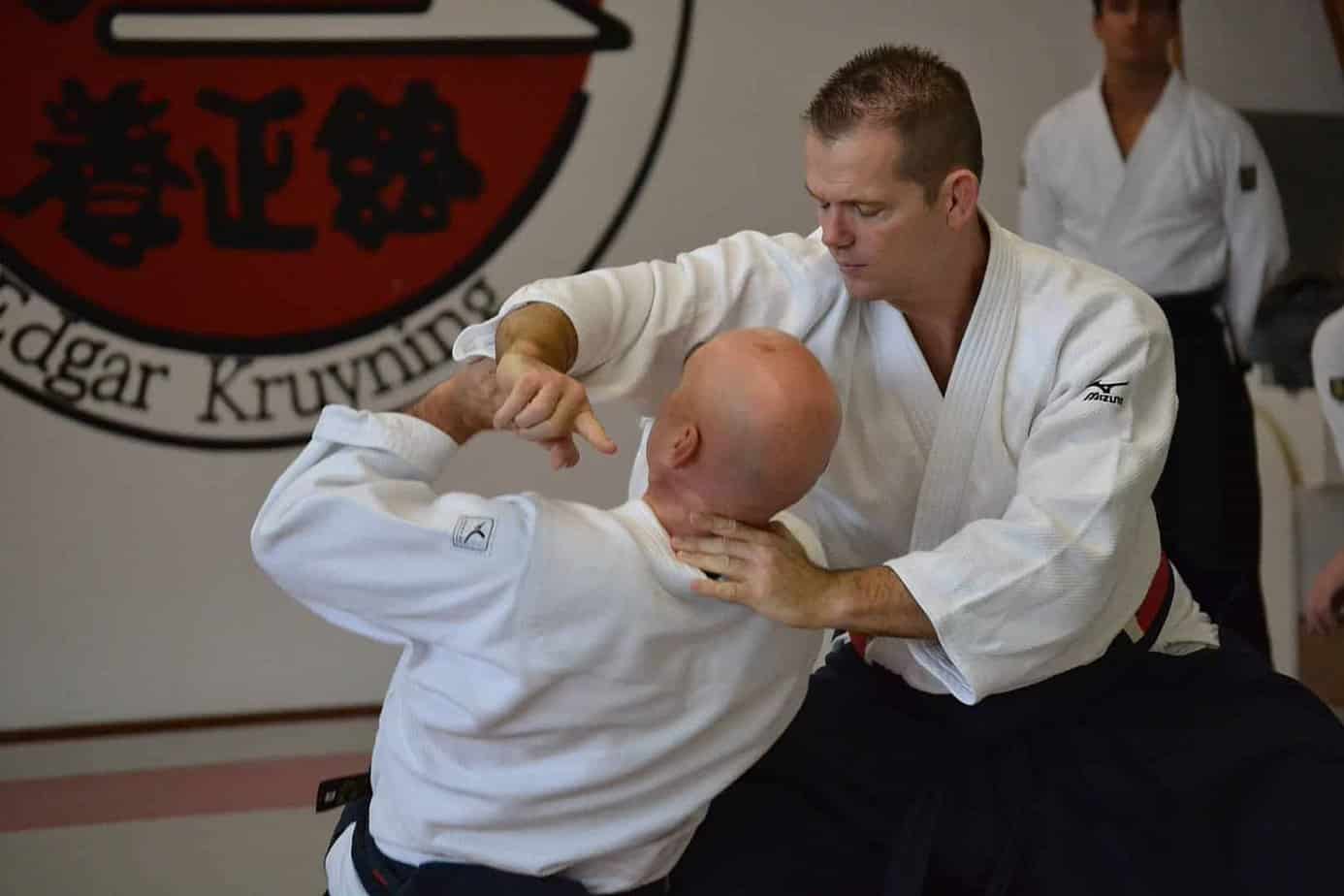
Photo by Yoseikan

Aikido is a martial art originating in Japanese and has not been around for very long. It is known for its defensive techniques and its philosophy of peace and harmony. Many other martial arts practitioners do not consider Aikido to be an effective or serious martial art, and its reputation has suffered as a result. There are many reasons why Aikido has a bad reputation, but the following is the most notable reason in our view:

Aikido’s bad reputation can be traced back to some celebrities who misrepresented Aikido as a combat art to the public. However, Aikido is not a combat art because it is designed to neutralize an attacker in a peaceful, nonviolent way. As such, many view it as weak art.

Aikido techniques and philosophies are perceived as being too soft, which has given the martial art somewhat of a bad reputation in the martial arts community. Certain high-profile individuals, as mentioned above, have also contributed to Aikido’s bad reputation, causing many people not to take it seriously. We will investigate some of the main reasons why Aikido has this reputation and whether or not it’s deserved.

What Is Aikido?

Aikido is a relatively new Japanese martial art developed in the 1920s by the founder Morihei Ueshiba. Aikido’s foundation is deeply rooted in Daito-Ryu Aiki-jujutsu, the martial art Morihei Ueshiba studied.

Ueshiba became a deeply religious man and incorporated his philosophies into Aikido to be a primarily defensive fighting style rather than an aggressive fighting style.

Aikido gained a lot of public exposure when Steven Segal, an Aikido practitioner, became an international action star by displaying his Aikido moves in the action scenes in his movies.

Even though Aikido is considered a soft martial art, the techniques taught can cause serious injury or death if they are not executed correctly. For this reason, students are taught to perform the techniques with the amount of force necessary to defeat an attack but not harm the attacker.

RELATED:
Hapkido vs Aikido – Key Differences Explained For Beginners

Why Does Aikido Have Such A Bad Reputation?

There are several reasons that Aikido has gained a poor reputation causing other martial arts practitioners to view the art with contempt.

One reason is that people in the public eye claiming to be Aikido experts have boasted about their martial arts prowess, only to be easily beaten when confronted by other martial arts practitioners. However, the truth is that Aikido is actually a very effective martial art that can be used to great effect in self-defense situations.

Secondly, Aikido techniques are very difficult and take a long time to learn and execute effectively. If the techniques are not executed properly, they can easily be countered by an opponent. As a result, Aikido takes a long time to learn and become proficient to the point where it can stand against other martial arts.

Thirdly, Aikido’s techniques are designed to neutralize an attacker, not to inflict serious damage. This makes it seem a less effective fighting style compared to more aggressive martial arts like Karate or Muay Thai.

Another reason for its bad rap is that Aikido relies heavily on joint locks and throws rather than strikes. This can make it difficult to use in a real-world fight where strikes are more common. 

Finally, because of its emphasis on peaceful resolution despite being a martial art, some people see Aikido as “soft” or “weak,” lacking the adequate aggression to defend against an attacker.

While it’s true that Aikido may not be the best choice for everyone, it’s important to remember that every martial art has its own strengths and weaknesses.

What works for one person may not work for another. So if you’re interested in trying Aikido, don’t let its bad reputation deter you. It just might be the perfect martial art for you.

Is Aikido’s bad reputation justified or not fair?

Aikido has a bad reputation. It’s often seen as a “soft” or “passive” martial art, and its techniques are often derided as ineffective. But is this reputation justified? Or is it simply unfair? Let’s take a look at the evidence.

There are several clear reasons why Aikido might have a bad reputation. Aikido is not taught in many gyms and doesn’t have the same visibility as other arts like Karate, Judo, or Taekwondo. This lack of visibility can make it seem like Aikido is not serious martial art.

Additionally, Aikido techniques can be challenging to learn and execute correctly. They often require precise timing and positioning, which can be hard to master.

Also, Aikido relies heavily on redirecting an opponent’s energy; it can be easy to look like you’re not doing much when you’re actually doing a lot. This can make Aikido appear ineffective, even if it’s not.
However, there are also some equally valid reasons why Aikido’s bad reputation might NOT be justified.

First of all, despite its reputation, Aikido is a very effective martial art. Its techniques are designed to control and subdue an opponent, not to score points or look flashy. In a real-life situation, Aikido can be incredibly useful.

Second, Aikido is not just a “soft” or “passive” martial art, even if perceived as such. While its techniques may not be as flashy or exciting as other arts, they can be just as devastating. In fact, because Aikido relies on redirecting an opponent’s energy, its techniques can sometimes be more powerful than those of other martial arts.

Ultimately, whether or not Aikido’s bad reputation is justified depends on your perspective. If you’re looking for a popular, flashy martial art, Aikido might not be for you. But if you’re looking for an effective self-defense system, then Aikido is definitely worth considering.

Is Aikido a Dying Martial Art?

Aikido’s bad reputation has not helped the development of martial art in the public sphere, but that does not mean it is a dying art.

Several reasons besides its reputation have lowered its popularity among the general public as a suitable martial art to study.

Aikido is a relatively new martial art, so it doesn’t have the same long history and tradition as other martial arts like karate or judo. Aikido is a very technical martial art that relies heavily on proper form and technique, and many people find it difficult to learn. 

Aikido is a non-competitive martial art. There are no tournaments or competitions, so there’s no way to prove your skills against other practitioners.

Despite these factors, Aikido is still a valid and effective martial art with a substantial worldwide following. 

Studying Aikido is also a great way to get in shape and learn something new. If you’re interested in trying Aikido, there are plenty of schools and instructors available who can help you get started.

Is Aikido an offensive or defensive martial art?

Aikido is often seen as a defensive martial art but can also be used offensively. Aikido practitioners believe it is better to defend oneself than to attack. Still, if necessary, they can use Aikido techniques to disable an opponent. 

This has given Aikido a bad reputation for being soft and ineffectual, invalidating it as a fighting style in some quarters. Still, many people consider it a great martial art for self-defense.

Aikido was not developed to be a combat sport or an aggressive fighting style. The martial art aims for self-defense, using only enough force to defend against the attack and get out of the situation rather than cause an attacker grievous bodily harm.

Is Aikido Actually Practical In A Real Fight?

So, what’s the truth? Is Aikido actually practical in a real fight? There are a few things to consider when answering this question. 

It’s important to understand that Aikido is not a sport; it’s a martial art. This means its primary purpose is not to score points or win matches but to teach self-defense. 

As such, Aikido techniques are designed to be used against larger, stronger opponents trying to hurt you.

Aikido is not about brute force or violence; it’s about using your opponent’s energy against them. This means that even if you’re not the strongest or biggest person in a fight, you can still use Aikido techniques to defend yourself effectively.

Aikido includes training with weapons and how to defend against an attacker with a weapon, whether you have a weapon yourself or only an empty hand. The weapons in the curriculum include the ken (sword), jo (staff), and how to defend against a knife attack.

At higher levels of Aikido training, a lot of sparring and randori or free-style fighting is included, so practitioners are well-prepared for actual physical confrontations. 

In other words, Aikido is practical in a real fight because it’s designed for self-defense, not for sport.

Hard Aikido techniques

Who Is The Most Famous Aikido Expert?

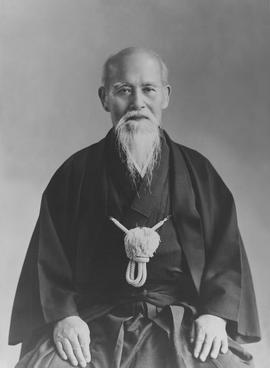
There are many experts in Aikido, but the most famous one is undoubtedly Morihei Ueshiba. He is the founder of Aikido and is responsible for popularizing the martial art. Ueshiba is also considered one of the greatest experts in the history of Aikido.

Morihei Ueshiba, the founder of Aikido
Image Credit: Wikipedia

A student of the founder, Morihiro Saito, or Saito Sensei, as he is affectionately known in the Aikido community, is also a famous figure in the martial art. 

The most public figure in Aikido, as far as the rest of the world is concerned, is the actor Steven Segal, who studied Aikido in Japan and became proficient in the art. Unfortunately, his wild claims and boasting also contributed to bringing Aikido into disrepute in the public eye.

Is Aikido taught in any police or military forces around the world?

Many law enforcement agencies are taught Aikido techniques, even if they do not entirely study the art. The non-aggressive methods of effectively subduing a person without causing lasting damage have gained popularity in many police forces worldwide. Notably, the U.S. Dept of Justice has looked into Aikido for law enforcement and mentioned the following on their website:

An adapted form of the Japanese marital art of Aikido, which means “art of harmony,” provides police a method of restraining suspects that is less violent than other methods; Aikido can thus help reduce the potential for police brutality.

U.S. Dept of Justice (Office of Justice Program)

The Japanese police force actively trains in Aikido techniques as part of crowd control measures to subdue aggressive individuals in a crowd. In addition, they use Aikido as a defensive strategy should an unarmed police officer face an armed attacker.

US Marines have also been taught Aikido techniques, especially when deployed in a peacekeeping role rather than an aggressive force. Richard Heckler, an Aikido black belt, consulted to the Marine Corp to teach troops these techniques.

RELATED:
Top 6 Martial Arts for Police Officers – Why They’re Great

What Are The Belt Levels In Aikido?

Traditional Aikido has multiple levels, called kyu, all of which wear a white belt until the student reaches 1st dan level when a black belt is awarded.

However, many non-traditional Aikido dojos offer belt colors for each kyu level to make the martial more appealing to the general public.

Each kyu level has its own techniques and moves learned as foundational elements for the next level.

The kyu levels and associated belt levels are as follows.

  • Ungraded: White Belt
  • 6th kyu: White belt
  • 5th kyu: Yellow Belt
  • 4th kyu: Orange Belt
  • 3rd kyu: Green Belt
  • 2nd kyu: Blue Belt 
  • 1st kyu: Brown Belt
  • 1st dan: Black Belt 

All the dan levels have a black belt to denote the rank in Aikido. The belt colors for the levels are not standardized, so dojos in different regions may have different colors for each level.

RECOMMENDED FOR YOU:
Karate Belt Ranking System – EASILY Explained For Beginners

Why Doesn’t Aikido Have Kicking Techniques?

Aikido does not include kicking techniques as part of its curriculum. Morihei Ueshiba, the founder of Aikido, intentionally left kicking techniques out of the fighting style for two main reasons.

Ueshiba felt that kicks were too brutal and did not fit with the principles of Aikido because the style focuses on balance and grounding. The theory is that it is impossible to be well-balanced and well-grounded to face an opponent unless both feet are kept in contact with the ground.

Final Thoughts

Aikido is a very gentle martial art that focuses on using an attacker’s energy against them, leading to the art being labeled as soft. Despite the bad public reputation of Aikido, it is still an effective and enjoyable martial art focused on self-defense rather than competition.

If you’re interested in a martial art to help you build self-confidence and learn how to defend yourself, Aikido is definitely worth considering.

Kickboxing vs. Boxing  – Key Differences Easily Explained

0

For most people, the difference between boxing and kickboxing is simple. Boxing focuses only on hand strikes, while kickboxing adds kicking in addition to punching. But are there any more differences? And at the end, which one is better, kickboxing or boxing?

Kickboxing has more striking techniques than boxing because it combines kicking and punching techniques. In contrast, boxing is easier to learn and has fewer techniques because it only involves striking with hands. As such, kickboxing is considered a more robust combat system than boxing.

Kickboxing is more versatile and, to a greater extent, practical for self-defense or any freestyle combat. Fighters trained in kickboxing are also superior to boxers in a one-on-one matchup as they have more weapons. On the other hand, there are also areas in which boxing has the upper hand.

In the rest of this article, we will take a more in-depth look at the difference between these two combat arts, so let’s go!

What is the difference between boxing and kickboxing?

In a nutshell, boxing focuses only on hand strikes (punches), while kickboxing includes both punches and kicking techniques. However, these two combat systems differ in many other areas, such as rules, emphasis, and equipment. Here is a detailed look:

History and origins

Boxing is one of the oldest martial arts. The earliest depictions of boxing can be found in relief carvings from the third millennium BCE in Sumeria. But as an official sport, boxing first appeared at the 23rd Olympiad in Ancient Greece in 688 BC. The modern form emerged with the birth of “Queensberry” rules in 1867.

Kickboxing emerged in the 1950s in Japan. A boxing promoter, Osamu Noguchi, created kickboxing as a mix of karate techniques, and Muay Thai full-contact rules.

Objectives and techniques

Boxing is a combat sport where the main objective is to develop skills to compete in regulated matches, win prizes, and become famous. It is quite a limited system as it only includes striking with your hands and mixing punches with footwork and upper body movement.

Kickboxing is also a combat sport where people compete under strict rules to win matches, money, and fame. However, in terms of techniques, it is more versatile as it includes the same punching techniques as boxing and adds versatile kicking techniques.

Fighting Stance

Most boxers stand in a narrow bow-arrow stance and tend to put a lot of weight on the lead leg. This stance enables them to cover more distance and generate great power in their rear hand. Standing in this type of stance also allows them to attack using punches in a wide variety of ways.

The kickboxing stance differs a lot because of the kicks. Kickboxers can’t allow themselves to put a lot of weight on the lead leg, as it would be a matter of seconds before they get blasted with a hard kick. So instead, they stand more upright with their feet shoulder-width apart, with the lead leg slightly in front.

Footwork

Boxers rely heavily on footwork in both offense and defense. Offensively, boxers with good footwork can tactically position their feet to strike their opponents from different angles without losing their balance. Defensively, good footwork helps boxers from getting hit by maneuvering to different positions rapidly, which enables them to evade a barrage of punches and move to the best position to counterattack.

Kickboxers also rely on footwork, but not that much. The only exception is the dutch kickboxing style where you can see athletes utilize high-level movement.

Spacing

Boxers operate at a much closer range and are always in the face of their opponent. Since it only allows punches, boxers need to step in at close range to land punches effectively and do damage.

Kickboxers prefer to stay at a distance as they need a lot of space to land powerful kicks. Depending on the kickboxing style, you can often see them stepping into close range to land punches, usually when they have the opponent backed against the ropes. But most of the time, they operate from a distance.

Fighting Rules

The most important boxing rules are:

  • Match duration: pro matches can be between 4 and 12 rounds (high profile), with each round being 3 minutes long and there is a 1 minute of rest between each round.
  • Legal strikes: Punches to the upper body which is above the belt including the head.
  • Illegal strikes: kicks, elbows, knees, spinning backfists, and grappling attacks, any hit below the belt.
  • Equipment: full padded boxing gloves, boxing shorts, groin cup, mouth guard, and boxing shoes. 
  • Major organizations: WBA, WBC, WBO, and IBF

Kickboxing rules are as follows:

  • Match duration: 3 rounds or 5 rounds (title fights) with each round being 3 minutes long. There is a 1-minute break between each round.
  • Legal strikes: kicking the upper and lower body segments, punches, knee strikes (not in all styles).
  • Illegal strikes: Elbows, striking the back of the head
  • Equipment: boxing gloves, shorts, mouth guard, groin cup
  • Major organizations: WAKO, WKA, ISKA 

Pros & Cons of Kickboxing

ProsCons
Full body workoutHigh injury rate both in training and competition
Relatively easy to learn (beginner-friendly)Too much of an emphasis on hard sparring
Highly practical in self-defense scenariosRepeated blows to the head lead to brain damage
Training burns a lot of caloriesDoes not teach you how to grapple or fight on the ground
Strengthens the upper and lower body muscles
Improves balance, coordination, and posture
Boosts confidence and self-esteem
Reduces stress and anxiety 

Pros & Cons of Boxing

ProsCons
Mix of aerobic and anaerobic workouts in oneFrequent injuries
Very practical combat system High risk of brain injuries due to repeated strikes to the head
Easy to learn as it focuses only on hand strikesOne-dimensional as it focuses only on punches
Improves overall body strengthTraining may become monotone after some time
Increases hand-eye coordination and balance
Boosts stamina and endurance
Improves cardiovascular health and sleep quality

Kickboxing vs. Boxing  –  Which is better for self-defense?

On paper, kickboxing has the upper hand as it is a more versatile style and covers all ranges. Still, there are scenarios in which boxing is more practical and may help you get out of trouble faster. The only fair answer is that these two arts will prepare you mentally for the fight and physically condition your body for intense combat.

On one side, kickboxing offers you a wide variety of techniques and ways to attack using kicks and punches. You will know how to keep your distance and do damage with kicks, as well as how to block strikes, and land hard blows with your hands at close range. The key advantage are the kicks, which when landed with proper technique and power, could instantly finish the fight.

Conversely, boxing is often considered the best self-defense for one simple reason. The most common way of getting attacked is by getting punched in the face. Hitting the face is the most natural instinctive way for humans to hurt a person standing in front, and boxers are masters at utilizing their hands to defend against these attacks and counter-punch them.

However, you won’t make a mistake choosing any of the two because they both will teach you how to fight in the end. You can always switch from one to the other whenever you want to.

Kickboxing vs. Boxing  – Which is better for fitness?

Neither is better than the other when it comes to fitness. Training in any of these arts is considered a full-body workout that will activate and improve every muscle group in your body. Which one is superior in this segment is hard to tell. The answer is based mainly on which style you prefer more as the benefits are very much the same.

Kickboxing burns a lot of calories, around 500–700 per hour; when combined with intense workouts on the bag and bodyweight exercises, it will get you in top shape in a very short period. You may also expect to improve balance and coordination and become more flexible since the emphasis is on utilizing legs for hard kicks.

Boxing is an intense cardio workout that burns similar calories per hour to kickboxing. It also strengthens all the muscles in your body, notably the back, shoulders, arms, and core. It also improves hand-eye coordination, balance, and posture.

Kickboxing vs. Boxing  – Which is harder to learn?

Which one is harder to learn is based on numerous factors and here is a detailed look into some of the most important factors:

Number of techniques – kickboxing

Boxing is quite one-dimensional as the emphasis is on hand strikes and mixing punches with footwork and head movements. Kickboxing is more versatile as it covers both punches and kicks, which opens up a wide variety of combinations and variations of each move. 

Takes longer to learn – kickboxing

On average, students need around two years to develop solid kickboxing skills, the ones they will be able to apply in a real fight or amateur competition. However, on average, students need less time to achieve the same level in boxing, around one year of training.

More dangerous – neither

Regardless of which one you pick, training and competing in this art poses a high risk of severe injuries. It is almost certain that physical injuries are bound to occur because hard sparring is necessary when you train in either of the arts. But the main concern is the possibility of suffering brain damage due to repeated blows to the head.

Kickboxing vs. Boxing  – Which is safer?

As aforementioned, the training and competition in these two martial arts carry a high risk of serious injury. The rate of minor and severe injuries is very high no matter which style you choose.

Kickboxing will likely lead to more injuries as there are more ways to hurt the opponent by striking the different parts of the body. But boxing imposes greater risk when it comes to severe brain damage, as repeated blows to the head are more common since the head is the most targeted area in boxing. In a nutshell, neither is safer because these two combat arts can cause physical injuries at some point.

RELATED:
10 Safest Martial Arts That Are Effective In Real Life

How dangerous is kickboxing?

According to studies, kickboxing has an injury rate of 40 injuries per 1000 minutes of playing time. Some of the most common injuries are among the most severe ones, such as concussions, contusions, lacerations, fractures, and joint dislocations.

Overall, kickboxing is a brutal sport. A skilled kickboxer has the ability to generate the same power in a kick as hitting someone with a baseball bat. Now imagine how much damage this kick does upon landing straight to the side of the head, ribcage, or leg.

How dangerous is boxing?

Things do not get any safer when you move to boxing which focuses primarily on head strikes. The injury rate ranges between 17.1 and 23.6 injuries per 100 exposures.

Facial lacerations account for 51% of all injuries, followed by hand (17%), eye (14%), and nose (5%). The other study suggests almost 90% of all boxers suffer a brain injury throughout their careers due to repeated traumas to the head.

Kickboxing vs. Boxing  –  Which is better for MMA?

It’s essential to learn proper boxing and kickboxing to become a complete MMA fighter to succeed. Therefore, the simple answer is that neither kickboxing nor boxing is better for MMA because they complement each other.

This is why most MMA fighters prefer to mix these two workouts. For example, they would spend striking workouts doing pure boxing drills, while the other week, they would put more emphasis on kicking and mixing it all together.

Boxing skills and the ability to utilize footwork and angles to create openings to land hard blows at close range are what often separates good fighters from the elite ones.

On the other side, delivering hard kicks from a distance has always been one of the most efficient ways to manage your distance and hurt the opponent without too much risks.

No matter from which angle you look at MMA, both punching and kicking techniques are an integral part of the game. Combining the two aspects will make you a complete striker, leading us to this article’s next section.

Can you do boxing and kickboxing at the same time?

It truly depends on what you want to achieve with your training. If you aim to develop all-around striking skills, then training in both boxing and kickboxing is a great combination. The same stands if your goal is to become an MMA fighter, where both of these systems play a key role.

But you will be advised against training in both if your goal is to become a pro boxer or kickboxer and you want to cross-train to make your workouts more dynamic. In this case, cross-training between boxing and kickboxing might do more harm than good. It may have a negative impact on your timing, reactions, and instincts and force you to develop bad habits.

For instance, fighting stances differ a lot between these two systems, as well as the range, the way you utilize footwork, and many other things. Therefore, switching between these two styles will actually “confuse” your brain and limit your ability to excel in one sport.

Training in both styles is highly beneficial if you want to be an MMA fighter or develop all-around skills. But if you want to pursue a career in one sport, stick with it and avoid cross-training.

Boxing vs. Kickboxing – Who would win?

Simply put, kickboxers have better chances of beating boxers in a one-on-one fight as they have more weapons at their disposal. Still, be sure not to over-underestimate the power and effectiveness of boxing techniques in a fight.

Kickboxing includes the same punching combos and blocks, very much the same as there are in boxing. They all know how to attack using their hands, block punches, move out of the way and counter these attacks. They spend a lot of time drilling the same combos on the pads or heavy bags. But what clearly gives them an advantage are vicious kicks.

Boxers do not practice or condition their bodies to absorb full-blown kicks. With this in mind, if you consider that skilled kickboxers can generate kicking power similar to hitting someone with a baseball bat, you get why most boxing vs. kickboxing matches would end quickly.

A boxer, who has never been kicked before, would crumble down to the ground in pain after receiving just one well-placed kick. In contrast, a boxer increases their odds of winning if they can close the distance fast and use their advantage in speed and power to knock the kickboxer out.

Boxing or kickboxing – Which one is better for you?

Both of these systems are similar and you won’t make a mistake choosing any of the two. If you are a total beginner, boxing might be a perfect fit as it is less complex. You can fully focus on developing a strong base and solid skills in between 6 months and 1 year, before moving to kickboxing where you can quickly adapt to new techniques.

Or, you can do it the other way around as these two systems do complement one another to a great extent. 

Is Kickboxing a Sport or a Martial Art? A Simple Analysis

0

Editor’s note: The views and opinions expressed below are those of the author

Kickboxing has been around for a long time and is practiced by millions worldwide. But many people still wonder: how do you define kickboxing? Is it a sport or a martial art since it’s not clearly defined? Here’s a really short answer:

Kickboxing is primarily a combat sport rather than a martial art because it is geared toward sports competitions and prepares you to win matches and medals. As a result, kickboxing lacks the advanced self-defense training or philosophies found in traditional martial arts.

Are you still perplexed as to why kickboxing can be considered a sport? Well, let me explain to you further why kickboxing is viewed as a sport rather than a martial art!

How You Define Sports?

The definition of “sports” is constantly changing based on standards, social norms, and trends. On paper, sports are competitive athletic activities between two or more parties. The event is organized by the main governing body of the country where the competition takes place.

A sporting event must be hosted according to the official rules, which both sides need to obey. These rules define the way contestants perform, behave, and win or lose matches.

There are various sports categories:

  • Single sports where athletes perform alone
  • Team sports where a group of people competes against the other group
  • Primarily mind sports such as chess
  • Primarily physical sports such as rugby
  • Single events, tournaments, or leagues
  • No contact or full contact
  • Motorized or animal-supported

To be considered a sport, an organized activity has to aim to:

  • Improve physical and mental health
  • Has a strong community and forms relationships
  • Obtain results in competition
  • Does not put anyone’s life at risk
  • Provide fun to spectators
  • Promotes strong values

With the term “sports” defined, let’s take a closer look at how kickboxing fits all these requirements.

Is kickboxing a sport? 

Kickboxing is a real sport, just like football, boxing, or rugby. It isn’t as popular as some others, but it is a real sport. It meets all the criteria and requirements, or at least most requirements.

  • Strong competition community? — Yes
  • Entertainment value — Yes
  • Improves mental and physical health — Yes
  • Promote strong values — Yes
  • Encourages fair play and respectful behavior — Yes
  • Puts players’ life at risk? — Disputable

In the 1950s, the boxing promoter, Osamu Noguchi, created “kickboxing” as a mix of Muay Thai and karate. The early events were an instant success as they further fired up the rivalry between these two martial arts. Soon after, Noguchi founded the first sanctioning body, the “Kickboxing Association,” in 1966.

In modern times, kickboxing is legal and regulated in just about every country in the world. Each of these countries has its own governing body responsible for hosting the events. Therefore these events are regulated based on specific countries’ official rules and standards to be safe and fair for the players.

Depending on the promotion, kickboxing events could be:

  • Tournaments like K-1
  • Single matches like in GLORY Kickboxing.
  • Leagues at the amateur level.

Last but not least, kickboxers are among the physically and mentally most prepared athletes. Most of them are also good role models and focused on portraying themselves, their team, and sports in a positive way.

What is considered a martial art?

Martial art is a form of art. It aims to improve not just your self-defense abilities but other aspects of your life as well. So, yes, learning valuable self-defense tactics is important. But building character and overcoming oneself through hard training is as important. 

There are many types of martial arts and sub-groups that all emphasize different aspects:

  • Armed, unarmed or both 
  • Self-defense, law enforcement, and military
  • Personal and spiritual development
  • Physical and mental health
  • Full-contact, semi-contact, light-contact, no contact

A combat practice must meet all or most of the following criteria to be considered a martial art.

  • To be designed for self-defense and real fighting
  • Include testing and competition
  • Include strict hierarchy and rankings
  • Has long-lasting history and tradition
  • Encourages spiritual growth through different practices
  • Standardized methods of training
  • Embraces respectful behavior and high discipline
  • Trains you to utilize martial arts skills only to defend yourself

Is kickboxing considered a martial art?

There is a strong argument that kickboxing could be seen as a legitimate martial art where competition is an integral part. But the main problem with kickboxing being a martial art is kickboxing’s lack of philosophy and approach. Unlike most martial arts, kickboxing emphasizes aggression, damage, winning titles, money, and fame, which are not the values real martial arts stand for.

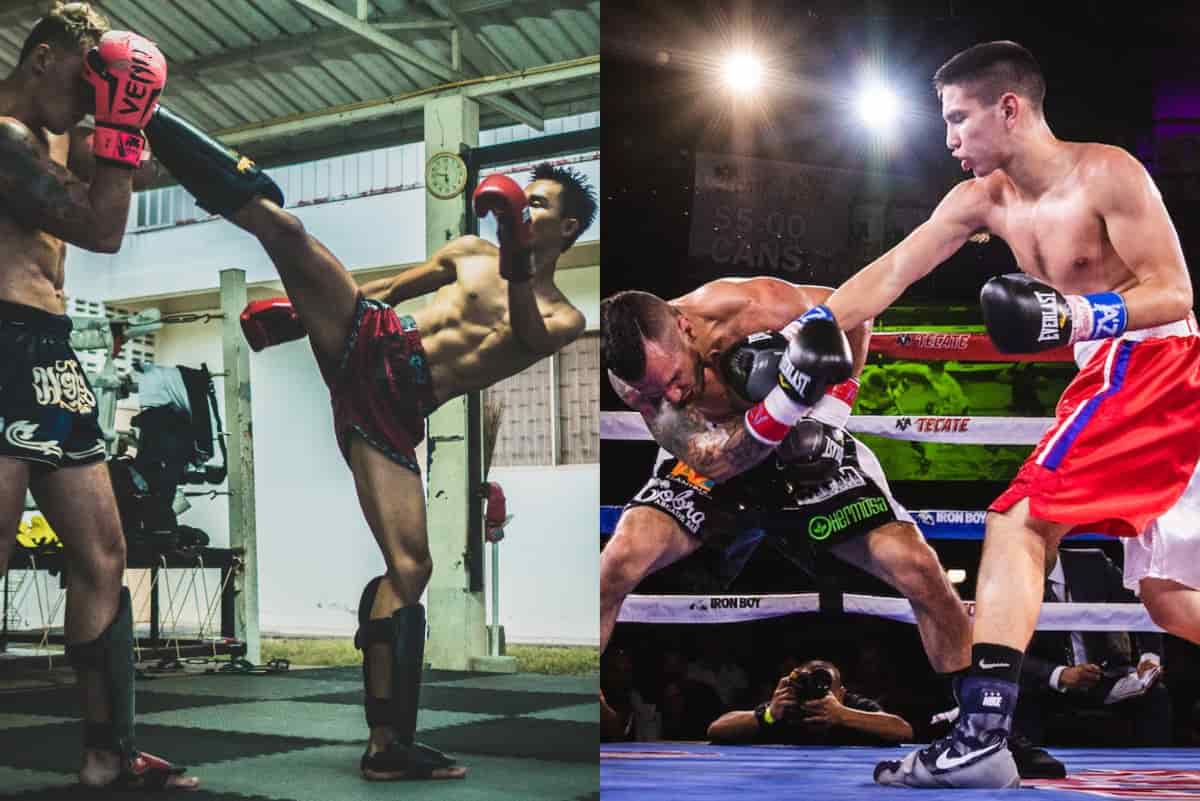
Kickboxing match

In its initial form, kickboxing was a mix of karate and Muay Thai rules. But it wasn’t created as a martial art like karate or Aikido. No, right from the start, kickboxing was all about competition. It stood as a platform where fighters from various striking arts could compete against each other under hybrid rules.

In training, students do not have to wear a uniform, learn about history and tradition, or embrace its philosophies. Though rankings exist on paper, most kickboxing schools do not have belt ranks. Instead, the classes are split between amateur and pro groups, and that’s it.

Kickboxing training supports personal growth and overcomes oneself. But not directly through methods of training such as breathing exercises and forms of meditation as you often see in traditional martial arts.

Why do people think kickboxing is real martial art?

Here is a list of reasons why kickboxing can be considered a martial art:

  • Highly effective for self-defense. Even more than most “real” martial arts
  • Improves physical and mental health
  • Some organizations include belt ranks
  • Supports personal growth (not through philosophies)
  • Techniques and training are standardized
  • Includes both amateur and pro-competition

What are the Different Types of Kickboxing?

Modern kickboxing has a few different styles that are defined by different sets of rules and competition formats. Here is a look at the four major styles:

  • Dutch style — emerged in the 1970s in the Netherlands. The Dutch style is a boxing-heavy style as it puts a lot of emphasis on western boxing combos, and kicks that originate from karate. 
  • American style (Full Contact Kickboxing)— emerged in the 1970s in the US. American style differs from other styles as all contestants must wear long trousers. Also, the emphasis is on high kicks as kicking below the waist is not allowed. 
  • K-1 style — is an organization founded in 1993. This is actually a set of rules and competition format used by the K-1 promotion. But it became so popular that in modern times people see it as a separate style. It enables athletes to punch and kick both upper and lower body segments, and strike with knees.
  • Japanese style — is the initial style of modern kickboxing developed in the 1950s. It is often seen as the most technical style and a hybrid mix of karate and full contact rules.
RELATED:
What are the Different Styles of Kickboxing? Simply Explained

Is Kickboxing effective in self-defense?

Kickboxing is an excellent form of self-defense. The concept of training and teaching methods are in line with the type of fighting situation you may encounter on the streets. It is a full-contact style that will teach you all about the physical and mental aspects of real fighting and how to act when your life is in danger.

In training, each technique you learn works in real life and may help you get out of trouble. It may seem complex at first glance, but mixing kicks and punches is not that hard. The entire system focuses on direct kicks and punches that do not require much energy or time to execute but, at the same time, cause a lot of damage.

Above all, what makes it so practical is that each gym puts a lot of emphasis on hard sparring. Yes, this may sound scary. But remember that this is the only way you can learn how to apply the skills in real life. You can’t develop instincts, timing, or reactions without sparring, and kickboxing includes a ton of it.

Is kickboxing good for MMA?

Yes, kickboxing plays a big role in modern MMA, as the entire system fits well within the rules of the sport. Each MMA fighter, whether from wrestling or BJJ, needs to have solid striking skills to cover all the aspects of the sports, and kickboxing is one of the most popular options.

Nowadays, just about every UFC top fighter or champion has some kickboxing background. Some of the most popular ones are Israel Adesanya, Alex Pereira, and Charles Oliveira.

The only major downside is the fact that the system is quite one-dimensional. It won’t teach you how to fight inside the clinch, use elbows and knees, or how to grapple.

How long does it take to become good at kickboxing?

Students with an average talent for sports who attend the classes at least three times a week could expect to develop solid skills in around two years. But the exact time it takes is based on various factors, such as the quality of the coaching staff, your athletic level, and your aptitude level.

When it comes to learning techniques, in general, kickboxing falls into the group of “easier” sports to learn. Training revolves around five different kicks and punching combos and how to mix them with footwork, angles, and blocks.

In the opening six months, the focus is on improving fitness and fundamentals and becoming more flexible. Students spend most of the time learning and perfecting the basics on the heavy bag or pads or doing live drills. After six months, they learn to apply basic techniques in a light sparring session against the training partner.

After around 1.5-2 years of total training, students may expect to develop good enough skills to start competing in amateur matches. This is also a stage where they are capable of applying kickboxing techniques in a real fight.

However, kickboxing imposes a certain risk to your health. Due to heavy sparring, minor and severe limb and head injuries are a regular occurrence. One study has shown that the rate of injuries is 40 per 1000 minutes of playing time, which is high.

Does Kickboxing include regular boxing techniques?

Yes, the punching techniques and combos utilized by kickboxers are very much the same as those in boxing. Still, remember that boxers are more technical and advanced at punching. Also, there is a slight difference in how athletes execute these techniques as these are two separate sports.

Boxers have a wide stance and heavily lean on their lead leg. They can do this because they won’t be kicked in the leg during a fight. The lack of kicks opens up a wide variety of ways you can attack with punches using different angles, combos, etc.

However, kickboxers must be careful with their hands and how much they lean on the lead leg because they can get blasted with a hard kick at any moment. Kickboxers use boxing techniques but usually use basic boxing strikes such as jabs and hooks to set up powerful kicks and manage their distance.

Are there belts in kickboxing?

Yes, there is a belt ranking system, very much the same as the one in karate in terms of color and number of belts. But bear in mind that the kickboxing belt ranking system is not standardized globally. Or in other words, belt ranks and the way students progress through each rank differ significantly between the organizations and schools.

Within each belt rank, there are stripes (additional degrees) that represent small milestones within the rank. Stripes are given based on knowledge, consistency, and dedication.

Here is the belt order in Kickboxing(if applicable):

  • White
  • Yellow
  • Orange
  • Purple
  • Blue
  • Green
  • Brown
  • Black belt

It’s worth pointing up that having belt ranking systems is not a common practice in modern times. Therefore, you will rarely find a kickboxing school that utilizes a ranking system, especially in the western world.

What is the key difference between kickboxing and boxing?

Here are all the major differences between kickboxing and boxing:


KickboxingBoxing
HistoryModern kickboxing emerged in the 1950s and its founder was the boxing promoter, Osamu Noguchi. Boxing is one of the oldest combat sports that has been around since ancient times. It first appeared at the 23rd Olympiad in 688 BC. 
Concept and emphasisKickboxing focuses on mixing hand and leg strikes together with footwork. 
It is a combat sport where athletes compete to win titles, money and fame. 
Boxing focuses only on striking using your hands.

It is also a combat sport where athletes compete under strict rules. 
Techniques allowedPunches Kicks (high and low) Knee strikes (not in all styles)Punches
Match durationKickboxing matches include between 3 and 5 rounds of action. Each round is 3 minutes and there is a 1-minute rest between each round.Boxing matches have between 4 and 12 rounds (high profile bouts). Each round is 3 minutes, and there is a 1-minute rest between each round. 
Equipment and gearFull padding gloves, Kickboxing shorts, Groin cup, Trousers (American style), Shoes (American style)Full padding gloves, Boxing shorts, Boxing shoes, Groin cup
Major organizations and promotionsWAKO, WKA, ISKA
WBA, WBC, WBO, IBF

What is the difference between Kickboxing and Muay Thai?

Here is a detailed look at all the differences between kickboxing and Muay Thai:


KickboxingMuay Thai
HistoryKickboxing emerged in the 1950s in Japan. In the initial form, it was a mix of karate techniques and Muay Thai full-contact rules. Muay Thai origins come from the military system called “Muay Boran”. The modern form first appeared in the 19th century.  
Emphasis and conceptKickboxing is a combat sport that focuses on utilizing punches and kicks together. The emphasis is on speed, technique, and power. Muay Thai is also a combat sport, but a more brutal one. The emphasis is on throwing each strike with a lot of power, and the main goal is to knock the opponent out.
TechniquesPunches, Kicks, Knees (not in all styles)Punches, Kicks, Elbows, Knees, Clinch fighting, Trips, throws, and sweeps
EquipmentFull padding gloves,
Shorts, Groin cup, Mouthguard, Trousers (American style), Shoes (American style)
Boxing gloves, Shorts, Groin cup, Mouthguard 
Major organizations and promotionsWAKO, WKA, ISKA
WBC, W.P.M.F, WTBA

Final Summary

The most practical answer is that kickboxing is primarily a combat sport that can also be considered a martial art if needed.

Most kickboxing schools are generally oriented toward competition and preparing their students to win matches and medals. Consequently, there is no advanced self-defense training, philosophies, breathing, meditative exercises, or other elements that “real” or traditional martial arts include.

But when it comes to benefits, kickboxing is like any other martial art, and the only difference is the approach. Kickboxing training will improve your self-defense abilities, increase confidence and self-esteem, and become physically and mentally stronger.

Why are Dagestan UFC fighters So Dominant? A Closer Look

0
Photo by UFC

One common sight in mixed martial arts, especially in recent years, is the increasing rise of Dagestani fighters. Former UFC lightweight king Khabib Nurmagomedov is a big reason for this, as he is undoubtedly the biggest superstar from Dagestan, with everyone associating just about every Dagestani fighter with him. Consequently, when a fan sees a fighter from Dagestan, they expect them to maul and smash their opponents on the ground.

So the question is, what makes Dagestan fighters so uniquely dominant in the UFC? Here’s a quick answer to that question:

Dagestan fighters are dominant in the UFC because they are expert wrestlers who use their wrestling effectively to neutralize their opponent’s ability to fight back. As a result, Dagestan fighters have a high winning rate of 89% in the UFC.

This article will dive deeper into the matter and explain everything you need to know about how Dagestan produces many dominant UFC fighters.

Where is Dagestan?

Dagestan is a republic of Russia located in the North Caucasus, with the majority of its population of around 3 million people being Sunni Muslims. In addition, most of the region is extremely mountainous, with higher altitudes and harsh, brutal winters. The unemployment rate is about 25%, with highlanders making up the bulk. Furthermore, a staggering 73% of people live in poverty, and 16% are just above it.

Why are Dagestan UFC fighters so dominant?

Dagestan fighters dominate the UFC because they are exceptionally skilled at wrestling, which has proven to be a highly effective combat skill in MMA fighting. Simply put, the sport of wrestling transitions well into mixed martial arts. So, how does being a good wrestler relate to being a dominant UFC fighter?

Dagestan fighters are expert wrestlers who are good at taking down their opponents on the ground, putting them on their backs, and controlling their opponents’ movements from the top position.
This position disadvantages their opponent by limiting their ability to strike back, resulting in an 89% win rate for Dagestan fighters in the UFC.

So you might ask why Dagestani fighters are so good at wrestling, right? The simple answer to why Dagestani fighters are so good at wrestling is that’s all they did growing up.

Wrestling is essentially, but not officially, the national sport of Dagestan. As such, kids from seven to eight are raised to be wrestlers, almost like a modern-day Sparta. And unlike in America, where you can train in martial arts for a few hours before going on with your day, youngsters from Dagestan do it all day long with extreme discipline.

Here’s a short video that shows how intensely Dagestani children train in wrestling:

Wrestling is a way of life for children in Dagestan
RELATED:
Why Do Wrestlers Dominate MMA?

Why Do So Many Dagestani Men Train in Wrestling?

Societal expectations may play a role in enticing Dagestani men to train in wrestling. For example, the Dagestani mindset is that you should be wrestling if you’re a healthy male, as wrestling is woven into the fabric of Dagestani culture.

A Vice documentary revealed that Dagestani fighters in a wrestling program wake up early in the morning, run across harsh terrain in the mountains, do pad work, eat, nap, and then hike before wrestling. They also start wrestling at a very young age as mentioned, as evidenced by that famous footage of young Khabib Nurmagomedov grappling with a bear cub. And there’s no partying or socializing; most of the day is spent training. All this, coupled with the harsh conditions they are training in, contributes to Dagestani fighters being not only powerful wrestlers and tough but also mentally.

It’s now even more the case given the popularity of the UFC and Khabib Nurmagomedov, one of the wealthiest athletes to have emerged from the sport.

This video shows why Daestan produces elite wrestlers

Who are the best UFC fighters from Dagestan?

Eight to ten years ago, you’d be lucky to see a handful of Dagestani fighters in the UFC. But nowadays, you will not only see Dagestani fighters in just about every UFC weight class but multiple Dagestanis in one division. As a result, Dagestan produces one of the world’s largest numbers of MMA fighters today.

Khabib Nurmagomedov:

The most popular Dagestani fighter, without a doubt, is former UFC lightweight champion Nurmagomedov. He was a lightweight competitor who made waves with his dominant wrestling, ground and pound, and his famous rivalry with Conor McGregor.

Nurmagomedov is regarded as the best Dagestani fighter of all time and the best lightweight in UFC history. Many MMA fans consider him a contender for the greatest fighter of all time, owing to his undefeated record when he retired.

Islam Makhachev:

Islam Makhachev is regarded as the next Khabib Nurmagomedov as he emulates Khabib’s fighting style, which puts maximum pressure on his opponent by relentlessly taking them down during the fight. Some even claim that Makhachev is better than Khabib was, as Makhachev has easily smashed through his opponents so far.

Magomed Ankalaev:

Ankalaev is a UFC light heavyweight fighter who is rising to the top of the competitive light heavyweight division without drawing much attention. Ankalaev trained in Greco-Roman wrestling. Ankalaeve holds the second longest win streak in UFC light heavyweight history.

Zabit Magomedsharipov:

Magomedshripov is a 145-pound featherweight fighter who started freestyle wrestling training when he was ten. He’s a well-versed fighter who can strike on his feet and can grapple with anyone on the ground. Unfortunately, he announced his retirement in June 2022 from MMA fighting after suffering health issues.

Askar Askarov:

Askarov is a flyweight 125 lb fighter who was born deaf. Despite his physical challenge, Askarov started training in wrestling. He became a national Russian deaf wrestling team member and won gold in the 2017 Deaflympics. He’s fast becoming one of the top contenders in the UFC flyweight division.

Umar Nurmagomedov:

Umar Nurmagomedov is a UFC bantamweight (135 lbs) fighter, and Khabib Nurmagomedov is his cousin. He won the gold medal in Combat Sambo at 19 under the WCSF organization. He has a younger brother, Usman Nurmagomedov, a Bellator fighter.

Why are there so many UFC fighters from Dagestan?

There are many UFC fighters from Dagestan because they are excellent MMA fighters who are highly sought after by the UFC.

Wrestling has long been regarded as the best foundation for MMA. For this reason, with so many elite wrestlers in Dagestan, many of them transition to mixed martial arts and turn into unstoppable fighters. Ultimately, these fighters end up signing contracts with the UFC, which always seeks to recruit the best fighters in the world.

More importantly, there are still very few professional venues for amateur wrestlers, and almost none of them pay as well as MMA. As a result, becoming an MMA fighter is a natural progression for many of these Dagestani wrestlers.

Who are the best Dagestani fighters outside the UFC?

While the UFC undoubtedly has a majority of the best Dagestani fighters, there’s plenty of talent in other promotions.

Usman Nurmagomedov is a promising and undefeated lightweight who competes in Bellator.

Saygid Izagakhmaev is another talented fighter competing in the ONE Championship’s welterweight division.

Let’s also not forget the number of talented Dagestani fighters currently competing in promotions back home, such as Eagle FC, Gorilla Fighting Championship, and much more. Whether they all eventually make it to the UFC remains to be seen, but it wouldn’t be a surprise either.

Do all Dagestani fighters use a wrestling style?

More often than not, you will see Dagestani fighters take the fight to the ground and look to out-grapple, TKO, or submit their opponents from there. But that’s not to say all Dagestani fighters use a wrestling or grappling-heavy style.

A former UFC fighter, Zabit Magomedsharipov, is known for his striking and is one of the flashiest strikers in the UFC. He has a wrestling background and is well-versed on the ground but prefers to stand with his opponents. This comes at a cost, as his flashy style often leads him to run out of gas later in the rounds.

Others, like Magomed Ankalaev and Nassourdine Imavov, are also great on the ground but prefer to strike. The main point is that just because someone is from Dagestan, don’t expect the fight to always go to the ground.

Are all Dagestani fighters good at MMA?

If you see a Dagestani fighter in the UFC, make no mistake about it. They more than likely have elite-level grappling, sambo and wrestling.

With that said, there are levels to the game, and not every fighter from Dagestan will perform like Khabib Nurmagomedov or remain undefeated like him. You will see Dagestani fighters who not only will likely remain unranked, but will also suffer defeats by way of finish. Khabib Nurmagomedov’s cousin Abubakar Nurmagomedov notably has three defeats, with one being a huge upset submission loss to David Zawada.

That’s not to say a couple of losses mean a fighter is bad. At the same time, it doesn’t mean Dagestani fighters are invincible. Some will lose and some won’t look so dominant because this is mixed martial arts. You can’t just rely on your grappling; you have to mix up all facets of MMA and be well-rounded in just about everything to emulate what Khabib Nurmagomedov did.

Conclusion

Dagestani fighters in MMA have a very high winning percentage overall, and while they are not unbeatable for the most part, their wrestling style and upbringing make them a tough task for any fighter. One thing is for sure — expect the number of Dagestani MMA fighters to only increase in the near future.