Home Blog Page 12

What Does the “Queensberry Rules” Mean in Boxing? A Beginner’s Guide

0

You often hear boxing analysts mentioning Queensberry rules or by boxers on TV, sometimes to differentiate between boxing and other combat sports, such as kickboxing, Muay Thai, and Mixed Martial arts. But what exactly are these Queensberry rules you often hear about from boxing commentators? 

The Queensberry Rules refer to the rules published in 1867 by John Graham Chambers, a journalist, which provided clear guidelines for all fighters involved in a boxing match. These rules were necessary to attract a better class of patrons to boxing, which alienated many due to the sheer violence.

And you may wonder why were the rules named “Queensberry,” and how did they come about? You are about to become an expert at knowing the most important things about Queensberry rules in the next 10 minutes, so let’s dig in.

The Origin of Queensberry Rules

The Marquess of Queensberry Rules, also known as the Queensberry Rules, is a set of twelve rules to regulate the conduct of boxing matches. The Queensberry Rules were first published in 1867 by John Graham Chambers, who was a journalist to provide clear guidelines for all fighters involved in a boxing match.

Before the Queenberry rules, there were London Prize Ring rules, which set guidelines for boxing matches at the time. However, despite the London rules, boxing was still seen as synonymous with old-time pugilism. This alienated many of England’s elite, and further revisions were necessary to attract a better class of patron.

The new twelve rules were implemented after an inaugural world title fight between American John Heenan and English Tom Sayers. Boxing was illegal at the time, and as a consequence, this brutal fight was broken up by policemen in its final round.

The crowd dispersed, but amongst the attendees were several influential figures of the time – Charles Dickens, the Prince of Wales, and prime minister Lord Palmerston, who faced some stiff questions in parliament the following day. The damage done to both fighters and this high-status crowd meant that a change of ruleset was required to make boxing more socially accepted.

The Queensberry rules outline what constitutes fair competition. On September 7, 1892, when James J. Corbett defeated John L. Sullivan, it was the first heavyweight championship fight under Queensberry rules.

The rules specified how to conduct a boxing match, which included the following: 

  • 1. To be a fair boxing match in a 24-foot ring (7.3152 meters), or as near that size as practicable.
  • 2. No wrestling moves or hugging (clinching) are allowed.
  • 3. Every round is 3 minutes long with a 1-minute rest in between.
  • 4. If either boxer goes down, he must get up without assistance before the referee counts to ten, and the other boxer meanwhile returns to their corner and stands there. When the fallen man is on his legs, the round is to be resumed and continued until the three minutes have expired. If one man fails to come to the scratch in the 10 counts allowed, it shall be in the power of the referee to give his award in favor of the other man.
  • 5. A boxer hanging on to the ropes because they can’t stand up by themselves, with his toes off the ground, shall be considered down.
  • 6. Only the boxers and referee are allowed in the ring during the rounds.
  • 7. If a fight has to be stopped due to any unavoidable interference, the referee to name the time and place to finish the match unless both boxers agree to call the fight a draw.
  • 8. The gloves to be fair-sized boxing gloves of the best quality and new.
  • 9. If a glove burst or comes off, it must be replaced to the referee’s satisfaction.
  • 10. A man on one knee is considered down unless it is not caused by a punch.
  • 11. No shoes or boots with springs allowed.
  • 12. The contest in all other respects to be governed by revised London Prize Ring Rules.
RECOMMENDED READING:
What Is Shadowboxing? Everything a Beginner Needs to Know

Why is it called the Queensberry rules?

When John Graham Chambers, a British sportsman and journalist, published new boxing rules in 1867, he named the new rules “The Marquess of Queensberry Rules.” This was done to credit John Sholto Douglas, a British nobleman and the 9th Marquess of Queensberry, for sponsoring the new rules.
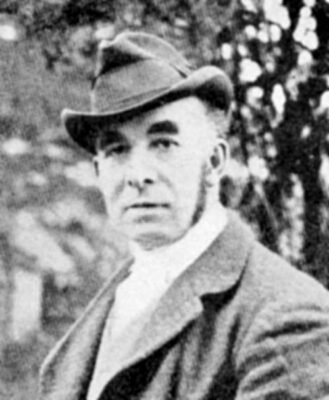
John Douglas, 9th Marquess of Queensberry

Are Queensberry rules still used?

The Marquess of Queensberry Rules is widely regarded as the most important set of rules in boxing because they define a baseline of what is considered acceptable aggression within a boxing match.

For this reason, the Queenberry Rules are still the core of the boxing rules, upon which new rules have been added for both professional and amateur bouts.

How have the boxing rules changed since the Queensberry rules?

Boxing rules have gone through some changes since the Queenberry rules were first established. There have been several revisions over the years with boxing rules, and new ones are constantly added when needed. As a result, the rules in place today are a mix of those that were established more than a century ago and newer ones created in response to changing circumstances.

The most significant difference between the original and modern rules is that modern fights can’t last forever. This is because the original rules didn’t specify any required number of rounds for the fight to end. For this reason, old boxing matches used to have many rounds until one of the boxers couldn’t continue due to exhaustion or got knocked out.

In contrast, modern professional fights have a maximum of 12 rounds. Suppose there isn’t a stoppage due to KO, TKO, or other injuries after 12 rounds. Ringside judges will then determine the winner of the bout based on a 10-point must system designed to score boxers’ performances.

During the bout, three ringside judges score each round independently, taking into account ring generalship, defense, effective aggression, and hard and clean punches. Points are deducted for violations of the rules.

Another important difference is that new rules have been added to disqualify a fighter if caught using banned substances during a boxing match. As a result, the use of various prohibited substances is a new concern in the modern boxing era compared to the 1860s, when the Queensberry rules were introduced. These issues with banned substances were virtually non-existent during that time.

RECOMMENDED READING
What is Banned/Illegal in the UFC?

What was boxing like before the Queensberry rules?

Boxing began to become more modernized in England and, to a lesser extent, the United States during the mid-18th century. Before this modernization, boxing was closer to a street fight that was often cruel, similar to how MMA was frowned upon in the early 1990s without being sanctioned. In addition, these early boxing matches were conducted without the use of gloves.

There were much fewer rules to follow, and fights were not divided into rounds. Fighters would take their opponent and slam them on the ground until one of them was knocked out. There were no weight divisions or time limits, so fighters could beat up a man as long as they could last.

Sometimes, a fighter could get lucky and get in a lucky punch that causes his opponent to have an injury that will keep him out of the ring for a while. The only way to end the fight was for one of the fighters to be knocked out or bleed too much. It was also common until the mid-1700s to hit a man when he was down.

From around 1743, rules written by English longshoreman and heavyweight boxing champion, Jack Broughton would be codified and utilized throughout the country. Broughton is widely regarded as “the father of boxing,” who made key changes to boxing rules.

One of the major changes that Broughton’s introduced was not allowing a boxer to grab the opponent below the waist, while wrestling holds were still allowed. Also, a boxer could not hit a downed opponent. And Broughton introduced a “muffler,” which gave rise to modern boxing gloves to protect fighters’ hands and the opponent’s facial area. All in all, Broughton removed various no-holds-barred techniques from boxing and emphasized hand strikes instead.

Broughton’s rules would be displaced in 1838 by the London Prize Ring Rules, which were later revised in 1853. These rules would build on Broughton’s ones and provide a greater establishment for the Queensberry rules.

First Boxing Match Ever Filmed: June 1894 Mike Leonard vs Jack Cushing
RECOMMENDED FOR YOU:
Top 11 World’s Deadliest Martial Arts Revealed – Ranked

Where did boxing originally come from?

The first time boxing was seen as a formal Olympic event was in 688 BC, at the 23rd Olympiad, but fighting contests pre-date this and despite opinions to the contrary, the sport didn’t originate in Ancient Greece.
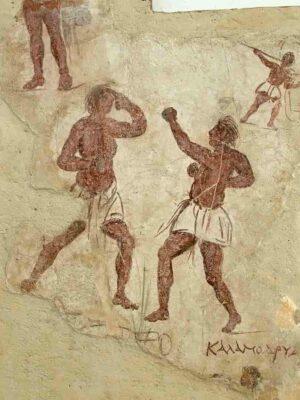
Boxing is depicted in this 100 BC painting from Delos.
Photo by Zde

A relief sculpture from the Egyptian city-state of Thebes (1350 BCE) shows both boxers and a crowd watching them compete. Boxing is also depicted in Sumerian relief carvings dating back to 3000 BC.

RECOMMENDED READING
Is Boxing Considered A Martial Art? Yes, Here’s Why

Why are they called “journeymen” in boxing?

A journeyman boxer is a fighter who may have had a solid career but never had the natural talent, or discipline to excel them to champion, or top contender status.  The definition has changed over the years and today’s journeyman is regarded as someone who can go the distance of a fight without sustaining excessive punishment, thereby allowing them to get another fight in a relatively short space of time. 

It is typically a boxer who still fights as their career but will often become little more than another number in the win column of a fighter in the pursuit of greatness.

As journeymen become less and less concerned about winning, they can be regarded by some boxing critics and fans as “tomato cans” designed solely to give the higher-status boxers padding to their records.

In the 1950s, the name had a different meaning, with boxers such as the Louisianan world-lightweight champion Arthur Persley being given the tag. Even Ezzard “the Gizzard” Charles would be described as a journeyman for the simple reason that his champion status followed that of Joe Louis’s reign.

Nowadays successful journeymen will fight as often as twice a month and tend to operate under three rules “Entertain. Don’t get hurt. Don’t win.”

When did boxing get rid of 15 rounds?

Boxing commissions were compelled to change from 15 to 12 rounds in the aftermath of when Ray Mancini fought Duk Koo Kim for the WBA Lightweight World Championship in 1982, which Mancini won by TKO in the 14th round.

Kim collapsed moments after the fight ended and was quickly rushed to the hospital. He underwent emergency brain surgery to remove a subdural hematoma but died five days later.

Following the incident, boxing commissions changed several rules, notably reducing fights to 12 rounds to protect fighters from absorbing too many repeated blows to the head. However, it was in 1989 that all of the major boxing governing bodies agreed to the change.

At the same time, others think that boxing commissions got rid of 15 rounds of boxing due to TV ratings. People’s attention span has decreased over the years. Fewer fans tune into 15-round fights these days than there used to be. 15-rounds might be too long for most people to watch before getting tired and bored.

The last heavyweight 15-round title bout occurred on October 16, 1987, when Tyrell Biggs faced Mike Tyson. The last World Boxing Board championship bout for a middleweight title was between Eric Holland and Jose Flores, which was fought on June 7, 1997, in Ruidoso, New Mexico. This was the last time a 15-round bout was held for a major championship, and it resulted in a split decision in favor of Jose Flores.

Related Questions

Why is boxing called “sweet science”?

Boxing is called “sweet science” to imply how technical it is, emphasizing the technicality of boxing moves and the importance of a tactical strategy to win the fight. Pierce Egan, a British journalist, first coined the term “sweet science” in 1831 to describe England’s pugilism.

Sport Sambo vs. Combat Sambo: What’s the Difference?

0
Sport Sambo(left) vs Combat Sambo(right)
Photo by Хоружий Юрий Александрович (left) Bruno Schmitt (right)

Sambo is a Russian martial art created in the 1920s as a military combat system. There are two main styles: Sport Sambo and Combat Sambo, which many people need clarification on because they both seem very similar.

Sports sambo is a rule-based style where athletes compete using grappling throws and submissions, excluding any forms of striking. In contrast, Combat Sambo is a combat style designed for the Russian military based on a hybrid mix of striking, grappling, and brutal self-defense tactics.

This is just a brief answer to the differences between Sport Sambo vs. Combat Sambo, so be sure to read this article to learn more about it.

What is Combat Sambo?

Sambo was first developed in the 1920s in Russia. At the time, the Russian military was searching for a hand-to-hand combat system to enhance its personnel’s fighting capabilities and sought to create its own Russian fighting system.

The result of their work was a hybrid self-defense system called “Combat Sambo Spetznas” when it was first created, according to Bruno SCHMITT, a world-renowned sambo coach, who informed us at MMAchannel.

The system is a mix of various grappling styles such as freestyle, Greco-Roman and folk style wrestling, and Judo. It also includes submission grappling techniques from Japanese jujutsu and Brazilian jiu-jitsu. When it comes to striking, Sambo adopts the principles of boxing, Savate, and Kickboxing.

But on top of that, Combat Sambo Spetsnaz also includes dirty and dangerous tactics for self-defense. Students learn how to apply painful strikes to the groin and throat, head butts, and eye gouging. It enables them to do anything to protect their lives against armed or unarmed attackers.

In 1990, a modernized, safer combat version of Sambo was born in France without all the deadly military techniques. This tamed Sambo was created to allow Sambo practitioners to test their combat skills against each other safely under rules like MMA. This French version of Sambo was named “Sambo Global.”

But in 1991, when the USSR regime ended, the Russians sought to change the name of “Sambo Global” and instead promoted it as “Combat Sambo.” At the same time, the Russians also renamed their “Combat Sambo Spetsnaz” to “Combat Sambo” by dropping the word “Spetsnaz.”

As a result, notably, Combat Sambo has two different versions. One version is for sports competitions that the French started. The second version is for the Russian military self-defense, similar to Krav Maga, with deadly techniques banned in competitions.

Combat Sambo (competition version)
Combat Sambo (military version)

What is Sport Sambo?

As its name indicates, Sports Sambo is a sports variation. Sports Sambo focuses only on grappling and is very similar to Judo and wrestling, but striking is not allowed. 

Instead, the emphasis is on explosive takedowns and throws, and there are few restrictions when it comes to grips and holds. It also enables athletes to submit each other with various leg locks and joint locks, while chokes are not allowed.

Sports Sambo is also the only Sambo style recognized by the International Olympic Committee but has yet to be accepted as an Olympic sport.

Sport Sambo

The Key Differences Between Sport Sambo and Combat Sambo

Sports and Combat Sambo share a lot in common in terms of grappling techniques. But these two also differ a lot in many other areas, notably when it comes to striking. Here is a list of all the key differences:

Techniques

Sports Sambo is a bit “limited” compared to the Combat version as it includes only grappling techniques. There’s no striking in Sport Sambo. It teaches different skills from various arts, such as wrestling, Judo, Jujutsu, Bokh(Mongolian wrestling), and Chidaoba. The rules allow leglocks and armlocks, and neck cranks, while chokes are not allowed.

Combat Sambo includes a much broader range of techniques. The learning curriculum consists of striking with kicks, punches, knees, elbows, and even head-butts. Practitioners also learn how to grapple using wrestling takedowns, and Judo throws, and submit each other on the ground with both chokes and joint locks.

Objectives and strategies

Sports Sambo is a variation in which athletes train to compete in matches. The learning syllabus is designed to be in line with the official rules. Students train to develop skills to beat their opponents under strict rules and win matches and titles. They rarely do any advanced self-defense tactics, but this varies between schools.

Combat Sambo differs significantly because the main focus is on self-defense and actual combat. It is designed to prepare you to combat violent situations in the streets or on the battlefield, where there can be armed or unarmed attackers. It enables you to do anything in your power to protect yourself without any restrictions.

Rules of competition

Sports Sambo:

  • Fighting area: Open mats that are between 11x11m and 14x14m in size
  • Match duration: 5 minutes
  • Gear: Sambovka (uniform), shorts, and boots
  • Points: 1–4 points for throws, and 2–4 points for pins
  • Ways to win a match: Have more points at the end of the match, achieve 12 point lead, perform a perfect throw, and submit the opponent

Combat Sambo

  • Fighting area: Open mats that are between 11×11 and 14×14 in size
  • Match duration: 5 minutes
  • Gear: Sambovka (uniform), shorts, boots, headgear, gloves, mouthguard, groin guard, and shinguards
  • Points: 1–4 points for throws, and 2–4 points for pins
  • Ways to win a match: Knockout, submission, have more points at the end of the match
RELATED
Judo vs. Sambo – The Fundamental Differences

Sport Sambo or Combat Sambo for self-defense?

Combat Sambo is a better option and a more realistic style when it comes to real combat and self-defense. Though both styles are effective, the concept and teaching methods of Combat variation are more in line with the type of situation you may face on the streets.

Sports Sambo is limited in certain areas due to its heavy focus on competition. However, students still develop strong fighting instincts, automatic reactions, timing, etc. In addition, they learn valid grappling techniques such as throws, takedowns, and how to subdue the attacker on the ground. Sport Sambo emphasizes being explosive in their approach, making it hard to defend against.

However, Combat Sambo includes everything from Sport Sambo and adds even more. First, it emphasizes the self-defense program. Next, it trains you how to attack and defend using all limbs as weapons to strike with kicks, punches, knees, and elbows. It covers all ranges and places which makes it really effective in any type of freestyle combat.

It also introduces dirty and lethal tactics to defeat the attacker with brutal headbutts, groin strikes, and throat strikes. Though brutal, these skills work really well on the streets and may save your life.

Last but not least, the combat style is more realistic as students spar and do various fight simulations on a daily basis.

LEARN MORE
10 Best Martial Art Styles For Self Defense(Pros and Cons)

Sport Sambo vs. Combat Sambo  – Which one is more difficult to learn?

Overall, Combat Sambo is more difficult as it is more versatile in terms of techniques. It is also physically more demanding and takes longer to master. Here is a detailed comparison.

More techniquesCombat Sambo

Combat Sambo is more complex as it includes both grappling and striking. The sports style, on the other side, focuses on grappling only. Next, the Combat style has more submissions, and also covers various aspects of the self-defense program.

Takes more time to learn — Combat Sambo

As a more versatile style, Combat Sambo also takes longer to master. The exact number of years is based on many factors, such as your individual talent for sports, fitness level, dedication, etc. On average, students need close to 10 years to master Combat Sambo, and a bit less for a sports style.

Safer to trainSport Sambo

Sports Sambo is not as hard on your body as Combat variation. It doesn’t include striking with kicks, punches, knees, and elbows, which are the biggest contributors to injuries in martial arts. Next, it is less intense as the emphasis is on competition and learning how to “fight” under the rules.

Sport Sambo vs. Combat Sambo  – Which one should I learn?

Combat and Sports Sambo share a lot in common. The good news is that most Sambo schools teach both styles, making it easier to find out which style suits you better.

Photo by CFS SAMBO FRANCE/CC BY-SA 2.0

Most beginners start by learning sports sambo in order to develop a strong base. This style has fewer techniques and is easier on the body, which makes it ideal for beginners.

Later, you can always switch over to Combat Sambo after you have already developed a strong grappling base from Sport Sambo. You can expand your skills by adopting striking techniques and submissions that are left out in sports variation.

However, you can do it the other way around and join the Combat classes from the start. This should be your approach if you want to improve self-defense skills, or if your intention is to develop the skills for MMA.

Both of these styles include a strong competition community, different organizations, and tournaments where you can test your skills against other practitioners.

The only major downside is the access to Sambo schools, as Sambo is not that popular outside of Russia and the former Soviet Republics. For this reason, finding a good Sambo school in your area may not be easy.

RELATED
Sambo(Martial Art) vs. BJJ  – Which is Better and Why?

What is the difference between Combat Sambo vs. Krav Maga?

Combat Sambo and Krav Maga are two separate combat systems designed for military purposes and real combat. Here is a list of all the major differences:


Combat SamboKrav Maga
HistoryCombat Sambo emerged in the 1920s in Russia. Krav Maga was developed by the Israeli military in the 1950s.
ConceptSambo is a hybrid mix of grappling and striking techniques from: Wrestling (folk, Greco-Roman, and freestyle) Jujutsu, Judo, BJJ, Boxing, KarateKrav Maga is also an all-around combat system that consists of different striking and grappling techniques from:  Aikido, Judo, Karate, Boxing
ObjectivesThe main goal is to develop an all-around set of skills to defend yourself in different self-defense scenarios. 
The main objective in Krav Maga is to become one with the physical and mental aspects of real combat and learn how to rely on skills, aggression, and explosiveness to protect yourself against the attacker or multiple attackers.
CompetitionBoth Combat and Sports sambo include competitions where they can test their skills against other students.Krav Maga doesn’t include competition as the system entirely focuses on self-defense. 

What is the difference between Combat Sambo vs. MMA?

Combat Sambo is a self-defense system designed for the Russian military, while MMA is a combat sport that later evolved into a combat system on its own. Here is a detailed look at all the other differences.


Combat SamboMMA
HistoryDeveloped in the 1920s in Russia. The modern form of MMA emerged in the early 90s with the birth of UFC promotion. 
ConceptAn all-around hybrid mix of grappling and striking techniques from: Wrestling (folk, Greco-Roman, and freestyle) Jujutsu Judo BJJ Boxing KarateA hybrid mix of only the most effective and battle-proven striking and grappling skills from: Wrestling Boxing BJJ Muay Thai
TechniquesKicks, Punch, Knees, Elbows, Takedowns, throws, Sweeps, Chokes and joint locks, Dirty tacticsKicks, Punch, Knees and elbows, Takedowns, Throws, Sweeps, Positioning, Joint locks and chokeholds
ObjectivesSelf-defense combat system where the main goal is to develop skills for a real combat you may encounter on the streets or on the battlefield. MMA is a combat sport where athletes compete under strict rules. The main objective is to win a match, world titles, money, and global fame. 

Why is Combat Sambo so effective in MMA?

Combat Sambo is more in line with the concept of Mixed Martial Arts(MMA). It covers just about every segment of MMA and represents a strong base on top of which you can add more techniques.

MMA is a sport where contestants compete in all three elements of freestyle combat – standup, clinch, and on the ground. They strike using all limbs, are allowed to clinch, score takedowns, submit each other and even strike on the ground. Combat Sambo resembles modern MMA as it meets all of these requirements.

Through hard training, you will develop all-around skills, and be prepared to compete in cage fighting. Of course, you must be careful not to utilize prohibited techniques such as head-butts and other dirty moves from Combat Sambo. But apart from that, everything else is fine.

Apart from techniques, what makes Combat Sambo really effective is the aggressive and explosive approach to fighting. Since Sambo matches are short (5 minutes in total), the emphasis is on getting a fast finish without wasting any time with more urgency.

That’s why Sambo fighters in UFC like Khabib Nurmagomedov and Islam Makhachev are so relentless inside the cage because they have trained in Combat Sambo, where they are so used to fighting at a fast pace.

RECOMMENDED READING:
How Long Do UFC Fighters Train Every Day? FAQ For Beginners

Related questions

Does Sambo have submissions?

All styles of Sambo have submissions such as joint locks and chokeholds, as Sambo is rooted in Judo and Japanese jujutsu. However, the types of submissions practitioners are allowed to use differ between the styles.

In Sport Sambo, they can use different types of leg and arm locks and neck cranks, but can’t use chokeholds to strangle the opponent. In Combat Sambo, however, they can use all types of submissions, including both chokes and joint locks, without any restrictions.

Is Combat Sambo effective for a street fight?

Combat Samo is widely regarded as one of the most effective martial arts for self-defense, and it is easy to see why. It is a system designed for the Russian military to improve the hand-to-hand combat abilities of its soldiers. While most other martial arts cover just one segment, striking or grappling, Sambo is a hybrid mix of both.

As a concept, it covers most of the places and scenarios you may face on the streets and teaches you how to defend in the most efficient way possible. You will learn how to strike at all ranges, grapple, fight on the ground, and even apply or defend against dirty tactics.

Training is realistic and brutal, and students do a lot of fight simulations 1 on 1 and against multiple attackers.

Does MMA need Stephen A. Smith’s support? Yes, here’s why

0
imagepressagency/Depositphotos.com

Editor’s note: The views and opinions expressed below are those of the author.

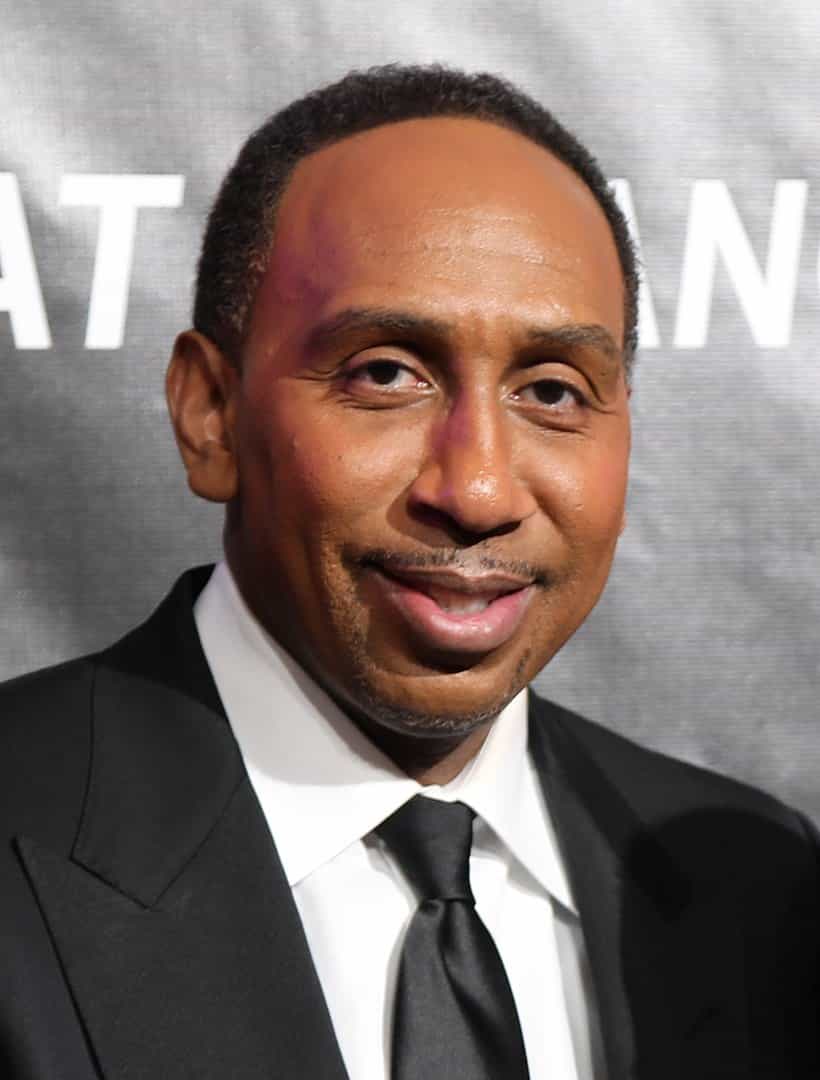
In recent years, MMA fans have started seeing ESPN analyst Stephen A. Smith on their TV screens more frequently, particularly for big UFC events. While it helps promote the event even further thanks to Smith’s massive audience, he has also received plenty of flak for various controversial comments he has made involving the sport of MMA and certain fights in particular.

Many have since called for him to never appear again due to his lack of expertise. With that said, Smith has stated that the sport needs him and his support, and some observers feel the same way. What exactly were the controversies and why does MMA need Stephen A. Smith’s support? Keep on reading to learn more.

Who is Stephen A. Smith?

Stephen A. Smith is a commentator, personality, talk show host and analyst who currently works at ESPN. Regarded as the face of ESPN, where he is one of the highest-paid employees.

Smith is known for his occasional bold predictions, over-the-top statements, argumentative debates, analogies and expressions that have seen him garner a huge following not only in sports media, but in mainstream media as well.

He mainly covers the NBA and NFL, along with a number of other sports, including baseball, boxing, etc.

Some controversial statements made by Stephen A. Smith

Smith made his first major appearance at a UFC event during UFC 246 for the headliner between Conor McGregor and Donald Cerrone back in January 2020. McGregor would end up winning in less than a minute after TKO’ing Cerrone. Smith would go on to say the following about Cerrone’s performance during the post-fight show: 

“Here’s the deal: 15 seconds in, ‘Cowboy’ Cerrone was done. He got hit with those shoulders in the clinch and he was done. It looked like he gave up. It was just an atrocious performance on his part.”

Those comments were not received well by many, and became the start of when the mixed martial arts community began their anti-Smith agenda. Smith would also make controversial comments while discussing women facing men in intergender matchups.

“Where I jump off the bandwagon is when they try to engage physically. For example, I don’t ever want to see a woman boxing a man. I don’t want to see that. I don’t want to see a woman in the UFC fighting a man even though there are some women out there that’ll kick a dude’s butt. We get all that. When I think about pugilistic sports, I don’t like seeing women involved in that at all. I just don’t like it. I wouldn’t promote legislating laws to prohibit them from doing so, but I don’t want to see women punching each other in the face. I don’t want to see women fighting in the octagon and stuff like that, but that’s just me.”

transcribed by MMAjunkie

How the MMA community reacted to Stephen A. Smith

The MMA community was upset with Smith’s comments about Cerrone because they felt it was over the line. While Smith is used to criticizing NFL or NBA teams after losses, it’s different in combat sports where a loss can’t be responded to within a week.

Fighters usually have to wait a month at the minimum to return from a defeat and in Cerrone’s case, his next fight wouldn’t come until nearly four months on from the McGregor setback.

Longtime UFC commentator and analyst Joe Rogan, who was alongside Smith when he made those comments about Cerrone, had this to say about Smith:

“For Conor to smash ‘Cowboy’ like that in front of his wife, his kid, his grandma and the whole world. You’ve got to have some respect for that man, and this sport demands a different perspective. It’s not the same thing as a ball going into a hoop. It’s not the same thing as crossing a line with a football. It’s different. It’s very intense and very personal, and it’s also very (expletive) dangerous and to play it off like it’s just a game, I don’t agree with it.”

transcribed by MMAjunkie

There’s also the fact that Smith didn’t really understand the nuances of mixed martial arts. While Cerrone has been known to fold in the bigger occasions, it’s completely normal for many fighters to have a completely off night or a performance where they get completely blitzed.

Former lightweight champion Eddie Alvarez had arguably the worst performance of his career when he lost his title to McGregor at UFC 205, one of the biggest events of all time. It’s even more so the case when you consider Cerrone, 36 at the time of the fight, was most likely past his prime.

Rogan would go on to say that Smith shouldn’t be giving out his analysis on MMA:

“That’s a bad look for everybody,” Rogan said. “It’s a bad look for ESPN, it’s a bad look for him, it’s a bad look for the sport. There’s other people that can do this. … We have plenty of people out there who understand the sport. There’s plenty of them. … Stephen A. Smith is really good at that stuff. But it’s not the place for MMA. It’s just not the place. It’s not the same thing.”

transcribed by MMAjunkie

Smith also received harsh criticism for his comments about women fighting as mentioned above. Many felt those comments promoted inequality by stating that a woman should stick to societal expectations by not taking part in a combat sport. It also promoted the idea that women’s fights were not entertaining, especially when in 2020, Weili Zhang and Joanna Jedrzejczyk had arguably the fight of the year regardless of gender.

Jedrzejczyk, along with many other female combat sports stars, would respond to Smith soon after:

How Stephen A. Smith was vindicated in Cerrone’s case

As fate would have it, Smith would be vindicated when Cerrone would reveal in an interview a couple of months later that he didn’t show up against McGregor on the night along with the fact that he didn’t want to be there.

“Donald showed up; Cowboy wasn’t there… Biggest fight, all the attention, my time to shine, I didn’t want to be there. It was crazy, man.”

Smith caught wind of the interview and made sure to respond on Twitter.

“I’m, so all you MMA folks — who I profoundly respect — am I off my rocker now??? When you’ve covered sports intimately as a reporter for a quarter-century, you see things sometimes. I respect the hell out of @Cowboycerrone, but he just wasn’t there that night.”

In the end, in this case, Smith saw it correctly. With that said, some MMA fans may think that Smith could have still expressed himself a bit more delicately on the night, but that is who Stephen A Smith is if you have been following him on ESPN.

Stephen A. Smith is a straight shooter who says what he thinks. Telling it like it is his main appeal on TV, whether people like it or not.

How Stephen A. Smith is helping UFC/MMA fighters

Smith has a massive audience. He has his own show on ESPN along with a podcast while “First Take”, where he is a regular feature, averages over 400,000 viewers.

He has nearly 6 million followers on Twitter with another 4 million on Instagram. When he’s talking about the UFC or MMA in general, a good percentage of all those followers and viewers are tuning in or taking an interest if they weren’t already. By even having MMA fans go against him due to his comments, Smith is growing the sport by having casual fans tune in and see what the fuss is about. 

There’s also the fact that Smith interviews MMA fighters on his show, which not only further promotes an upcoming UFC event, but gives fighters a larger platform and more exposure to a brand new audience.

Chael Sonnon explains why he supports Stephen A Smith

If MMA fans want the sport to become on the same level playing field as the NFL or the NBA in terms of mainstream attention, they need figures like Smith commentating and giving their opinions on the sport. UFC legend Chael Sonnen certainly feels the same way. Here are some of Chael’s quotes and the full video of him supporting Stephen A Smith.

“For Stephen A. to come out and commentate on this — which by the way, I’ll just share with you. The numbers go through the roof when Stephen A. comes to the microphone,” Sonnen said. “So many times in MMA I keep hearing that ‘we want to be mainstream. Why aren’t we mainstream? Why aren’t we being shown the respect of mainstream?’

“When you have the most mainstream guy in the sport come and talk on the desk live at the venue about your sport — that by the way, he sat in the front row and observed as a fan — when he comes and does that, and then you reject it, do you really want to be mainstream?”

Chael Sonnen

Why UFC/MMA needs Stephen A. Smith’s support

Despite what you may think of Smith, the fact is it’s a good thing he supports and is a fan of the UFC. It’s really easy to forget given the UFC’s popularity today, but MMA was virtually an outlawed sport with no arena ready to license a show just around 20 years ago.

Today, it’s far more recognized as a legitimate sport and fans may start to take things for granted such as Smith appearing on broadcasts to talk about UFC events. But, the very fact that he’s appearing on its own legitimizes the UFC even further as a sporting event the everyday casual viewer should be tuning in for.

Let’s also not forget that Smith has a lot of influence in sports media and with ESPN in particular. It’s better to have him on your side rather than against, especially when he is talking highly about the UFC and MMA fighters in general.

After receiving plenty of criticism, Smith would hit back at the MMA community by stating that he never claimed to be an expert on the sport. He also added that the UFC needs him.

“Well, guess what? I’ve never said that I am a UFC expert. Not one time. Feel free. Check the tape. I’m a UFC fan, though, and I’ll say this, the UFC needs me. The UFC needs me and all others out there just like me.”

He might make controversial comments here and there, but that’s part and parcel of the Stephen A. Smith experience as it gets people talking and most importantly, it gets people focused on the particular sport he is talking about. That, more than anything, is why MMA needs Smith — the eyeballs he brings on the sport in the end.

RELATED
How UFC Has Evolved From The Humble Beginning

Final Thoughts

Stephen A. Smith is not everybody’s cup of tea and that’s completely fine. There are NBA fans who don’t like him, baseball fans who don’t like him, and NFL fans who don’t like him. The same will apply to MMA and every other sport he decides to cover.

With that said, he brings eyeballs and legitimacy, and even if a few casual fans from his audience end up being long-term fans, that’s a win for the sport on its own.

What is Kodokan Judo? The Origin of Judo Easily Explained

0
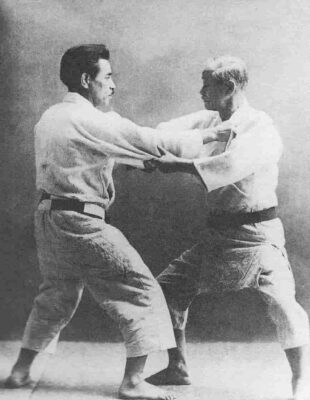
Professor Jigoro Kano(right)

Judo is one of the most popular martial arts and has been an Olympic Sport since 1960. But despite being present in every part of the world, you can often hear people using various terms to describe judo, out of which the most common might be “Kodokan Judo.” But, you may wonder, what Kodokan judo is, and how it differs from other forms?

Kodokan judo is the original form of judo created by Kano Jigoro in 1882. Kano designed Kodokan to be practiced for self-defense, mental and physical benefits, and in a sports form. Or in other words, all judo styles are recognized and rooted in “Kodokan Judo.” 

Keep reading this article to learn more about Kodokan Judo, its history, and how practical it is in real life and MMA.

History of Kodokan Judo

The story of Kodokan Judo starts in the mid-19th century in Japan. At the time, the most practiced martial art in Japan was Jujutsu (Japanese Jujutsu). A brutal military system practiced by Samurai warriors designed for real combat that adopts both grappling and striking tactics. Though practical, the system and methods of teaching were brutal and even dangerous.

This was a problem because, during the 18th century, Japan started opening up to a new world. The nation was going through big cultural changes and had evolved into a more “westernized” society. As a result, brutal martial art practices such as Jujutsu were not popular any longer. And one of the first people who spotted these changes was jujutsu instructor, Kano Jigoro.

Kano Jigoro, the founder of Kodokan Judo

Kano started rethinking the theories of Jujutsu, techniques, and methods of teaching. He witnessed Jujutsu dying and wanted to save it by implementing a few changes. So he took his skill and experience to modernize the practice of Jujutsu and adapt it to the new social context of Japan.

The final result of his work was a softer and, above all, safer martial art. He got rid of all the ugly aspects of Jujutsu, such as foot and hand strikes, dirty tactics, and a violent approach to training. He then added new techniques and rules to create a much safer form called “Kodokan Judo” in 1882. The “Kodokan” is the name of the original judo academy. The name Kodokan translates to “a place to study the way.”

Professor Kano was thinking decades ahead. His main idea was to embody both physical and mental aspects of martial art practice, which enabled Judo to be practiced as a combat sport. And, of course, became an Olympic sport many years later.

According to Professor Kano, there are three primary purposes of Judo, as mentioned here:

Prof. Kano himself said that the purpose of Judo is to strengthen body by practicing attack and defense, to complete the personality by training the mind, and finally to devote oneself to society.

Kodokan Judo Institute

How is Kodokan Judo practiced?

Judo puts a lot of emphasis on standup grappling and execution of throws, trips, and sweeps from the standing position. But the way judokas get takedowns is a small piece of science. Each throw is a mix of the following elements:

  • Technique
  • Strong grip
  • Balance
  • Coordination
  • Weight manipulation
  • Gi manipulation
  • Re-direction of energy

Once on the ground, the key is to subdue the opponent with pins, choke holds that stop the airflow and blood flow to the brain, or joint locks.

Kodokan judo also teaches the basics of striking. Yet, students can only throw strikes in kata when doing forms and pre-arranged attacks. They are not allowed to throw any strikes in randori (practice) or competition, though.

The learning curriculum is split into the following three categories:

  • Nage Waza (throwing techniques)
  • Katame Waza (Grappling techniques)
  • Atemi Waza (striking techniques)

The classes consist of two main elements:

Kata — are pre-arranged forms. Kata is all about repetition, mastering the correct execution of techniques, and stamping the moves into muscle memory. In Kodokan judo, there are 10 different katas, with each one including 10–20 different techniques.

Randori — means “free practice” or “sparring.” It is a part of training where judokas learn how to apply techniques against the resisting opponent. Two judokas will simulate a judo match, and the intensity is based on skill and experience.

Judo kata demonstration

Kodokan Judo belt ranking systems

The progress, understanding, and improvement of the student are denoted by a color belt ranking system created by Kano Jigoro. Students are split into Kyu (junior ranks) and Dan (senior ranks), and each rank is presented with a different solid color belt.

Kano Jigoro pioneered the color belt ranking system in 1883 based on the popular board game called “Go.” His main idea was to separate students by skill level to improve the learning process. The initial version had only two colors: black (instructors) and white (students). Over the years, Kano would add more belts and ranks, and separate the system into kyu and dan ranks.

The following table illustrates the current judo belt ranking system for juniors:

RankJunior (15 years and younger)
10th kyu (Jukyu)White belt (new student)
9th kyu (Kukyu)Yellow belt
8th kyu (Hachikyu)Orange belt
7th kyu (Shichikyu)Blue belt
6th kyu (Rokyu)Blue belt
5th kyu (Gokyu)Green belt
4th kyu (Yonkyu)Green belt
3th kyu (Sankyu)Purple belt
2th kyu (Nikyu)Purple belt
1th kyu (Ikkyu)Brown belt
The junior belt system listed here is recommended by USJJF Mudansha Belt Colors.
However, each Judo dojo might have a different lower-grade belt color system based on their dojo tradition.
Courtesy of USA/TKJ

The following table illustrates the current judo belt ranking system for seniors:

RankSenior (16 years and older)
7th Kyu (Shichikyu)White belt (new student)
6th Kyu (Rokkyu)Yellow belt
5th Kye (Gokyu)Orange belt
4th Kyu (Yonkyu)Green belt
3rd Kyu (Sankyu)Blue belt
2nd Kyu (Nikyu)Purple belt
1st Kyu (Ikkyu)Brown belt
1st Dan (Shodan)Black
2nd Dan (Nidan)Black
3rd Dan (Sandan)Black
4th Dan (Yondan)Black
5th Dan (Godan)Black
6th Dan (Rokudan)Black belt or Red & White belt
7th Dan (Shichidan)Black belt or Red & White belt
8th Dan (Hachidan)Black belt or Red & Black belt
9th Dan (Kudan)Black belt or Red belt
10th Dan (Judan)Black belt or Red belt
Courtesy of USA/TKJ
RELATED
BJJ Belt Ranking System – Easy To Understand For Beginners

What is the difference between Kodokan Judo and Jujutsu?

Japanese Jujutsu was a precursor to Kodokan Judo, and these two systems share a lot in common. This is notably true when it comes to certain moves, such as throws, locks, and chokes. Overall, Judo is often seen as a softer and safer version of Jujutsu.

Jujutsu is a military system used by Samurai warriors, and its written origins go back to the 8th century. The emphasis is on eliminating the enemy in the fastest and most efficient way possible. Students learn how to strike, grapple, and apply painful chokes and joint locks. On top of that, they learn any means necessary to survive by using dirty(deadly) tactics to defeat their enemies. It embraces brutal methods of training, and overall, a violent approach to fighting.

Judo differs a lot in most aspects. The emphasis is on standup grappling and ground fighting techniques, similar to the ones in Jujutsu. But Judo left out striking and various other brutal techniques and teaching methods. And it is more oriented toward competition and personal growth through martial art practice.

LEARN MORE
Judo vs. Sambo – The Fundamental Differences

Is there striking in Kodokan judo?

The initial form of Judo developed by Kano Jigoro in the 19th century includes limited striking. Students who train in dojos that embrace traditional teaching methods learn the principles of striking, or “Atemi-Waza.” However, most judo schools teach sport judo, which excludes striking techniques.

Atemi-Waza is only used in kata (pre-arranged forms) or can be taught in self-defense. But you can’t use it in formal randori (sparring).

Atemi-waza (当て身技): body-striking techniques.

Although taught within self defense, kata (型 or 形) and sometimes used within informal randori (乱取), striking techniques are forbidden in sport judo competitions rules.

USA Traditional Kodokan Judo (USA-TKJ)

According to the learning curriculum, beginner students learn the sport judo, where there are no striking techniques. This enables them to master and develop core judo skills without the high risk of injuries. Once they reach the advanced levels, they would start adopting the full martial art of Judo.

Striking in judo consists of leg and arm strikes. In addition, students learn how to attack and defend using punches, open-hand attacks, and elbows. They also practice various types of kicks such as roundhouse, front/side kicks, and low/high kicks.

Most of the striking techniques are direct punches and kicks that do not require much energy and time to perform. The emphasis is not on doing big damage, but to help you close the distance and break the opponent’s balance to get a takedown.

Are there submissions in Kodokan Judo?

The judo syllabus includes fighting on the ground with submission techniques. The main objective on the ground is to subdue the opponent, which involves pins, chokes, or joint locks. These submissions are similar to the ones in jujutsu, and BJJ. However, one of the major differences is that judokas can’t use neck cranks.

Kansetsu-waza (joint locks):

  • Knee lock
  • Leg lock
  • Straight arm lock
  • Cross lock
  • Triangular lock

Shime-waza (choking techniques)

  • Rear naked choke
  • Triangle choke
  • Sleeve wheel choke
  • Reverse cross choke
  • Thrust choke

However, judokas do not spend much time fighting on the ground, and both BJJ and Jujutsu are way more advanced in this segment. This is mainly because throwing techniques are the most important aspect of Judo. Just a single well-executed throw wins you ippon (one point), and a match.  As a result, chasing a submission is not as important as in other grappling arts.

In fact, ground fighting is quite limited in competition too. Judokas must remain active as the referee would reset the action and stand them back up if there has been no progress for 5–10 seconds. But, a couple of seconds is not enough for a judoka to get into a position and place a choke or joint lock.

So the rules are actually favoring standup grappling and throws over submissions.

RELATED
BJJ vs Japanese Jiu-Jitsu – Key Differences and Similarities

Is Kodokan judo a sport or a martial art?

Judo is both a popular combat sport and a martial art designed to be practical in real life. Unlike in other martial arts, the sport form of Judo does not have a negative impact on the effectiveness of the system. In fact, the contrasts between Kodokan judo and “sports” judo are negligible.

Whether you train in Judo for martial arts benefits or compete in matches and win medals, you will learn the same techniques. There is just a slight contrast in the way you approach training. The structure of training is maybe a bit different in sports form as students must learn how to obey the rules.

Kano Jigoro was a man ahead of his time. When he was designing Judo, his main idea was to create a self-defense martial art that would be safe to train in and that could also be practiced as a sport. He integrated both of these elements together, which is the main reason why traditional and sports forms do not differ too much from one another. And why Judo is seen as both a sport and a martial art system.

Is Kodokan Judo good for self-defense?

Judo is very practical in a self-defense scenario, and the skills judokas learn will make them superior to average people in a street fight. The system is notably practical if the fight is in a closed space such as the bar, room, or hall. Being at close range enables you to quickly secure a strong grip, and utilize one of many powerful throws to slam the attacker down to the ground.

Most street fighting scenarios, regardless of the place, include a lot of grabbing, pulling, falling, and missed strikes. It is not a pro-MMA match between two skilled athletes, which is why most street fights are all over the place. But judokas are already conditioned to handle such a chaotic environment.

As a judoka, the only thing you need is for the attacker to get in your face, or gets a hold of you. You can use this to your advantage to break the hold or secure a strong grip, and take them down in a blink of an eye. Even if the attacker is physically superior, they won’t be able to defend efficiently.

Judo is all about skill, leverage, balance, strength, and technique. It takes years to learn how to defend against judo attacks, all the procedures and improve body mechanics, which gives you an edge over untrained people. Once the fight hits the ground, judokas can quickly subdue the attacker with pins or painful joint locks.

The biggest downside is the lack of striking defense. Though traditional judo covers this segment, students throw strikes only in katas, and they never learn how to apply punches and kicks in a real fight.

How effective is Kodokan Judo in MMA?

Judo is more than present in modern MMA, and some of its elements work really well in cage fighting. Still, you can’t just rely on judo skills and expect to succeed. MMA is a versatile sport, and judokas need to develop an all-around game in order to win fights. But having solid judo skills is a good starting point.

Some of the judo skills are quite effective in MMA, where there is a lot of grabbing. For example, the segment in which judokas shine is the clinch fighting, where they can put their skills to work to score takedowns. Once a judoka gets into a preferred position, it would be really hard, almost impossible to stop them from doing what they know best.

Judokas’ ability to manipulate the opponent’s weight, re-direct energy, and maintain a strong balance in close range makes them a tough matchup for anyone.

The biggest downside of Judo in MMA is the lack of striking, advanced ground game, and wrestling defense. To succeed in MMA, each judoka must focus on mastering all the segments of the game, no matter how advanced their judo is. The best example is a former Judo Olympic competitor, Hector Lombard, who trained to become a very good MMA striker.

What is the difference between Kodokan Judo and BJJ?

First, Judo has been around for much longer. It was founded in 1882, while BJJ emerged in the 1920s. Next, Judo is a precursor to BJJ, meaning that these two martial arts share many similarities. But, there are also more than a few differences, notably when it comes to emphasis and objectives.

Judo focuses more on standup grappling using powerful throws and limited ground fighting. The main objective is to get the hold of the opponent and rely on technique, strength, and balance to execute a powerful throw to take them down to the ground. A single well-executed throw can win you a match in the competition.

BJJ does it the other way around, as ground fighting is far more important. The main objective is to take the opponent down using judo and wrestling techniques. Then, the key is to secure a dominant position, from which you can either control the opponent or finish them with chokes and joint locks. This also means that BJJ includes more techniques overall, notably when it comes to submissions, escapes, etc.

RELATED
BJJ vs Japanese Jiu-Jitsu – Key Differences and Similarities

Related Questions

What is a judo uniform called?

Judogi is the Japanese name of the uniform used in Judo, but they also call it “keikogi” and “dogi.” The uniform consists of a jacket (top), long pants, and a rank belt made out of thick cotton, and it weighs around seven kilograms. Since there is a lot of intense grabbing and pulling, judogi has heavier stitching and double-layered knee patches for extra durability.

Why does judoka tape their fingers?

Judo is hard on your hands and arms since there is a lot of intense grabbing and pulling. Wrist and finger injuries are quite common, and practitioners often tape their fingers to add extra protection. Tapping the fingers prevents sprains and lowers the risk of a broken finger, and it also improves grip strength. 

Will Judo help my wrestling?

Absolutely. Wrestlers can benefit greatly from learning Judo throws, trips, sweeps, and other skills. This adds more variety to your arsenal and gives an edge over opponents unfamiliar with these moves.

What Are the Different Styles of Taekwondo? Beginner’s Guide

0

Taekwondo (TKD) is one of the most popular martial arts practiced by millions of people around the world. But there is still some confusion when it comes to different styles of Taekwondo, and how many of them are there.

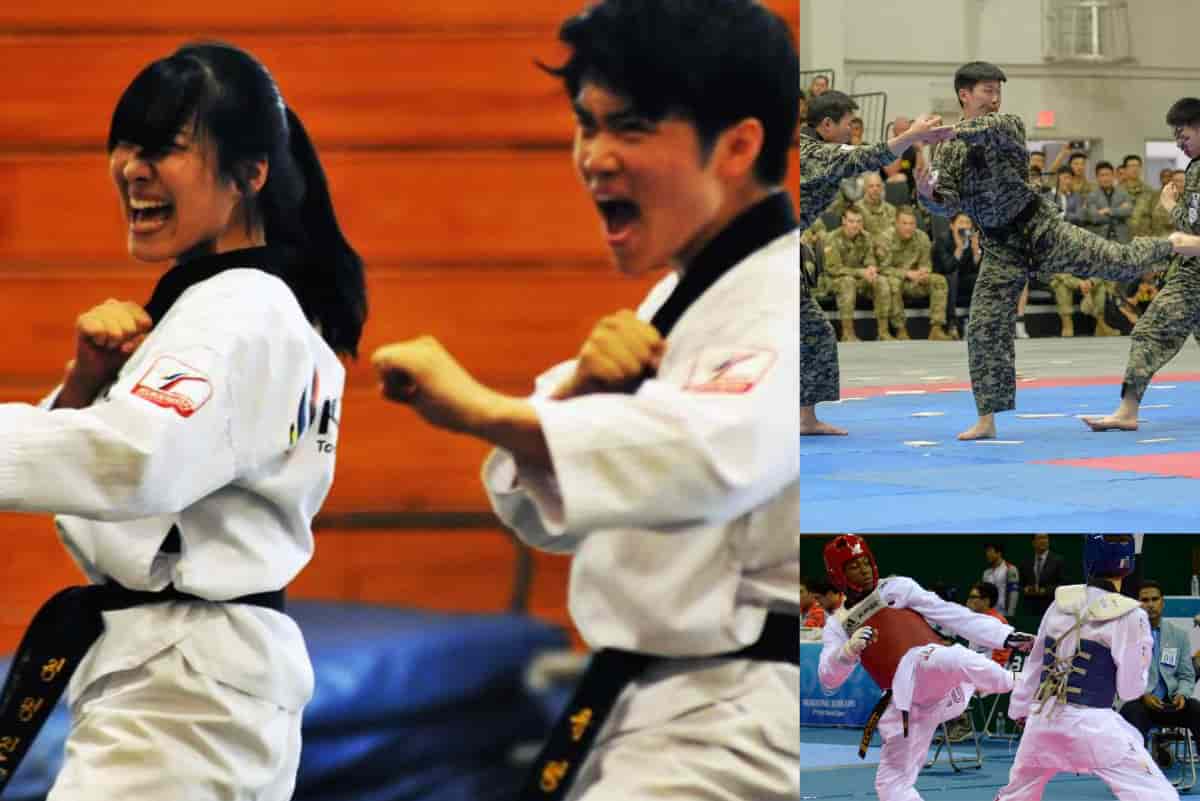
Taekwondo has four main styles that are also defined as separate organizations: Traditional style, World Taekwondo, ITF style, and ATA style.

Keep reading this article to learn all about the different styles of Taekwondo. We will bring you closer to how these differ from one another in various aspects and provide you with many unique pieces of information.

What is Taekwondo?

Taekwondo is a martial art developed in South Korea in the 1950s as a military combat system. Most people know TKD as a system that puts a lot of emphasis on fast and powerful kicks, which are the primary weapons. It also includes hand strikes, but these are not as important as kicks.

In 2000, TKD variation debuted at the Olympic Games hosted in Sydney, Australia, and it has been a part of the games ever since.

In order to better understand why there are so many Taekwondo styles, you must take a closer look at its history and development.

The history and development of Taekwondo

The story of Taekwondo began shortly after the end of World War 2. At the time, new martial arts schools or “kwans” started opening up in Seoul and all across South Korea. The founders of most schools were martial artists trained in various Northern Chinese styles and Japanese arts such as karate. Each of these kwans used to have its own principles and teaching methods.

This mix of styles practiced between the 1940s and 1950 is what most people believe is the first and original taekwondo style.

In the 1950s, the Korean military was in search of a new combat system that would improve the fighting abilities of its soldiers. The main in charge of the project was the Army officer, Choi-Hong-hi. His initial step was to engage all major kwans (schools) in the creation of the unified Korean martial art. So instead of each one teaching their own style, kwans have united to create a single style.

Gen. Choi Hong-Hi
(Photo Credit: ITF)

The final result of their work was a combat system called “Tang Soo Do”, which translates to tae (to stomp), su (hand), and do (way or discipline). Few years later, Choi advocated for the name to be changed to “Tae Kwon Do”. The new name translates to — ”The way of the fist and the hand”, a name that is more in line with what the unified style represents as a system.

In the following years, the military would adopt the system as a part of their training. And in 1959, Choi founded the first “Korea Taekwondo Association (KTA)”. However, he wanted all major Kwans to adopt his variations as the only style, which was met with resistance and is the key reason why there are different styles of Taekwondo.

When Choi finally broke from KTA in 1966, he went on to create International Taekwondo Federation (ITF). And this is how different styles began to emerge.

What are the different styles of Taekwondo?

Taekwondo has many styles and even more sub-styles. But overall, there are four main styles: WT, ITF, ATA, and Traditional.

All of these styles teach very much the same techniques, but differ a lot when it comes to emphasis, rules, forms, and many other elements. Here is a detailed explanation:

Traditional TKD style

Traditional style refers to the style practiced during the 1940s by the original nine kwans in Korea. At the time, the term “Taekwondo” hadn’t been used yet, and kwans used various names with the most popular being Tang Soo Do:

  • Kong Soo Do
  • Tae Soo Do
  • “Tang Soo Do”

In terms of techniques and teaching methods, the traditional style is often seen as the hardest one, and it is very similar to Shotokan karate. In fact, it shares the same principles of mixing kicks with punches as Shotokan, but it slightly favors kicking techniques over punches. 

It entirely focuses on the self-defense aspect of fighting and training a person for a real fight. Through hard training, they learn all about the physical and mental aspects of fighting. When it comes to techniques, the emphasis is on the following:

  • Fast and powerful kicks
  • Direct punching techniques
  • Elbows and knees inside the clinch
  • Basic elements of grappling such as trips and throws

The methods of teaching are not standardized as each kwan had its own concept and rules.:

  • Forms (patterns) consist of pre-arranged attacks similar to katas in karate.
  • Breathing exercises (meditation)
  • Intense physical workouts which include body-weight exercises
  • Hard sparring

An important thing to note is that the traditional style does not have any competition or rules.

International Taekwondo Federation (ITF)

ITF style of Taekwondo emerged when one of the main founders, general Hong Hi Choi, broke from Korean Taekwon-Do Association (KTA) to form his own variation of the system. ITF is also known as Chang-Hong-style and it was founded in March 1966, seven years after KTA.

ITF is more in line with the traditional style, it primarily focuses on self-defense training. There is competition if you want to test your skills, but it is not as important as in other styles. Students learn how to use all limbs as weapons in a fight and advanced self-defense tactics.

There are 24 patterns (katas) in the official ITF. All patterns relate to 24 hours a day, and each pattern’s name refers to important events in Korean history or important figures.

When it comes to rules, ITF is similar to World Taekwondo (WT). The only major difference is that ITF enables you to attack the head using hand strikes. However, punches to the head are not allowed for kids 10 years of age or younger. And, sparring is not continued as the action resets after each point. 

In tournaments, the point-scoring works as follows:

  • 1 pointfor landing a direct hand strike to the torso, or head with both feet off the ground, or kick to the midsection.
  • 2 points — kick to the high-section, mid-air hand attack with both feet off the ground, jumping mid-section kick
  • 3 pointsjumping kick to the high section.

When it comes to patterns, contestants below the black belt perform one pattern appropriate to their rank. Black belts, on the other side, perform two patterns. They receive up to 10 points based on different factors such as technique, speed, balance, power, and expression of energy.

ITF Black Belt Patterns

American Taekwondo Association (ATA)

ATA was founded by Haeng Ung Lee, a former Taekwondo instructor in the Korean military. In 1969, he migrated to Omaha, Nebraska, where he opened a couple of schools. The same year, he founded the “American Taekwondo Association.”

ATA students study “poome sae” patterns which consist of defensive and offensive techniques. Each technique is designed to prepare a person for self-defense scenarios they may encounter in real life. Each pattern includes different kicks, punches, and combinations. 

ATA also includes sparring, similar to the one in World Taekwondo (WT) where punches to the head are not allowed. Unlike other styles, students also spar with padded sticks to simulate weapons.

Kukkiwon / World Taekwondo (WT)

In 1973, World Taekwondo Federation (WTF) got established by the main governing body, KTA. The main task of WTF was to promote the new academy named “Kukkiwon” and their new unified style of Taekwondo. The name would later be changed to “World Taekwondo (WT),” which is also known as “sports Taekwondo.” This style is the only recognized style by the Olympic Committee.

Most modern WT schools put a lot of focus on competition and preparing you to win matches following a point-fighting system. Students learn how to use all types of fast and precise kicks, strike the upper body area below the neck and mix it with fast footwork to win points. There is little to no self-defense training.

The point-fighting rules are as follows:

  • 1 point — for a punch to the trunk protector
  • 2 points — for a kick to the trunk protector
  • 3 points — for a kick to the head
  • 4 points — for a turning/spinning kick to the trunk protector
  • 5 points — for a turning/spinning kick to the head
LEARN MORE
Karate vs. Taekwondo: Key Differences And Similarities

Full Comparison of Taekwondo Styles

Following is a detailed comparison of all major styles of Taekwondo:

SegmentTraditionalITFATAKukkiwon/WT
HistoryOriginal style practiced between the 1940s and 1950sFounded in 1966 by Army officer Choi Hong-Hi in South Korea. Founded in 1969 by Haeng Ung Lee in Omaha, Nebraska, US. Founded in 1973 by KTA. 
PunchesAllows punches to the face and mid-sectionAllows punches to the face and mid-section but not with full power (semi-contact)Allows punches to the face and mid-section but not with full power (semi-contact)Punches are allowed only to the midsection. No punches to the face. 
SparringOne-step sparring in most schools.
One student will throw an attack while the other one defends, and then they will do it the other way around. 
Sparring is not continuous as the match resets after each successful point. Continuous sparring with the emphasis being on technique and precision rather than power. Continuous sparring with kicks, punches, and blocks.
More emphasis on counter-attacks than blocks. 
EmphasisSelf-defense and real combatSelf-defense and CompetitionA mix of self-defense and competitionCompetition (Olympics)
Olympic styleNoNoNoYes, since 2000. 
GearDobok Uniform, Head gear,
Foot gear,
Hand gear,
Mouth guard, Groin cup (for men)
Dobok uniform,
Headgear,
Forearm pads,
Chest protector, Shin guard,
Mouth guard,  Groin cup (for men),
Breast protectors (for women)
Dobok uniform, Head gear,
Chest protector, Gloves,
Feet protector, Mouth guard
Headgear,
Chest protector,
Shin pads,
Arm pads,
Mouth guard,
Foot pads,
Gloves,
Groin cup (for men), Breast protectors (for women)
RELATED
Taekwondo Belt Ranking System – EASILY Explained For Beginners

Related Questions

Which style of Taekwondo is best for self-defense?

ITF is widely regarded as the most effective style when it comes to self-defense. The traditional form known as “Tang Soo Do” is also practical, but it is not as widely used in modern times as ITF.

ITF is in line with traditional methods of training, and it focuses entirely on real fighting, and its self-defense program is more than practical. Though there is competition, it is not as important as in other styles. And, all students, regardless if they compete or not, must do self-defense drills in classes.

In training, students learn how to use all types of kicks as the main weapon. They also practice closed or open-hand attacks, fundamentals of grappling, dealing with multiple attackers, and many other valuable skills. Apart from techniques, they also learn how to stay calm in an intense situation, assess the situation they are in, and make rational decisions.

WT and ATA styles are not as practical for self-defense due to the emphasis on competition. Instead of learning how to fight, the main goal is to develop skills that you can use to win matches in tournaments.

Which Taekwondo style is the best for competing?

World Taekwondo (WT) is the best form if you want to train Taekwondo to compete and become a champion. WT is the only style recognized and used in the Olympics, and it is also known as a “sports” form.

Most modern schools emphasize competition over other aspects so finding a WT school won’t be hard. In classes, you will learn very much the same punching and kicking techniques as in other styles. But each of these skills is adapted to help you win matches under strict rules, not to fight in real life. You won’t spend much time doing anything else that is not related to competition.

Which Taekwondo style is best for MMA?

Which one is best for MMA really depends on the school you train in, rather than the style itself. All styles of Taekwondo will teach you similar kicks, hand strikes, footwork, and movement and blocks. These styles differ the most when it comes to emphasis and the organizations they represent. But the techniques and the way students carry them out are actually very similar.

In modern times, many schools have weak criteria and focus on producing as many black belts as possible. Therefore, they promote their business as a place where you reach the highest rank in a short time span. But this comes at a certain price. Yes, you will earn a black belt in less time than in other schools, but you will also be less skillful.

Certain elements of Taekwondo work well in MMA as long as you have proper skills. Regardless of the style, a good school will teach you how to execute each move and technique with pinpoint perfect technique in freestyle combat, such as the one in MMA.

You will also develop good reactions, timing, and ability to read the opponent’s reactions, and overall, learn how to apply all of the techniques in a real fight.

What style of taekwondo is in the Olympics?

Kukkiwon, a style overseen by World Taekwondo (WT), is accepted as an official style used in the Olympic Games. The sport first made its demonstration debut as an Olympic sport in 1988 at the games hosted in Seoul, South Korea, and the second time in Barcelona, Spain, in 1992. Finally, it debuted as an official Olympic sport in 2000 at the Sydney Games hosted in Australia.

What Did Bruce Lee Mean By “Be Like Water?” Simply Explained

0
Photo by Johnson Lau/CC-BY-SA-2.5

Bruce Lee was not only a master of martial arts but a philosophical thinker who gave much thought to life and how it should be lived. Bruce Lee voiced his life and martial philosophies with many famous quotes such as “Be like water,” but what does this statement actually mean?

Bruce Lee’s quote about “being like water” was a philosophy in reference to his approach to martial arts and to life in general. Water adapts and changes to its surroundings and obstacles, but when water comes with force, it is an unstoppable, irresistible force that little can withstand.

We will explore what Bruce Lee meant by this statement and how it pertains to martial arts and to life in general. As we delve into the meaning, you will get a glimpse of the wisdom and insight that Bruce Lee had into martial arts and life!

What Does “Be Like Water” Mean?

In Bruce Lee’s famous quote, he says, “Be like water.” But what does that mean? Some people interpret it as meaning that we should be flexible in our actions and thoughts, adapting to our surroundings as water does. Others believe that it means we should strive to be calm and peaceful like water.

Bruce Lee actually meant both of these things when he said this quote. He believed that we should be adaptable and fluid in our actions but also have the serenity and strength that water possesses.

When we “be like water,” we can flow through life’s challenges with ease and grace.

What Does It Mean To Be Formless And Shapeless Like Water?

In Bruce Lee’s philosophy, the martial artist should be like water: formless and shapeless. This means that the martial artist should be able to adapt to any situation and be able to flow with the opponent’s attacks.

Bruce Lee believed that the human body is naturally designed to move fluidly and efficiently. He theorized that if one were to observe water, one would notice that it always takes the path of least resistance. He felt that the human body should move in a similar fashion – always seeking the path of least resistance.

This deep philosophy can be applied to all aspects of life, not just martial arts. In any situation, we should try to be like water and go with the flow instead of resisting it.

Did Bruce Lee Come Up With “Be Like Water?” 

Did Bruce Lee come up with “be like water,” or was it somebody else’s philosophy? There is no definitive and straightforward answer to the question, as we cannot be sure if there was someone before Brue Lee that conceived this idea. 

However, many people believe that Bruce Lee did come up with the phrase “be like water.” This is believed because Bruce Lee was known for his unique understanding and philosophy when it came to martial arts and fighting. 

In addition, he was also known for his ability to adapt to any situation. For example, in one of his famous interviews, Bruce Lee was asked what he would do if he were surrounded by a group of attackers. 

His response was that he would “be like water.” By this, he meant that he would flow around the attack and strike when and where they were weakest. This philosophy can be applied to any life situation, whether in a fight or simply dealing with everyday challenges.

So, did Bruce Lee come up with the phrase “be like water?” It’s hard to say for sure. What we definitely know is that he was a wise man with a unique perspective on life that can still teach us all something today.

RECOMMENDED READING:
How Did Bruce Lee Die? – The Truth Behind Bruce Lee’s Death

How Does “Be Like Water” Apply to Martial Arts?

In Bruce Lee’s widely-quoted maxim, “Be like water,” he was urging martial artists to be adaptable and fluid in their movements, like water itself.

Indeed, the element of water is often used to symbolize flexibility and adaptability in Eastern philosophies. There’s no denying that these are important qualities for a martial artist to possess. After all, in a fight, you have to be able to read your opponent’s moves and adjust your own accordingly.

But what exactly did Bruce Lee mean when he said: “be like water”? Let’s take a deeper look into this saying and see how it can apply to martial arts training.

“Be like water” can mean different things to different people, but one interpretation is that we should go-with-the-flow and not resist change. This is certainly relevant to martial arts, where we are constantly learning new techniques and concepts. If we’re too stuck in our ways and rigid in our thinking, we’ll never be able to progress in our training.

It also refers to being open-minded about other styles and embracing useful techniques from various martial arts than rigidly following a single style.

Another way of perceiving this truth is that we should be as relentless as water. Just as water eventually wears down even the hardest rocks, we should never give up in our pursuit of martial arts excellence. We should always strive to improve, even if the journey is long and difficult.

Ultimately, “being like water” is about being adaptable, flexible, and relentless in our martial arts training. If we can learn to embrace these qualities, we’ll be well on our way to becoming great martial artists.

RECOMMENDED READING:
Bruce Lee – Why He Is Considered The Father Of MMA

How Does “Be Like Water” Apply to Non-Martial Artists?

Bruce Lee’s famous quote, “be like water,” is often misunderstood to only apply to martial artists. However, the philosophy can be applied to anyone, regardless of their chosen profession.

So what does it mean to “be like water”? Bruce Lee himself said that it means “flow without resistance.” In other words, don’t try to force things; let them happen naturally. 

This doesn’t mean that you should be a doormat or that you should never take action. Instead, it means that you should go with the flow and trust your instincts.

This philosophy can be applied to any area of your life. For example, if you’re trying to lose weight, don’t focus on the number on the scale. Instead, focus on making healthy daily choices and trust that the weight will eventually come off. If you want to develop your career, don’t try to force things; let your career take its natural course.

Of course, this isn’t always easy. It’s our human nature to want to control our lives and our destiny. But if we can learn to let go and go with the flow, we may just find that life is substantially more enjoyable and successful.

What Are Bruce Lee’s Other Famous Quotes? (Explained)

Bruce Lee produced many insightful and wise quotes that are relevant to martial arts and life in general. Some of his notable quotes include the following.

Always be yourself; express yourself; have faith in yourself.” – Don’t be afraid to be an individual.

Be a practical dreamer backed by action.” – Put your dreams into action!

Under the sky, under the heavens, there is but one family.” – We are all one family.

I fear not the man who has practiced 10,000 kicks once, but I fear the man who has practiced one kick 10,000 times.” – This means focusing on one thing is far more powerful than doing many different things.

What Is Bruce Lee’s Philosophy?

Bruce Lee was a very determined man who not only pursued excellence in his fitness and martial arts but also in his pursuit of wisdom. He was a deep thinker who contemplated many aspects of life and developed a personal philosophy for his life and martial art.

Lee’s philosophy is based on the idea that we should all be like water. Water is strong and powerful, but it is also flexible and adaptable. It can emulate any shape or form and flow around any obstacle. 

Likewise, Lee believed that we should all be strong and powerful in our own lives but also flexible and adaptable. We should be able to take on any challenge that comes our way and flow around any obstacle that gets in our way.

Is Jeet Kune Do A Philosophy Or Martial Art?

When Bruce Lee developed his martial art philosophy of Jeet Kune Do, he did so to create a fluid and adaptable system, much like his quote, “be like water.” 

Jeet Kune Do is a martial art that is based on Bruce Lee’s philosophy. His credo for creating the martial art was “using no way as way; having no limitation as limitation.” This philosophy regarding martial arts can be applied to all aspects of life, which was what Bruce Lee tried to apply to his entire life.

In Bruce Lee’s perception, this weakness was being closed to other styles and focusing on a single method. He took the good aspects of many other martial arts, adapted them, and incorporated them into Jeet Kune Do.

The phrase “be like water” is evident in his adaptive approach to developing Jeet Kune Do and in his belief that there was always something new to learn.

Even the techniques in Jeet Kune Do are taught in a manner that can be adapted to the person executing the technique and to the situation at hand, incorporating the philosophy into the martial art!

RELATED:
How Would Bruce Lee Do In MMA Fighting? (BEST Explained)

Related Questions

What Are Some Other Quotes About Water?

There are other people who view water as a source of inspiration for various aspects of life and the world we live in.

  • If there is magic on this planet, it is contained in water.” – Loren Eiseley
  • Water is the driving force of all nature.” – Leonardo da Vinci

What Is The Concept Of The Art Of War?

The concept of the Art of War is that war should be avoided by using diplomacy, flowing like water around each other, and finding a compromise in the path of least resistance.

However, if a conflict is inevitable, the fight should be approached with strategy and psychology to minimize losses. Using the water analogy, it references the irresistible power of water when it comes to force.