Home Blog Page 11

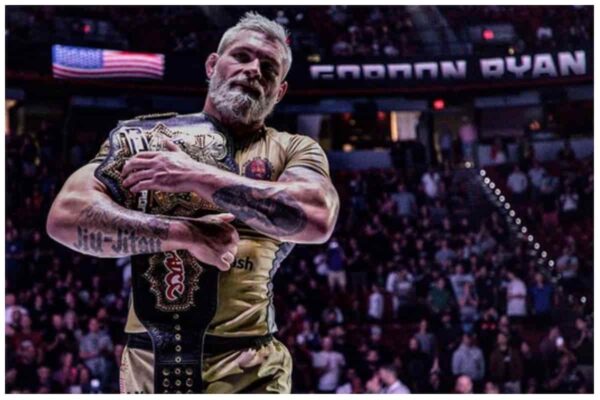
Is Gordon Ryan the best ever? Yes, and Here’s Why

0
Photo Credit: IG @gordonlovesjiujitsu

Editor’s note: The views and opinions expressed below are those of the author.

If you’re even somewhat of a regular MMA fan, the chances are you’ve heard of Brazilian jiu-jitsu (BJJ) player Gordon Ryan. Whether he’s frequently advertised on UFC Fight Pass, pictured alongside prominent UFC fighters, or simply training with them, Gordon is slowly but surely entering the radar of many MMA fans these days.

Gordon Ryan’s popularity has notably skyrocketed following his victory over fellow BJJ legend Andre Galvao at the 2022 ADCC World Championship, despite being just 27 years old at the time. But, more importantly, this monumental win has made many people think of Gordon as the best of all time.

Gordon Ryan’s coach thinks that what sets Ryan apart is his natural ability to solve any problem and his uncanny ability to remain calm under stressful situations. 

Let’s dig deeper into Gordon Ryan’s BJJ credentials and see why people say he is the best.

When did Gordon Ryan start BJJ?

Ryan began grappling in 2010 when he was just 15 years old. He first started training under Miguel Benitez before eventually making the switch to the team of John Danaher, Tom DeBlass, and Garry Tonon, otherwise known as the Danaher Death Squad. He would eventually become a brown belt in 2015 before being awarded his black belt by Tonon in February 2016. So in essence, it took him six years to become a black belt in jiu-jitsu.

As far as BJJ lineages go, Gordon actually has two of them as his black belt was a shared responsibility between Danaher, Tonon, and DeBlass. You can see the two lineages below:

Lineage 1: Carlos Gracie > Helio Gracie > Carlos Gracie > Renzo Gracie > Ricardo Almeida > Tom DeBlass > Garry Tonon > Gordon Ryan

Lineage 2: Carlos Gracie > Helio Gracie > Carlos Gracie > Renzo Gracie > John Danaher > Gordon Ryan

Is Gordon Ryan the greatest BJJ/grappler of all time?

With so many greats and legends in Brazilian jiu-jitsu, most notably the Gracies, many in the world of combat sports regard Ryan to be the greatest of them all. There’s UFC analyst Joe Rogan, TriStar head coach Firas Zahabi, and MMA analyst Luke Thomas to name a few who have waxed lyrical about the American, especially after his win over Galvao.

Gordon Ryan vs Andre Galvao Highlight

“Gordon is, undeniably, the best pound-for-pound jiu-jitsu player on Earth. Not just the best, but the best ever.”

Joe Rogan

“Right now he’s at the top, top of the jiu-jitsu world. He’s arguably the greatest jiu-jitsu guy ever, Gordon Ryan. And I think he could cement that and just be that legend of the sport.”

Firas Zahabi
MMA analyst Luke Thomas discusses why Gordon Ryan is the GOAT

Let’s take a look at some of his notable accolades and accomplishments:

  • Ryan is a five-time ADCC world champion, while he also holds accolades such as being a two-time IBJJF no-gi world champion and a four-time winner of the Eddie Bravo Invitational.
  • Ryan is the first athlete ever to win the super-fight and his own weight division in the same year when he accomplished the feat at the 2022 ADCC World Championship.
  • Ryan is currently undefeated in grappling dating back to 2018 following his points defeat to Vinny Magalhães. Ryan has not suffered a defeat in 54 matches since and currently holds a 152-9-3 record at the time of reporting.
  • Ryan holds the record for the fastest submission in ADCC history with his 11-second victory over Roosevelt Sousa via a heel hook.

With such accolades at the age of 27 along with his ever-evolving game and overall dominance, it’s not really crazy to regard Ryan as the greatest BJJ player of all time.

What makes Gordon Ryan the best?

What actually makes Gordon Ryan so good? One major factor is his coaching staff. His BJJ coach is a sixth-degree black belt and, arguably, the greatest instructor of all time, John Danaher, who is essentially a jiu-jitsu computer that teaches BJJ scientifically and systematically. Danaher’s coaching style is unlike any other traditional method. He has developed new methods for teaching students to dramatically improve their skill set, which Gordon has greatly benefited from. 

Not to mention elite grapplers like Garry Tonon and Tom DeBlass, who worked with Gordon Ryan to help him improve his game. With that said, there are many who train under Danaher who haven’t scratched the surface of reaching the level of Ryan.

Additionally, his back attack to the rear naked choke system helped him win double gold at the 2019 ADCC World Championship. In recent times, he’s been crushing half-guards and using a wide variety of mounted techniques, which only further showcases his constant development and innovative skills.

Here are some excerpts from what Danaher himself had to say about what makes Ryan stand out:

“He has an extraordinary memory. On more than a few occasions, Gordon would come to me after class and ask: “Hey John, do you remember that thing you showed me back in 2018, when the guy is on the left Ashi Garami and you’ve told me to turn in the opposite direction… And I’m looking at him, like, what? He has to jog back my memory so I can then report it back to him. So, he has an incredible ability to recall information.

transcribed by bjjee.com

“Secondly, he has an incredible ability to stay calm under stress. Problem-solving is difficult enough as it is and you make it more difficult when you stress yourself. And so, athletes who can cope with stress, or downplay stress, always perform better. And he is truly extraordinary in this regard.

transcribed by bjjee.com

Here’s a full video interview of John Danaher talking about Gordon Ryan.

Has Gordon Ryan lost?

Ryan has suffered defeat nine times in his grappling career, but as aforementioned, he hasn’t taken a loss since 2018. His most notable losses, however, have come to Felipe Pena who defeated him with a rear naked choke in a 2016 super fight. Pena would beat him again on points at the 2017 ADCC World Championship, this time on points. Gordon would exact revenge on Pena in a super fight earlier in 2022 to put the score at 2-1 while another rematch is set for February 2023.

Gordon, at the time of reporting, is currently set to face Vinny Magalhães at the UFC Fight Pass Invitational 3. Magalhães is notably the last competitor to inflict defeat on Ryan.

Who is the GOAT of jiu-jitsu?

G.O.A.T. (Greatest Of All Time) rankings are subjective, but as you may have deciphered, many already regard Ryan to be the GOAT of no-gi jiu-jitsu. So with that said, who is below him? Here is our ranking of the top five greatest jiu-jitsu players.

1. Gordon Ryan

2. Marcelo Garcia – Fourth-degree jiu-jitsu black belt with five world jiu-jitsu championships and four ADCC championships. He is also a member of the IBJJF and ADCC Hall of Fame.

3. Roger Gracie – The grandson of BJJ founder Carlos Gracie and winner of 10 IBJJF world championships. He is also an ADCC champion, being the only athlete to win gold in his own weight class along with the open weight division with an unparalleled 100% submission rate. He notably has zero defeats by submission with all his losses coming by points. Gracie is also a member of the IBJJF and ADCC Halls of Fame, with Ryan regarding him as the “GOAT” of jiu-jitsu as you see below.

4. Andre Galvao – Fourth-degree jiu-jitsu black belt and multiple-time world champion who is the co-founder and head coach of one of the most successful BJJ gyms in the world in Atos Jiu Jitsu. He holds the most ADCC titles with six and is also a member of the IBJJF Hall of Fame.

5. Marcus Almeida (Buchecha) – First-degree jiu-jitsu black belt and multiple-time jiu-jitsu world champion. A member of the IBJJF Hall of Fame, Almeida currently competes in the heavyweight division of ONE Championship.

Honorable mention: Mikey Musumeci

Is Gordon Ryan interested in becoming an MMA fighter?

Ryan was initially interested in becoming an MMA fighter. However, Danaher convinced him to remain in jiu-jitsu because he believed the sport was about to explode and that it needed a superstar like Ryan to reach that level.

“…Grappling is at a pivotal point in its history. There is a chance that submission grappling could expand to a remarkable degree over the next 10 years.”

John Danaher, 2020 interview

That said, the closest Ryan did come to becoming an MMA fighter was with the Singapore-based MMA promotion ONE Championship. In 2021, ONE chairman and CEO Chatri Sityodtong revealed Ryan had signed a contract to compete in grappling. At the same time, MMA was also an option if the latter was interested in pursuing it.

However, Ryan never made his scheduled grappling debut against Shinya Aoki later that year as he had to retire temporarily due to his Gastroparesis condition. He is now longer under a ONE Championship contract.

Gordon Ryan vs. Rickson Gracie: Who is better and who would win?

Rickson Gracie is a ninth-degree jiu-jitsu black belt and, for many, is considered to be the greatest BJJ fighter from the Gracie family. That led many to ponder how a match between him and Ryan would go and whether the latter could be considered greater.

As far as accomplishments in the sport of jiu-jitsu go, Gordon is undeniably superior. Gordon would also likely win a matchup due to his imposing size and superior skill set honed from competing against elite grapplers on the world stage, which Rickson did not do.

Here’s what Royce Gracie told Chael Sonnen about what he thinks of Rickson vs. Gordon under Abu Dhabi rules:

“Royce told him that he doesn’t think that Rickson would be likely to submit Gordon and that, of the two, Gordon would be more likely to do so… But that he also doesn’t think that Gordon would submit Rickson – in simple terms, he just wanted to aknowledge that he’d be more likely to do so.”

BJJEE.com

A closer matchup would be with Roger Gracie instead of Rickson, where there is an argument to be made that Ryan could lose. All things considered, however, Ryan would most likely come out on top against him as well.

Final thought: What separates Gordon Ryan from the rest?

As aforementioned, Ryan separates himself from the pack due to his high level of professionalism, the fact that he trains every day, and the fact that he is always adapting. Unlike most black belts in jiu-jitsu, he doesn’t do seminars either, as he feels it takes time away from him getting better in the gym. Instead, he releases instructional DVDs, which also serve as his main source of income and allow him to continually train and get better.

Aside from that, his extraordinary lineages and coaches, as well as his unwavering confidence, set him apart. As an example, he bet $10,000 on a match when he only had $10,400 in his bank account back in 2016—and he ended up winning the match.

He now has a lot more money in the bank. Given how he continues to revolutionize the sport, he can only expect his balance and popularity to grow even further.

What is Bushido? Introduction to the Samurai Way of Life

0

Bushido is a Japanese concept that filters into most forms of Japanese martial arts, but it has its origins in the Samurai era in Japanese history. Bushido may be an ancient concept, but the principles have impacted Japanese life to this day, including aspects of business.

Bushido is the moral code by which the Samurai lived and conducted their affairs, including their family lives. The warrior code included aspects of honor, integrity, justice, courage, mercy, loyalty, self-control, and manners. Breaking the code would bring dishonor to the family of the Samurai.

Bushido has been romanticized in modern times, especially by the moviemaking industry. The code is not as defined as many portray it to be and has a varied history, which is interesting and enlightening. We explain Bushido in simple terms to gain an understanding of this cultural aspect of the Japanese way of life.

The History of Bushido

Bushido originated in the era of the Samurai in Japanese history. The Samurai were warrior clans that offered their fighting skills to many people, mostly certain nobles and warlords of 10th-century Japan.

The Samurai were considered nobility and were born into the Samurai tradition rather than choosing it as a way of life.

The military clans had a strict way of life, living to code of loyalty, sincerity, frugal living, mastery of martial arts, and honor till death.

Not all the Samurai subscribed to the same ethical code and moral values, leading to variations in Bushido from clan to clan. Each Samurai applied the code differently, depending on their moral character and devotion to their clan.

Bushido is an umbrella term used to describe the code by which the Samurai clans lived and performed their business. In later years, Bushido was condensed into a code of 8 virtues or principles.

Bushido is often compared to the western ideology of chivalry but was a much more complex and disciplined personal code than chivalry.

Not all Samurai lived by the Bushido code and were scoundrels that abused their position of power and upper-class standing in the community and were only interested in personal gain.

RECOMMENDED
What is Kodokan Judo? The Origin of Judo Easily Explained

What Does Bushido Mean?

Bushido translates as “the way of the warrior” and dictates the morals, lifestyle, behavior, philosophies, and principles expected of a noble warrior of this stature.

The Samurai were essentially soldiers for hire, the equivalent of the western mercenary. While the western mercenary was looked down upon in western culture as someone with low morals and few principles, the opposite was true of the Samurai.

Western mercenaries were considered greedy soldiers with no principles, only after financial gain, and would switch sides if the price was right.

The Samurai, in contrast, was seen as a soldier of character, discipline, and upstanding morals, loyal to the point of death.

Bushido was a way of life for the Samurai and consisted of several moral codes by which every aspect of their lives was governed. 

What are the Bushido Codes?

Although there were variations in the Bushido code between different Samurai clans, the code can be summed up in 8 values of principles that covered the majority of the codes of these clans.

The book Bushido: Soul of Japan, written by Inazo Nitobe, condensed the principles into the 8 codes of Bushido.

  1. Justice. Justice or rectitude is described as doing the right thing in the pursuit of war and daily life.
  2. Courage. Courage in Bushido is not the same as bravery. Courage in Bushido is defined as the courage to do what is right and stand for justice. 
  3. Mercy. Benevolence is often the better word to describe Bushido’s mercy. It is seen as having the power of life and death in your hand but choosing wisely in the execution of that power.
  4. Politeness. Politeness in the Bushido code is not from a position of servitude to a master, but rather manners in the western sense of the word, or mutual respect.
  5. Sincerity. Honesty, sincerity, and frugal living were seen as virtues for a Samurai. Luxury and money were seen to make a man weak, whereas the abstinence of a frugal life taught the discipline required by a warrior. Samurai did not talk about money or flaunt their riches.
  6. Honor. Dignity and a high moral standing were considered more valuable than life itself. Rituals of death were often implemented to restore tainted honor.
  7. Loyalty. Loyalty was a core principle of the Bushido code, even if it meant the Samurai had to die for the person to whom they were indebted or had hired them.
  8. Self-control. Self-control was seen as a manly warrior trait in the Samurai and a sign of good character. How a man lives his life demonstrates his standing, honor, and pride in his clan, requiring self-control in all aspects of life.
This video further explains the eight codes of Bushido

Is Bushido a martial art or a philosophy?

Bushido is not a martial art, and it is more than a philosophy. It is a moral code that dictates a lifestyle. Bushido was not a teaching or a theory but a set of rules by which the Samurai chose to live their lives, conduct business, war, and their households.

The spirit of Bushido and the discipline it evokes has found its way into the core principles of many eastern martial arts.

Was Bushido created for Samurai?

Bushido was not created for the Samurai but by the Samurai as a moral and lifestyle code that suited their warrior culture.

Bushido was important for the Samurai because it set them apart from other clans, and the discipline required to stick to the warrior code followed through to their disciplined life as a warrior.

Training to master the art of war and martial arts techniques required a level of discipline that most other people do not encounter in their daily lives. Following the Bushido code allowed the Samurai to take their warrior training into the way they lived their lives, and it became a lifestyle.

Following the Bushido code was not limited to Samurai only. Anyone was allowed to choose to adopt the Bushido principles for their lifestyle, but you cannot call yourself a Samurai simply by following the code. True Samurai was born into the role rather than choosing it as a lifestyle.

If a Samurai broke the Bushido code, he was considered to have lost his honor and disgraced his family. Generally, the only way to atone for this code breach and regain honor was to commit ritual suicide. The ritual suicide was either seppuku, a ritual decapitation, or hara-kiri, a ritual disembowelment followed by seppuku.

Is Bushido still around?

Bushido as a philosophy and way of life still exists today. Many Japanese businesses operate with a set of principles that stem from the Bushido code.

Even in this modern age, people are free to live according to the Bushido code and adapt their lifestyles to align with the code’s principles.

Some people find that the discipline that Bushido gives them helps to stay focused in other areas of their lives.

UFC fighter Jiří Procházka is a student of the Bushido code and has decided to apply these principles to his fighting career and lifestyle.

Prior to UFC 282, Prochazka severely injured his shoulder while training and couldn’t defend his UFC light heavyweight title. Instead of holding onto his title, Prochazka voluntarily vacated it out of respect for other fighters in the division so they could fight for it. Here, Prochazka demonstrated that he adheres to the Bushido code of respect for others.

Is Bushido applicable to non-martial artists?

Bushido is a moral code that can be applied to any area of life and to people from different cultures and backgrounds.

Non-martial people can apply Bushido principles in their business dealings, personal relationships, and family lives. The sense of justice, discipline, manners, and honor integral to Bushido can benefit anyone in any walk of life.

What is a Samurai?

Samurai were a warrior class of families in ancient Japanese culture. War was their specialty, and they were skilled soldiers that hired themselves out for their fighting skills.

drawing of a group of four Samurai

Most Samurai lived by a strict moral code that dictated every aspect of their lives. This code was applied to their fighting style, business negotiations, and family life.

Do Samurai still exist?

The Samurai clans of the past still exist in Japan today, but they are no longer in the business of war or hire themselves out for their fighting skills.

The modern descendants of the Samurai are normal people in society, although still fiercely proud of their warrior heritage.

Is “The Last Samurai” movie a true story?

The blockbuster movie, The Last Samurai, was a work of fiction based on real historical events. Saigo Takamori, or Takanaga, was indeed the last Samurai and died in 1877 during the final battle of the Satsuma Rebellion, the battle of Shiroyama, where the Samurai were defeated, and Saigo was killed.

The white man in the movie is depicted as an American, but the only white man to ever be honored as a Samurai was Frenchman Jules Brunet, upon which Tom Cruise’s character in the movie, Captain Algren, is based.

Conclusion

The Samurai may no longer be around, but Bushido, the moral code by which they lived and conducted their lives, is still alive and well. The disciplines of Bushido are evident in many martial arts and in the ethos of Japanese business and economic policies.

Bushido principles can benefit anyone on any walk of life and bring discipline and integrity to their lifestyle!

What are the different styles of Jiu-Jitsu? Simply Explained

0

Jiu-jitsu is one of the most popular martial arts in modern times. However, many people fail to recognize that there are actually different styles of jiu-jitsu, with the most popular being the Brazilian version. What are all the different styles of jiu-jitsu?

Japanese jujutsu was a precursor to all other jiu-jitsu styles. Since then, different popular jiu-jitsu styles have emerged, such as Brazilian jiu-jitsu (BJJ), Gracie jiu-jitsu (GJJ), American jiu-jitsu (AJJ), Combat jiu-jitsu (CJJ), and no-gi jiu-jitsu.

This is just a brief explanation of different jiu-jitsu styles. Thus keep reading this article to learn more about the most popular styles of jiu-jitsu, what the differences are, and how these styles compare in various aspects.

The origin of Jiu-jitsu 

The earliest origins of jiu-jitsu date all the way back to the Nara period in Japan (710–794), and the military system called “Jujutsu” or “jiu-jitsu” is also referred to as “Japanese jiu-jitsu” to make the distinction to the public. Jujutsu means “gentle art” in translation. The oldest known styles of jujutsu were founded between the 12th and 15th centuries.

At the time, Japanese soldiers used to train in Jujutsu to improve their hand-to-hand fighting skills against armed or unarmed enemies on the battlefield. The system itself is a hybrid mix of direct striking, aggressive grappling, and ground fighting. It also includes brutal moves and various other dirty tactics such as headbutts, eye gouging, throat strikes, etc.

Although it is a hybrid fighting system, Jujutsu puts a lot of emphasis on aggressive grappling as the most efficient way to neutralize the enemy. The focus was on powerful throws and takedowns and finishing the opponent with strangulations or breaking their bones with painful joint locks.

Over the next century, modern Japanese society would become more westernized. Brutal systems like Jujutsu, where people could easily get hurt, were no longer popular. As a result, the people of Japan needed a new, safer variation of the system, and this is when Judo emerged.

The rise of Judo

Judo is a grappling-based martial art developed on the Jujutsu base. Its founder, a jujutsu master Kano Jigoro, used his knowledge and experience to create a “safer” or “sports” version of the existing system. First, he got rid of all the dangerous aspects of Jujutsu, such as strikes, dirty tactics, and brutal teaching methods.

Next, Kano switched the emphasis to standup grappling utilizing throws, trips, sweeps, and ground fighting. On the ground, judokas utilize similar chokes and joint locks but in a different way. The emphasis is on a high level of technique and subduing the opponent to win points and matches, not to hurt them. 

Judo is safer and gentler than Jujutsu, but it is technically more advanced when it comes to grappling, and it became a very popular sport right away.

As Judo started to spread outside of Japan, it inspired one special family in Brazil to develop another variation of the system.

The rise of Brazilian Jiu-Jitsu

Back in the 1920s, the famous judoka, whose name is Mitsuyo Maeda, would travel to Brazil with a mission to spread the new sport in South America. He would open up his dojo and start to teach judo following a standardized learning curriculum.

However, his loyal students, brothers Carlos and Helio Gracie, had an idea of changing the emphasis of the system, expanding the range of techniques, and overall improving the submission grappling aspect.

Gracies used judo and its precursor, Jujutsu, as a base to develop their own martial art called “Brazilian Jiu-Jitsu.” They changed the emphasis from standup grappling to submission grappling. Instead of powerful throws, the main aspect became positioning on the ground and finishing the opponent with more advanced chokes and joint locks.

Brazilian jiu-jitsu stands for the original, modern style of this grappling art. Over the years, many styles and variations would emerge.

What are the different styles of Jiu-Jitsu?

Jiu-jitsu has various styles and forms. Although certain aspects differ between styles, the core concept of grappling is very much the same.

Jujutsu (Japanese Jiu-Jitsu)

Jujutsu is the forefather of all modern jiu-jitsu styles. Jujutsu started developing around the 15th century in Japan. The main purpose of the system was to serve Japanese soldiers, notably an elite group of Samurai warriors.

As a concept, the main goal of jujutsu is to prepare a person for any scenario they may face on the battlefield.

It is a hybrid system of striking and grappling techniques, self-defense, and dirty tactics. Training is brutal, as the emphasis is on aggression and finishing the fight as quickly as possible. There are no rules or competition, as the main objective is to neutralize the threat in the most efficient way possible.

Students learn how to break bones, choke out an opponent, strike with full force, and use brutal moves like headbutts, eye gouges, and strikes to vital organs.

This video depicts ancient samurai reenactment battles using Jujutsu

Brazilian Jiu-Jitsu (BJJ)

BJJ is the most popular style, practiced by millions of people around the world. It was developed by Carlos and Helio Gracie back in the 1920s as a system that puts a lot of emphasis on submission grappling. It shares a lot of techniques with Judo, notably when it comes to stand-up grappling. But instead of throws, the emphasis is on ground grappling.

Each practitioner must wear a Gi uniform that consists of long pants, a top (jacket), and a rank belt around the waist. The Gi, however, is more than just a piece of cloth; you can grab onto it to manipulate your opponent’s balance and take them down. Gi can be used to submit the opponent on the ground or standing, such as with a gi choke.

Although rooted in self-defense, modern BJJ is oriented toward competition. In most schools, the learning syllabus and teaching methods are in line with the rules of competition, and students rarely do any self-defense drills.

BJJ competition

Gracie Jiu-Jitsu (GJJ)

Gracie Jiu-Jitsu is almost identical to BJJ, but the key difference is the emphasis. GJJ is designed for self-defense and real-life situations you may encounter on the streets. There is no competition and no rules to follow, and as a result, there is a clear difference in the training concept and application of techniques.

In training, students learn the same techniques as in other styles, notably BJJ. But instead of preparing for competition, GJJ students train for a real fight. They do various drills and self-defense tactics and simulate different scenarios. Training is more realistic and in line with the type of fighting you may encounter on the streets.

American Jiu-Jitsu (AJJ)

American Jiu-Jitsu is not an official style but rather a variant of an existing BJJ system. Jake Shields, a former top UFC fighter, is widely regarded as the progenitor of AJJ. Shield says that AJJ is mostly about combining the pressure-based techniques of American wrestling with the BJJ techniques.

In other words, American jiu-jitsu is similar to BJJ in many ways, but it incorporates explosive takedowns, top pressure, throws, and traditional American folk wrestling. It is also practiced without a gi.

Combat Jiu-Jitsu (CJJ)

Combat jiu-jitsu (CJJ) is not an official style but a hybrid version of Brazilian jiu-jitsu. A legendary BJJ instructor, Eddie Bravo, created CJJ to make Jiu-Jitsu matches more realistic, similar to mixed martial arts (MMA) matches.

In contrast with other styles, CJJ allows open palm strikes, which makes jiu-jitsu matches more combat realistic than traditional BJJ matches. The striking element opens up new ways you can attack or defend during jiu-jitsu matches.

The rules of the competition are also different. There are no points, and a contestant can win a match only by submission or TKO caused by strikes.

No-Gi Jiu-Jitsu

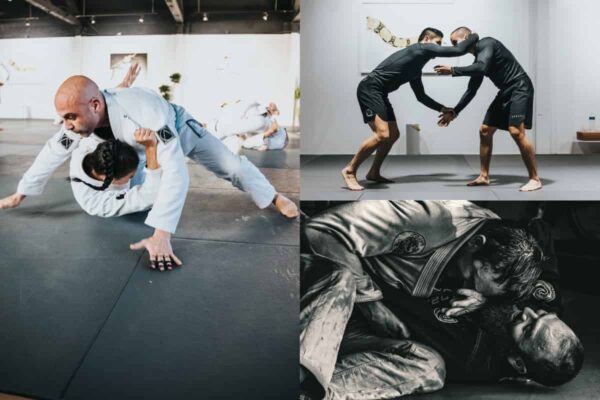
As the name implies, no-GI jiu-jitsu practitioners do not wear a GI uniform during training or competition. In a nutshell, No-gi jiu-jitsu is BJJ practiced without wearing a gi.

No-Gi grapplers wear a rashguard or shirt and shorts. And there is much less friction while grappling in no-gi, which makes the action much faster. Grappling in no-gi forces you to focus more on speed and aggression, overwhelming the opponent with sheer physical strength and pressure.

There is an ongoing debate about whether no-gi jiu-jitsu is more realistic than gi jiu-jitsu because people do not walk around in gis, but this is still up for debate.

What is sure, however, is that No-Gi represents a better base if you want to switch to MMA, where fighters compete wearing shorts and a pair of open-fingered gloves.

No-gi jiu-jitsu match
RELATED:
What Are The Different Styles of Wrestling? A Beginner’s Guide

Which style of Jiu-Jitsu is best for self-defense?

Whatever style you choose, you will learn how to defend yourself in real life.

However, when it comes to pure self-defense from a practical standpoint, Gracie Jiu-Jitsu is the best style. GJJ was created to help weaker people prepare for real-world fights against bigger opponents. It does this by putting more emphasis on leverage and timing than on strength and speed.

In the early stages of a student’s training, the GJJ curriculum is very structured and heavily focused on self-defense. Before a student can get a blue belt, they work on learning how to defend themselves against an untrained attacker of any size or strength.

Which style of Jiu-Jitsu is best for MMA?

The no-gi style of Jiu-Jitsu is widely regarded as the best for MMA, as the entire concept fits well within the rules of the sport. Instead of wearing a gi uniform, students train and compete in shorts, t-shirts, or rash guards. This enables you to learn how to grapple and apply submissions without wearing a uniform, which is how you will fight in MMA.

The grappling pace is much faster without the gi, forcing you to think and react faster and relying more on physical strength, and you need to adapt to these elements to be successful in MMA. Therefore training without a traditional Gi uniform is essential if you want to become a cage fighter.

That being said, if you want to further improve your jiu-jitsu skills in MMA fighting, learning both no-gi and gi jiu-jitsu is the best way to go, and here is why.

Gi style focuses more on technique and fundamentals by teaching you how to grip and manipulate the gi to defeat your opponent. The Gi style has more techniques because there are many ways gi can be used to pull off a submission. And you can’t use sheer strength to muscle your way out of trouble or to finish the opponent as you would in no-gi jiu-jitsu because wearing a gi restricts one’s movement.

Grabbing and using your own and your opponent’s GI uniforms is a key element of the game that allows you to attack, defend, and set up traps in various ways.

Gi jiu-jitsu also teaches better defensive skills when it comes to escaping and reversing the position. The gi fabric causes lots of friction, especially when wet from sweat, slowing the practitioner’s movement. 

For this reason, GI practitioners have to be more aware of their positioning to avoid putting themselves in a disadvantageous position where they can’t easily maneuver out of it and are vulnerable to being submitted. This awareness naturally improves one’s defensive skills more than no-gi jiu-jitsu. As such, gi jiu-jitsu forces you to be strategic, pace yourself, think three steps ahead, and rely on technique to win the exchange.

John Danaher, a world-renowned BJJ coach, explains the advantages of gi and no-gi jiu-jitsu:

“when starting out training or when focusing on defensive prowess, a preponderance of gi training makes sense. When looking to make progress with offensive elements of the sport and sound basic mechanics and habits have already been learned, no gi training will lift the technical level of your game.”

John Danaher

So in the best-case scenario, you will train in both gi and no-gi as these two styles complement each other.

What’s the difference between Judo and Brazilian Jiu-Jitsu?


JudoBJJ
HistoryJudo was created by Kano Jigoro in Japan in 1882. The origins of Judo come from Japanese JujutsuThe Gracie family founded BJJ in the 1920s in Brazil. The origins come from Judo and Japanese Jujutsu
EmphasisThe primary aspect of Judo is standup grappling utilizing powerful throws, sweeps, and trips. The secondary aspect is submission grappling on the ground.The main aspect of BJJ is submission grappling utilizing positioning, chokes, and joint locks. The secondary aspect is standup grappling and throws. 
Belt systemJudo belt ranking system is split into Kyu (junior) and Dan (senior) ranks. 
Senior ranking system includes six different belts and 12 ranks. 
Junior system has 3 different color belts and 3 ranks.
BJJ belt ranking system is also split between senior and junior students. 
Adult belt includes 10 different color belts and 10 ranks. 
Junior system has 13 different color belts, and 13 ranks.  
RulesJudo matches are 5 minutes long and the key is to win a full point (ippon) to win the match.
Ippon – execute a perfect throw, submit the opponent or pin them for more than 20 seconds Waza ari (half a point) – two waza ari result in an ippon and win you the match. Contestants receive waza ari for executing a throw with the opponent partly landing on their back, or if they pin them for more than 10s. 
BJJ matches last between 5 and 10 minutes depending on the rank. The main goal is to win a match by submitting the opponent, or outscoring them by points:
Knee on belly – 2 points Takedown – 2 points
Sweep – 2 points
Guard pass – 3 points
Back control – 4 points
Back mount – 4 points
Mount – 4 points

What Are the UFC Rules for Making Weight? Most Asked Questions

0
Photo by MMAnytt/CC-BY-3.0

Before any big fight in combat sports, including the UFC, both combatants have to weigh-in to an agreed-upon weight. This is to ensure the fight is fair and there is no massive size or weight advantage, even though most times, there still will be. In MMA, there are weight classes, so for example, in a fight between featherweights, both combatants will have to weigh no more than 146 pounds (145 if it’s a title bout).

But what happens if someone misses weight? Or what if the champion doesn’t make championship weight? How does the weigh-in process even work and why are there two weigh-ins in the UFC? All these questions will be answered in this guide so keep on reading to learn more!

How long before a UFC fight is the weigh-in?

With most UFC events, weigh-ins are usually over 24 hours before the fight. Fighters are given until a certain time window, usually two hours but it varies, to officially make weight for their scheduled fight.

If they fail to do so, they will be given more time until the scheduled time window expires. In some cases, the weigh-ins can be earlier or later if the fight is taking place in another country.

Why do UFC fighters weigh in twice?

You may have noticed on social media and YouTube that there are two separate weigh-ins for UFC events. The first weigh-ins, usually with no crowd and just UFC staff and press, take place in the morning, and are the official weigh-ins. All the official weights for the event are compiled at this particular weigh-in.

UFC official weigh-ins

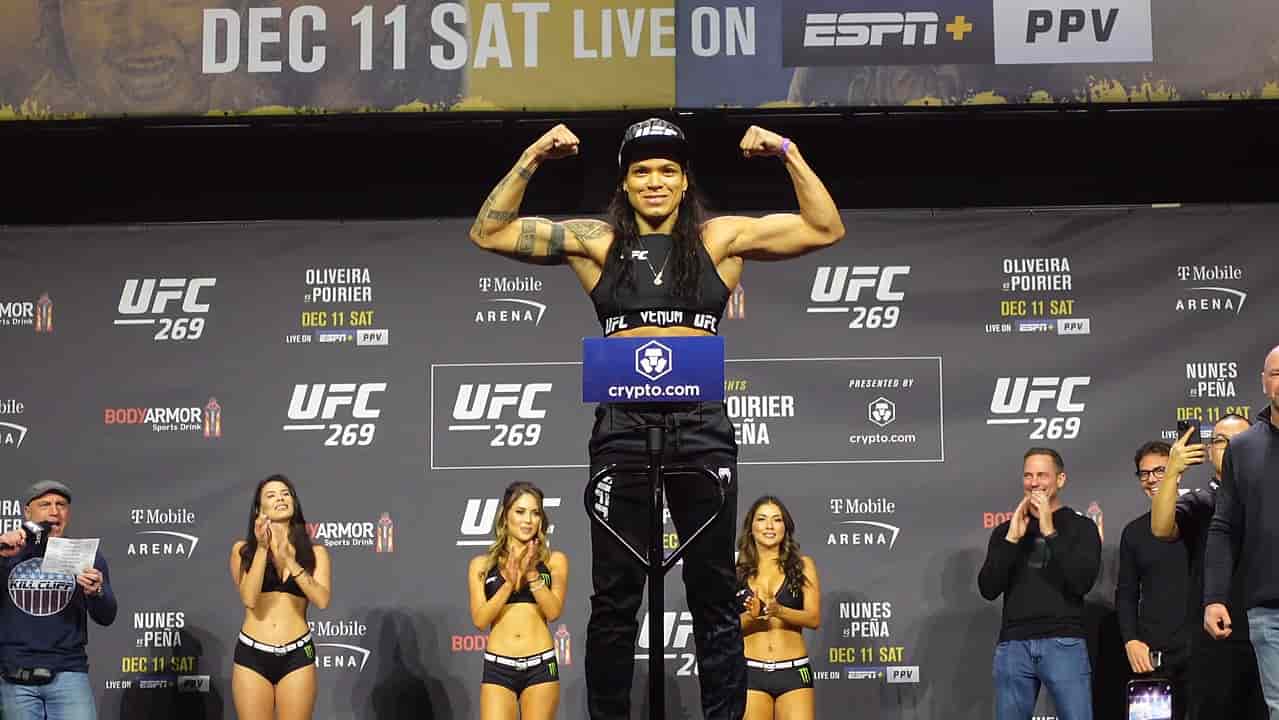
The weigh-ins that take place later on in the night are the ceremonial weigh-ins. This is after the fighters have had time to rehydrate, as they will step on the scales, pose, and then do their final faceoffs with their opponents. Unlike the morning weigh-ins, the ceremonial weigh-ins are more of a public event with plenty of fans gathering. If it’s a pay-per-view event, UFC commentator Joe Rogan will usually interview the main card fighters after they’ve completed their post-weigh-in faceoffs.

UFC ceremonial weigh-ins

What happens when UFC fighters miss weight?

Missing weight is common in the UFC. It could be an injury preventing you from fully cutting weight, sickness, your body getting older and just not being able to cut the required weight enough, or you simply weren’t disciplined enough with the pre-fight diet.

If this is the case, your opponent will decide if they want to fight you at a catchweight (if the fighter who misses weight comes in three pounds over 155, for example, it will be a 158-pound catchweight bout). If this is the case, the fighter who misses weight will have to forfeit a percentage of their purse, usually 30 percent, to their opponent. Additionally, the fighter that misses weight will not be eligible for any performance of the night bonuses, including Fight of the Night.

What happens if a UFC champion misses weight?

If a UFC champion fails to make the required weight for the championship bout, they will be stripped of the title. The fight will officially become a vacant title fight, assuming the title challenger makes weight. Should the stripped UFC champion end up winning the fight, the title will remain vacant. But if the title challenger who made the weight wins the fight, they will become the new champion.

When former UFC lightweight champion Charles Olivera missed weight on two separate occasions at UFC 274, he was stripped of the title before the championship bout against Justin Gaethje.

What happens if both fighters miss weight?

In a rare case of both fighters missing weight, the fight would more than likely continue as a catchweight bout. Both fighters will also have to forfeit a percentage of their fight purse, but it’s unclear whether this will go to the commission or UFC president Dana White. Regardless, both fighters will remain ineligible for performance of the night bonuses.

How much can you be overweight at UFC weigh-ins?

In non-title bouts, fighters are only allowed to be one pound heavier than their divisional weight limit. For example, a light heavyweight fighter (205 pounds) can weigh in at 206 pounds and the fight will still be official. Even coming in at 206.25 pounds will mean the fighter has missed weight. In the case of a title fight, however, both individuals need to make the championship weight, which means they absolutely have to make 205 pounds.

Do UFC fighters fight at their weigh-in weight?

Fighters do not fight at their weigh-in weight. This is because they are usually cutting weight to make the divisional limit during fight week. This involves dehydrating themselves and losing as much water weight as possible to ensure they make the contracted weight. Once the weight is made, they rehydrate and return to their usual camp weight, which in most cases, is 10-20 pounds above their weigh-in weight.

Why do UFC fighters not fight at their natural weight?

So why do UFC fighters not fight at their natural weight instead of cutting weight? While a select few fighters definitely do fight at their natural weight, which means they only have to cut a few pounds, the vast majority of UFC fighters end up not fighting at their natural weight and having to cut lots of weight.

The main reason for this? to have a size, power, and weight advantage (once they rehydrate after the weigh-ins) over their opponent. Of course, most fighters have dieticians who help them lose weight in a healthy manner. But the reality is that it’s not safe in the long term, and complications and health issues can always occur.

Why is weight cutting allowed?

Weight-cutting is allowed simply because that’s how things have worked for the last few decades. Additionally, the vast majority of fighters are still able to make the weight. If an oversized fighter is able to consistently make the weight, it’s hard to really call for an end to weight cutting, even if the fighter still maintains an advantage. Certain states, like California, require that a fighter can’t weigh more than 15% above the contracted fight weight on the day of the event. However, this can be easily avoided by fighters who cut more than the limit by simply competing in other states.

While in the UFC, there haven’t been any deaths as a result of weight-cutting, there are a few weight-cutting complications at the occasional event. It causes temporary calls to end weight-cutting by some critics but is quickly dismissed and forgotten when the next event sees no such issues.

Why does the UFC not have a super heavyweight division?

The heaviest division the UFC has is the heavyweight division which has a limit of 266 pounds for non-title bouts. Anything heavier would constitute the need for a super heavyweight division which a few have called for over the years.

In reality, this is unlikely. For one, it would most likely be a side show with out-of-shape fighters or personalities competing. Then there’s the fact that there isn’t a large enough talent pool to accommodate such a division. Here’s what UFC president Dana White said about super heavyweights back in 2010:

“You’re not going to go out and find too many super heavyweights out there. There just aren’t enough big guys like that.”

ESPN.co.uk

Don’t expect a super heavyweight division anytime soon in the UFC.

LEARN MORE
Why Is There A Weight Limit For UFC Heavyweight Fighters? FAQ

How do UFC fighters cut weight so fast?

UFC fighters are able to cut weight rapidly by dehydrating themselves and losing water weight during fight week. They mainly do this by working out and breaking a sweat constantly as they prepare for the fight. They are also fasting in the process by cutting out carbohydrates, limiting their sodium intake, and limiting their overall daily calorie intake.

When it’s weigh-in day, that’s when they look to sweat as much as possible to make the weight, using the help of saunas and sweat suits to further expedite the process.

Behind the scenes of cutting weight

Why does the UFC use an analog scale instead of a digital scale?

You may have noticed that the UFC uses analog scales instead of digital scales when weighing fighters. This is mainly due to the particular state athletic commissions that regulate UFC events and decide on using analog scales. Why is this the case? the proponents of analog scales claim analog is more accurate and consistent when calibrated, whereas with digital scales, there can be a discrepancy of a pound, which can cause many problems, especially with title fights where the extra pound for championship weight is crucial.

When UFC vice president of regulatory affairs Marc Ratner was asked about the legitimacy of the analog scale, Ratner quickly rejected suggestions that the UFC or athletic commissions switch to digital scales and said the following:

“Digital scales sometimes you’ll get tenths of ounces, a pound is 16 ounces so you’d hate to have a regular fight and the weight is supposed to be [155 pounds] and you get up to 156 and on the digital scale you could weigh 156.2,” Ratner explained. “Well that doesn’t make sense either.

“We’ve always used the meat scale, it’s accurate, it’s balanced, it’s calibrated, so I have no problem using it. We’ve been successful using it for the past 15 years that I’ve been doing it.”

mmafighting.com

It appears the analog scale is not going away anytime soon for UFC weigh-ins.

Final Thoughts

Weight cutting is a widely-debated topic in the mixed martial arts world with many believing it should be abolished, while others believe things are fine the way they are and that any complications or health issues are on the fighter for not knowing their body’s limits or trying to gain a huge advantage. For now, however, weight cutting looks like it will be here to stay for the considerable future.

What Exactly Is Full Contact Karate? A Simple Explanation

0

Karate is among the most well-known martial arts, but most people aren’t aware that karate has various styles and forms. Most of these different styles of karate are semi-contact, using restricted power while focusing on speed and accuracy. But there is also another form called full contact karate.

Full contact karate refers to a karate style or any form of karate competition that allows practitioners to knock out their opponents. In non-full-contact karate, knocking out your opponent can get you disqualified. In contrast, knocking out your opponent wins you a match in full-contact karate.

We’ll go over some of the most well-known full-contact karate styles and discuss various types of full-contact formats.

What is Full Contact Karate?

Full-contact karate refers to any style of karate or any format of karate that allows competitors to knock out their opponent during a match.

In terms of techniques, most of these full-contact karate styles focus on stand-up fighting, utilizing striking with kicks, punches, and even knees. Other full-contact styles may include judo and wrestling grappling moves.

Full-contact karate is often referred to as knockdown karate or Japanese full-contact karate. This is because full-contact rules allow competitors to knock out their opponent to win a fight.

The origin of Full contact Karate

The exact origins of full-contact karate are not clear. Throughout history, many styles and schools had been experimenting with the full-contact concept and trying to adapt it to their teaching methods. The only fair answer is that this form started to become more and more popular in the 1950s in Japan.

At the time, the famous karateka Masutatsu Oyama had decided to open his first karate dojo called “Oyama Dojo” in 1953. His main goal was to teach the Goju-Ryu style, one of the four major traditional styles of karate. But instead of following a standardized learning syllabus and concept, Oyama wanted to create his own style called “Kyokushin”.

Like other styles, Kyokushin consists of three main elements: technique (kihon), forms (kata), and sparring (Kumite). But Kyokushin is full-contact, meaning that practitioners can kick and punch each other with full power.

The emphasis is on fast and powerful kicks and doing damage at close range with direct punches and knees. Punches to the head are not allowed.

But what makes Kyokushin brutal is the lack of protective gear. Students train and compete without wearing gloves, shin pads, or any other gear. However, this way of training is not socially acceptable in modern times. Thus, many dojos and promotions are changing their stances when it comes to protective gear.

Full-contact karate had existed long before the 1950s. But Kyokushin is the first official style to adopt this concept. Over the years, many other full-contact styles and sub-styles would emerge, with each one having its own sets of rules such as:

  • Shidokan karate
  • Ashihara karate
  • Enshin karate
RECOMMENDED READING
What Is The History of Kickboxing? – What You Need To Know

Is Full Contact Karate a style or a competition?

Full-contact karate is considered both a separate martial art and a form of competition. The most popular styles are Kyokushin, Shidokan, Seidokaikan, and Ashihara karate. On the other side, the most popular full-contact karate competitions are American, Gloved, Bogu Kumite, Point Karate, and Karate Combat.

RECOMMENDED READING
Is Karate Effective in a Street Fight? A Beginner’s Guide

What are the different styles of full contact karate?

There are many styles and sub-styles of full-contact karate. Each style has its own unique set of rules, teaching methods, techniques, etc.

Also, it’s important to remember that most of these full-contact styles were heavily influenced by Kyokushin, which is thought to be the progenitor of full-contact styles.

The most well-known full-contact karate styles are as follows:

Ashihara karate

Ashihara karate is a modern full-contact style created by Hideyuki Ashihara. Muay Thai, Pankration, and Jujutsu inspired this full-contact karate style. The emphasis is on fast footwork and movement (Sabaki) to re-direct their opponent’s force against them while moving into an advantageous position (the opponent’s blind spot) to attack.

In Ashihara Karate, Sabaki describes the movement made by a defender stepping out of line of an attack, into a position from which he/she can launch a counterattack.

Ashihara Karate International

In training, students do various types of katas depending on the purpose. For example, there are sparring, fighting, and self-defense katas. Each strike, block, footwork, or other move is designed to be effective in a real fight and help you defend yourself in a real fighting scenario. The ranking system as well as the uniform are the same as in Kyokushin.

Enshin karate

Also known as “Enshin kaikan”, this full-contact variation was founded by Joko Ninomiya in 1988 in the United States. Ninomiya was Hideyuki Ashihara’s student, and he is a man who deserves a lot of credit for putting full-contact karate on the map in the US.

Enshin karate shares a lot with other karate styles when it comes to kicks, punches, blocks, and movements. But on the other side, it includes grappling techniques such as sweeps, grabs, throws, and takedowns from various arts such as judo and jujutsu. The main goal is to mix these techniques with sabaki (movement).

Shidokan karate

Shidokan karate was founded by Yoshiji Soeno in 1978 in Japan and in modern times, it has branches in over 68 countries around the world. In martial art circles, it is also known as the “Triathlon of Martial Arts” as it is a mix of full-contact karate, kickboxing, and grappling techniques.

The emphasis of Shidokan is on stand-up fighting utilizing kicks, punches, and blocks, and is similar to kickboxing. But the system also includes throws, locks, and sweeps from Judo, BJJ, and wrestling.

Seidokakian

Seidokaikan karate is a full-contact style founded by Kazuyoshi Ishii in the early 1980s. Seidokaikan is famous for organizing the very first full-contact karate tournament called the “Karate World Cup,” which was the precursor to K-1 kickboxing. The system itself is very similar to Kyokushin in terms of katas, techniques, and learning syllabus.

https://youtu.be/U_M8cSvi2R8

Kyokushin

Kyokushin is widely regarded as the first official full-contact karate style, founded in the 1950s by Mas Oyama. Kyokushin is also known as the hardest form because students spar and compete without wearing any protective gear.

The emphasis is on hard kicks and punching at close range. Punches can only be thrown to the upper body below the neck (torso), but practitioners can kick each other to the body and head.

RECOMMENDED FOR YOU
Karate Belt Ranking System – EASILY Explained For Beginners

What are the different types of full-contact karate formats?

There are no unified rules for full-contact karate to which different competitions adhere. Full-contact karate rules vary greatly between styles, organizations, and competition formats.

The following are the most popular formats of full-contact karate:

Knockdown

The knockdown format is often referred to as “knockdown karate” or “Japanese full-contact karate.” Knockdown is regarded as one of the most prominent full-contact karate formats and was greatly influenced by Kyokushin karate.

Its rules allow competitors to fight with bare knuckles. However, grabbing, holding, and clinching are not allowed under knockdown rules. Under knockdown rules, competitors barely wear any body protection during the fight other than groin protectors.

In the knockdown format, a punch or kick that lands must have a visible impact on the opponent to score a point, regardless of how well the strike landed. As a result, hitting the opponent does not automatically earn you a point unless it has a visible impact. In addition, there’s no break in between the rounds as the bout is continuous until there’s a knockdown or sweep.

Full Contact Point Karate

In terms of rules, full-contact point karate is very similar to the non-full-contact format, which can be light or semi-contact.

You can get disqualified for knocking out your opponent in the no-full-contact format. But contestants are allowed to knock out their opponent to win a match under the full-contact point format.

Unlike other full-contact rules, the action stops whenever a contestant scores a point by striking certain areas of the body. Contestants have to wear padded gloves, shin pads, and footpads. This competition format is very similar to Taekwondo and Shotokan.

American Full Contact Karate

Joe Lewis, a Shorin Ryu black belt and one of the best karate fighters of all time, came up with the American full-contact format. Lewis didn’t like the karate point scoring system during his time, where the fight was reset after each point. Instead, he developed a set of rules where the two karatekas would battle in continuous action to a knockout. If there’s no knockout at the end of the match, the judges would sum up the scores and declare a winner.

Under its rules, contestants wear boxing gloves and are allowed to throw punches to the head. They can throw power kicks, but only to the upper body area above the waist, including the head. American full-contact karate is very similar to American kickboxing because they share the same rules.

Gloved karate

Gloved Karate is also known as “shin karate” and is very similar to modern kickboxing in terms of rules. This form is very popular across Japan, and among people who want to gain some experience before switching over to pro kickboxing.

Gloved karate adopts “knockdown rules” from Kyokushin but is modified to be more in line with kickboxing. For instance, competitors wear full-padded boxing gloves and can punch each other in the face. It visually looks like K-1 kickboxing with contestants wearing Gi uniforms, and they even compete inside the squared ring.

Bogu Kumite

Bogu Kumite is another full-contact form where competitors wear full protective gear (bogu) and can strike each other in a continuous action.

Each competitor must wear full-body gear that has origins in Japanese Kendo. They wear a helmet called “men” with a metal grille, gloves called “kote”, and breastplate.

Bogu Kumite lets competitors win a fight by knocking out their opponent, which doesn’t happen very often because of all the protective gear they wear.

Bogu Kumite

Hybrid Fighting Karate

This format of full-contact karate combines striking and grappling techniques. It is a form that focuses on freestyle combat and prepares a person for any scenario they may face on the streets.

The majority of striking techniques come from Kyokushin, while grappling techniques come from Judo and Jujutsu. Since hitting the facial area is allowed in the competition, the contestants have to wear face protectors for safety.

Karate Combat

Karate Combat is a professional league launched in 2018 with its own format. And, it stands for the most popular full-contact competition in modern times. From the production of each event to the promo materials, everything about Karate Combat is top-notch and aimed to bring in a new generation closer to modern karate.

Karate Combat rules require contestants to compete wearing trousers, padded gloves, mouthguards, and groin guards. The rules enable contestants to throw full-power punches and kicks both to the head and body, as well as knee strikes.

When a fighter gets knocked down to the ground, the opponent can continue to punch them for 5 seconds before the referee stops the fight or stands them back up.

What is the difference between Full-Contact Karate and K-1?


Full Contact KarateK-1
HistoryDeveloped in the 1950s in Japan. One of the very first styles was Kyokushin KarateDeveloped in 1993 by Kazuyoshi Ishii in Japan. Its origins come from Seidokakian karate.  
ConceptFull Contact karate is a martial art on its own that is rooted in Karate. It has many different styles, organizations, and competition formats. K-1 is a martial art organization responsible for promoting kickboxing matches under unique K-1 rules. 
UniformsContestants compete wearing a gi uniform with a belt around their waistK-1 contestants compete wearing shorts only. 
GearDepending on the style and form, full contact includes the following gear: 
Padded gloves, Shin pads, Breastplate, Headgear, Mouth guard, Groin guard
According to K-1 rules, all fighters must wear:

Mouth guard, Groin cup, Boxing gloves, Hand wraps
Techniques (not in all styles)Permitted techniques significantly vary between the styles. 
Punches to the body and head, High and low kicks, Knees, Trips, throws, and takedowns
According to K-1 rules, fighters can utilize the following techniques:

Punches to the body and head, High and low kicks, Knee strikes
RECOMMENDED FOR YOU
What Is Japanese Kickboxing? Easily Explained For Beginners

What is the difference between Full-contact karate and Muay Thai?


Full Contact KarateMuay Thai
History and originsFull Contact karate was developed in the 1950s in Japan, with Kyokushin being one of the first styles.Muay Thai origins come from the military system called Muay Boran. It became popular in the 19th century during the reign of King Rama V. 
ConceptFull Contact Karate is a martial art system that is also a very popular combat sport.Muay Thai is both a martial art and a combat sport where athletes compete under strict rules.
TechniquesPermitted techniques significantly vary between the styles. 
Punches to the body and head, High and low kicks Knees, Trips, throws, and takedowns
According to Muay Thai rules, fighters can use:

Punches to the body and head, High and low kicks, Knee strikes, Elbow strikes, Fight inside the clinch, Trips, throws, and sweeps

Related Questions

Is Olympic karate a full-contact karate?

Olympic Karate is not full-contact, as there is a limit to the amount of force karatekas can use in a match. Instead of power, the emphasis is on displaying a high level of technique, landing fast and precise strikes, and outscoring your opponent by winning more points. Here is how point scoring works in Olympic Karate:

  • Ippon (Three points)—for kicks to the head or other scoring technique on a thrown or fallen opponent
  • Waza-Ari (Two points)—for the kicks to the mid-section of the body.
  • Yuko (One point)—for punches to the head or body

What Is Verbal Judo for Police? The Gentle Art of Persuasion Explained

0

Verbal Judo may sound like a martial art on the surface, but it does not involve any physical contact. Verbal Judo is designed to diffuse tense, aggressive, or violent situations without harming either party. So what is verbal Judo, and how does it work?

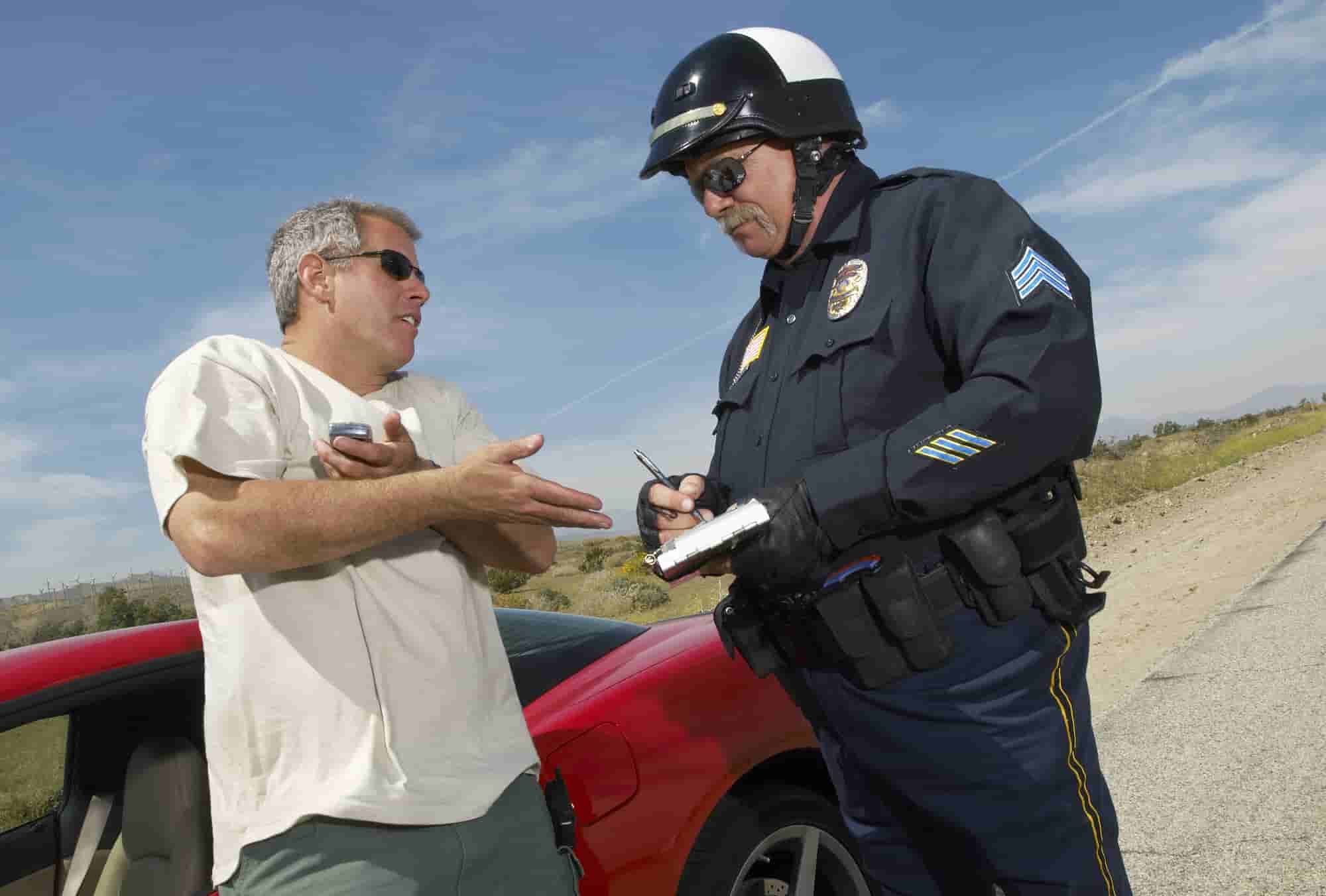
Verbal judo is a tactical communication strategy used to calm confrontational interactions and direct them to a peaceful outcome. The techniques include speaking in a certain way, facial expressions, and body language designed to diffuse potentially volatile situations.

Verbal judo is a specialized technique many law enforcement officers (LEO) use to get people to comply without using physical force. How do police forces use verbal Judo, is it effective, and does it have application for anyone outside of peacekeeping forces?

The History Of Verbal Judo

Police forces are not only trained to deal with tense situations using physical force. A key part of police training is to equip police officers with verbal techniques to diffuse tense, heated situations before they escalate to the point of an out-of-control situation.

Verbal Judo is a form of tactical, strategic communication with a specific goal in mind. The strategy and intent of the technique are to bring a level of calm to a situation that is on the brink of boiling over into a more serious situation.

Verbal Judo is not a martial art, but it takes its name from the martial art of Judo, which means the “gentle way.” This characteristic speaks to the philosophy and purpose behind this tactical communication.

Verbal Judo was developed by Dr. George Thompson, a teacher, police officer, and martial artist who held a black belt in Judo and Taekwondo.

More than 30 years ago, Thompson codified what he saw as common sense: using tactical language calmly under pressure to achieve a clearly defined goal – with the priority of keeping officers safe.

The Guardian news

Dr. Thompson developed the technique over years of study in the field, formed the Verbal Judo Institute in 1983, and published four books on Verbal Judo.

What Does Verbal Judo Teach?

Verbal Judo teaches that communication is a skill that can be used, much like a martial art, to deflect an attack and diffuse a situation.

The technique is a powerful form of verbal persuasion that gently brings people around to your way of thinking. It is especially useful in confrontational or high-stress situations and scenarios.

The foundation of the method is that to react to an event or situation is to be controlled by the event or situation. In contrast, responding to an event or situation in a strategic manner lets you control the event or situation. 

It is a normal human reaction to respond to an adversarial situation with equal force, which Verbal Judo teaches us to suppress in favor of a structured, controlled response to gain a specific outcome.

Verbal Judo teaches us to listen better to what others say and think about a structured, calculated response rather than a knee-jerk response that could escalate a situation, make us lose our temper, or provoke a negative reaction.

Verbal judo teaches how to communicate effectively with difficult people
RECOMMENDED FOR YOU
Top 6 Martial Arts for Police Officers – Why They’re Great

What Are The Steps Of Verbal Judo?

Verbal Judo is a complex methodology that takes training to master, but it proposes that most confrontational situations can be controlled by using 5 communication steps.

  1. Ask and ask again. Clarity and avoiding misunderstanding are crucial. Do not assume, but rather repeat questions to avoid miscommunication.
  2. Give or set the context. Explain the rules, policies, or the law and indicate that what is happening contravenes these concepts. Keep calm and deflect negative comments. Use empathy to understand the person’s actions.
  3. Present options. Give the person multiple options of how the situation can unfold and each option’s consequences. This gives people the feeling that they have a choice, must accept the consequences of their choice, and that you are not controlling them.
  4. Confirm non-compliance. Confirm the situation cannot continue and ask the person if there is anything you can do to help, say, do, or support you can offer to help them make a correct decision.
  5. Act. The final step is to take action to prevent the situation from dragging on and give control back to the other person.

The principles used during the interaction with the other person must be structured and follow a pattern or LEAPS. This acronym comes from the strategy to Listen, Empathize, Ask, Paraphrase, and Summarize.

The following video further explains what L.E.A.P.S is by Dr. Thompson, the founder of Verbal Judo.

RELATED:
The Art of War by Sun Tzu: Key Points Explained

What Are Examples Of Verbal Judo In A Real Situation?

The principles of Verbal Judo are to start a conversation in a manner that promotes engagement rather than aggression or perceived attempts to attack or provoke the other person.

An example of using Verbal Judo in a real situation is as follows.

A visitor to a building wanders into a restricted area. A security guard approaches the person and has two options to open the conversation.

Option 1: Sir, what are you doing here? This is a restricted area, and you are not permitted to be here. Return to reception and wait to be called for your appointment.

This option comes across as being authoritarian and aggressive and evokes a confrontational response from the person being addressed.

Option 2: Sir, building management restricts access to certain areas. Can I walk you back to reception and help you find out what is taking so long while you wait for your appointment?

Option 2 comes across as being helpful and offering guidance rather than telling the person they are doing something wrong in a confrontational manner and evoking an aggressive response from the person being addressed.

The following video illustrates examples of when proper verbal techniques are used versus when they are not:

How Is Verbal Judo Used in Law Enforcement?

Verbal Judo is used in a variety of situations in law enforcement. Officers are trained in these techniques to use when confronting suspects, in hostage situations, interacting with the public, interviewing witnesses, or even crowd control.

Police officers are taught that what they say can escalate a situation and provoke violence or calm and diffuse a situation and bring a peaceful, favorable outcome without the need for physical force.

“We know that the most deadly weapon we carry is not the .45 or the 9mm, it is in fact the cop’s tongue… A single sentence fired off at the wrong person at the wrong time can get you fired, it can get you sued, it can get you killed,”

George Thompson, PhD

Unfortunately, the use of force by police officers is a never-ending concern for law enforcement agencies, with public outcry calling for more peaceful resolutions to conflict situations.

For this reason, many law enforcement agencies require their officers to undergo verbal judo training to communicate effectively to gain compliance or cooperation from subjects in tense situations. This saves lives and improves the public image of law enforcement in the end.

Dep. Mark Pini explains how he uses verbal judo
RECOMMENDED FOR YOU
Are U.S. Police Trained in Martial Arts? Police Training Q&A

Is Verbal judo for law enforcement only?

Verbal Judo is used extensively by law enforcement agencies, but the application of the techniques is not limited to this sector.

The techniques can be applied in business, sales, teachers, healthcare, sport, and any leadership sector.

The program’s techniques can help you listen better and control conversations and interactions gently and imperceptibly to get the desired outcome.

Who Can Benefit The Most From Verbal Judo?

Law enforcement, security personnel, public officials, school children, parents, business people, coaches, sports people, and anyone in a leadership role can benefit from the techniques taught in Verbal Judo.

It can teach introverted people to be more confident, help salespeople close deals or help healthcare professionals treat patients with more empathy.  

Verbal Judo has applications in every walk of life or profession or even interpersonal relationships. Consequently, everyone can learn something or gain benefits from Verbal Judo.

This video shows how verbal judo can benefit children as a way to avoid conflict.

RECOMMENDED FOR YOU
Top 3 Best Martial Arts For Kids – A Basic Guide For Parents

How Can People Learn Verbal Judo?

How do you learn Verbal Judo and find resources to get you started? One of the best resources to learn more about the training is to visit the Verbal Judo Institute website.

The Verbal Judo Institute is the training center set up by Dr. Thompson to teach the de-escalation and tactical communication techniques he developed over years of study in the field. 

Another option is to order the book “Verbal Judo: The Gentle Art Of Persuasion,” authored by Dr. Thompson.

The book is a great resource to have available since you can refer back to it time and again as you learn to master the techniques.

Conclusion

While Verbal Judo is not a physical martial art, it is certainly a mental martial art and requires the same dedication and discipline to learn the techniques and skills.

As with other martial arts, the benefits of Verbal Judo can be applied to all aspects of life and will teach you to interact with your fellow humans less aggressively and still get the desired outcome!