Home Blog Page 10

What Are The Different Styles of Wrestling? A Beginner’s Guide

0

Wrestling is one of the oldest forms of combat and has been a part of the Olympic Games since ancient times. Throughout history, wrestling has spread all around the world, and naturally, many new styles and forms have emerged. You may wonder, how many styles of wrestling are there? What are the different styles?

All the wrestling styles can be split into four main categories: sports wrestling, traditional wrestling, submission (hybrid) wrestling, and professional wrestling.

In this article, we are going to explain different wrestling styles in more detail and see how they differ from one another.

What is Wrestling?

Wrestling is one of the oldest grappling-based martial arts. The concept revolves around two people engaging in a standup grappling exchange where the main goal is to take the opponent down utilizing a broad range of takedown techniques.

When one of the wrestlers scores a takedown, the main goal is to hold the opponent in the bottom position and subdue them with pins to win the exchange/match. Some styles also involve advanced positioning as well as finishing techniques such as chokes and joint locks.

The origins of wrestling go back to 3000 BCE years ago, making it probably the oldest combat sport. Many cave drawings in ancient Egypt, France, and Babylon show people wrestling in front of spectators.

Throughout history, wrestling would go through a lot of changes, and many different styles would emerge. It also influenced the birth of other distinct martial arts, such as Judo, Sambo, and many others.

There is a clear difference between traditional styles, sports styles, submission styles, and styles that are used for entertainment. In the following paragraphs, we’ll talk more about these differences.

Traditional wrestling styles

Following is a list of wrestling styles practiced in ancient times, notably during the early Olympic Games. These styles have influenced the development of modern styles, which we are going to discuss later in this article.

Greek wrestling

Greek wrestling was a very popular sport during the glory days of Ancient Greece. In terms of rules, this style is very similar to the modern “freestyle.” And it was also much safer than other styles of wrestling during that time, as the main goal was to win a match by scoring more points with no striking.

The way point scoring worked in competition at the time was very simple.

Wrestlers would receive one point for a successful takedown when their opponent hit the ground with their back, hip, or shoulder, and they needed to accumulate three points to win a match.[1] Contestants could also win by catching the opponent into submission, with chokeholds being one of the most popular.

Pankration

Pankration was a form of wrestling and, to some degree, a precursor to modern MMA. It first appeared at the 33rd Olympiad, hosted in 648 BC, and was a very popular sports event. As a system, Pankration was a brutal sport that combined striking and wrestling techniques.

Fighters could strike each other with punches and kicks, execute takedowns or submit utilizing chokes and joint locks on the ground and there were very few restrictions overall. There were no time limits, protective gear, or other forms of safety. Thus, serious injuries and deaths were quite common and considered a win.

Although it was a hybrid mix of striking and grappling, the wrestling aspect was the most important one. Skilled grapplers dominated the sport just as they do in modern MMA.

Shuai Jiao

Shuai Jiao is a wrestling style that emerged in China over 4,000 years ago. It is a generic term used to describe various wrestling styles that had been practiced in China during this period. Shuai Jiao could be further split into various sub-styles such as Zhili, Beijing style, Tianjin, Baoding, and Shanxi.

Shuai Jiao is also known as “jacket wrestling.” Some styles are very similar to judo, as competitors must wear a similar uniform. The emphasis in most styles is on powerful throwing techniques and takedowns, blocks, joint locks, and powerful kicks to off-balance the opponent.

Roman Wrestling

After conquering Greece, the Romans adopted the concept of wrestling, and they made slight modifications to develop their own variation called Roman Wrestling. This wrestling style was very popular during the reign of the Roman Empire from 510 BC to AD 500.

And it would later evolve into what we now recognize as the “Greco-Roman” wrestling style, as it will be further explained later. But during ancient times, Roman wrestling had a style all its own.

Lancashire wrestling

Lancashire wrestling is a style developed in Lancashire, England. In the wrestling community, this style is considered a precursor to catch wrestling, also known as “catch-as-catch-can.” Apart from regular wrestling takedowns, the Lancashire style included groundwork and was known as one of the most brutal combat sports.

There were no points in competitions as the emphasis was on breaking the opponent’s bones, choking them unconscious, and even causing deaths.

https://youtu.be/mMJhux3m-GM

Folk Wrestling

The term “folk wrestling” refers to any traditional wrestling style that may or may not be practiced as a modern sport.[2] Here is an example of different folk wrestling styles around the world:

  • Britain — has two main folk styles: north and West Country styles. The most famous North Country style is Lancashire, which was a precursor to catch wrestling. West Country styles are Cornis and Devon wrestling.
  • Ireland — has a style called “Barrog” developed in the 9th century and the famous “Collar and Elbow” style or “Jacket wrestling”.
  • Central Asia — has Mongolian (Bokh and Buryat) and Turkic (Alysh, Koras, Kurash, Khuresh, etc) wrestling styles.
  • East Asia — is famous for different Chinese styles such as Shuai Jiao, Die Jiao, Gi Ge, Beiga, and many others.

Sports wrestling styles 

In modern times, sports wrestling is among the most popular forms of wrestling in general, and some are part of the Olympic Games. Here is a list of the most popular sports styles and a detailed explanation of each one.

Greco-Roman Wrestling

Also known as “classical wrestling,” Greco-Roman is one of two wrestling styles included in the Olympic Games since 1896. This style is unique as wrestlers are not allowed to grab or hold on to any part of the body below the waist.

They can’t grab the opponent’s legs to manipulate their weight and balance and execute a takedown. This rule prevents them from using techniques such as single/double leg or trips. Instead, the emphasis is on powerful and explosive throws.

Freestyle wrestling

Freestyle wrestling is arguably the most popular and exciting style of them all. It is the second style included in the Olympic Games that differs a lot from the Greco-Roman in various aspects. Freestyle enables a wrestler to grab and hold on to the opponent both above and below the waist to get a takedown.

They can grab onto their arms and legs. Apart from pure wrestling takedowns like single and double leg, freestyle wrestlers can also utilize trips and sweeps, similar to the ones in judo and sambo. Once on the ground, the main goal is to pin the opponent to the mat to win points, which results in a win.

Freestyle is very similar to collegiate wrestling, and people tend to mix these two with one another. Although these two styles are similar, there are more than a few important differences between them.

Freestyle wrestling focuses on exposure points, whereas folkstyle wrestling focuses on controlling your opponent. In freestyle, for example, when stuck in the bottom position, the goal is to avoid being turned or exposed. In contrast, in folkstyle wrestling, the goal is to escape from the bottom position.[3]

The goal of freestyle is to pin or expose the shoulders of your opponent to the mat.

Folkstyle (Collegiate) Wrestling

Collegiate wrestling is, in some ways, the American variation of freestyle wrestling. It is integrated into high school and university athletic programs in the US.

In fact, collegiate wrestling events are popular and often aired on sports networks. In some way, collegiate wrestling is stamped deep into the culture of America. And this is one of the reasons why American wrestlers have so much success in the Olympics.

This specific style emerged in early 1900 when wrestlers from different universities started competing against each other. It quickly became not just the most popular form of wrestling in the US but also one of the most popular amateur sports in the country, mainly thanks to the intense rivalries between universities and their athletes. Later on, the NCAA would make collegiate wrestling an official sport.

Sumo

Sumo is a Japanese full-contact wrestling style that is very well known throughout the world. Unlike in most other styles, the main objective in sumo is to force the opponent out of the circular-shaped fighting pit or manipulate their weight and balance to wrestle them to the ground.

Sumo is integrated into the culture of Japan, and sumo athletes are very popular public figures. Despite its centuries-long history, sumo is now classified as a modern Japanese martial art that can be considered both traditional and sport wrestling.

Submission wrestling styles

There are many styles of wrestling that, apart from takedowns and other throwing techniques, also include advanced grappling on the ground, commonly referred to as “submission wrestling.” Though they are all derived from wrestling in one way or another, submission wrestling has various styles. As such, each style is viewed as a separate martial art, as listed below.

Catch wrestling (catch-as-catch-can)

J.G. Chambers created catch wrestling in 1878 in the United Kingdom. It is rooted in older wrestling styles such as “Lancashire” and “coral and elbow” wrestling. In terms of pure wrestling techniques, catch style is very similar to freestyle, as it allows you to manipulate any part of the opponent’s body. However, catch wrestling also includes submission holds and other finishing techniques on the ground.

What’s interesting, however, is that catch wrestling was once included in the 1904 and 1920 Olympic Games but was no longer a part of the Olympic game due to the sport’s violent nature. However, a few drastic changes needed to be implemented to make this style suitable for the future Olympics. One of the key ones was to get rid of dangerous techniques, including submission holds.

The rules were codified by FILA, and this new variation often called “amateur catch wrestling,” became known as “freestyle wrestling.”

Sambo

Sambo is a Russian military system developed in the 1920s. The system is a mix of different wrestling styles, judo, jujutsu, and striking techniques from boxing and kickboxing. There are two main styles of sambo:

Sports Sambo — focuses only on wrestling and grappling and is very similar to judo. There is no striking, as the entire focus is on powerful takedowns and throws and submissions like leglocks.

Combat Sambo — is a more versatile variation as it includes both striking and grappling. It shares similar wrestling and submission grappling techniques with sports form, but also adds striking with all limbs and various other techniques.

Sport Sambo
https://youtu.be/9bkl2P8bUbk
Combat Sambo competition

Luta Livre

Luta Livre is a Brazilian submission grappling martial art very similar to jiu-jitsu. The key difference is that jiu-jitsu derived from Judo and uses many of the same techniques.

Luta Livre, however, is rooted in wrestling and is also known as “Brazilian catch wrestling.” 
As a system, Luta Livre is a hybrid mix of catch wrestling techniques and Judo in terms of grappling. It also includes full-contact striking utilizing kicks, elbows, knees, and punches.

There are two forms of Luta Livre: esportiva (sports version) and vale tudo (anything goes).

Esportitva style is known as a “softer” variation as the focus is on grappling techniques and submissions on the ground, and there is no striking. Contestants can win a match by scoring more points with takedowns and being in a dominant position or submissions like leglocks, armlocks, etc.

Vale Tudo resembles modern MMA as it is a hybrid mix of only the most effective striking and grappling techniques.

Professional Wrestling (Pro-Wrestling)

Wrestling is also widely used to entertain people of all ages, and this type of wrestling is commonly referred to as “pro-wrestling.” These wrestling events are staged shows where wrestlers perform a carefully scripted set of acrobatic moves to entertain the crowd.

This form cannot be seen as “competitive” as every element of the show is staged, including the result. But it is highly entertaining and popular, especially in the US and South America. 

There are more than a hundred professional wrestling promotions and leagues worldwide. Some of the most popular ones are: 

  • World Wrestling Entertainment (WWE)
  • New Japan Pro Wrestling
  • Impact Wrestling
RELATED:
Pro Wrestling vs Amateur Wrestling – Key Differences Explained

Is wrestling considered a martial art?

Wrestling is not only a real martial art, but it might be one of the oldest as well, and a precursor to many martial art styles that came in ancient, medieval, and modern times. Although it is not widely recognized in the public as a combat system synonymous with martial arts such as karate or judo, wrestling is a martial art that includes all the elements of being a martial art.

First, wrestling has a long history and codified techniques and rules. It is practiced both in the form of amateur and professional competitions for the purposes of self-defense and personal growth. It promotes strong moral and ethical values, and above all, it influenced the birth of many systems that are actually considered martial arts. 

For example, jiu-jitsu is considered a martial art, and it adopts a lot of techniques and elements from wrestling.

What is the Best Wrestling Style For MMA?

Freestyle wrestling is widely regarded as the most practical style for MMA. Greco-Roman works well too, but freestyle fits better within the rules of the sport, includes a broader range of techniques, and covers more aspects.

MMA is freestyle combat, the closest humans have gotten to legal street fighting. It enables the athletes to grapple both on their feet in the clinch and on the ground. There are very few restrictions when it comes to how you take the opponent down. You can grab them by the legs, arms, waist, or whatever part of the body you want to, and this is why freestyle is better than Greco-Roman.

Freestyle wrestlers are allowed to manipulate both the opponent’s upper and lower bodies to score takedowns, while Greco-Roman focuses only on the upper body above the waist. However, bear in mind that there have been many successful MMA fighters from both of these styles. 

LEARN MORE:
Why Do Wrestlers Dominate MMA?

Which style of wrestling is best for self-defense?

Submission wrestling styles such as catch-as-catch-can wrestling are known to be the most effective for self-defense and street fighting in general.

Other popular styles, such as freestyle and Greco-Roman, are also practical. However, these are less versatile, and here is why.

Freestyle and Greco-Roman enable you to take the opponent down using powerful takedowns and other techniques. It helps you build power and strength and teaches you how to manipulate the opponent’s balance and weight to take them down and hold them down to the ground.

At the same time, submission wrestling styles teach you the same techniques and help build the same athleticism as freestyle and Greco-Roman styles. But the key difference is that submission wrestling systems also include advanced ground fighting utilizing positioning, chokes, and joint locks, which make you superior on the ground. Some of these styles also include the basics of striking offense and defense, such as sambo.

So, submission wrestling styles prepare you for more situations you might face on the street and give you a better practical technique to deal with an attacker.

References:

1. Greek wrestling. (2021, October 6). Wikipedia. https://en.wikipedia.org/wiki/Greek_wrestling

‌2. Folk wrestling. (2022, December 6). Wikipedia. https://en.wikipedia.org/wiki/Folk_wrestling

3. Making the Transition from Folkstyle to Freestyle. (2014). Team USA. https://www.teamusa.org/usa-wrestling/features/2014/march/18/making-the-transition-from-folkstyle-to-freestyle

When Did the UFC Get Popular? A Look at the Rise of the UFC

0
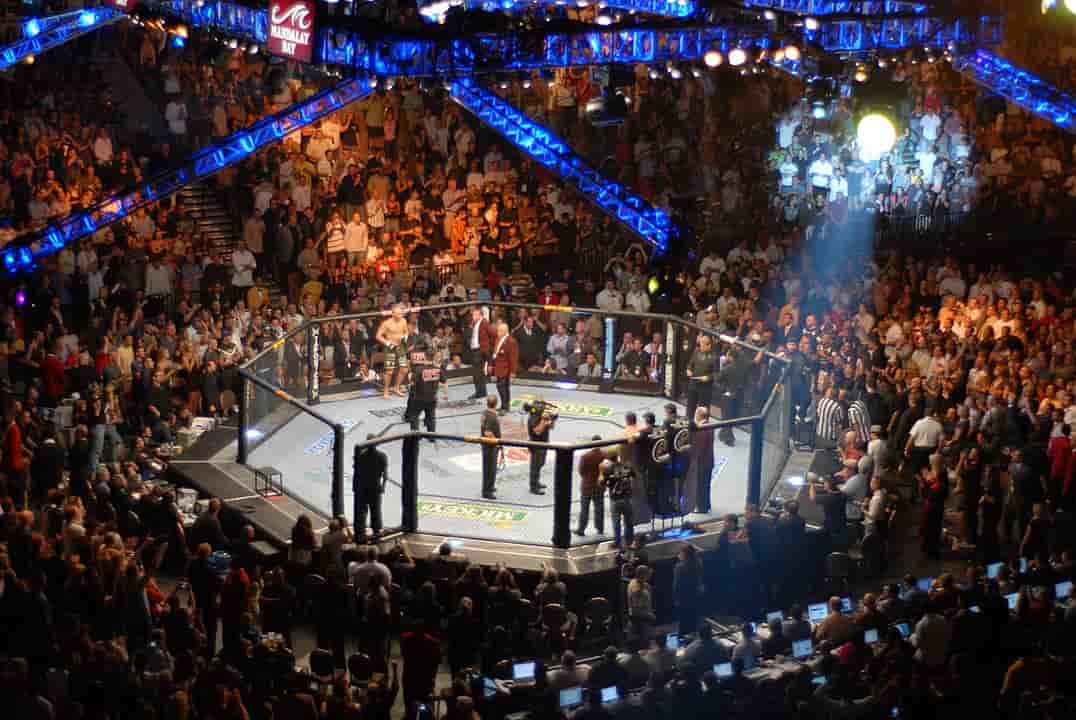
Photo by East718

Editor’s note: The views and opinions expressed below are those of the author.

MMA, or mixed martial arts, has seen a meteoric rise in popularity in recent years, with the Ultimate Fighting Championship (UFC) leading the charge as the world’s premier promotion. The UFC’s return to live events during the pandemic, which was met with great fanfare, only served to further increase its popularity among mainstream audiences. But the UFC’s journey to the top wasn’t always smooth sailing.

In this article, we delve into the history of the UFC and examine the factors that led to its initial success and eventual establishment as a dominant force in the world of sports.

How the UFC struggled in the beginning

The UFC faced many challenges when it was first founded in 1993. At the time, MMA was largely seen as a taboo and extreme sport, with no venues or television networks willing to host or broadcast it. This was due to the fact that MMA included techniques such as chokes and kicks, which were not typically allowed in boxing, and fighters were able to use techniques such as “ground and pound” to attack an opponent who was down and not defending themselves.

Former US Senator John McCain famously referred to the sport as “human cockfighting” in 1996 and advocated for it to be banned across the country. In response, the American Medical Association recommended a ban on the sport, and New York and several other states eventually passed laws to outlaw it.

Even the Nevada State Athletic Commission, which is now a major partner of the UFC, initially refused to sanction events and barred the UFC from hosting fights in casinos.

How Dana White and the Fertitta Brothers Changed the UFC

However, a number of factors eventually contributed to the sport’s mainstream acceptance, including the involvement of current UFC President Dana White. In 2001, the Las Vegas casino moguls Fertitta brothers purchased the UFC and installed White as president, and he has played a key role in promoting and growing the sport.

One of the major things White did was improve the sport’s image by implementing stricter rules and regulations, such as drug testing, unified rules, and improved medical protocols. This was to ensure that there was an even playing field as well as making the sport safer.

This eventually led to MMA getting legalized not only across the United States, but in numerous countries around the world. Additionally, White promoted the UFC through various marketing and public relations efforts, including producing documentaries and reality TV shows.

https://youtu.be/E5EYyZ5ABrQ
LEARN MORE: 
How UFC Has Evolved From The Humble Beginning

The key events that made the UFC popular

The Ultimate Fighter (TUF) reality played a key role that turned UFC around. The finale of the inaugural season in 2005 saw Forrest Griffin fight Stephan Bonnar in a closely contested, back-and-forth brawl that captivated the audience as well as the estimated three million viewers on Spike TV.

The show was renewed for a second season, but most of all, it brought new eyeballs to the sport and turned the tide on the UFC becoming an accepted and mainstream sport.

The fight that saved the UFC

Another key factor was former US president Donald Trump. While nobody at the time was hosting UFC events, Trump hosted a UFC event at the Trump Taj Mahal casino in Atlantic City in 2001. It was the first time the UFC held an event at a casino and Trump’s involvement helped to legitimize the UFC and helped it to gain a larger audience. White has publicly expressed his gratitude towards Trump for this opportunity, and even spoke in support of him at the 2016 Republican national convention.

In more recent times, Conor McGregor helped further boost the sport thanks to his enigmatic personality and exciting style of fighting, drawing many casuals in and converting them into hardcore fans as a result of his mega drawing power.

Additionally, UFC President Dana White worked to bring live events back during the COVID-19 pandemic, hosting them at the UFC Apex facility and Yas Island (aka UFC Fight Island) in Abu Dhabi. As a result, the UFC became the first sports league to return to live events, and it was the only sport that was available on television, which helped it reach a wider audience. All of these factors contributed to the UFC’s current popularity as we know it today.

Who is most responsible for the UFC’s success?

As stated above, there were many factors contributing to the rise of the UFC, but there were also many key individuals who played a role. Among them is Dana White, who is credited the most for the UFC’s success and popularity today.

Dana White explains what he and the Fertitta brothers did to save the UFC.

Lorenzo Fertitta, CEO of the UFC from 2001 to 2016, also deserves big credit. He not only brought White in but also played a key role in growing the organization, negotiating major television deals, and investing in the marketing and promotion of the UFC. The former president Donald Trump’s decision to host UFC events also legitimized the sport and gave it a platform to grow further.

Fighters like Forrest Griffin, Stephan Bonnar, Chuck Liddell, Brock Lesnar, Ronda Rousey, and Conor McGregor can also take credit for the UFC’s rise.

However, the Gracie family played a particularly influential role in the sport’s popularity. Rorion Gracie, co-founder of the UFC and head of the Gracie Jiu-Jitsu academy, helped promote and popularize the martial art. His brother Royce Gracie’s victories in the early UFC events, using jiu-jitsu to defeat larger opponents, further added to the intrigue and appeal of mixed martial arts.

Overall, these individuals among others have all played a crucial role in making the UFC famous and establishing it as a mainstream sport.

What made the UFC the most popular MMA organization?

There are many reasons why the UFC holds the position as the most popular MMA organization. Among them include:

Early exposure: The UFC was one of the first major organizations to promote and host MMA events. Essentially, it had a head start in the industry compared to its future competitors, gaining it a devoted fanbase and establishing itself as a leader in the sport in the process.

Marketing and promotion: The UFC has excelled when it comes to marketing and promoting its events and fighters. It has used a variety of strategies, including social media campaigns, partnerships with major brands, and cross-promotion with other sports organizations.

Additionally, the UFC has worked hard to promote the sport in countries around the world. Australia and New Zealand have had a number of UFC champions in recent years, the UFC built a performance center in China with plans for another one in Mexico, and the promotion is planning on an inaugural event in Africa.

Buying out competition and expanding: The UFC prides itself on featuring the best fighters in the world, and it only stayed true to that notion by acquiring World Extreme Cagefighting (WEC) in 2006 and rival promotion PRIDE FC in 2007. These acquisitions brought many top-level fighters into the UFC, solidifying its position as an elite organization in the world of mixed martial arts.

High-quality events and fighters: The UFC consistently puts on high-quality events featuring top-tier fighters from around the world. While in boxing, the top fighters don’t fight each other or only do so when it’s too late due to their promoters, the UFC takes pride in showcasing the best against the best.

Strong financial backing: Any organization with strong financial backing will likely do better than its competitors, and that’s the case with the UFC. Having always had strong backing, the UFC invested in talent, performance centers, production, and marketing throughout the world; all of which has contributed to it maintaining its place as the premier MMA organization.

How fast is UFC popularity growing compared to other sports?

The UFC is one of the fastest growing sports leagues in the world. While it’s hard to compare its popularity with other sports due to various factors, the UFC’s continued growth and success are undeniable. Dana White most notably said this back in 2009:

“I know people think I’m a (expletive) lunatic when I say this, but it’s going to be the biggest sport in the world. Bigger than the NFL, bigger than soccer, bigger than anything out there”

“The crazy thing about this sport is we haven’t even scratched the surface on how big this thing is going to be.”

Las Vegas Sun

“Fighting – I don’t care what color you are, or what language you speak, or what country you live it, we’re all human beings and fighting’s in our DNA. We get it and we like it,” he stated.

MMAweekly.com

While MMA is yet to reach the popularity and viewership of soccer as things stand, it can still take pride in its growth. The organization generates millions of dollars in revenue each year through the sale of tickets, pay-per-view events, and sponsorships. The UFC also has a lucrative television deal with ESPN, which further contributes to its financial success.

As per Nielsen, the UFC had an average of 759,000 viewers per event in 2020. Many of its pay-per-view events regularly exceed the 500,000 buy mark; an impressive feat considering the record was 280,000 buys back in 2005. Most of all, every year has been superior to the previous year as per White which is also impressive considering the promotion’s cash cow in Conor McGregor has only competed four times since 2017.

As far as boxing is concerned, both sports likely have a similar level of popularity, with the UFC perhaps having a slightly younger and more diverse fan base. However, with the politics involved in boxing, it’s fair to say that most combat sports fans today prefer MMA and the UFC over boxing, in particular, where the best fighters face each other regularly.

The overall viewership of the UFC is also slightly higher, but that’s also due to the fact that boxing has a smaller number of events that are not as widely available on television..

Does the UFC have the best MMA fighters?

While it’s subjective, it’s still pretty much unanimous that the UFC has the most talented and successful fighters in the world. That being said, there are definitely top-level fighters in other promotions, such as Bellator, PFL, and ONE Championship, who have the skillsets to defeat UFC fighters.

But as a whole, the UFC is vastly superior in featuring the best fighters and having stronger divisions. Not to mention, the end goal for just about every fighter is to ultimately appear in the UFC as it is the premier organization. This means higher pay, stronger competition to prove they’re the best in the world, and more exposure.

The Final Say: Is MMA considered a mainstream sport now?

It’s fair to say that MMA, at least when it’s a UFC event, is a mainstream sport that catches the eye of casuals and celebrities alike. Live events during the pandemic certainly helped, but so has the work that has been put in over the course of the UFC’s lifespan ever since it was founded in 1993, when it was considered a fringe activity. The profile of the sport has increased tremendously, and just about everyone knows who Conor McGregor is at the very least.

Overall, MMA is now widely considered a mainstream sport, and it has a large and devoted fan base around the world; a big reason why is the UFC.

How Bruce Lee Changed the World: The Legacy of the Dragon

0
Clouse, R. (Director). (1973). Enter the Dragon [Film]. Warner Brothers Pictures.
Credit: Clouse, R. (Director). (1973). Enter the Dragon [Film]. Warner Brothers Pictures.

Editor’s note: The views and opinions expressed below are those of the author.

Bruce Lee is one of the most recognized artists of our modern era. Many people downplay his influence, while others recognize the impact he made on martial arts, the Hollywood film industry, and combat sports in general.

Bruce Lee was a charismatic martial artist that brought new thinking and concepts to traditional martial arts and challenged conformity to one fighting style. He also influenced the American and Asian filmmaking industry, the American public, and the world at large, making him a global icon.

Despite the significant passage of time since the passing of Bruce Lee, his impact on the world remains, and his legacy continues to influence people to this day. How did a man like Bruce Lee have such an impact on those around him and generate a global influence?

The Legacy of Bruce Lee

Bruce Lee was a Chinese-American martial artist, actor, philosopher, filmmaker, and creator of the martial art Jeet Kune Do.

How does a man with this background influence a wide range of people worldwide and leave a legacy that continues to ripple through time to impact our current society?

There are several characteristics that Bruce Lee possessed that created admiration among his friends and family and impacted everyone with whom he interacted.

His focus, determination, commitment, and dedication drove him to overcome adversity and create his own success, despite the challenges he faced.

We will examine how these characteristics made Bruce Lee an influencer in the martial arts world, the USA, and society in general.

How Bruce Lee influenced martial arts

Bruce Lee is widely considered by many as the most influential martial artist of all history, and his significant impact on the evolution of martial arts persists to this day.

Early in his martial arts training, Bruce Lee studied Wing Chun, a southern Chinese martial art, and eventually developed his own hybrid martial art, Jeet Kune Do, which incorporated elements from various styles and focused on practicality and simplicity.

In addition to his philosophical contributions, Lee’s physical abilities and innovative techniques also greatly impacted martial arts. 

His lightning-fast movements and impressive strength were evident in his movies and demonstrations, and he popularized the idea of “functional fitness” in martial arts training, focusing on exercises that had practical application in real combat situations.

Challenging the ancient traditions of martial arts styles and creating a new philosophy around combat sports is why he was so influential in the martial arts community.

RELATED: Is Jeet Kune Do Same As Kung Fu? – A Simple Comparison

How Bruce Lee impacted MMA

Bruce Lee’s philosophy of martial arts was that the best style was no style. He believed that rigid adherence to a particular style hindered an individual’s potential. 

Instead, he emphasized the importance of adapting to any situation and using the most effective techniques for the given situation. 

Bruce Lee advocated learning the most effective techniques from a range of traditional martial arts and adapting them to your own fighting techniques.

This concept revolutionized the traditional martial arts world and expanded combat sport concepts and ideas for the development of mixed martial arts (MMA).

Did Bruce Lee inspire UFC? The Ultimate Fighting Championship is a fight promotion company that organizes MMA fights. 

Considering that Bruce Lee’s philosophy towards martial arts is considered to be a major influence in the emergence of MMA, it can be said that Bruce Lee was an inspiration for the creation of UFC.

How Bruce Lee impacted America

Bruce Lee’s influence extended beyond the martial arts world and into popular culture. His movies, such as “Enter the Dragon” and “Way of the Dragon,” brought martial arts to the mainstream and inspired a generation of people to begin training. 

He challenged Hollywood stereotypes and brought real action to his filmmaking. He incorporated his real-life martial arts into his action films, and his dedication to training for each role inspired many.

His charisma and martial arts philosophy which he carried over into almost every aspect of his life, including his filmmaking, made him a role model for many, and his impact is still felt today.

Besides his influence in filmmaking, Bruce Lee’s commitment, dedication, and focus on physical fitness and adapting to meet life’s challenges captured the hearts of many Americans.

The classic struggle of the underdog taking on the norms of traditional martial arts, fitness and challenging Asian stereotypes in US filmmaking made Bruce Lee a hero in the eyes of many Americans. 

Why is Bruce Lee a great fighter despite no professional record?

Many martial artists do not engage in professional fights, but this does not detract from their expertise and competency in combat sports.

Many other martial artists who achieved prowess in competitive martial arts, such as Chuck Norris, spoke highly of the fighting skills displayed by Lee, as mentioned in the following:

“The truth is Lee was a formidable opponent with a chiseled physique and technique. I totally enjoyed sparring and just spending time with him. He was as charismatic and friendly in the ring and at home as he was on film. His confidence and wit were dazzling, and sometimes even debilitating to others. […] Lee was lightning fast, very agile and incredibly strong for his size.”

Black Belt Magazine

And there is Jim Kelly, considered one of the greatest legendary karatekas of all time, worked with Bruce Lee very closely and had this to say in the following video.

Bruce Lee performed many demonstrations of his martial arts skills, and he had a reputation for becoming involved in illegal street fighting in his early days in Hong Kong, but he never had a professional match. 

Despite this gap in his resume, many seasoned fighters respect Bruce Lee’s innovation, dedication, and skill in his martial arts and recognize that he would have been a formidable opponent in a professional bout. 

How Did Bruce Lee Help Others?

Bruce Lee helped many people directly during his life, including training renowned martial arts experts, coaching actors and actresses for movie fight scenes, and encouraging the concept that martial arts should be accessible to everyone.

Most people are unaware that Bruce Lee also worked with professional fighters to dramatically improve their fighting skills in the ring.

One notable example is Joe Lewis, the father of American kickboxing, who credited his success as a kickboxer to Bruce Lee’s teaching. In the interview, Lewis mentions that he doesn’t think he could have won so many fights without Bruce Lee’s help.

Joe Lewis, the legendary American karateka
Image credit: IKF Kickboxing

The most significant way Bruce Lee has helped others is through the example of commitment, dedication, and focus he displayed throughout his life. His physical fitness regime and concepts are the basis for many current exercise programs that get people active, including professional athletes, as you see in this video.

Bruce Lee always believed in challenging limits and putting in hard work to achieve goals, a philosophy that has applications in all walks of life.

More importantly, Bruce Lee’s active challenges of cultural and racial norms of the time have inspired many people to stand up for their rights and actively work for change. His determination to succeed despite challenges continues to motivate people who read his story many years after his death!

Why Did Bruce Lee Move Back To Hong Kong?

Bruce Lee moved back to Hong Kong in 1970 to pursue a film career due to the challenges and resistance he faced in the US filmmaking sector.

The American filmmaking industry was only offering stereotypical Asian roles where the roles and characters portrayed did not have much substance.

Bruce Lee wanted to use his martial arts skills to create action movies that challenged the norms of this movie genre at the time.

His success in Hong Kong with the Kung Fu action movies “The Big Boss” and “Fists of Fury” showcased what he could accomplish and renewed Hollywood’s interest in Bruce Lee.

Final Words – How Will Bruce Lee Be Remembered?

In conclusion, Bruce Lee’s contributions to martial arts were multifaceted and continue to be felt today. His philosophy of adapting to any situation and using the most effective techniques revolutionized traditional martial arts and paved the way for the development of mixed martial arts.

His impressive physical abilities and innovative techniques also had a major impact, and his movies and charisma brought martial arts to the mainstream and made him a role model for many.

LEARN MORE: What Happened to Bruce Lee? – FAQ All You Want to Know

What is Karate Combat?  A Beginner’s Guide to KARATE COMBAT

0
Photo Credit: Karate Combat

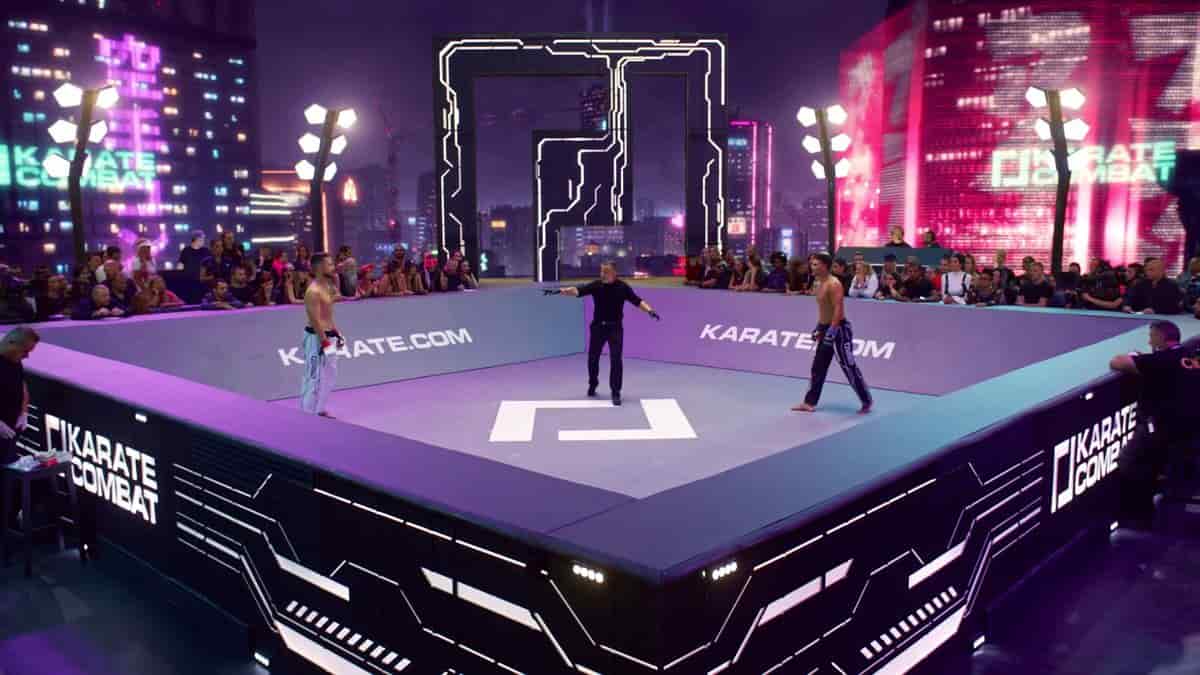
Karate is a popular traditional martial art that has many forms of competition, with “Karate Combat” being the youngest and already among the most popular. But what is Karate Combat, and how does it differ from other styles?

Karate Combat is a private brand that promotes and organizes the first professional full-contact karate league, contrasting traditional karate competition. Karate Combat adopts a unique set of rules and a unique fighting area to make the karate matches more exciting than traditional karate matches.

This is a brief explanation of what Karate Combat is. Continue reading to learn more about the rules, events, and how Karate Combat differs from other karate styles and competitions.

What is Karate Combat?

Karate Combat is a private promotion that organizes full-contact matches under a unique set of rules. The promotion launched the brand in April 2018 and has hosted dozens of events worldwide since then. The original founders were Michael DePietro and Robert Bryan, who both shared the idea of creating a karate league to align with modern pop culture’s demands. Simply put, Karate Combat strives to make karate a mainstream combat sport like boxing and MMA.

But surely, Karate Combat is skyrocketing in popularity, mainly thanks to the excitement of the product itself. The rules are well-established, the production is top-notch, and the matches are packed with action and highlight real finishes. Karate Combat is something you never expected karate competition to be that exciting to watch.

What are the rules of Karate Combat?

Karate Combat rules are full-contact and do not favor any particular karate style. Following is a detailed explanation of all the important rules:

The concept

Karate Combat is a professional league. This means each karateka must compete in an elimination format multiple times in a single season. The length of the season varies and is usually around 12 weeks.

The roster includes hundreds of skilled karateka, and they come from various karate styles. It doesn’t matter if their background is in full-contact styles like Kyokushin or light-contact styles like Shotokan. These styles all work in Karate Combat. Other styles are also present, such as:

  • Shito-Ryu
  • Wado-Ryu
  • American karate

Legal and illegal techniques

In terms of striking, fighters can use both kicks and punches to strike the opponent in both the lower and upper bodies, including the head. Unlike in most other karate competitions, there are no restrictions when it comes to how hard one can strike.

The main goal is to cause damage or knock the opponent out with every punch or kick. Karatekas are allowed to throw both high and low kicks. However, low kicks are allowed only below the knee, so there are no kicks to the thigh. This is mainly to prevent unnecessary strikes to the groin area.

Unlike other karate competitions, Karate Combat also includes grappling. Karatekas are allowed to take each other down using trips and throws from judo or even wrestling techniques. However, fighting on the ground is limited to 5 seconds.

Fighters who end up in the top position have 5 seconds to do damage with strikes, and they are not allowed to use submissions like chokes or joint locks. In terms of positioning, they are only allowed to put one knee on the opponent’s belly.

So once the match hits the ground, they have five seconds to ground and pound their opponent. However, a fighter on the bottom is allowed to use upkicks to defend. The referee would pause the action after five seconds, both fighters would be required to stand up, and reset the match.

Fighting area

Karate Combat fights take place in a 6.5m x 6.5m (21’4″ x 21.4″) square pit, and the floor is topped with a padded canvas. The combat pit is surrounded by padded walls angled at 45 degrees, making the fighting area quite unique and adding to the matches’ dynamics. For instance, the angled walls make it harder for the fighters to take each other down.

Karate Combat fighting pit
Photo Credit: Karate Combat

Weight Classes

Like in other combat sports, karate combat fighters are split into different weight categories based on their physical size. The main purpose of the weight classes is to level the playing field when it comes to physical size and make sure both opponents weigh roughly the same on fight night.

Women’s karate combat weight classes:

  • Bantamweight (no limit)
  • Flyweight (121 lbs; 55 kg)

Men compete across seven different weight classes:

  • Heavyweight (no limit)
  • Light Heavyweight (93 kg; 205 lbs)
  • Middleweight (84 kg; 185 lbs)
  • Welterweight (75 kg; 165 lbs)
  • Lightweight (68 kg; 150 lbs)
  • Bantamweight (61 kg; 135 lbs)

Duration of matches

Regular karate combat matches include three rounds; each round is 3 minutes long, and there is a 1-minute break between the rounds. However, if it is a championship fight, there is a possibility of two additional rounds, making five rounds in total.

Uniform and protective gear

This is where karate combat differs the most from other traditional karate. Karatekas do not wear a full gi uniform. Instead, they wear just karate trousers/pants made of thick cotton and compete barefooted and bare-chested.

Each karateka must wear hand wraps and 4oz open-fingered gloves similar to the ones used in mixed martial arts (MMA).

Additional gear also includes:

  • Mouthguard
  • Groin cup
  • Karate belts
  • Each fighter can customize their trousers with national emblems or flags
  • They can also choose between white and black trousers.

Scoring and criteria

At Karate Combat events, three judges sit beside the fighting pit and score the match using a 10-point must system derived from boxing. During the match, judges are not allowed to talk to each other or influence each other’s decisions in any way.

They score the match round by round. After each round, judges would write down the scores and hand them over to the officials. If the match goes to distance, the officials will sum up the scorecards and declare a winner.

The judges determine the winner of the round using the following criteria:

  • Effective striking (which fighter did more damage or won more exchanges)
  • Effective takedowns
  • Fighting area control 
  • Effective aggression 
  • Effective defense

What style of karate is used in Karate Combat?

Karate Combat is a private brand, not an official style of karate. It is a concept and platform that enables karatekas of all styles and forms to compete under unique full-contact rules. In the near future, Karate Combat may evolve into its karate style, just as K-1 kickboxing or GLORY kickboxing did with kickboxing.

However, it is important to distinguish Karate Combat as a promotion and organization from other styles like Shotokan, Goju-Ryu, Kyokushin, and others. The distinction is the same as that between the UFC as a brand and MMA as a sport. Another example of this distinction is between the NBA as a league and basketball as a sport.

What is the difference between UFC and Karate Combat?

Karate Combat and the UFC are two different promotions that promote two different sports. Here is a detailed comparison of how these two promotions differ from one another.


UFCKarate Combat
HistoryThe UFC was founded in 1993 in the US.Karate Combat emerged in 2019 in the US. 
Conceptpromotes mixed martial arts (MMA) matches under the Unified Rules of MMA. It is a mix of different techniques from various grappling and striking martial arts put into one system.promotes full-contact karate matches under unique rules. It is a mix of techniques from various styles of karate.
TechniquesHigh/low kicks, Punches, Clinch fighting, Takedowns, Chokeholds, Joint Locks, Positioning on the groundHigh/Low kicks, Punches, Takedowns, Ground and pound (limited to 5 seconds)
RulesMatch duration: 3 rounds with each round being 5 minutes long. Championship bouts are set for 5-5 minute rounds.
Fighting area: MMA fighters compete in an octagon shaped steel cage.
Scoring: 10-point must system used by three judges.
Ways to win: KO, submission, decision, disqualification.
Match duration: 3 rounds with each round being 3 minutes long. Championship fights are 5 rounds.
Fighting area: Karatekas compete in a squared PIT surrounded by walls angled at 45 degrees. 
Scoring: 10 point must system used by the three judges.
Ways to win: KO, Decision, disqualification.
Event formatUFC events promote single matches, where the main goal is to climb the rankings by fighting various opponents and winning the title.Karate Combat is a league where athletes compete in an elimination format until they win the tournament and become champions. 

What is the difference between Karate Combat and Muay Thai?

In terms of striking, both include punches and kicks, while Muay Thai also has elbows and knees. While Karate Combat allows for some ground fighting, Muay Thai only allows for standup grappling from the clinch, such as throws and trips.


Karate CombatMuay Thai
HistoryKarate Combat emerged in 2019 in the US. Muay Thai first appeared in the 19th century and its origins come from military system Muay Boran.
TechniquesHigh/low kicks, Punches, Takedowns, attack downed opponent(*only one knee on their downed opponent), UpkicksHigh/low kicks, Punches, Elbows, Knees Trips and throws, Clinch fighting
RulesMatch duration: 3 rounds with each round being 3 minutes long. Championship fights are 5 rounds. Fighting area: Karatekas compete in a squared PIT surrounded by walls angled at 45 degrees. 
Scoring: 10 point must system used by the three judges.
Ways to win: KO, Decision, disquaification
Match duration: 5 rounds with each round being 3 minutes long. There is one extra round in case of a draw.
Fighting area: Thai boxers compete in a squared boxing ring with four posts connected with four ropes.
Scoring: 10-point must system used by three judges.
Ways to win: KO, decision, disqualification
Event formatKarate Combat is a karate league where karatekas compete multiple times in a single season. The winner of the league is considered a world champion.Muay Thai events host single matches. The main goal is to win enough fights to challenge the champion for a belt and become a world champion. 
Uniform and gearPants made out of cotton, Belt around the waist, Open-fingered gloves (4oz), Mouthguard, Groin cupThai boxing shorts, Full padded boxing gloves, Mouthguard, Groin guard, Armbands (optional)

What is the difference between Karate Combat and K-1 Kickboxing?


Karate CombatK-1 Kickboxing
HistoryKarate Combat was founded in 2019 in the US. K-1 was founded in the 1993 in Japan and its origins come from Seidokyokyan karate
TechniquesHigh/low kicks (no low kicks above the knee), Punches, Takedowns, Ground and pound(*limited), UpkicksHigh/low kicks, Punches, Knees in the clinch (limited time)
RulesMatch duration: 3 rounds with each round being 3 minutes long. Championship fights are 5 rounds.
Fighting area: Karatekas compete in a squared PIT surrounded by walls angled at 45 degrees. 
Scoring: 10 point must system used by the three judges.
Ways to win: KO, Decision, disquaification
Match duration: 3 rounds with each round being 3 minutes long. 
Fighting area: K-1 kickboxers compete in a squared boxing ring.
Scoring: 10 point must system used by the three judges.
Ways to win: KO, Decision, disquaification
Uniform and gearPants made out of cotton, Belt around the waist, Open-fingered gloves (4oz),
Mouthguard, Groin cup
Shorts or trousers, Full padded boxing gloves, Mouthguard, Groin guard
LEARN MORE: What are the Different Styles of Kickboxing? Simply Explained

Is Karate Combat real?

Karate Combat is a combat sports platform where karatekas compete under full-contact rules in continuous action. The realism of fights, strike power, injuries, and knockouts is as real as it gets.

Fighters throw each strike intending to hurt their opponent to the point they can no longer continue or knock them out unconscious. Serious injuries such as fractures, face injuries, and concussions are common, and it can be a very dangerous competition.

Unlike other karate competitions, such as Olympic karate, Karate Combat does not include “katas” or pre-arranged forms performed by karateka alone.

Karate Combat does not follow sport karate point-fighting rules where the action resets after each successful strike and emphasizes speed and precision rather than power. Instead, Karate Combat contestants compete in a continuous action without pauses and are not awarded points for each strike.

RELATED: Which Martial Art Has The Most Injuries? FAQs

How to watch Karate Combat

Karate Combat events are primarily aired on the company’s online streaming platform, karate.com. You can watch all the events live or rewatch the previous events for free. You can also watch the matches on social networks and even YouTube. Also, Karate Combat has partnership deals with various streaming platforms and cable networks worldwide, such as DAZN, ESPN Deporters, and many others. 

Related Questions

What are the different styles of Karate?

Karate has been around for many centuries, and many karate styles and forms have developed over the years. These styles differ in terms of the number of techniques, variations of each technique, and teaching methods. The main difference is power; some karate styles are full-contact, while others focus on light contact. Out of all styles, the following are the four major ones that later influenced the birth of other styles:

  • Goju Ryu
  • Shotokan
  • Wado Ryu
  • Shito Ryu

What is the toughest style of karate?

Kyokushin karate is widely recognized as the toughest karate style of them all. It was created by the legendary karateka Mas Oyama as the first full-contact karate style in the 1950s. What makes this style very brutal does not solely rest on full-contact striking; the lack of protective gear makes this style truly brutal.

In Kyokushin, practitioners are allowed to strike each other with full force using kicks, punches, and knees. Low and high kicks, including those to the head, are allowed. Punches to the head are not allowed, and you can only hit the upper body area below the neck.

However, practitioners train without wearing any equipment apart from a karate kimono uniform. They do not wear padded gloves, shin pads, or groin guards apart from a karate kimono uniform. They train and compete throwing full-blown strikes with bare knuckles, making Kyokushin the hardest form of karate.

How Does Belt Promotion Work in BJJ? Complete Beginner’s Guide

0
Photo by Lux.lumen/CC-BY-SA-4.0

Brazilian Jiu-jitsu (BJJ) students are split into different ranks based on level of skill and experience, and each rank is presented with a solid-colored belt. They start as white belts and must be promoted through five additional ranks until they reach a black belt. But how does BJJ belt promotion work?

BJJ instructors are in charge of promoting their students. As a result, BJJ instructors will consider three main factors when promoting their students: their technical skills, how hard they work, and how well they do in competitions.

This is just a brief explanation of how BJJ belt promotion works, so be sure to read this article to learn about it in more detail. Let’s start with a short explanation of how the BJJ belt ranking system works.

Understanding the BJJ Senior and Junior Ranking Systems

The BJJ belt ranking system is split into two different age groups: seniors and juniors. Both groups include five belts each, and there are additional sub-ranks within each color belt called “stripes.” Here is the explanation for both.

Youth belts (Junior)

The youth belt ranking system includes five different solid-color belts: white (beginner), grey, yellow, and green. Each solid color belt consists of three sub-ranks (stripes): white, black, and the color belt. Youth students can’t move into senior ranks until they reach 16 years of age.

Senior belts

BJJ senior ranking system consists of five different solid color belts. There are four additional sub-ranks within each belt (stripes). Once a student reaches a black belt, there are six additional black belt ranks for levels 0–6, and three red belts for levels 7 to 10. Here is how it all looks in a table:

Who Can Promote Belts in BJJ?

The general rule is that a 2nd-degree black belt is allowed to promote students to black belt ranks. A 1st-degree black belt is enabled to promote students as high as the brown belt. There is a strict rule when it comes to who is authorized to promote students in each BJJ school. Before being able to promote students up in rank, the instructor must be certified by the IBJJF, which is a major BJJ governing body.

However, there are remote towns where BJJ academies do not have an experienced black belt who is most eligible to promote students. Brown belts can promote students up to purple belts in this case, while purple belts can promote up to blue belts. But all of these non-black belt practitioners must first be recognized by the IBJJF or other BJJ governing bodies.

Unlike in other Asian martial arts such as Taekwondo or Karate, there is no official testing organized by the governing body where you have to perform in front of a board of examiners. No, your head coach’s subjective judgment alone, and no one else’s, determines your promotion in BJJ.

BJJ belt promotion requirements and time frame (belt-by-belt)

White belt

White belts are reserved for beginners who have yet to learn the basics of BJJ. The beginnings of jiu-jitsu are often seen as harder than in most other martial arts, as students get thrown “into the fire” right from day one.

In the opening months, you will get submitted hundreds of times, leave the gym exhausted on all fours, and have a hard time staying motivated, consistent, and dedicated. But this is a part of the journey and why white belt levels are considered the “hardest.”

Jocko Willink explains what you can expect when you first start Jiu-jitsu training

Blue belt

Blue belt is where students transition from the basic to intermediate levels of BJJ. The concept of training and techniques remains very much the same. But training becomes more serious, faster, and intense. It is also a level where it is expected of you to start working hard on improving your strength and conditioning and becoming more flexible and agile in order to perform techniques with better form.

What are the requirements to get a BJJ blue belt?

Skill-wise, white belts must focus on learning the basic principles of defense to become blue belts. They must know the basics of stopping a takedown and the procedures for escaping certain positions. When it comes to offense, you must know how to properly apply submissions like an armbar, triangle, and kimura and get into dominant positions such as mount and back mount.

Remember, you don’t have to be a master at executing these moves in a split second. The emphasis is on having a basic understanding of body mechanics, motions, and procedures.

How long does it take to get a blue belt?

A dedicated student with average talent and fitness may expect to receive a blue belt after 1.5–2 years of consistent training. Students who come into BJJ from conceptually similar martial arts such as Judo and wrestling, on the other hand, may need less time because they are already familiar with the basics and can progress more quickly.

Purple belt

Purple belts are already established grapplers with the ability to chain techniques together in a sequence. During the roles, they begin to think ahead, develop a plan and strategy, know how to stay calm, and have good timing.

For example, blue belts will wait for an opponent to make a mistake and create an opening. Purple belts, on the other side, create openings by themselves. This is also a stage where performing with clumsy technique and making some beginner mistakes is no longer tolerable by the coaches.

What are the requirements to get a purple belt?

Blue belts must focus on mastering all the fundamentals to perfection before moving on to the purple belt. They must have a solid understanding of all the basic positions and the ability to escape from the bad spots against resisting opponents. They also must have the ability to attack and apply submissions.

Overall, the key goal is to perform with better technique and show a methodical approach to BJJ. At this stage, most students start competing in local tournaments, and the results are also an indication of your progress.

How long does it take to get a purple belt?

On average, students need between 2 and 4 years of consistent training at the blue level before they can be promoted to the purple rank.

Brown belt

At this level, a BJJ practitioner has already mastered all the fundamental aspects of BJJ. They start perfecting their own style and rely less on utilizing sheer force during the rolls. Instead, their game has reached a level where they can win against bigger and stronger opponents by overwhelming them with high-level technique.

This is also a level where students need to spend more time on the mats, be as dedicated as possible, and do more intense workouts. As advanced practitioners, brown belts also assist the main instructors in teaching classes. They are usually teaching students below their rank and slowly getting into the coaching role.

What are the requirements to get a brown belt?

There are no specific technique requirements or strict criteria to meet in order to obtain a brown belt. Instead, you must show the coaches that you are serious about your journey and begin developing your unique style. Or, in other words, learn how to maximize your strengths and minimize your weaknesses.

At the same time, you must show the ability to be creative, think fast and find solutions when things are not going your way.

How long does it take to get a brown belt in BJJ?

On average, students need between 2–3 years of consistent training at the purple level before they get promoted to the brown belt rank.

Black belt

Experiencing a head instructor wrap a black belt around your waist is the dream of every BJJ practitioner. It is the ultimate reward for almost a decade of learning, pain, injuries, sweat, sacrifice, blood, and even tears. But it does not represent the end of the journey. In fact, reaching a 1st-degree black belt represents the birth of a new life according to BJJ philosophy.

BJJ Black belts have a strong understanding of each technique and the ability to recognize patterns in a blink of an eye, both when it comes to offense and defense. Apart from having a high level of technique, black belts know how to pass down the knowledge, explain how and why each technique works to the slightest detail, and help their students grow.

What are the requirements to get a black belt?

Despite developing your own style, you still need to focus on expanding your knowledge and mastering the art of jiu-jitsu. You must complement and improve your game by adding more complex moves and combinations. In addition, you represent your gym in tournaments, possibly winning medals, and also dedicate yourself to becoming a leader in classes.

How long does it take to become a black belt?

In most schools, students need to spend between 2 and 4 years as a brown belt before they can earn a black belt rank. To sum it all up, this translates to 10–15 years of consistent BJJ training in total to go from a white belt all the way up to the black belt rank.

Color beltTime to getTotal time
White belt//
Blue belt1.5-2 years1.5-2 years
Purple belt1-4 years4.5-6 years
Brown belt2-4 years6.5-9 years
Black belt2-3 years9-15 years

What does the BJJ promotion ceremony look like?

In most BJJ academies worldwide, the belt promotion is informal, so there is no “official” ceremony. In most cases, the main instructor will ask all students to gather around, ask a student who gets promoted to stand up, and present them with a belt rank.

But the coach will always do their best to make it special for you. They will dedicate a few minutes to talking about your progress and how they see your BJJ journey.

In some other schools, your partners from your group will form a line and congratulate you on your new achievement by slapping you on the back with their own belts. These small types of commemorations vary between gym cultures and the way they see promotions.

Do you have to compete to get promoted?

No, BJJ students do not have to compete to reach higher ranks, nor their progress is based on the competition results. The main reason is that BJJ is not rooted in competition but in self-defense. The system focuses on the practical application of techniques in real life, not in a controlled environment under strict rules.

So, the BJJ promotion is based on various factors, such as:

  • The knowledge and progress you made
  • How dedicated and consistent you are
  • Your contribution to the art of jiu-jitsu through teaching classes or hosting seminars
  • Other aspects are strictly related to BJJ training, not competition.

For example, an elite coach such as John Danaher never competed, but he’s a world-class coach. He has earned the 6th degree BJJ black belt due to his genius-level understanding of BJJ. His contribution to the sport far outweighs any gold medals he could have won in competitions. Coach Danaher consistently produces world-class BJJ competitors like Gordon Ryan.

What happens if BJJ students don’t get promoted?

The belt rank is a reflection of your progress and experience. If you don’t get promoted when you think you should, it is most likely because you still need to work on improving your game. Or maybe you got stuck on your journey.

Either way, it’s about yourself. You should focus on yourself, evaluate your approach to training and where you are at, reset your goals, and work even harder.

And yes, it can be frustrating to see someone who started their BJJ journey at the same time progressing faster. But don’t be subjective and accept the fact that the progression is based on many factors. They don’t even have to be more talented than you are; just being more dedicated and hitting the gym more often is enough for them to progress faster.

Can you skip belts in BJJ?

Technically, if you are really good and talented, you can skip belts in BJJ, but this does not happen that often in most schools. This is because most schools prefer to promote students one belt at a time, and each student must wear a belt for years before earning a higher one. 

However, there are some minor cases where a new student can immediately get a blue belt or even a purple belt.

For example, a long-time judo black belt who transitions to BJJ is superior in skill, strength, and conditioning and understands the principles of BJJ far better than other beginners. Judo is a precursor to BJJ, and these two martial arts share a lot in common in terms of techniques, especially when it comes to throws, and require very much the same type of athleticism.

So, judokas who train for a few months can easily move up to a blue or purple belt.

Related Questions

Is there a fee for BJJ belt promotion?

Most BJJ schools do not include any fees for belt promotion. In contrast with other martial arts, there is no official testing in BJJ, where a board of examiners promotes students to higher ranks. Apart from possibly purchasing a $15 belt when promoted, there are no other costs.

In most schools, you have “earned” your promotion through hard work, dedication, and your contribution to the art of jiu-jitsu.

However, you may run into some schools that charge between $100 and $200 per belt promotion. Bear in mind that these are the red flags, and you should avoid training in this gym and search for another one.

Is Taekwondo Good for Kids? Parents’ Guide to Taekwondo FAQ

0

Disclaimer: The contents of this website, such as text, graphics, images and other material are intended for informational and educational purposes only and not for the purpose of rendering medical advice. The contents of this website are not intended to substitute for professional medical advice, diagnosis or treatment.

Taekwondo (TKD) is a very popular option among kids as their first introduction into the world of martial arts, and combat sports in general. But if you have kids, have you actually wondered why Taekwondo is good for kids? What are the key benefits?

Taekwondo improves strength, balance, and flexibility, resulting in better posture, physical growth, and agility in children. But, more importantly, Taekwondo teaches children discipline, respect, and hard work, all of which help them become better people.

If you are a parent considering enrolling your kid in Taekwondo, be sure to read this article. We will bust some of the biggest myths, bring you closer to the benefits of Taekwondo, and explain why your kid should at least try it. Let’s dive right in.

What Makes Taekwondo the Best Martial Art for Kids?

Taekwondo is a full-body workout that has many physical and mental benefits. Training consists of exercises that improve upper and lower body strength, flexibility, balance, and coordination. This is crucial when it comes to physical development, growth, and building personality.

Kids’ classes are less intense, and the structure of the training is adapted to their age and physical abilities. Young kids mostly learn prearranged forms, also known as “poomsae,” where they punch, kick, and move in a specific way to learn proper form and position. Children under ten should never engage in hard sparring, only soft live drills.

Training is broken down into simple movements that do not require physical strength or athleticism. Or, in other words, any kid, regardless of talent, can master all the basic aspects of Taekwondo.

But apart from martial art techniques, Taekwondo is all about teamwork, respect, discipline, and learning how to set and achieve goals. This will have a positive impact on children’s lives outside the gym, too. It positively changes the way they approach school or other obligations outside of training.

An example of a taekwondo class for kids

What Does Taekwondo Teach?

Taekwondo is a stand-up martial art that combines hand strikes with advanced kicking techniques. The system is rooted in self-defense, but modern practice emphasizes competition over real fighting.

As a concept, Taekwondo is a mix of punches and kicks, with an emphasis on kicking techniques. During training, students learn to properly execute dozens of different jumps, spins, and kicks. They also practice different stances, blocks, and, in some styles, elbow and knee strikes, and how to mix them all together.

Though this may sound dangerous from a parent’s perspective, TKD instructors are trained professionals who teach these moves safely to kids.

In training, students learn a lot of poomsae, which are sets of prearranged offensive and defensive combinations they practice alone without a training partner. Senior students also do a lot of sparring, where they simulate a Taekwondo match against a training partner. Sparring can be light or hard, but everyone must wear protective gear to avoid getting hurt.

There are different styles of taekwondo that come from other types of taekwondo organizations. However, they all teach the same techniques, with the only difference being the emphasis. For example, some organizations focus on competition, while traditional organizations emphasize self-defense. The three main styles are:

  • ITF
  • WTF
  • ATA

Benefits of Taekwondo for Kids

Taekwondo has many benefits and here is a list of some of the key ones:

Improves self-confidence

Having a strong belief in yourself and being confident is one of those skills you want to develop as early in life as possible. Through hard training, pushing their minds and bodies all the time, and breaking boundaries, kids learn a lot about themselves and how strong they actually are. Over time, this will improve their mental resistance and enable them to approach life with more confidence and self-belief.

Discipline and respect

This is probably the most important aspect when it comes to Taekwondo training. As a Korean martial art deeply rooted in discipline, honor, and respect, Taekwondo instructors put a lot of emphasis on passing these values down to the younger generation.

In fact, growing up into a person with good values and manners and overcoming oneself through martial arts practice is the whole point of the journey.

In each class, kids would have to show respect to their teachers and other students, stay focused and concentrated and obey orders.

Improves socialization and communicative skills

Enrolling your kid in taekwondo is a great way for them to socialize and improve their communication skills. They will train in a group and interact with at least 15–20 other kids in each training session. The class is about teamwork and helping each other learn techniques in a judgment-free environment.

While doing different exercises, they will constantly switch training partners, talk with other kids, and sometimes, get into an argument. But this is where a coach’s role and ability to teach both sides how to respect one another and solve all issues through a positive attitude and communication comes into play.

As a result of their taekwondo training, your child will have a much easier time socializing in school, adjusting to a new neighborhood, and solving all problems through communication.

Improves flexibility and balance

Taekwondo practitioners are among the most flexible people on the planet for one simple reason: The TKD system emphasizes kicking techniques, and you need a high level of flexibility to perform with proper motion and technique. Thus, students spend at least 15–20 minutes before and after each class doing stretching exercises, plus one more session at home.

With a bit of consistency, your kid will be able to do full split-ups after a couple of months of training, and that’s something they are going to brag about over and over again.

Improves physical strength and stamina

Taekwondo is a full-body workout that activates and improves every single muscle group in your body. Throwing hundreds of kicks and punches per class will increase their overall strength and aid in the development of an ideal balance of fast and slow twitch muscle fibers.

Or, in other words, they will be strong, powerful, and explosive. But at the same time, they’ll improve their stamina to perform over an extended period of time. On top of that, training involves different bodyweight exercises such as push-ups, squats, etc.

What are the downsides of taekwondo?

Though Taekwondo has many benefits, there are also some downsides you should take into consideration, such as:

Injuries

Kids below 10 years old are not allowed to spar in most Taekwondo schools. These young kids can only do live drills with a partner, while nine-year-olds might do some light contact sparring but must wear full protective gear, of course. So you don’t have to worry about serious injuries like concussions or other head or facial injuries.

However, bruises, muscle strains, or joint dislocations are quite common. But on the other side, the rate of injuries is not higher than in other sports that most people consider safer, such as soccer or football. In fact, these two might be worse than Taekwondo.

False sense of security

This is one of the biggest concerns with kids attending martial arts classes. Giving a 10-year-old a black belt rank and making them train alongside adults who are physically bigger and more skilled might improve their progress. But at the same time, it also might give them a false sense of security that they have the skills to confront anyone on the street.

Practicing techniques in a controlled environment and trying to apply them in real life are two different things.

Takes a lot of time to learn

Taekwondo is a complex system that includes dozens of different techniques and combinations. As a result, it takes many years for a student to reach a high level of proficiency. On the other hand, a dedicated, consistent student with average talent can expect to reach the black belt rank in no less than four years.

Too much focus on sports and not self-defense

Though rooted in self-defense, modern Taekwondo focuses too much on competition. The emphasis of most schools is to train you to win matches under strict rules and, with that, improve the reputation of their gym. Students rarely, almost never, do any advanced self-defense drills.

What’s the Best Age to Start Taekwondo for Kids?

Taekwondo has no age limits, but there is an unwritten rule that kids under three years old should not enroll in martial arts training. This is because their bodies are not developed enough in terms of strength, balance, coordination, etc.

So what is the right age to start Taekwondo? This is an individual question and truly depends on the personal preference of every child. Kids as young as four years of age might have a lot of fun playing on the mats, while some other kids might only get interested in it at the age of eight, for example.

Overall, there is no such thing as an “ideal” age for enrolling in Taekwondo, especially when it comes to kids. They only care about having fun, meeting new friends, smiling, burning a lot of energy, and having something to be proud of.

The learning syllabus is adapted to specific kids’ age groups. This makes training safe, playful, and, of course, productive in terms of learning skills and adopting strong values. As a parent, you want to be supportive and patient, and you want to give your child enough space to explore their interests.

How safe is Taekwondo for kids?

Taekwondo is safe for kids and doesn’t pose more risk to their health than other sports most people consider safer, such as soccer and football. This is because Taekwondo is adaptable and flexible, and the training structure consists of exercises that won’t put a lot of stress on their bodies and cause injuries. But, of course, bruises, strains, and soreness are common, not just in Taekwondo but in other sports as well.

In most TKD schools, children under 10 do not spar and hit each other. Instead, they might do live drills where they would “hit,” or better to say “very light contact,” each other just to practice the practical application of the technique, but nothing more than that.

Safety is the number one priority in every good Taekwondo school. Therefore, students are required to wear full-body protective gear each time they do activities that might lead to injuries. The gear consists of the following:

  • Headguard
  • Mouthguard
  • Shin guards
  • Forearm guards
  • Gloves
  • Chest protector
Kids wearing protective gear for Taekwondo

However, Taekwondo becomes more dangerous if you move to the competition. Studies have shown that the injury rate was 58.34 injuries per 1,000 athlete exposures, which is relatively high. The most common ones are foot and leg injuries, sprains and strains, neck and back pain, and knee injuries.

RELATED:
Is BJJ Good For Kids? Parents Easy Guide to BJJ

Is Taekwondo Good for Kids Who Have Anger Issues?

First, training hard 3–5 times a week for 90 minutes is a great way to sublimate anger into another outlet. Instead of sitting at home and accumulating stress, children will get rid of negative emotions through intense workouts, sweat, socialization with other students, and strict discipline.

Next, science has shown that intense workouts cause our brains to release various “happy” chemicals, such as serotonin and endorphin. Both of these hormones are responsible for making us feel happy and relaxed. So as you can see, there is no way kids become angrier after a martial arts class.

Lastly, martial arts training enables them to experience the consequences of violence firsthand. They will learn the power of punches and kicks and the damage these strikes can cause to another person. But, most importantly, they will feel it on their own skin, which completely changes their perception of aggressive behavior.

RECOMMENDED READING:
Is Boxing Good For Kids?

How to find the best taekwondo school for kids

As a parent, you want to make sure your children train in proper Taekwondo schools that, above all else, prioritize the safety of their students. Therefore, you don’t just choose any random school in your area. Instead, take your time, do a bit of research, and explore the following important factors.

Check the reviews

In this technologically advanced world, you can easily check the reviews of each school online and get valuable information. But since this on its own is not enough, ask other parents or friends about the best taekwondo schools in your area and whether they know someone who trained there. In the martial arts world, word-of-mouth marketing is very powerful.

Quality of the coaching staff

Trusting children in the care of someone else is a big responsibility, and you want that person to be a professional and a master of the coaching craft. Meet the school owners and head instructors in person, and do not shy from asking them about what makes them credible to teach your kid Taekwondo and any concerns you have.

Ask for the free trial classes

Most modern Taekwondo schools offer free trial classes where a kid can experience a full training session. In fact, some gyms offer a trial week, which is even better. It enables the kid to feel the gym atmosphere and explore whether they like the training or not. You can also stay in the class to observe and watch how the instructor behaves, how much attention they devote to each student, etc.

Does the school maintain a high level of hygiene?

If you enter the gym and see dirty mats and gear thrown all over the place and filled with foul odors, search for another school. The lack of hygiene is a huge red flag that the school does not care much about the safety and health of its students, and it is certainly not a place where kids should spend a lot of time.

Dirty mats are known to be breeding grounds for contagious diseases like staph and E. coli. These mats must be cleaned throughout the day to keep kids from getting sick from these viruses. A good ventilation system should also be in the gym. This will help eliminate viruses, bacteria, and allergens in the air.

Even if the gym looks clean, check the bathroom and dressing rooms to make sure everything is clean.

Final Thoughts on Taekwondo for Kids

In this day and age, Taekwondo training is very popular among kids. The structure of training and techniques are adapted to each age group, which makes it safe and playful.

Thus, if your kid is interested in trying Taekwondo, be supportive and give them a chance to try it out. But as a parent, your responsibility is to find a good school, inform yourself about the training, provide them with protective gear, and make sure they are on the right track.

And hopefully, this article helped you break some of the myths and discover all the benefits of Taekwondo for kids.